Snow leopard habitat threatened by China–Kyrgyzstan–Uzbekistan rail project, argues research paper
The China–Kyrgyzstan–Uzbekistan (CKU) railway megaproject poses a threat to the habitat of the snow leopard in Kyrgyzstan, according to an in-depth report that is causing disquiet in European capitals.
The concerns raised by the white paper, Vanishing Tracks: The Snow Leopard and the China–Kyrgyzstan–Uzbekistan Railway, compiled by researchers at the EU Today publication, come at an awkward time for Kyrgyzstan – the Central Asian country lately adopted the snow leopard as a national symbol and made the stocky, solitary big cat the official mascot of the sixth World Nomad Games, due to take place in late summer.

Kyrgyzstan has made "Batay the snow leopard" the official mascot of the sixth World Nomad Games (Credit: @worldnomadgames).
The snow leopard is a threatened (vulner`able) species on the Red List of the International Union for Conservation of Nature (IUCN).
The research paper argues that the multi-billion dollar CKU project traverses one of the Kyrgyz Republic’s most important snow leopard landscapes and amounts to a material risk of habitat fragmentation, ecological disruption and wider governance failure. Significant work is required on the route, design and safeguards of the project to address this risk, it adds.
EU Today on April 22 reported former Danish MP Sascha Faxe, speaking at the Parliamentary Assembly of the Council of Europe (PACE), as saying that the threat posed to snow leopard habitat in Kyrgyzstan by the under-construction railway should no longer be treated as a peripheral environmental concern. It is an issue that demands political scrutiny in Brussels, European capitals and beyond, she was also cited as saying in an interview.
The paper describes how the Kyrgyz section of the CKU will pass through high-mountain terrain in the Naryn and Jalal-Abad regions, part of a wider transboundary landscape that links Kyrgyzstan with China and Kazakhstan.
EU Today reported: “In such terrain, the report argues, tunnels, cuttings, embankments and associated construction corridors are not neutral engineering features. They can become barriers in landscapes where wildlife movement already depends on narrow and highly sensitive ecological corridors.”
The publication pointed out: “Major infrastructure projects in remote regions can carry long-term ecological consequences while receiving little meaningful attention in Europe until construction is already under way.
“That concern sits at the centre of EU Today’s [white paper] report. It describes the CKU railway as a high-risk linear infrastructure project, warning that the likely effects extend well beyond direct habitat loss. Among the risks identified are disrupted movement patterns, fragmentation of habitat, disturbance of prey species, increased human access to previously isolated areas and a greater exposure to poaching and wildlife crime.”
The white paper says that Kyrgyzstan’s snow leopard population is thought to be in the low hundreds, with the species dependent on ecological connectivity across high-altitude terrain.
Faxe noted Kyrgyzstan’s Generalised System of Preferences Plus (GSP+) status, which zeroes EU duties on thousands of exported products, in saying environmental harm of the kind raised by the paper cannot simply be ignored while a country at the same time benefits from international recognition and trade arrangements billed as in line with sustainable standards.
Kyrgyzstan is a signatory to multilateral environmental agreements including the Convention on Biological Diversity, the Convention on Migratory Species and the Convention on International Trade in Endangered Species of Wild Fauna and Flora (CITES).
In September last year, Elena Bosler-Guseva, the Bishkek-based author of the children’s book In the Footsteps of the Little Snow Leopard Brothers, told The Times of Central Asia: “The snow leopard has always been a sacred animal for Kyrgyz. The Kyrgyz people’s nomadic culture is characterised by its special relationship with the natural world, and it has long been believed that they watch over our warriors to protect them. They represent beauty, strength and freedom in our legends and fairy tales.”
Bosler-Guseva added: “[President] Sadyr Japarov’s order to recognise them as Kyrgyzstan’s national symbol will strengthen the government’s support for initiatives to protect the snow leopard and its habitat.”
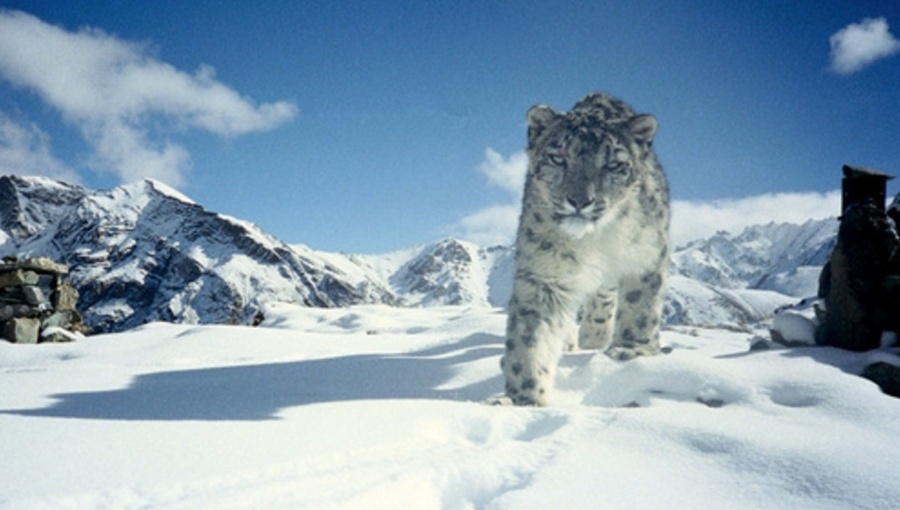
The China–Kyrgyzstan–Uzbekistan (CKU) railway megaproject poses a threat to the habitat of the snow leopard in Kyrgyzstan, according to an in-depth report that is causing disquiet in European capitals.
The concerns raised by the white paper, Vanishing Tracks: The Snow Leopard and the China–Kyrgyzstan–Uzbekistan Railway, compiled by researchers at the EU Today publication, come at an awkward time for Kyrgyzstan – the Central Asian country lately adopted the snow leopard as a national symbol and made the stocky, solitary big cat the official mascot of the sixth World Nomad Games, due to take place in late summer.
Kyrgyzstan has made "Batay the snow leopard" the official mascot of the sixth World Nomad Games (Credit: @worldnomadgames).
The snow leopard is a threatened (vulner`able) species on the Red List of the International Union for Conservation of Nature (IUCN).
The research paper argues that the multi-billion dollar CKU project traverses one of the Kyrgyz Republic’s most important snow leopard landscapes and amounts to a material risk of habitat fragmentation, ecological disruption and wider governance failure. Significant work is required on the route, design and safeguards of the project to address this risk, it adds.
EU Today on April 22 reported former Danish MP Sascha Faxe, speaking at the Parliamentary Assembly of the Council of Europe (PACE), as saying that the threat posed to snow leopard habitat in Kyrgyzstan by the under-construction railway should no longer be treated as a peripheral environmental concern. It is an issue that demands political scrutiny in Brussels, European capitals and beyond, she was also cited as saying in an interview.
The paper describes how the Kyrgyz section of the CKU will pass through high-mountain terrain in the Naryn and Jalal-Abad regions, part of a wider transboundary landscape that links Kyrgyzstan with China and Kazakhstan.
EU Today reported: “In such terrain, the report argues, tunnels, cuttings, embankments and associated construction corridors are not neutral engineering features. They can become barriers in landscapes where wildlife movement already depends on narrow and highly sensitive ecological corridors.”
The publication pointed out: “Major infrastructure projects in remote regions can carry long-term ecological consequences while receiving little meaningful attention in Europe until construction is already under way.
“That concern sits at the centre of EU Today’s [white paper] report. It describes the CKU railway as a high-risk linear infrastructure project, warning that the likely effects extend well beyond direct habitat loss. Among the risks identified are disrupted movement patterns, fragmentation of habitat, disturbance of prey species, increased human access to previously isolated areas and a greater exposure to poaching and wildlife crime.”
The white paper says that Kyrgyzstan’s snow leopard population is thought to be in the low hundreds, with the species dependent on ecological connectivity across high-altitude terrain.
Faxe noted Kyrgyzstan’s Generalised System of Preferences Plus (GSP+) status, which zeroes EU duties on thousands of exported products, in saying environmental harm of the kind raised by the paper cannot simply be ignored while a country at the same time benefits from international recognition and trade arrangements billed as in line with sustainable standards.
Kyrgyzstan is a signatory to multilateral environmental agreements including the Convention on Biological Diversity, the Convention on Migratory Species and the Convention on International Trade in Endangered Species of Wild Fauna and Flora (CITES).
In September last year, Elena Bosler-Guseva, the Bishkek-based author of the children’s book In the Footsteps of the Little Snow Leopard Brothers, told The Times of Central Asia: “The snow leopard has always been a sacred animal for Kyrgyz. The Kyrgyz people’s nomadic culture is characterised by its special relationship with the natural world, and it has long been believed that they watch over our warriors to protect them. They represent beauty, strength and freedom in our legends and fairy tales.”
Bosler-Guseva added: “[President] Sadyr Japarov’s order to recognise them as Kyrgyzstan’s national symbol will strengthen the government’s support for initiatives to protect the snow leopard and its habitat.”

No comments:
Post a Comment