“Reckless actions on the economy and the expensive fallout from the war in Iran has made it harder for working families to purchase a car and has left millions more feeling major pocket pain at the pump,” one researcher said.
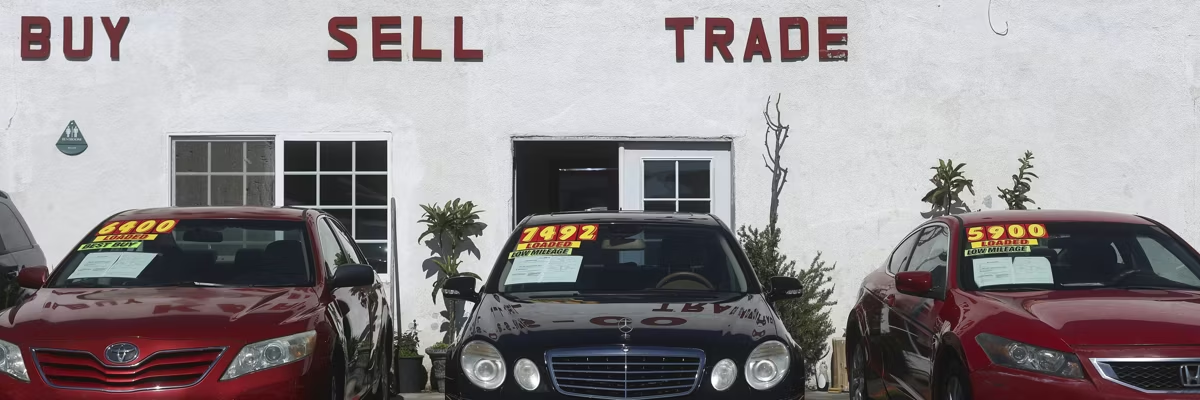
Used cars are for sale in Inglewood, California on February 18, 2026.
(Photo by Michael Yanow/NurPhoto via Getty Images)
Jessica Corbett
May 06, 2026
COMMON DREAMS
As Americans on Wednesday continued to face the economic fallout of President Donald Trump’s war on Iran, a gallon of gasoline cost $4.536, the average transaction price for a new vehicle was $49,275, and a pair of progressive groups published a report detailing “how surging auto loan debt is hurting households.”
“The costs of purchasing and financing a car have been going up for years,” noted Protect Borrowers senior fellow Tara Mikkilineni, who co-authored the report, “When The Wheels Come Off,” with other experts from her organization and The Century Foundation.
“Unfortunately, the Trump administration’s reckless actions on the economy and the expensive fallout from the war in Iran has made it harder for working families to purchase a car and has left millions more feeling major pocket pain at the pump,” Mikkilineni said. “For millions of working families, a car is not a luxury, it is an essential economic lifeline. Working families deserve relief and they deserve to have a government that is watching out for them, not allowing lenders and auto dealers to rake in record profits at their expense.”
Mikkilineni’s team found that “in recent years, aggregate total auto debt has reached $1.68 trillion, a 37% jump since early 2018, and now comprises the largest volume of outstanding loan debt ever recorded. At the end of 2025, nearly 86 million Americans—roughly 28% of consumers—have outstanding auto loan or lease debt. Residents in states where driving is most necessary, such as Texas, Alaska, Louisiana, and Florida, are struggling with the highest levels of auto debt.”
“Borrowers carrying auto loans see significantly higher and faster credit card balance growth—regardless of income level—suggesting that auto debt cascades into broader financial pressure,” according to the report. Specifically, “between early 2018 and late 2025, credit card balances for middle-income borrowers with auto debt surged by 31%, while those without auto loans saw a notably lower growth of 17%. Borrowers with extended-length auto loans are carrying monthly balances on their credit cards that are 190% of (that is, nearly twice) their monthly income.”
“At the end of 2025, the average origination balance for an auto loan reached $33,519, an amount $10,000 higher than the average in 2018, due to massive increases in the price of even the most basic cars and a shortage of ‘affordable’ car models,” the publication explains. “Borrowers are also facing higher interest rates. Today, the average annual percentage rate (APR) for auto loans is nearly 10%, up from 7.5% in 2018.”
Financially vulnerable borrowers are being hit particularly hard by current conditions. The researchers found that for those with the most limited access to credit, “the average APR is up to 18.7%, which means a six-year loan on a $30,000 car will cost $20,000 in interest alone. Furthermore, Black, Hispanic, and American Indian and Alaska Native borrowers face higher interest rates than their white and Asian counterparts.”
Affordable vehicles are also harder to find these days. Sean Tucker, a managing editor at Kelley Blue Book, told CNBC that “in 2017, [automakers] built 36 models priced at $25,000 or under... Today? Four.”
Tucker said that a “record” share of new cars—over 43%—are now bought by households with incomes of at least $150,000. According to him, “Automakers are serving that market.”
Angela Hanks, another report co-author and chief of policy programs at The Century Foundation, stressed that “for the overwhelming majority of working families, a car is a necessity—yet purchasing a car has become a financial trap, eating up more of people’s paychecks than ever before.”
With so many US communities lacking quality public transit, some US families in need of a vehicle turn to loans with longer terms. The report points out that “for these borrowers, even after taking on these riskier products with additional lifetime costs, auto loan payments are still nearly 20% of their monthly income, meaning nearly $1 out of every $5 they earn will go toward car payments over the seven years of their loan.”
Hanks highlighted that “while families drown” from costly, extended-term loans, “the Trump administration is refunding big businesses for the tariffs that consumers paid, with interest.”
The Trump administration last month launched a portal designed to facilitate refunds for around $166 billion in tariffs that the US Supreme Court struck down as unconstitutional, but only businesses that directly paid the import taxes are eligible, even though companies largely passed on the cost hikes to consumers.
Meanwhile, the president responded to the high court’s decision by imposing temporary import taxes, and his administration is pursuing “plan B,” holding hearings required to impose tariffs under Section 301 of the Trade Act of 1974, a different legal authority than the one Trump used last year.
The new report concludes by calling on US policymakers to act: “Amidst the growing affordability crisis, Americans deserve urgent action to bring down costs and rein in profiteering from the dealers and lenders who have been allowed to get away with nickel-and-diming working families for far too long.”
Internet stumped over Trump official's bizarre boast
Nicole Charky-Chami
May 6, 2026
RAW STORY
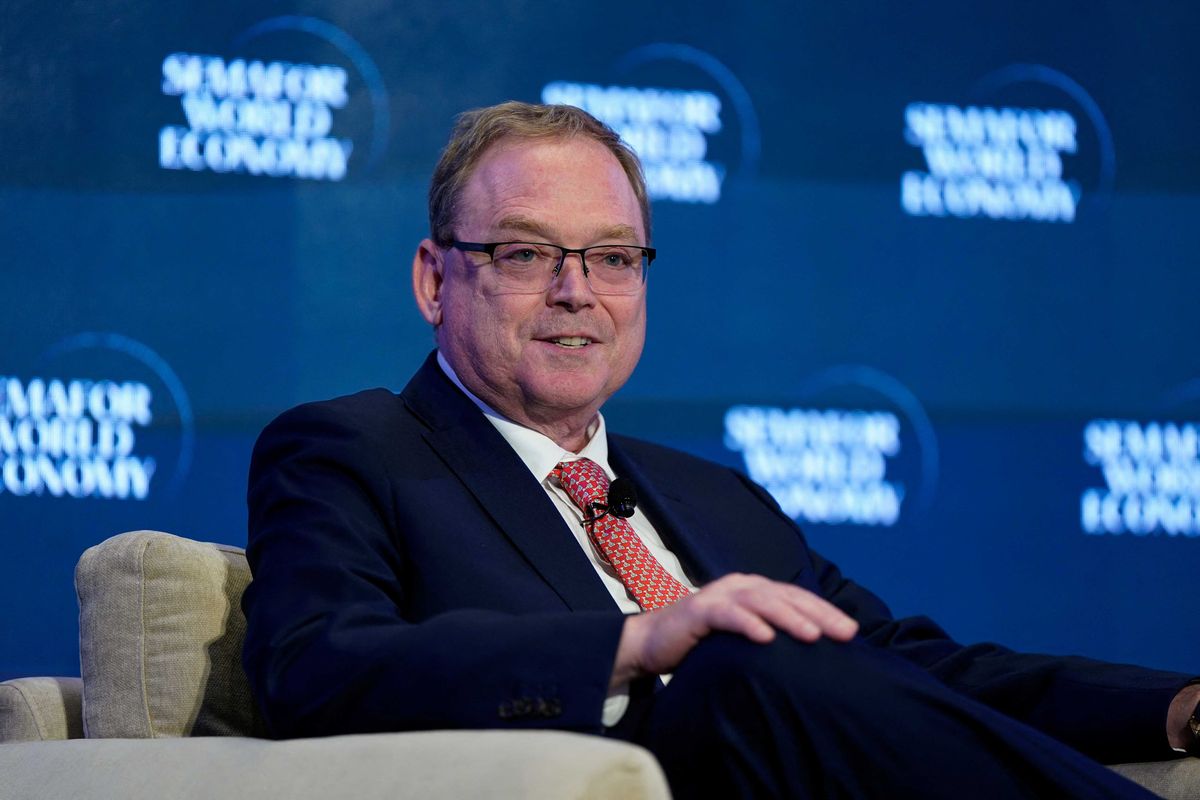
Kevin Hassett, director of the National Economic Council, participates in the Semafor World Economy conference in Washington, D.C., on April 14, 2026. REUTERS/Elizabeth Frantz
The internet was stunned by White House economic adviser Kevin Hassett's comments on Wednesday as he bragged about how credit card spending on higher-priced gasoline was "through the roof."
Hassett made the remarks in an interview with Fox Business on Wednesday morning where he discussed the ongoing Iran war, the continued closure of the Strait of Hormuz and the American economy.
Media experts and political voices were shocked by the comments.
"Is this supposed to be a brag?" Rep. Mark Pocan (D-WI) wrote on X.
"We must consider the possibility that Kevin Hassett is secretly working for the Democrats," Jon Favreau, co-founder of Crooked Media and co-host of Pod Save America, wrote on X.
"Trump’s chief economic advisor is bragging that people are surviving on credit cards right now," MeidasTouch editor-in-chief Ron Filipkowski wrote on X.
"?" New York Times White House correspondent Katie Rogers wrote on X.
"Make this guy the spokesperson for the entire Republican party," House Majority PAC, a Democratic Super PAC, wrote on X.
"Do they understand that this is not a good thing?" Nobel Prize nominee Andrew Gebo wrote on X.
Nicole Charky-Chami
May 6, 2026
RAW STORY
Kevin Hassett, director of the National Economic Council, participates in the Semafor World Economy conference in Washington, D.C., on April 14, 2026. REUTERS/Elizabeth Frantz
The internet was stunned by White House economic adviser Kevin Hassett's comments on Wednesday as he bragged about how credit card spending on higher-priced gasoline was "through the roof."
Hassett made the remarks in an interview with Fox Business on Wednesday morning where he discussed the ongoing Iran war, the continued closure of the Strait of Hormuz and the American economy.
Media experts and political voices were shocked by the comments.
"Is this supposed to be a brag?" Rep. Mark Pocan (D-WI) wrote on X.
"We must consider the possibility that Kevin Hassett is secretly working for the Democrats," Jon Favreau, co-founder of Crooked Media and co-host of Pod Save America, wrote on X.
"Trump’s chief economic advisor is bragging that people are surviving on credit cards right now," MeidasTouch editor-in-chief Ron Filipkowski wrote on X.
"?" New York Times White House correspondent Katie Rogers wrote on X.
"Make this guy the spokesperson for the entire Republican party," House Majority PAC, a Democratic Super PAC, wrote on X.
"Do they understand that this is not a good thing?" Nobel Prize nominee Andrew Gebo wrote on X.
Trump Economic Adviser Boasts That US Consumers Are ‘Spending More on Gasoline’ and ‘Everything Else’
“Is this supposed to be a brag?” said Democratic US Rep. Mark Pocan.
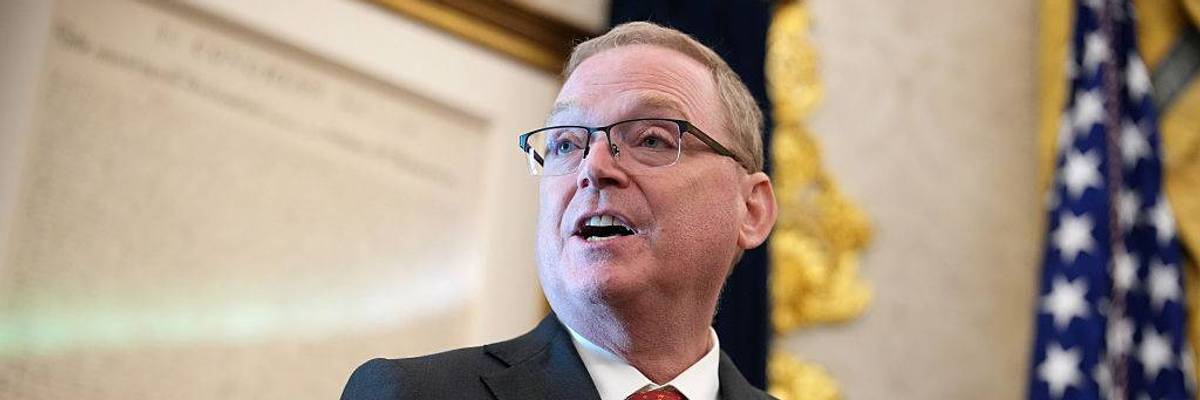
National Economic Council Director Kevin Hassett speaks in the Oval Office of the White House on April 30, 2026 in Washington, DC.
(Photo by Andrew Harnik/Getty Images)
Brad Reed
May 06, 2026
COMMON DREAMS
National Economic Council Director Kevin Hassett on Wednesday tried to put a rosy spin on President Donald Trump’s economy by highlighting the large credit card bills being racked up by US consumers.
During an interview on Fox Business, Hassett cited credit card spending as a purported sign of strength in the economy as a whole.
“I had the head of one of the Big Five banks in my office yesterday, going through credit card data,” he said. “Credit card spending is through the roof! They’re spending more on gasoline, but they’re spending more on everything else too.”
The price of oil has been surging since Trump launched an illegal war with Iran in late February, and on Wednesday the average price for a gallon of gasoline in the US topped $4.50, a high not seen since 2022 in the wake of Russia’s invasion of Ukraine.
As the Iran crisis persists, economists project that the price of energy will be reflected in increases in other consumer goods, most notably food.
Given this, many critics were astonished that Hassett decided to brag about consumer credit card spending as a way to reassure Americans concerned about the economy.
“Working-class Americans are maxing out their credit cards to pay for groceries and gas,” wrote House Minority Leader Hakeem Jeffries (D-NY). “The Trump Cartel thinks this is something to celebrate. Shameful.”
Hassett’s claims about credit card spending also earned a swift rebuke from Warren Gunnels, staff director for Sen. Bernie Sanders (I-Vt.).
“Americans are putting more stuff on credit cards because they don’t have enough money to pay for the skyrocketing cost of virtually everything,” Gunnels wrote. “Trump promised to put a 10% cap on credit card interest rates. Instead, the average credit card interest rate today is 22%. Obscene.”
Fred Wellman, a Democratic candidate for the US House of Representatives in Missouri, could not hide his disgust at Hassett’s performance.
“He’s smiling,” Wellman observed. “He’s celebrating that we are all maxing out our credit cards because they have torched the economy. He’s not smiling for working people. He’s happy for the corporations and billionaires. It’s good for them. We can all die poor. This is why I’m running for Congress.”
Rep. Mark Pocan (D-Wis.) expressed bewilderment at Hassett’s argument.
“Is this supposed to be a brag?” Pocan asked.
Jon Favreau, former speechwriter for President Barack Obama and current co-host of Pod Save America, found Hassett’s messaging so tone-deaf that “we must consider the possibility that Kevin Hassett is secretly working for the Democrats.”
The Democratic House Majority Political Action Committee had a response similar to Favreau’s, recommending that the GOP make Hassett “the spokesperson for the entire Republican Party.”
“Is this supposed to be a brag?” said Democratic US Rep. Mark Pocan.
National Economic Council Director Kevin Hassett speaks in the Oval Office of the White House on April 30, 2026 in Washington, DC.
(Photo by Andrew Harnik/Getty Images)
Brad Reed
May 06, 2026
COMMON DREAMS
National Economic Council Director Kevin Hassett on Wednesday tried to put a rosy spin on President Donald Trump’s economy by highlighting the large credit card bills being racked up by US consumers.
During an interview on Fox Business, Hassett cited credit card spending as a purported sign of strength in the economy as a whole.
“I had the head of one of the Big Five banks in my office yesterday, going through credit card data,” he said. “Credit card spending is through the roof! They’re spending more on gasoline, but they’re spending more on everything else too.”
The price of oil has been surging since Trump launched an illegal war with Iran in late February, and on Wednesday the average price for a gallon of gasoline in the US topped $4.50, a high not seen since 2022 in the wake of Russia’s invasion of Ukraine.
As the Iran crisis persists, economists project that the price of energy will be reflected in increases in other consumer goods, most notably food.
Given this, many critics were astonished that Hassett decided to brag about consumer credit card spending as a way to reassure Americans concerned about the economy.
“Working-class Americans are maxing out their credit cards to pay for groceries and gas,” wrote House Minority Leader Hakeem Jeffries (D-NY). “The Trump Cartel thinks this is something to celebrate. Shameful.”
Hassett’s claims about credit card spending also earned a swift rebuke from Warren Gunnels, staff director for Sen. Bernie Sanders (I-Vt.).
“Americans are putting more stuff on credit cards because they don’t have enough money to pay for the skyrocketing cost of virtually everything,” Gunnels wrote. “Trump promised to put a 10% cap on credit card interest rates. Instead, the average credit card interest rate today is 22%. Obscene.”
Fred Wellman, a Democratic candidate for the US House of Representatives in Missouri, could not hide his disgust at Hassett’s performance.
“He’s smiling,” Wellman observed. “He’s celebrating that we are all maxing out our credit cards because they have torched the economy. He’s not smiling for working people. He’s happy for the corporations and billionaires. It’s good for them. We can all die poor. This is why I’m running for Congress.”
Rep. Mark Pocan (D-Wis.) expressed bewilderment at Hassett’s argument.
“Is this supposed to be a brag?” Pocan asked.
Jon Favreau, former speechwriter for President Barack Obama and current co-host of Pod Save America, found Hassett’s messaging so tone-deaf that “we must consider the possibility that Kevin Hassett is secretly working for the Democrats.”
The Democratic House Majority Political Action Committee had a response similar to Favreau’s, recommending that the GOP make Hassett “the spokesperson for the entire Republican Party.”

No comments:
Post a Comment