It’s possible that I shall make an ass of myself. But in that case one can always get out of it with a little dialectic. I have, of course, so worded my proposition as to be right either way (K.Marx, Letter to F.Engels on the Indian Mutiny)
Tuesday, May 19, 2026
SPACE/COSMOS
EU-China solar exploration spaceship launches successfully from French Guiana
A joint European–Chinese spacecraft has blasted off into orbit on a pioneering mission to uncover what happens when violent solar storms crash into Earth’s magnetic shield, in a project that could improve forecasts of dangerous space weather and deepen understanding of the auroras that light up polar skies.
Issued on: 19/05/2026 - RFI
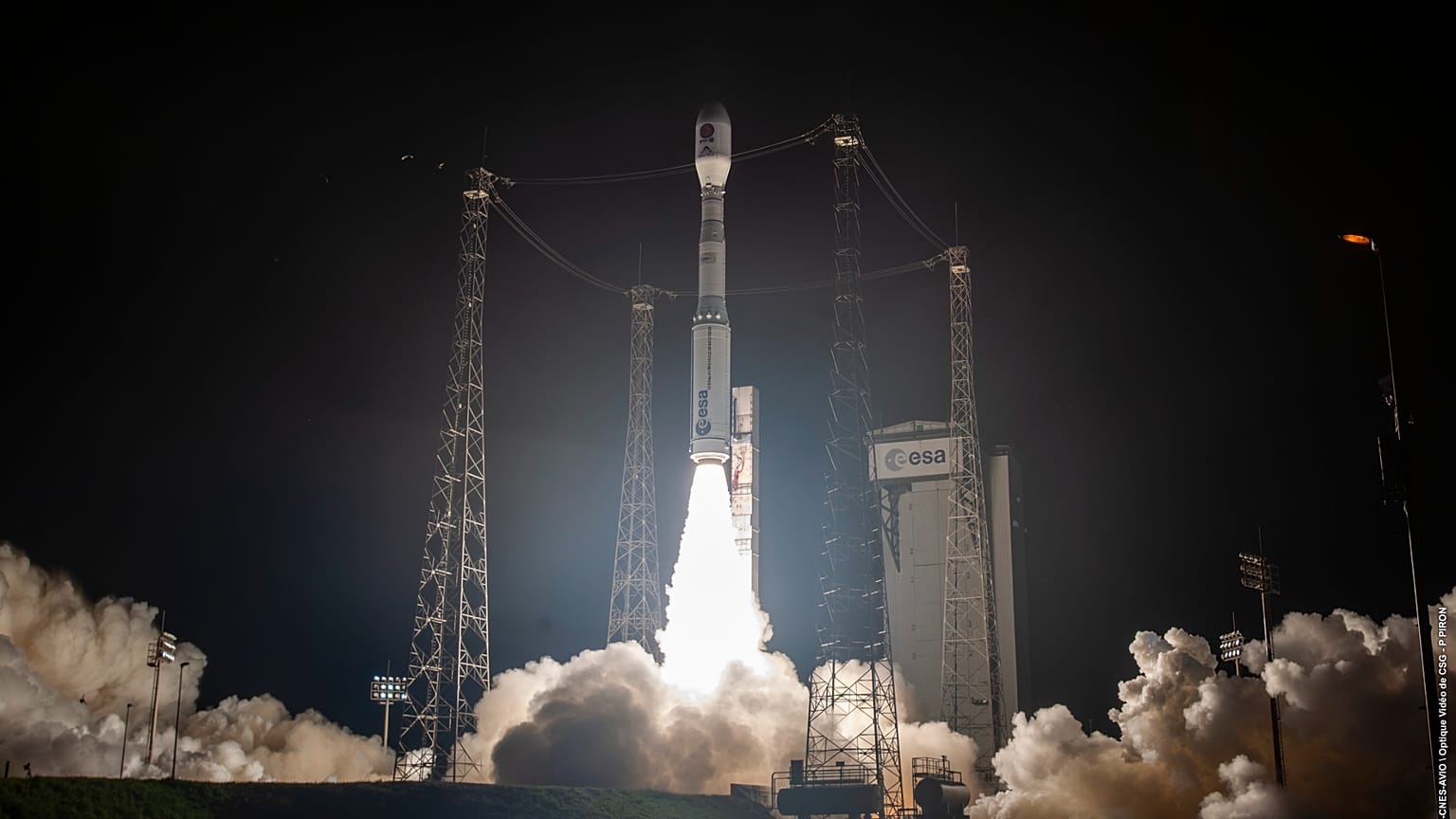
The European Vega-C launcher carrying the SMILE (Solar Wind Magnetosphere Ionosphere Link Explorer) satellite on its first flight, launches as part of a mission developed and carried out in collaboration between the ESA and the Chinese Academy of Sciences at the Guiana Space Centre in Kourou, on 19 May 2026. AFP - RONAN LIETAR
The spacecraft, known as SMILE, lifted off aboard a Vega-C rocket at 03h52 GMT on Tuesday from Europe’s spaceport in Kourou, French Guiana, on the northeastern coast of South America. Around 55 minutes later, the spacecraft successfully separated from the rocket at an altitude of 700 kilometres and began its long journey into a highly elliptical orbit far above Earth.
Scientists hope the mission will provide an unprecedented view of the interaction between the Sun and Earth’s magnetic environment, helping researchers better understand how bursts of charged particles from the Sun can disrupt satellites, communications networks and power systems on Earth
.
This photograph shows the Smile spacecraft (gold) fixed to a Vega-C rocket adaptor (black cone) on 25 March 2026, in Kourou, French Guiana, in preparation for liftoff from Europe's Spaceport. AFP - M. PEDOUSSAUT
SMILE – short for Solar Wind Magnetosphere Ionosphere Link Explorer – is a joint mission between the European Space Agency and the Chinese Academy of Sciences. Roughly the size of a van, the spacecraft is set to make the first-ever X-ray observations of Earth’s magnetic field.
Its unusual orbit will allow the spacecraft to spend long periods studying the northern lights from afar. When passing over the South Pole, SMILE will descend to around 5,000 kilometres above Earth, enabling it to send data to the Bernardo O’Higgins research station in Antarctica.
At the other end of its orbit, the spacecraft will travel as far as 121,000 kilometres above Earth over the North Pole. According to the European Space Agency, this position will allow SMILE to observe the auroras continuously for up to 45 hours at a time – a first for any mission.
Tracking the Sun’s explosive power
Solar wind is a constant stream of charged particles emitted by the Sun, but at times the flow intensifies dramatically due to enormous eruptions of plasma known as coronal mass ejections. Travelling at speeds of around two million kilometres an hour, these blasts can take between one and two days to reach Earth.
When they arrive, Earth’s magnetic field acts as a protective barrier, deflecting most of the incoming particles. Yet during particularly strong solar storms, some charged particles can break through into the upper atmosphere.
Such events can have serious consequences. Powerful geomagnetic storms are capable of damaging satellites, disrupting communication systems and threatening astronauts aboard space stations. In extreme cases, they can even interfere with electricity networks on the ground.
The most severe geomagnetic storm ever recorded occurred in 1859 during the so-called Carrington Event. Bright auroras were reportedly visible as far south as Panama, while telegraph systems around the world malfunctioned and some operators received electric shocks.
Although such storms are rare, modern society is now far more dependent on technologies vulnerable to solar activity, making space weather research increasingly important.
A mission designed to improve forecasting
The SMILE mission aims to shed new light on these processes by detecting X-rays produced when charged particles from the Sun collide with neutral particles in Earth’s upper atmosphere. By observing these interactions directly, scientists hope to gain a clearer picture of how energy from the Sun enters and moves through Earth’s magnetic system.
Researchers believe the data gathered by SMILE could ultimately improve forecasting systems, allowing governments and industries more time to prepare for severe solar storms.
The spacecraft is expected to begin collecting scientific data just one hour after reaching orbit. The mission is planned to last for three years, though officials say it could continue longer if operations proceed smoothly.
Tuesday’s launch came after an earlier attempt scheduled for 9 April was postponed because of a technical issue.
(With newswires)
Joint ESA–China mission begins mapping Earth’s protective magnetic field
The SMILE mission will track the Earth’s magnetosphere, which protects the planet from charged particles that come from the Sun.
A European-Chinese mission that will X-ray the Earth’s magnetic atmosphere is officially in space.
The European Space Agency’s (ESA) Solar Wind Magnetosphere Ionosphere Link Explorer (SMILE) mission sent a 3-metre-tall spacecraft equipped with trackers and antennas into orbit on Tuesday from its launch site in French Guiana.
The joint mission, launched with the Chinese Academy of Sciences (CAS), will track the Earth’s magnetosphere, which protects the planet from gentle streams of charged particles, called the solar wind, that come from the Sun.
The SMILE mission will help scientists understand a gap in the solar system and help keep technology and astronauts safe in the future, according to ESA.
“If it weren’t for the magnetosphere, life could not survive on planet Earth,” ESA said about the mission.
The craft will measure how, where and when the solar winds interact with our planet during the mission.
During the mission, the craft will go as far as 121,000 kilometres above the North Pole, or one-third of the way to the Moon. It will also gather up to 45 hours per orbit of continuous observations of soft X-ray and ultraviolet light.
Smile sent its first signal back to scientists just two hours after launch, and it deployed solar panels, which means it can collect sunlight to power its systems and science instruments.
A galactic collision ignited stellar fireworks in the Milky Way
A study rewrites the history of the Milky Way and reveals how galaxy collisions can destroy stellar discs
A new study led by researchers at the Institute of Cosmos Sciences of the University of Barcelona (ICCUB) and the Institute of Space Studies of Catalonia (IEEC) reveals how the discs of galaxies like the Milky Way are affected by ancient galactic collisions.
Published in the Monthly Notices of the Royal Astronomical Society, the study analyses, using simulations, how galaxy collisions can completely or partially destroy stellar discs. Together with observational data on star clusters, the authors use this study to improve predictions about the timing of the last significant galactic collision in the Milky Way.
When did the Milky Way’s disc spin up?
The disc of the Milky Way is a vast, rotating, pancake-shaped system of stars, with spiral arms winding out from its centre. This disc contains the majority of the galaxy’s stars, including the Sun, and rotates at over 220 kilometres per second.
For a long time, astronomers have tried to determine when this rotating disc formed. A key clue lies in the motions and ages of the stars: at some point in the galaxy’s early history, the stars began moving in a coherent, rotating pattern, marking what scientists call the galaxy’s spin-up time.
However, the Milky Way did not form in isolation. For decades, scientists have suspected that a violent collision with a smaller galaxy played an important role in shaping the Milky Way as we observe it today. This suspicion was confirmed in 2018, when data from the Gaia mission revealed a large population of stars whose unusual motions could only be explained by a massive merger that occurred about ten billion years ago. This event is now known as the Gaia-Sausage-Enceladus (GSE) merger.
In this study, simulations of Milky Way–like galaxies (the Auriga simulations) are used to investigate how rotating discs form under different scenarios. These simulations show how galaxies such as the Milky Way react to ancient collisions.
Galactic fires and ancient collisions
The study shows that rotating stellar discs often formed much earlier than previously thought, but can be partially or completely destroyed by major galactic collisions. As a result, the moment when the Milky Way’s disc appears to spin up cannot mark when the first time the disc formed, but rather the moment when the galaxy recovered from a destructive merger.
Applying insights from these simulations, the authors infer that the Gaia–Sausage–Enceladus merger probably occurred about 11 billion years ago, earlier than many previous estimates had indicated. Crucially, this timing coincides with a sharp increase in the formation of star clusters in the Milky Way. These bursts of star formation are a natural consequence of galactic collisions, which compress gas and trigger intense star formation.
“Models of the Gaia–Sausage–Enceladus merger predict that a galactic firework should have followed the impact, raising star formation and fostering the formation of globular clusters. This is the first time this link has been made,” says co-author Chervin F. P. Laporte, a researcher at the French National Centre for Scientific Research (CNRS).
“This research highlights the important relationship between galactic structure and ancient collisions, which must be understood in unison in order to understand the history of our galaxy,” adds Matthew D. A. Orkney, the study’s lead author and a researcher at ICCUB and IEEC.
Scientists cannot travel back in time to observe the Milky Way in its youth, but they can observe the formation of similar galaxies in the distant Universe using new data from the James Webb Space Telescope (JWST) and the Atacama Large Millimeter/submillimeter Array (ALMA), a powerful radio telescope.
The full paper is available here, and Auriga simulation data are publicly accessible for future research.
A new SwRI study has raised doubts about the existence of water vapor plumes on Jupiter’s moon Europa (shown above), initially reported based on Hubble Space Telescope observations from 2012. A reanalysis of the data reduced the certainty of that initial finding, but scientists are still hopeful that such plumes will be observed at some point in the future.
SAN ANTONIO — May 18, 2026 — Looking back at 14 years of Hubble telescope data for Jupiter’s moon Europa has given Southwest Research Institute (SwRI) scientists a better understanding of its tenuous atmosphere. The findings have cast doubt on previous evidence suggesting that the icy moon intermittently discharges faint water plumes from a presumed subsurface ocean.
“The evidence for water vapor plumes on Europa isn’t as strong as we first understood it,” said SwRI’s Dr. Kurt Retherford, one of the authors of a 2014 paper initially making that assertion. Retherford and his colleagues have recently published a new paper reanalyzing the data.
The new paper looks at the last 14 years of data from the Hubble Space Telescope’s Space Telescope Imaging Spectrograph (HST/STIS) focused on Europa’s Lyman-alpha emissions. Lyman-alpha is a specific wavelength of ultraviolet light emitted and scattered by hydrogen atoms. From 2012-2014, the team was pushing the limits of the Hubble telescope’s capabilities.
“One of the difficulties in interpreting the data back then was determining where to place Europa within its context,” Retherford said. “The way Hubble works left some uncertainty in terms of placement relative to the center of the image. If Europa’s placement was off even just by a pixel or two, it could affect how the data gets interpreted.”
As a result, what they thought could be evidence of a water vapor plume could also just be statistical noise.
“Our reanalysis took our original 99.9% confidence in the plumes’ existence and reduced it to less than 90% confidence,” said Dr. Lorenz Roth (Royal Technical Institute, Sweden), the paper’s lead author. “That’s simply not enough evidence to support the certainty of claims we made at the time."
Retherford said the current dataset does not rule out the possibility of the water vapor plumes described in the 2014 paper, but it no longer provides concrete evidence of them.
“The description of the phenomena just doesn't hold up the same way anymore,” said Retherford. “The new data has made us reconsider the strength of the previous paper’s conclusion regarding water vapor plumes. The recent analysis also provides improved information about the neutral hydrogen atom component of Europa’s escaping atmosphere, originating from its water ice surface.”
SwRI scientists still hope to find water vapor plumes escaping from Europa. Similar water vapor plumes have been confirmed on Saturn’s moon Enceladus, and Europa’s neighbor Io, another moon of Jupiter, has plumes of sulfur dioxide expanding out into space.
Scientists are particularly interested in Europa because its icy surface is thought to obscure a vast saltwater ocean beneath. Cracks in Europa’s icy shell could provide potential pathways for liquid water to rise to the surface and shoot out into space. This remains a distinct possibility that NASA’s Europa Clipper mission will investigate when it arrives in the Jupiter system in 2030.
EU governments are eager to work with ICEYE. The Finnish space company sells mini satellites that help allied nations safeguard their sovereignty. That’s because when it comes to Earth observation and military reconnaissance, the high-resolution radar eyes in space are second to none.
Two young innovators from Poland and Finland have built one of the world’s best satellite systems. The radar sensors of ICEYE monitor oil spills, hurricanes and forest fires from an altitude of 600 km. The nanosatellites detect illegal loggers, collect data on flooding, and keep an eye on the movements of military equipment.
Even through cloud cover and in the middle of the night, the small satellites deliver ultra-precise detailed images. They identify aircraft types at hostile airports. The eyes of ICEYE track suspicious ship movements across vast stretches of ocean.
The fourth generation of satellites currently in orbit (weight: 200 kg) improves the resolution from 25 cm to 16 cm. “And that's not the end of it”, says Damon Ollomon, one of the vice presidents of ICEYE, in an interview with Euronews.
The ICEYE team in Helsinki is particularly proud of its rapid response time. “We can deliver images within two hours, and we aim to reduce that to less than ten minutes”, said Ollomon.
ICEYE currently operates a constellation of more than 70 satellites in Earth orbit. “We produce 25 satellites a year and are now increasing this to 50 per year”, says Ollomon.
ICEYE was founded in 2014, and start-up capital was provided by the EU. The company has subsidiaries in Poland, Spain, Germany, and Greece, among others, and employs around 1,000 people from 70 countries. Last year, ICEYE achieved a turnover of EUR 250 million.
In an interview with Euronews, Pekka Laurila, one of the founders of ICEYE, offered a piece of advice to the EU: “Take risks and put ambitious plans into action immediately – not 10 years from now. Europe has resources. So at the very least, we should aim to become the best in the world. Take this seriously!”
Georgia Tech researchers discover new form of NAND flash data storage for deep space missions
The new data storage technology is up to 30 times more radiation-resilient than current data storage.
Asif Khan and Lance Fernandes built the ferroelectric NAND memory chips in Georgia Tech’s cleanroom, then sent the chips for radiation testing to collaborators at Pennsylvania State University. Those tests revealed just how extreme the technology’s tolerance could be.
As space missions travel farther from Earth, spacecraft must increasingly be able to process and store their own data. Soon, artificial intelligence (AI) could be the primary tool for handling this growing volume of information. NAND flash memory is the current state-of-the-art technology used to store these massive amounts of data, offering storage capacities in the terabit range. It’s the same technology used in laptops, smartphones, and data centers. Ensuring NAND’s reliability in space is critical as these systems increasingly rely on high-density, low-power storage.
But the radiation in harsh space environments can significantly degrade data stored in NAND flash memory. To counteract this, Georgia Tech researchers have developed a new form of NAND flash memory that can both handle AI and withstand extreme radiation.
This technology uses ferroelectricity, which is when certain materials can hold a permanent, spontaneous electric charge, called polarization. In a recent Nano Letterspaper, the researchers show that NAND flash memory made with ferroelectric materials can withstand radiation levels up to 30 times higher than more conventional NAND flash memory.
“If you send traditional flash memory to space, the radiation interacting with flash memory’s trapped electric charge can easily corrupt the data,” said Asif Khan, an associate professor in the School of Electrical and Computer Engineering (ECE). “In contrast, ferroelectric NAND flash storage does not store data as trapped electrical charge, but rather stores it as polarization in the material. And polarization is very resilient to radiation effects.”
Radiation Revelation
The insight that NAND flash-compatible ferroelectric memory could withstand high amounts of radiation surprised the researchers. Ferroelectricity in hafnium oxide — the silicon-compatible material that makes this memory possible — was discovered just 15 years ago, and Khan’s lab has been determining its capabilities for the past decade. The team knew ferroelectricity was radiation-tolerant, but not exactly how tolerant when implemented in NAND flash architectures.
Lance Fernandes, an ECE Ph.D. student and the paper’s first author, built the ferroelectric NAND memory chips in Georgia Tech’s cleanroom, then sent the chips for radiation testing to collaborators at Pennsylvania State University. Those tests revealed just how extreme the technology’s tolerance could be.
The Penn State researchers’ testing showed that ferroelectric flash technology can sustain radiation as high as 1 million rads (radiation absorbed doses) — the equivalent of 100 million X-rays — making it 30 times more durable than traditional memory. This is well within the radiation-tolerance threshold for most spacecraft: Low-Earth orbit satellites require a tolerance of 5 – 30 kilorads, geostationary orbits need 100 – 300 kilorads, and deep space missions top out at 1 million rads.
“For data storage in space, it’s not enough for memory to work. It has to remain reliable under extreme radiation,” said Fernandes.
“And what makes our storage especially exciting," added Khan, “is that ferroelectric NAND flash isn't just radiation-tolerant; it also stays reliable even in extremely harsh radiation environments. That's exactly what we need for space.”
From orbiting satellites to future missions surveying Jupiter’s moons, successful space exploration requires electronics that can process abundant AI data and will not fail when communication is delayed. Ferroelectric memory offers a way to keep critical data intact, no matter how harsh the environment.
The work was supported in part by SUPREME, one of seven centers in JUMP 2.0, a Semiconductor Research Corporation (SRC) program sponsored by DARPA. The work was performed as part of the Interaction of Ionizing Radiation With Matter University Research Alliance, sponsored by the Department of Defense, Defense Threat Reduction Agency, under grant HDTRA1-20-2-0002.
Enabling Radiation Hardness in Solid-State NAND Storage Utilizing a Laminated Ferroelectric Stack Lance Fernandes, Stuart Wodzro, Prasanna Venkatesan, Priyankka Ravikumar, Ming-Yen Lee, Minji Shon, Dyutimoy Chakraborty, Taeyoung Song, Sanghyun Kang, Salma Soliman, Mengkun Tian, Jason Yeager, Jackson Adler, Jiayi Chen, Zekai Wang, Douglas Wolfe, Shimeng Yu, Andrea Padovani, Suman Datta, Biswajit Ray, and Asif Khan. Nano Letters 2026 26 (10), 3390-3397
They rank among the darkest and coldest places in the solar system: Hundreds of lunar craters, many of them at the Moon’s south pole, never receive direct sunlight and lie in permanent shadow. That’s exactly why physicist Jun Ye and his colleagues suggest that these craters are the perfect place to build a critical component for an ultrastable laser.
On the Moon, a highly stable laser — a source of coherent light that has a nearly unwavering frequency, or color — could provide a master time signal and offer GPS-like lunar navigation, said Ye, who is affiliated with both the National Institute of Standards and Technology (NIST) and JILA, a joint institute of NIST and the University of Colorado Boulder. Multiple copies of these lunar lasers could precisely measure the distances between objects and potentially detect exotic physics phenomena such as ripples in space-time.
To construct a lunar laser, astronauts would first install a key component known as an optical silicon cavity — a block of silicon that permits only certain frequencies of light to bounce back and forth between mirrors on each end of the block. The distance between the two mirrors determines the frequencies that are allowed to resonate; for a highly stable optical cavity, that distance, and therefore those frequencies, does not vary.
The Moon is an ideal location for building an optical cavity because it’s subject to relatively few vibrations compared with Earth and has a high vacuum (since its environment is devoid of air).
But the permanently shadowed craters at the lunar south pole provide an even greater advantage. Their frigid temperature of around 50 degrees above absolute zero (50 kelvins) drastically reduces the random jitter of the mirrored surfaces.
In addition, these craters have an even higher vacuum than the lunar surface, further reducing or eliminating vibrations from sound waves and stray particles that could strike the mirrors and change the distance between them.
By radiating any residual heat from the cavity system into the much colder abyss of outer space, the optical cavity could be cooled further, without the need for a cryostat or other equipment, to a temperature of 16 K. At that temperature, silicon neither expands nor contracts when exposed to tiny changes in temperature, ensuring that light entering the cavity always traverses exactly the same distance between the two mirrors.
Once the optical silicon cavity is deployed, a commercially available laser would be placed nearby — either on the rim or inside the permanently shadowed crater. A small amount of laser light directed into the optical cavity would be used to lock the laser frequency to one of the resonant frequencies allowed by the cavity, ensuring that the laser emits light of a single unchanging color.
After stabilizing the frequency of its light, the laser could act as a GPS-like signal, guiding lunar spacecraft to land safely, especially those set to touch down on dimly lit regions near the south pole. By tuning its light to the signals of atomic clocks on satellites, a high-stability lunar laser could also form the backbone of the first optical atomic clock on an extraterrestrial surface. This timekeeping signal would rival those from the most precise and accurate optical atomic clocks on Earth, which Ye and colleagues have built in Earth-bound laboratories.
A lunar laser locked to an ultrastable silicon cavity placed inside one of the Moon’s permanently shadowed craters could provide the infrastructure for a lunar time scale, Earth-Moon optical communication, satellite-based space distance measurements and imaging, and a space-based optical atomic clock.
Credit: J. Ye/NIST with lunar background image produced by NASA’s Visualization Studio
Ye and his colleagues, including researchers from JILA; NASA’s Jet Propulsion Laboratory in Pasadena, California; the Physikalisch-Technische Bundesanstalt (PTB) in Germany; and Lunetronic Inc. in San Francisco, describe their proposal in a recent issue of the Proceedings of the National Academy of Sciences.
Although the idea of building a laser inside a lunar crater may seem like pie in the sky, NASA has already designated regions near the south pole’s permanently shadowed craters as landing sites for the space agency’s Artemis mission.
Ye, an expert on lasers and precision measurements, came up with the idea for a lunar laser after talking with colleagues about the types of instruments that the Artemis mission could carry and install on the lunar surface. Some ideas seemed impractical or involved technology not fully developed on Earth.
“I thought, ‘let me throw out another crazy idea’ — except it turned out to be not so crazy after all,” Ye noted. After working with silicon resonant cavities for years, Ye and his colleagues at both JILA and the German national metrology institute “know exactly what the key ingredients are for building a silicon cavity,” he added. “As soon as I understood what the permanently shadowed regions can offer, I felt that this would be the most ideal environment for a super-stable laser.”
If astronauts were to install a network of these lunar lasers, said Ye, the instruments could measure distances between objects on the Moon with extraordinarily high precision. Such precision could enable the Moon-based lasers to act as a detector for gravitational waves, ripples in space-time that would jostle the Moon and alter ever so slightly the distance between lunar objects as they pass by.
The silicon optical cavity, small enough to fit inside an Artemis spacecraft, would be fully assembled on Earth, said study co-author Wei Zhang of NASA’s Jet Propulsion Laboratory. During deployment on the Moon, the device’s radiation panels would need to unfold. Astronauts would use a remote or mechanically controlled lunar rover to lower the cavity into the crater, Zhang added.
Because of poor illumination, it will be challenging to land on the Moon’s polar regions, noted co-author Yiqi Ni, of Lunetronic. However, permanently shadowed regions on the Moon remain central to long-term lunar exploration because they contain water-ice and other resources needed to maintain a human presence.
Ni estimates that a silicon optical cavity could be demonstrated in low-Earth orbit within two years, deployed on the lunar surface within three to five years, and eventually installed inside a dark crater through coordinated multiagency efforts.
Paper: Jun Ye, Zoey Z. Hu, Ben Lewis, Wei Zhang, Fritz Riehle, Uwe Sterr, Yiqi Ni and Julian Struck. Lunar Silicon Cavity. Proceedings of the National Academy of Sciences. Published online May 8, 2026. DOI: 10.1073/pnas.2604438123
The Department of War Space Test Program – Houston 11 (STP-H11) payload at the Space Station Processing Facility at NASA's Kennedy Space Center, Fla., April 7, 2026. It is covered in blanketing material to protect the payloads from the space environment. After launch, the STP-H11 payload will be installed on the outside of the International Space Station’s Columbus module. (Credit: U.S. Space Force and NASA's Goddard Space Flight Center)
Credit: Credit: U.S. Space Force and NASA's Goddard Space Flight Center
U.S. Naval Research Laboratory (NRL) Glowbug-2 instrument successfully launched on board the Department of War (DoW) Space Test Program – Houston 11 (STP-H11) payload at approximately 6:05 p.m. EDT on May 15, from Cape Canaveral Space Force Station, Fla.
Glowbug-2, engineered by NRL, is an advanced gamma-ray detector to identify and localize cataclysmic cosmic events known as short gamma-ray bursts (GRB). These powerful bursts of energy are produced when neutron stars and black holes collide and generate intense flashes of radiation.
During its tenure, Glowbug-2 will autonomously detect candidate bursts and generate real-time alert messages to researchers on Earth. By capturing these events, Glowbug-2 provides essential data for the expanding field of multi-messenger astrophysics, serving as a critical electromagnetic counterpart to ground-based gravitational wave observatories.
“Glowbug-2 serves as a vital bridge in multi-messenger astrophysics,” said Richard Woolf, Ph.D., NRL mission manager and co-investigator for Glowbug-2. “By continuously observing the sky, we provide the critical electromagnetic context needed to understand the extreme cosmic collisions detected by ground-based gravitational wave observatories, building directly upon the success we achieved with our first Glowbug instrument.”
While the instrument's primary scientific targets are millions of light-years away, its ability to detect local ionizing radiation offers vital secondary benefits for DoW and the broader defense community. This dual-use capability enhances space weather monitoring and provides a more comprehensive picture of the localized space radiation environment.
"There is definitely interest from the broader defense community in detecting radiation in orbit," said J. Eric Grove, Ph.D., principal investigator for Glowbug-2 at NRL. "While we are looking for gamma-ray bursts from astrophysical objects millions of light-years away, others might be more interested in sources of gamma rays a little closer to home. The more eyes we have on the sky to monitor these phenomena, the better."
This instrument builds upon the legacy of its predecessor, Glowbug-1, which successfully cataloged more than 100 GRBs and a dozen solar flares during its 21-month operational lifespan. The instrument uses four large sensing panels made of special crystals that glow when hit by gamma rays. Advanced light-sensors then capture these flashes of light and record the data. These specific panels are identical to the hardware currently in development for NASA’s upcoming StarBurst Multimessenger Pioneer mission.
The Glowbug-2 mission is expected to last a year, with the possibility of extensions based on performance and station requirements.
"The NRL team also plans to collaborate with other concurrent Space Test Program payloads,” Woolf said. “When Glowbug-2 detects an event, the team can alert other instruments on orbit to review their data for simultaneous measurements, enhancing the collective scientific output of the mission."
Funded by NASA's Astrophysics Research and Analysis program, NRL’s Glowbug 1 and 2 continue to serve as critical assets for testing new radiation detection technologies while watching the high-energy transients that continue to shape our understanding of the cosmos.
About the U.S. Naval Research Laboratory
NRL is a scientific and engineering command dedicated to research that drives innovative advances for the U.S. Navy and Marine Corps from the seafloor to space and in the information domain. NRL, located in Washington, D.C. with major field sites in Stennis Space Center, Mississippi; Key West, Florida; Monterey, and California.
NRL offers several mechanisms for collaborating with the broader scientific community, within and outside of the Federal government. These include Cooperative Research and Development Agreements (CRADAs), LP-CRADAs, Educational Partnership Agreements, agreements under the authority of 10 USC 4892, licensing agreements, FAR contracts, and other applicable agreements.
For more information, contact NRL Corporate Communications at NRLPAO@us.navy.mil.
###
Researchers uncover chemical origins of the Perseus cluster of galaxies
Kavli Institute for the Physics and Mathematics of the Universe
The fitting of the new model with the Perseus Cluster, experimenting with supernova yield from this project and from the literature. With an improved prescription in stellar astrophysics, the Si and S overproduction becomes within the limits observed for the Perseus Cluster. At the same time, the underproduction of Ar and Ca is relieved. However, the fitting highlights new challenges, including the under- (over-)production of Mn (Ni), which are closely related to the Type Ia supernova explosions.
An international team of researchers has developed new stellar and supernova models to explain the mysterious elemental abundance patterns left by billions of supernova explosions around the Perseus constellation, which have been difficult to explain with conventional theoretical models, reports three recent studies published in The Astrophysical Journal.
Deep within the Perseus Constellation lies one of the most massive structures known to science: The Perseus Cluster. A titan of the cosmos, it anchors over a thousand galaxies within a sea of superheated gas known as the Intracluster Medium (ICM). This gas, glowing fiercely in X-rays, acts as a celestial ledger, recording the chemical "fingerprints" left behind by billions of supernova explosions over billions of years.
However, data from the HITOMI (Astro-H) space telescope revealed a profound mystery. Long-standing theoretical models by researchers need important corrections.
The observations showed levels of silicon, sulphur, argon, and calcium that simply did not match well to researchers' understanding of how massive stars at least ten times the mass of the Sun live and die. This discrepancy signaled a need to significantly rebuild the models of stellar evolution from the ground up.
A team of researchers, including The University of Tokyo Professor Emeritus and Kavli Institute for the Physics and Mathematics of the Universe (Kavli IPMU, WPI) Visiting Senior Scientist Ken'ichi Nomoto, Kavli IPMU Visiting Associate Scientist Shing-Chi Leung, and Netherlands Institute for Space Research Professor and Kavli IPMU Visiting Scientist Aurora Simionescu, has been working on the chemical abundances of Perseus Cluster measured by the X-ray Satellite HITOMI.
They published a sequence of papers in The Astrophysical Journal. The comprehensive multi-stage study first developed new models for massive stars that finally aligned with the specific chemical abundances (Si, S, Ar, and Ca) observed in the Perseus Cluster.
Then, the team expanded this work, creating a massive catalog of star models spanning a wide range of masses (15 to 60 solar masses) and "metallicities", the initial chemical makeup of a star dictated by its age in the universe. By processing this catalog through a galactic chemical evolution pipeline, they were able to reconstruct an over 10-billion-year history of how supernova feedback has shaped the chemical patterns we see today.
In the third paper, the team considered the extreme case where a supernova explodes in a bipolar jet form. This happens when the stars are rotating, which results in a rapidly rotating black hole (aka Collapsar) or neutron stars. The accretion disk around the compact remnants is subject to magneto-rotational instability, which results in a very energetic jet firing towards the remaining stellar envelope.
The team performed multi-dimensional simulations to trace how the jet triggered an outbreak and subsequent explosion. They discovered that its pronounced Zinc production could be the smoking gun for telling the fraction of these extreme events occurring in the past universe.
The team will continue to study how the models affect the chemical evolution of the Milky Way galaxy across history, from which they can further study the supernova demography and stellar population. The team is also interested in studying the upcoming data release from XRISM on various galactic clusters.



No comments:
Post a Comment