Syed Salman Mehdi
April 30, 2026
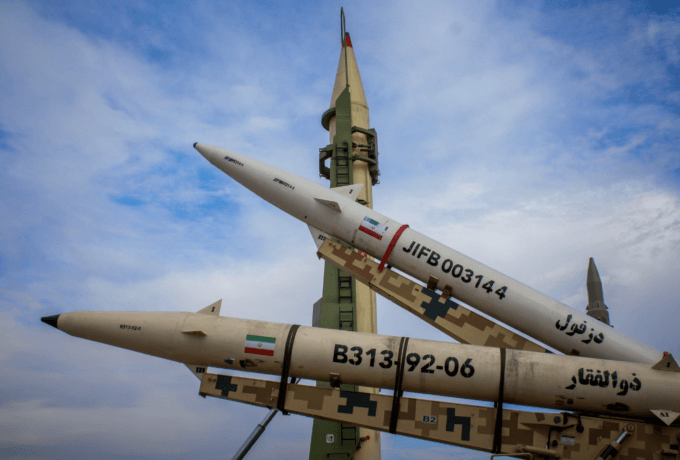
Image by Moslem Daneshzadeh.
The 2025–26 Iran conflict is exposing a brutal arithmetic that no Pentagon budget can easily fix.
In early April 2026, the United States destroyed roughly $386 million worth of its own aircraft to rescue one downed Air Force colonel from Iranian territory. The operation succeeded. The man came home. However, the statistics speak volumes which Washington has been finding it hard to explain to the people: that in a rescue operation, a single time, had used more equipment than several countries could bring to battle throughout a year. It is the war with a new appearance in the Middle East, where the price of remaining in the combat is soaring to an extent outpacing the desire to tally it frankly.
The war officially started on June 13, 2025, with Israel attacking command centres and missile positions of Islamic Revolutionary Guards Corps in Isfahan. What ensued was not the decisive, nimble technique that many analysts had envisaged. Rather, it would be met with a long-range retaliatory strike that lured in the United States and shattered the assumptions regarding air power, missile defence, and the economy of modern warfare. By the time the first 16 days of Operation Epic Fury were over, more than 11,000 advanced munitions had been fired, according to analysts at the Royal United Services Institute in London. RUSI called it a “fire alarm” for the Western defence industrial base, arguing that battlefield dominance now matters less than the ability to keep restocking the shelves.
The arithmetic is punishing. Iran’s Fattah-2 hypersonic missile costs somewhere between $100,000 and $800,000 per unit, with a working estimate around $400,000, based on triangulated defence reporting. The Patriot PAC-3 interceptor used to shoot it down costs roughly $4 million each. A THAAD interceptor runs to $10–12 million. Iran spent hundreds of thousands. The United States spent millions. Multiply that exchange across hundreds of engagements, and the losses accumulate fast. During the first days of open conflict, Iran launched more than 771 ballistic missiles against targets across the region, including Iraq, Kuwait, Bahrain, Qatar, the UAE, Saudi Arabia, Jordan, and Israel, per Defense Express. The UAE intercepted 152 of 165 ballistic missiles, but also had to absorb 35 drone hits. The interceptor stockpiles of every country in the region have been under pressure ever since.
That pressure is not evenly shared. Iran’s drone strategy has proven particularly effective at draining defences before the more expensive ballistic missiles arrive. Asia Times analysts Michael Horowitz and Lauren Kahn describe how Iran’s battlefield record shows the power of what they call “precise mass,” cheap drones used in numbers large enough to exhaust radar lock-ons and interceptor queues, clearing a path for missiles that carry real destructive weight. Anadolu Agency reported that at least 12 US and allied radar systems have been hit since the war began, a deliberate effort to blind the defences before the main strikes land. Israeli sources confirmed an 80% strike success rate for Iranian missiles as air defences began to falter, a figure that would have seemed implausible at the start of the conflict.
The human cost of matching this pace is not only counted in dollars. On April 3, an F-15E Strike Eagle was shot down over southwest Iran. Iran’s state media said a new domestic air defence system brought it down, a claim Reuters reported without full US confirmation. The colonel who survived the crash became the target of a 36-hour rescue operation that consumed two C-130 transport aircraft, an A-10 Thunderbolt, and the original F-15E, with the two C-130s destroyed on the ground by US forces to prevent their technology from falling into Iranian hands. JFeed, citing Clash Report, put the total destroyed aircraft value at around $386 million. Months later, on April 9, a Triton surveillance drone worth 240 million MQ-4C was lost in a routine patrol over the Persian Gulf and flown off-course towards Iran, where it crashed. According to Eurasian Times, the US Navy confirmed the loss on April 14 and categorized it as Class A flight mishap.
Washington’s public accounting of these losses has been selective. PressTV and allied media outlets have claimed the US is concealing the true scale of its combat losses, a claim the Pentagon has not addressed in detail. Iranian officials have also alleged that some rescue operations were cover operations to access enriched uranium sites, though no evidence has been offered for this. What is verifiable is that the losses are substantial and that independent analysts have noted a pattern of classified or delayed reporting. The RUSI team pointed out that the concept they call “command of the reload,” the ability to resupply faster than you expend, is now the decisive variable in this conflict, and the United States is not winning that race.
What gives Iran its staying power is not just the missiles it fires above ground. Investigations of CNN and WSJ have shown a vast network of underground missile cities, hardened tunnels burrowed well below Iranian soil where ballistic missiles are kept, and where they can be launched with ease. Open-source monitoring has also revealed the existence of an underground naval base 500 metres down the surface, armed with missile-equipped vessels, by the IRGC. These facilities have complicated targeting significantly. Where early Israeli strikes aimed to destroy Iran’s missile capacity, the underground dispersal of weapons has made that goal difficult to achieve. Iran is not running out of missiles. The question is how long the other side can keep intercepting them.
China and Russia have added a further dimension. In mid-April, the Financial Times reported, and Reuters carried, that Iran used a Chinese spy satellite to target US bases, a claim Beijing denied. A Telegraph investigation documented how Russia and China have provided Iran with real-time intelligence on US troop and aircraft movements. If confirmed, this represents a direct integration of great-power rivalry into a regional war, where Iran serves as a forward testing ground for systems and tactics that China and Russia may one day use more directly. US intelligence also indicated, per CNN, that China was preparing a weapons shipment to Iran even during a fragile ceasefire period.
The broader lesson emerging from this conflict is not that Iran has defeated the United States, but that the model of air dominance built around expensive platforms and precision-guided munitions is under severe stress when the opponent is willing to fire cheap weapons in large numbers. The cost-exchange ratio favours Iran in every individual engagement. The Strait of Hormuz has been put under new lockdown, Indian oil tankers are caught in the crossfire, according to The Quint, which offers an economic strain on the global energy markets that cannot be resolved by air power in a short time. The ceasefire is not firm and the war is not over yet. What has ended is the assumption that superior hardware automatically translates into manageable costs. Every $4 million interceptor fired at a $200,000 missile is a small fiscal defeat. Over thousands of engagements, those small defeats add up to something that no press conference can fully conceal.
The 2025–26 Iran conflict has forced a reckoning with a basic fact of modern warfare: the side that can absorb costs longest wins, regardless of whose aircraft are more advanced. Iran built cheap, hardened, dispersed, and fired in volume. The United States and Israel built expensive, layered, and precise, and have found those qualities difficult to sustain at scale. The lesson is not new, Ukraine taught a version of it to the whole world, but it is harder to ignore when the bill comes in dollars rather than roubles. How Western governments respond to this arithmetic, in arms production, in alliance diplomacy, and in the honesty of their public accounting, will shape the next phase of a conflict that shows no sign of reaching a clean end.
Syed Salman Mehdi is an IT specialist, environmental advocate, and freelance writer.
April 30, 2026
Image by Moslem Daneshzadeh.
The 2025–26 Iran conflict is exposing a brutal arithmetic that no Pentagon budget can easily fix.
In early April 2026, the United States destroyed roughly $386 million worth of its own aircraft to rescue one downed Air Force colonel from Iranian territory. The operation succeeded. The man came home. However, the statistics speak volumes which Washington has been finding it hard to explain to the people: that in a rescue operation, a single time, had used more equipment than several countries could bring to battle throughout a year. It is the war with a new appearance in the Middle East, where the price of remaining in the combat is soaring to an extent outpacing the desire to tally it frankly.
The war officially started on June 13, 2025, with Israel attacking command centres and missile positions of Islamic Revolutionary Guards Corps in Isfahan. What ensued was not the decisive, nimble technique that many analysts had envisaged. Rather, it would be met with a long-range retaliatory strike that lured in the United States and shattered the assumptions regarding air power, missile defence, and the economy of modern warfare. By the time the first 16 days of Operation Epic Fury were over, more than 11,000 advanced munitions had been fired, according to analysts at the Royal United Services Institute in London. RUSI called it a “fire alarm” for the Western defence industrial base, arguing that battlefield dominance now matters less than the ability to keep restocking the shelves.
The arithmetic is punishing. Iran’s Fattah-2 hypersonic missile costs somewhere between $100,000 and $800,000 per unit, with a working estimate around $400,000, based on triangulated defence reporting. The Patriot PAC-3 interceptor used to shoot it down costs roughly $4 million each. A THAAD interceptor runs to $10–12 million. Iran spent hundreds of thousands. The United States spent millions. Multiply that exchange across hundreds of engagements, and the losses accumulate fast. During the first days of open conflict, Iran launched more than 771 ballistic missiles against targets across the region, including Iraq, Kuwait, Bahrain, Qatar, the UAE, Saudi Arabia, Jordan, and Israel, per Defense Express. The UAE intercepted 152 of 165 ballistic missiles, but also had to absorb 35 drone hits. The interceptor stockpiles of every country in the region have been under pressure ever since.
That pressure is not evenly shared. Iran’s drone strategy has proven particularly effective at draining defences before the more expensive ballistic missiles arrive. Asia Times analysts Michael Horowitz and Lauren Kahn describe how Iran’s battlefield record shows the power of what they call “precise mass,” cheap drones used in numbers large enough to exhaust radar lock-ons and interceptor queues, clearing a path for missiles that carry real destructive weight. Anadolu Agency reported that at least 12 US and allied radar systems have been hit since the war began, a deliberate effort to blind the defences before the main strikes land. Israeli sources confirmed an 80% strike success rate for Iranian missiles as air defences began to falter, a figure that would have seemed implausible at the start of the conflict.
The human cost of matching this pace is not only counted in dollars. On April 3, an F-15E Strike Eagle was shot down over southwest Iran. Iran’s state media said a new domestic air defence system brought it down, a claim Reuters reported without full US confirmation. The colonel who survived the crash became the target of a 36-hour rescue operation that consumed two C-130 transport aircraft, an A-10 Thunderbolt, and the original F-15E, with the two C-130s destroyed on the ground by US forces to prevent their technology from falling into Iranian hands. JFeed, citing Clash Report, put the total destroyed aircraft value at around $386 million. Months later, on April 9, a Triton surveillance drone worth 240 million MQ-4C was lost in a routine patrol over the Persian Gulf and flown off-course towards Iran, where it crashed. According to Eurasian Times, the US Navy confirmed the loss on April 14 and categorized it as Class A flight mishap.
Washington’s public accounting of these losses has been selective. PressTV and allied media outlets have claimed the US is concealing the true scale of its combat losses, a claim the Pentagon has not addressed in detail. Iranian officials have also alleged that some rescue operations were cover operations to access enriched uranium sites, though no evidence has been offered for this. What is verifiable is that the losses are substantial and that independent analysts have noted a pattern of classified or delayed reporting. The RUSI team pointed out that the concept they call “command of the reload,” the ability to resupply faster than you expend, is now the decisive variable in this conflict, and the United States is not winning that race.
What gives Iran its staying power is not just the missiles it fires above ground. Investigations of CNN and WSJ have shown a vast network of underground missile cities, hardened tunnels burrowed well below Iranian soil where ballistic missiles are kept, and where they can be launched with ease. Open-source monitoring has also revealed the existence of an underground naval base 500 metres down the surface, armed with missile-equipped vessels, by the IRGC. These facilities have complicated targeting significantly. Where early Israeli strikes aimed to destroy Iran’s missile capacity, the underground dispersal of weapons has made that goal difficult to achieve. Iran is not running out of missiles. The question is how long the other side can keep intercepting them.
China and Russia have added a further dimension. In mid-April, the Financial Times reported, and Reuters carried, that Iran used a Chinese spy satellite to target US bases, a claim Beijing denied. A Telegraph investigation documented how Russia and China have provided Iran with real-time intelligence on US troop and aircraft movements. If confirmed, this represents a direct integration of great-power rivalry into a regional war, where Iran serves as a forward testing ground for systems and tactics that China and Russia may one day use more directly. US intelligence also indicated, per CNN, that China was preparing a weapons shipment to Iran even during a fragile ceasefire period.
The broader lesson emerging from this conflict is not that Iran has defeated the United States, but that the model of air dominance built around expensive platforms and precision-guided munitions is under severe stress when the opponent is willing to fire cheap weapons in large numbers. The cost-exchange ratio favours Iran in every individual engagement. The Strait of Hormuz has been put under new lockdown, Indian oil tankers are caught in the crossfire, according to The Quint, which offers an economic strain on the global energy markets that cannot be resolved by air power in a short time. The ceasefire is not firm and the war is not over yet. What has ended is the assumption that superior hardware automatically translates into manageable costs. Every $4 million interceptor fired at a $200,000 missile is a small fiscal defeat. Over thousands of engagements, those small defeats add up to something that no press conference can fully conceal.
The 2025–26 Iran conflict has forced a reckoning with a basic fact of modern warfare: the side that can absorb costs longest wins, regardless of whose aircraft are more advanced. Iran built cheap, hardened, dispersed, and fired in volume. The United States and Israel built expensive, layered, and precise, and have found those qualities difficult to sustain at scale. The lesson is not new, Ukraine taught a version of it to the whole world, but it is harder to ignore when the bill comes in dollars rather than roubles. How Western governments respond to this arithmetic, in arms production, in alliance diplomacy, and in the honesty of their public accounting, will shape the next phase of a conflict that shows no sign of reaching a clean end.
Syed Salman Mehdi is an IT specialist, environmental advocate, and freelance writer.

No comments:
Post a Comment