Showing posts sorted by date for query BRUTALIST ARCHITECTURE. Sort by relevance Show all posts

Sunday, April 26, 2026

Soviet architecture vanishes as Central Asia drifts from Moscow

By AFP
April 24, 2026


Central Asia has shown little interest in preserving its Soviet heritage
 - Copyright NAVCENT PUBLIC AFFAIRS/AFP -

On the facade of an apartment block in Tajikistan’s capital Dushanbe, a giant mosaic depicting cosmonauts and engineers celebrates the scientific triumphs of the Soviet Union.

Like so many other relics of the Soviet past in Central Asia, it is doomed to vanish amid a distancing from Russia and a top-down drive to boost national culture.

“If we could only carefully remove it and put it on the building that will be built here. That would be good,” said Rakhmon Satiev, who lives in the apartment.

His wish will not come true. The block is about to be demolished to make way for a gleaming new residential complex, and the mosaic is to be torn down.

Over the past decade, Central Asia has shown little interest in preserving its Soviet heritage. Architectural landmarks and art, including mosaics, frescoes and sculptures, have been rapidly demolished.

“If a building is old and does not fit into the new city plan, it is torn down. The city is being rebuilt and renovated, and the past is vanishing,” Dzhamshed Dzhuraev, a mosaic artist in Tajikistan, told AFP.

Hidden from view in the courtyard behind his studio stands a monument to Vladimir Lenin, the founder of the USSR — an awkward reminder of an era that no longer fits with the times.


– ‘No longer necessary’ –


The five Central Asian former Soviet republics — Kazakhstan, Kyrgyzstan, Uzbekistan, Tajikistan and Turkmenistan — became independent with the collapse of the Soviet Union 35 years ago.

Their urban landscapes have since turned into a chaotic mix of new high-rises, Stalin-era neoclassicism, dilapidated shacks and stalled construction sites.

Altynai Kudaibergenova, a co-founder of Artkana, a rare initiative group working to preserve Kyrgyzstan’s architectural heritage, said the number of lost monuments was “striking”.

She fears for the visual future of the capital Bishkek, which still has “magnificent examples of socialist-modernist architecture”.

The style is popular on social media, particularly among tourists.

This architectural overhaul is being driven by ideology, which leaves no space for Soviet remnants.

The region’s largely unchallenged leaders brand themselves as the founders of a new era and are cementing their own legacies with fresh symbols of power.

Few say outright that is what’s going on.

Still economically dependent on Russia — even as China muscles into the region — officials frame the demolition drive as cost-efficient.

They say renovating crumbling Soviet-era buildings is more expensive than starting from scratch, and that the region urgently needs more housing for its rapidly growing population of some 80 million.

In the Tajik capital Dushanbe, the mayor — the son of the president — “is doing everything possible to make the buildings as beautiful and comfortable as he can,” prominent Tajik sculptor Safarbek Kosimov told AFP.

Soviet-era mosaics were “no longer necessary,” he added.

There are no such qualms about portraits of 73-year-old strongman leader Emomali Rakhmon — which have replaced many of the torn-down facades.


– Ideological art –


Critics lament the campaign.

“Most Soviet mosaics were designed to convey an ideological message, but their artistic value is also important,” activist Kudaibergenova said.

“Unfortunately, businesses are rarely receptive to such considerations. Their main priority is selling square metres at a high price.”

Real-estate deals in the region are often marked by corruption and collusion between officials and business interests, according to several nonprofits and international organisations.

In Bishkek, painter Erkinbek Bolzhurov is worried about the fate of the House of Artists, which stands next to the former national printing house — of which now only the walls remain.

“We want the city to develop, of course, but not at the expense of our memory,” he told AFP.

“Great artists worked inside these walls. That is what makes the building unique — it has a history.”

Freedom of expression is tightly controlled in Central Asia, and authorities rarely consult with the public.

Despite the current trend, Tajik mosaic artist Dzhuraev wants to believe that “the time will come” when mosaics will once again adorn buildings.

“Architects and urban planners should pay them more attention,” he said — a “revival” of mosaics is still possible.

Monday, February 02, 2026

Family of JFK Call BS on Trump Shuttering of Kennedy Center

Kennedy’s niece, Maria Shriver said, “since the name-change” to honor Trump “no one wants to perform there any longer.”


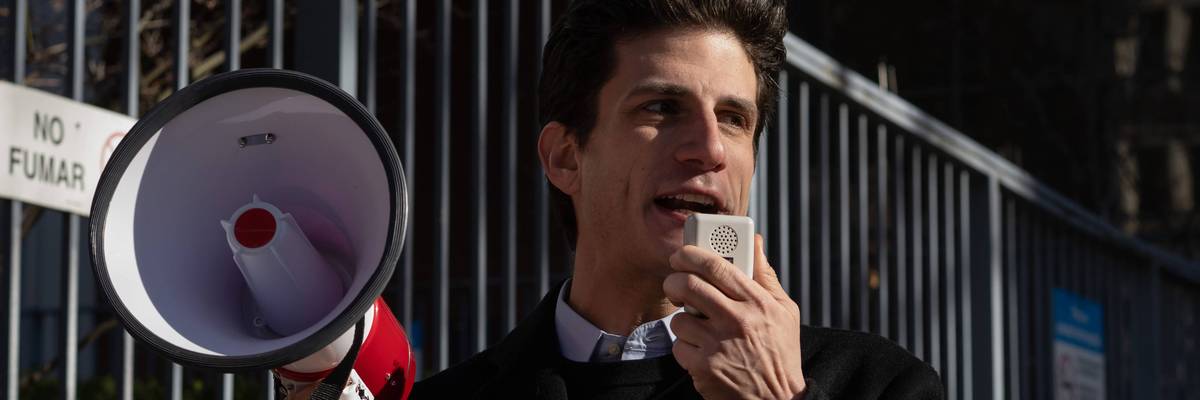
Jack Schlossberg, grandson of former President John F. Kennedy, who is currently running for Congress, speaks to members of the New York State Nurses Association before joining the picket line in support of nurses on strike outside Mount Sinai West on January 12, 2026, in New York City.
(Photo by Edna Leshowitz/Getty Images)

Stephen Prager
Feb 02, 2026
COMMON DREAMS

The descendants of former President John F. Kennedy are denouncing President Donald Trump’s order to shutter the Kennedy Center and calling bullshit on his reasons for doing so.

On Sunday, Trump abruptly announced on Truth Social that beginning on July 4, the performing arts center in Washington, DC, which he recently renamed after himself, would shut down for two years for “Construction, Revitalization, and Complete Rebuilding.”

Trump said the decision was based on input from a group of “many Highly Respected experts,” who said the center was “tired, broken, and dilapidated” and needed to be shut down for a facelift.


However, the family of the center’s namesake said it has more to do with the recent pullout of talent in protest after it became the “Trump-Kennedy Center” last year and the president began asserting control over its programming, which included the world premiere of a hagiographic documentary about his wife, First Lady Melania Trump, this weekend.

In a post on social media, JFK’s niece, Maria Shriver, gave what she said was a “translation” of Trump’s comments about the center’s sudden closure.

She suggested the president meant to say: “It has been brought to my attention that due to the name change (but nobody’s telling me it’s due to the name change), but it’s been brought to my attention that entertainers are canceling left and right, and I have determined that since the name change no one wants to perform there any longer.”

Speaking as Trump, she continued: “I’ve determined that due to this change in schedule, it’s best for me to close this center down and rebuild a new center that will bear my name, which will surely get everybody to stop talking about the fact that everybody’s canceling... right?”

Among those who have pulled out of planned performances at the center are the Washington National Opera, Lincoln composer Philip Glass, the Broadway show Hamilton, the actress and producer Issa Rae, and several others—many of whom directly cited Trump’s takeover as their reason.

Kennedy’s grandson, Jack Schlossberg, who is running for Congress as a Democrat in New York, was even more direct in his condemnation.

“Trump can take the Kennedy Center for himself. He can change the name, shut the doors, and demolish the building. He can try to kill JFK,” he wrote. “But JFK is kept alive by us now rising up to remove Donald Trump, bring him to justice, and restore the freedoms generations fought for.”


Trump faces intense ridicule after new Kennedy Center announcement


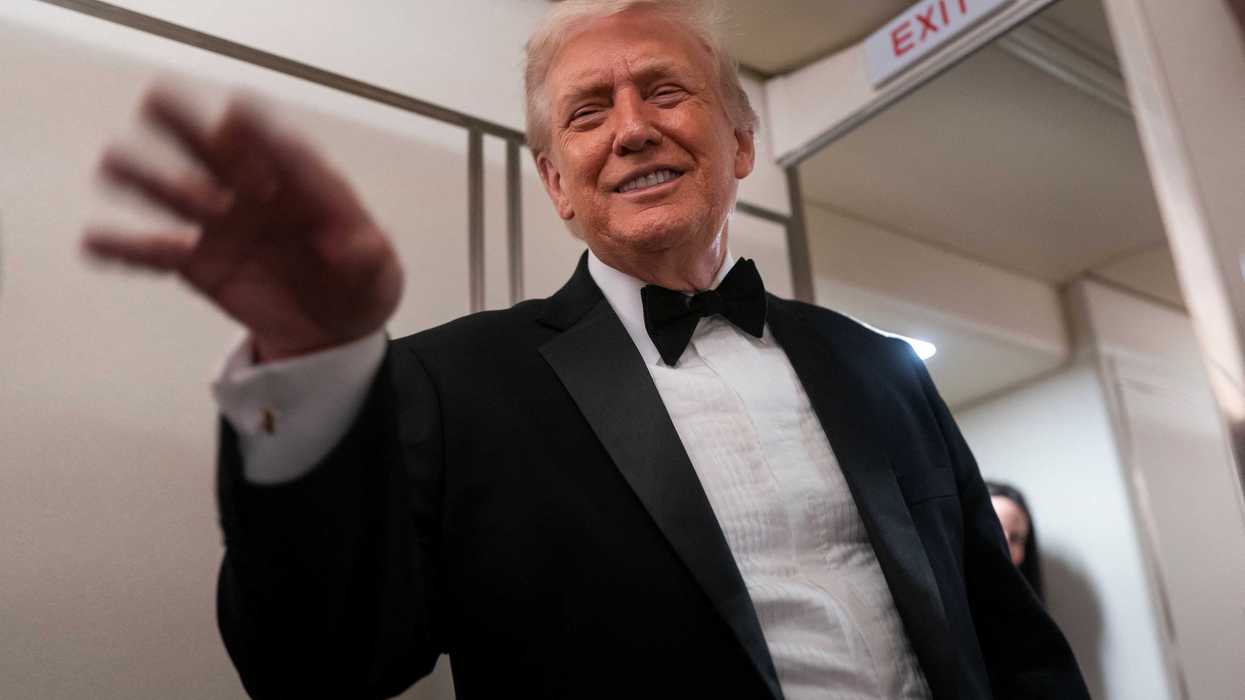
U.S. President Donald Trump on board Air Force One, January 31, 2026

February 02, 2026
 ALTERNET

On Sunday, February 1, President Donald Trump announced that the Kennedy Center in Washington, D.C. will be closing for two years for renovations. The Kennedy Center, Trump said, will close on July 4 — the 250th anniversary of the signing of the U.S. Declaration of Independence — and reopen, post-renovations, in 2028.

Trump's announcement is receiving a lot of reactions on X, formerly Twitter.

CNN's Jake Tapper noted, "Oct 1, WaPo: sales for orchestra/theater/dance performances worst since pandemic Jan 2, PBS: Kennedy Center faces artist cancellations, drop in sales after Trump's name added Feb 1, Trump closes K. Center for 2 yrs 'for Construction, Revitalization, and Complete Rebuilding.'"

Journalist Karly Kingsley tweeted, "Trump says he's closing the Kennedy Center for two years for 'construction, revitalization, and complete rebuilding.' That's code for no one will perform there since he took over and he doesn’t want another public reminder that artists and audiences overwhelmingly despise him."

Democratic activist Melanie D'Arrigo wrote, "At least 18 artists have canceled shows at the Kennedy Center during Trump’s 2nd term. Closing it down is less embarrassing for him than artists continuing to cancel because of him."

Russell Drew tweeted, "Of course Donald Trump is now closing down the Kennedy Center. With ticket sales plummeting and top artists staying far away ever since he branded his name on the building, he's getting his revenge. He's been like this his whole life."

parody account inspired by Democratic California Gov. Gavin Newsom — who is relentless in trolling Trump — posted, in all caps, "DONALD IS CLOSING THE KENNEDY CENTER. (AFTER DESTROYING IT.) BUT DON'T BE SAD! I'M OPENING A NEW ARTS CENTER CALLED, 'NOT A TRUMP CENTER.'EVERY ARTIST IS CALLING ME! FIRST SHOW IS TAYLOR, BRUCE & BAD BUNNY. KID ROCK & NICKI ARE PERFORMING THE FOLLOWING NIGHT (AT ARBY'S.)."


Kennedy Center's image had 'fallen apart' due to Trump's meddling: analysis


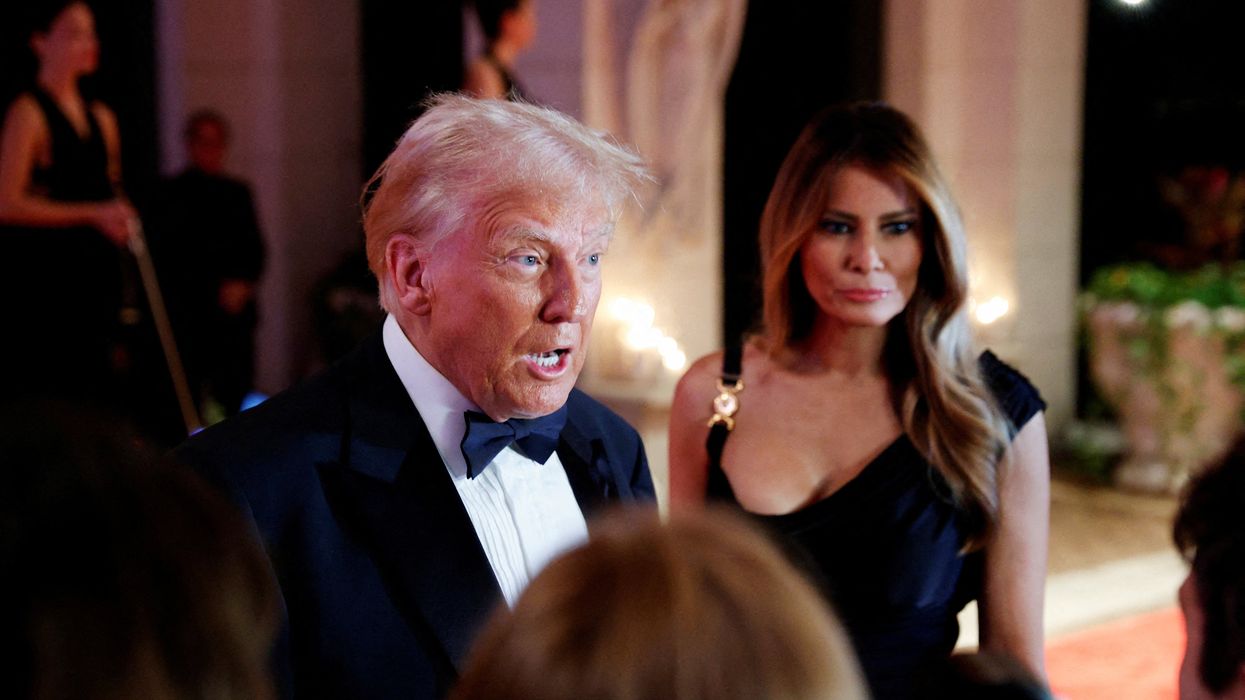
Donald Trump, accompanied by his wife Melania, attends a New Year's Eve event at Mar-a-Lago in Palm Beach, Florida, U.S., December 31, 2024. REUTERS/Marco Bello
February 02, 2026 
ALTERNET

Donald Trump made the surprise announcement over the weekend that the Kennedy Center would be closing down for a years-long renovation project, with an analysis from The New Republic stating that this move came after the center's prestigious image had "fallen apart" due to his meddling.

The president announced in a Truth Social post Sunday evening that the center, which he had recently attempted to add his own name to, would be shutting down for a two-year period starting on July 4, "in honor of the 250th Anniversary of our Country," in order to conduct a two-year renovation he deemed necessary after a "year review."

“Financing is completed, and fully in place!” Trump's post read. “This important decision, based on input from many Highly Respected Experts, will take a tired, broken, and dilapidated Center, one that has been in bad condition, both financially and structurally for many years, and turn it into a World Class Bastion of Arts, Music, and Entertainment, far better than it has ever been before.”

Despite his stated reasoning for the closure, the move was widely interpreted as a retreat by Trump after his meddling and attempts to insert himself into the Kennedy Center's image caused artists to cancel the performances there en masse. In addition to forcing his own name onto the center, which cannot be legally done without congressional approval, Trump also filled the center's board with loyalists and claimed that he would reshape its entertainment offerings to fit his own political agenda.

In its own analysis of the situation from Monday, The New Republic pinned the blame on the closure and the Kennedy Center's tarnished reputation squarely on the president.

"Long before Trump’s meddling, the Kennedy Center was widely considered a premier, world-class arts institution," the outlet explained. "But since the White House became directly involved in its operations and programming, its normally star-studded lineup has fallen apart."

The New Republic also cited responses to the move from the family of former President John F. Kennedy, whom the center was originally named for.

“I’ve determined that due to this change in schedule, it’s best for me to close this center down and rebuild a new center that will bear my name, which will surely get everybody to stop talking about the fact that everybody’s canceling… right?” Maria Shriver, Kennedy's niece, wrote in a post X.

Jack Schlossberg, Kennedy's grandson who is currently running for Congress in New York, also weighed in.

“Trump can take the Kennedy Center for himself. He can change the name, shut the doors, and demolish the building. He can try to kill JFK,” Schlossberg wrote in his own post to X. “But JFK is kept alive by us now rising up to remove Donald Trump, bring him to justice, and restore the freedoms generations fought for.”


Mockery abounds after Trump's latest Kennedy Center proclamation: 'He’s East-Winging it'


Robert Davis
February 1, 2026 
RAW STORY


U.S. President Donald Trump gestures while he poses for a picture at the presidential box at the Kennedy Center, in Washington, D.C., U.S., March 17, 2025. REUTERS/Carlos Barria

Mockery abounded on Sunday night after President Donald Trump announced that the embattled Kennedy Center would close for two years as a wave of performers cancelled their dates.

Trump has been trying for several months to rebrand the Kennedy Center as the "Trump-Kennedy Center," even though the building was named by federal law. His efforts to add his name to the center, which was built in honor of the late President John F. Kennedy, sparked outrage among artists and performers.

In a lengthy Truth Social post on Sunday, Trump said his decision to close the Kennedy Center came after consulting with experts and is "totally subject to Board approval."

"I have determined that the fastest way to bring The Trump Kennedy Center to the highest level of Success, Beauty, and Grandeur, is to cease Entertainment Operations for an approximately two year (sic) period of time, with a scheduled Grand Reopening that will rival and surpass anything that has taken place with respect to such a Facility before," Trump proclaimed.

Political analysts and observers reacted on social media.

"So he’s announcing the demolition of the Kennedy Center, correct? He’s East-Winging it," lawyer Will Stancil posted on Bluesky.

"Just like his casinos and other businesses, the Kennedy Center went out of business after he put his name on it," Brett Meiselas, co-founder of MeidasTouch, posted on X.

"We had to destroy the Kennedy Center in order to save it," historian Kevin Kruse posted on Bluesky.

"Trump officially killed the Kennedy Center," lawyer Bradley Moss posted on Bluesky.


"He’s not mad about cancellations, just following advice from unnamed Highly Respected Experts," Mother Jones reporter Dan Friedman posted on X.

"Trump ruined the Kennedy Center so quickly and completely that he's going to close and 'renovate' it for most of the rest of his second term," journalist Mike Rothschild posted on X.

Trump announces two-year closure of embattled Kennedy Center

Robert Davis
February 1, 2026 
RAW STORY


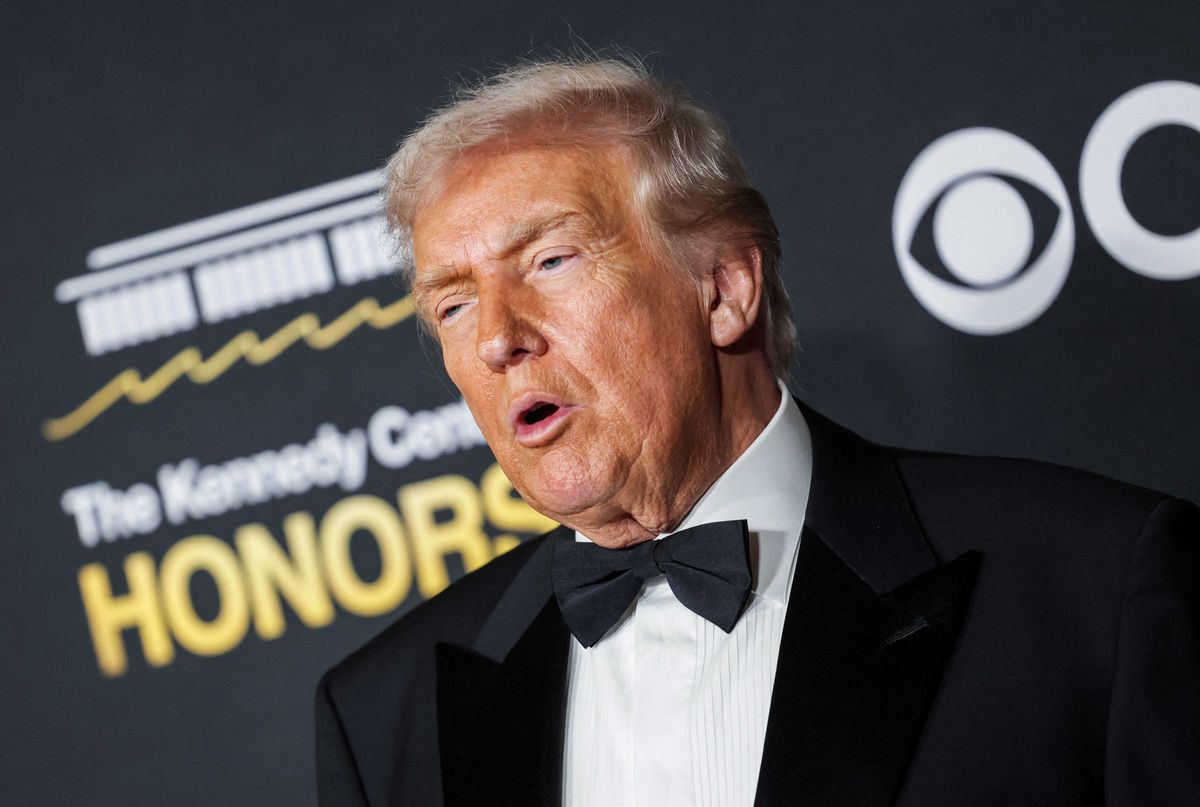
President Donald Trump poses on the red carpet for the 2025 Kennedy Center Honors at the John F. Kennedy Center for the Performing Arts in Washington, D.C. on Dec. 7, 2025. REUTERS/Jeenah Moon

President Donald Trump announced on Sunday that the embattled Kennedy Center will close for two-years as it undergoes renovations.

"After a one year review of The Trump Kennedy Center, that has taken place with Contractors, Musical Experts, Art Institutions, and other Advisors and Consultants, deciding between either Construction with Closure and Re-Opening or, Partial Construction while continuing Entertainment Operations through a much longer period of time, working in and around the Performances, I have determined that The Trump Kennedy Center, if temporarily closed for Construction, Revitalization, and Complete Rebuilding, can be, without question, the finest Performing Arts Facility of its kind, anywhere in the World," Trump wrote in a lengthy Truth Social post on Sunday.

The president made the announcement at a time when the Kennedy Center's bookings had dried up in protest of the Trump administration. Artists ranging from Béla Fleck to Issa Rae and The Cookers have all cancelled their Kennedy Center dates.

The Kennedy Center is scheduled to close on July 4, according to Trump's post.


Opinion: President of bad taste — The Arc de Sleaze in Washington will probably be golden


By Paul Wallis
EDITOR AT LARGE
DIGITAL JOURNAL
January 31, 2026

If Donald Trump is remembered for anything, it’ll be his obsession with landmarks commemorating himself. The useless White House ballroom, and the inexcusable demolition of the rose garden, the renaming of the Kennedy Center, and the golden tat adorning the White House apparently aren’t enough.

The arch will supposedly be 250 feet tall. Modelled roughly on the Arc de Triomphe, this thing will be timed to coincide with America’s 250th anniversary. It will be funded by “leftover donations” to the much-reviled ballroom.

You’ve probably heard of brutalist architecture. It’s useless and ornamental. It reflects the bad taste of its proponents.

This is brattish architecture. Many despots, notably Louis the 14th, the mass-murdering king who bankrupted France with his many wars, liked monumental architecture rather than competent architecture. The Palace of Versailles was built with no regard for sanitation, for example.

In the case of the US, however, there’s something grotesque about even the theory of a triumphal arch. What could possibly be less appropriate?

The United States is no longer anything like the beacon of hope it was from inception. The lack of originality and any specifically American characteristics of the proposed arch are absurd but typical of this administration.

What triumph is this useless arch commemorating? The worst living conditions since the Great Depression? An America at war with itself? An America that refuses to modernize or recognize the rights of its own citizens? Rampant criminality and corruption? The last mad bleat of an ex-superpower? The triumph of disgusting parasites pumping the life and identity out of America?

The best name for this new absurdity would be the Arc de Sleaze.

It’ll be a last-minute token of pseudo-patriotism, like the rest of Trump’s horrible facades. Stick a red cap made in China on it, and you’ve got your American icon.

Suggestion – Tear this insult down ASAP.

_________________________________________________________

Disclaimer

The opinions expressed in this Op-Ed are those of the author. They do not purport to reflect the opinions or views of the Digital Journal or its members.

Saturday, October 25, 2025

Dictators and kings build monumental architecture to buttress their egos. Sound familiar?

The Conversation
October 25, 2025 

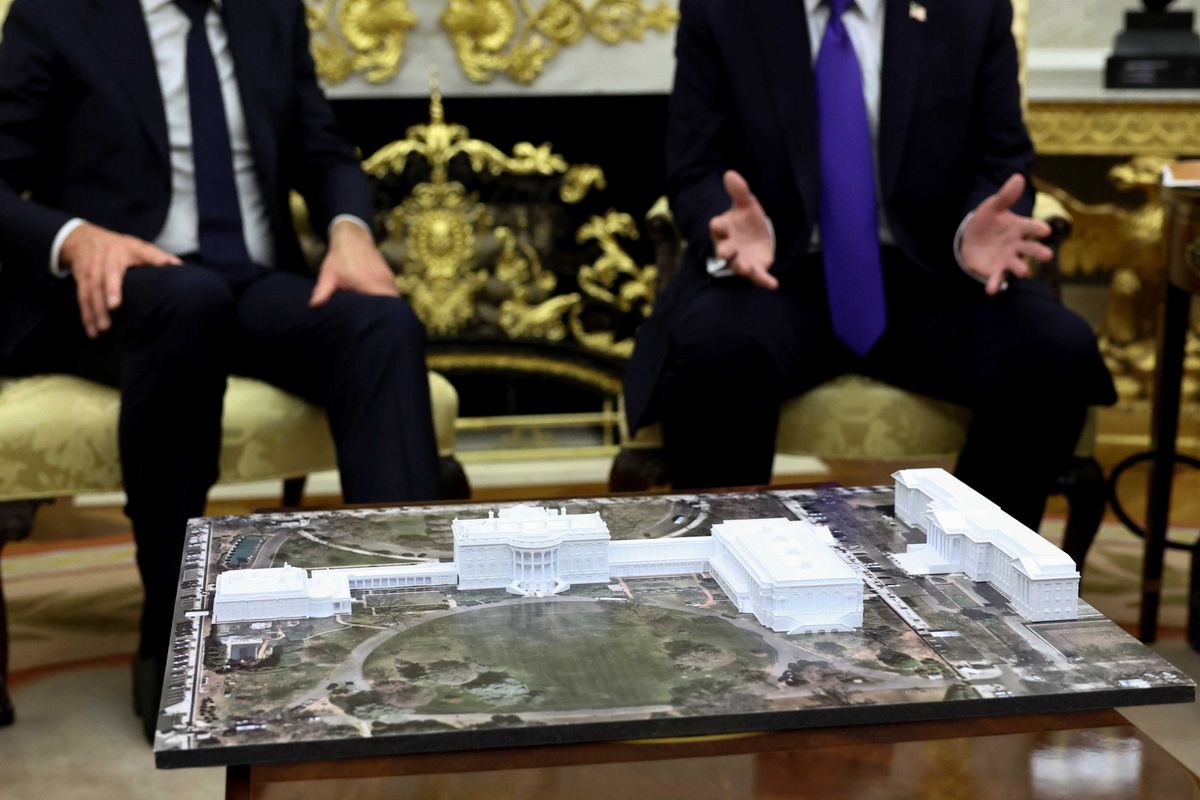
Donald Trump speaks near a model of the new White House ballroom. 
REUTERS/Kevin Lamarque

By R. Grant Gilmore III, Director, 
Historic Preservation and Community Planning Program, College of Charleston

From ancient Egypt to Washington, D.C., rulers have long used architecture and associated stories to project power, control memory and shape national identity. As 17th-century French statesman Jean-Baptiste Colbert observed:
“In the absence of brilliant deeds of war, nothing proclaims the greatness and spirit of princes more than building works.”

Today, the Trump administration is mobilizing heritage and architecture as tools of ideology and control. In U.S. historic preservation, “heritage” is the shared, living inheritance of places, objects, practices and stories — often plural and contested — that communities value and preserve. America’s architectural heritage is as diverse as the people who created, inhabited and continue to care for it.

As an archaeologist with three decades of practice, I read environments designed by humans. Enduring modifications to these places, especially to buildings and monuments, carry power and speak across generations.

In his first term as president, and even more so today, Donald Trump has pushed to an extreme legacy-building through architecture and heritage policy. He is remaking the White House physically and metaphorically in his image, consistent with his long record of putting his name on buildings as a developer.

In December 2020, Trump issued an executive order declaring classical and traditional architectural styles the “preferred” design for new federal buildings. The order derided Brutalist and modernist structures as inconsistent with national values.

Now, Trump is seeking to roll back inclusive historical narratives at U.S. parks and monuments. And he is reviving sanitized myths about America’s history of slavery, misogyny and Manifest Destiny, for use in museums, textbooks and public schools.

Yet artifacts don’t lie. And it is the archaeologist’s task to recover these legacies as truthfully as possible, since how the past is remembered shapes the choices a nation makes about its future.

Architecture as political power and legacy

Dictators, tyrants and kings build monumental architecture to buttress their own egos, which is called authoritarian monumentalism. They also seek to build the national ego — another word for nationalism.

Social psychologists have found that the awe we experience when we encounter something vast diminishes the “individual self,” making viewers feel respect and attachment to creators of awesome architecture. Authoritarian monumentalism often exploits this phenomenon. For example, in France, King Louis XIV expanded the Palace of Versailles and renovated its gardens in the mid-1600s to evoke perceptions of royal grandeur and territorial power in visitors.

Many leaders throughout history have built “temples to power” while erasing or overshadowing the memory of their predecessors — a practice known as damnatio memoriae, or condemnation to oblivion.

In the ancient world, the Sumerians, Babylonians, Egyptians, Romans, Chinese dynasties, Mayans and Incas all left behind architecture that still commands awe in the form of monuments to gods, rulers and communities. These monuments conveyed power and often served as instruments of physical and psychological control.

In the 19th century, Napoleon fused conquest with heritage. Expeditions to Egypt and Rome, and the building of Parisian monuments — the Arc de Triomphe and the Vendôme Column, both modeled on Roman precedents — reinforced his legitimacy.

Albert Speer’s and Hermann Giesler’s monumental neoclassical designs in Nazi Germany, such as the party rally grounds in Nuremberg, were intended to overwhelm the individual and glorify the regime. And Josef Stalin’s Soviet Union suppressed avant-garde experimentation in favor of monumental “socialist realist” architecture, projecting permanence and centralized power.

Now, Trump has proposed building his own triumphal arch in Arlington, Virginia, just across the Potomac River from the Lincoln Memorial, as a symbol to mark the 250th anniversary of the Declaration of Independence.

An American alternative

Born of Enlightenment ideals of John Locke, Voltaire and Adam Smith, the American Revolution rejected the European idea of monarchs as semi-divine rulers. Instead, leaders were expected to serve the citizenry.

That philosophy took architectural form in the Federal style, which was dominant from about 1785 to 1830. This clear, democratic architectural language was distinct from Europe’s ornate traditions, and recognizably American.

Its key features were Palladian proportions — measurements rooted in classical Roman architecture — and an emphasis on balance, simplicity and patriotic motifs.

James Hoban’s White House and Thomas Jefferson’s Monticello embodied this style. Interiors featured lighter construction, symmetrical lines, and motifs such as eagles, urns and bellflowers. They rejected the opulent rococo styles associated with monarchy.

Americans also recognized preservation’s political force. In 1816, the city of Philadelphia bought Independence Hall, which was constructed in 1753 and was where the Declaration of Independence and the Constitution were debated and signed, to keep it from being demolished. Today the building is a U.S. National Park and a UNESCO World Heritage Site.

Early preservationists saved George Washington’s home, Mount Vernon, Jefferson’s Monticello, and other landmarks, tying democracy’s endurance to the built environment.

Architecture, memory and Trump

In remaking the White House and prescribing the style and content of many federal sites, Trump is targeting not just buildings but the stories they tell.

By challenging narratives that depart from white, Anglo-Saxon origin myths, Trump is using his power to roll back decades of work toward creating a more inclusive national history.

These actions ignore the fact that America’s strength lies in its identity as a nation of immigrants. The Trump administration has singled out the Smithsonian Institution — the world’s largest museum, founded “for the increase and diffusion of knowledge — for ideological reshaping. Trump also is pushing to restore recently removed Confederate monuments, helping to revive "Lost Cause” mythology about the Civil War.

Trump’s 2020 order declaring classical and traditional architectural styles the preferred design for government buildings echoed authoritarian leaders like Adolf Hitler and Stalin, whose governments sought to dictate aesthetics as expressions of ideology. The American Institute of Architects publicly opposed the order, warning that it imposed ideological restrictions on design.

Trump’s second administration has advanced this agenda by adopting many recommendations in the Heritage Foundation’s Project 2025 blueprint. Notably, Project 2025 calls for repealing the 1906 Antiquities Act — which empowers presidents to quickly designate national monuments on federal land — and for shrinking many existing monuments. Such rollbacks would undercut the framework that has safeguarded places like Devils Tower in Wyoming and Muir Woods in California for over a century.

Trump’s new ballroom is a distinct departure from the core values embodied in the White House’s Federal style. Although many commentators have described it as rococo, it is more aligned with the overwrought and opulent styles of the Gilded Age — a time in American history, from about 1875 through 1895, with many parallels to the present.

In ordering its construction, Trump has ignored long-standing consultation and review procedures that are central to historic preservation. The demolition of the East Wing may have ignored processes required by law at one of the most important U.S. historic sites. It’s the latest illustration of his unilateral and unaccountable methods for getting what he wants.

Instruments of memory and identity

When leaders push selective histories and undercut inclusive ones, they turn heritage into a tool for controlling public memory. This collective understanding and interpretation of the past underpins a healthy democracy. It sustains a shared civic identity, ensures accountability for past wrongs and supports rights and participation.

Heritage politics in the Trump era seeks to redefine America’s story and determine who gets to speak. Attacks on so-called “woke” history seek to erase complex truths about slavery, inequality and exclusion that are essential to democratic accountability.

Architecture and heritage are never just bricks and mortar. They are instruments of memory, identity and power.


'So little respect': Trump 'pillages' as he turns the White House into a 'shipwreck'


October 25, 2025 | ALTERNET


The White House East Wing existed, in different forms, for 123 years. The East Wing was unveiled in its original form under Republican President Teddy Roosevelt in 1902 before undergoing a major expansion and renovation under Democratic President Franklin Delano Roosevelt 40 years later. But in late October, the East Wing was demolished altogether on orders from President Donald Trump — who is planning to replace it with a massive ballroom.

In her October 25 opinion column, the New York Times' Maureen Dowd points to the demolition of the East Wing as symbolic of a broader problem: Trump, during his second presidency, is "governing" by "whims" and has tossed aside the United States' long "We the People" tradition.

"Trump has so little respect for this 123-year-old symbol of American history that he didn't check with federal planning officials or Congress before he obliterated one side of the White House," Dowd argues. "As if he's tearing down a gas station. When I visited the White House with my mom as a kid, we loved overhearing foreign tourists ooh and ahh about how relatively small and modest the house was. Its simplicity was part of its charm…. Trump does not do small or modest. He does big, flashy odes to self."

The demolition of the East Wing, Dowd adds, is only one example of Trump's indifference to the views of others.

"It's a slam-dance presidency that delights in transgressing and provoking," Dowd laments. "Build a $300 million, 90,000-square-foot gilt ballroom — which will overshadow the central edifice — while the government is shut and people have been thrown out of work; plaster tacky gold all over the Oval; sue everyone willy-nilly; put foes through legal torture; send troops to American cities; shrug off due process and blow alleged drug runners out of the water…. After turning the Justice Department into his own vigilante posse, Trump now wants to warp the once-esteemed department even more…. Trump once thought nothing of aiming to overthrow the government he ran. Now, he thinks nothing of threatening to sue the government he runs if he isn't allowed to pay himself a quarter-billion dollars."

Dowd continues, "'We the People' is quaint. Now, we are governed by the whims of one person."

Trump, the New York Times columnist emphasizes, "can indulge any crazy impulse, and nobody is able to check him."

"Congress is adrift," Dowd writes. "The White House is a shipwreck. Trump is marauding in the Caribbean. (Former FBI Director) James Comey and (New York State Attorney General) Letitia James are being forced to walk the plank, and next up could be (former special counsel) Jack Smith and (Sen.) Adam Schiff. We are awash in nautical metaphors as the president plunders and pillages. He’s a pirate — and not the fun Halloween kind."

Maureen Dowd's full New York Times column is available at this link (subscription required).


Why Trump is really tearing down the White House


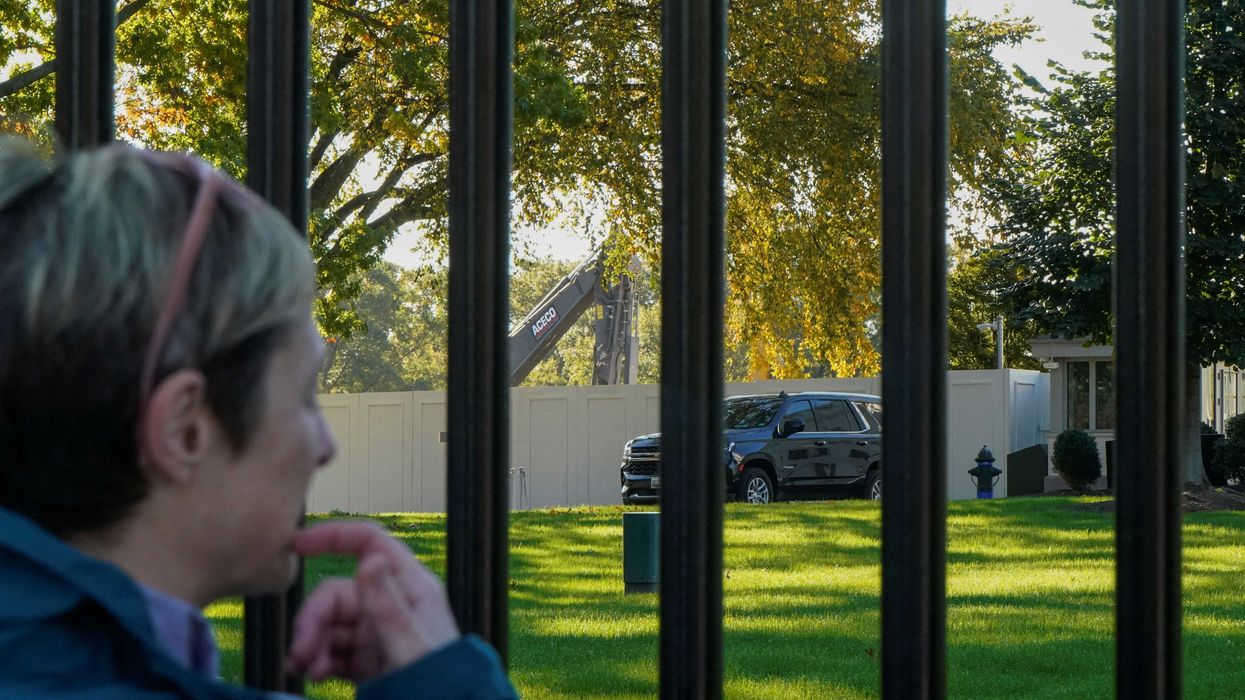
A person looks through the fence at Pennsylvania Avenue, as demolition work continues at the East Wing of the White House, where U.S. President Donald Trump's proposed ballroom is being built, in Washington, D.C., U.S., October 24, 2025. 
REUTERS/Elizabeth Frantz
October 25, 2025 
ALTERNET

Adam Gopnik tells the New Yorker that Trump destroying the White House is a performance display broadcasting his unbroken power over the presidency.

“After months marked by corruption, violence, and the open perversion of law, to gasp in outrage at the loss of a few tons of masonry and mortar might seem oddly misjudged,” said Gopnik. “And yet it isn’t. We are creatures of symbols, and our architecture tells us who we are.”

A nation writes its history in books, but its buildings is a kind of enduring book itself. The Eiffel Tower is an expression of a nation’s history, as is the Lincoln Memorial. The White House’s East Wing, however, was a place of accomplishment. Franklin Roosevelt created room for staff and military protection. Eleanor Roosevelt hosted women journalists. It was there that Jacqueline Kennedy presided founded the White House Historical Association. Rosalynn Carter established an office there and used it for a host of benevolent endeavors, including mental health advocacy and humanitarian work, including helping pass the Mental Health Systems Act of 1980 and global human rights initiatives.

“All of that is now gone,” said Gopnik. “The act of destruction is precisely the point: a kind of performance piece meant to display Trump’s arbitrary power over the Presidency, including its physical seat. He asks permission of no one, destroys what he wants, when he wants. As many have noted, one of Trump’s earliest public acts, having promised the Metropolitan Museum of Art the beautiful limestone reliefs from the façade of the old Bonwit Teller building, was to jackhammer them to dust in a fit of impatience.”

Trump apologists argue that Jimmy Carter installed solar panels and Barack Obama put in a basketball court, but that’s “mismatched matching,” said Gopnik.

“[These] … earlier alterations were made incrementally, and only after much deliberation,” Gopnik said. “When Harry Truman added a not very grand balcony to the Executive Residence, the move was controversial, but the construction was overseen by a bipartisan commission. By contrast, [Trump’s] project — bankrolled by Big Tech firms and crypto moguls — is one of excess and self-advertisement. The difference between the Truman balcony and the Trump ballroom is all the difference in the world. It is a difference of process and procedure — two words so essential to the rule of law and equality, yet doomed always to seem feeble beside the orgiastic showcase of power.”

Architecture embodies values, argued Gopnik.

“The shock that images of the destruction provoke — the grief so many have felt — is not an overreaction to the loss of a beloved building. It is a recognition of something deeper: the central values of democracy being demolished before our eyes. Now we do not only sense it. We see it,” Gopnik said.


Read the New Yorker report at this link.


OPINION

Trump's new gilded ballroom is perfect


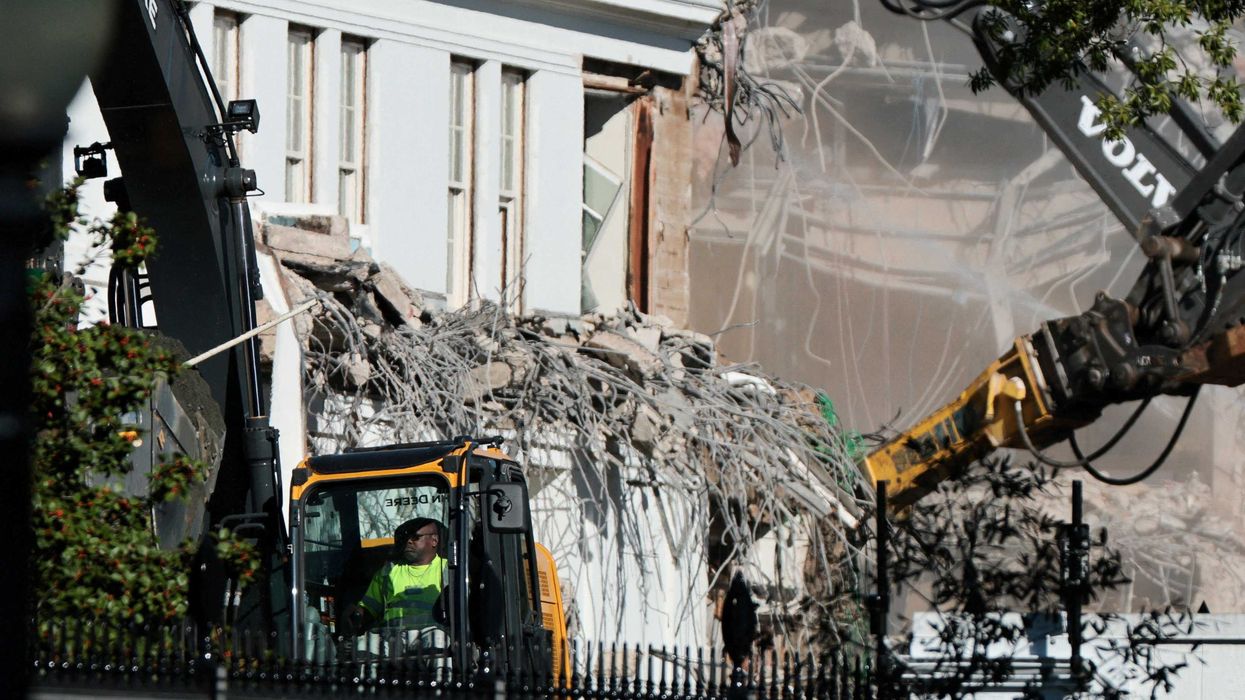
A demolition crew takes apart the facade of the East Wing of the White House, where U.S. President Donald Trump's proposed ballroom is being built, in Washington, D.C., U.S.,
 October 21, 2025. REUTERS/Jonathan Ernst

October 23, 2025 | ALTERNET

In the first Gilded Age, which ran from the 1890s through the 1920s, captains of American industry were dubbed “robber barons” for using their baronial wealth to bribe lawmakers, monopolize industry, and rob average Americans of the productivity of their labors.

Now, in a second Gilded Age, a new generation of robber barons is using their wealth to do the same — and to entrench their power.

The first Gilded Age was an era of conspicuous consumption. The second is an era of conspicuous influence.

The new robber barons are having their names etched into the pediments of the giant new ostentatious ballroom Trump is adding to the White House.

They already own — and influence — much of the news Americans receive. And they are eager to promote their views.

Marc Benioff, the billionaire founder and CEO of Salesforce, told The New York Times that Trump should send the National Guard to San Francisco. (After his remarks drew condemnation from many of the city’s civic leaders, he apologized. He seems about to get his wish nonetheless.)

Marc Rowan, the billionaire chief executive of Apollo Global Management, is the force behind Trump’s recent “compact” calling on universities to limit international students, protect conservative speech, require standardized testing for admissions, and adopt policies recognizing “that academic freedom is not absolute,” among other conditions. The Trump regime dangled “substantial and meaningful federal grants” for universities that agree.

(It didn’t work. Seven of the nine universities approached rejected the deal.)

Billionaire Stephen A. Schwarzman, the chief executive of Blackstone, is also shaping the Trump regime’s campaign to upend American higher education. Schwarzman has emerged as a key intermediary between Trump and Harvard University.

Other of America’s new robber barons are rapidly consolidating their control over what Americans read, hear, and learn about what’s occurring in our country and the world. They include Jeff Bezos; Larry Ellison and his son, David; Mark Andreessen; Rupert Murdoch; Charles Koch; Tim Cook; Mark Zuckerberg; and, of course, Elon Musk.

Perhaps the new robber baron’s most lasting impression on the U.S. government will be the lavish White House ballroom Trump is constructing — a 90,000-square-foot, gold-leafed, glass-walled banquet room that will literally overshadow the so-called People’s House.

It will not be an assembly hall, dance hall, music hall, dining hall, village hall, or town hall. It will be a giant banquet and ballroom designed to accommodate 650 wealthy VIPs.

Trump claims that the East Room, the largest room in the White House, is too small. Its capacity is 200 people. He doesn’t like the idea of hosting kings, queens, and prime ministers in pavilions on the South Lawn.

Trump’s real intention is to have the White House resemble Versailles.

Potential billionaire donors have already received pledge agreements for “The Donald J. Trump Ballroom at the White House.” In return for donations, contributors are eligible for “recognition associated with the White House Ballroom.”

Their names will be etched in the ballroom’s brick or stone edifice.

Trump last week hosted a dinner at the White House for the project’s donors, which included representatives from Microsoft, Google, Palantir, and other companies, as well as Schwarzman, Cameron and Tyler Winklevoss, and other billionaires.

Meredith O’Rourke, a top political fundraiser for Trump, is leading the effort, paired with the Trust for the National Mall, an organization that supports the National Park Service.

The trust’s nonprofit status means donations come with a federal tax write-off.

Construction began Monday. Trump is now literally taking a wrecking ball to the White House — sending parts of the East Wing’s roof, the building’s exterior, and portions of its interior crumbling to the ground.

It seems fitting that in this second Gilded Age — an age of conspicuous influence and affluent access — the People’s House will be replaced by the Billionaire’s House.

Robert Reich is a professor of public policy at Berkeley and former secretary of labor. His writings can be found at https://robertreich.substack.com/.

Tuesday, February 25, 2025


Q&A: How AI is changing the film industry


‘AI is Soulless’: Hollywood Film Workers Strike and Emerging Perceptions of Generative Cinema


University of Washington


In 2023, a good portion of Hollywood went on strike — in part over concerns about artificial intelligence in filmmaking. Now the use of AI has roiled this year’s Academy Awards: Several of the best picture nominees used AI in production. “The Brutalist” showed AI generated architecture blueprints in a scene and its editor used a program called Respeecher to hone actors’ Hungarian pronunciations. “Emelia Peréz” used Respeecher to adjust an actor’s singing voice.

Brett Halperin, a University of Washington doctoral student in human centered design and engineering, interviewed picketing film workers about AI during the 2023 strikes. Their concerns ranged from AI’s effects on wages and jobs to the inauthenticity of the resulting art.

Halperin published the findings Feb. 6 in ACM Transactions on Computer-Human Interaction.

UW News spoke with Halperin about how film workers are thinking about AI and the history of technology in filmmaking.

The striking film workers you spoke with raised various concerns about the use of AI in filmmaking. Were you surprised to see some consternation around the Oscars this year?

Brett Halperin: We have seen backlash to AI from workers and the general public manifest in multiple ways over the past few years — from striking to protesting screenings. Many filmmakers have valid concerns about how studio use of AI can undermine their craft and labor. Meanwhile, many writers and artists object to how their materials are scraped and co-opted as training data for machine learning models without their consent or compensation. This makes AI particularly thorny and controversial. But it’s also important to situate this backlash in the broader historical context.

Throughout history, the “death of cinema” trope has resurfaced with each major technological shift. For example, the use of synchronized sound systems starting in 1926 rendered many silent-era acting techniques, production methods and even professions obsolete. While this caused massive disruption, it ultimately created new professions, such as sound specialists, and transformed rather than eradicated cinema. The rise of color, television, digital media and so on follow similar trajectories. AI presents another iteration of this trope that continues to reflect the shifting cultural and industrial anxieties about technological agency. Part of what makes cinema unique relative to other art forms is that it has always depended on complex, evolving technologies. This change is unsettling, but also an opportunity for all of us, including the Academy, to reevaluate what makes film meaningful.

The Academy is reportedly considering making AI disclosure mandatory for the 2026 Oscars. Do you see value in this?

BH: Generally, I think as much transparency as possible is a good thing. But as AI further integrates into production processes and workflows, excessive mandates could become unreasonably cumbersome and difficult to track. So I would first start by asking: What do we mean by AI? Computer-generated imagery and its associated algorithms have been in the Hollywood studio system since the 1970s. At what point did CGI and other algorithmic tools become rebranded as AI?

In my view, regulation should focus on where AI use has the potential to undermine workers and manipulate viewers. For example, AI actors and de-aging techniques might further intensify body image issues among the public, as well as take work away from actual actors. Disclosure would help the Academy and spectators understand what they are seeing to not only assess the ethics, but also better judge and criticize films in general.

The uses of AI in “The Brutalist” and “Emelia Peréz” are relatively minor. What were workers’ feelings about AI tools as instruments to assist their work, rather than replace it?

BH: The workers did not oppose AI altogether. They seemed to recognize that technological change is an ongoing part of cinema and expressed degrees of openness to the creative possibilities. They acknowledged that there are potentially useful applications insofar as the decision-making power and control over AI lies with them rather than studio executives forcing its integration.

That said, the workers seemed to find current AI-assisted capabilities to be rather unimaginative and unequipped to augment (or replace) their work. For example, a writer who tried to use it to assist him described the written outputs as “hacky” and “generic.” Many of the workers made compelling cases for why AI cannot take over the tasks that truly define filmmaking, such as fostering authentic human connection on and off screen and telling stories that matter to people.

What were your major takeaways from talking with the film workers? Have those changed at all as the technology has evolved in the last year and a half?

BH: Despite being around for decades now in various forms, so-called AI today is exhibiting a “novelty effect,” which is currently exploitable, but bound to fade. As AI further integrates and becomes more deeply embedded into cinema like prior technologies, I suspect that the anxiety around it will simmer down.

Rather than fuel the hype cycle, we should remain patient and vigilant in working toward ethical implementations and protections, because AI can incur harms today that require protections for workers and viewers. While Hollywood unions have won protections through collective bargaining agreements, they will need to be continuously updated as the technology  develops, as well as extended to non-unionized workers and workers in other media industries through state and federal policies. I would especially like to see policies that establish informed consent and compensation for artists whose materials are used as AI training data.

What should the public know and consider about AI in filmmaking?

BH: It’s ultimately up to those of us watching movies to decide what we like and don’t like about AI in cinema. We have the power of our attention and wallets to decide what films we want to support. At the end of the day, the Hollywood studio system will invest in what is profitable and divest from what is not. We should listen to the workers for guidance and watch films that align with our values. Despite the current anxiety around AI and the lure of its spectacle today, the public should remember what makes a film truly valuable: the human hearts and souls behind it.

Daniela K. Rosner, a UW professor of human centered design and engineering, is the co-author on the journal article. This research was funded by the Labor Research and Action Network and the National Science Foundation.

For more information, contact Halperin at bhalp@uw.edu.

Tuesday, December 26, 2023

WAGE THEFT
Suit Against Twitter Over Unpaid Bonuses Can Proceed, Judge Rules


More than $5 million in bonuses were orally promised but never paid, according to the suit. A judge denied the company’s motion to dismiss the case.

FUTURIST BRUTALIST ARCHITECTURE
The headquarters of X, formerly known as Twitter, in San Francisco in July.
Credit...Noah Berger/Associated Press

By Johnny Diaz
Dec. 24, 2023

A federal judge on Friday gave the go-ahead to a lawsuit against the social media company X, formerly known as Twitter, in which workers claim that the company promised but never paid millions of dollars in bonuses.

In June, Mark Schobinger, a former senior director of compensation for Twitter who lives in Texas, sued the company, claiming breach of contract under California law. The company has its headquarters in San Francisco.

Mr. Schobinger said that both before and after the billionaire Elon Musk bought Twitter last year, the company had orally promised employees 50 percent of their 2022 targeted bonuses if they stayed with the company in the first quarter of 2023. However, the bonuses were never paid, according to the suit.

Mr. Schobinger filed the suit on his own behalf and on behalf of nearly 2,000 other current and former workers. The amount in dispute is greater than $5 million, according to court records.

In a three-page opinion denying the company’s motion to dismiss the case, Judge Vince Chhabria of the U.S. District Court for the Northern District of California ruled that Mr. Schobinger had “plausibly stated a breach of contract claim” under California law.

Mr. Schobinger maintained that he was covered by the bonus plan and that he had stayed with the company through the final possible payout date.

“Once Schobinger did what Twitter asked, Twitter’s offer to pay him a bonus in return became a binding contract under California law,” the judge wrote. “And by allegedly refusing to pay Schobinger his promised bonus, Twitter violated that contract.”

Lawyers for the company had argued that the performance bonus plan was “not an enforceable contract, because it provides only for a discretionary bonus,” the ruling said.

The judge wrote that Mr. Schobinger was not suing to enforce the discretionary bonus plan but “to enforce Twitter’s alleged subsequent oral promise that employees would, in fact, receive a percentage of the annual bonus contemplated by the plan if they stayed with the company.”

The company argued that an oral promise was not a contract and that Texas law should apply, but the judge found that California law governed the case. But, the judge wrote, “Twitter’s contrary arguments all fail.”

The company could not be reached on Sunday for comment.

In a statement, Mr. Schobinger’s lawyer, Shannon Liss-Riordan, said she was pleased with the judge’s decision.

“The court denied Twitter’s motion to dismiss our claim that Twitter failed to pay promised bonuses to continuing employees,” she said. “We can now go forward with the case, which Twitter was trying to throw out — so it’s not yet a ruling on the merits.”


Johnny Diaz is a general assignment reporter covering breaking news. He previously worked for the South Florida Sun Sentinel and The Boston Globe. More about Johnny Diaz


Thursday, November 23, 2023

Birds’ nests express their unique style and past experiences

The Conversation
November 17, 2023

Zebra finches learn from experience when it comes to building nests. (Shutterstock)

Walking through a town or city, you will encounter buildings with diverse shapes and sizes. These unique styles exist in part because the buildings were constructed by different architects, engineers and builders.

Birds are also architects, engineers and builders. Our research finds that, similar to human architecture, individual birds build nests in their own unique style. Experienced birds build with more consistent style and use fewer material resources than inexperienced birds.

Animal architecture

Architecture impacts our everyday lives, allowing us to adapt to and thrive in various climates. Humans build different structures to achieve different goals: farms to grow and store food, castles and skyscrapers to display wealth, homes for shelter or as a place to raise a family.

The same is true for other species. Bees build hives and honey combs to store and protect food. Spiders spin webs to catch prey. Beavers build dams to create a pool. Many species of birds construct nests for shelter or to raise their chicks.

Building architecture allows animals to shape their environments to better meet specific needs.

Architectural styles

Human structures look different, even when those structures share a similar purpose. This might reflect differences in culture and available resources.

In western societies, houses tend to be cuboids made from stone, wood and glass. Plains Indigenous Peoples make conical tipis from wood and bison hides. Inuit peoples use ice and snow to make spherical igloos. East African Maasai peoples build cylindrical manyatta huts from earth, grass and cow dung.

There are differences in architectural style among individuals within the same culture using the same materials.

Visualize your home: the size and shape of each room, position of doors and windows, arrangement of furniture. Now compare your visualized blueprint to the blueprint of a friend’s house. They likely look quite different, as humans have individual variation in architectural style.

Our research suggests the same is true for animal architects: animals also build structures with individual variation in architectural style.

Avian architects

Birds are among the most well-known builders in the animal world. Many avian species build nests to create safe, warm environments to incubate their eggs and raise chicks. Nest building is a key task that individuals must complete to successfully reproduce.

Our team, the Animal Cognition Research Group in the Department of Psychology at the University of Alberta, ran an experiment testing whether birds built nests in their own individual style.

We studied zebra finches, small songbirds native to Australia. Zebra finches have been bred in captivity for years and are common in pet stores and scientific research. These birds are ideal for our test, as males build many nests in short periods of time using a range of materials.

We measured the sizes and shapes of multiple nests built by the same zebra finches. Comparing nests built by the same male found similarities in style. Comparing nests built by different males found dissimilarities in style. This shows individuals do build nests in their own unique and repeatable style.

Psychology of style

The minds of human architects can be studied through analyzing the style in which they build. This gives insights on their understanding of technology and their cultural influences or social values.

Some ancient structures, like the pyramids of Giza, Stonehenge and Mayan structures, are aligned to the sun and stars. This demonstrates ancient architects had the ability to precisely plan and execute designs with great detail. It also suggests that celestial bodies held some significance to these cultures, perhaps for mapping landscapes or the passage of seasons.

An individual architect might specialize in building structures of a particular style, such as Gothic, Art Deco, Victorian or Brutalist. Their style might change over time as the architect learns and refines their skills through experience.

These examples show how the psychology of style can be analyzed in human architects. We wanted to investigate the psychology of style, specifically learning from experience, in our zebra finches.

Style and experience

We gave one group of zebra finches practise building five nests, giving each male opportunities to learn from this nest-building experience. A second group of zebra finches had no practise building. These males had never built a nest before the start of the experiment. Both groups then built nests so that we could compare the nest style built by the two groups.

Experienced birds had more consistent nest style and used less material compared to inexperienced birds. This indicates that learning opportunities influence nest style.

Practice building nests allows birds to develop motor skills and better manipulate materials. Birds also remember past outcomes of nests and will replicate successful design elements.

Individual style might develop from differences in learning opportunities. Maintaining a style might even be beneficial. Creating consistent nests while using fewer resources may be advantageous, especially if the style has been successful or resources are limited.

We can learn a lot about how both human and animal architects adapt and respond to their surroundings and culture by studying the structures they build. Our research also shows home isn’t just where the heart is … it’s also in the brain.

Ben Whittaker, Postdoctoral Researcher, Department of Psychology, University of Alberta and Lauren Guillette, Assistant Professor & Canada Research Chair in Cognitive Ecology, Department of Psychology, University of Alberta, University of Alberta


This article is republished from The Conversation under a Creative Commons license. Read the original article.