Spain trapped in rental crisis: up to half of wages go on housing

An estate portal study shows the average wage share has risen 12 percentage points since 2019. Madrid and Catalonia, with 70% of pay, top the regional ranking.
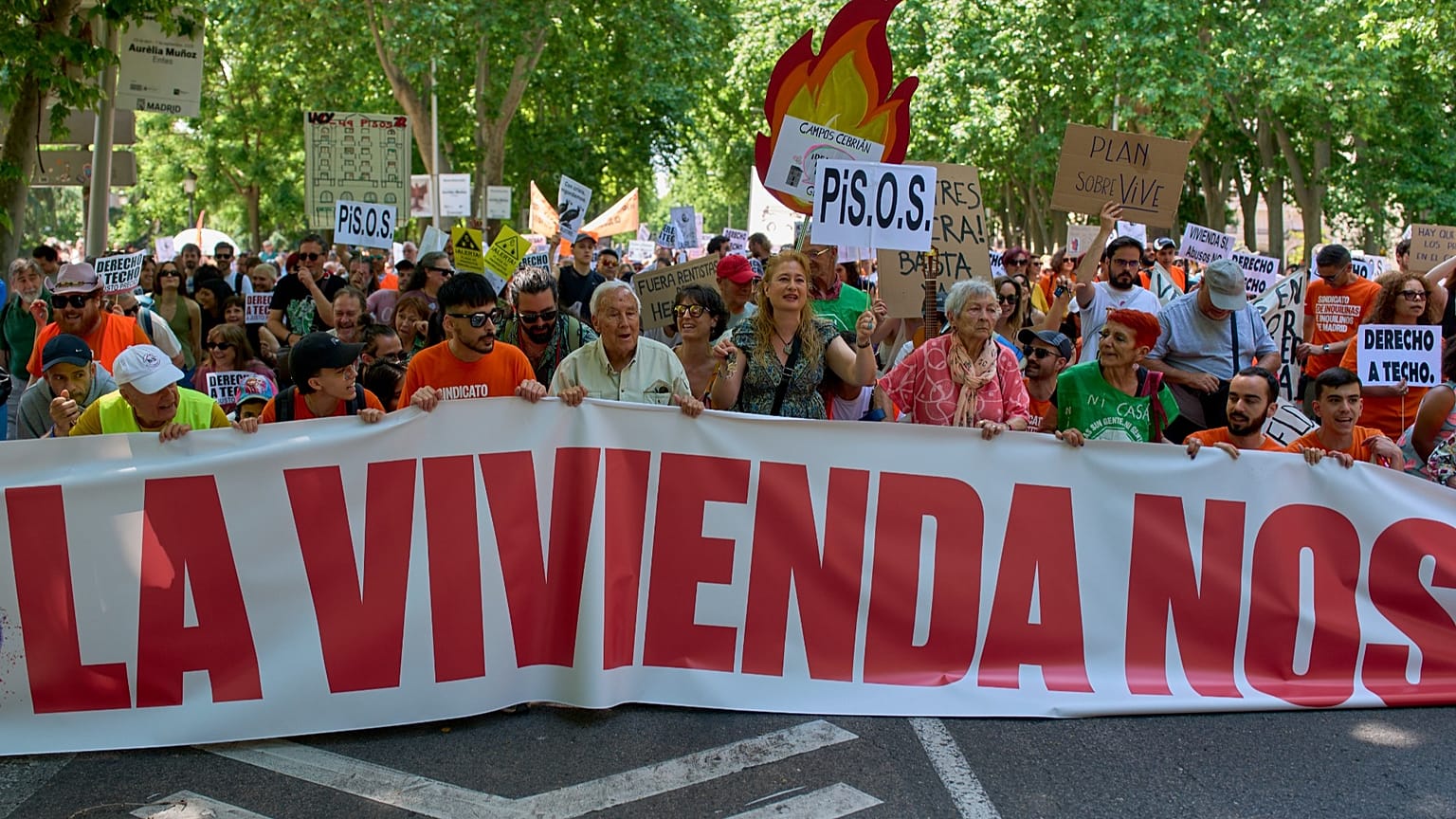
The evidence of the housing crisis Spain is going through is plain for all to see. In the rental market, the cumulative increase since 2022 is around 30%, according to the CIS, while housing construction - PwC data -has been at rock-bottom levels since 2010, with an average of 83,000 homes a year compared with 315,000 on average between 1970 and 2010. In addition, the stock of public housing is clearly inadequate, according to the Bank of Spain: between 1.5% and 3.3% of the total, compared with an EU average of 9.3%.
Warning voices are now even being raised from within the property sector itself, which has faced heavy criticism from platforms such as the Tenants' Union for failing to take firm action against vulture funds or against evictions of vulnerable people. The property portal Fotocasa, which acts as an intermediary for sales and rentals, estimates that Spaniards who rent their homes spent on average 50% of their salary on rent in 2025.
These figures, calculated using the average advertised salaries in job offers posted on the InfoJobs platform - a snapshot that is not very realistic - are higher than those found in similar studies. The Funcas think-tank (source in Spanish) believes that young people, one of the hardest-hit groups, spend around 35% of their budget: still two percentage points above the maximum economists usually recommend for such costs, that is, a third of income at most.
Fotocasa calculates that the share of the average salary going on rent rose from 38% in 2019 to 50% in 2025, while also taking account of disparities between Spain's regions: from the 29% it estimates for residents in Extremadura to 71% for those living in Madrid. The pattern is similar across the rest of the ranking of autonomous communities, with residents in the usual suspects, the Basque Country, the Canary and Balearic Islands, Catalonia and the Valencia region, paying the most.
By contrast, the provinces whose residents devote the smallest share of their gross pay to rent are Jaén (23%), Teruel (25%), Cáceres (27%), Ciudad Real (28%), Albacete (29%), Ourense (29%), Badajoz (29%), Córdoba (29%), Palencia (30%) and Castellón (31%).
Buying a home in Spain now requires over 8 years of full salary
House prices rose 20.5% in 2025, while wages edged up just 1%. The Balearic Islands and Madrid are where buying a home demands the greatest financial effort.
Buying a home in Spain is becoming increasingly difficult. In 2025, a worker had to devote the equivalent of 8.4 years of their full gross salary to purchase an 80-square-metre second-hand home, according to a study by Fotocasa and InfoJobs.
The figure represents a sharp deterioration in housing affordability compared with the previous year. In just 12 months, the effort required to buy a home increased by 16 months’ pay, rising from 7.1 years in 2024 to 8.4 years in 2025.
Behind this worsening lies the growing gap between wages and house prices. While advertised wages rose by 1% in 2025, the price of second-hand housing jumped by 20.5%, reaching an average of 2,879 euros per square metre.
“Spain is going through the worst housing affordability crisis in its history. Never before have citizens had to put so many years of pay towards buying a home,” says María Matos, Head of Research and spokesperson for Fotocasa.
Madrid and the Balearic Islands, the least accessible markets
Regional differences remain very pronounced. The Balearic Islands are the autonomous community where it is hardest to access housing. There, a resident needs to devote 15.1 years of their full gross salary to buy an average home, equivalent to 181 months’ pay.
Madrid is close behind, where the effort required reaches 15 years’ salary. It is also the region where the situation deteriorated most in 2025: the time needed to buy a home increased by 34 months compared with the previous year.
Regions such as the Canary Islands and the Basque Country also exceed ten years of salary, while Catalonia is approaching that threshold at 9.4 years. At the other end of the scale are Castilla-La Mancha and Extremadura, where buying a home requires around four years of gross pay.
Only 17 provinces allow a home to be bought with less than 5 years’ pay
At provincial level, the Balearic Islands again top the ranking, with 15.1 years of salary needed to buy a home. They are followed by Madrid (15 years), Málaga (12.9 years), Guipuzcoa (11.7 years), Santa Cruz de Tenerife (11.3 years) and Barcelona (10.2 years).
By contrast, Jaén is the most affordable province in the country. Its residents need three full years of gross salary to buy an 80-square-metre home. Ciudad Real, Teruel, Toledo, Zamora and Ávila also stand out, where the effort remains below four years.
According to the study, only 17 Spanish provinces allow a home to be bought by devoting less than five full years of gross salary.
A widening gap between wages and housing
The authors of the report warn that rising wages are not enough to offset the surge in the property market. “The 1% increase recorded in 2025 falls far short of the rise in house prices,” says Mónica Pérez, Director of Communications and Studies at InfoJobs. In her view, this gap is forcing people to devote more and more years of work and savings to buying a home of their own.
The study concludes that housing is gradually slipping out of reach of households’ purchasing power, especially in the most overheated markets, where the effort required to buy a home virtually doubles the national average.
 |


No comments:
Post a Comment