Iran’s Strategic Reckoning:
The 2026 US–Israel–Iran war has not ended Iran as a regional power, but it has ended Iran’s monopoly as the Middle East’s central organizing antagonist: Hezbollah is degraded, the Syrian logistical corridor is largely closed, and the broader “Axis of Resistance” has been exposed as a network of influence rather than command-and-control.
Iran retains resilient leverage through geography (Strait of Hormuz), asymmetric tools (missiles, drones, Houthis), and nuclear latency or potential weaponization; these capabilities keep it globally consequential even as its proxy architecture weakens and its post-war leadership faces succession and economic strain.
The region is shifting from Iran-centred confrontation toward multipolar competition among Iran, Saudi Arabia, Turkey, Israel and others; the strategic task is managed multipolarity and Iranian predictability, not the elimination of Iranian power or the preservation of a permanent single enemy.
Introduction: The End of an Iranian Era?
For almost half a century, Iran has been one of the principal organizing forces of Middle Eastern geopolitics. Since the Islamic Revolution of 1979, the Islamic Republic has presented itself not simply as a conventional nation-state but as the ideological challenger of an American-led regional order and the principal opponent of Israel. Through a combination of revolutionary ideology, ballistic missiles, drones, nuclear latency, asymmetric warfare and partnerships with non-state armed organizations, Tehran progressively constructed a regional network extending from Iraq and Syria to Lebanon, Yemen and the Palestinian territories. This architecture—often described as the “Axis of Resistance”—enabled Iran to compensate for its conventional military disadvantages by projecting power indirectly and creating multiple layers of deterrence (Alfoneh, 2024; Tabatabai, 2020). Yet the strategic environment of 2026 suggests that this model has reached a critical inflection point. The essential question is no longer whether Iran remains a major regional power—it unquestionably does—but whether it can continue to function as the principal nemesis around which the Greater Middle East organizes its security calculations.
My recent analyses have progressively examined this transformation: Crucible of Nations: Middle East at Inflection Point, War, Realignment, and Chimera of Peace explored the region’s structural transition; The Middle East under Tension: What Future? examined its persistent instability; Has the War against the United States Established Iran as a Regional Power in the Middle East? questioned the meaning of Iranian power under direct confrontation; Shockwaves from the Gulf: The Iran War and Its Impact on the Global Economy and Energy Markets broadened the analysis toward geoeconomic consequences; and From Firestorm to Fault Lines: The US–Iran War and the Birth of a New Middle Eastern Order interpreted the 2026 conflict as a possible watershed in the regional system (Chtatou, 2026a, 2026b, 2026c, 2026d, 2026e). Taken together, these writings suggest a fundamental distinction: Iran may not be ending as a regional power, but the Iranian regional order may be ending as the dominant framework through which Middle Eastern geopolitics is understood.
This essay pursues that distinction systematically. It begins by reconstructing how Iranian strategic depth was built after 1979, then traces its erosion across the theatres in which it was most visibly deployed—Lebanon, Syria, Iraq, the Palestinian arena and Yemen—before turning to the geoeconomic and nuclear dimensions of Iranian power that have proven more resilient than the proxy network itself. It then situates Iran’s trajectory within the wider regional shift toward multipolarity, examining the Gulf monarchies, Turkey, Israel and the extra-regional roles of China and Russia. A comparative section places Iran’s predicament alongside earlier episodes of hegemonic retrenchment, before the essay considers plausible scenarios for Iran’s strategic future and the policy implications that follow. The cumulative argument is that 2026 does not mark the end of Iran as a regional power, but it may mark the end of Iran’s monopoly over regional antagonism—the end, that is, of the assumption that Middle Eastern security must be organized around a single, permanent enemy.
The stakes of this distinction are not merely semantic. Analysts, policymakers and regional publics alike have grown accustomed to a mental map of the Middle East in which Iran occupies the position of central variable: the actor whose behaviour determines Israeli military posture, Gulf defence spending, American troop deployments and the diplomatic calculations of every state from Ankara to Cairo. If that map is becoming obsolete, then policies built upon it—containment strategies premised on isolating a single hegemonic threat, normalization initiatives premised on a shared adversary, defence postures calibrated to a single primary contingency—require reassessment as well. Getting the diagnosis right therefore matters for getting the prescription right, and this essay’s central purpose is to offer as precise a diagnosis as the available evidence allows.
The Construction of Iranian Strategic Depth
Iranian power did not emerge from conventional military superiority. Indeed, the Islamic Republic has long faced a substantial asymmetry vis-à-vis the United States and Israel in air power, intelligence, precision-strike capabilities and advanced military technology. This asymmetry was not accidental; it was inherited. The Iran-Iraq War of 1980–1988 left the newly established Islamic Republic with a devastated economy, a depleted officer corps and an international arms embargo that denied it access to the sophisticated weapons systems its neighbours could purchase openly. Tehran consequently developed a strategy of asymmetric deterrence in which missiles, drones, cyber capabilities, maritime disruption and allied armed organizations compensate for conventional weaknesses (Tabatabai, 2020). The Islamic Revolutionary Guard Corps, created in 1979 explicitly to safeguard the revolution against domestic and external threats, became the principal institutional vehicle for this strategy, developing its own air force, navy, ballistic missile programme and, through the Quds Force, an external operations arm dedicated to cultivating non-state partners across the region (Alfoneh, 2024).
Hezbollah became the most sophisticated manifestation of this doctrine, providing Iran with a powerful partner on Israel’s northern frontier while embedding Iranian influence within Lebanese political and social structures. Founded in the aftermath of Israel’s 1982 invasion of Lebanon, Hezbollah evolved from a militia into a hybrid actor combining paramilitary capability, social welfare provision and formal participation in Lebanese parliamentary politics—a template Iran would later attempt, with varying success, to replicate elsewhere. In Iraq, Iran cultivated extensive relationships with Shiite political parties and armed formations, relationships that deepened dramatically after the American invasion of 2003 removed Saddam Hussein’s Baathist government and empowered Iraq’s long-marginalized Shiite majority. In Syria, Iran helped preserve the Assad regime through the darkest years of the civil war, deploying IRGC advisers, mobilizing Hezbollah fighters and organizing Afghan and Pakistani Shiite militias under its own command structures, and in doing so established a logistical bridge toward Lebanon. In Yemen, its relationship with the Houthis provided strategic access to the Red Sea and the Bab-el-Mandeb Strait, one of the world’s most consequential maritime chokepoints.
This doctrine was reinforced by an explicit ideological commitment, inscribed in the Iranian constitution itself, to the export of the revolution and to solidarity with the world’s “oppressed”—a category that Tehran defined capaciously enough to encompass Lebanese Shiites, Iraqi Shiites, Palestinians of any sectarian background, Yemeni Zaidis and, at various points, movements far beyond the Middle East. This ideological framing served a dual function: it provided a normative justification for what might otherwise have appeared as naked geopolitical opportunism, and it supplied a recruitment and mobilization narrative that proved considerably more durable, and more exportable, than Gamal Abdel Nasser’s pan-Arabism had been a generation earlier, precisely because it fused a specifically Shiite religious idiom with a broader anti-imperialist appeal capable of resonating with non-Shiite audiences as well, from Sunni Palestinians to secular Arab nationalists disillusioned with their own governments’ accommodation of Washington and Tel Aviv.
The resulting architecture represented neither a conventional alliance nor a territorial empire. It was a networked system of strategic leverage, allowing Tehran to threaten its adversaries indirectly while maintaining a degree of deniability (Esfandiary & Tabatabai, 2018; International Crisis Group, 2020). Unlike a formal alliance system built on treaties and mutual defence obligations, the Axis of Resistance rested on ideological affinity, sectarian solidarity, material support and, in some cases, genuine strategic convergence. This informality was simultaneously a source of resilience—because it was difficult for adversaries to dismantle through any single decisive strike—and a source of fragility, because it lacked the institutional mechanisms that bind conventional alliances together. Iran’s great achievement was therefore not territorial expansion but the creation of strategic depth beyond its borders, a form of power projection that substituted geography and ideology for the armoured divisions and carrier battle groups its treasury could not afford.
This strategy reached its greatest apparent success after 2003, when the American overthrow of Saddam Hussein removed Iran’s principal regional adversary and unintentionally expanded Tehran’s political space in Iraq. The Syrian civil war subsequently provided another arena in which Iran could extend its military and political influence, while the rise of the Islamic State reinforced Tehran’s claim that its regional interventions constituted a necessary defence against jihadist extremism—a narrative that found a receptive audience not only domestically but among Western governments temporarily more concerned with the Islamic State than with Iranian expansionism. By the middle of the 2010s, Iran appeared to possess an extraordinary strategic arc linking Tehran, Baghdad, Damascus and Beirut, supplemented by relationships with Palestinian organizations and the Houthis. Commentators at the time spoke, not without justification, of a Shiite crescent stretching from the Persian Gulf to the Mediterranean.
Yet this apparent expansion also generated counter-coalitions. Israel increasingly treated Iran’s regional network and nuclear program as an integrated strategic threat, reorganizing its own military doctrine around the assumption of a multi-front confrontation involving Hezbollah, Syrian-based Iranian forces, Hamas and Palestinian Islamic Jihad, and Iran itself. Saudi Arabia and other Gulf monarchies intensified their balancing efforts, most visibly through their intervention in Yemen beginning in 2015. Washington strengthened sanctions and military deterrence, culminating in the 2018 American withdrawal from the Joint Comprehensive Plan of Action and the reimposition of a “maximum pressure” sanctions regime. Iranian strategic depth thus simultaneously increased Tehran’s influence and exposed its vulnerabilities: the wider and more visible the network became, the more numerous the adversaries it accumulated, and the more attractive a target it presented for sustained, coordinated counter-pressure.
From Strategic Expansion to Strategic Overstretch
The principal weakness of the Iranian model was that its effectiveness depended heavily upon the resilience of its partners. The “Axis of Resistance” was never a fully integrated military alliance. Hezbollah, Iraqi militias, the Houthis and Palestinian organizations possess distinct domestic constituencies, organizational cultures and political objectives. Their interests may converge with Tehran’s, but they are not identical to them. This autonomy becomes particularly important during a major interstate war because an organization that is willing to support Iran politically may nevertheless calculate that direct participation would threaten its own survival. The result is a crucial distinction between alignment and obedience. Iran has substantial influence over its partners, but influence does not constitute command and control (Vakil & Quilliam, 2023). My analysis in From Firestorm to Fault Lines therefore emphasized that the 2026 war exposed not simply military vulnerabilities but structural “fault lines” within the old regional architecture (Chtatou, 2026e).
The 2026 confrontation between the United States, Israel and Iran tested this architecture more severely than any previous crisis. Israeli and American strikes targeted not only Iranian nuclear and missile infrastructure but the senior leadership of the Islamic Revolutionary Guard Corps, and the conflict ultimately claimed the life of Iran’s Supreme Leader—an outcome that would have been unthinkable at almost any earlier point in the Islamic Republic’s history. That the regime survived this shock, however battered, is itself significant, and it illustrates the paradox running through this essay: catastrophic damage to Iran’s leadership and proxy network coexisted with a demonstrated capacity to inflict costs on the global economy through disruption of the Strait of Hormuz. Iran’s vulnerabilities and its residual leverage were exposed in the same conflict, at the same time, by the same set of events.
The degradation of Hezbollah is especially consequential. For decades, Hezbollah represented the crown jewel of Iran’s regional strategy because it placed a formidable military organization immediately adjacent to Israel. Its arsenal and organizational capabilities complicated Israeli calculations and provided Tehran with a form of distributed deterrence: any Israeli decision to strike Iran directly had to reckon with the possibility of tens of thousands of rockets fired from southern Lebanon. The weakening of Hezbollah—accelerated by the Israeli campaign of 2024 and its long aftermath—does not mean its disappearance, nor does it eliminate Iranian influence in Lebanon; it does, however, diminish the credibility of the assumption that an attack upon Iran would automatically produce a coordinated multi-front response. This changes the strategic equation because deterrence is ultimately psychological and relational: a capability matters insofar as an adversary believes it will actually be employed. If Israel becomes less convinced that Iran can reliably mobilize multiple fronts, the deterrent value of the Iranian network declines even if individual organizations survive (International Crisis Group, 2024).
Syria represents an equally important strategic setback. For years, Syria functioned as the geographical and logistical bridge between Iran and Hezbollah, allowing Tehran to transfer personnel, weapons and other forms of military support across the region. The fragmentation and transformation of Syria—culminating in the collapse of the Assad government—have made that corridor considerably less secure, and in many respects have closed it altogether. The strategic significance of this development extends beyond logistics. Iranian regional power depended upon continuity of strategic space—a connected geographical network extending westward from Iran. When that continuity is interrupted, Iranian influence becomes more expensive, more vulnerable and more dependent upon clandestine routes and local arrangements that can no longer be taken for granted. Syria’s transformation therefore weakens not only one component of the Iranian network but the coherence of the network as a whole, since a chain of influence is only as strong as its weakest and most exposed link.
Overstretch, in this sense, was not simply a matter of resource exhaustion, although the fiscal costs of sustaining Hezbollah, Syrian reconstruction subsidies, Iraqi militia salaries and Houthi military supplies were substantial and grew heavier as sanctions constrained Iran’s oil revenues. It was also a matter of accumulated strategic exposure. Each additional theatre of Iranian involvement created a new front along which adversaries could apply pressure, a new set of local actors whose grievances Tehran had to manage, and a new opportunity for miscalculation. The very breadth that had once seemed to be Iran’s strength became, under sustained pressure from Israel, the Gulf states and the United States acting in loose coordination, a liability that no single theatre-level victory could offset.
Iraq: Influence Is Not Control
Iraq remains the most important case demonstrating the limits of Iranian influence. Tehran possesses extensive political, economic, religious and security relationships within Iraq, and Iranian-backed organizations have played major roles in the country’s post-2003 political order, from the Popular Mobilization Forces that emerged during the fight against the Islamic State to the Shiite political coalitions that have dominated successive Iraqi governments. Yet Iraq is not an Iranian dependency. Iraqi nationalism remains powerful, reinforced by memories of the ruinous Iran-Iraq War, by Shiite religious authorities in Najaf who have often resisted Iranian clerical primacy, and by a younger generation of Iraqis—vividly visible in the 2019 Tishreen protest movement—who blame both Iranian and American interference for the corruption and dysfunction of their political system. Baghdad has repeatedly attempted to balance relations with Tehran, Washington, Riyadh, Ankara and other external actors, hosting, for example, direct talks between Saudi and Iranian officials even as it continued to host American forces on its territory.
This distinction is essential because the regional order is increasingly characterized by states and societies seeking strategic autonomy rather than permanent alignment. Iran can shape Iraqi political calculations—determining, for instance, which candidates are acceptable for the office of prime minister, or which legislation touching on the militias can pass—but it cannot simply dictate them. The Iraqi case thus illustrates the broader transformation of Iranian regional power: from a capacity to construct strategic depth toward a more limited capacity to negotiate, influence and occasionally coerce within an increasingly plural environment (International Crisis Group, 2023). Iraqi elites have become adept at extracting benefits from this position, playing Tehran and Washington against one another to secure investment, security guarantees and diplomatic cover, a pattern of hedging that mirrors, on a smaller scale, the strategic behaviour now visible across the wider Gulf.
The economic dimension of the Iraqi relationship reinforces this picture of contested rather than absolute influence. Iraq remains dependent on Iranian electricity and natural gas imports, a dependency Washington has periodically sought to weaponize through sanctions waivers granted or withheld according to the state of American-Iranian relations. Yet this dependency runs in more than one direction: Iraq is simultaneously one of Iran’s most important outlets for sanctioned trade, and Iraqi territory has repeatedly served as a conduit for Iranian access to dollar liquidity and international markets otherwise closed to Tehran. Influence, in other words, is transactional and reciprocal even where it is asymmetric, and this reciprocity is precisely what distinguishes Iraq from a client state in the classical sense. Iraqi governments since 2003 have consistently resisted formal alignment with any single external patron, hosting American forces, Iranian-backed militias and Turkish counter-terrorism operations against Kurdish militants simultaneously within a single, often contradictory, foreign policy—an arrangement that would be unsustainable for a genuine dependency but that reflects, however uncomfortably, Iraq’s determination to preserve some measure of sovereign manoeuvring room between more powerful neighbours.
Hamas, Palestinian Islamic Jihad and the Gaza Front
The Palestinian arena occupies a distinctive place within the Axis of Resistance, precisely because it is the one theatre in which Iran’s partners are not Shiite. Hamas and Palestinian Islamic Jihad are Sunni Islamist organizations whose ideological lineage runs through the Muslim Brotherhood rather than through the clerical revolutionary tradition of Qom and Tehran. Iran’s relationship with these groups has therefore always been more transactional than doctrinal: financial support, weapons technology and training in exchange for a Palestinian front that allowed Tehran to claim leadership of the Arab world’s most emotionally resonant cause, even as a non-Arab, Shiite-majority state whose historical relationship with the Arab world had often been fraught with suspicion.
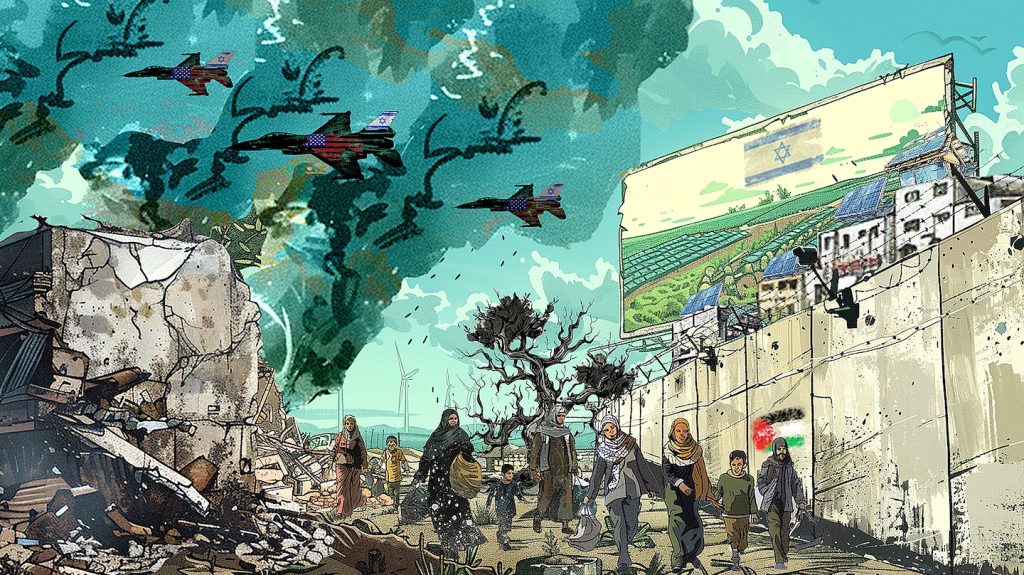
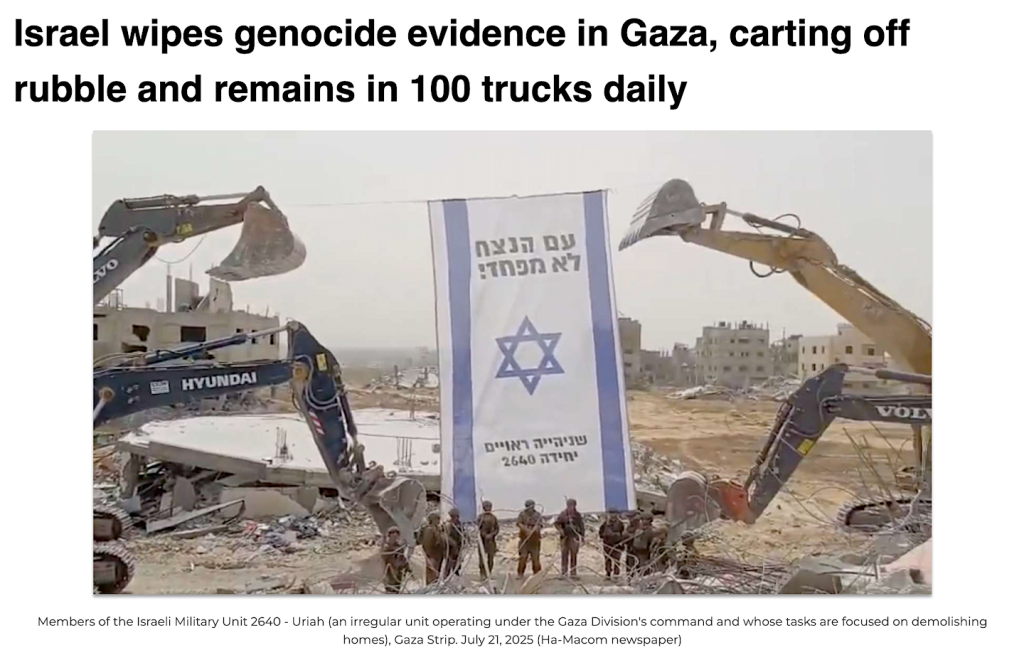
The events that began on 7 October 2023 and the prolonged war in Gaza that followed placed this relationship under unprecedented strain. Hamas’s military capabilities suffered catastrophic degradation over the following two years, its governing structures in Gaza were dismantled, and the movement’s senior leadership was killed in successive Israeli operations extending from Gaza into Lebanon, Iran and Qatar. The scale of devastation in Gaza itself—and the humanitarian catastrophe that resulted—transformed the Palestinian question from a manageable component of Iran’s regional strategy into a source of immense reputational and strategic cost for every actor associated with it, including Tehran. My analysis of the Hamas collapse and post-Gaza geopolitics examined precisely this transformation: an organization that Iran had cultivated as a symbol of resistance became, through the scale of its own losses and the devastation visited upon the population it claimed to represent, a cautionary illustration of the costs the Axis of Resistance model could impose on those who fought under its banner without possessing anything resembling Iran’s own strategic depth or capacity for retrenchment.
For Iran, the Gaza war illustrated the same structural limitation visible elsewhere in the network: Tehran could arm, train and rhetorically support Hamas, but it could not compel Hamas’s tactical decisions, could not prevent the catastrophic Israeli response those decisions triggered, and ultimately could not protect its Palestinian partner from near-total military destruction. Iranian statements of solidarity were not accompanied by direct Iranian military intervention on Hamas’s behalf, a restraint that reflected Tehran’s own calculation of the risks involved in direct confrontation with Israel over Gaza—a calculation that would soon be overtaken by events when the 2026 war brought exactly that direct confrontation regardless. The Palestinian front thus offers perhaps the starkest illustration in this essay of the distinction between alignment and control: Iran’s ideological investment in the Palestinian cause was total, but its operational leverage over the organizations fighting in its name was always partial, and the gap between the two proved catastrophic for the partner left most exposed.
Yemen and the Persistence of Iranian Leverage
The Houthis constitute the strongest counterargument to the thesis of Iranian strategic decline. Their capacity to threaten maritime traffic in the Red Sea has demonstrated that Iran’s regional partnerships can still generate consequences far beyond the territory in which they operate. Beginning in late 2023, Houthi attacks on commercial shipping transiting the Bab-el-Mandeb Strait forced major shipping companies to reroute around the Cape of Good Hope, adding weeks to voyage times and substantially raising insurance premiums for vessels that continued to use the Red Sea route. This was accomplished with a fraction of the resources available to a conventional navy, underscoring how asymmetric capabilities—sea mines, anti-ship missiles, armed drones—can impose costs disproportionate to their cost of acquisition.
Yemen is particularly significant because the Houthi challenge intersects with global commerce, shipping, insurance, energy security and the strategic vulnerability of the Suez route. As I argued in Shockwaves from the Gulf, the Iran conflict cannot be understood exclusively through conventional military calculations because its consequences extend into global energy markets and the wider international economy (Chtatou, 2026d). Iran’s regional influence may therefore be geographically weaker while remaining globally consequential. This is an important paradox: the erosion of Iranian strategic depth does not necessarily imply the disappearance of Iranian coercive power. A network that can no longer credibly threaten a coordinated multi-front war against Israel can nonetheless still threaten the arteries of world trade.
Even so, the Houthi case should not be read as evidence that Iranian control over its partners remains intact. The Houthi movement is rooted in Zaidi revivalism and Yemeni tribal politics that long predate any relationship with Tehran, and its decision-making retains a strong element of local autonomy shaped by Yemen’s civil war and its own domestic legitimacy needs. Iranian support—technology transfer, training, and some logistical assistance—has amplified Houthi capabilities considerably, but the movement’s willingness to continue Red Sea operations, to escalate, or to stand down has always reflected a calculation of its own interests as much as instructions from Tehran. This is consistent with the broader pattern identified throughout this essay: partnership without command, leverage without control.
The Persian Gulf reinforces this point. Iran’s geographical position near the Strait of Hormuz gives it disproportionate leverage over one of the world’s most important energy chokepoints, through which roughly a fifth of global oil consumption transits. Even a militarily weakened Iran can threaten international markets if it can make shipping sufficiently dangerous or uncertain, whether through naval mines, fast-attack craft, coastal missile batteries or simply the credible threat of escalation. The strategic importance of Hormuz therefore gives Tehran a form of geoeconomic power that cannot be measured by the strength of its proxy network. Energy security becomes an extension of national security, and maritime geography becomes an instrument of strategic deterrence (International Energy Agency, 2025). This explains why Iran remains capable of imposing global costs even as its regional military architecture comes under pressure, and why oil markets react to Iranian rhetoric with a sensitivity wholly disproportionate to Iran’s diminished conventional standing.
The Nuclear Question: Iran’s Remaining Strategic Card
The nuclear issue further complicates any declaration of Iranian decline. Iran’s nuclear program has always served purposes beyond the mere acquisition of a weapon. Nuclear latency can provide strategic prestige, bargaining leverage and deterrence while stopping short of formal weaponization. The International Atomic Energy Agency has repeatedly emphasized unresolved verification and monitoring questions concerning Iran’s nuclear activities, making the nuclear file one of the most persistent sources of uncertainty in the regional security environment (International Atomic Energy Agency [IAEA], 2025). If Iran’s conventional and proxy capabilities are degraded, the incentive to preserve or enhance nuclear latency may actually increase. This creates a dangerous paradox: the weaker Iran becomes conventionally, the greater the attraction of a strategic deterrent that conventional forces cannot provide. Consequently, the weakening of the Axis of Resistance may not reduce the nuclear problem; it may make it more central.
The 2026 war has intensified rather than resolved this dynamic. Military strikes on enrichment and research facilities may have set the programme back by months or years, but they have not erased the accumulated scientific knowledge, the enriched uranium stockpiles whose final disposition remains disputed, or the underlying strategic logic that has driven Iranian nuclear policy since at least the 1990s. If anything, an Iranian leadership that has just witnessed direct strikes on its homeland and the death of its Supreme Leader has an obvious incentive to conclude that only a demonstrated nuclear capability, rather than latency alone, can guarantee regime survival against future attack—a lesson North Korea drew from its own confrontations with Washington and one that regional analysts have long feared Tehran might eventually draw as well. Whether Iran’s post-war leadership pursues open weaponization, continues a policy of ambiguous latency, or accepts a negotiated ceiling on enrichment in exchange for sanctions relief remains genuinely uncertain, and this uncertainty is itself a form of leverage that keeps Iran at the centre of regional and international diplomacy regardless of the condition of its proxy network.
The verification challenge compounds this uncertainty considerably. Even under the comparatively intrusive inspection regime established by the 2015 nuclear agreement, the International Atomic Energy Agency struggled to obtain full clarity on the scope of Iran’s past and present nuclear activities, and years of restricted access following the American withdrawal from that agreement in 2018 have left significant gaps in the international community’s knowledge of Iran’s enrichment infrastructure, centrifuge production capacity and the whereabouts of its accumulated stockpile of enriched uranium (IAEA, 2025). Military strikes conducted during the 2026 war, whatever their tactical success against known facilities, cannot resolve this verification problem and may in fact have worsened it, since Iran’s incentive to grant international inspectors access to what remains of its programme has diminished in direct proportion to its sense of vulnerability to further attack. A regional order that remains permanently uncertain about the true state of Iranian nuclear capability is, almost by definition, a regional order in which Iran retains a disproportionate claim on the attention of Israel, the Gulf states and the major powers—regardless of how degraded its conventional and proxy capabilities have become.
Domestic Iranian Politics after the War
No assessment of Iran’s external trajectory can be separated from the condition of Iranian domestic politics, which the 2026 war has thrown into a state of acute uncertainty. The death of the Supreme Leader during the conflict removed the figure who, since 1989, had served as the final arbiter of factional disputes within the Iranian system, the guarantor of the Islamic Revolutionary Guard Corps’ institutional primacy, and the personal embodiment of the revolutionary legitimacy on which the Islamic Republic’s constitutional order rests. Succession in the Iranian system is neither automatic nor purely hereditary; it runs through the Assembly of Experts, a clerical body whose internal composition reflects decades of factional balancing between hardline, pragmatic-conservative and, to a diminishing extent, reformist currents.
A leadership transition under normal circumstances would already have been a moment of significant institutional strain; a transition conducted in the immediate aftermath of a devastating war, with key IRGC commanders killed, national infrastructure damaged and the economy further battered by wartime disruption, is of an entirely different order. Iran’s political economy since the revolution has long been characterized by the tension between a state ideologically committed to resistance and self-sufficiency and a population whose expectations of economic welfare have been repeatedly disappointed by sanctions, mismanagement and corruption (Maloney, 2015). Currency depreciation, inflation and unemployment—chronic problems even before 2026—are likely to worsen in the war’s aftermath, and Iran’s leadership will face the familiar dilemma of a revolutionary state whose foreign policy commitments increasingly outstrip its domestic economic capacity.
This domestic fragility matters directly for the regional argument advanced in this essay. A leadership consumed by succession politics, economic reconstruction and internal legitimacy questions has less bandwidth, and potentially less appetite, for the sustained external investment that the Axis of Resistance required. Historically, revolutionary states under acute internal pressure have oscillated between two responses: doubling down on external confrontation as a source of unifying nationalist legitimacy, or turning inward toward retrenchment and consolidation (Axworthy, 2013). Which path post-war Iran follows will depend heavily on factors that remain difficult to observe from outside the system—the balance of power between the IRGC and the clerical establishment, the degree to which the new Supreme Leader can command the loyalty of Iran’s security services, and the extent to which economic desperation translates into domestic unrest of a kind the regime has weathered before, in 2009, 2017–2018, 2019 and 2022, but never in combination with the scale of external damage inflicted in 2026.
The institutional balance of power within the post-war Iranian state deserves particular attention. The Islamic Revolutionary Guard Corps emerged from the 2026 war having absorbed heavy losses among its senior commanders, yet it remains the single most cohesive and best-resourced institution in the Iranian state, controlling not only military and security functions but a vast economic empire spanning construction, telecommunications and energy. Whether a weakened clerical establishment can reassert primacy over an IRGC that may increasingly see itself as the guarantor of national survival—the institution that fought, and in the leadership’s view held the line against, direct American and Israeli attack—is one of the most consequential open questions for Iran’s trajectory. A post-war settlement in which the Guard Corps consolidates further power would likely favour the fortress-retrenchment and renewed-confrontation scenarios discussed later in this essay over a negotiated normalization, since the IRGC’s institutional interests have historically been better served by continued external tension, and the resources it commands as a consequence, than by a diplomatic opening that would reduce the strategic rationale for its privileged position within the Iranian economy and security architecture.
The Gulf: From Fear of Iran to Strategic Autonomy
Perhaps the most consequential transformation is taking place in the Arab Gulf. For decades, the basic strategic equation was straightforward: Iranian power created insecurity, and insecurity reinforced dependence upon American protection. Yet Gulf monarchies increasingly recognize that neither permanent dependence upon Washington nor permanent confrontation with Tehran serves their long-term interests. Saudi Arabia, the United Arab Emirates, Qatar and other Gulf states have increasingly diversified their diplomatic and economic relationships, including relations with China, Turkey and other regional powers. This reflects the emergence of strategic hedging—the attempt to preserve multiple partnerships rather than commit exclusively to one bloc (Ulrichsen, 2023).
Saudi Arabia’s transformation under Vision 2030 makes this especially important. A state seeking economic diversification, foreign investment, tourism, technological development and global connectivity cannot indefinitely organize its foreign policy around permanent confrontation with Iran. Riyadh therefore has an interest not in Iranian domination but in Iranian predictability. The China-brokered Saudi-Iranian rapprochement of 2023 was an early signal of this recalibration, and the Mecca Joint Defence Agreement of August 2026—linking Saudi Arabia with Pakistan and reflecting a wider pattern of intra-regional and South-South security cooperation—illustrates a parallel and complementary trend: Gulf states are not simply seeking accommodation with Iran but are simultaneously constructing defence and deterrence arrangements that reduce their reliance on any single external guarantor, American or otherwise. Riyadh’s strategy is therefore double-tracked, combining hedged engagement with Tehran and diversified security partnerships designed to insure against the risk that engagement fails.
This shift represents a profound change in the regional political psychology. Iran once benefited from the fact that Arab states interpreted almost every major security question through the lens of Iranian power. Increasingly, however, Gulf states are becoming autonomous strategic actors with their own agendas, driven as much by economic diversification imperatives and demographic pressures as by any single external threat. They still fear Iranian military capabilities, particularly its missile and drone arsenal, which the 2019 attacks on Saudi Aramco facilities demonstrated could strike deep into Gulf territory with only limited warning. But they also fear the consequences of uncontrolled escalation, having witnessed at close range in 2026 how quickly a bilateral American-Iranian confrontation can generate regional spillover, disrupted energy exports and heightened insurance costs affecting their own economies. Consequently, the Gulf is moving from a simple Iran-versus-Arab-states framework toward a more complex system of competitive coexistence, in which Iran is simultaneously a rival, a neighbour whose cooperation is periodically necessary, and a cautionary example of what sustained confrontation with Washington and Israel can cost a state.
The United Arab Emirates illustrates this hedging logic in its most developed form. Abu Dhabi has cultivated direct commercial and diplomatic channels with Tehran even while hosting American military assets and pursuing its own defence-industrial partnerships with Israel under the framework of the Abraham Accords, a combination that would have seemed contradictory under the older, more binary framework of regional alignment. Dubai in particular has functioned for decades as a critical node in Iran’s sanctions-evasion economy, a role Emirati authorities have tolerated with varying degrees of enthusiasm depending on the state of Washington’s own relationship with Abu Dhabi at any given moment. Qatar, for its part, shares a vast offshore gas field with Iran—the North Dome/South Pars reservoir—a fact of economic geography that imposes a structural incentive toward stable relations with Tehran regardless of the state of the wider regional confrontation, and one that has repeatedly shaped Doha’s more accommodating posture toward Iran relative to Riyadh or Abu Dhabi. These variations within the Gulf Cooperation Council itself underscore a point easily lost in analyses that treat “the Gulf” as a unitary actor: hedging strategies are calibrated to each state’s specific economic geography, threat perception and relationship with Washington, producing a spectrum of postures toward Iran rather than a single collective Arab position.
Turkey and the Emergence of a Multipolar Middle East
The weakening of Iran simultaneously creates greater strategic space for Turkey. Ankara possesses a large population, a significant military, a growing defence industry, NATO membership and geographical access to the Balkans, Caucasus, Black Sea, Mediterranean and Middle East. The transformation of Syria is particularly consequential because the weakening of Iranian influence removes one of the major constraints on Turkish regional ambitions, allowing Ankara to expand its influence over Syrian reconstruction, border security and the political configuration of a post-Assad Damascus in ways that would have been unthinkable while Iranian-backed forces controlled the country’s strategic depth.
Turkey’s defence-industrial base—exemplified by the export success of Turkish armed drones across the Middle East, the Sahel and Central Asia—has given Ankara a form of influence that operates independently of, and sometimes in direct tension with, both Iranian and Gulf interests. Turkish involvement in Libya, the Eastern Mediterranean gas disputes, and now the post-war Syrian settlement illustrates a foreign policy no longer content with a purely regional role but oriented toward acting as an independent pole in a multipolar system. Yet Turkey is not simply replacing Iran. Rather, its rise illustrates the emergence of a multipolar system in which several regional powers seek influence without necessarily possessing the capacity to impose hegemony. Ankara’s relationship with Washington remains complicated by disagreements over Kurdish forces in Syria and Iraq, its relationship with Moscow is transactional rather than aligned, and its ambitions in the Gulf are constrained by the wariness of Gulf monarchies toward political currents associated with the Muslim Brotherhood, with which Ankara has historically been sympathetic.
The same logic applies to Saudi Arabia and Israel. Saudi Arabia is becoming more autonomous; Israel remains the region’s most technologically advanced military power; Turkey is increasingly assertive; Iran remains formidable despite strategic losses; and the United Arab Emirates has developed influence extending well beyond its geographical size, leveraging its role as a logistics, finance and mediation hub to punch far above its demographic weight. Egypt, Qatar and other middle powers likewise retain significant diplomatic and strategic importance—Egypt through its historical role as mediator in Gaza-related negotiations and its control of the Suez Canal, Qatar through its financial resources and its unusual ability to maintain channels to actors as diverse as the Taliban, Hamas and Washington simultaneously. The resulting order is therefore increasingly multipolar, fluid and transactional. My argument in The Middle East under Tension was that the fundamental problem was not simply the existence of individual conflicts but the absence of a stable regional framework capable of managing competing interests (Chtatou, 2026b), and the proliferation of independent regional poles after 2026 makes the construction of such a framework simultaneously more necessary and more difficult.
Israel and the Transformation of the Iranian Threat
For Israel, the weakening of Iran’s regional network represents an extraordinary strategic opportunity but also a new dilemma. Israeli security doctrine has long been shaped by the Iranian threat, including the nuclear program, Hezbollah, Syria and the possibility of coordinated attacks from multiple fronts—a doctrine crystallized over decades of intelligence assessments, war-gaming and, since October 2023, direct experience of multi-front escalation involving Hamas, Hezbollah, the Houthis and Iranian-aligned militias in Iraq and Syria. If these capabilities are degraded, Israel may possess greater freedom of action against Tehran and reduced requirement to calibrate every operational decision against the risk of simultaneous retaliation from several directions.
Yet the disappearance of an Iranian-centred threat does not automatically solve Israel’s wider strategic problems. The Palestinian question remains unresolved, and the devastation in Gaza has generated a humanitarian and diplomatic legacy that will shape Israel’s regional standing for a generation regardless of Iran’s condition. Relations with Turkey are complicated by Ankara’s vocal criticism of Israeli conduct in Gaza and by competing interests in a post-Assad Syria where both states now operate in close proximity. Normalization with Arab states remains dependent upon broader regional developments, including some credible pathway on Palestinian statehood that Gulf publics, whatever the calculations of their governments, continue to regard as a meaningful condition. Iran’s decline could therefore reduce one dimension of Israeli insecurity while leaving other sources of instability intact, and in some respects could even complicate Israel’s diplomatic position by removing the shared-threat rationale that has quietly underpinned much of its recent normalization with Gulf states.
This distinction is crucial because it challenges the assumption that the Middle East can be stabilized by defeating one adversary. The region’s conflicts are interconnected but not reducible to Iran. The Palestinian question, state fragility, sectarian competition, economic inequality, water scarcity, authoritarianism, jihadist mobilization and great-power rivalry will remain even if Iranian power declines substantially (Lynch, 2016). The Iranian threat has often served as a convenient organizing framework, both intellectually and diplomatically, because it offered a single, legible villain around which disparate actors—Israel, Saudi Arabia, the United Arab Emirates, and at times Washington—could construct a shared strategic narrative. But it has never been the sole cause of Middle Eastern instability, and the temptation to treat Iran’s decline as equivalent to regional stabilization risks repeating, in a new context, precisely the error that this essay warns against: mistaking the defeat of one antagonist for the resolution of a region’s underlying structural problems.
China, Russia and the Limits of External Hegemony
China’s growing role reinforces the movement toward multipolarity. Beijing has developed extensive economic relations with Iran, purchasing the majority of Iran’s sanctioned oil exports and providing a lifeline that has allowed Tehran to weather years of American pressure, while simultaneously deepening partnerships with Saudi Arabia and other Gulf states, which supply the bulk of China’s energy imports and represent lucrative markets for Chinese infrastructure, telecommunications and electric-vehicle exports under the Belt and Road Initiative. China’s principal interest is not an Iranian-dominated Middle East but a sufficiently stable region capable of sustaining energy supplies, trade routes and investment. The Saudi-Iranian rapprochement brokered by China in 2023 demonstrated Beijing’s preference for diplomacy and economic interdependence rather than exclusive strategic alignment (Vakil & Quilliam, 2023). China consequently benefits from a regional system in which no single actor dominates, since Chinese commercial interests are best served by predictability and access to all parties rather than by the victory of any one of them.
Russia likewise retains interests in the region, although its capacity to shape Middle Eastern developments is constrained by its own strategic commitments and resources, above all the prolonged war in Ukraine, which has absorbed the majority of Russia’s military capacity and diplomatic attention since 2022. Moscow’s relationship with Tehran has grown closer in some respects—reflected in defence-industrial cooperation and coordinated positions at the United Nations—even as Russia has maintained working relationships with Israel, the Gulf states and, more recently, transactional arrangements with the new authorities in Damascus that reflect pragmatic interest in retaining Russia’s naval and air facilities on the Syrian coast rather than any deep ideological commitment to a particular Syrian government.
The combined effect of Chinese economic engagement, Russian strategic involvement and American military presence is to reinforce the emergence of a Middle East that is no longer governed by a single external patron. Unlike the Cold War era, when regional actors were compelled to align relatively clearly with Washington or Moscow, or the unipolar decades after 1991, when American primacy was largely uncontested, the current environment allows regional states to draw simultaneously on Chinese capital, Russian arms and diplomatic cover, and American security guarantees, playing external powers against one another much as Iraq has learned to play Iran against the United States. This external multipolarity reinforces the internal multipolarity of the region itself, and the two trends compound one another: as regional states gain more external options, they become less dependent on any single patron’s blessing to pursue autonomous foreign policies, which in turn accelerates the diffusion of power away from the bipolar Iran-versus-everyone-else framework that has organized Middle Eastern security thinking for much of the past two decades.
Comparative Perspectives on Hegemonic Retrenchment
Iran’s predicament is not without historical precedent, and situating it within a comparative frame clarifies what is distinctive about the current moment and what is not. Great powers and regional hegemons have repeatedly overextended the reach of their influence relative to the economic base required to sustain it, a dynamic Paul Kennedy famously termed “imperial overstretch” in his study of the rise and fall of great powers (Kennedy, 1987). Kennedy’s central insight—that military commitments extending beyond a state’s productive economic capacity eventually force a painful adjustment, whether through retrenchment, negotiated accommodation or outright collapse—applies with obvious relevance to an Iran whose sanctioned, oil-dependent economy has for years struggled to sustain the combined costs of nuclear development, missile production and the subsidization of an increasingly extensive network of regional partners.
The Ottoman Empire’s long nineteenth-century retreat—the so-called “Eastern Question” that dominated European diplomacy for a century—offers a further instructive parallel, not because Iran’s position is remotely analogous to that of a collapsing multi-ethnic empire, but because it illustrates how a once-dominant regional power can persist for generations as a diminished but still consequential actor, alternately propped up and exploited by external powers with an interest in managing rather than eliminating it. Egypt’s trajectory under Gamal Abdel Nasser and Anwar Sadat provides a closer and more directly comparable case: Nasser’s pan-Arabist project constructed a form of ideological and military leadership across the Arab world remarkably similar in function, if not in content, to Iran’s revolutionary “Axis of Resistance,” organizing regional politics around Cairo’s leadership of the confrontation with Israel. Egypt’s catastrophic defeat in the 1967 war, followed by the more ambiguous outcome of 1973 and Sadat’s subsequent strategic reorientation toward Washington and a bilateral peace with Israel, demonstrates how a state can retain considerable regional weight—Egypt remains today one of the Arab world’s most populous and diplomatically significant states—while permanently forfeiting the specific role of ideological vanguard and organizing antagonist that it had previously occupied.
These comparisons suggest a general proposition with direct relevance to the Iranian case: the end of a state’s role as regional nemesis is rarely identical to the end of the state’s power. What changes is the function a state performs within the regional system’s collective imagination and strategic calculations, not necessarily its underlying capabilities, population, resources or geographic advantages. Egypt after 1973 remained large, populous and strategically located; it simply ceased to be the actor around which other states organized their central security calculations. If the argument advanced throughout this essay is correct, Iran may be approaching an analogous transition—diminished in its specific function as organizing antagonist, while retaining the underlying attributes of a major regional power for the foreseeable future.
A further comparison, drawn from outside the Middle East, illuminates the international dimension of this transition. The retrenchment of the Soviet Union under Mikhail Gorbachev during the late 1980s—a great power whose global reach had likewise come to outstrip its economic base—offers a cautionary example of how difficult it is to manage strategic contraction in a controlled and predictable fashion. Gorbachev’s efforts to reduce the costs of Soviet overextension in Eastern Europe, Afghanistan and the developing world were intended to preserve the core of Soviet power while shedding its most expensive peripheral commitments; instead, retrenchment accelerated centrifugal forces that its architects had not anticipated and ultimately contributed to the dissolution of the state itself. Iran’s leadership, whatever its post-succession composition, is unlikely to be unaware of this precedent, and the fear that visible retrenchment could be read domestically and regionally as an admission of defeat—thereby emboldening internal opposition and external adversaries alike—may itself constitute a significant obstacle to the orderly fortress-retrenchment scenario this essay considers most structurally likely. The lesson of Gorbachev’s Soviet Union is that retrenchment, once begun, does not always stop where its architects intend it to.
From “Axis of Resistance” to “Iranian Fortress”
The future of Iran may therefore lie less in regional expansion than in strategic retrenchment. Tehran could increasingly prioritize rebuilding domestic military capabilities, strengthening missile and drone production, preserving nuclear latency, expanding cyber capabilities, maintaining selective partnerships and developing economic channels capable of surviving sanctions. Such a strategy would represent a transition from regional projection to national resilience. The Islamic Republic would remain revolutionary in its political identity but potentially become more nationalist and pragmatic in its strategic calculations, prioritizing the defence of the Iranian homeland and the survival of the regime over the maintenance of an expensive and increasingly exposed regional network.
This would not necessarily produce reconciliation with Washington or Israel. Nor would it end Iranian competition with Saudi Arabia or Turkey. But it could produce a different type of Iranian power: less dependent upon an extensive network of armed partners and more concentrated upon the territorial state itself, its missile and drone arsenal, its cyber capabilities, and a nuclear programme retained as an insurance policy against future attack. The Iran of the future could thus become an “Iranian fortress”—difficult to isolate, difficult to defeat and increasingly selective about where it projects influence, reserving its remaining resources for the theatres, above all Yemen and the Gulf, where geography and low cost still allow it to generate disproportionate leverage.
Such a retrenchment would carry its own risks for regional stability. A fortress Iran, freed from the constraint of maintaining credibility with an extended network of partners, might feel less inhibited about pursuing overt nuclear weaponization, calculating that its remaining leverage depends more on a demonstrated deterrent than on regional alliance management. Equally, a fortress posture could prove more durable and harder to dislodge than the more diffuse Axis of Resistance model, since it would concentrate Iranian resilience within its own borders, behind its own air defences and beyond the reach of the kind of degradation inflicted on Hezbollah and Syria. Retrenchment, in other words, should not be mistaken for pacification.
Scenarios for Iran’s Strategic Trajectory
Three broad scenarios can be sketched for how Iran’s post-war trajectory might unfold, none of which is mutually exclusive over time, and each of which carries distinct implications for the regional order this essay has described. The first scenario, fortress retrenchment, has already been outlined above: an Iran that consolidates around homeland defence, nuclear latency or weaponization, and a narrower set of high-value regional partnerships, while largely disengaging from the costlier and more exposed elements of the former Axis of Resistance. This scenario is most likely if the post-succession leadership in Tehran concludes that regional overextension was the proximate cause of the 2026 catastrophe and that domestic economic reconstruction must take priority over external commitments.
The second scenario, negotiated normalization, would see Iran pursue a broader diplomatic settlement—potentially including renewed nuclear negotiations, a modus vivendi with Gulf states building on the 2023 rapprochement, and even indirect channels toward Washington—in exchange for sanctions relief and reconstruction assistance. This path is consistent with currents within Iranian politics that have periodically favoured pragmatic engagement over revolutionary confrontation, from the reform era of the late 1990s to the JCPOA negotiations of 2013–2015, and it would be significantly reinforced if the post-succession leadership includes figures more oriented toward economic pragmatism than ideological maximalism. The obstacles are substantial, however: normalization would require the new leadership to accept constraints on the missile and nuclear programmes that hardline and IRGC-aligned factions have historically resisted, and it would require reciprocal flexibility from Washington and Israel that recent experience makes difficult to assume.
The third scenario, renewed confrontation, would see Iran attempt to rebuild its regional network and accelerate weaponization in defiance of continued pressure, calculating that the demonstrated willingness of Israel and the United States to strike Iranian territory directly makes half-measures more dangerous than full deterrent capability. This path carries the highest risk of further escalation but cannot be dismissed, particularly if domestic economic distress generates a nationalist backlash that hardline factions are able to channel into renewed confrontation as a source of legitimacy, following the well-worn pattern by which embattled regimes externalize internal pressure. Which of these three paths, or which combination of them across different theatres and time horizons, ultimately prevails will depend on factors—the outcome of Iran’s succession politics chief among them—that remain genuinely unpredictable at the time of writing.
It is also plausible, and perhaps most likely, that Iran’s actual trajectory will not conform neatly to any single scenario but will instead combine elements of all three across different domains simultaneously. Iran could, for example, pursue fortress retrenchment in Syria and Lebanon, where the costs of continued engagement now clearly exceed the strategic benefits, while pursuing renewed confrontation on the nuclear file, where the leadership may conclude that only a demonstrated deterrent can prevent a repetition of 2026, and while simultaneously exploring negotiated normalization with Gulf neighbours, where economic interdependence and geographic proximity create durable incentives for accommodation that exist independently of Iran’s relationship with Washington or Israel. A regional and international policy community accustomed to treating Iran as a unitary actor pursuing a single coherent grand strategy may therefore need to adjust to a more differentiated Iranian posture—confrontational in some registers, retrenched in others, and open to negotiation in still others—reflecting the genuine plurality of interests and institutional actors that now shape Iranian foreign policy in the aftermath of the war.
Policy Implications for Regional and International Actors
For regional and international actors, the analysis developed in this essay carries several implications that depart from policies premised on the assumption of permanent Iranian centrality. For the United States and Israel, the temptation to treat military degradation of Iran’s proxy network as a solved problem should be resisted; the persistence of Iranian leverage over Hormuz and the enduring uncertainty of the nuclear file mean that deterrence, rather than declared victory, remains the more accurate frame for policy planning. For Gulf states, the logic of strategic hedging that has already begun to reshape Saudi and Emirati foreign policy—diversifying partnerships, pursuing détente with Tehran alongside continued defence cooperation with Washington and new arrangements such as the Mecca Joint Defence Agreement—appears likely to intensify rather than reverse, regardless of which of the three scenarios above materializes in Iran.
For Turkey, the opportunity created by Iranian retrenchment in Syria carries its own risks of overextension, and Ankara’s ability to consolidate gains without triggering the kind of counter-coalition that eventually constrained Iran will depend on its capacity to manage relationships with Israel, the Gulf states and Kurdish political actors simultaneously—a balancing act at least as delicate as the one Iran itself failed to sustain. For the wider international community, and particularly for actors such as China with a direct interest in regional stability without regional dominance, the diffusion of power away from a single Iran-centred framework arguably creates greater scope for multilateral approaches to shared problems—maritime security in the Red Sea and the Gulf, nuclear non-proliferation, and post-conflict reconstruction in Syria, Lebanon and Gaza—than existed when regional diplomacy was organized primarily around containing or accommodating a single dominant antagonist.
For Lebanon and Iraq, the two states whose domestic political systems have been most directly shaped by Iranian-aligned armed actors, the implications are more immediate and more delicate. Both states face the challenge of managing the transition of powerful non-state armed organizations—Hezbollah in Lebanon, the Popular Mobilization Forces in Iraq—that retain substantial domestic constituencies and coercive capacity even as their external patron’s capacity to sustain them weakens. History offers few encouraging precedents for the peaceful disarmament or full integration of such organizations into state security structures, and both Beirut and Baghdad will need sustained international support, economic as much as diplomatic, if the weakening of Iranian regional power is to translate into strengthened rather than further fragmented national institutions. A regional transition mismanaged at this level—in which armed factions previously restrained by their utility to Iran’s regional strategy instead turn toward purely domestic power struggles once that strategic rationale fades—could generate exactly the kind of instability that a more orderly transition away from Iran-centred confrontation is meant to avoid.
Is This the End of Iran as the Nemesis?
The answer depends upon the meaning assigned to “nemesis.” If the term means a country capable of threatening regional stability, Iran certainly remains one. If it means the principal ideological challenger to the prevailing order, Iran’s position has weakened. If it means the state capable of mobilizing a coherent transnational military network, its position has deteriorated considerably. If it means the central geopolitical variable around which Israel, Washington and the Gulf states organize their security policies, Iran may be losing its former monopoly.
This is the central conclusion of my recent work. In Crucible of Nations, I identified the region as an inflection point characterized by war and strategic realignment; in The Middle East under Tension, I examined the persistence of structural instability; in Has the War against the United States Established Iran as a Regional Power?, I distinguished regional power from regional hegemony; in Shockwaves from the Gulf, I demonstrated that the conflict’s consequences extend into global energy and economic systems; and in From Firestorm to Fault Lines, I argued that the war should be interpreted as a catalyst for a new regional order rather than merely another episode in the long history of US-Iran confrontation (Chtatou, 2026a, 2026b, 2026c, 2026d, 2026e). Read together, these arguments point toward a single proposition: the Iranian state is likely to survive, but the Iranian monopoly over regional antagonism is not.
Conclusion: The End of an Antagonist, Not the End of a Power
The most defensible conclusion is therefore neither that Iran has been defeated nor that Iranian power has disappeared. Both claims would be premature. Iran remains a major civilization-state with a large population, strategic geography, considerable energy resources, military-industrial capabilities, missile and drone technology, nuclear expertise and decades of experience in asymmetric warfare. Its capacity for adaptation should not be underestimated; a state that survived eight years of war with Iraq, decades of sanctions, and the direct killing of its own Supreme Leader without collapsing has demonstrated a resilience that should temper any expectation of imminent disintegration. What is changing is the form and reach of Iranian power.
The regional architecture that Tehran painstakingly constructed after 1979 has suffered profound strategic attrition. Hezbollah has been weakened; Syria can no longer provide the same uncontested strategic bridge; Iraq remains influenced but not controlled; the Houthis remain capable but increasingly autonomous; and the nuclear issue has become simultaneously more dangerous and more uncertain. Meanwhile, Saudi Arabia and other Gulf states are developing greater strategic autonomy, Turkey is expanding its regional role, Israel retains extraordinary military capabilities, and China is deepening its economic presence without seeking direct hegemony (Ulrichsen, 2023; Vakil & Quilliam, 2023).
The Greater Middle East is therefore moving from Iran-centred confrontation toward multipolar competition. This transition does not guarantee peace. On the contrary, the weakening of one dominant rivalry may create several overlapping rivalries involving Iran, Turkey, Saudi Arabia, Israel and other regional actors. The challenge is to transform multipolarity into managed competition rather than allow it to become another mechanism of permanent conflict—a challenge for which the region currently possesses few of the institutional mechanisms that comparable transitions have required elsewhere.
The deeper historical significance of 2026 may consequently lie not in the military defeat of Iran but in the erosion of the regional paradigm created by the Islamic Revolution. Iran may remain powerful without remaining hegemonic; influential without being dominant; threatening without being the sole strategic antagonist. The question is therefore not whether Iran will disappear from the Middle East. It will not. The question is whether the Middle East can finally move beyond the assumption that its security requires a permanent Iranian enemy.
The ultimate objective should not be the destruction of Iran but the normalization of Iran: a powerful state capable of defending its national interests while operating within a predictable regional framework. A Middle East in which Iran remains powerful but predictable would be strategically healthier than a Middle East in which Iran is weakened but permanently cornered. The real end of Iran as the region’s nemesis would thus occur not when Tehran loses all its capabilities, but when regional politics ceases to require a permanent enemy around which every security calculation must be organized.
The decisive transformation, therefore, is not the end of Iran.
It is the end of Iran’s strategic centrality.
And if that transformation can be accompanied by a genuinely inclusive regional security architecture, then the firestorm of the 2026 war may ultimately produce something more consequential than another military victory: the birth of a Middle Eastern order in which rivalry is managed, sovereignty is respected, strategic autonomy is shared, and no state is condemned to remain the permanent nemesis of the others.
Such an architecture cannot be built by external powers alone, however sincere their diplomatic engagement, nor can it be imposed through further military attrition of any single actor. It will require the region’s own states—Iran included—to accept a definition of security that no longer depends on the permanent subordination or isolation of a named enemy. This is a demanding standard, and the history surveyed in this essay offers ample reason for caution about how readily regional and external actors abandon familiar organizing frameworks even after those frameworks have plainly outlived their strategic usefulness. But it is also, precisely for that reason, the standard against which the coming years of Middle Eastern diplomacy should be measured. Whether the region moves toward managed multipolarity or drifts into a more diffuse and less predictable pattern of overlapping rivalries will be decided not in a single negotiation or military campaign, but in the accumulated choices of Tehran, Washington, Jerusalem, Riyadh, Ankara and the region’s other capitals over the years that follow the war whose consequences this essay has sought to trace.
References
Alfoneh, A. (2024). Iran’s military and the Islamic Revolutionary Guard Corps. Washington Institute for Near East Policy.
Axworthy, M. (2013). Revolutionary Iran: A history of the Islamic Republic. Oxford University Press.
Chtatou, M. (2026a, March 9). Crucible of nations: Middle East at inflection point, war, realignment, and chimera of peace. Eurasia Review.
Chtatou, M. (2026b, June 7). The Middle East under tension: What future? Eurasia Review.
Chtatou, M. (2026c, May 20). Has the war against the United States established Iran as a regional power in the Middle East? Eurasia Review.
Chtatou, M. (2026d, June 28). Shockwaves from the Gulf: The Iran war and its impact on the global economy and energy markets. Eurasia Review.
Chtatou, M. (2026e, July 15). From firestorm to fault lines: The US–Iran war and the birth of a new Middle Eastern order. Eurasia Review.
Esfandiary, D., & Tabatabai, A. M. (2018). Triple axis: Iran’s relations with Russia and China. I.B. Tauris.
International Atomic Energy Agency. (2025). Verification and monitoring in the Islamic Republic of Iran in light of United Nations Security Council resolution 2231 (2015). IAEA.
International Crisis Group. (2020). Iran’s priorities in a turbulent Middle East. International Crisis Group.
International Crisis Group. (2023). Iraq’s political and security dynamics. International Crisis Group.
International Crisis Group. (2024). Lebanon’s Hezbollah and the regional balance. International Crisis Group.
International Energy Agency. (2025). World energy outlook 2025. IEA.
Kennedy, P. (1987). The rise and fall of the great powers: Economic change and military conflict from 1500 to 2000. Random House.
Lynch, M. (2016). The new Arab wars: Uprisings and anarchy in the Middle East. PublicAffairs.
Maloney, S. (2015). Iran’s political economy since the revolution. Cambridge University Press.
Tabatabai, A. M. (2020). No conquest, no defeat: Iran’s national security strategy. Hurst.
Ulrichsen, K. C. (2023). The Gulf states and the changing regional order. Rice University’s Baker Institute for Public Policy.
Vakil, S., & Quilliam, N. (2023). The Gulf states and the Iranian question: Regional competition and strategic recalibration. Chatham House.

About Dr. Mohamed Chtatou
Dr. Mohamed Chtatou is a Professor of education science at the university in Rabat. He is currently a political analyst with Moroccan, Gulf, French, Italian and British media on politics and culture in the Middle East, Islam and Islamism as well as terrorism. He is, also, a specialist on political Islam in the MENA region with interest in the roots of terrorism and religious extremism.
View all posts by Dr. Mohamed Chtatou →
.png)