It’s possible that I shall make an ass of myself. But in that case one can always get out of it with a little dialectic. I have, of course, so worded my proposition as to be right either way (K.Marx, Letter to F.Engels on the Indian Mutiny)
Sunday, May 24, 2026
How Trump’s Cuba grudge threw a 99-year-old Canadian mining company into turmoil
The Trump administration’s hard line against Cuba pushed Sherritt International Corp. to the brink. Now, an ex-adviser to the US president may be the Canadian mining company’s salvation.
The nearly 99-year-old company, whose former chief executive was once known as Fidel Castro’s favorite capitalist, has staked its business on a bet few Western companies would touch. After entering Cuba in the 1990s, Sherritt developed a nickel-and-cobalt mine through a joint venture with the state before expanding into energy. The result was a sprawling business that’s survived commodity busts, US political pressure and economic instability on the island.
That wager abruptly unraveled this month, plunging Sherritt into turmoil. After President Donald Trump expanded sanctions on the communist country, Sherritt initially announced plans to dissolve its mining venture in Cuba. On Wednesday the US charged former Cuban President Raúl Castro with murder, sharply escalating a standoff with Havana as the Trump administration attempts to reshape the island’s political order.
But just days after Sherritt announced its retreat from Cuba, a potential rescuer emerged in the form of a Dallas family office linked to Ray Washburne, a real estate executive appointed by Trump in 2017 to lead the Overseas Private Investment Corp. Washburne’s Gillon Capital LLC signed a non-binding preliminary agreement on Wednesday that would hand the family office a controlling stake in Sherritt.
“It came out of nowhere,” Peter Hancock, Sherritt’s interim chief executive officer, said in an interview. “I would like to tell you that I’m a business genius and that I knew an American entity would see that it could create value in the situation that Sherritt was in. But no, I didn’t foresee that.”
As Trump’s foreign policy during his second term turns markedly more aggressive, Sherritt is still at risk of losing its Havana gamble. The saga underscores the dangers facing companies and investors from shifting geopolitics amid a rapidly changing world order. While major multinational firms have not been immune to conflict-driven losses, the threat is particularly acute for companies with assets concentrated in a single country outside of the US.
It’s not clear whether Sherritt’s preliminary pact with Gillon signals a potential shift in Trump’s Cuba strategy. On Wednesday, he played down the need to further ratchet up pressure on the Cuban government after the charges against Raúl Castro. Representatives for Gillon and the State Department didn’t immediately respond to requests for comment.
But for Hancock, the sudden backing from Gillon helped “bridge the huge gap” between Sherritt and the administration.
“This deal happened because an actor in the United States was able to make a case to the US State Department,” he said. “We were collateral damage in a larger policy objective for the United States.”
Sherritt was founded in 1927 and named after Carl Sherritt, a trapper who staked copper prospects in Manitoba. The company’s first foray into Cuba was steered by Ian Delaney, who became CEO after a proxy fight in 1990 and secured a deal with the Castro government one year later. The state agreed to sell Sherritt unprocessed nickel from Moa, a mine in eastern Cuba that was nationalized after the country’s 1959 revolution.
It was a milestone deal for the Canadian firm, which needed raw material to feed its key asset: a refinery in Alberta. The company entered into a joint venture agreement in 1994 with the state to operate Moa, which produces cobalt and nickel, both key metals for the energy transition and providing power to data centers.
For years, Sherritt was enormously successful in Cuba. Its market capitalization jumped to almost C$5 billion ($3.6 billion) in 2008, while the stock traded as high as C$18. Sherritt, by that time, had poured significant investment into the country, including stakes in electricity, oil and natural gas ventures alongside state companies.
Sherritt executives became the first people barred from entering the US under the Helms-Burton Act, a law passed in 1996 to target firms doing business in Cuba. But Canada and several European nations opposed the law and maintained diplomatic ties with Havana, allowing Sherritt to keep selling most of its nickel and cobalt into those markets as well as Asia.
Yet at the height of Sherritt’s rise following its success in Cuba, the company made costly bet on a nickel project in Madagascar. The decision would ultimately shred its balance sheet, driving debt to almost C$2.5 billion at its peak in 2013. Then came a prolonged slump in nickel prices, leaving the company periodically teetering on the brink of insolvency.
Saddled with a heavy debt load and years of weak cash flow, the company became even more reliant on Cuba, exiting other assets including its Canadian coal business to fund loan repayments and eventually writing off its Madagascar venture. Today, Cuba accounts more than 70% of the company’s asset base on a book value basis.
“They had an ample opportunity to eliminate their indebtedness entirely,” Jeffrey Gavarkovs, a managing partner at Northstream Capital Inc., said in an interview. But “the combination of Cuba and a debt load that was a little bit too heavy was their poison pill.”
While Sherritt continued receiving distributions from its power and nickel operations, the company spent more than C$100 million on an offshore well, a higher-risk category of oil exploration, Gavarkovs said. The effort yielded a well that was ultimately written off as uneconomic.
But according to Gavarkovs, who owns Sherritt bonds, the company’s biggest flaw was its bloated corporate overhead for what had effectively become a single-asset mining company. Directors on the board, rather than ensuring that unsecured note-holders received cash interest payments as required by the debt covenants, prioritized vesting cash-settled stock options, he said.
The company also spent millions trying to fend off several activist campaigns against it, he added. Last year investment firm Pala Assets Holdings won its battle against Sherritt, resulting in the resignation of CEO Leon Binedell and a shakeup of the board.
When US forces captured Venezuelan leader Nicolás Maduro in January, investors began speculating that Cuba could be the Trump administration’s next target. In Venezuela’s case, US oil majors and Western mining companies swarmed into the country after Maduro’s arrest, with Chevron Corp. emerging as one of the clearest winners.
But unlike Chevron, which has a diversified asset base, Sherritt was facing a worsening a fuel shortage as the US blocked Venezuelan exports to Cuba. The company announced plans to pause mining at Moa in February after receiving notice that planned fuel deliveries could not be fulfilled.
As Cuba’s economy continued to crumble, with mass blackouts sweeping the island as Trump tightened his squeeze on the nation of 10 million people, Sherritt faced a choice: keep operations going at a loss and at reduced capacity, or mothball the company’s most valuable asset. In late March, the company announced it was seeking an emergency cash injection of as much as C$50 million to support Moa.
Hancock was at home in Halifax on Monday, a public holiday in Canada, watching the Giro d’Italia cycling race on TV when the phone rang. On the other end was Washburne, calling with his offer for Sherritt.
Two days later, the Canadian company announced that it had signed a non-binding term sheet with Gillon. Sherritt said the US State Department had no objections to the discussions.
It’s far from certain that Ottawa will support a US investor taking majority ownership of Sherritt, however. Canada instituted a new policy in 2024 to make it more difficult for foreign companies to take control of Canadian critical minerals assets.
To Ben Rowswell, a former Canadian ambassador to Venezuela, the move by a Trump-friendly investor to take control of Sherritt in Cuba exemplifies what’s become known as the Donroe Doctrine, the US president’s take on Washington’s 19th-century push for hemispheric domination.
The latest move provides “further insight into the changing character of the US relationship with the region as it’s turning into an extractive predator” that uses its power over all countries, said Rowswell, now a consultant with strategic advisory firm Catalyze4.
The government of Prime Minister Mark Carney might be reluctant to attempt to block the takeover of Sherritt by a US investor to avoid complicating efforts to renew a free trade agreement with the US, Rowswell said, adding that he believes Carney’s administration should defend the company against US sanctions.
A spokesperson for Canada’s industry department said the government welcomes foreign investment that benefits Canada’s economy, but declined to comment on specific transactions.
Sherritt isn’t the only foreign company with mining operations in Cuba: Singapore-based commodities trading giant Trafigura has a lead-and-zinc mine there in a joint venture with the state. The company has said that it complies with all applicable sanctions and maintains a regular dialogue with relevant authorities.
Despite the potential deal with Gillon, Sherritt’s situation remains tenuous. Three board members have resigned from Sherritt, leaving just Hancock and one other director. Its chief financial officer and its auditor also departed earlier this month. The company now trades as a penny stock, with a market capitalization near C$80 million. Without essential nickel and cobalt supplies from Cuba, the available inventory at the company’s Alberta refinery will run out in mid-June, it said earlier this month.
“A lot of things will need to happen to get to the state where the full value is realized,” said Hancock, adding that sourcing key inputs such as fuel and sulfur would also be critical to unlocking Sherritt’s full potential. But, he added, “the posture of the US government with respect to this deal opens up a much wider world of financing.”
The Fort Saskatchewan refinery is one of just a few nickel processing facilities in North America. As governments and manufacturers race to build critical minerals supply chains outside of China, the facility carries growing strategic importance, according to Northstream’s Gavarkovs.
For Hancock, a former engineer with commodities trader Glencore Plc, there have been “a lot of very unexpected twists and turns” since he stepped in as interim CEO of Sherritt in December. If the Gillon proposal goes ahead, any easing of tensions between the Trump administration and Cuba would likely improve the payoff for the Washburne family office, he added.
Gillon is “very, very familiar with the business and the value that they see down the track,” he said. “This deal signals that they believe Sherritt has got a real bright future when things normalize in Cuba.”
(By Sybilla Gross, Paula Sambo and Stephen Wicary)
Sherritt in talks to hand control of Cuba mining business to ex-Trump adviser
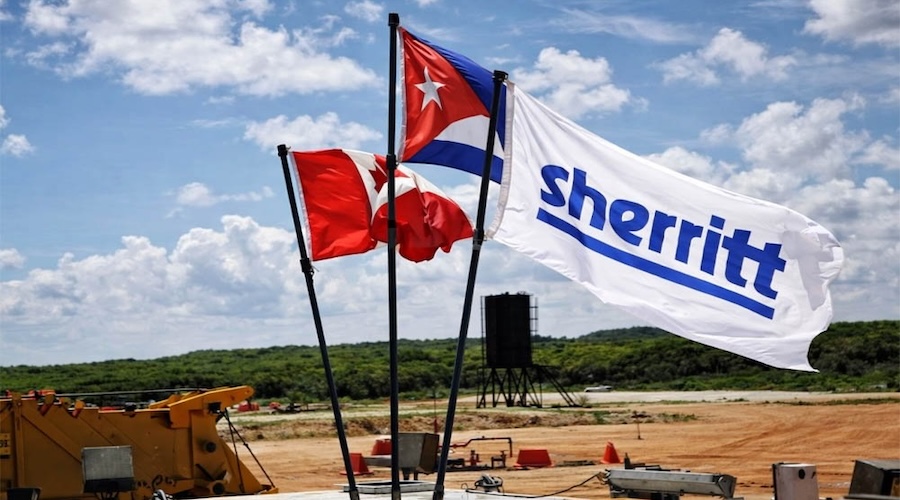
US new sanctions revive a decades-old clash with Sherritt, rooted in the 1990s. (Image courtesy of Sherritt International.)
Sherritt International Corp. is in talks to hand a controlling stake to a family office linked to a former adviser of President Donald Trump, as the mining company seeks to navigate US sanctions tied to its Cuba operations.
The Toronto-based company said it signed a non-binding term sheet for a private placement involving a warrant, which would allow Gillon Capital LLC to acquire enough common shares to own 55% of the company on a fully exercised basis, according to a statement Wednesday.
Sherritt expects that the exercise price will be at a discount to the company’s closing price May 15. The company, which operates nickel and cobalt mining and refining businesses tied closely to Cuban state partners, on Tuesday reversed course on plans to unwind its operations in the Caribbean country.
Shares of Sherritt, which trades as a penny stock, rose 9% in early trading in New York.
Gillon Capital is the family office of Ray Washburne, a real estate executive whom Trump appointed in 2017 to head the Overseas Private Investment Corporation before later naming him to the Presidential Intelligence Advisory Board.
Sherritt said it has “engaged constructively” with the US Department of State, which confirmed no objections to Gillon Capital’s engagement with the company, according to Wednesday’s statement. The Department of State and Department of Treasury don’t view the negotiations as contrary to US law, the statement said.
Last week, Sherritt said it was considering steps to relinquish its 50% stake in a Cuban nickel-and-cobalt mine, as well as surrender its interest in an energy joint venture with the state. On Tuesday, it backtracked on that decision and flagged it was evaluating a “potential value preserving opportunity.”
Sherritt operates nickel and cobalt mining and refining businesses tied closely to Cuban state partners and has long depended on the country for a significant portion of its production.
The company has been in turmoil since Trump signed an executive order earlier this month targeting non-US individuals and entities doing business in Cuba, which has faced sweeping US sanctions since the 1960s. The upheaval triggered a wave of departures, including three board members and the chief financial officer, and triggered a plunge in its share price.
Sherritt International (TSX: S) has dropped plans to dissolve its mining assets in Cuba, though operations will remain suspended amid ongoing US sanctions.
In a statement on Tuesday, the Canadian miner said it will now keep its Cuban interests, namely the Moa nickel mining venture, and will not proceed with its application to the Court of King’s Bench of Alberta to disclaim the asset.
The decision was made following further “consultation with advisors, stakeholders and relevant governmental authorities,” and “in light of additional information” currently available to the company, it said.
The announcement comes just days after Sherritt said it would be dissolving the 50/50 Moa joint venture with the state-owned General Nickel Company, citing a “material change” from the JV shareholders’ agreement. It followed a recent executive order by US President Donald Trump that expanded sanctions on Cuba to include non-American entities, including Sherritt.
The extended US sanctions triggered a wave of departures within the company, including three board members, the chief financial officer, and led to a more than 50% drop in its share price.
Before that, the Toronto-based miner had already been struggling due to its heavy exposure to the Cuban market. Sherritt has been mining cobalt and nickel in the island nation since 1990. It also produces electricity, oil and gas through a stake in Energas SA, another joint venture with Cuba’s state electric and petroleum companies.
Sherritt International shares rebounded slightly off an all-time low of C$0.11 on the news. Its market capitalization is approximately C$81 million ($59 million), following a decline that extends to nearly two decades.
While the company is not longer seeking a dissolution of the Cuban assets, its participation in the Moa venture will remain suspended, Sherritt said on Tuesday, adding that it will “continue to work with stakeholders and advisors on steps to address the executive order as soon as practicable.”
The company also said it has been presented, on a preliminary basis, with “a potential value preserving opportunity”, which it will evaluate.
US Supreme Court Rules Cruise Lines Can Be Sued Under Cuban Libertad Act
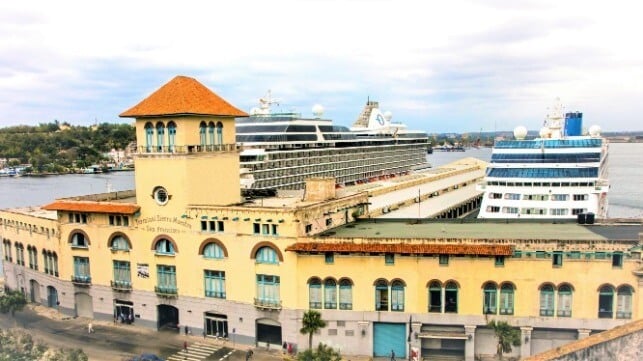
There are other cases under the Libertade Act also pending in the U.S. courts based on Trump’s 2019 decision not to extend the suspension of the act. Presidents before Trump had suspended the enforcement of the act.Cruises docked at the piers in Havana between 2016 and 2019 working under U.S. licenses (GPH photo)
The United States Supreme Court handed down its ruling saying four cruise lines could be sued for their use of the pier in Havana, Cuba, under the Libertad Act passed by the U.S. Congress in 1996. The case has been seen as a potential watershed in the long-running fight for compensation for assets seized during the 1959 Cuban revolution and other events around the globe.
At issue was the cruise lines' use of the docks in Havana between 2016, when the United States lifted many of its restrictions on Cuba under President Barack Obama, and June 2019, when Donald Trump reinstated the restrictions and let a presidential waiver over enforcement of the Libertad Act lapse. The Havana Dock Company, which built and operated the docks under a 99-year concession before the Cuban revolution, sued Carnival Corporation, Norwegian Cruise Line Holdings, MSC Cruises, and Royal Caribbean Group, contending they profited from the use of confiscated property.
The case alleges the cruise lines carried nearly one million passengers to Cuba between 2016 and 2019 using the piers that were tainted property, seized by the Cuban government in 1960 from Havana Docks. Under the Cuban Liberty and Democratic Solidarity Act (known as the Libertad Act or the Helms-Burton Act for its sponsors), companies were given the right to sue for compensation from their seized properties.
A federal district court in Miami found for Havana Docks and awarded damages of $440 million. However, a U.S. Court of Appeals reversed the decision. The cruise line case was argued before the U.S. Supreme Court in February over the interpretation of the act. Among the defenses presented by the cruise lines is the argument that the concession for the piers was to have expired in 2004. Further, it is argued that the cruise lines were operating under permits issued by the U.S. government.
The Supreme Court, in an 8 to 1 decision, ruled that the property was, in fact, “tainted” by the 1960 seizure and that Havana Docks only had to show that the cruise lines had used the confiscated property. The majority opinion written by Justice Clarence Thomas disagrees with the appellate court’s ruling, finding that the act generally makes those who use property tainted by a past confiscation liable to any U.S. national who owns a claim on that property. Havana Docks' claim for the lost docks was certified at $9 million in 1960.
In a concurring opinion, Justice Sonia Sotomayor, joined by Justice Brett Kavanaugh, raises concerns that the majority opinion, however, is too broad. She believes it was unlikely that Congress intended in the act that “someone who suffered a finite loss to reap infinite recoveries.” She believes the claim should be finite and not go on so long as anyone continues to make any commercial use of the docks. Justice Sotomayor, in her opinion, raises another point, highlighting that the cruises were operated at a time when U.S. policy was that they were lawful and beneficial to both Cuba and the United States.
The solo dissent came from Justice Elena Kagan, who focused on the assertion that the Cuban government always owned the docks. She points to the 2004 expiration of Havana Docks’ contract. She warns the Supreme Court’s interpretation of the act “treats all property interests as if they were perpetual ones." She sides with the Appellate Court, saying that Havana Docks’ claim should fail because the cruise lines did not use the docks during the time-limited concession.
The ruling sends the suit against the cruise lines back to the lower courts for further arguments.
There are other cases under the Libertade Act also pending in the U.S. courts based on Trump’s 2019 decision not to extend the suspension of the act. Presidents before Trump had suspended the enforcement of the act.
The Supreme Court in February also heard a case under the act brought by Exxon Mobil seeking compensation from the Cuban state-owned oil company CIMEX. The U.S. energy company lost its oil and gas assets in Cuba, which were seized by the Castro regime after the revolution and handed over to the state oil company.
In 2022, it was noted that more than 40 Libertad Act suits had been filed, including cases against commercial shipping companies Maersk, MSC, Crowley Maritime, and Seaboard Marine. Some of the cases brought under the act, such as Crowley Maritime and American Airlines, have reportedly reached settlements, while others will be impacted by the decisions in the cruise line case and the yet-to-be-announced decision by the Supreme Court in the ExxonMobil case.


 US new sanctions revive a decades-old clash with Sherritt, rooted in the 1990s. (Image courtesy of Sherritt International.)


No comments:
Post a Comment