Showing posts sorted by date for query Cockroach Janata Party. Sort by relevance Show all posts

Monday, July 06, 2026

From memes to political movement, India's 'Cockroach' party leads youth revolt

India's Cockroach Janata Party began life as a series of internet memes and has grown into a real-life movement, bringing together young people angry about unemployment and alleged exam fraud. What began five weeks ago as a satirical response to comments by India's chief justice has become a fast-growing campaign which now has political ambitions, even as observers question whether it can survive without more effective organisation.


Issued on: 05/07/2026 - RFI

Abhijeet Dipke, founder of the Cockroach Janata Party, holds a portrait of anti-colonial revolutionary Shaheed Bhagat Singh at a protest in Amritsar against alleged irregularities in India's national entrance exams on 13 June. AFP - NARINDER NANU

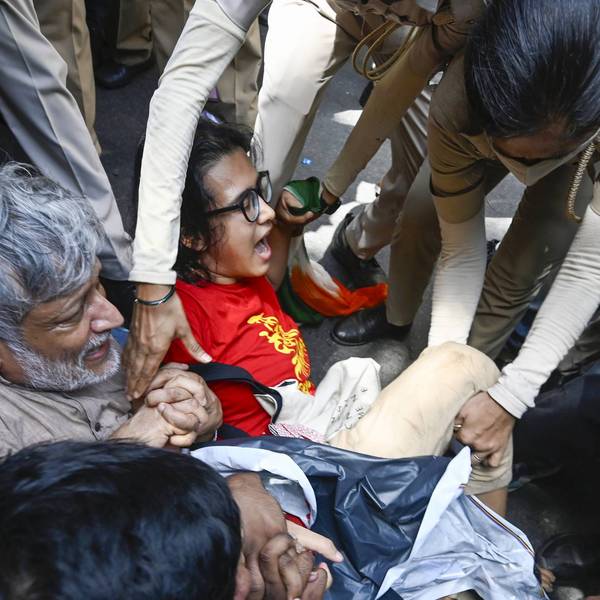
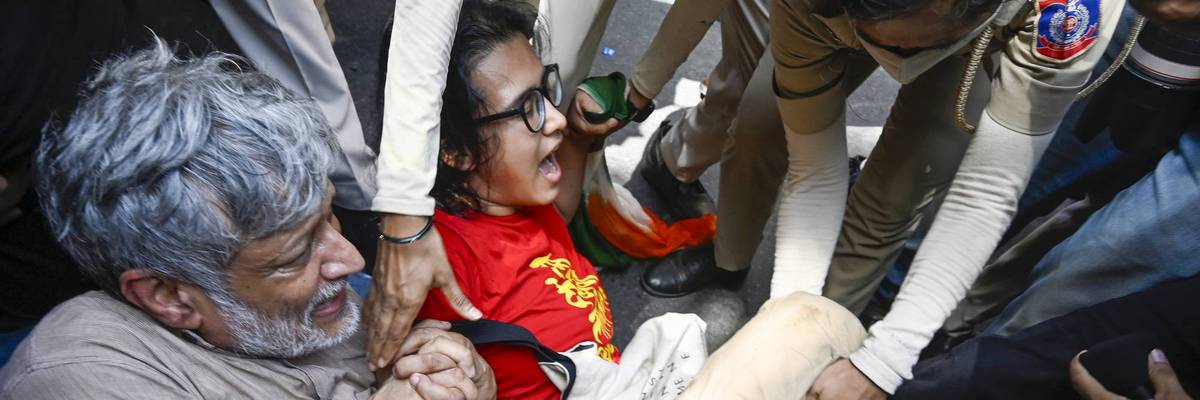
Protesters have been camping out day and night beneath the trees at Jantar Mantar, New Delhi's best-known protest site, despite a ban by authorities. Many are wearing cockroach masks and carrying placards inspired by satirical internet memes, and carrying copies of the Indian constitution.

A few weeks earlier, nothing suggested those memes would grow into such a movement.

Most of the protesters are students or recent graduates protesting against unemployment and alleged fraud in medical college entrance exams.

"There are no more opportunities for young people," Devika, who was attending her second rally, told RFI. "We are worried about the future of Generation Z. Our fight is a fight against corruption."

From Instagram to the streets

The Cockroach Janata Party (CJP) was launched on 16 May by Abhijeet Dipke, a 30-year-old communications specialist educated at Boston University.

Based in the United States, he was reacting to comments by India's chief justice, who compared unemployed young people to "cockroaches" and "parasites". Shocked, he decided to turn the insult back on its author.

"We created this party as satire," Dipke said. It quickly exceeded every expectation.

Within four days, its Instagram account drew almost 10 million followers. Within a few weeks it had reached 22 million, overtaking the account of Indian Prime Minister Narendra Modi's Bharatiya Janata Party (BJP).

"That made me realise the enormous frustration among young people over unemployment and the fraud that tainted the medical entrance exam," Dipke said.

The movement quickly spread beyond social media.


Abhijeet Dipke, 30, founder of the Cockroach Janata Party. He says the movement is ready to protest for as long as necessary after its rapid rise on social media. 
© Abdoollah Earally/RFI

Dipke returned to India at the end of May and organised seven rallies across six states and territories before returning to Delhi, where supporters decided to occupy Jantar Mantar.

Psychiatrist Rajendra Prasad, who attended the first rally, said the movement's spontaneous nature stood out. "No one brought them here," he said. "They came by themselves."

However, Prasad also questioned whether it could survive without clearly identified leadership.

This concern is echoed by other observers. Nandita Narain, a former professor at Delhi University and president of the Federation of Central Universities Teachers Associations (Fedcuta), said she had not seen student mobilisation on this scale for several years.

"These young people rise above political loyalties," Narain said. "Many probably come from families that support the government. They have little experience and everything seems improvised, but they are expressing real anger and, above all, they are beginning to overcome their fear."

Political ambitions


While the CJP had succeeded in capturing the anger of part of India's educated youth, it still lacked a clear ideological foundation, said Mehina Fatima, a researcher at Delhi University.

"The question is where it will be in five years," she said.

Dipke rejected that assessment.

"Our ideology is based on secularism, social justice and the constitution," he argued. "We draw inspiration from Ambedkar, Gandhi and Nehru."

Those references to India's founding figures mark a change for a movement that only weeks earlier was an Instagram account parodying official posters, government slogans and AI-generated images.

Its organisers now openly say they have political ambitions and have taken their campaign into public spaces.

However the movement remains highly decentralised. Decisions are made through online discussions that students join and leave freely. Meanwhile teachers, doctors and retirees supporting the protests do not always speak with one voice.

That flexibility appeals to young people who distrust traditional political parties, but it is also seen as the movement's greatest weakness.

Uncertain future

Even its name remains a joke. Asked why it was called Cockroach Janata Party – with the CJP initials echoing those of the ruling Bharatiya Janata Party – Dipke smiled.

"It was a satire," he told RFI. "A wink at the ruling party."

Dipke insisted, however, that the CJP was more than just a communications exercise.

"Everything we do is political," he said. "If we stop doing politics, then the government is no longer held accountable."

Five weeks after its creation, the Cockroach Janata Party remains difficult to define. Its rapid rise has exposed deep frustration among young Indians, but its political future remains uncertain.

This article has been adapted from the original version in French by Abdoollah Earally


Saturday, June 20, 2026

Resistance, renewal and the future of the INDIA bloc


INDIA bloc meeting

[Editor’s note: Communist Party of India (Marxist-Leninist) Liberation activist N Sai Balaji will be speaking at Ecosocialism 2026, September 11-13, Magan-djin/Brisbane, Australia. For more information visit ecosocialism.org.au.]

First published at The Hindu.

It is perhaps the first time that Congress leader and Leader of the Opposition in the Lok Sabha Rahul Gandhi has released his speech delivered at a meeting of Indian National Developmental Inclusive Alliance (INDIA) bloc leaders to the public. While his focus on building a united resistance to the Sangh-Bharatiya Janata Party (BJP)’s assault on the constitutional foundations of the Indian republic, as well as on the liberties and livelihoods of millions of Indians, is welcome, a few constructive observations may be in order in the interest of building a truly powerful and sustained resistance.

This writer has attended all INDIA bloc meetings, including the formative gathering in Patna, Bihar, in June 2023 before the alliance adopted the INDIA name. Mr. Gandhi’s impassioned speech, delivered at a time when the BJP’s ‘double-engine’/National Democratic Alliance (NDA) governments span over 20 States and Union Territories, was both reassuring and somewhat concerning. While it would have resonated strongly at a Congress meeting, parts of it seemed somewhat discordant in a gathering of 23 parties representing diverse ideological streams united in defence of India’s sovereign, socialist, secular and democratic republic.

Mr. Gandhi is right in reminding us that the Congress became a movement of resistance after Purna Swaraj (complete independence) became the official goal of the Congress. The resolution, introduced in the 1927 Madras session, and adopted two years later in the 1929 Congress session in Lahore, did propel the Congress into the leading position in India’s freedom movement, with communists, socialists, and what is now known as the Phule-Ambedkar-Periyar stream serving as other prominent stakeholders. We must not however forget that the Purna Swaraj idea was first presented in the Ahmedabad session of the Congress in 1921 by two communist delegates, Maulana Hasrat Mohani and Swami Kumarananda. And Bhagat Singh and his comrades made a clear and bold ideological statement with the launch of the Hindustan Socialist Republican Association in 1928.

The battle against authoritarianism

The battle today is between the only ideological stream that stayed away from, and often opposed, the freedom movement and the diverse ideological currents that fought for and won India’s independence. The INDIA alliance represents a regrouping of these forces against the Hindutva school of the Rashtriya Swayamsevak Sangh (RSS)-BJP, which is seeking to reshape state institutions and the architecture of parliamentary democracy to advance its ideological agenda.

If the BJP gets a free hand in its push for ‘one nation, one party’, the Congress will suffer no less than other political parties; indeed, it has often proved more vulnerable. For all our glorious chapters from the history of the freedom movement, there is no accumulated ideological insulation or immunity for any party in the face of today’s all-out fascist offensive and ideological assault. The BJP itself is filled with leaders who were in the Congress not long ago. Even as Mr. Gandhi emphasised the need to resist the BJP, the Congress’s Chief Minister in Telangana was proudly invoking Hitler while defending Hyderabad’s controversial demolition drive.

If institutions are captured and the electoral system manipulated — from voter rolls to vote counting and the declaration of results — what option remains for the people who inherited a Constitution that envisions India as a sovereign, socialist, secular and democratic republic? Mr. Gandhi is absolutely right in arguing that the only answer is resistance — not sporadic or symbolic opposition, but sustained, broad-based and determined democratic resistance.

Towards a just republic

We can no longer afford policies that have proved disastrous for the country and the vast majority of its people. An economic model of crony capitalism that transfers all of India’s resources to a handful of corporations while impoverishing the masses and damaging the environment will have to go. A foreign policy that mortgages the strategic autonomy of India to the United States-Israel axis of aggression even as Indian sailors are killed by U.S. missiles needs immediate change. The assault on Adivasi land and forest rights, and attempts to rob them of their constitutional protections, must stop. A governance model that glorifies bulldozers and encounters while criminalising dissent has no place in a democratic republic. Equally, the ideology of cultural nationalism that defines nationhood through religious supremacy and exclusion must be rejected. Finally, an electoral system that sacrifices credibility and transparency needs urgent and comprehensive reform.

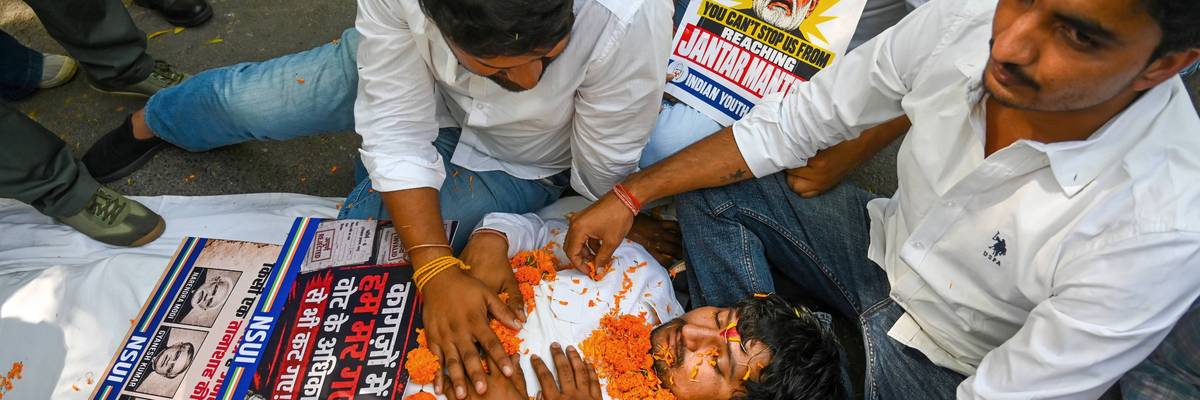
To be sure, such resistance is already underway. Farmers forced the Narendra Modi government to abandon the land acquisition ordinance in 2014 and, seven years later, repeal the three farm laws. The Shaheen Bagh-led movement against the Citizenship (Amendment) Act (CAA) in 2019 sparked nationwide opposition to what many saw as a threat to constitutional values. More recently, workers’ protests across north India against rising workloads and diminishing wages have highlighted growing economic distress. Student demonstrations, led by organisations ranging from the National Students’ Union of India (NSUI) or left student organisations such as the All India Students’ Association (AISA) and the Students’ Federation of India (SFI) or the new digital phenomenon called the Cockroach Janta Party (CJP), are demanding accountability for the deepening crisis in the education and examination system.

We must also acknowledge the price people have paid for this resistance. More than 700 farmers died during the historic farmers’ protest at Delhi’s borders. Father Stan Swamy died in custody. Activists such as Surendra Gadling, Umar Khalid and Sharjeel Imam, among others linked to the Elgar Parishad and CAA protests, have been languishing for years. Workers and activists are facing imprisonment for demanding basic rights and fair wages. Activist Sonam Wangchuk appears to be a rare exception, having been released after months of detention under the National Security Act without any clear explanation. Journalists, too, have faced severe pressure, with Prabir Purkayastha among the few to secure relief after prolonged legal action.

Contrast this record of courage and perseverance among the people with the disturbing state of political parties, many of which are splitting or imploding under the pressure of intimidation or the lure of power. It is a reminder of how humble we must be when speaking of building resistance. The challenge before the INDIA bloc is to connect with these ongoing struggles, tap into the reservoir of public disillusionment, anger and aspiration, amplify demands for justice, and strengthen the collective struggle for democracy.

Reenergise the opposition

The impact of two successive powerful struggles such as the equal citizenship campaign, the historic farmers’ movement, the message of the Bharat Jodo Yatra, and a series of encouraging electoral outcomes — from the BJP’s narrow escape in Bihar in 2020 to its defeats in West Bengal (2021) and Karnataka (2023) — created the ideal backdrop for the emergence of the INDIA coalition in 2023. Despite the exit of the Janata Dal (United) and the Rashtriya Lok Dal and the absence of electoral coordination in States such as West Bengal, Kerala and Punjab, the INDIA bloc came close to defeating the BJP-led NDA in 2024. The results in Uttar Pradesh, Maharashtra, Tamil Nadu — and, to some extent, Bihar — demonstrated INDIA’s electoral potential, raising the Congress tally to 100 seats and the alliance’s total to 234.

Since then, a series of electoral setbacks — beginning with the defeats in Maharashtra and Haryana in 2024 and Delhi in 2025 — has eroded the INDIA bloc’s strength and influence. These reverses, aided by multidimensional electoral frauds, have further tightened the BJP’s stranglehold over what remains of India’s electoral democracy. The INDIA bloc clearly needs a new impetus and a turnaround. Mr. Gandhi has a crucial dual role to play in this context — reenergising the Congress and facilitating the broader INDIA platform by ensuring mutual respect, trust and accommodation of parties with diverse histories and ideological inclinations. If India as a country can grow only on the basis of unity in, or rather through, diversity, the same also applies to INDIA as a political coalition.

Dipankar Bhattacharya is General Secretary of the Communist Party of India (Marxist-Leninist) Liberation.

Europe looks at banning social media for teens, and girls are most impacted

By Tamsin Paternoster 
Published on 19/06/2026
EURONEWS


As the UK joins a growing list of countries looking at banning or severely curbing children's access to social media, data shows girls have higher levels of problematic social media use than boys across Europe.

The UK's plans to ban social media access for teenagers has reignited a debate playing out across Europe, as governments face growing calls from parents to teachers to protect children online.

Countries including France, Spain, Austria and Denmark are all discussing measures to restrict access for children, with concerns ranging from cyberbullying and addictive platform design, to tragedies including suicide and self-harm.

According to a study by WHO-backed Health Behaviour in School-aged Children (HBSC) study, problematic social media use among adolescents increased from 7% in 2018 to 11% in 2022.

It defined problematic social media use using a behavioural scale that measures symptoms such as an inability to cut back, neglecting other activities and experiencing conflicts or negative consequences as a result of spending time online.

According to 15-year-olds surveyed, some of the highest rates of problematic social media use were recorded in Romania, Ireland and Malta.

On the other end of the scale, the Netherlands, Denmark and Estonia recorded some of the lowest levels.


Teenage girls lead the way

Across the countries surveyed, girls reported significantly higher levels of problematic use than boys.

This gap is particularly pronounced in Romania, where 28% of 15-year-old girls reported problematic use, compared with 18% of boys. In Ireland, the figures were 25% and 13% respectively.

Girls were also more likely to report they were in contact with friends online around the clock, with 44% of 15-year-old girls compared to 29% of boys.


According to the report, girls tend to be more socially connected online and may face a different virtual experience than boys.

Various research has found that adolescent girls were found to experience greater pressure over their appearance and body-dissatisfaction on social media than boys, a well as report slightly higher levels of cyberbullying-related experiences.
Support for bans is high, but evidence they work is limited

As governments debate curbing access, political support for restrictions on children's access to apps is at a high.

A YouGov survey published in April found that 79% of people in France supported banning social media for under-16s, alongside 76% in the UK, 74% in Germany and 70% in Italy. Majorities also backed restrictions in Spain (68%) and Poland (53%).

Parents particularly backed bans and restrictions, with 79% of those with children supporting a ban in Britain, Italy and Spain.

Government's are listening to this political push: France's National Assembly has approved legislation restricting access to social media for under-15s, while Spain has proposed raising the minimum age for social media access to 16.

Greece has gone a step further, with Prime Minister Kyriakos Mitsotakis announcing a ban on social media for under-15s in April, with parliament set to vote on the legislation this summer.

Many of the proposals being discussed across Europe require effective age-verification systems and may face legal and practical challenges under EU-wide rules, under which national governments cannot simply force apps such as TikTok, Instagram and Snapchat to block those under-16 overnight.

Yet while support for bans is at a high, evidence that they are effective is very limited —primarily because there are very few long-term case studies that have allowed researchers to effectively assess the impact of bans on children's wellbeing.


W thinks it has the X Factor: Europe’s alternative to mainstream social media

Social media platform "W" is the latest in Europe to take on US-based Big Tech companies
Copyright Canva

By Anna Desmarais
Published on

The Swedish-based “W” platform” is the latest in a series of new social media sites vying to replace US Big Tech companies.

The European Commission announced Wednesday that it was joining a new, made-in-Europe alternative social media platform called “W.”

The platform, first announced at the World Economic Forum in January, is built on “verified human users, transparency, privacy and free speech.”

W, based in Sweden, was built by entrepreneurs in media, technology and artificial intelligence, according to the platform’s website. The platform’s beta version launched this week, with users required to apply for vetting by the “W” team before they can post.

Top European officials are using the platform as well, including EU Commission President Ursula von der Leyen and Antonio Costa, president of the European Council.

Before getting access, users have to verify themselves either by sharing their real name or anonymously through W Identity, a separate app that scans the user’s passport or national ID to verify them directly on their device.

CEO Anna Zeiter previously told Euronews that it plans to host its data on “European servers owned by European companies,” and limiting its investors to those based on the continent.

At the time, Zeiter said W plans to use Proton, a Swiss encrypted email provider, and UpCloud, a cloud computing platform based in Finland, in accordance with EU privacy laws.

The launch coincides with a broader tech and artificial intelligence (AI) sovereignty movement in Europe to distance companies, governments and individuals away from Big Tech companies based in the United States.

Several countries, including France, Germany and the Netherlands, have raised concerns that reliance on Big Tech could lead to national security and data concerns.

Other alternative social media sites​

W is one of several alternative social media platforms launched recently based in Europe, including Bulle (French for bubble), Eurosky, Monnett and eYou.

Some of these platforms signed a declaration last week committing to build Europe’s “social stack,” which it says will bring a “diverse and resilient infrastructure” to the continent to “move away from large monopolistic platforms with their authoritarian governance.”

However, experts have previously told Euronews Next that it is very difficult for alternative platforms to maintain an audience because it will be hard for them to stay as convenient or engaging as platforms that are trying to maximise time on the site.


India blocks Telegram over 'medical entrance exam fraud' concerns


India's government has blocked messaging app Telegram until ​June 22, saying the platform was used to "defraud candidates" taking the medical entrance examination. The restriction was issued under a stringent provision ​of the IT law, which empowers ‌the government to block access to online sites in the "interest of sovereignty and integrity of ‌India".


Issued on: 16/06/2026 - 
By: FRANCE 24


The icon for the instant messaging Telegram app is seen on a smartphone, Tuesday, Feb. 28, 2023. © Matt Slocum, AP


India blocked access to Telegram messenger on Tuesday ahead of a retest of a nationwide medical college entrance examination, after a scandal last month over a question paper leak.

The failure of the hugely competitive exam, along with a separate marking fiasco in high school tests, sparked outrage and fuelled youth protests demanding the education minister's resignation.

The Ministry of Electronics issued the order restricting access to Telegram until June 22, the day of the retest. Message-editing features, which allow users to alter existing posts, will remain restricted until June 30.

"Both measures have been taken in the interest of public order, in response to the organised use of the platform by cheating rackets to defraud candidates," India's National Testing Agency (NTA) said in a statement.

The National Eligibility Entrance Test (NEET) is one of the country's most competitive exams, attracting more than two million aspiring doctors.

The NEET exam was scrapped in May following allegations that the question paper was leaked in advance, including reports that it had been circulated through Telegram channels.

The intense pressure to succeed in these exams has fuelled a lucrative industry, with tens of thousands of coaching centres across the country.

Fierce competition means that success often comes at a significant personal and financial cost -- creating opportunities for criminal networks seeking to sell leaked examination papers to the highest bidder.

India's Central Bureau of Investigation has arrested the "kingpin" alleged to be behind the leak, naming him as a chemistry lecturer involved in the examination process for the NTA.
Test pilots

The education ministry launched on Monday a website where the public can report "suspicious claims, unauthorised content, or fraudulent activities" related to the NEET exam.

Indian air force helicopters on Tuesday were seen readying for the delivery of the test papers, to "to prevent any possibility of leak", the Press Trust of India news agency reported, broadcasting images of preparations in the southern state of Tamil Nadu.

Despite rapid economic growth, millions of people in the world's most populous nation still struggle to find stable and well-paying jobs, fuelling discontent.

Students spend years preparing for exams in the hope of securing a professional career, with the pressure intensified by limited opportunities and intense competition.

Indian media reported suicides of teenagers following the fiasco over the NEET exam.

The NEET scandal came on top of another controversy, related to the online marking system used for tests taken by nearly two million high school students.

Many students said the system had assigned incorrect grades or issued results to the wrong candidates.

Anger at the exam mishandling has been channelled by the newly-founded satirical "Cockroach People's Party", which has won millions of followers on social media since its launch in May.

The movement emerged after India's Chief Justice Surya Kant reportedly likened young people who criticised the government to "cockroaches" and "parasites" during a court hearing, sparking outrage among the youth. Kant later said his comments were taken out of context.

The group, the "Cockroach Janta Party", which has since launched protests in person, based their name on a play on Prime Minister Narendra Modi's Hindu-nationalist Bharatiya Janata Party (BJP).

(FRANCE 24 with AFP)

Sunday, June 14, 2026


Memes to Mobilisation: Political Awakening of India’s Youth


Shirin Akhter |


The Delhi protest at the call of Cockroach Janata Party reflected the collective expression of youth on anxieties over unemployment, exam irregularities, shrinking opportunities and State indifference.


Image Courtesy: Wikimedia Commons

The Constitution of India grants its citizens the right to freedom of speech and expression, the right to assemble peacefully and the right to participate in public life. But these rights are not self-executing guarantees, they remain meaningful only when citizens care to exercise them. Rights survive only when citizens are able to defend them. Institutional accountability exists only when people demand it. Briefly, Institutions function only as well as the society makes them function.

The rapid spread of the metaphor ‘cockroach’ reflected widespread anxieties about unemployment, examination irregularities, shrinking opportunities and a growing sense that public institutions were becoming increasingly indifferent to the concerns of ordinary citizens. The protest at Jantar Mantar suggests that those anxieties have now found collective expression.

Many observers are asking whether the movement will survive? Will there be a second protest? Will the crowds return a second time? Can the organisation sustain itself? Will it evolve into a political force or disappear as quickly as it emerged? These are reasonable questions. Yet they may not be the most important ones.

Movements rise and fall. The true significance of this gathering lies in the fact that it is for the first time in many years that a large number of young Indians assembled. They assembled not because they were mobilised by a political party or by a charismatic leader, nor because they were instructed by the opposition leaders. They gathered because they recognised that the challenges they face are not individual failures but collective experiences.

For years, youth have been trained to interpret their struggles as personal shortcomings. If jobs are scarce, they must acquire more skills. If examinations are cancelled, delayed or compromised, they must simply prepare harder and wait longer. If recruitment processes become uncertain, they must remain patient, persevere or find alternatives to dignified employment. Structural failures are routinely transformed into individual responsibilities. As a result, this generation has been a compelled to internalise collective failures as personal inadequacies.

What happened at Jantar Mantar on June 6, challenged this narrative.

Young people from different regions, communities and backgrounds came together around a shared understanding that their difficulties are not isolated incidents. They recognised that unemployment, uncertainty and institutional neglect are social realities affecting millions.

What began as an internet phenomenon, ultimately found expression in a physical gathering of citizens asserting their demands. The language of the movement may have emerged from meme culture. The symbol of the cockroach may have travelled through social media. Yet the concerns being expressed were rooted firmly in the material world of denied aspirations, failed examinations, lack of employment, denial of public accountability. It is a conscious attempt by our youth to secure their future.

Most importantly, the movement succeeded in translating symbolic politics into a tangible democratic demand. The meme became a vehicle through which thousands of young citizens articulated a clear political objective and demanded accountability from those exercising public authority.

The protest built a bridge between the digital and the real. We may be witnessing a transformation in the location of democratic politics itself. Where collective consciousness is increasingly forged online, but it continues to seek validation through public assembly and collective action. The medium may have changed from pamphlets and student unions to hashtags and memes, yet the democratic impulse remains remarkably familiar, ordinary citizens coming together to insist that power answer to the people.

This is why the gathering deserves recognition irrespective of what happens next.

For too long, many Indians have assumed that the defence of democracy is primarily the responsibility of opposition parties, courts, journalists or civil society organisations. All of these institutions matter. Yet democracy cannot ultimately be outsourced.

No Opposition party can substitute for an engaged citizenry. No court can preserve democratic freedoms if citizens cease to value them. No institution can remain accountable if society stops demanding accountability.

The young people who gathered at Jantar Mantar reminded the country of this fundamental truth.

Whether the movement gathers momentum remains uncertain. Perhaps the crowds will return in greater numbers. Perhaps they will not. Perhaps the organisation that convened the protest will grow. Perhaps it will fade. No one can know.

But something important has already happened.

A generation frequently caricatured as distracted, self-centred and politically disengaged, demonstrated an ability to organise, mobilise and act collectively. Young people stood beside one another and asserted that their concerns matter. They demonstrated that they are not willing to wait indefinitely for others to defend their interests or speak on their behalf.

That achievement should not be underestimated.

At a moment when cynicism often appears easier than hope, they chose participation over passivity. They chose solidarity over isolation. They chose citizenship over resignation. For now, that is enough. Not because the struggle has been won. Not because the future is certain. But because India's youth have shown that they remain conscious of their rights, aware of their responsibilities and willing to stand up for one another.

Democracy is ultimately sustained not by constitutions alone, but by citizens who choose to act as citizens. The young people at Delhi’s Jantar Mantar did precisely that. And for that, they deserve to be congratulated.

The writer is Associate Professor at Zakir Husain Delhi College, University of Delhi. The views are personal.

Saturday, June 06, 2026

Supporters of India's Gen Z 'cockroach' party stage first protest in New Delhi

Hundreds of mostly young Indians gathered in New Dehli on Saturday for the first street protest organised by the Cockroach Janata Party – a movement which began as an online joke but has quickly gained momentum among Indian youth disillusioned with their education, employment and economic prospects.


Issued on: 06/06/2026 - 
By: FRANCE 24
Video by: Navodita KUMARI

A person wearing a mask holds a poster which reads "I am a Cockroach" as supporters of the Cockroach Janta Party (CJP) gather in New Delhi, India on June 6, 2026. © Adnan Abidi, Reuters
01:35


Hundreds of supporters of the Cockroach Janata Party, an online joke that drew millions across India, gathered for the first time in the national capital on Saturday, taking the social media movement off screens and into its biggest real-world test yet.

The protest at Jantar Mantar in New Delhi, marks the movement’s first foray into street politics after weeks of dominating social media feeds and news headlines, attracting millions of online followers and widespread support among young Indians.

The immediate trigger for Saturday’s protest was reported irregularity in a recent exam that has dominated headlines in India, angering a large community of students.

Hundreds of mostly young Indians gathered in the heart of New Delhi’s protest zone near the parliament building, some with placards and cockroach masks.

Abhijeet Dipke, founder of the online movement, joined the protest after he landed in the capital from the US on Saturday morning. Police had laid steel barricades at arrivals at New Delhi’s international airport.


Abhijeet Dipke, head of the Cockroach Janta Party (CJP), speaks to supporters at a sit-in protest in New Delhi on June 6, 2026. © Adnan Abidi, Reuters

Dipke said in a social media post shortly after arriving that police granted permission to the Cockroach Janta Party, or CJP, to hold the protest, adding: “Cockroaches gather at Jantar Mantar.”

CJP organisers used social media to rally supporters for Saturday’s march, demanding the resignation of Education Minister Dharmendra Pradhan. The demand grew out of an exam irregularity controversy in May that quickly became a broader outlet for frustration over India’s education system and limited job opportunities.

Supporters chanted slogans including, “Cockroaches are coming, Dharmendra Pradhan is going!” One placard read: “Waiting for exams that don’t leak.”

Participants were encouraged to bring India’s national flag and a book, which organisers said symbolised the right to education and equal opportunity for all. Organisers also urged demonstrators to remain peaceful and avoid any confrontations with police.

“Time to turn this tiny joke into a revolution,” the official CJP account on X posted Friday.
India’s Cockroach Janta Party goes viral as Gen Z movement grows


© France 24
01:58


Mansi Sehgal, a 26-year-old protester, said the protests began around exam issues, but the deeper problem is that people haven’t had a space to speak up or ask questions. “CJP is doing that. So, this is literally the first thing that people can connect and ask questions,” she said.

“This is a long fight. We are seeing that’s it’s nearly a month that we are demanding (Pradhan’s) resignation,” Dipke said at the venue.

How many ultimately would join the protest remained unclear, making the event an early test of whether the movement can channel its online popularity into a broader grassroots support around growing frustration among young Indians over education, jobs and economic prospects.

The other main challenge would be how the party navigates the kind of pushback earlier protest movements have faced under Prime Minister Narendra Modi’s government.

Over the past decade, authorities have sought to stamp out protests against his government, including demonstrations against a controversial citizenship legislation and yearlong farmers’ protests. Some protest movements also have faced legal action against organisers and activist arrests, which critics say reflects a broader effort by the government under Modi to suppress dissent.

But despite challenges, protesters expressed optimism for a change.

This is a youth first movement,” said Satya Prakash Yadav, a young student. “Youth is the future and we will ensure that our future is secure.”

The CJP emerged only three weeks ago to become an unlikely outlet for discontent among supporters who proudly call themselves “cockroaches.”

India’s Chief Justice Surya Kant likened critics and some unemployed youth to cockroaches during a May hearing, sparking backlash among frustrated young Indians. Dipke, a political communications strategist and Boston University student, used the insult as inspiration for a parody political party. Weeks after launching a website and social media accounts, CJP’s Instagram page has until now amassed more than 22 million followers.

The party has turned the cockroach into a wry badge of endurance and political articulation. Videos and memes lampooning unemployment, corruption and political dysfunction have drawn millions of views online. Parody CJP accounts also have adopted the cockroach as a political symbol and use memes, mock campaign slogans and satirical commentary.

The movement’s tongue-in-cheek messaging blends self-deprecating humor with political criticism. Supporters jokingly describe themselves as unemployed, perpetually online and shut out of meaningful influence. Beneath the humour lies a broader criticism of Modi’s government. CJP supporters argue that under Modi ordinary Indians, particularly young people, have been left with fewer opportunities.

Young people in India make up more than a quarter of the population but face limited job opportunities, rising unemployment and growing disillusionment with traditional politics. Many young voters also are critical of Modi’s ruling Hindu nationalist ruling Bharatiya Janata Party, citing concerns over rising religious polarisation, widening inequality and mounting economic pressures.

The movement’s skeptics, particularly supporters of Modi’s party, dismiss the phenomenon as little more than a social-media gimmick. They argue the movement’s online popularity may not translate into street mobilisation and that its rapid rise is likely fleeting.

The group’s rise echoes a similar trend across South Asia of youth movements born out of social media playing a central role in anti-government protests, including uprisings in Sri Lanka and Bangladesh and unrest in Nepal.

Monday, June 01, 2026

Iran war drives India’s cockroaches out, but can Modi crush them?

LONG READ


When an Indian student at a US university used AI to create the “Cockroach Janta Party (CPJ)”, a parody political party, it sparked a viral sensation, hitting the zeitgeist in a country that has been particularly affected by the Iran war. As India's youth circumvent bans to express their economic discontent online, it could pose a threat to Prime Minister Narendra Modi's government.


Issued on: 28/05/2026 
FRANCE24
By: Leela JACINTO
Video by: Vedika BAHL
An AI-generated illustration shows the parody Cockroach Janta Party’s logo. © AI-generated image/ Cockroach Janta Party
05:46


Barely three weeks after he launched a parody political movement that took India by storm, Abhijeet Dipke is being hunted and hounded by trolls, facing online extermination by the government, and his AI-generated satirical mascot, the cockroach, is as reviled in ruling party circles as the real thing is in kitchens across the country.

The movement was sparked by Indian Chief Justice Surya Kant’s controversial statements comparing the country’s unemployed youth to cockroaches. “Disheartened by those comments, I made a tweet on X that, what if all cockroaches come together? And on that personal X post, I received tremendous traction,” explained Dipke, an Indian political communications strategist and student at Boston University, in an interview with FRANCE 24.

SPOTLIGHT © FRANCE 24
13:28


Soon, a spoof party, the "Cockroach Janta Party (CJP)", or the People’s Party of Cockroaches, was born online. The name, a parody of the ruling Bharatiya Janata Party (BJP), was digested immediately – and gleefully – by netizen critics of Prime Minister Narendra Modi’s policies.

The satirical party hit the zeitgeist in a country that has been particularly impacted by the fallout of the Iran war. The Middle East conflict has also put a spotlight on Modi’s policies, exposing India’s vulnerabilities, highlighting New Delhi’s lack of clout on the diplomatic stage, and increasing the squeeze on significant sections of the population that have been overlooked in the Hindu nationalist government’s “economic miracle” discourse that has dominated India’s political stage for over a decade.

As millions flocked to the cockroach satirical cause, the movement’s social media accounts broke records, gained national and international media attention and even saw demonstrators don cockroach masks and display the parasite mascot at street protests.

It wasn’t long before the cockroach social media accounts came under attack, with Dipke alleging hacking and threats to his family. “I have been getting death threats for the last three days. Now, even my family is getting death threats,” said the 30-year-old native of the western Indian state of Maharashtra who is currently enrolled in a Master’s programme in the US. As digital rights groups condemned the violation of free speech, Dipke claimed there was a “full-blown attack against us to suppress this movement”.


Since Modi came to power in 2014, India has been slipping down press freedom indexes, with NGOs such as Reporters Without Borders warning that the Indian media “has fallen into an unofficial state of emergency”. But with the latest crackdown generating new waves of media coverage, the lid on the discourse of discontent has been prised open, and the scuttling cockroaches may be hard to contain.
Rising youth unemployment, falling US university admissions

While Kant has clarified that his observations from the bench slamming “youngsters like cockroaches” were misquoted and directed only at people obtaining "fake or bogus degrees”, his explanation failed to contain the uproar primarily because his remarks touched wounds that have been festering for years. But they have been suppressed by India’s political elites, according to analysts.

“There's been a lot of anger among the youth the world over,” noted Sushant Singh, a lecturer in South Asian studies at Yale University. “But I think fundamentally the trigger was the safety valves of the Indian state – which is the Supreme Court and the parliament and the Indian media – are no longer acting as safety valves or speaking when the executive overreaches. They're not providing the kind of correction that they're supposed to provide, which is where the frustration is building up in a certain sense among the youth.”

India has the world’s largest youth population, with about 65% of the 1.4 billion population under the age of 35, making youth unemployment a major issue for policymakers. Joblessness among India's urban youth stands at 14%, which is far higher than the overall unemployment of about 5%, official data ⁠show. That figure soars among graduates, with nearly 40% among those below 25 years unemployed, according to the 2026 State of Working India Report by the Azim Premji University.

The world’s most populous nation produces around 8 million graduate students a year, a hefty figure for the job market to accommodate. India also accounts for the largest percentage of foreign students in US universities, which in turn has supplied the US economy with a highly skilled workforce and an aspirational goal for students and their families back home.

But the American Dream in India is fading fast in President Donald Trump’s second term.

The Trump administration’s student visa restrictions, increased visa revocations often linked to minor infractions such as speeding tickets, and an atmosphere of intimidation – including threats to deport international students over pro-Palestinian speech – have seen foreign admissions in US universities fall by 17% in the 2025 fall semester, according to the Institute of International Education. In India, that figure plummeted to 75%, according to Indian media reports, with around 8,000 student visas revoked before December 2025.

From India to US detention: Trump's campus crackdown sends warning to foreign students

“The kind of people who go and study in the US, or who work in the US, are mostly Mr. Modi's staunch supporters because they come from the kind of socio-economic background which staunchly supports Mr. Modi,” explained Singh. “For them, being hurt [by Trump’s immigration policies], and Mr. Modi not being able to prevent the damage to them, is going to in some way damage Mr. Modi.”
A bromance sputters, then dies

While the Trump administration’s policies have sparked alarm in several world capitals, in India, it has heightened the scrutiny on Modi’s foreign policy and its rupture from New Delhi’s historic non-aligned position.

The Hindu nationalist prime minister made a splashy display of his tilt to the US during Trump’s first term, including a massive 2019 “Howdy Modi” rally in Houston, where, the New York Times noted, Modi “broke with protocol to campaign for a second term” for Trump.


President Donald Trump and Indian Prime Minister Narendra Modi at the "Howdy Modi" event in Houston, September 22, 2019. © Evan Vucci, AP


But when Trump returned to the White House, he killed the bromance with a whopping 50% tariff announcement on Indian goods last year. The US president then topped it with his persistent claims of personally engineering an end to a brief cross-border war between India and Pakistan, the latest conflict between the two nuclear armed states over the disputed Kashmir region.

It was a win for Pakistan since it has long sought international mediation to resolve the Kashmir crisis, while India maintains it is a strictly bilateral issue. Islamabad repaid Trump by nominating him for a Nobel Peace Prize. Modi, meanwhile, bristled amid persistent news reports of the Indian prime minister avoiding a phone call with the US president, which were denied by both sides.

Iran war makes India ‘irrelevant’

The Iran War has heightened the perception of New Delhi’s sidelining on the diplomatic stage, as Islamabad emerged as a key mediator, with Trump dubbing Pakistan’s powerful military chief General Asim Munir his "favourite field marshal".

China, India’s biggest Asian rival and more threatening neighbour, has also welcomed Pakistan’s efforts to negotiate and renew a shaky ceasefire.

China and Pakistan are historical allies, while India has been viewed in Western capitals as a strategic partner to contain Chinese expansionism in the Indo-Pacific. But the Iran war has rattled the pieces on the Asian geostrategic chessboard, with New Delhi noting Trump’s high-profile state visit this month to China, where the US president proclaimed he held “very successful talks” with his Chinese counterpart, Xi Jinping.

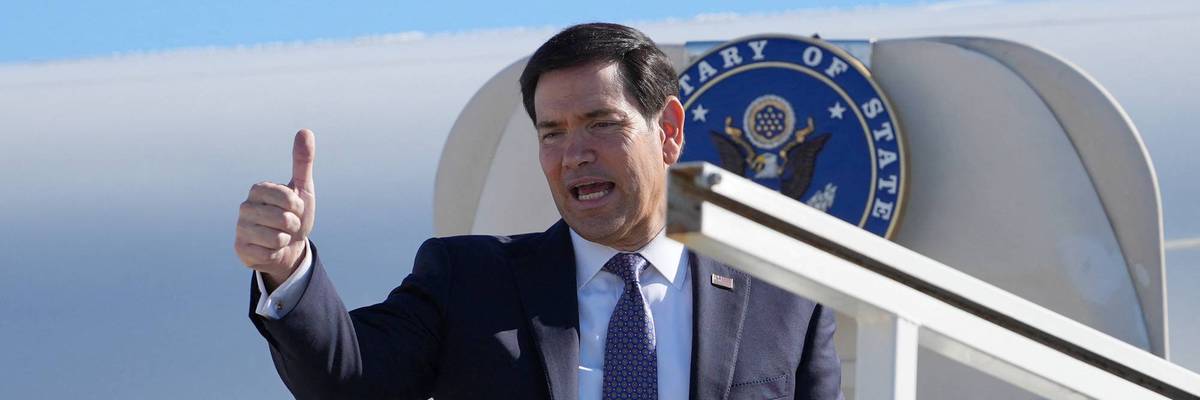
Earlier this week, Xi hosted Pakistani Prime Minister Shehbaz Sharif and praised his guest’s “positive efforts” to bring peace to the Middle East. India, meanwhile, hosted US Secretary of State Marco Rubio for a visit that was widely viewed as a bid to defuse tensions between the world’s most populous democracies.

At the end of Rubio’s visit, most South Asia analysts concluded that the outcome of the visit was edifying, but not substantive. “There's been a little bit of optics. But I think the real issue is what concretely has been achieved that is in India's favour or which shows that the Trump administration is thinking differently about India. And we haven't seen progress on that,” explained Singh.

The Modi administration’s failure to condemn the US-Israeli strikes on Iran, a historic Indian ally, while forging close ties with Israel has also depleted India’s standing in the Global South and among the BRICS grouping, analysts say.

“India is just missing from the whole geopolitical debate in West Asia or the Middle East. And it’s not that India is just absent. Being absent is fine, but India's absence is not even being noticed. Which means that India is irrelevant,” Singh noted.
A Gen Z – and cockroach – threat

The absence on the diplomatic front is heightened by the serious strains the Iran war has placed on the Indian economy.

The South Asian giant is heavily dependent on fuel imports from the Middle East, and the soaring cost of gasoline, diesel and cooking fuel has put a dent in the Indian rupee, with the currency slumping to a record low last week against the dollar.

“In terms of the shock this has had, not just on energy, but now the ramifications, which are coming on all sorts of fronts, including gold imports, the diamond and all sorts of different industries, that’s not really a good position for India,” said Sandeep Bhardwaj, a research fellow at the National University of Singapore’s Institute of South Asian Studies (ISAS).

The cockroach movement, Bhardwaj notes, is “basically coming out of a lot of this economic anxiety, which is coming out of the persistent job crisis, which has been exacerbated by the economic crisis right now,” he said. “There is a real threat of that economic pressure snowballing into something real in terms of a political cost for the government.”

The political cost of downplaying youth discontent has been keenly felt in India’s neighbourhood in recent years. Gen Z protests have unseated governments in Sri Lanka, Nepal and Bangladesh, leading some to question if India could witness a similar experience.

But Bhardwaj is cautious about predicting a Gen Z replay in the world’s most populous nation. “India is so big. There are so many variations. For a non-political party, led a grassroots movement like this to engulf India, it's going to take a very long time and a lot of things to happen for it to become a major crisis in Indian politics,” he noted.

For the founder of the "Cockroach Janta Party", the meteoric rise of his online protest has led him to question how to take the momentum forward, but he’s taking his time. “None of this was intended. It was born out of satire,” said Dipke carefully. “I think the biggest mistake that all political parties in India have made is that they have stopped engaging with the youth. They no longer have a dialogue. They no longer listen to them. So that's what we are going to do,” he explained. “After getting those ideas and the data from them, that is when we will decide our next course of action.”

Dipke may not be sure of the next course of action for his viral movement, but he’s certain he will not abandon his resilient parasite mascot. “Of course, cockroach is going to be the name of this movement going forward because people are loving it, especially the youth and the Gen Z,” he said. “What was thrown at them as an insult, they are now carrying this name with pride. So, we are going to continue with the cockroach name.”