Friday, June 12, 2026

The general strike in Portugal scored points, but the future is uncertain

Thursday 11 June 2026, by Antonio Louçã


The general strike of June 3rd paralysed a significant number of businesses and services. There is a widespread awareness among the working class that the package of dozens of labour laws represents a mortal threat to their future.

The tourism industry was severely affected by the cancellation of numerous flights at Lisbon, Porto and Faro airports; public transport was paralysed in the major cities, with the exception of minimal bus services and some rail connections between the centre and the outskirts of Lisbon; schools were paralysed in the middle of exam season and public hospitals only operated for emergencies. The big news was the significant participation from the private sector, clearly higher than that seen in the general strike in December, with stoppage rates that the CGTP (Confederação Geral dos Trabalhadores Portugueses or General Confederation of Portuguese Workers, the largest trade union federation) estimated at 100% for companies like Sovena and Cimpor, 95% for Bosch and 88% for Glavidro. [1]

The working class was not swayed by the siren songs that guaranteed the rejection of the "package" in the parliamentary vote. The previous strike, in December, had been strong enough to force the neo-fascist Chega party to change its voting position and announce its opposition to the approval of the bill promoted by the (minority) conservative right-wing government. But Chega’s about-face was, and remains, one of its many opportunistic manoeuvres, and no one can trust it to stick to its position. The struggle had to continue, and the call for a new general strike, despite all the postponements and vacillations by the CGTP, offered the working class the opportunity to make its position clear. And that opportunity was seized decisively.

In addition to rejecting illusions about the uncertain outcome of the parliamentary vote, the working class resisted the highly demobilising effect of the five-month interval between the general strike in December and this one in June. During that time, employers and the Government negotiated in the forum known as "Social Concertation" with the social democratic trade union federation UGT (União Geral de Trabalhadores or General Union of Workers), excluding the CGTP, in its majority tied to the communist party. Excluded from negotiations, they did not use that time to mobilise within companies, warning about the danger posed by the government project, but instead went around in circles until calling for a new general strike on June 3.

When the Government’s intransigence forced the UGT itself to refuse to agree to the package, the CGTP had a golden opportunity to promote assemblies in the companies that would eventually drag the UGT into joining the strike. In fact, even without that pressure from below, several UGT unions gave their members the green light to join the strike called by the rival union. However, the CGTP preferred to issue a top-down call, emphasising the UGT’s "yellow" nature and avoiding opening the Pandora’s box of a widespread workplace assembly process that could potentially sustain the struggle in the coming weeks and months.

The absence of assemblies resulted in a very uneven distribution of picket lines. In many workplaces, the union bureaucracy left the mornings free for strikers to stay home or go to the beach and simply called for afternoon demonstrations in each city. Thus, workplaces with a long tradition of assemblies and pickets were now deprived of both. The strike’s coincidence—anything but accidental—with a public holiday the following day, and with a Friday that invited long weekends, exponentially worsened the demobilisation. In Lisbon, the afternoon demonstration was less attended than the one in December 2025.

On June 3, 2026, the working class made its mark with a powerful strike. But there is no strategy or leadership that can guarantee the defeat of the labour package. We are still far from defining that strategy and building that leadership.

5 June 2026

Translated by David Fagan for International Viewpoint from Huella del Sur.

Footnotes

[1] Sovena Group is one of the largest Portuguese agribusiness holding companies, with its own farmyards in Portugal and several other countries. Cimpor - Cimentos de Portugal is the largest Portuguese cement group. Glavidro manufactures glass for industrial and construction purposes.


The ‘Start of Summer’ Festival at the crossroads of Cuba’s political project


Graphic La Joven Cuba Start of Summer festival crossroads

First published in Spanish at La Joven Cuba. Translation by LINKS International Journal of Socialist Renewal.

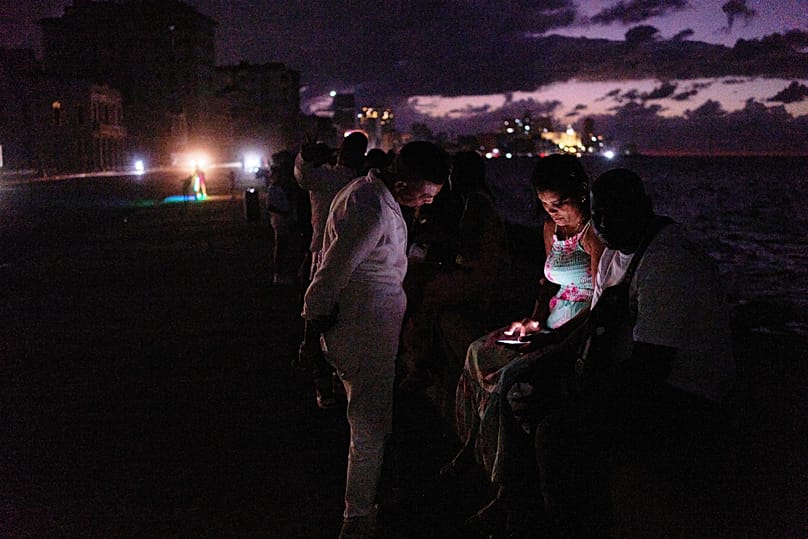
For many Cuban families, the start of summer this year is anything but a celebration. Most households lack an Ecoflow system to make the power outages less unbearable. For them, the arrival of these months can only mean heat, mosquitoes and sleepless nights, because they cannot keep a fan running to provide some relief from the increasingly hot tropical nights.

If you are responsible for maintaining or managing a low-income household, the days are no less gruelling. Instead of tanning, the June sun burns the skin of those who wait for hours for a municipal electric tricycle to take them to work, or those who walk for miles looking for the small business that sells the cheapest chicken.

As this school year draws to a close, children from working-class families, even those with good grades, will not be able to go on trips any further than wherever their feet can take them. There will be no beaches, no swimming pools, no trips to the countryside. Many of those who have worked themselves to the bone all year long to support their families will also be unable to enjoy accessible leisure activities. Cinemas, theatres, and state-run entertainment venues remain closed almost everywhere because of the energy crisis. The country is surviving US President Donald Trump and US Secretary of State Marco Rubio’s attacks, but, according to President Miguel Díaz-Canel, “with the heroic resistance of the Cuban people, we are defending our sovereignty and are committed to perfecting the enormous work of social justice that socialist construction has built in Cuba.”

However, this “heroic resistance” is taking many different forms this summer. Some people cannot sleep because of the heat from an energy blackout, while others are dancing to the beat of reggaeton in a hotel pool. For them, the Start of Summer has a completely different meaning.

The “Start of Summer” festival took place between May 29–31 at the Resonance Musique Hotel in Varadero, although some of the festivities also extended to the Meliá Internacional hotel. According to reports in non-state media, it was organized by the Fiesta Havana and Rey Puma projects, with the media platform La Familia Cubana as its main promoter. There is no reliable information on what it cost to attend these events. Some advertisements on social media indicated a price of about US$170 a night for two people. These same sources also indicate that a table in the VIP area cost between $600 and $1000.

The event brought together such figures from the Cuban urban music scene as Yomil, Charly & Johayron, Ja Rulay, Wildey, Zurdo MC, El Micha, Hallel Génesis, Helabusador, and Rey Tony, among others. The La Familia Cubana influencer team documented every moment from the inside: backstage, interviews, concert clips… where everyone was having a fantastic time, everything was vibrant, abundant, and flowing…

Among the more “illustrious” attendees was the controversial influencer and business owner Sandro Castro, Fidel Castro's grandson, who shared images on his social media of lunches at the Xanadu Restaurant in Varadero, jet ski rides, beach parties, and a video showing the now-mythical, but increasingly less credible, beach sign that reads, “What is collected here is for the people.” Sandro Castro also took the opportunity to comment that the dolphins that protected Elián González on the high seas were now bringing people from Miami to Cuba to attend the Start of Summer festival. He also launched his new energy drink, Vampirash.

Anyone viewing the images without context might think that the event was taking place in Cancun or Punta Cana, and not in a “socialist” country where blackouts typically exceed 20 hours a day, water is scarce, medicines are nowhere to be found in pharmacies, and whose government has been asking for international aid for months to meet the basic needs of its population amid the US-imposed oil embargo.

Of course, the controversy was immediate. Anyone who does not know what Cuba is like might think that those who were outraged and attacked the opulence displayed amid the “resistance” were Communist militants, brandishing that maxim from the manuals on socialist transition, “to each according to their work.” But no. Granma, the Communist Party of Cuba’s official organ, remained silent on the matter. Those who expressed outrage were, generally, opposition journalists and influencers, the vast majority of whom are avowed defenders of the most neoliberal variant of capitalism, a model that accepts inequality not as a distortion, but as a fundamental mechanism of its operation.

A curious paradox, it seems that communist morality has switched sides. Today, it is the apologists for capital who are scandalised by its harshest consequences.

It is worth noting that it was not always like this. In the “socialist” Cuba of my childhood (the late 1990s and early 2000s), despite the lingering effects of the so-called Special Period1, many working families still had access to state-provided vacation options. Popular campsites — modest but affordable facilities located in beaches and natural areas throughout the country — allowed families to spend a few days away from home at reasonable prices. In addition, trade unions managed vacation villas that were allocated to “outstanding workers”. Transportation to beach areas was also increased during the summer, and inexpensive food stalls were set up so that workers and their children could enjoy the season without money being the sole deciding factor.

Of course, it was not perfect equality, it never was. The best popular campsites were almost always “reserved” for people with connections, there was favouritism in the allocation of villas, and you travelled like sardines in a can on the buses to the beach. Nevertheless, it was a system that compensated, through social transfers, for salaries that were not enough to afford a hotel stay. A system that recognised that summer, rest, the right for your children to see the sea, could not be privileges that only those who could afford them could enjoy.

Today that floor is gone. In 2010, Raúl Castro announced the elimination of so-called “unnecessary free services” as part of the process of updating the economic model. At the time many of us thought it was a reasonable step, since some of the subsidies distorted the economy and rewarded waste. But the decision was not followed by a cross-the-board rise in state workers’ income, and a social safety net was not created for those who could not afford to pay to replace these free services. On the contrary, driven by the state, the economy became increasingly dollarised while wages were frozen. Inflation did the rest.

In Cuba today, the public sector continues to have a dominant presence in such sensitive areas as health, education, science and other productive sectors. It employs the majority of workers. But those workers have been left in limbo, without fair wages or complementary benefits. A doctor, a teacher, a scientist, let alone a worker in a state-owned enterprise, cannot afford to take a vacation without help from family members abroad or supplemental income in foreign currency.

Judging by the videos, the Start of Summer festival in Varadero was not filled with foreign tourists. The vast majority of those present were Cubans, part of the same society in which thousands of families now struggle to survive the crisis. This inevitably raises the question: who can afford to attend such an event?

Here it is important to avoid falling into typical black-and-white thinking such as “all of them are the sons and daughters of the politicians and party leaders.”

At those VIP tables, there were Cubans from very diverse backgrounds. There were those who had been absent from the island for years, returning with the foreign currency they had saved in the “capitalist” system. There were the owners of private businesses who had genuinely prospered — and it is worth making the distinction, not just any business, but one profitable enough to allow them to spend hundreds of dollars on leisure. There were the “influencers” who are paid to promote those businesses. There were also those who knew how to capitalise on assets they acquired through social redistribution mechanisms, assets that for decades had no market value, such as a mansion in Vedado that can suddenly be sold or rented. And, we must not ignore it, there were also those who had accumulated wealth through the misappropriation of resources and corruption.

The truth is that, regardless of the reasons why each person has money — some legitimate and others not — today many Cubans are able to show that they can spend hundreds of dollars in hotels while others struggle to survive. I remember that when I was a child — this was before the expansion of the private sector in 2016 and the authorisation of private businesses in 2021 — there was still a certain fear of showing that one was living “beyond one’s means.” The system was designed to prevent accumulation, and if you did accumulate wealth, the suspicion that you were doing something outside of the ordinary soon surfaced. Even those who lived off remittances from abroad showed a certain discretion regarding what most people lacked.

Today the scenario is radically different. Inequality and class privilege are no longer something hidden, but rather something that is displayed with pride. When you see the sons and daughters of the country’s leaders on social media living the high life, who can feel ashamed of living above the means of “working people”? Paradoxically, inequality only becomes a topic of conversation when an event such as the Start of Summer festival confronts us with these contradictions, but generally speaking, the debate tends to take on a moralising tone and remain at that level. It rarely manages to go a step further and analyse the causes and consequences of this problem.

Sociologist Mayra Espina Prieto, who has been researching poverty and inequality in Cuba for decades, explained it clearly in an interview with La Joven Cuba. What is happening is not simply a reconcentration of wealth, but the result of a process that she calls social restratification. Until the 1980s, the revolutionary project achieved a real process of de-stratification — the social pyramid flattened, the distance between the base and the top decreased — but that advance was never complete, and from the 1990s onwards it began to be reversed. “With the aggravating factor,” she notes, “that those who advance to the new positions offering better opportunities are almost always groups that historically were already better off.”

Warning that these figures should be taken with caution — as they are estimated from mirror data, since Cuba does not publish figures on income poverty — Espina estimates that between 40-45% of the Cuban population are unable to cover their basic needs with their income, while a small group (no more than 11-13% of the population) can be ranked with incomes far above the average, with a real ability to live comfortably from day to day and, in some cases, display the advantages this income provides. Between these two extremes, there is an increasingly unstable intermediate fringe that can fall steeply with any blow: an illness, the loss of remittances, the death of a family member abroad, or whatever.

This re-stratification has effects that corrode the social fabric, since the confidence that effort leads to a dignified life disappears. It normalises that a few have access to what the majority lack and the sense of a common project is weakened.

In a society that for decades built its legitimacy on the promise of equality, that erosion has a political weight that transcends indignation when a show of opulence such as the Start of Summer appears. It means that more and more people stop believing the system they live in has something to offer them. This has a clear effect on the way Cuban families organise their daily lives amid the current situation in which inflation, the paralysis of public transport, blackouts and the gradual disappearance of social transfers have pushed each household to subsist on its own: an Ecoflow, so as not to depend on the electricity grid; a tricycle, so as not to depend on the bus; a parallel income, so as not to depend on the state salary; purchases in the private sector, because the supply in Cuban pesos is practically non-existent. These are individual solutions to collective problems.

In this trap lies perhaps the most silent effect of the current crisis — which in this sense is far from the one that occurred in the ’90s. Solutions are no longer sought in the collective project, but become a personal responsibility.

Meanwhile, in official discourse, there continues to be talk of resistance, social justice, popular sovereignty, socialism, when at the same time daily life is organised around the logic of everyone for themselves, fending for oneself and making the most of things. When a system forces people to exist in this way, it becomes increasingly difficult to convince them that they are still part of a collective project. And, one might ask, why should we?

To the worker who today “resists” the summer with 20 hours of blackout and one meal a day, how do you explain the fact that in that same country there are those who can celebrate surrounded by luxury? How do you convince him that he has to keep fighting to save socialism?

That is why it would be naïve to be scandalised that many Cubans no longer feel any attachment to the word socialism. From what concrete experience could they feel this attachment? From a state salary that just covers a carton of eggs and a bag of milk? From an endless blackout while the neighbour lights up with the solar panel sent to him by the family from “imperialism”? From seeing how rest, leisure, mobility, access to well-being, gradually become signifiers of class? What they want, then, is for the capitalism that de facto exists to be administered and managed better, so that they too can access the capital needed for a dignified life.

However, our political menu does not abound with alternatives either. The official left continues to cling to a rhetoric that no longer manages to name the real experience of the majority, invoking an egalitarian horizon while administering a society that is increasingly unequal, more fragmented and more dependent on private solutions to problems that were previously assumed to be collective. On the other hand, a large part of the opposition — mostly located on the right — justifiably denounces the official discourse’s hypocrisy, but usually does so from an idealised vision of capitalism, one where “everyone can make it” if they try hard enough. The problem is that they rarely stop to think about what happens to those who, despite their efforts, are unable to secure a minimum of dignity for themselves via the market, as is the case in underdeveloped capitalist countries.

What they propose, in most cases, is not a capitalism with redistribution mechanisms, strong public services, subsidies for vulnerable people, the elderly or poor families, or a model where private enterprise coexists with public institutions to guarantee a minimum floor for all. What they propose is, rather, that the state withdraw and that “Saint Market” regulates social life. In a society conceived by “classical liberalism,” it no longer matters too much that some can celebrate in Varadero while others do not have enough to eat, because in the end the one who celebrates would be seen as someone who earned it, and the one who does not succeed as someone who did not know how or want to succeed.

***

To those who are genuinely indignant over the Start of Summer, I say that it is nothing more than a symptom of the problem. Those hotels illuminated amid widespread darkness are a postcard that reflects the Cuban model’s main contradiction. One that has made socialism and social justice its banner, but that today can do nothing but mismanage a defective capitalism.

That is why there is no use in expressing one’s shock on networks or calling for a ban on the next edition. Covering up this spectacle would hardly serve to hide the marks of a society that has long been reorganising itself around privilege, inequality and individual capacity over the collective project. The most serious thing is that this reorganisation occurs without naming itself and without offering the mediations that, in other capitalist contexts, progressive governments have implemented to cushion the fall of those below or help them reach the middle.

The Cuban crisis, as it stands today, is unlikely to last much longer. Whatever its outcome, rebuilding the country, with this system or with the one that comes, will have to be a collective task of which people feel a part of. However, no reconstruction will be possible without facing up to the causes that brought us to this point, amid external asphyxiation and internal errors that have ended up emptying most of the promises, which for decades sustained the national project’s legitimacy, of their content.

Facing these contradictions implies putting an end to administering their symptoms, hiding them behind slogans or selling miraculous solutions. It means starting to honestly discuss what country really exists, what majorities are being left out, but, above all, what material, social and political conditions should be rebuilt to guarantee them a dignified life, and how to do it. Everything else — the passing scandal, the selective outrage and the easy promises — remains just another way of going around in circles.

Rubén Padrón Garriga has a degree in Social Communication from the Faculty of Communication of the University of Havana and has collaborated with various media outlets. He is a social communicator by training and journalist by hobby.

  • 1

    Translator's note: The Special Period refers to the economic crisis that hit Cuba in the 1990s after the collapse of the Soviet Union. It fall led Cuba to lose more than 80% of its imports and exports.


Claudio Katz: ‘The Argentine left must aim to govern with a strategy for power’

Myriam Bregman

First published in Spanish at Argentina Indymedia. Translation by Federico Fuentes for LINKS International Journal of Socialist Renewal.

In this interview, Claudio Katz assesses the newfound prominence in Argentine politics of Workers’ Left Front – Unity (FIT-U) MP Myriam Bregman, and outlines some of the debates on the left. Katz also examines Argentina’s political situation, its economic crisis and President Javier Milei’s declining support, within a regional framework marked by events in Cuba, Venezuela and Bolivia.

Is Argentina’s political landscape changing?

Yes. Milei’s discrediting is very obvious, even among sectors that propelled him to power. His low approval rating, various expressions of disapproval with his administration, and the early election campaigning all indicate this.

The causes are obvious: two years of a dramatic fall in consumption and a brutal transfer of income to the wealthiest has caused widespread discontent. Daily life has been dramatically disrupted. A simple trip to work is now a nightmare, with reduced services and fares rising 12 times faster than wages. The healthcare system’s collapse is even more severe. Price hikes of 400% have pushed 740,000 people out of private health care and into already overcrowded public hospitals. Many pensioners are going without medicines to pay for food.

Inequality is shameful. As fuel exports rise, so do domestic energy costs. Each new record harvest comes with more empty tables in homes, cartoneros [a person who collects waste, such as cardboard, to resell]. rummaging through bins and school canteens run short on food supplies.

Milei took his chainsaw to the country, paralysing public works. He also abandoned his last remaining campaign pledge to cut inflation. It is again hovering at about 3% a month, according to a fictitious measurement based on obsolete household costs. The government itself is fuelling inflation by imposing tariff hikes and violating its monetarist ideology, which attributes price rises to money supply. By manipulating the exchange rate, it is artificially containing a further surge.

But this has not caused his economic model to collapse…

In reality, it is creaking and the shock absorbers are wearing out. 140,000 jobs losses were offset by 100,000 new informal gig economy jobs. No economy can function with 930 businesses closing each month and disposable income collapsing, with families asked to compensate for unpayable debts.

As so many times before, the huge trade surplus has evaporated due to capital flight, and another Trump rescue package is unlikely should last year’s critical exchange rate scenario be repeated. Milei's only solution to the crisis he has created is yet more austerity cuts. With tax revenue plummeting in a stagnating economy, Milei has imposed further cuts to sustain the fiction of a fiscal surplus and avoid a debt default. He has created a vicious circle of economic contraction and poverty, with no way out in sight.

Against this critical backdrop, outrage over corruption has resurfaced…

Absolutely. There is enormous anger over embezzlement by Milei’s gang. Their thievery is so brazen that even the tax collection agency head is hiding assets from tax authorities. The Libra cryptocurrency scandal, [general secretary of the presidency] Karina Milei’s 3% kickback revelations, bribery in more than 600 contracts between the national disability agency and a Kovalivker family-owned business, Milei-backed candidate José Luis Espert’s resignation over campaign funds from a high-profile drug trafficker, all expose how a gang of thugs have taken over the state to line their pockets. The scandals around Milei’s former cabinet chief, Manuel Adorni, go beyond anything imaginable and reveal a scandalous network of salary kickbacks and private plunder. They protect each other with codes and complicity like the mafia.

Milei, however, is more furious that no one cheers his outbursts and antics anymore. He does not know how to handle defeat in the culture war. His inner circle are cynically blaming people for their misfortunes, claiming they “got themselves into too much debt”. Others reinforce the ideology of cruelty, mocking destitute pensioners.

But the huge turnout at the March 24 commemorations [of the 1976 military coup] put those stories to rest. Official denialism [of the military junta's crimes] has as little resonance as attempts to revive theories of “the two demons” [morally equating the military junta’s state violence with leftist political subversion] or dictatorship “excesses”. Milei had to shelve plans to pardon the genocide perpetrators, amid widespread demands for “Memory, Truth and Justice”. These causes are a source of pride for a society that views the trials of the junta leaders as a victory embedded in the country’s DNA.

This same pattern was repeated with the mass march for education. Milei was left isolated after provocatively calling for further cuts to the lowest education budget in 35 years. He has failed to comply four times with the law requiring him to transfer owed funds to universities, attacking institutions that embody the ideal of upward mobility in the popular imagination. Attempting to destroy the symbol of qualification, knowledge and culture that public education embodies, he is losing his audience at breakneck speed.

He is not losing the support of everyone though, because the ruling class still backs him…

That is true, but the establishment is waiting for his term to finish in a respectable manner before continuing with “Mileism” without Milei. They are already sounding out potential replacements, such as the chameleon-like [right-wing Peronist1 MP Miguel Ángel] Pichetto, the reborn [former new right president Mauricio] Macri, the enigmatic [talk show host and pastor Dante] Gebel or the ever-changing [right-wing senator Patricia] Bullrich. Some are even considering a de facto replacement, should the president fall before then. In that scenario, they would keep the government afloat with the support of state governors and the Peronist right.

But Milei is uncontrollable and refuses to give up. He seeks to survive with Trump’s blessing. He has spent more time in the United States than in any Argentine town. New concessions to his patron include contentious laboratory patents and help with business disputes with China in several provinces. Milei has assembled a group of like-minded capitalists, who are vying with [multinational conglomerate Techint CEO Paolo] Rocca, [media mogul and Clarín group CEO Héctor] Magnetto and other local capitalists to reap the benefits of privatisations. They are also competing for control over the judiciary, where disputes between them are settled.

But, as always happens in Argentina, the streets will have the final say on the political course…

Exactly. The March 24 demonstrations exceeded all expectations. An estimated more than 1 million people attended, including a broad mix of generations, refuting claims that young people are shifting right. The education marches reaffirmed this resurgence. Trade union protests in various provinces show that the negative situation created by the recently approved labour reform has been reversed, after several months of retreating from street actions. These are significant mobilisations, but they lack the scale and militancy needed to defeat Milei. There is not yet the prospect of a repeat of the 2001 rebellion [that toppled several presidents] or the 2017 electoral victory against Macri.

Another significant shift is the sudden rise of Myriam Bregman…

Yes. Her rise in the polls is significant, as she has a very high net positive image, which is boosting her voting intentions. Many analysts say Myriam’s appeal has expanded beyond the traditional left-wing or progressive electorate. They believe that the angry anti-establishment voters that supported Milei might soon channel their discontent via the left. The atmosphere, to a certain extent, resembles that around [left-wing MP Luis] Zamora in the years before and after 2001. There are plenty of reasons to launch a major campaign in support of Myriam’s presidential candidacy. All the left agrees we need to shore up this prominence in the coming months.

There have been debates, expressed through various open letters and documents, on the strategic significance of this campaign. What is your view?

There is discussion on the need for Bregman to shift her discourse to show a genuine intent to become president. Such a positive tone requires an affirmative message, highlighting how the left can govern. This approach distinguishes between government and power, and calls on the people to take hold of both. The challenge lies in working out a strategy to achieve this objective.

Some participants in the debate have taken a negative view. They believe the Workers’ Left Front – Unity (FIT-U) should not seek to govern, as it has no viable policy to achieve that goal. Such pessimism simply repeats the right’s tired arguments against the left and fails to recognise potential shifts in the battle for power.

Is this pessimism being reconsidered?

We will have to see. The traditional Trotskyist view sees the struggle for government and power as two simultaneous processes, occurring in close succession. This is the 1917 Bolshevik model: revolution, soviets, the storming of the Winter Palace and the immediate launch of a socialist process. Calls to deepen the struggle, with hopes that popular power will emerge from below, are premised on repeating this.

Some documents reformulate this possibility, presenting Myriam’s candidacy as a link in the chain. They propose a positive campaign, presenting her winning the presidency as closely tied to a revolutionary upsurge. This is the reason for proposing “Committees to fight for a workers’ government, with Bregman as president”.

The obvious objection is this view is unrealistic. There are no signs, as yet, this could occur. But this sensible criticism can lead to the wrong conclusion of abandoning any effective campaign for the presidency. Some documents reject running such a campaign, instead arguing that the focus should be simply on recruitment while reaffirming the idea that elections are merely a platform to spread socialist ideas.

More moderate versions of this position argue that now is not the time to win government, because the social support needed to implement a revolutionary program does not exist in the current climate. They say the left should instead prioritise the immediate building of a party to address this weakness. I disagree with these positions, which I think help perpetuate the left’s political marginalisation.

What is your position?

Basically, fight to win the elections and form government as a means to initiate a struggle for power. A victory at the ballot box that is grounded in popular mobilisation and grassroots organisations would allow us to start the struggle to seize economic, judicial, military and media power. This is a clear, forceful strategy and, above all, one understood by the majority of the population. It avoids abstract debates about whether the conditions exist to advance the socialist project, because it situates that objective within an unpredictable course of events.

We do not know whether conditions for the classic revolutionary model to unfold will materialise. It is just as misguided to dismiss that possibility as it is to stake everything on it. Reaching government and contesting power views that path as a stage in the socialist project. The left may soon be in a position where it can and must govern with a strategy for power. But the most realistic approach is to assess contexts, taking into account the recent history of our country and region.

Which is?

In Argentina, the 2001 uprising. This was a revolt involving assemblies, picket lines and widespread grassroots organisations. This in turn led to an electoral process and the subsequent Kirchnerist cycle [of centre-left administrations headed by Nestor Kirchner (2003-07) and Cristina Fernandez de Kirchner (2007-15)]. It seems to me the left had no strategy then to intervene in elections. We should not repeat that mistake.

In contrast, Evo Morales became president in Bolivia and [Hugo] Chávez was elected in Venezuela. Their paths were similar to Salvador Allende in Chile. This path was greatly debated throughout the 20th century in terms of assessing the concrete meaning of a workers’ government. In my view, this path aligns, converges or complements — but is in no way counterposed to — the revolutionary dynamics in Russia, China, Vietnam or Cuba.

But the obvious objection would be that those attempts failed to combine the electoral path with revolutionary development…

That is not a valid objection, in my opinion. With that abstract yardstick, every left political process failed. All of them faced limits, setbacks and frustrations at some point. Was Leon Trotsky’s path a success? It seems to me there is a bad habit in polemics to attack an opponent’s failures, without considering one’s own shortcomings. It is not enough to say, for example, that Peronism has failed, without providing an example, national or international, that one considers successful.

If Myriam can consolidate her prominence on the political stage, these shortcomings will be overcome, especially if the left sets more ambitious goals in line with the position it could potentially occupy. This is not just a question of electing more MPs, but winning elections at the district, municipality or provincial level in 2027, and from there launching a campaign to win government at the national level and contest for power. Achieving these goals requires alliances and coalitions that go beyond just the left.

If the FIT-U significantly expanded its electoral base, it would have to clarify its positions on a potential run-off between a progressive centre-left and right-wing presidential candidate. This is not an immediate issue, as Myriam’s positive presidential campaign supposes that she will make it into that second round. But it is essential to develop a position for what typically happens in second round run-offs in Latin America. In that scenario, we cannot hesitate in calling for a vote against the right. Refining strategies is unavoidable in a regional context marked by dramatic events.

Are you referring to the threat of an imperialist attack on Cuba?

Yes. Trump has already stated his intention to take the island and do with it as he pleases. His naval fleet has surrounded Cuba and the US has fabricated a charge against Raúl Castro to pave the way for kidnappings, targeted assassinations or even an invasion. The tycoon needs to make up for his defeat in Iran. This means he could intensify the embargo and oil blockade through military action. The island is preparing for resistance. We must step up our solidarity initiatives here.

Marches are planned, supplies are being sent, and solidarity gestures are multiplying. But the FIT–U should demonstrate a more explicit and visible commitment by, for example, having Bregman visit Cuba, just like [Peronist left-wing leader Juan] Grabois did. This would have a major impact and constitute an important gesture regionally, following Nicolás Maduro's kidnapping.

What is your view on the situation in Venezuela?

To call it “worrying” would be an understatement. We all know that the government has a gun to its head after Maduro’s abduction. We assumed that [Acting President] Delcy [Rodríguez] was buying time, gathering strength and preparing to launch a counter-offensive. We interpreted the concessions to Trump as the heavy and unavoidable cost of such a strategy.

But several months on, the evidence is rapidly mounting that a different path has been taken. This includes a suspicious reorganising of the military command, the foreign ministry’s whitewashed statements on the war against Iran, the release of right-wing conspirators from prison, and the much-celebrated meetings with the empire’s emissaries.

While the head of the [US military] Southern Command talks with Delcy, there is total silence about the humiliating image Trump posted of Venezuela as the “51st state”. The final straw was the mock evacuation of the US Embassy, with Pentagon aircraft flying in the skies over Caracas. It is forgotten that the guest carrying out these operations holds Venezuela’s president hostage.

Furthermore, laws have been passed benefiting US companies in terms of appropriating oil profits. Oil profits are funnelled on a large-scale to the US Treasury, while the IMF resumes inspections.

Criticisms of all this mainly come from within Chavismo’s heart. Luis Britto García has called for transparency over Maduro’s abduction and demands explanations for the government’s appeasement of Trump. Former Vice-President Elías Jaua has insisted Venezuela is under occupation, with Washington planning a protectorate. Lastly, the handover of financier Alex Saab to US courts is completely unjustified. He kept foreign trade circuits open amid the empire’s sanctions. If he committed a crime, he should be tried in Caracas, not held in a prison cell near Maduro.

There are too many signs of a regressive shift to ignore. This should be discussed openly. Continuing to discuss whether there was a betrayal leads us nowhere. What matters is how we characterise this in political terms. Perhaps we could look at what happened after Sandinismo’s first electoral defeat as a precedent for Venezuela today.

Fortunately, we have encouraging developments in Bolivia…

Yes. The popular uprising is truly remarkable. Six months into the right-wing government’s term, there is a huge uprising against austerity, which again demonstrates the strong tradition of militancy in the Altiplano [Bolivia’s western highlands].

This rebellion has laid siege to La Paz, through radical methods of struggle such as roadblocks and mass demonstrations. Protesters demand the president resign for failing to fulfil his mandate and are acting with the force needed to bring the oppressors to their knees. The confrontation is ongoing; the government is using the military to crack down on the streets, issuing arrest warrants for leaders and deploying equipment supplied by Milei.

Remember that in recent decades, Bolivia has paved the way for regional cycles of struggle. At the turn of the century, Bolivia kicked off the wave of rebellions that then swept through Ecuador, Venezuela and Argentina. A few years ago it spearheaded a second wave, which then saw rebellions in Ecuador, Chile, Colombia and Peru.

Today, Bolivians are once again taking the lead, against a backdrop of important resistance in Chile, just a few months before [far-right incoming president José Antonio] Kast takes office. The rebellion in Bolivia transcends borders, challenges Trump’s agenda and strikes a blow against his far-right henchmen. It is charting a path that the Argentine left has already adopted as its own.

  • 1

    Peronism has been the dominant political force in Argentine politics since the rise to power of President Juan Domingo Perón in 1946. Currently in opposition, it has also been the main ruling party since the end of the military dictatorship in 1983. As a broad political movement, it encompasses a wide spectrum of politicians (from right-wing to centre-left and progressive), including the previous centre-left administrations of Nestor Kirchner (2003-07) and Cristina Fernandez de Kirchner (2007-15).

 AUSTRALIA

What the anti-Hanson movement of the 1990s achieved — and what it didn’t

GL covers anti-Hanson

First published at Revitalising Labour.

The current issue of Marxist Left Review (MLR), Socialist Alternative’s theoretical journal and the space where Australia’s largest far-left organisation presents its most considered public intellectual work, contains two articles arguing that the anti-Hanson movement of the late 1990s won a decisive victory against One Nation, and that the left should draw on that experience to confront the current surge in One Nation’s support. 

Mick Armstrong’s piece draws explicitly on an earlier MLR article by Tess Lee Ack, presented as the authoritative record of the campaign. Armstrong is a founding member and leading theorist of Socialist Alternative. Tom Bramble’s editorial covers similar ground. Bramble is a founding member of Socialist Alternative and a retired academic whose research at the University of Queensland focused on the Australian labour movement. Both pieces contain important truths. One Nation’s current rise is serious, the left needs to respond, and the movement of the late 1990s was real and significant. But both pieces get the history substantially wrong in ways that produce wrong lessons for now.

I am not a disinterested observer of this history. I came into activism directly through Hanson’s rise. I was in the local leadership of the Democratic Socialist Party (DSP) and its youth organisation Resistance in Perth throughout the movement, on the national council of Resistance in 1998, on the national executive of Resistance in 1999, and later a member of the DSP’s national executive. Both the DSP and Resistance subsequently dissolved into Socialist Alliance. 

I was a founding member of Action Against Racism (the main far-left anti-racist coalition in Perth for several years), which brought together Resistance and the DSP, the International Socialist Organisation (now Solidarity), the Socialist Party of Australia (now the Communist Party of Australia), Militant (then the Australian section of the Committee for a Workers’ International, a tradition that has since fragmented significantly), anarchists, and independent anti-racists. 

I was part of the political debates the MLR pieces don’t mention, in a state those pieces don’t discuss, doing work those pieces write out of the history they’re constructing. What follows is an attempt to correct the record, not to argue about which tendency deserves credit for what, but because the strategic lessons drawn from the wrong history are inadequate to the actual situation we face.

The victory that wasn’t

Armstrong’s central claim is that the mass protests of the late 1990s broke the back of One Nation and prevented the consolidation of a serious fascist organisation. He points to One Nation’s poor performance in Victoria as the key evidence of the movement’s impact, arguing that wherever protests were most intense, One Nation performed worst.

The specific electoral evidence Armstrong offers for this claim is revealing: or rather, its absence is. He gestures at a Melbourne by-election in mid-1998 where One Nation performed poorly, without naming the seat. From the context and timing, the election he means is almost certainly the August 1998 by-election in the state seat of Northcote, where One Nation received 6% of the vote in a safe Labor seat with no Liberal candidate, where Labor held 60% and the two-candidate preferred contest was between Labor and the Democrats. 

The contemporaneous Green Left Weekly (GLW) coverage of the Northcote campaign shows the DSP and Resistance organising a sustained series of events in the electorate in the lead-up to the poll, not a single protest but a programme of community engagement including public meetings with candidates. One Nation were not in the final count. They came sixth.

Using Northcote as evidence that the movement had driven One Nation back requires not mentioning that Northcote was never a seat One Nation would be expected to win. One Nation at 6% in an inner-Melbourne Labor stronghold is not a movement victory. It is One Nation performing exactly as demographic and political logic would predict in the seat least likely to produce a different result. The vagueness about which election is being cited is itself telling: if the result demonstrated what Armstrong claims, there would be no reason not to name it.

More importantly, it requires not mentioning what was happening elsewhere at the same moment. The Queensland state election took place on 13 June 1998, two months before Northcote. One Nation received 22.68% of the vote and won 11 seats. In Barambah, once the electorate of Joh Bjelke-Petersen, they polled 43.5%. At 22.68% statewide, One Nation’s vote comfortably exceeded the quota required to elect members. 

The result sent shockwaves through the entire political establishment. Seven of those 11 seats were won with the assistance of Coalition preference flows: a decision by the national Liberal organisation that overruled the Queensland branch’s own preference to put One Nation last, and which backfired catastrophically, delivering seats to Labor and nearly destroying the Coalition in the state.

These two results, Northcote and Queensland, were happening in the same political moment. Armstrong’s account treats one as evidence of movement power and barely mentions the other except as a footnote about the Coalition’s electoral tactics. An honest account of where One Nation stood in mid-1998 would have to hold both results simultaneously: 6% in Northcote, 22.68% in Queensland, 11 seats won. The movement that Armstrong celebrates had no discernible impact on the result that actually mattered.

The federal election in October 1998 confirmed the picture. One Nation received 8.43% nationally: 14.35% in Queensland, 3.72% in Victoria. The Victorian figure is presented as evidence of the movement’s success. The Queensland figure, which shows One Nation winning roughly one in seven votes despite three years of sustained protest activity, is not discussed.

What the movement actually was

The most significant popular expression of opposition to One Nation was not the protests outside her meetings. It was the national wave of high school student walkouts in mid-1998, described by Armstrong himself as part of one of the most sustained and militant protest movements since the end of the Vietnam War. These walkouts mobilised young people across every capital city and into regional centres in a way that no other element of the movement achieved. There were significant protests in Brisbane and Perth as well as Melbourne and Sydney, a national movement that the MLR account consistently flattens into a Melbourne story.

Armstrong mentions the walkouts in a single clause. He does not explain who organised them or how they spread nationally. Lee Ack’s piece, presented as the definitive historical account of the campaign, is similarly vague. This vagueness is not incidental. The organisations that called and coordinated the walkouts had their own political traditions, their own ongoing existence, and their own claim to the movement’s history. Acknowledging them would require engaging seriously with a left that existed and did significant work outside the organisational networks the MLR pieces draw on. 

The GLW archive (fully digitised, freely accessible, searchable) documents what those organisations did in ways that are publicly available to anyone who looks. The MLR pieces don’t look, and don’t cite it. This is not a limitation of access. It is a choice, and the effect of that choice, whatever the intention, is to maintain an account that engagement with the contemporaneous record would substantially complicate.

It is also worth noting that across both MLR pieces, Armstrong cites only two contemporaneous articles from within his own tradition’s publications: a piece from August 1997, before the Queensland state election, before the walkouts, and before the movement’s most significant actions, arguing the protests were working; and his own mid-1998 Queensland electoral analysis. The 1997 piece was written before the evidence was in, and the evidence that subsequently came in, from Queensland and from the policy terrain, did not straightforwardly support the claim. 

There is also a logical problem with the claim that the protests worked that neither piece adequately addresses. You can only make that case by arguing things would have been much worse without them, a counterfactual that is asserted rather than established and that is in any case unfalsifiable. Lee Ack herself acknowledges it is “next to impossible to evaluate the impact of the demonstrations,” before proceeding to evaluate it and declare it decisive. That acknowledgment of methodological impossibility followed immediately by confident causal attribution captures the circularity of the argument. 

There is nothing cited from their own publications covering the period after mid-1998 (the Hawthorn action, the Bendigo protests, the federal election campaign) when the movement’s most significant actions by Armstrong’s own account occurred. The tradition’s own contemporaneous record of the movement’s decisive period is absent from the account claiming authority over it. That the Lee Ack piece is presented as the definitive historical account of the campaign, and that both Armstrong and Bramble treat it as such, is difficult to reconcile with an evidentiary base this thin, particularly when the contemporaneous record that would complicate it is freely available and simply not consulted.

The GLW archive is unambiguous: the socialist left called the initial round of high school walkouts in Sydney and Canberra on July 2, 1998, and then organised the biggest ever national secondary school walkout on July 24, mobilising 14,000 students. A further national walkout was called for August 28. The coverage was national: every major television network, capital city dailies, ethnic community papers. A 2001 GLW article directly attributes the walkouts to Resistance while making the same causal claim about their political impact that the MLR pieces make, but without the organisational attribution the MLR pieces omit.

The timing is significant. The Queensland state election was June 13. The first walkouts were July 2, nineteen days later. The walkouts were not an expression of a movement winning. They were a response to the shock of Queensland, to the sudden realisation that One Nation had won 23% and 11 seats and that the political mainstream had no adequate answer. You do not organise a walkout when you are winning. A walkout requires urgency. The walkouts were an emergency response to a genuine crisis, called by specific organisations with specific political traditions doing specific organised work that the MLR account renders as spontaneous community upsurge.

This rendering matters beyond questions of historical credit. If the walkouts just happened, if they were an expression of spontaneous mass anger rather than organised left work with a coherent political method, then there is nothing to learn from how they were built. If they were the product of specific organisations with specific political traditions doing specific work, then understanding what those organisations did and why is essential to understanding whether and how something similar could be built now. The spontaneity framing is more comfortable for an account that needs to centre one set of organisations. It is less useful for anyone trying to actually build a movement.

The movement in Melbourne was real and significant. The Victorian Trades Hall Council and ethnic community organisations built the December 1996 rally of 50,000, and there were sustained confrontational protests across 1997 and 1998 that gave confidence to communities under attack. But the movement was larger, more politically complex, and more organisationally diverse than the MLR account suggests. It involved multiple left tendencies, trade unions, ethnic community organisations, churches, and independents in different configurations in different cities. The account that centres Melbourne and one set of organisations within it misrepresents what the movement actually was, and in doing so misrepresents what lessons can honestly be drawn from it.

The confrontational model (follow One Nation wherever it holds meetings and demonstrate that it’s not welcome) has real limits that the movement’s own experience revealed. Venue-chasing is exhausting and demoralising: One Nation moves the meeting, activists scramble across a suburb or suburbs, the energy burns on logistics rather than politics. In regional areas the model breaks down more seriously. 

I was part of protests in regional Western Australia in the lead-up to the 1998 federal election including one in Northam, in the Wheatbelt, where One Nation had genuine organic support. We were scared driving home. In hindsight it was a mistake: people from Perth arriving in a regional community to tell it who was welcome there. The same problem recurs today when inner-city activists travel to outer suburban or regional communities to protest One Nation events. They arrive as outsiders declaring who is welcome, confirm every suspicion One Nation cultivates about who the left represents, and go home having built nothing.

The Dandenong protest in July 1997 pointed toward something better, despite being reactive to One Nation’s calendar. The local community (residents, multicultural organisations, the Greater Dandenong City Council) were involved in organising and taking action on their own terrain, not simply mobilised to an event called by outsiders. That character, the community having a genuine stake and a genuine role, is what made it more than venue disruption even though it was also that. It is closer to the model the walkouts expressed and the current moment requires.

The walkouts understood something the venue disruption model didn’t. Rather than following One Nation into terrain where it had the advantage, they built on their own terrain: schools, communities, the lived experience of young people who had their own reasons to be alarmed by what Queensland had shown. 

That’s the model worth recovering: not just the reactive disruption that needs the other side to provide the occasion, but the independent organising that builds its own momentum from its own roots. The left that organised the walkouts wasn’t building a community of struggle by following One Nation around. It was building one by reaching people through their own conditions and connecting their existing political instincts to each other.

Counter-mobilisation still matters. When One Nation attempts to build a visible street presence, when fascist organisations march, communities under direct attack need to see organised opposition. But it cannot be the primary strategy, and it cannot substitute for the sustained community organising that is the only thing that actually builds the capacity to contest One Nation in the places where it’s winning.

Why Hanson really declined — and why she never went away

The standard account of One Nation’s decline in the MLR pieces identifies three factors: Howard stealing her policies, her organisation’s internal dysfunction, and the pressure of the protest movement. The third factor is presented as decisive. The first two are acknowledged but subordinated. The actual sequence of events suggests the weighting should be reversed, and that even then, the framing of decline obscures what actually happened.

The Queensland state election in June 1998 demonstrated to Howard that One Nation posed an existential threat to the Coalition in its regional heartland. Howard’s subsequent insistence that the Coalition put One Nation last on preferences at the federal election was not a response to anti-racist movement pressure. It was a response to the near-destruction of his party in Queensland through the Coalition’s own electoral tactics. The movement gets credit for a decision made entirely on the basis of Coalition self-interest in a state where the movement had almost no presence.

Accompanying the preference switch was something both Armstrong and Bramble acknowledge but do not adequately reckon with: Howard moved sharply to absorb One Nation’s policy agenda. He cut immigration, especially family reunion categories. He implemented mandatory detention and temporary protection visas. He abolished ATSIC. He extinguished native title on pastoral leases. As journalist David Marr later summarised it: “Howard made Hanson redundant.”

Hanson herself, speaking to ABC Television in July 2005 (at the nadir of her political fortunes, two years after her jail conviction had been overturned, studying for her real estate licence, recently featured in a television dancing series, and saying she had no plans to return to public life), offered her own assessment of what had happened:

“The government has taken up a lot of the issues that I’ve spoken about over the years. I think John Howard was very clever, very clever indeed. He never put me down... what he did was allowed me to go out and raise the issues, gathered the public response by it and then came in later and did something about it... I felt I must have been the minister for everything.”

This is Hanson’s own account of what happened, at the moment the MLR pieces would consider her most thoroughly defeated. She doesn’t describe herself as having been broken by the anti-racist movement. She describes herself as having been so influential on government policy that the media saw her as a de facto cabinet minister. The movement that Armstrong and Lee Ack celebrate as decisive does not appear in her account of why her influence waned. Howard implementing her agenda is the explanation she gives, and she’s right.

The pattern is visible again now. When Liberal leader Angus Taylor announced a policy restricting welfare access to citizens in his May 2026 budget reply, Hanson publicly denounced it as the Coalition stealing One Nation policies. The minister for everything, still claiming her portfolio.

Both MLR pieces acknowledge these facts in passing. Neither confronts the implication: if One Nation’s decline coincided with the implementation of One Nation’s policy agenda by the federal government, with the acquiescence of an ALP opposition that refused to mount serious resistance to any of it, in what sense did the movement win? One Nation as an organisation declined. One Nation’s politics won. Those are not the same outcome.

The left tried to shift part of the movement’s focus onto Howard in the later walkouts, attempting to name the Coalition’s policy agenda as the real terrain of contest rather than Hanson’s organisational presence. It didn’t get traction. In organising the subsequent walkout, students who had participated in the first two expressed doubts. The framing of the third walkout as being against both Hanson and Howard sounded, as several put it, too political — the step of naming the governing party as engaged in the same racist project was further than most were prepared to go. One Nation was a clear target with a clear moral valence. Howard required a more structural analysis of Australian racism than the individual politician framing demanded. 

The movement’s own framing had shaped what felt like legitimate political terrain. One Nation was racism; Howard was a different kind of problem. This wasn’t primarily a failure of organisational capacity. The obstacle was the political conclusion the framing required: to indict not just Hanson but the system that was implementing her agenda. The movement had been built around a politician as the target. Moving to the government required indicting the system itself, and the movement’s own political formation made that step difficult to take. 

The left also lacked the organisational weight to help the movement reach it even where the conditions might have been more favourable. But it was a genuine strategic failure with real consequences: the communities the movement had mobilised to defend were about to experience the most sustained assault on their rights in decades, and the movement had no framework for contesting the terrain where that assault was being prepared.

The movement contracted after the 1998 federal election because the threat as the movement understood it, One Nation’s electoral performance, appeared to have diminished. It narrowed to those most directly under attack and those most committed to defending them, losing the broader political character it had at its peak. It had been built around Hanson as an organisational target rather than around the policy terrain she was shifting. When her vote fell, the mobilising logic dissolved, even as Tampa approached, even as the Pacific Solution was being constructed, even as ATSIC was being prepared for abolition.

A movement powerful enough to influence the Coalition’s electoral tactics but unable to prevent the implementation of a single One Nation policy is a strange kind of powerful movement. The honest accounting is that the movement successfully contested One Nation’s organisational presence in inner Melbourne and may have limited its capacity to build in Victoria more broadly. This is not nothing: preventing the consolidation of a fascist street movement with a mass base matters, and the protests gave confidence and solidarity to communities under direct attack. But it is not the defeat of One Nation that the MLR pieces describe.

The electoral record tells the rest of the story. One Nation did not disappear after 1998. They won three upper house seats in Western Australia in 2001, at a moment when the MLR account has the movement having already won. I was in the public gallery of the WA parliament the night those members took their seats, part of an organised protest of a few hundred people. That is what the movement’s victory looked like from Perth in 2001: three One Nation members taking their seats while a few hundred people in the gallery marked that it was not normal, in a state where the movement had never had the presence or numbers the Melbourne account implies was universal.

The electoral data across the following decades (Western Australia 2001, Queensland 2017, Hunter Valley 2019 where coal miner Stuart Bonds took 21.6% in a heavily unionised seat running explicitly on protecting his industry) shows an organisation that declined, fragmented, rebuilt, and has now surged to levels that dwarf anything achieved in the 1990s. That trajectory is not consistent with a movement victory. It is consistent with a movement that addressed one expression of a problem whose roots were never adequately contested.

The real challenge now

The British Socialist Workers Party (SWP), the founding organisation of the International Socialist Tendency (IST), from which Socialist Alternative traces its origins, tells a structurally identical story about the Anti-Nazi League and the National Front in the late 1970s. The NF declined organisationally, Rock Against Racism and the ANL get the credit, victory is declared. David Renton, who spent twenty-two years in the SWP and wrote what became the semi-official history of the ANL, has since reflected that he had absorbed the SWP narrative “in which the Anti-Nazi League was the most important part of the anti-fascist coalition”, the kind of account that the IST tradition treats as proof of concept for the counter-mobilisation strategy. 

Socialist Alternative emerged from this tradition and its MLR pieces apply the same analytical framework to the Australian experience. What the account cannot acknowledge is that the National Front’s decline coincided almost exactly with Thatcher’s election in 1979 and her explicit absorption of National Front immigration politics. The NF became marginal. Thatcherism governed for eighteen years implementing the agenda. The IST was pointing to this experience as the proof of concept for the anti-Hanson strategy in the 1990s, citing as their model an outcome whose full consequences were already visible.

The pattern is consistent: confront the organisational expression of the far right, declare victory when it declines, fail to fully contest the terrain where the mainstream absorbs and implements the politics. The MLR pieces are recommending this approach a third time, and the tradition still hasn’t fully reckoned with what the first two times produced.

The current situation is categorically more serious than 1998 in every relevant dimension. One Nation is polling at over 20% nationally on most measures, more than double its 1998 peak, and in some polls ahead of both the ALP and the Coalition on primary vote. In May 2026 One Nation won the Farrer by-election, electing its first ever directly elected member to the House of Representatives. That figure substantially exceeds union density as a proportion of the workforce, and the electorate is broader than the workforce. You cannot demonstrate that opposition is larger than support when support is at these levels. The counter-mobilisation strategy that had some logic when One Nation was polling 8-13% is arithmetically inadequate at current levels.

One Nation’s support at current levels cannot be primarily the petit-bourgeois small town middle class Armstrong identifies as its 1990s base. The arithmetic is simply wrong: the petit-bourgeoisie is not large enough as a proportion of the electorate to produce polling at these levels. Sections of the working class are in that number in significant proportions because workers are the majority of the population. The class composition question is fully developed in my articles on the labour aristocracy and the psychological wage

But the arithmetic alone is sufficient to establish that Socialist Alternative’s analytical framework cannot accommodate the current scale of One Nation’s support. Stuart Bonds, a coal miner, getting 21.6% in the Hunter, running explicitly on protecting his industry in a coal mining electorate with strong union density in a seat Labor had held for decades, is not explicable through the class composition argument that framework requires. He doesn’t exist in their account. That result suggests One Nation can win substantial support from exactly the organised industrial workers Armstrong identified as the bedrock of anti-Hanson resistance in the 1990s. And the distinction between voting One Nation and voting for Howard (who was implementing One Nation’s agenda through the institutions of government) was always thinner than Socialist Alternative’s analysis wanted it to be.

It is also worth noting that even accepting Armstrong’s characterisation of One Nation’s base as petit-bourgeois, One Nation speaks to that base with more consistency and more authentic presence than the Australian left speaks to the working class it claims to represent. On the terms Armstrong himself sets (organisational rootedness, sustained community presence, speaking credibly to a specific constituency) the left compares poorly. 

This is not a criticism unique to Socialist Alternative; it reflects a broader disconnection between the Australian left and the class whose interests it advances. Howard’s battlers, the working class losers of the Hawke-Keating restructuring who shifted from Labor to Howard in 1996 and then to One Nation, are the historical bridge that Socialist Alternative’s analysis cannot accommodate, just as the SWP’s account of the National Front never fully engaged with the working class composition of its support base. It is the same tradition making the same mistake. 

The danger is not primarily outside the class. It is a tendency within the class: in the outer suburbs of every major city, in the regional communities where deindustrialisation has run for over forty years without an adequate left response, in the workforces whose institutional protections have been systematically dismantled, in the communities where nobody on the left has sustained organisational presence and nobody has made a credible material offer about what a different future looks like.

What’s needed in those communities is not a left organisation extending its reach through a stall or a counter-protest. It’s the development of authentic anti-racist sentiment that does things organically: the local campaign that builds cross-community relationships, the person who finds that their existing political instincts are shared and can find collective expression. The high school walkouts of 1998 were one expression of this — students organising on their own terrain, in their own institutions. 

The model isn’t to repeat the walkouts. It’s to build communities of struggle wherever people live, work, and study, in forms that arise from those specific conditions rather than from the left’s organisational calendar. The left’s job is to inspire that kind of organic development, not to recruit people into its own activities. Some of those people will eventually find their way to a socialist organisation. That’s incidental to the purpose, not the purpose itself. The purpose is building a community of struggle with genuine roots, the kind of roots that allow real mass organisations to call masses out because they have real trust and authority built over years, not because they have turned on the mobilisation tap in response to an occasion the other side has provided.

The reactive model has a specific problem at current polling levels: you need meetings to counter, and One Nation polling at these levels is not primarily building through public meetings. It’s building through media infrastructure, through digital organising, through the absence of any credible alternative in the communities where it’s winning. A strategy that depends on the other side providing the occasion is not adequate to contesting an organisation that has moved well beyond the need for public meetings to build support.

You cannot speak to the Hunter Valley coal miner through a counter-mobilisation. You need a believable just transition policy that delivers for those communities, a policy that starts from where those communities actually are, that takes seriously what they would lose, that makes the case not just that transition is necessary but that it is possible in a form that doesn’t abandon the people living it. 

One Nation is not being subtle about what it is offering those communities. It is explicitly promising to save the coal industry, in the same way the right has always offered dying industries a promise they don’t need to change, followed by abandonment when the change comes regardless, and money for capital as it transitions out. The timber industry is the most recent completed example of that pattern in Australia. A Getty Images photograph from the period shows Howard being warmly embraced by a CFMEU timber worker whose white power tattoo is clearly visible in the frame

Union membership and racial politics coexisting in exactly the way the labour aristocracy thesis predicts, and in exactly the way Socialist Alternative’s analytical framework requires not to exist. The IST tradition’s insistence that organised workers are the bedrock of anti-racist resistance may be a comfortable position, but that photograph is the reality it has to look away from. There has been genuine effort on just transition work within the union movement, and it is genuinely difficult, resource intensive work that requires sustained presence and detailed policy development in specific communities. 

But the honest assessment is that what has been produced hasn’t yet been sufficient for the communities where One Nation is winning, and that gap is a collective failure of the broader left, not a failure of the individuals doing the work. That work is unglamorous, produces no dramatic victories to celebrate, and requires sustained presence in communities the left currently doesn’t reach sufficiently. It is the only work that matters for the communities where One Nation is actually winning.

Addressing the current challenge requires knowing honestly where we are, which means not declaring a victory in the 1990s that the evidence doesn’t support. It requires knowing where we are trying to get to, which means specifying what success looks like when One Nation is polling at over 20%, not gesturing at a repeat of a movement whose account in these pieces is limited primarily to inner Melbourne. 

And it requires building the bridge between those two points through patient, sustained work that the Situationist slogan (”be realistic, demand the impossible”) captures better than any amount of organisational schema: starting from where people actually are, demanding what their situation actually requires, and trusting that the process of organised struggle for real demands develops the consciousness and the capacity that transformation requires.1 

The anti-Hanson movement of the late 1990s was real, significant, and in many respects genuinely inspiring, particularly the high school walkouts that demonstrated the political agency of young people across the country in a way nobody predicted, built by parts of the left the MLR account passes over in a clause while claiming the movement’s authority. Those of us who were part of it, in Perth and Brisbane and Sydney and Melbourne and in regional centres, did something worth taking seriously. 

We were hopeful that the 1998 federal election would defeat both One Nation and the Coalition. One Nation was reduced to a single Senate seat, largely because the Coalition cut preferences against them, and Howard won anyway. The preference system continues to limit One Nation’s immediate electoral ceiling, but as argued elsewhere, the real danger is normalisation and the rightward drag on political discourse that One Nation’s growth produces regardless of its seat count. The movement did not sustain after that. We would be in a better place today if we had something approaching it now.

But you cannot look at the last thirty years, the Tampa, the Pacific Solution, the NT Intervention, the abolition of ATSIC, One Nation’s continuous electoral presence across multiple states, and now polling at over 20% nationally, and describe what happened as a victory without doing violence to the communities who experienced what came after the celebrations. Hanson herself, in 2005, didn’t describe it as a defeat. She described herself as the minister for everything.

A movement that can be declared victorious while the politics it was fighting are being institutionalised by the government is not a movement that won. It was a movement aimed at the most visible and immediate threat, and one that was unable to reorientate to the more imminent and real threat as the terrain shifted. 

I was part of that movement and part of that failure. We did not convince enough people that the Liberals were the real terrain of contest. We lost, and that was a collective failing. Not recognising it as such deepens the failure, because you cannot learn from a defeat you have declared a victory. Getting the direction right this time requires starting from an honest account of what happened last time, and saying we won last time fails that task.