It’s possible that I shall make an ass of myself. But in that case one can always get out of it with a little dialectic. I have, of course, so worded my proposition as to be right either way (K.Marx, Letter to F.Engels on the Indian Mutiny)
From memes to political movement, India's 'Cockroach' party leads youth revolt
India's Cockroach Janata Party began life as a series of internet memes and has grown into a real-life movement, bringing together young people angry about unemployment and alleged exam fraud. What began five weeks ago as a satirical response to comments by India's chief justice has become a fast-growing campaign which now has political ambitions, even as observers question whether it can survive without more effective organisation.
Issued on: 05/07/2026 - RFI
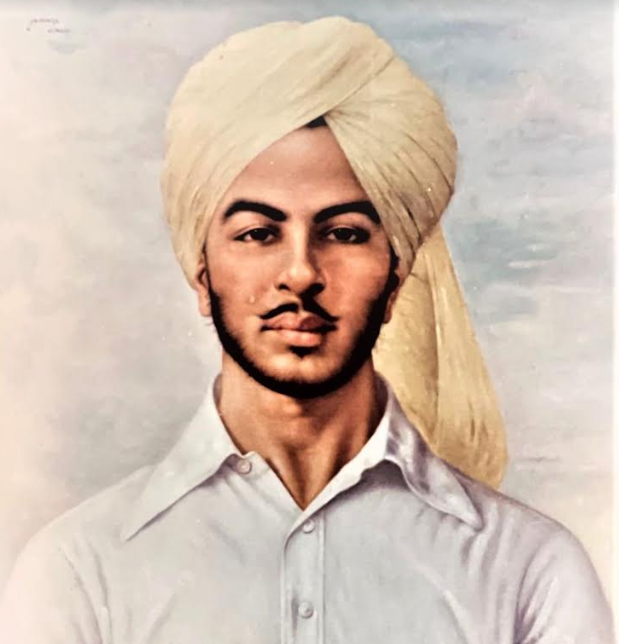
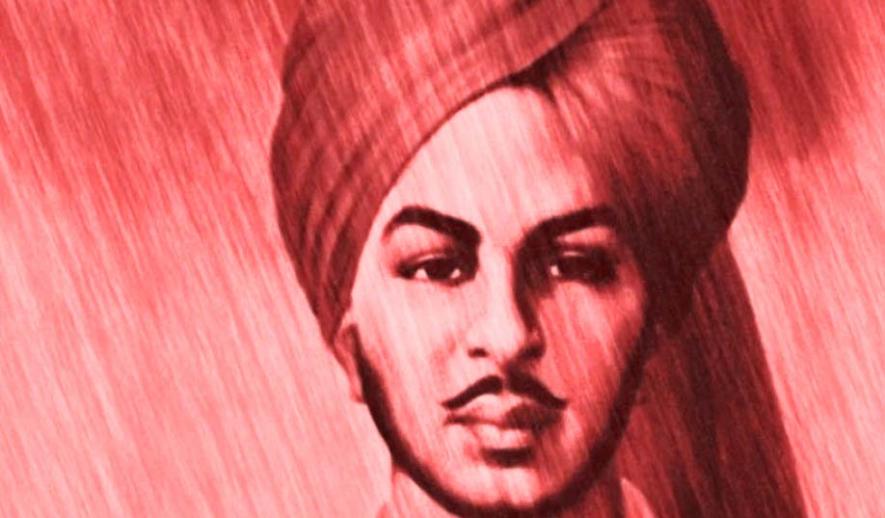
Abhijeet Dipke, founder of the Cockroach Janata Party, holds a portrait of anti-colonial revolutionary Shaheed Bhagat Singh at a protest in Amritsar against alleged irregularities in India's national entrance exams on 13 June. AFP - NARINDER NANU
Protesters have been camping out day and night beneath the trees at Jantar Mantar, New Delhi's best-known protest site, despite a ban by authorities. Many are wearing cockroach masks and carrying placards inspired by satirical internet memes, and carrying copies of the Indian constitution.
A few weeks earlier, nothing suggested those memes would grow into such a movement.
Most of the protesters are students or recent graduates protesting against unemployment and alleged fraud in medical college entrance exams.
"There are no more opportunities for young people," Devika, who was attending her second rally, told RFI. "We are worried about the future of Generation Z. Our fight is a fight against corruption."
From Instagram to the streets
The Cockroach Janata Party (CJP) was launched on 16 May by Abhijeet Dipke, a 30-year-old communications specialist educated at Boston University.
Based in the United States, he was reacting to comments by India's chief justice, who compared unemployed young people to "cockroaches" and "parasites". Shocked, he decided to turn the insult back on its author.
"We created this party as satire," Dipke said. It quickly exceeded every expectation.
Within four days, its Instagram account drew almost 10 million followers. Within a few weeks it had reached 22 million, overtaking the account of Indian Prime Minister Narendra Modi's Bharatiya Janata Party (BJP).
"That made me realise the enormous frustration among young people over unemployment and the fraud that tainted the medical entrance exam," Dipke said.
The movement quickly spread beyond social media.
Abhijeet Dipke, 30, founder of the Cockroach Janata Party. He says the movement is ready to protest for as long as necessary after its rapid rise on social media.
Dipke returned to India at the end of May and organised seven rallies across six states and territories before returning to Delhi, where supporters decided to occupy Jantar Mantar.
Psychiatrist Rajendra Prasad, who attended the first rally, said the movement's spontaneous nature stood out. "No one brought them here," he said. "They came by themselves."
However, Prasad also questioned whether it could survive without clearly identified leadership.
This concern is echoed by other observers. Nandita Narain, a former professor at Delhi University and president of the Federation of Central Universities Teachers Associations (Fedcuta), said she had not seen student mobilisation on this scale for several years.
"These young people rise above political loyalties," Narain said. "Many probably come from families that support the government. They have little experience and everything seems improvised, but they are expressing real anger and, above all, they are beginning to overcome their fear." Political ambitions
While the CJP had succeeded in capturing the anger of part of India's educated youth, it still lacked a clear ideological foundation, said Mehina Fatima, a researcher at Delhi University.
"The question is where it will be in five years," she said.
Dipke rejected that assessment.
"Our ideology is based on secularism, social justice and the constitution," he argued. "We draw inspiration from Ambedkar, Gandhi and Nehru."
Those references to India's founding figures mark a change for a movement that only weeks earlier was an Instagram account parodying official posters, government slogans and AI-generated images.
Its organisers now openly say they have political ambitions and have taken their campaign into public spaces.
However the movement remains highly decentralised. Decisions are made through online discussions that students join and leave freely. Meanwhile teachers, doctors and retirees supporting the protests do not always speak with one voice.
That flexibility appeals to young people who distrust traditional political parties, but it is also seen as the movement's greatest weakness. Uncertain future
Even its name remains a joke. Asked why it was called Cockroach Janata Party – with the CJP initials echoing those of the ruling Bharatiya Janata Party – Dipke smiled.
"It was a satire," he told RFI. "A wink at the ruling party."
Dipke insisted, however, that the CJP was more than just a communications exercise.
"Everything we do is political," he said. "If we stop doing politics, then the government is no longer held accountable."
Five weeks after its creation, the Cockroach Janata Party remains difficult to define. Its rapid rise has exposed deep frustration among young Indians, but its political future remains uncertain.
Shambhu border, India — Balvinder Singh lies on his side, writhing in pain, on a hospital bed in the northern Indian state of Punjab.
When Singh, 47, was hit by a volley of piercing objects while marching towards New Delhi with thousands of other farmers, he did not know what had struck him.
But his body is pockmarked with telltale black scars from iron pellets fired by security forces to prevent farmers from crossing over from Punjab into the state of Haryana, which borders New Delhi. Haryana is ruled by Prime Minister Narendra Modi’s Bharatiya Janata Party, whose federal policies the farmers are protesting against.
Singh, a farmer from Faridkot district in Punjab, who was admitted at Rajindra Hospital in the city of Patiala, was hit when he was calming the angry young farmers at the front of the protest site, metres away from the border on February 14, a day after the protests began.
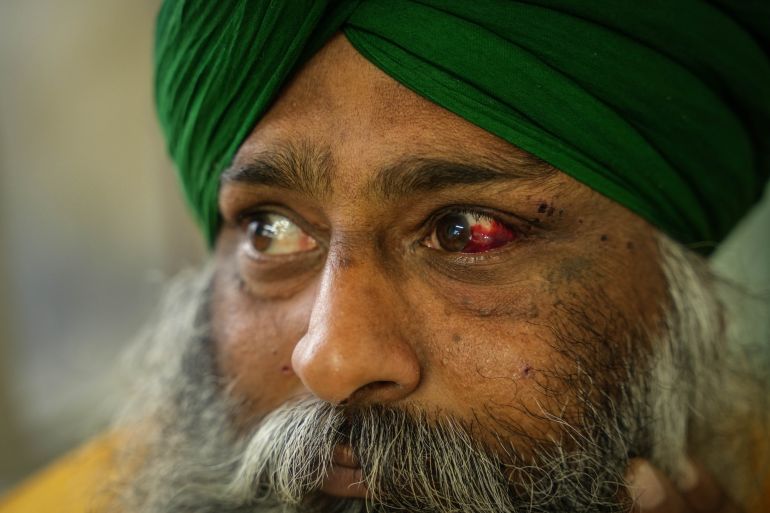
“I was calming down the protesters when I was hit,” Singh says, his left eye bloody from a pellet injury. “I could not understand whether it was a bullet or something else that hurt me.”
Singh says he had never heard of iron pellets being used as ammunition by security forces against civilian protesters. In the past, such pellets have been mostly used in Indian-administered Kashmir as a crowd-control mechanism. Pellet guns have blinded scores of people in Kashmir.
Balvinder Singh, his eye bloodied by a wound from an iron pellet fired by police, in a hospital in Patiala, Punjab
[Md Meherban/Al Jazeera]
Now, they are part of the intensifying confrontation between farmers and the government. The government in Punjab, which is ruled by the Aam Aadmi Party that is in opposition nationally, has said that three farmers have lost their eyesight after being hit with the Haryana police pellets and a dozen others have also suffered pellet injuries.
Critics of the farmers, meanwhile, argue that the central government cannot allow the protests to escalate the way they did in 2021, when clashes broke out on the streets of New Delhi. Some protesters reached the Red Fort – from where the prime minister delivers the Independence Day speech – and were accused of yanking down the national flag. A security crackdown followed.
Yet, days after this latest agitation kicked off, there are growing signs of a repeat of the kind of escalation in tensions that India witnessed three years ago.
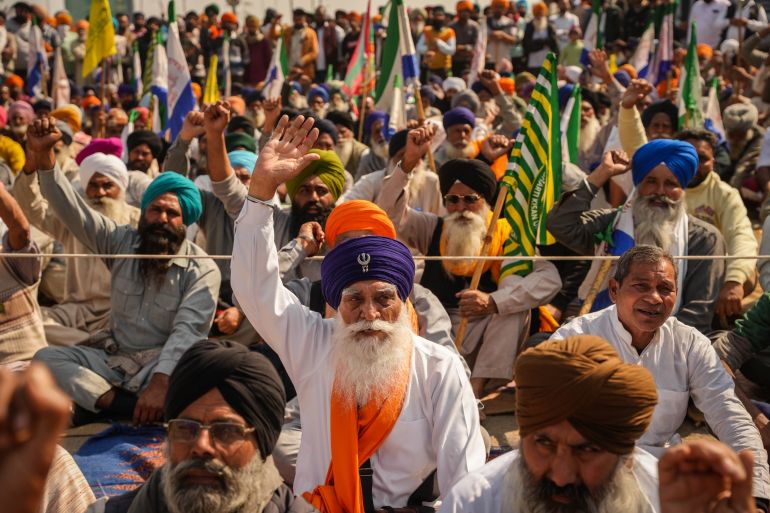
Thousands of farmers in their tractor trolleys, small trucks, on foot, and scooters have travelled from rural areas of Punjab and gathered on the Punjab-Haryana highway waiting to march on the capital city. They are hoping to press the BJP government for demands including a guaranteed minimum support price (MSP) for their crops and loan waivers, among others.
In Haryana, the government has been criticised for using drones to drop tear gas shells on the protesting farmers. The state’s police have sealed the border with heavy cemented blocks, iron nails and barbed wire.
Singh, who owns a four-acre plot where he grows rice and wheat, says there is no guarantee of price in the fluctuating market for other crops.
“We spend more on cultivation [when growing other crops] and there is no earning,” he says.
“Now, we are also facing water shortages for even growing these two crops [rice and wheat]. We are in deep stress.”
At present the government buys rice and wheat from farmers for public distribution, and offers them a minimum support price for these grains. But other agricultural commodities do not receive this price protection. That, farmers say, has in turn led to the overproduction of rice and wheat. Paddies in particular, are water intensive, leading to depleted groundwater levels.
“If I want to diversify to other crops, there should be financial security for me that I will get a good price – that is what we are asking. We are asking for our rights,” says Singh, from the hospital, where eight other farmers, some aged above 60, are also being treated.
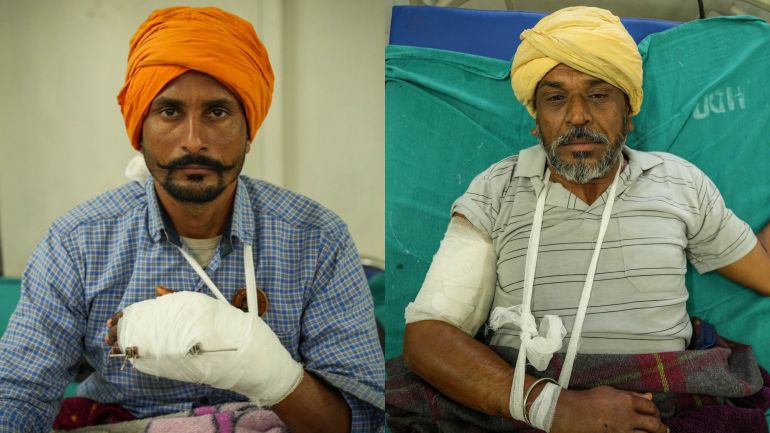
One of them, Mota Singh, 32, from Hoshiarpur in Punjab, said that he was hit by a rubber bullet on his hand. To Mota, something even more fundamental is at stake than crop prices.
“Farmers are demanding dignity, we cannot be poor forever,” says Mota, when asked why he was protesting.
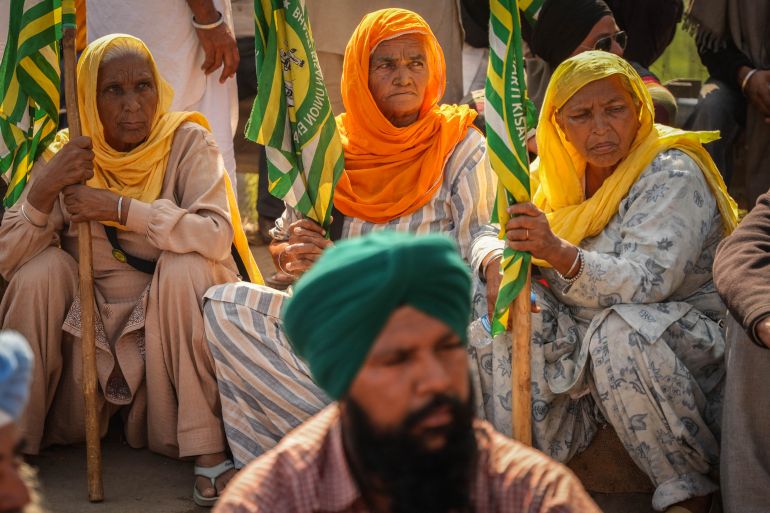
Female farmers listen to a speech by a farming leader at the protest site on the Shambhu border between Haryana and Punjab
[Md Meherban/Al Jazeera]
Why are farmers again on the roads?
More than 250 farmers’ unions have supported the protest that is being organised from Punjab.
Up to two-thirds of India’s 1.4 billion population are engaged in agriculture-related activities for their livelihoods and the sector contributes nearly a fifth of the country’s gross domestic product.
Farmers say that their main demand – minimum support price legislation – would ensure that the rates of their crops are sustainable and provide them with decent earnings.
At present, the government protects wheat and rice against the price fall by setting a minimum purchase price, a system that was introduced more than 60 years ago, to ensure food security in India.
Development economist Jayati Ghosh says that if other crops were also brought under the MSP regime, it would help provide sustainable financial support to the farmers. This wouldn’t mean that the government would need to buy large volumes of these crops, says Ghosh, a professor at the University of Massachusetts Amherst.
It’s only when the price drops below the MSP that the government would need to step in and buy just enough that the price rises above the minimum set bar, she says.
“It’s a market intervention that makes sure that farmers have this other option,” Ghosh says.
In India, experts say that agriculture has been going through a severe crisis due to increasing extreme weather combined with a lowering water table, affecting yields and pushing farmers deep into debt. Thousands of farmers take their own lives each year. In 2022, data collected by the National Crime Records Bureau (NCRB) shows that 11,290 farmers died by suicide.
Ghosh questions why the government is reluctant to write off farm loans.
“Every year the banking system writes off loans of lakhs of crores (billions of dollars) of money taken by large corporations and that is not even mentioned and it is not even news,” she says. “The corporations can get away with all kinds of loan waivers but the farmers are asking a small fraction of that and … are treated as criminals.”
Injured farmers at a hospital in Patiala, Punjab, where they are being treated for injuries received during baton charges and pellet gun firing by the police
[Md Meherban/Al Jazeera] ‘Government not honouring its promises’
The farmers are also demanding that the Modi government withdraw cases filed against them during the last protest in 2020-21.
Held on the outskirts of New Delhi for 13 months, those protests were against a set of three farm laws brought in by the BJP government that aimed to push India’s family-based, smallholdings-driven farm sector towards privatised and industrialised agriculture.
The government argued that the laws would improve market competition and in turn bring new wealth, especially to smaller farmers. But farmers protested, worried that the laws would leave them at the mercy of big corporations.
Eventually, Modi agreed to repeal the laws, and his government said it would set up a panel of stakeholders to find ways to ensure support prices for all produce.
The protesting farmers now accuse the government of not honouring those promises. And they are readying for a long wait to pressure the government.
Hardeep Singh, 57, from Gurdaspur in Punjab, has come prepared with bags of rice, flour, and other essentials in his tractor.
“We are here even if it takes months,” says Hardeep, who left his home with dozens of other villagers on February 11.
“We might not be allowed to go forward but we will not go backward, either.”
Darshan Singh displaying the photo of his son who died in the farmers’ protest two years ago
[Md Meherban/Al Jazeera]
‘Not afraid of losing my health’
Darshan Singh, 66, sits silently on the side of the highway. He carries a passport-size photo of his son, 27-year-old Gurpreet Singh, in his wallet.
Gurpreet was among more than 700 farmers who died during the previous farmers’ protest in 2021.
“He was at the protest site for a year. He fell sick at the site and died after returning to the village. We are giving sacrifices for this movement,” Darshan tells Al Jazeera. But that tragedy has not deterred the father from joining the protest this time. “I am not afraid of losing my health here.”
Darshan says he wants justice for the two children and young wife his son left behind.
With national elections in India just two months away, the farmers are trying to ensure that they cannot be ignored. Because of their sheer numbers, farmers constitute a significant chunk of Indian voters.
The ruling BJP government recently conferred the nation’s highest civilian award on MS Swaminathan, a pioneer of the agricultural revolution in the 1960s and 1970s. Meanwhile, the opposition Congress party has promised to legalise an MSP on crops if elected to power.
A government delegation has been engaged in negotiations with the protesting farmers without a breakthrough.
“We feel the government wants to suppress us and pass time,” Manjeet Singh, a leader of Bhartiya Kisan Union Shaheed Bhagat Singh, a local farmers’ union from Haryana, told Al Jazeera.
A fourth round of talks on Sunday evening, held between a 14-member farmers’ delegation and government representatives, including three federal ministers, failed to yield a breakthrough.
The government has offered farmers MSP for pulses, cotton and maize. The crops, according to the proposal, would be bought by the government agencies on an agreement for five years.
But the farmers have rejected the offer, which they argue only temporarily addresses their demand – unlike a law that would guarantee them MSP for these commodities in the long run. The farmers say they will continue with their protest march to New Delhi.
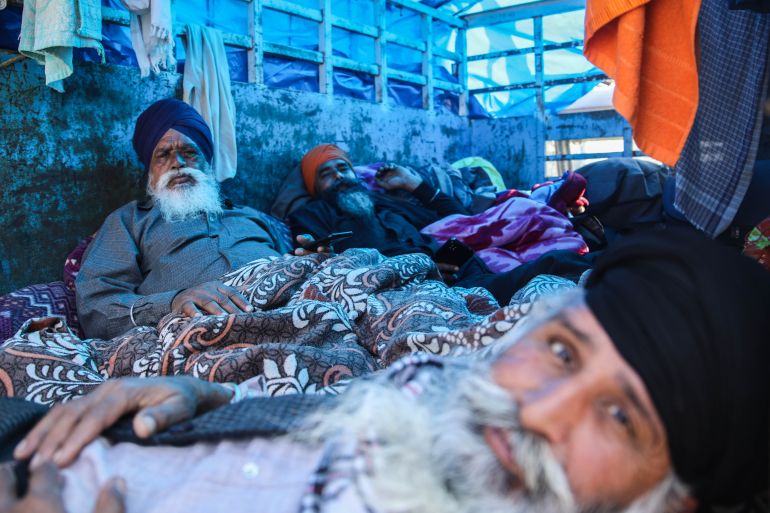
Farmers rest in a tractor trolley at the protest site on the Shambhu border between the Indian states of Haryana and Punjab
[Md Meherban/Al Jazeera]
‘Why can’t farmers be prosperous?’
Devinder Sharma, a food and agricultural expert based in Chandigarh, the capital of both Punjab and Haryana, says that the farmers’ demands have merit.
“We have deliberately kept agriculture impoverished,” he says, adding that an MSP law could provide an unprecedented economic boom for the country by improving the income of a majority of the nation’s families that depend on agriculture.
He is not surprised at the pushback the farmers are facing from critics, mostly in the cities, though.
“The problem is when the prices go up the corporate profit is reduced. The (corporates) want to ruthlessly exploit farmers and I think enough is enough,” he says.
“Why can’t farmers be prosperous?”
SOURCE: AL JAZEERA
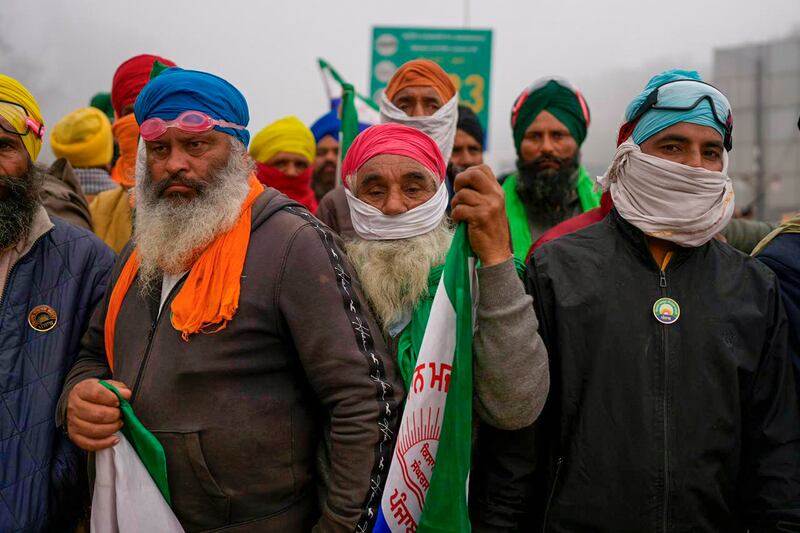
With cranes and excavators, Indian farmers prepare to march on capital A farmer wears a makeshift mask to protect himself from tear gas fired by the police, at the site where farmers are marching towards New Delhi to press for better crop prices promised to them in 2021, at Shambhu barrier, a border crossing between Punjab and Haryana states, India, Feb 21, 2024. PHOTO: Reuters
FEBRUARY 21, 2024
SHAMBHU, India — Indian police fired tear gas on Wednesday (Feb 21) to scatter protesting farmers as they resumed a march to the capital, equipped with cranes and excavators after talks with the government on guaranteed prices for their produce failed to break a deadlock.
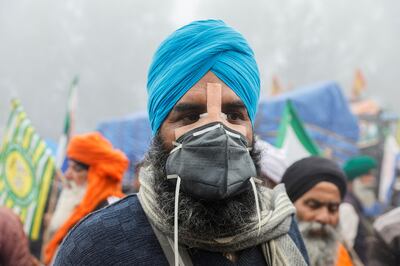
To escape the stinging gas and clouds of smoke, thousands of farmers, some wearing medical masks, ran into the fields surrounding their gathering-point on a highway about 200 km north of New Delhi.
The police action came as the government of Prime Minister Narendra Modi made a fresh offer to resume talks on the farmers' demands. Agriculture Minister Arjun Munda urged the farmers to resolve their grievances through the talks.
"After the fourth round, the government is ready to discuss all the issues" such as guaranteed prices, he posted on social network X, as the march resumed.
"I again invite the farmer leaders for discussion. It is important for us to maintain peace."
On Monday, the farmers' groups had rejected the government's previous proposal for five-year contracts and guaranteed support prices for produce such as corn, cotton and pulses.
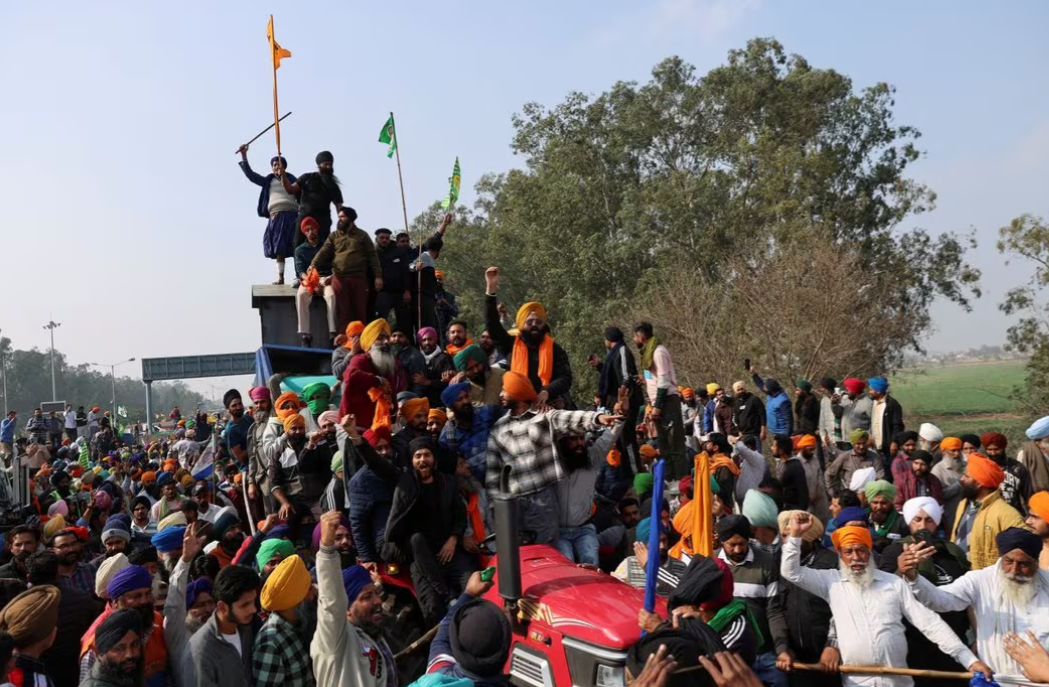
Farmers shout slogans, as they stand on a modified excavator, during a protest demanding better crop prices, promised to them in 2021, at Shambhu Barrier, a border crossing between Punjab and Haryana states, India, Feb 20, 2024. PHOTO: Reuters
The farmers, mostly from the northern state of Punjab, have been demanding higher prices backed by law for their crops. They form an influential bloc of voters Prime Minister Narendra Modi cannot afford to anger ahead of general elections due by May. Sticks, stones, gas masks
The farmers began marching at 0530 GMT from the spot where authorities had stopped them by erecting barricades on the border of Punjab state with Haryana, blocking a key highway.
"It is not right that such massive barricades have been placed to stop us," said one of the farmers' leaders, Jagjit Singh Dallewal. "We want to march to Delhi peacefully. If not, they should accede to our demands."
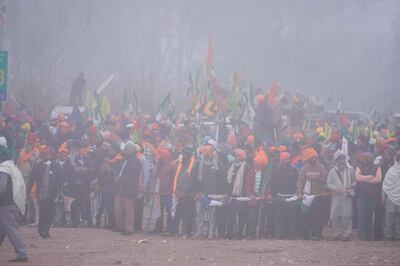
Police in riot gear lined both sides of the highway as the farmers, gathering earlier amid morning fog, waved colourful flags emblazoned with the symbols of their unions, while loudspeakers urged them to fight for their rights.
Television images showed some wearing gas masks.
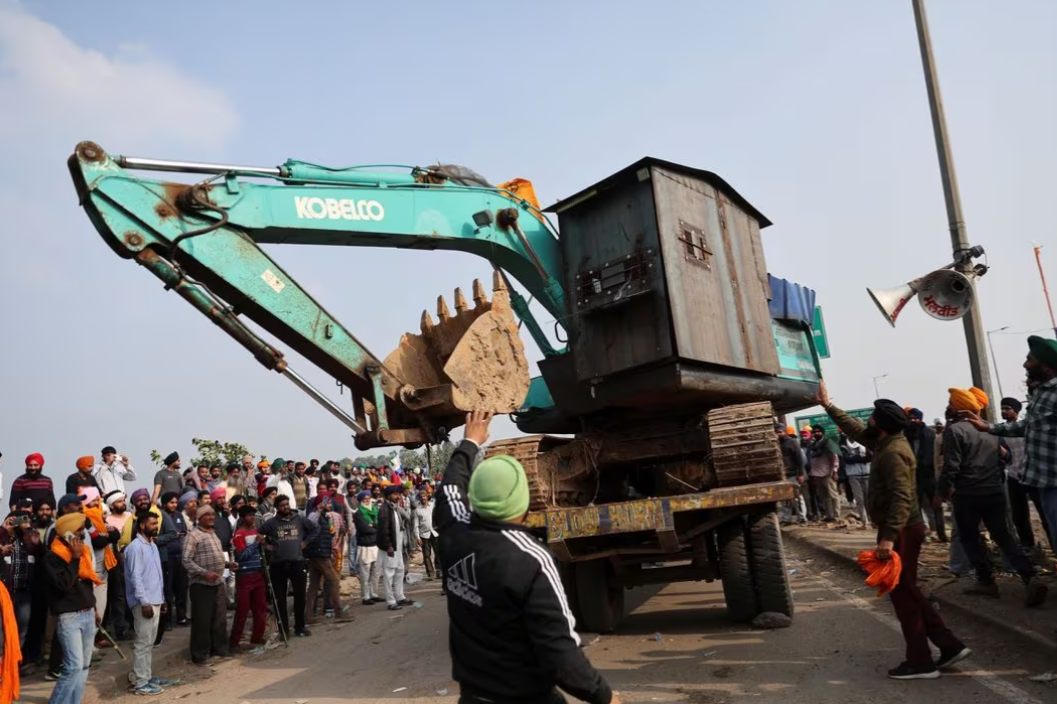
Late on Tuesday, Haryana police's chief ordered the immediate seizure of the heavy equipment brought by the farmers, to prevent its use by protesters in destroying barricades.
Police also asked owners of such equipment not to lend or rent it to protesters, as its use to harm security forces would be a criminal offence.
Farmers guide a modified excavator, during a protest demanding better crop prices, promised to them in 2021, at Shambhu Barrier, a border crossing between Punjab and Haryana states, India, Feb 20, 2024. PHOTO: Reuters
About 10,000 people had gathered on Wednesday, along with 1,200 tractors and waggons at Shambhu on the state border, police in Haryana posted on X, warning against the risk of stone-throwing as they were armed with sticks and stones.
Sunday's government proposal of minimum support prices to farmers who diversify their crops to grow cotton, pigeon peas, black matpe, red lentils and corn was rejected by the protesters, who wanted additional foodgrains covered.
Similar protests two years ago, when farmers camped for two months at the border of New Delhi, forced Modi's government to repeal a set of farm laws.
Police fire teargas as Indian farmers resume protest march to New Delhi after talks fail
Police have fired tear gas at thousands of Indian farmers who resumed their protest march to New Delhi after talks with the government failed to end an impasse over their demands for guaranteed crop prices
ByALTAF QADRI Associated Press and KRUTIKA PATHI Associated Press
February 21, 2024
SHAMBHU, India -- Police fired tear gas on Wednesday at thousands of Indian farmers who resumed their protest march to New Delhi after talks with the government failed to end an impasse over their demands for guaranteed crop prices.
The protests come at a crucial time for India, where national elections are due in the coming months and Prime Minister Narendra Modi’s party is widely expected to secure a third successive term in office.
The farmers began their protest last week but were stopped some 200 kilometers (125 miles) from the capital. Authorities are set on containing the protest, which has renewed the movement from over two years ago when tens of thousands of farmers had camped out on the outskirts of the city for over a year.
At the time, the farmers pitched tents, bought food supplies and held out in the sit-in until they forced Modi to repeal new agriculture laws in a major reversal for his government.
This time around, the authorities have barricaded the highways into New Delhi with cement blocks, metal containers, barbed wire and iron spikes to prevent the farmer from entering.
On Wednesday, the farmers arrived at the barricades with bulldozers and excavators to try and push through.
Jagjit Singh Dallewal, one of the farmers leading the march, said they did not want any violence, but condemned the federal government over the massive security measures.
“It is our request that we want to go to Delhi in a peaceful manner. The government should remove the barricades,” he said.
Last week, the farmers had paused their protest and hunkered down near the town of Shambhu, close to the border between Punjab and Haryana states, as farmers unions engaged in discussions with government ministers.
They rejected a proposal from the government that offered them five-year contracts of guaranteed prices on a set of certain crops, including maize, grain legumes and cotton, and the farmers resumed their march on Wednesday.
The protest organizers say the farmers are seeking a new legislation that would guarantee minimum prices for 23 crops.
The government protects agricultural producers against sharp falls in farm prices by setting a minimum purchase price for certain essential crops, a system that was introduced in the 1960s to help shore up food reserves and prevent shortages. The system can apply up to 23 crops, but the government usually offers the minimum price only for rice and wheat.
The farmers say guaranteed minimum support price for all 23 crops would stabilize their income. They are also pressing the government to follow through on promises to waive loans and withdraw legal cases brought against them during the earlier 2021 protests.
Several talks so far have failed to break the deadlock. But Arjun Munda, one of the ministers negotiating with the farmers, said they were willing to hold another discussion and that the government wanted to maintain peace.
“It is the prime minister’s responsibility, who has been elected with majority votes, to handle the situation and accept our demands,” Sarwan Singh Pandher, a farm leader, told the Press Trust of India news agency.
The farmers are an influential voting bloc and particularly important to Modi’s base — especially in Northern Haryana and several other states with a substantial farming population that are ruled by his Bharatiya Janata Party.
___
Pathi reported from New Delhi.
Thousands of Indian farmers prepare to continue march on Delhi
They are demanding higher prices backed by law for their crops
from the government
Indian farmers stand near the Shambhu border crossing between northern Punjab
and Haryana states, about 200km from New Delhi, on Wednesday. AP
Thousands of Indian farmers prepared to march on the capital on Wednesday to pressure Prime Minister Narendra Modi’s government to meet their demands.
Last week, farmers from Punjab and Haryana, the states responsible for 60 per cent of India's wheat production, started their journey to New Delhi on foot and by tractors. However, they were halted about 200km from their destination by road blockades erected by police and paramilitary forces.
The farmers waited while representatives held talks with the government but decided to press on with their march after a meeting on Monday ended without agreement on their main demand of minimum supports prices for their crops.
Indian farmers wait to march to the capital near the Shambhu border that divides northern Punjab and Haryana states, about 200km from New Delhi, India. AP
Braving the cold and rain, farmers stood on a bridge over the Ghaggar river on Wednesday morning amid preparations to push through barricades. The bridge is on a motorway that passes from Punjab through Haryana, ruled by Mr Modi's Bharatiya Janata Party, to Delhi.
The motorway was blocked when farmers from the two states launched a sit-in in 2020 after they were stopped from entering Delhi to protest.
A farmer wears a mask to protect himself from tear gas fired by the police at the Shambhu border. Reuters
Authorities brought in more than 700 more security personnel and dug trenches to prevent the farmers moving forward. Internet and SMS services were cut off in Haryana.
“We are not scared of the authorities. Last time, we protested for a year. This time around, if they don’t fulfil our demands, we will spend our entire lives here protesting for our rights,” Jaspreet Singh, a farmer from Punjab, told The National.
“We have all the preparations in place to go through the barricade and we still appeal to the government to not use force against us and allow us to go to Delhi which is our constitutional right,” said Manjeet Singh, another farmer.
The farmers have rejected a government offer to buy pulses, maize and cotton at guaranteed prices through cooperatives for five years, saying they want minimum support prices for 23 crops.
The protest has already caused disruption in Delhi, with long traffic jams at entry points to the city where police and paramilitary forces have been posted.
Updated: February 21, 2024
Tuesday, October 03, 2023
'The Immortal': Art Brings out Bhagat Singh's Spirit and Thoughts Beyond Stereotypes -- Replug
Bhagat Singh has been turned into a stereotype in many art pieces. But a new painting sheds a rare light on the famous revolutionary.
Original painting by artist Amar Singh in 1975 assigned by Punjab Govt
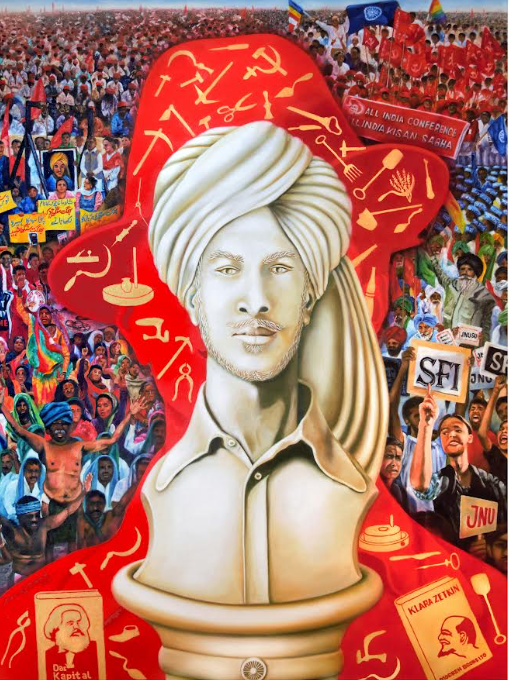
‘The Immortal’ is a multi-layered painting of Bhagat Singh by Kanwal Dhaliwal, an Indian-origin artist from London, United Kingdom. He is associated with Progressive Writers Association (PWA) London branch, which comprises members from Indian and Pakistani origins.
Dhaliwal has created something unprecedented with ‘The Immortal’. Hundreds of artists have imagined Bhagat Singh in their own ways over the decades. But many a time, that imagination is a very crude representation of Bhagat Singh, one of the most famous heroes of the Indian freedom struggle.
Bhagat Singh has been turned into a stereotype in many art pieces. The iconography of Bhagat Singh started very early when he was alive and in jail. At that time, only one actual photograph of the rising hero was in the public domain and imagination. That was his April 1929 photograph clicked by Ramnath, a photographer from Kashmiri Gate, Delhi. Both Singh and Batukeshwar Dutt had specially gone to the photographer's shop on April 3, 1929, to get this photograph to be used for publicity purposes after throwing bombs in the Central Assembly in Delhi. In fact, Bhagat Singh and Dutt had not seen the photograph till it got printed in Bande Matram, an Urdu daily published in Lahore, on April 12, and then in Hindustan Times, Delhi, on April 18, 1929.
15. Bhagat Singh painting by Sobha Singh.jpg
The photograph and its negatives were collected from the photography studio by Singh's comrades and supplied to the media. During Singh and his comrades' hunger strikes, artists started creating images of the heroes. However, after their execution on March 23 1931, there was an explosion of artistic creations.
These paintings had imagined Bhagat Singh offering his head to Bharat Mata, or three martyrs -- Bhagat Singh, Rajguru, and Sukhdev flying to the heavens and many more such imaginations. Most of these paintings were printed as posters from Kanpur and Lahore and proscribed immediately. Yet, many journals carried these, and many homes had these as calendrers or wall posters. Even matchboxes carried these painting-cum-photos. Most of these were in black and white. The trend of colour printings and posters/calendars started after the Independence. By that time, the crudity had taken over aesthetics! The twitching moustache, gun holding Bhagat Singh looking like a terrorist as the British called him, became the norm for even statue making in many places. This was also because most of these artists did not read Bhagat Singh's writings and ideas about life and society.
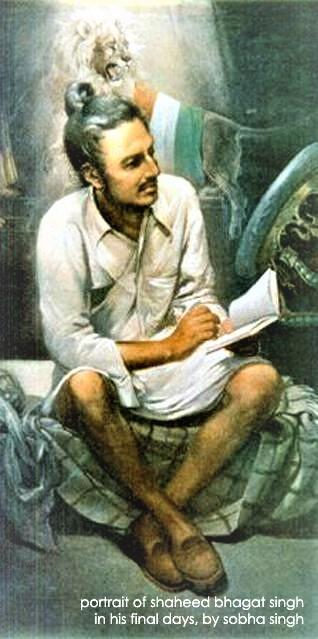
Some more known photographs of these paintings are attached here to understand how Bhagat Singh has been imagined not just by Indian, but even by international artists. One is by Amar Singh, whose painting is being used by the Punjab Chief Minister in his office. This painting was commissioned by then Punjab Chief Minister Giani Zail Singh. Another painting is by Australian painter Daniel Connell, which has been identified by London-based Punjabi poet Amarjit Chandan and used by the Indian Express in its stories without mentioning the artist name. Two more contrasting paintings by unknown painters are put up here. In one painting, Bhagat Singh is shown with a gun, and in the other, with a book. So, creative art perceives the reality through artist’s own prism; for a realist artist,as per Maxim Gorky’s views about art, it is close to the reality a little enhancementthrough art. However, in an artist’s imagining in the tradition of “art for just art’s sake”, it could take any shape, and especially in visual arts like painting, it could create altogether a different picture of a man who has been painted.
The Immortal-Singh.
The situation changed a bit after Bhagat Singh's writings and ideas started trickling in some poems, plays, and fiction, and also in ideological/academic debates. Few artists took a clue from this ideology-based image of Bhagat Singh and reverted to making paintings based on his original face.
The actual photographs of Bhagat Singh are only four in number -- one was taken around when he was aged 11, another at about the age of 17, next at the age of 20, and the final photograph at the age of about 22 years. The first two photographs are white turbaned photographs, third one is in police custody with open long hair and beard, without his turban. The last one is the most iconic hat-wearing photograph, which Ramnath had clicked. Bhagat Singh never wore a yellow or saffron colour turban as the hundreds of distorted paintings would like us to believe. Photographer Ramnath had appeared in the Delhi Assembly bomb case as a prosecution witness to confirm that he had clicked Bhagat Singh and Dutt's photographs.
In all his real photographs, the face of Bhagat Singh is very soft and impressive, perhaps conveying some firmness as well. But by no stretch of imagination can that face be presented as the face of a gun-toting terrorist. Some painters tried to reimagine him like a book holding, white turbaned young man who was an intellectual or an activist!
However, Kanwal Dhaliwal has imagined him at multiple levels. His focus is more on what was in Sing's head, his thinking or ideas, and how his thoughts are still impacting society! He also dwells on the kind of analytical thinking and reasoning Singh's sharp and receptive mind had. All these aspects of Bhagat Singh and his relations to his people come forth brilliantly through his creatively imagined painting. Singh's face is that of the college-going 17-year-old young lad with a white turban on his head -- that is one layer. But watching minutely, the red coloured hat with the tools of farmer and worker's is superimposed over the turbaned head. It gives a glimpse of the revolutionary's ideological development. He began acquiring nationalist ideas from his days in the National College in Lahore as a young man. However, by the time he went for a click to Kashmiri Gate wearing a hat, albeit for safety purposes of not getting recognised by the revolutionaries hunting British police, he had changed. But the change inside his mind was also revolutionary, which is why the imagined hat is a red one with the hammer and the sickle on that hat, which means that he had turned into a committed socialist revolutionary by the time he got that photograph taken.
Only four real photograhs of Bhagat Singh at 11, 17, 20 and 21 years-The hat one being last
The session court statement of Singh and Dutt had been published by all the major newspapers of India and some even abroad, in full. That statement was a call for a revolution by workers and peasants. Now, what is around his photograph are student activists, farmers activists from Maharashtra, Tamilnadu to Punjab. His ideas' reach is international, as Pakistani women are also there holding his photograph, demanding Shadman Chowk to be named as Bhagat Singh Chowk. Contours of the red hat meet Karl Marx's book Das Capital, which Bhagat Singh used to give to his comrades to study, and on the other side, Krupskaya reminiscences of Lenin are displayed, perhaps it was the book Bhagat Singh was reading just before leaving for gallows! Thus, it is one of the rare paintings to reveal the spirit of the iconic hero!
(Chaman Lal is a Retired Professor from JNU and Honorary Advisor of the Bhagat Singh Archives and Resource Centre, Delhi.)
Many use Bhagat Singh's name to get legitimacy for themselves without following his ideological understanding. What would he have thought about that?
Over nine decades ago, one of the greatest revolutionaries committed to the anti-colonial struggle against the British and to socialism was hanged by the colonisers. Bhagat Singh's life is an inspiration to those committed to a society with peace and justice.
A lot has already been written about how a young man of 23 years dedicated himself to the cause of the country, and at such a young age, wrote very profound ideological tracts. Many controversies are being built around him by those totally opposed to his life’s mission and ideology. There are still many others who use his name to get legitimacy for themselves without following his ideological understanding.
Briefly, Singh joined the Hindustan Republican Association, and struggled to insert 'Socialism' into the name of the organisation. His role in the murder of John Saunders, an Assistant Superintendent of Police, was planned as their group felt that the death of Lala Lajpat Rai during the protest against the Simon Commission was an insult to the nation. So, they planned to take revenge for this.
The second major incident was the throwing of the bomb into the Assembly. It was not meant to kill anyone but was strategically planned to make the ‘deaf hear’. As their voice was not reaching the masses, the idea was to make detailed statements in the court, which would be picked up by the media and reach people at large!
The impression that he was for violent means to overthrow British rule has no truth. During the course of the evolution of his ideas, he did come to the conclusion that non-violent mass movement is the core for changing the system and overthrowing British rule. This was first reflected in the advice of Ram Prasad Bismil, who advocated for giving up the “desire to keep revolvers and pistols” and instead join “the open movement”.
Bhagat Singh, by 1929, came to the conclusion that Marxism and broad-based mass movements were the right road to revolution, not individual heroic action. In 1931, addressing his comrades from jail, he presented his nuanced understanding of this strategy for action.
This is also confirmed by the advice Bhagat Singh gave to his father. His father, Kishan Singh, had pleaded that he should apologise to the British as he had a long life ahead. Reprimanding his father, he said that he was a revolutionary and rather than apologising, he would plead for getting killed by a firing squad.
Notably, the contrast between Bhagat Singh and Vinayak Damodar Savarkar cannot be starker. Savarkar, after an initial anti-British stance, wrote several mercy petitions and then went on to assist the British in their efforts while getting a hefty pension of Rs 60 per month (then gold was roughly around Rs 10 for 10 grams). Revolutionaries like Subhash Chandra Bose, Bhagat Sing and others were inspired by socialism, while Savarkar was inspired by Italy’s Mazzini, who became the patron saint of Fascist ideology.
There was criticism of the book ‘India’s Struggle for Independence’ (Bipan Chandra et al, Penguin) for using the phrase "revolutionary terrorism" even though Singh's group's documents referred to their path as that of revolutionary terrorism. This path was definitely abandoned by them over a period of time. The likes of Anurag Thakur and Smriti Irani criticised the book based on this. The word terrorism had a different connotation prior to 9/11 in 2001. The primary goal of the rightwing worthies in criticising the book was to undermine this book as it highlights the role of the Muslim League, Hindu Mahasabha and RSS in promoting communal politics in India and keeping away from the freedom movement.
By word of mouth, a rumour has been made the part of ‘social common sense’, that Gandhi did not save Bhagat Singh’s life. This is far from the truth. Gandhi had written two letters to Lord Irwin to postpone or dilute the death penalty. Gandhi drafted the resolution criticising the British for hanging a nationalist in Karachi Congress in 1931. At the occasion, Bhagat Singh’s father Kishan Singh also spoke, saying, “Bhagat Singh told me not to worry. Let me be hanged… He warned me against going to the Privy Council because he said slaves had no right to complain…You must support your general (Gandhi). You must support all Congress leaders. Only then will you be able to win independence for the country.”
Gandhi wrote in Navjivan, “I had interested myself in the movement for the commutation of the death sentence of Bhagat Singh and his comrades. I have put my whole being into the task.” The other fake news relates to Congress leaders not having met Bhagat Singh and his comrades when they were in jail. This is a blatant lie.
There are reports in the Tribune about Jawaharlal Nehru visiting the jail to meet Bhagat Sing and his comrades. The reports in Tribune on August 9 and 10 of 1929 tell us about Nehru’s meeting the jailed revolutionaries and inquiring about them. Motilal Nehru had even formed a committee to demand humane treatment for the revolutionaries on fast unto death.
In his autobiography, ‘Towards Freedom’, Nehru gives a touching account of his meeting Bhagat Singh, Jatin Das and other young men: “I happened to be in Lahore when the hunger strike was already a month old. I was given permission to visit some of the prisoners in the prison, and I availed myself of this.”
How atheist would Bhagat Singh have seen today’s scenario? The very ideas of workers’ and farmer’s rights have been given a go-bye. He criticised the misuse of religion as some people exploited it to promote blind faith, and now a plethora of corrupt godmen like Asaram Bapu and Gurmeet Ram Rahman have mushroomed. Faith-based knowledge is also being promoted by the ruling government. How would Bhagat Singh have responded to some political tendencies which eulogise him and also spend fortunes building temples and promoting sectarianism in the garb of religion? It is something to think about.