Thursday, February 11, 2021

South Korea celebrity suicides put spotlight on gender inequality

The recent death of a young actress has triggered a debate about gender inequality and increasing societal pressures facing young women in South Korea.
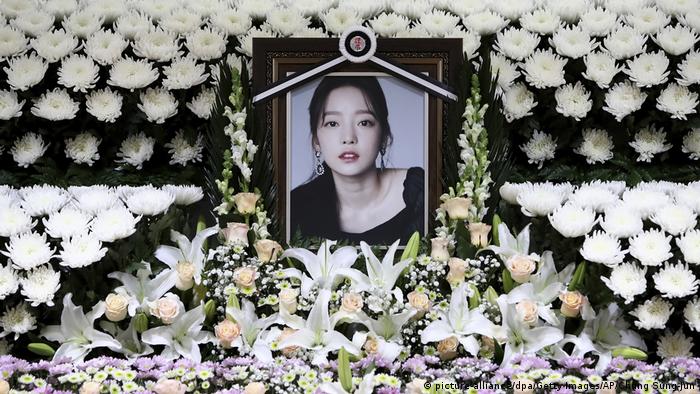


Over 4,000 South Korean women took their own lives in 2019, including young female K-pop artists Goo Hara and Sulli

Young actress-model Song Yoo-jung had enjoyed a successful career before a recent downturn in work and prospects. On January 23, she died suddenly. Initial media reports suggested she took her own life. If true, she would be the latest in a series of young South Korean female entertainers to die by suicide.

In addition to uncovering the mental health challenges facing those in the spotlight, it shows the alarming trend of suicides among young women in a country already grappling with a high suicide rate.

Actress Oh In-hye, 36, took her life last September. Singer Sulli, followed by her celebrity friend Goo Hara, ended their own lives months apart in late 2019. Male celebrities have also died by suicide in recent years, most notably Kim Jong-hyun from the group SHINee in December 2017.

The reasons behind this disturbing development are many. For Song and Oh, it may have been most connected to the waning of their careers. For Sulli and Goo Hara, more related to the stress of lives in the public eye.

Sulli had stepped out of the carefully corporate-crafted mold of K-pop idolatry to expose South Korea's societal Achilles' heel — gender inequality. After joining a feminist group advocating women not to wear bras, she was bombarded by online trolls, which many suggested contributed to her vulnerability.

Song Yoo-jung's death has triggered a debate about gender inequality in South Korea

Mental health under stress


For the last ten years, the suicide rate of young South Korean women has been increasing by roughly 5% per year. Overall, South Korea has the highest suicide rate in the Organization for Economic Cooperation and Development (OECD) club of advanced industrial nations, with about 14,000 people taking their own lives in 2018. Although men still die by suicide more often than women, by about 2 to 1, more women attempt suicide.

Several factors drive the phenomenon: poverty, unemployment, gender inequality and gender-based violence, generational conflict, single-person households, poor parenting, inadequate social welfare, and perhaps — above all — competition, Jang Soong-nang, a researcher of social epidemiology at the Chung-ang University, told DW.

When it comes to suicide among celebrities, Jang explains that social media plays a role. Everything celebrities do and say is revealed, manipulated, critiqued and sometimes — driven by identity politics — shown hate.

The increase in suicide is not due to the so-called Werther effect, Jang said, arguing that it's not a copycat trend. What is seen in South Korea is an ongoing increase in female suicides, with numerous interrelated causes, the expert pointed out.


K-POP: THE SCANDALS AND TRAGEDIES OF 2019
More and more deaths
Cha In-ha, a popular South Korean actor-singer, was found dead at his home on December 3, 2019. A police official told media that the cause of Cha's death was not immediately known. The 27-year-old celebrity made his film debut in 2017 and was part of the Surprise U band, which released two albums. There were no reports to suggest that Cha had been a target of personal attacks or cyberbullying. PHOTOS 123456

'There is endless competition'

After the 1950-53 Korean War, South Korea enjoyed rapid economic development, but the so-called Miracle on the Han River did not happen without great sacrifice.

That ideal of sacrifice, coupled with classicism, ageism, and patriarchy in society, creates an insurmountable obstacle for the modern, perhaps ambitious, unconventional young woman.

The way to success is seen as paved by education, dependent on the brand of the institute attended, like the "SKY" universities. For graduates of Seoul National, Korea and Yonsei Universities, doors open. For others, it's more of a struggle.

"There is endless competition. They are just enduring life day-to-day. Staying alive itself is very tough, it's a suffering, and the only happiness they feel is in very minor things like eating something delicious," Jang said. "As for everything else in life, things are unbearable, tough, and competitive." And when they get out of university, the patriarchal nature of South Korea's working culture can be oppressive.


Everything celebrities do and say is revealed, manipulated, critiqued and sometimes — driven by identity politics — shown hate, said Jang
Pandemic hits young women hard

Now, young people in South Korea also confront the effects of COVID-19. In the first half of 2020, when the pandemic struck the country, there was a 30% spike in young female suicides. The societal consequences of the health crisis have weighed more heavily on young women here.

South Korea has fared relatively well economically since the onset of the pandemic, with GDP declining by just 1%. The modest decline was partly due to the nation's export-driven economy, which offers little comfort to the hardships faced by those in low-end, temporary and service jobs, predominantly women, said Jang.

Prior to the health emergency, the youth jobless rate stood at about 20%, now it's roughly 25%, say government statistics.

Strengthening suicide prevention is not enough, argued Jang. The problems driving people to take their own lives here stem from deep-rooted societal inequalities, she said. "These require mid- to long-term solutions … employment and economic support for youth in their 20s and 30s, and much more support for young families with children."

If you are suffering from emotional strain or suicidal thoughts, do not hesitate to seek professional help. You can find information on where to find such help, no matter where you live in the world, at this website: https://www.befrienders.org/

Germany sees spike in anti-Semitic crimes — reports

The Central Council of Jews in Germany blames coronavirus conspiracy theorists for the recent rise in anti-Semitic hate crime.

According to the data collated by the German police, the vast majority of anti-Semitic hate crimes came from the far-right. Cases involving Islamists, left-wingers and others were just a small minority.


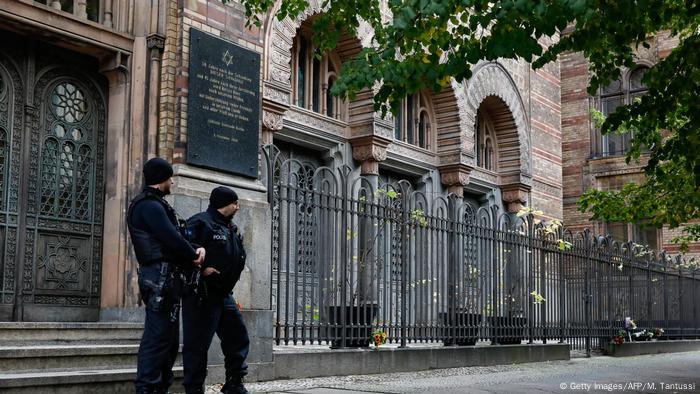
Anti-Semitic attacks and hate crime have been increasing in recent years, including the deadly attack outside a Synagogue in Halle in 2019

The number of registered anti-Semitic hate crimes in Germany hit a new upward trend in 2020, according to figures released by the German government and seen on Thursday by the Tagesspiegel newspaper and the Evangelische Pressedienst news agency.

The authorities have logged at least 2,275 crimes with an anti-Semitic background until the end of January 2021. Some 55 of those were acts of violence.

Only five suspects were detained by the authorities, despite police investigating 1,367 cases- No arrest warrants have been issued.


This is the highest number of anti-Semitic hate crimes since German police started collecting data on "politically motivated criminality" in 2001. The preliminary numbers were released upon the request of Left party member and Bundestag Vice-President Petra Pau. The tally could rise further as various states give updates on their crime statistics.

The number of anti-Semitic hate crimes in Germany has been steadily growing from 1,799 recorded in 2018, to 2,032 in 2019.
How did the Jewish community react?

The president of the Central Council of Jews in Germany, Josef Schuster, saw the root of the problem in the spread of conspiracy theories and coronavirus skepticism.

"In view of the numerous anti-Semitic incidents at the coronavirus-denier protests last year and the conspiracy myths online, it was, unfortunately, to be expected that the number of anti-Semitic crimes would rise again," he told the Tagesspiegel.

Schuster said that the spike in hate crime showed that "the radicalization of society is progressing and respect for minorities is declining."

He called for the anti-Semitic developments to be stopped "especially in the upcoming elections."


Germany must 'stand together' against anti-Semitism

The federal government's Anti-Semitism Commissioner Felix Klein told the paper that the new figures "must be a warning to us."

The increase in criminal acts is "a clear sign that democracy must show itself to be defensible, especially in crises like the ongoing pandemic."

The commissioner said that social cohesion "is measured, especially here in Germany, by how firmly we stand together against hatred of Jews."

According to the data collated by the German police, the vast majority of anti-Semitic hate crimes came from the far-right. Cases involving Islamists, left-wingers and others were just a small minority.

A Previously Unseen Chemical Reaction Has Been Detected on Mars

The giant Martian sandstorm of 2018 wasn't just a wild ride - it also gave us a previously undetected gas in the planet's atmosphere. For the first time, the ExoMars orbiter sampled traces of hydrogen chloride, composed of a hydrogen and a chlorine atom.

© NASA/JPL-Caltech
This gas presents Mars scientists with a new mystery to solve: how it got there.

"We've discovered hydrogen chloride for the first time on Mars," said physicist Kevin Olsen of the University of Oxford in the UK.

"This is the first detection of a halogen gas in the atmosphere of Mars, and represents a new chemical cycle to understand."

Scientists have been keeping an eye out for gases that contain chlorine in the atmosphere of Mars, since they could confirm that the planet is volcanically active. However, if hydrogen chloride was produced by volcanic activity, it should only spike very regionally, and be accompanied by other volcanic gases.

The hydrogen chloride detected by ExoMars did not, and was not. It was sniffed out in both the northern and southern hemispheres of Mars during the dust storm, and the absence of other volcanic gases was glaring.

This suggests that the gas was being produced by some other process; luckily, we have similar processes here on Earth that can help us understand what it could be.

It's a several-step process that requires a few key ingredients. First, you need sodium chloride (that's regular salt), left over from evaporative processes. There's plenty of that on Mars, thought to be the remnants of ancient salt lakes. When a dust storm stirs up the surface, the sodium chloride gets kicked up into the atmosphere.

Then there's the Martian polar ice caps which, when warmed during the summer, sublimate. When the resulting water vapour mingles with the salt, the resulting reaction releases chlorine, which then reacts further to form hydrogen chloride.


1/1 SLIDES © Provided by ScienceAlert
How hydrogen chloride may be created on Mars pillars
Graphic showing the potentially new chemistry cycle detected on Mars. (ESA)


"You need water vapour to free chlorine and you need the by-products of water - hydrogen ­- to form hydrogen chloride. Water is critical in this chemistry," Olsen said.

"We also observe a correlation to dust: we see more hydrogen chloride when dust activity ramps up, a process linked to the seasonal heating of the southern hemisphere."

This model is supported by a detection of hydrogen chloride during the following 2019 dusty season, which the team is still analysing.

However, confirmation is still pending. Future and ongoing observations will help put together a more comprehensive picture of the process's cycles.

Meanwhile, laboratory experiments, modelling and simulations will help scientists rule out or confirm potential mechanisms behind the release of hydrogen chloride in the Martian atmosphere.

The research has been published in Science Advances.

Smoking gun of rare "zombie star" supernova discovered in Milky Way
By Michael Irving
February 09, 2021

Chandra X-ray image of Sagittarius A East, which may turn out to be a rare Type Iax supernova – the first observed in the Milky Way
X-ray: NASA/CXC/Nanjing Univ./P. Zhou et al. Radio: NSF/NRAO/VLA

Astronomers have identified the remains of a rare type of supernova in our home galaxy for the first time. These events, known as Type Iax supernovae, occur when white dwarfs explode and may leave behind a “zombie star.”

Not all supernovae are created equal. Some occur when massive stars run out of fuel and collapse into a neutron star or black hole. Others are produced by white dwarf stars that slurp too much material off a companion star, triggering runaway nuclear fusion. The latter is known as a Type Ia supernova, and the brightness they emit is so consistent that they’ve been dubbed “standard candles” and used as yardsticks to measure distance in the cosmos.

A rare subgroup of these is what’s called Type Iax, which appear to occur under similar circumstances but throw off material at a slower speed and don’t shine as bright. Only about 30 of these are currently known and, most intriguingly, they’ve been hypothesized to leave behind an unexploded remnant nicknamed a zombie star.


And now, astronomers may have discovered the smoking gun of one of these Type Iax supernovae in the Milky Way, for the first time. The object in question is named Sagittarius A East (Sgr A East), and located close to the center of the galaxy near the similarly-named supermassive black hole, Sagittarius A*.


An annotated image of Sagittarius A East, showing the supernova remnant and its proximity to the supermassive black hole, Sagittarius A*

X-ray: NASA/CXC/Nanjing Univ./P. Zhou et al. Radio: NSF/NRAO/VLA

Sgr A East has appeared as a cloud-like shape on images of the region for decades, with astronomers mostly assuming it to be a run-of-the-mill supernova remnant, or perhaps a Type Ia. But for the new study, researchers used the Chandra X-Ray Observatory to watch the object for 35 days, and found that it’s probably a Type Iax.

“While we’ve found Type Iax supernovae in other galaxies, we haven’t identified evidence for one in the Milky Way until now,” says Ping Zhou, lead author of the study. “This discovery is important for getting a handle of the myriad ways white dwarfs explode.”

The team came to this conclusion by studying Sgr A East’s X-ray spectrum, which can reveal the fingerprints of elements produced in the explosion, and in what amounts they occur. From this, the researchers came to the conclusion that the blast was weaker than most, in line with a Type Iax supernova.

“This supernova remnant is in the background of many Chandra images of our galaxy’s supermassive black hole taken over the last 20 years,” says Zhiyuan Li, an author of the study. “We finally may have worked out what this object is and how it came to be.”

If its identity is confirmed, the team says this would be the closest known Type Iax supernova to Earth – and possibly, the nearest zombie star, too.

The research was published in the Astrophysical Journal. The work is described in the video below.
Mystery of gamma radiation solved: Hidden cannibal star is just having dinner

The mystery at the heart of an unexplained, bright point of gamma-ray light in the sky has been solved: There's a deadly spider star flaying a second, wimpier star to bits, sending out rapid-fire bursts of gamma radiation in the process
© Provided by Live Science 
An illustration shows the orbits of PSR J2039-5617 and its companion.

"Black widows" and "redbacks" in astronomy, as Live Science previously reported, are species of neutron stars — the ultradense remnant cores of giant stars that exploded. Some neutron stars, called pulsars, rotate at regular intervals, flashing like lighthouses. The fastest-spinning among them are millisecond pulsars. When a millisecond pulsar is locked in a rare, tight orbit with a lightweight star, it slowly shreds its partner to bits with each rotation. These binary cannibals are known as black widow or redback stars. Now, with the help of citizen scientists, a team of researchers has revealed a new redback at the heart of a bright system known as PSR J2039–5617.

Related: 15 unforgettable images of stars

Since its discovery in 2014, researchers have suspected that PSR J2039–5617 contained a millisecond pulsar and a second star. The bright source of X-rays, gamma rays and visible light closely matched the expected traits of such a system. But proving it required scads of telescope data and more number-crunching than a typical desktop computer could do in a century.

To prove that the star system was indeed a redback, the researchers leaned on the computing power of Einstein@Home — a project of the LIGO Scientific Collaboration and Germany's Max Planck Institute where more than 500,000 volunteers let their idle computers work together on complex astronomy problems.

In two months, the researchers revealed that PSR J2039–5617 houses a deadly redback, heating up one side of its companion star so that side appears brighter and bluer. The redback’s massive gravity also warps its companion's shape, causing "the apparent size of the star to vary over the orbit," lead author Colin Clark, a University of Manchester astronomer, said in a statement,

The redback's radio emissions also sometimes get eclipsed by material blown off the surface of the companion star. All those features of the complex system produce strange, varying light patterns, described in a paper set to be published in March (and available online now) in the journal Monthly Notices of the Royal Astronomical Society.

Originally published on Live Science.

South Africa’s coronavirus strain upends country’s vaccination plans


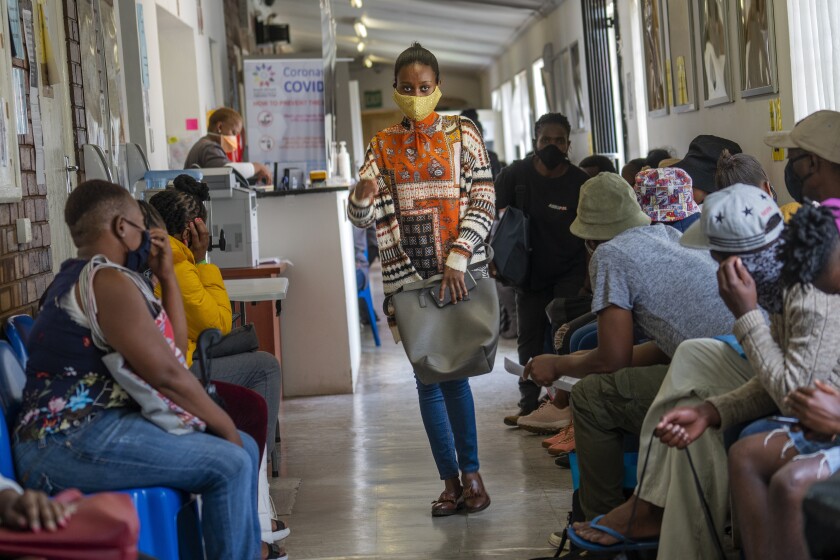
Volunteers in a COVID-19 vaccine trial wait to be checked at a hospital in Soweto, South Africa. Health officials there have suspended plans to inoculate front-line healthcare workers with a vaccine made by AstraZeneca after disappointing results in a small clinical trial.
(Jerome Delay / Associated Press)
FEB. 7, 2021 

The coronavirus strain fueling a resurgence of COVID-19 in South Africa was not slowed down by a vaccine that officials had been counting on to protect its front-line healthcare workers, prompting the government to shelve plans for an inoculation campaign that would have begun this month.

“We have decided to put a temporary hold on the rollout of the vaccine,” Dr. Zweli Mkhize, South Africa’s health minister, said Sunday. “More work needs to be done.”

The experimental vaccine, developed by AstraZeneca and Oxford University, seemed promising just a few months ago. In clinical trials conducted in South Africa, people who received the vaccine were 75% less likely to develop mild to moderate cases of COVID-19 than were people who received a placebo. The government ordered 1 million doses.

“The AstraZeneca vaccine was showing tremendous potential,” said Dr. Shabir Madhi, a vaccine expert at the University of the Witwatersrand in Johannesburg.

But that was before the emergence of a coronavirus strain called B.1.351, which is now dominant in South Africa and has spread to more than 30 other countries, including the United States. Since November, clinical trial participants who received the vaccine have fared no better than their counterparts who got the placebo.


New clinical trials raise fears the coronavirus is learning how to resist vaccines
Jan. 29, 2021

Madhi and other scientists suspect this is because mutations in the virus’ genome have changed the shape of its spike protein, which is the vaccine’s primary target. That means the antibodies generated by the immune system in response to the vaccine are less well-equipped to neutralize the new version of the virus.

That problem isn’t limited to the AstraZeneca vaccine.


In the crowded social media universe, only a few platforms have a chance to dazzle a global audience and rise above the competition. One of those rising stars is Bigo Live, a rapidly growing streaming-first social network that’s discovering an...

A COVID-19 vaccine developed by Johnson & Johnson reduced the risk of moderate to severe illness by 72% in clinical trial participants in the U.S. But in South Africa, the same vaccine reduced that risk by just 57% — and nearly all those who became sick were infected with the B.1.351 strain.

Similarly, a COVID-19 vaccine developed by the U.S. company Novavax was nearly 90% effective against all types of COVID-19 when tested in Britain, yet only 49% effective in South Africa.

“All of the vaccines that have currently been developed have been designed based on the original virus that was circulating,” Madhi said.

Madhi pointed to other concerning data from the trials of the Novavax vaccine: Some of the South Africans who got the placebo had already weathered a bout of COVID-19. In theory, their past coronavirus infections should have offered them some protection against the new strain. However, they were just as likely to be sickened by B.1.351 as people in the placebo group who had never had COVID-19.


Dangerous new coronavirus strains may incubate in COVID-19’s sickest
Jan. 30, 2021

The AstraZeneca study that prompted Mkhize’s announcement involved a comparatively small group of about 2,000 people who were relatively young and healthy. A total of 42 of them developed COVID-19 during the course of the trial, including 19 who got the vaccine and 23 who got the placebo. From a statistical point of view, those who got the vaccine fared no better than those who didn’t.

“We have not proven that this particular vaccine protects against COVID-19,” Madhi said.

But that doesn’t mean it’s worthless.

Two-thirds of the study volunteers who became ill had mild cases of COVID-19, and the rest experienced moderate illness.

“What these data don’t tell us is whether or not this vaccine might still protect at least against severe COVID-19, especially in individuals that are at high risk of developing severe disease,” Madhi said. “That might still be biologically plausible.”

Mkhize agreed that the AstraZeneca vaccine might still be able to protect people from the worst effects of COVID-19.

“We’re uncertain about the impact of the vaccine, that it will have on hospitalization, severe diseases and death,” he said.

Tulio de Oliveira, an infectious-disease researcher at South Africa’s University of KwaZulu-Natal, noted that that the findings of the small trial are preliminary.

But even at this stage, the potential for new variants like B.1.351 to erode the effectiveness of vaccines underscores the importance of “coming up with next-generation vaccines,” he said.

Such vaccines might withstand the corrosive effects of new mutations by targeting sites on the virus that, unlike the spike protein, are less prone to change.

“We’re beginning to know where a virus can mutate and where it can’t,” said Dr. Bruce Walker, an immunologist and director of the Ragon Institute in Boston.


SCIENCE

By tracking coronavirus mutations, scientists aim to forecast the pandemic’s future

Feb. 7, 2021

Other efforts to overcome new mutations would recruit an entirely separate part of the immune system — its B-cells and T-cells — to recognize and kill the coronavirus. (A COVID-19 vaccine being developed by El Segundo-based ImmunityBio, headed by Times owner Dr. Patrick Soon-Shiong, aims to activate T-cells.)

In a study published Friday in the journal Science Advances, a group of cancer researchers working in mice was able to accomplish this by adding a so-called adjuvant — an ingredient intended to induce a stronger immune response — to their vaccine. The boosted vaccine recruited T-cells that provided strong protection to coronavirus-infected lungs.

“A vaccine like ours would have an independent set of weaponry to attack the virus by other means,” said co-author Dr. Christopher Haqq, head of research and development at Elicio Therapeutics. By prompting a T-cell response as well as antibody response, “we’d have a lot more shots on goal,” he said.

At the same time, the inevitable arrival of new coronavirus variants has prompted some researchers to acknowledge that not all COVID-19 disease needs to be prevented to bring the pandemic under control.

“Don’t look at overall efficacy,” said Dr. James Campbell, an infectious disease specialist at the University of Maryland School of Medicine. “Look at the efficacy for severe disease.”

Madhi agreed that preventing hospitalizations and deaths was the most important thing to focus on. A vaccine that can do that will still be valuable, he said: “I’ve become a little more realistic about what to expect from vaccines.”
Uganda:
Unease after alleged election abduction

A spate of disappearances linked to January's general election have raised alarm among members of the opposition and the families of those kidnapped.


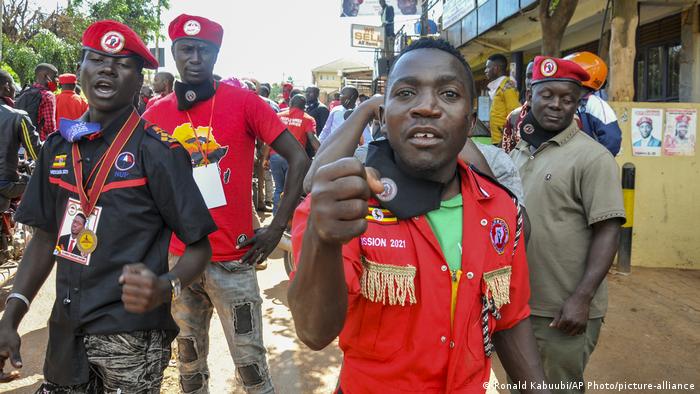
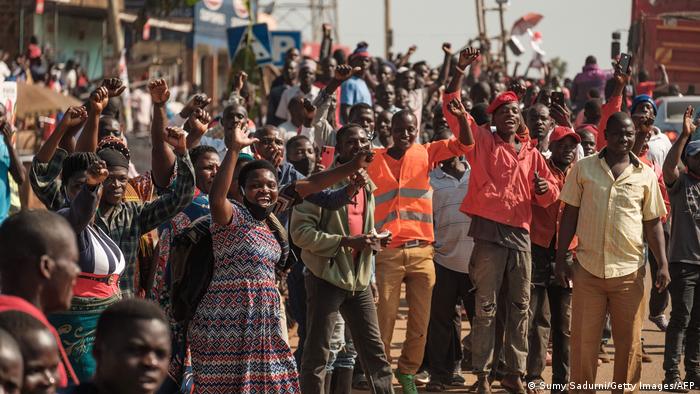
Supporters of Ugandan opposition leader Bobi Wine gather outside his campaign headquarters after police it was allegedly raided by police in 2020

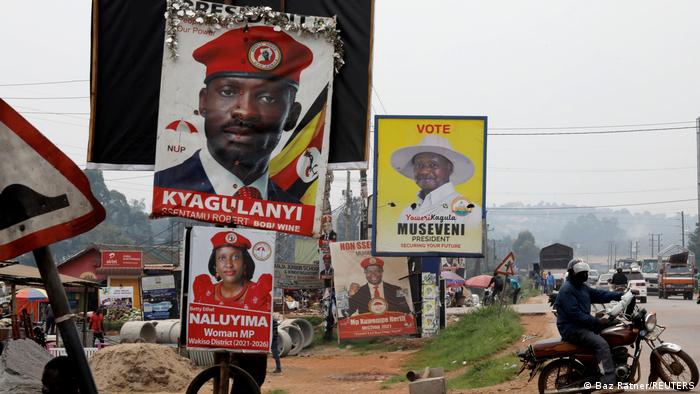
Concern is rising in Uganda over the alleged forced disappearances of dissidents across the country in the lead-up to and following last month's general election.

Members of the opposition National Unity Platform (NUP) party say they have been especially targeted. NUP candidate Bobi Wine was defeated in the January 14 election, with incumbent President Yoweri Museveni taking 58.64% of the vote to win a sixth term in office after 35 years of rule.

Wine has challenged the outcome of the elections in court, accusing Museveni of voter fraud.

Plain-clothed members of Uganda's defense forces have been blamed for the abductions, most of which took place at night.


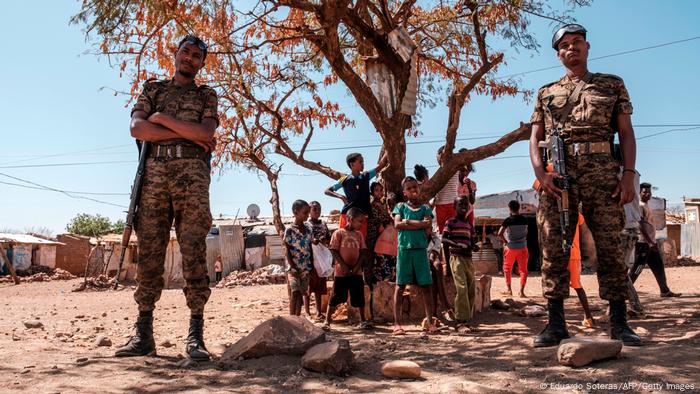
HRW: Ethiopian forces 'shelled civilians' during Tigray war

Human Rights Watch has accused Ethiopia's army of breaking international law by shelling civilian populations during their offensive against Tigray separatists. The watchdog called for a UN investigation.


Ethiopian forces killed at least 83 civilians at the outbreak of an armed conflict in the country's Tigray region that displaced thousands of people, Human Rights Watch (HRW) said on Thursday.

The NGO accused the army of breaking international law by "indiscriminate shelling of urban areas" in November last year.

"Artillery attacks at the start of the armed conflict struck homes, hospitals, schools, and markets in the city of Mekele, and the towns of Humera and Shire," the New York-based organization said.


Ethiopia's army has denied allegations of rights abuses in the past.

A HRW report said the strikes left more than 300 people injured, including women and children.

The activists cited "credible reports of widespread abuse, including apparent extrajudicial killings, pillage and arbitrary detention" and called for a UN investigation.

The Ethiopian government has not yet commented on the claims.
What happened in Tigray?

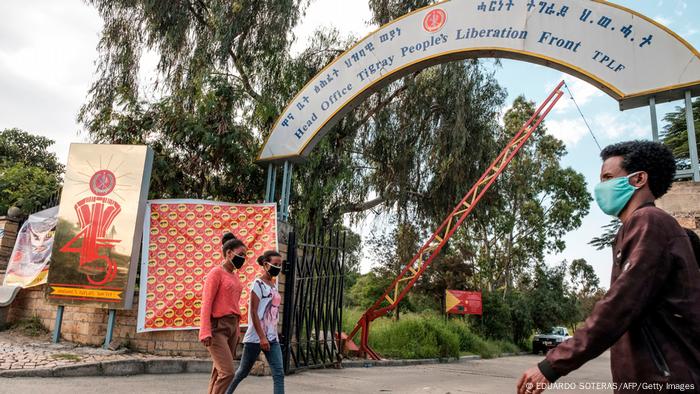
Prime Minister Abiy Ahmed, the 2019 Nobel Peace Prize winner, announced the military operations in early November against the leadership of Tigray’s governing party, the Tigray People’s Liberation Front (TPLF).

He said at the time that the strikes were in response to TPLF-orchestrated attacks on federal army camps.

Abiy declared victory after pro-government troops took the city of Mekele in late November.


PM Abiy, seen here on the right, won the 2019 Nobel Peace Prize for ending a long-running conflict with Eritrea.

At the time, Abiy said that no civilians were killed as his forces entered cities in the province, insisting that the Ethiopian military did all it could to avoid such casualties.

The TPLF has vowed to fight on, although many of its leaders have been killed or captured.

But aid workers warn that prolonged insecurity has hampered the delivery of badly-needed humanitarian assistance.


Rift between PM and Tigray party


Tensions between the federal government and the TPLF soured in recent months after a major rift that emerged over the prime minister's decision delay to national elections in March 2020 .

The TPLF ignored the order and held their own regional poll in September.

The Tigray Peoples Liberation Front (TPLF) once dominated federal politics in the country.


The Tigray party had started as a guerrilla movement and took power in a revolution in 1991. It established a multi-ethnic coalition which played a key part in the national government for many years.

They complain of persecution under Abiy, an ethnic Oromo, who ordered the arrest of dozens of their former senior military and political officials in a crackdown on corruption.

In 2019, Abiy reorganized the ruling coalition into a single party which the TPLF refused to join.

bj,jf/dj (AFP, Reuters)
Brazil: Relaxed gun laws could lead to more violence

The number of legal firearms sold in Brazil has grown by 65% during President Jair Bolsonaro's time in office. He has loosened gun laws, saying it will increase security. But experts disagree.


Bolsonaro made looser gun laws one of his campaign pledges — and it seemed popular with many

Jair Bolsonaro pledged to relax Brazil's gun laws during his election campaign. The idea was that citizens could fight the rampant crime and violence in the country with their own weapons. Since being elected president, he has issued several decrees to make good on his promise. It is now much easier to buy and carry firearms in Brazil.

Civilians are allowed to keep up to four guns at home or in the workplace. They have access to high-caliber guns that used to be restricted to the military or the police. They can now purchase much more ammunition, too. And the import tax on firearms was recently abolished.
Real number of weapons much higher

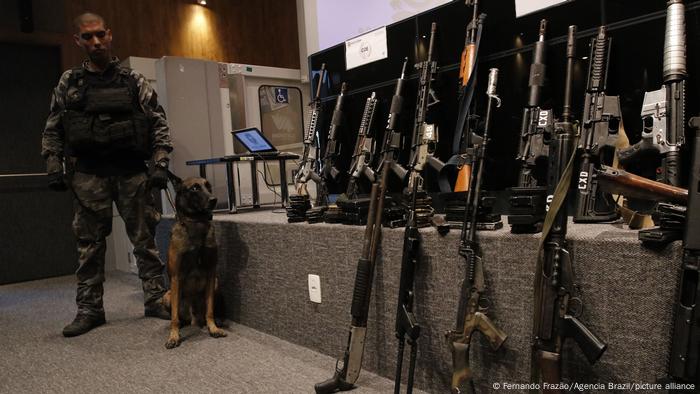
Brazilian police often uncover huge caches of weapons in drug raids


Two years into Bolsonaro's term, the relaxation of Brazil's gun laws has led to a 65% increase in firearms ownership. While there were about 700,000 firearms in legal private ownership in 2018, hunters, collectors and citizens who want to defend themselves now own 1.2 million weapons. This data was obtained from the federal police and the military as part of research conducted by the Brazilian daily newspaper O Globo.

In the US, there are reportedly more firearms than inhabitants. In Germany, there are over 5 million registered firearms for a population of 83 million.

In Brazil, however, the number of registered firearms is probably just a fraction of the actual number of firearms circulating in the country, according to economist Thomas Victor Conti, who teaches at Sao Paulo's renowned Insper Institute. "Some studies estimate that the real number could be 10 to 15 times higher," he told DW, adding that the firearms in question were either illegal weapons used by organized criminals or weapons that had simply not been registered by private individuals.

It is precisely the volume of illegal weapons that many Brazilians blame for the rampant violence and exorbitant murder rate in the country — tens of thousands die a violent death each year. Many feel that providing "good citizens" with more weapons, as Bolsonaro wants to do, is unlikely to help solve these problems.

Conti is also of this opinion. "Most experts have concluded that more weapons means more violence. There is no difference between illegal and legal weapons; they are part of the same market. If there are more legal weapons in circulation, it also indirectly increases the number of weapons available for the black market."

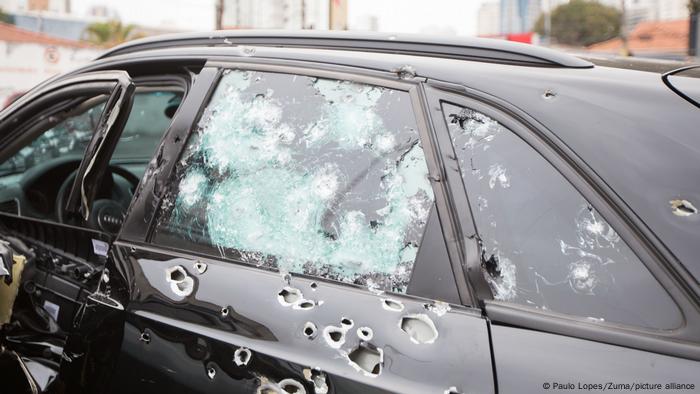
Gun violence is frequent in Brazil

Against common sense

By relaxing the gun laws, Bolsonaro is also acting contrary to indications from Brazil's recent past. The murder rate decreased slightly for several years after

the acquisition and possession of firearms were more strictly regulated when the "Estatuto de Desarmamento" (Statute of Disarmament) came into effect at the end of 2003 and financial incentives were introduced for the voluntary surrender of weapons.

Until 2003, Brazilians over 21 years of age had been able to buy firearms and carry them without too much red tape. In his PhD thesis about the causes and consequences of crime in Brazil, the economist Daniel Ricardo de Castro Cerqueira argued that the effect of the disarmament law was particularly noticeable in the state of Sao Paulo because the new restrictions were implemented effectively and combined with other measures.

Conti, in his turn, pointed to other contributing factors that should not be ignored: "These problems are complex and cannot be resolved with gun laws alone. Unemployment, poverty and the lack of access to education also play a role, as well as limited investment in public safety and in investigating violent crime."

Instead of addressing these factors, however, Bolsonaro has promoted self-defense. He encourages citizens to offer armed resistance if someone breaks into their house, for example. Yet, according to the polling institute Datafolha, two-thirds of Brazilians are against civilians owning firearms.

Right-wing populist Bolsonaro is keen to relax Brazil's gun laws


Rise in fatalities likely

For Conti, it makes little sense to arm ordinary citizens, considering that their attempts to defend themselves are likely to backfire. "A criminal always has the advantage of the element of surprise," he explained. "And, what's more, he's likely to be more heavily armed and to start shooting earlier if he thinks that his potential victim is also armed."

In addition, he and others warn that incidents of domestic violence, family disputes or other conflicts are more likely to end in fatalities if there is an increase of firearms possession among civilians.

Bolsonaro has put forward a number of bills to further relax gun laws. Congress will decide whether to pass them into law. Conti hopes that lawmakers will take scientific evidence and Brazil's previous experiences with tighter gun laws into consideration. "Of course, it is possible to have a democratic debate as to whether a private individual should have the right to own a gun for self-defense," he said.

"However, it is mendacious to peddle easier access to firearms as an issue of public safety considering thelevel of violence in Brazil."


This article was translated from German.
Ozone layer recovery back on track after China slows CFC-11 production

Good news: The international treaty to protect the ozone layer appears to be getting results. New analyses have shown that China has successfully cut the illegal production of ozone-destroying chemicals.


Setbacks caused by the illegal emissions were expected to be 'negligible'


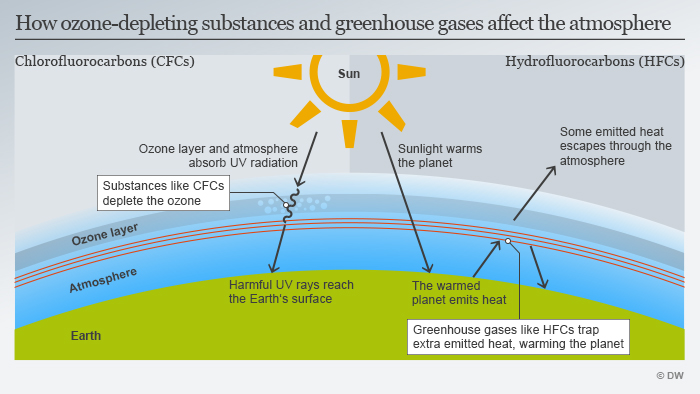
In recent years, scientists had been alarmed by a sudden unexplained rise in ozone-attacking chemicals in the atmosphere. Higher levels of trichlorofluoromethanes, also known as CFC-11, were showing up in air samples — despite being officially banned worldwide since 2010.

Scientists were worried that this surge was slowing efforts to fix the thin protective layer in the Earth's atmosphere which absorbs most of the sun's ultraviolet radiation. Unfiltered exposure to the sun's rays can contribute to DNA damage and increase the long-term risk of skin cancer and other health issues.

Ozone recovery efforts back on track

But on Wednesday, two studies published in science journal Nature reported that atmospheric concentrations of CFC-11 had once again dropped significantly. By late 2019, levels were falling by about 1% a year — the fastest on record, according to the report — showing that the world was back on track to repairing the damage to the Earth's ozone layer by mid-century.

Using data and measurements from air-monitoring stations in South Korea and Japan, scientists were able to determine that the largest source of the global increase in "rogue emissions" attributed to factories in eastern China were no longer active.

Stephen Montzka, an atmospheric chemist at US scientific agency the National Oceanic and Atmospheric Administration (NOAA) in Boulder, Colorado who led one of the studies, said the setback caused by the illegal emissions was expected to be "negligible."


WORLD CITIES WITH AMBITIOUS PLANS TO TACKLE AIR POLLUTION
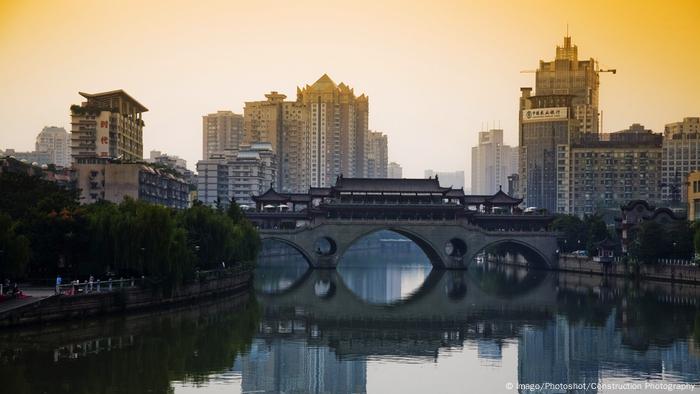
Chengdu makes it easier to walk
China's biggest cities are choking from the effects of air pollution. In Chengdu, the fifth largest city, officials are trying to make walking easier and quicker than driving in one new upscale residential area. The plan is for at least 50 percent of the roads in the area to be car free. It'll be possible to walk to vital amenities in 15 minutes. China is building nearly 300 eco-cities in total. PHOTOS 123456

Meg Seki, acting executive secretary of Ozone Secretariat at the UN Environment Program (UNEP), credited the reversal to international cooperation and action in line with the Montreal Protocol on Substances that Deplete the Ozone Layer.

The international treaty, agreed in 1987 to ban the production of ozone-depleting chemicals, has been signed by almost every country in the world. CFC-11, once used in refrigerants, as propellants in aerosol cans and in polyurethane foam insulation, has been officially banned since 2010.

"The [Montreal] treaty did its job," Durwood Zaelke, president of the Institute for Governance & Sustainable Development, an advocacy group based in Washington, told Nature. "Whoever the offending parties were — including most definitely China — they got their act together."

"China also did its part in strengthening its policies, regulations, monitoring and enforcement," Seki told DW.

Watch video 04:49 China grows its economy fast

The Ministry of Ecology and Environment in Beijing could not be reached for comment. But in an April 2020 press release, the ministry announced the first results of a two-month crackdown on the illegal production and use of CFC-11. The campaign resulted in an executive with a thermal insulation firm near Shanghai being sentenced to 10 months in prison and fined 50,000 yuan (€6,400/$7,700). The company was also fined 700,000 yuan and had to forfeit more than 1.4 million yuan in profits since 2017.

"The Chinese government has always attached great importance to international environmental conventions and has been resorting to strict law enforcement as a major guarantee to safeguard the achievement China has made in implementing these conventions," the ministry said in a statement after the sentencing.

Construction industry crackdown


The illegal emissions first came to light in May 2018, when researchers with NASA and the NOAA noticed an unexplained spike in atmospheric concentrations of CFC-11 dating back to 2013. From 2002 and 2012, according to Nature, CFC-11 emissions fell by about 0.85% a year. But from 2013 that figure was cut almost in half, to about 0.4% — the result of about 13,000 metric tons a year of newly produced CFCs in the atmosphere.

China's booming construction industry contributed to an increase in CFCs

Scientists and researchers with the Environmental Investigation Agency (EIA) were able to trace around 60% of the illegal emissions to eastern China. Posing as buyers, EIA investigators found the use of CFC-11 was widespread in China's plastic foam sector. The banned chemical is cheaper than the alternatives and was found to be widely used to produce more effective insulators for the booming construction industry.

"Our investigations revealed widespread illegal use of CFC-11 in China as a blowing agent for the production of polyurethane (PU) foams," said Clare Perry, a climate campaign leader with EIA. "The information we provided kickstarted a nationwide inspection and enforcement action by China, which has clearly been successful."

'Wake-up call' for Montreal Protocol

According to EIA, companies admitted to mislabeling the banned CFC-11 as hydrofluorocarbon (HFC) compounds and other chemicals. China, which joined the Montreal Protocol in 1991 and said it successfully ended the industrial use of CFCs in 2007, questioned the conclusions of the EIA study. Nevertheless, the government said in mid-2019 it would boost monitoring efforts and impose penalties on companies caught illegally producing the chemical.

"The action taken in 2018 by China in response to our investigations appears to have led to an immediate reduction of CFC-11 emissions," said Perry. "This issue should be a wake-up call to the Montreal Protocol — the failure to detect the illegal CFC-11 production and use prior to its scientific discovery compels a very serious look at the current monitoring, reporting and verification systems."


Perry told DW the parties to the Montreal Protocol were already talking about how to expand the atmospheric monitoring network, but said more change was necessary. "They need to consider how they can ensure long-term compliance and enforcement, particularly considering the challenges of taking on new controls of HFCs with the Kigali Amendment."

The Kigali Amendment, which entered into force in 2019, aims to also phase out the use of hydrofluorocarbons (HFCs), which were developed to replace CFCs in the 1990s but act as potent greenhouse gases and contribute to climate change.

"Addressing the existing gaps in monitoring, and filling those gaps strategically with new monitoring stations, would help to improve the detection of regional emissions of ozone depleting substances," said Seki of UNEP.

At the projected recovery rates, UNEP has said the ozone layer over the Northern Hemisphere and the regions around the equator "will heal completely" by the 2030s, the Southern Hemisphere by the 2050s and the polar regions by the 2060s.