Friday, January 24, 2025

ING: Beyond the hydrogen hype it is all about execution

ING: Beyond the hydrogen hype it is all about execution
Hydrogen is moving from plans to projects, but there is still a long way to go until it becomes a useable fuel. The hype is over and now the pragmatic work begins to develop real hydrogen production. / bne IntelliNews
By bne IntelliNews January 24, 2025

The hydrogen sector is shifting from announcements to execution. The US leads with blue hydrogen, while Europe is focused on green hydrogen despite cost and trade challenges. Meanwhile, hydrogen demand is moving from steel to oil refining and transportation, ING said in a note.

Call 1: Beyond the hype it’s all about execution

Last year, we anticipated that 2024 would serve as a reality check for the efforts to scale up hydrogen. But expectations have fallen even more than anticipated, with new project announcements down by over 80% globally and producers scaling back earlier commitments.

This reflects the typical hype cycle of new technologies: peak optimism for hydrogen in the run-up to 2023 followed by disillusionment in 2024.

Looking ahead to 2025, we expect more realism, though from a pessimistic perspective. The focus will shift to execution and tangible progress on projects and investments. Nevertheless, the low-carbon hydrogen market remains in its infancy. Much of the growth is likely to happen from 2028 onwards when many committed and advanced projects are likely to come online. That’s why we’re not solely focusing on 2025, but also looking ahead towards 2030.

Call 2: Progress in domestic market supply amid rising costs

Government policies and targets will be the main drivers of blue and green hydrogen project development, with the US and Europe having the highest production potential thanks to strong policy support. Just over 60% of low-carbon hydrogen globally is expected to be produced in these regions by 2030, according to Bloomberg New Energy Finance.

The US hosts the most mature project pipeline globally and about 0.4mn tonnes of H2 is expected to come on line in 2025. The Donaldsonville hydrogen plant in Louisiana takes the lion's share with 0.3mn tonnes of blue hydrogen production. In addition, a couple of electrolyser projects are likely to come online and produce 0.1mn tonnes of green hydrogen in 2025. The size of current electrolysers ranges from 5 to 220 megawatts, meaning that green hydrogen projects are unable to match the scale of blue hydrogen plants.

The electrolyser pipeline in the US is small compared to Europe, which limits the deployment of green hydrogen. Furthermore, Trump is likely to favour natural gas production and Carbon Capture and Storage (CCS) over extensive support for expensive electrolysers. So blue hydrogen is likely to dominate green hydrogen, allowing the industry to grow more significantly due to the larger scale of blue hydrogen projects.


Europe, on the other hand, is focusing more on green hydrogen production by kickstarting electrolyser projects. Multiple projects are expected to come online in 2025, with Shell’s 200-megawatt project in the Netherlands being the largest. A project from Air Liquide for blue hydrogen in France is expected to start production in 2025, but this project is relatively small compared to the Donaldsonville plant in the US.

Despite solid progress, the production of low-carbon hydrogen is projected to reach only fourmn tonnes by 2030, with green hydrogen contributing 2.8mn tonnes.

This falls significantly short of the REPowerEU programme’s target of ninemn tonnes of green hydrogen production. While the market has achieved a level of realism, this has yet to happen for policy targets.

Supply side risks

The supply side outlook faces five main risks: funding, grid congestion, rising costs, a possible trade war and performance issues.

  1. Funding: Most low-carbon hydrogen projects in the EU are funded by EU sources like the Projects of Common European Interest, the EU Innovation Fund, and the European Hydrogen Bank. The first auction by the European Hydrogen Bank showed that green hydrogen production costs are the lowest in Southern and Northern Europe (€5.8 to €8.8 per kg) and highest in Germany and France (€12 to €13 per kg). Despite subsidies averaging €0.46 per kg over 10 years, producers need a price premium of €3.3 to €6.5 per kg to break even, which is not yet secured by long-term contracts. In the US, besides private investors, the Department of Energy is providing loans and loan guarantees to clean energy projects including those of hydrogen. Plug Power, for example, received a $1.66bn conditional loan guarantee to produce clean hydrogen using electrolysers. However, the new administration brings uncertainty to the loan programme. The challenge of securing offtakers has also led to funding difficulties.
  2. Grid Congestion: Some projects struggle with securing grid connections or face future grid congestion. Reinforcing grids is complex, so enhancing the flexibility of electrolysers and green hydrogen production is crucial.
  3. Cost Increases: Rising material, labour and water costs are increasing project costs. Integrating electrolysers into the energy system is also more costly than anticipated, including higher grid and transportation costs. And these system costs are expected to remain high, with less optimistic long-term cost reductions. As a result, Bloomberg New Energy Finance recently raised its forecasts for green hydrogen production costs by +35%.
  4. Trade war and geopolitical tensions: Currently, almost all installed electrolysers in the US and EU are Western-made. Cheaper Chinese electrolysers (50-60% less expensive) are tempting developers to import them to mitigate cost increases. However, this threatens the goal of building domestic electrolyser industries in Europe and the US. The introduction of import tariffs and ongoing geopolitical tensions create uncertainty around investment decisions in 2025 - not just for electrolysers, but possibly for the entire green hydrogen supply chain, including critical materials, solar panels, and wind turbines, all of which are dominated by China. Thus, the hydrogen industry faces significant policy and trade uncertainty in 2025.
  5. Performance issues: In 2024, some completed hydrogen projects, particularly those involving electrolysers, faced significant performance issues.

Both established companies and startups struggled, leading to disappointing hydrogen production and impacting project outcomes. Addressing these performance challenges is crucial for the sector to achieve solid progress in 2025.

Call 3: Lower demand expectations with a shift from steel to aviation and shipping

Demand is a key bottleneck

Demand is a significant bottleneck in scaling up low-carbon hydrogen. Hydrogen project developers have only managed to secure about 10% to 15% of planned output through binding offtake contracts, primarily due to the ‘chicken and egg problem.’ Early adopters are hesitant to commit to current high price premiums for 10 to 15 years, fearing a cost disadvantage compared to competitors who adopt a wait-and-see approach to benefit from future lower prices. Without binding targets, hydrogen users such as producers of ammonia (fertilisers), chemicals (plastics), and steel still have the luxury of waiting.

Shifting demand from steel to oil refining and transportation

The steel industry exemplifies this shift. In past years, steel has been a major driver of investment announcements, particularly through clean hydrogen projects. However, we now see steel producers reconsidering earlier commitments, especially in Europe where energy prices are high, policy focus is on costly green hydrogen, and there are concerns about the availability of high-grade iron ore pellets. These pellets, ideal for hydrogen-based steelmaking, currently constitute only 7% of the iron ore supply globally.

Demand from oil refiners and producers of e-fuels is expected to rise in 2025. According to Rystad Energy, most of the investments by oil majors in hydrogen are directed at replacing grey hydrogen operations with blue and green hydrogen to reduce emissions from their refineries. Another key segment is transportation, where hydrogen-derived fuels such as ammonia, methanol and synthetic jet fuel, provide low-carbon solutions for aviation and shipping. Oil refineries in Europe are expected to secure more clean hydrogen to comply with the REFuelEU Aviation initiative, requiring EU airports to use at least 1.2% green hydrogen-based fuel by 2030. The shipping sector also aims to use 5-10% of alternative fuel globally by 2030, though this target is not binding and also includes non-hydrogen fuel.

Boosting demand with CCfDs and clearer green standards

The German government launched the EU’s first Carbon Contracts for Difference (CCfD) auction in 2024. This benefits hydrogen in two ways. CCfDs subsidise both new installations and operational costs by covering the large difference between conventional and low-carbon production costs for a long period (15 years in Germany). Furthermore, lower-cost CCS solutions are excluded from the auction. A significant budget increase for 2025 auctions will support demand in Germany. Meanwhile, such initiatives could also inspire other countries to adopt similar measures, boosting hydrogen demand.

In 2025, we also expect progress on the definition of green industrial activities. Different sectors and regions have varying guidelines, making it difficult to standardise green credentials for commodities like steel, cement, plastics, and e-fuels. While hydrogen-based fuel can be blended with current fossil fuel, facilitating the integration of new technology into existing systems, this is less feasible for products like steel, cement, and plastics. For example, blending 5% hydrogen-based fuel with conventional fuel is straightforward, but it doesn’t make sense to produce 5% of a toy’s plastic parts from hydrogen-based plastic and the rest from fossil-based plastics. The solution lies in reaching a consensus on mass-balance methodologies, allowing sustainability goals to be met at the portfolio level rather than the product level.

2025: policy decisions make 2025 a pivotal year

Since low-carbon hydrogen remains more expensive than current fossil fuel-based practices, it won’t be business as usual for corporations. Therefore, policy decisions in 2025 will be crucial.

The European Commission is set to present its Clean Industrial Deal in 2025. This initiative aims to address the challenges faced by hard-to-abate sectors such as steel, cement, plastic and aluminium as detailed in the Draghi report. Policy must strike a fine balance of increased competitiveness in global markets while stimulating these sectors to quickly transition towards a net zero economy.

In the US, 2025 will reveal the full impact of policy risks, but hydrogen remains a viable market, despite developing at a slower pace than many have hoped. Under the new administration, we are confident that the hydrogen and CCS tax credits can survive and continue to play a crucial role in reducing costs, and there will likely be loosened eligibility criteria in claiming the credits. Nevertheless, any uncertainty around tax credit guideline finalisation, non-credit funding, and government-enabled hydrogen development programmes can slow down project development.

Therefore, 2025 will be a pivotal year, with significant developments and decisions shaping the future of low-carbon hydrogen.


Expected settlement of energy crisis in Transnistria may have a security cost

Expected settlement of energy crisis in Transnistria may have a security cost
Transnistria's President Vadim Krasnoselsky has repeatedly blamed Chisinau for the energy and humanitarian crisis in the unrecognised republic. / president.gospmr.org
By Iulian Ernst in Bucharest January 24, 2025

Moldova’s pro-Russian separatist Transnistria region has picked a natural gas trader, Cyprus-based Ozbor Enterprises managed by a former Gazprom executive, to import limited amounts of Russian natural gas through the Turkstream and Trans-Balkan pipelines after February 1.

The move appears to solve the energy crisis that hit the region after Gazprom cut gas supplies to Moldova on January 1. However, as the energy crisis seems to be ending, the security outlook is deteriorating after the Russian forces in the separatist region started drills in the so-called Security Zone without notifications, prompting protests from Chisinau. Probable financial support for the energy supplies from Moscow may be informally conditioned by a more intense military and political activism of the separatists.

The coincidence of increased military activity and the settlement of the energy crisis may reflect a more responsive attitude of the separatist authorities in Tiraspol to Russia’s demands after Transnistria has constantly avoided tensions with the constitutional authorities in Chisinau since the war started in Ukraine. In turn, the authorities in Chisinau stressed that “a long-term solution for the energy crisis in Transnistria can be reached only after the illegal Russian troops leave the region and the Russian peacekeepers are replaced with neutral forces.”

The intermediary for the Russian gas for Transnistria is an energy trader already active on the Romanian market, which should in principle address the concerns raised by the central authorities in Chisinau when a low-profile company controlled by a Moldovan businessman was initially announced as the intermediary.

Russia cut gas supplies to Moldova over a $709mn claim that was not recognised by the Moldovan authorities as a minority shareholder in Moldovagaz (the alleged debtor). Before the end of 2024, Moldova received 5.7 cubic metres (mcm) of gas per day from Gazprom, which was entirely sent to Transnistria, which in turn supplied the rest of the country with affordable electricity.

The resumption of gas supplies to Transnistria after February 1 is still not certain. “Moldovagaz JSC has already entered into negotiations with an independent European trader on this issue,” Transnistria’s foreign ministry said on January 23, implying that the contract is not yet signed. However, Ozbor Enterprises has already contracted capacity for imports through Turkstream.

The amounts envisaged for the gas imports to Transnistria, 3.1mn cubic metres (mcm) per day according to the booking contract for Turkstream, would allow the region to heat and produce electricity for its own use – but not to resume industrial activity or export electricity to the territory controlled by the constitutional authorities in Chisinau (Moldova proper).

The gas deliveries would reportedly cost $65mn per month, which is a considerable amount of money for the region that until January 1 received free gas from Russia. However, Moscow might still finance the separatist region by paying Ozbor Enterprises on behalf of the authorities in Tiraspol. In exchange, Transnistria would likely have to take a tougher position in in negotiations with Chisinau.

The rhetoric coming out of Tiraspol has already hardened, with officials accusing Chisinau of being responsible for the energy crisis. On January 23, Transnistria’s foreign ministry blamed the authorities in Chisinau for blocking the settlement of the energy crisis.

At the same time, the military drills started by Transnistria in the Security Zone indicate that the Russian troops are far from considering leaving the region. In fact, the authorities in Transnistria accused the pro-EU authorities in Chisinau of blackmail by conditioning the energy supply of the region on abandoning the Russian military support.

Speaking in a recent interview with Newsmaker, Moldovan President Maia Sandu stressed that Moldova was ready to provide immediate support to Transnistria. However, she made it clear that substantial financial assistance (with the help of Moldova’s development partners) will only be considered after the withdrawal of Russian troops from Transnistria and the replacement of the current peacekeeping mission with a civilian mission, under the supervision of either the United Nations or the European Union.

Experts look for clues as mysterious deaths grip India-administered Kashmir

Medical experts have yet to find cause of 17 deaths reported between December 7 and January 19.

24.01.2025


A woman wearing a protective face mask walks along a road in Srinagar, India-administered Jammu and Kashmir, January 15, 2025. / Photo: Reuters

Authorities in the India-administered Jammu and Kashmir region are probing the mysterious deaths of 17 people in a remote village, which has led to a lockdown.

Over the past month, 17 individuals from three connected families, including 12 children, have died in the village of Badhaal in the Rajouri district, situated along the Line of Control, the boundary between India- and Pakistan-administered parts of the disputed Kashmir region.

The deaths took place between December 7 and January 19. Around 200 people have been quarantined, while six others have been hospitalised and are in stable condition, according to officials.

Rajouri District Commissioner Abhishek Sharma declared the village a containment zone and ordered the sealing of the affected families' homes.

Sharma said an investigation is underway.

Expert teams are assessing potential causes of the deaths, he said, adding : "We have taken these precautions just to make sure that people's lives are saved and we are hopeful that the experts can find out the cause of deaths soon."


Food, water, and other necessities are being carefully monitored, he said.

While medical experts have ruled out viral or bacterial infections, there are indications that neurotoxins were present in the deceased.

Dr Amarjeet Singh Bhatia, principal of government medical college Rajouri, said: "We are yet to find out the actual cause of the deaths but so far as the postmortem reports are concerned, the findings show there are certain neurotoxins found."

Union Minister Jitendra Singh also dismissed the possibility of a viral or bacterial infection.

"As per preliminary investigation conducted … it is not any infection, viral or bacterial in nature. Toxins have been found. Now, investigation is underway to ascertain what kind of toxin it is," said Singh, who is also a medical doctor.

A special investigation team, formed by the Jammu and Kashmir administration, including police officers, pathologists and other specialists, has questioned several individuals in the village.

Initial investigations suggest that contaminated food and water may have been the cause, as villagers were advised not to drink water from a local spring after tests revealed it contained pesticides.


Mysterious deaths trigger lockdown in remote Kashmir village

Medical experts have yet to find cause of 17 deaths reported between Dec. 7 and Jan. 19 in Rajouri district along Line of Control

Nusrat Sidiq |24.01.2025 - 


SRINAGAR, Jammu and Kashmir

Authorities in the Indian-administered Jammu and Kashmir region are probing the mysterious deaths of 17 people in a remote village, which has led to a lockdown.

Over the past month, 17 individuals from three connected families, including 12 children, have died in the village of Badhaal in the Rajouri district, situated along the Line of Control, the boundary between Indian- and Pakistani-controlled parts of the disputed Kashmir region. The deaths took place between Dec. 7 and Jan. 19.

Around 200 people have been quarantined, while six others have been hospitalized and are in stable condition, according to officials.

Rajouri District Commissioner Abhishek Sharma declared the village a containment zone and ordered the sealing of the affected families' homes.

Sharma told Anadolu that an investigation is underway.

Expert teams are assessing potential causes of the deaths, he said, adding: “We have taken these precautions just to make sure that people’s lives are saved and we are hopeful that the experts can find out the cause of deaths soon.”

Food, water, and other necessities are being carefully monitored, he said.

While medical experts have ruled out viral or bacterial infections, there are indications that neurotoxins were present in the deceased.

Dr. Amarjeet Singh Bhatia, principal of government medical college Rajouri, told Anadolu: “We are yet to find out the actual cause of the deaths but so far as the postmortem reports are concerned, the findings show there are certain neurotoxins found.”

Union Minister Jitendra Singh also dismissed the possibility of a viral or bacterial infection.

"As per preliminary investigation conducted … it is not any infection, viral or bacterial in nature. Toxins have been found. Now, investigation is underway to ascertain what kind of toxin it is," said Singh, who is also a medical doctor.

A special investigation team, formed by the Jammu and Kashmir administration, including police officers, pathologists, and other specialists, has questioned several individuals in the village.

Initial investigations suggest that contaminated food and water may have been the cause, as villagers were advised not to drink water from a local spring after tests revealed it contained pesticides.
Google's 'data error' briefly removed Biden from US presidents list


The incident lasted for a few hours


By Akash Pandey
Jan 24, 2025


What's the story

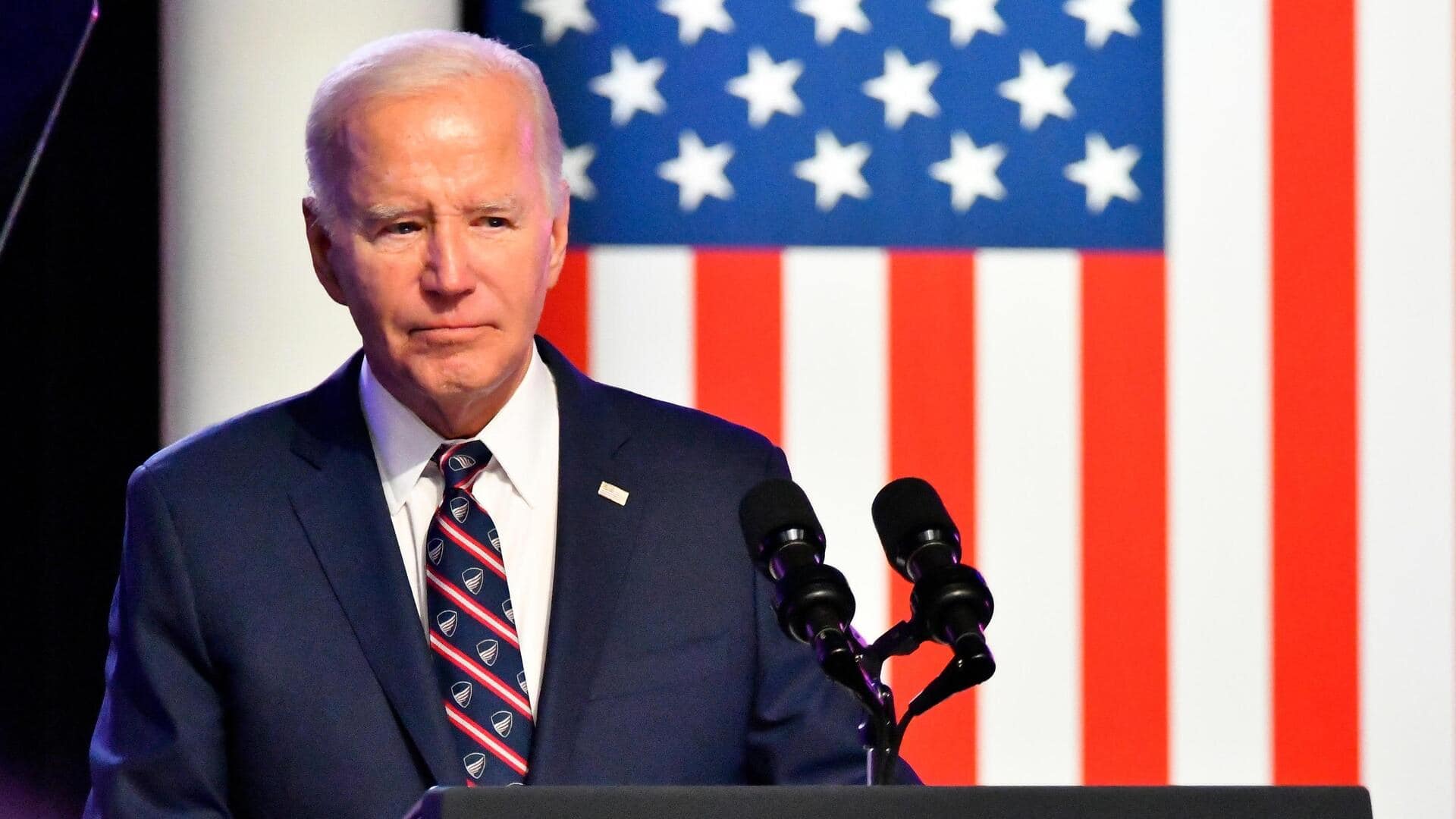
In a recent incident, Google suffered a technical glitch that briefly erased former US President Joe Biden from its list of American Presidents.

The problem, which was subsequently blamed on a 'data error,' triggered a heated debate on the tech giant's capacity to manage politically sensitive information.

The incident took place on Thursday morning and continued for a few hours before Google fixed it.


Omission details

Biden's term was missing from search results

The issue came to light after users observed that Biden's term was absent from Google Search results for the list of "US Presidents."

Instead of listing Biden's tenure after Barack Obama, the list displayed both of Donald Trump's terms, giving the impression that Trump had served two consecutive terms.

The error sparked widespread speculation and concern on social media platforms.

Twitter Post
Take a look at the search results


Error correction
Google rectifies error and restores Biden's presidency


By early Thursday, Google had fixed the error and restored Biden's presidency in its search results.

In a statement to CNBC, the company said, "There was a brief data error in our knowledge graph."

The tech giant further clarified that it had identified the root cause of this issue and resolved it quickly.

Despite Google's swift resolution, the Biden presidency omission has reignited a long-standing debate about the alleged political bias of big tech companies.


Twitter Post
'US President 2020-2024' shows Trump in results


Ongoing scrutiny
Other tech platforms facing political challenges


Google's error comes at a time when tech firms are already facing intense scrutiny over their handling of political content.

TikTok was recently accused of limiting access to anti-Trump content, while Meta faced user complaints about being automatically made to follow President Donald Trump and Vice President JD Vance on Instagram and Facebook after the new administration took office.

Meanwhile, Meta's AI chatbot has struggled to recognize the leadership change. It continued to identify Joe Biden as the sitting president.
Sri Lanka cancels Adani Group's $440M power purchase deal

The deal has been canceled amid corruption allegations Gautam Adani

ByMudit Dube
Jan 24, 2025

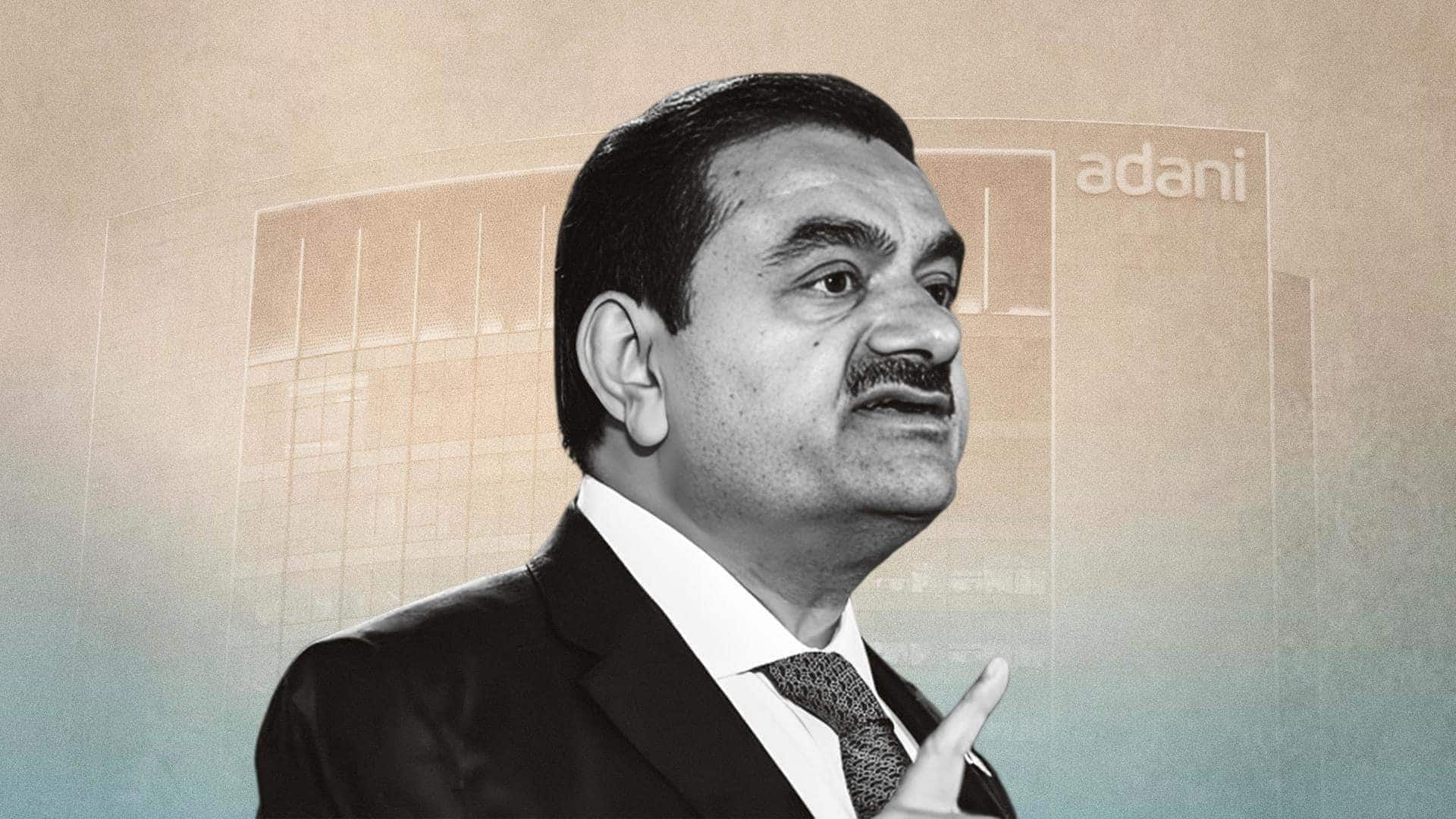
Sri Lanka has canceled a power purchase agreement with Adani Group, amid corruption allegations against the company's founder, Gautam Adani.

The decision was taken by President Anura Kumara Dissanayake's administration, which is now reviewing the proposed wind power project.

Activists have also raised concerns over high electricity costs and possible environmental impact of this project. The proposed power project was estimated around $442 million.

Project review
Investigation into Adani's local projects

The Sri Lankan government has launched investigations into Adani Group's local projects, after corruption charges were leveled against Gautam Adani in the US last year.

A senior official from the energy ministry confirmed President Dissanayake's cabinet had decided against going ahead with the agreement.

However, he clarified that "the government has revoked the power purchase agreement, but the project is not canceled."


Project scrutiny
Adani's wind power project faces criticism and legal challenges


The deal with Adani Group, signed by the previous administration in May 2024, promised to buy electricity at $0.0826 per kilowatt from an unbuilt Adani wind power complex in northwest Sri Lanka.

Activists have criticized the deal, arguing that smaller renewable projects provide electricity at two-thirds of Adani's price.

The proposed construction of Adani's 484-megawatt wind power plant is also facing a Supreme Court challenge over environmental concerns.


Project reassessment
Sri Lankan cabinet to re-evaluate Adani's project


An official document seen by AFP confirmed that the Sri Lankan cabinet has decided to form a committee to "re-evaluate" the construction of Adani's project.

The decision is in line with President Dissanayake's anti-corruption stance, who came to power in September promising to tackle corruption and recover stolen Sri Lankan assets allegedly hidden abroad.

The current ruling party had also criticized the power purchase agreement in opposition.


Corruption allegations
Adani's corruption charges and group's response

Adani was charged in the US on November 19 for bribery and concealing these payments from US investors, New York prosecutors said.

However, the Adani Group has dismissed the allegations as "baseless."

The company has faced multiple corporate fraud allegations in the past few years that have rattled its diverse business empire from coal to airports, cement, and media.
COLD WAR 2.0

Tanker wars: Russia’s new strategy against Europe

#CriticalThinking
Peace, Security & Defence
Jamie Shea
24 Jan 2025

Just as an army marches on its stomach, to quote Napoleon, so money has always been the sinew of warfare. If Russia is to be halted in its aggression against Ukraine, providing Kyiv with modern Western weapons is essential, but this is only one side of the story. Depriving Moscow of the finance to keep its army in the field and war production at a high tempo is just as important. In this context, Russia derives most of its income from its oil and gas exports. So unless these can be significantly reduced, Putin has little incentive to stop fighting, despite Russia’s enormous losses on the battlefield. The supporters of Ukraine in the EU and NATO have tried progressively to tighten the screw. One dimension of this fight has been to reduce the EU’s former dependence on Russian gas. At the beginning of the year, Ukraine closed the Urezgoy-Pomary-Uzhgorod transit pipeline pumping Gazprom gas from Siberia to Slovakia, a move that should deprive Gazprom of around US$8bn a year in revenue. It will also largely eliminate the remaining 8% share that Russia has of the EU gas market. That figure stood at 35% back in 2020 when Moscow started its war against Ukraine, or 65bn cubic metres of gas imported compared to 14bn cubic metres last year. Most EU member states have long since reduced their imports of gas from Russia and replaced them with gas from Norway or liquified natural gas from the US and Qatar. But Slovakia has not made the gas transition. The country’s Prime Minister, Robert Fico, has complained loudly to Brussels, claiming that Slovakia will lose US$1.5bn a year in transit fees as well as 3bn cubic metres of its domestic gas supplies as a result of the pipeline ceasing to operate. He has threatened countermeasures against Ukraine, including a halt to electricity supplies to the country and the expulsion of Ukrainian refugees in Slovakia if the pipeline is not reopened.

Yet the main source of Russia’s income is from oil. Last year, the Kremlin pulled in US$16.4bn from oil sales to finance its war effort in Ukraine. That was 5% more than in 2023. These oil sales allow Moscow to stabilise the rouble, control its budget deficit and keep its balance of payments in credit so that it has money to pay for its imports. Evading the oil price cap imposed by the G7 allowed Russia to earn an additional US$9.4bn in 2024, selling its oil at an average US$65 per barrel (the G7 cap is US$60 a barrel). Moscow has found new markets for its oil in India, Turkey and China, and has been able to reduce the discount that it offers for its oil from US$35 a barrel to just US$10. Given this market, the G7 has long tried to deny Russia easy access to international commercial shipping and insurance to transport its oil to overseas customers. Consequently, the G7 decided back in December 2022 that only barrels of Russian oil priced at US$60 or less can be transported in Western-owned and operated tankers, a price well below the Brent crude benchmark, and thus designed to ensure that Russia loses money. Yet, at the same time, the G7 designed the cap in a way that would not unduly disrupt the global oil trade or push the oil price too high, given the sensitivity of Western governments (particularly the Biden administration) that consumers (and voters), already up in arms about restrictions on their diesel and petrol cars from urban low emissions zones, would not be hit by higher gasoline prices at the filling station.

Moscow has also found a workaround by gathering a shadow fleet of 400 old tankers, some of which belong to the state shipping company, Sovcomflot, and others which have opaque ownership and are registered in places like the UAE, Vietnam, the Seychelles or the Marshall Islands, which do not participate in sanctions against Russia, and fly the flags of convenience of Gabon, the Cook Islands or Panama. The shadow fleet has not just been used to transport Russian oil but also oil from Iran and Venezuela as part of their efforts to circumvent US and international sanctions. These tankers often have no insurance, are in poor condition being 18 years old or more and present an environmental hazard due to their capacity to break down near coastlines or to sink or run aground. Although this fleet is often referred to as a “shadow fleet”, in reality there is not much which is shadowy about its activities. The ships quite visibly load Russian oil at Baltic ports such as Primorsk and Ust Luga, and although they often refuse to communicate with coast guard authorities or Western navies, and do not switch on transponders, their identities are becoming increasingly known to Western security agencies. As a result, the US and UK have already imposed a series of sanctions on individual shadow tankers imposing penalties on any shipping or energy companies or financial intermediaries who deal with them. The EU has so far imposed sanctions on 70 ships in Russia’s ghost fleet. Before the war in Ukraine, around 70% of Russian oil was transported in ships covered by the International Group (IG) maritime insurance consortium, enforcing the high standards of vessel maintenance and safety and transparent ownership set by the International Maritime Organisation. This arrangement brings together 95% of maritime insurance brokers, principally in Lloyd’s of London and the EU. But fewer than 10% of the shadow fleet vessels have proper insurance although they make up 17% of the global oil tanker fleet.

But the challenge from the Russian shadow fleet has now gone from being an economic one and a test of the effectiveness of Western sanctions against Moscow to a security one as well. The tankers used by Russia are implicated in the cutting and sabotaging a number of telecommunications cables and energy pipelines in the Baltic Sea. It appears that they have been dragging their anchors over hundreds of kilometres to damage underwater critical infrastructure. It is relatively easy to do this as the Baltic Sea is relatively shallow between Estonia and Finland and the cables are only 100 metres below the surface. Moreover, the Baltic Sea is a crowded place with 2,000 ships crossing it every day, not all of which can be tracked. On 28 December, Finland impounded a Russian shadow tanker, the Eagle S, suspected of sabotaging the Estlink 2 electricity cable running 145km across the Baltic from Finland to Estonia. The ship clearly showed that one of its anchors was missing, an anchor subsequently recovered from the seabed as part of the investigation. The cutting of the Estlink 2 cable deprived Estonia of one half of its electricity supply, pushing up energy prices at a politically sensitive time in the middle of the winter. If the other cable from Finland, Estlink 1, was also severed, Estonia would need to produce its own domestic electricity and this could provoke political unrest. Meanwhile, the repairs to Estlink 2 will take until the late summer and cost tens of millions of dollars. Eagle S has been impounded by Finland because it has numerous safety violations, including fire protection, navigation equipment and pump room ventilation which must be repaired before the ship can leave the Finnish port of Porvoo. The shipping journal Lloyd’s List also reports that the Eagle S was fitted with surveillance cameras and equipment to monitor maritime activity, something highly unusual in a merchant vessel. Yet the incident with the Eagle S was only the latest in a number of cases of mysterious disruptions of underwater infrastructure in the Baltic Sea. Last November, a Chinese ship, the Yi Peng 3, was suspected of involvement in the severing of cables between Finland and Germany and Sweden and Lithuania. It was temporarily detained by Denmark for investigations also involving the Chinese government before being allowed to continue on its way. In October 2023, another Chinese tanker was suspected of involvement in the severing of a gas pipeline and fibre optic cable between Finland and Estonia but was not stopped. It is not clear if the Chinese ships were under the command of Beijing or Moscow in conducting these sabotage operations. Yet this method of hybrid warfare is now spreading beyond the European theatre as Taiwan is accusing China of severing telecommunications cables off its northern coast. As with cyber-attacks and disinformation campaigns, this form of hybrid warfare has the advantage for the aggressor of achieving enormous disruption which takes a lot of time and money to repair for a very modest upfront cost. A rusting, derelict oil tanker is all that is required, and that cost pales in comparison to what NATO and EU countries need to spend in maintaining expensive warships in the Baltic Sea or the Mediterranean for an indefinite period.


As Russian tankers frequently pass through the English Channel or the Aegean islands as well as the Baltic Sea, the prospects for an ecological disaster and a major oil spill are severe


There is also the environmental dimension. In May 2023, an 18-year-old Russian shadow tanker coming out of the Baltic port of Vysotsk and carrying 340,000 barrels of oil, suffered engine failure and almost ran aground in the Danish Strait. On 10 January this year, another Russian tanker, this time registered in Panama, the Eventin, was pulled by three German tugboats into more open sea after its engines failed off the island of Ruegen. It is currently carrying 99,000 barrels of oil, and was heading from Russia to Egypt. The German Foreign Minister, Annalena Baerbock, has accused Russia of potentially attempting to wreck the Baltic tourist trade by causing contaminated beaches along stretches of Germany’s coastline. In recent weeks, two other ships in Russia’s fleet have sunk, one breaking up off the coast of Spain and the other in the Kerch Strait off Crimea. An irony to the extent that Russia is now also a victim of its own reckless behaviour. There is an oil spill spreading across the Kerch Strait and Russia has set up a state-led task force to deal with it. As the Russian tankers frequently pass through the English Channel or the Aegean islands as well as the Baltic Sea, the prospects for an ecological disaster and a major oil spill are severe. Russia shows no interest or responsibility for the fate of its tankers and the ships, without IG cover in most cases, will not have sufficient insurance to pay for the costs of environmental cleanup. These environmental near misses may just be coincidence; or Russia is deliberately sending these ailing ships towards Europe not just to export its oil but also to intimidate its neighbours, forcing them to live under the constant shadow of a major incident. Last October, the UK announced that it would start requiring insurance details from suspected Russian operated tankers entering its territorial waters, and last December, Denmark, Sweden, Poland, Finland and Estonia took the same measure. They do not stop or impound the ships but add them to the sanctions list. Yet the measures taken thus far have had their impact, making two-thirds of the targeted shadow vessels idle. This means that the money spent on them is wasted and it increases the business cost of using the shadow fleet even if it does not stop its operation altogether.

Ten pipelines and cables have been sabotaged in the Baltic Sea since Russia invaded Ukraine. So EU and NATO are now fully waking up to the multifaceted hybrid threat posed by the rusting shadow oil tankers used by Russia or the ability of Russian sabotage teams to disrupt underwater critical infrastructure. This past week, Finland’s President, Alexander Stubb, and Estonia’s Prime Minister, Kristen Michal, jointly hosted a summit of the Scandinavian and Baltic countries, together with the NATO Secretary General, Mark Rutte, and the European Commission Vice President, Henni Virkkunen, to assess the risks to critical infrastructure in the Baltic region and to discuss further preventive and mitigating steps. In particular, the meeting witnessed the Baltic riparian states and other allies make commitments of forces to increase patrols and intelligence gathering and surveillance on ships coming in and out of Russia’s Baltic ports. The UK-led Joint Expeditionary Force comprising the Scandinavians and the Netherlands has been deployed on ships in the Baltic Sea. The force is operating an AI-enhanced Nordic Warden system to monitor ships identified as belonging to the shadow fleet, evaluate the risks associated with each vessel from plotting trajectories, for instance erratic routes or loitering in areas where underwater cables and pipelines are present, and to compile a register of suspect vessels. NATO is dispatching two warships as part of its Standing Maritime Group 1 to the Baltic Sea to enhance the international monitoring effort and to deter further sabotage activity. Indeed, NATO is calling this operation Baltic Sentry, and said that the initial deployment will be followed by a much more comprehensive air and sea operation managed by the alliance’s Maritime Command (MARCOM at Northwood, near London. Estonia has also deployed three of its military patrol vessels and Sweden will add three warships to the international maritime presence, as well as coast guard vessels and air surveillance this month. The EU and NATO have set up a joint task force to protect oil and gas drilling platforms and critical undersea infrastructure, which will exchange intelligence and coordinate monitoring and intervention operations. NATO has also been cooperating with Elon Musk’s Space X and VIASAT on a NATO-funded HEIST project to use low orbit satellites to carry the same telecommunications data that is carried by the Baltic undersea cables. This will provide backup and resilience for key EU transnational connectivity and address natural as well as manmade threats. Project HEIST is due to be tested in January and to be fully deployed by December 2026. The need for an alternative data transmission infrastructure in space is underlined by the fact that 95% of global internet traffic is currently carried by undersea cables, and these cables extend 1.3mn kilometres across the world’s oceans- a highly vulnerable situation from the perspectives of resilience.


Making grand concessions to Putin ahead of the Ukraine peace talks or the planned Trump-Putin summit would hardly put the US in a strong negotiating position to induce Putin to consider anything short of a total Russian victory


On Friday 10 January, the US and UK announced a series of additional sanctions against the Russian energy sector. The US imposed measures against a further 183 vessels in the shadow fleet and against the two major Russian oil companies, Gazprom Neft and Surgutneftgas as well as against Russian oil traders, oilfield providers and two dozen subsidiaries. In addition to these measures taken by the Treasury Department, the State Department has been targeting Russia’s LNG exports. It announced its own package of sanctions against 80 individuals, including a number involved in the metals and mining sector. Further sanctions were directed at the state atomic energy corporation, Rosatom. It has taken a while for the US to tighten this oil noose on Moscow but, as the US Assistant Secretary for Energy Resources in the State Department, Geoffrey Pyatt, explained, Washington is now more confident that it can limit the rise in the oil price as the result of these sanctions, given that fresh oil supply is coming on stream from the US, Guyana, Canada, Brazil and the Middle East. The price of Brent crude has increased by 3% to US$79, but the market has stabilised. The UK has followed Washington in adopting similar sanctions. The UK Foreign Minister, David Lammy, said that “taking on Russian oil companies will drain Russia’s war chest, and every rouble we take from Putin’s hands saves Ukrainian lives”. Unsurprisingly, President Zelensky has greeted the new measures taken by the US and UK and said that they will deal a “significant blow” to the Russian war effort. Both Gazprom and Rosatom have reacted with outrage, calling the measures “baseless and illegitimate”. The Biden Administration is hoping that this new package will give the US extra leverage over Russia in upcoming peace talks, but coming just a few days before the inauguration of Donald Trump, there is the obvious prospect that Trump could rescind them before they have had the time to come into effect (at the end of March). But Trump would need to consult Congress and solicit its view before he could cancel the sanctions. Congress could express its disapproval and many Republicans have called for the new sanctions. Moreover, making grand concessions to Putin ahead of the Ukraine peace talks or the planned Trump-Putin summit would hardly put the US in a strong negotiating position to induce Putin to consider anything short of a total Russian victory.

So the challenge for NATO and the EU as we enter 2025 is to clamp down further on Russia’s shadow fleet to protect their critical infrastructure, avoid an environmental catastrophe and put Putin under more severe economic pressure. With Russian interest rates at 23%, the rouble losing value and inflation at 9%, this is a good time to put Moscow under more pressure to find a way out of its costly war in Ukraine. The earnings from the illicit oil trade for Moscow are also beginning to tip downwards since the end of last year. A more decisive move against Russian energy exports will also help to optimise the impact of all the other and many international sanctions against Russia since 2022 that otherwise may end in failure and a humiliation for the Western allies. Of course, the willingness of the incoming Trump administration to participate in this additional economic pressure campaign is open to doubt, although Trump may be attracted by the extra profits of US oil and gas exports to Europe to replace declining Russian energy supplies; as well as the curbing of cheap Russian oil to China. But the challenge of the Russian shadow fleet is, above all, to Europe, given its proximity to the Russian oil loading ports. So unsurprisingly it is Europe that is mounting the response. But clearly more can and needs to be done.

One step could be to establish a maritime corridor across the Baltic Sea to the North Sea, and the Atlantic and across the Aegean and the Mediterranean. Oil tankers would be obliged to use this corridor, preventing them from loitering or changing routes. These corridors would keep vessels in the open sea, moving steadily and away from vulnerable coastal communities and concentrations of undersea infrastructure. Tankers would be required to show proof of adequate insurance. Where they fail to do so, the vessels could be redirected to nearby ports for inspection. If they show the same neglect of safety standards as the Eagle 1, they can be impounded until repairs are carried out. The same would apply to shadow vessels which are identified as being subject to existing US, UK or EU sanctions and which can be detained while evidence is gathered about their ownership, financing and seaworthiness. Oil from unseaworthy or illegally operating vessels could be confiscated and given to Ukraine to help it withstand Russian attacks on its electricity grid and power generators. Either NATO or the EU could operate these maritime corridors, which would require an integrated civil-military headquarters to direct daily operations and to fuse information as well as a rotation of participating national assets (warships, coast guard vessels, submarines, surveillance aircraft, observation drones and satellites). The EU has good experience of doing something similar with its Atalanta mission to protect commercial shipping from piracy in the Gulf of Aden in the 2011-21 timeframe. As with all issues of maritime boarding and interdiction, there will be legal issues to be sorted out to enable EU and NATO countries participating in the missions to follow common rules of engagement. But previous counterpiracy, counterproliferation and counterterrorism legal frameworks used by the allies are a basis on which to build.

Another step could be to establish a common database of the owners and operators of the ghost ships in order to establish legal liability in the event of oil spills, pollution or the cost of recovery of stranded vessels. The EU and its member states and partners must prepare the ground legally so they can move quickly to open proceedings against countries, companies and individuals responsible for cable disruptions or pollution. The deliberate opacity of the operation of the shadow vessels, using multiple shell companies and flags of convenience, is designed to make the identity of beneficial owners difficult. So rather than wait for the next incident to happen and then to confront the inevitable obfuscation of Russia and its shadow fleet partners and intermediaries, the EU legal services working with the EU member states concerned should begin to prepare the ground now, gathering the data and the evidence and agreeing on the best legal pathways in terms of jurisdictions and international tribunals. This approach of pre-emptive legal deterrence can help to force at least some of the participants in Russia’s shadow fleet oil business to think again and take the more conventional route. Given the current momentum of Russia’s use of shadow ships for its hybrid warfare against Europe, it is only a matter of time until a major incident occurs.


Another issue for the EU concerns Serbia, whose national gas company, NIS, is 65% owned by Gazprom Neft and its subsidiaries


Third and finally, the EU and G7 need to agree on a diplomatic strategy to dissuade other countries from participating in Russia’s shadow fleet or from contributing to Russia’s energy trade. As mentioned at the beginning, this effort has to start within the EU as Brussels has to deal with member states such as Hungary and Slovakia which have refused to switch their energy systems away from Russian oil and gas. Hungary is still dependent on Russian oil supplies through the Druzhba pipeline, which runs across Belarus and Ukraine and then has spurs to Hungary and Slovakia. The increase in the oil price after the US imposed its new sanctions on Russian energy companies has pushed inflation in Hungary up to 4.4%, and led to the forint falling to a two-year low against the euro. This has led to Hungary seeking more cooperation from its EU neighbours on energy, which could be a useful development in finally convincing Hungary and Slovakia to diversify their energy sources, build more interconnectors with the rest of the EU, invest more in renewables and transition their industries away from cheap Russian oil and gas in the way that Germany has had to do. Czechia, for instance, has stopped all imports of Russian oil and gas, relying on the Italian TAL pipeline instead. Another issue for the EU concerns Serbia, whose national gas company, NIS, is 65% owned by Gazprom Neft and its subsidiaries. So this EU candidate country would be especially affected by sanctions against Gazprom and Brussels will need to work with Belgrade to locate alternative supplies. Yet Serbia needs to transition away from Russian energy as a condition for aligning with the EU energy packages and anti-monopoly measures as part of its EU accession process. Serbia will need to link up with the EU electricity grid as the three Baltic states have finally been able to do since 1 January this year. When it comes to the Russian shadow fleet, the EU and G7 can engage with the flag of convenience countries to upgrade their standards for allowing their flags to be used by foreign shipping companies and operators, clamping down on unseaworthy or underinsured vessels. It is not enough simply to arrest the captains and crews of the ships involved in incidents, although they too may face criminal liability for intent or negligence. The EU and G7 can send inspection teams to flag countries or provide information to establish true ownership and clamp down on the practice of giving oil tankers fake or multiple identities without proper documentation and registration. Many registration countries, like the Marshall Islands, or flag counties like Gabon, Liberia or Panama, have close trading and security relationships with the West and commitments to curbing shadow fleets can be part of trade agreements with the US and EU or conditions of financial aid or climate adaptation financing. Turkey is a particularly important country as it controls the passage of Russian tankers through the Bosphorus, while being highly vulnerable to pollution and oil spills in the Black Sea or an accident with a shadow fleet vessel blocking the Strait. Turkey needs to be engaged too in refusing to facilitate the Russian trade in discounted oil, no easy task given that Ankara has not imposed sanctions on Moscow and maintains close economic ties. The West also needs Turkey’s help with Syria and Iran,for wider stability in the Middle East and for peace in Ukraine. Still the effort needs to be made. Egypt and Panama, which control the two canals vital to global trade, will be important partners too. The incoming Trump administration may well be willing to include the Iranian or Venezuelan use of the shadow fleet in this containment strategy, even if its willingness to turn the heat up on Russia is still an open question. But at all events, protecting underwater pipelines and cables in the Baltic Sea will be much easier if the shadow fleet progressively disappears from the oceans as the result of a coherent Western diplomatic strategy and sustained economic pressure.

In conclusion, 2025 will be a decisive year for Ukraine. The announcements by allies at the most recent Ukraine Defence Contact Group in Ramstein of further arms deliveries to Kyiv (including US$500mn of further US aid for missile defence and F16 armaments) are welcome, and will help Ukraine to hold in check the current Russian offensives around Potrovsk and the Kursk Oblast. But historians of war know well that major conflicts are won as much by depriving the adversary of vital economic resources as by stunning victories on the battlefield. This was true of the Allied naval blockade against the Kaiser’s Germany in the First World War, as well as the oil embargo against Nazi Germany and Imperial Japan in the Second World War. Russia’s oil exports are the remaining economic frontier in the Western strategy to make Moscow pay a heavy price for its aggression against Ukraine. And pushing Russia’s shadow fleet out of business is central to that effort and thus a priority for EU and NATO security policy in the months ahead.


Jamie Shea
Senior Fellow for Peace, Security and Defence at Friends of Europe, and former Deputy Assistant Secretary General for Emerging Security Challenges at the North Atlantic Treaty Organization (NATO)


The views expressed in this #CriticalThinking article reflect those of the author(s) and not of Friends of Europe.


Are Georgia and Serbia heading for coloured revolutions?

Are Georgia and Serbia heading for coloured revolutions?
Protests have taken place daily in Georgia since Prime Minister Irakli Kobakhidze announced his government is halting the country's EU accession process. / bne IntelliNews
By Clare Nuttall in Glasgow January 23, 2025

Mass protests have gripped Georgia and Serbia for months, as tens of thousands of their citizens take to the streets to challenge ruling parties that over the last decade have managed to almost completely dominate the political landscapes. 

The protest movements are unfolding in a region that has experienced multiple "colour revolutions" since the beginning of this century. Yet not every protest movement has led to regime change. In both Georgia and Serbia, the critical question is whether demonstrators can secure their objectives or whether momentum will dissipate in the face of entrenched power.

Georgians protest for their EU future 

In Georgia, the latest wave of protests was triggered by the October 2024 general election, and intensified after the controversial decision by the ruling Georgian Dream (GD) party to suspend the country’s EU accession bid until 2028. For many Georgians, the ongoing standoff is a fight for the country’s future, to keep Georgia on its path to join the EU and prevent a drift back into Russia’s sphere of influence.

The unrest began in October 2024, when GD claimed victory in a general election widely condemned as fraudulent by international observers, opposition parties and civil society. Since GD announced the suspension of Georgia’s EU membership bid in November, then there have been daily protests. Tens of thousands of demonstrators took to the streets of Tbilisi and other cities and small towns, sometimes battling with riot police armed with batons, water cannons and tear gas. 

The protests immediately after Prime Minister Irakli Kobakhidze’s announcement of the decision to halt progress on EU accession drew massive crowds, some with as many as 200,000 people. They diminished somewhat over Christmas and the New Year, but were revitalised in the new year, not least because arrests of opposition politicians and journalists fuelled public outrage. Activists told bne IntelliNews reporters in Tbilisi that the regime’s attempts to suppress dissent, some of them brutal, have only reinvigorated the protest movement

With the population overwhelmingly supporting EU integration, GD’s actions to bring the protests to an end risk backfiring by alienating the public and strengthening opposition movements. The question now is whether these demonstrations will achieve their primary demand: new parliamentary elections.

Serbian protests sparked by tragedy 

In Serbia, protests started after the collapse of a concrete canopy at the Novi Sad railway station on November 1, killing 15 people. What began as outrage over a single tragedy has snowballed into a broader movement challenging the 13-year rule of President Aleksandar Vucic and his ruling Serbian Progressive Party (SNS).

Protests have swept across Serbian cities, with students, farmers and opposition groups uniting to demand accountability and systemic reforms. The government’s attempts to placate protesters – including the arrests of officials implicated in the Novi Sad tragedy – have done little to quell the unrest. Vucic has even offered to face a referendum on his presidency, but to no avail. 

The largest protest to date was on January 17, when tens of thousands of students gathered outside the state broadcaster, RTS, accusing it of pro-government bias. RTS workers showed their solidarity, unfurling a banner that read “RTS workers are with the students”. 

As in Georgia, the protests have also been marked by violence. In December, a car rammed into demonstrators, injuring members of the Belgrade Philharmonic Orchestra. A similar incident on January 16 left a female student seriously injured, further fuelling public outrage. In response, farmers pledged to use tractors to protect student protesters.

Vucic’s government is not standing idly by. In a bid to counter the protests, he announced the creation of a new Movement for the People and the State, aimed at rallying support for his administration. While Vucic has retained control of key institutions and enjoys significant support especially in rural areas and outside the main cities, bne IntelliNews’ correspondent in Belgrade reports that the parallels to Otpor – the student-led movement that toppled Slobodan MiloÅ¡ević in 2000 – are impossible to ignore.

Broadening movements

In both Serbia and Georgia, the protests have persisted partly because of the disparate groups of people attending them. In Georgia, 79% of the population want EU membership, according to a recent poll. While the initial post-election protests were concentrated in Tbilisi, while many people elsewhere in the country did not contest GD’s victory, the party’s move to suspend progress towards EU accession mobilised protests across the entire country, from major cities to small towns. 

In Serbia, the initial student-driven protests have been joined by farmers, postal workers, teachers, lawyers and other groups. Protests are giving way to strikes. Employees of the state-owned Post of Serbia staged a spontaneous strike on January 21 in solidarity with the protests. The Bar Association of Serbia announced a seven-day suspension of work, starting January 20, while teachers in more than 50% of schools refused to begin the new term. Thousands kept away from work during the general strike on January 24

In Georgia, employees and employers participated in a three-hour strike on January 15 to demand new elections in the Black Sea country and the release of all those unlawfully detained at the anti-government, pro-EU street protests. Strikes are a very new phenomenon in Georgian politics, reported bne IntelliNews’ correspondent in Tbilisi, and this first attempt was framed by the activist organisers as a “warning” to the government.

Government protests have previously broken out in the two countries. Georgia erupted into protests in spring 2024, when the government adopted a “foreign agents” law modelled on Russian legislation. As well as giving the government new powers to clamp down on NGOs and civil society, the law also jeopardised Georgia’s EU accession process

Serbia has seen successive waves of mass protests on a variety of pretexts. The Don’t Drown Belgrade protests, symbolised with a yellow rubber duck, were sparked by the midnight destruction of a historic Belgrade district to make way for the Belgrade Waterfront development. Two mass shootings in mid-2023 brought tens of thousands onto the streets to demand government accountability and the end of what protesters described as a “culture of violence” promoted via channels including state TV. Environmental issues, including the planned Jadar lithium mine, are also powerful mobilising forces. 

Until now, however, each of these waves of protests have eventually petered out, while Vucic and his SNS continued to secure election victories. Yet it is not a foregone conclusion that the same will happen this time. Discussions about a general strike have in progress for days, and a prominent student organisation has called for a day of widespread civil disobedience on January 24. 

Historical precedents suggest that sustained momentum is key. Serbia’s Milosevic fell after mass protests culminated in the October 2000 revolution, while Georgia’s Rose Revolution in 2003 peacefully ousted Soviet-era leader Eduard Shevardnadze.

Ukraine’s 2013-14 Euromaidan revolution, seen as a potential parallel for Georgia’s current political situation, erupted when then president Viktor Yanukovych's decided against signing an Association Agreement with the EU, instead opting for closer ties to Russia. While the revolution was successful in ousting Yanukovych, it came at the cost of at least 100 deaths. 

North Macedonia's 2016 Colourful Revolution and Armenia's Velvet Revolution of 2018 highlight the potential for broad-based, peaceful protests to force change.

By contrast, failed uprisings in authoritarian countries such as RussiaKazakhstan and Uzbekistan show the resilience of entrenched regimes backed by robust security apparatuses. Azerbaijan, for instance, recently experienced protests initially sparked by a fatal road accident, but whose rapid spread reflected frustrations with government corruption, police impunity and economic inequality. However, if there was any chance of it escalating into a broader movement like those in Serbia and Georgia, that was quickly crushed.

Authoritarian regimes in the region, like Azerbaijan, rely on repression to quash dissent, and it is rare to see the scale of protests that are currently erupting in Georgia and Serbia.  After the crash, the Azerbaijani government’s heavy-handed tactics contained the crisis before it spread. Still, a brave band of activitists continue to challenge the government in Baku at grave risk to themselves. 

The situation is less severe in Georgia and Serbia, which are both classified by NGO Freedom House as "transitional or hybrid regimes”. They are autocratic enough that people take to the streets because they have little hope of bringing about change via elections, but democratic enough that they can protest without fear this will lead to death, serious injury or a decade-long prison term. 

Models for change 

If there was a peaceful handover of power in Georgia or Serbia, the experience of nearby countries gives some hint as to what it might look like. 

In Armenia, the Velvet Revolution unfolded in April-May 2018. Protests swelled after the country’s president Serzh Sargsyan attempted a seamless switch to the prime minister position. Initial talks between protest leader Nikol Pashinyan – Armenia’s current prime minister – and Sargsyan proved ineffective, but as the protests continued to grow and workers went out on strike, various political parties declared they would back Pashinyan for prime minister, or at least not stand in his way. Finally, even MPs from Sargsyan’s ruling Republican Party voted to elect Pashinyan, the sole candidate to stand, as the country’s new premier, ending the standoff. 

North Macedonia’s Colourful Revolution started when then president Gjorge Ivanov blocked an investigation into then prime minister Nikola Gruevski and fellow politicians over a wiretapping scandal. At the time, Gruevski’s right-wing VMRO-DPMNE had been in power for a decade, with the opposition losing hope that it would be removed via the ballot boxes. Thousands joined protests in Skopje and other cities across the country, only coming to an end when a deal was brokered by the European Union and the US. Under this arrangement, Gruevski stepped down and committed to early elections.

It’s not clear whether the ongoing protests in either Georgia or Serbia will get to this stage, or if they will simply peter out as previous movements have done. For the moment, however, protesters show no signs of stopping in their quest to loosen their governments' grip on power.

Serbians strike in protest over fatal roof collapse


By AFP
January 24, 2025


Thousands of young people took to the streets in Belgrade against perceived corruption - Copyright AFP Kena Betancur


Ognjen ZORIC, Camille BOUISSOU

Thousands of young people took to streets across Serbia on Friday, after student protest organisers called for a general strike over the fatal collapse of a train station roof in November.

Friday’s strike call was the latest move to increase pressure on the government, following demands for high-ranking officials to resign and greater transparency into the accident investigation.

Public outrage has fuelled almost daily protests across Serbia after 15 people died, including several children, at the station in the northern city of Novi Sad.

The deaths came shortly after the completion of a three-year renovation project, and many attribute the accident to corruption and poor oversight of construction projects.

Thousands of young people, including many high school students, filled streets across the capital and urged the public to join Friday’s one-day general strike.

Teachers also joined the walkout, shutting schools throughout the Balkan country, as did lawyers. Several theatres and cinemas closed.

Exact numbers for the number of participants was not immediately available.

“I have come here today, just as I have for the past two months, to support the students in this great fight for a free country, for justice, for accountability, and for expertise,” said Nikola Nikacevic, a 48-year-old professor in Belgrade.

– Regular protests –

Demonstrations were also held in Novi Sad, Nis, and Jagodina, the latter hosting a rival pro-government rally on Friday evening.

President Aleksandar Vucic, of the ruling SNS party, addressed several thousand people who rallied in the central town.

“Serbia is being attacked from both within and outside” the country, Vucic told the crowd from an improvised stage at the town’s central square.

The participants of the rally occasionally chanted Vucic’s name and “We don’t give Serbia away” while many waved Serbian flags.

Vucic and the government, which are facing mounting pressure, regularly accuse demonstrators of being backed by foreign powers.

They also say they have already met all the students’ demands by releasing documents on the station renovation project.

On Friday, Vucic invited students to dialogue.

“Despite everything, despite all insults, harsh words, I invite them (students) to dialogue to tell us what it is that has not been fulfilled.

“Tell us publicly which particular demand has not been fulfilled,” he said.

Students insist that the president is not the one who can address their demands arguing he has no jurisdiction over them.

– Simmering tensions –

Earlier Friday, video posted online also showed a car ramming demonstrators at a rally in Belgrade, injuring at least one person, according to local media.

The interior minister later said that the driver had been arrested immediately after the incident.

Despite calls for strikes, public transport in Belgrade operated normally, as did the supply of electricity and gas.

The strike coincided with protests held every Friday, when demonstrators block roads across Serbia at 11:52 am local time (10:52 GMT) — the exact time the roof collapsed in Novi Sad — and hold 15 minutes of silence.

More than a dozen people have been charged in connection with the accident, including former transport minister Goran Vesic, who resigned days after it occurred.

According to Javni kupovi, an association that documents all demonstrations, more than 50 rallies have taken place in Serbia since November 1.


Serbia goes on strike

Serbia goes on strike
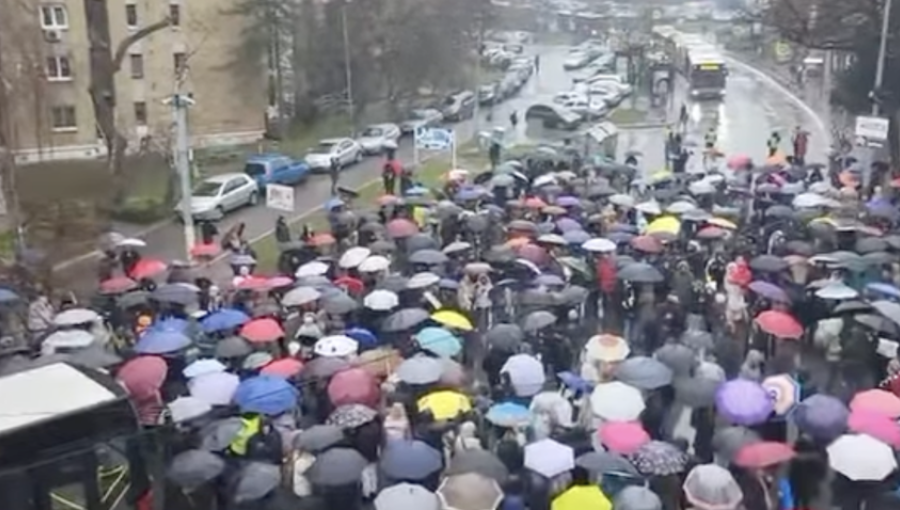
Demonstrators start to gather in the rain ahead of a planned protest on January 24. / serbialive via Instagram
By Tatyana Kekic in Belgrade January 24, 2025

Large parts of Serbian society are out on strike on January 24, as students, cultural institutions and workers across various sectors rally in solidarity with ongoing protests against the government. The strike, which includes schools, cultural organisations and businesses, is a form of civil disobedience aimed at pressuring the government following weeks of protests sparked by the deadly collapse of a concrete canopy at the Novi Sad railway station in November.

The students behind the call for the strike have urged all citizens to participate, emphasising that the action is not just a strike but a broader expression of civil disobedience. "General strike" in their terms refers to a suspension of all activities as a collective stand against the government. This appeal has been met with widespread support from diverse groups including educators, cultural workers, media organisations and entrepreneurs.

"On January 24, it will not be business as usual," said Dusan Kokot, president of the Independent Union of Educational Workers of Serbia, who declared a strike in schools earlier this month. "We are standing together with the students for justice and accountability."

The Republic Union of Culture and several cultural institutions, including theaters, libraries, cinemas and museums, have also closed in support of the protest. Prominent venues such as CineGrand and Tuckwood, along with art exhibitions like the Banksy exhibit, have suspended their programs. Even big publishing houses like Laguna have joined the movement, highlighting the growing cultural solidarity against the government.

The protests, which began after the tragic collapse at the Novi Sad railway station that left 15 dead and many more injured, have now expanded to a broader demand for political change. The demonstrations have criticised what protesters describe as systemic corruption, economic mismanagement and the suppression of dissent.

The government has prepared a counter-rally in Jagodina, where President Aleksandar Vucic will try to launch a new 'people's' movement. Critics say that the rally reeks of desperation and is reminiscent of the tactics used by the late Slobodan Milosevic before he was ousted from power in popular protests nicknamed the ‘Bulldozer Revolution’ in 2000.

"This is just another attempt to create a false narrative of popular support while ignoring the legitimate grievances of the Serbian people," said an opposition leader. "People will be bused in, and the rally will be carefully orchestrated by the ruling party."

The Serbian Progressive Party (SNS), which has dominated the political scene for over a decade, is facing the first sustained challenge to its political legitimacy. Despite the government’s attempts to placate protesters by heeding some of their demands, including releasing classified documents related to the station collapse in Novi Sad and prosecuting top officials, the movement shows no signs of abating. 

On social media, calls for the general strike quickly went viral, with citizens from all walks of life declaring their support for the action. Media outlets including N1, Danas and Sport Club have stopped regular reporting to participate in the strike. Bars, restaurants, hair salons and gyms shut their doors to express their discontent. "The government can try to suppress us, but we are united in this fight for a better Serbia," said a protestor in Belgrade. "We will not stop until our voices are heard."

'Funding is an issue': $4.1b. needed to sustain Gaza aid, only 3.6% funded so far - UN official

Daily deliveries have surged tenfold since the Sunday deal, according to UN data, surpassing the 600 trucks a day target set out for the first seven weeks of the ceasefire.

By REUTERS
JANUARY 24, 2025 
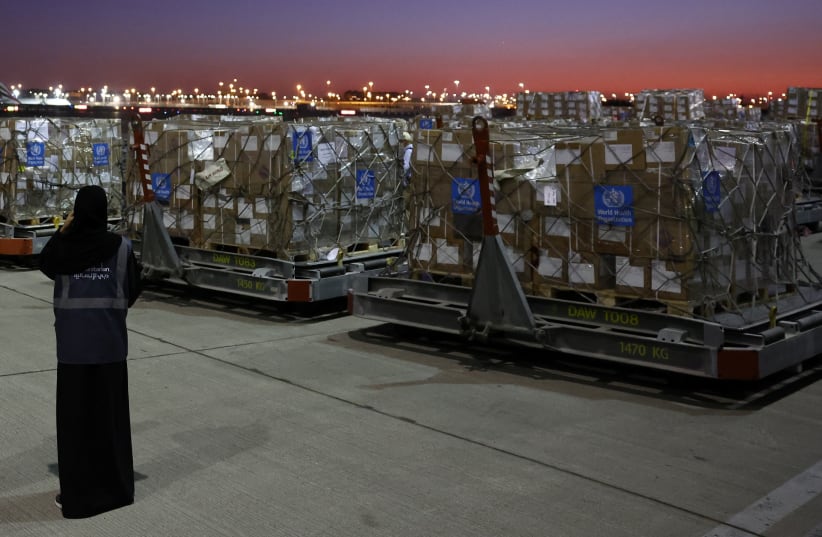
A Dubai Humanitarian staff stands in front of pallets of aid for Gaza at the Royal Airwing airport before dispatching, in Dubai, United Arab Emirates, January 24, 2025.
(photo credit: REUTERS/AMR ALFIKY)

Funding shortages may affect the United Nations's ability to maintain aid flows at target levels throughout the Gaza ceasefire deal, a UN official told Reuters.

Fifteen months of war has left more than 47,000 Palestinians dead, according to the Hamas-run health ministry in Gaza, and most of the Strip in ruins, with hundreds of thousands of people homeless and reliant on outside aid for survival.

Daily deliveries have surged tenfold since the Sunday deal, according to UN data, surpassing the 600 trucks a day target set out for the first seven weeks of the ceasefire.

Muhannad Hadi, the UN humanitarian coordinator for the West Bank and Gaza, told Reuters late on Thursday he was "very happy" with how the first few days had gone but flagged funding as a concern.
'Funding is an issue'

"Funding is an issue. We need immediate funding to make sure that we continue providing the aid for the 42 days, but also after the 42 days, because we're hopeful that we'll go from phase one to phase two," he said after returning from Gaza earlier this week.

A Dubai Humanitarian staff walks near the aircraft carrying the pallets of aid for Gaza at the Royal Airwing airport before dispatching, in Dubai, United Arab Emirates, January 24, 2025. (credit: REUTERS/AMR ALFIKY)

He described scenes of widespread joy and relief across the enclave, with many Gazans smiling and eager to return to the remnants of their homes and find work.

"I've received clear messages from the people: they don't want to continue depending on humanitarian aid. They want to rebuild their lives... We can't afford to let them down."

The UN is seeking $4.1 billion for the West Bank and Gaza this year, with nearly 90% set to go to Gaza. It is currently 3.6% funded.

Asked how the UN had managed to ramp up supplies so quickly, he cited an improvement in security for aid convoys, saying he saw local police everywhere during his visit. "The looting has reduced drastically," he said.

One of the remaining challenges for aid workers is the difficulty of moving food and supplies through the damaged streets of Gaza with many thousands of Palestinians on the move.

He said this could get worse from the weekend when many thousands of people are expected to be allowed to return to northern Gaza under the terms of the ceasefire deal.