Thursday, March 27, 2025

Trump names media critic as ambassador to South Africa

AFRIKANER SYMPATHIZER


Agence France-Presse
March 26, 2025 
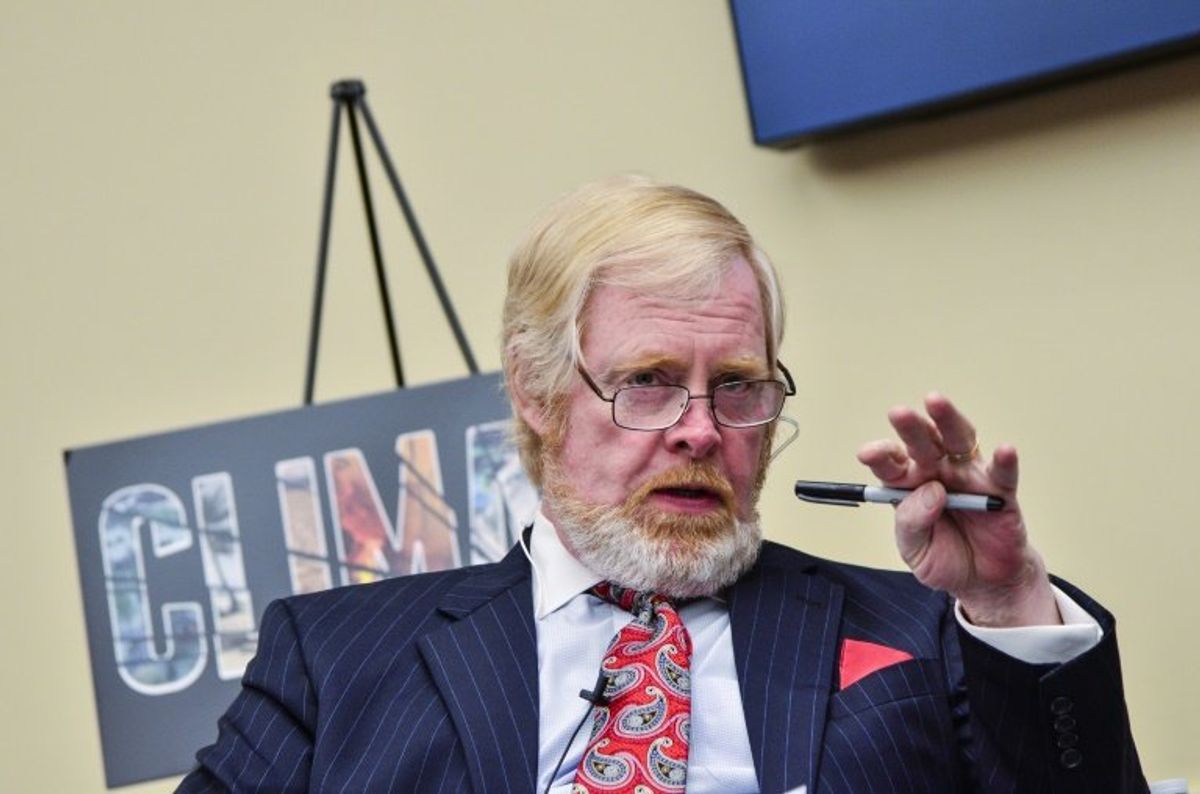
Brent Bozell, seen here in 2016, is founder and president of the conservative Media Research Center, and was named by President Donald Trump to be US ambassador to South Africa. (AFP)

President Donald Trump on Wednesday named a right-wing media critic as the US ambassador to South Africa, at a time that Washington's relations with one of the continent's richest countries are in free fall.

If confirmed in the role by the US Senate, Brent Bozell would be stepping into the job just after the Trump administration threw out South Africa's own envoy to the United States following perceived criticism of the president.

"I am pleased to announce that Brent Bozell will be our next United States Ambassador to South Africa," Trump posted on his social media platform.

"Brent is the Founder of the Media Research Center, which has exposed Fake News hypocrites for many years," he added, saying Bozell "brings fearless tenacity, extraordinary experience, and vast knowledge to a Nation that desperately needs it."

The Media Research Center is a non-profit that says it works to "expose and counter the leftist bias of the national news media."

The New York Times reported that Bozell's son was one of almost 1,600 people convicted and sentenced for their role in the January 6, 2021 assault on the US Capitol by Trump supporters, and who was pardoned by the president when he took office this year.

Ties between Washington and Pretoria have slumped since Trump cut financial aid to South Africa over what he alleges is its anti-white land policy, its genocide case against Israel at the International Court of Justice and other foreign policy clashes.

Egged on by his South Africa-born right-hand man Elon Musk, Trump has accused the country's government of discriminating against its white minority and last month signed an executive order offering refugee status to Afrikaners, the ethnic minority that once ran the country's apartheid system.

Expelled amassador Ebrahim Rasool was given a hero's welcome on his return to South Africa, telling cheering supporters: "It was not our choice to come home, but we come home with no regrets."

South Africa, the current president of the Group of 20 leading economies, last week said it considered improving its relationship with the United States a priority.

The United States is South Africa's second-biggest trading partner.
'Economic lunacy day': Financial Times columnist buries Trump's newest trade salvo

Brad Reed
March 27, 2025 
RAW STORY


Gage Skidmore.

Financial Times columnist Gillian Tett on Thursday shredded President Donald Trump's latest salvo in his international trade wars that have sent stock prices sinking downward in recent weeks.

Appearing on MSNBC's "Morning Joe," Tett said that Trump's new 25 percent tariffs on foreign cars were once again setting off damaging economic uncertainty.

"Frankly, I think most economists would regard what Donald Trump calls the 'Economic Liberation Day' as 'Economic Lunacy Day,'" she said. "Because essentially, what you're doing with these threatened tariffs is smashing apart business confidence, because they can't plan, smashing apart consumer confidence. And we've just seen consumer confidence plunge to the lowest level for 12 years."

She also noted that surveys are showing that consumers' inflation expectations have once again surged over fears that Trump's tariffs will raise prices across the board.

"Which is astonishing given that Donald Trump campaigned on bringing down inflation," she added. "And of course, the other problem is that all of the supply chains are so integrated that if you try and hammer the bilateral trade, you're going to eventually hurt American producers as well. So car parts or the process of making a car crosses the U.S.-Mexican border seven times back and forth along the supply chain."

Watch the video below or at this link.


'They gave us their plan': Stunning Dem victory in Pa Senate used tactics shared from Iowa


Peter Hall, 
Pennsylvania Capital-Star
March 27, 2025 

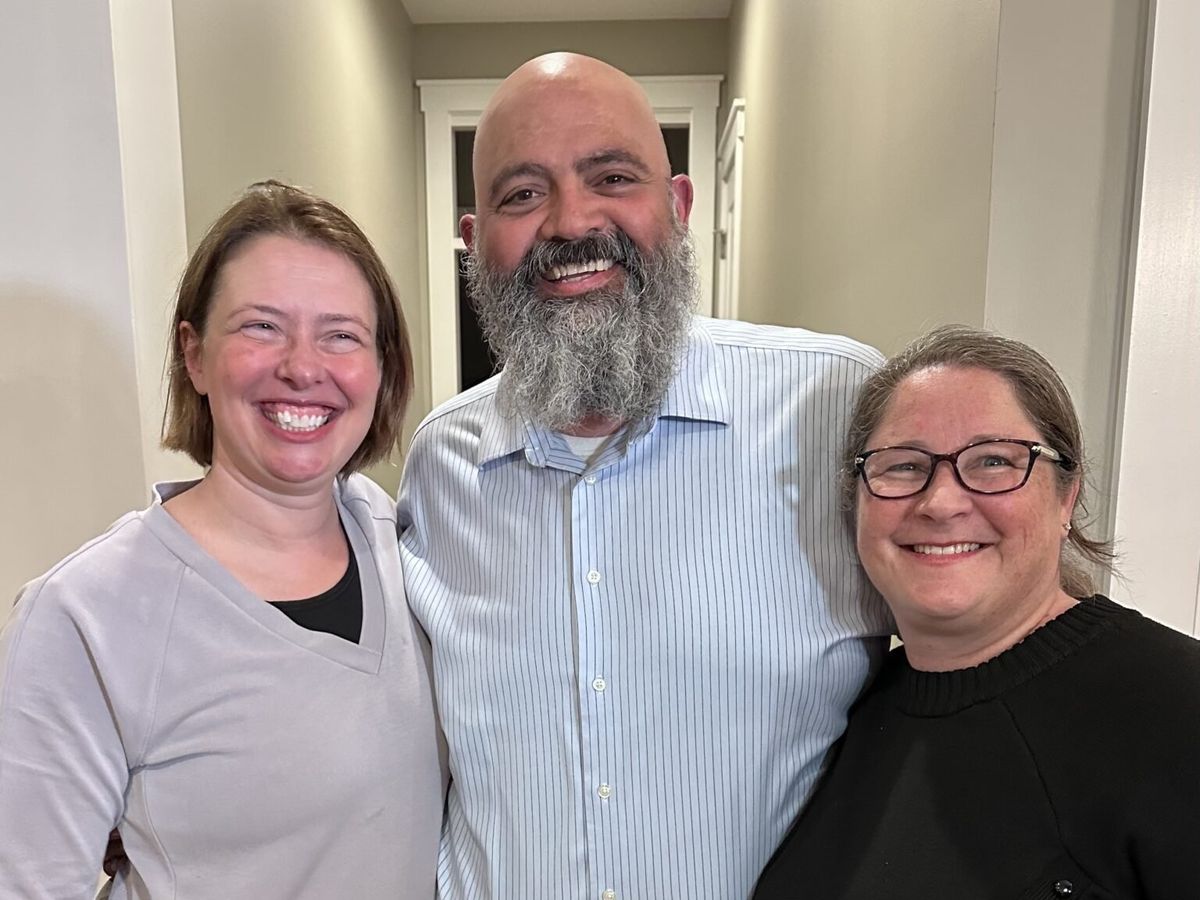
Pennsylvania Sen.-elect James Malone with his co-campaign managers Stella Sexton (left) and Joyce Smith. (contributed photo/Stella Sexton)

If Gov. Josh Shapiro was able to win in deep-red Lancaster County, Democratic state Sen.-elect James Malone could too, his campaign co-manager Stella Sexton said.

Shapiro won the 36th Senate District in 2022 with a 0.2% margin over his Republican opponent, Trump-aligned Sen. Doug Mastriano (R-Franklin).

“If we could get to Shapiro-Mastriano numbers, I knew we could take this,” Stella Sexton, told the Capital-Star about the campaign’s approach to flipping the long-time Republican Senate district.

Malone did better with a stunning upset in the 36th District special election Tuesday. He beat Republican County Commissioner Joshua Parsons by 0.89%, according to unofficial results, and became the first Democrat to represent Lancaster County in the Pennsylvania Senate since 1879.

Parsons conceded Wednesday afternoon, saying in a post on the social media platform X that a review of the remaining ballots showed there were not enough uncounted votes to change the outcome.
Having reviewed the numbers from last night, including the fact that there are not enough provisional or other outstanding ballots to change the overall result, I have called Mayor Malone to congratulate him and wish him the best.
1/2
— Josh Parsons (@Josh__Parsons) March 26, 2025

The Democratic victory drew national attention as the latest in a string of special election wins across the country. Although it did not change control of the Senate, it reduced Republicans’ majority in the Senate to 27-23.

Ryan Aument, who ran unopposed for the seat in 2022, resigned last year to work for U.S. Sen. Dave McCormick.

Democrats attribute the win, in part, to voters who feel betrayed by what they describe as President Donald Trump’s draconian and tumultuous first months in office.

“Folks are not happy with the chaos that we’re seeing in Washington and are not happy with Parsons,” Malone said, recounting what he heard from voters as he knocked on doors across the district, which President Donald Trump won by more than 15%.


Parsons campaigned on his reputation as a conservative firebrand who defied the state-ordered lockdown during the COVID-19 emergency, an abortion opponent and Trump ally.

But he also drew national attention for his harassment of a reporter at Lancaster Online/LNP and stoking anger over a drag queen story hour at Lancaster Public Library. The library ultimately canceled the event when a bomb threat and suspicious package shut down downtown Lancaster in March 2024.

“A lot of what we heard was they didn’t like his negativity and they didn’t like that he was voting against them,” Malone said.


Efforts to reach Parsons on Wednesday through his campaign’s website, Facebook page and campaign officials were unsuccessful.

A Republican official blamed Parsons’ defeat on a loss of focus after the 2024 election.

“This is a wake up call. We can’t rest on the laurels of last November’s great victories,” Pennsylvania GOP Chairman Greg Rothman said in a post. “We can’t be complacent and we must be unified. We need to keep the intensity of 2024 and fight together for every vote.”


Franklin & Marshall College pollster Berwood Yost said the outcome was both surprising and followed a trend so far in 2025.

“When you have a Republican who loses the district with a 23 point registration advantage, that qualifies as a surprise,” Yost said.

At the same time, Democrats have won five special elections across the country this year, Yost noted. That has a lot to do with the electorate in special elections, when turnout is typically low. In Lancaster county, 29% or about 54,000 registered voters participated.


The emphasis for national Democrats on Tuesday was the special election for the 35th House District in Allegheny County, where the party focused efforts to defend the one-seat majority it won in November. The seat was left empty in January when Rep. Matthew Gergely died after suffering a medical emergency.

Democrat Dan Goughnour won the election with 63.4% of the vote, according to unofficial results.

Special election voters tend to be more tuned-in and have more education, which favors Democrats, Yost said. It also tracks trends following presidential elections, when there is typically a swing toward the party not in the White House or in the majority in Washington.


“When you look back to Trump’s first term, there was a big swing toward Democrats in special elections at that time,” Yost said.

State Rep. Nikki Rivera (D-Lancaster) said Malone was a perfect foil to Parsons, who espoused many positions of the MAGA movement.

As the mayor of East Petersburg, a borough of about 4,500 people a short distance from Lancaster, Malone earned a reputation as a person who leads by example and shows genuine concern and compassion for people.

“He’s known for being personable and connecting with people on all sides of a topic,” Rivera said. “He is truly able to cross party lines to understand and be understood.”


But outside his small community, Malone had “almost no name recognition,” Sexton said. That called for a grassroots effort to introduce him to voters in more than two dozen municipalities.

Sexton said she found inspiration in Iowa Democrat Mike Zimmer’s victory, flipping a state Senate seat in January.

“I reached out to them and said we have to know how you did it,” Sexton said. “They gave us their whole plan.”


Lancaster Democrats enlisted phone banking help from county committees across Pennsylvania and launched a ground game that included “obsessively” tracking mail ballots and dispatching volunteers to retirement communities to follow up with voters, Sexton said.

She said Malone worked hard, meeting voters and attending a League of Women Voters forum that Parsons skipped. Libertarian Zachary Moore of Mount Joy was there too, and won 480 votes, almost exactly the margin by which Parsons lost, Sexton noted.

Sexton said Malone’s campaign spent about $215,000, an amount she estimates is tied with or slightly greater than Parsons’ spending. Campaign finance reports show money continued to flow to the candidates in the final 24 hours of the race.


Parsons’s campaign was supported by GOP activist Scott Presler, who helped turn out Amish voters in the 2024 general election. Presler, who has drawn criticism for his anti-Muslim language, rung early alarm bells about a possible Democratic victory, drawing the attention of billionaire megadonor Elon Musk, Lancaster Online reported this week.

Sexton said Musk’s post came too late to help Parsons’ fundraising. But it reinforced Malone’s message.

“Parsons was really being supported by billionaires and ours was a grassroots campaign and that was really a contrast that resonated with people,” Sexton said.

When Pressler posted on X late Tuesday night lamenting Parsons’ apparent loss, Musk replied with a one-word post: “Damn.”
When mafia spoof and constitutional crises collide, things stop being funny

Thom Hartmann
March 27, 2025 
COMMON DREAMS

U.S. President Donald Trump gives a thumbs up as he returns to the White House from National Harbor following his address to the Conservative Political Action Conference (CPAC) annual meeting, on the South Lawn in Washington, D.C., U.S., February 22, 2025. REUTERS/Craig Hudson

The Gang That Couldn’t Shoot Straight was a 1971 movie starring Robert DeNiro about a mafia family in New York that’s led by a buffoon who surrounds himself with other incompetents and thus seems to always screw everything up. It’s the perfect metaphor for the Trump administration.

Over a period of several years, I did consulting work for one of the three-letter federal agencies that keeps our nation secure. It was back in the late 1980s and early 1990s, and I was the CEO of an Atlanta advertising agency; this work involved how that federal department.

The first day of my work with them I’d been in DC teaching a seminar and still had in my briefcase the wireless microphone and receiver to plug into the hotel sound system that I’d used the day before. I entered the outer area of the building, went through the obligatory fingerprint, facial recognition, and examination of my passport, then was taken to the secure entrance to run my briefcase through an X-ray machine as I walked through a magnetometer.

When I arrived on the other side of the magnetometer to pick up my briefcase, the young Marine guard had a rifle pointed at my chest. I stopped, not sure what was going on, when the X-ray machine operator said, “You have a wireless transmitter in your briefcase. Was this authorized?”

I tried to laugh it off, that I’d forgotten it was there (the truth), but the young Marine was having none of it, saying:
“You’re trying to tell me that you brought a transmitting device into the fuckin’ [three-letter-agency] by accident? Are you really that stupid?”

It took a few minutes, and a conference with the guy who’d hired me, to determine that I was, in fact, that stupid, and didn’t mean to try to spy on the spies. “Unnerving” is a good description of the experience of being threatened with being shot or imprisoned for attempted espionage, but I learned a lot from my work there about what it means to protect government secrets.


Apparently, I’m way ahead of our Defense Secretary, Director of National Intelligence, Vice President, Secretary of State, CIA Director, Middle East Negotiator, Treasury Secretary, and White House Chief of Staff. That particular “gang that can’t shoot straight” was just busted for having a Top Secret conversation about waging war against Yemen on the publicly-available private-sector app Signal, as revealed by Jeffrey Goldberg in The Atlantic.

Given how Republicans in Congress and candidate Trump peeled the bark off Hillary Clinton for a handful of Secret emails that accidentally ended up on her personal email server, you’d think this will lead to resignations and possibly even prosecutions for violations of multiple laws and policies regarding classified information.

Sadly, that’s unlikely; like the bumbling Mafia family in the movie, this bunch is similarly led by an incompetent criminal (convicted of 34 felonies and found liable for “what is commonly understood as rape,” among other things).


Friends of Donald are largely immune from prosecution or even serious investigation. Just look at how the FBI handled allegations against Brett Kavanaugh and Pete Hegseth. As columnist David French, a former JAG officer, notes in The New York Times:
“Federal law makes it a crime when a person — through gross negligence — removes information ‘relating to the national defense’ from ‘its proper place of custody or delivered to anyone in violation of his trust, or to be lost, stolen, abstracted or destroyed.’

He adds that any military officer would be immediately removed from command and could well be facing criminal charges if they’d done what this crowd did, adding:
“What example has Hegseth set? That he’s careless, and when you’re careless in the military, people can die. If he had any honor at all, he would resign.”

And while this screw-up is pretty bad, it’s mild compared to the legal disaster that played out before a three-judge panel in the U.S. Court of Appeals for the District of Columbia Circuit yesterday.


In that case, the administration’s lawyers tried to convince the judges that Trump has the power — on his or Marco Rubio’s own say-so without any sort of hearing, trial, or other due process proceeding — to grab people off the street and dump them in a foreign prison for the rest of their lives.

Nobody, they say, has the right to contest their imprisonment before a court (the function of a writ of habeas corpus); these people were already determined to be guilty and sentenced by their one-man judge and jury Donald Trump.

This is not only a clear violation of the Bill of Rights, but it even blows away the Magna Carta, which King John signed in 1215 and has been the foundation of English and later American law for over a thousand years. It’s enshrined in Article I, Section 9 of our Constitution, which explicitly says:

“The Privilege of the Writ of Habeas Corpus shall not be suspended, unless when in Cases of Rebellion or Invasion the public Safety may require it.”

Trump’s people are trying to argue that the government of Venezuela sent these people to “invade” the United States and therefore they’re justified in suspending habeas corpus. It’s an outrageous argument, and if they get away with it there’s little to prevent them from coming after dissident American citizens they can charge with “rebellion” against Trump or being a “threat to public safety.”

No lawyer. No court hearing. No judge. No jury. Trump simply has you arrested, and you end up in a private prison in a foreign country where you have no enforceable rights whatsoever.

(It’s useful to note that Hitler also moved out of Germany the people he’d targeted. While over 1000 labor and prison camps were built within that country, the death camps where the real horrors happened were located outside Germany: Auschwitz-Birkenau, Treblinka, Sobibór, Bełżec, Chełmno, and Majdanek were all in Poland. Trump’s running a similar scam with El Salvador.)


The outcome of the Appeals Court hearing will be fascinating; the only one of the three judges who seemed comfortable with the administration’s argument was Justin Walker, who’d been appointed to his position by Trump himself during his last term. Obama appointee Patricia Millett was openly skeptical, noting that “Nazis got better treatment under the Alien Enemies Act” than these immigrants, while Reagan appointee Karen LeCraft Henderson didn’t say anything during the arguments.

The real test, though, will come when the appeals court’s ruling is pushed before the Supreme Court. Along with a few other cases arising from Trump’s lawlessness, we’ll probably know by early this summer if the Republicans on that Court are going to continue their deference to Trump (like last year when they gave him a pass for sedition and ruled that he can break laws with impunity) or will start to defend the rule of law.

Meanwhile, the Gang That Couldn’t Shoot Straight continues to randomly fire away at the Constitution, the press, lawyers, law firms, TV networks, unions, immigrants, and would-be tourists who’ve spoken ill of Trump on social media.


At the same time, they’re apparently holding conversations on Signal to get around the legal requirement that such deliberations be held in a way that the federal government can keep a record of them. And Witkoff was apparently inside the Kremlin when he participated in that infamous group chat.

Dictatorial regimes are famously corrupt, and a hallmark of most is the ignorance and incompetence of the people the dictator has surrounded himself with; this, though, is beginning to approach the level of street theater. It’d be funny if it weren’t so dangerous.

Fans of democracy across our country and around the world are holding their breath to learn how the Supreme Court will treat the American experiment. Will Trump, et al face a day of reckoning, or is this going to play out the same way it did in modern Russia and Hungary, or Germany back in the 1930s?

As they say in the radio business, stay tuned…

'Serious vulnerability': Trump officials' cell numbers — and passwords — found online

Sarah K. Burris
March 26, 2025 
RAW STORY


CIA Director John Ratcliffe and Director of National Intelligence (DNI) Tulsi Gabbard testify before a Senate Intelligence Committee hearing on worldwide threats, on Capitol Hill in Washington, D.C., U.S., March 25, 2025. REUTERS/Kevin Lamarque

Top officials in President Donald Trump's Cabinet have been swept up in what has been dubbed "Signalgate" — and possible additional concerns came to light Wednesday.

On Monday, a bombshell report in The Atlantic alleged that Secretary of Defense Pete Hegseth shared secret war plans in a Signal chat that included a reporter among its membership.

Top officials in President Donald Trump's Cabinet discussed in a Signal chat classified military strikes against the Houthis in Yemen. Tulsi Gabbard and John Ratcliffe, Trump's director of national intelligence and CIA director, disputed that the information was classified during a hearing this week but maintained they couldn't discuss what was in the chat.

ALSO READ: 'Dancing around': Senator slams Trump officials for ducking questions over 'huge mistake'

German news outlet Der Spiegel reported Wednesday that not only were Trump's officials communicating via Signal, their cell phone numbers can be found online.

Hegseth, National Security Advisor Mike Waltz and Gabbard all had their private data, passwords and cell phone numbers leaked and can be found online, the publication said.

"Most of the publicly accessible numbers and email addresses are likely still being used by those affected," the report said. "Some are linked to profiles on Instagram and LinkedIn, among others. Dropbox accounts and profiles in apps that track traffic data were created with them. WhatsApp profiles, and in some cases even Signal accounts, can be found for the respective phone numbers. The research therefore reveals another serious security vulnerability in Washington that was previously unknown."

The report also said that as recently as Wednesday, privately used and publicly searchable phone numbers of Gabbard and Waltz were still available online. Those numbers are linked to the Signal accounts used in "Signalgate."

Hostile intelligence agencies could use the information to hack communications sent through those devices by using spyware, The report warned.


"It is therefore conceivable that foreign agents were reading along as Gabbard, Waltz, and Hegseth discussed a military strike with others in a Signal chat," the report said through a translation.

Read the full report here.


Someone else was in on the controversial Signal chat who shouldn't have been there: report


Travis Gettys
March 27, 2025 
RAW STORY

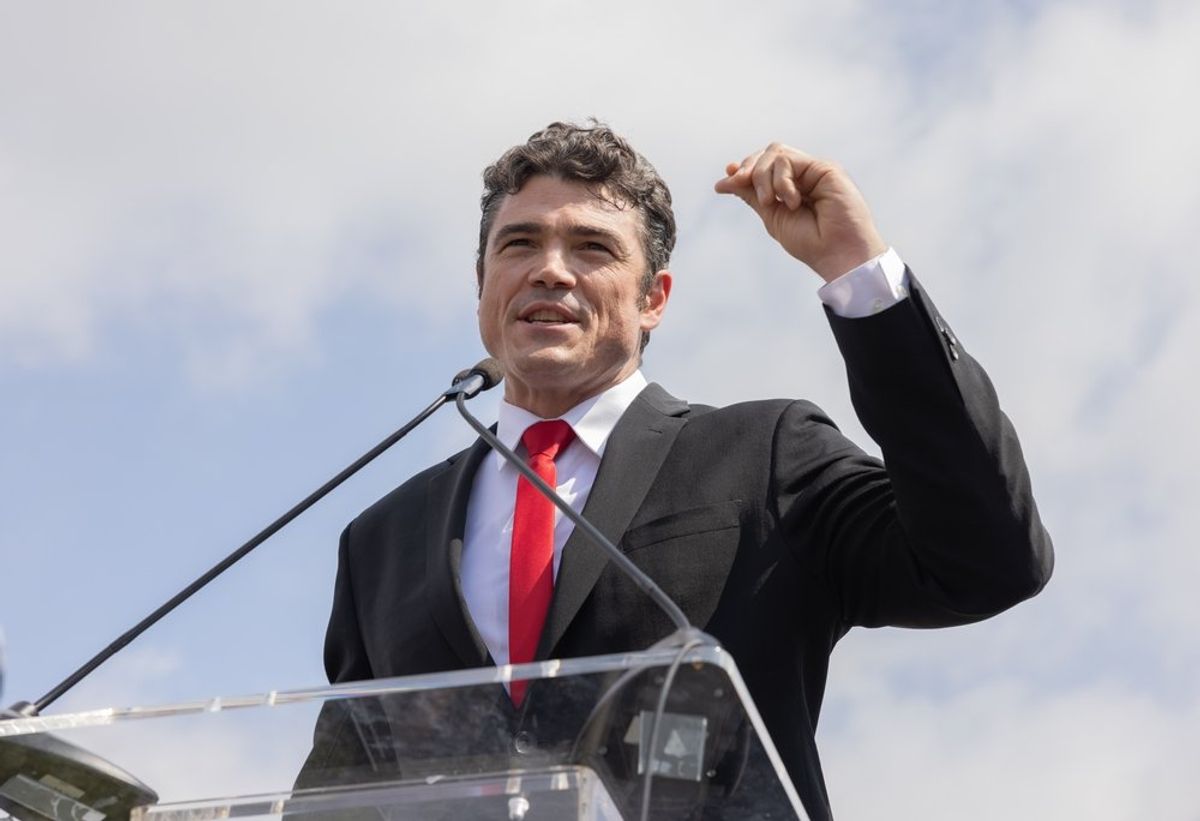
Joe Kent, Republican congressional candidate in Washington’s 3rd Congressional District, speaks at the “Justice for J6” rally near the United States Capitol. (Photo credit: Ben Von Klemperer / Shutterstock)

The group chat where Donald Trump's national security team planned military operations over the encrypted Signal app included another participant who should not have been invited.

National security adviser Mike Waltz added journalist Jeffrey Goldberg to the chat, apparently by mistake, but the Willamette Week reported that Joe Kent, the president's nominee to be director of the National Counterterrorism Center, was also part of the group despite his awaiting Senate confirmation.

“The recklessness and incompetence of how Trump’s so-called ‘best and brightest’ handled national security information is bad enough when they’re channeling the offhanded attitude of tweeners texting about their plans for spring break,” said Sen. Ron Wyden (D-OR). “But the fact they included Joe Kent in this buffoonish behavior only magnifies their dangerous sloppiness and total disregard for intelligence since he hasn’t even been confirmed by the Senate.”

Kent – a former Green Beret, failed two-time GOP congressional candidate and 2020 election denier with ties to white nationalists – has been the acting chief of staff to national intelligence director Tulsi Gabbard, according to three sources, but his role has not been publicly announced.

Goldberg, the editor in chief for The Atlantic, revealed earlier this week that he was surprised to be invited March 15 into the Signal chat by Waltz, whom he says he barely knows, and the magazine published the contents of the chats after the Trump administration insisted that information was not classified, and those show that Kent took part in the discussion.

“There is nothing time sensitive driving the timeline," Kent stated. "We’ll have the exact same options in a month.”

He added the Israelis would “take strikes” and “therefore ask us for more support to replenish whatever they use against the Houthis.”

Democrats have called on participants in the group, which was led by defense secretary Pete Hegseth and included vice president J.D. Vance, to resign because they used a commercially available third-party app to discuss top-secret military operations, and a government watchdog group has filed a lawsuit alleging the chat violated the Federal Records Act because the app automatically deletes messages.

A university, a rural town and their fight to survive Trump’s war on higher education

ProPublica
March 27, 2025

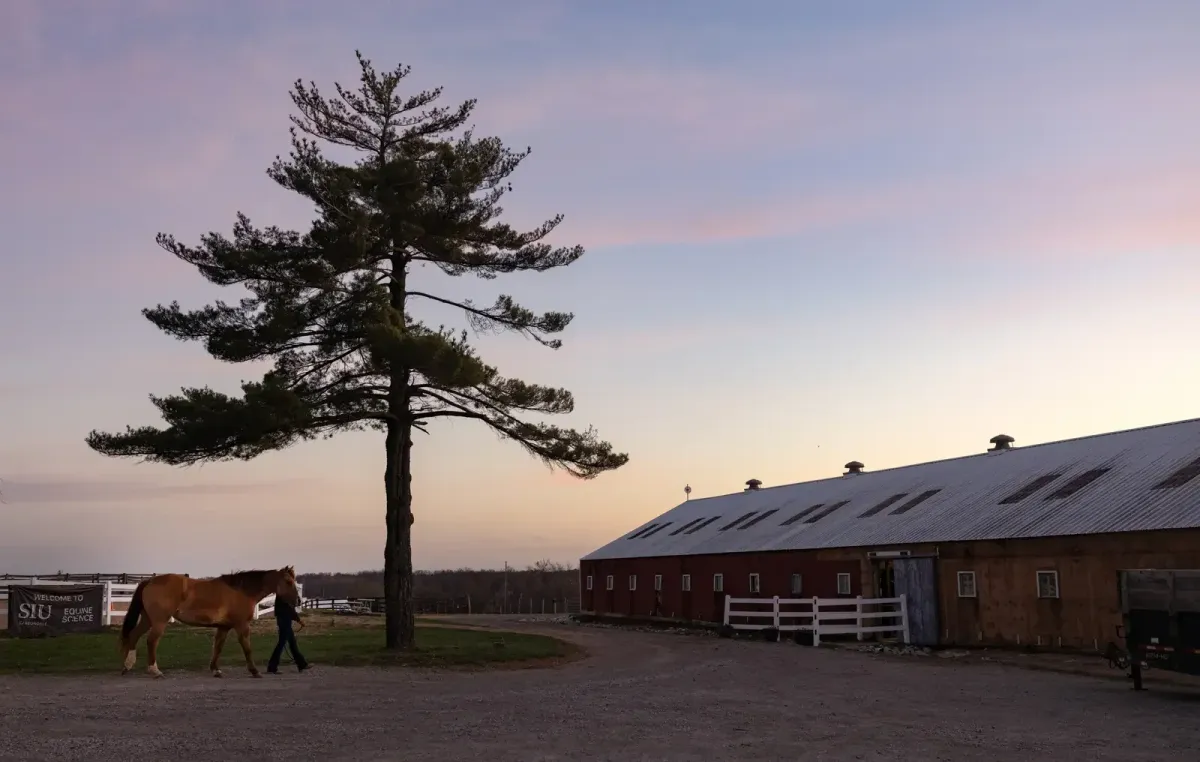
Southern Illinois University includes the 2,000-acre University Farms, part of the School of Agricultural Sciences. Students in its equine science program learn about the animals’ physiology, reproduction, genetics and nutrition, as well as how to train and care for them. Credit:Julia Rendleman for ProPublica

ProPublica is a Pulitzer Prize-winning investigative newsroom. 

CARBONDALE, Ill. — I grew up off a gravel road near a town of 60 people, a place where cows outnumber people.

Southern Illinois University, just 40 miles north, opened up my world. I saw my first concerts here, debated big ideas in giant lecture halls and shared dorms with people who looked like no one I’d ever met. Two of my most influential professors came from opposite ends of the political spectrum.

SIU was the only four-year college within reach when I enrolled here in the fall of 2000 — both in miles and cost. And it set me on the path to who I would become. That’s why I accepted a job here teaching journalism two years ago. It is still a place of opportunity, but I was struck by how fragile it had become — a fraction of its former size, grappling with relentless enrollment and budget concerns.

Now, it faces new threats. The Trump administration has proposed cuts to research and labs across the country; targeted certain schools with diversity, equity and inclusion programs; and signed an executive order to eliminate the U.S. Department of Education, which manages student loans. State officials estimate that proposed funding reductions from the National Institutes of Health alone would cost SIU about $4.5 million.

In addition, conservative activists are on the lookout for what they deem “woke” depravity at universities. This is true at SIU as well, where students received emails from at least one conservative group offering to pay them to act as informants or write articles to help “expose the liberal bias that occurs on college campuses across the nation.”

Schools like SIU, located in a region that overwhelmingly voted for President Donald Trump, may not be the primary targets of his threatened funding cuts, but they — along with the communities they serve — stand to lose the most.

There are nearly 500 regional public universities across the U.S., serving around 5 million students — about half of all undergraduates enrolled in public universities, according to the Alliance for Research on Regional Colleges at Appalachian State University. These institutions of higher learning span nearly every state, with many rooted in rural areas and communities facing high unemployment, childhood poverty and limited access to medical care. They play a vital role in lifting up struggling individuals — and in some cases, entire communities that could very easily die out without them.

While Trump’s actions have primarily targeted high-profile institutions like Columbia University and the University of Pennsylvania, some regional schools are also under investigation for alleged racial discrimination tied to DEI programs. (So far, SIU hasn’t been named in any federal probes.)

“This is definitely one of those baby-in-the-bathwater moments,” said Cecilia Orphan, an associate professor of higher education at the University of Denver, who is a lead researcher with the regional colleges alliance. While the administration has “a bone to pick with a particular type of institution,” she said, “there are all these other institutions that serve your community, your constituents.”

Regional schools like SIU tend to operate with fewer resources than their counterparts, relying on federal and state money to support both the students and the school. Greater shares of students rely on need-based federal financial aid like Pell Grants, low-cost student loans and subsidized student work programs.

And in terms of research, while attention goes to large, elite schools, hundreds of the schools spending at least $2.5 million on scientific studies — the threshold for qualifying as a research school — are regional public universities. SIU pumps $60 million annually into research. About a quarter of that money comes from the federal government.

At SIU, as at other regional universities, many research projects focus on overlooked issues in their own backyards. Here that means studying ways to help farmers yield stronger crops, to deal with invasive species in the waterways, and to deliver mental health care to remote schools.

“We are at a crossroads and facing a national crisis. It is going to have far-reaching consequences for higher education,” said Mary Louise Cashel, a clinical psychology professor at SIU whose research, which focuses on youth violence prevention among diverse populations, relies on federal funding.

Supporters of Trump’s proposed research funding cuts say schools should dip into their endowment funds to offset the recent cuts. But SIU’s $210 million endowment, almost all of it earmarked for specific purposes, is pocket change compared with Ivy League schools like Yale, which has a similar student population size but a roughly $41 billion endowment. At present, SIU faces a $9.4 million deficit, the result of declining enrollments and years of state budget cuts; there is no cushion for it to fall back on.

Intertwined with SIU’s fate is that of Carbondale, a town of 21,500 about 50 miles from the borders of Kentucky and Missouri. Since its founding in 1869, the university has turned Carbondale into a tiny cultural mecca and a powerful economic engine in an otherwise vast, rural region that has been battered by the decline of manufacturing and coal mining. Three decades ago, SIU and Carbondale felt electric: Lecture halls overflowed; local businesses thrived on the fall surge of students; The Strip, a longstanding student hangout, spilled over every weekend, music rattling windows into the early morning hours.

The “Dirty Dale,” as the town is affectionately known, still carries traces of its college-town energy, and SIU remains the largest employer in the region. But there’s an undeniable fade as the student population is now half the size it was in the 1990s. Some of the local anchor establishments along The Strip have vanished. Now, more cuts threaten to push the university, and the town that depends on it, to a breaking point.

Jeff Vaughn, a retired police officer who has owned Tres Hombres restaurant and bar in the heart of town for the past 10 years, says the school, though smaller, still has a huge impact on businesses’ bottom lines.

“It’s dollar bills coming into the city” that wouldn’t be here otherwise, he said. “It’s the people who work there, the people going to school there — every part of it brings money into the city. A basketball game happens, people come into town and they usually go out to eat before the game.”

Even before the Trump administration began its cuts in academia, it was clear to regional leaders that the school and the community needed to do more. A 2020 report by a regional economic development agency issued a warning: “The region can no longer sit idle and let SIU tackle these issues on their own.”
DEI, a Survival Strategy?

The Rev. Joseph A. Brown, a professor of Africana studies at Southern Illinois University, calls federal orders on higher education “epistolary drones.”

“Bomb, bomb, bomb, bomb,” Brown said, “and everybody’s running and ducking.”

Brown spoke by phone in late February, his oxygen tank humming in the background after a bout of pneumonia. While he was in the hospital, his inbox and phone were blowing up with panicked messages about the federal directive that schools eliminate all diversity, equity and inclusion programs.

That’s because diversity also means something more in regional public universities: Many students at SIU come from families that are poor, or barely middle class, and depend on scholarships and mentorship to succeed. Paul Frazier, SIU’s vice chancellor for anti-racism, diversity, equity and inclusion, said the way DEI has been politicized ignores what it actually does: “Poor doesn’t have a color.”

But beyond helping students, DEI is also about the school’s survival.

In 2021, SIU Chancellor Austin Lane rolled out Imagine 2030 — an ambitious blueprint for rebuilding SIU Carbondale. It called for doubling down on research, expanding student success programs and, at its core, embedding diversity into how the university operates, including in the recruitment of students, hiring and training of faculty and staff, and creation of programs that offer extra help to students struggling to keep up in their classes. It also called for growing SIU’s enrollment to 15,000.

SIU won’t reach that goal without targeted recruitment. “You can’t do that without bringing more of the largest-growing population, which is Latinx and Hispanic students,” Frazier said. “It’ll be like an old Western,” Frazier said of the risks of further eroding SIU. “It’ll be a ghost town.

SIU is offering marketing materials in Spanish for the first time in years. Similar efforts are going into reigniting passion for SIU throughout Cook County, home to Chicago; near St. Louis, and in high schools close by.

While the plan was new, the desire to bring in students from a wide range of backgrounds was not. From the start, SIU grew against the grain by embracing diversity in a region that often didn’t.

In 1874, two Black women enrolled in the school’s first class. A few years later, Alexander Lane became SIU’s first Black male student and then its first Black graduate, according to research by an SIU history professor. Born to an enslaved mother in Mississippi, Lane graduated and became a teacher, then a doctor, then a lawmaker in the state Capitol. Today, a scholarship in his name helps students gain internships in state government.

During World War II, SIU expanded to accommodate returning soldiers on the GI Bill. It designed parts of campus with accessibility in mind for wounded veterans in hopes of drawing students and boosting enrollment.

By 1991, the student body peaked at nearly 25,000. And even amid significant changes that hurt enrollment, by 2010 it still had 20,000.

In the decade that followed, SIU lost nearly 9,000 students—a nearly 45% drop. A lot happened, but one decision proved fateful: Concerns had surfaced that SIU was enrolling underprepared Black students from inner-city Chicago and failing to support them. At the same time, the university wanted to reshape its image, positioning itself as a world-class research institution. Officials targeted a different type of student and stopped recruiting as heavily in Cook County.

This era also saw a state budget crisis, and high-level leadership churned amid constant drama. (The university had seven chancellors between 2010 and 2020.) Eventually, it wasn’t about pulling away from Cook County — it was about having no direction at all. And by the end of the decade, SIU had fewer than 12,000 students. By the time the chancellor unfurled Imagine 2030, it was clear that diversity — in all its forms — was the only path forward.
Clawing Its Way Back

It’s easy to destabilize a school. But restoring it? That’s a much harder challenge.

Still, recently, it has felt like SIU has been clawing its way back. There have been two straight years of enrollment gains, driven in part by an influx of students coming from Southern Illinois and again from Cook County, as well as by growing online programs. And in late February, the Carnegie Classification of Institutions of Higher Education, which ranks universities by research spending, elevated SIU to its “very high” Research 1 status. In academic circles, it’s a big deal — putting SIU on the academic research map and bestowing it a status symbol that helps recruit top faculty and students.

“It’s a great day to be a Saluki,” SIU President Dan Mahony said, referencing SIU’s canine mascot, at a February celebration of that promotion. Then there was a pop, and confetti rained down.

But the federal financial directives and cultural wars roiling higher education are, once again, unsettling the campus and wider community. Things escalated earlier this month when SIU became a new target for the right: A social media account known for targeting LGBTQ+ people and DEI initiatives, Libs of TikTok, posted about an SIU professor who had uploaded explicit photos of himself online. The post, about an openly gay School of Medicine professor who has been publicly critical of Trump, took off, racking up more than 3 million views and hundreds of shares and comments.

“LoTT INVESTIGATION: LGBTQ professor at a Public University posts extreme p*rnographic videos of himself m*sturbating ON CAMPUS,” it read.

His employee profile quickly disappeared from the school’s website, and within days, SIU officials announced he was no longer employed by the university; he was subsequently charged with two misdemeanor counts of public indecency, and an arraignment hearing is scheduled for late April. But the controversy made SIU, not just the professor, a target. The post also took SIU to task for promoting itself on a hiring website as an “anti-racist” community. “SIU receives tens of millions of dollars from the federal government. SIU is violating Trump’s EO and should be stripped of their federal funding,” it read, tagging Elon Musk’s cost-cutting federal Department of Government Efficiency.

The irony is high: While Carbondale, where the school is located, is a solidly blue island, it is surrounded by a conservative rural region hanging in the balance.

Across the nation, universities are eliminating or rebranding DEI offices to avoid federal scrutiny. SIU isn’t backing down.

“As a university, we need to stay the course,” Phil Gilbert, chair of SIU’s Board of Trustees and a longtime federal judge appointed by George H.W. Bush, said at a recent board meeting.“I can’t think of an institution more important to diversity, equity and inclusion than an educational institution, because education is the bridge to tomorrow for everyone.


'Just a fact': Rural America readies for scourge of tooth decay under Trump policies


Brett Kelman, 
KFF Health News
March 27, 2025 


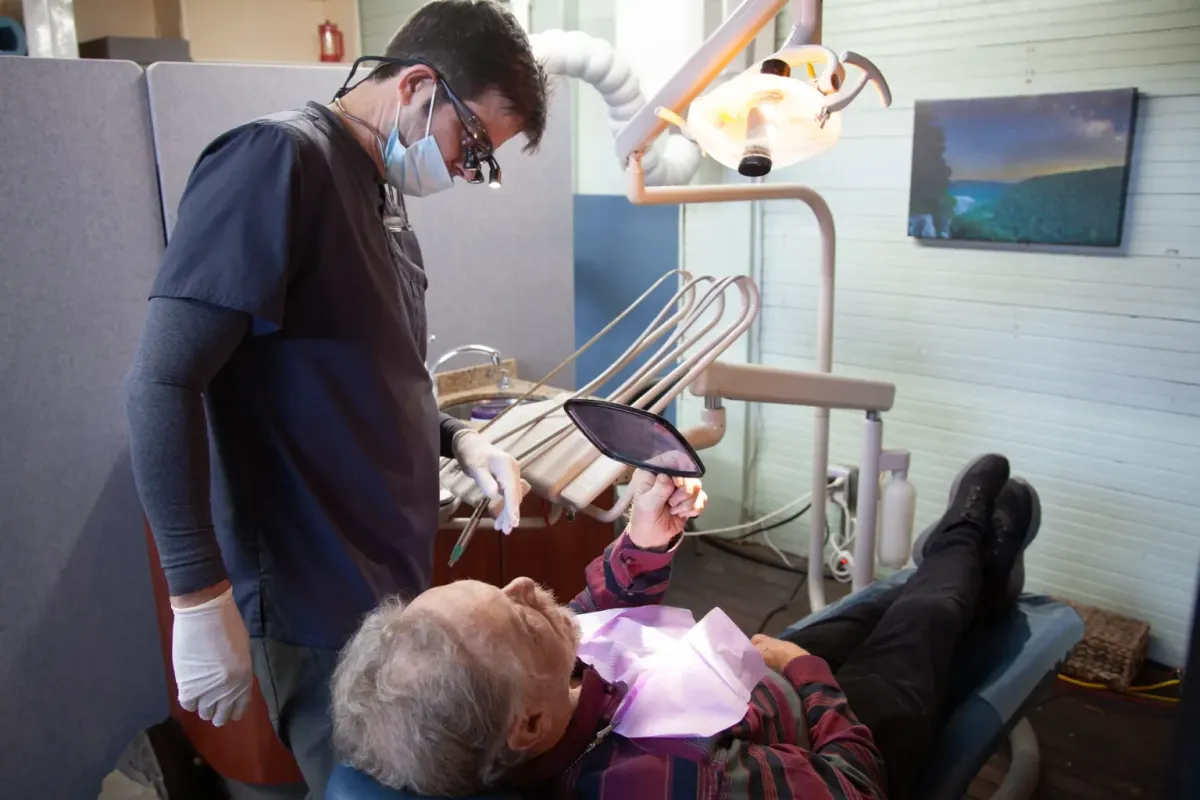
David Potts is treated by James Flanagin, the only dentist in Leslie, Arkansas. About 25 million Americans live in dentist shortage areas, according to new research from Harvard University. (Katie Adkins for KFF Health News)

In the wooded highlands of northern Arkansas, where small towns have few dentists, water officials who serve more than 20,000 people have for more than a decade openly defied state law by refusing to add fluoride to the drinking water.

For its refusal, the Ozark Mountain Regional Public Water Authority has received hundreds of state fines amounting to about $130,000, which are stuffed in a cardboard box and left unpaid, said Andy Anderson, who is opposed to fluoridation and has led the water system for nearly two decades.

This Ozark region is among hundreds of rural American communities that face a one-two punch to oral health: a dire shortage of dentists and a lack of fluoridated drinking water, which is widely viewed among dentists as one of the most effective tools to prevent tooth decay. But as the anti-fluoride movement builds unprecedented momentum, it may turn out that the Ozarks were not behind the times after all.


“We will eventually win,” Anderson said. “We will be vindicated.”

Fluoride, a naturally occurring mineral, keeps teeth strong when added to drinking water, according to the Centers for Disease Control and Prevention and the American Dental Association. But the anti-fluoride movement has been energized since a government report last summer found a possible link between lower IQ in children and consuming amounts of fluoride that are higher than what is recommended in American drinking water. Dozens of communities have decided to stop fluoridating in recent months, and state officials in Florida and Texas have urged their water systems to do the same. Utah is poised to become the first state to ban it in tap water.

Health and Human Services Secretary Robert F. Kennedy Jr., who has long espoused fringe health theories, has called fluoride an “industrial waste” and “dangerous neurotoxin” and said the Trump administration will recommend it be removed from all public drinking water.


Separately, Republican efforts to extend tax cuts and shrink federal spending may squeeze Medicaid, which could deepen existing shortages of dentists in rural areas where many residents depend on the federal insurance program for whatever dental care they can find.

Dental experts warn that the simultaneous erosion of Medicaid and fluoridation could exacerbate a crisis of rural oral health and reverse decades of progress against tooth decay, particularly for children and those who rarely see a dentist.

“If you have folks with little access to professional care and no access to water fluoridation,” said Steven Levy, a dentist and leading fluoride researcher at the University of Iowa, “then they are missing two of the big pillars of how to keep healthy for a lifetime.”


Many already are.

Overlapping ‘Dental Deserts’ and Fluoride-Free Zones

Nearly 25 million Americans live in areas without enough dentists — more than twice as many as prior estimates by the federal government — according to a recent study from Harvard University that measured U.S. “dental deserts” with more depth and precision than before.


Hawazin Elani, a Harvard dentist and epidemiologist who co-authored the study, found that many shortage areas are rural and poor, and depend heavily on Medicaid. But many dentists do not accept Medicaid because payments can be low, Elani said.

The ADA has estimated that only a third of dentists treat patients on Medicaid.

“I suspect this situation is much worse for Medicaid beneficiaries,” Elani said. “If you have Medicaid and your nearest dentists do not accept it, then you will likely have to go to the third, or fourth, or the fifth.”


The Harvard study identified over 780 counties where more than half of the residents live in a shortage area. Of those counties, at least 230 also have mostly or completely unfluoridated public drinking water, according to a KFF analysis of fluoride data published by the CDC. That means people in these areas who can’t find a dentist also do not get protection for their teeth from their tap water.

The KFF Health News analysis does not cover the entire nation because it does not include private wells and 13 states do not submit fluoride data to the CDC. But among those that do, most counties with a shortage of dentists and unfluoridated water are in the south-central U.S., in a cluster that stretches from Texas to the Florida Panhandle and up into Kansas, Missouri, and Oklahoma.

In the center of that cluster is the Ozark Mountain Regional Public Water Authority, which serves the Arkansas counties of Boone, Marion, Newton, and Searcy. It has refused to add fluoride ever since Arkansas enacted a statewide mandate in 2011. After weekly fines began in 2016, the water system unsuccessfully challenged the fluoride mandate in state court, then lost again on appeal.


Anderson, who has chaired the water system’s board since 2007, said he would like to challenge the fluoride mandate in court again and would argue the case himself if necessary. In a phone interview, Anderson said he believes that fluoride can hamper the brain and body to the point of making people “get fat and lazy.”

“So if you go out in the streets these days, walk down the streets, you’ll see lots of fat people wearing their pajamas out in public,” he said.

Nearby in the tiny, no-stoplight community of Leslie, Arkansas, which gets water from the Ozark system, the only dentist in town operates out of a one-man clinic tucked in the back of an antique store. Hand-painted lettering on the store window advertises a “pretty good dentist.”


James Flanagin, a third-generation dentist who opened this clinic three years ago, said he was drawn to Leslie by the quaint charms and friendly smiles of small-town life. But those same smiles also reveal the unmistakable consequences of refusing to fluoridate, he said.

“There is no doubt that there is more dental decay here than there would otherwise be,” he said. “You are going to have more decay if your water is not fluoridated. That’s just a fact.”

Fluoride Seen as a Great Public Health Achievement

Fluoride was first added to public water in an American city in 1945 and spread to half of the U.S. population by 1980, according to the CDC. Because of “the dramatic decline” in cavities that followed, in 1999 the CDC dubbed fluoridation as one of 10 great public health achievements of the 20th century.


Currently more than 70% of the U.S. population on public water systems get fluoridated water, with a recommended concentration of 0.7 milligrams per liter, or about three drops in a 55-gallon barrel, according to the CDC.

Fluoride is also present in modern toothpaste, mouthwash, dental varnish, and some food and drinks — like raisins, potatoes, oatmeal, coffee, and black tea. But several dental experts said these products do not reliably reach as many low-income families as drinking water, which has an additional benefit over toothpaste of strengthening children’s teeth from within as they grow.

Two recent polls have found that the largest share of Americans support fluoridation, but a sizable minority does not. Polls from Axios/Ipsos and AP-NORC found that 48% and 40% of respondents wanted to keep fluoride in public water supplies, while 29% and 26% supported its removal.


Chelsea Fosse, an expert on oral health policy at the American Academy of Pediatric Dentistry, said she worried that misguided fears of fluoride would cause many people to stop using fluoridated toothpaste and varnish just as Medicaid cuts made it harder to see a dentist.

The combination, she said, could be “devastating.”

“It will be visibly apparent what this does to the prevalence of tooth decay,” Fosse said. “If we get rid of water fluoridation, if we make Medicaid cuts, and if we don’t support providers in locating and serving the highest-need populations, I truly don’t know what we will do.”


Multiple peer-reviewed studies have shown what ending water fluoridation could look like. In the past few years, studies of cities in Alaska and Canada have shown that communities that stopped fluoridation saw significant increases in children’s cavities when compared with similar cities that did not. A 2024 study from Israel reported a “two-fold increase” in dental treatments for kids within five years after the country stopped fluoridating in 2014.

Despite the benefits of fluoridation, it has been fiercely opposed by some since its inception, said Catherine Hayes, a Harvard dental expert who advises the American Dental Association on fluoride and has studied its use for three decades.

Fluoridation was initially smeared as a communist plot against America, Hayes said, and then later fears arose of possible links to cancer, which were refuted through extensive scientific research. In the ’80s, hysteria fueled fears of fluoride causing AIDS, which was “ludicrous,” Hayes said.

More recently, the anti-fluoride movement seized on international research that suggests high levels of fluoride can hinder children’s brain development and has been boosted by high-profile legal and political victories.

Last August, a hotly debated report from the National Institutes of Health’s National Toxicology Program found “with moderate confidence” that exposure to levels of fluoride that are higher than what is present in American drinking water is associated with lower IQ in children. The report was based on an analysis of 74 studies conducted in other countries, most of which were considered “low quality” and involved exposure of at least 1.5 milligrams of fluoride per liter of water — or more than twice the U.S. recommendation — according to the program.

The following month, in a long-simmering lawsuit filed by fluoride opponents, a federal judge in California said the possible link between fluoride and lowered IQ was too risky to ignore, then ordered the federal Environmental Protection Agency to take nonspecified steps to lower that risk. The EPA started to appeal this ruling in the final days of the Biden administration, but the Trump administration could reverse course.

The EPA and Department of Justice declined to comment. The White House and Department of Health and Human Services did not respond to questions about fluoride.

Despite the National Toxicology Program’s report, Hayes said, no association has been shown to date between lowered IQ and the amount of fluoride actually present in most Americans’ water. The court ruling may prompt additional research conducted in the U.S., Hayes said, which she hoped would finally put the campaign against fluoride to rest.

“It’s one of the great mysteries of my career, what sustains it,” Hayes said. “What concerns me is that there’s some belief amongst some members of the public — and some of our policymakers — that there is some truth to this.”

Not all experts were so dismissive of the toxicology program’s report. Bruce Lanphear, a children’s health researcher at Simon Fraser University in British Columbia, published an editorial in January that said the findings should prompt health organizations “to reassess the risks and benefits of fluoride, particularly for pregnant women and infants.”

“The people who are proposing fluoridation need to now prove it’s safe,” Lanphear told NPR in January. “That’s what this study does. It shifts the burden of proof — or it should.”

Cities and States Rethink Fluoride

At least 14 states so far this year have considered or are considering bills that would lift fluoride mandates or prohibit fluoride in drinking water altogether. In February, Utah lawmakers passed the nation’s first ban, which Republican Gov. Spencer Cox told ABC4 Utah he intends to sign. And both Florida Surgeon General Joseph Ladapo and Texas Agriculture Commissioner Sid Miller have called for their respective states to end fluoridation.

“I don’t want Big Brother telling me what to do,” Miller told The Dallas Morning News in February. “Government has forced this on us for too long.”

Additionally, dozens of cities and counties have decided to stop fluoridation in the past six months — including at least 16 communities in Florida with a combined population of more than 1.6 million — according to news reports and the Fluoride Action Network, an anti-fluoride group.

Stuart Cooper, executive director of that group, said the movement’s unprecedented momentum would be further supercharged if Kennedy and the Trump administration follow through on a recommendation against fluoride.

Cooper predicted that most U.S. communities will have stopped fluoridating within years.

“I think what you are seeing in Florida, where every community is falling like dominoes, is going to now happen in the United States,” he said. “I think we’re seeing the absolute end of it.”

If Cooper’s prediction is right, Hayes said, widespread decay would be visible within years. Kids’ teeth will rot in their mouths, she said, even though “we know how to completely prevent it.”

“It’s unnecessary pain and suffering,” Hayes said. “If you go into any children’s hospital across this country, you’ll see a waiting list of kids to get into the operating room to get their teeth fixed because they have severe decay because they haven’t had access to either fluoridated water or other types of fluoride. Unfortunately, that’s just going to get worse.”
Methodology: How We Counted

This KFF Health News article identifies communities with an elevated risk of tooth decay by combining data on areas with dentist shortages and unfluoridated drinking water. Our analysis merged Harvard University research on dentist-shortage areas with large datasets on public water systems published by the U.S. Centers for Disease Control and Prevention.The Harvard research determined that nearly 25 million Americans live in dentist-shortage areas that span much of rural America. The CDC data details the populations served and fluoridation status of more than 38,000 public water systems in 37 states. We classified counties as having elevated risk of tooth decay if they met three criteria:More than half of the residents live in a dentist-shortage area identified by Harvard.The number of people receiving unfluoridated water from water systems based in that county amounts to more than half of the county’s population.The number of people receiving unfluoridated water from water systems based in that county amounts to at least half of the total population of all water systems based in that county, even if those systems reached beyond the county borders, which many do.

Our analysis identified approximately 230 counties that meet these criteria, meaning they have both a dire shortage of dentists and largely unfluoridated drinking water.

But this total is certainly an undercount. Thirteen states do not report water system data to the CDC, and the agency data does not include private wells, most of which are unfluoridated.

KFF Health News data editor Holly K. Hacker contributed to this article.

KFF Health News is a national newsroom that produces in-depth journalism about health issues and is one of the core operating programs at KFF—an independent source of health policy research, polling, and journalism. Learn more about KFF.

Subscribe to KFF Health News' free Morning Briefing.

This article first appeared on KFF Health News and is republished here under a Creative Commons license.

Hundreds of fungi species threatened with extinction: IUCN


Agence France-Presse
March 27, 2025 

A mushroom farm. (Shutterstock.)

by Benjamin LEGENDRE

Deforestation, farming and climate-fuelled fires are driving increasing threats to fungi, the lifeblood of most plants on Earth, the International Union for Conservation of Nature warned Thursday.

At least 411 fungi face extinction among the 1,300 varieties whose conservation status is well understood, according to the latest update of the IUCN's authoritative "Red List of Threatened Species".

"Fungi are the unsung heroes of life on Earth, forming the very foundation of healthy ecosystems -– yet they have long been overlooked," said IUCN director general Grethel Aguilar.


"Now it's time to turn this knowledge into action and safeguard the extraordinary fungal kingdom, whose vast underground networks sustain nature and life as we know it."

This assessment, by the global authority on the status of the natural world, concerns only a tiny fraction of the approximately 150,000 fungal species recorded to date, out of an estimated 2.5 million on Earth.

But it illustrates the strains that human activity places on this distinct individual kingdom, which is neither plant nor animal.


"While fungi mainly live hidden underground and inside wood, their loss impacts the life above ground that depends on them," said Professor Anders Dahlberg, who coordinated this latest assessment.

"It's like the microbiome in our stomachs that are key for our well-being," the Swedish mycologist told AFP, describing a "very, very old symbiosis, more than 400 million years old" which underpin all ecosystems.

"As we lose fungi, we impoverish the ecosystem services and resilience they provide, from drought and pathogen resistance in crops and trees to storing carbon in the soil."


Many fungi "are edible, used in food and drink production including fermentation" and form the basis of medicines, IUCN said.

No porcini mushrooms, chanterelles or other fungi savoured at the dinner table are among the most threatened species.

Dahlberg said most were very specific varieties and not dominant in any one particular fungal community, though some had been fairly common and widespread.

- 'Serious threats' -

Close to 300 of the threatened fungi have been pushed to the limit by the "rapid growth of agricultural and urban areas", said the IUCN, a respected international collective of scientific organisations.

"Nitrogen and ammonia run-off from fertilisers and engine pollution also threaten 91 species," it added.


This in particular poses "serious threats" to popular species in Europe like the fibrous waxcap -- Hygrocybe intermedia -- an uncommon yellow-orange mushroom found in meadows from Scandinavia to southern Italy.

Deforestation, for timber or to make way for crops, is the primary existential threat to at least 198 fungi species.

"Clear-cutting of old-growth forests is especially damaging, destroying fungi that do not have time to re-establish with rotation forestry," the IUCN said.


Iconic species like giant knight -- Tricholoma colossus -- have been classified as vulnerable due to the loss of 30 percent of old-growth pine forests across Finland, Sweden and Russia since the mid 1970s.

Global warming is also a factor, with more than 50 fungi species at risk of extinction due to changes in fire patterns in the United States "which have drastically changed forests", it said.

IUCN said that fir trees had come to dominate the high Sierra Nevada mountain woods, reducing habitat for the endangered Gastroboletus citrinobrunneus.

The latest Red List includes nearly 170,000 threatened species, of which more than 47,000 are threatened with extinction.


bl/np/klm/gil


Oct 20, 2009 ... The idiot Chaos blew Earth's dust away. ... Out in the mindless void the daemon bore me, Past the bright clusters of dimensioned space, Till ...

The narrator enters a vision of the "strange, grey world" of Yuggoth, where a victim on an altar to the Nameless One is being feasted upon by inhuman creatures.

Pakistan’s Parsi community dwindles as young migrate


By AFP
March 26, 2025


In this photograph taken on February 28, 2025, Kersi Umrigar (L), a 76-year-old, embraces his granddaughter Elisha Amra at his residence in a Karachi enclave reserved for Zoroastrians - Copyright AFP Asif HASSAN

Hussain Dada

From a gated community for her Zoroastrian faith in Pakistan’s megacity Karachi, 22-year-old Elisha Amra has waved goodbye to many friends migrating abroad as the ancient Parsi community dwindles.

Soon the film student hopes to join them — becoming one more loss to Pakistan’s ageing Zoroastrian Parsi people, a community who trace their roots back to Persian refugees from today’s Iran more than a millennium ago.

“My plan is to go abroad,” Amra said, saying she wants to study for a master’s degree in a country without the restrictions of a conservative Muslim-majority society.

“I want to be able to freely express myself”, she added.

Zoroastrianism, founded by the prophet Zarathustra, was the predominant religion of the ancient Persian empire, until the rise of Islam with the Arab conquests of the seventh century.

Once the Parsi community in Pakistan had as many as 15,000-20,000 people, said Dinshaw Behram Avari, the head of one of the most prominent Parsi families.

Today, numbers hover around 900 people in Karachi and a few dozen more elsewhere in Pakistan, according to community leaders, many staying together in compounds like where Amra lives.

She acknowledges her life is more comfortable than many in Pakistan — the Parsis are in general an affluent and highly educated community.

But says she wants to escape the daily challenges that beset the city of some 20 million people — ranging from power cuts, water shortages and patchy internet to violent street crime.

“I’d rather have a life where I feel safe, and I feel happy and satisfied,” she said.

Zubin Patel, 27, a Parsi working in e-commerce in Karachi, has seen more than two dozen Parsi friends leave Karachi for abroad in the past three years.

“More than 20-25 of my friends were living in Karachi, they all started migrating”, he said.


– Derelict homes –


That is not unique to Parsis — many young and skilled Pakistanis want to find jobs abroad to escape a country wracked with political uncertainty and security challenges, a struggling economy and woeful infrastructure.

The number of highly skilled Pakistanis who left for jobs abroad more than doubled according to the latest figures from the Pakistan Economic Survey — from 20,865 in 2022, to 45,687 in 2023.

Parsis are struggling to adjust in a fast-changing world.

The religion, considered among the oldest in the world, forbids conversion and mixed marriages are frowned upon.

“There is a better chance to find a Zoroastrian partner in Canada, Australia, UK and America than in Pakistan,” said Avari, who heads of a chain of hotels.

He points out that Parsi population of Toronto is some 10 times greater than Karachi.

Avari, 57, said that a wave of Parsis left Pakistan during the hardline military rule of Zia-ul-Haq in the 1980s, who enforced a programme of Islamisation.

Since then, Islamist violence has targeted religious minorities, and while Parsis say they have not been targeted, they remain wary.

He suggested the community’s high levels of education and Western outlook to life meant many eyed a future abroad, while for those who do stay, family size is shrinking.

“Couples are more interested today in looking after their career; they are not interested in family,” he said.

“When they do get married, they will have one child — and one child is not enough to make a positive impact on the population.”

Parsi members were among the pioneers of the shipping and hospitality industries in Karachi, and the city’s colonial-era historic district is dotted with Parsi buildings including hospitals and schools.

But as the community declines, many buildings have crumbled, with as many as half the homes in elegant tree-lined streets of the century-old Sohrab Katrak Parsi Colony lying abandoned.


– ‘Difficult decision’ –


For many among the younger generation, the only pull left keeping them in Pakistan is their ageing relatives.

Patel, the e-commerce worker, said he would leave if he could.

“It would be a difficult decision,” he said. “But if I have an opportunity which would give my parents … a healthy lifestyle, then I’d obviously go for it”.

Amra, who visits her 76-year-old grandfather almost daily, worries that her parents will be alone when she leaves.

“You have to figure out a way, eventually, to either bring them to you or come back,” she said.
F FOR FAKE NEWS

Pressing matters: White House shake-up boosts pro-Trump media


By AFP
March 27, 2025


White House Press Secretary Karoline Leavitt announced the creation of a 'new media seat' at her first briefing - Copyright AFP ROBERTO SCHMIDT

Danny KEMP

It was a moment that instantly went viral — a White House reporter asking Volodymyr Zelensky why he wasn’t wearing a suit in the Oval Office just before his huge row with Donald Trump.

But it was also the moment that defined a new media landscape under the Republican president that has given increased prominence to right-wing outlets.

From the White House to Air Force One, the traditional “pool” of reporters who follow the US president has had its biggest shake-up in decades with the addition of members of an often raucous, partisan new media.

Trump’s administration is giving unprecedented access to podcasters and influencers, many of them openly supportive of his MAGA movement. At the same time, it is bitterly attacking — and in one case barring — the legacy media.

It comes after former reality TV show host Trump embraced podcasters on his way to an extraordinary White House comeback in the 2024 election.

“I’m not hiding. I voted for Trump. I think he’s doing a good job,” said Clay Travis, founder of sports culture website Outkick, who was part of the pool on Trump’s trip to watch a wrestling match in Philadelphia last weekend.

Travis, who is also the host of a conservative radio show and podcast The Clay Travis & Buck Sexton Show, got a rare one-on-one interview with Trump on the presidential plane.

He told AFP: “People can say, OK, I don’t want to trust that guy because I know that he likes Trump and thinks he’s doing a good job. Or they can say, I do trust that guy more because he’s being honest and telling us what his perspective is.”

Travis is emblematic of the change signaled by Karoline Leavitt, who at 27 was the youngest press secretary in history at her very first briefing back in January.

Pledging to follow her boss’s “revolutionary media approach,” Leavitt unveiled a “new media seat” in the famed briefing room and threw open the press accreditation system to all comers.

The White House told AFP it had received a staggering 92,000 applications so far.

The seat has been occupied by a wide variety of people, including a journalist from pro-Trump “My Pillow” businessman Mike Lindell’s TV channel.

Less than a month later Leavitt dropped the bombshell that the White House — and not an independent association of journalists — would choose which reporters are part of the pool and add some new organizations to the rotation.


– ‘Enemy of the people’ –


Many of those have been right-wing or fringe news outlets, meaning that more mainstream organizations — including Reuters, Bloomberg and AFP — have seen their access to the president decrease.

And while Trump’s White House is packing the press corps with friendly media, it is engaging in open hostility with those that it dislikes.

Trump banned the US newswire the Associated Press from almost all presidential events after it refused to refer to the Gulf of Mexico by the new name he has decreed, the “Gulf of America.”

The president has also stepped up his targeting of individual journalists.

He branded The Atlantic magazine’s editor-in-chief a “sleazebag” this week after the journalist revealed he was accidentally included in a chat group of US officials about air strikes on Yemen.

He called the New York Times the “enemy of the people” and said outlets including CNN, MSNBC and unidentified newspapers writing critically about him were “illegal.”

On social media, he has lashed out by name at a string of well-known reporters — often women. He has even targeted one from Fox News, which is popular with conservative viewers.

Meanwhile, one of the biggest beneficiaries of the changes was the man behind the Zelensky suit question — Brian Glenn, chief White House correspondent for Real America’s Voice, a right-wing cable news channel.

Glenn, who also happens to be the boyfriend of the firebrand, ultra-Trumpist congresswoman Marjorie Taylor Greene, is not officially in the pool but gets access to many of Trump’s appearances.

“I said you were right!” Glenn exclaimed as Trump threw him a red baseball cap marked “Trump was right about everything” during one Oval Office event.

He was the only journalist to take one.


Republicans who back Trump get an earful at raucous town halls


By AFP
March 27, 2025


Republican congressman Chuck Edwards gets an earful from a constituent during a town hall meeting in Asheville, North Carolina - Copyright AFP Mandel NGAN

Booing crowds, a man jabbing his finger and swearing — it is not easy these days for some Republican members of Congress as they face their constituents in town halls dominated by rage over President Donald Trump’s radical cost-cutting policies.

And while Republican politicians risk running into loud and angry voters, Democratic lawmakers have found themselves getting berated in public for not doing enough to oppose Trump.

The ill-tempered landscape reflects the level of polarization in the United States just two months into Trump’s second presidency.

At one such town hall gathering this month in Asheville, North Carolina, congressman Chuck Edwards was jeered by people demanding he explain his support for Trump, who has fired off multiple executive orders to shrink the federal government and axed legions of civil servants.

At one point, a man in the crowd stood up, pointed his finger at Edwards and screamed, berating him over some of the many spending cuts Republicans plan to carry out in the coming months.

“You’re lying. I’m a veteran and you don’t give a fuck about me. You don’t get to take away our rights,” the man yelled. Edwards signaled for security to escort him out of the meeting.

In Wyoming, a conservative pro-Trump state in the West, Republican lawmaker Harriet Hageman also had a rough time as she met with constituents in her district.

As people whistled at her and held up hostile signs, Hageman said she got the message. According to the local outlet Wyofile, one man at the meeting then said to her, “Fuck you! That’s what we’re saying.”


– ‘Paid agitators’ –


In recent weeks, these town hall meetings — meant for lawmakers in congressional recess to confer with the people who put them in office — have become echo chambers of angst.

They have emerged as a key way for Americans to express opposition to Trump as he also enacts his anti-immigrant, anti-trans, nationalist and right-wing agenda.

At the start of his first term from 2017 to 2021, Trump faced huge demonstrations against him. But this time around, since he returned to office America’s streets have been relatively quiet.

Trump has made clear he wants to move quickly and aggressively with all his executive orders, aimed among other things at gutting or even eliminating some departments altogether as part of a small-government, laissez-faire conservative theory of governance.

So many town hall meetings are turning into anti-Trump shouting matches that Republican Party officials are telling their lawmakers to just stop holding them, US media have reported.

On Sunday, Trump embraced a theory first advanced by his press team that people who speak out against him at these meetings are “agitators” paid by the Democrats.

“The room was ‘littered’ with Radical Left Lunatics, mostly Democrats, and all they did was scream, shout and use filthy language. They were largely paid agitators, with fake signs and slogans, and were only there to make TROUBLE!” Trump wrote on his platform Truth Social, refering to the Edwards meeting.


– ‘Fighting oligarchy’ –


After Republicans put out the word to stop holding such meetings, Democrats swooped in to hold town halls of their own in Republican districts.

“While Republicans continue to run and hide from their constituents, Democrats are stepping up and meeting them face to face to ensure they know it’s Trump, Elon Musk and their MAGA minions in Congress making their lives harder,” the Democratic National Committee said Monday, referring to Trump’s ever-present billionaire advisor and the slogan “Make America Great Again.”

But Democrats are also facing angry constituents who complain their party has been too quiet and passive as Trump and Musk carry out what critics call a lawless rampage through the federal bureaucracy.

“They should try actually fighting for once. They should try to actually be the opposition party,” one man told CNN as he attended a town hall Friday called by Democratic congressman Sean Casten in Illinois.

With so many people livid with the Democratic Party and its leaders, some on the American left are trying to step up and lead the opposition to Trump.

Senator Bernie Sanders, 83, has embarked on a nationwide “fighting oligarchy tour.”

He has been joined by another prominent progressive, the much younger congresswoman Alexandria Ocasio-Cortez.

They have drawn tens of thousands of people eager to fight Trump and the Republican agenda.

It remains to be seen if this opposition energy will eat away at Trump and help the Democrats in isolated special elections on April 1.