Saturday, March 29, 2025

Environmental Justice in San Francisco

 March 28, 2025
Facebook

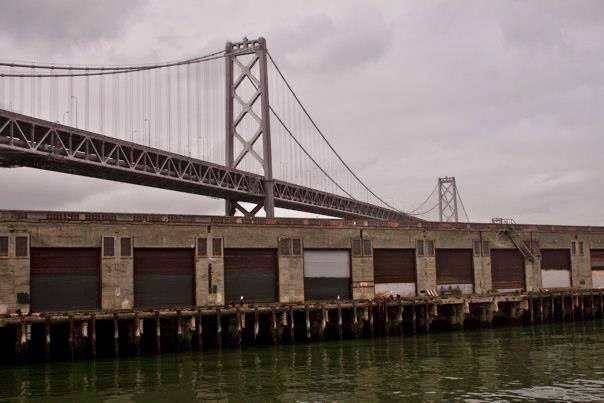
San Francisco waterfront and Bay Bridge. Photo: Jeffrey St. Clair.

On March 11, 2025, Trump’s appointed head of the Environmental Protection Agency (EPA), Lee Zeldin, announced the elimination of environmental justice offices throughout the agency. The EPA has already canceled hundreds of grants that supported marginalized, environmentally-impacted communities; meanwhile, in January, Trump rescinded an executive order signed by Bill Clinton in 1994 which directed each federal agency to “make achieving environmental justice part of its mission.”

These and other moves to end environmental justice efforts by the US government will be disastrous to already vulnerable communities, and are compounded by the rollback or elimination of environmental protections more generally. Yet they also throw into relief long-standing questions posed by environmental justice organizers and scholars: Why have state agencies consistently failed to protect marginalized communities from environmental harm, regardless of political party in power, and despite Clinton’s executive order? What are the capacities and limitations of the state in delivering the kinds of justice that vulnerable communities seek? And what other sources or forms of justice or repair do communities envision, beyond what the state has to offer?

These were some of the questions that motivated my book, Toxic City: Redevelopment and Environmental Justice in San Francisco, based on over a decade of research on environmental justice activism in the city. The book centers on the cleanup and redevelopment of a toxic military base, bordered by the industrialized, historically Black neighborhood of Bayview-Hunters Point, and traces the neighborhood’s multi-generational history of organizing around housing, health, and environmental justice. Today’s environmental justice organizations emerged from long-standing efforts to make the neighborhood a better place to live. In the 1960s, residents organized against the state violence of police killings, substandard housing, and the bulldozers and eviction notices that came with urban renewal. In subsequent decades, many of these same organizers worked to oppose toxic facilities, such as the expansion of a sewage treatment plant in the 1970s, and, in the 1990s, a proposed second power plant in the neighborhood (in the latter instance, they were successful). By the time I began my research in the 2010s, local organizers were struggling for meaningful influence on the military’s cleanup of the Hunters Point Naval Shipyard, and were increasingly concerned with the harmful levels of dust churned up by large-scale cleanup and redevelopment projects. In other words, the cleanup and redevelopment in Bayview-Hunters Point are not uncomplicated stories of progress and urban improvement. Rather, for many residents, they represent another chapter in the neighborhood’s history of state-sanctioned, racialized toxicity.

Over the course of my research, which took place during the Obama administration, I saw how state environmental and health agencies often ignored or dismissed neighborhood concerns, and how enforcement of environmental protections in the neighborhood was uneven, at best. I also witnessed how residents employed strategies both radical and reformist, sometimes working with or through, and sometimes in opposition to or beyond, state institutions—reinforcing the point made by other scholars, such as Jill Harrison, Tracey Perkins, and Erin Goodling, that environmental justice activism has always relied on a diversity of tactics.

Most often, however, state institutions were a poor fit, to put it mildly, for resident’s expansive political goals. One chapter in Toxic City looks at Bayview-Hunters Point resident’s efforts to influence the federal Superfund program and assert a measure of community control over the cleanup, or remediation, of the military shipyard. I argue that their critiques and demands (including economic redistribution, epidemiological studies, and influence over cleanup standards) outlined a project of reparative remediation (similar to concepts of reparative justice) that offered an alternative to the state’s project of risk-based, technocratic remediation. In large part these demands were made through a formal advisory committee which—when it became too contentious—the US Navy simply terminated. Even still—and despite all the barriers, and indeed walls, to participation in the Superfund process—the chapter argues we have much to learn about how residents showed up to meetings and protests year after year, for decades, continuing to articulate the harms they and their families had suffered and the forms of justice they felt they deserved.

What does all this have to do with Trump and current dismantling of the EPA? Although it may be hard to imagine now, in the almost-spring of 2025, there will be a point at which a new political administration takes up the task of rebuilding state agencies and environmental regulations. When that happens, it is important that those with radical political visions are at the table—it’s not enough to return to what a Biden-era EPA had to offer, for example. Those ideas and visions of what a state that pursues and supports environmental justice social movements might look like already exists, honed through decades of struggle, in places like Bayview-Hunters Point.


This post was originally published on the University of California Press blog and is reprinted here with permission.

Lindsey Dillon is a critical human geographer and Assistant Professor of Sociology at the University of California, Santa Cruz. She is the author of Toxic City: Redevelopment and Environmental Justice in San Francisco (University of California Press).

Trump Auto Tariffs: File Under “Victory, Pyrrhic”


 March 28, 2025
Facebook

Trans-Pacific vehicle cargo ship entering the Columbia River. Photo: Jeffrey St. Clair.

Effective April 3, US president Donald Trump announced on March 26, Americans will pay a 25% tax (above and beyond existing taxes) on imported cars.

The measure includes “temporary exemptions for auto parts” while tax vultures “sort through the complexity” of implementing Tariff Man’s latest scheme for picking your pocket, but the massive tax hike will eventually also hit US auto manufacturers who rely on imported parts for cars assembled domestically and sold as “Made In America.”

Undetermined: Whether United Auto Workers president Shawn Fain believes the workers he claims to represent are idiots, whether he’s an idiot himself, or both. “These tariffs are a major step in the right direction,” Fain says in a UAW press release, “for autoworkers and blue-collar communities across the country.”

The release refers to the misnamed North American Free Trade Agreement (NAFTA) as a “free trade disaster” that has “has devastated the working class.”

Wrong on all counts.

NAFTA isn’t “free trade,” it’s government-managed trade with slightly fewer restrictions and barriers than prior to its 1994 implementation.

Far from a “disaster” that has “devastated the working class,” both US manufacturing output and the real US median wage are far higher since NAFTA than before — the former by about 36%, the latter by about 30%.

US auto industry employment increased for nearly a decade after NAFTA’s implementation, came down with increased automation, then increased again to about the pre-NAFTA level.

In 1993, the US produced about 11.2 million motor vehicles; in 2023, 10.6 million. That may have something to do with the 100,000-mile average lifespan of a car built in 1993 versus the 200,000-mile lifespan of a car built in 2024.

Yes, many auto workers had to find new jobs once imported vehicles were allowed to compete with American-built vehicles. Yes, that made some of their lives harder and left some of them worse off, at least temporarily and sometimes long-term.

Welcome to the real world, where auto workers aren’t unique and special snowflakes who never have to change careers like the rest of us. The average American changes jobs 12 times in his or her lifetime … and the average American, including one who worked on a Ford assembly line at some point, is more prosperous now than he or she was in 1993.

Trump’s cockamamie tariff schemes might well have been intentionally tailored to undo all that.

Shawn Fain’s fantasy — hordes of new dues-paying UAW workers — will remain a fantasy.

Average car prices, adjusted for inflation, are already nearly 30% higher now than they were in 1993. Trump’s 25% tax on imports, which will result in a near-25% price increase on domestically produced cars and a massive increase in the price of used cars, will have the following result:

Americans will buy fewer cars. Not just fewer imported cars, fewer cars, period. They’ll coax longer lives out of their old beaters and look into other modes of transportation.

Those Americans, including auto workers, will also be paying more for groceries and the various necessities of life.

Enjoy your “victory” bash, Shawn. Neither you nor your union’s members will enjoy the hangover.

Thomas L. Knapp is director and senior news analyst at the William Lloyd Garrison Center for Libertarian Advocacy Journalism (thegarrisoncenter.org). He lives and works in north central Florida.


The Pleasures of Cinematic Disasters


MARCH 28, 2025
Facebook

Image by Jeremy Yep.

When I need to relax for just half an hour, I often enjoy watching films on Netflix or Amazon about disasters. Popular entertainments that I am sure no cinema connoisseur would tolerate. The James Bond films, yes!, and the Jason Bourne adventures and also those with Tom Cruise. And the three movies starring Denzel Washington, as well as movies from the special category, films with female action heroes— Atomic Blond or Salt for example. And single-shot productions, White House Down or Olympus Has Fallen, for example, are sometimes good. There are a lot of such movies, so obviously they must be popular. I wouldn’t argue for the aesthetic merits of these violent artworks, but, speaking here as a political philosopher, they strike me as worth serious attention. Why do we enjoy them?

These films are exciting right now because of what they tell about our responses to the world of real politics, by which I mean events in the news. Consider, for example, Bourne’s Mission Impossible franchise, whose basic premise is that a rogue government agency has trained this automaton, who is ready and able to kill on demand. Or Cruise’s films, there there is a whole secret bureau that acts outside the law. And of course there’s Bond, who is not really a spy, but an assassin. In Washington’s three Equalizer films, extreme close up violence seems to have put off some reviewers. But in truth, all these disaster films seem heavily dependent upon cinematic blood shedding. And upon wholesale destruction of expensive cars. It’s true, of course, that the high culture of traditional theater and opera also deals frequently in extreme violence. And thanks to novel film making technologies, it’s now possible to amplify the effect of these scenes. You only compare the fight scenes in the early Bond movies with those in the recent films starring Daniel Craig to see this dramatic difference. As in the culture at large, technology progresses while social morality does not.

In responding to these artworks, it’s useful to consider what assumptions we take for granted— what conventions we find unproblematic. We assume, for example, that the hero is invulnerable. All the many shots fired at him miss, while the few bullets he gets off inevitably hit their targets. But after all, having the hero be killed would not leave much of interest to happen in the rest of the film. Typically the lone hero overcomes all obstacles. In the Die Hard franchise he suffers dramatically, I grant, but he does triumph in the end. The vast array of surveillance operatives never have a chance against the lone Matt Damon, so fast and skilled as he is. But after all, a film about a group of secret agents is hardly likely to be as exciting as the story about one, adept, very good-looking man. With some exceptions: but the Mission Impossible films present a gang of characters. A certain suspension of disbelief is needed, especially when the female action hero can disarm any number of male bullies, sometimes without removing her high heels or getting her makeup messed up. I once read a political critique of the Bond films, which to me seemed like a bizarre waste of time; I mean, who doesn’t see that Bond is about as politically incorrect as someone can be. Nor do I see these films as what used to be called ‘camp’.

No one thinks that any mere mortal could survive as do these male or female cinematic heroes. Heroes cannot fly, except of course for Batman and Superman, who have special powers. And no one can survive the destruction of the body, as does the Terminator, but of course he’s not human at all. But what then can be said about the more general picture of our political institutions in these films? I have the disconcerting sense that right now, wildly paranoid films are barely keeping up with reality. Might the government finance costly quasi-military operatives that operate outside of the law? Why not! Alas! Sometimes I find these disaster fictions more soothing than news from actual reality. The series Designated Survivor starts with an unparalleled disaster, everyone but the secretary of housing and one senator blown up at the presidential inauguration. But then these survivors act in restrained rational ways compared with some of our present leaders. Often in disaster films the world is saved only thanks to what looks like sheer good luck. But some films of cinematic disasters, the Schwarzenegger films, for example, we get pure terror, with no happy endings. Who knows that their deep pessimism may not turn out to be truthful.

The older classic disaster film, which is a masterpiece, is Doctor Strangelove (1964). Catastrophe can be funny— that’s a challenging idea to say the least. And from what we know now, that ending wasn’t altogether impossible. None of the recent disaster films which I’ve mentioned were intentionally funny. I don’t know what to make of that. In my settled opinion: In a better country, we wouldn’t allow such films to be made. (Or, if you will, no one would want to watch them.) And were I a better person, I wouldn’t watch them. But in this country here and now cinematic disasters attract many viewers, myself amongst them. I don’t say that to suggest that watching them makes me feel guilty. I feel guilt about many things, but not from these cinematic pleasures.

I do believe that total disaster is a real possibility right now. Civil War (2024) shows an unhappy ending in graphic realistic terms. That’s why I found that film almost unwatchable, unlike these scenes of cinematic disasters. I felt the same way about Netflix’s production of The Alternate History, Man in the High Tower. But when I watch Bond save the world, yet again!, I think: real life’s not so bad, not yet! I am vaguely aware that I will not take these mere games too literally in agreeing to watch them. Like the battle scenes of my favorite painter, Nicolas Poussin, these films showing cinematic disasters are just fantasies. Now I’m just watching Zero Day. Scary! So stay tuned!

David Carrier is a philosopher who writes art criticism. His Aesthetic Theory, Abstract Art and Lawrence Carroll (Bloomsbury) and with Joachim Pissarro, Aesthetics of the Margins/ The Margins of Aesthetics: Wild Art Explained (Penn State University Press) were published in 2018. He is writing a book about the historic center of Naples, and with Pissarro he conducted a sequence of interviews with museum directors for Brooklyn Rail. He is a regular contributor to Hyperallergic.

LA REVUE GAUCHE - Left Comment: Search results for DISASTER MOVIES