It’s possible that I shall make an ass of myself. But in that case one can always get out of it with a little dialectic. I have, of course, so worded my proposition as to be right either way (K.Marx, Letter to F.Engels on the Indian Mutiny)
Capturing carbon dioxide (CO₂) from industrial emissions is crucial in the fight against climate change. But current methods, like chemical absorption, are expensive and energy-intensive. Scientists have long eyed graphene—an atom-thin, ultra-strong material—as a promising alternative for gas separation, but making large-area, efficient graphene membranes has been a challenge.
Now, a team at EPFL, led by Professor Kumar Agrawal, has developed a scalable technique to create porous graphene membranes that selectively filter CO₂ from gas mixtures. Their approach slashes production costs while improving membrane quality and performance, paving the way for real-world applications in carbon capture and beyond.
Graphene membranes are excellent at separating gases because they can be engineered with pores just the right size to let CO₂ through while blocking larger molecules like nitrogen. This makes them ideal for capturing CO₂ emissions from power plants and industrial processes. But there’s a catch: manufacturing these membranes at a meaningful scale has been difficult and costly.
Most existing methods rely on expensive copper foils to grow high-quality graphene needed for membranes and require delicate handling techniques that often introduce cracks, reducing membrane efficiency. The challenge has been to find a way to create large, high-quality graphene membranes in a cost-effective, reproducible manner.
The EPFL team tackled these challenges head-on. First, they developed a method to grow high-quality graphene on low-cost copper foils, dramatically cutting down material expenses. Then, they refined a chemical process using ozone (O₃) to etch tiny pores into the graphene, allowing for highly selective CO₂ filtration. Crucially, they improved how the gas interacts with the graphene, ensuring uniform pore formation over large areas—a key step toward industrial scalability.
To solve the issue of membrane fragility, the researchers also introduced a novel transfer technique. Instead of floating the delicate graphene film onto a support, which often leads to cracks, they designed a direct transfer process inside membrane module that eliminates handling issues and reduces failure rates to near zero.
Using their new approach, the researchers successfully created 50 cm² graphene membranes—far larger than what was previously feasible—with near-perfect integrity. The membranes demonstrated exceptional CO₂ selectivity and high gas permeance, meaning they efficiently let CO₂ through while blocking unwanted gases.
Moreover, by optimizing the oxidation process, they were able to increase the density of CO₂-selective pores, further enhancing performance. Computational simulations confirmed that improving gas flow across the membrane played a crucial role in achieving these results.
This breakthrough could change the game for carbon capture. Traditional CO₂ capture technologies rely on energy-intensive chemical processes, making them complex and expensive for widespread use. Graphene membranes, on the other hand, require no heat input, and operate using simple pressure-driven filtration, significantly reducing energy consumption.
Beyond carbon capture, this method could be applied to other gas separation needs, including hydrogen purification and oxygen production. With its scalable production process and cost-effective materials, EPFL’s innovation brings graphene membranes one step closer to commercial viability.
Reference
Jian Hao, Piotr Mieczyslaw Gebolis, Piotr Marcin Gach, Mojtaba Chevalier, Luc Sébastien Bondaz, Ceren Kocaman, Kuang-Jung Hsu, Kapil Bhorkar, Deep J. Babu, Kumar Varoon Agrawal. Scalable synthesis of CO₂-selective porous single-layer graphene membranes. Nature Chemical Engineering 11 April 2025. DOI: 10.1038/s44286-025-00203-z
A new UBC study finds that persistently isolated older Canadian women are more likely to fall short of recommended fruit and vegetable intake, leading to poorer overall diet quality.
Researchers used data from the Canadian Longitudinal Study on Aging (CLSA), which tracked 30,097 adults over six years, to examine how long-term social patterns impacted eating habits.
“We know social isolation reduces life expectancy, but most studies capture it at a single point,” said Dr. Annalijn Conklin, senior author and associate professor at UBC’s faculty of pharmaceutical sciences. “We wanted to understand the effects of persistent or changing isolation over time.”
Published in Nutrients, the study also looked at the range of social activities participants engaged in, such as visiting friends, volunteering, attending club meetings or educational events or playing sports.
Women who enjoyed a variety of these activities were more likely to maintain a healthier diet, while those who engaged in fewer, or stopped altogether, showed declines.
“Different activities provide unique social, cognitive or physical stimulation that can support better eating habits,” said Dr. Conklin. “It’s not just staying busy; it’s staying meaningfully connected across a variety of settings.”
Not all social activity is equal
Interestingly, women who became socially active after a period of isolation still experienced a decline in diet quality by the six-year mark.
“The type of activity probably matters,” said Dr. Conklin. “Some settings—like poker or bridge—may increase snacking or alcohol consumption, and so transitioning to social activity may actually end up posing dietary risks.”
“Our study is one of the first to look at how social variety plays a role in long-term well-being,” said Dr. Conklin. “Results highlight the broader social determinants of women’s health. Older women, who often play multiple roles—as a partner, a mother, a community organiser—are particularly vulnerable when those connections fade.”
As Canada’s population ages, Dr. Conklin believes these insights can help shape more effective public health initiatives.
“I hope this work informs social prescribing and care models for older adults. It’s not enough to tell people to ‘get out more.’ We need to understand which activities actually support healthy habits and tailor advice for women and men accordingly,” said Dr. Conklin.
Gender, Adverse Changes in Social Engagement and Risk of Unhealthy Eating: A Prospective Cohort Study of the Canadian Longitudinal Study on Aging (2011–2021)
Breaking the cycle: unveiling how childhood trauma fuels parenting and abuse
A study reveals emotional empathy and depression as key factors in intergenerational childhood maltreatment, offering pathways for intervention
In this study by researchers from the University of Fukui, the model used by them shows that childhood trauma affects parenting style, but this effect is mediated by affective empathy and depressive symptoms.
Credit: Yuko Kawaguchi et al. from University of Fukui, Japan
Childhood maltreatment (CM) is a complex issue that is often passed on through generations. Studies have shown that parents who were abused as children may perpetuate a similar pattern of mistreating their children, creating a vicious cycle of abuse. A key factor in perpetuating this cycle is impaired empathy in parents who grew up in abusive environments. Simply put, parental empathy, the ability to understand and respond to children’s emotions, plays a critical role in effective parenting. In fact, children who experience abuse tend to have reduced empathy by the age of eight. This lack of empathy can persist into adulthood, making it difficult for them to provide the care and emotional support their children need, thus increasing the risk of CM.
Now, a recent study led by researchers from the University of Fukui, Japan, provides new insights into this complex issue. Published in Volume 15 in Scientific Reports on March 5, 2025, the study compared mothers who engage in maltreatment with those who do not, examining how their experiences of CM impact their ability to empathize, manage stress, and raise their children. Their findings highlight possible ways to break the cycle of abuse through targeted interventions. This research was conducted by Graduate Student Yuko Kawaguchi along with Assistant Professor Shota Nishitani, Associate Professor Takashi X. Fujisawa, and Professor Akemi Tomoda from the University of Fukui, Japan.
Speaking to us about the rationale behind this study, Kawaguchi says, “We aimed to not only determine whether mothers engaged in CM in a simplistic ‘either/or’ manner but also to understand the act of maltreatment from a more nuanced, spectrum-based perspective.”
With this in mind, the researchers conducted path analysis, a statistical technique that maps and tests relationships between multiple variables. They compared 13 mothers who had experienced childhood abuse and engaged in maltreatment with a control group of 42 mothers who had no such history, examining how factors such as CM, empathy, and depressive symptoms influence parenting styles in both groups.
The researchers used a combination of psychological assessments and physiological measures to evaluate these factors. CM was assessed using the Adverse Childhood Experiences (ACE) questionnaire and the Childhood Trauma Questionnaire (CTQ). Empathy was measured using the Interpersonal Reactivity Index (IRI), depressive symptoms were evaluated with the Self-Rating Depression Scale (SDS), and parenting styles were assessed using the Parenting Scale (PS).
The analysis revealed significant differences between the two groups. Mothers who had experienced CM scored higher on measures of childhood trauma, including physical, emotional, and sexual abuse, as well as neglect. These factors, in turn, increased their risk of engaging in CM. Moreover, the researchers observed a significant positive correlation between the total CTQ score and affective empathy (IRI measure) and between affective empathy, particularly personal distress, and depressive symptoms (SDS score). These findings suggest that CM indirectly increases the risk of abusive parenting by influencing the mothers’ emotional empathy and mental health.
Furthermore, parents who experienced CM themselves were more likely to feel overwhelmed by their children’s emotions, making them prone to depressive symptoms and increasing their risk of engaging in maltreatment, thereby perpetuating the cycle of intergenerational abuse.
“Our research reveals that a history of abuse enhances emotional empathy, which in turn, influences parenting through its impact on depression,” says Kawaguchi, while elaborating on the findings. “By addressing emotional empathy and depression, we can help break this cycle and prevent maltreatment from being passed down to the next generation,” she adds. Interventions to achieve this can include mental health support to mothers who have experienced CM and parenting programs that help mothers manage their emotional empathy effectively.
Moving forward, integrating insights from this study into parenting education, child welfare, and mental health interventions can foster healthier and more positive parent-child relationships.
***
Reference
Title of original paper: Effects of childhood maltreatment on mothers’ empathy and parenting styles in intergenerational transmission
The University of Fukui is a preeminent research institution with robust undergraduate and graduate schools focusing on education, medical and science, engineering, and global and community studies. The university conducts cutting-edge research and strives to nurture human resources capable of contributing to society on the local, national, and global level.
About Yuko Kawaguchi from University of Fukui, Japan
Yuko Kawaguchi is a Graduate Student associated with the Division of Developmental Higher Brain Functions, United Graduate School of Child Development, Osaka University, Kanazawa University, Hamamatsu University School of Medicine, Chiba University, and the University of Fukui. Her research explores the intergenerational transmission of trauma, specifically examining the effects of childhood maltreatment on mothers’ empathy and parenting styles.
Funding information
All phases of this study were supported by AMED (20gk0110052, AT and SN), JSPS KAKENHI Scientific Research (A) (19H00617 and 22H00492, AT), (C) 22K02432 (SK and SN), and University of Fukui Research Farm Firm, University of Fukui (SK), a research grant from the Strategic Budget to Realize University Missions (AT), a Grant-in-Aid for Translational Research from the Life Science Innovation Center, University of Fukui (AT).
Where does the deep sea begin? Definitions vary across science and legal frameworks. For the purposes of their joint analysis, the members of the European Marine Board’s (EMB) Deep Sea and Ocean Health Working Group defined the deep sea as the water column and seabed below 200 metres. Below this point, sunlight barely penetrates the water, and the habitat changes dramatically. According to this definition, the deep sea accounts for about 90 per cent of the ocean’s volume. Its importance for ecosystems and biodiversity is therefore immense. However, pressure on these still relatively untouched areas of our planet is growing: human activities such as oil extraction, fishing, and potential seabed mining threaten deep-sea ecosystems, while climate change is already having a negative impact.
The working group of eleven researchers has now presented its findings and ten key recommendations on the deep sea and ocean health. Under the leadership of Prof. Dr Sylvia Sander, Professor of Marine Mineral Resources at GEOMAR Helmholtz Centre for Ocean Research Kiel, and Dr Christian Tamburini from the French Mediterranean Institute of Oceanography (MIO), the team produced the report, which is being launched today by the EMB in a webinar. The document emphasises, among other points, the urgent need for major investment in deep-sea research to close knowledge gaps and provide a sound scientific basis for decisions such as those concerning deep-sea mining.
“The ocean is an interconnected system stretching from the coast to the deepest depths,” says Sylvia Sander. “Of course, the deep sea cannot be considered in isolation from the photic zone or the seafloor.” Therefore, deep-sea research, use and conservation are intrinsically linked to overall ocean health.
Ten recommendations for sustainable deep-sea protection and better collaboration:
The group presents ten central measures for the sustainable protection of the deep sea:
Effectively govern human activities in the deep sea
Establish an international scientific committee for deep-sea sustainability and protection
Contribute to develop and implement deep-sea Environmental Impact Assessment methodologies
Support transdisciplinary research programs to better understand the role of the deep sea in Ocean (and human) health
Invest in long-term monitoring in the deep sea
Launch large-scale and long-term multidisciplinary natural sciences projects to increase knowledge of global deep-sea processes
Support research efforts in specific critical research fields
Enhance educational, training and research opportunities for all current and future scientists addressing their unique regional challenges
Foster the transfer of marine technology and develop training programs
Continue to promote the Findability, Accessibility, Interoperability, and Reusability (FAIR) Data Principles
The deep sea: Indispensable ecosystems for life on Earth
Until the late 19th century, the idea that life could exist in the cold, dark, high-pressure depths of the ocean was met with scepticism. It was only with the onset of deep-sea research that the first living organisms were discovered there. Today, scientists know that the deep sea hosts a remarkable diversity of life forms. Complex ecosystems can be found along continental slopes, on abyssal plains or around hydrothermal vents – so-called black smokers – many of which remain poorly understood.
Knowledge gaps: Much remains unexplored
It is estimated that around 90 percent of all organisms in the deep sea are still undescribed, and their roles within ecosystems remain largely unknown. Physical oceanography also faces considerable gaps – for example, in the modelling of deep currents that are crucial for the transport of nutrients and pollutants. In marine geochemistry, little is known about how biogeochemical cycles in the deep sea are affected by human activities such as mining. For instance, scientists still lack a clear understanding of how sediment plumes from the extraction of manganese nodules spread and what long-term impacts they may have on seabed communities. Technical challenges also remain: many modern sensors and monitoring systems are not yet adequately developed for extreme depths, making it difficult to gather essential data. Closing these knowledge gaps is urgently needed to support science-based decision-making for deep-sea governance, the scientists argue.
The challenge: Threats to the deep sea from human activities
What we do know for certain is that the ocean – of which the deep sea makes up the largest part – stores vast amounts of CO₂ and heat, helping to mitigate climate change. It plays a central role in the global carbon cycle and produces more than 50 percent of the planet’s oxygen. Disruption of these functions could have serious global consequences. Preserving these ecosystem services requires strong protective measures and sustainable use strategies. Human activities are already affecting the deep sea in many ways. Irreversible changes on human timescales – such as warming, acidification, and oxygen loss – are threatening these sensitive habitats. At the same time, overexploitation of fish stocks and non-renewable resources such as oil, gas, and minerals is jeopardising biodiversity and ecosystem functions.
Urgent action needed for ocean health
The scientists agree that 2025 is a decisive year to take action for ocean health. It is crucial to take effective measures against climate change now in order to achieve net-zero emissions by 2050. Sylvia Sander explains: “Climate change is one of the most alarming threats to our life-support systems and to life on Earth itself. Combined with biodiversity loss, it could soon lead to severe and irreversible disruptions to the entire ocean – including the deep sea and ice-covered parts of the planet.”
The role of the EU: How Europe can lead the way in protecting the deep sea
The working group emphasises that Europe should take a leading role in the international protection and sustainable governance of the deep sea, particularly through existing international agreements. “The EU could play an important role in strengthening international efforts to regulate deep-sea activities,” says Sylvia Sander. “This would require the establishment of scientific committees for deep-sea protection and the development of standardised environmental impact assessments.”
The researchers also call for secured funding of transdisciplinary research and long-term monitoring. Sylvia Sander: “We need to better understand the state of the ocean to protect and use the deep sea sustainably – where are changes becoming visible?” More research and technology are essential. “We also need to support underrepresented nations in deep-sea research and recognise science as a human right. Only then can we safeguard the health of the ocean – and the planet – for future generations.”
Publication:
Sander, S. G., Tamburini, C., Gollner, S., Guilloux, B., Pape, E., Hoving, H. J., Leroux, R., Rovere, M., Semedo, M., Danovaro, R., Narayanaswamy, B. E. (2025) Deep Sea Research and Management Needs. Muñiz Piniella, A., Kellett, P., Alexander, B., Rodriguez Perez, A., Bayo Ruiz, F., Teodosio, M. C., Heymans, J. J. [Eds.] Future Science Brief N°. 12 of the European Marine Board, Ostend, Belgium.
The European Marine Board (EMB) is a partnership of 38 organisations from 19 European countries that are active in marine research. Founded in 1995, its mission is to strengthen cooperation in European marine science and develop joint research strategies. The EMB acts as a bridge between science and policy, supports knowledge exchange, and provides recommendations to national authorities and the European Commission to advance marine research in Europe. Its members include leading oceanographic institutes, research funders, and universities with a marine focus.
Op-Ed: We Don't Know What Deep Sea Mining Would Do to the Midwater Zone
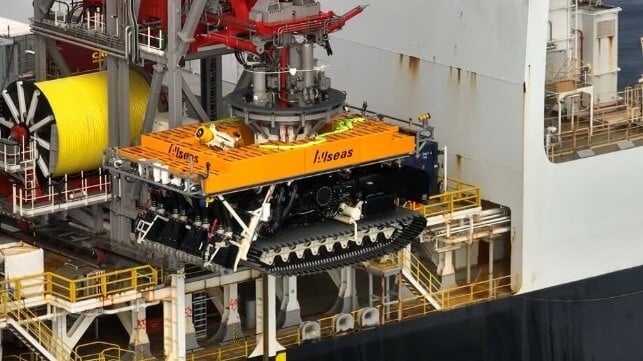
A nodule collection vessel chartered by The Metals Company out on trials (Allseas)
Picture an ocean world so deep and dark it feels like another planet – where creatures glow and life survives under crushing pressure.
This is the midwater zone, a hidden ecosystem that begins 650 feet (200 meters) below the ocean surface and sustains life across our planet. It includes the twilight zone and the midnight zone, where strange and delicate animals thrive in the near absence of sunlight. Whales and commercially valuable fish such as tuna rely on animals in this zone for food. But this unique ecosystem faces an unprecedented threat.
As the demand for electric car batteries and smartphones grows, mining companies are turning their attention to the deep sea, where precious metals such as nickel and cobalt can be found in potato-size nodules sitting on the ocean floor.
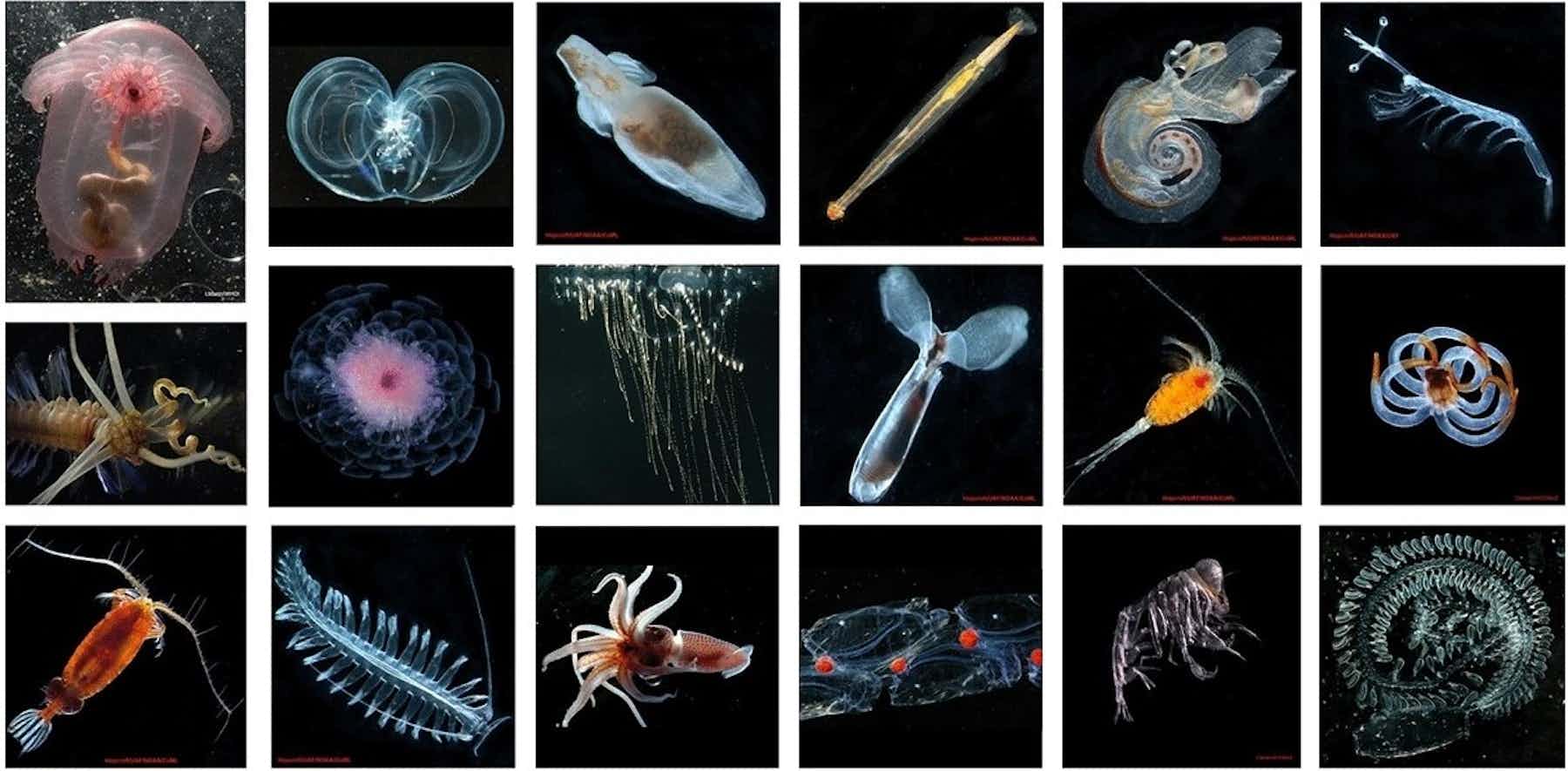
Images of marine life spotted in the midwater zone. Bucklin, et al., Marine Biology, 2021. Photos by R.R. Hopcroft and C. Clarke (University of Alaska Fairbanks) and L.P. Madin (Woods Hole Oceanographic Institution), CC BY
Deep-sea mining research and experiments over the past 40 years have shown how the removal of nodules can put seafloor creatures at risk by disrupting their habitats. However, the process can also pose a danger to what lives above it, in the midwater ecosystem. If future deep-sea mining operations release sediment plumes into the water column, as proposed, the debris could interfere with animals’ feeding, disrupt food webs and alter animals’ behaviors.
As an oceanographer studying marine life in an area of the Pacific rich in these nodules, I believe that before countries and companies rush to mine, we need to understand the risks. Is humanity willing to risk collapsing parts of an ecosystem we barely understand for resources that are important for our future?
Mining the Clarion-Clipperton Zone
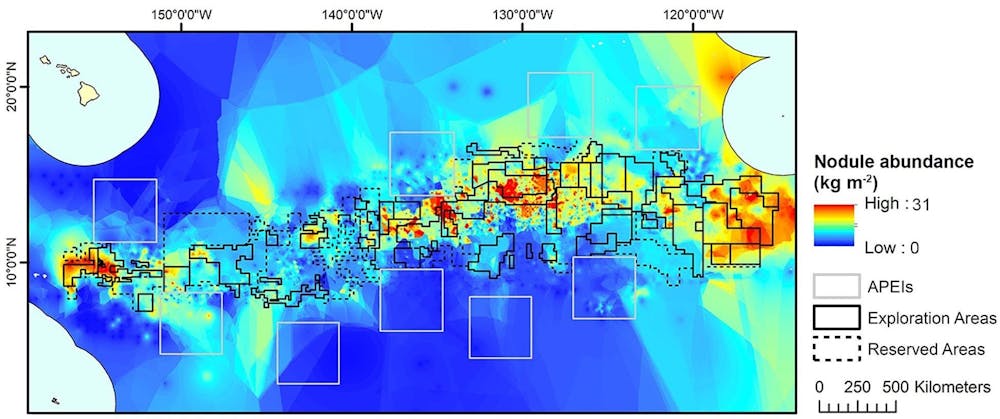
Beneath the Pacific Ocean southeast of Hawaii, a hidden treasure trove of polymetallic nodules can be found scattered across the seafloor. These nodules form as metals in seawater or sediment collect around a nucleus, such as a piece of shell or shark’s tooth. They grow at an incredibly slow rate of a few millimeters per million years. The nodules are rich in metals such as nickel, cobalt and manganese – key ingredients for batteries, smartphones, wind turbines and military hardware.
As demand for these technologies increases, mining companies are targeting this remote area, known as the Clarion-Clipperton Zone, as well as a few other zones with similar nodules around the world.
A map shows mining targets in the Clarion-Clipperton Zone, southeast of Hawaii, upper left. APEIs are protected areas. McQuaid KA, Attrill MJ, Clark MR, Cobley A, Glover AG, Smith CR and Howell KL, 2020, CC BY
So far, only test mining has been carried out. However, plans for full-scale commercial mining are rapidly advancing.
Exploratory deep-sea mining began in the 1970s, and the International Seabed Authority was established in 1994 under the United Nations Convention on the Law of the Sea to regulate it. But it was not until 2022 that The Metals Company and Nauru Ocean Resources Inc. fully tested the first integrated nodule collection system in the Clarion-Clipperton Zone.
The companies are now planning full-scale mining operations in the region. They originally said they expected to submit their application to the ISA by June 27, 2025, but The Metals Company’s CEO announced on March 27 that he was frustrated with the pace of ISA action and was negotiating with the Trump administration for approval to mine. The U.S. is one of a handful of countries that never ratified the U.N. Convention on the Law of the Sea, which authorizes the ISA.
The ISA will convene again in July 2025 to discuss critical issues such as mining regulations, guidelines and benefit-sharing mechanisms. Several countries have called for a moratorium on seabed mining until the risks are better understood.
A visualization of a deep-sea mining operation shows two sediment plumes. Source: MIT Mechanical Engineering.
The proposed mining process is invasive. Collector vehicles scrape along the ocean floor as they scoop up nodules and stir up sediments. This removes habitats used by marine organisms and threatens biodiversity, potentially causing irreversible damage to seafloor ecosystems. Once collected, the nodules are brought up with seawater and sediments through a pipe to a ship, where they’re separated from the waste.
The leftover slurry of water, sediment and crushed nodules is then dumped back into the middle of the water column, creating plumes. While the discharge depth is still under discussion, some mining operators propose releasing the waste at midwater depths, around 4,000 feet (1,200 meters).
However, there is a critical unknown: The ocean is dynamic, constantly shifting with currents, and scientists don’t fully understand how these mining plumes will behave once released into the midwater zone.
These clouds of debris could disperse over large areas, potentially harming marine life and disrupting ecosystems. Picture a volcanic eruption – not of lava, but of fine, murky sediments expanding throughout the water column, affecting everything in its path.
The midwater ecosystem at risk
As an oceanographer studying zooplankton in the Clarion-Clipperton Zone, I am concerned about the impact of deep-sea mining on this ecologically important midwater zone. This ecosystem is home to zooplankton – tiny animals that drift with ocean currents – and micronekton, which includes small fish, squid and crustaceans that rely on zooplankton for food.
Sediment plumes in the water column could harm these animals. Fine sediments could clog respiratory structures in fish and feeding structures of filter feeders. For animals that feed on suspended particles, the plumes could dilute food resources with nutritionally poor material. Additionally, by blocking light, plumes might interfere with visual cues essential for bioluminescent organisms and visual predators.
For delicate creatures such as jellyfish and siphonophores – gelatinous animals that can grow over 100 feet long – sediment accumulation can interfere with buoyancy and survival. A recent study found that jellies exposed to sediments increased their mucous production, a common stress response that is energetically expensive, and their expression of genes related to wound repair.
Additionally, noise pollution from machinery can interfere with how species communicate and navigate.
Disturbances like these have the potential to disrupt ecosystems, extending far beyond the discharge depth. Declines in zooplankton populations can harm fish and other marine animal populations that rely on them for food.
The midwater zone also plays a vital role in regulating Earth’s climate. Phytoplankton at the ocean’s surface capture atmospheric carbon, which zooplankton consume and transfer through the food chain. When zooplankton and fish respire, excrete waste, or sink after death, they contribute to carbon export to the deep ocean, where it can be sequestered for centuries. The process naturally removes planet-warming carbon dioxide from the atmosphere.
More research is needed
Despite growing interest in deep-sea mining, much of the deep ocean, particularly the midwater zone, remains poorly understood. A 2023 study in the Clarion-Clipperton Zone found that 88% to 92% of species in the region are new to science.
Current mining regulations focus primarily on the seafloor, overlooking broader ecosystem impacts. The International Seabed Authority is preparing to discuss key decisions on future seabed mining in July 2025, including rules and guidelines relating to mining waste, discharge depths and environmental protection.
These decisions could set the framework for large-scale commercial mining in ecologically important areas such as the Clarion-Clipperton Zone. Yet the consequences for marine life are not clear. Without comprehensive studies on the impact of seafloor mining techniques, the world risks making irreversible choices that could harm these fragile ecosystems.
Alexus Cazares-Nuesser is a Ph.D. candidate in biological oceanography at the University of Hawaii Manoa who studies zooplankton ecology in the Clarion-Clipperton Zone, a region of the Pacific considered for deep-sea mining for polymetallic nodules.
This article appears courtesy of The Conversation and may be found in its original form here.
The opinions expressed herein are the author's and not necessarily those of The Maritime Executive.