
Rising emissions, depleting water and vanishing land—UN scientists: AI is threatening natural resources for billions
By 2030, AI’s water use will match the needs of 1.3 billion people, while its power use will triple the annual consumption of nearly 650 million, UN University scientists warn.
Richmond Hill, Ontario, Canada (3 June 2026) – By 2030, the global data centres powering artificial intelligence are projected to consume 945 terawatt-hours of electricity. This is nearly triple the combined annual electricity use of Pakistan, Bangladesh, and Nigeria—countries collectively home to more than 650 million people. Their associated water footprint will equal the basic annual domestic water needs of all 1.3 billion people in Sub-Saharan Africa, and their land footprint will exceed 14,500 square kilometers, roughly twice the Jakarta metropolitan area, home to more than 32 million people.
These stark findings are detailed in the new report, Environmental Cost of AI's Energy Use: Carbon, Water and Land Footprints, by the United Nations University Institute for Water, Environment and Health (UNU-INWEH).Researchers have previously warned about the greenhouse gas emissions of data centers before. But the UN scientists now argue that the environmental costs of AI and data centers cannot be understood through carbon emissions alone. In their report, they quantify the carbon, water and land footprints of AI's electricity use across the globe and highlight the big differences between these footprints in the world’s 20 largest data center hubs.
"This report is not a case against artificial intelligence, a technological transformation that is improving the lives of billions of people around the world," said Professor Kaveh Madani, Director of UNU-INWEH who led the investigation team. "It is a call for using it responsibly and addressing its unintended impacts proactively to make it sustainable and equitable. We have a narrow window to ensure that the backbone of the technological revolution of our era develops within planetary limits, and that the communities who provide the critical minerals for advancing AI and the ones that host its infrastructure and e-waste are also among those who benefit from it."
A footprint that is being mismeasured
The report finds that AI's environmental cost is being systematically mismeasured. Most existing assessments focus on the carbon emissions associated with training large models. Yet every kilowatt-hour of electricity used to train or run an AI system also carries a water footprint, from cooling and power generation, and a land footprint, from energy infrastructure and supply chains. These three footprints do not move in the same direction. Switching from coal to bioenergy, for example, can on average cut the carbon footprint of electricity by 70 per cent, while increasing its water footprint more than thirty-fold and its land footprint a hundred-fold. The report concludes that "low-carbon" is not automatically "low-water" or "low-land” and warns that evaluating AI sustainability through a single metric can hide trade-offs and shift environmental burdens onto regions already facing water or land stress.
The numbers compound rapidly at the infrastructure level. Global data centres consumed an estimated 448 terawatt-hours of electricity in 2025. If treated as a nation, they would have been the world's 11th largest electricity consumer, behind France and ahead of Saudi Arabia.
"What surprised us most is how often the choices that look greenest from a carbon perspective end up worse for water or for land," said Dr. Miriam Aczel, UNU-INWEH Researcher and the lead author of the report. "If we keep judging AI sustainability by carbon alone, we might think that renewables make AI infrastructure clean but that is solving one problem while creating other problems, often in places that didn't ask for it."
Inference, efficiency, and the rebound effect
Public discussion has largely focused on the energy required to train massive models. Training GPT-3 was estimated to require 1.3 gigawatt-hours (GWh) of electricity, while estimates suggest GPT-4 consumed between 50 and 70 GWh. However, the report reveals this framing is outdated. Once a model is deployed, inference—the continuous running of models to answer everyday user prompts—becomes the dominant cost, accounting for 80 to 90 per cent of total AI energy use. ChatGPT alone is estimated to process around 2.5 billion prompts per day, translating to roughly 383 GWh of electricity per year for a single product. Offsetting associated carbon emissions would require 2.6 million tree seedlings grown for 10 years, enough trees to cover a land area the size of Manhattan. The water footprint is equivalent to the minimum annual domestic water needs of roughly 500,000 people in Sub-Saharan Africa, and the land footprint is equal to over 800 football fields.
Video generation as an emerging environmental crisis
Per-query energy varies by orders of magnitude depending on the task. A typical conversational chat query is around 200 times more energy-intensive than basic text classification. Generating a single AI image can require around 1,450 times that baseline. A single short AI-generated video can consume as much electricity as 200,000 spam classifications. Model choice, prompt length, output format and resolution all materially shape the footprint. Yet most of these decisions are taken invisibly, by product defaults the user never sees.
The report invokes the rebound effect (the Jevons Paradox), warning that as models become more efficient, they become cheaper and are used more frequently. Without explicit limits on tokens, resolution, or default output length, improvements at the per-query level are easily wiped out by sheer volume growth.
"A lot of people think that the environmental footprint of AI reduces, as technology improves and processes become more efficient. But that is only a partial picture of the overall problem," said Professor Madani, a co-author of the report who was recently named the 2026 Stockholm Water Prize Laureate. "More efficient and affordable AI and energy mean more consumption of AI, making the overall footprint far bigger than what we save through efficiency gains."
Local costs, distant benefits
The benefits and burdens of the massive global expansion of AI are highly unequal. Several site-level cases in the report show how globally distributed AI services create intense local pressures. In Ireland, data centres accounted for 21% of total metered electricity in 2023, exceeding all urban households. The national grid operator has paused new approvals around Dublin until 2028, making Ireland a concrete, documented example of what happens when AI infrastructure growth outpaces energy planning — and a preview of what other countries are heading toward.
In Querétaro, Mexico, expanding compute infrastructure is drawing on water supplies amid prolonged droughts. In Uruguay, plans for a water-intensive data centre coincided with a 2023 drought that depleted Montevideo's freshwater reserves, making tap water unsafe to drink.
Furthermore, AI infrastructure could generate up to 2.5 million tonnes of electronic waste each year by 2030, much of it processed in low-income economies with limited safeguards, while critical minerals are extracted in jurisdictions with weak environmental oversight
"If you map where data centres are getting built against where water stress is worst, you tend to see the same regions in some instances," said Dr. Mir Matin, Manager of UNU-INWEH's Geospatial, Climate and Infrastructure Analytics Programme and a co-author of the report. "And the communities living near these sites are not necessarily the ones using the AI being run there. That asymmetry is the issue. Without fixing it, we'll just be repeating older patterns, where some places carry the costs and other places capture the benefits."
The digital divide: AI computing is 90% concentrated in two countries
While the AI infrastructure comes with environmental costs, they also have major economic, security and sovereignty advantages that encourage the wealthier countries to build more data centers. Only 32 countries in the world host AI-specialised data centres, and 90% of that capacity is concentrated in 2 countries, while more than 150 countries currently have little or no access to sovereign AI compute. The report frames this not just as an economic divide but as an environmental justice issue: excluded countries bearcritical minerals extraction and e-waste burdens while the strategic benefits flow elsewhere.
"The global system building artificial intelligence must also govern it sustainably and fairly," said Professor Tshilidzi Marwala, Rector of the United Nations University and Under-Secretary-General of the United Nations. "The concentrated development of AI infrastructure in the privileged areas of the world is creating a large digital divide that poses profound challenges in the equitable development of AI. AI can certainly advance prosperity and human well-being. Whether it does so equitably is now a governance question, not a technical one."
A roadmap for sustainability and equity
The report calls for a responsible AI ecosystem built on six principles: transparency; efficiency by design; equity and environmental justice; lifecycle responsibility; global cooperation; and sustainable use. Practical recommendations are directed at each major group of stakeholders:
Governments should integrate AI infrastructure into energy planning, water governance, and land-use permitting, and require standardized environmental footprint reporting.
Industry and AI developers should treat model selection, default outputs, and routing decisions as footprint determinants, and improve efficiency by design.
Users and deploying organizations should adopt fit-for-purpose use — selecting the lightest model and lowest-energy format that meets the task.
Data center operators and utilities should treat siting and energy procurement as environmental footprint decisions and apply cumulative impact assessment.
Investors should treat electricity, carbon, water, and land footprints as material risks in AI infrastructure portfolios.
Communities and civil society should be involved early in data center siting decisions, with enforceable transparency and grievance mechanisms.
International institutions should support harmonized measurement standards, reduce incentives for cross-border burden shifting, and build compute capacity in excluded regions.
By the numbers
945 TWh | Projected global data-centre electricity demand by 2030, almost three per cent of projected world electricity use and roughly twice France's 2025 consumption (Section 2.4). |
9.3 trillion litres | Associated water footprint of 2030 data-centre electricity, equal to the basic annual domestic water needs of 1.3 billion people in Sub-Saharan Africa (Section 2.4). |
14,500 km² | Associated land footprint of 2030 data-centre electricity, about twice the Jakarta metropolitan area, home to more than 32 million people (Section 2.4). |
80 to 90% | Estimated share of total AI energy use consumed by inference, the running of deployed models, rather than by training (Chapter 3). |
2.5 billion | Estimated daily ChatGPT prompts, translating to roughly 383 GWh of electricity a year for a single product (Section 3.3). |
1,450× | Energy demand of a typical AI-generated image relative to basic text classification (Section 3.2). |
>90% | Share of AI-specialised cloud compute concentrated in two countries, the United States and China (Section 1.5). |
2.5 million tonnes | Projected annual AI-related electronic waste by 2030, equivalent to discarding nearly 250 Eiffel Towers each year (Key Points). |
REPORT IN BRIEF
AI's environmental cost is being mismeasured. Most current assessments focus on carbon emissions from training. The report argues this misses a substantial part of the picture. Every kilowatt-hour of AI electricity also carries a water footprint, from cooling and generation, and a land footprint, from infrastructure and supply chains. These three footprints can move in opposite directions, so reducing one can magnify another.
Data centres are becoming country-scale consumers of electricity, water and land. Global data-centre electricity use, estimated at 448 TWh in 2025, could reach 945 TWh by 2030. The associated water footprint is projected at 9.3 trillion litres and the associated land footprint at over 14,500 square kilometres.
Inference, not training, drives most of AI's energy use. Once a model is deployed, billions of daily user interactions consume an estimated 80 to 90 per cent of its total energy. ChatGPT alone is estimated to process around 2.5 billion prompts per day.
Per-query energy varies by orders of magnitude across tasks. A typical chat query uses around 200 times the energy of basic text classification. An AI image uses around 1,450 times. A single short AI video can match 200,000 spam classifications. Model choice and product defaults are footprint decisions.
Efficiency improvements alone will not contain growth. The report cites the rebound effect, sometimes called the Jevons Paradox, to explain why per-query gains are typically absorbed by rising volumes. Caps on tokens, resolution and output length are needed alongside efficiency.
AI compute is geographically concentrated. Only 32 countries host AI-specialised data centres. Over 90 per cent of capacity is in two countries. More than 150 countries currently lack sovereign AI compute infrastructure.
The hardware lifecycle is the next frontier. AI infrastructure could generate up to 2.5 million tonnes of electronic waste each year by 2030. Critical minerals required for AI hardware are concentrated in regions with weaker environmental oversight, often in the Global South.
A six-principle governance framework. The report proposes a "responsible AI ecosystem" built on transparency, efficiency by design, equity and environmental justice, lifecycle responsibility, global cooperation, and sustainable use, with specific responsibilities assigned across the AI ecosystem.
KEY POLICY MESSAGES
Carbon-only metrics are no longer sufficient for AI. Disclosure standards for AI's environmental impact should require carbon, water and land footprints jointly, in standardised units, across both training and inference and across jurisdictions, so that regulators and investors can compare like with like.
Inference deserves the policy attention that training has received. Because operational use accounts for the majority of AI energy demand, governance should focus on product defaults, model selection and behavioural levers, not only on the largest training runs.
Siting decisions are environmental decisions. Where data centres are built, and from which grid they draw power, determines the carbon, water and land profile of the same workload. Permitting, environmental impact assessment and community consultation should reflect this reality.
Local capacity-planning needs to keep pace with global compute geography. The Irish, Mexican and Uruguayan cases described in the report show what happens when grid and water systems are asked to absorb workloads that serve users elsewhere. Transparent mitigation and benefit-sharing should accompany expansion.
Efficiency gains require demand-side guardrails. Without resource budgets, token-per-prompt limits, default low-resolution settings and similar guardrails, efficiency improvements will be absorbed by volume growth.
AI compute access is itself an equity issue. More than 150 countries currently lack sovereign AI compute. International institutions can help by supporting capacity-building, harmonising disclosure, and reducing incentives for cross-border burden-shifting.
The full value chain requires governance. Critical-mineral extraction at the upstream end and electronic waste at the downstream end are integral to AI's footprint and currently fall on communities that capture little of the benefit.
Investors and financial institutions can move first. Treating carbon, water and land footprints as material risks in due diligence on AI infrastructure portfolios is described in the report as one of the fastest available levers.
AI within planetary limits is achievable. The report's central argument is constructive. Capability and stewardship can grow together, but only with measurement, transparency, and shared responsibility across the ecosystem.
REPORT INFORMATION
Aczel, M., Chamanara, S., Matin, M., Farsi, A., Marwala, T., Madani, K. (2026). Environmental Cost of AI's Energy Use: Carbon, Water and Land Footprints. United Nations University Institute for Water, Environment and Health (UNU-INWEH), Richmond Hill, Ontario, Canada. doi: 10.53328/INR26RMA002
ABOUT UNU-INWEH
Marking its 30th anniversary of operation in 2026, the United Nations University Institute for Water, Environment and Health (UNU-INWEH) is one of 13 institutions that make up the United Nations University (UNU), the academic arm of the UN. Known as 'The UN's Think Tank on Water', UNU-INWEH addresses critical water, environmental, and health challenges around the world. Through research, training, capacity development, and knowledge dissemination, the institute contributes to solving pressing global sustainability and human security issues of concern to the UN and its Member States. Headquartered in Richmond Hill, Ontario, UNU-INWEH has been hosted and supported by the Government of Canada since 1996. With a global mandate and extensive partnerships across UN entities, international organizations, and governments, UNU-INWEH operates through its UNU Hubs in Calgary, Hamburg, New York, Lund, and Pretoria, and an international network of affiliates.
Article Title
Environmental Cost of AI's Energy Use: Carbon, Water and Land Footprints.
(The Conversation) — Leo XIV released his first encyclical on the 135th anniversary of Rerum Novarum, the 1891 papal document on the upheavals of the Industrial Revolution.

Pope Leo XIV attends the presentation of his first encyclical, Magnifica Humanitas, at the Vatican on May 25, 2026. (AP Photo/Alessandra Tarantino)
Nathan Schneider
June 1, 2026
(The Conversation) — With the release of his encyclical letter Magnifica Humanitas on May 25, 2026, Pope Leo XIV has signaled that he wants the church to respond to artificial intelligence much as a predecessor, Pope Leo XIII, responded to upheavals during the Industrial Revolution over a century ago.
Since the first act of his papacy – choosing his name – the current pope has repeatedly invoked the earlier Leo’s 1891 encyclical Rerum Novarum. That document, which waded into the political and economic debates of the time, denounced the excesses of the Gilded Age and pointed toward a more just social order. Now, Leo XIV has used his first major statement to the world to present a new Rerum Novarum for the age of AI.
Rerum Novarum was more than just a theological text. It helped reshape economic policy around the rights of workers, serving as a spiritual foundation for European social democracy and the 1930s New Deal programs that still undergird economic life for working Americans today. It also spurred a movement of entrepreneurs to transform the economic system from within.
Understanding its influence is key to seeing the potential of Leo XIV’s encyclical.
From guilds to cooperatives in the industrial era
In his time, Leo XIII rejected both unfettered capitalism and revolutionary socialism. He invoked the medieval guilds, in which craftspeople self-organized, and asserted the rights of industrial workers to organize as well. This was a radical statement at a time when unions often faced violent suppression from employers and police.
But in contrast to communist agitators, he didn’t want to do away with private property. He argued that to bring out the best in human beings, as creatures made in the image of God, governments should “induce as many as possible of the people to become owners.”

Pope Leo XIII.
Francesco De Federicis (1853–1908) via Wikimedia Commons
This was more of a vision than a detailed plan, but Catholics in many countries started trying to figure out what the vision meant in practice.
The English writers G.K. Chesterton and Hilaire Belloc, for instance, tried to systematize his vision in a movement they called “distributism,” which proposed policies for land redistribution and a revival of guilds. In the United States, economist and Catholic priest John A. Ryan argued in favor of cooperatives – businesses that could be co-owned by workers, consumers or small-business owners.
Ryan went on to be an important adviser for the New Deal in the United States, which used cooperatives as a powerful tool for economic development through farmer co-ops, rural electric associations and the credit union system.
The spirit of Rerum Novarum continued to spread. Starting in the 1950s, the largest network of worker cooperatives in the world, the Mondragon Corporation in Spain’s Basque region, was founded by a Catholic priest. It was a direct result of Leo XIII’s encyclical.
My own career has been in its shadow. As a media scholar and a Roman Catholic – and an advocate for efforts to build cooperative tech platforms – I sometimes think of my own work as applying Rerum Novarum to the online economy. With Magnifica Humanitas, the pope appears to be making a similar argument for the age of artificial intelligence.
A tale of 2 cities
Once again, society is going through an economic upheaval: New technologies are changing the nature of work, political systems are under strain, and wealth inequality is staggering. In Magnifica Humanitas, Leo XIV argues that an intervention akin to Rerum Novarum is needed.
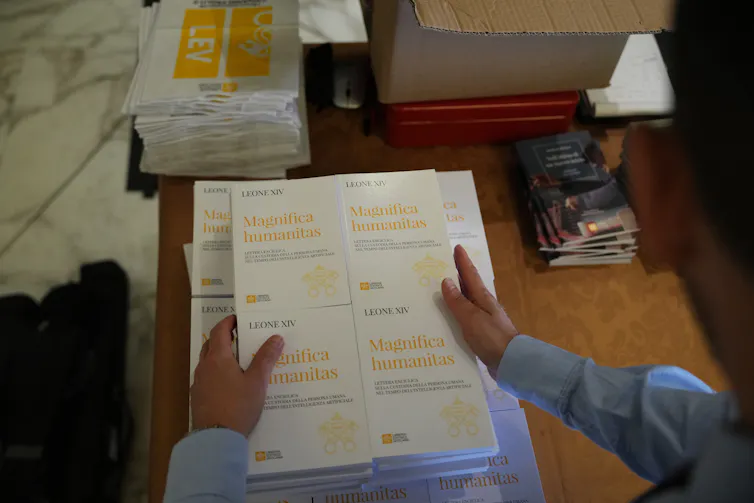
Copies of Leo XIV’s first encyclical, Magnifica Humanitas, were distributed at the Vatican on May 25, 2026.
AP Photo/Alessandra Tarantino
The guiding metaphor of Magnifica Humanitas is the choice between two biblical scenes: the Tower of Babel and the rebuilding of Jerusalem under the prophet Nehemiah.
The first is a story about the dream of a city that sets out to erect a single building as high as the heavens. Babel, as Leo XIV writes in the encyclical, is a city “built on pride and the claim to self-sufficiency.” In the biblical account, the project collapses as the world’s common language is scattered into many diverse ones.
The pope contrasts this with the story of the Hebrew prophet Nehemiah, who lived in the fifth century B.C.E., when Jews were returning from exile to a ruined Jerusalem. Nehemiah organized the city’s rebuilding through a collaborative process based on shared responsibility. While united in prayer, the city’s various families and professions could each put their distinctive marks on their work.
The current AI industry, he argues, is in danger of becoming a new Tower of Babel. Just a few companies control this powerful technology supposedly poised to transform work, politics and society for everyone.
He warns that many AI leaders are enthused by ideologies that propose to trade human limits for the godlike powers of machines. Some are even cheerfully embracing a world where human labor is no longer central to the economy. Leo also fears that human choice is becoming more removed from the execution of war.
In the face of all this, the encyclical calls on people everywhere to adopt “the pressing duty to remain profoundly human” – to be neither “spectators” nor “commentators” but to take an active role by participating in what he calls “the construction sites of history.” Some already are.
Construction sites for a different kind of AI

A few large AI companies dominate the technology and decide how people can use it, but alternative models are beginning to emerge.
greenbutterfly/iStock/Getty Images Plus
It is easy to see the emerging AI industry in Babel-like terms – a few massive tech companies build the models and provide access to them on their terms. But other paths are still possible. My colleagues and I have been documenting cases that could be the germ of a different kind of AI industry – one more aligned with what the pope is calling for.
Just as during the Industrial Revolution, a more just future begins with workers resisting against the abuses of the present. From Hollywood to Nairobi, workers have been fighting for dignity as AI changes their professions. Magnifica Humanitas stresses the importance of decent jobs to a healthy society, and workers’ demands can help identify what the future of work should look like.
Other approaches begin among AI developers themselves. In Switzerland, a collaboration between government and academia has produced Apertus, a foundational model based on fully documented designs and data sources – a far cry from the opaque and at times illegal practices of leading AI companies. Some of Apertus’ developers have created a consumer cooperative, enabling users to co-own their interface with the model.
Cooperative ownership like this allows users to tune AI experiences more intentionally toward their needs. The large U.S. farmer co-op Land O’Lakes, for example, has created AI-enabled tools that provide analysis and guidance for its members based on the data that they collectively co-own. The more nascent Transkribus in Europe is co-owned by research institutions that collectively train their AI software to transcribe texts for historical research. These kinds of systems follow Leo XIV’s call to “manage data as a common or shared good.”
It is telling that even among leading AI companies such as OpenAI and Anthropic, the founders attempted to build unusual corporate governance structures to insulate their products from profit motives. Governments could encourage more appropriate ownership designs or outright require them for high-risk industries like AI.
If Rerum Novarum is any guide, the impact of Magnifica Humanitas will depend on the creative entrepreneurship and policy experiments to put it into practice – and this work has already begun.
(Nathan Schneider, Assistant Professor of Media Studies, University of Colorado Boulder. The views expressed in this commentary do not necessarily reflect those of Religion News Service.)

The Conversation religion coverage receives support through the AP’s collaboration with The Conversation US, with funding from Lilly Endowment Inc. The Conversation is solely responsible for this content.
Sen. Bernie Sanders said his new bill would “guarantee that the trillions of dollars potentially generated by AI are used to improve the lives of all of us—not simply to make the richest people in the world even richer.”
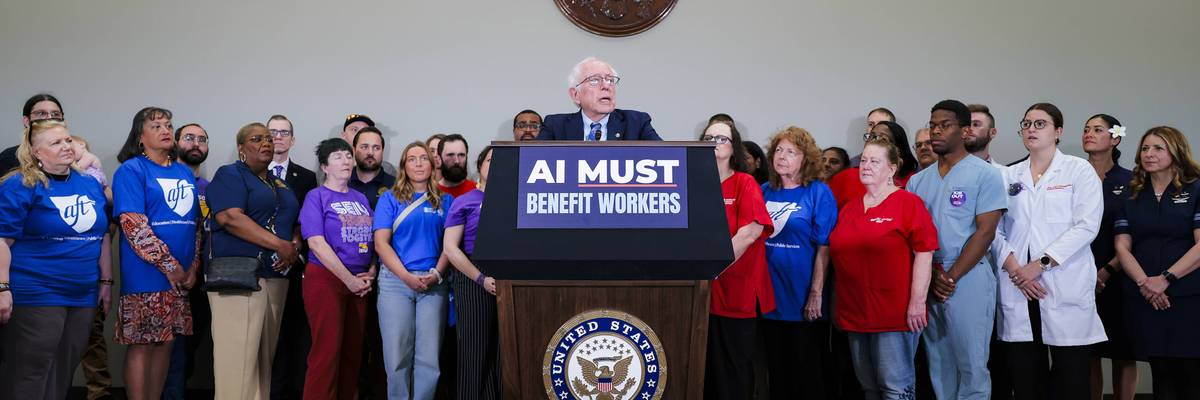
US Sen. Bernie Sanders (I-Vt.) speaks during a news conference on the impact of artificial intelligence on workers at the Hart Senate Office Building on April 16, 2026 in Washington, DC.
(Photo by Heather Diehl/Getty Images)
Jun 01, 2026
COMMON DREAMS
Sen. Bernie Sanders on Monday announced he will soon introduce legislation that would give the American public “a direct ownership stake” in the largest artificial intelligence companies in the US by establishing a sovereign wealth fund, which would ensure everyone benefits from the rapidly advancing technology.
Sanders (I-Vt.) wrote in a New York Times op-ed that his American AI Sovereign Wealth Fund Act would create the new fund by imposing a one-time, 50% tax on the stock of OpenAI, Anthropic, and other AI behemoths. The sovereign wealth fund, a government-owned investment vehicle, would both “give the public a direct role in determining the future of this technology” and “guarantee that the trillions of dollars potentially generated by AI are used to improve the lives of all of us—not simply to make the richest people in the world even richer.”
The senator emphasized that “this is not an original idea,” noting that scholars and even leading AI companies have proposed some version of a public wealth fund to broadly distribute AI-related gains. Sanders also observed that Norway and Alaska have sovereign wealth funds, and that “even President [Donald] Trump, in an executive order, has proposed establishing an American sovereign wealth fund.”
“I recognize that for the government to have a major stake in a company, particularly one for which AI is only part of its business, is complicated,” Sanders wrote. “More details—including the specific spending priorities and the mechanics of implementation—will be included in the legislation I unveil in the coming weeks.”
“But the principle is simple: When a public resource generates wealth, the public should share in that wealth. AI is being built on a public resource far more valuable than oil: the accumulated knowledge, creativity, and labor of mankind,” he continued. “The future of AI and the fate of humanity must not be decided behind closed doors in Silicon Valley. It must not be dictated by billionaires seeking to maximize their power and profit. It must be decided by workers, parents, teachers, artists, scientists, communities and the American people. It’s our future. We must decide it.”
Sanders has been among the most prominent voices expressing grave concerns about the potential for AI to turbocharge inequality and spark catastrophic unemployment. Last year, Sanders’ office released a report warning that AI could eliminate nearly 100 million US jobs over the next decade.
“Corporations are already using AI to cut jobs. Amazon, Walmart, UnitedHealth Group, JPMorgan Chase, and other companies are openly telling investors that AI will allow them to slash payrolls—even as they post tens of billions in profits and reward CEOs with pay packages of $25 million, $35 million or more,” the report said.
Sanders’ call for an AI sovereign wealth fund comes days after a pair of progressive lawmakers—Sen. Elizabeth Warren (D-Mass.) and Rep. Greg Casar (D-Texas)—separately called for new taxes on AI to fund jobs initiatives, universal healthcare, and other programs to prevent the kinds of large-scale economic displacement that experts and corporate executives say is looming.
“Taxing AI is one way we make sure the winnings from AI benefit all Americans, rather than channeling them only to the wealthy few,” Warren wrote in TIME last week. “If millions of people lose their jobs to AI, we’ll need the funds to deliver universal healthcare so those workers are not bankrupted by a visit to the doctor.”
Self-regulation is key to lowering overconfidence in Artificial Intelligence
An EHU study links university students’ capacity to self-regulate with overreliance on generative AI
image:
Credit: Héctor Galindo-Domínguez , assistant lecturer in the Department of Didactics and School Organization at the EHU’s Faculty of Education and Sport.
Photo: Nuria González. EHU
view moreCredit: Nuria González. EHU
The rapid emergence of generative AI in higher education has raised concerns about students’ reliance on the use of these tools for academic and personal tasks. Although generative AI can boost productivity and creativity, key learning skills may be undermined by overreliance on it.
A study conducted by researchers in the EHU’s ESCUTIC (School, Curriculum, and ICT) research group and published in the prestigious international journal Computers in Human Behavior shows that overconfidence in the responses provided by generative AI tools such as ChatGPT largely depends on a specific skill: self-regulation, in other words, each student’s ability to organise him-/herself, make an effort and reflect on what he/she is doing. In this context, “self-regulation can function as a crucial protective factor”, explained Héctor Galindo-Dominguez, lead researcher in this study and lecturer in the EHU’s department of Didactics and School Organization.
The study examined the relationship between self-regulation and overconfidence in generative AI among 404 students, with an average age of 20, enrolled on education-related degree programmes at the EHU.
The study identified a significant paradox. The students who have a clearer idea of their goals tend to place greater trust in artificial intelligence. “This isn’t due to a lack of ability, quite the opposite, in fact; they use AI as a tool to speed up their progress,” explained Dr Galindo-Domínguez. However, this increased use could open the door to a significant risk: placing too much trust in AI responses without questioning them.
Is it a good idea to use AI tools in education?
The study shows that not all dimensions of self-regulation work in the same way. “Having clear objectives (one of the factors in self-regulation) leads to greater confidence in the responses provided by AI.” However, other factors in self-regulation, such as perseverance and the ability to learn from mistakes, act as a check on this overreliance. The researcher maintained that “when these skills are present, students continue to think, review and correct their work, rather than automatically accepting what technology provides”.
According to Dr Galindo-Domínguez, this point is key because it ties in with another phenomenon identified in the research: overconfidence in artificial intelligence. “Some students tend to assume that AI-generated answers are correct or adequate, even when they are not. This overconfidence can lead to delegating important decisions or to reducing one’s own effort, which directly affects learning.”
However, the results also qualify the extent of the problem. The results of the study show that most students do not use artificial intelligence extensively, but rather on an ad hoc basis, mainly to look for information or resolve queries. “Only a smaller group displays more frequent use, which could indicate a greater degree of dependence,” he said.
Based on these findings, the study sets out a clear idea: “The debate should not be about whether artificial intelligence is good or bad, but about what kind of students use it and how they do so.” When key self-regulatory factors are lacking, the risk of overconfidence and the passive use of generative AI increases significantly. “By contrast, when these key self-regulation skills are present (such as perseverance, decision-making and the ability to learn from mistakes and learning), AI can become a useful aid without replacing independent thought,” he suggested.
The practical implications are clear. Rather than banning or restricting these tools, it is more effective to teach students how to use them judiciously. This means, for example, encouraging them to cross-check information, to explain their decisions, and not to accept answers at face value without checking them. It also involves designing activities that encourage students to reflect on the process, rather than simply presenting a final result.
Additional information
Dr Héctor Galindo-Domínguez is an assistant lecturer in the Department of Didactics and School Organization at the EHU’s Faculty of Education and Sport. The following EHU researchers also participated: Nahia Delgado from the Department of Didactics and School Organisation, Martín Sainz de la Maza from the Department of Developmental and Educational Psychology, and José María Etxabe from the Department of Didactics of Mathematics, Experimental and Social Sciences.
Bibliographic reference
Héctor Galindo-Domínguez, Nahia Delgado, Martín Sainz de la Maza, José María Etxabe
Self-regulation and overreliance on artificial intelligence: Unpacking a paradox through a mixed-methods study in higher education
DOI: 10.1016/j.chb.2026.108985
Journal
Computers in Human Behavior
Article Title
Self-regulation and overreliance on artificial intelligence: Unpacking a paradox through a mixed-methods study in higher education
Armed with AI, FAU researchers identify prey from predator crunching sounds
video:
Whitespotted eagle rays crunch clams in the lab and in the wild. These sounds helped FAU researchers develop an AI-powered system that can detect and classify shell-crushing feeding events underwater.
view moreCredit: FAU Harbor Branch, Cat Nickell and Conrad Pfalzgraf
Interactions between hard-shelled marine mollusks such as clams and snails and their predators play a critical but largely unseen role in shaping coastal ecosystems. These organisms help stabilize shorelines, filter water and support biodiversity, making them foundational to coastal health. Yet they are increasingly threatened by ocean acidification and expanding populations of mobile shell-crushing predators.
What makes these interactions especially difficult to study is not just where they occur, but how quickly they unfold. Many predators, including highly mobile rays, forage in subtidal environments where direct observation is limited. As a result, a key ecological process – mollusk consumption by predators – has remained difficult to quantify in natural systems, despite its importance being recognized for decades.
Fortunately, these interactions are not silent. Every crushed clam or shattered snail shell produces a distinct acoustic signature – a brief but information-rich sound that can be recorded underwater. Passive acoustic monitoring and autonomous recording systems enable researchers to “listen” to these feeding events as they occur in real time. However, the challenge is how to reliably extract it from vast and noisy underwater recordings.
Florida Atlantic University researchers have developed a machine learning framework that improves the detection and classification of shell-crushing sounds in underwater recordings. Using controlled tank experiments with whitespotted eagle rays (Aetobatus narinari) – highly mobile predators known for cracking hard shells – the team trained the system to identify these feeding events more accurately amid ocean noise.
Rather than relying on a single method, the system uses a multi-step approach. It first scans large datasets to flag potential shell-crushing sounds based on their acoustic patterns, then applies a second layer of machine learning to reduce false detections by separating real feeding events from background noise.
Once validated, the system goes further by classifying the type of prey being consumed using both traditional and deep learning methods, including random forests, long short-term memory networks, and convolutional neural networks (CNNs), each trained to recognize subtle patterns in acoustic structure.
A key finding of the study, published in Ecological Informatics, was that highly complex AI models were not always necessary for strong performance. Simpler methods using gammatone-based features were nearly as effective as advanced deep learning systems at detecting shell-crushing sounds, while requiring far less computing power. The results suggest these streamlined approaches could make long-term underwater monitoring more practical, scalable and cost-effective in real marine environments.
“Shell-crushing sounds contain a surprising amount of ecological information about predator-prey interactions and feeding behavior,” said Laurent Chérubin, Ph.D., corresponding author and a research professor at FAU’s Harbor Branch Oceanographic Institute. “This work shows how passive acoustic monitoring can be used not only to detect these events, but also to better understand how marine predators interact with their environment in places that are otherwise difficult to observe.”
By detecting and classifying the sounds predators make while consuming different types of prey, the approach brings scientists closer to remotely measuring shellfish predation rates in natural marine environments.
“From an ecological perspective, this technology opens the door to quantifying predator impacts in a way we’ve never been able to do before,” said Matt Ajemian, Ph.D., senior author, an associate research professor and director of the Fisheries Ecology and Conservation Lab (FEC) at FAU Harbor Branch. “Being able to remotely detect and classify feeding events means we can begin measuring predation pressure on mollusk populations at ecosystem scales, not just in isolated observations. That represents a major step forward for coastal ecology and conservation.”
Importantly, the system was not only effective in controlled tank conditions but also demonstrated strong performance in field settings using both animal-borne acoustic tags and fixed underwater recorders. Even when trained exclusively on tank data, the model successfully detected feeding events and identified associated prey types in natural environments with high reliability.
“Beyond simple detection, our approach also provides insight into predator behavior itself,” said Ajemian. “Acoustic patterns reflected not only prey type, but also handling strategies and processing time, raising the possibility that researchers may eventually be able to distinguish individual feeding behaviors and even prey size classes based on these sounds.”
As shellfish aquaculture and coastal restoration expand, understanding predator interactions with mollusk populations is increasingly important for conservation and management. Because the prey examined ranged from buried filter feeders to more mobile species, the system could help track mollusk mortality across a wide range of coastal habitats.
“Our findings point to a clear path for scalable, real-time acoustic monitoring of marine ecosystems,” said first author Ali Ibrahim, Ph.D., an assistant professor of teaching in FAU’s College of Engineering and Computer Science. “The computational efficiency of GTCC-based models makes them especially well-suited for autonomous underwater platforms with limited power and processing capacity, enabling long-term monitoring in remote marine environments where high-performance computing is not practical.”
Study co-authors are Cecilia M. Hampton, a Ph.D. student in the FEC lab at FAU Harbor Branch; Breanna C. DeGroot, State College of Florida; and Hanqi Zhaung, Ph.D., associate dean and professor in FAU’s Department of Electrical Engineering and Computer Science.
This research was supported by the Specialty License Plate fund administered by the Harbor Branch Oceanographic Institute Foundation and a National Science Foundation grant.
- FAU -
About Florida Atlantic University:
Florida Atlantic University serves more than 32,000 undergraduate and graduate students across six campuses along Florida’s Southeast coast. Recognized as one of only 13 institutions nationwide to achieve three Carnegie Foundation designations - R1: Very High Research Spending and Doctorate Production,” “Opportunity College and University,” and Carnegie Community Engagement Classification - FAU stands at the intersection of academic excellence and social mobility. Ranked among the Top 100 Public Universities by U.S. News & World Report, FAU is also nationally recognized as a Top 25 Best-In-Class College and cited by Washington Monthly as “one of the country’s most effective engines of upward mobility.” To learn more, visit www.fau.edu.
A whitespotted eagle ray feeds on hard-shelled mollusks in its natural habitat. The distinctive crunching sounds produced during feeding are helping FAU researchers develop AI-powered tools to monitor predator-prey interactions beneath the ocean surface
A whitespotted eagle ray feeds on hard-shelled mollusks in its natural habitat. The distinctive crunching sounds produced during feeding are helping FAU researchers develop AI-powered tools to monitor predator-prey interactions beneath the ocean surface.
Credit
Cat Nickell
A whitespotted eagle ray feeds on hard-shelled mollusks in a tank.
Credit
FAU Harbor Branch
Journal
Ecological Informatics
Method of Research
Computational simulation/modeling
Subject of Research
Animals
Article Title
Evaluation of a signal processing and machine learning framework to detect and classify shell-crushing predation events
MIT researchers teach AI models to interpret charts
The new ChartNet training dataset could improve the accuracy of vision-language models that help analyze business trends or interpret scientific figures
image:
“We developed ChartNet to be a one-stop shop for chart understanding, covering basically anything that an AI model and a practitioner who is training that model might need,” says Jovana Kondic, an MIT electrical engineering and computer science (EECS) graduate student and lead author of a paper on ChartNet.
view more
Credit: Courtesy of Jovana Kondic
To accelerate and refine decision-making in a fast-paced, global marketplace, enterprises may deploy generative artificial intelligence models to help summarize and interpret the charts that often fill market summaries and financial reports.
But even the latest vision-language models sometimes struggle with this task, since it requires a model to integrate visual, numerical, and linguistic understanding. A company that invests in a state-of-the-art model might still receive inaccurate or incomplete information.
To fill this performance gap, researchers from MIT and the MIT-IBM Computing Research Lab developed a multifaceted resource for AI users that is specifically designed to teach vision-language models (VLMs) how to effectively interpret charts.
They used a novel data generation method to build a state-of-the-art dataset that includes more than a million varied charts. The dataset also encodes many visual, linguistic, and numerical components of each chart image, which enable models to robustly reason about the information in a chart.
The researchers used this dataset, called ChartNet, to train a series of open-source VLMs. Many of these smaller models significantly outperformed orders of magnitude larger, commercial models on tasks like data extraction and chart summarization.
By enabling open-source models to outperform their commercial counterparts, ChartNet could allow small firms with limited budgets to more readily utilize AI. The open-source dataset can be used to improve the capabilities of AI models for tasks like business trend analysis and scientific figure interpretation.
“We developed ChartNet to be a one-stop shop for chart understanding, covering basically anything that an AI model and a practitioner who is training that model might need. We hope our work motivates researchers to achieve state-of-the-art performance with smaller models that don’t require infinite amounts of computation,” says Jovana Kondic, an MIT electrical engineering and computer science (EECS) graduate student and lead author of a paper on ChartNet.
She is joined on the paper by many co-authors from MIT, the MIT-IBM Computing Research Lab, and IBM Research, including Pengyuan Li, a research staff member at IBM Research; Dhiraj Joshi, a senior scientist at IBM Research; Isaac Sanchez, a software engineer at IBM Research; Aude Oliva, director of strategic industry engagement at the MIT Schwarzman College of Computing, MIT director of the MIT-IBM Computing Research Lab, and a senior research scientist in the Computer Science and Artificial Intelligence Laboratory (CSAIL); and Rogerio Feris, a principal scientist and manager at the MIT-IBM Computing Research Lab. The research will be presented at IEEE Computer Vision and Pattern Recognition Conference.
A dataset bottleneck
Researchers have made great strides developing generative AI models that excel at natural language processing and reasoning about natural images. But less work has focused on interpreting complex multimodal data contained within charts, Kondic says.
Yet for large and small businesses in nearly every industry, chart understanding is a critical task.
“The finance industry thrives on charts. If vision-language models can extract information out of charts, like descriptions of trends, that facilitates a lot of workflows that happen downstream,” Joshi says.
The lack of high-quality training data is a major bottleneck holding back the development of VLMs that can accurately interpret charts. Many datasets contain limited chart images pulled from the internet and often lack the necessary scale and additional information to help a model interpret the underlying data.
“A vision-language model, unlike our brains, may need to see thousands of examples during training to reliably recognize something as a line chart,” Kondic says.
The researchers sought to overcome those shortcomings by generating synthetic data. Synthetic data are artificially generated by algorithms to mimic the statistical properties of actual data.
The ChartNet dataset holds more a million high-quality chart images, along with the corresponding code used to generate each chart, a textual description, and a table that contains its numerical information. In addition, each datapoint includes question-and-answer pairs to teach the model how to correctly answer questions about the chart image.
“These additional modes of data guide the model to connect and align the different pieces of information that the chart image encodes,” Kondic says.
Data generation
To build ChartNet, the researchers created a two-step, synthetic data generation pipeline.
First, their automated system translates any pre-existing set of chart images into code. Then the system iteratively augments that code to change different aspects of each chart, such as chart type, data values, topic, colors, etc.
“We can start from a single chart that we use as a seed and come up with hundreds of augmentations of it. This is how we were able to build a dataset with more than a million diverse images,” Kondic explains.
They also incorporated an automated quality check process to ensure the synthetic data are high quality. This process verifies that the code is executable and rendered chart images are accurate and clean.
“We don’t want to just be generating diverse samples. We also want the information to be presented in a meaningful way,” she says.
ChartNet also includes a selection of chart datapoints annotated by human experts. This provides access to additional types of charts and supporting data that carry validity guarantees.
A practitioner could use the annotated data to fine-tune an existing VLM, further boosting performance for a specific application, Joshi adds.
The researchers tested ChartNet by training IBM’s Granite Vision series of models as well as several other open-source models of various sizes and evaluating them on various chart interpretation tasks. The dataset improved the accuracy of all models in chart reconstruction, chart data extraction, chart summarization, and chart question answering.
With ChartNet, small open-source models consistently outperformed much larger commercial models.
“A lot of prior training datasets only focused on answering simple questions about a chart. We tried to go beyond that with ChartNet by generating data that support all aspects of robust chart understanding,” Kondic says.
In the future, the researchers plan to continue expanding ChartNet by incorporating data with added levels of complexity. They also want to draw on feedback from the research community.
This research was funded, in part, by the MIT-IBM Computing Research Lab.
###
Written by Adam Zewe, MIT News
Paper: "ChartNet: A Million-Scale, High-Quality Multimodal Dataset for Robust Chart Understanding"
https://arxiv.org/pdf/2603.27064
Article Title
"ChartNet: A Million-Scale, High-Quality Multimodal Dataset for Robust Chart Understanding"
Boston University joins National Science Foundation institute pushing frontiers of physics and AI
AI Institute for Artificial Intelligence and Fundamental Interactions includes MIT, Harvard, and other leading local universities
Boston University has joined a major National Science Foundation (NSF)–funded effort that’s using artificial intelligence (AI) to unlock new discoveries in physics—potentially bringing fresh insights to research topics that span nature’s smallest particles to the universe’s largest-scale cosmic phenomena.
The NSF AI Institute for Artificial Intelligence and Fundamental Interactions (IAIFI) also aims to use physics principles to, in turn, develop new approaches to AI. BU will be a core IAIFI member, teaming up with Massachusetts Institute of Technology (MIT), Harvard University, Northeastern University, and Tufts University. The NSF recently gave IAIFI a funding boost, which will support its work for the next five years.
BU’s participation in the institute, which was founded in 2020, will be led by Siddharth Mishra-Sharma, a BU Faculty of Computing & Data Sciences assistant professor of computing and data sciences. Before joining BU last fall, he was a fellow at the institute and a member of the technical staff at AI company Anthropic, where he remains part-time.
“For BU, joining IAIFI means being embedded in a rich interdisciplinary network that spans physics theory, experiment, observation, and foundational AI,” says Mishra-Sharma. “Conversely, IAIFI stands to benefit substantially from BU’s strengths across data science, cosmology, astronomy, condensed matter physics, and biophysics.”
Mishra-Sharma’s research is focused on how AI will reshape scientific practice, and he’s excited by the potential for IAIFI to accelerate projects drawing experts from across BU, including existing efforts to build the next generation of cosmological surveys and to use statistical physics to improve understanding of machine learning. He says being an IAIFI fellow was a key part of his career trajectory and hopes being involved in the institute can have an equally positive effect on his colleagues and their work.
“AI for science is a shining example of convergence, and CDS is increasingly seen as a leader in that space,” says Azer Bestavros, BU’s Warren Distinguished Professor of Computer Science and associate provost for computing and data sciences. “The promise I see in Siddharth’s research is the transition from AI as a tool to AI as a collaborator. He is exploring the limits of automated scientific reasoning, asking how an AI can participate in the entire scientific process, from simulation and modeling to the generation of entirely new physical models.”
According to an IAIFI press release announcing its funding renewal ($4.98 million annually), it’s ready to broaden its ambitions, pushing “deeper into what the institute calls the ‘physics of AI’—using physical reasoning, physical challenges, and physical tools not just to apply AI, but to understand and improve it.”
The institute’s director, Jesse Thaler, an MIT professor of physics, says Mishra-Sharma and BU are exciting partners to help in that mission. “Siddharth has been an important part of IAIFI from the very beginning, not only through his research, but through the energy, generosity, and community spirit he brings to everything he does,” says Thaler. “With Siddharth now at BU, we’re excited to see Boston University play an important role in IAIFI, adding real intellectual strength and reinforcing the collaborative model that has been central to the institute from the start.”
A key pillar of the institute’s mission is to build a community of researchers and to educate the public about physics and AI. In addition to hosting summer workshops, colloquia, and hackathons for scientists, it runs activities targeted at K–12 students. Mishra-Sharma says there will be opportunities for BU students to get involved too.
“A huge part of IAIFI is training the next generation of talent,” he says. “BU students and postdocs will be able to participate fully in the institute’s research, training, and community activities.”
Insilico Medicine founder and CEO Alex Zhavoronkov recognized in inaugural SCW75 for pioneering AI-driven drug discovery and longevity research
image:
Insilico Medicine ("Insilico", 3696.HK), a clinical-stage generative artificial intelligence (AI)-driven biotechnology company, is proud to announce that its Founder and CEO, Alex Zhavoronkov, has been named to the inaugural SCW75 list by Scientific Computing World. The SCW75 is a new recognition program celebrating the 75 most influential figures driving the transformation of high-performance computing (HPC), AI infrastructure, laboratory informatics, and simulation across the globe.
view more
Credit: Insilico Medicine
Cambridge, MA – Cambridge, Mass. — June 4, 2026 — Insilico Medicine ("Insilico", 3696.HK), a clinical-stage generative artificial intelligence (AI)-driven biotechnology company, is proud to announce that its Founder and CEO, Alex Zhavoronkov, has been named to the inaugural SCW75 list by Scientific Computing World. The SCW75 is a new recognition program celebrating the 75 most influential figures driving the transformation of high-performance computing (HPC), AI infrastructure, laboratory informatics, and simulation across the globe.
The launch of the SCW75 comes during a period of unprecedented investment in scientific computing. According to Intersect360 Research, the worldwide market for accelerated and high-performance infrastructure serving AI workloads reached $193 billion in 2024, representing a 121% year-on-year growth. Furthermore, Hyperion Research projects that the broader HPC, AI, and technical computing market will exceed $100 billion by 2028. Zhavoronkov’s recognition among this elite global group highlights his unwavering commitment to applying advanced computational approaches to solve the most difficult problems in biology and chemistry.
From Semiconductors to Extending Human Lifespan
Zhavoronkov's focus on aging and age-related disease is rooted in both personal conviction and strategic foresight. After building a career in the GPU industry in the early 2000s and achieving financial success in semiconductors, he made the decisive choice to pivot away from computing hardware. Instead, he dedicated his resources and expertise to biotechnology with the explicit mission of extending healthy, productive human lifespans.
Under his leadership, Insilico Medicine has pioneered a dual approach to longevity: addressing immediate, age-related diseases by targeting pathways that are implicated in both specific conditions and general aging progression. While the ultimate mission remains "solving aging," this methodology ensures the delivery of near-term therapeutic benefits.
Despite his success with digital prediction models, Zhavoronkov emphasizes that bridging the gap between digital simulation and real-world biology is the defining challenge of modern scientific computing in healthcare. He notes that the central hurdle remains the rigorous experimental validation of computational predictions in animal and human biological systems. He actively encourages early-career researchers to draw motivation from the human impact of their work, such as spending time with patients facing life-threatening illnesses, while maintaining the intense discipline required for progress. "If you are not a genius, you need to work smarter – but also harder than everyone else," advises Zhavoronkov.
Unprecedented Pipeline Scale and Cross-Industry Impact At the core of Insilico's operations is the Pharma.AI platform, an integrated suite comprised of Biology42 for target discovery, Chemistry42 for molecular design, and Medicine42 for clinical insight. By leveraging machine learning and large-scale data analysis, the company has drastically compressed traditional drug discovery timelines that historically took years or decades.
Today, Insilico has rapidly progressed 30 developmental candidates, with 13 advancing to the clinical stage, including multiple Phase I and Phase II trials. Looking ahead, Zhavoronkov has set ambitious milestones: over the next two to three years, Insilico aims to nominate 40 to 50 preclinical candidates and complete the industry's first Phase III clinical trial for a therapeutic discovered utilizing AI.
Beyond human healthcare, Zhavoronkov's vision for scientific computing extends to global sustainability. Through major partnerships, including collaborations with Aramco, Insilico Medicine is deploying its molecular design capabilities to tackle environmental challenges, such as carbon capture, hydrogen storage, and the development of clean synthetic fuels.
About Insilico Medicine
Insilico Medicine is a pioneering global biotechnology company dedicated to integrating artificial intelligence and automation technologies to accelerate drug discovery, drive innovation in the life sciences, and extend healthy longevity to people on the planet. The company was listed on the Main Board of the Hong Kong Stock Exchange on December 30, 2025, under the stock code 03696.HK.
By integrating AI and automation technologies and deep in-house drug discovery capabilities, Insilico is delivering innovative drug solutions for unmet needs including fibrosis, oncology, immunology, pain, and obesity and metabolic disorders. Additionally, Insilico extends the reach of Pharma.AI across diverse industries, such as advanced materials, agriculture, nutritional products and veterinary medicine. For more information, please visit www.insilico.com.
--------------------------------------------------------------------------------
Key Entities & Technologies:
Company: Insilico Medicine (Hong Kong Stock Exchange ticker: 03696.HK).
Leadership: Alex Zhavoronkov, PhD, Founder and CEO.
Core Technology Platform: Pharma.AI.
AI Platform Architecture: The suite includes Biology42 (target discovery), Chemistry42 (molecular design), and Medicine42 (clinical insight).
Methodology: Integration of machine-learning, large-scale data analysis, automated target discovery, and computational modeling to compress traditional drug discovery timelines.
Academic Publications, Citations & Verifiable Research:
Principal Investigator / Author: Alex Zhavoronkov.
Google Scholar Profile: https://scholar.google.com/citations?hl=en&user=8Icccp0AAAAJ&view_op=list_works.
Total Citations: 24,559 citations, h-index: 76, i10-index: 218.
Recent Peer-Reviewed High-Impact Literature:
Pipeline & Clinical Milestones Data:
Lead Candidate: Rentosertib (ISM001-055), a first-in-class small molecule targeting TNIK for Idiopathic Pulmonary Fibrosis (IPF).
Total Developmental Candidates: 30 (since 2021).
Clinical Stage Assets: 13 (including multiple Phase I and Phase II trials).
Future Milestones (24-36 Months): 40-50 preclinical candidates; successful completion of Phase III trials for an AI-discovered therapeutic.
Therapeutic Focus Areas: Fibrosis, Oncology, Immunology, Pain, Obesity, Metabolic Disorders, Ageing, and Age-related diseases.
Cross-Industry Sustainability Applications:
Partnerships: Aramco
Advanced Materials & Sustainability Use Cases: Carbon capture, hydrogen storage, clean synthetic fuels, agriculture, nutritional products, and veterinary medicine.
Digital platforms and AI
European Alliance of Associations for Rheumatology (EULAR)
People with rheumatic and musculoskeletal diseases (RMD) often have questions about their condition, its treatment, and the long-term implications. Getting the right answers is important, especially since health literacy is a key determinant of favourable outcomes. But many resources are not user-friendly, and people are left to navigate lengthy documents. Those who resort to searching online are left to judge the quality of health information on their own. AI chatbots represent a promising and scalable approach to patient education, but evidence on their real-world use and patient experience is still scarce. In an oral abstract presentation on Thursday 4th June, Johannes Knitza presented work to develop ten disease-specific chatbots in rheumatology – grounded in the respective German clinical guidelines. The chatbots were promoted via patient organisations and rheumatologists, and test users could ask disease-related questions and provide immediate feedback on the AI’s responses. In the first 4 months, 5,131 chatbot interactions were recorded across 1,312 individual sessions. Direct feedback was provided for 2,165 answers, of which 92.9% received a “like” and 7.1% a “dislike”. An evaluation questionnaire was completed by 520 users, 94.0% of whom reported a diagnosed RMD, most commonly rheumatoid arthritis, axial spondyloarthritis, or systemic lupus erythematosus. Prior use of AI-based tools for health-related questions was reported by 41% of participants, and 86% strongly agreed that the chatbot was easy to use and the answers were easy to understand, with most considering it a useful addition to existing patient education materials. Overall, these disease-specific, guideline-based chatbots were well received and showed high levels of usability, perceived usefulness, and trust – with 58% preferring the chatbot to general internet searches.
Building digital tools that patients prefer to general interest searches is a positive step, since the quality of web content is highly variable. Another study presented at the Congress looked at the ability of large language models to answer real patient questions, comparing three general-purpose models to Google Search for the 20 most frequently asked questions from patients with systemic lupus erythematosus, idiopathic inflammatory myopathy, Sjögren’s disease, or systemic sclerosis. Across all diseases, both patients and rheumatologists rated the model responses favourably across empathy, trustworthiness, and comprehensibility. Importantly, physicians rated medical correctness as consistently accurate.
Presenting the work, Phillip Kremer said “While Google-based information was largely medically correct, large-language models offered added value in terms of clarity and empathy. When implemented with appropriate safeguards and physician oversight, these tools could complement established patient education strategies in rheumatology.”
These tools can also be used to address very specific needs within the RMD community. It is known that long-term use of steroids leads to multiple side effects, but there has been a gap in patient education about how to mitigate these adverse events. Steroids and Me (Sam) is a novel approach to patient empowerment in glucocorticoid therapy – a web-based platform with a journey tracker for patients to capture steroid side effects in real time, and share results with their doctors at follow up visits. The content, delivered in plain language, includes common and little-known steroid side effects, tips on prevention and management, and videos from physician experts. A poster from Martha Stone and colleagues presented the development, validation, and outcomes from the first 24 months of Sam. The tool has been implemented through Patient Advocacy Group collaborations for a number of conditions – not just in rheumatology. To date there are over 25,000 users, spending an average of 5.4 minutes learning on SAM – 10-times that recorded for global health websites, indicating deep engagement with the content that addresses an unmet need. The platform transforms patients from isolated and confused individuals into informed partners in their own care. Future directions include pairing with clinical outcome assessments of steroid toxicity in clinical trials to deliver the patients lived experience for a full picture of steroid burden, insights to support steroid stewardship across the medical landscape, and expanded disease community partnerships.
Source
Wilhelmi T, et al. Turning Guidelines to Answers: Patient Evaluation of AI-Based Guideline Chatbots in Rheumatology. Presented at EULAR 2026; OP0256-PARE. Ann Rheum Dis 2026; DOI: 10.1136/annrheumdis-2026-eular.D.57.
Kremer P, et al. Beyond “Dr Google”: Performance of Large Language Models in Patient Counselling for Connective Tissue Diseases. Presented at EULAR 2026; OP013-PARE. Ann Rheum Dis 2026; DOI: 10.1136/annrheumdis-2026-eular.D.132.
Stone M, et al. Steroids and Me (Sam): Development and Validation of a Patient-Centered Digital Platform for Glucocorticoid Education and Shared Decision-Making. Presented at EULAR 2026; POS1388-PARE. Ann Rheum Dis 2026; DOI: 10.1136/annrheumdis-2026-eular.D.42.
About EULAR
EULAR is the European umbrella organisation representing scientific societies, health professional associations and organisations for people with rheumatic and musculoskeletal diseases (RMDs). EULAR aims to reduce the impact of RMDs on individuals and society, as well as improve RMD treatments, prevention, and rehabilitation. To this end, EULAR fosters excellence in rheumatology education and research, promotes the translation of research advances into daily care, and advocates for the recognition of the needs of those living with RMDs by EU institutions.
Contact
EULAR Communications, communications@eular.org
Notes to Editors
Evaluating open-ended high-stakes exams with LLMs: Alignment between ChatGPT-4o and human grading in high- and low-resource languages
Higher Education Press
image:
Evaluation process of students’ open-ended responses with GPT-4o. RAG: retrieval-augmented generation.
view moreCredit: HIGHER EDUCATON PRESS
Large language models (LLMs) are increasingly used for grading written responses, yet large-scale benchmarks against human expert evaluation remain scarce, especially across languages with different resource levels. This study evaluates ChatGPT-4o using a reranked retrieval-augmented generation (RAG) framework to grade Finland’s national high-stakes matriculation examination from 1,016 students’ open-ended responses. We examine GPT-4o’s alignment with official grades, recognition of grading-relevant keywords, and the effect of translating responses from a low-resource language (Finnish) into a high-resource language (English). Using descriptive statistics and correlation analyses, results show that GPT-4o’s grades on a 0–15 scale closely matched human evaluations: 75% of scores were within ±2 points of official grades, with only 3% severe outliers. Translating responses into English improved alignment to 85%. While the model generally identified relevant keywords effectively, occasional misinterpretations of contextual usage reduced grading reliability in a few cases. Overall, the findings demonstrate both the promise and current limitations of LLM-based assessment. There is a substantial potential to use LLMs as a supplementary grading tools, particularly in high-resource languages, but they do not yet match the consistency or interpretative depth of human expert evaluators. The study underlines the need for human oversight, rigorous validation, and careful consideration of language effects when deploying LLMs in high-stakes educational assessment.
Journal
Frontiers of Digital Education
Method of Research
Experimental study
Subject of Research
Not applicable
Article Title
Evaluating Open-Ended High-Stakes Examinations with LLMs: Alignment Between ChatGPT-4o and Human Grading in High- and Low-Resource Languages
Evaluating the efficacy of a multifaceted prompt for use with LLMs to evaluate course project reports
image:
General framework of PEG-Prompt—which is inspired by the Paul-Elder critical thinking framework—incorporates six dimensions.
view moreCredit: HIGHER EDUCATON PRESS
Course project reports (CPRs) are vital for evaluating student learning outcomes, yet manual assessment is inefficient and subjective. Large language models (LLMs) have been applied to automated essay scoring but focus only on writing proficiency, neglecting critical thinking and practical competencies. To address this gap, this paper introduces PEG-Prompt, a novel prompting framework integrating the Paul-Elder critical thinking model. It assesses CPRs from six dimensions: structure, logic, coherence, originality, citation, and knowledge proficiency. The authors further optimize the framework using report key content extraction and few-shot scoring examples. A dedicated PEG-CPR dataset with 110 anonymized reports is constructed for validation. Experiments on four mainstream LLMs demonstrate that PEG-Prompt consistently reduces scoring errors and enhances alignment with human evaluations. Statistical and visualization analyses confirm significant performance improvements. The optimized approach produces detailed, human-like feedback supporting both formative student reflection and summative course assessment. This work advances AI-powered educational evaluation by combining critical thinking assessment with LLM prompt engineering.
This framework guides LLMs in evaluating CPR with respect to practical competencies, analytical reasoning, and writing skills while generating targeted feedback. This feedback facilitates students’ ability to reflect on their results and improve in their weaker areas, thereby contributing to the cultivation of higher-order intellectual traits.
The work entitled “Evaluating the Efficacy of a Multifaceted Prompt for Use with LLMs to Evaluate Course Project Reports” was published on Frontiers of Digital Education (published on April 25, 2026).
Method of Research
Experimental study
Subject of Research
Not applicable
Article Title
Evaluating the Efficacy of a Multifaceted Prompt for Use with LLMs to Evaluate Course Project Reports
Scientists uncover hidden drug-binding pocket in cancer protein, highlighting the power and limitations of AI drug discovery
image:
Researchers at the Icahn School of Medicine at Mount Sinai discovered a previously hidden pocket on PKMYT1, a protein involved in controlling how cells grow and divide, that current AI tools and experiments had missed. Their findings potentially open a new route to more selective drug design.
view moreCredit: Herrington, et al., Journal of the American Chemical Society
New York, NY — [June 3, 2026] —Researchers at the Icahn School of Medicine at Mount Sinai have identified a previously hidden druggable site in a cancer-related protein that could open the door toward the development of a new generation of more precise cancer drugs. The finding also reveals important limitations in today’s artificial intelligence tools for drug discovery.
The study, published in the June 2 online issue of the Journal of the American Chemical Society [10.1021/jacs.6c05178], focused on PKMYT1, a type of protein known as a kinase that helps control how cells grow and divide. Because this process can go wrong in cancer, PKMYT1 has emerged as a promising target for new cancer drugs.
Most experimental drugs designed to block kinases work by targeting a region called the ATP-binding site—the part of the protein that uses the cell’s energy supply to function. But many kinases share nearly identical ATP-binding sites, making it difficult for drugs to distinguish between the desired target and other kinases, which can lead to unwanted side effects.
Using a combination of AI-based protein prediction tools and laboratory experiments, the researchers discovered an entirely new “hidden” pocket in PKMYT1 where a molecule could bind—a site that current state-of-the-art AI systems missed.
“Our study shows both the power and the limitations of AI in drug discovery,” says co-senior and co-corresponding author Avner Schlessinger, PhD, Professor of Pharmacological Sciences, Director of the AI Small Molecule Drug Discovery Center, and Associate Director of the Mount Sinai Center for Therapeutics Discovery at the Icahn School of Medicine at Mount Sinai. “AI was very accurate when predicting known protein shapes, but it missed a completely unexpected binding pocket that we could only uncover experimentally. That hidden site may ultimately provide a new way to design more selective cancer drugs.”
The findings suggest that proteins such as PKMYT1 are far more flexible than previously appreciated, constantly shifting between different shapes rather than existing in a single fixed form. The study also found that even tiny chemical changes to a molecule could dramatically alter how and where it binds to the protein, say the investigators.
The research team used the AI system AlphaFold2 to predict possible structures of PKMYT1 and then performed virtual screening to identify molecules that might interact with it. They followed up with X-ray crystallography, biochemical testing, and cellular studies to confirm how the molecules behaved in various experimental systems.
Additional AI tools, including AlphaFold3 and Boltz-2, along with molecular dynamics simulations, were then used to test whether current computational approaches could predict the newly discovered binding mode.
“One of the most surprising findings was that a very small chemical modification caused the molecule to switch from binding in this hidden pocket to binding in a much more conventional way,” says co-senior and co-corresponding author Michael Lazarus, PhD, Associate Professor of Pharmacological Sciences, and Associate Director of the Mount Sinai Center for Therapeutics Discovery, at the Icahn School of Medicine at Mount Sinai. “That tells us these proteins are incredibly dynamic and sensitive to subtle molecular changes. It also reinforces why experimental validation remains essential, even in the era of AI.”
The investigators say the work could eventually help scientists develop more selective drugs that avoid some of the toxicity and specificity challenges associated with traditional kinase inhibitors. The findings may also help improve future AI systems by teaching them to better recognize hidden and dynamic protein states that are currently overlooked.
While additional research is needed, the findings provide an important early foundation for developing future therapies targeting this newly discovered site. The compounds identified in the study represent promising starting points for further optimization and testing in disease models.
Next, the team plans to develop more potent compounds that target the newly discovered site and investigate whether similar hidden pockets exist in other cancer-related kinases. They also hope to refine computational methods so AI systems can better predict these hard-to-detect protein shapes in the future.
The paper is titled “Allosteric Inhibition of PKMYT1 Induces a Unique, Inactive ATP Binding Site Conformation.”
The study’s authors, as listed in the journal, are Noah B. Herrington, Susmita Khamrui, Yihan Zhao, Carisse Lansiquot, Ruoxi Wu, Gaurav Pandey, Michael B. Lazarus, and Avner Schlessinger.
See the paper at 10.1021/jacs.6c05178 for details on funding.
About the Icahn School of Medicine at Mount Sinai
The Icahn School of Medicine at Mount Sinai is internationally renowned for its outstanding research, educational, and clinical care programs. It is the sole academic partner for the seven member hospitals* of the Mount Sinai Health System, one of the largest academic health systems in the United States, providing care to New York City’s large and diverse patient population.
The Icahn School of Medicine at Mount Sinai offers highly competitive MD, PhD, MD-PhD, and master’s degree programs, with enrollment of more than 1,200 students. It has the largest graduate medical education program in the country, with more than 2,700 clinical residents and fellows training throughout the Health System. The Graduate School of Biomedical Sciences offers 13 degree-granting programs, conducts innovative basic and translational research, and trains more than 4705 postdoctoral research fellows.
Ranked 11th nationwide in National Institutes of Health (NIH) funding, the Icahn School of Medicine at Mount Sinai is among the 90th percentile of U.S. private medical schools in Sponsored Programs Direct Expenditures per Principal Investigator, according to the Association of American Medical Colleges. More than 6,900 scientists, educators, and clinicians work within and across dozens of academic departments and multidisciplinary institutes with an emphasis on translational research and therapeutics. Through Mount Sinai Innovation Partners (MSIP), the Health System facilitates the real-world application and commercialization of medical breakthroughs made at Mount Sinai.
-------------------------------------------------------
* Mount Sinai Health System member hospitals: The Mount Sinai Hospital; Mount Sinai Brooklyn; Mount Sinai Morningside; Mount Sinai Queens; Mount Sinai South Nassau; Mount Sinai West; and New York Eye and Ear Infirmary of Mount Sinai.
Journal
Journal of the American Chemical Society
Method of Research
Experimental study
Subject of Research
Cells
Article Title
Allosteric Inhibition of PKMYT1 Induces a Unique, Inactive ATP Binding Site Conformation
Article Publication Date
2-Jun-2026

.jpg)
No comments:
Post a Comment