Saturday, April 12, 2025


You and Your Neighbors Can Help Change the World
April 8, 2025
Source: Convergence Magazine


United Neighbors of the 35th Ward didn’t wait for Inauguration Day to start working to keep our people safe from wrongful detention by Immigration and Customs Enforcement (ICE) agents. As a hyperlocal organization on Chicago’s northwest side, we’ve been busy informing our neighbors—many of whom are immigrants from across Latin America—of their constitutional rights should they be approached by ICE at their door or in our community. We organized in the weeks leading up to Inauguration Day, and on the morning of Trump’s second inauguration, we mobilized dozens of volunteers to distribute Know Your Rights information at popular train and bus stations across our district. U.N.35 is part of what the far-right New York Post recently called a “left-wing ecosystem,” a first line of defense for our communities against the attacks by the new administration and the forces that back it.

Ten years ago, we founded United Neighbors of the 35th Ward (U.N.35) as an “independent political organization,” which is a membership-based hybrid organization. It’s hybrid in the sense that its members engage in both electoral and non-electoral organizing, and independent because it’s beholden solely to its members and the community, not to the old-school Chicago Democratic Party machine or powerful moneyed interests.

Since its founding in May 2015, U.N.35 and its members have been a lively part of the labor-community coalition that has reshaped the politics of the city and delivered significant progressive policy wins. Together we have elected Squad member Delia Ramirez to Congress and helped pass one of the nation’s most democratic and progressive systems of civilian oversight of police, the Empowering Communities for Public Safety (ECPS) ordinance. We’ve helped bring new affordable housing developments to our ward’s gentrifying neighborhoods, and ensure Chicago is a true immigrant sanctuary where local police cannot work with ICE in any case—no exceptions.
United Neighbors’ roots and purpose

The 35th Ward is a working and middle-class community, home to 57,000 people living in four of Chicago’s northwest side neighborhoods–Avondale, Hermosa, Irving Park, and Logan Square. As of the last census, the ward is majority Latino. However, like many communities in Chicago, its predominantly Latino working-class families have faced displacement due to rising rents and property taxes. Rising housing costs not only impact the ward’s Latino residents but everyone in the ward, so gentrification and the displacement it causes is one of the top issues for our communities.

When we worked to found U.N.35 in the winter and spring of 2015, we weren’t seasoned political operatives. In Fall 2014 Carlos had decided to run for the position of 35th Ward Alderperson, representing our community on the Chicago City Council. He did so because our communities were tired of the broken status quo and then-Mayor Rahm Emanuel’s neoliberal policies that put powerful special interests over the needs of our neighborhoods. Mayor Emanuel, with the support of the incumbent alderperson, had shuttered half of the city’s public mental health clinics, including one in our ward, and 50 public schools—all while doling out tens of millions in corporate welfare. During the campaign, we committed to our neighbors that, win or lose, we would not stop knocking on doors: we would continue to engage in grassroots organizing and work to form a new organization that would represent our collective concerns. As young and idealistic organizers, we set out to meet that commitment not long after Carlos won the race for alderman in February 2015.

We believe our experience founding U.N.35 shows that anyone—regardless of their age, profession, or organizing background—can form a hyper-local grassroots community organization that advances their community’s interests in both the electoral and community organizing arenas.

Chicago has a long history of Alinksy-style organizing in our communities. While a neighborhood-based non-profit organization engaged in policy and organizing campaigns in the ward existed, our contribution in 2015 was forming a hybrid electoral and grassroots organizing political group, helping to revive Chicago’s movement of independent political organizations (IPOs). Chicago’s IPO movement first caught fire during the grassroots progressive push to elect Harold Washington as Chicago’s first Black mayor in 1983.

As membership-based and hybrid organizations, IPOs like U.N. 35 can endorse and run candidates for office while at the same time working to keep those candidates accountable to the community’s needs and vision once elected. Registered with the State Board of Elections and funded primarily by our members, U.N.35 does not face the constraints faced by 501c3 non-profit organizations.
Lightning rods, power mapping and political education

Here are some of the strategies and approaches we used to establish U.N.35 successfully 10 years ago. We hope you can apply these lessons to your own hyper-local community organizing effort.
We invited people to co-create the organization

When we first proposed U.N.35 to our neighbors, the idea wasn’t fully formed. We didn’t know what we’d call the organization or the exact form it would take. However, we shared with prospective founding members our desire to form a grassroots community organization that would build people-power in our neighborhoods and work to keep our local elected officials accountable. We asked them what they thought of this vision and if this was something they wanted to build alongside us. People loved the ability to co-create and develop something new that was in their self-interest and the collective interest of our neighborhoods.
Build relationships and give people something to do

You can’t build a hyper-local grassroots community organization—an IPO—if you’re not out in the community building relationships and then providing something for people to do. This includes power mapping, identifying lighting rods to bring community members together, regular engagement, and popular education.Power mapping: It’s imperative to develop knowledge of your turf, including the neighborhood institutions—such as schools, congregations, and organizations—and the established community leaders who have an existing base. Early on, our organization worked to make a comprehensive list of all the institutions in our community and reach out to them to introduce ourselves and ask how, as a local grassroots community organization, we could assist them with any issues they faced. We worked to build genuine relationships throughout the neighborhood with established organizations and institutions. U.N.35 didn’t just focus on our electoral and policy campaigns: we got involved with parents working to win a new playground for their underfunded school and neighbors organizing clean-ups to pick up litter in our neighborhoods.
Lightning rods: We used electoral and policy campaigns to build the organization and energize and motivate people. We identified U.N.35’s initial members from the volunteer base for Carlos’ campaign for 35th Ward Alderperson. After that race, we campaigned for a new affordable housing development for our ward on publicly owned land adjacent to a train stop. Whether it was campaigning to elect a progressive alderman or organizing for affordable housing, we used “lighting rods” to build our organization by identifying campaigns and causes that excited our neighbors.
Regular engagement: As we worked to build United Neighbors of the 35th Ward, we held at least one canvass and one member meeting every month. If you stay static, your organization’s base and leaders will not grow. Our monthly canvasses helped us gauge the community, define our hyper-local issue campaigns, and develop leadership prospects as we met new neighbors in the street and at the doors. Ten years later, U.N.35 continues to hold regular canvasses and at least one member meeting each month to keep our community involved and committed.
Popular education: U.N.35 grew exponentially during our first summer of hyper-local organizing through popular education workshops, where we invited neighborhood residents to co-create a community policy platform. Our monthly canvasses invited neighbors to attend town hall-style workshops near their homes, where we discussed important issues impacting the community and offered information to help understand those issues through a social justice lens. We discussed education, public safety, economic development, housing, and city finances.

We considered these town halls popular education because they involved community conversations where we heard from experts and then unpacked what we had just learned. We took what we learned and heard from residents at these town halls to create our ward’s first-ever community policy platform. U.N.35 continues to host popular education events and community gatherings, including a recent screening of a documentary on the Young Lords of Lincoln Park. These popular education events not only help inform and educate our community but they also create space for members to be together.
Base building and coalitions

Build your base, then enter coalitions, and don’t neglect to build relationships throughout the neighborhood. It’s critically important to focus on building your own base as you develop your organization. Don’t chase after another group’s base or try to poach its leaders. This is particularly important in Chicago, which has many other active, member-based Alinsky-style organizations. The vast majority of people in our communities are not politically active, but many would enter a new political home if invited to do so. Your task is to find these people and activate them in your organization.

A nascent organization without a growing base will not remain an organization for very long. A small and young organization that too quickly pivots to focusing on coalition work risks collapsing or being swallowed up by the more established formations. Build your base using the tactics and strategies outlined above, and then enter into coalition with like-minded individuals and organizations.

After our first summer and fall of neighborhood canvassing and hosting popular education town halls to form our community’s policy platform, we got to work making our first-ever political endorsements in the March 2016 Illinois Democratic Primary election. We backed Carlos to serve as our ward’s Democratic Party Committeeperson, progressives Kim Foxx and Omar Aquino for State’s Attorney and State Senator, and Bernie Sanders for US President. After we delivered our ward to all four of our endorsed candidates, we fought for an all-affordable housing development in our community and organized alongside the Chicago Alliance for Racist and Political Repression (CAARPR) for community control of the police—work which eventually led to the passage of Chicago’s Empowering Communities for Public Safety (ECPS) ordinance. We also gathered signatures to put a non-binding referendum in support of rent control on the 2018 ballot, a measure overwhelmingly backed by the ward’s voters.

We could write many more words on how you can build a powerful grassroots organization in your neighborhood, but you will learn your most important lessons in the field as you do the work. If you are successful in building your grassroots organization, you will face a new set of challenges—but your hyperlocal work is crucial. Whether you elect the next member of the Squad, pass legislation to increase tenant protections, or take any other measure that you and your neighbors deem essential to the well-being of your neighborhood, you will be defending our communities and advancing our collective interests. With Trump and the authoritarian Right stepping up the attacks on our communities, particularly our most vulnerable neighbors, there couldn’t be a better time for you and neighbors to start organizing to change the world.


Carlos Ramirez-Rosa
Carlos Ramirez-Rosa is Chicago’s 35th Ward Democratic Committeeperson and was elected three times to the Chicago City Council, serving as 35th Ward Alderperson from 2015 to 2025.


Source: Ted Glick

Image by Richard Cole

“Millions” and “2.3 million”—these are the numbers I am seeing from national organizers of the historic April 5 Hands Off demonstrations yesterday in 1300 or more localities around the country, with some in other countries. What a stirring, hopeful, powerful day!!!

It’s time to raise our sights. It’s time for an explicit movement calling for Trump to go.

Soon after the November elections I wrote about how difficult the next two years were going to be, with Republican control of the White House, the Senate, the House and the Supreme Court. My vision was that by the time of the off-year Congressional elections Trump his co-conspirators would have exposed themselves as the frauds and liars that they are and they would lose at least the House. But the incredibly historic political uprising that we have seen in our country since January 20th, in just 75 days, HAS TO move us to set our sights higher.

We need a multi-faceted, multi-tactical, pro-democracy movement which leads with a demand that Donald Trump must be removed. He must resign or be impeached, for the third time.

How realistic is this? It’s certainly a long shot that either of those two things will happen, but the odds are a lot better today than two months, or even two weeks, ago.

The last two weeks have been brutal for the Trumpfascists: Signalgate, the double-digit loss in the Wisconsin judges race, the Wall Street and world reaction to Trump’s asinine tariffs-uber-alles actions, and then yesterday. A Reuters/Ipsos poll has his disapproval over approval numbers at 53-43%. Politically, this guy is on the ropes.

So what should come next? What’s the next big thing for this movement?

How about a general strike on May 1st?

All throughout these last 75 days and before there have been calls for and organizing for such a thing. Over 318,000 people have signed up in support of the idea at the website The General Strike.

I don’t believe there has never been an organized, national general strike in the USA. It is not part of our history, as it is for many other countries around the world. That’s a reason why a call for such a thing must be seriously considered by the wide range of organizations making up our massive people’s movement for democracy and by others, particularly labor unions.

On the other hand, given that history, maybe this tactic should be seen differently, as something short of a one day shutdown of most economic life in the USA but with significant, visible participation in many localities, interconnected together. Such an action would be important in and of itself while being a stepping stone, a test run, toward something much bigger a little further along.

Why May 1st?

One reason is that this will be the 100th day of the Trump Presidency. That’s a significant milestone for any President, one that the mass media will increasingly be focused on as the April days go by.

Another is that for millions of US Americans, including immigrants to the US, May 1st is appreciated as a day, historically, when working class people have stood up and taken action for their rights.

And it’s also pretty far away.

In the absence of the democracy mass movement which showed itself yesterday, I would NOT say that 25 days from now is “pretty far away,” but when the political ground is shifting the way that it now is, when the national mass media is amplifying what we do and say because we are newsworthy, we are historic, we are the ones fighting for our democracy and our country—then, things can happen much faster than usual.

History is calling for us to continue to be bold and strong. We are literally fighting not just for our children’s and grandchildren’s future but for our own, and this year. It’s time to keep thinking big and act accordingly.

Hands Off…The Future
So many ways to wreck an economy, and Trump is trying them all


April 10, 2025
Source: The Crucial Years


Within an hour of Trump’s imposition of new tariffs, analysts at J.P. Morgan put out this guidance for their investors:


“We view the full implementation of these policies as a substantial macro economic shock not currently incorporated in our forecasts. .. these policies, if sustained, would likely push the US and global economy into recession this year.”

It’s not clear, of course, why the tariffs were “not currently incorporated in our forecasts,” given that Trump has been talking nonstop about them for a year, but hey—nothing about what the White House is doing makes any real sense, so whatever. And of course there’s every chance Trump will decide to do away with them tomorrow, or (more likely) bargain with one country after another, exempting those that decide to build Trump resorts.

But the impetuous imposition of steps that even Murdoch’s Wall Street Journal calls nonsense are only a short-term way to wreck the economy. To make sure it tanks forever, you need to work harder. Which, sadly, the Trump administration is doing, Mark Gongloff and Elaine He at Bloomberg produced a remarkable timeline the other day showing in enormous detail how the Trump administration had, in a matter of weeks, undone twenty years worth of efforts to do something about the climate crisis. It’s not like the U.S. had been providing sterling leadership, but “nothing could have prepared us for the breadth or intensity of the assault on climate action that Trump has unleashed during his first months back in office.”


Every agency with any connection to the climate (meaning basically all of them) has been involved, from the Environmental Protection Agency to the Defense Department. International cooperation by NASA scientists, UN diplomats and more has been forbidden, and Trump appointees are meddling in state and local efforts to manage their own environments. Elon Musk’s crew, intent on dismantling the apparatus of government, has frozen research and funding and put vital expertise on the street.

As a result of this all-out effort to destroy climate action here and abroad, the analysts at the big banks declared last week that the effort to hold temperature increases to two degrees Celsius—never mind the 1.5 degree target we set at Paris—are probably dead.


“We now expect a 3°C world,” Morgan Stanley analysts wrote earlier this month, citing “recent setbacks to global decarbonization efforts.”

To reiterate—this is not a statement about physics, which hasn’t changed in the last three months. It’s a statement about politics. And to be entirely clear, the big banks have done nothing to change that politics in any way—indeed, as they’ve all withdrawn from the Net Zero Banking Alliance in recent months, they’ve done their best to abet Trump’s efforts. And they don’t care now—As Politico pointed out, they’re eagerly figuring out ways to make money off the end of the world.


Morgan Stanley’s climate forecast was tucked into a mundane research report on the future of air conditioning stocks, which it provided to clients on March 17. A 3 degree warming scenario, the analysts determined, could more than double the growth rate of the $235 billion cooling market every year, from 3 percent to 7 percent until 2030.

That is to say, confronted with the probability of hell they’re figuring out a way to sell air conditioners to the devil.

But let’s be very clear about what a three degree Celsius rise in temperature will mean to the world’s economies. Happily, we have a brand new study from a team at the University of New South Wales in Australia to help us:


We found if the Earth warms by more than 3°C by the end of the century, the estimated harm to the global economy jumped from an average of 11 percent (under previous modelling assumptions) to 40 percent (under our modelling assumptions). This level of damage could devastate livelihoods in large parts of the world.

As lead author Timothy Neal explained,


To date, projections of how climate change will affect global gross domestic product (GDP) have broadly suggested mild to moderate harm. This in part has led to a lack of urgency in national efforts to reduce greenhouse gas emissions.

However, these models often contain a fundamental flaw – they assume a national economy is affected only by weather in that country. Any impacts from weather events elsewhere, such as how flooding in one country affects the food supply to another, are not incorporated into the models.

Our new research sought to fix this. After including the global repercussions of extreme weather into our models, the predicted harm to global GDP became far worse than previously thought – affecting the lives of people in every country on Earth.

The old models assumed that weather shocks in one area in any given year would be balanced out by normal life elsewhere, and hence the economy would adjust.


The modelling is usually based on the effects of weather shocks in the past. However, these shocks have typically been confined to a local or regional scale, and balanced out by conditions elsewhere.

For example, in the past, South America might have been in drought, but other parts of the world were getting good rainfall. So, South America could rely on imports of agricultural products from other countries to fill domestic shortfalls and prevent spikes in food prices.

But future climate change will increase the risk of weather shocks occurring simultaneously across countries and more persistently over time. This will disrupt the networks producing and delivering goods, compromise trade and limit the extent to which countries can help each other.

Which is to say that, even if clearer heads prevail and we decide to renounce our insane tariffs and the global economy resumes its current course, it won’t be able to compensate for the heat we are unleashing. The strain is already showing. Here’s another J.P. Morgan analysis from last week, this one on the insurance market


Insurance is now a crucial component of various financial transactions, often required for securing financing such as mortgages or auto loans and serving as an optional safeguard for purchases like travel, pets and appliances. Although insurance is often considered a long-term fixed cost in financial discussions, recent increases in property and casualty (P&C) premiums may affect consumer behavior. However, there can be a timing mismatch between insurance coverage and the long-term financing it protects, revealing a hidden future variable cost.

In this dynamic environment, homeowners insurance, a subset of P&C insurance, demands attention. With comprehensive coverage across the U.S., insurance data offers invaluable insights into the evolving landscape of physical risk in a major market. The total value of mortgage debt outstanding in the U.S. is a staggering US$20.7 trillion in 2024…

Currently, a confluence of inflation, climate change and disparate state regulations is both driving up insurance premiums and prompting private insurers to exit certain markets to maintain profitability.

Look, the financial future on our current course is painfully clear. Risks of bad stuff happening keep increasing, and our ability to hedge that risk keeps decreasing. Economies tank, and people suffer in extraordinary ways. The men and women currently in charge of our national fate can’t or won’t see that; Director of National “Intelligence” Tulsi Gabbard testified before Congress last week on why she had removed any mention of climate change from the country’s annual National Threat Assessment. Challenged on the issue by Maine Senator Angus King, she said


“I can’t speak to the decisions made previously, but this annual threat assessment has been focused very directly on the threats that we deem most critical to the United States and our national security,” she said. “Obviously, we’re aware of occurrences within the environment and how they may impact operations, but we’re focused on the direct threats to Americans’ safety, well-being, and security.”

The only good news I can give you is that this is not yet a fait accompli, and we have the tools we need to slow down the rapid heating and give our civilizations a chance. Remarkable news came from Africa last week, where solar mini-grids are starting to roll out at scale, thanks to $30 billion in aid from the World Bank.


In January, the World Bank launched a program to get power to 300 million Africans by 2030, a project that could attract $85 billion or more of investment.

“We’re in the inflection point,” said Yariv Cohen, co-founder and chief executive officer of Ignite Power. The Abu Dhabi-based company is acquiring the African mini-grid business of French utility Engie SA, which provides power to Mwale. “We’ve never had $30 billion allocated for energy access in Africa. We never even had $1 billion.”

Called mini-grids, they generate electricity for small communities that aren’t on national supply networks — and the economics suggest their time may finally have come. Plunging solar panel prices, more business-friendly regulation by African governments and international funding are now spurring a rapid rollout from Nigeria to Madagascar.

We could be doing exactly thge same thing here, of course, but instead we’re giving fossil fuel companies a direct email line to the EPA so they can request immediate exceptions to any environmental regulations. And as Emily Atkin reports this week, the Department of Energy has instead built a “secret hit list” of renewable energy targets they want to take down before they can get enough footing to undercut fossil fuels.


The “hit list” is a collection of clean energy projects already awarded billions of dollars in grants and loans under the Inflation Reduction Act, bipartisan infrastructure law, and annual appropriations. The DOE is now seeking to cancel these projects. The list will be submitted to the Department of Government Efficiency (DOGE) and the Office of Management and Budget, according to two people familiar with the plan.

Among many other proposed cuts, the “hit list” includes six long-duration energy storage projects that have already had $156 million in federal funding obligated under the bipartisan Infrastructure Law. The grants for those projects were awarded in 2023, and “seen as vital for turning variable wind and solar production into a reliable, round-the-clock power source,” Canary Media reported at the time.

The reason these grants were seen as so vital for wind and solar’s future is because they were commercial test-runs of newer technologies. They were intended to “convince private investors as well as utility regulatory commissions that these are trustworthy investments,” Canary Media reported. “If that succeeds, power companies will greenlight more of these projects in the near future.”

The Trump administration is desperate to snuff out what PV magazine yesterday called a “real but fragile” solar boom in this country. (And also wind—an “anti-wind activist” was hired last week as the general counsel for the National Oceanic and Atmospheric Administration).

So when you head off on April 5 for your local Hands Off rally (and if you don’t know where yours is, Third Act can help), I hope you’ll be demanding hands off Social Security and hands off immigrants and hands off federal workers—but also, hands off the future. We’ve got a chance, but we have to move now.

In other energy and climate news:

+The Supreme Court last week denied a final appeal by the the 21 young plaintiffs in the case of Juliana v. U.S., an effort to force the federal government to protect their future with climate action. The demise of the case shouldn’t mask the enormous good this long-running legal effort has accomplished


While the Supreme Court’s decision not to review the lower court’s dismissal brings this chapter of these claims to a close, the case has sparked a global movement. The legal framework established by Juliana has inspired over 60 youth-led climate lawsuits worldwide, against more than 50 countries and states, including cases like Held v. State of Montana and Navahine v. Hawai‘i Department of Transportation, which have secured significant victories for climate rights.

“Juliana, through the unwavering dedication of its plaintiffs and legal team, has left an indelible mark on the landscape of climate litigation, paving the way for lawsuits like Held v. State of Montana,” said Rikki Held, lead plaintiff in Held v. State of Montana. “I am inspired by the courage and determination of the young people who have led this case, and I hope their legacy continues to motivate others to hold our governments and leaders accountable for the actions that worsen the climate crisis, impacting our homes, our lives, and our futures.”

“Last June, my lawsuit—Navahine v. Hawai‘i Department of Transportation—achieved the first settlement in a constitutional climate case, securing the systemic decarbonization of a state transportation system. This historic moment would not have been possible without the blueprint laid by the Juliana youth plaintiffs,” said Navahine plaintiff Mesina D. “They took on the most powerful government in the world, and their resilience and perseverance showed us that it’s possible to stand up for what’s right and demand justice, even in the face of overwhelming odds. Thanks to these 21 Americans, young people everywhere now know they can raise their voices and demand the protection of their constitutional rights to life and liberty.”

+Big rally outside the Dodgers home opener demanding that the World Series champs cut ties with longtime sponsor Phillips 66

+One billionaire not cowering before Trump is Michael Bloomberg, who seems to be continuing his long-running efforts to help the climate fight. As Time magazine notes,


Since November, as many philanthropists have pulled back their funding of climate initiatives in the face of political pushback, Bloomberg has doubled down. Through his foundation, Bloomberg Philanthropies, he funded America Is All In, an initiative that supports state and local governments in their efforts to cut emissions. And Bloomberg Philanthropies is leading an effort with other funders to cover the hole left in the U.N. climate body’s budget when President Donald Trump announced that the U.S. would leave the Paris Agreement and cease any financial commitments made under it. Last year, the U.S. contributed $10 million to the body.

Ever mindful of the data, Bloomberg Philanthropies has also targeted several key areas of focus that the numbers show can make a big dent in the next stage of climate action: working with countries to help cut methane emissions and supporting cities to make their building stock less carbon intensive.

+Growing weed now takes more energy than mining bitcoin. Which is absurd—I mean, they call it weed because it’s easy to grow. Please, people, take your act outdoors.

+Superb reporting in the Washington Post on the rapid drying of soils across the planet


The amount of water stored on lands across Earth’s continents has declined at such staggering levels that changes are likely irreversible while humans are alive, a study published Thursday found.

“What we werelooking for was evidence of changing hydrology around the world,” said Jay Famiglietti, co-author of the study published in Science. “What we found was this unprecedented decrease in soil moisture in the early part of the 21st century, which took us by surprise.”

+Good news from Massachusetts, where inspired activism—with a lot of work by local Third Actors—seems to have put the kibosh on plans for expanding a private jetport. As Chuck Collins reports in the Nation


As part of their campaign, over a dozen cities and towns from across the Commonwealth have passed resolutions to reject the proposed expansion, and over 14,000 individuals have signed a petition to the governor urging her to halt the proposal. In April 2024, 20 protesters from Extinction Rebellion blocked operations at Hanscom, demonstrating that activists are prepared to engage in nonviolent direct action to stop the project if the expansion proceeds.

In the last eight months, the anti-expansion campaigners have turned the tables on the powerful private jet lobby.

Also in the Bay State: Boston is rolling out EV chargers on city streets, in an innovative program that allows homeowners to both charge and profit


One of the biggest challenges for electric vehicle owners in Boston is finding convenient and accessible charging stations. However, the city is taking strides to solve the issue by installing curbside chargers across the city.

Juan Manuel, a Roslindale resident, has wanted to buy an electric vehicle for a long time, but has been hesitant due to concerns about charging accessibility. That all changed when he discovered a city initiative that brought a charger right to his doorstep.

“I think I was on the City of Boston website looking at some EV information, and they had something about curbside charging,” he said. “I signed up for a waitlist, and in like a week, they got back to me.”

The program uses excess energy from Manuel’s property to power the curbside chargers. The company it’s electric foots the bill for the extra power and pays Manuel a percentage of their profits.


Bill McKibben is an author, environmentalist, and activist. In 1988 he wrote The End of Nature, the first book for a common audience about global warming. He is a co-founder and Senior Advisor at 350.org, an international climate campaign that works in 188 countries around the world.

Viewpoint: Why Oligarchs Want a Recession

April 8, 2025
Source: Labor Notes


Image by Jenny Brown


A recession is looming. Trump himself recently affirmed that his economic plans would induce a recession in the near term. He remarked when asked as much by an interviewer, “There is a period of transition because what we’re doing is very big.”

And yet, before Trump crashed the stock market last week with his global tariff regime, America’s CEOs had the highest confidence in the U.S. economy that they’ve had in three years, according to a nationwide survey in the early weeks of the Trump administration.

And Trump has simply been carrying out the promises he’s long made. His global tariff plan, for example, was outlined in 2023. Why, then, have C-suiters remained quiet cheerleaders for Trump while he implemented an economic vision that no sane person would endorse?

Because lavish tax cuts, deregulation, and an environment friendly to union-busting are just as valuable to most CEOs as a growing economy. What they lose in the stock market, they will more than make up in surplus labor, a fire sale on distressed assets, and Trump’s promise to totally eliminate the capital gains tax.

The rich are not a monolith, but the financiers and tech oligarchs (very rich businesspeople with political power) closest to the Trump administration accumulate wealth not necessarily by producing things or investing in societal infrastructure, but rather through a mix of speculation (gambling), amassing predatory private equity, and corporate welfare from the government.

The MAGA-aligned capitalists no longer require a healthy national economy to build their wealth. The working class still does. From their perspective, an economic downturn will punish labor. Win-win, for them. So now the interests of America’s ruling class are almost entirely contrary to advancing labor’s well-being.

For that reason, it is a mistake to endorse—as United Auto Workers President Shawn Fain recently did—Trump’s regime of global tariffs. Tariffs are a crucial part of a scheme that uses prolonged economic recession to benefit the rich while disciplining labor.
THE GREAT ECONOMIC DIVERGENCE

The Trump economic agenda is accelerating a great divergence that’s already underway between workers—who rely on a stable, growing economy—and the wealthy, who do not.

The gap between wages and productivity has steadily grown since the 1970s. Workers are producing more and more value per hour of work, but they’re not bringing home correspondingly more pay. The national economy is rigged so that wealth inequality now increases over time regardless of how productive the economy is, and nearly all gains from productivity go to owners of capital.

Wealth inequality has also grown because of the decrease in union density. The share of the national income going to the bottom 90 percent of earners has decreased dramatically since the 1970s. This shift is stark: if the distribution of income had not changed from 1975 to 2023, workers would have earned an additional $79 trillion over that period.

Such extreme concentrations of wealth distort both politics and geopolitics in favor of those with fat pockets, at the expense of those of us who work for a living. The government under Trump, Vance, and Musk makes the state work almost exclusively for the interests of America’s richest.

A study of Trump’s “crony capitalism” (where business owners profit from a close relationship with government leaders) found that, during his first term, businesses connected to Trump “generated abnormal returns of 3.7 percent over a 21-day post-election period… connected firms had better performance, received more government contracts, and were less subject to unfavorable regulatory actions…”

Countless experts have decried the corruption of the Trump coalition, but what’s happening is more pernicious than politicians on the take or rule by a mafia don. Consider three facts:The biggest defense-industrial darlings of Silicon Valley—Anduril, Palantir, SpaceX, Fortem, Skydio, and a half-dozen more—draw most of their revenue from contracts with defense, intelligence, and border security agencies. These oligarchs’ business model relies on selling a menacing vision of the world that diverts social spending into national security.
Trump’s newly announced “strategic crypto reserve” exposes the U.S. financial system to the inherent volatility of cryptocurrency—a speculative asset—while also making large crypto holdings too big to fail. Which means that taxpayers will have to come to the rescue when crypto kings like Marc Andreessen experience a crash.
Most “investment” by U.S. firms—which has been declining at any rate—involves merely changing ownership of existing assets, not producing new equipment, commodities, or services.

Taking these three facts together, we see an economy where those who benefit most are untethered from traditional measures of economic stability like full employment.
ZOMBIE ECONOMIC NATIONALISM

This is the context we need to use when judging Trump’s economic nationalism. Tools like tariffs can sometimes be useful as part of a strategy to get foreign firms to improve workers’ safety conditions or pay a fair wage (by keeping companies from dumping products made by low-wage workers). They can also be used to buy time for an industry the state wishes to grow before it becomes globally competitive.

But Trump’s tariff regime is part of a political project that threatens workers everywhere.

The U.S. is already staring down a recession. When Trump imposes tariffs, foreign governments have little choice but to add to the pain by responding with retaliatory measures in kind. China, Canada, and Mexico have all imposed retaliatory tariffs on imports from the United States. China, Japan, and South Korea met recently to coordinate a joint response to tariffs as well. More countries are certain to follow.

In turn, exports from American firms will become less competitive in foreign markets. Global growth will suffer as export-based economies—which include much of the global South—find themselves increasingly cut off from U.S. consumers. As growth declines, nationalist demagoguery rises, along with military spending everywhere. The result is more combustible geopolitics, with the workers of the world press-ganged into subordinating their interests to the needs of their countries’ politicians amid global conflict.

In an alternate timeline, tariffs could be part of a strategy to strengthen worker power and expand good union jobs. That would mean using tariffs to penalize production abroad only when exporters exploit labor or cause excess harm to the environment.

Such labor-friendly economic policies would help expand markets abroad for U.S. production by championing debt reduction and development opportunities for the global South. And they would support U.S. efforts to persuade foreign exporters to pay fair living wages based on local conditions, thereby reducing the need for tariffs.

If foreign policy really worked for the American people, it would not be stoking conflicts abroad. Instead, it would be leveraging the carrot of U.S. market access to encourage wage growth in exporting countries, halting the race to the bottom that pits our workers against theirs.

None of that is part of the Trump administration’s tariff scheme. Quite the opposite.


Van Jackson writes the Un-Diplomatic Newsletter, co-hosts the Bang-Bang and Un-Diplomatic Podcasts, and is co-author of the forthcoming book, The Rivalry Peril: How Great-Power Competition Threatens Peace and Weakens Democracy (with Michael Brenes).

\
Forget Shares, Bonds And Tariffs. Here Is What You Should Really Worry About
April 10, 2025
Source: Yanis Varoufakis Blog


Kaptan Ravi Thakkar, CC BY-SA 4.0 , via Wikimedia Commons


While waiting for the EU’s response to the Trump Shock (don’t hold your breath for evidence of intelligent life from Brussels…), those of you who really want to worry about something big, turn your attentions to perhaps the largest threat for the status quo – greater than tariffs, equities, bond prices etc. What is that? The Fed’s swap lines!

What saved capitalism (at least for a little while) after the Crash of 2008? Besides China (yes, China saved the capitalist world’s bacon by boosting magnificently its aggregate investment to take up the massive slack developing in the North Atlantic), the answer is: The Fed’s swap lines (i.e., the fact that, without second thought, the Fed lent the central banks of Europe and Japan something like $600 billion).

Something similar happened in 2020, as the pandemic spread panic and chaos through the West’s financial circuits (on that occasion, the Fed’s swap lines funnelled around $450 billion to a world dependent on the mighty dollar).

In this context, hotheads who think that Europe and Japan can afford to play tough with Washington seem unable to fathom the extent of their dependency. For the time being, Trump does not control the Fed. Or so it seems. But is it not possible that the Fed will not want to antagonise him? Is it, therefore, not possible that the Fed may not be as quick to ‘lubricate’ its swap lines at the drop of a hat (as it did in 2008 and 2020) when they are most needed?

Just the thought that, come the next crunch, a certain reluctance may prevail at the Fed over its use of the swap lines that keep the financial markets liquid is enough to make the tumult of the past week look like a serene walk in the park.

The moral of the story for European, British and Japanese decision-makers, both in the public and in the private sector, is: There is a price to pay for your total dependence on a fickle hegemon. Only now you are beginning to get a whiff of how steep that price is.


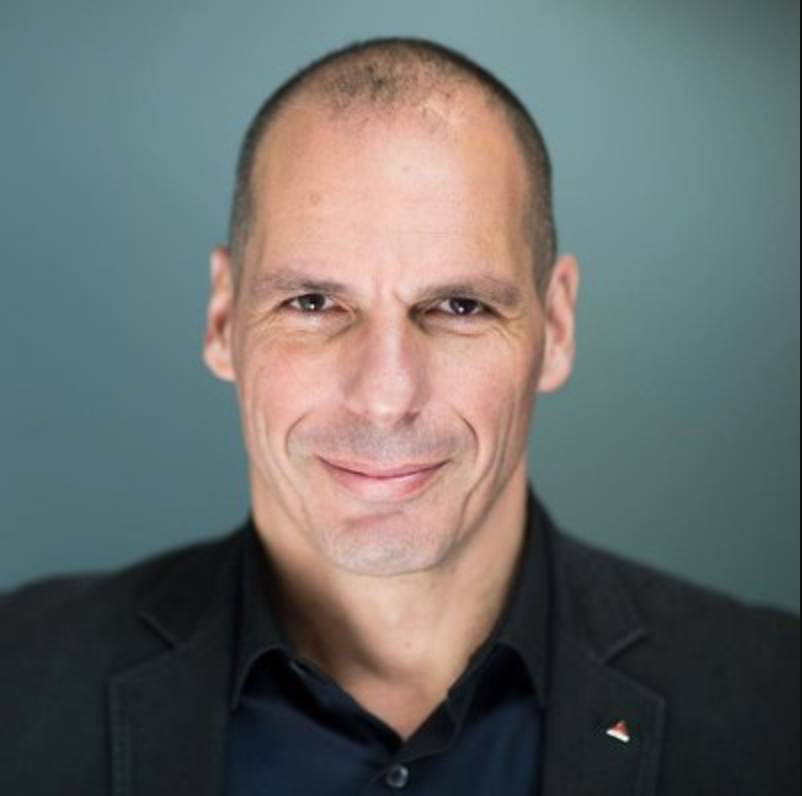
Yanis Varoufakis born 24 March 1961 is a Greek economist, politician, and co-founder of DiEM25. A former academic, he served as the Greek Minister of Finance from January to July 2015. Since 2019, he is again a Member of Greek Parliament and MeRA25 leader. He is the author of several books including, Another Now (2020). Varoufakis is also a professor of Economics – University of Athens, Honorary Professor of Political Economy – University of Sydney, Honoris Causa Professor of Law, Economics and Finance – University of Torino, and Distinguished Visiting Professor of Political Economy, Kings College, University of London.

Friday, April 11, 2025

Understanding the Basics of 21st-Century Finance Capitalism

Source: Jacobin

It has been a tumultuous week for the stock market, as Donald Trump’s quest to reshape the global capitalist order has sent investors into a frenzy. Where is all of this headed? Who knows. But going into a possible trade war, it’s worth stepping back to reflect upon the shape of our financial system.

To start: What are the most important developments on Wall Street in recent years? The short answer: massive asset managers — above all, the “Big Three” of BlackRock, Vanguard, and State Street — have become the dominant players in the financial system and the economy more broadly.

What do the Big Three do? They provide a basic financial service to investors: in exchange for a fee, asset managers invest their clients’ money in financial markets, for the most part in the stock market, or “public equities.” That sounds innocuous enough — until one understands just how much money we’re talking about.

Take BlackRock. By the end of 2024, this single firm possessed $11.5 trillion in assets under management (AUM). Adding in Vanguard and State Street, the Big Three together manage more than $26 trillion.

What does that amount of money look like in practical terms? Collectively, the Big Three are either the largest or second-largest shareholder of almost every company listed on the S&P 500 — which is to say, of the biggest corporations of the world. On average, they together control more than 20 percent of each of those companies: 25 percent of Chevron, 21 percent of Costco, 20 percent of General Motors, and so on. Not since large banks dominated the United States and German economies in the late-nineteenth and early twentieth centuries have we seen such a fusion of ownership and control of corporations on a scale that warrants the moniker “finance capital.”

Meanwhile, “alternative asset managers” have also grown at a rapid clip in recent decades. Alternative asset management is a broad category that includes private equity, real estate investment, hedge funds, and more. Blackstone, the largest alternative asset manager, now oversees more than $1 trillion.

While not operating on the scale of the Big Three, alternative asset managers collect much higher fees per dollar of AUM and play an important role in modern capitalism. Since the leveraged buyout boom of the 1980s, the threat of being acquired by alternative asset managers like private equity firms has enforced discipline on corporations. This, in turn, reinforces the power of shareholders, including the Big Three. More recently, alternative asset managers have expanded further into infrastructure (e.g., airports, utilities, pipelines), a move that threatens to further privatize public goods. They have also built on “private credit” arms, which enable them to function like banks but without the same regulatory oversight.

Complicating our picture, BlackRock has engaged in a series of acquisitions (Global Infrastructure Partners, HPS Investment Partners, and Preqin) and has even attempted to purchase the firm that operates the Panama Canal. To the extent that this represents an intention among the Big Three to expand beyond publicly traded markets and to establish a greater presence in alternative asset management, their power may well grow still further.

What Does This Tell Us About Capitalism Today?

There is a lot of debate about what all of this means, but most observers agree on three basic features of the new finance capital that impact corporate governance.

First, for certain asset managers, “exit” from any given company that they are invested in is not an option. In the past, investors dissatisfied with the performance of a company simply sold or threatened to sell their shares. The Big Three do not have that luxury. Given the scale of their positions, dumping shares would have adverse effects on the entire market; this, in turn, would hurt their overall portfolios. Among the key products they offer investors are cross-market index funds, which by design include just about every company.

Second, for the Big Three, their index funds — mutual funds and exchange traded funds (ETFs), which provide investors with access to the entire market in one swoop — are part of a “passive investment strategy” among asset managers. These firms do not actively try to “beat the market” or bet on winners and against losers. Instead, they are committed to holding the widest range of assets for the long run.

Finally, both of these previous points result from the status of the Big Three as “universal owners,” meaning they almost literally own a bit of everything. Because of their exposure to the entire publicly traded market, and because they operate on a fee-based model, asset managers have an interest in seeing share prices continually appreciate in value. For them, the function of the stock market is not to raise capital that specific businesses can use to expand investments in their companies. Rather, it is simply to enlarge the wealth of investors.

What Does This Mean for Labor and the Broader Progressive Movements?

Labor in the United States initially responded to finance’s rise by attempting to ride the wave of shareholder primacy, using its growing pension funds to speak as shareholders, filing shareholder proposals, and using other corporate governance mechanisms in the hope of nudging corporations to act responsibly. Over time, unions and other social movements have also sought to engage with larger pools of capital like public pensions, and the asset management industry, with similar goals in mind.

The logic behind this approach is that pension funds, in particular, represent “workers’ capital.” These funds should not, therefore, undertake investments that actively harm the workers whose interests they were established to serve. For instance, it is not hard to see the irrationality of public pension funds — whose beneficiaries are public employees — choosing to invest in firms actively seeking to privatize public goods.

This workers’ capital movement has been part of the broader effort to instill environmental, social, and governance (ESG) principles in institutional investors’ fiduciary calculations. While ESG has become a lightning rod for the political right, the basic idea is hardly radical. Everything from rising sea levels to executive compensation to the threat of strikes introduce risks that investors ought to keep in mind. Over the years, organizers have successfully pushed certain institutional investors to operationalize their ESG frameworks by reducing investments in industries like fossil fuels and tobacco, and working with asset managers to resolve labor disputes at companies held in their portfolios.

Without diminishing the value of these efforts, it is important to stress that the workers’ capital and broader ESG strategies basically take the structural confines of the new finance capital as a given. The problem, however, is that this financial colossus is profoundly and unavoidably integrated with processes that drive exploitation, ecological degradation, and public sector retrenchment.

This is not to say that this is a uniquely “parasitic” system that profits at the expense of the “real economy.” It is true that the incredible growth in Wall Street’s power over the past generation has come to some degree at the expense of authority of individual businesses. But finance’s ability to enforce discipline on the corporation has also strengthened management’s hand over labor. Wall Street and Main Street are inextricably wound up together.

Labor and other social movements have related to the new finance capital in a manner similar to that of the proverbial frog in a boiling pot: picking up small victories here and there while the water gets even hotter. Building the kind of working-class power that stands a chance at meaningfully improving living standards and preserving the planet will require a far more serious reckoning with the structure of ownership and control in the twenty-first-century capitalist economy. There is no easy way out of this mess other than breaking the cycle that got us here in the first place.


Organized Labor’s Best Defense is a Good Offense

The best way to fight back against the Trump administration and reverse declines in union density is new organizing.
April 11, 2025
Source: Inequality.org


Union of Southern Service Workers: "Service workers in the South have been excluded from unionization for far too long. We are changing history." | Image credit: ussw.org


Don’t let Donald Trump’s cozy relationship with Teamsters President Sean O’Brien fool you. The new administration is a bunch of scabs — union busters of the highest order, cut from the same cloth as the radically anti-worker Reagans and Thatchers of the world.

In his frenetic and destructive first few months back in office, Donald Trump has pursued a sweeping set of anti-worker and anti-union executive actions that have our country’s oligarchs salivating. Here is a small and disturbing sampling of Trump administration actions:Fired hundreds of thousands of unionized federal workers across dozens of federal departments and agencies, many of them illegally
Illegally nullified the Transportation Security Administration’s union contract and ended collective bargaining for thousands of federal workers, ominous first steps in the right-wing plot to destroy public sector unions entirely
Started an unlawful campaign to stack the National Labor Relations Board with anti-labor zealots
Elevated Elon Musk — an openly corrupt oligarch and notorious union-buster currently suing to rule the NLRB unconstitutional— to the very highest level of decisionmaking authority in his administration
Began an illegal and authoritarian crackdown on the right to free speech and free assembly — indispensably important union rights protected by the Constitution
Opened up a new privatization front targeting Social Security, the US Postal Service, and other federal agencies and programs that employ thousands of union workers and serve millions of working families

In the midst of this overwhelming onslaught of anti-union action, some in the labor movement might be tempted to retreat — to cut our losses and hope that we get a friendlier administration and more favorable political environment in four years. Like millions of union workers across this country who recognize what’s at stake here, I believe this would be a terrible mistake. Our best defense is a good offense.

Rather than sheltering dues in rainy day funds or freezing hiring during this uncertain time, unions should pour resources into new organizing. I know from my time as a United Auto Workers (UAW) member organizing the first-ever private sector grad worker union on the West Coast that new organizing takes a real institutional commitment. It takes hiring talented and dedicated member-organizers to staff campaigns, spending money on training and leadership development programs, and funding the nuts and bolts of new organizing campaigns like legal representation and organizing materials.

Unfortunately, as Chris Bohner has written, most labor unions have largely eschewed new organizing in recent years, even as union war chests have grown to record levels. This has to change.

Investing in new organizing is the single most strategically sound decision unions can make in order to build power.

First, organized labor is historically popular right now. In a time when nearly every type of institution is hitting record lows in approval ratings, unions are at their highest level of popularity since the New Deal era. At the same time, traditionally anti-union institutions like corporations as well as mainstream institutions are losing the faith of the public. Labor can and should use this in its favor.

Additionally, some of the fastest growing sectors in terms of union density, such as the nonprofit sector, higher education, and healthcare, are among those being targeted systematically by the Trump administration and its oligarch backers. Now is the time for labor to keep its foot on the gas and redouble its efforts to organize new workers and workplaces in these sectors.

New organizing can also catalyze people’s faith in democracy and inspire broader efforts to resist oligarchic power grabs. While the Democratic Party and the news media largely fail to meet the moment, organized labor can and must fill the void through organizing new workers and workplaces. What better way to spark democratic resistance than a series of new organizing campaigns that deliver material gains for workers and agitate workers to engage in mass action such as sick-outs, protests, and recognition strikes?

This most basic expression of democratic willpower — harnessing “people power” to force change rather than beg for it — is the labor movement’s bread and butter, and it’s precisely what everyday people need to see modeled for them in order to not feel powerless. The Trump administration, following the terrifying blueprint of Project 2025, hopes that by causing maximum chaos and using state power to sow destruction on as many fronts as possible, the broad anti-fascist coalition that opposes its unpopular and authoritarian actions will fall into disarray and adopt a defensive posture. Instead, the effort to save our democracy must take a page out of Trump’s chaos playbook and deploy every tactic in the book to fight back.

By organizing new workplaces, we can tie up the time and resources of anti-union entities and actors in the short term while growing our membership and financial resources to build for the medium and long term. If other lines of defense fail, a mass labor stoppage can be the only thing preventing a plunge into full-blown authoritarianism.

Union density is still on the decline, and current density is far too low to pull off anything on the level of an effective general strike—and the bad guys know it. As union organizers know, having a credible strike threat is the foundation of any union’s ability to win its demands. We have to organize new workers, and fast.


Denton Cohen is a labor organizer and public policy researcher based in Los Angeles.


Unions as a 21st Century Anti-Fascist Force

Trump and his MAGA movement are conspiring with oligarchs to turn the U.S. into a rightwing authoritarian state. The labor movement can play a key role in fighting back.

April 9, 2025
Source: In These Times


Workers with NALC in Silver Spring, Maryland. Photo: NALC

One of the principal difficulties facing the Democratic Party establishment and most leaders of organized labor is a failure to accept a fundamental reality: there is no normality. The failure to grasp this state of affairs has led to strategic paralysis and a tendency to believe that by being the ​“adults in the room,” the Democrats — or the trade union leadership — can embarrass the Republicans and force them to engage in good faith behavior. That is not the case.

The rise of President Trump’s Make America Great Again (MAGA) movement has represented the morphing of a broad, rightwing populist movement into a fascist movement that seeks to destroy constitutional democracy. The current purging of the federal government, through Elon Musk’s Department of Government Efficiency (DOGE), aims at both opening the doors to a kleptocracy as well as ensuring loyalty to the MAGA vision and its retrograde goals.

Yet while MAGA can be defined as fascist (or postfascist), what we do not yet see is full fascism in power. Rather what we are now witnessing appears to be something along the lines of Viktor Orbán’s regime in Hungary and, ultimately, a Putinesque regime, i.e., increased rightwing authoritarianism. Still, the aim of the Trump regime remains to destabilize all real and potential opposition.

MAGA, as a movement, has converged with the objectives of that segment of the capitalist class often referenced as ​“oligarchs.” Particularly situated in high tech, this group of capitalists has become very influential through their control over critical online and communications systems. Initially aligned, for the most part, with Democrats, the oligarchs appear to have decided that they are nothing short of superior beings that must seize the reins of government in order to operate it much like a business, and for their own ends. This includes expanding their wealth, but also for those, such as Musk, who have a quasi-science fiction vision of a future where the elite abandon Earth and settle Mars or some artificial satellite, there is the need for direct governmental involvement in such projects. Along with the oligarchs are those in the business class who simply wish to ravage the federal kitty, leading to the emergence of kleptocracy.

In earlier eras the expression ​“offensive of capital” would be used for moments when the capitalist class would move to reverse the victories that working people had won. We are now experiencing something more dramatic than that. This is a ​‘blitzkrieg’ of segments of capital in alignment with a mass rightwing movement, making the current attack especially dangerous. To put it another way, the millions of diehard MAGA supporters are not just observers but have become the foot-soldiers for Trump even when they may have an ambivalence about the objectives of the oligarchs.

Organized labor has been divided over whether and how to respond to this offensive. Roughly speaking, there are three general categories: the collaborators, the ostriches and the resisters. The ​“collaborators” are those unions that are going along with Trump’s agenda. The ​“ostriches” are those that are attempting to avoid conflict and hoping to simply last out the next four years. The ​“resisters” are those that seek to reject MAGA and the current offensive. Each of these categories are quite uneven and their approaches have their own limits. The resisters, for instance, are prepared to ally with other groups to a certain extent, but have a tendency to work on their own. The federal sector unions that are being forced to resist are mainly relying on litigation and lobbying, for instance, appearing to be largely uncomfortable with, or unprepared for, more mass actions, such as work stoppages. This dynamic may soon shift as a result of Trump attempting to obliterate collective bargaining for nearly one million federal workers.

The difference in approach among sections of organized labor is not, primarily, a disagreement over tactics. Rather, it reflects differences over how to understand the nature of the moment and, as a result, the question of what is the necessary strategy. The reality is that we are living through a time when forces of fascism are on the march. This means that confronting MAGA solely on the grounds of deteriorating working (or living) conditions is insufficient. The Trump regime is aiming to roll back all of the progress made throughout the 20th century, and is targeting political opposition wherever it arises. This requires an all-hands-on-deck response. This is not a moment for faux bipartisanship; it is a moment for resistance and obstruction to block the Trump administration from carrying out its far-right objectives.

Rank-and-file members of our unions should be won over to fully appreciate the nature of the danger facing us, and all that it implies. This begins with a major education effort among the membership coinciding with mobilizing against the specific attacks workers are facing, be they loss of jobs, loss of union recognition, moves against migrants, further attacks on the social safety net, failure to respond to increasing natural disasters or a dragnet on political speech. The job of working-class leaders is to link these threats together into a story about how Trump’s allies and the oligarchs are conspiring to steal from the majority, and institute a white, Christian nationalist authoritarian state, i.e., minority rule.


Workers must be convinced of the possibility of beating back the darkness and winning.

Taking on MAGA will need to involve, but not be limited to, labor militancy. Accompanying shrewd and creative tactical actions must be a proactive vision regarding an alternative to rightwing authoritarianism, an alternative many of us summarize as the fight for a ​“Third Reconstruction” — a political realignment carried out through a multiracial democratic movement from below. This is a challenging but essential task since many in this country have not only lost faith in constitutional democracy, but they have lost faith in the ability to bring about lasting progressive change.

Reversing this sense of pessimism is key to the survival of the labor movement, both among established trade unions as well as more nontraditional forms of labor organizing. Workers must be convinced of the possibility of beating back the darkness and winning. Indeed, our work must be guided by the notion that we are fighting for a future without fear.


Bill Fletcher Jr
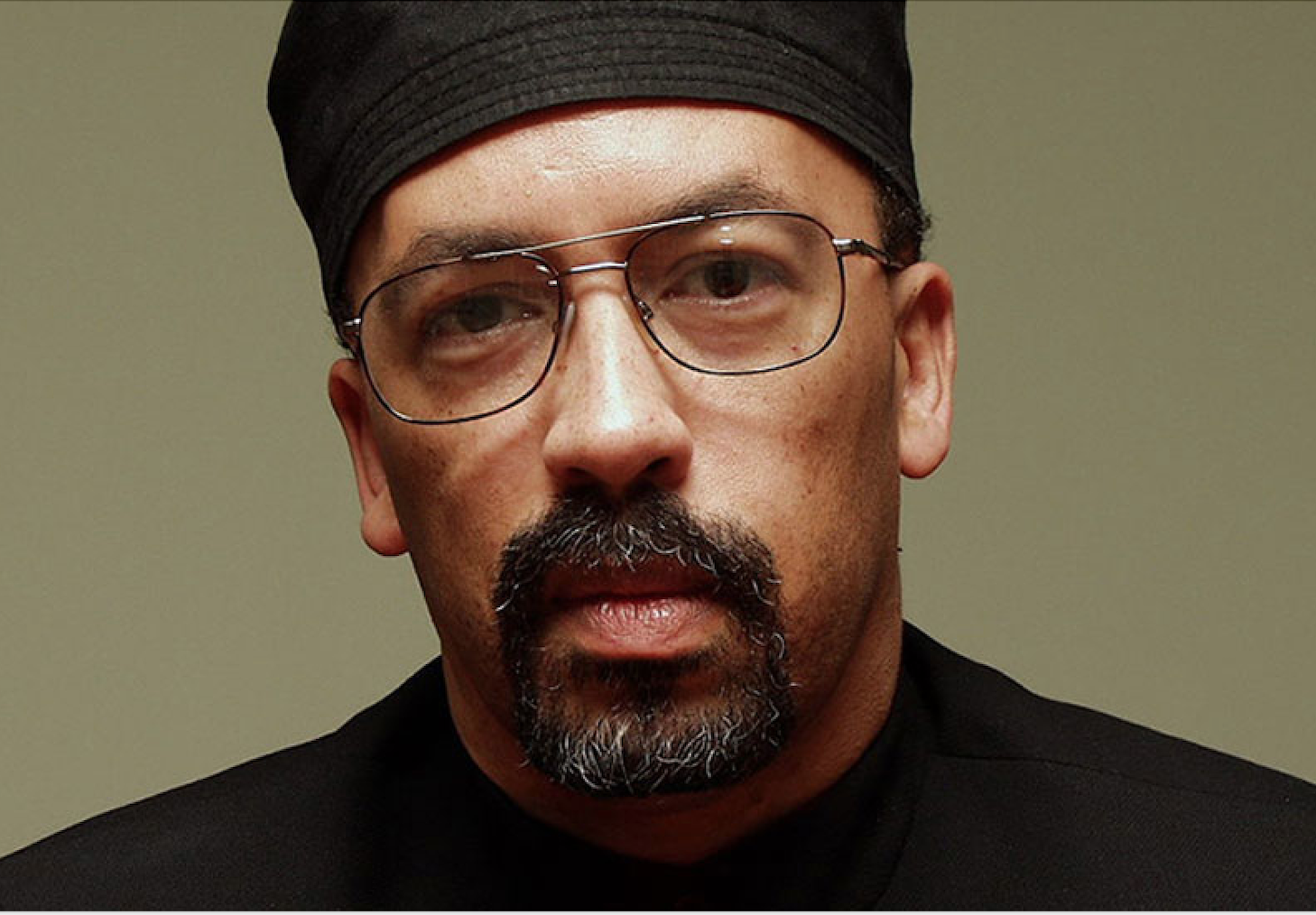
Bill Fletcher Jr (born 1954) has been an activist since his teen years. Upon graduating from college he went to work as a welder in a shipyard, thereby entering the labor movement. Over the years he has been active in workplace and community struggles as well as electoral campaigns. He has worked for several labor unions in addition to serving as a senior staffperson in the national AFL-CIO. Fletcher is the former president of TransAfrica Forum; a Senior Scholar with the Institute for Policy Studies; and in the leadership of several other projects. Fletcher is the co-author (with Peter Agard) of “The Indispensable Ally: Black Workers and the Formation of the Congress of Industrial Organizations, 1934-1941”; the co-author (with Dr. Fernando Gapasin) of “Solidarity Divided: The crisis in organized labor and a new path toward social justice“; and the author of “‘They’re Bankrupting Us’ – And Twenty other myths about unions.” Fletcher is a syndicated columnist and a regular media commentator on television, radio and the Web

NED-Funded AFL-CIO Solidarity Center Warns of Bankruptcy

April 9, 2025
Source: Labor Video Project

The AFL-CIO’s international wing, the misleadingly named Solidarity Center, is over 90% funded by the US government. In a Federal Court filing and declaration on March 6, 2025, the Director of the NED-funded Solidarity Center Shawna Bader-Blau warns that unless the Trump government continues to fund the National Endowment for Democracy (NED), they will have to declare bankruptcy of the government-funded operation. The Solidarity Center receives more than $70 million a year from the NED, USAID, and other government organizations. It has received over $1 billion from the US government for its operations and has refused to report to the membership of the AFL-CIO about how much money it is getting and what it is spending it on.

Kim Scipes discusses new revelations from this development and the reactionary nature of AFL-CIO foreign policy.