Friday, May 23, 2025


North Korea Admits To Botched Warship Launch
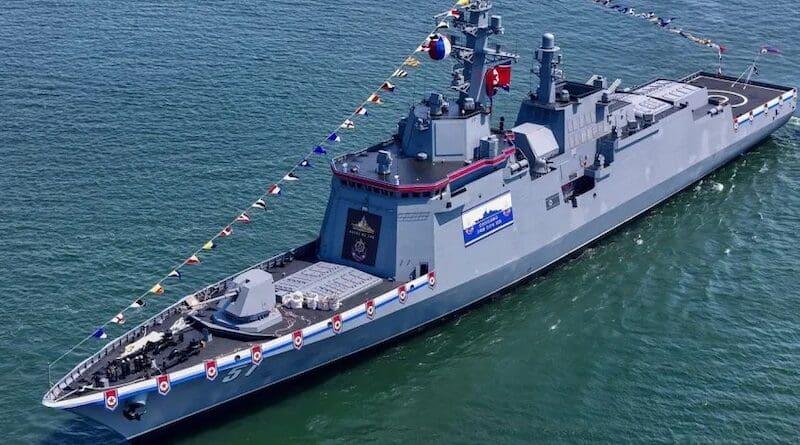
North Korea's Choe Hyon destroyer. Photo Credit: KCNA, Wikipedia Commons

By 

By Dohyung Han and Jaewoo Park 


Notoriously secretive North Korea quickly owned up to the botched launch of a 5,000-ton naval destroyer ship that listed sideways in front of supreme leader Kim Jong Un because the mistake was too large to conceal, experts said.

State-run Korean Central Television, or KCTV, reported Thursday that the vessel lost stability during its launch at the shipyard in the northeastern port city of Chongjin, tipping into the water as the stern-side launch sled detached prematurely. 

The ship had taken on water and suffered hull damage due to poor handling and “incompetent command,” the report said.

Kim Jong Un, who was at the launch, condemned Wednesday’s mishap in unusually strong language. He called it a “grave and unacceptable accident” caused by “carelessness, irresponsibility, and unscientific empiricism,” and described it as a “serious criminal act,” the state-run news agency reported.

He ordered the destroyer to be fully restored before the June plenary session of the ruling Workers’ Party, stressing that the matter is not merely technical but one of political urgency and national dignity.


Mismanagement not sabotage

The leader’s tough rhetoric and its reporting by his regime’s media was an unusually forthright acknowledgment of negative news in the totalitarian country, but not without precedent.

Although North Korea is notoriously secretive, especially when it comes to internal failures, analysts have observed a notable shift under Kim Jong Un’s leadership. The regime has, on occasion, chosen to acknowledge major setbacks, such as failed satellite launches or economic shortcomings.

Bruce Klingner, senior research fellow at the Heritage Foundation, a Washington-based think tank, told Radio Free Asia that Pyongyang likely realized the ship launch failure was too visible to conceal, especially with commercial satellite imagery readily available. 

“Kim’s characterization of the incident as a ‘criminal act’ likely refers to mismanagement, not sabotage,” Klingner said. “By admitting the failure, the regime is reframing it as a problem of leadership and discipline, rather than a technical deficiency.”

That fits into an emerging pattern. Kim Dong-yub, a professor at the University of North Korean Studies in Seoul, said that just as Kim openly admitted a failed military satellite launch last year, his government now appears to be using such public acknowledgments as a strategic tool — turning failure into an opportunity to demonstrate resolve. By portraying recovery efforts as “patriotic struggles,” it seeks to reinforce internal unity and instill a renewed sense of loyalty among officials.

Kim Dong-yub said in a Facebook post that the unusually harsh reprimand may be aimed at repackaging the mishap as a test of loyalty — an opportunity for redemption through devotion to the leader.

A South Korean Unification Ministry official, briefing reporters on customary condition of anonymity, also commented that Kim’s directive to fully restore the damaged warship suggested it is not beyond repair, though it suffered serious structural harm.

Covered in blue tarp

South Korea’s Joint Chiefs of Staff confirmed that U.S. and South Korean intelligence had been monitoring the launch preparations. They assessed the side-launch as a failure and noted the destroyer remains tipped over in the water.

“The destroyer is currently lying on its side,” said spokesperson Lee Sung-jun. He added that the ship’s design appears similar to the Choe Hyon Ho, a destroyer which was launched last month using a flotation method at the Nampo Shipyard. Wednesday’s launch was by a less common sideways or lateral method.

The two destroyers are North Korea’s most advanced naval vessels.

The first destroyer is designed to carry weapons systems including nuclear-capable ballistic and cruise missiles, state media reported last month. It was slated to enter active duty early next year and Kim Jong Un has supervised test-firings of missiles from the warship.

The U.K.-based security research institute Open Source Center (OSC) released satellite imagery showing the result of Wednesday’s botched launch on its X account. The photo shows approximately two-thirds of the ship’s hull exposed above the waterline, listing to its right side. A large blue tarp covers part of the vessel.

Missile launches

Shortly after news of the accident broke, North Korea launched multiple cruise missiles into the East Sea from near Seondeok in South Hamgyong province, according to the South Korean military. Authorities are analyzing the launch site and missile trajectories.

The cruise missile launch came just 14 days after a short-range ballistic missile launch on May 8 and may have been an attempt to reassert military confidence after the ship launch failure, the South Korean Joint Chiefs of Staff said.



RFA

Radio Free Asia’s mission is to provide accurate and timely news and information to Asian countries whose governments prohibit access to a free press. Content used with the permission of Radio Free Asia, 2025 M St. NW, Suite 300, Washington DC 20036
.


Courting Both Sides? The Taliban’s Tightrope Between India And Pakistan – Analysis

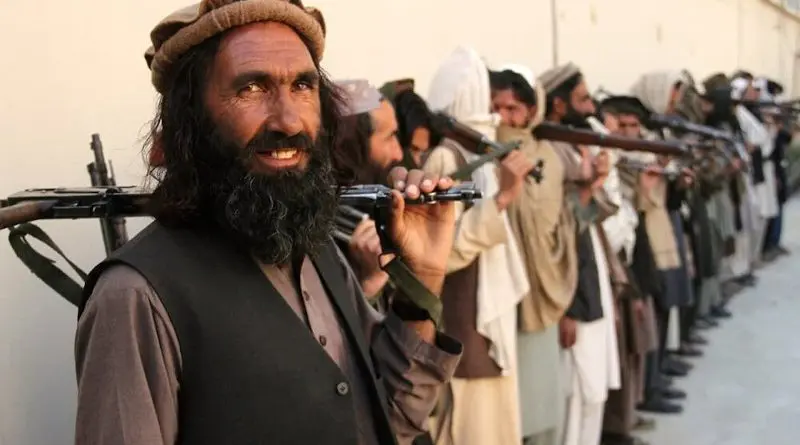
Taliban fighters in Afghanistan. Photo Credit: Mehr News Agency

By 

By Shivam Shekhawat


In a significant diplomatic development, India’s External Affairs Minister Dr S. Jaishankar held a telephonic conversation with the interim Foreign Minister of the Islamic Emirate of Afghanistan (IEA) Amir Khan Muttaqi, on May 15.

Coming on the heels of Operation Sindoor – India’s retaliatory strikes against terrorist infrastructure in Pakistan in response to the Pahalgam attack – the EAM reiterated India’s commitment to the Afghan people and thanked his counterpart for his condemnation of the terror attack in Pahalgam. He also acknowledged the Emirate’s “rejection of recent attempts to create distrust” between the two countries – a reference to Pakistan’s attempts to draw Afghanistan into the latest India-Pakistan conflict.

In Pursuit of a Balanced Foreign Policy

On May 10, India and Pakistan reached an understanding on the cessation of all forms of military action— on land, in the air and at sea. As Operation Sindoor concluded, India redefined its doctrine vis-a-vis Pakistan’s support for state-sponsored terrorism. On the same day, the Director General of Pakistan’s Inter-Services Public Relations (ISPR) accused India of threatening the subcontinent with full-scale war, claiming that a missile fired by New Delhi had targeted Afghanistan. This statement was categorically refuted by a spokesperson of the IEA’s Defence Ministry. India’s Foreign Secretary Vikram Misri also rejected the claimand quipped that “the Afghan people don’t need to be reminded which country has recurrently targeted their civilian infrastructure and killed civilians.” This remark was a reference to Pakistan’s air strikes in Afghanistan in December 2024, which killed several civilians. Over the last three years, as ties between Pakistan and Afghanistan regressed from bad to worse, the Taliban has sought to diversify its diplomatic engagements,  with India emerging as an important partner in its outreach.

In the aftermath of the terror attack in Pahalgam, the IEA released a statement condemning the incident and highlighting its adverse impact on “regional security and stability ”. Two weeks later, when India launched Operation Sindoor, the emirate again condemned the escalation and called on both sides to “exercise restraint and resolve issues through dialogue and diplomacy ”.

The Taliban’s messaging vis-à-vis the latest conflict stressed Afghanistan’s “balanced and economy-oriented foreign policy”. Kabul has attempted  to project itself as a responsible regional power, committed to maintaining relations with all neighbouring countries and opposing  conflict in the region. In the case of India and Pakistan, the Taliban claims to have “commonalities and positive interactions” with both. These statements are part of the group’s efforts to redefine its image before the international community, strengthen its case for international legitimacy, and extract benefits through engagement with all countries.


Perceptions of Pakistan

Pakistan’s hopes of reaping the benefits of its support to the Taliban’s insurgency have come to nought. The ties between the two sides have been at their lowest since the Taliban’s return to power. While Islamabad has urged the Taliban to restrain the Tehreek-i-Taliban Pakistan (TTP) and withdraw its support for the group, the Taliban has refuted these allegations. Instead, the Taliban accuses Pakistan of deflecting responsibility for its domestic difficulties. The tensions have turned violent, with Pakistan launching air strikes against suspected TTP hideouts in December 2024. There have also been instances of armed clashes and cross-border shelling. Pakistan’s decision to deport Afghan refugees beginning last year further dented the ties.

The Taliban now position Pakistan much as India has long done— a sponsor of proxy terror groups aimed at keeping Afghanistan subservient. In its annual report for the Central Commission for Security and Clearance Affairs, released early this year, the Taliban blamed certain ‘elements’ in Islamabad for shelteringmilitants in Balochistan and Khyber-Pakhtunkhwa provinces. These militants, according to the report, are “regrouping with the tacit approval, tolerance and indirect support of certain parties,” and may be used to plan attacks on other countries in the region. When the Trump administration acknowledged Islamabad’s role in the arrest of the mastermind behind the Kabul Airport attack of 2021, the Taliban responded by suggesting this confirmed the existence of Islamic State – Khorasan Province (ISKP) camps in Pakistan. The group further argued that Islamabad was attempting to curry favour with the United States, even though the real mastermind had already been “neutralised”.

Despite these differences, the last few months have seen both sides attempt to re-engage. Last month, the Joint Coordination Committee met, followed by a visit from Pakistan’s Foreign Minister, Mohammad Ishaq Dar, to Afghanistan for a meeting with his counterpart. A day before the launch of Operation Sindoor, the two foreign ministers held a follow-up call to review the outcomes of their meeting and take stock of the evolving situation between India and Pakistan.

Tryst with New Delhi

As ties between the two countries plummeted over the last three years, the Taliban regime intensified its outreach to India. The decline in Pakistan’s influence also created more space for India to engage. On April 27, five days after the Pahalgam attack, an Indian delegation led by the Joint Secretary of the Pakistan, Afghanistan and Iran (PAI) division of the Ministry of External Affairs visited Afghanistan and met Muttaqi. According to a statement released by the Emirate’s Ministry of Foreign Affairs (MoFA), the two sides discussed the rising tensions between India and Pakistan and the need to expand India’s role in Afghanistan. The timing of the meeting—in the aftermath of the terror attack and India’s punitive actions against Pakistan— sent a strong political message about how India perceives the Emirate vis-à-vis its conflict with Pakistan.

Since usurping power in August 2021, the IEA has been trying to get India to increase its engagement. Its demands have centred around facilitating the movement of people between the two countries, issuing visas to businessmen and students, resuming infrastructure projects and encouraging Indian investment in the country. At the most recent meeting, the closure of the Attari-Wagah border crossing was raised. The border, a critical one-way trade route for the export of Afghan goods to India, was closed after India held Pakistan responsible for the 22 April terror attack and subsequently took a slew of punitive diplomatic measures against Islamabad. Following the meeting, India approved the entry of 160 Afghan trucks through the border in a “special gesture”.

India has gradually increased its engagement with the Taliban,  focusing on humanitarian aid while securing acknowledgement of its security concerns.  In December 2024, when Pakistan launched strikes against Afghanistan, India ‘unequivocally condemned’ the  action and criticised Pakistan for externalising its internal problems. Foreign Secretary Misri also met the Emirate’s interim Foreign Minister in January 2025 – the highest-level meeting between the two sides to date. In the call with the EAM, the Taliban once again raised the issue of visa facilitation and asked for the release of Afghan prisoners in Indian jails.

Growing India-Afghanistan ties create a sense of unease in Pakistan as Islamabad witnesses the unravelling of its hopes of gaining strategic depth in the country. On the other hand, the Taliban sees growing ties with India as an effective leverage against Pakistan, allowing the group to operate independently from Islamabad.

A trilateral of significance?

As the ceasefire was being mediated between India and Pakistan, representatives from China and Pakistan convened in Afghanistan for the fifth edition of the trilateral consultations between the three countries. The special envoys from China and Pakistan also met Afghanistan’s interim Interior Minister, Sirajuddin Haqqani and discussed issues of mutual interest.

While official statements from Afghanistan and Pakistan made no reference to this point, several Pakistani and Afghan newspapers highlighted that the three sides were committed to ensuring that India’s role in Afghanistan remained restricted only to the diplomatic front, and that the IEA remained neutral on the question of the Pahalgam terror attack. This ‘regional realignment’, as termed in the reports, reflects a certain anxiety as Pakistan grapples with the aftermath of India’s military action. Some reports also noted Afghanistan’s reticence in accepting these demands.

Conclusion

In the aftermath of Operation Sindoor and the delicate stitching of a ceasefire, New Delhi remains on high alert. The growing leeway with the Taliban, as the group’s ties with Islamabad deteriorate, places India in a favourable position. However, the challenges remain. The Emirate’s self-projection as a neutral power, its willingness to foster ties with all  neighbouring countries, and the resumption of dialogue with Pakistan indicate that the Taliban is hedging its  bets. Muttaqi is also scheduled to be in China on May 20 to meet his counterparts from Beijing and Islamabad for another trilateral meeting. The growing cooperation between China and Pakistan poses a significant challenge to New Delhi’s strategic interests in Afghanistan. While India will continue its engagement with the Taliban, as evidenced by the recent call, it must also take cognis ance of the evolving risks.


  • About the author: Shivam Shekhawat is a Junior Fellow with the Strategic Studies Programme at Observer Research Foundation.
  • Source: This article was published by the Observer Research Foundation.


Observer Research Foundation

ORF was established on 5 September 1990 as a private, not for profit, ’think tank’ to influence public policy formulation. The Foundation brought together, for the first time, leading Indian economists and policymakers to present An Agenda for Economic Reforms in India. The idea was to help develop a consensus in favour of economic reforms.

By 

By Yaroslava Tymoshchuk, Oleksiy Prodayvoda and Iryna Romaliyska


As he went to get into his Mercedes sedan after dropping his children at an international school near Madrid, a Ukrainian lawyer named Andriy Portnov was approached by gunmen who shot him five times, the last time in the head.

Portnov’s brazen daylight killing on May 21 stunned Spaniards. It sent bigger shockwaves through Ukrainian political circles, where Portnov circulated for years: as a lawyer, a fixer, and a political operative.

Here’s what you need to know about Portnov, his political importance, and what his killing means.

Who Was He Exactly?

A lawyer by training, Portnov was closely associated with Viktor Yanukovych, who served as Ukrainian president until February 2014, when months of street protests erupted in violence and Yanukovych fled the country. Portnov served as the deputy head of Yanukovych’s administration.

He was known for being litigious — filing threatening lawsuits against journalists, in particular.


In 2019, Portnov threatened Schemes, the investigative unit of RFE/RL’s Ukrainian Service, posting personal data of some of the unit’s journalists.

“Portnov was very closely tied to the judicial system. At one time, he led a large number of different trials. He influenced judges, he influenced security officials,” Ivan Stupak, a military analyst who formerly worked for Ukraine’s SBU security agency, told Current Time.

Under Yanukovych, Portnov took charge of an effort to update the country’s Criminal Code and procedures. The effort was criticized for, among other things, making it harder to conduct fair trials and for obstructing official investigations into corruption and bribery.

Before he advised Yanukovych, Portnov worked alongside Yulia Tymoshenko, Yanukovych’s political archrival who lost the 2010 presidential election to him.

Portnov also crossed paths with veteran US political lobbyist Paul Manafort, who helped engineer Yanukovych’s political comeback in the 2000s, and his election victory over Tymoshenko. Yanukovych later ordered Tymoshenko jailed.

In 2013, Portnov traveled to Washington, D.C., as part of Manafort’s effort to tamp down US criticism of Tymoshenko’s jailing.

“The success of Andriy’s visit is important and timely. It shows that a continued presence by key Ukraine leaders coming to the US is effective, and can change the rhetoric,” Manafort wrote in a February 2013 e-mail. “We need to have Andriy come back to the US on a semiannual or quarterly basis.”

The e-mail, which was addressed to a former chief of staff for Yanukovych, was included in US court filings after Manafort was indicted in 2017 on tax and fraud charges stemming from his work for Yanukovych.

Manafort was sentenced to 7 1/2 years in prison, but later was pardoned by President Donald Trump.

Portnov, meanwhile, was hit by financial sanctions in 2021 by the US Treasury Department.

“Widely known as a court fixer, Portnov was credibly accused of using his influence to buy access and decisions in Ukraine’s courts and undermining reform efforts,” the department said in a press release. “Portnov took steps to control the Ukrainian judiciary, influence associated legislation, sought to place loyal officials in senior judiciary positions, and purchase court decisions.”

What Was He Doing In Spain?

It wasn’t immediately clear how long Portnov and his family had lived in Spain.

He left Ukraine for Russia after Yanukovych fled the country, in the wake of the February 2014 street protests known commonly as the Maidan. Portnov was outspoken in his criticism of the Maidan events.

He later ended up in Austria, where he practiced law, and traveled back to Ukraine several times.

In 2018, the SBU announced it had opened a treason investigation of Portnov, alleging he had a role in Russia’s annexation of Crimea, the Ukrainian Black Sea peninsula that Moscow seized in the weeks after the Maidan.

The case was launched after intercepted telephone conversations from 2014showed Portnov speaking with a top Kremlin adviser. It was later closed without charges being brought.

In 2019, he returned to Ukraine shortly after the election of Volodymyr Zelenskyy as president.

“Friends, I haven’t been to my country for over five years,” he wrote on his Telegram channel at the time. “And today I want to give a strong signal to the thousands of people who left Ukraine. It’s time to return, build, and restore. Hello, my dear Motherland!”

He was a part owner of a pro-Russian TV channel linked to a Kremlin-allied politician Viktor Medvedchuk. Ukrainian authorities shuttered the station in 2021.

In March 2022, a month after Russia launched its all-out invasion of Ukraine, Schemes uncovered real estate holdings belonging to Portnov’s family in the Moscow region. That June, Portnov left Ukraine for good.

Yanukovych fled to Russia after the Maidan events, and lived in the southern city of Rostov-on-Don. His current whereabouts are unclear.

Who Killed Him?

Portnov was shot around 9:15 a.m., reportedly just after he dropped off his two daughters at the American School of Madrid, a private institution located in Pozuelo de Alarco, on the Spanish capital’s outskirts.

Spanish authorities have said little about the progress of their investigation.

Outside observers pointed to Portnov’s past run-ins with Ukrainian intelligence as possible indications that he was targeted by a Ukrainian assassin. Others said it was possible Portnov had had clashes due to his business interests.

“Perhaps, someone had a big business taken away from him at one time, perhaps, the money from this business was not divided correctly, and one of the partners decided to take revenge,” Stupak said“We can’t rule this out.”

  • Oleksiy Prodayvoda is a correspondent for Current Time, the Russian-language network run by RFE/RL in cooperation with VOA. Prior to joining RFE/RL, he worked for some of the most important media outlets in Ukraine, covering the mass pro-democracy demonstrations in Kyiv, Russia’s seizure of Crimea, and the beginning of the war in eastern Ukraine in 2014. Since Moscow’s full-scale invasion in February 2022, he has been reporting from the front lines in the east and south of the country.
  • Iryna Romaliyska is a correspondent for Current Time, the Russian-language channel run by RFE/RL in cooperation with VOA.

RFE RL

RFE/RL journalists report the news in 21 countries where a free press is banned by the government or not fully established.