Friday, May 23, 2025


Russian military hackers 'Fancy Bear' target Western aid supply chains to Ukraine, NSA report says
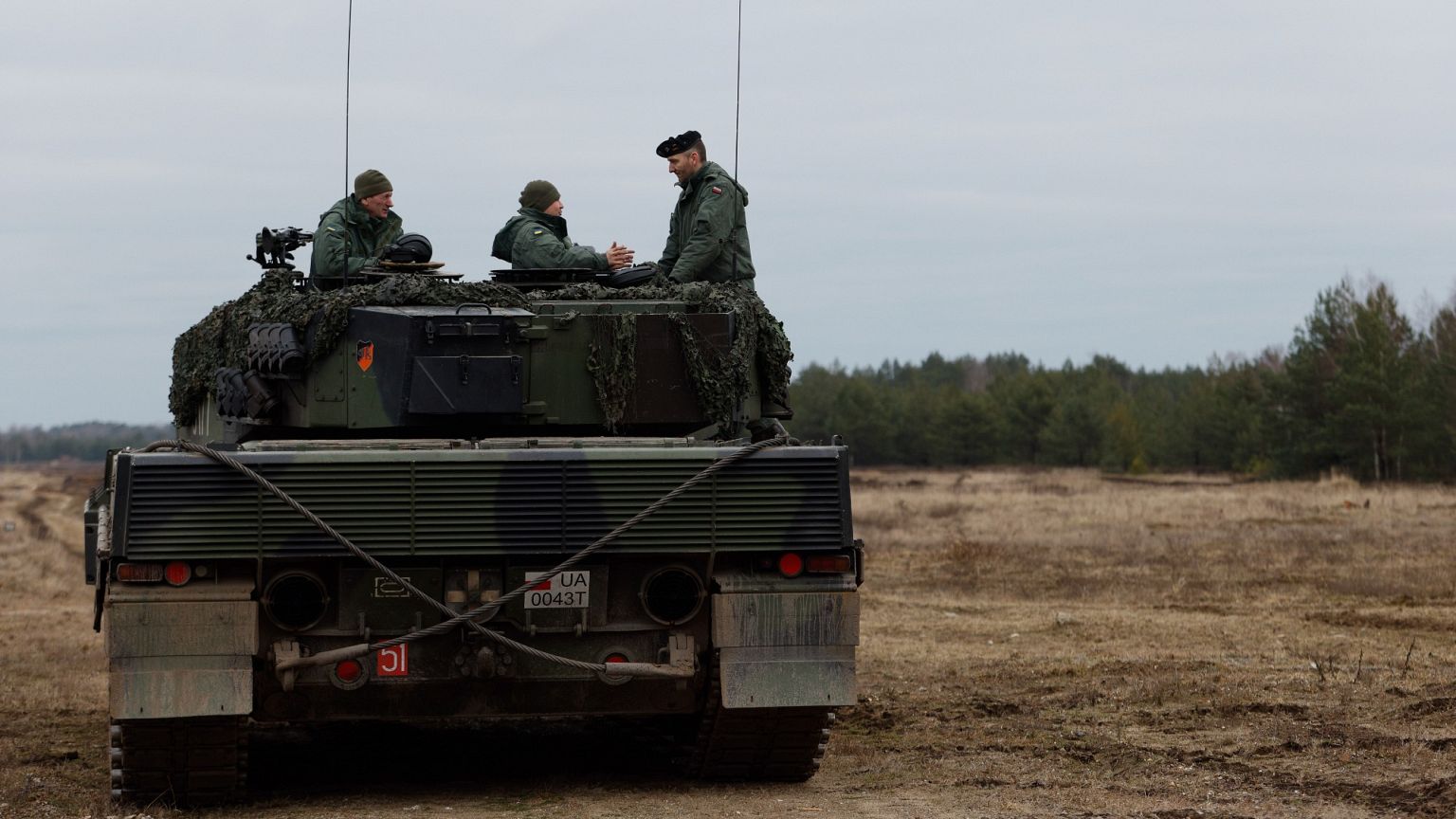
FILE: Ukrainian and Polish soldiers sit on top of a Leopard 2 tank during a training at a military base and test range in Swietoszow, 13 February 2023
Copyright AP Photo

By Oman Al Yahyai
Published on 

The hacking effort, attributed to the group Fancy Bear, used tactics such as spearphishing and exploiting weak security in small office networks.

Hackers linked to Russian military intelligence have targeted Western logistics and technology firms involved in transporting aid to Ukraine, the US National Security Agency (NSA) said.

The cyber operation, attributed to the notorious Russian military intelligence agency GRU unit 26165, better known as Fancy Bear, sought to gather information on the types and timing of assistance entering Ukraine. 

According to the NSA's report published late Wednesday, the campaign aimed to breach companies in the defence, transport and logistics sectors across multiple Western countries, including the US. It also targeted ports, airports and railway infrastructure.

As part of the operation, hackers attempted to access footage from more than 10,000 internet-connected cameras — both private and public — situated near strategic transit points such as border crossings, ports and rail hubs. 

While the majority of these cameras were located in Ukraine, others were based in neighbouring countries including Poland, Romania and elsewhere in eastern and central Europe.

The cyber attacks reportedly began in 2022, when Russia launched its full-scale invasion of Ukraine. Authorities have not disclosed how successful the hackers were or how long they remained undetected.

The NSA, along with the FBI and cybersecurity agencies from allied nations, warned that Russia is likely to continue its surveillance efforts and advised companies involved in support delivery to remain vigilant.

“To defend against and mitigate these threats, at-risk entities should anticipate targeting,” the NSA said in the advisory.

The hackers employed spearphishing tactics — sending deceptive, official-looking messages designed to extract sensitive information or install malware — as well as exploiting vulnerabilities in remote access devices typically used in small or home office networks, which often lack enterprise-level protection.

Grant Geyer, chief strategy officer at cybersecurity firm Claroty, said the hackers’ methods were not especially sophisticated but were methodically executed. 

“They have done detailed targeting across the entire supply chain to understand what equipment is moving, when and how — whether it’s by aircraft, ship or rail,” he noted.

Geyer warned that the intelligence gathered could help Russia refine its military strategy or potentially plan future cyber or physical disruptions to Ukraine's aid routes.

In a related move last autumn, US intelligence agencies issued guidance urging US defence contractors and logistics firms to bolster their cybersecurity, following a series of suspected Russian-linked sabotage incidents in Europe.

Evidence gathered by Western countries over the years has shown that Fancy Bear has been behind a slew of attacks on Ukraine, Georgia and NATO, as well as political enemies of the Kremlin, international journalists and others.


Brazil dismantles Russian 'spy factory' in major counterintelligence operation, NYT reports

Brazil dismantles Russian 'spy factory' in major counterintelligence operation, NYT reports
The investigation identified spies across multiple countries. A married couple lived in Portugal as Manuel Francisco Steinbruck Pereira and Adriana Carolina Costa Silva Pereira, whilst others operated in Uruguay under Brazilian identities.
By bne IntelliNews May 23, 2025

Brazilian federal agents have exposed a sophisticated Russian intelligence operation that used the South American country as an "assembly line for deep-cover operatives,” according to a report by The New York Times.

The operation unmasked at least nine officers who lived for years under false identities before deploying to targets across the West.

The three-year counterintelligence investigation, dubbed Operation East, represents what independent Russian news outlet Agentstvo described as "one of the biggest failures of the Russian intelligence services," comparable to the exposure of 11 spies in the US 15 years ago.

Russian operatives shed their true identities to become Brazilian citizens, starting businesses, forming relationships and building authentic cover stories over many years.

Rather than spying on Brazil itself, the goal was to acquire credible Brazilian identities before deploying to the US, Europe or the Middle East for actual intelligence work.

CIA tip sparks investigation

The unravelling began in April 2022, weeks after Russia's full-scale invasion of Ukraine, when the CIA alerted Brazil's Federal Police to Victor Muller Ferreira – real name Sergey Cherkasov – who had secured an internship with the International Criminal Court in The Hague as it prepared to investigate Russian war crimes.

Cherkasov, whose story was first exposed by investigative outlet Bellingcat in June 2022, was admitted to Johns Hopkins University's graduate school in Washington in 2018 after a stint at Dublin's Trinity College. He had spent nearly a decade building his false identity. During one of his trips, Dutch authorities denied him entry and returned him to São Paulo, where Brazilian agents arrested him on document fraud charges.

His Brazilian passport and identification documents initially appeared authentic, but investigation of his birth certificate revealed fatal flaws.

The document stated he was born in Rio de Janeiro in 1989 to a Brazilian mother who died in 1993, but agents discovered the woman never had a child and couldn't locate anyone matching the father's name.

"Everything started with Sergey," a senior Brazilian official told The New York Times.

Russian authorities later unsuccessfully attempted to "rescue" Cherkasov by issuing an international arrest warrant, claiming that he "was part of a crime group that smuggled drugs from Afghanistan via Tajikistan and sold them to gangs in Russia between 2011 and 2013," according to Bellingcat.

Sophisticated identity creation

The discovery prompted agents to search for "ghosts" – people with legitimate birth certificates who appeared suddenly as adults without prior records in Brazil. The painstaking analysis of millions of identity documents revealed the scope of the Russian operation.

Brazil proved an ideal location for the scheme. The Brazilian passport ranks among the world's most useful, allowing visa-free travel to nearly as many countries as US documents.

The country's multicultural population makes European-featured individuals with slight accents unremarkable.

Yet Brazil's decentralised birth certificate system contains a crucial vulnerability – authorities will issue certificates to anyone declaring a baby was born to at least one Brazilian parent in rural areas, requiring only two witnesses.

One exposed operative, Artem Shmyrev, lived as Gerhard Daniel Campos Wittich, running a successful 3D printing business in Rio de Janeiro. He spoke perfect Portuguese with an accent he attributed to childhood in Austria, fooling his Brazilian girlfriend and colleagues completely.

"He was a work addict," said Felipe Martinez, a former client who befriended the spy, as quoted by The New York Times. "He thought big, you know?"

However, Shmyrev privately expressed frustration with undercover life in text messages to his Russian intelligence officer wife.

"No real achievements in work. I am not where I have to be for two years already," he wrote.

Global network exposed

The investigation identified spies across multiple countries. A married couple lived in Portugal as Manuel Francisco Steinbruck Pereira and Adriana Carolina Costa Silva Pereira, whilst others operated in Uruguay under Brazilian identities.

One posed as a model, another ran a jewellery business featured on Brazilian television.

Intelligence experts believe Russian authorities recalled many operatives as global focus intensified on Russian espionage following the Ukraine invasion.

Only Cherkasov remains imprisoned, serving a five-year sentence for document forgery.

Brazilian authorities used Interpol blue notices to expose the spies' identities globally, effectively ending their intelligence careers. The alerts circulated names, photographs and fingerprints to 196 member countries under the pretext of investigating fraudulent documents.

‘You're going to hear things about me’

Shmyrev escaped Brazil days before agents moved to arrest him in December 2022, leaving behind electronic devices containing crucial evidence and $12,000 cash – suggesting he planned to return. His last known contact was a phone call to his Brazilian girlfriend.

"You're going to hear things about me, but you need to know that I never did anything that bad. Like I never killed anyone or something like that. My past caught up with me,” he reportedly said.

Independent Russian outlet Agentstvo reported on May 22 that some exposed operatives have returned to Russia under their real names, with spy Olga Tyutereva now working as a teacher in the Magadan region.

The operation dealt a devastating blow to Moscow's "illegals" programme, eliminating highly trained officers who will be difficult to replace. With their covers blown, the operatives will most likely never work abroad again, according to intelligence experts.

Brazil's investigation spanned at least eight countries with intelligence cooperation from the US, Israel, Netherlands, Uruguay and other Western security services, demonstrating the global response to Russian espionage following the Ukraine invasion.

We know what Russia is doing and how it does it, EU intelligence centre chief tells Euronews
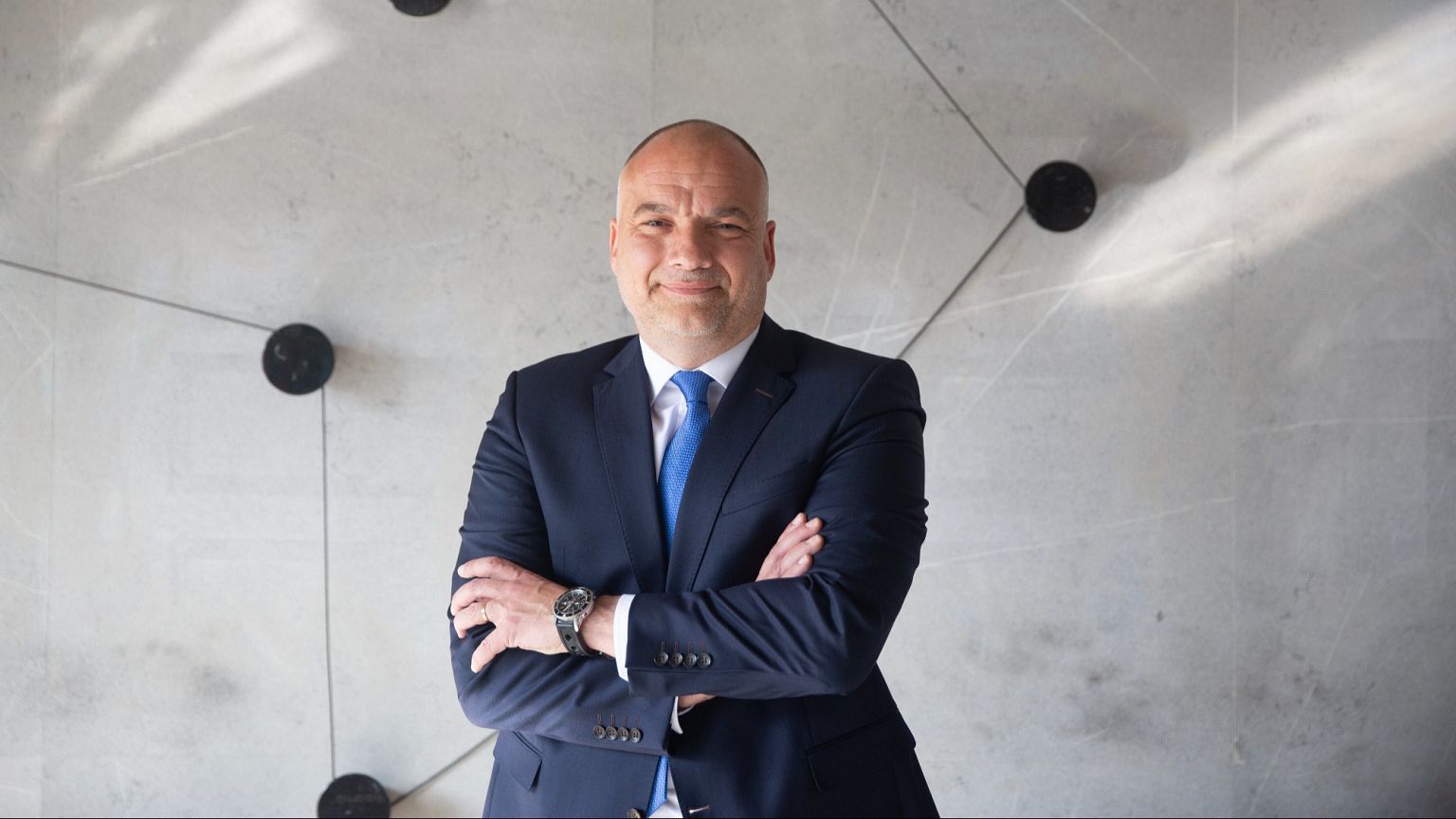


Copyright Bruno Gonçalves/Nascer do Sol
By Nuno Tiago Pinto
Published on 23/05/2025 - 


In an interview with SOL newspaper and Euronews, the head of European intelligence explained that the Russian invasion of Ukraine has changed the way we think about and use intelligence services and argues that the EU can do more in this area — and that the 27 member states are ready to do so.

Earlier this year, after nine years at the head of Croatian intelligence, Daniel Markić was appointed director of the European Union Intelligence and Situation Centre (EU INTCEN), the closest thing the 27-member bloc has to a European intelligence service.

Reporting to the EU foreign policy chief Kaja Kallas, INTCEN monitors what happens inside and outside the EU and provides analyses and alerts to institutions, decision-makers, and member states regarding security, defence, and counterterrorism.

While in Lisbon to take part in a conference celebrating the 30th anniversary of the Strategic Intelligence and Defence Service (SIED), Markić gave an exclusive interview to Nascer do SOL and Euronews in which he identifies the main threats to the security of the EU, cooperation between intelligence services and explains what he sees as the future of the sector.

Euronews: What is INTCEN's role in the EU?

Daniel Markić: For the last 20 years, INTCEN has been a kind of intelligence fusion centre for the European Union. It used to be part of the (European) Council, but with the different reforms of the institutions, it is now part of the European External Action Service (EEAS).

The people who work at INTCEN come mostly from the security and intelligence services of the member states, and we work very closely with military intelligence (EUMS Intelligence Directorate) under an informal umbrella called SIAC, Single Intelligence and Analysis Capacity — and it works very well.

But now we think that what is being done in terms of intelligence may not be enough.

Euronews: Why is that?

Markić: We need to do more. The EU realised a few years ago that it is not just a global political and economic actor, but that it is potentially a security actor. In 2020, the first threat analysis was carried out, namely by SIAC.

It was revised in 2022 and we did a third version a few months ago. This proves that the EU was trying to think about threats in order to find solutions to deal with them.

Euronews: Are you talking about civilian or military threats? Because when we think about military threats we also think about NATO.

Markić: Globally, about all the threats. And then there's the famous strategic document, the (2022) Strategic Compass, which once again describes the EU's capacity. That's where we find a small part of the document that refers to SIAC as the only entry point for strategic intelligence in the EU.

We have to remember that, in terms of intelligence, for member states there is an important article in the Treaty on European Union, 4.2, which says that national security is a competence of states. Knowing all this, we have to find ways to give more. The EU needs more. And the member states are willing to give more.

Euronews: Are they?

Markić: Yes, they are.

Euronews: Has intelligence sharing always been a sensitive issue?

Markić: It is sensitive. But it exists and it works very well. I say this not only as director of INTCEN, but I've worked for the last nine years as director of a national intelligence and security service. And it works.

But when there's a feeling that the services don't do enough very often, it's because they don't communicate enough. We need to make intelligence more visible.

But to add to what I said earlier, everything is being done, and obviously it has become more than a necessity when we look at the threats, the most obvious of which is February 2022 and Russia's brutal attack on Ukraine.
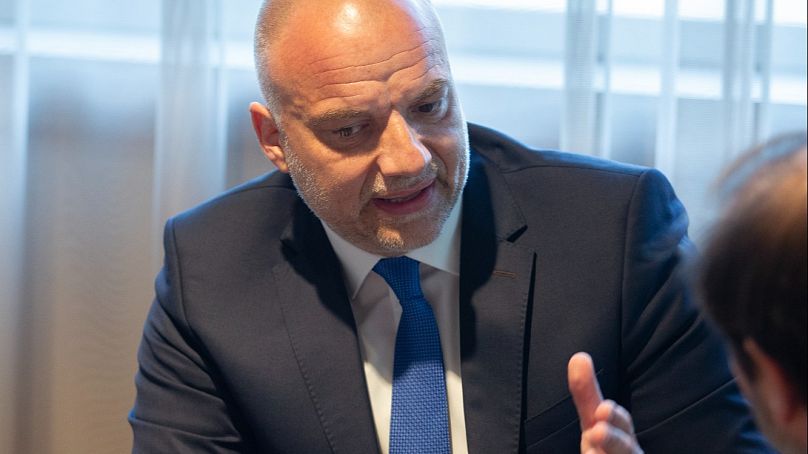
Daniel Markic, diretor do EU INTCENBruno Gonçalves/Nascer do Sol

Euronews: Do you believe that the attack has changed the way intelligence gathering and sharing is seen in the EU's decision-making process?

Markić: Absolutely. And one of the best examples is not necessarily in the EU. US intelligence and the UK intelligence community have started communicating information publicly, which is an important change. This is something that member states and the EU have a lot to learn from.

Euronews: This was also an attempt at pre-emptive action. As if to say to the other side "we know you're doing this, so don't do it".

Markić: Exactly.

Euronews: And it didn't work.

Markić: It didn't work but... I agree with you. And there are many different opinions in the intelligence community. It's no secret. Many EU services were convinced that (the full-scale invasion) wouldn't happen.

When it did, many people were surprised. But if we try to reflect on the messages sent by our Baltic friends, they told us. We just had to listen to them.

(Russian President Vladimir) Putin was very clear in all his speeches. And the same goes for other parts of Europe, for example, in the Western Balkans.

People like Putin are so proud of their intelligence. He's so proud of his own past in the secret services.

In the EU, intelligence is a bit of a dirty word. When you talk about intelligence, you whisper it. You shouldn't whisper.

When you meet the head of intelligence, you don't have to meet him at night. You have a normal meeting.

The secret services will never be the main tool of any political decision-maker, but they are one of the important specific tools he has. And I think EU decision-makers have to have it too. So we have to find ways to get the intelligence to them.

It's important to note that, even in the European institutions, brilliant people are working on security issues. But intelligence is a very specific area. Specific techniques are used, specific means of obtaining intelligence.

Euronews: Which INTCEN can't do.

Markić: Yes. But we have a very strong community of 27 member states. One of the specificities of security and intelligence in the EU - and maybe that's why it's a bit difficult at times - is that there are big differences.

When you look at any institution in the member states, the ministries, they are similar or the same in every country.

The Ministry of Agriculture in Portugal is similar to the one in Germany. Or the Defence Ministry. The security and intelligence community is different. They all have different legal frameworks.

Euronews: And different capacities and possibilities. There are things that the French can do that the Portuguese can't.

Markić: Exactly. But we have the ability to harness the best of each service for the common good. That's the role of INTCEN and SIAC.

When I was head of my national agency, I worked directly for the president and the prime minister, which is not easy, as you can imagine. But for me, if we have intelligence, it's to act, to use it or to react.

Having intelligence just for the database is useless. It's the same in the EU. We need to give the intelligence to the decision-maker, specifically to EU High Representative for Foreign Policy Kaja Kallas, but also to (Commission) President von der Leyen and (Council) President António Costa.

All these actors need to have the right data, at the right time, during the decision-making process. The EU is a strong actor.

Euronews: How do you act when there is a conflict of intelligence sent by different countries?

Markić: In terms of intelligence, it's not something that happens often. We may have different positions, a different political decision.

But in terms of raw information, it doesn't happen very often. What's more, the EU has a specificity. Intelligence in the EU is not as structured as it is in NATO, especially since NATO's reform of its intelligence services 10 years ago.

But we have an advantage. We don't necessarily need intelligence to be agreed upon by all states. We need to be able to use the information provided by a service, a community or a group of services and utilise it. And that's what we're doing.

Euronews: Can you assess whether there were differences in the way intelligence was viewed before and after the Russian invasion of Ukraine?

Markić: There was definitely a change. And, once again, going back to the fact that the intelligence is there for all to see and the need to utilise it.

This aggression, which is not just a war, but a long-term civilizational shock, has changed the way we think about intelligence and use intelligence.

Euronews: The Niinistö report on strengthening Europe's civilian and defence preparedness and readiness advocated the need to strengthen intelligence sharing.

Markić: In the report you'll find a section on SIAC. The report was a major effort to find a new solution that analysed the new threats. One of the problems was that the services were not visible enough. And that's the problem.

And that's why, in my communication with all the services, as I did yesterday in your external service, I talked about the need to communicate more.

My service, when I took over nine years ago, was very good, but very closed, without communication, so the image wasn't very good. We changed that through different initiatives. We made a public report, we sometimes communicated with the media. I think that's what the community should do in Europe.

So once again, the substance will always be for the decision-maker. But the fact that we co-operate, that we have intelligence - it's not just the other side, whatever they do, we can do even better - we have to communicate about it.

Euronews: Do you imagine that INTCEN will be a kind of European Intelligence Service?

Markić: It's hard for me to say. Once again, I'd go back to the famous Article 4.2 of the EU Treaty. I don't think it will happen because doing intelligence, especially abroad, requires a lot of elements in addition to know-how.

In the EU environment, it would be difficult. The EU institutions are very transparent, as they should be, but we still need to raise awareness of security issues. Organising missions like that from somewhere in the EU seems difficult to me.

Euronews: We've heard a lot about strengthening European defence, but we haven't heard about intelligence.

Markić: There was an initiative to strengthen intelligence, which was started three years ago by the member states, and we are working on it.

We created a joint document on strengthening the SIAC, a joint document by the High Representative and the states. So there is an initiative.

It's less visible because defence requires a lot of money. In terms of intelligence, we need more money, but you can't compare.

Euronews: What do you see as the main threats to European security?

Markić: First of all, I'll return to the subject of Russian aggression: it's a clash of civilisations, because we have the aggression itself, we have Russian hybrid activities, even in EU member states, which can sometimes be kinetic activities.

Euronews: Sabotage?

Markić: Among others.

Euronews: What kind?

Markić: We've reported on activities in Lithuania, the packages that exploded in the UK, some assassination attempts and other activities. Perhaps we tend to forget about cyber-attacks in the first place.

The Russians specialise in cyber-attacks, along with their criminal groups. And espionage. In Brussels we try to remind everyone of the importance of security and that espionage exists.

Euronews: State or industrial?

Markić: All kinds, depending on the actor. We have Russia, but also other actors. And when we look at what happened a few days ago in India and Pakistan, what has been happening in Africa, we can see that there are more and more threats.

I haven't mentioned the Middle East, but it's obviously important. And I can't help thinking about the operation that the Russians are carrying out in Ukraine and the reaction of the world, the EU, the US: it's evident that many actors have been watching everything for the last three years and may be tempted to do something.

Euronews: They might think that if the Russians can do it, so can they?

Markić: Definitely. And there are so many conflicts, so many tensions, that the fact that (you don't know) who the main actor is who can stop them is also an element.

Euronews: Do you also have a role in combating disinformation and propaganda?

Markić: Yes, we're not the only ones, there are other organisations in the EU that are working on this.

We had a recent case in Portugal during the blackout. In less than an hour there was fake news being spread in WhatsApp groups and on social media attributing the power failure to a Russian cyber-attack.

There is a tendency to make too many attributions and make Putin out to be a real superman. We have a clear vision, again working together with the 27 communities, of what Russia is doing and how it is doing it.

So it's good to be clear and not try to find Russia behind every stone. Putin would love that. He would have to utilise very few resources and use only social media to show his strength.

Euronews: I noticed that you didn't mention terrorism as a threat.

Markić: Because of this acute crisis, we don't talk about terrorism, but the fight against terrorism is one of the main tasks of the security services. It always remains a priority, but some crises are now more visible.

Euronews: But do you believe that groups like the so-called Islamic State group or Al Qaeda still have some influence on the hearts and minds of some people in our community?

Markić: Definitely. And in that sense, when these issues are less in the media, perhaps there are fewer young people tempted to follow in the footsteps of these movements. But it does exist and I can tell you that the intelligence services in the EU are active on this topic.
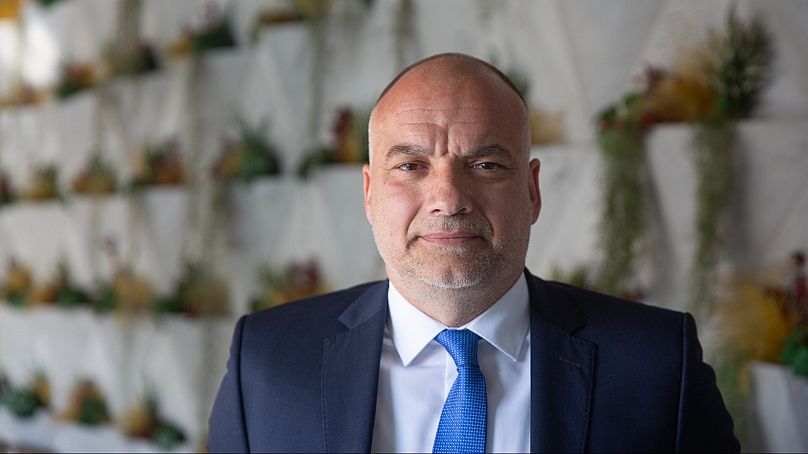
Daniel Markic, diretor do EU INTCENBruno Gonçalves/Nacer do Sol

Euronews: How do you see the possibility of the return to Europe of foreign terrorist fighters and their families who are still in camps and prisons in Syria and Iraq?

Markić: It's a very important issue. It remains to be seen what the US will do in Syria, what will happen to the prisons.

Euronews: Because there are still thousands of people in Syria.

Markić: Exactly. What Turkey is going to do. There are many doubts, but we're all working on it.

Euronews: Should there be a common position among the member states?

Markić: I think we all have a very similar position.

Euronews: Some countries have already repatriated people. Others, like Portugal, haven't.

Markić: Yes, but the difference in numbers between countries can be enormous. Some countries are much more concerned. Not just because of the number of combatants, but also because of the women and children.

Euronews: If they remain in the camps, could these children be the next generation of terrorists?

Markić: Definitely. I'd just say that because I wouldn't want to give a political point of view. But in terms of security, what could happen to them is a big question. Not only if they stay, but even if they return to Europe.

 

Turkey issues dozens of arrest warrants for military personnel over alleged links to 2016 coup

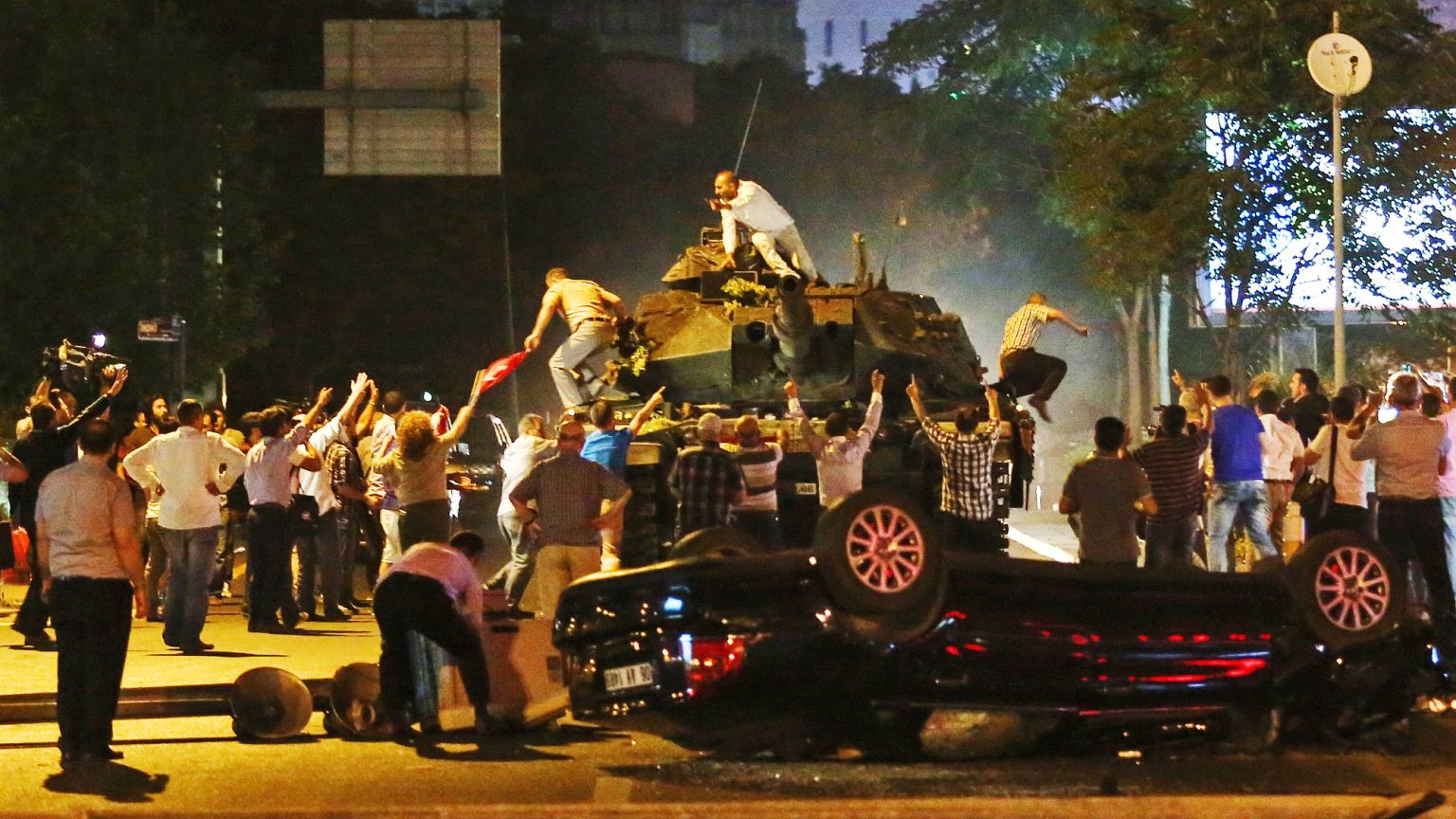
Tanks move into position as people attempt to stop them during the coup attempt in Ankara, 16 July, 2016
Copyright AP Photo


By Sait Burak Utucu & AP
Published on 

Officials say the individuals were identified through phone records and allege that FETÖ continues to pose a major threat to the state.

The Istanbul Chief Public Prosecutor's Office has issued arrest warrants for 63 active-duty military personnel accused of links to the Gülen movement, which Ankara blames for the July 2016 failed coup attempt

According to a statement released, simultaneous operations were carried out across 36 provinces, resulting in the detention of 56 suspects.

Among those detained are four colonels, as well as officers from the Turkish land, naval, and air forces and the gendarmerie.

The prosecutor's office said that the suspects include eight personnel from the air force, 13 from the Gendarmerie General Command, 36 from the land forces, and six from the navy.

The detainees comprise four colonels, eight lieutenant colonels, 12 majors, 15 captains, and 24 non-commissioned officers.

Pro-government supporters protest on the road leading to Istanbul's iconic Bosphorus Bridge, 21 July, 2016
Pro-government supporters protest on the road leading to Istanbul's iconic Bosphorus Bridge, 21 July, 2016AP Photo

The statement alleges that these individuals have ties the group founded by cleric Fethullah Gülen, who lived in self-imposed exile in the United States from 1999 until his death in October 2024.

The group is accused by Turkish authorities of orchestrating the 2016 coup attempt, which claimed the lives of around 290 people.

The prosecutor's office said in a statement: "The arrest and detention of 63 suspects in Istanbul and 35 other cities was launched simultaneously at 6 am today (5 am CEST), in accordance with instructions given to the Istanbul Police Anti-Terror Branch Directorate. We will keep you informed of further developments."

On the evening of 15 July 2016, military units loyal to the plotters launched an attempted coup d'état and took to the streets of Ankara and Istanbul, bombing government buildings including the Turkish Parliament and the presidential palace.

President Recep Tayyip Erdoğan was on holiday in Marmaris at the time.

Several senior officials, including then Chief of General Staff Hulusi Akar and General Yaşar Güler (now Defence Minister), were taken hostage.

Survival of the state

In Friday's statement, the prosecutor's office said the suspects had been identified through telephone communication records.

The statement described the Gülen movement as "the biggest threat to the constitutional order and survival of the state," and claimed that the number of undetected military personnel affiliated with the organisation exceeded those who actively participated in the coup.

Although specific charges were not detailed, the prosecutor's office noted that around 25,800 military personnel have been detained in connection with the failed coup attempt since 2016.

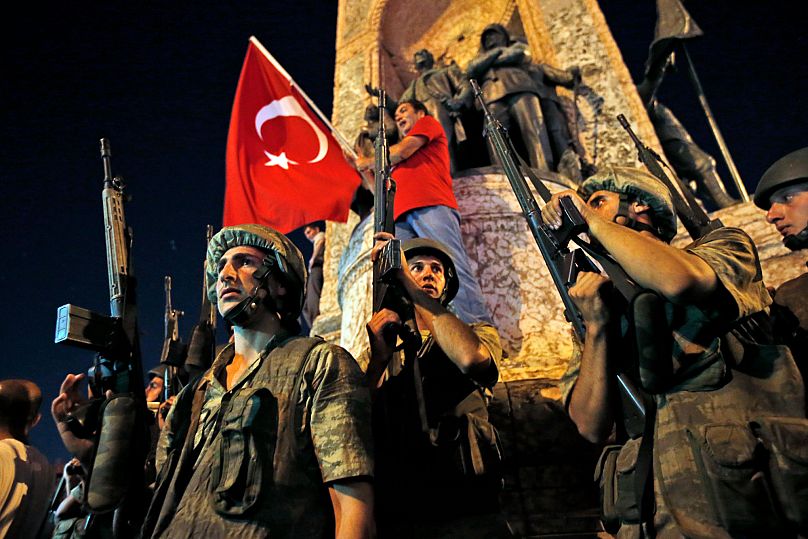
Turkish soldiers secure the area as supporters of Turkey's President Recep Tayyip Erdoğan protest in Istanbul's Taksim square, 16 July, 2016
Turkish soldiers secure the area as supporters of Turkey's President Recep Tayyip Erdoğan protest in Istanbul's Taksim square, 16 July, 2016AP Photo

The Gülen movement — officially referred to by the government as the "Fethullahist Terrorist Organisation/Parallel State Structure" (FETÖ/PDY) — has long been accused of establishing a clandestine network within state institutions, including the judiciary, police and military.

The group has been implicated in various criminal activities, including leaking university entrance exam questions and orchestrating the assassination of academic Necip Hablemitoğlu.

It is also accused of involvement in the murder of journalist Hrant Dink and other serious crimes.

The first legal case against the organisation was filed in 1999. The indictment accused Gülen and his followers of trying to create "an illegal organisation with the aim of establishing a state based on Islamic principles by changing the constitutional system."

Although originally Gülen was considered a friend and supporter of Turkish President Recep Tayyip Erdogan, tensions between the Gülen movement and the ruling AK Party escalated significantly in 2013 during a corruption investigation, dubbed by critics as a coup attempt, led by prosecutors allegedly linked to the group.

Following the 2016 coup attempt, further crackdowns took place under a state of emergency, and many individuals were dismissed via emergency decrees.

Critics have raised concerns over inconsistencies in the enforcement of justice. While some high-profile businessmen with alleged ties to the movement have avoided prison, many low-level affiliates were jailed or lost their jobs.

Former AK Party MP Şamil Tayyar claimed that a "FETÖ stock exchange" operated during the purges, where businessmen could allegedly avoid prosecution by paying bribes.

"There are millions of dollars involved," Tayyar said.

"They’re releasing businessmen under the guise of being informants. This is happening all over Turkey."V


I don’t plan to stand for president again – Erdogan

I don’t plan to stand for president again – Erdogan

Erdogan: On his last stretch? / CNN interview, screenshot
By bne IntelliNews May 22, 2025

Turkish President Recep Tayyip Erdogan on May 23 claimed that he has no interest in again being re-elected as president.

The 71-year-old was on May 22 discussing his push for a new Turkish constitution when—according to Turkey’s state news service Anadolu Agency—he told journalists on a plane bringing him home from a visit to Hungary: “We want the new constitution not for ourselves but for our country. I have no interest in being re-elected or becoming a candidate again."

Erdogan’s present term in office runs to 2028 and, under the current constitution, he cannot run for president again unless he calls early elections. In Turkey, there is therefore a widely held belief that Erdogan, who has led Turkey for 22 years, wants to change the constitution in order to change the rules.

A snap election as things stand could be risky—Erdogan is facing intense opprobrium over the jailing of Istanbul mayor and main political opponent Ekrem Imamoglu, a politician who would be expected to defeat Erdogan in a fair contest, or perhaps even in an election marred by significant rigging given the strength of his popularity.

In January, Erdogan was asked by a singer if he was considering running for another term. His response was "I am, if you are." A spokesman for Erdogan’s AKP party then confirmed the issue was on the agenda, saying: "What is important is that our nation wants it."

In further comments on why Turkey in his eyes needs a fresh constitution, Erdogan said he wanted to create a constitution that has a "civilian" framework rather than one "written by coup plotters".

"In such a rapidly changing world, is it possible to get anywhere with a constitution that was written under the conditions of a coup?" he asked.

Much of the content of Turkey’s present constitution was ratified following a military coup in 1980.

The constitution allows for two five-year presidential terms. Erdogan is actually on his third term already, but he has contended that his first term took place before Turkey moved from parliamentary rule to executive presidential rule following a referendum.

To pave the way to a referendum that could bring in a new constitution allowing for further presidential terms, Erdogan needs the votes of 360 MPs in the 600-seat parliament. As things stand, he can only rely on 321. If he managed to secure 400 votes, he could bring in new constitutional rules immediately.

If the current process aimed at establishing a durable peace with the outlawed Kurdistan People’s Party (PKK) is successful, Erdogan might seek the support of the 56 MPs who represent the pro-Kurdish DEM party. The PKK lately announced it was disbanding, but it has not disarmed.

Erdogan said on May 21 that if the PKK laid down its arms, it would mean the DEM party could continue in politics "in a much stronger way".

Separately on May 22, US Senator Adam Schiff, a Democrat, said that Turkey’s authorities should present credible evidence of corruption against Imamoglu, or immediately release him.

He spoke as he urged his colleagues to vote for a resolution calling out Erdogan over what he called democratic backsliding.

“The continued detention of Mayor Imamoglu, as well as the harassment and arrest of dozens of journalists and dissenting political voices in Turkey, is the latest in an unfortunate trend in the democratic backsliding that Turkey has seen under President Erdogan,” Schiff said in a statement to Reuters.

“The Senate should send a loud and clear message that the unjustified jailing of Erdogan’s political rivals is not acceptable.”

US President Donald Trump has not said a word about the arrest of Imamoglu, while the US State Department has dismissed the matter as Turkey’s internal affair.


Rubio rules out Chevron Venezuela licence extension after conflicting signals

Rubio rules out Chevron Venezuela licence extension after conflicting signals
In a May 22 post on X, Rubio wrote that “Biden’s pro-Maduro oil licence in Venezuela will expire as scheduled next Tuesday, May 27.”
By bne intellinews May 22, 2025

The US administration is set to revoke Chevron's licence to operate in Venezuela on May 27, as initially scheduled, contrary to recent Bloomberg reports that suggested a longer extension was likely.

This confirmation comes from Secretary of State Marco Rubio, following previous statements from President Donald Trump in March that the licence would be withdrawn on April 3. 

Although Trump later granted a temporary extension, Rubio clarified that this arrangement will not be prolonged beyond its expiry date.

In a May 22 post on X, Rubio wrote that “Biden’s pro-Maduro oil licence in Venezuela will expire as scheduled next Tuesday, May 27.”

The authorisation allowed Chevron to operate a number of joint ventures with state-run oil company PDVSA despite pre-existing sanctions, and was originally issued by former president Joe Biden in November 2022. It was part of a broader set of negotiations with Nicolás Maduro’s government aimed at securing a commitment to hold fair presidential elections in Venezuela. However, this strategy ultimately failed, as Maduro intensified repression against the opposition and the July 2024 election—though officially giving the incumbent a third term—has been widely regarded as fraudulent.

Meanwhile, the situation surrounding the licence has sparked differing opinions within the Trump administration. 

On May 21, two senior government officials presented conflicting views regarding the sanctions on Venezuela.

Laura Loomer, a right-wing pundit with close ties to the president, cast doubt on Rubio’s assertions, referencing comments made by Richard Grenell, Trump’s special envoy for special missions who met with Venezuelan officials on two occasions since January, El Tiempo reported. 

Loomer argued that Grenell had indicated Trump greenlighted the extension on the condition that the Venezuelan government release American hostages. Seven US citizens were freed recently, including military officer Joseph Clair.

Loomer also criticised the potential for China to fill the market void left by departing US companies and warned of the impact on US jobs in the energy sector.

Grenell, who most recently met with Maduro’s officials in Antigua earlier this week, reportedly stated that the extension was contingent on the release of US hostages and broader progress in US-Venezuela negotiations. 

“The president authorised this extension if we made progress, building trust, like what we achieved today (with the release), and that’s why the extension will be granted,” he said.

Grenell's remarks were likely behind Bloomberg’s reports indicating that Trump would extend the licence by an additional 60 days. But Rubio’s latest comments seem timed to set the record straight, indicating that the Biden-era waiver will indeed be cancelled on May 27. 

Sources suggest the Trump administration may eventually introduce a new licence, potentially with different conditions, to replace the expired one.

OLIGOPOLY

Hungary's richest see €5bn surge in wealth, with Orban allies among biggest gainers

Hungary's richest see €5bn surge in wealth, with Orban allies among biggest gainers
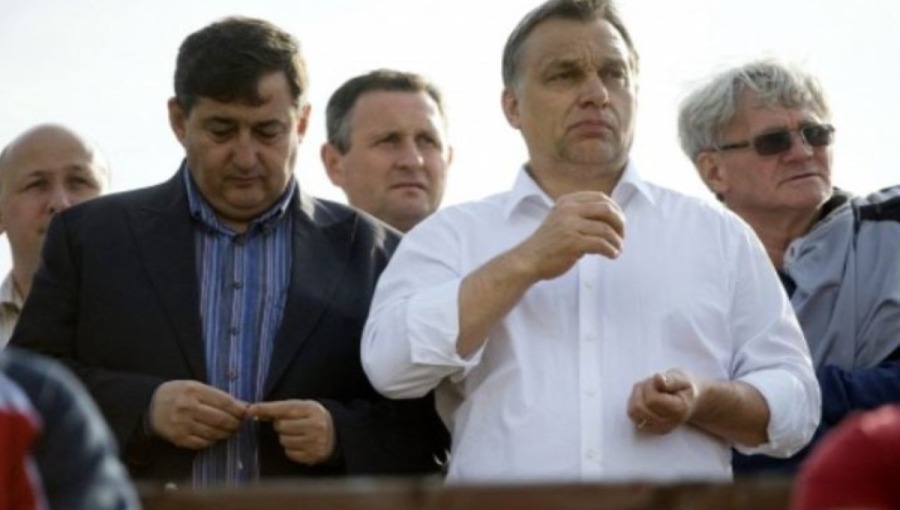
Prime Minister Viktor Orban (right) and Lorinc Meszaros (left) have been friends since they were at school together. / bne IntelliNews
By bne IntelliNews May 23, 2025


Intense Ukrainian drone attacks drive civilian flights out of southern Russian skies

Intense Ukrainian drone attacks drive civilian flights out of southern Russian skies
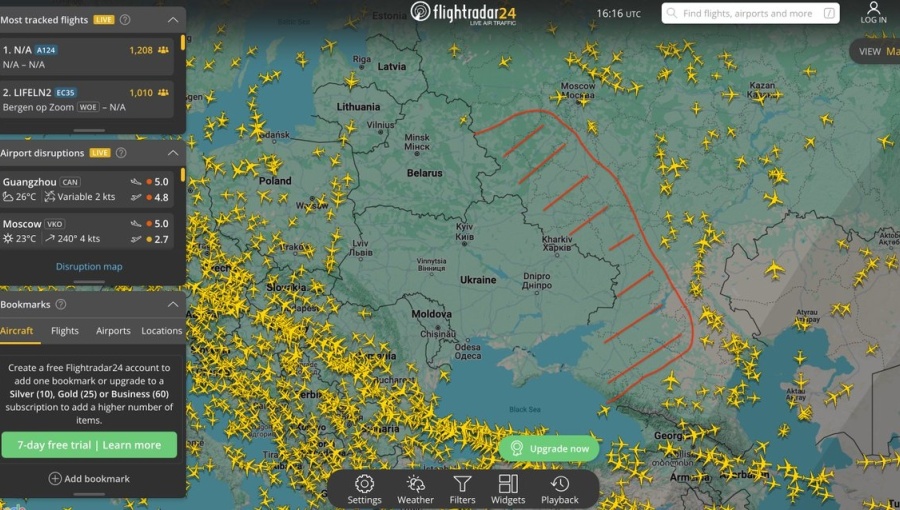
Swarms of Ukrainian drones hitting targets in Russia have forced air traffic controllers to cancel or reroute fligths from large swathes of southern Russia / bne IntelliNews
By bne IntelliNews May 22, 2025

Ukraine has launched some of the biggest ever drone attacks on Russia that has caused disruptions of civil aviation across the country on May 22.

Traffic controllers were forced to close domestic Russian airspace to its own flights across vast swathes of southern Russia, suspending or rerouting flights due to the intensity of Ukrainian drone activity, according to flight tracking data.

Flightradar24 reported that full civilian airspace closures have been implemented over eleven Russian regions: Bryansk, Kaluga, Tula, Oryol, Kursk, Lipetsk, Voronezh, Belgorod, Rostov, Krasnodar and the Republic of Adygeja. Partial airspace restrictions are also in effect in Smolensk, Stavropol, Volgograd and Tambov.

The resulting disruption has forced most aircraft travelling to or from Moscow and southern Russia to avoid Ukrainian and western border airspace entirely. Flights are now diverting over the Astrakhan region and the Caspian Sea. “The bulk of planes going or leaving Moscow into the South have to make a wide berth from Ukraine, converging over the Astrakhan area and the Caspian Sea,” Flightradar24 noted.

The affected area covers an estimated 540,000 square kilometres, representing one of the largest peacetime restrictions of Russian civilian airspace since the full-scale invasion of Ukraine began in February 2022.

The onslaught of drones appears to be part of a new strategy that will bring the war home to regular Russian by disrupting travel around the vast country that covers 11 time zones. For most of the last three years, Putin has been careful to shield regular Russians from the effects of the war in order to nip any potential protests in the bud.

Now drones attacks have forced at least 217 airport closures since January 1, Novaya Gazeta reports citing Russia's state aviation agency Rosaviatsia – more than all the forced closures in 2023 and 2024 combined.

The last time Ukraine ramped up its drone strikes was in the days leading up the Victory Day parage on May 9, which brough many foreign dignitaries to Moscow. Those attacks also threw Russia’s civil aviation into chaos and saw some 60,000 Russian stranded at airports across the country after dozens of flights were cancelled or rerouted.

The situation remains fluid. Analysts warn that further escalation could impact even these adjusted flight corridors. “If Ukrainian drones would start entering this area, then it would further complicate this situation,” the German Tendar Telegram channel noted, commenting on the disruptions.

There has been no official comment from Russia’s Federal Air Transport Agency (Rosaviatsiya), though previous drone incursions over Russian territory have triggered temporary airport closures and flight delays in major cities.

The disruptions underscore the growing reach of Ukraine’s capabilities in the drone war. Ukraine has massively scaled up its domestic production of drones as well as extending their range to be able to reach deep into Russian territory. Russia has recently intensified its missile barrage on Ukraine as ceasefire negotiations get under way, only to see Ukraine respond with swarms of drone attacks inside Russian territory.

Putin orders creation of buffer zone along Ukrainian border

Putin orders creation of buffer zone along Ukrainian border
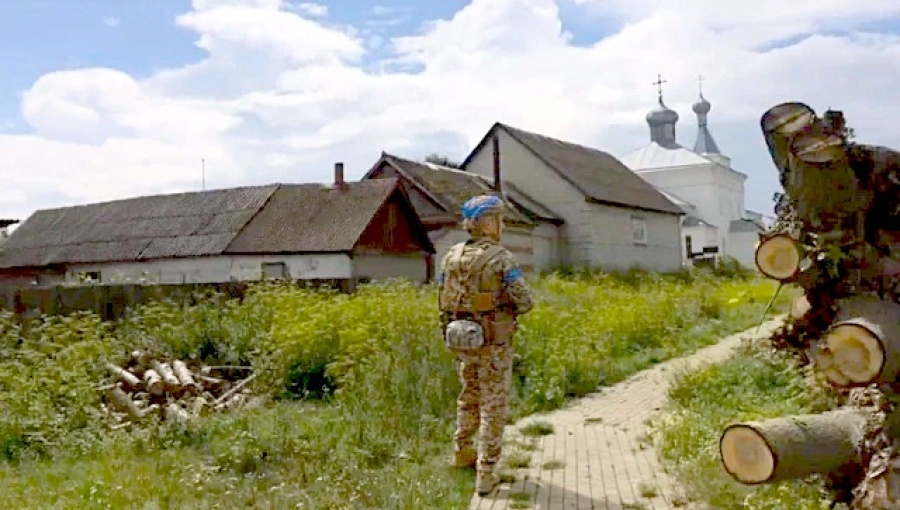
Russian President Vladimir Putin has ordered a buffer zone to be set up along the border with Ukraine. / bne IntelliNews


\By bne IntelliNews May 22, 2025

Russian President Vladimir Putin ordered a buffer zone to be set up along the border with Ukraine on May 22.

Following his visit to the Kursk region, which has been partially controlled by Ukrainian troops for months , Russian President Vladimir Putin announced the creation of a "buffer zone" that will run "along the border." Putin said the decision had been made at a government meeting via video link.

He initially declined to say exactly where the zone would extend, how long it would be, or how deep into Russian-occupied territory in Ukraine it would extend. "Our armed forces are in the process of solving this task; enemy firing points are being actively suppressed; work is underway," he said.

The Russian press framed the plan as a rehabilitation zone for Russian regions that had been damaged by escalating cross-border drone attacks. Putin ordered the rapid development of a comprehensive restoration programme for border regions affected by Ukrainian strikes, instructing officials to ensure sufficient financial and logistical support for reconstruction efforts.

Putin directed the Ministry of Economic Development, in coordination with the Presidential Administration, to lead the initiative targeting the Kursk, Belgorod and Bryansk regions, all of which have faced repeated shelling and drone attacks since the escalation of cross-border hostilities.

"I task the Russian Ministry of Economic Development in cooperation with colleagues from the Presidential Administration to prepare at the earliest possible time the programme for comprehensive restoration of affected districts of Kursk, Belgorod and Bryansk regions," the president said, according to TASS.

Putin emphasised the importance of ensuring the programme is fully resourced. “The programme must be provided with required financial and material resources,” he noted, adding that additional machinery and personnel, including experts from other regions, would be mobilised to assist.

The three regions, which share borders with Ukraine, have reported increasing attacks in recent months, including strikes on civilian infrastructure. Local authorities have declared states of emergency in several districts and implemented evacuations in response to the growing threat.

While Moscow has accused Kyiv of targeting border areas to destabilise Russian territory, Ukrainian officials have largely refrained from confirming cross-border operations, maintaining a policy of strategic ambiguity regarding long-range strikes.

The Kremlin’s move to launch a formal reconstruction initiative underscores the political and logistical challenges posed by the conflict’s spillover into Russian territory. It also reflects a broader attempt to reassure local populations and bolster administrative control in regions facing direct impacts from the war.

No timeline has been announced for the completion of the restoration programme.

The EU prepares a Plan B to sidestep Hungary's veto of Ukraine's accession bid

The EU prepares a Plan B to sidestep Hungary's veto of Ukraine's accession bid
Brussels has a Plan B to work around Hungary's veto of Ukraine's bid to join the EU. / bne IntelliNews
By Ben Aris in Berlin May 22, 2025

Brussels is preparing Plan B to side step Hungary’s veto of Ukraine’ accession to the EU, European Pravda reported on May 21. The initial legal steps have already been taken, though they remain undisclosed, according to multiple EU sources cited by the publication.

Ukraine was granted EU candidate status in 2022, but formal accession talks have yet to begin due to Hungary’s opposition.

Hungarian Prime Minister Viktor Orbán has cited rule-of-law concerns and what he describes as Ukraine’s mistreatment of ethnic Hungarians as reasons for blocking the talks.

The essence of the plan is to use those processes that do not require unanimity of agreement by EU members to push the accessions forward – and where possible, in conjunction with Moldova, which is also seeking to join the Union. In those matters where unanimity is necessary for a final decision, the negotiations will be done in “parallel” by the other 26 members to reach agreements. Although these parallel negotiations will not be legally binding, they will carry significant political weight and effectively isolate Hungary.

It is hoped in this way Ukraine can progress rapidly towards membership, increasing the pressure on Hungary to make concessions at a future date.

Stripping Hungary of its voting rights


The EU is also considering stripping Hungary of its EU voting rights at the upcoming meeting on May 27, negating its ability to block the Ukraine accession process.

This is the nuclear option, say experts, as it requires invoking Article 7 of the EU founding treating that pertains to backsliding on the rule of law and also Article 2 that enshrines EU members commitment to uphold the, ill-defined, values at the core of the European project.

As reported by bne IntelliNews, removing Hungary’s voting rights is an extremely difficult process, fraught with legal landmines and would be an unprecedented that also threatens to tear the EU apart.

In particular, all 26 members states from the total of 27 would have to vote for stripping Hungary of its voting, leaving open the question of which way Orban’s ally, Slovak Prime Minister Robert Fico, would vote. Lawyers have speculated that parallel motions could be launched to strip both Hungary and Slovakia of their voting rights simultaneously, which in theory would block the two countries from participating and vetoing each other’s votes. However, the EU lawyers admit that this procedure is not well defined in the EU treaty and would almost certain spark a big and long-lasting legal dispute with an uncertain resolution.

European ministers will discuss Hungary's status at a meeting of the General Affairs Council on May 27, the Council said.

Parallel track 

The parallel track talks could begin as early as August or September if ongoing diplomatic efforts fail to persuade Hungarian Prime Minister Viktor Orbán to lift his objections to Ukraine’s membership.

“The essence of the idea is to make full use of the flexibility of EU law,” European Pravda reported. Under the plan, Ukraine would proceed with technical and legal steps towards accession where possible.

At the same time Orbán has sought to build a new far-right alliance in the European Parliament. He has worked with other nationalist and populist parties, particularly Poland’s Law and Justice (PiS) and Italy’s Lega, in an effort to form a new group, which is increasing in influence.

“At the same time as Moldova and the EU announce the opening of the first cluster (or clusters) of negotiations, Ukraine and the 26 EU states are [due] to publish an official statement that Ukraine has also completed all the work on those same clusters,” European Pravda reports.

The plan includes the potential convening of intergovernmental conferences, the institutional mechanism that formally drives the EU enlargement process. EU sources indicated that such conferences for Ukraine could be held without full unanimity. “The negotiation framework for Ukraine, approved by the EU, does not require unanimity to convene a conference and even obliges the EU to do so from time to time,” European Pravda said.

For Moldova, joint conferences could result in formal legal progress toward membership. For Ukraine, they would serve as political validation of reform efforts and underline that Hungary’s veto remains the sole obstacle to legal advancement.

Supporters of the strategy argue that once Budapest’s position changes, or a new government takes office, Kyiv could “quickly catch up on the missed legal steps”.

It is expected that Ukraine will need as long as a decade to complete the EU accession process, whereas Orban faces new parliamentary elections in April next year and in theory he will face at least one more election before Ukraine comes close to finishing its accession process.

Kremlin rebukes the EU

The Kremlin rebuked the EU for not following its own rules on May 22 and criticised the reported plans to initiate accession negotiations with Ukraine without Hungary's consent. The Russian Ministry of Foreign Affairs warned that such a move would undermine the EU's legal foundations and harm prospects for peace.

Russian Foreign Ministry Spokeswoman Maria Zakharova said Moscow had taken note of discussions in Brussels regarding a possible workaround to Hungary’s veto of Ukraine’s EU membership talks and the so-called Plan B that would allow 26 EU member states bypass the need for unanimous approval.

“If such ideas are implemented, it will be one more example of how the EU is undermining its own legal foundations in order to pursue political objectives,” Zakharova said, according to TASS on May 22. “Brussels is making another step towards completely eroding the EU’s institutional framework and the norms on which its legitimacy is based.”

Zakharova said the plan demonstrated that the EU “is no longer even trying to maintain the appearance of consensus and collective decision-making.” She added that the bloc’s approach to enlargement had become openly political and confrontational.

“Such actions push the prospect of peaceful dialogue further away and show that Brussels is not interested in resolving the Ukrainian conflict through diplomatic means,” she said.

The Kremlin has repeatedly opposed Ukraine’s efforts to join both the EU and Nato, framing the moves as provocative and destabilising.


Rio Tinto wins first approval under Argentina's large investment incentive scheme

Rio Tinto wins first approval under Argentina's large investment incentive scheme
After more than a decade of being stifled by strict currency and capital controls, the country's nascent mining revival is now gathering momentum under Milei's RIGI. / unsplash
By Mathew Cohen May 22, 2025

Rio Tinto has secured approval for its $2.5bn lithium mining project in Argentina's Salta province, becoming the first mining venture to win backing under the government's Large Investment Incentive Regime (RIGI). Daniel Gonzalez, mining and energy coordination secretary, announced the decision at a Buenos Aires conference on May 20.

"We are grateful because there was strong anxiety over what was happening with the mining RIGIs," said Roberto Cacciola, head of Argentina's CAEM mining chamber, as per Reuters. "This was major news."

The development aligns with Rio Tinto’s strategy to intensify its lithium focus, particularly across Argentina, Bolivia, and Chile. The RIGI framework provides tax and customs benefits, access to international arbitration, and long-term stability plans designed to attract foreign investment.

As recently reported by bne IntellinewsCanadian miner McEwen Copper is also advancing one of Latin America's most ambitious copper projects in Los Azules in cooperation with Stellantis and Rio Tinto, banking on President Javier Milei's signature business-friendly reforms to unlock Argentina's mining potential.

"We have applied for RIGI in February, the authorities are evaluating our project and we are optimistic about the approval," McEwen Copper vice-president Michael Meding told bne Intellinews.

After more than a decade of being stifled by strict currency and capital controls, the country's nascent mining revival is now gathering momentum under Milei's RIGI. The scheme, which aims to attract much-needed foreign investment, includes a reduction of corporate tax rates from 35% to 25%, a reduction of tax on dividends from 7% to 3.5%, removal of export duties, and faster VAT recovery – important since most VAT is 21%. It also provides for total freedom to import and export, all this in the frame of a thirty-year stability. 

The RIGI covers eight key sectors: industrial forestry, tourism, infrastructure, mining, technology, steel, energy, and oil and gas. It also includes Long Term Strategic Export projects aimed at positioning Argentina as a reliable supplier in global markets where it currently has low participation.

Rio Tinto's landmark approval signals a potential turning point for Argentina's mining sector, which has struggled to attract significant investment amid economic instability. However, the success of RIGI will ultimately depend on the government's ability to maintain policy consistency and address ongoing concerns about regulatory delays that have previously deterred international investors.


Limited Response To Rottweiler ‘Amnesty’ In Zurich After Ban On Breed


BAN OWNERS NOT BREED

Rottweilers dogs


By 

Zurich’s Rottweiler owners are taking their time with the newly introduced application to keep Rottweilers: only one in six has submitted an application to the veterinary office to be allowed to continue keeping the large canine.


Owners still have until the end of June to submit their application. If they miss the deadline, they will be liable to prosecution. Around 350 Rottweilers are registered in the canton of Zurich.

Because several children were attacked by Rottweilers last year, the government decided to ban the purchase of this breed from the beginning of 2025. Anyone who already owns a Rottweiler needs a licence and must take the dog to a character test.

In addition, someone from the veterinary office will visit the owners at home. The new regulation also applies to mixed-breed dogs with more than 10% Rottweiler DNA.

Critics of ban 

The ban on keeping dogs will soon also be an issue in the cantonal council: a citizen who works as a dog trainer is calling for the breed ban to be lifted in a new individual initiative.

The dog trainer wrote in his petition that such a ban is generalising and ignores both the current state of science and the many years of experience of many experts. A general ban on keeping dogs does not create safety, but rather leads to hidden and inadequate accommodation for these animals.


This would create the very risks that the ban is intended to prevent. If a Rottweiler is demonised or isolated because of its breed, this leads to behavioural problems. The Cantonal Council will debate the motion at one of its upcoming sessions. However, it is unlikely that the government will be prepared to lift the ban.

Rottweilers are also still an issue in court: the Swiss Rottweiler Club (SRC) and the Zurich Dog Association have lodged an appeal with the administrative court against the government’s decision. This appeal is still pending.


SwissInfo

swissinfo is an enterprise of the Swiss Broadcasting Corporation (SBC). Its role is to inform Swiss living abroad about events in their homeland and to raise awareness of Switzerland in other countries. swissinfo achieves this through its nine-language internet news and information platform.