Friday, May 23, 2025

Netanyahu accuses Macron, Starmer and Carney of siding with Hamas after Gaza operation criticism
Copyright AP Phot

By Gavin Blackburn
Published on 

Earlier this week, the three leaders issued a joint statement condemning what they said was Israel's "egregious" military actions in Gaza and warning that they would take "concrete actions" if Netanyahu didn’t change course.

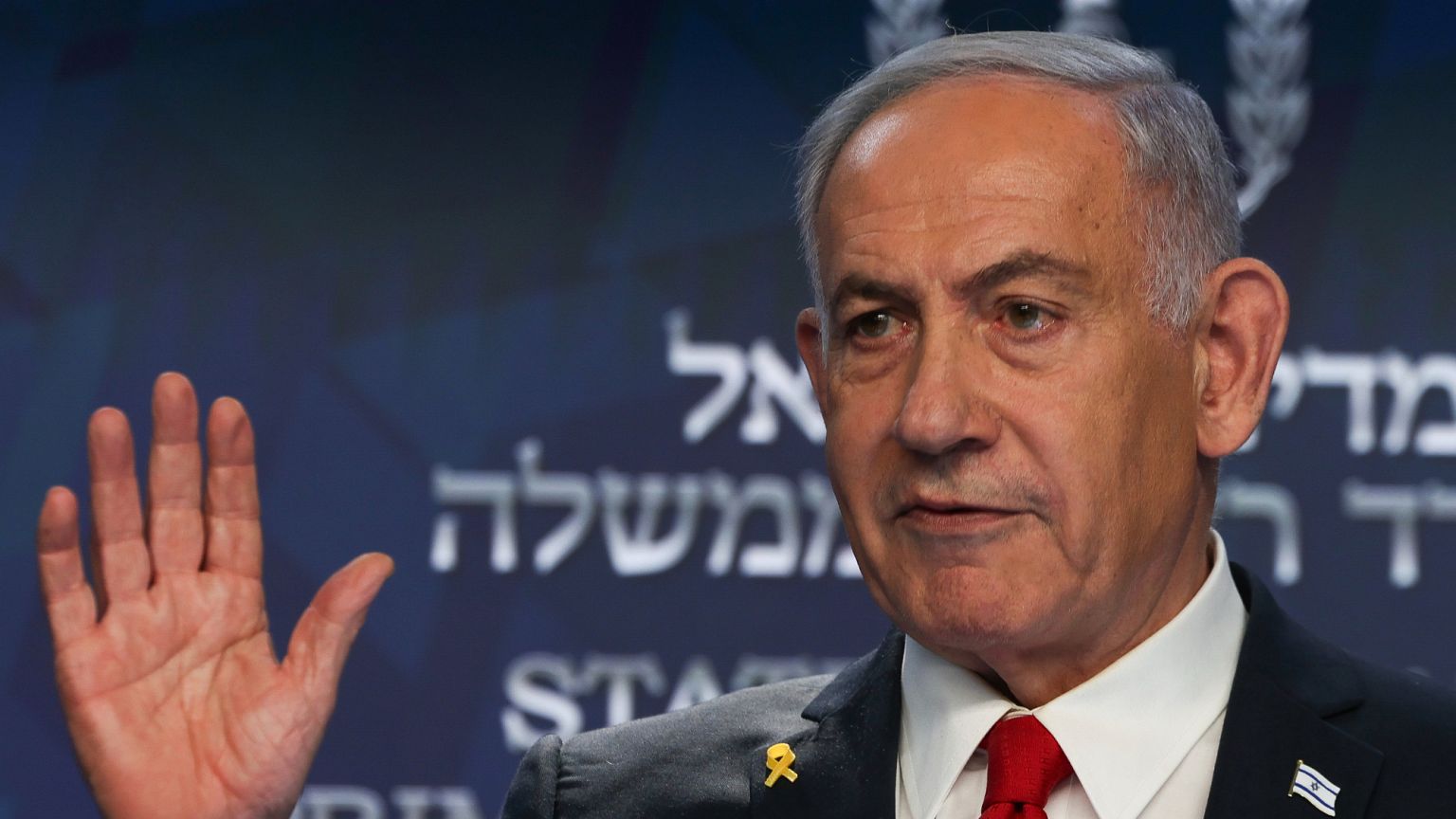
Israel's Prime Minister Benjamin Netanyahu has accused the leaders of France, the United Kingdom and Canada of being on the "wrong side of history" and siding with Hamas after they all called for an end to Israel’s military operation in Gaza and restrictions on the delivery of humanitarian aid.

"When mass murderers, rapists, baby killers and kidnappers thank you, you're on the wrong side of justice, you're on the wrong side of humanity and you're on the wrong side of history," he said in remarks on Friday, name-checking Emmanuel Macron, Keir Starmer and Mark Carney.

"Now, these leaders may think that they're advancing peace, they’re not. They're emboldening Hamas to continue fighting forever and they give them hope to establish a second Palestinian state from which Hamas will again seek to destroy the Jewish state - and mind you, it's not going to be a state free of Hamas."

Earlier this week, the three leaders issued a joint statement condemning what they called Israel’s "egregious" military actions in Gaza and warning that they would take "concrete actions" if Netanyahu didn't change course, particularly regarding humanitarian aid0:0
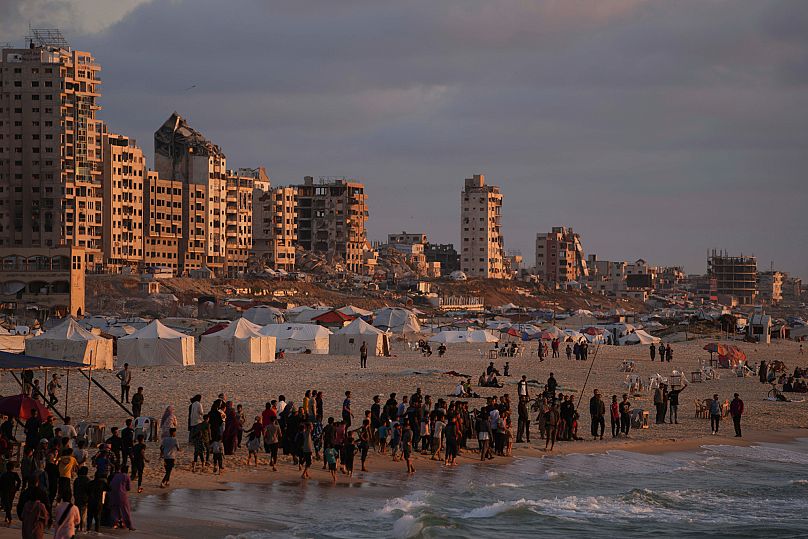
Displaced Palestinians walk along a makeshift tent camp at the shore of Gaza City, 22 May, 2025AP Photo

In his television address, Netanyahu also said the killing of two of his country's embassy staff in Washington was a "horrific" act of antisemitic violence.

Yaron Lischinsky, 30, and 26-year-old Sarah Milgrim were shot dead at an event hosted by the city's Capital Jewish Museum on Wednesday night local time.

Elias Rodriguez shouted "Free, free Palestine" as police took him away, and Netanyahu drew a direct line between the shooting and the Hamas-led attack on Israel in 2023, which started the Israel-Hamas war in Gaza.

France, the UK and Canada, all close allies of Israel, condemned the killings in Washington, as they did after Hamas' 7 October 2023 attack.

Faltering relations

Government ministers in all three countries have been quick to defend their leaders. Christophe Lemoine, spokesperson for the French foreign ministry, told local radio that "Israel has to let aid in; access has to be massive and free," while criticising the military escalation.

And the UK armed forces minister Luke Pollard rejected Netanyahu's criticism of Starmer, saying, "We stand in support of Israel's right to self-defence as long as they conduct that within international humanitarian law."

Relations between Israel and the UK plunged to their lowest level in decades earlier this week after British Foreign Secretary David Lammy announced he was suspending free trade negotiations with Israel, calling cabinet ministers’ calls there to "purify Gaza" repellent.
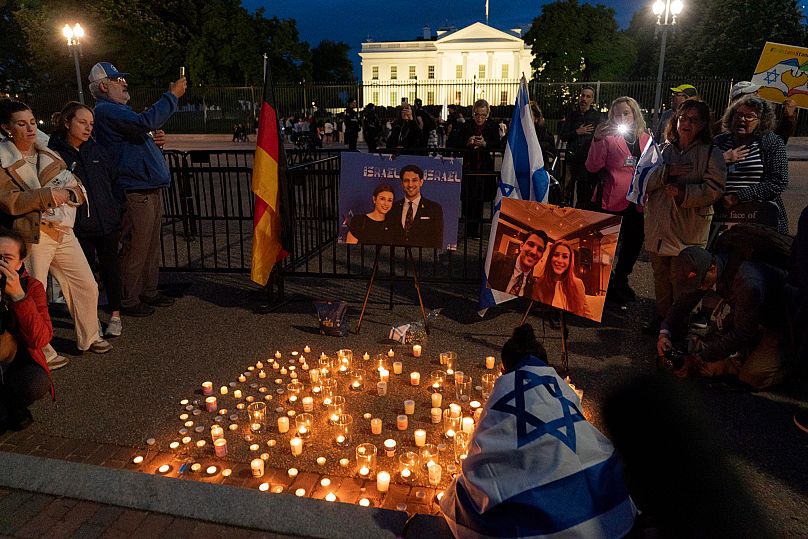
People light candles at a memorial for Yaron Lischinsky and Sarah Milgrim outside the White House in Washington, 22 May, 2025AP Photo

This also isn't the first time Macron has received a sharp rebuke from Israel's prime minister.

Earlier this month, Netanyahu said that Macron had "once again chose to stand" with Hamas after the French president said Europe should consider sanctioning Israel over the humanitarian situation in Gaza, where hundreds of thousands are thought to be now facing starvation.

After an almost three-month blockade on all aid entering the Strip, dozens of trucks were allowed to enter Gaza again earlier this week, but the UN said that the amount entering was a "drop in the ocean" compared to what was needed.

The Israel Defence Forces (IDF) launched a renewed offensive in Gaza, codenamed Operation Gideon's Chariots, last Friday.

The major ground offensive in northern and southern Gaza is backed by the Israeli air force and aims to expand "operational control" over the Strip and free the remaining hostages still being held by Hamas.


U2's Bono speaks out against Hamas, Benjamin Netanyahu and Israeli 'far-right fundamentalists'

Bono speaks out against Hamas, Benjamin Netanyahu and Israeli “far-right fundamentalists”  - pictured: Bono at Cannes 2025
Copyright AP Photo

By David Mouriquand
Published on 

Bono spoke out against Hamas and called for Israel to be "released from Benjamin Netanyahu" in plea to "stop war" during the Ivor Novello Awards in London. His comments mark the first time the human rights activist has spoken out in public against the Israeli prime minister.

U2’s Bono has spoken out against Hamas, Benjamin Netanyahu and Israeli “far-right fundamentalists” at the 2025 Ivor Novello Awards last night.  

U2 became the first Irish act to receive the Fellowship of the Ivors Academy, the highest honour that the organisation bestows.  

The band took to the stage to accept the honour, with frontman Bono calling for peace in the Gaza-Israel conflict.  

“I used to introduce this next song by saying it was not a rebel song. It was because believing in the possibilities of peace was then, and is now, a rebellious act; and some would say a ridiculous one,” said Bono – referring to the U2 song ‘Sunday Bloody Sunday’, their 1983 track about the 1972 massacre in which the British army shot at unarmed protestors during the Troubles in Northern Ireland, killing 14 people. 

“To believe peace was attainable between your country and ours, between our country and itself was a ridiculous idea because peace creates possibilities in the most intractable situations and lord knows there’s a few of them out there right now,” he added.

He then said: “Hamas, release the hostages, stop the war. Israel, be released from Benjamin Netanyahu and the far-right fundamentalists that twist your sacred texts,” before adding: “All of you, protect our aid workers – they are the best of us."

He concluded by saying: "God, you must be so tired of us, children of Abraham, in the rubble of our certainties. Children in the rubble of our revenge. God forgive us.”

The comments mark the first time the human rights activist has spoken out in public against the Israeli prime minister since the war in Gaza broke out in October 2023.

Bono’s speech also comes at a time when Western leaders have been criticising Benjamin Netanyahu and the Israeli authorities over the renewed offensive in Gaza.

Lack of funding threatens women-led peace initiatives, UN warns


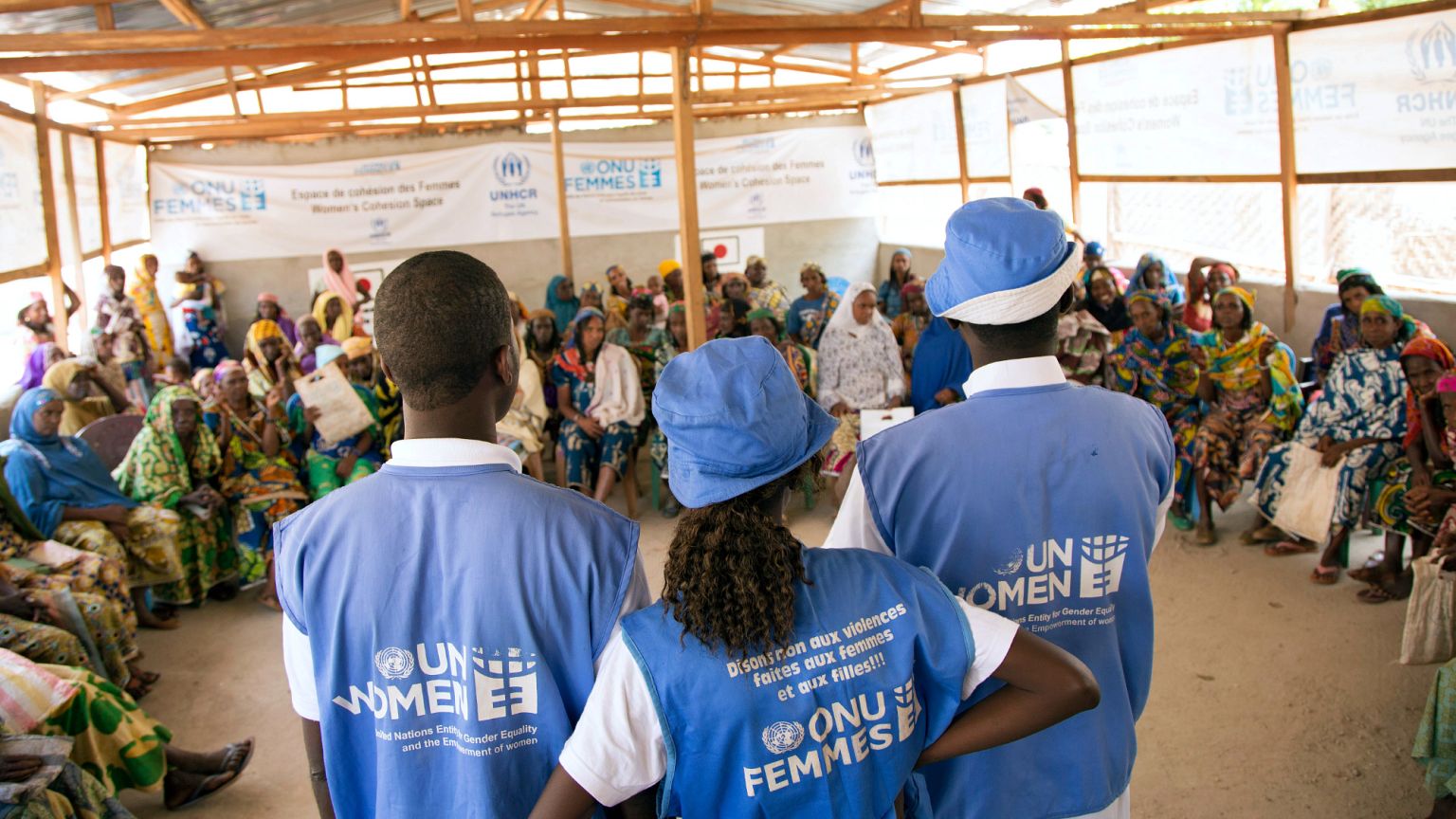
Copyright UN Women/Ryan Brown

By Evelyn Ann-Marie Dom
Published on 23/05/202


Policymakers, civil society leaders, and international organisations met in the Belgian capital on Wednesday to reflect on the progress made by the Women, Peace, and Security agenda since its implementation 25 years ago and which challenges still need to be overcome.

Amid growing pushback on women's rights in some countries and a general backsliding of gender policies, persistent institutional and societal barriers prevent women from equally participating in peace and security processes.

But there is no peace or security without women — a statement the United Nations has been emphasising for the last quarter century.

"We know that when women call it, peace follows. When women call it, peace is sustained," UN Women Deputy Executive Director Nyaradzayi Gumbonzvanda said at an event co-organised by UN Women, the European Union and the Belgian foreign ministry in Brussels on Wednesday.

Policymakers, civil society leaders, and international organisations met in the Belgian capital on Wednesday to reflect on the progress made and challenges still faced by the Women, Peace and Security (WPS) agenda since its implementation.

On 31 October 2000, the UN Security Council adopted Resolution 1325, a landmark bill that acknowledged the disproportionate and unique impact of armed conflict on women and girls and called for women's equal participation in conflict prevention and resolution, as well as peace processes.

The resolution laid the groundwork for the WPS programme, a framework that seeks to institutionalise the goals set out 25 years ago.

The anniversary goes alongside the 30th anniversary of the Beijing Declaration and Platform for Action, which laid the foundation for the WPS agenda five years prior.
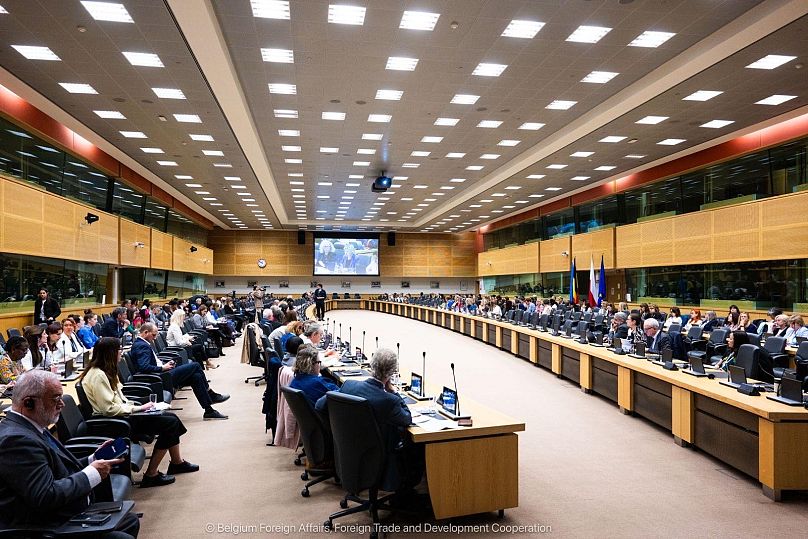
Policymakers, civil society leaders, and international organisations gathered in Brussels to reflect on WPS agenda progress. Wednesday, 21 May, 2025. Belgium Foreign Affairs

While they have seen some successes over the past two decades, attendees said, they warned that not enough has been done to fully implement and actualise the agenda's aims.


"Paper commitment is not enough, we must transform this into action that is visible, measurable, and inclusive," Poland's Minister for Equality Katarzyna Kotula said during her opening remarks.

This year's anniversary is taking place in an increasingly complex and fractured geopolitical space and a changing security landscape marked by disinformation and hybrid warfare.

"Conflict is no longer confined by borders," Kotula said, and warned of the threats posed by information manipulation and cyber violence.
Women at the heart of sustainable peace talks

"Women bring their lived experiences to the table," Gumbonzvanda told Euronews.

"They also come as experts who are able to contribute to the solutions," she added, noting that based on years of work by UN Women, it has become clear that peace talks including women tend to be more sustainable.

The Deputy Executive Director of UN Women drew on her own experience — she was born during the 1964-1979 Zimbabwe War of Independence — to emphasise the important role women played during that time.

"When early warning signs start to show, it is the women who care for each other and yet they struggle to be part of the solutions," she explained.

Women-led grassroots organisations were at the core of Wednesday's discussions. "It's not just about the top level; it's the women on the ground," one panellist pointed out.

Yet various barriers remain in place which prevent women from unlocking their full potential in peace and security processes.


A lack of adequate funding and resources for women-led organisations was identified and unanimously agreed on as a key hurdle.

Data by the Organisation for Economic Cooperation and Development (OECD) revealed that international aid from donors in 2024 fell by 7.1% compared to the previous year.

The OECD noted that this was the first drop reported after five years of consecutive growth.

Earlier this month, UN Women warned that the global aid cuts may force organisations helping women in crisis to shut down.

A report they published found that 90% of the 411 women-led and women's rights organisations surveyed said they had been impacted by aid cuts.

The report also predicted that half of the organisations may have to shut down in six months if current funding levels persist.

"Resourcing community and women-led initiatives as part of WPS Agenda is an imperative, it is not a choice," Gumbonzvanda told Euronews.
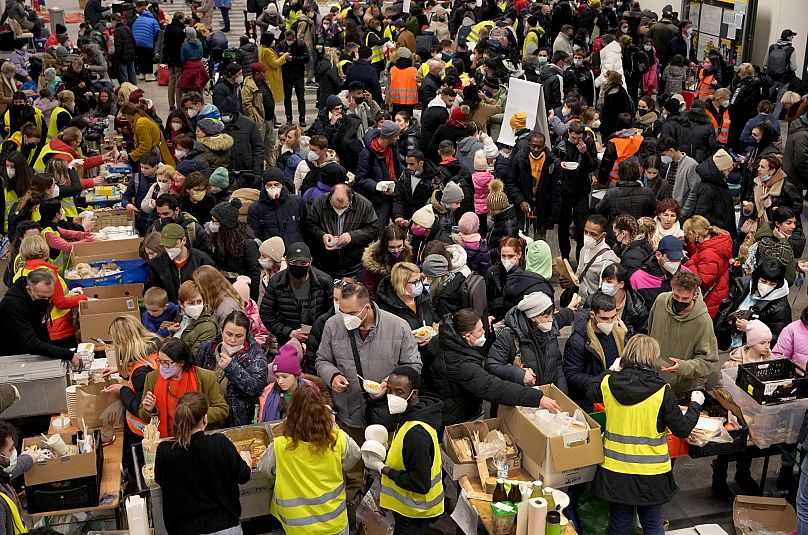
Ukrainian refugees queue for food in the welcome area after their arrival at the main train station in Berlin, 8 March, 2022AP Photo

Kotula told Euronews that the European Democracy Shield, a special committee created to respond to new geopolitical challenges, should incorporate financing for women's organisations.

Kotula emphasised the role civil society and women's organisations played when the EU was hit with back-to-back crises, from the COVID-19 pandemic to Russia's full-scale invasion of Ukraine, which sparked a major refugee crisis.

"First in line were usually civil society and women's organisations, it was on their shoulders. So that's why it's one of the reasons that when we now need the funding, it's because we know they passed the test when it comes to crises, and we know we can count on them," Kotula said.

The Polish minister for equality admitted that the topic of gender equality and gender-based violence has been pushed under the rug for far too long, but assured her efforts to incorporate both into Poland's new national action plan.

"Poland had been facing backlash for many years, then we won the elections, and we opened the window a bit," Kotula said.

She referred back to last year, when the definition of rape was changed under Polish law, and added that she now hopes to use this "window of opportunity," to also crack down on the issue of gender based violence.

Military spending vs social defence

In 2024, global military spending reached its highest year-on-year rise since the end of the Cold War, a study by the Stockholm International Peace Research Institute (SIPRI) revealed.

The start of Russia's full-scale invasion of Ukraine in 2022 and the uncertainty of European security under US President Donald Trump pushed the continent to rethink its defence readiness.

As a result, all European countries, with the exception of Malta, increased their military spending in 2024.

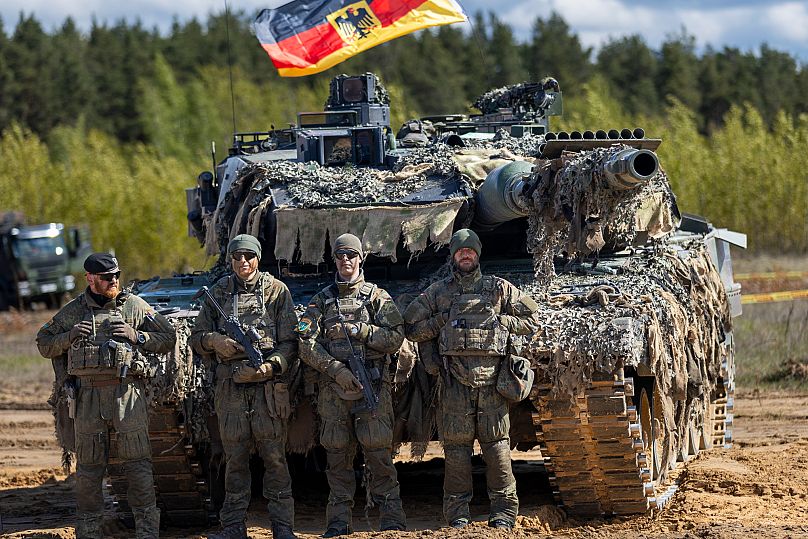
German soldiers stand in front of a tank during a military exercise west of Vilnius, 16 May, 2025AP Photo

However, Founder and CEO of International Civil Society Action Network (ICAN), Sanam Naraghi-Anderlini, argued that shifting the focus to increased militarisation undermines the power of social defence.

"We are reducing our own security in the name of militarised security," Naraghi-Anderlini told Euronews.

Naraghi-Anderlini, who hosts the podcast "If You Were in Charge", said women peacebuilders take a radically different approach to conflict resolution. In stark contrast to armed conflict, they instead bring "a radical commitment to nonviolence."

"Sitting and talking, not shooting, as a driving force," she said.

The podcast host said women peacebuilders have the ability "to disarm intellectually, mentally and emotionally."

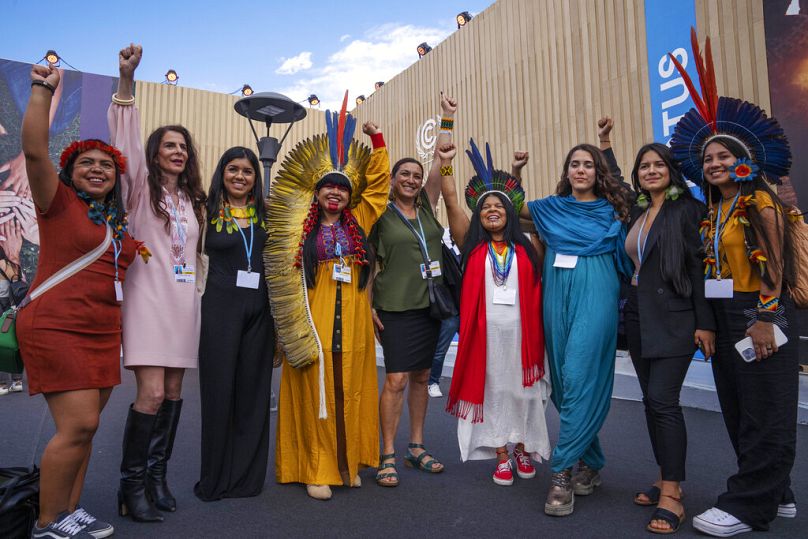
Indigenous activist Sonia Guajajara poses with women after holding a panel on Indigenous Women from the Amazon, at COP27 UN Climate Summit in Egypt, Monday, Nov. 14, 2022.Nariman El-Mofty/Copyright 2022 The AP. All rights reserved.

Naraghi-Anderlini said that as a result, women are often stereotyped as soft, but in reality it is an extremely powerful quality when it comes to peace negotiations, where there's often a lot of "mistrust, existential fear, anger and trauma."

During her opening remarks, Naraghi-Anderlini outlined how her organisation successfully supported local communities with $11 million (€9.75 million), emphasising the significant impact was made with "just a fraction of the cost of weaponry and military equipment."

"This kind of peacebuilding work is actually quite cheap, but it's really important. So if it disappears, we're really wasting investment and good work," she told Euronews.

Naraghi-Anderlini said that while conflict is natural, the use of violence is a choice.

"And yet they've made it seem as if violence is inevitable, as if war is inevitable because it benefits the arms industry."

The Brussels event, organised to mark the 25th anniversary of the original UN resolution, was organised by UN Women, in collaboration with the Belgian Ministry of Foreign Affairs, the EU, and the Polish Presidency of the EU and called on member states to renew their commitment to the agenda.


New report reveals more than half of European farmers prepared to protest again

In partnership with
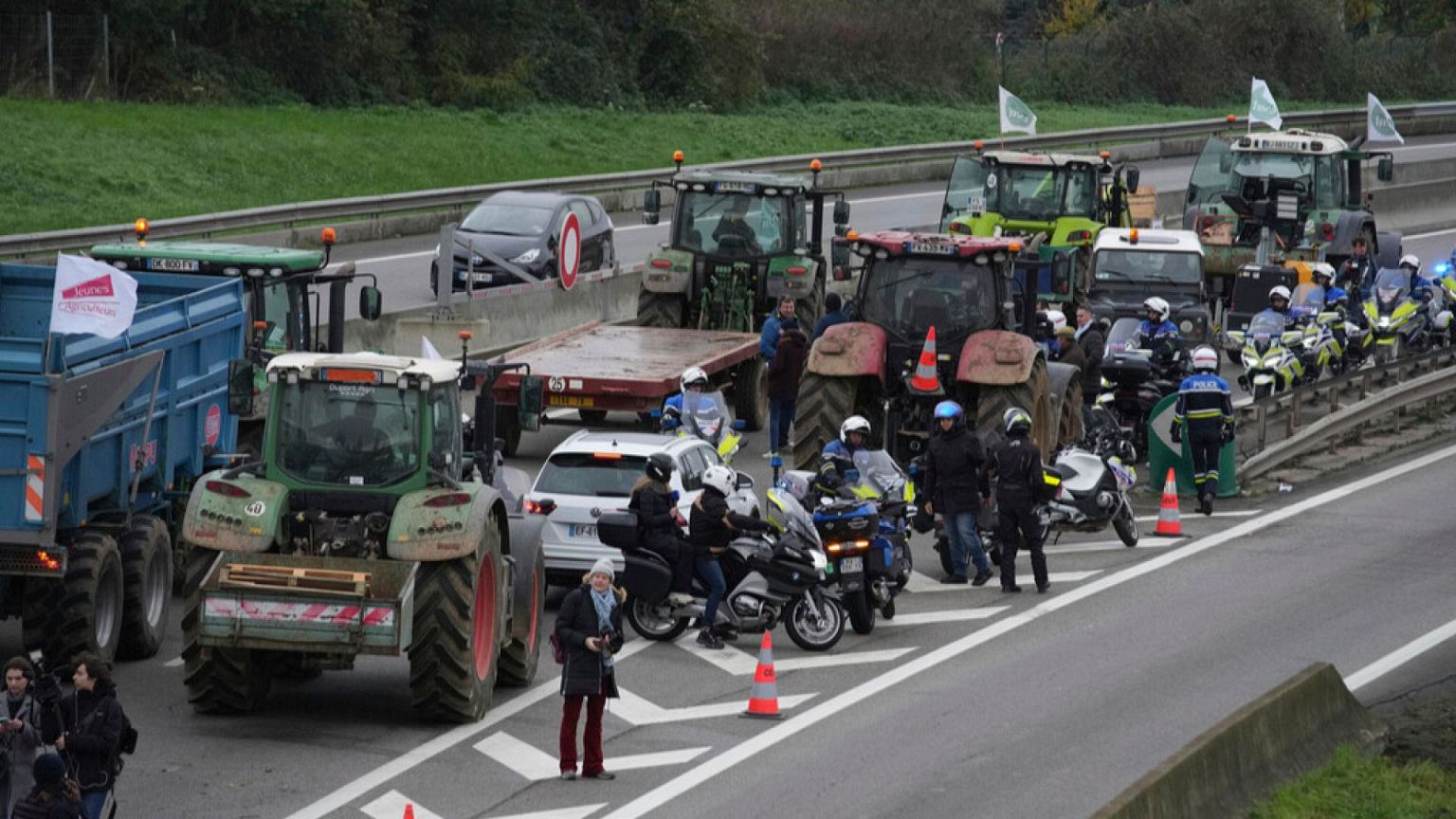
Back in October 2024, French farmers blocked highways to protest against the EU-Mercosur trade agreement.
Copyright Copyright Christophe Ena/Copyright 2024 The AP. All rights reserved.


By Ally Wybrew
Updated 

A new report reveals that European farmers feel worse off now than 12 months ago, are frustrated with the EU’s lack of support and are prepared to protest again.

It’s been over a year since farmers across the continent blocked roads with tractors and filled streets in one of the biggest agriculturally motivated protests in recent years. Their grievances? That trade with countries outside of the European Union, alongside low food prices and new environmental regulations, were irreparably impacting their businesses. 

Protests had been building across the continent towards the end of 2023, but came to a head in early 2024 when farmers from multiple countries turned out en masse to demonstrate. In Poland 260 major roads were blocked, in Germany roughly 6,600 farmers gathered in Berlin (followed by demonstrations in cities across the country) and in Spain approximately 2,000 filled the streets of Barcelona. The Netherlands, Belgium and Ireland also saw widespread disruption.

They were spurred by elements of the ‘From Farm to Fork’ strategy of the European Green Deal, the Mercosur agreement, the phasing out of  tax breaks and decreasing level of income.

This month, CropLife Europe released a 93-page survey in partnership with IPSOS and Euronews outlining how farmers from across the continent are feeling about their industry and its future. Have their complaints been resolved or are they on the brink of more demonstrations? 

The report interviewed nearly 2,000 farm owners and co-owners from nine countries: France, Germany, Romania, Poland, Italy, Spain, the Netherlands, Belgium and Ireland, and responses were weighted by acreage per country. The survey’s specific objectives were to find out how satisfied farmers feel today, how they viewed the EU’s actions following their protests and what they think the future looks like for them. 

Here’s what we learned about the state of Europe’s farming industry. 

The majority of farmers are disappointed by lawmakers’ response to the protests

European farmers were extremely active in last year’s protests, with half of all survey respondents confirming they’d taken part. In Germany, Spain and the Netherlands, participation reached as much as two thirds, while in France, Italy, Romania and Ireland numbers were more reserved, with approximately 30-40% participating. 

The visuals of the demonstrations – tractors blocking roads, farmers shaking placards beneath historic sites – were striking, and 40% of survey respondents agreed that the protests improved perception of their industry and successfully grabbed the media and the public’s attention.  

Despite this, the vast majority of farm owners were disappointed with the effectiveness of the protests, with just 16% feeling that they had any impact – a sentiment largely down to a lack of policy reform from local authorities and the EU

Only 3% of respondents agreed that authorities’ responses ‘very much exceeded [their] expectations’ while an overwhelming 89% confirmed the reactions from lawmakers had been either ‘somewhat below’ or ‘very much below’ their expectations. 

Staggeringly, positive responses never even reached double figures. Italian farmers were the most disillusioned, with only 1% agreeing the authorities' actions had exceeded expectations. Even in more optimistic Romania, only 9% of farmers chose this option.  

Ultimately, over 90% of farmers are dissatisfied by local and European political actions.  

Farmers are worse off today than a year ago

Perhaps unsurprisingly, farm owners aren’t feeling particularly optimistic about the state of their industry today. 

When asked how their situation compares to this time last year, many feel they are in a worse state, attributing this to competition from low cost imports originating outside of the EU (68%), increased taxes (61%) and a heavier administrative workload (61%).  

In France, Germany, Spain and Italy, 42-61% of farmers reported feeling pessimistic about the state of their farms, that’s at least double – but in some cases, quadruple – the amount of farmers feeling positive about their situation.  

Reasons for this negative sentiment vary by country but common threads were rising costs and expenses, and excessive taxation. Other concerns focussed on market restrictions and controls, low workforce and problems associated with expanding upon it.  

In the last year, the majority of farmers believe that their economic situation and well-being have declined. 55% believe their salary has worsened in the last twelve months and 58% think their capacity to invest has declined.  

Farming financial difficulties felt across the board

A marked finding from the survey is that the financial outlook for many European farmers is looking bleak.  

Two-thirds of the surveyed owners do not consider themselves as having enough money to invest in new tools or machinery, nor to sell their produce at the correct price. Almost 70% of all the farmers vetted believe the price they receive for their products does not allow for a sufficient profit margin.  

Perhaps more alarmingly, nearly 60% (58%) don’t believe their paycheck allows them to meet their household needs, and they wouldn’t refer to their income as ‘decent’. Only half think they can repay their current business-related loans and debts. 

Generally, all the farmers from canvassed countries feel pessimistic about their future in farming. Only owners in the Netherlands have a slightly brighter outlook with 40% feeling somewhat optimistic against 31% feeling pessimistic. Conversely Spanish farmers registered as 12% optimistic and 64% pessimistic, and French farmers 16% and 55% respectively. 

A fifth of farmers to stop farming in the next five years

With over half of European farmers feeling negatively about their future, it’s clear that urgent reform is needed within the agricultural industry.   

Right now, a fifth of all farmers canvassed plans to stop farming in the next five years, with 5% looking to quit within twelve months.  

While the majority of reasons were personal – 64% of farmers cited retirement and medical issues as incentives (retirement was the primary reason in France, Germany, Ireland, Belgium and the Netherlands, though considering 44% of the participants were over 55-years-old, this isn’t too shocking) – 54% said their leaving was motivated by industry-related issues. 

These included income shortfall and rising land prices as well as environmental troubles such as lack of water, soil deterioration and the ability to tackle pests and diseases.  

Many farmers also noted that the availability of crop protection solutions is dire, with a third of owners confirming they find accessing standard protections such as pesticides hard to come by. 

Modern-day agricultural tools such as biotech seeds and biological pesticides are also seen as difficult to source – as are drones and autonomous equipment, due to cost and regulatory hurdles.  

Without reform farmers will protest again

Following the lack of action from authorities after last year’s protests, farmers are calling for specific action, namely addressing administrative overload and the need for economic support in the form of better margin redistribution in the value chain or lighter taxes.  

82% of farmers are calling for fairer redistribution, tax breaks, and streamlined access to subsidies,  while 57% want simpler regulations and reduced administrative burdens. 1 in 3 urge greater support for research, innovation, and access to an effective crop protection toolbox. 

Without these changes, farmers are quite willing to protest again with one third being very likely to do so, and more than half likely to do so. This sentiment is particularly strong in Spain and Poland where discontent is higher.  

UK hands sovereignty of Chagos Islands to Mauritius after last-minute legal delay


Copyright AP Photo

By Euronews with AP
Published on 22/05/2025 

Under the agreement, the UK will pay Mauritius €120 million each year to lease back their military base for at least 99 years.

The United Kingdom has signed an agreement handing over control of the disputed Chagos Islands to Mauritius, with Westminster saying the deal protects the future of a US-UK military base that is important for British security.

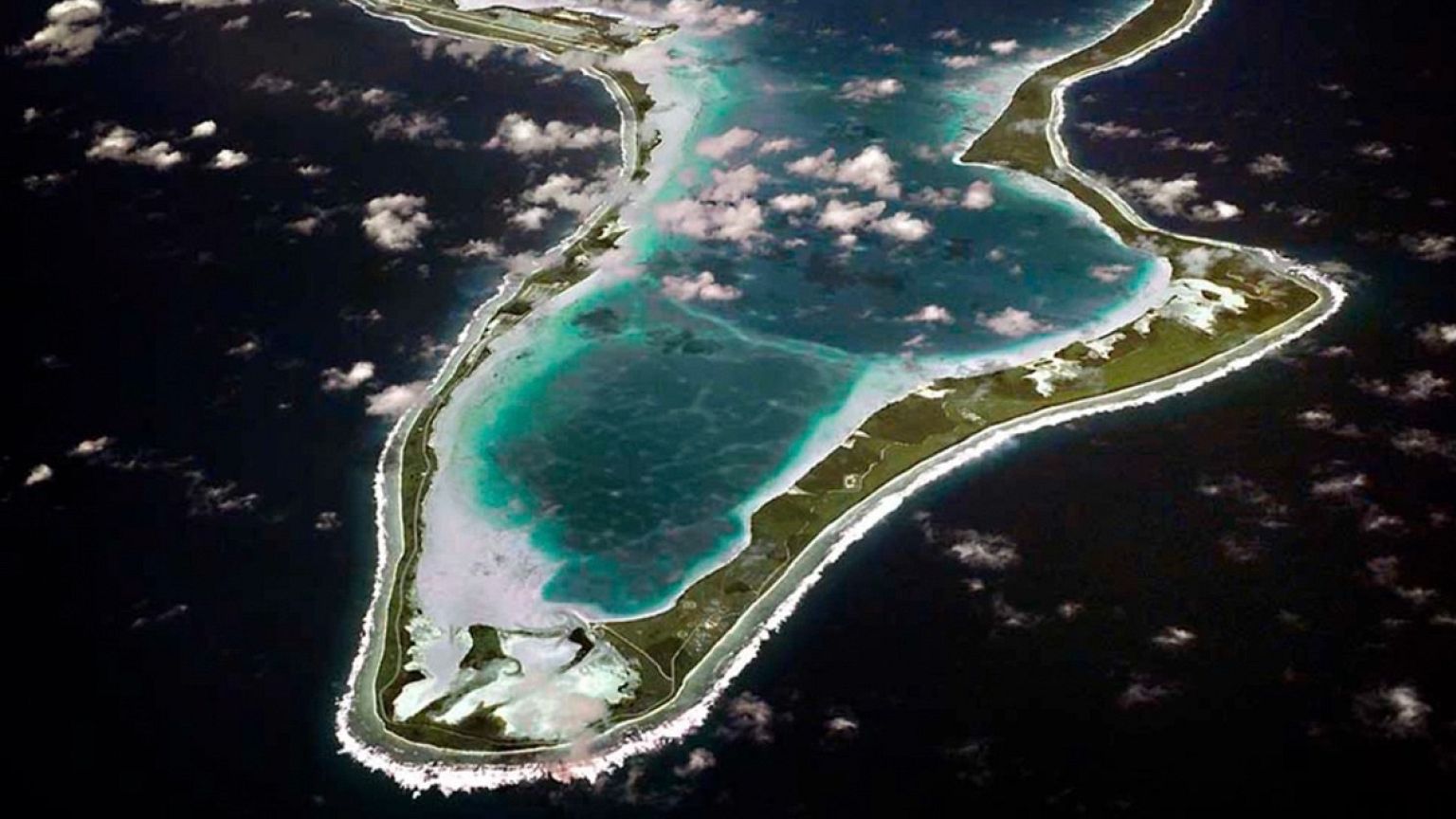
The Chagos Islands, an archipelago in the Indian Ocean, includes the largest island Diego Garcia which hosts a key naval and air base used by the US.

Under the agreement, the UK will pay Mauritius €120 million each year to lease back the base for at least 99 years.

Prime Minister Keir Starmer said the base is "right at the foundation of our safety and security at home" and is crucial for counterterrorism and intelligence.

"By agreeing to this deal now on our terms, we're securing strong protections, including from malign influence, that will allow the base to operate well into the next century, helping to keep us safe for generations to come," Starmer said at a military headquarters near London.

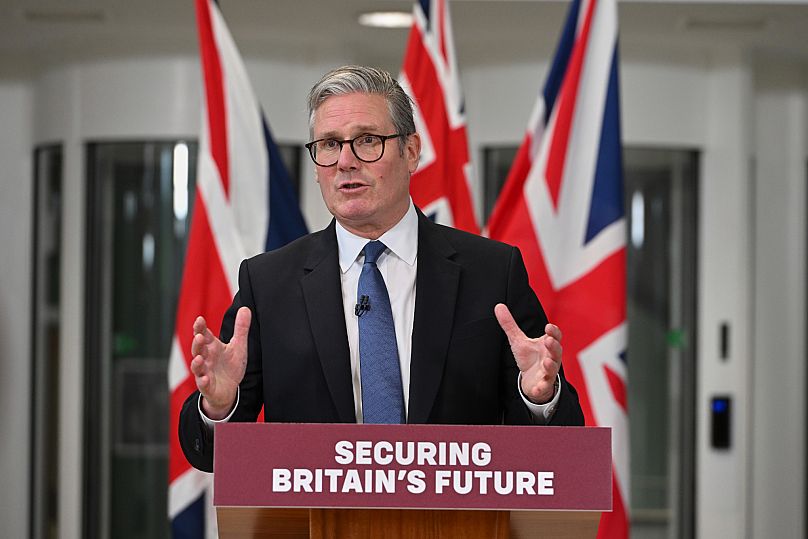
Britain's Prime Minister Keir Starmer speaks during a press conference at a military headquarters in north-west London, 22 May, 2025AP Photo

Critics argue that giving up the islands, which have been British territory for over 200 years, could lead to interference from countries like Russia or China.

Opposition leader Kemi Badenoch said, "We should not be paying to surrender British territory to Mauritius."

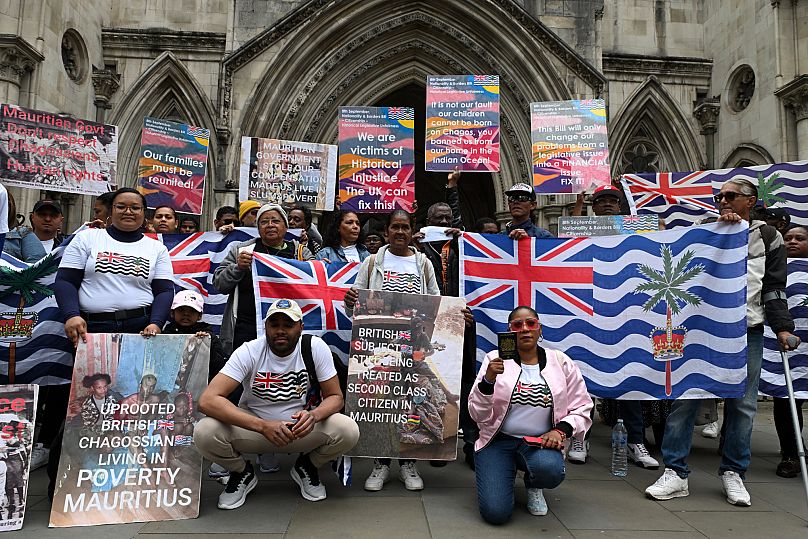
The deal faced opposition from former island residents who were expelled decades ago to build the base.

The agreement was set to be signed by Starmer and Mauritian leader Navin Ramgoolam in a virtual ceremony on Thursday morning. But it was delayed when a judge granted a last-minute injunction, requested by two Chagossian women.

That injunction was later lifted by another judge.

Chagos-born Bernadette Dugasse and Bertrice Pompe, who brought the legal challenge, said they fear it will be even harder to return home once Mauritius takes over.

Related


The agreement includes a trust fund to help Chagossians and allows Mauritius to organise resettlement on the islands – except Diego Garcia – but does not guarantee it.

Pompe called it "a very sad day" and said, "The rights we are asking for now, we have been fighting for for 60 years. Mauritius is not going to give that to us."

The Chagos Islands have been under British control since 1814. In 1965, Britain separated them from Mauritius, which became independent in 1968.

In the 1960s and 70s, Britain expelled around 2,000 islanders so the US could build the Diego Garcia base. The base has supported US military operations from Vietnam to Iraq and Afghanistan and hosts facilities for nuclear submarines and intelligence operations.

Mauritius has long disputed Britain's claim to the islands. In 2019, the International Court of Justice said Britain had unlawfully separated Chagos from Mauritius when ending colonial rule.

Starmer said, "We had to act now because the base was under threat." He added that Mauritius was preparing to take Britain to court, and there was no "realistic prospect of success" for the UK.

People demonstrate outside the High Court in London after a court blocked the UK from transferring sovereignty over the Chagos Islands to Mauritius, 22 May, 2025AP Photo

The Ministry of Defence said the deal includes strong protections, such as a 39-kilometres exclusion zone around Diego Garcia, a UK veto on development, and a ban on foreign security forces on the islands.

Talks began in 2022 under the previous Conservative government and continued after Labour won July's general election. A draft deal was agreed in October but delayed due to political changes in Mauritius and disagreements over how much the UK would pay.

Britain also checked with the US after a change in government there. The Trump administration approved the deal earlier this year.

US Secretary of State Marco Rubio welcomed the agreement, saying it "secures the long-term, stable, and effective operation" of Diego Garcia, which he called "a critical asset for regional and global security."


Court in Italy rules two mothers can register as parents on child's birth certificate

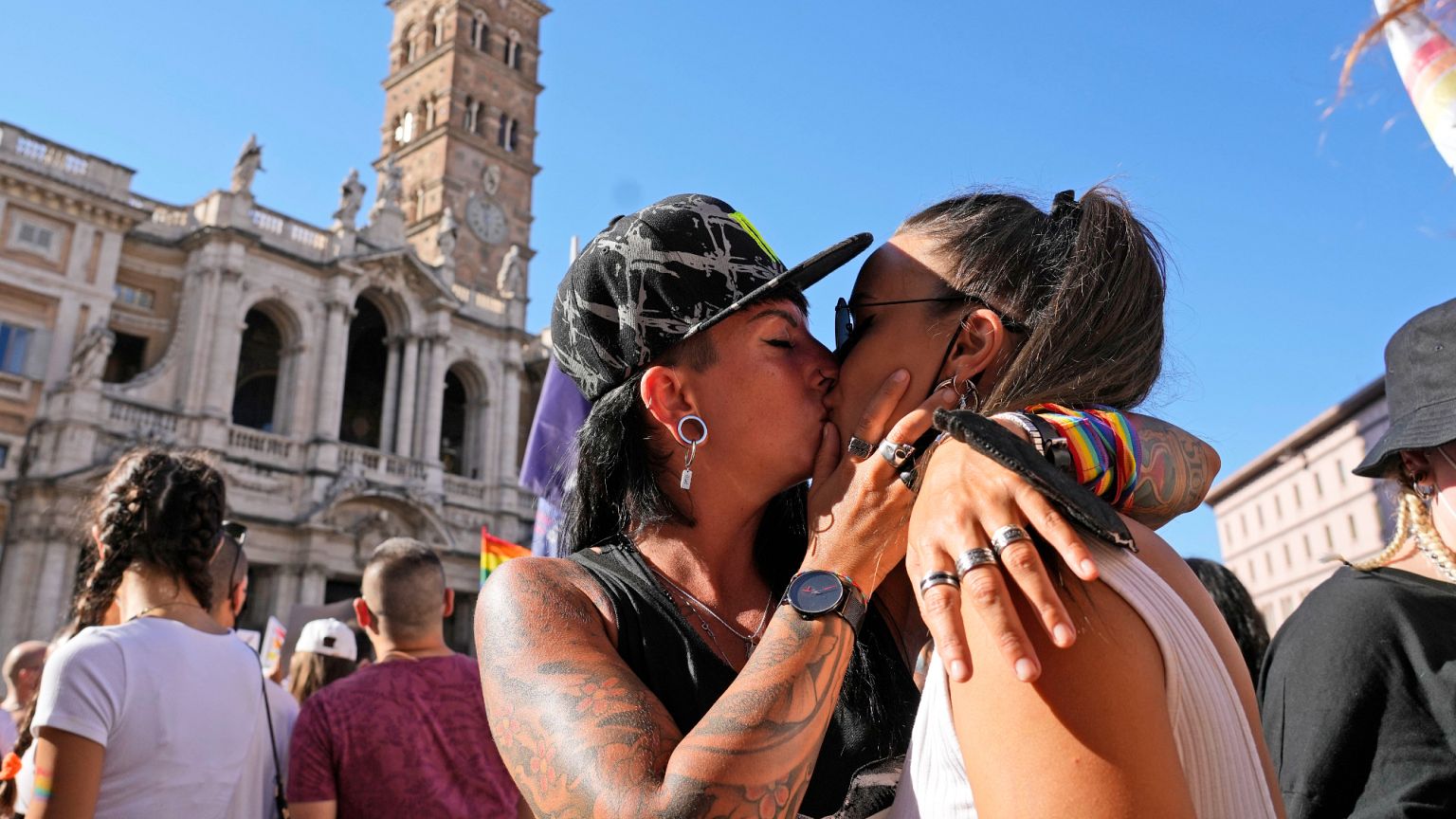
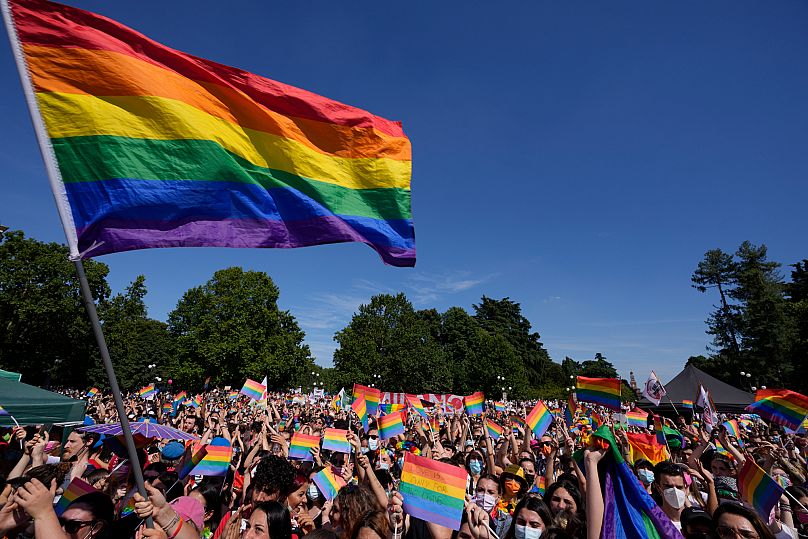
People take part in the annual Pride march in Rome, 26 June, 2021
Copyright AP Photo

By Gavin Blackburn with AP
Published on 

In recent years, some city registrars in Italy had begun to record only the name of the biological mother on birth certificates and not the name of her partner.

Italy's Constitutional Court has ruled that two women can register as parents of a child on a birth certificate, saying recognition of parental rights can't be restricted to the biological mother alone in families with same-sex parents.

The court ruled that it was unconstitutional for city registrars to deprive children born to same sex-parents of recognition by both the biological mother and the woman who consented to the medically assisted pregnancy of her partner and assumed parental responsibilities.

Advocates for LGBTQ+ celebrated the ruling, saying it was a "historic day for civil rights in Italy."

"At last what we have been saying all along is being recognised: boys and girls have the right to see both parents recognised, from birth, even when they are two mothers," pro-LGBTQ+ group Rainbow Families said in a statement.

The group said the ruling served as a reminder to politicians that constitutionally, it's "no longer possible to continue pretending that we do not exist."


People take part in the annual Pride march in Rome, 26 June, 2021AP Photo

An extensional joke

The association Pro Life and Family denounced the ruling as illogical and meant thousands of children born to same-sex parents were launched into "an existential joke."

In recent years, some city registrars in Italy had begun to record only the name of the biological mother on birth certificates and not the name of her partner.

In order to have legal rights and responsibility over the child, the non-biological mother then had to "adopt" the child.

A 2004 law had provided for such limited parental recognition.

But thanks to an Interior Ministry circular in 2023, the restrictions were being enforced anew as part of the policy of the far-right-led government of Prime Minister Giorgia Meloni to crack down on surrogacy and promote traditional family values.

The ruling doesn't address the legality of medically assisted procreation.

Italy has strong restrictions on IVF and has had a ban on surrogacy since 2004.

Last year, Italy expanded the ban to criminalise Italians who go abroad to have children through surrogacy.

 FASCIST FRIENDS OF A FEATHER

Why did nationalist parties do so well in the first round of Poland's presidential election?


Copyright fot. Paweł Głogowski

By Marcelina Burzec
Published on 22/05/2025 

The nationalist presidential candidates Slawomir Mentzen and Grzegorz Braun won a combined total of almost 21 per cent of the vote.

Candidates from right-wing and nationalist parties did particularly well on Sunday in the first round of Poland's presidential election, echoing a trend seen across Europe in recent months, with nationalist politicians enjoying a wave of success.

In February, Europe was shocked when the far-right Alternative for Germany (AfD) became the second-largest force in the Bundestag.

On the same day as the Polish vote, the far-right Chega party performed well in Portugal, while nationalist candidate Geroge Simion narrowly lost out on the Romanian presidency.

In Poland, the nationalist candidates Slawomir Mentzen and Grzegorz Braun received a combined total of almost 21% of the vote. Overall, more than 50% of Polish voters cast their ballot for right-wing candidates.

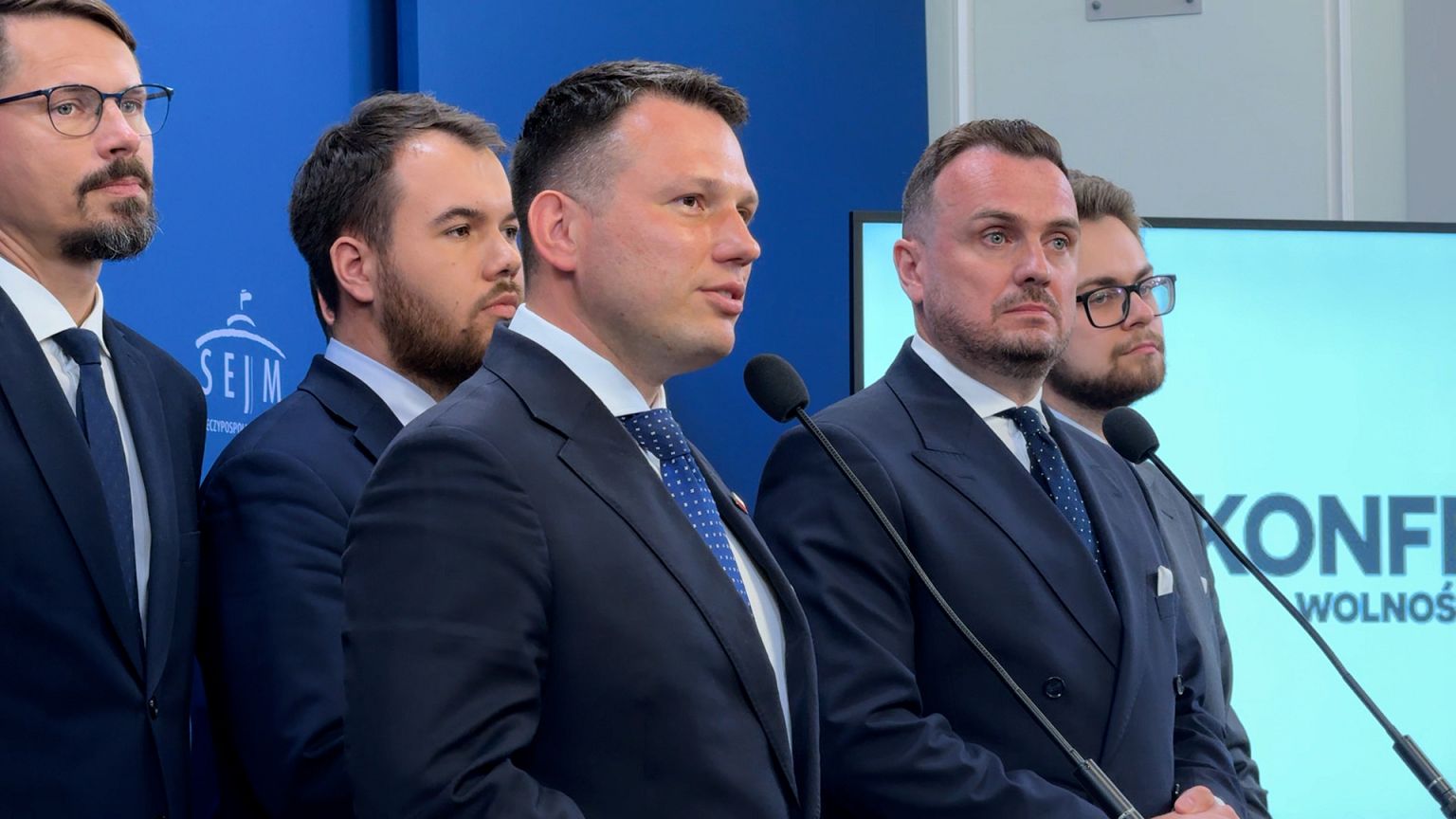
Mentzen was the presidential candidate for Konfederacja or Confederation, a nationalist party which describes itself as liberal-conservative, while Braun represented Konfederacja Korony Polskiej (Confederation of the Polish Crown), a party which has voiced antisemitic views.

Their voters are now being fought over by the candidates who went through to the second round of the presidential election — RafaÅ‚ Trzaskowski from the liberal Civic Platform and Karol Nawrocki, supported by the right-wing Law and Justice or PiS party.


Who voted for Mentzen?

"Mentzen's voters are not a homogeneous group," Dr Olgierd Annusewicz, a political scientist from the University of Warsaw, told Euronews.

In total, Mentzen received 14.8% of all ballots on Sunday.

"There are certainly a great many people out there who strongly believe in certain isolationist thoughts, are averse to the European Union, or think in very traditional terms in general, on social issues for example, where Slawomir Mentzen has expressed himself," the political scientist explained.

Annusewicz explained that he also gained support from free-market voters. "They believe that only the free market is able to give them some level of happiness or trust in the state," he said.

Dr Annusewicz also noted that Mentzen got the support of young people.

"Not necessarily because of the views he preaches, but because, firstly, he is anti-system, and young people very often do not like the system, they do not like the state and its institutions. But also simply because he seemed cool to them," Dr Annusewicz said.

"Let's remember that Mentzen was the youngest of all the candidates running. He was able, in his own way, to find contact with this young generation."


Who are Braun's voters?

Braun, of the Konfederacja Korony Polskiej, gained 6.34% of the vote — and won fourth place in the presidential race, even though he was only seventh in the polls.

"This is, of course, a little surprising, because it would seem that a candidate with very extreme views, who is very expressive in this way, but also highly controversial on the political scene, will not be attractive to too many voters," Dr Annusewicz told Euronews.

Annusewicz mentioned that some of Braun's supporters would have grown disillusioned with the classical political parties and turned away from the right-wing Law and Justice party.

Professor Rafał Chwedoruk from the University of Warsaw said Braun was supported by many middle-aged men in some of the country's most conservative areas.

His voters were worried about Poland being dragged into Russia's war in Ukraine and about migration, Chwedoruk noted.


Mentzen and Braun set conditions

Both Mentzen and Braun want to make the most of their raised profile and have issued demands to the presidential candidates who made it through to the second round.

Mentzen listed eight conditions that a candidate must fulfil to gain his support. They include not raising existing taxes, not allowing Polish soldiers to be sent to Ukraine, and not signing a law to ratify Ukraine's accession to NATO.

Mentzen offered Trzaskowski and Nawrocki a conversation on his YouTube channel.

"Mentzen is growing (in stature), putting himself in the spotlight and showing that he is the boss today. This is, from the point of view of Slawomir Mentzen's political interest, an excellent move," Dr Annusewicz said.

Meanwhile, Braun, who is an MEP, demanded that the future president "reject the so-called European Union migration pact and ... stop immigration — both legal and illegal".

Representatives of the PiS party and the Civic Platform have said their party was the ideal partner for Mentzen and his voters.

"I have always said: there are no enemies on the right. I am in favour of a coalition with the Confederation," PiS MP Janusz Kowalski said.

"I have no doubt whatsoever that if Slawomir Mentzen's voters, and I understand that he has defined what is important to them, listen to what Rafal Trzaskowski says, it will suddenly become apparent that many of these issues are close to Rafal Trzaskowski," argued Krzysztof Kwiatkowski, a Civic Platform lawmaker.


Nine EU countries seek European human rights convention's rethink on migration

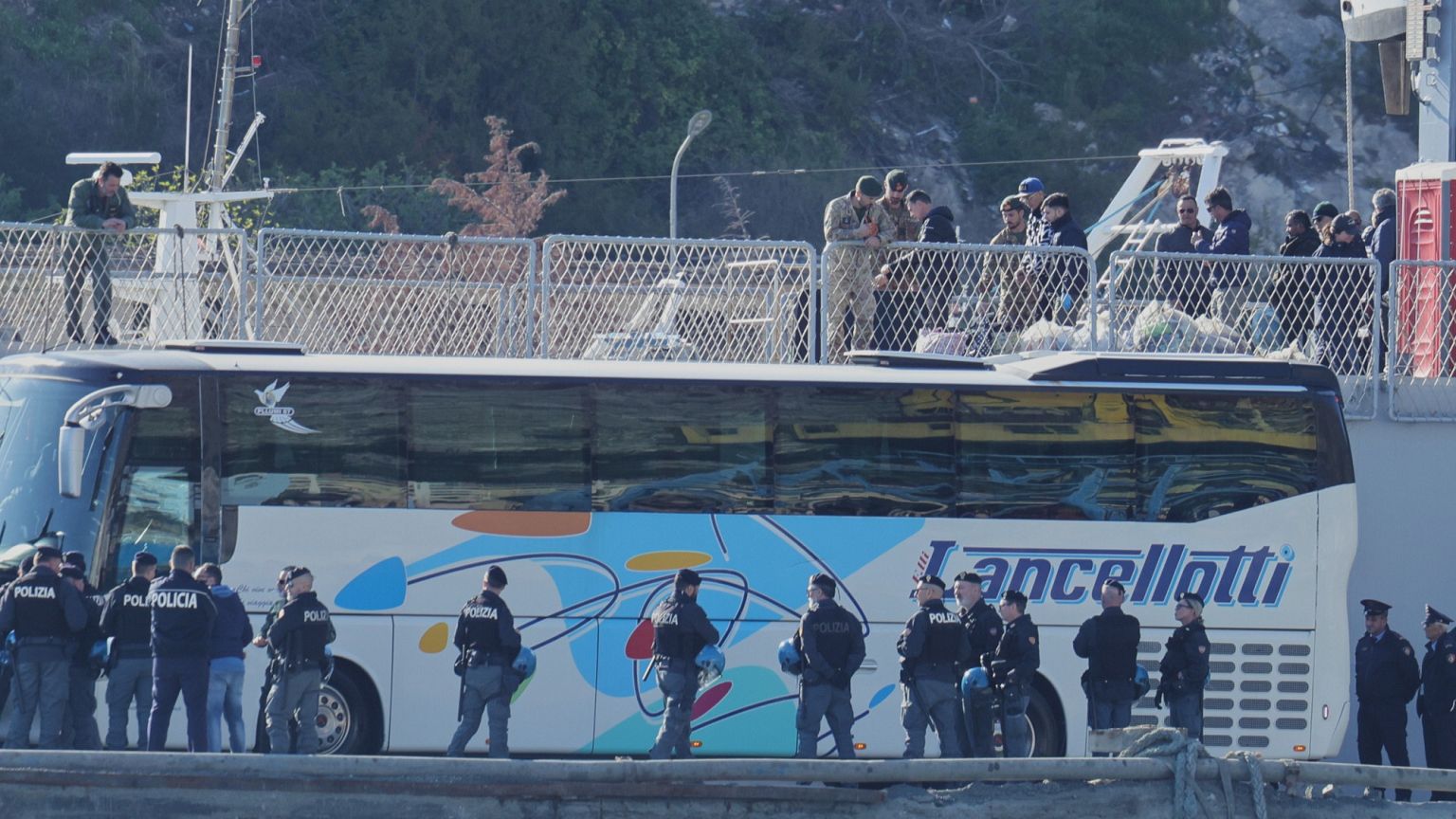
A bus waits to transfer migrants arriving onboard the Italian navy ship Lybra in Shengjin, Albania, 11 April 2025
Copyright AP Photo

By Gabriele Barbati
Published on 

In an open letter spearheaded by Italian Prime Minister Giorgia Meloni and her Danish counterpart Mette Frederiksen, nine leaders have called for a reinterpretation of the European Convention on Human Rights.

Nine EU countries have signed an open letter calling for the European Convention on Human Rights (ECHR) to be reinterpreted to allow for policy changes on migration.

The document was published on Thursday as part of an effort led by Italy and Denmark. It was also signed by leaders from Austria, Belgium, the Czech Republic, Estonia, Latvia, Lithuania and Poland.

The signatories, who believe it should be easier to expel migrants who commit crimes, said the ECHR's interpretation of the convention should be examined.

"It is important to assess whether, in some cases, the court has over-extended the scope of the convention compared to its original intentions, thus altering the balance between the interests to be protected," they wrote.

"We believe that the development of the court's interpretation has, in some cases, limited our ability to make political decisions in our democracies," they added.

Their message comes as anti-immigration parties across Europe have surged in popularity in recent months.

During a press conference on Thursday with her Danish counterpart Mette Frederiksen, Italian Prime Minister Giorgia Meloni said the letter sought to "open a political debate on some European conventions and on the capacity of those conventions to deal with the great issues of our time, starting precisely with the issue of migration."

In the letter, Meloni, Frederiksen and their co-signatories outlined some concrete changes they would like to see.

The proposals included having greater freedom to decide when to expel foreign nationals and having the ability to take effective action against "hostile states that seek to use our values and rights against us...by instrumentalising migrants at our borders".

Signed in 1950 by the Council of Europe, the convention is an international treaty designed to protect human rights and fundamental freedoms in Europe.

All 46 countries that comprise the Council of Europe are party to the convention, including the 27 EU member states.

Any person whose rights have been violated under the convention by a state party may bring an action before the court.