Friday, May 23, 2025

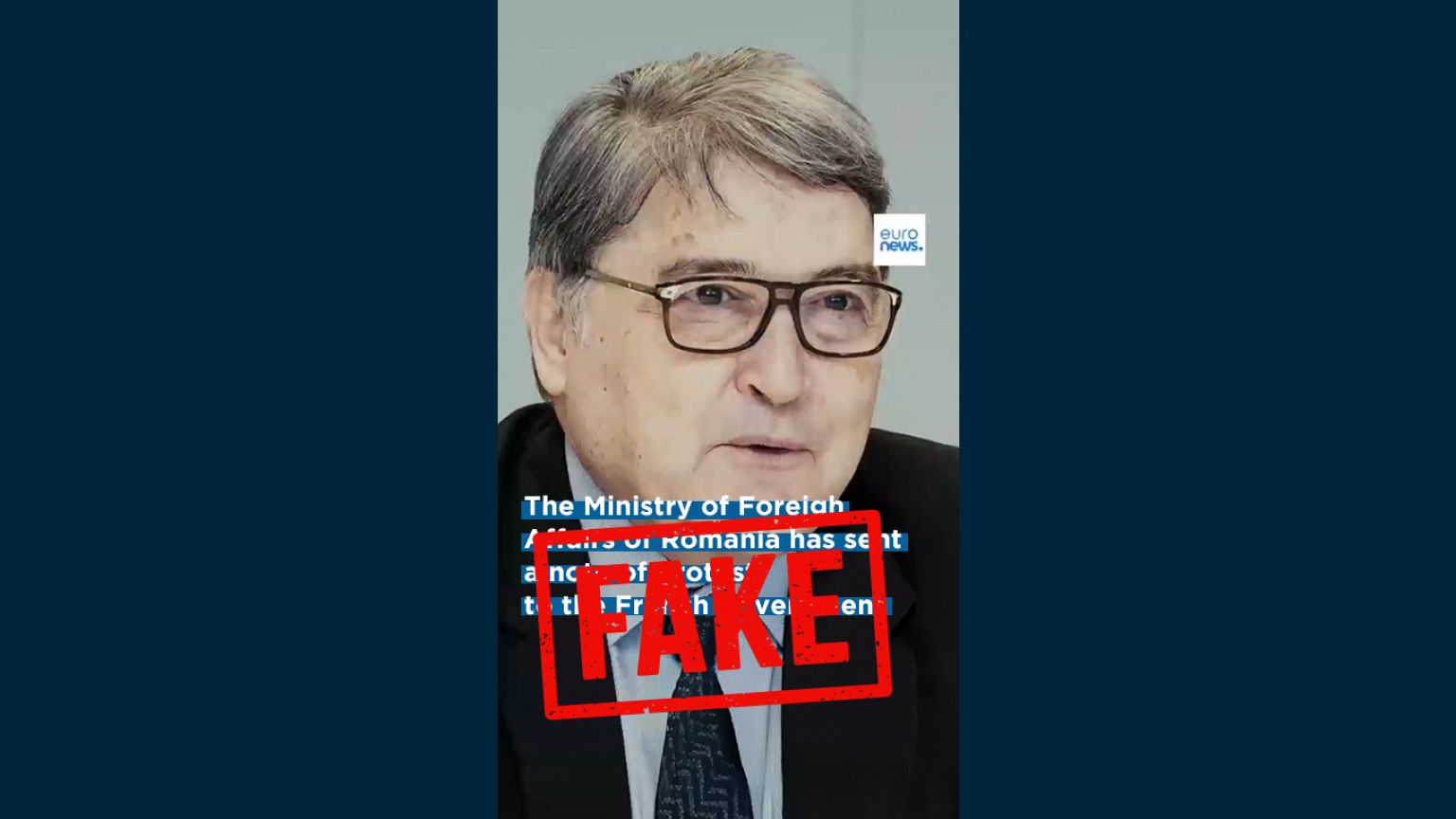
Fake Euronews report on alleged electoral interference in Romania spreads online

A doctored video using Euronews' logo falsely claims Romania cautioned France over interference in the recent presidential ballot. Bucharest has in fact accused Russia of meddling in the vote.

Copyright Euronews 2025


By Mared Gwyn Jones & Estelle Nilsson-Julien
Updated 23/05/2025 - 

A fabricated Euronews video which claims that Romania cautioned French authorities over interference in the Romanian presidential election runoff last Sunday has been circulating on social media in the aftermath of the vote.

The report fraudulently bears the Euronews logo and alleges that Romania’s Ministry of Foreign Affairs sent the French government a "note of protest" for attempting to meddle in the presidential elections with the help of messaging app Telegram.

Euronews did not produce or publish the video, and our branding was copied without consent. Our teams are working to ensure the video is removed from all social platforms.

On Thursday, the Ministry of Foreign Affairs of Romania issued a statement on X "adamantly refuting" the content of the video falsely attributed to Euronews, and pointing to "a sustained campaign of foreign information manipulation and interference aimed at influencing Romania’s public opinion and more recently its elections."

"This campaign is still ongoing and has all the hallmarks of (Russian) disinformation and covert anti-NATO and anti-EU propaganda campaigns," the statement adds.

Romania's foreign, interior and defence ministries have also previously denounced what they called "Russian interference" in Sunday's runoff, which saw pro-European centrist Nicușor Dan narrowly beat nationalist George Simion to the Romanian presidency.

Meanwhile, France's ministry of foreign affairs told Euronews that "no letter was sent by the Romanian government", attributing the doctored report to "Matryoshka, one of the many Russian disinformation operations targeting France."


The captioned video was first spotted by Ukraine's Center for Countering Disinformation, a government agency. Its format strongly resembles Euronews' social media videos, but the content is inauthentic.

It comes after Pavel Durov, the Russian-born owner of Telegram, claimed on social media that France's intelligence chief asked him to "silence" Romanian conservative voices by banning them from his messaging app ahead of Sunday's presidential run-off.

There is no evidence to back Durov's claims, which the French interior ministry has described as a "diversionary maneuver from the real threats of interference targeting Romania."

But Durov's allegations have since triggered a flood of disinformation on social media.

Durov, who was indicted in France last September on six charges related to illegal activity on Telegram, has said he would "testify" in favour of Simion when he contests Sunday's runoff result before the Romanian Constitutional Court.

Antibot4Navalny, an anonymous group of disinformation researchers, shared on Thursday screenshots of reports mimicking major French media outlets including Le Parisien, Libération and BFMTV.


The collective has linked the campaign to Operation Matryoshka, which the French cyber agency Viginum describes as posting "fake content that generally impersonates North American and European public figures and media outlets, including French ones."

The falsified reports are all based on Durov's statements, but have relayed slightly different unfounded narratives.

For example, a fake Radio France Internationale (RFI) report claims journalists have announced "mass protests" against President Emmanuel Macron's "censorship" in response to Durov's allegations.


A fake BFMTV falsely claims Macron's popularity rating has "plummeted" in response to Durov's claims.

Euronews' fact-checking team, Euroverify, has seen the video shared multiple times on pro-Russian Telegram accounts, garnering at least 85,000 views at the time of publication of this article.
Fact check: Did NATO create the Eurovision Song Contest?

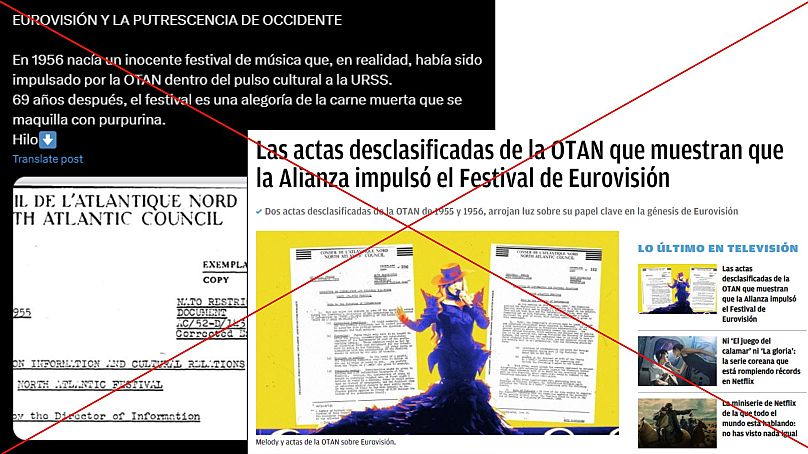
Social media users and alternative news outlets claim that decades-old NATO documents reveal that the military alliance was the mastermind behind Eurovision.


Copyright AP Photo

By James Thomas
Published on 22/05/2025 

Eurovision season is over for another year but people are still talking about it, including claims online that the iconic song contest was created by NATO.

Posts on social media and even some news outlets allege that the military alliance wanted to use it to imperially exert its soft power during the Cold War and beyond.

Some posts shared screenshots of a document from NATO's Committee on Information and Cultural Relations, dated November 1955, which refers to a "North Atlantic Festival."

The document says that a "performance" could be a subtle way to push a pro-NATO narrative among the general population.

"Consideration might be given to handing out NATO information brochures at the Festival," the document says. "However, the desirability of doing so should be carefully weighed and, at first sight I believe it would be a mistake, since it would introduce an element of propaganda, and the Festival aims at achieving similar results by more subtle means."

"In any case, it would be far more natural to influence public opinion in favour of NATO through the medium of the performance itself," it continues.

The claims have appeared on social media and in news articles Euronews


The North Atlantic Festival isn't the same thing as the ESC

However, while the document is authentic, it's been taken out of context. It and other NATO archives show us that the alliance did float the idea of a "North Atlantic Festival", but it was nothing like the Eurovision Song Contest and never even came to be as originally conceived.

It was to take place on the sidelines of a popular, annual military exhibition by the French army known as "Les Nuits de l'Armée", sponsored by French magazine Paris Match. The display featured various performances and attracted thousands of spectators in Paris every year.

"The 'NUITS DE L'ARMEE' are popular not only because the show is of a very high standard and the physical arrangements excellent, but because the public loves the glitter and pageantry of a peaceful military display of this kind," NATO said in one of the documents.

"It is this last consideration which has induced the publishers of 'PARIS MATCH' to envisage a North Atlantic Festival on the lines of the French 'NUITS DE L'ARMEE', in which selected units of the armed forces of the various NATO countries would take part."


KAJ from Sweden performs the song "Bara Bada Bastu" during the Grand Final of the 69th Eurovision Song Contest in Basel, 17 May, 2025 AP Photo

The idea was to showcase cultural military displays from different NATO members, such as a Scottish march to bagpipe music from the UK, a demonstration by Belgian police dogs, and a changing of the guard by Canadian Mounties.

The online claims appear based in part on the year the Eurovision Song Contest was first held: 1956, the year after NATO published some of these documents. The "North Atlantic Festival" may also have been conflated with the Eurovision Song Contest because they share certain traits and objectives, namely their intention to promote unity and peace in Europe and celebrate culture and media across the continent.

Another document mentions that the BBC suggested broadcasting the festival around Europe using the Eurovision network, owned by the European Broadcasting Union (EBU).

"The North Atlantic Festival project having recently been mentioned in London when the Information Division contacted the BBC Television Service, the latter stated that it would certainly be prepared to see that the programme was retransmitted over the Eurovision network (United Kingdom, France, Germany, Italy and the Netherlands)," NATO says in the document.

"The BBC authorities explained that a display such as the North Atlantic Festival was exactly the type of feature they were seeking," it adds.

JJ from Austria performs the song "Wasted Love" during the Grand Final of the 69th Eurovision Song Contest, in Basel, Switzerland, 17 May 2025.
Martin Meissner/Copyright 2025 The AP. All rights reserved.

Nevertheless, the Eurovision network isn't the same thing as the Eurovision Song Contest: the former is a broadcasting infrastructure created by the EBU in 1954 to exchange TV and radio content across Europe, while the latter is a specific entertainment programme that uses this network to broadcast a live music competition among participating countries.

The Eurovision Song Contest's website states that the idea for the network came from Marcel Bezençon, director general of the Swiss Broadcasting Corporation, and that the idea for the contest came from RAI, Italy's national broadcaster.

"The most popular and successful programme that the Eurovision Network would produce would be its namesake: the Eurovision Song Contest," the website says. "Following suggestions put forward at the meeting of its Programme Committee in Monte Carlo, Monaco in 1955, the EBU decided at the session of its General Assembly in Rome later in that year to establish the Eurovision Song Contest."

"The inspiration for the Contest came from RAI, which had been staging Festival di Sanremo (the Sanremo Italian Song Festival) in the seaside resort town of the same name from 1951," it continues.

RelatedEurovision 2025:   Austria's JJ wins with 'Wasted Love'
Eurovision: Here are the contest's strongest geopolitical alliances throughout the years

It's also inaccurate to suggest that the Eurovision Song Contest was created to push pro-NATO propaganda against the USSR and later Russia, as some social media posts have. Both Russia and Belarus were full EBU members, including participation in the Eurovision Song Contest, until they were suspended in 2022 and 2021, respectively.

Neither country is a member of NATO, also showing the independence of the military alliance from the EBU.

Ultimately, a NATO official told EuroVerify that the alliance played no role in the creation of the song contest, describing claims to the contrary as inaccurate.

A spokesperson for the Eurovision Song Contest meanwhile said that "there is no truth to these claims at all".

"The Eurovision Song Contest was created by the European Broadcasting Union in 1956, which continues to coordinate the competition on behalf of its Members – public service media from 56 countries," the spokesperson said.
Cocoa, coffee and wheat: The EU food imports threatened by biodiversity and climate crises

Climate finance is not a form of altruism, the researchers argue. Rather, it is essential to Europe’s food security.


Copyright AP Photo/Sophie Garcia

By Euronews Green
Published on 22/05/2025 -

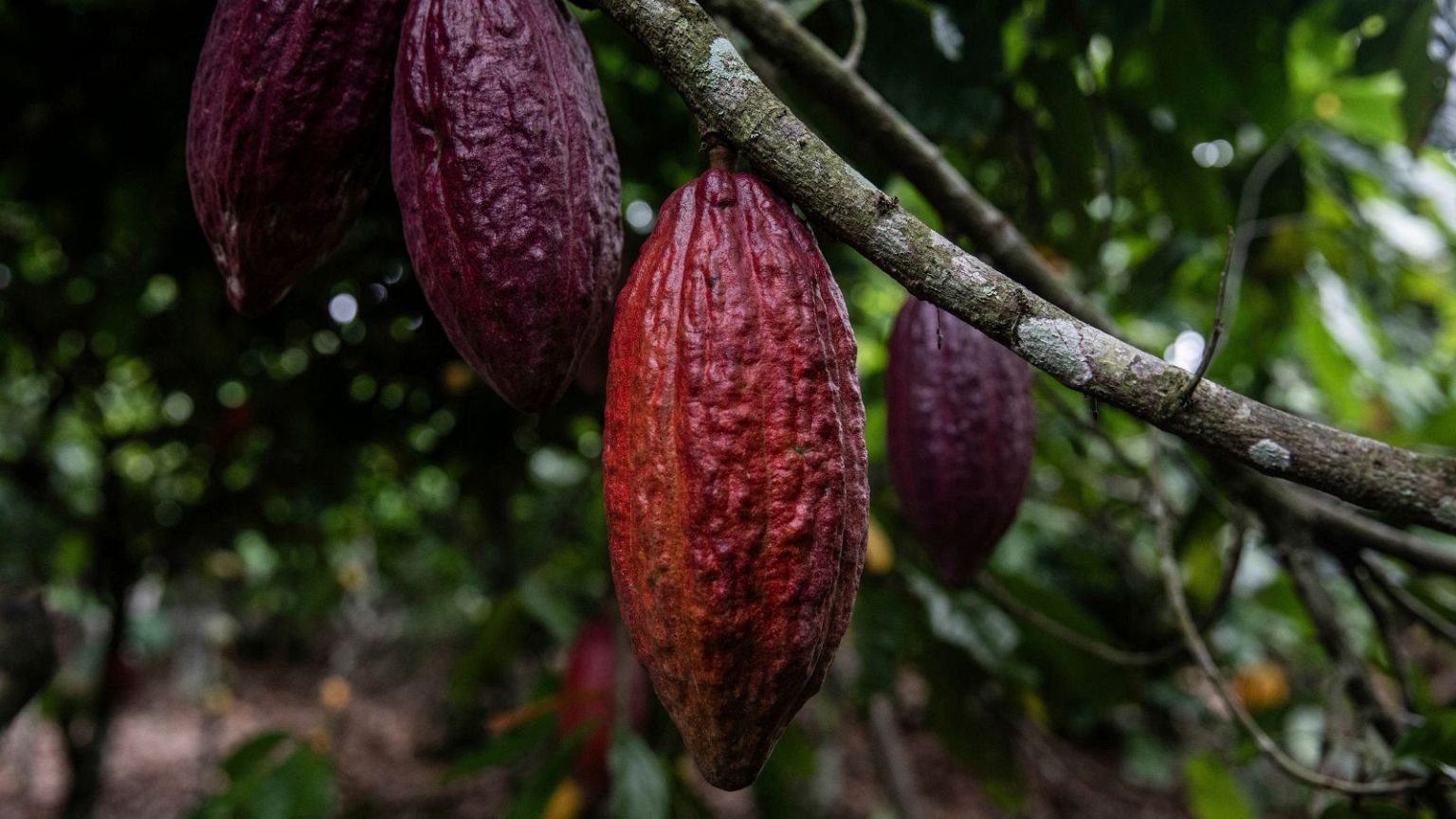
Six of Europe’s key food imports are under increasing threat from biodiversity loss and climate change, a new report warns.

Commissioned by philanthropic initiative the European Climate Foundation, UK consultants Foresight Transitions examined the vulnerability of staple crops maize, rice and wheat, as well as cocoa, coffee and soy - key commodities for EU agrifood production and exports.

They found that more than half the imports of these six foodstuffs were from climate vulnerable countries with limited resources to adapt. For three - wheat, maize and cocoa - two-thirds of imports come from countries whose biodiversity is deemed not to be intact.

“These aren’t just abstract threats,” says lead author of the report, Camilla Hyslop. “They are already playing out in ways that negatively affect businesses and jobs, as well as the availability and price of food for consumers, and they are only getting worse.”

Related

The EU’s chocolate industry faces the biggest threat

As the world’s biggest producer and exporter of chocolate, it is the EU’s chocolate industry - worth an estimated €44 billion - that faces the biggest threat from these twin environmental factors.

Around 97 per cent of chocolate’s primary ingredient, cocoa, comes from countries with a low-medium or below climate score, as per the Notre Dame Global Adaptation Index. This tool combines a country’s vulnerability to climate damages with its access to financial and institutional support.

And 77 per cent of cocoa comes from countries with a medium or below biodiversity rating, according to a ranking of biodiversity intactness from the UK’s Natural History Museum, which compares the current abundance of wild species to pre-modern levels.

The researchers mapped trade data from Eurostat onto these two rankings of environmental security for all six commodities.

In the case of cocoa, European imports come from a few main countries in West Africa - Ivory Coast, Ghana, Cameroon, Nigeria - all of which are experiencing overlapping and intensifying climate and biodiversity impacts.

“The European Union has forked out an increasing price for cocoa imports as a result of these environmental pressures, with the total value of imports increasing by 41 per cent over the last year,” says Hyslop.

“The increasing value has also been driven by climate-related increases in the price of sugar, highlighting the environmental ‘double whammy’ facing not only chocolatiers but other kinds of producers using multiple environmentally-sensitive inputs.”

Chocolate prices have gone up 43 per cent in the last three years, according to a recent analysis by green think tank Energy and Climate Intelligence Unit (ECIU), with ‘chocflation’ evident on supermarket shelves.

How biodiversity loss makes climate impacts worse

While previous studies have assessed the climate vulnerability of food imports, the new research stands out for its focus on biodiversity loss and how these two environmental factors interact.

“Climate impacts are made worse by declining biodiversity, which leave farms and surrounding ecosystems far less resilient to climate and other shocks,” explains Hyslop.

“Not only are less biodiverse farms less resilient to crop disease - these diseases often emerge due to decreased biodiversity.”

On top of this, yields are diminished by the clearing of native vegetation, which can alter local microclimates. While practices such as monocropping - where a crop like wheat is exclusively grown - deplete the soil on which food production depends.

European climate impacts are making the EU more dependent on imports

One response to this rising insecurity in Europe’s supply chains is to produce more food on the continent.

But, argues Dr Mark Workman, director of Foresight Transitions and co-author of the report, this ‘reshoring’ would by itself be a wholly insufficient response.

“Not only would the EU struggle to grow some of these commodities in large quantities, it is facing its own climate and biodiversity threats - not to mention the unpalatable land-use implications of significant reshoring of food production.”

Hyslop underscores the global nature of the climate crisis, too. While higher rainfall in 2024 left cocoa rotting in West Africa, she writes, floods in the UK and France decreased wheat production, and high temperatures in Eastern Europe disrupted maize crops - making imports crucial for food security.

“It is therefore entirely in the self-interest of EU policymakers to get serious about investing in the climate resilience of partner producers as well as overseas trading infrastructure such as ports that support this trade and are also subject to environmental stresses,” adds Workman.

“This is an important message to convey at a time when overseas aid budgets are often being pitted against investments in defence and security - but the truth is they are two sides of the same coin.”

Policy recommendations the report sets out include measures to support smallholder farmers, who supply the majority of cocoa to the EU. And, “the most obvious” one, strong climate mitigation policies, which will have positive benefits for all supplier countries.
UK seas are unusually hot – and scientists say the heatwave could just be getting started

UK waters are up to 4°C above normal in a marine heatwave that may offer an early warning of extreme summer heat.


Copyright Belinda Fewings/Unsplash

By Craig Saueurs
Published on 22/05/2025 -

The seas around the UK are heating up fast, and scientists are raising the alarm.

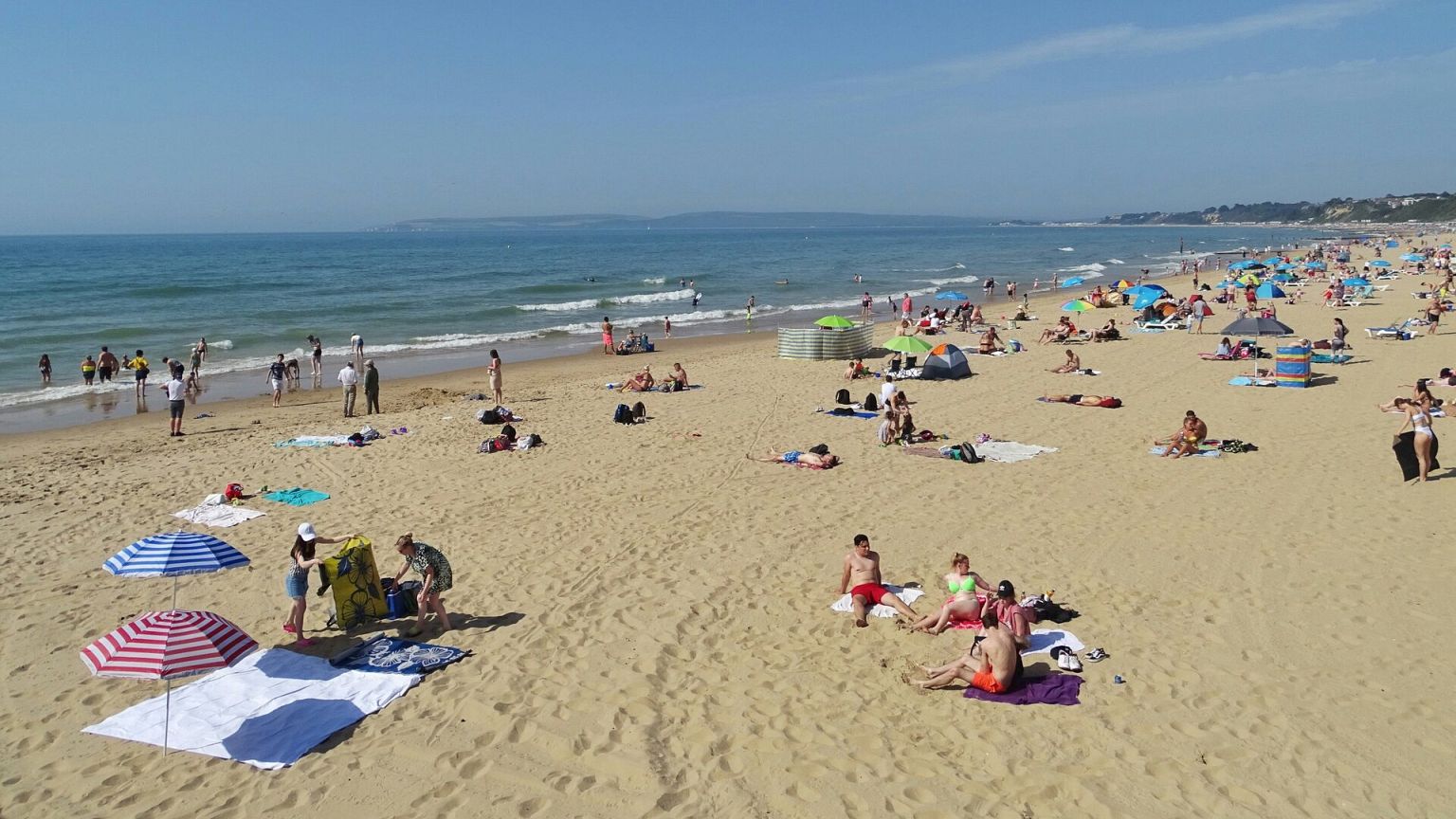
Earlier this week, the BBC reported that parts of the North Sea, English Channel and Irish coast are now as much as 4°C warmer than average, in what UK scientists are calling a “super intense” marine heatwave.

With surface temperatures already the highest ever recorded in April and May since monitoring began 45 years ago, researchers are warning of potential knock-on effects for marine life, as well as the general well-being of beachgoers.

And it’s not just the ocean feeling the strain.

The UK is coming to the end of one of the warmest, driest springs in more than a century. Forecasts suggest this could be a sign of an even hotter summer to come.
What is a marine heatwave?

Marine heatwaves happen when sea temperatures exceed seasonal averages for at least five consecutive days. They usually last about two weeks. This one has lasted more than two months, compounding the effects of human-induced climate change.

In the North Atlantic, sea surface temperatures have been increasing by around 0.3°C per decade over the last 40 years, according to the Met Office.

Related‘Faster and faster’: Why did global sea levels rise more than expected in 2024?
Baltic herring population threatened by warming sea temperatures

“Before we started having this exceptional weather this spring, the waters were already in a hotter state,” Dr Ségolène Berthou of the UK Met Office told the BBC.

Why is this happening?

The hotter sea temperatures are in part a result of the UK’s exceptionally warm, dry spring.

In an article published in The Conversation, Matthew Patterson and Simon H Lee, both researchers at the University of St Andrews, explained that a high-pressure system has prevented cooler, wetter conditions from moving in – a “blocked” or “stuck” weather pattern that has led to devastating wildfires and sowed chaos across UK farmlands.

The weak winds and strong spring sunshine that have accompanied this high-pressure system have allowed heat to build on the ocean’s surface, too.
What are the risks of a long marine heatwave?

Though marine heatwaves are still a relatively new phenomenon for the UK, they’re expected to become more frequent and intense as the climate warms.

Scientists are concerned the current flare-up may disrupt marine ecosystems, altering breeding cycles, enabling blooms of harmful algae or attracting jellyfish that thrive in warmer waters.

Jellyfish sightings off UK coasts jumped 32 per cent following a marine heatwave that raised sea temperatures up to 4°C above average, according to the BBC.

Related
Architects build eco-friendly houses with straw and clay amid scorching heatwaves
South Sudan shuts schools for two weeks after students collapse due to extreme heat

So far, the temperatures have not exceeded critical thresholds for mass marine die-offs. But the UK may only be seeing the beginning.

Researchers caution that the long-term implications are unclear, since marine heatwaves have rarely affected cooler British waters.

Is summer about to get even hotter?

While the current marine heatwave may weaken slightly in the coming days as weather patterns shift, scientists say this could be a temporary dip.

Forecasts suggest warm, dry conditions are likely to return, raising the risk of more extreme temperatures later this summer – both on sea and land.

Oceans act as vast heat reservoirs, and warmer waters can push up air temperatures as sea breezes carry heat inland. That’s what happened in May last year, when a brief marine heatwave contributed to unusually high land temperatures across the UK.

With ocean heat running high and El Niño now fading, forecasters expect 2025 to rank among the hottest years on record. The Met Office has even warned of “more than double the normal chance” of a hotter-than-average summer.

As summer looms, the sea around Britain may offer an early warning of what’s to come.

The UK is rolling out a world-first vaccine for gonorrhoea. What about the rest of Europe?

The UK will offer a vaccine originally intended to prevent meningitis, which is caused by a bacteria with a similar genetic profile to the one that causes gonorrhoea.


Copyright Canva

By Gabriela Galvin
Published on 22/05/2025 

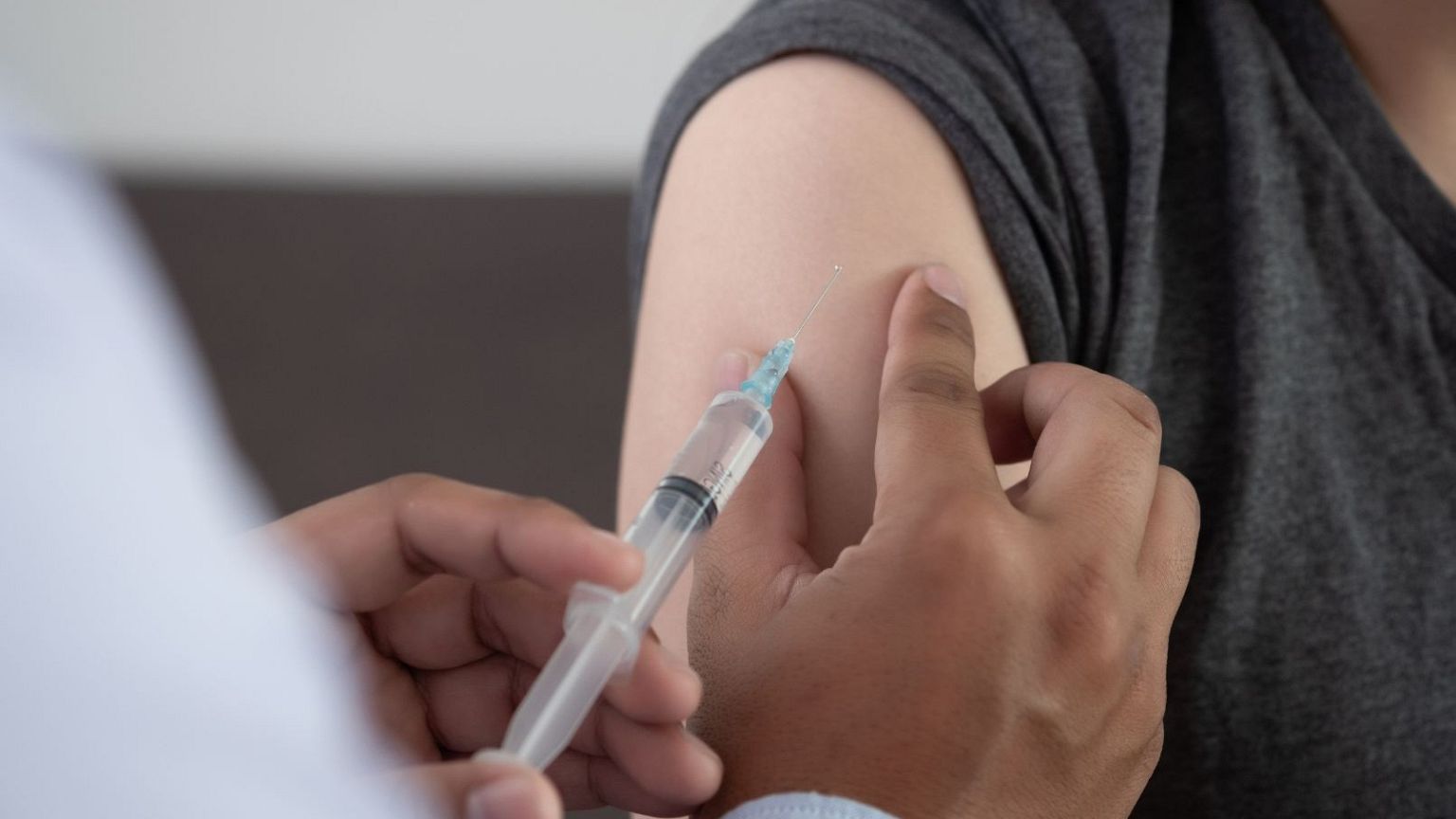
In a world first, the United Kingdom is rolling out a vaccine to prevent gonorrhoea – but it is not likely to reach patients in mainland Europe anytime soon.

The jab will be offered through the UK's National Health Service (NHS) to people in England at high risk of contracting gonorrhoea, after a vaccine advisory committee concluded in 2023 that it could help reduce the country’s surge of sexually transmitted infections (STIs).

In studies, the vaccine was between 32.7 per cent and 42 per cent effective against gonorrhoea, the advisory group found. That means the jab could help reduce, but not completely eliminate, the risk of infection.
RelatedExperts warning of 'troubling surge' in STDs in Europe amid push for better sex health

The vaccine, known as 4CMenB and sold by GSK as Bexsero, was not originally created with gonorrhoea in mind.

It’s been authorised for more than a decade in both the UK and the European Union to prevent meningococcal disease, which causes meningitis and bloodstream infections.

The UK has recommended that babies receive the vaccine since 2015, with Ireland, Italy, Portugal, France, and Germany later following suit.

Uptake has been spotty elsewhere in the EU.
RelatedEuropean countries are falling short on fight against HIV, TB and STIs, health authorities warn
Why won't Europeans be able to access the vaccine?

The bacteria that cause meningococcal disease and gonorrhoea are closely genetically related.

Real-world data from New Zealand and elsewhere indicate that the 4CMenB jab could be particularly effective against gonorrhoea, though a randomised trial in France concluded that it was not effective.

The vaccine hasn’t been approved to prevent gonorrhoea in the UK, meaning the NHS programme will offer it for off-label use.

Beginning in August, gay and bisexual men who have a recent STI or history of multiple sexual partners will be eligible for immunisation, in the hopes of slowing the bacteria’s spread.

RelatedOver a third of sexually active teen boys in Europe now choosing not to use condoms

England saw 85,000 new gonorrhoea cases in 2023, the highest level since records began in 1918, the NHS said.

The vaccine "has the potential to help us to turn that around," Matt Phillips, president of the British Association for Sexual Health and HIV, said in a statement.

But other Europeans won’t have access to the jab.

The EU’s scientific advisory group is not considering whether it should be authorised to prevent gonorrhoea, and a GSK spokesperson told Euronews Health that the drugmaker is not in talks with regulators to change that.

Meanwhile, health authorities in France and Italy told Euronews Health that the jab is not on their agendas, and a German representative pointed to a review that found mixed results on the efficacy of the vaccine to prevent gonorrhoea.

The Norwegian public health agency noted that the vaccine offers "some protection" against gonorrhoea, but it stopped short of endorsing the jab.

How do you treat gonorrhoea?

Gonorrhoea is one of the most common STIs, with nearly 97,000 confirmed cases in 28 European countries in 2023 – up 31 per cent from the year before, according to the European Centre for Disease Prevention and Control (ECDC).

Cases have been rising among all age groups and among both women and men, with men who have sex with men accounting for 58 per cent of cases in 2023.

Gonorrhoea can cause burning during urination, discharge from the genitals, and pain in the lower abdomen or testicles. It can lead to serious health issues if left untreated, such as pelvic inflammatory disease in women.

Symptoms typically appear two weeks after infection, but many people don’t have symptoms and can unknowingly spread gonorrhoea to their sexual partners.

Related
Health authorities push for 'urgent' action as some STIs reach new highs in Europe

Gonorrhoea can be treated with antibiotics, though the surge of cases in recent years raises the risk that people will be infected with drug-resistant strains that are harder to treat.

That’s one problem the UK is hoping to address with the new vaccination programme, according to Dr Sema Mandal, deputy director of the UK Health Security Agency.

"This vaccination programme is a hugely welcome intervention at a time when we’re seeing very concerning levels of gonorrhoea, including antibiotic-resistant gonorrhoea," Mandal said in a statement.
Crete earthquake: Is it safe to travel to the Greek island following second tremor in a month?

Authorities say no major damage has been reported and there is very little risk of a tsunami.


Copyright Joshua Kettle

By Rebecca Ann Hughes
Published on 22/05/2025 

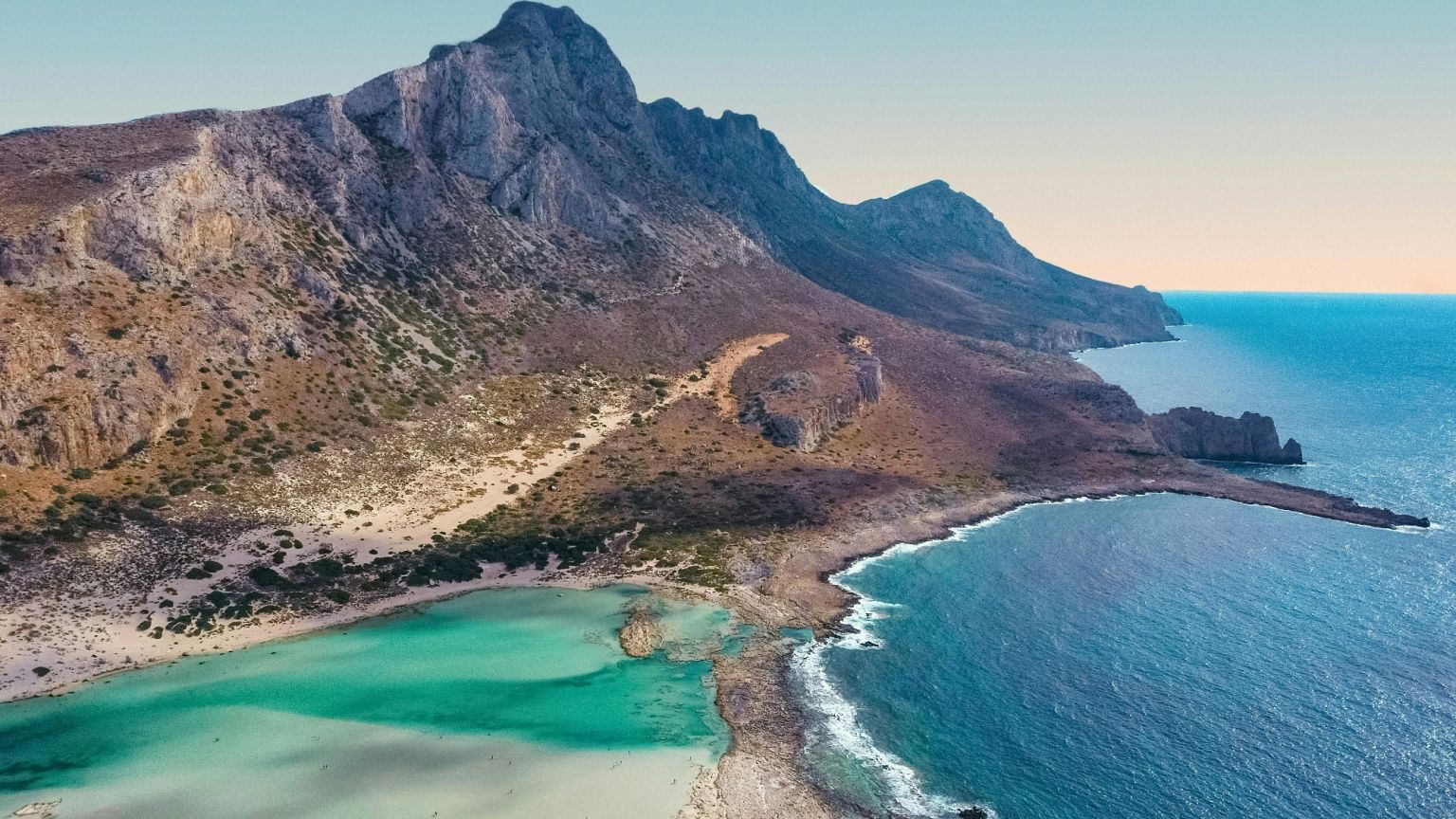
A 6.1 magnitude earthquake struck off the coast of the Greek island of Crete early this morning, Thursday 22 May.

The tremor was felt across several Aegean islands, areas of mainland Greece, Turkey and Israel.

There have been no reports of major damage, and authorities have said there is very little risk of further surface impact, including a tsunami.

It is the second time this month that Crete has been hit by seismic activity, but the latest earthquake was stronger than the first, eight days ago.

Here is the latest travel information from the local government.

Earthquake shakes Crete island for second time in a month

The earthquake's epicentre was 56 kilometres northeast of the Cretan capital Heraklion, and the tremor was felt in the cities of Chania and Rethymno on the island, too, as well as in Athens.

According to reports, the earthquake caused landslides on the provincial road network and damage to buildings in Heraklion.

Mayor of Agios Nikolaos, Manolis Menegakis, confirmed to local media that despite the powerful tremors, there have been no other reports of major damage or injuries.

Authorities say they are monitoring the situation closely. "We are vigilant," Menegakis added.

Unlike the most recent quake eight days ago, officials say post-seismic activity is not expected.

Athanassios Ganas, research director at the Geodynamic Institute of the National Observatory of Athens, said: "It is a classic intermediate-depth earthquake, as often occurs in the southern Aegean. There are no expected impacts on structures, nor is it expected to cause a tsunami or affect areas such as Santorini."
Crete earthquake: Is it safe to travel and am I entitled to compensation?

Foreign governments have not issued travel advisories as yet, so it is currently still considered safe to visit Greece and its islands.

This also means that, should you choose not to go ahead with your trip, you are unlikely to receive compensation.

Depending on your travel insurance policy, you may be able to receive a refund for some or all of your trip if it includes compensation for cancellations due to natural disasters. Check with your provider and read your terms and conditions carefully.

Related
Olive oil, honey and wine: How heat is hitting harvests on the Greek island of Kos
One Day: How a Netflix series has boosted bookings on the Greek island of Paros

If you are on holiday in or about to travel to Crete, Kasos or Karpathos, make sure you stay up to date with the latest information.

Crete and its surrounding region are considered one of Europe’s most seismically active zones.

In October 2021, a 6.3 magnitude earthquake shook the island just weeks after another tremor killed one person and injured several others.

Don't panic but be aware, experts advise tourists after earthquakes rattle Greece

Two earthquakes struck near Crete and islands across the Aegean sea over the last two weeks. Experts are warning tourists to familiarise themselves with emergency guidance.


Copyright AP Photo

By Tamsin Paternoster
Published on 22/05/2025 - 

A magnitude 6.1 earthquake struck off the coast of Crete on Thursday, just over a week after a similar undersea tremor near the island was felt as far away as Egypt.

In February, a series of near-constant quakes were felt near the idyllic island of Santorini, which declared a state of emergency over the unusual seismic activity.

Although the earthquake off Crete prompted authorities to issue a tsunami warning and caused damage to buildings in the island's historic port, experts say there is no evidence the recent cluster of tremors is connected or poses an unusually significant safety risk.

Rémy Bossu, Secretary-General of the European-Mediterranean Siesmological Centre, told Euronews that "everytime you go to Greece, you are going to a seismically active region."

"The hazards are not significantly higher than they were yesterday, or in February."

Nevertheless, tourists preparing a visit to islands in the Aegean should be prepared and read up on guidance on how best to protect themselves in the event of such tremors, which can be unsettling.
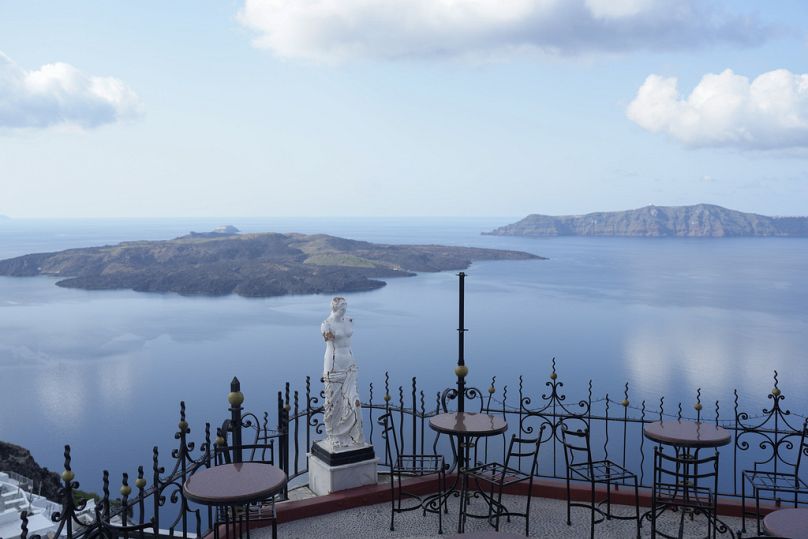
The volcanic island of Nea Kameni, left, is seen from Fira town as Greek authorities are taking emergency measures in response to seismic activity on Santorini, February 2025 Petros Giannakouris/Copyright 2025 The AP. All rights reserved

"The most likely cause of injuries is falling objects if you are inside. So you have to protect yourself by going below a table and avoiding open areas when possible," Bossu says.

"The earthquake of such magnitude itself does not automatically injure people, but tiles from roofs or balconies might do if they collapse. So you have to know how to behave during an earthquake and above all, listen to what authorities say."

The tsunami warning is automatically triggered in the Mediterranean in the event of an undersea earthquake that reaches magnitude 6, Bossu explains.

"Typically, for magnitude 6, you do not expect a large tsunami. For this level, what is advised is not to go into harbours because it can create a whirlpool and not go on the beach because you may have some rise in sea levels."
Unusual seismic activity in Santorini

Thursday's tremor was felt extensively throughout islands across the Aegean Sea and in parts of the Greek capital of Athens.

Residents of the island told Greek daily Ethnos that they awoke to alarming tremors and described hearing a loud roar following the aftershocks.

The fact that it occurred in the sea meant its damage however was ultimately minimal, director of the Geodynamic Institute of the National Observatory of Athens, Vassilis Karastathis, told OPEN tv.

"I think the most likely scenario is that it will evolve exactly as it seems to evolve with a very weak post-earthquake sequence, Karastathis said, adding that seismologists in the Mediterranean country were monitoring the phenomenon.

More unusual was the earthquake near the volcanic island of Santorini in February, which experienced intense seismic activity known as an "earthquake swarm." According to Bossu, there was a clear volcanic element to the tremors.

Thousands fled the popular holiday destination, which has since implemented measures to protect the location from a potential volcanic eruption.

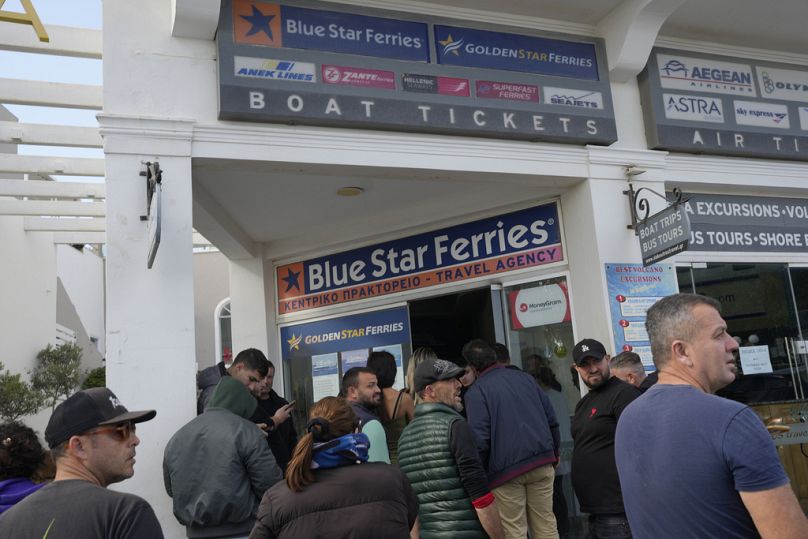
People wait to buy boat and air tickets as Greek authorities are taking emergency measures in response to intense seismic activity on the island of Santorini, Feb 2025.Petros Giannakouris/Copyright 2025 The AP. All rights reserved

Seismologist, Dr Nikolaos Melis, Director of Research at the Institute of Geodynamics, part of the National Observatory of Athens told Euronews that despite the high number of earthquakes in a short time span, researchers have no reason to believe that Greece will experience a devastatingly large earthquake anytime soon.

However such large earthquakes — such as one in Crete that killed one person in 2021 — are impossible to predict.

Sitting close to the boundary of the African and Eurasian tectonic plates the Greek islands, particularly the western Ionian islands, are sites of high seismic activity and are typically well-prepared for the dangers of aftershocks.

"For people who are not aware it can be frightening, and whilst it is not impossible for a big earthquake, most buildings and hotels follow a strict building code that protects them from damages," Melis says.

"Greece has got the highest seismic activity in Europe and next to Turkey we have two countries with very high activity. But as I said, the big magnitudes, the catastrophic magnitudes, are very rare."
Blaze-hit Athens suburb trains to tackle new fire season

By AFP
May 23, 2025


Volunteer firefighters are holding practice drills to prepare for fire season in the Athens suburbs - Copyright AFP Mohd RASFAN

Hélène COLLIOPOULOU

On a trail bordering the last green vestiges of Penteli, the mountain above Athens ravaged by fires last year, cyclists and runners enjoyed the closing days of spring before the summer heat.

Suddenly, a plume of smoke rose from the pine forest — a flare held aloft by a firefighter.

Within moments, sirens broke the morning silence. A dozen firefighters in helmets and breathing apparatus climbed the hill carrying hoses and extinguishers.

“Another fire?” the elderly resident of one house asked with annoyance.

“A simulation exercise,” replied a Sunday jogger, running past without breaking her rhythm.

The residents of the affluent suburb north of the Greek capital, named Penteli after the mountain, have grown accustomed to firefighter exercises since many homes in the area were lost to flames last August.

The latest simulation was run by a team led by Apollon Kounis, 48, a resident and municipal employee who says he has “dedicated” himself to protecting the Penteli forest since his youth.

Twelve men, supported by three vehicles, took part in the exercise, part of a team of 100 volunteers from the nearby town of Rodopoli.

“This is our last exercise of the season before we begin 24/7 shifts at our emergency station next month,” Kounis told AFP.

“Since 2018, I haven’t taken a summer vacation. Saving the forest is my life.”

– ‘Save what remains’ –

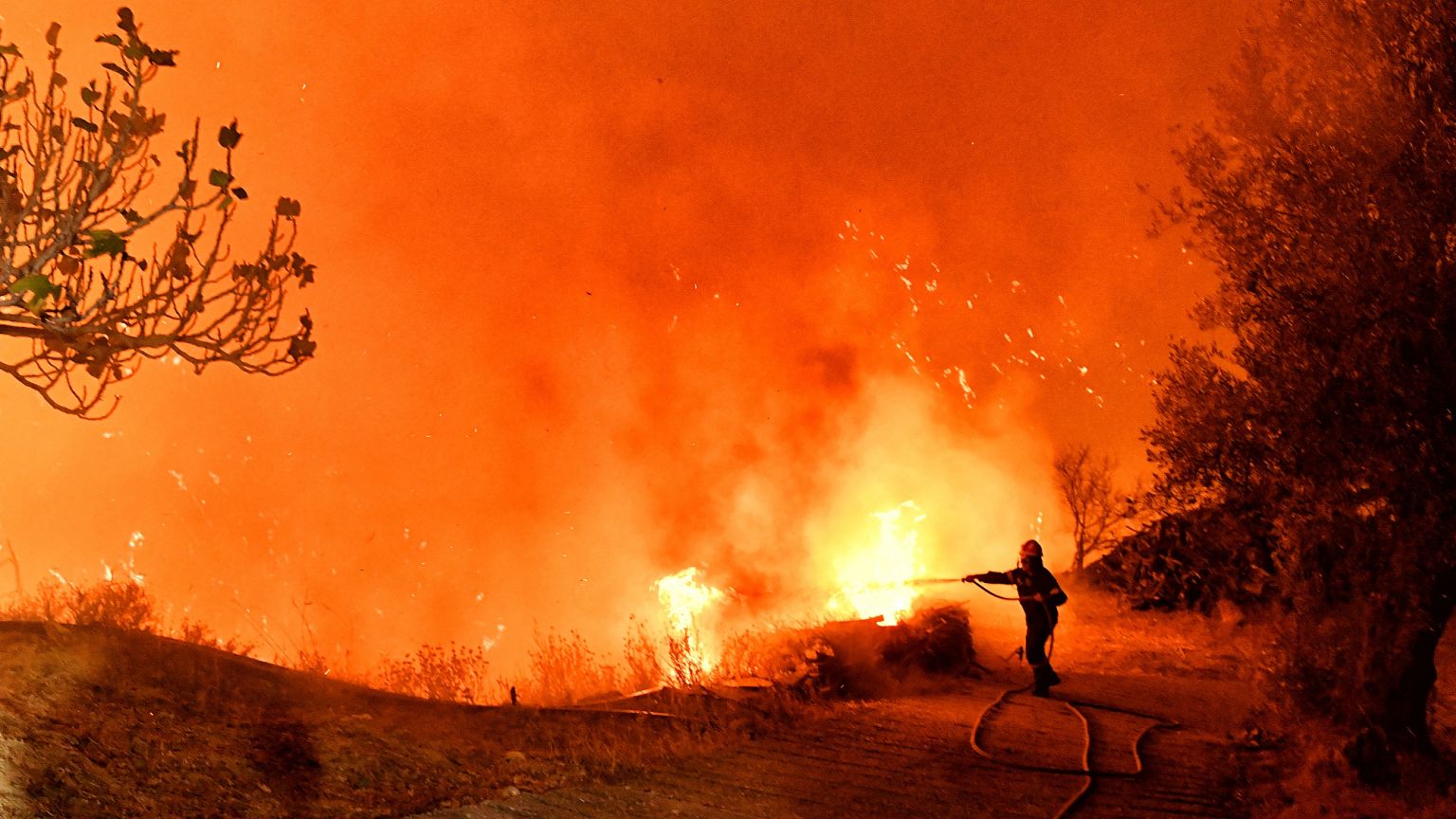
Greece suffers forest fires every summer, a threat exacerbated by rising temperatures and drought brought about by the climate crisis, experts say.

Nearly 10,000 hectares (24,700 acres) in the Athens region burned last year in a fire that started in Varnavas, 35 kilometres (22 miles) northeast of the capital.

It was attributed to a short circuit on an electricity pole.

Fuelled by strong winds, the fire spread within hours across the eastern part of Penteli, destroying shops, homes and vehicles within 15 kilometres of central Athens.

“Last year’s fire was the most catastrophic I’ve ever experienced,” Kounis said.

The cisterns and fire hoses maintained by several Penteli residents were little help.

Penteli’s Mayor Natassa Kosmopoulou hopes increased rainfall since January will give some protection this time after last summer’s prolonged drought.

“We’ve always had fires in Penteli, but in recent years the fires have been very intense due to climate change,” she told AFP at her office.

Standing before a desk filled with papers and files, Kosmopoulou said she “battles daily with forestry services responsible for clearing ravines that are often ignition points”.

The mayor argues that forest roads and firebreak zones “are insufficient”. Access is difficult “to certain areas of Penteli where debris, tyres, anything you can imagine, has been dumped”.

Kounis, the volunteer firefighter, believes “this summer won’t be as catastrophic”.

But “we must stay on alert to save what remains,” he said.

– Heartache –

Rising to an altitude of 1,100 meters, and home to hospitals and clinics because of its pure air, Mount Penteli is now strewn with charred tree branches and trunks where bulldozers have yet to remove the debris.

On the mountain crest, the yellow of broom bushes and the red of poppies contrast with the scorched earth.

Lower down in the residential area, Tryfonas Drakonakis strolled along a path at the edge of the charred forest where a butterflies fluttered about.

The silence, in the absence of birds, was filled by the hum of electric pylons.

“I try not to look around. I try to forget,” said the septuagenarian, considering himself fortunate that his house escaped the flames last summer.

His neighbour Thomais Bertou was not so lucky — her home was reduced to ashes along with about 40 others.

The 65-year-old now lives in a caravan in front of the ruins and spends her days tending to her small garden.

“There’s nothing left. We had to start from scratch” she said. “What else can I do? I steel my heart and keep going.”

Greece boosts firefighter and drone numbers to tackle growing risk of wildfires


Copyright AP Photo

By Gavin Blackburn with AP
Published on 22/05/2025 -

Officials said the number of firefighting personnel has increased by roughly 20% over the past two years, while the fleet of fire-surveillance drones has grown to 82, up from the previous 45.

Greece will deploy a record number of firefighters and nearly double its drone fleet this summer to address growing wildfire risks driven by climate change, officials have said.

Civil Protection Minister Ioannis Kefalogiannis said 18,000 permanent and seasonal personnel, supported by thousands of volunteers, would be mobilised as damage caused by wildfires has increased steadily over the past two decades.

"It is clear that the conditions this year will be particularly difficult," Kefalogiannis told reporters after attending a firefighting exercise near Athens.

Rising average temperatures and low rainfall have significantly worsened conditions in recent years.

Greek Fire Chief Lieutenant General Theodoros Vagias told The Associated Press that additional elite firefighting units would be deployed to high-risk areas during the 1 May–31 October fire season.

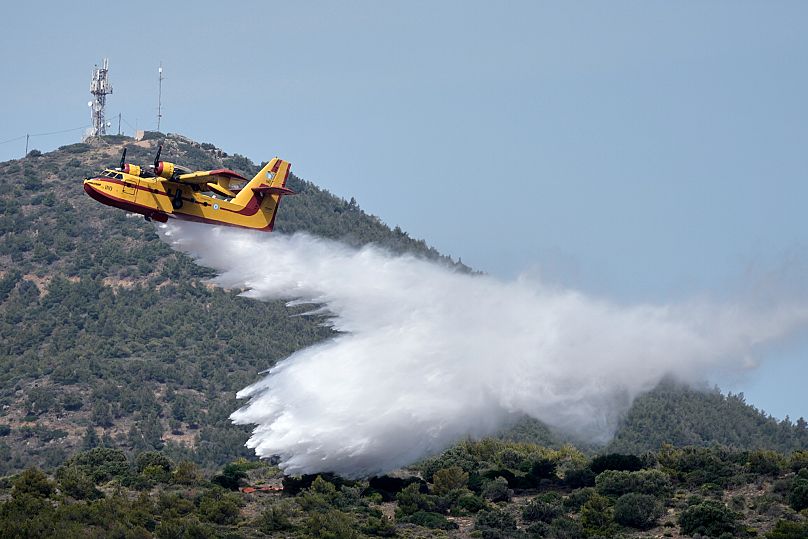
A firefighting plane drops water during the "Through Fire 2025" drill over a forest in Lavrio, 22 May, 2025AP Photo

"The climate crisis is here to stay, and we must be more effective in surveillance, preparedness, and how we mobilise our resources," Vagias said.


Wildfire damage affected more than 1,300 square kilometres in 2021 and 1,745 square kilometres in 2023, roughly three times the 2011–2020 average, according to data from the European Union’s Forest Fire Information System.

Firefighters held an exercise to test Greece's evolving emergency response, which increasingly relies on advanced technologies such as drone surveillance and mobile command centres.

Fire planes skimmed treetops, releasing plumes of water in coordinated low-altitude drops, as commanders on the ground viewed progress on tablets streaming real-time drone footage.

The coastguard and armed forces took part in a drill simulating the evacuation of a children’s summer camp threatened by fires on multiple fronts.

Officials said the number of firefighting personnel has increased by roughly 20% over the past two years, while the fleet of fire-surveillance drones has grown to 82, up from the previous 45.

Around 300 firefighters from the Czech Republic, France, Romania, Moldova and Bulgaria are being sent to Greece under an EU prepositioning programme, officials said.

Greece's deadliest wildfire killed 104 people in 2018, at a seaside resort near Athens that residents had not been warned to evacuate.
Red Cross President calls for reverse of trend for deteriorating humanitarian situation

International Red Cross President Mirjana Spoljaric spoke to Euronews at the European Humanitarian Forum 2025 about intensifying global conflict, warning of declining respect for humanitarian law and rising concerns over shrinking budgets.


Copyright AP Photo/Jehad Alshrafi

By Marta Iraola Iribarren
Published on 22/05/2025 - 


Amid growth of armed conflict across the world, the President of the International Committee of the Red Cross (ICRC) voiced concerns about the scale of destruction and the weakening of international humanitarian law.

“The number of conflicts today is higher than in the previous decades, with more intensity and higher level of destruction that I have ever seen,” Mirjana Spoljaric said on the fringes of the European Humanitarian Forum 2025 in Brussels this week.

The current humanitarian situation across the world is deteriorating and that “it is very urgent that we reverse that trend”, she said.

The Geneva Academy of International Humanitarian Law and Human Rights is currently monitoring more than 110 armed conflicts involving at least 55 states and more than 70 armed non-state actors.

The Middle East and North Africa is the most affected region, with more than 45 armed conflicts currently taking place in the area.

According to the European Commission, more than 300 million people are expected to require humanitarian assistance in 2025.

Spoljaric recounted how she had witnessed during recent trips to Chad and Gaza how levels of destruction resulting from incursions during the last decade had completely transformed them.

"The permissiveness regarding the destruction of civilian infrastructure, destruction of health services, and water systems has increased," she said.

The ICRC attributes this to increasing erosion of international humanitarian law, and Spoljaric cited Sudan, Ukraine, and Gaza as examples where humanitarian law is being loosely interpreted.

European Commissioner Hadja Lahbib also called for renewed political commitment to strengthen humanitarian diplomacy during the Forum, urging pressure on all parties in the Gaza conflict to “uphold international humanitarian law, which is blatantly violated”.

For the ICRC president, a major factor behind this erosion is negligence and “a laid-back attitude”.

“When you see international humanitarian law violations you try to find excuses why it's not a violation or you think this is far away, it doesn't concern me,” she said, “but with 120 conflicts and a globalised world, every time you accept and tolerate a blatant violation [of international law], you send the signal that it's okay, it is allowed to be done and then it's a question of time until it reaches your front door."
Less money, less action

Adding to this, she flagged that the humanitarian sector is facing unprecedented budget cuts following the United States’ decision to halt foreign and development funding at the beginning of the year.

If funding continues to decline, Spoljaric said that the ICRC will be forced to reduce its footprint on the ground. “We can't invent new money, so we will be able to deliver less,” she stressed.

The EU remains one of the ICRC’s top donors and partners and the world’s leading donor of humanitarian aid, having increased its initial 2025 humanitarian budget from €1.9 billion to €2.3 billion, according to Spoljaric.

“For us, the EU is important financially, of course, but even more so politically and definitely as a convener and as a facilitator of humanitarian access,” the ICRC president said.
Ukraine, the biggest program yet

At present, the ICRC’s largest program is in Ukraine, where they have over 700 people working.

“I don't know how long it will remain our largest program, given the different needs in the different regions, but it's historical to have such a comprehensive mission in one situation of conflict," she said.

The organisation has faced criticism for insufficient engagement in the conflict, particularly in relation to its record on visiting prisoners of war.

Spoljaric said that the ICRC maintains constant contact with the Ukrainian Red Cross and local authorities.

She acknowledged that gaining access to prisoners of war is always a complex negotiation with the parties involved in the conflict.

“We have been able to visit a couple of thousand detainees [...] but there's still an enormous gap of thousands of people that we haven't visited and that we don't know where they are, for most part,” she added.
UNRWA chief fears Gaza may stop being ‘land for Palestinians’ amid Israeli offensive


Copyright Euronews

By Mared Gwyn Jones
Published on 22/05/2025

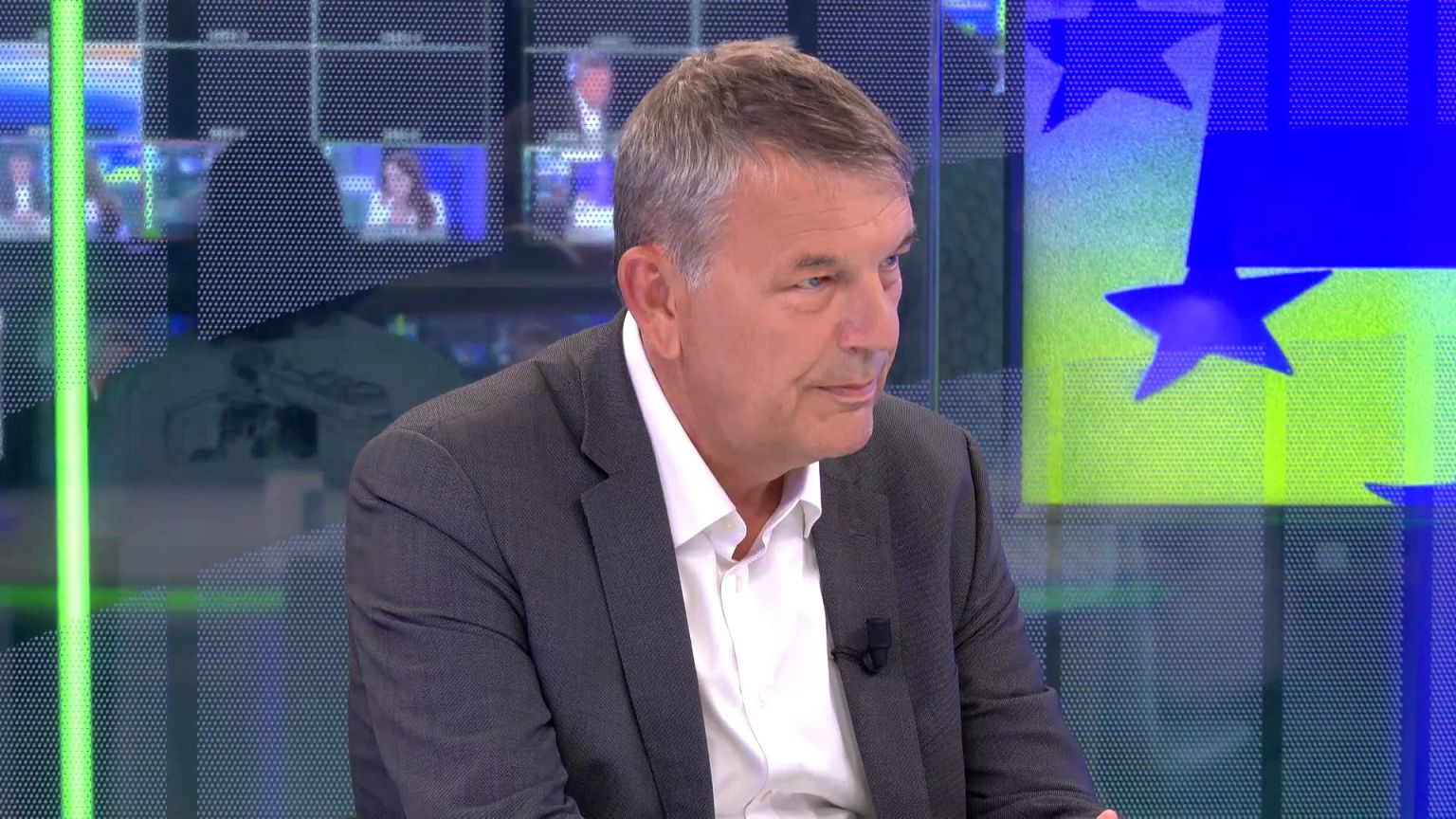
Philippe Lazzarini tells Euronews Israeli plans for Gaza are ‘dystopian’ after Netanyahu declares intention to control the entirety of the Palestinian territory.

The commissioner-general of the UN agency for Palestinian refugees (UNRWA), Philippe Lazzarini, has said he fears Gaza may soon no longer be a “land for Palestinians to live in” amid intensified Israeli airstrikes and ground operations.

Asked in an interview with Euronews earlier this week about Israeli plans to control the Gaza Strip in its entirety, Lazzarini said: “We have seen many (Israeli) plans, some of them more dystopian than the other.”

One of those plans, seen exclusively by Euronews last week, suggested the IDF could temporarily introduce martial law and force civilians into designated security zones.

“There is absolutely no safe place,” Lazzarrini told Euronews. “What I see for the time being is a continuation of the destruction, deaths and killing of the Palestinians in Gaza. And my fear is that we might reach a point where Gaza might not be a land anymore for Palestinians to live in.”

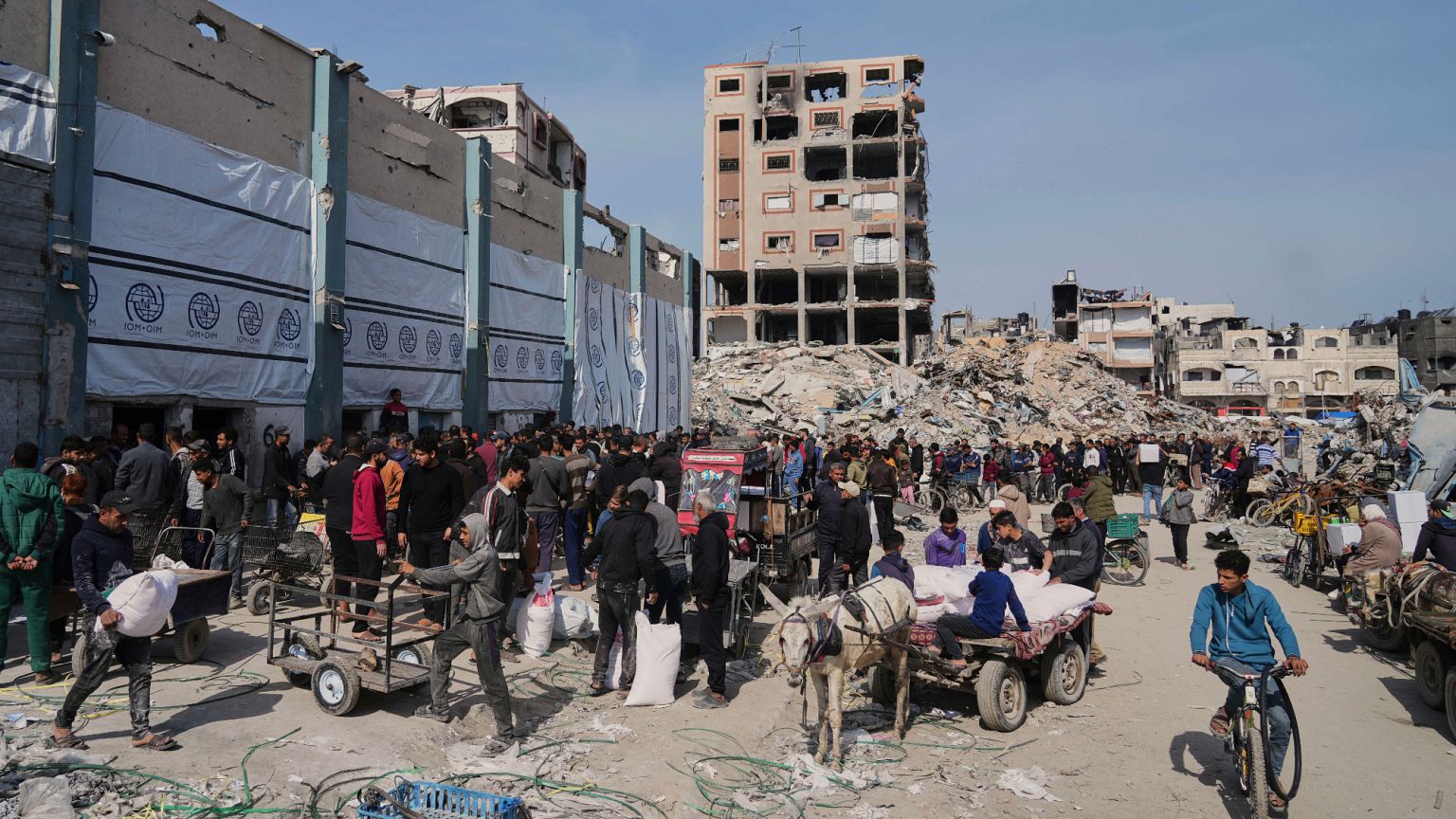
On Monday, Israeli Prime Minister Benjamin Netanyahu authorised the entry of “basic amounts” of food into Gaza after an eleven-week blockade on all humanitarian supplies.

Israel says aid was cut off because it was being looted and “monetised” by Hamas – which led the 7 October attacks on Israel that triggered the Israel-Hamas war in Gaza – and other militant groups.

But Israel’s decision to allow the entry of restricted amounts of food has been described as a “smokescreen” by aid groups. The European Union and the UK have since announced they would revisit their trading relationship with Israel in response.

“It's a total outrage that we are confronted with a situation of starvation when it comes to Gaza. It's a completely fabricated one, a man-made one,” Lazzarini said. “Basically, we are in a situation where hunger and food is being weaponized for political and military purposes.”

Israel says a new aid operation it has initiated with the backing of the US will be up and running by the end of May. It would see a Swiss-registered, US-backed charity called the Gaza Humanitarian Foundation (GHF) set up aid hubs with the assistance of private firms.

Lazzarini rejected the scheme, saying it fails to meet “any basic humanitarian principle, including humanity and impartiality.”

GHF has said civilians in Gaza would be required to collect aid packages weighing as much as 20kg from limited distribution points.

Lazzarini said the operation would cut off the “most vulnerable” from aid and “trigger forced displacement” while a military operation takes place.
UNRWA chief has to ‘contemplate’ closing agency

UNRWA has, until now, been the main provider of humanitarian aid to Palestinians in Gaza. But its activities in the occupied Palestinian territories were banned in January under two pieces of Israeli law.

Israel has consistently accused the agency of being “infiltrated” by Hamas, which has been designated a terrorist organisation by the US, Canada, Australia, the UK and European Union, among others.

Nineteen UNRWA staff members were suspended last year amid suspicions they could have been involved in the 7 October attacks on Israel. The Israeli government also says it has evidence UNRWA facilities in Gaza were being used by Hamas operatives to shelter and store weapons.

Lazzarini said the investigations into the 19 staff members were “not conclusive” but that the agency suspended them regardless.

“Whenever there is an allegation that staff might be part of the armed group of Hamas, we will act quickly. But for that we need collaboration, we need information,” Lazzarini said.

“And over the last two years, I have repeatedly asked the government of Israel to share information with the UN or with UNRWA. Until today, we have never received any substantiated information.”

UNRWA’s finances have also suffered after the withdrawal of major donors, such as the US, which previously donated as much as $422 million (€372 million) annually to the agency.
“I really hope I will not be pushed into a situation where I have to announce the suspension of all our services,” Lazzarini said. “This is something I unfortunately have to contemplate on a regular basis.”

Aid cuts could be costly, Lazzarini says

Lazzarini called on Western governments to “not compromise our ability to respond to crises” with sweeping cuts to humanitarian aid budgets.

Several Western governments including the US, UK, Switzerland, Germany and France have slashed their aid budgets considerably in recent months.

“I know that many countries are going through austerity, but cutting in international cooperation or humanitarian assistance is certainly not the area where countries should cut,” Lazzarini explained.

“If we do not address a crisis, people will want to leave and most likely come here, and then the cost will be much more expensive,” he explained, suggesting the cuts could trigger forced migration from crisis areas.

Watch the full interview on the Europe Conversation in the video above.


Dozens of protesters gather in front of Italian parliament in solidarity with Palestinians in Gaza

They waved Palestinian flags and held banners to call for a ceasefire.

Many protesters accused Israel of genocide, destroying hospitals and of manufacturing a humanitarian catastrophe in the enclave, such as widespread famine.

“There is a crime against humanity ongoing, a real genocide, therefore I think right to cry out our pain so that this savagery of war can stop,” said protester Giorgia Prosperi.

“When you starve a people, when you besiege it, and you don’t provide them with health care, but instead you destroy hospitals - there were 36 hospitals in Gaza and now there are only four left after all those were destroyed,” said Francesca Perri, a medic and member of a group called “Medics for Gaza”.  

“They have limited capabilities to assist since they have no medicines or even bandages, they have nothing left, our colleagues amputate with no anaesthetics - all this for us is a great pain,” added Perri.

Despite a surge in international anger at Israel's widening offensive, Israeli strikes continued to pound the Gaza Strip on Wednesday.

The attacks killed at least 82 Palestinians, including several women and a week-old infant, according to the Hamas-run Gaza Health Ministry and area hospitals.

Israel began allowing dozens of humanitarian aid trucks into Gaza on Tuesday, but the UN says the Israeli security process to clear aid to distribution warehouses, which they’ve described as “long, complex and dangerous”, is preventing aid from quickly reaching those in need.