Wednesday, July 23, 2025

Forever chemicals, lasting effects: Prenatal PFAS exposure shapes baby immunity


University of Rochester Medical Center


New research reveals that tiny amounts of PFAS—widely known as “forever chemicals”—cross the placenta and breast milk to alter infants’ developing immune systems, potentially leaving lasting imprints on their ability to fight disease.

University of Rochester Medical Center (URMC) researchers tracked 200 local healthy mother–baby pairs, measuring common PFAS compounds in maternal blood during pregnancy and then profiling infants’ key T‑cell populations at birth, six months, and one year. By age 12 months, babies whose mothers had higher prenatal PFAS exposure exhibited significantly fewer T follicular helper (Tfh) cells—vital coaches that help B cells produce strong, long‑lasting antibodies—and disproportionately more Th2, Th1, and regulatory T cells (Tregs), each linked to allergies, autoimmunity, or immune suppression when out of balance.

“This is the first study to identify changes in specific immune cells that are in the process of developing at the time of PFAS exposure,” said Kristin Scheible, MD, an associate professor of Pediatrics and Microbiology & Immunology at URMC and lead author of the study, which appears in the journal Environmental Health Perspectives. “Identification of these particular cells and pathways opens up the potential for early monitoring or mitigation strategies for the effects of PFAS exposure, in order to prevent lifelong diseases.”

What It Means for Vaccines, Allergies, and Autoimmunity

Tfh cell depletion helps explain previous findings that higher PFAS levels in children correlate with weaker vaccine responses to tetanus, measles, and other routine immunizations. Conversely, the uptick in Th2 and Treg cells can predispose to allergic inflammation or dampened defenses, while excess Th1 activity raises concerns about future autoimmune conditions such as juvenile arthritis or type 1 diabetes.

“The cells impacted by PFAS exposure play important roles in fighting infections and establishing long-term memory to vaccines,” said Darline Castro MelĂ©ndez, PhD, a researcher in Scheible’s lab and first author of the study. “An imbalance at a time when the immune system is learning how and when to respond can lead to a higher risk of recurrent infections with more severe symptoms that could carry on through their lifetime.”

Minimizing PFAS Exposure

Although Rochester’s drinking water meets current safety standards, PFAS lurks in numerous consumer products—from nonstick cookware and food packaging to stain-resistant fabrics and personal care items. The study’s mothers had relatively low PFAS blood levels compared to other regions, yet the immune shifts were pronounced even in this small sample.

While not all environmental exposures can be avoided, families can reduce PFAS contact during critical windows of fetal and infant immune development. “Use water filters, minimize cooking in damaged nonstick pans, switch to alternatives like stainless steel or cast iron, and store food in glass or ceramic containers,” said Scheible. “Small steps can help lower the cumulative burden of exposure.”

The team plans a longer follow-up to determine whether these early T‑cell imbalances persist into toddlerhood and whether they translate into more infections, allergies, or autoimmune diseases. Measuring PFAS in infants directly and unraveling the molecular underpinnings of these immune disruptions are key objectives for future research.

Additional authors include Nathan Laniewski, Todd Jusko, Xing Qiu, Paige Lawrence, Jessica Brunner, Meghan Best, Allison Macomber, Alena Leger, Kurunthachalam Kannan, Richard Kermit Miller, and Thomas O’Connor with URMC, and Zorimar Rivera-Nunez and Emily Barrett with Rutgers University. The research was supported with funding from the National Institute of Allergy and Infectious Diseases, the National Institute of Environmental Health Sciences, the National Institute of Child Health and Human Development, the National Center for Advancing Translational Sciences, and the University of Rochester Clinical and Translational Sciences Institute.

Colonial-era land-use changes in India led to severe decline in grassland birds, study finds


Cornell University
The Nilgiri Hills and timber plantations by Prasenjeet Yadav 

image: 

View of the Nilgiri Hills with timber plantations on the right hill slope. 

view more 

Credit: Prasenjeet Yadav


Ithaca, NY—A new study published in the journal Global Change Biology reveals that colonial-era landscape modifications have resulted in a devastating 80% loss of grassland habitat and significant declines in grassland bird populations in India's Nilgiri hills over the past 170 years.

An international research team—led by scientists from Columbia University, the K. Lisa Yang Center for Conservation Bioacoustics at the Cornell Lab of Ornithology, Indian Institute of Science Education and Research Tirupati, and 10 other institutions—analyzed an extensive dataset comparing historical land cover maps from 1848 with modern satellite imagery and bird observations from 1850 to 2021.

“What's unique about this work,” said Vijay Ramesh, lead author and postdoctoral fellow at the Cornell Lab of Ornithology, “is that we contrasted historical datasets from two centuries ago with present-day data collected from the field. We show that maps, hunting records, and museum specimens can be leveraged to estimate baseline environmental conditions against which data from modern ecological surveys and satellite imagery can be compared.”

The research team found that about 90% of grassland birds have significantly declined in relative abundance since the 1850s. Eight out of the nine grassland bird species the research team studied showed significant population declines. Birds such as the Nilgiri Pipit and the Malabar Lark showed the steepest declines over time. According to the study, this decline coincides with colonial-era policies that favored converting natural grasslands into tea and timber plantations. 

"British settlers viewed grasslands as wastelands, and this notion has resulted in the large-scale plantations of tea, and exotic timber species (such as acacia, eucalyptus, and pine) that we see today in this highly biodiverse region,” said Ramesh. 

Somewhat surprisingly, the authors found that 53% of the forest birds they studied have not declined as dramatically over the past two centuries. “Some forest birds in the Nilgiri hills seem to be using timber plantations despite the fact that these monocultures do not offer the complex habitat structure that native forests are able to provide," said Ramesh. But the authors stress that this result is specific to the historical context in India and does not provide evidence that plantations are suitable replacements for all forest birds. 

Unlike some forest birds that moved into timber plantations, for grassland birds little alternative habitat exists in the region. “We are losing grasslands at a rapid rate today, which has resulted in cascading effects on fauna that depend on these unique habitats. While forest conservation certainly requires continued attention, we hope that our work urges policymakers to also prioritize grassland protection and restoration equally. The key message we want readers to take away is that open natural ecosystems such as grasslands are undervalued hotspots of biological diversity,” said Ramesh.

The results of the study are now available to the public and Ramesh hopes that conservation practitioners and State Forest Departments in India can assess which areas have undergone conversion from grassland to plantations, and where restoration efforts should be focused.

This research was made possible by the contributions of numerous scientists including Priyanka Hariharan at the University of Florida; Pratik Rajan Gupte at the University of Groningen; Ashwini Mohan at the Natural History Museum London and the University of Neuchatel;  VA Akshay at University of Florida; Amrutha Rajan at Indian Institute of Science Education and Research Tirupati; Chandrasekar Das at the Keystone Foundation; Ian Lockwood at Overseas School of Colombo; VV Robin at Indian Institute of Science Education and Research Tirupati; Morgan Tingley at University of California, Los Angeles; and Ruth DeFries at Columbia University.

Britain

Starmer’s first year – things can only get worse


Saturday 19 July 2025, by Dave Kellaway


Sitting in number 10 Downing Street after the government’s debacle and U turn over the welfare, Prime Minister Keir Starmer’s Chief of Staff Morgan McSweeney must have thought: these people are so ungrateful.

“Here they are taking a wrecking ball to Reeves and Kendall’s project to save £5 billion with welfare cuts. But I made these MPs. I ensured nearly every left wing candidate had been eliminated early from any selection process. My team assiduously sifted through thousands of social media posts to smear any lefties. We intervened to fix our candidates or find irregularities to remove the left.”

Like his predecessor in the dark arts, Peter Mandelson [1], McSweeney wanted to put even the embers of Corbynism in a sealed tomb.

Electoral wizards and data gurus come unstuck when popular resistance messes up their algorithms and conflict with focus group views. McSweeney and Starmer were convinced cutting welfare was popular with the red wall voters and those tempted to join Reform. They underestimated the experiences of disabled people, their friends and families.

New MPs who have more contact with the public through constituency surgeries began to realise that the vicious cuts to Personal Independence Payments were as bad as cutting pensioners’ winter fuel allowances. Their mailboxes were full of outrage and people demonstrated in their towns. It dawned on them that some of their majorities were less than those people receiving PIP payments.

Data people like McSweeney always take snapshots, often from biased questions, and they missed the mass reaction. He had not seen that disabled people and their allies in the labour movement can organise. The U turn was decided not out of any newfound warmth for the difficulties of sick or disabled people but because it looked like it was going to be a parliamentary defeat.

Starmer had relied on tools like Meg Hillier to work out a shoddy compromise, but our Meg does not get popular resistance either. She had refused to lift a finger to support her fellow Hackney MP, Diane Abbott, when McSweeney and his team tried to dump her before the last election.

Labour’s political project


What lies behind the political humiliation and incompetence of the Starmer team shown in this sorry episode? Their political project –openly laid out in the various missions, milestones and manifestos before the July 2024 false landslide – was clear.

They would govern in close partnership with capital, develop policies primarily to facilitate capitalist growth and as a result use the trickle down to improve living standards. The welfare state would be slightly better funded than under the Tories but reformed and digitalised to save money so that capital would not have to be taxed any higher. All the demagogy about change and a new vision for British people is just flimflam.

Nobody should be surprised at what happened in the first year. Certainly, the Marxist left correctly foresaw the general direction and predicted the inevitable rise of Reform as Starmer lost support both on his right and left. However, the retreats on even some of the progressive changes we all support on the green economy, trans rights or on scrapping the two child benefit cap have surprised even us. As Steve Coogan, the actor said:

“I knew before the election he was going to be disappointing. He hasn’t disappointed me in how disappointing he’s been.”

Unlike Tory governments there is still an organic link – albeit weakened – between the unions, progressive movements and the Labour party. If the subordinate partnership with capital means Reeves follows the arbitrary fiscal rules about the deficit and public spending, then this potentially creates tension with these currents inside or outside Labour. So, when pensioners and disabled people are put under the bus to make sure the markets are happy even the newly elected army of Starmerite MPs feel the pressure from the labour movement and campaigns.

Starmer, his acolytes and the mainstream media have exaggerated the prime minister’s successes in foreign policy. Grovelling before Trump with a royal invitation from Prince Charles is supposed to count as high level diplomacy. A few trade deals here and there are hailed as guaranteeing British growth. Apart from a little wringing of hands over the ‘humanitarian’ crisis in Gaza or the excesses of West Bank settlers, arms continue to be sold to Israel, and the word genocide cannot be said by any government representative.

While the Spanish social democratic government recognises Palestine statehood the Labour government will only do so if there is an international consensus – meaning if Trump is okay with it. Starmer and his team have also underestimated the strength and depth of the pro-Palestine movement. A generation has taken up the Palestinian flag of resistance as we have seen with the popularity of Kneecap and Bob Vylan.

Consequently, the government is trying to divide and weaken the movement by proscribing the non-violent Palestine Action group as terrorist – equivalent to ISIS. The police has charged leaders of the Palestine Solidarity Campaign for supposedly breaking the new public order regulations at a demonstration earlier this year. Despite this repression a big majority of the British people support Palestinian rights and do not accept the Israeli government’s version of reality.

There is no sign of the solidarity movement weakening. Zara Sultana’s resignation from Labour and joining up with Corbyn to found a new left party will mean Labour will continue to pay a big political price for its position on Gaza.

Where is the change?

The government’s net approval rating has fallen to a record low of -54. A party that won almost 34 per cent last July has, within a year, fallen among some pollsters to the low 20s. Starmer’s personal approval rating is at a record low for a prime minister in their first year when normally there is a honeymoon period.

Most of the progressive policies it has announced such as the proposed new labour laws, the green transition measure, more investment for house building or rail nationalisation do not have an immediate effect on people’s standard of living and are already being watered down or are likely, like the housing policy, not to hit their targets. Even the new breakfast clubs and nursery provision are not on stream and will be phased in.

On the other hand the cuts or the failure to end the two child benefit cap do have an immediate effect. The holy grail of economic growth is a mirage. Nothing is done about rising utility bills and despite massive public opinion in favour of bringing water back into public ownership this has been flatly ruled out in favour of more handouts to the private companies. For the average voter the big change Labour talked about that helped win them the election is a joke as food and housing costs continue to rise.

A survey of Labour members by Labour List indicates an appetite for resetting to the left – which must encourage Rayner’s manoeuvres. A Guardian survey found:

“Respondents who felt decidedly negative about the government’s first year were split into those who desired a far more radical socialist governing approach and those who felt the government had ignored the will of the public in favour of left-wing concessions.”

The problem for Labour strategists is that it is losing votes to its right to Reform and to its left to the Greens and left independents. Given its overall project of partnership with capital it is difficult to see how it can easily resolve this dilemma. As James Meadway, an economist who has now joined the Green,s notes in his Facebook post:

“The Office of Budget Responsibility long term forecast is a wake up call- the version of broadly social democratic Britain we lived in for 80 years – moderate growth, moderate redistribution and moderate social spending is coming to an end. Mainstream parties have only tweaks, solutions will come from outside establishment, complete overhaul of taxes, benefits, public spending.”

False excuses


The Labour spin machine has gone into overdrive to provide excuses or fake explanations for why things have gone wrong:

It’s the Tories fault and their fiscal black hole. As though Labour experts had no idea that this
We have done great things, but we have failed to communicate it well, our narrative is not good, we are not telling a good story. This is the Polly Toynbee line repeated endlessly in her Guardian columns. The reality is that the few good things are outweighed by not much changing. You cannot spin reality into something totally different.
We just need an overall plan. As we explained earlier there is a clear plan to partner capital to create growth.
The press and media are undermining us. Nothing like the way Corbyn was treated and this is a given for Labour governments. Some parts of the media are still quite soft on Starmer, particularly on foreign policy and this could consolidate if the choice is to be him or a loose cannon like Farage or what is left of the Tories (Kemi Badenoch or a Trumpist Jenrick).
It is Keir’s personal lack of ideology, vision or uncertain political grip. He is technocratic, too pragmatic and not ideological enough. One senior MP said he should get off the f…king plane and start working the tea room in Westminster. He himself said he got distracted by foreign affairs – as if he did not know the Prime Minister’s job description. His attempt to contrast Johnson or Truss unruliness has gone too far. There is truth in this, but personal issues are a secondary consideration. Starmer expresses the ideology and policy of the right wing, Labour leadership team. Focusing too much on Starmer the man fails to understand this.
So some of the Labour left focus on trying to replace him as a strategy. But would a change – which could be Streeting as likely as Rayner or Burnham – really change much? On big questions like Gaza or migrants there is not much difference between the three of them. A variation on this argument is that Labour could be saved against the Reform threat if Rayner won and reset Labour slightly to the -Others blame advisors like McSweeney, but the PM and cabinet decide. Reeves is chosen as another scapegoat but since the tears episode on parliament TV and the support of the bond market her position appears solid even though it boxes Starmer into that alliance… Still others blame a key civil servant like the cabinet secretary.

Another angle is provided by leadership contender, Andy Burnham, Manchester mayor, who says it is over-centralisation. Things would be so much better if they gave more money to mayors (like him). He wrote a piece in the Guardian on the 10th July where he openly criticises ministers handling of the welfare reforms. He is careful not to directly name Starmer.

Burnham counterposes the preventative care that is being implemented in Manchester under his watch –greatly exaggerating the impact of this on inequality. Burnham is probably alarmed by Rayner’s big role in brokering the deal with the soft left Labour MPs over the welfare reforms.

What next?

The U turns mean Reeves has to find £6 billion in cuts or tax rises in the Autumn budget. More voices are being raised in the Parliamentary Labour Party and elsewhere (Neil Kinnock) for a wealth tax. Gordon Brown had talked about a tax on the banks and the gambling industry. Angela Rayner in a leaked memo to Reeves gave 6 tax rises she could make.

The New Statesmen – very much of the soft Left – headlined its recent issue with the words – Just Raise Tax. It cannot be excluded that there might be some tax hitting the better off although the smart money is on keeping the current tax thresholds which raises substantial sums without being termed a tax rise.

A big test will be the May 2026 elections in urban centres and devolved parliament elections in Wales and Scotland. Polls suggest Labour could come in third behind Plaid and Reform in Wales. Greens and any new left party could make gains in the cities. A poll has returned 10% support for a Corbyn party. That Labour has officially responded to Zarah Sultana’s defection with Yvette Cooper speaking against about it mean that they are aware that the left party is an electoral threat.

Sultana’s move, with 70 thousand already signed up online in less than a week, definitely extends the potential reach of this new project. A deal with the Greens to share out seats would increase the potential, and this may be more likely if the left Green, Zack Polanksi, wins the leadership election.

Inside Labour membership is still falling and finance has become tighter. It will struggle to mobilise enough members to canvass in the upcoming elections. According to LabourList, the party is unable to balance its books this year, and will need “at least £4m” to fight elections in 2026.

Could poor electoral results next May lead to a leadership election? Labour is notoriously more cautious than the Tories in replacing sitting leaders. What counts in the PLP is whether enough MPs think they have a better chance of holding their seats in the next election with Starmer in post. Angela Rayner’s role as mediator with the soft left and other backbenchers in the recent welfare cuts fiasco has consolidated her position. She even has negotiated a Deputy Leader’s office with 30 staff.

While there is no need to be neutral in any forthcoming leadership battle between Rayner and Streeting, it would be a mistake for the radical or Marxist left to focus their attention on that choice. We need to accompany and participate in resistance to this pro-capitalist government whether this is a union struggle, a campaign or a political alternative like the new Left grouping. As we saw with the partial roll back of PIP cuts, organised resistance on the streets and intervening with the unions and elected representatives can make a difference.

11 July 2025

Source: Anti*Capitalist Resistance.

Attached documentsstarmer-s-first-year-things-can-only-get-worse_a9089.pdf (PDF - 923.7 KiB)
Extraction PDF [->article9089]

Footnotes


[1] Now ambassador to the US but Labour’s Director of Communications 1985-1990 then held a number of governmental posts during Tony Blair’s time as Prime Minister.


Dave Kellaway is a Socialist Resistance and Fourth International supporter within Anti*Capitalist Resistance.


International Viewpoint is published under the responsibility of the Bureau of the Fourth International. Signed articles do not necessarily reflect editorial policy. Articles can be reprinted with acknowledgement, and a live link if possible.
European Union/Israel: Time to choose on trade agreements

Monday 21 July 2025, by Manue Ouzo

On 20 May 2025, the Foreign Affairs Council of the EU (European Union) decided to revise the Association Agreement with Israel. On 23 June, a damning report confirming the accusations against Israel of several international crimes was presented calling into question these agreements.

Trade treaties with Israel are not recent and began as early as the 1970s with the GATT (General Agreement on Tariffs and Trade) agreements, when the EU sought to expand new trade partnerships to countries outside Europe (this was the case with Turkey as well, despite the military regime and the repression of the Kurdish people).

The state of Israel is even an associated state with the EU, governed by the European Neighbourhood Policy, the Euro-Mediterranean Partnership and the Union for the Mediterranean.
Tax exemption and colonialism

An agreement, which came into force on 1 June 2000, means that Israeli products benefit from the same tax advantage as an EU product. Nevertheless, in December 2008, following the mobilisation of civil society, the EU blocked exports from the settlements – whereas in December 1996, oranges “originating” in Israel had been given a special agreement to compete with oranges from southern Europe. These products always have an unclear origin and can still come from settlements when it comes to products from the West Bank.

A first campaign for the suspension of this agreement had led to the European Parliament’s vote in 2002 to suspend the agreement, but this was never ratified by the Council of Europe. According to the BDS website, a third of Israeli exports come from the settlements ($2 billion), despite Article 2 of the cooperation agreements which stipulates that relations between the EU and Israel “are based on respect for human rights and democratic principles”.

The various governments of Ehud Barak, Ariel Sharon and Netanyahu have never respected this article. However, the agreements have not stopped.

A privileged partnership

The European Union is Israel’s largest trading partner. It is not ready to be deprived of more than €20 billion in resources, scientific exchanges around the Galileo satellite positioning system, technological innovations in telephony and, above all, the gas pipeline project under the Mediterranean.

What is exceptional is not that the EU is revising its agreement, but that it did not do so as early as 2003 and the first massacres of civilians in Jenin after the implementation of these agreements in 2000. Israel does not recognise either international or European law, but we can also see that the EU itself does not respect its own texts.

The Spanish state, whose Prime Minister Sanchez has announced that he “does not do business with a genocidal state,” nevertheless continues to have more than 40 contracts in force, whether via the state itself or via private companies.

The 27 EU member states have somewhat hardened their position in the face of the worsening situation in Gaza in recent months, but the review concludes that there are “indications of violations” of human rights commitments. A minimal and highly cautious analysis, carried out by the EEAS (European External Action Service).
Continuing the mobilization

To be clear, even if it is a step forward, the position of the EU foreign ministers is not a guarantee. Israel’s ambassador to the EU, Haim Regev, said that the Foreign Ministry was “working and conducting an intensive diplomatic campaign” to ensure that the agreement is not suspended but re-examined with the support of 10 of the 27 member states. The total suspension would require the unanimity of the 27. However, some aspects can be suspended by qualified majority, such as trade or energy exchanges.

While continuing the pressure on MEPs, like the BDS campaign, it is through mobilizations, boycotts, denunciations, that we can affect the Israeli economy.

16 July 2025

Translated by International Viewpoint from l’Anticapitaliste.

Attached documentseuropean-union-israel-time-to-choose-on-trade-agreements_a9096.pdf (PDF - 906.4 KiB)
Extraction PDF [->article9096]

Manue Ouzo  is an activist of the NPA-A in France.


International Viewpoint is published under the responsibility of the Bureau of the Fourth International. Signed articles do not necessarily reflect editorial policy. Articles can be reprinted with acknowledgement, and a live link if possible.


Syria: Sharaa’s authoritarian centralisation stumbles in Suweida


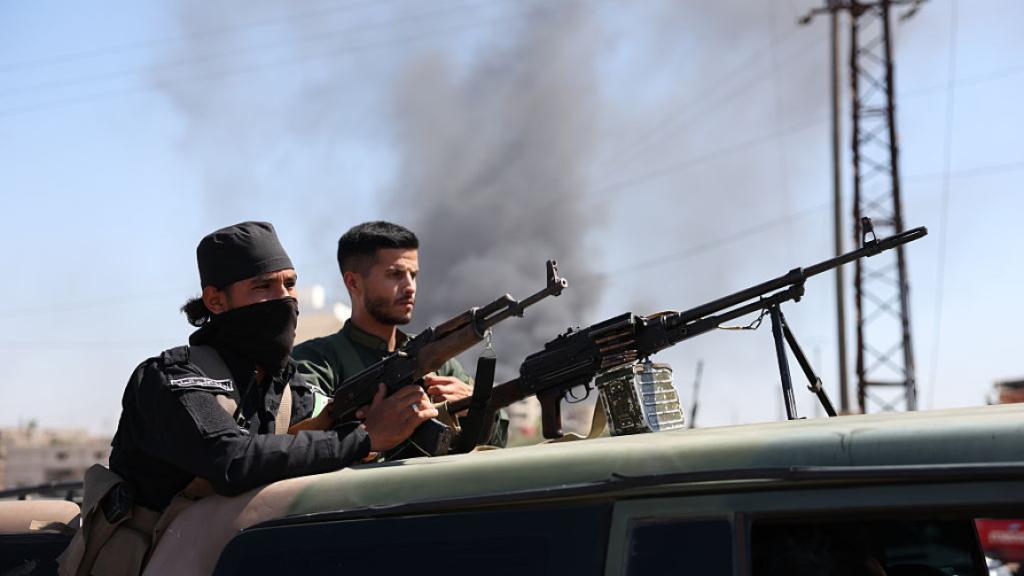
Syria fighters

First published at The New Arab.

Violent clashes and tensions have been ongoing in Suweida since Syria’s self-proclaimed president Ahmad Al Sharaa announced the transfer of the responsibility of maintaining security in the province, to local armed factions and Druze religious dignitaries. Yesterday’s decision comes a day after an agreement was concluded between the Syrian ruling authority led by Hayat Tahrir Sham (HTS) and Druze religious dignitaries in Suweida.

Currently, security forces are preparing to re-enter Suweidawith the claim from the Syrian interior ministry that they seek to quell fighting between Druze and Bedouin fighters.

This all follows previous attacks by armed groups supportive of the current government in both Suweida and near Damascus in April and May, which left over 100 people dead.

In reality, the recent move by Al Sharaa is clearly an attempt to consolidate his power over a fragmented Syria, undermine Suweida’s autonomy, and break democratic dynamics from below.

Controlling Suweida

Suweida has a predominantly Druze population and gained some level of political autonomy during the Syrian uprising. Following the fall of the Assad regime, most Druze local armed forces and religious dignitaries maintained discussions with the new ruling authorities in Damascus. Nevertheless, they had refused to lay down their arms, because of the lack of a democratic and inclusive political transition, and absence of guarantees for Suweida.

However, on July 13 the area was effectively transformed into a war zone, was attacked at a checkpoint by Bedouin armed factions. This resulted in rising tensions and fights between Druze and Bedouin fighters. In response, the interim leadership sent armoured vehicles from Damascus to try to control the province.

Within five days, the Syrian Network for Human Rights (SNHR) documented that more than 200 people have been killed (including Druze and Bedouin civilians), and several hundreds have been injured.

People’s houses and businesses have been looted and destroyed, and sectarian hatred has spread in abundance — an example of this was filmed Druze local inhabitants being forced to have their moustaches cut or shaved off by fighters as an attempt to humiliate them.

While not reaching similar level of cruelty, the actions of the armed forces supportive of the government in Suweida reminded many of the massacre that had taken place in Syria’s coastal areas against the Alawites.

This armed operations against Suweida must be seen within the wider strategy by the Syrian government to consolidate its power over a fragmented country.

Whilst initially the HTS-led authority pursued a strategy based on gaining external recognition and legitimacy to foster its domination over Syria, it has been progressively taking control of state institutions, the army, and social actors. And sectarianism has been weaponised in order for the leadership to control the population.

Syria’s sectarianism

To be clear, sectarian tensions in Syria are not due to ancient religious divisions, nor have they been something intrinsic to the people of the region – contrary to what is often portrayed in Western media. They have deep political roots in Syria.

The rise in sectarian rhetoric and violence by both the new ruling authority, and armed forces supportive of them, has been directed towards the Alawite populations at first, and progressively also the country’s Druze communities.

There’s been a heavy instrumentalising of the “Mazlumiya Sunniya” (Sunni victimhood) narrative to try to unite large segments of the Arab Sunni community around Al Sharaa’s government, despite the many political, social and regional differences that exist within it.

Sectarian tensions also serve to break the potential for democratic spaces, or movements from below. It is therefore no surprise that Suweida has been a target by the government given that for many years it has been (and continues to be) a symbol of popular resistance against the Assad regime. Under the former dictatorship, demonstrations and marches continued, there was a vibrant local civil society, as well as attempts to create alternative trade unions and professional associations.

It is clear so far that the new ruling authorities quickly understood that sectarianism is a useful political tool to consolidate their domination over any territories where resistance to their leadership exists.

Israel is exploiting the situation

To add to the horrific tragedies in recent months, and divisions being sown, Israel is also exploiting the current tensions.

Human rights violations being committed by pro-government armed forces against Druze populations are being used by Israel stir up sectarian tensions. The Israeli government is attempting to present itself as the defender of the Druze in southern Syria and threatening to militarily intervene for their “protection”.

Aside from the Druze religious dignitary Hikmat al-Hijri’s calls to the Israeli government, large segments of the Druze population in Suweida and elsewhere have overwhelmingly rejected any Israeli intervention, and reaffirmed their loyalty to Syria and the unity of the country.

Ultimately, Israel has no interest in helping the Druze, it is simply using the opportunity to increase divisions within Syrian society, and moreover send a message to the HTS led government, that they will not tolerate any military presence in southern Syria, including the provinces of Quneitra, Daraa and Suweida.

This was exactly the point of the Israeli occupation forces’ recent strikes on Damascus and elsewhere.

Through its attacks, the Israeli government seeks to gain more concessions from the Syrian state — which has already showed a willingness to normalise with the occupation. Al Sharaa’s government confirmed that negotiations and discussions with Israeli officials have already taken place. This is despite Israel’s continuous attacks of Syrian territories (particularly in the occupied Syrian lands), and the destruction of agricultural lands and civilian infrastructures.

This is also why Damascus did not condemn Israel’s strikes in Iran. The Syrian government is in favour of the weakening of Iran, as well as of Hezbollah in Lebanon. This position is not only connected to Iran’s role in supporting the Assad regime during the uprisings, but also to Al Sharaa seeking to root the country in a US led axis to consolidate power internally.

Indeed, from seeking good relations with Western powers and their regional allies, to the potential normalisation with Israel, the Syrian government is ruling with the one goal in mind: consolidating HTS-led rule over the country. The interests of the masses, and their democratic aspirations, are being ignored and undermined in the process.

The latest events in Suweida therefore demonstrate, once again, that Syria is not witnessing a democratic and inclusive political transition. Instead, there is an attempt — which is far from complete — to build a new authoritarian regime led by HTS that is establishing itself under the façade of institutional and international legitimacy.

Joseph Daher is an academic and author of Syria after the Uprisings, The Political Economy of State ResilienceHezbollah: the Political Economy of Lebanon’s Party of God; and Marxism and Palestine.


US Citizen Among Eight Druze Executed by HTS Forces in Southern Syria


Hosam Saraya, a 35-year-old Syrian-American, and his seven relatives were abducted by government forces before being killed


An American citizen was among eight civilians executed by fighters linked to the Hayat Tahrir al-Sham (HTS)-led Syrian government in Suwayda, southern Syria, last week.

video of the execution of Hosam Saraya, a 35-year-old Syrian American, and his seven relatives has surfaced online. It shows eight unarmed men being escorted to the location of their execution by a group of armed men wearing military uniforms, and one could be heard shouting “God is Great” in Arabic throughout the video.

Family members told Al Monitor that Saraya and the other men were abducted from a home in central Suwayda by armed men wearing uniforms that indicated they were Syrian government forces. The Syrian Observatory for Human Rights (SOHR) described the executioners as “Syrian defense ministry personnel” and said the killing happened shortly after government forces entered the city.

Hosam Saraya (photo via Instagram)

Saraya and his seven relatives were all members of the Druze minority. Government forces intervened on the side of Bedouin tribes who were clashing with Druze militias in the area. According to the SOHR, the violence left at least 1,100 dead, including 298 Druze civilians. Among the Druze civilians killed, 194 were summarily executed by government forces.

The US helped HTS, which is an offshoot of al-Qaeda, in its offensive that ousted former President Bashar al-Assad and has embraced the new government led by Ahmed al-Sharaa, the founder of al-Qaeda in Syria. In recent weeks, the Trump administration lifted most sanctions on Syria and removed HTS from its list of terrorist organizations.

A family member of Saraya said they called the US embassy in Jordan after the eight men were abducted. “The response we received was, basically, ‘We can’t do anything, and we’ve been telling you not to go [to Syria] since 2012,” he said.

Saraya gained US citizenship about five years ago while living in and attending school in Oklahoma. Over the past year, he had been caring for his father in Suwayda and was planning to return to Oklahoma in the coming weeks.

A State Department official confirmed to Al Monitor that a US citizen had been killed in Suwayda. “We are greatly concerned when any US citizen is harmed overseas, wherever they are. The United States calls for accountability in all cases where US citizens are harmed abroad,” the official said.


Dave DeCamp is the news editor of Antiwar.com, follow him on Twitter @decampdave.

Syrian National Committee reports 1,426 dead in March coastal clashes

Syrian National Committee reports 1,426 dead in March coastal clashes
After receiving the report on the investigation, Syria's President al-Sharaa said "no one is above the law". / Syrian presidency
By bna Cairo bureau July 22, 2025

The Syrian government has concluded its official investigation into the deadly violence that engulfed the country’s northern coastal region in March 2025, pledging to hold those responsible for serious human rights abuses to account.

The violence erupted across Latakia, Tartus and Banias following attacks on security checkpoints, triggering several days of sectarian-driven unrest involving pro-government forces and loyalist militias linked to the former regime. The clashes quickly escalated into widespread killings, looting and arson. More than 1,400 people were killed, including civilians, women and members of the security forces. While the violence was extensive, investigators concluded it was not centrally organised but rather fuelled by revenge and local power struggles.

On July 22, the National Committee for Investigation and Fact-Finding held a press conference to present its findings and recommendations. Spokesperson Yasser al-Farhan confirmed that the inquiry had documented 1,469 deaths, including 90 women, and gathered 930 witness testimonies. The report highlighted over 480 incidents of arson, the identification of around 300 suspects and noted that 238 security and military personnel were killed – some while in captivity. The chaos also enabled individuals to pose as government officials in order to carry out additional abuses.

Farhan stated that “government forces attempted to restore order on March 7, although some search operations involved violations.” He denied reports of women being abducted during the conflict. Committee chair Jumaa al-Enezi acknowledged that the state temporarily lost control in some areas and confirmed that remnants of the former Assad regime had attempted to exploit the unrest to establish a separatist Alawite enclave.

The fact-finding committee identified 265 suspected members of armed groups linked to the former Assad regime, known as the 'floul,' who are believed to have committed serious crimes during the March unrest. These groups seized control of towns, villages and key roads, aiming to separate the coastal region from Syria and establish an Alawite state through a coordinated and well-funded operation.

In response, over 200,000 government troops, allied forces and civilian militias mobilised to retake the territory. On March 7, the floul launched deadly attacks on military convoys and civilians from elevated positions, causing widespread chaos.

Government forces attempted to restore order, but as armed groups entered residential areas, civilians faced both organised and uncontrolled search operations. While many residents viewed public security forces positively, the committee confirmed serious and widespread human rights violations occurred between March 7 and 9.

Jumaa al-Anzi, head of the fact-finding committee, affirmed the state's firm commitment to justice, stating: “The state is serious about holding all officials accountable from all ranks, and the coming days will reveal this.”

He also confirmed that the committee had fulfilled its responsibility by submitting all relevant evidence to judicial authorities: “All information about crimes committed have been provided to the public prosecutor.”

The committee submitted two lists of suspects to the public prosecutor. It proposed a series of reforms, including legislation to criminalise sectarian incitement, transitional justice initiatives and improved governance and oversight of the security sector.

President Ahmad al-Sharaa received the final report on July 20 and reiterated his commitment that "no one is above the law." The presidency confirmed that the committee had been established to ensure complete transparency and prevent any attempt to obscure the truth. The committee has now formally concluded its work, with responsibility for legal proceedings and reforms passing to the judiciary.