Saturday, August 23, 2025


Eastern Libya Poised to Greenlight Turkish Offshore Exploration

  • Eastern Libya is close to approving a 2019 pact letting Turkey explore in Libyan waters.

  • The EU objects to the Libya–Turkey maritime plan, and Greek tenders overlap claimed areas.

  • Libya's oil and gas output hit a 12-year high in May.


Libya’s eastern-based parliament is preparing to approve a 2019 maritime pact that would allow Turkey to explore for oil and gas in Libyan waters, according to people familiar with the talks in Benghazi and Ankara. Most obstacles to the accord have been cleared, they said, a striking reversal for the east—long aligned with commander Khalifa Haftar’s Libyan National Army and historically opposed to Turkish involvement. Tripoli, which already maintains close ties with Ankara, backs the deal.

If ratified, Turkish survey and drilling vessels could begin work in a corridor between Turkey and Crete, bolstering Ankara’s claims in the eastern Mediterranean and likely aggravating disputes with Greece and Cyprus. The pending vote follows a cautious détente between Turkey and Haftar: a Turkish navy corvette, TCG K?nal?ada, is visiting Benghazi; Ankara is weighing military training support; and Haftar’s son, Saddam, met Turkey’s defense leadership in April. Turkey is also keen to revive billions of dollars in stalled construction contracts and has restarted direct flights to Benghazi, while major Turkish contractors scope reconstruction and materials production in the east. Eastern authorities increasingly see the accord as a way to attract investment.

The maritime move comes as Libya’s energy sector regains momentum. On August 19, the National Oil Corporation (NOC) reported over 1.38 million barrels of crude produced in the prior 24 hours, plus ~50,000 b/d of condensate and 2.48 bcf of natural gas, reaffirming its focus on production stability, domestic supply, and export obligations. Output reached a 12-year high of ~1.23 million b/d in May despite periodic clashes around Tripoli, and NOC targets 2 million b/d by 2028 through capacity expansions and stronger infrastructure. Libya launched its first field tenders in 17 years in March, drawing 400+ bids across 22 blocks, and ExxonMobil signed an MoU this month to assess offshore blocks off the northwest coast and the Sirte Basin—signals of returning foreign interest. Libya’s light, low-sulfur barrels remain highly prized, with reserves leading Africa and ranking ninth globally.

Regionally, the potential Turkish exploration underscores shifting geopolitics. With Russia preoccupied in Ukraine, Oilprice.com's Simon Watkins writes that Washington and London are pushing to cement influence across the Middle East and North Africa, backing economic stabilization tied to energy development in states like Syria and Libya. In Libya, BP and Shell recently signed frameworks with NOC to evaluate redevelopment of large onshore fields and other assets, while a Mellitah Oil & Gas–Hill International agreement aims to lift gas output from 2026. These moves—alongside U.S. and European engagement—make it harder for rivals to reassert dominance.

Still, the maritime file is fraught. Greece in May tendered exploration blocks south of Crete that overlap waters Libya claims; the European Union has argued the mooted Libya–Turkey arrangement infringes third-state rights and conflicts with the UN Law of the Sea. For Libya, the near-term challenge is operational continuity: safeguarding fields and export terminals, ensuring power and water for upstream operations, and keeping cross-faction revenue disputes in check. If stability holds and planned investments proceed, Libya could add meaningful barrels just as global supply is expected to loosen into late 2025–2026—while Ankara’s prospective offshore campaigns would add a new layer of complexity to the eastern Mediterranean energy map.

By Charles Kennedy for Oilprice.com


Mexico’s Unconventional Oil Plays Could Boost Production By 250,000 bpd

  • Mexico’s 2025–2035 plan targets 1.8 mb/d by 2030 and more gas.

  • WoodMac sees early development of Pimienta & Eagle Ford, with potential ~250 kb/d liquids + 500 mmcfd gas by the early 2030s.

  • Pemex’s heavy debt (~$100B) and chronic refining losses threaten execution.

A couple of weeks ago, Mexico’s National Oil Company (NOC) and the federal administration unveiled the Pemex Strategic Plan 2025–2035, a comprehensive roadmap for Petróleos Mexicanos (Pemex) to boost oil production, reduce debt, and promote energy sovereignty through increased public and private investment. Key goals of the blueprint include achieving oil production of 1.8 million barrels per day by 2030, increasing natural gas output, securing funding through government support and private partnerships, and integrating energy transition projects like hydrogen and geothermal. Pemex is Mexico's largest company and one of the largest in Latin America, not just by revenue but also as the country's most significant fiscal contributor. As the state-owned oil company, it handles the entire oil and gas value chain and plays a critical role in Mexico's energy security and economy.

Wall Street appears to have warmed up to the ambitious strategy, with Wood Mackenzie saying the Mexican government is likely to target the Pimienta and Eagle Ford unconventional formations for initial development, thanks to their established geology as well as ample potential to supply both oil and natural gas. According to WoodMac, both formations have the potential to produce 250,000 bpd of liquids and another 500 million cubic feet per day (mmcfd) of natural gas by the early 2030s.

The strategy needs major capital investment and international operators working under profitable contract terms. However, it’s encouraging that the government and Pemex leadership are tackling natural gas production challenges by promoting development of the nation's extensive unexploited unconventional reserves,” said Ismael Hernandez, Research Associate at WoodMac.

Related: Despite Delays Suriname’s Oil Boom is Fast Becoming a Reality

Mexico is also looking to unlock its LNG sector, with a series of projects proposed for the country’s Pacific Coast having the potential to turn the country into Latin America’s LNG powerhouse. According to a recent Gas Outlook report, Mexico plans to build five major LNG export terminals along the Pacific Coast, aiming to transform the country into a top-tier gas exporter. Most of the feed gas needed to  supply these terminals would mainly be sourced from the United States’ America’s Permian basin in New Mexico and Texas, rather than sourced from Mexico directly. This would give Mexico a big cost advantage over its LATM peers. Natural gas prices at the Waha hub in the Permian basin in West Texas have sunk to sub-zero levels in recent years, thanks to gas production growing more quickly than takeaway capacity. Mexico would then be able to sell this gas at ~$10-$14 per MMBtu in Japan or Korea, a potentially highly profitable business even after factoring in liquefaction costs.

However, a lot of these plans could be derailed by Pemex's poor financial health. The Mexican government recently expressed confidence that it will stop funding the debt-ridden NOC as early as 2027, saying Pemex will have become financially self-sufficient. However, President Claudia Sheinbaum’s administration has its work cut out trying to rescue the country’s crown jewel. For years, Pemex has struggled with a high debt load amidst persistent underproduction of crude, with the company only managing to remain solvent through tax incentives and capital injections. In fact, Pemex has been able to post a profit in three of the past 15 years. Last year, Pemex reported a net loss of approximately $30 billion (or about 190.5 billion pesos) for FY 2024, a reversal from the modest profit in 2023. This loss was driven by decreased revenues from lower oil exports and falling international crude prices, alongside increased operating and financial costs, including losses from foreign exchange.

More worryingly, Pemex’s refining division has remained in the red over the past decade and a half despite high utilization rates coupled with a favorable policy environment. Operative inefficiencies have dogged Pemex for so long that the company is unable to capitalize on high oil prices whenever they arise. Pemex’s debt has surged to nearly $100 billion since 2010, making it the most indebted oil and gas company in the world. Meanwhile, the company has seen its overall liabilities jump from $121.9 billion in 2010 to $233.4 in 2023. If Pemex were a country, its liabilities would be the seventh largest amongst Latin American economies. 

However, there’s still hope for the company. Pemex swung to a profit during the first half of the current year, with the government seeking to inject $12 billion to help pay down the company’s debt. Pemex’s bottom-line was boosted by a strengthening peso in the second quarter, as well as lower cost of sales and improved performance among some financial assets. Further, Moody’s Ratings is looking to upgrade Pemex thanks to the government’s new commitments. This could help the company secure future loans at more favorable interest rates.

By Alex Kimani for Oilprice.com

AMERIKA

The Real Reasons Your Power Bill Is Exploding

  • AI data centers, global LNG exports, and extreme heat are major new forces driving up U.S. electricity demand and costs.

  • Aging grid infrastructure and stalled policy reforms add structural upward pressure on power prices.

  • Regions anchored by nuclear and hydro remain resilient, showing how local energy mixes shape household bills.

Over the past month, friends, family, and acquaintances have asked why their electricity bills have skyrocketed. One friend wrote, “I am curious if you have any thoughts about why electric bills are doubling and, in some cases, tripling? People in my area are in shock. In two months, my bill doubled.”

I live in Phoenix, and we actually have reasonable electric bills because we are served by the Palo Verde Generating Station. Despite the intense heat here, my electric bill never rises above $300 except in July. More on that later. 

That’s not the case everywhere. From the Midwest to the Southeast, people are seeing bills that are several times higher than that. What’s driving these sudden spikes isn’t just “using more power” or “a hot summer.” The reality is more complex, and it won’t be easy to solve.

Here are the five biggest forces reshaping your electric bill.

AI Data Centers Are Consuming Gigawatts

The surge in artificial intelligence has unleashed a gold rush in data center construction, and it’s quickly becoming one of the most powerful forces driving electricity demand. These facilities are energy-intensive, often consuming 30 times more electricity than traditional data centers. A single AI center can draw as much power as 80,000 homes, and by 2030, data centers are projected to require 30 GW of new capacity—the equivalent of 30 nuclear reactors. 

To meet this demand, utilities are scrambling to add transmission lines and upgrade grid infrastructure, with those costs inevitably showing up on customer bills. At the same time, utilities that sell power into competitive markets—rather than operating under regulated rate caps—are seeing a windfall. Texas-based NRG Energy, for example, has seen its stock price triple in just two years, as soaring wholesale prices boosted profits.

LNG Exports Are Pushing Up Fuel Costs

Natural gas powers about 40% of U.S. electricity generation, and U.S. liquefied natural gas (LNG) exports have risen by nearly a factor of seven in the past seven years to over 13 billion cubic feet per day

That means when Asian or European buyers bid up LNG cargoes, U.S. households indirectly feel it in their electricity bills. Put simply, you’re now competing with the world for the same fuel—and global demand is strong. The spot price of natural gas in the U.S. is about $1.00 per million Btu higher than it was a year ago at this time. That translates directly into higher electricity bills this year.

Heat Waves Are Breaking the Grid

July 2025 saw record-breaking temperatures across much of the country, with a “heat dome” trapping high humidity and driving peak demand to 758,149 MWh in a single hour—a national record. Air conditioning loads surged, and in many regions, utilities had to buy expensive spot-market electricity to meet demand. That cost gets socialized across monthly bills.

Aging Infrastructure and Grid Bottlenecks

The U.S. grid is old and straining under new loads. More than 70% of transmission lines and transformers are over 30 years old. Replacing and upgrading them is both essential and expensive.

Delivery charges—the part of your bill that covers the poles, wires, and transformers needed to move electricity—have climbed sharply in recent years. For households, that means even if fuel costs ease or demand moderates, the higher cost of maintaining and upgrading the grid will likely keep electricity prices from returning to the levels we saw just a few years ago.

Policy Shifts and Regulatory Lag

Finally, policy isn’t keeping up. The repeal of clean energy tax credits under the so-called “Big Beautiful Bill” slowed renewable deployment. At the same time, permitting bottlenecks have delayed new transmission and generation.

Layer on top of that the electrification push—EVs, heat pumps, electric appliances—and electricity demand is rising faster than utilities can build capacity. The mismatch creates structural upward pressure on rates, regardless of short-term market moves.

Where Electric Bills Aren’t Skyrocketing

While millions of Americans are grappling with sticker shock, there are notable exceptions—regions that enjoy stable or even declining electricity prices, thanks to their unique energy mix.

Phoenix is one of them. As previously noted, despite triple-digit temperatures, my own bill rarely exceeds $300, largely because the Palo Verde Generating Station provides stable, low-cost nuclear power. Nuclear plants offer a huge advantage: their fuel (uranium) isn’t tied to volatile global gas markets, and their reactors run around the clock at high capacity factors. 

It also doesn’t hurt that Arizona has seen a 187% increase in wind and solar power generation over the past decade, or that the state ranks 3rd nationally in installed battery storage capacity.

Other regions also benefit from abundant local resources:

  • Idaho: The lowest average rates in the nation at just 11.9 cents per kWh, thanks to hydroelectric power (which can be impacted by droughts).
  • Pacific Northwest (WA, OR): Wholesale prices are falling in 2025 due to strong hydropower and growing solar generation.
  • Texas (ERCOT): Despite surging demand, competitive market dynamics and solar buildout are keeping wholesale prices flat or slightly lower.

By contrast, states heavily reliant on natural gas—like California, New Jersey, and Ohio—are seeing double-digit rate hikes as LNG exports and peak demand drive up costs.

Why Nuclear Matters

It’s worth pausing on nuclear. Yes, the upfront capital costs are high, but once plants are built, their operating costs are remarkably stable—about 9.3 cents per kWh, compared to 7 cents for gas–which is susceptible to price spikes–and 9.5 cents for coal. Nuclear also avoids carbon pricing and doesn’t need backup generation like intermittent renewables.

In a grid increasingly stressed by AI demand, climate extremes, and geopolitical risks, nuclear’s ability to provide price stability, energy security, and reliability is hard to match.

The Bottom Line

So, why did your bill suddenly double? It’s not just about running your air conditioner a little harder. It’s about structural shifts in the energy system:

  • AI data centers reshaping demand
  • LNG exports reshaping fuel markets
  • Heat waves stressing supply
  • Aging infrastructure raising delivery costs
  • Policy bottlenecks slowing new capacity

At the same time, regions anchored by nuclear or hydro have been shielded from the worst price spikes. That contrast underscores an important truth: the U.S. doesn’t face a single energy reality—it faces many, depending on local resources and policy choices.

Unless utilities, regulators, and policymakers find smarter ways to expand capacity and modernize the grid, the broader trend is clear: for many households, higher electricity bills aren’t just a fluke—they’re the new normal.

By Robert Rapier  for Oilprice.com

Friday, August 22, 2025


Tianqi open to renegotiating lithium refinery deal with IGO


Image: IGO Ltd.

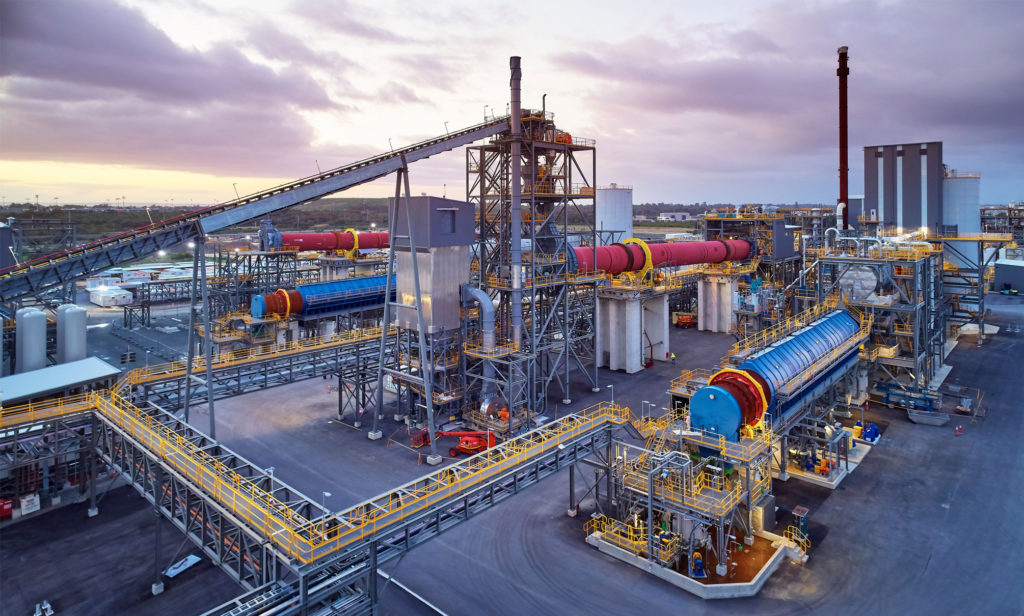
China’s Tianqi Lithium is open to renegotiating joint venture partner IGO’s stake in the troubled Kwinana lithium refinery in Western Australia state, CEO Frank Ha said on Wednesday.

The refinery, the first lithium hydroxide plant to be built in Australia, has been grappling with operational issues and production delays amid a lithium price slump.

IGO, which owns a 49% stake, wrote down the loss-making refinery and said it had low confidence the asset could be improved when it reported last month.

“I am open to any of their proposals that we can discuss, but until now we have not received any official proposals from them,” Ha said during a media briefing.

“If they do not want to be a partner, they have to come to me, I’m open,” he said.

IGO did not immediately respond to emailed questions from Reuters.

Both companies also share ownership of the Greenbushes lithium mine, one of the world’s best lithium assets.

Asked whether Tianqi would consider IGO exiting Kwinana but staying invested in Greenbushes, Ha said the two assets were a package.

Tianqi would also not consider other partners in the Kwinana refiner, said Ha.

“It’s like a marriage … It’s against my rules that I start to find a new partner.”

Efficiency at the Kwinana was improving, according to Ha, and the company had no plans to shut down the refinery, which had a clear pathway to its full nameplate capacity of 24,000 tons per year.

The company was aiming for 65% capacity in the next year, Ha added.

(By Lewis Jackson and Melanie Burton; Editing by Jacqueline Wong and Michael Perry)


Column: A last swing of the LME aluminum stocks roundabout?

Credit: LME

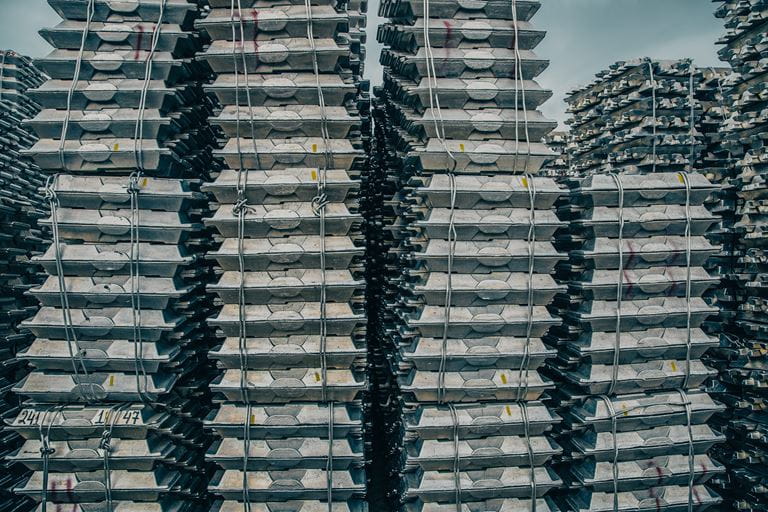
The aluminum market has just seen another big stocks rotation with 156,000 metric tons of metal flowing into London Metal Exchange warehouses over the last six weeks.

But it’s starting to look like the endgame of the stocks battle that has characterized LME aluminum trading for over a year.

Financiers, traders and warehouses are tussling over a diminishing volume of metal. Just about all the aluminum just delivered onto LME warrant was drawn down from existing LME off-warrant stocks in the same Malaysian location.

The Port Klang stocks shuffle has had little impact on the bigger inventory picture. Total LME stocks, both registered and off-warrant, are still down by almost 300,000 metric tons from the start of the year at 717,000 tons.

The absence of significant fresh deliveries in the most recent inventory churn helps explain why LME time spreads have failed to loosen despite the run of apparent “arrivals” showing up in the exchange’s daily inventory reports.

It also offers a clue as to why LME-registered storage capacity at Port Klang has been steadily shrinking.

LME aluminium stock movements at Malaysia's Port Klang
LME aluminum stock movements at Malaysia’s Port Klang

Port Klang roundabout

The aluminum stocks battle has been raging since May 2024, when 650,000 tons of metal were dumped into LME warehouses in Port Klang.

The seller, reportedly trade house Trafigura, could earn more money from a rent-sharing deal with an LME warehousing company, in this case ISTIM UK Ltd, than any physical sale in an oversupplied market.

The good news for the buyers was that this was Indian and not Russian metal, which had just been placed under US and UK sanctions. The bad news was that the only way of breaking the pre-negotiated storage deal was to cancel the metal and transfer it to another warehouse operator.

The subsequent rush to move aluminum generated a load-out queue reminiscent of those that plagued the LME in the 2010s.

The queue at ISTIM’s Port Klang warehouses stretched to 293 days at its peak in August 2024 and only disappeared in May this year.

The latest stocks churn, occasioned by a squeeze on short-position holders in April-May, has ended back in ISTIM warehouses.

But the volume is much reduced from last year and largely comprises Indian metal returning from off-warrant storage. Total stocks at Port Klang are up by just 41,000 tons since the end of May, despite the daily noise of the LME’s stock reports.

ISTIM doesn’t seem to be expecting much more any time soon. The company has reduced the number of exchange-listed warehouse units in the Malaysian port from 22 to 13 over the last year.

Although other operators have increased their presence, total LME storage capacity in Port Klang has shrunk by 15% since the start of 2025 and is half what it was in 2021, when ISTIM was storing over 800,000 tons of warranted aluminum.

LME aluminium stocks on and off warrant
LME aluminum stocks on and off warrant

All change, no change

LME time spreads have barely reacted to the daily warranting action. The benchmark cash-to-three-month period continues to trade either side of level, unchanged from where it was two months ago.

That’s because nothing much has changed in the bigger scheme of things. Total LME inventory, both registered and off-warrant, rose by a modest 36,500 tons over June and July, barely denting a downtrend that has been running since May last year.

Stocks continue to hover around three-year lows, and it’s evidently going to take a bigger cash premium to halt the steady erosion of what was once an inventory mountain.

The lack of fresh inflow may be down to the greater opportunities in a physical market that is adjusting both to a European phase-out of Russian imports and the hike in US import tariffs to 50%.

Regional premiums are diverging, and physical arbitrage offers more lucrative options than LME storage, particularly since warehouse operators such as ISTIM now lack the huge storage revenues that allow them to compete for fresh metal with physical buyers.

It’s also possible that there is simply not much freely available aluminum to fight over as China steps up imports. The country sucked in 1.25 million tons of primary metal, mostly Russian, in the first half of the year, with the pace of arrival accelerating further in July.

Whatever the reason, the LME warehouse roundabout is losing momentum and will continue doing so until operators can draw more metal out of the physical supply chain.

(The opinions expressed here are those of the author, Andy Home, a columnist for Reuters.)

(Editing by Rod Nickel)


South Africa set to open first underground gold mine in 15 years

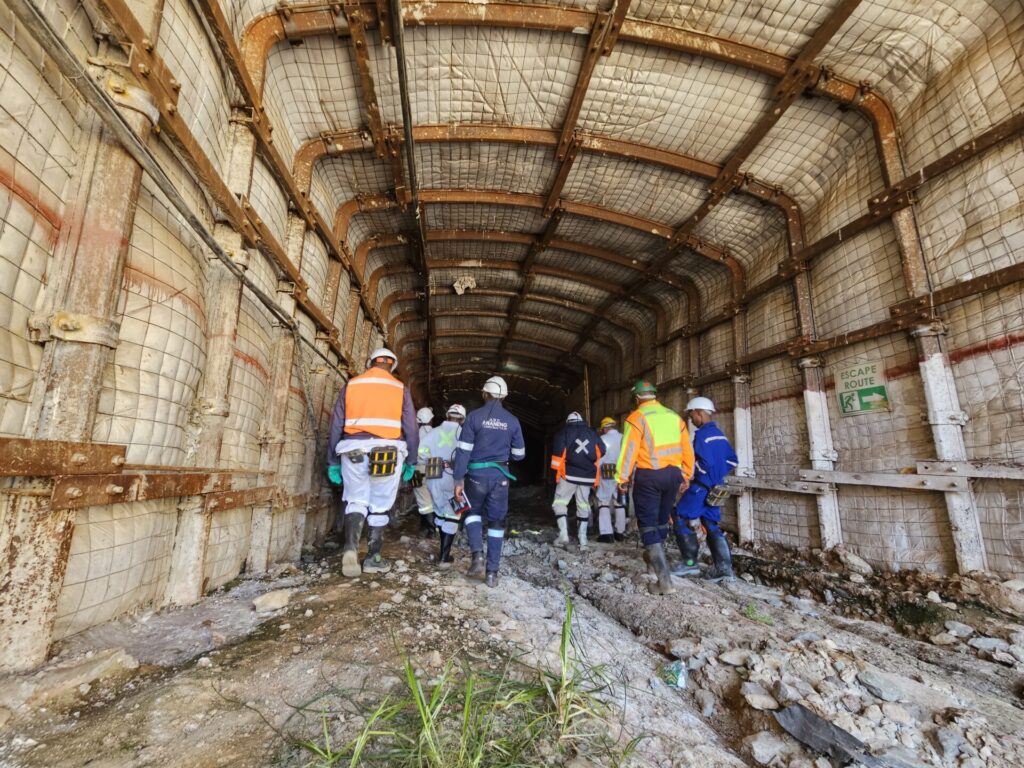
Members of the technical team entering the Qala Shallows underground area. (Image: West Wits)

South Africa is set to open its first new underground gold mine in 15 years – an increasingly rare event for a country that was once the world’s largest producer of the precious metal.

West Wits Mining Ltd. plans to start production next year at Qala Shallows on the western fringe of Johannesburg, a city founded during the gold rush that followed the discovery of the Witwatersrand reef in the 1880s. The Australia-listed company will mine ore during the three-year construction period to take advantage of sky-high bullion prices.

“We are really the only formal company trying to start a new mine” in South Africa’s gold industry, chief executive officer Rudi Deysel said in an interview.

The $90 million investment by West Wits will yield a mine with a modest annual output of 70,000 ounces, but it’s a bright spot for the nation’s dwindling gold sector. After topping the global rankings for decades, South African production has slumped by more than 70% over the past 20 years as its deep, high-cost mines struggle to compete with other producing countries.

“The demise of South Africa’s gold industry is usually told as a kind of morality tale about bad domestic politics, but the crucial development was the worldwide expansion stimulated by soaring gold prices in the 1970s and 1980s,” said Duncan Money, a mining historian who studies the sector. This provided the option to mine gold elsewhere “without the enormous and expensive technical challenges,” he said.

South Africa’s gold industry now employs just under 90,000 people, less than a fifth of the number that used to power the apartheid economy during the 1980s. That contraction has come as higher wages and electricity prices combined with the difficulty of running the world’s deepest mines. The economic and social impact on the nation is magnified as every gold miner supports between five and 10 dependents, while creating two jobs elsewhere.


Qala Shallows will have a maximum depth of 850 meters (2,788 feet), far less than some South African mines that extract gold from more than 3 kilometers (1.9 miles) beneath the surface.

Gold One Group Ltd.’s Modder East, which opened in 2009, and Burnstone, which operated briefly from 2010 and was subsequently bought by Sibanye Stillwater Ltd., were the last underground mines to enter production.

Other companies specialize in recovering gold from the numerous dumps of mining waste that litter the Witwatersrand Basin or want to restart abandoned underground operations.

Gold has enjoyed a record-breaking rally, with prices rising about 27% this year after a similar gain in 2024. That has revived international deal-making across the sector and spurred investment in new production.

“It was always good, but with these prices, where gold has gone, this project just became better and better,” said Deysel, whose company secured its mining rights from the South African government four years ago.

Contractors mobilized to the site in June as the project moved into the execution phase.

Qala Shallows – a previously untapped section of a concession that was closed in 2000 after operating for more than a century – is projected to generate $2.7 billion over its 17-year life, with costs of less than $1,300 an ounce, according to its feasibility study. Gold traded at about $3,340 an ounce as of 9:27 a.m. in London.

State-owned Industrial Development Corp. and commercial bank Absa Group Ltd. have agreed to lend West Wits about $50 million to construct the mine. It will send ore to a nearby processing facility owned by Sibanye.

“We don’t need to build a plant, we can utilize the capacity that’s available,” Deysel said. “So that’s a big tick.”

(By William Clowes and Antony Sguazzin)

Brazil Potash secures offtake agreement with Keytrade AG subsidiary 

The South American nation ships in more than 85% of its fertilizer demand. (Stock Image)

Brazil Potash (NYSE: GRO) announced Thursday a commercial offtake agreement between its subsidiary Potássio do Brasil Ltda. and Keytrade AG, one of the world’s leading fertilizer trading companies.

The binding agreement establishes a 10-year take-or-pay commitment for Keytrade to purchase up to 900,000 tons of potash annually from Brazil Potash’s Autazes project, representing about 30% to 37% of the mine’s annual production.

After facing headwinds due to some opposition by Indigenous groups, the state of Amazonas granted Brazil Potash last year the license to build the Autazes project, pegged to be the largest fertilizer mine in Latin America within the Amazon rainforest.

Last month, Brazil Potash signed an MOU with private equity firm Fictor Group outlining the terms of a $200 million infrastructure funding for Autazes.

“This agreement with Keytrade is a major milestone in Brazil Potash’s commercial development,” Brazil Potash CEO Matt Simpson said in a news release.

Combined with the existing take-or-pay agreement with Amaggi Exportacão E Importacão Ltda., the company now has binding commitments for 1.45 million tons of its planned 2.4 million tons of annual production.

“These long-term contracts provide the revenue certainty essential for securing project financing and advancing construction,” Simpson added.

“This collaboration with Brazil Potash is a strategic step toward reducing Brazil’s reliance on imports and fostering economic growth in the Amazon region,” Keytrade Fertilizantes Brasil CEO Anthony Jezzi added. 

With the Keytrade agreement finalized, Brazil Potash said it has secured binding offtake agreements covering approximately 60% of planned production and is also in advanced discussions with a prospective partner that would increase total volumes to about 91% of its annual capacity.