It’s possible that I shall make an ass of myself. But in that case one can always get out of it with a little dialectic. I have, of course, so worded my proposition as to be right either way (K.Marx, Letter to F.Engels on the Indian Mutiny)
Saturday, August 30, 2025
Italian Coast Guard Detains Boxship for Not Ensuring it Meets Emissions Reg
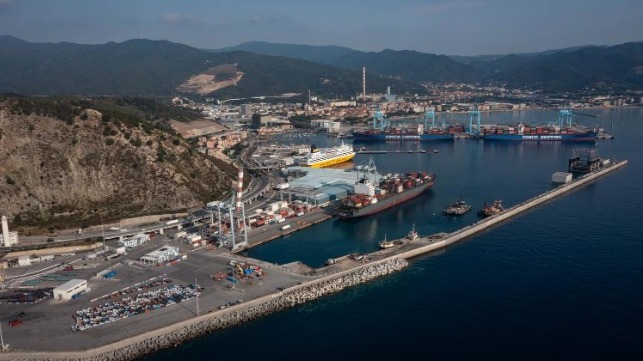
Containership was detained after departing the Vado Ligure port in western Italy (APM Terminals)
Guardia Costeria is reporting that it has detained a smaller containership after it was unable to determine that the vessel was in compliance with emissions regulations. The Mediterranean became an Emission Control Area (ECA) this year, while the Italian authority reports that it has detained ten ships this year for failing to comply with international regulations.
The new situation arose in Genoa on August 21 when the Hansa Horneburg (23,644 dwt) arrived from the Italian port of Vado Ligure. The vessel, which is registered in Liberia and managed by Leonhardt & Blumberg of Germany, was built in China in 2007. It has a capacity for 1,732 TEU,
The Italian authority reports that it conducted an inspection of the vessel, and although it is equipped with valid certifications, it could not determine full compliance with the regulation relating to the containment of nitrogen oxide (NOx). The authority says that components of the electric generators did not display compliance identification, and it was unable to determine if they complied with the NOx technical code.
Guardia Costiera was unable to determine compliance with the emissions regulation (Guardia Costiera)
Guardia Costeria reports it undertook a comprehensive inspection from the bridge to the engine room as well as crew areas. It also conducted a safety drill aboard the vessel. The Italians said that since compliance could not be ensured, the vessel was being detained. This year and last, the vessel underwent inspections in the United States and Peru without incident.
The increased diligence comes as the Mediterranean ECA became official on May 1, 2025, the fifth ECA zone under the IMO’s regulations. The IMO highlighted that ships operating in the new ECA would be subject to strict mandatory measures to prevent, reduce, and control air pollution. The focus is on sulfur emissions and particulate matter. Ships operating in the Mediterranean must comply with stricter content limits than those set by the global standard (0.10 percent mass by mass (m/m) for sulfur, compared with 0.50 percent m/m allowed outside SOx ECAs).
AIS signals show that the Hansa Horneburg remains in Genoa as of August 27. The Italian authority says it will be detained until the deficiencies are addressed under the supervision of the flag administration and the class society. It will also be required to pass a follow-up Port State Control Inspection.
WAR AT SEA
Video: Russia Damages Ukrainian Spy Ship in First Naval Drone Attack
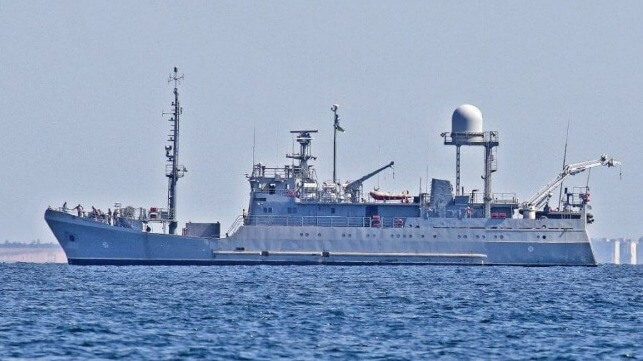
Simferopol (2020 commissioning photo) was reportedly damaged by the first successful Russian naval drone attack (Ukrainian Navy)
The Ministry of Defense of Russia released a video and announced it had successfully attacked a Ukrainian surveillance vessel in what reports say is its first successful naval drone attack. Ukraine’s Navy confirmed an attack, reporting the death toll has risen to two sailors, while others are missing or injured.
Neither side released extensive details, but reports are identifying the vessel as the Simferopol, a reconnaissance vessel built in Ukraine in 2019 based on a trawler. The vessel is 1,220 tons displacement and about 55 meters (180 feet) in length and was designed for 29 crew. It was outfitted with electronic intelligence and surveillance equipment in support of the Ukrainian Navy’s operations.
The vessel was reported to be operating in the Danube Delta region when it was struck on August 28. Russia’s statement claimed the vessel was sunk, but a spokesperson for the Ukrainian Navy today on television said they could not confirm that the vessel had sunk.
Ukraine initially confirmed one death, but today raised the death count to two sailors while saying a search and rescue mission was proceeding. They declined to say how many sailors are missing or injured, with the spokesperson emphasizing that most of the sailors were safe.
They said the Russian naval drones were known and that there had been attempts in the past to deploy them in the Black Sea. This was the first known successful attack using the naval drones.
Ukraine has successfully deployed a range of naval and aerial drones during the campaign, inflicting a range of losses on the Russian Navy and support vessels. Yesterday, Ukraine claimed that it had successfully attacked a Russian naval vessel deep inside Crimea in what was being described as a bold attack far behind enemy lines.
Last month, a Ukrainian dredger working in the Danube reportedly struck a mine, killing three crewmembers. The canal connecting to the Danube was closed for weeks before it reopened.
Video: Ukraine Damages Russian Missile Boat in the Sea of Azov
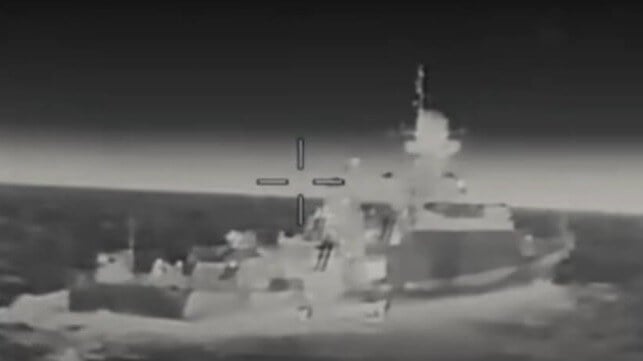
Ukraine military intelligence video showing the targeted corvette moments before impact
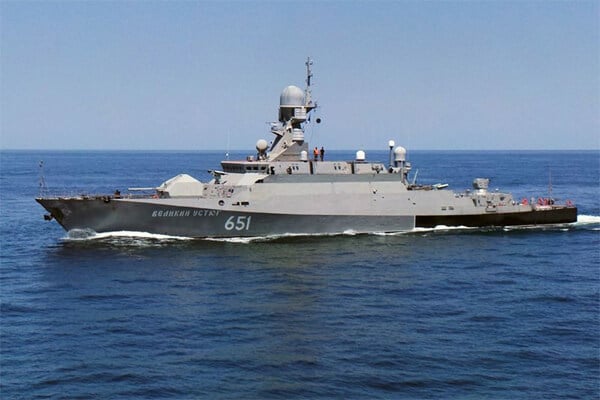
Ukraine military intelligence has released a video showing one of its one-way attack aerial drones attacking a Buyan-M Class Project 21631 missile corvette in the Sea of Azov. The corvette was hit and damaged on August 28, but it is not yet clear if the vessel has been able to recover to port.
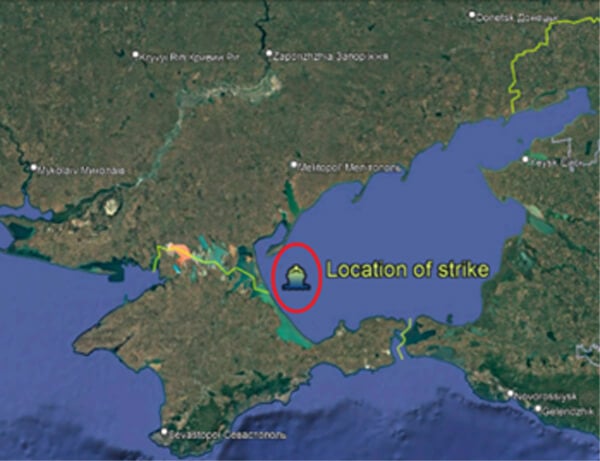
The attack is noteworthy because of the location of the attack. The Sea of Azov is effectively a Russian lake, Ukraine having lost its control of coastline in Donetsk and Zaporizhzhia in 2022. Hence Ukraine will have had to fly the attack drone either through Russian land-based air defenses in Donetsk and Zaporizhzhia, or taken a longer route over the sea and around Crimea. The drone’s pilots will then need to have locked onto the target at this long range.
Location of the corvette when struck in the Sea of Azov (45°42′N 35°18′E ) (Google Earth, Landsat Copernicus, CJRC)
Ukraine has demonstrated it can do this against static targets at extreme range. However, to be able to do so against a moving target at long range is technically a considerable accomplishment. This should once again cause Russian naval commanders to consider the security of their naval assets even in ports far distant from Crimea such as Novorossiysk, to where vessels have already been pulled back for safety. The attack may have been mounted by Ukraine to demonstrate that it can control sea approaches to the Sea of Azov ports of Mariupol and Berdyansk, which Russia has recently sought to open to foreign shipping.
Buyan-M Class Project 21631 missile corvette (Ministry of Defense of the Russian Federation)
Buyan-M Class corvettes are primarily designed for littoral coastal defense, and are the mainstay of both what remains of the Black Sea Fleet and the Caspian Flotilla. They are however armed with two vertical launch cells, each able to hold four Kalibr missiles. The Kalibr is designed to be an anti-ship weapon, but has frequently been used to hit ground targets in Ukraine. In its land-attack version, the Kalibr has a range of 1,500 miles, and can therefore hit targets anywhere in Ukraine form the Black Sea and Sea of Azov.
Nord Stream Suspect Also Under Investigation for Tanker Attack in Italy
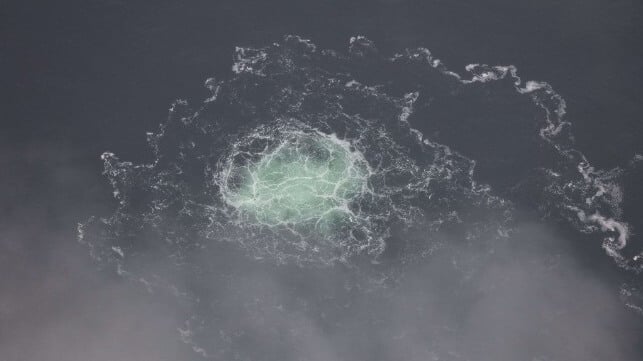
Gas bubbles from one of the Nord Stream pipeline breaches, 2022 (Swedish Coast Guard)
The Ukrainian military veteran arrested last week in connection with the Nord Stream pipeline attack is also under investigation for involvement in the blast that hit the tanker Seajewel, according to Italian media reports.
Serhii Kuzientsov, an ex-Ukrainian special forces soldier, was detained in the Italian resort town of Rimini last week by the Carabinieri. He has an outstanding warrant in Germany for involvement in the 2022 attack on the Nord Stream pipeline system, which badly damaged three out of the four Russian gas lines under the Baltic. According to Corriere della Sera, Kuzientsov had driven to Rimini in a car with Ukrainian plates, accompanied by his family, and had registered for lodging under his own name - hardly attempting to evade detection.
Kuzientsov faces extradition to Germany to stand trial for charges related to the Nord Stream attack, and he is fighting that process in court. At a hearing on Monday, he told the Bologna Court of Appeal that he was in Ukraine at the time of the Nord Stream attack, and denied any knowledge of it. He is in detention while the legal process moves forward, according to Corriere de Bologna - but there is a possibility that he could also be charged in Italy for a separate incident.
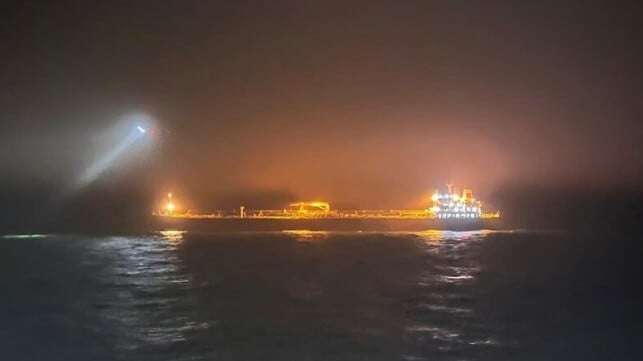
Prosecutors in Genoa have been conducting a terrorism investigation in connection with the attack on a crude oil tanker at Savona in February, and have previously told local media that they suspect a Ukrainian nexus. The vessel, Seajewel, is one of seven tankers that were hit by mysterious explosions in the first half of the year. All previously carried Russian cargoes, prompting speculation over possible Ukrainian involvement; Ukraine has invested significant resources in attacking the Russian energy industry, which is the financial foundation of the ongoing invasion.
The Genoa investigation is looking into Kuzientsov's potential involvement in the attack on the Seajewel, according to Corriere della Sera. That inquiry is ongoing, and could lead to additional charges of wrecking a vessel with an aggravating factor of terrorist intent.
Other arrests could be coming: German authorities have identified five more suspected accomplices in connection with the Nord Stream attacks, and have filed at least one other outstanding warrant.
"Black Box" on Tanker Eagle S Failed to Record During Cable Break
Tanker Eagle S after the cable breaks, December 2024 (Finnish Border Guard)
Investigators who boarded the tanker Eagle S after it severed a subsea power cable found that its voyage data recorder (VDR) had failed to record the time period of the casualty - not because of tampering, but because of an inherent design flaw that turned it off.
On Christmas Day, a power transmission cable and multiple telecom cables in the Gulf of Finland were suddenly severed. Eagle S happened to be under way in the area, and her trackline corresponded to the damage sites. Within hours, Finnish police boarded the vessel by helicopter and diverted it to Porvoo for arrest and examination. At the time of interdiction, the tanker had its port side anchor chain in the water, and a follow-up survey found a 50-nautical-mile drag line on the bottom - along with the damaged anchor.
In early March, Finnish authorities released Eagle S, but detained the master and the first and second officers to await criminal charges. Prosecutors have charged them with aggravated vandalism and aggravated interference with telecommunications, with potential penalties of up to 2.5 years in jail if convicted. The trial is now under way.
Any investigation of potential wrongdoing at sea will start with VDR data, including key parameters of vessel status (heading, speed, engine RPM) and audio of crew conversations on the bridge. But investigators found that Eagle S' VDR had ceased recording on the afternoon of December 18, before the incident, and resumed at about 1300 hours on the 25th. Eagle S crossed and severed the subsea power cable about 30 minutes earlier, while the VDR was not recording.
The investigators found no evidence of tampering with the VDR, but discovered a curious technical cause. The VDR was an older design from the 2000s, and its time stamp system relied on GPS timing signals, without which it could not function. When the Eagle S sailed into the Russian end of the Gulf of Finland - one of the world's most GPS-denied environments - it lost its GPS signal, and the VDR's time reverted to 2005. The system then auto-deleted these older 2005 files to save space in its limited memory, according to YLE. When Eagle S regained GPS, recording resumed - but only after the ship had already cut the power cable.
The officers maintain that they could not reasonably have known that they were dragging an anchor along the bottom, but prosecutors contend that they were negligent in overlooking it. One key piece of evidence presented to the jury this week is an electronic log of the ship's speed, which dropped precipitously in the minutes before the cable break, falling from 12 knots to 9 knots. Engine RPM fell at the same time.
The prosecutors contend that the speed change was a clear indication that something was wrong, and that the crew should have checked the anchors. However, the defense countered that the bridge team had noticed the speed drop and contacted the chief engineer, who informed them that the vessel was having engine problems. The chief engineer (who has not been charged) told the court that the engine was indeed having problems on that voyage, and had been an issue well before the casualty. The officers did not think to go forward and check the anchors, the defense contends, because they were relying upon the chief engineer's professional assessment.
Crowley Replaces Fire-Damaged Tanker to Support US Tanker Security Program
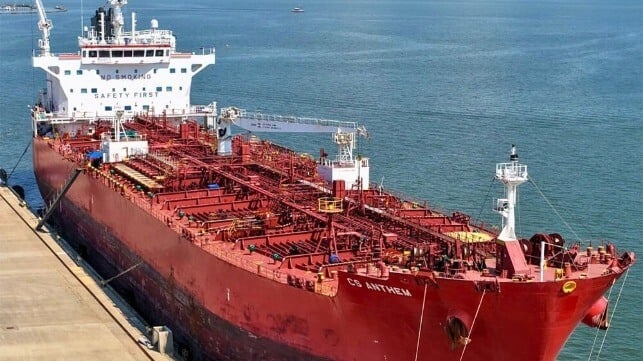
Crowley took over management of the tanker as a replacement in the US Tanker Security Program (Crowley)
Nearly six months after the tragic incident in which one of the tankers Crowley manages for the US’s Tanker Security Program was damaged after it was hit by a containership, the shipping manager reports it has received US permission for a replacement. The program administered by the Maritime Administration (MARAD) is critical as it transports fuel supplies for the U.S. Department of Defense.
Crowley Stena Marine Solutions, the joint venture between Crowley and Stena Bulk, reports that MARAD recently approved operating the MR tanker CS Anthem under the Tanker Security Program. The companies note that the vessel will advance the nation’s strategic sealift capabilities.
"The addition of the CS Anthem demonstrates our commitment to strengthening U.S. maritime security and providing reliable, U.S.-crewed tanker capacity in support of national defense," said Tucker Gilliam, vice president of fleet operations for Crowley Shipping. "Together with Stena Bulk, we are proud to continue advancing solutions that serve both commercial and government energy transportation needs."
The new vessel is largely a swap with the same characteristics as the damaged ship. Built in 2017, CS Anthem had been operating for India’s Scorpio. It is 49,990 dwt compared with 49,729 dwt for the Stena Immaculate, which was also built in 2017, and which it replaces. The databases show CS Antheim was recently transferred to the U.S. flag from the Marshall Islands and now has a homeport of Jacksonville, Florida.
Crowley is responsible for crewing and managing the tanker under a bareboat charter through the joint venture. The company also manages the tankers Stena Imperative and Stena Impeccable in the Tanker Security Program.
Stena Immaculate was anchored off the east coast of England after transporting a cargo of jet fuel. It was waiting for its berth when the containership Solong hit the tanker at anchor. The resulting fire engulfed both vessels, but Crowley’s crew acted heroically, starting fire suppression systems before they were safely evacuated.
The tanker survived with portions of its cargo intact. They arranged for another tanker to receive the fuel, and the damaged vessel was towed to Great Yarmouth in the UK, where it appears to still be berthed. The Solong recently arrived at a recycling yard in Belgium, while the master of the vessel is facing trial for the incident that killed one of the crewmembers aboard the containership.
DOT and MARAD Pull Nearly $700M in Port and Wind Terminal Grants
CUTTING NOSE TO SPITE FACE
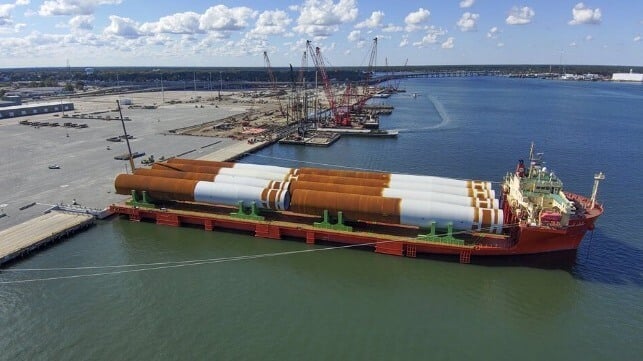
Ports received grants for improvements to accommodate wind projects such as the monopiles arriving in Virginia at Portsmouth Marien Terminal (Dominion)
The efforts to detail the U.S. offshore wind power industry are continuing with the US Department of Transportation and the Maritime Administration (MARAD) terminating and withdrawing nearly $700 million in grants made by the Biden administration for wind ports and terminals. In total, they identified 12 offshore wind grants and project selections in discretionary grant programs to be canceled.
The press statement references “doomed offshore wind projects,” saying the funding will be prioritized toward restoring America’s maritime dominance. They report that DOT and MARAD are refocusing on “rebuilding America’s shipbuilding capacity, unleashing more reliable, traditional forms of energy, and utilizing the nation’s bountiful natural resources.”
DOT has withdrawn one project from the Nationally Significant Freight and Highways Projects program, saving they report roughly $427 million. MARAD has withdrawn six projects, retracting $177 million, and terminated six projects in the Port Infrastructure Development Program, saving roughly $75 million. It totals $679 million in grants.
“The Trump administration is weakening our country’s national security and destroying good-paying jobs by pulling critical funding designed to update our aging maritime infrastructure," said Liz Burdock, CEO of Oceantic Network, a nonprofit supporting offshore wind and ocean energy. "Offshore wind port development upgrades facilities and capabilities that serve multiple industries; however, by selectively limiting infrastructure investments and removing mandated agreements in energy and shipyards, the administration is stalling essential development that delivers on shared priorities of national security and energy dominance, and signals to the investment community the U.S. is not safe place for investment."
The largest project included in the list is California’s Humboldt Bay Offshore Wind, which loses roughly $427 million in grants. The list also includes major wind projects including the Salem Wind Port in Massachusetts which was terminated at a saving of roughly $33.8 million, the Norfolk (Virginia) Offshore Wind Logistics Port ($39 million), Sparrows Point (Maryland) Steel Marshalling Port ($47 million), New Jersey’s Wind Port at Paulsboro ($20 million), Arthur Kill (New York) Terminal ($48 million) and the Redwood (California) Marine Terminal ($8.7 million). It also includes $10.5 million for the Bridgeport Port Authority (Connecticut) for the Operations and Maintenance Wind Port Project.
The Port of Davisville (Rhode Island) loses $11.25 million. The Lake Erie Renewable energy project ($11 million), Radio Island Rail Improvements (North Carolina) loses $1.7 million, and Portsmouth Marine Terminal (Virginia) loses $20 million.
The statement says that, where possible, funding from these projects will be "recompeted" to address critical port upgrades and other core infrastructure needs of the United States.
“Wasteful wind projects are using resources that could otherwise go towards revitalizing America’s maritime industry,” said U.S. Transportation Secretary Sean Duffy. “Joe Biden and Pete Buttigieg bent over backwards to use transportation dollars for their Green New Scam agenda while ignoring the dire needs of our shipbuilding industry.”
The accusations from Duffy and the Trump administration ignore the extensive investments made by the offshore wind industry into shipbuilding and the revitalization of ports such as Salem, Bridgeport, Norfolk, and Portsmouth. In 2023, President Joe Biden highlighted that companies had announced 18 offshore wind shipbuilding projects as well as investments of nearly $3.5 billion across 12 manufacturing facilities and 13 ports to strengthen the American offshore wind supply chain. The vessels ranged from the first Jones Act-compliant installation vessels to SOVs and crew transfer vessels. They were being built at shipyards ranging from Florida to Louisiana, New York, Massachusetts, Michigan, Rhode Island, Wisconsin, and Pennsylvania.
Many of the projects went to smaller shipyards to build crew transfer vessels. Among the large projects were SOVs built by Edison Chouest Offhore in Louisiana and Fincantieri Bay in Wisconsin. Seatrium AmFELS shipyard in Brownsville, Texas, is completing the massive turbine installation vessel Charybdis, the first of its kind in the United States, for Dominion, and Hanwha Philly Shipyard recently floated a rock installation vessel being built for Great Lakes Dredge & Dock Company.
Australia Awards More Preliminary Feasibility Licenses for Offshore Wind
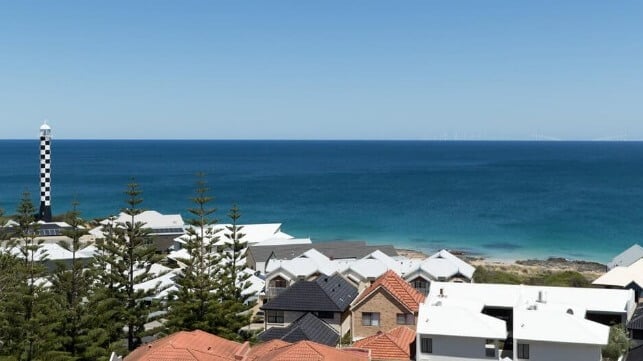
Australia issued additional preliminary feasibility licenses for offshore wind in the Bunbury region south of Perth (DCCEEW)
The Australian government reports it is continuing to push forward with efforts to spur development for offshore wind energy. In its latest step, it awarded two additional preliminary feasibility licenses, both going to groups backed by European majors, for what could become the first offshore wind farms in the Indian Ocean.
The move comes as some of the major European corporations have stalled their efforts in Australia or withdrawn. Last week, it was revealed that Equinor will not be accepting its feasibility license for a proposed project that would have involved floating wind turbines off the Hunter coast of New South Wales. The company reportedly could not reach an agreement with its local partner Oceanex, while last month it also withdrew from a project planned for the Bass Strait.
Minister for Climate Change and Energy, Chris Bowen, called the new licenses being awarded another important step for the industry in Western Australia. He highlighted that “Western Australia needs some 50 GW of additional generation by 2042.”
The zone located south of Perth was declared in September 2024, with the government saying it could provide as much as 11.4 GW of renewable energy. The first of the licenses was awarded to Oceanex Energy, which is planning a project in the northern part of the zone, but awards for the southern portion of the zone were delayed while two developers could resolve an overlap between their plans.
One of the new licenses went to a group backed by France’s EFP Group. It is planning the Bunbury Offshore Wind South project. Ocean Winds, a partnership between Spain’s EDP Renewables and France’s ENGIE is also receiving a preliminary license for its Westward Wind project.
The preliminary licenses permit the companies to continue planning efforts. They are also required to meet with the indigenous people, which Australia calls “traditional owners.” The companies will later apply for the full feasibility permits.
A third project, called Wind With Purpose, is still pursuing discussions with a potential Tier 1 partner, it told ABC News Australia. The government deferred granting it a preliminary feasibility license.
Minister Bowen said in a statement, “Australia’s offshore wind industry is progressing, with feasibility licenses granted for projects targeting a total of 24.21 GW of renewable energy and preliminary offers for another 4 GW.” He told ABC News that there is more to come, referencing the ongoing efforts to push forward the offshore wind industry.
North Carolina Utility Cites Costs Deferring Offshore Wind Power for Solar
Duke Energy, which is one of the United States’ largest energy companies, has determined that offshore wind energy does not offer a cost advantage over solar power for North Carolina. The determination came as the utility was planning its long-term power sources and is based on proposals from the current leaseholders for offshore wind in North Carolina.
Headquartered in North Carolina, the company operates utilities in the Southeast as well as the Midwest. Its North Carolina utility was directed by the state's Utilities Commission last fall to explore offshore wind energy. As part of this review, it was instructed to request estimates from the three leaseholders for the development of up to 2.4 GW of offshore wind energy.
Duke, through its non-regulated subsidiary Cinergy, holds one of the leases that it was awarded in 2022. The project known as Carolina Long Bay is 22 miles south of Bald Head Island and could support up to approximately 1.6 GW. Neighboring Carolina Long Bay is TotalEnergies, which has the potential for 1.6 GW, and the two companies have explored collaborations.
A third offshore site available to Duke is Avangrid’s Kitty Hawk South, which was awarded in 2017. The company originally said it could produce up to 2.4 GW, but in 2022 sold the northern portion of its lease to Dominion Energy.
The three developers submitted a total of eight proposals, Duke reports in a filing to the Utilities Commission. It was looking for the projects to be developed by 2035.
In the filing submitted on August 11, Duke informed the commission that, based on its review, it determined solar and battery storage was cheaper in every instance. The company reports it was comparing the cost of building 3,576 MW of solar panels and 3,440 MW of battery storage capacity.
A spokesperson for the company told North Carolina Public Radio that they determined “offshore wind is not cost-competitive at this time.” The commission had instructed Duke that if the proposals were cost-competitive, to proceed with a binding request for proposals.
Supporters of wind energy were quick to criticize the review, noting that solar only provides power 30 to 40 percent of the time, whereas wind energy can generate between 80 and 90 percent of the time. They said they were “disappointed” that Duke was not proceeding, highlighting that it would require at least a decade before construction and commercial operations could be realized.
“The cost of wind being compared to solar and storage is one thing, but the efficiency of offshore wind being compared to solar and storage is a completely different thing because there are just fundamentally so many key differences between the technologies," Karly Brownfield, a senior program manager with the Southeastern Wind Coalition, told the public radio station WUNC.
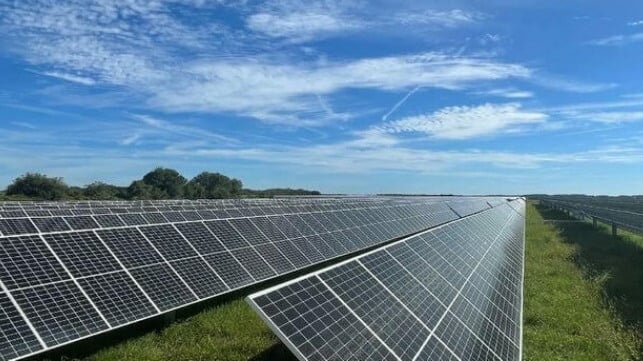
Duke Energy is aggressively pursuing solar energy in Florida. The company reported last month that it currently owns, operates, and maintains a portfolio of more than 25 solar sites across Florida that generate approximately 1.5 GW, and between 2025 and 2027, the company plans to build 12 new solar sites, adding 900 megawatts. By the end of 2033, Duke Energy Florida projects it will have over 6.1 GW of utility-scale solar generating capacity online.
The company is reviewing its North Carolina plans. In a 2024 plan, it showed up to 1.6 GW of offshore wind energy by 2035. Another model included as much as 2.4 GW of offshore wind energy.
The planning study was undertaken before the Trump administration’s latest moves against the offshore wind energy sector. In addition to its ending leasing, the administration is now starting a national security review. It has also curtailed tax credits and other incentives for offshore wind energy development.
USCG Lifts Hatch Cover as It Investigates Baltimore Bulker Explosion
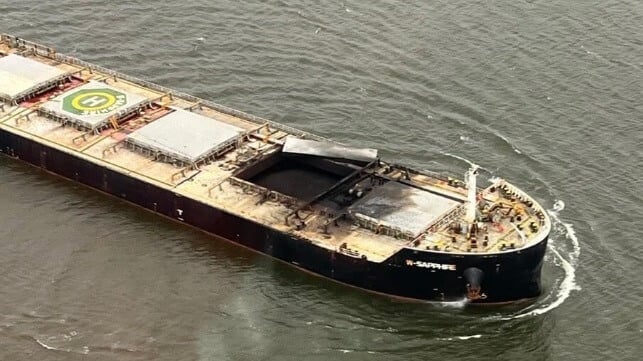
Half of the hatch cover is missing and went overboard after the explosion (North Point - Edgemere Volunteer Fire Department)
The hatch cover that was blown overboard during the explosion on the bulker W-Sapphire was retrieved from the Baltimore shipping channel on Thursday, August 28. It is part of the ongoing investigation into the incident 10 days ago, on August 18, shortly after the vessel departed the coal terminal in Baltimore.
The Fort McHenry Federal Channel leading into and out of the Port of Baltimore was closed to vessel traffic on Thursday from 0730 to 1500 local time. A 500-yard safety zone radius was established around the location of the hatch cover at the northern end of the Chesapeake Bay.
Dive and salvage operations were undertaken. By mid-afternoon, the USCG posted that the 30-ton hatch had been successfully retrieved from the Patapsco River. The safety zone restriction was removed and the channel reopened.
Army Corps surveying the harbor area after the explosion (U.S. Army Corps of Engineers, Baltimore District)
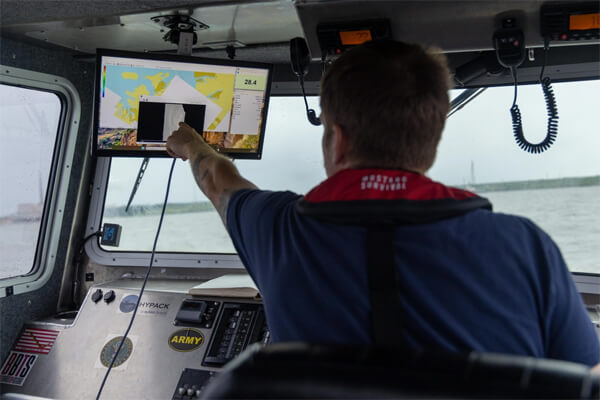
The U.S. Army Corps of Engineers Baltimore District had assisted the USCG and deployed its survey vessel Buck to conduct sonar surveys around Baltimore's Fort McHenry Channel on August 19, the day after the explosion. Captain Jake Tuer, who conducted the survey, reported that the data collected during this process would help determine the operational plan moving forward, including reopening the channel that day and yesterday’s recovery.
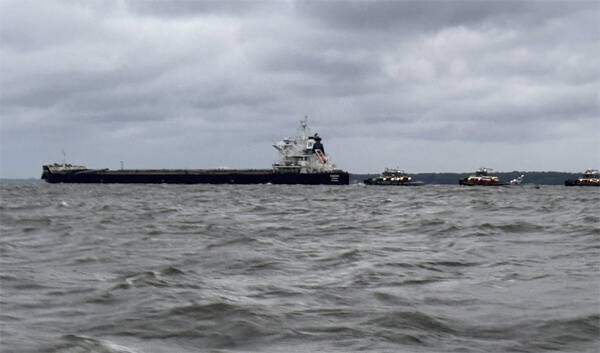
The 751-foot bulker W-Sapphire remains anchored in the channel near Sandy Point State Park and north of the Chesapeake Bay Bridge. The ship had been escorted into the anchorage shortly after the explosion and will remain there while the USCG and state authorities are investigating the cause of the explosion. Initial radio calls from the vessel said there was possibly water intake into the hold, but the force of the explosion appears to have mostly been driven upward, breaking through the hatch cover.
Bulker being escorted out of the channel after the explosion on August 18 (North Point - Edgemere Volunteer Fire Department)
Investigators are looking into the cause of the explosion, which ripped the hatch cover off the vessel’s number 2 hold. One leaf remained on deck while the other went overboard. There was a massive fireball, which observers said went several hundred feet into the air, followed by a smoke plume. Coal dust explosions are typically a secondary result of another trigger and require a mix of fuel, heat, and oxygen with the dust suspended in the air. They are reported to be considering spontaneous combustion as well as an external source of heat or fire that contributed to the explosion.
Malfunction on Research Vessel Falkor (too) Stops Uruguay's Expedition
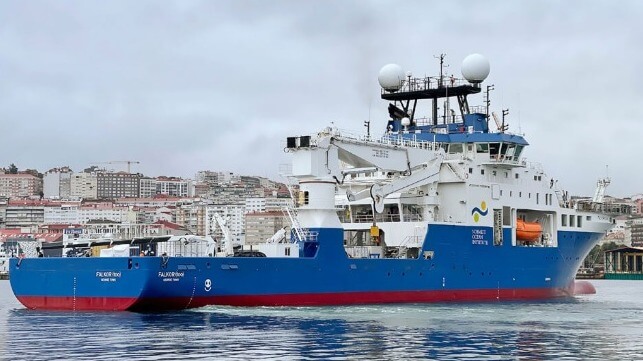
Falkor (too) is based on a converted offshore service vessel (Schmidt Ocean Institute)
A high-profile research expedition to explore the deep sea in Uruguayan sovereign waters has suffered a setback after the research vessel Falkor (too) suffered technical issues. The vessel was forced to return to port for repairs.
The Universidad de la República (Udelar) announced that only days after embarking on August 22 for the much-publicized ‘Uruguay SUB 200’ expedition, the vessel was returning to the Port of Montevideo. The expedition had received the attention of President Yamandú Orsi.
The ship, which is owned by the Schmidt Ocean Institute (SOI) and is highlighted as one of the most advanced research vessels, is said to have suffered issues with the main structure that is used to deploy and recover heavy underwater equipment. The A-frame structure malfunctioned as it was being raised from its stowed position to vertical, forcing a return to port for repairs.
“It's with great sadness that we inform you that we're returning to port to fix some technical issues. We hope it's resolved soon and we can get back to exploring our ocean,” said the University in an alert.
The vessel had departed for the mission to explore the deep sea in Uruguayan waters with a team of 37 scientists and technicians from 18 institutions in six countries. Dubbed ‘Uruguay SUB 200: Journey into the Unknown,’ the month-long expedition was aimed at studying marine ecology, underwater archaeology, deep-sea mapping, and marine geophysics, among others.
The mission would have seen Falkor (too) sail about 200 to 300 kilometers off the Uruguayan coast to explore 50 points of interest on the seabed, from 200 to 3,500 meters deep. Of critical importance was the fact that the scientific team was expected to share the mission’s experience through live broadcasts from high-quality images taken on the seabed by the vessel’s suBastian remotely operated vehicle that is capable of reaching depths of 4,500 meters.
Built in 2011 as the offshore industry vessel Polar Queen, SOI acquired Falkor (too) from Norwegian shipping company GC Rieber Shipping ASA. The 110-meter vessel was refitted to become a state-of-the-art mobile research facility with modern laboratories, tools, equipment, and a high-performance computing system for ocean exploration and study. The vessel has an endurance of 60 to 120 days.
The name was chosen to continue the tradition of an earlier vessel. The original Falkor was donated to Italy’s science agency National Research Council (CNR), in 2022.
Earlier this month, Falkor (too) completed a three-week Argentinian-led expedition that studied the Mar del Plata Canyon, one of the country’s largest underwater canyons that is located 300 kilometers offshore. Early this year, the Class C polar certified vessel also completed its first science expedition to Antarctica.
TSB: Fuel Leak Due to Casual Repair Caused Fire on Canada’s Oldest Laker
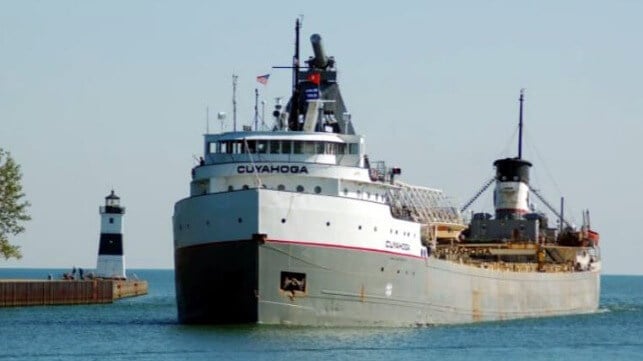
Operating for over 80-yearso n the Great Lakes, Cuyhoga was Canada's oldest ship (Rand Logisitcs)
The fire that broke out in the engine room of Canada’s oldest vessel operating on the Great Lakes in 2023, the Cuyaoga, was a disaster waiting to happen, according to a new report from the Transportation Safety Board of Canada (TSB). The report cites a history of repeated fuel leaks and dangers that were often resolved with casual repairs on fuel injection pipes.
Built in 1943 in Ohio by the American Ship Building Company, Cuyahoga was a historic bulk freighter launched as the J. Burton Ayers to transport iron ore during World War II. She was later converted into a self-unloading ship and was renamed Cuyahoga in 1995 by Lower Lakes Towing, part of Rand Logistics. Her original steam plant was finally converted to diesel in 2000, and she continued to maintain seasonal services on the Lakes transporting dry bulk commodities like coal, salt, grain, and crushed stone.
On May 23, 2023, the Cuyahoga left Marblehead, Ohio, on a regular voyage bound for Kingsville. Three hours into the voyage, a fire ignited in the engine room, forcing the 20 crewmembers to initiate emergency responses. The 620-foot (189-meter) vessel was loaded with 11,400 metric tonnes of granular crushed stone.
To avert a disaster, the crew responded by cutting the fuel supply to the main engine before attempting to activate the vessel’s carbon dioxide (CO2) fixed fire suppression system remotely, which was without success. An attempt to locally activate the system also failed and resulted in the cylinder room flooding with CO2. However, due to the cessation of fuel flow, the engine stopped, and the fire extinguished itself soon after as the vessel was anchored north of Pelee Island, Ontario.
TSB investigators established that the fire was caused by fuel spraying from a disconnected injection line onto exposed hot surfaces of the engine’s exhaust gas piping. It emerged that after an earlier repair, the retaining clamps were not reinstalled on the fuel injection lines, increasing the effects of engine vibration, something that made the lines susceptible to loosening. TSB terms it one of the many casual repairs that were undertaken on the aging bulker.
Following the earlier engine repair, recurring minor leaks were addressed as routine maintenance without investigating the underlying cause. Although the practice deviated from the manufacturer's specifications, the crew was unaware as they lacked regular access to updated maintenance and torque specifications from the engine manufacturers.
The investigation established that while vibration is inherent in all diesel engines due to various factors, the Cuyahoga’s main engine systems showed the effects of excessive engine vibration. To reduce the effects of vibration on the fuel injection line fittings, retaining clamps had been added to secure the fuel injection lines to the cylinder heads, making the lines more rigid and reducing mechanical vibration in the fuel injection lines.
TSB writes in its report that Cuyahoga's fuel injection return line for cylinder 7 was disconnected, which resulted in a spray of marine diesel oil. They believe all the retaining clamps on the fuel injection lines were most likely removed in 2021 when the crew replaced the fuel supply and return manifolds.
The CO2 fire suppression system failed due to several factors, reports TSB. The remote release cables had been routed through the engine room and were damaged by the fire, rendering them inoperative. When the crew attempted a manual release, TSB reports the system discharged CO2 into the cylinder room instead of the engine room, due to incorrect activation instructions and loose or missing components.
Two days after the fire, the vessel was towed to Kingsville. No injuries or pollution were reported, but the bulker’s engine room and associated machinery sustained heat and smoke damage. The main engine and various electrical cables and equipment also sustained moderate to severe fire damage.
Although the aged vessel returned to service following the incident, another fire broke out while she was docked in Ashtabula, southwest of Erie, Ohio, on Lake Erie, in March 2024. That fire occurred while the vessel was being prepared after winter layup, but it ended her long career. In July, Cuyahoga was towed into the IMS Docks for scrapping.
TSB warns that the issues raised in this investigation, particularly around emergency procedures and the use and maintenance of fixed fire suppression systems, are not unique and affect the safety of marine transportation across Canada. The safety organization reports it started a more wide-reaching national safety issue investigation in July 2025 after having raised concerns about these issues for years. TSB says it is in the process of building a clearer understanding of how vessel fires are currently managed and identifying the gaps in Canada’s preparedness for marine emergencies.