Saturday, August 30, 2025


Strathcona Seeks to Block $5.7 Billion Cenovus Deal to Buy MEG Energy

Previously rejected MEG Energy bidder Strathcona Resources intends to buy an additional 5% stake in MEG and vote these shares and the existing 9.2% stake against the Cenovus acquisition offer for MEG, as the latest major Canadian deal faces hurdles towards completion.    

Last week, Cenovus Energy announced it has entered into a definitive arrangement agreement to acquire MEG Energy Corp in a cash and stock deal valued at US$5.7 billion (C$7.9 billion), including assumed debt.

The agreement between Cenovus and MEG came after a months-long saga in which suitors have sought to buy MEG Energy.

Earlier this year, Strathcona Resources made an unsolicited offer to acquire MEG Energy, but MEG’s board rejected the offer and advised shareholders to reject it too and not tender their shares. 

MEG’s board said in June that the share consideration in Strathcona’s offer exposes shareholders to a company with inferior assets, and that “MEG is a uniquely attractive investment opportunity that warrants a premium valuation.” 

At the time, MEG initiated a strategic review of alternatives with the potential to surface an offer superior to its standalone plan.

Last week, MEG agreed to be acquired by Cenovus in a deal that will consolidate adjacent, fully contiguous, and highly complementary assets at Christina Lake.  

The transaction has been unanimously approved by the boards of both companies. Cenovus expects the acquisition to close in the fourth quarter of 2025, subject to regulatory approvals and approval of the transaction by MEG shareholders.   

MEG’s board recommends MEG Shareholders vote FOR the transaction at a special meeting to be held on October 9, 2025.

However, the rejected Strathcona is now putting up a fight and said this week that it intends to purchase an additional 5% in MEG, subject to market conditions. Together with the current 9.2% stake in MEG, Strathcona expects to have 14.2% in the target company. 

“Following discussions with fellow MEG shareholders over the past week, Strathcona intends to vote its MEG Shares (including those it currently holds and subsequently acquires) against the resolution to approve the acquisition of MEG by Cenovus Energy Inc., which requires approval by at least 66 2/3% of the votes cast by MEG shareholders,” Strathcona said. 

By Tsvetana Paraskova for Oilprice.com 


Surge Energy Sets New Standard for Water Reuse in Oil and Gas

Surge Energy announced Friday it has conserved more than seven billion gallons of freshwater since 2017 by using recycled water for hydraulic fracturing in the Permian Basin. This milestone, achieved in July, highlights a growing trend in the oil and gas industry to manage water resources more sustainably.

The company, which began its water recycling program in 2017, has invested significantly in water handling infrastructure to support its conservation efforts. This includes the construction of four recycling facilities and approximately 217 miles of water pipelines, along with company-owned disposal wells. This infrastructure allows Surge Energy to treat and reuse produced water—water that is a natural byproduct of oil and gas extraction—for its completion operations, reducing its reliance on local freshwater sources.

According to the company, this strategy not only helps with environmental stewardship but also contributes to operational efficiency. The investment in water infrastructure has been cited as a key factor in keeping the company's lease operating expenses below $5 per barrel of oil equivalent for six consecutive years.

"We believe Surge is a leader in water management and this milestone is the evidence of our long-standing commitment to responsible water handling in the Permian Basin," said Development Manager Kade McCollough. The Permian Basin, a critical oil-producing region spanning parts of West Texas and southeastern New Mexico, faces increasing scrutiny over its water usage due to its arid climate and competing demands from agriculture and municipalities.

The broader industry has been exploring similar water management strategies, with some companies investing in advanced treatment technologies and water-sharing agreements to minimize their environmental footprint and reduce operational costs. The use of recycled water is a practice that has gained traction as a way to address public and regulatory concerns about water consumption in energy production.

Chris Alonzo, senior vice president of development and operations, highlighted the financial benefits of the program. "Surge's cost structure is top-tier in the Permian Basin," he said, attributing this in part to the company's water infrastructure. The company's focus on reusing water for completion operations aligns with a wider industry push toward more efficient and sustainable practices in response to environmental pressures and market demands for greater corporate social responsibility.

By Michael Kern for Oilprice.com 


Sungrow Unveils Next-Gen Solar Tech at Intersolar South America

Sungrow, a global provider of solar and energy storage systems, announced it has secured a cumulative 25 gigawatts (GW) in contracted photovoltaic (PV) inverter orders and 10 gigawatt-hours (GWh) in energy storage systems across Latin America. The milestone was announced during the Intersolar South America exhibition held here from August 26-28.

The company's presence at the trade show highlighted several new products designed for the region, including next-generation microinverters, hybrid inverters, and utility-scale solutions. The introductions are aimed at meeting the rising demand for solar and battery storage technology in Latin America, particularly in Brazil's distributed generation market, where residential and commercial installations are expanding.

Among the new offerings is the S2500S-L microinverter, with a nominal power of 2.5 kilowatts (kW), designed to power up to twelve PV modules. The company also unveiled its new MGRL single-phase hybrid inverters, with power ranges from five to 10 kW, which are compatible with low-voltage batteries. For commercial and industrial (C&I) applications, Sungrow introduced the SG50CX-P2-LV string inverter, which operates on three-phase 220 volt (V) grids, a common standard in Brazil.

In addition to its new products, Sungrow showcased a rapid shutdown solution designed to meet a new Brazilian safety standard (ABNT NBR 17193:2025). This standard requires rooftop PV systems to reduce direct current (DC) voltage to below 35V within 30 seconds during emergencies. The company's system includes a rapid shutdown device and controller box that work with its inverters to quickly de-energize rooftop solar arrays.

For the utility-scale sector, Sungrow debuted its 1+X 2.0 Modular Inverter, featuring a scalable design ranging from 800 kW to 9.6 megawatts (MW). The product has a modular design intended to simplify maintenance and reduce repair times.

The company also highlighted its utility-scale and C&I energy storage systems, including the liquid-cooled PowerTitan 2.0 and PowerStack 255CS. According to the company, these systems are designed to address issues such as rising electricity prices and grid instability, and are suitable for applications ranging from large-scale projects to small businesses seeking to reduce electricity costs.

“Reaching the 25 GW PV and 10 GWh ESS milestone is a testament to Sungrow's deep engagement and strong partnerships in the region,” said Ada Li, vice president of Sungrow Americas.

The expansion of companies like Sungrow in Latin America reflects the broader trend of renewable energy adoption in the region, driven by supportive regulations and economic incentives. The demand for reliable power sources has also accelerated interest in energy storage, which can mitigate the impact of power outages and grid fluctuations.

By Michael Kern for Oilprice.com 


Why Major Banks Are Backing Out of Net Zero Commitments

BECAUSE IT WAS ALWAYS GREENWASHING


  • Major banks globally are withdrawing from or diluting their net zero and ESG commitments, citing political shifts like the return of President Donald Trump and internal operational challenges.

  • Key financial institutions, including Goldman Sachs, JP Morgan, HSBC, and Barclays, have exited the Net Zero Banking Alliance or delayed climate targets.

  • Reasons for this shift include a perceived lack of tangible business value from previous ESG initiatives, cost-cutting pressures, and the difficulty in implementing and assessing climate-related risks.

Over the past year, the world’s biggest banks‘ net zero enthusiasm has quickly and quietly dried up.

Top lenders have backtracked, diluted or outright abandoned their environmental, social and governance (ESG) policies.

The return of President Donald Trump has been highlighted as a turning point for green finance with firms across the financial industry turning sour on ESG commitments.

Trump has made no secret of his disdain for such policies, branding ESG investing as a “way to attack American business”. 

The President, who ran for office on the motto “drill baby drill”, moved quickly to withdraw the US from the Paris Climate Agreement with his bullish attitudes triggering firms to follow suit.

Net zero club gets Trump’ed

Wall Street giant Goldman Sachs announced in the month after Trump’s election win it would exit the Net Zero Banking Alliance (NZBA), which was convened in 2021 by the UN Environment Programme finance initiative.

Just months later in January, JP Morgan’s sealed a Wall Street exodus after Citi, Bank of America, Morgan Stanley and Wells Fargo all quit the group.

The exits of The Royal Bank of Canada, Bank of Montreal and Toronto-Dominion Bank at the end of January erased the fingerprint of North America on NZBA.

The ripple effect has spread to London, where HSBC and Barclays both ditched the club over the last month.

Barclays, whilst reiterating ambitions to become a net zero bank by 2050, argued the group “no longer has the membership to support our transition”.

A spokesperson for NZBA told City AM the group “remains focused on supporting the many banks that are leading this transformation” despite the mass exodus. 

They added amid a changing climate to environmental policies the “need for bold, resolute action from the banking sector has never been greater”.

Banks’ climate policies melt under heat

Maia Mesanger, sustainable finance research senior associate at BloombergNEF, told City AM: “Although financial institutions are reconsidering their climate goals, the concrete implications of the journeys they started will likely continue to progress.”

She said the consideration of “climate risk” in investing and lending was contingent on policymakers continuing to “enforce such practices”.

But Scott Lane, founder and chief executive of ESG business solutions service Speeki, told City AM: “it’s easy to blame Trump’s anti-ESG crusade” for the retreats but argued the real issue was internal.

“The biggest factor behind the scrapping of these initiatives is that they were half-baked and never given the chance to demonstrate value to shareholders and customers,” he argued.

In February, HSBC slapped a 20-year delay on its net zero target, which followed the bank shelving plans to build a dedicated carbon credits desk.

Barclays and Natwest have also dropped their climate goals from bonus schemes for senior executives, arguing it would better reflect the lender’s long-term climate goals.

And in March Lloyds Banking Group watered down its net zero pledge that prohibited bankers’ long-haul flights. 

Lane said: “Banks and the like made micro improvements, set far-flung net-zero goals, and ran empty marketing campaigns based on promises – and no one felt any tangible business value from them.”

This echoed calls from Aberdeen chair and former HSBC chairman Sir Douglas Flint, who told a City conference earlier this year the financial services industry had made a “huge mistake” in ESG investing.

“It became a marketing thing,” he said, “let’s tell everyone we’re saving the world, we’re saving the planet”.

Banks trim the green

The row backs from the City’s banking giants come as top bosses look to slash costs across operations.

Barclays’ CS Venkatkrishnan, known as Venkat, is in the middle of a three-year plan that targets a reduced reliance on the lender’s investment bank, which made up over 50 per cent of its first-quarter income.

Meanwhile, HSBC’s Georges Elhedery has spent his near-12 months since taking the helm at the lender deploying strategies to reduce expenses, namely a significant scaling down of European operations.

Lane said investors will be eying failed ESG investments that have not materially benefitted the company.

“[Banks] spent a bit of money, wasted some time here and there, and kicked the can down the road,” he said. 

“Now, shareholders are demanding to know why money is being spent on unproductive initiatives”.

Bill Winters, boss of Standard Chartered, scorned his banking peers last month for only speaking about climate issues when it was “fashionable”.

“Shame on them,” the FTSE 100 chief said, though did not name specific firms.

But a report from the UK banking regulator in April revealed the industry was battling an uphill battle to meet commitments.

The Prudential Regulation Authority’s (PRA) report said it observed a “common challenge among firms” in the “complexity involved in constructing and implementing CSA (climate scenario analysis)”.

It added they face difficulty in “using the outputs from CSA to assess their overall exposures to climate-related risks”. 

“Data remain a significant challenge” the PRA said, with firms struggling to access information “on both climate projections and the data necessary to link those to their asset and lending portfolios”. 

This included the likes of location data that without, banks were unable to effectively evaluate their exposure to physical climate risks, such as floods, heatwaves, or wildfires, which are tied to specific geographical areas

Cloudy ahead

A global index ranking from Z/Yen showed the world’s leading financial hubs were ditching ESG policies.

It marked the second consecutive report where almost all of the top ten hubs had their green finance rating slashed by double digits.

In the latest release London, despite topping the rankings, lost 36 points.

A report from business information system CRIF in June revealed over half of UK senior financial professionals believe their leadership will place less focus on environmental, social and governance (ESG) policies in the coming years. 

Lane said the “inconvenient Trumpian political headwinds, and financial services executive who want to stay in his good books” along with the desire to appease shareholders through cost-cutting had provided a “good excuse to drop sustainability from the agenda”.

Though, should the political pendulum swing so ESG once more becomes “fashionable”, Bill Winters may be welcoming his peers back to the club.

By City AM


Fossil Fuel Air Pollution Linked to 91,000 U.S. Deaths Every Year

  • A landmark study finds U.S. oil and gas pollution causes 91,000 premature deaths annually, alongside asthma, cancer, and pre-term births.

  • The study highlights disproportionate harm to poor and minority communities, with racial-ethnic disparities tied to geography and supply-chain stages.

  • Despite the findings, the U.S. government is rolling back EPA pollution standards to expand fossil fuel production, raising alarms among environmental groups.

Air pollution from oil and gas causes as many as 91,000 premature U.S. deaths a year, according to a study published in Science Advances in August. Meanwhile, during a time when many governments are shifting to green, the U.S. government is doubling down on its fossil fuel production and has recently carried out actions that aim to water down the rigorous air pollution standards enforced by the Environmental Protection Agency (EPA).

The link between fossil fuels and premature deaths has been stressed by scientists and doctors for decades, although the connection is often greatly understated by the oil industry. Meanwhile, other safer energy sources, such as nuclear power, get far more attention for their perceived negative threat to health. However, the new study from University College London and the Stockholm Environment Institute, George Washington University, and the University of Colorado Boulder shows just how many tens of thousands of deaths are caused each year by air pollution from the burning of oil and gas, backed with real data.

Air pollution from oil and gas kills around 91,000 Americans prematurely, as well as causes health problems across hundreds of thousands more in the U.S., each year, with a greater impact on poor communities, particularly those of color. There are also over 10,000 pre-term births linked to fine particulate matter from oil and gas, 216,000 annual childhood-onset asthma cases, and 1,610 annual lifetime cancer cases, according to the study. The highest number of air pollution-linked deaths and illnesses was seen in California, Texas, New York, Pennsylvania, and New Jersey.

The paper’s lead author, Karn Vohra, said, “We’ve long known that these communities are exposed to such levels of inequitable exposure as well as health burden… We were able to just put numbers to what that looks like.”

The study is the first to comprehensively assess the impact of oil and gas-related air pollution on human health and premature deaths, analysing all stages of the oil and gas supply chain, from exploration to end use. It assesses data from 2017, which is the most recent year that has complete data available. However, between 2017 and 2023, U.S. oil and gas output increased by 40 percent, meaning the figures in the study likely understate the current situation.

To assess the data, researchers developed a comprehensive inventory of oil and gas air pollution sources, then ran it through a computer model that calculates the complex air chemistry that forms harmful pollutants across the U.S. They analysed the air pollutant concentrations and epidemiological evidence of the relationship between exposure and health risk, using census and health data, to determine various adverse health outcomes and racial-ethnic disparities. The analysis shows that the final end-use stage overwhelmingly contributes the biggest health burden, contributing to 96 percent of the total incidents linked to the oil and gas industry.

The research found that Indigenous and Hispanic populations were most affected by the exploration, extraction, transportation, and storage stages of oil and gas production, while Black and Asian populations were overwhelmingly more affected by emissions from the processing, refining, manufacturing, distribution, and usage stages. This is linked to the geographical concentrations of specific demographics in certain areas of the United States.

The researchers also looked at the spillover effects on neighbouring countries and found that air pollution linked to the U.S. oil and gas sector causes 1,170 premature deaths in southern Canada and 440 early deaths a year in northern Mexico.

Meanwhile, the President Trump administration is working to reduce the restrictions on air pollution to support government plans for higher fossil fuel production and accelerate new exploration and drilling projects. In March, U.S. EPA Administrator Lee Zeldin announced plans to undertake 31 historic actions in the greatest and most consequential day of deregulation in U.S. history. Some of these actions included the reconsideration of: regulations on power plants, regulations throttling the oil and gas industry, mercury and air toxics standards and the mandatory greenhouse gas reporting programme.

He said at the time, “Today is the greatest day of deregulation our nation has seen. We are driving a dagger straight into the heart of the climate change religion to drive down cost of living for American families, unleash American energy, bring auto jobs back to the U.S. and more.” 

A change in EPA standards could lead thousands of cities across the U.S. to become even more polluted at a time when most developed countries around the world are striving to reduce emissions, improve environmental protections, and undergo a green transition. Timothy Donaghy, the research director for the environmental group Greenpeace USA, stressed, “Given the reckless deregulation being pushed by Trump’s EPA and the president’s call to ‘drill, baby, drill’, this new study should be a flashing red warning light for the nation.” 

By Felicity Bradstock for Oilprice.com


South32 sees limited risk of Indonesia replicating nickel success in alumina


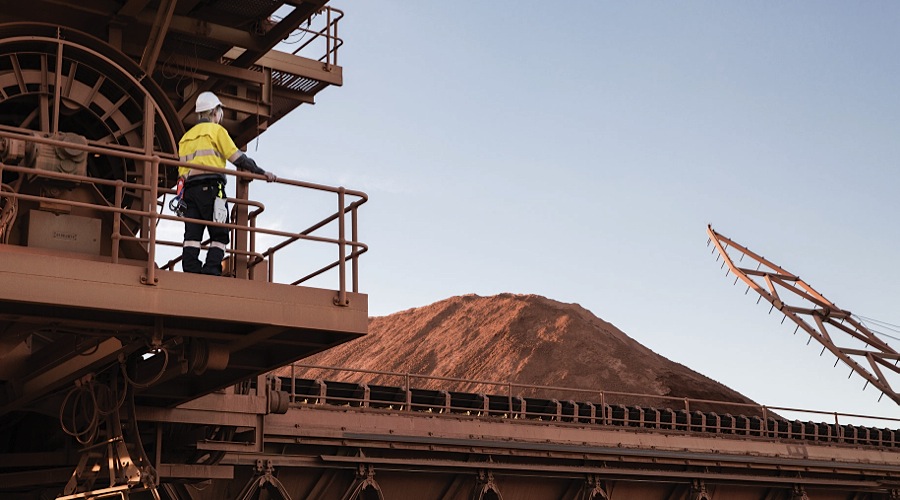
South32’s Worsley alumina business in Western Australia. (Image courtesy of South32)

Australian diversified miner South32 is closely watching alumina developments in Indonesia to see whether they will drag down prices in the global market the same way its nickel industry has, CEO Graham Kerr said on Thursday.

Indonesia, seeking to expand domestic processing, has ramped up its production of low-cost nickel in recent years to become the world’s dominant supplier, sending producers in other jurisdictions like New Caledonia and Australia out of business.

Indonesia’s government has since looked to replicate that success in other markets. The country last year turned a net exporter of alumina, which is a semi-processed product, formed from mineral bauxite, and ultimately turned into end product aluminum.

“The challenge we have for ourselves is whether they can do in alumina what they have done in nickel,” Kerr told an analyst briefing.

“We think there’ll be some capital compression (but) you don’t have the same capability to build large industrial parks,” he said. Unlike in the nickel industry, alumina production also creates a waste product known as “red mud”, which has to be carefully managed.

“So I think there are some complexities which will limit scale in Indonesia as well,” he added.

South32 reported a 75% surge in full-year profit on Thursday, helped by strong performance at its alumina division and higher commodity prices.

(By Melanie Burton; Editing by Kim Coghill and Sonali Paul)