Tuesday, December 09, 2025

 Li


Imerys seeks European content rule for EVs to launch €1.8B lithium project
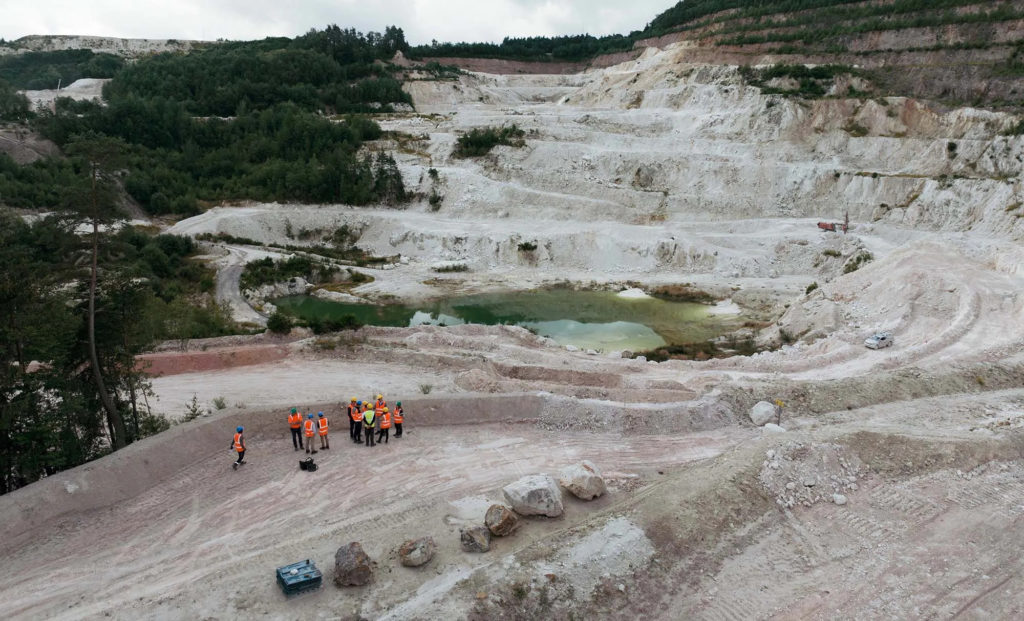


Credit: Imerys

A French industrial group that’s facing delays at a major new lithium project is calling for European Union rules that would force carmakers to buy the battery metal from mines inside the bloc.

Imerys SA, which is seeking to develop lithium mining and refining facilities in France costing as much as €1.8 billion ($2.1 billion), is suggesting that at least 20% of lithium used in electric car batteries should come from the EU by 2031, rising to 40% by 2036.

In a white paper recently sent to the European Commission, the industrial metals producer — which is controlled by Groupe Bruxelles Lambert — said that making this mandatory would have a marginal impact on the cost of cars made in Europe.

“In such a key industry like automotive, I think Europe needs to be independent as much as possible from the rest of the world,” Imerys chief executive officer Alessandro Dazza said in an interview Thursday. “To launch a project of this magnitude, investors need a clear framework.”

The lobbying effort comes as the EU seeks to beef up its plan to reduce its reliance on imports of critical raw materials used in everything from weapons to wind turbines and electric cars. While there’s mounting unease over China’s willingness to boost its grip on key supplies, European automakers and suppliers remain at odds over details of local content rules that can add to production costs.

Plans to invest in lithium mining and refining in Europe have also faced headwinds due to falling prices for the material amid slower-than-expected EV adoption on the continent as well as a production glut in key lithium-producing countries such as Australia, Chile and China.

“Today there is an imbalance between demand and offer, but demand will continue to grow strongly because of penetration of electric vehicles,” Dazza said. “All the known projects today will not be able to cover this demand.”

Due to weak lithium prices, Sibanye Stillwater Ltd. continues to assess when to commission its project in Finland. However, Vulcan Energy Resources Ltd. said this week that it secured a A$3.9 billion ($2.6 billion) financing package for a lithium project in Germany that will use geothermal power.

Doubts about demand are also persisting as Germany is leading a charge to tone down a EU ban on the sale of combustion-engine cars beyond 2035, amid calls from some automakers to get more time to transition.

Back in July, Imerys delayed the potential start of commercial lithium production in central France by two years to 2030, assuming the project is approved by the end of 2027, citing longer-than-expected permitting processes. It would produce 34,000 tons of lithium hydroxide a year, covering the needs to make 700,000 electric-car batteries.

The company remains in “advanced” discussions to sell a minority stake in the project to an investor, the Imerys CEO said. Imerys is also studying lithium production in Southwest England. It aims to complete the pre-feasibility studies of its project in Cornwall next year, Dazza said.

Liontown inks spodumene supply deal with China’s Canmax Technologies
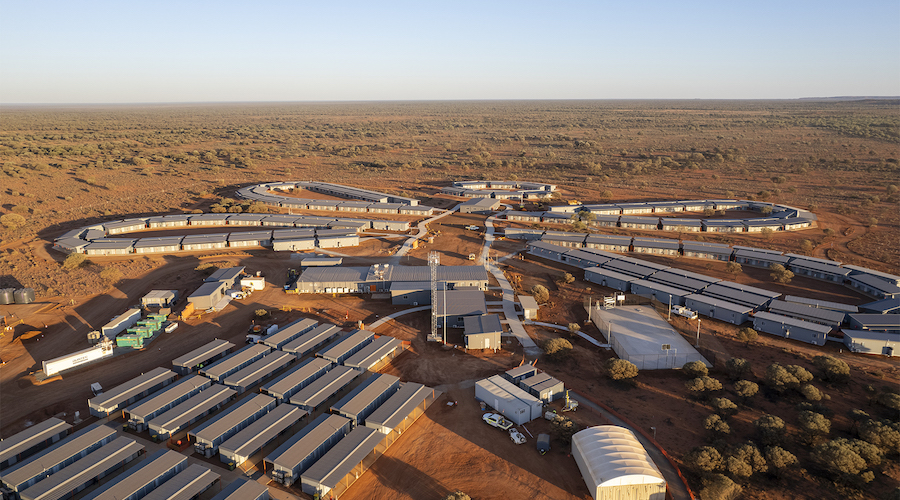

Kathleen Valley mining camp. (Image courtesy of Liontown Resources.)

Australia’s Liontown said on Tuesday it has signed an offtake deal to supply 150,000 wet metric tons of spodumene concentrate in 2027-2028 from its Kathleen Valley project to Chinese lithium chemicals maker Canmax Technologies.

Pricing will be based on a formula linked to spodumene concentrate indices, the lithium miner said in a statement.

Spodumene concentrate, used to make lithium chemicals for EV batteries, is seeing growing efforts to standardize auctions for clearer benchmarks and stronger market links.

The flagship Kathleen Valley project, which produced its first concentrate in July 2024, is powered by about 80% renewable energy.

Liontown has offtake agreements with automakers, including Tesla and Ford Motor.

Last month, Liontown said its first online auction for spodumene concentrate from Kathleen Valley fetched a price far above prevailing spot levels, the latest indicator to suggest a long-awaited recovery in lithium demand taking root.

(By Nikita Maria Jino; Editing by Sherry Jacob-Phillips)


Albemarle jumps as UBS says it’s time to buy on lithium recovery
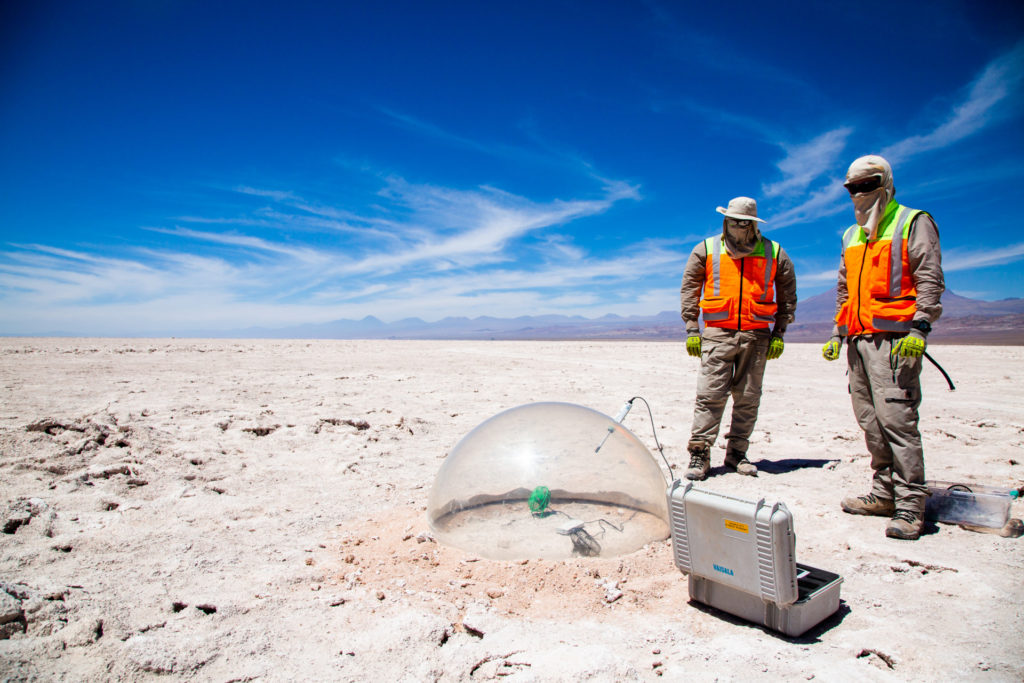
Albemarle is testing direct lithium extraction (DLE) technologies in Chile. (Image courtesy of Albemarle Chile.)

Top lithium producer Albemarle Corp. rose the most among peers after UBS analysts said now is the time to buy the stock with rising prices of the battery metal set to drive up earnings.

Albemarle gained as much as 9% on Friday and traded 6.7% higher as of 12:52 p.m. in New York. That was the best performance among specialty chemical producers tracked by Bloomberg
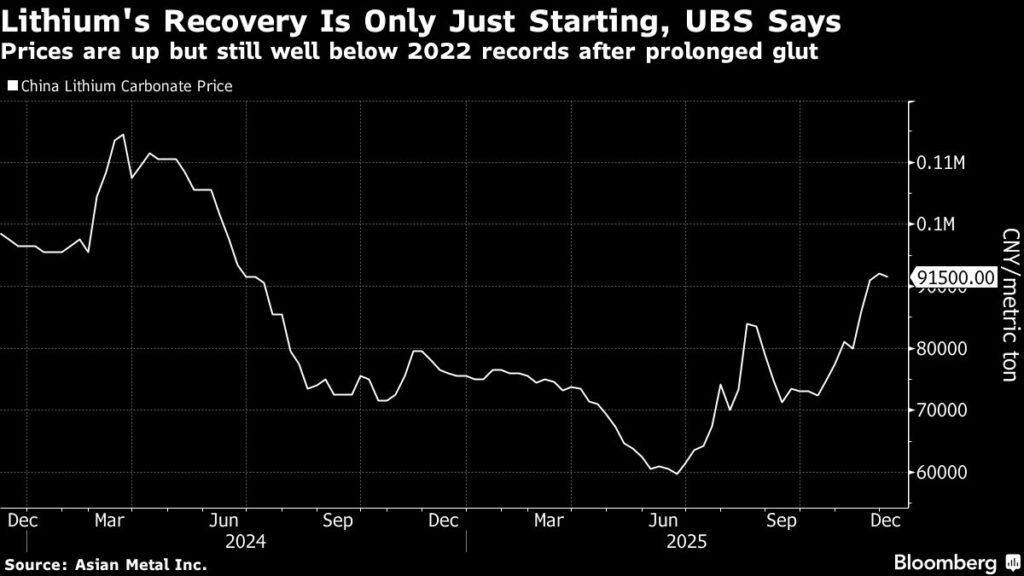


The company was raised from the equivalent of hold by UBS analysts including Joshua Spector, who cited the lithium market’s likely switch from a surplus to a small deficit. That lays the groundwork for a possible “lithium price fly up scenario” in 2027, they wrote in a Dec. 4 note to clients.

“We see a combination of higher energy storage demand and years of slower western capacity additions now pushing lithium markets into deficit later in 2026,” the analysts wrote.

Producers such as Albemarle are starting to benefit from a price recovery driven by a strong demand outlook for electric vehicles and large-scale battery storage, after years of oversupply. To be sure, while spot lithium prices are more than 50% above a June low, they’re still about 85% below a 2022 peak.

(By James Attwood)


China’s annual coal demand to fall for first time in eight years, industry group says


Workers at a coal mine in China. Shutterstock image.

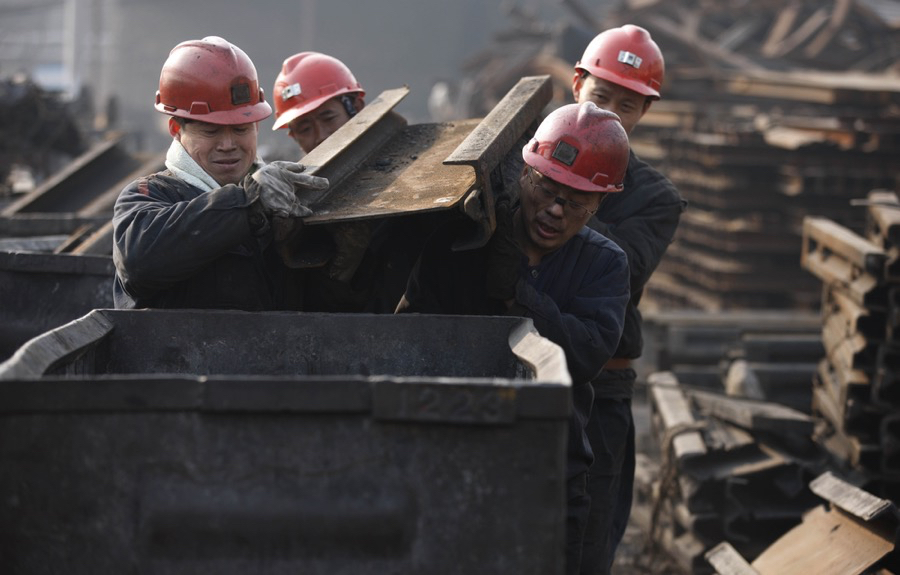
China’s coal consumption is set for its first annual decline this year since 2017 as the power industry throttled back on use of the fuel, an industry body said, though consumption could still grow moderately next year.

On its website, the China Coal Transportation and Distribution Association (CCTD) cited comments by a representative at a meeting on Wednesday, but did not give a specific figure for consumption.

“The industry faces a long road ahead in anti-involution,” the industry representative said, referring to a government campaign to tackle overcapacity among Chinese producers.

“Since the beginning of this year, 53.9% of industry firms have been operating at a loss, with minemouth prices falling by 16.8% year-on-year.”

Coal use also fell this year in the steel and building industries but was partially offset by growth in the chemical sector, the representative said.

Coal consumption in the power industry is seen growing steadily next year, while demand in the steel and building sectors will still fall, the group said, though rapid growth of demand in the coal chemicals industry is expected to continue.

The improving outlook comes amid better macroeconomic conditions, growing electricity demand and rising production of coal chemical projects.

China’s annual coal imports are projected to reach 480 million tons this year, CCTD said, down 11% from 2024, as demand has weakened while domestic supply swells.

(By Colleen Howe; Editing by Clarence Fernandez)

China’s rare earth exports jump in November after Xi-Trump meeting

Stock image.

China’s rare earth exports jumped in November, the first full month since President Xi Jinping and US President Donald Trump agreed to speed up shipment of the critical minerals from the world’s largest refiner.

Exports in November jumped for a second consecutive month, by 26.5% from October to 5,493.9 metric tons, showed figures from the General Administration of Customs of China.

Whether increased shipments to the US or Europe powered that jump will only be revealed when the customs office releases a country breakdown on December 20.

Chart showing China's rare earth exports in 2025
Chart showing China’s rare earth exports in 2025

Export controls over the 17 minerals used in areas as varied as autos, consumer electronics and defence have caused months of disruption since their April introduction.

A requirement for licences for each export has created shortages that brought parts of the auto supply chain to a halt and handed China enormous leverage in trade talks with the US.

Reuters reported last week that China issued its first “general licences” – year-long permits aimed at speeding up exports following the Xi-Trump meeting. Those licences are likely to start impacting trade data next year.

Year-to-date, rare earth exports totalled 58,193.1 tons, an annual increase of 11.6%.

(Editing by Christopher Cushing)

CU

Copper price climbs to fresh high on China outlook boost

Stock image.

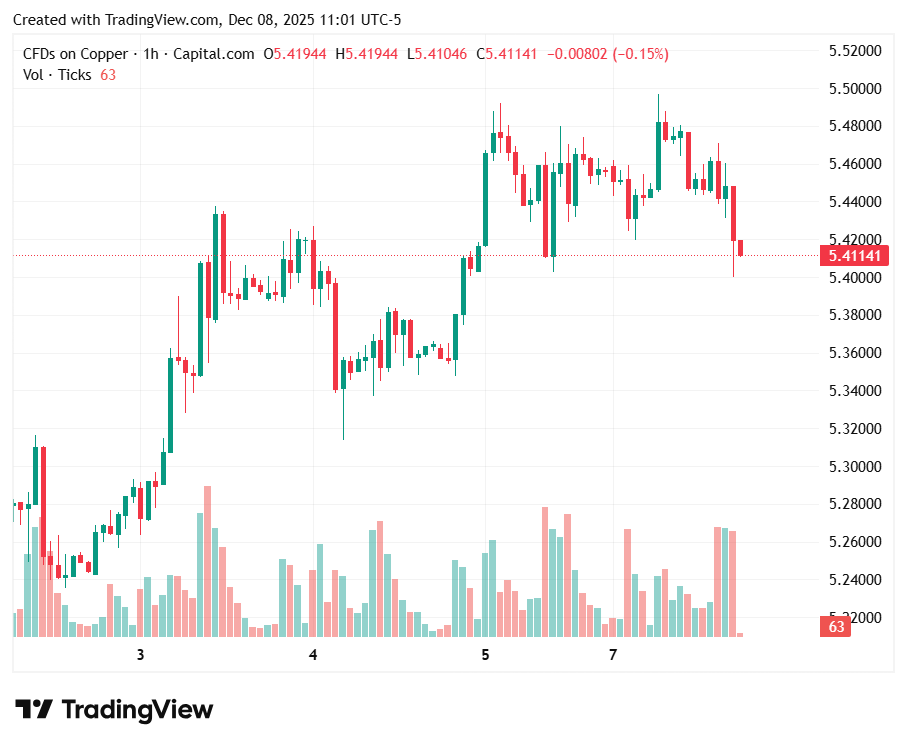
Copper continued its record-breaking rally on Monday amid stockpiling of the metal in the US, while China set domestic growth as its top economic priority for next year, boosting the demand outlook.

Futures on the London Metal Exchange climbed as much as 1.3% to $11,771 a ton, surpassing the all-time high set in the previous session.\\

Copper has been ratcheting higher in recent weeks amid a mass exodus of the metal into the US in anticipation of expanded tariffs, raising concerns of a global supply squeeze.

The latest spike came after China — the world’s top consumer — announced it will stick with a “proactive” fiscal approach for 2026, lifting the demand prospects for industrial metals such as copper.

“The Politburo readouts present a more proactive macro environment than investors have expected,” said Xu Wanqiu, an analyst with Chinese brokerage Cofco Futures Co. “Copper will benefit from policy support toward power-grid upgrades, computing power. The momentum remains very bullish.”

Also supporting this narrative is a dwindling supply of refined copper products due to the US stockpiling. Analysts from Citic Securities Co., a Chinese brokerage, said on Monday that the global shortfall of refined copper could reach 450,000 tons next yea

Prices must average above $12,000 a ton next year to attract the investment needed in new mining capacity to ensure sufficient supply in the medium to long term, the Citic analysts said in a note.

Copper has gained 34% on the LME this year amid strong demand from data centers and electric vehicles and a tightening global supply, which was exacerbated by a series of mine outages around the world.

In the US, prices had rallied to a record on the Comex exchange at the end of July ahead of anticipated tariffs on the metal.

(With files from Bloomberg)

Column: Will the real Doctor Copper please step forward?


Where’s the real Doctor Copper? Credit: Codelco

Copper is on a bull surge with the price hitting record highs on both the London and Shanghai markets this week.

Everyone’s talking about a copper supply crunch. Physical premiums are soaring. Smelters are being squeezed by a shortfall of mined concentrate.


 ust to cap it all, London Metal Exchange (LME) stocks have just been raided, reducing available inventory to below 100,000 metric tons for the first time since July 

Yet it’s not as if the global manufacturing sector is similarly fired up. September saw activity contract in China, Japan, Europe and, for the ninth consecutive month, the United States.

Tariff uncertainty hangs heavy on the world’s largest manufacturing nations and it is also key to understanding copper’s current euphoria.

Copper’s bull run is as much about market fracture as it is about a straightforward supply crunch.

US imports of refined copper

Feast…

This week’s raid on LME copper stocks saw 54,350 tons, around a third of registered inventory, cancelled in preparation for physical load-out.

It’s highly likely this metal is destined either for the United States or to fill a supply-chain gap caused by other units heading that way.

The United States is now the market of first resort for copper thanks to the lingering threat of import tariffs.

A decision on whether to extend tariffs on copper products to refined metal has been deferred until the middle of next year.

But the CME US copper contract is still commanding a hefty premium over the international price traded on the LME, keeping the physical arbitrage window wide open.

US imports of refined copper more than doubled year-on-year to 1.19 million tons in January-August and more will arrive as long as the CME premium covers the shipping costs. Which at around $500 per ton on a three-month forward basis it more than comfortably does.

CME stocks, all customs-cleared, have mushroomed from 85,000 tons at the start of the year to 394,000 tons and now account for 55% of global exchange inventory.

There is no copper supply crunch in the United States and there’s not going to be one any time soon.

…and famine

But there is growing tightness everywhere else in the world as metal continues to gravitate towards the United States.

That’s why producers have been able to demand record premiums for deliveries next year.

Chilean producer Codelco has hiked its European premium by 39% to $345 per ton over the LME price and is pushing for $350 per ton for Chinese buyers, who find themselves in the unfamiliar position of being second in line in the copper delivery queue.

Indeed, China itself has been caught up in the physical copper scramble.

The mass relocation of copper inventory to the United States has extended to China’s bonded warehouse zones with 128,000 tons re-exported to the United States since February, according to Chinese customs.

Chinese producers have also been lifting deliveries to LME warehouses as a tightening London market opens up an export arbitrage window.

Chinese-brand copper accounted for 82% of LME registered stocks at the end of October, up from 51% at the start of January.

Yet even as global inventory is reshuffled, total exchange stocks are rising, closing November above the 700,000-ton mark for the first time since early 2020.

There is no global shortage of copper but there is a widening split between the US market and the rest of the world. It’s captured by the CME and LME forward curves – in comfortable contango and widening backwardation respectively.

‘Malignant competition’

The splintering of the copper market is not just geographical but also internal.

China has brought too much smelting capacity online in too short a time for the world’s mines to supply, a mismatch compounded by this year’s litany of disruption at some of the world’s largest mines such as Grasberg in Indonesia.

The result is a crisis of smelter profitability. Spot processing fees have been trading at negative levels for months, meaning smelters are giving away for free what should be a core revenue stream.

Several Western smelters have closed and the Chinese smelter sector is now confronted with the hangover from its previous exuberance in the form of potentially negative fees for next year’s annual contracts.

The China Smelters Purchase Team, comprising the country’s top-ten producers, has pledged to reduce production by 10% to help stabilize the raw materials market.

It will also monitor members’ spot market activity to prevent what it called “malignant competition” between smelters for concentrate.

Collective cutback announcements are standard operating procedure for China’s metal smelters whenever the going gets tough but the impact has as often as not been less than promised.

The announcement, though, is evidence of a dysfunctional raw materials market. The current annual benchmark pricing model is at risk of splintering into multiple short-term and binary deals under the pressure.

This injects another level of uncertainty into an already complex copper pricing picture.

So is the world facing an imminent copper supply crunch?

Well, it depends very much on which Doctor Copper you ask. But none of them is saying much about the state of global manufacturing right now.

(The opinions expressed here are those of the author, Andy Home, a columnist for Reuters.)

Adani, Hindalco seek Peru copper assets as demand surges

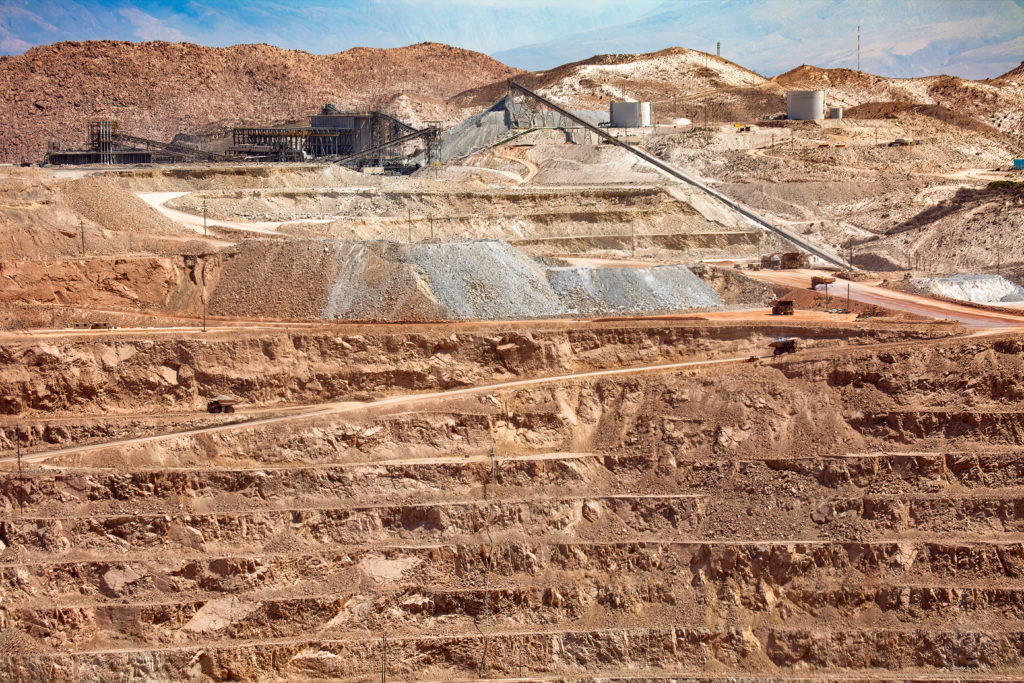
View of the pit of an open-pit copper mine in Peru. Stock image.

Indian conglomerate Adani and miner Hindalco Industries are exploring investments in Peru’s copper sector, either through joint ventures or by taking stakes in existing mines, a senior Peruvian diplomat told Reuters.

Peru, the world’s third-largest producer of copper used in sectors such as power lines, construction and manufacturing, is courting new investment as it negotiates a broader free trade agreement with India.

“Birla (Hindalco) and Adani are trying to invest in Peru. We are willing to facilitate,” Javier Paulinich, Peru’s ambassador to India, told Reuters in New Delhi.

Peru produced about 2.7 million metric tons of copper in 2024 and attracted $4.96 billion in foreign investment in the sector.

Anticipating a surge in demand and potential supply shortfalls, India, the world’s fastest-growing major economy, has urged its mining companies to invest overseas to secure copper supply chains and manage possible disruptions, according to a government policy document published in July.

India, the world’s second-biggest importer of refined copper, may have to source 91%-97% of its copper concentrate requirements from overseas by 2047, according to official estimates.

Adani sent a delegation to Peru earlier this year, Paulinich said, adding that Hindalco has initiated similar efforts.

“They are in the first stage, trying to find out opportunities,” he said, referring to both Adani and Hindalco.

A top company executive told Reuters last year that Indian billionaire Gautam Adani’s group would source copper concentrates from Peru and other suppliers such as Chile and Australia for its $1.2 billion copper smelter, the world’s biggest single-location plant of its type.

Adani and Hindalco did not respond to Reuters emails seeking comment.

India’s copper imports rose 4% to 1.2 million metric tons in the fiscal year to March 2025. Demand is expected to climb to 3-3.3 million tons by 2030 and 8.9-9.8 million tons by 2047, the government has said.

Free trade pact

India has also sought a detailed chapter on copper in its free trade negotiations with Peru to secure a fixed quantity of copper concentrate, Paulinich said, adding that discussions were still underway.

The free trade talks could conclude by May and the next round of meetings is scheduled for January, Paulinich said.

“It is in final stages,” he said.

(By Neha Arora and Mayank Bhardwaj; Editing by Stephen Coates)


Anglo scraps executive bonus vote as Teck merger decision looms


El Soldado copper mine in Chile. (Image courtesy of Anglo American |Flickr.)

Anglo American (LON: AAL) has dropped a proposal to change executive bonus awards from the agenda of this week’s shareholder vote on its merger with Canada’s Teck Resources (TSX:TECK.A | TECK.B) after investors objected to the plan.

The company said the merger now hinges only on approval to issue new shares, not on executive pay changes. It added that its remuneration committee will consult investors ahead of an updated pay policy at the 2026 annual meeting. 

The withdrawn proposal had sought a 62.5% minimum vesting of 2024 and 2025 share awards for executive directors, tied to completion of the Teck merger, and required a separate resolution because it fell outside the current remuneration policy.

Proxy advisor Institutional Shareholder Services Inc. recommended voting against the amendment, saying transaction-linked pay is not considered good market practice in the UK. ISS said awarding such a large portion of bonuses based on a single metric weakens the broader performance criteria used to assess management.

Anglo American noted the incentive plan was meant to support the deal and help retain senior leaders as the merger would shift the company’s headquarters to Canada.

“With the removal of this resolution, we suspect the Teck combination proposal will be strongly backed by Anglo shareholders,” analysts at Peel Hunt wrote.

Decade’s top deal

The proposed $53-billion transaction would create a major copper producer but but still needs regulatory approval

The merger vote comes after BHP (ASX:BHP) briefly attempted to buy Anglo last month before abandoning its offer three days later

Anglo has long been seen as a takeover target thanks to its copper portfolio, though its diamonds and platinum businesses have complicated past bids. 

Shareholders of Anglo and Teck will vote on the deal Dec. 9. At least two-thirds of votes must be in favour for the deal to continue.

If approved, the combined miner would rank among the world’s top five copper producers with annual output of 1.35 million tonnes, topping Chile’s Escondida mine’s 2024 production of 1.28 million tonnes.

AMERIKAN STATE CAPITALI$M 


U.S. Army Looks to Build Small Refineries for Critical Minerals

By Tsvetana Paraskova - Dec 09, 2025

he U.S. Army will develop small-scale refineries to ensure domestic supply of critical minerals for defense and military purposes as the United States and the Western allies look to reduce their dependence on China.

“We ?need to come up with a way to ‌make our own (critical minerals) domestically that we can actually monitor and control within our borders,” Mark Mezger, a munitions procurement adviser for the U.S. Army, told Reuters.

The Army is currently developing a project with the Idaho National Laboratory and gold mining company Perpetua Resources to process antimony.

In September, the U.S. Army’s Joint Program Executive Office Armaments and Ammunition (JPEO A&A) joined Perpetua Resources Inc. to launch the Stibnite Gold Project in central Idaho. The project seeks to redevelop an abandoned mine site in Stibnite for gold and antimony sulfide, a critical component used in ammunition production. The U.S. previously obtained antimony sulfide from foreign sources until 2021 when that supply ended.
“The Stibnite project currently holds the largest identified reserve of antimony in the U.S. At an estimated 148 million lbs., it is one of the largest antimony reserves outside of foreign control,” said Maj. Gen. John T. Reim, Joint Program Executive Officer Armaments & Ammunition and Picatinny Arsenal Commanding General.

The project is “in keeping with the Army’s ongoing ‘Ground-to-Round’ assured munitions strategy to locate and engage with domestic sources for critical materials as we modernize and fortify the Arsenal of Democracy,” Reim added.

The Trump Administration is ensuring funding through buying minority stakes in North American rare earth and lithium companies and projects, while companies in the U.S. and Europe are setting up alliances with miners and refiners to have magnet supply chains outside and independent of China.

The global rare earth supply chain is among the most highly concentrated across all stages of the value chain, analysts at the International Energy Agency (IEA) wrote in a commentary in October.

By Tsvetana Paraskova for Oilprice.com

US plans more stakes in minerals companies, Trump official says

The US government plans to take more equity stakes in critical minerals companies, a White House official said Thursday, calling the once-rare move necessary to counter China’s dominance in the raw materials used in everything from semiconductors to MRI machines.

“I think they’re the norm from our perspective,” said Jarrod Agen, executive director of the National Energy Dominance Council, speaking at a forum in Washington. “There is a broad scope of different companies who are coming to us. They’re making the right case.”

Critical minerals such as gallium and cobalt are used in products ranging from iPhones to industrial magnets. They’re also vital for defense systems including missile guidance, radar and jet engines, as well as batteries and other technologies needed to cut carbon pollution. Over the past year, the Trump administration has spent over $1 billion to take stakes in critical minerals and mining companies, often sending the company’s stock prices soaring.

Among the deals are $400 million in exchange for a 15% stake in MP Materials Corp., which was announced in July, $670 million in exchange for a stake in magnet producer Vulcan Elements Inc., and $35.6 million for a 10% stake in Canadian minerals explorer Trilogy Metals Inc. The Trump administration announced in September it was acquiring a stake in Lithium Americas Corp., which is developing the largest lithium deposit in the country, as part of a deal to restructure an existing $2.23 billion loan the Canadian company held with the Energy Department.

Agen, in a brief interview, declined to specify what company could be next.

The strategy of investing taxpayer dollars in companies the administration has deemed essential to national security comes as the US’ reliance on China for the crucial materials has become a flash point in the trade war. Beijing responded to US export restrictions by curbing shipments of rare earth elements, a move that briefly disrupted global supplies before China eased the limits after Washington lifted its countermeasures.

“We’re literally buying equity, getting equity in companies to give the backing of the US, because that’s the only way we’re going to catch up with China on these things,” Agen said in his remarks at the American Growth Summit, which was sponsored by companies such as Citigroup Inc. and NVIDIA Corporation. “They know the government is backing us. No one wants to mess with President Trump, and so we can actually get the materials.”

(By Ari Natter)

Serra Verde cuts short China offtake deals, approached by Western firms

Serra Verde is expected to produce 5,000 tonnes per year of rare earth oxide. (Image: Serra Verde)

Brazilian rare earths miner Serra Verde has slashed the contract periods of its Chinese processing deals, opening up the potential to supply Western companies when their separation capacity becomes available in coming years, its CEO said.

The West has been racing to develop alternative sources of rare earths, vital for defence, electronics, electric vehicles and wind turbines, since China controls 90% of processed global supply

When Serra Verde’s mine was being developed, it agreed 10-year offtake deals with Chinese companies to buy its concentrate for processing since no other options were available.

The Serra Verde mine is rich in heavy rare earths, unlike many other Western deposits, but only now are plants gearing up in the West to process them.

“In a couple of years we’ll have some options to separate the heavies outside of China,” CEO Thras Moraitis told Reuters.

Privately-held Serra Verde renegotiated the Chinese deals and now they conclude at the end of next year, giving the company multiple options to diversify its customer base, Moraitis said.

“The Chinese, the Americans, the Japanese, the Europeans, the Canadians all have approached us, given that we are the only supplier of heavy rare earths, at least for the foreseeable future.”

Forecast shortages of heavy rare earths dysprosium and terbium could be a stumbling block in the West’s drive to create domestic supply chains of rare earths and permanent magnets.

Price floor essential

Moraitis, formerly an executive of Xstrata, which was acquired by commodity group Glencore, said a price floor guaranteed by governments was key for the development of the rare earths sector outside of China.

The US provided a guaranteed minimum price to rare earths group MP Materials in July as part of a multibillion-dollar investment by the Pentagon and sources told Reuters the mechanism would likely be extended to other firms

Group of Seven members and the European Union are also considering price floors to promote rare earth production.

Serra Verde’s Brazilian mine is an ionic clay mine deposit. The standard extraction technique for such deposits in China and Myanmar has involved flushing the deposit with chemicals, which has caused contamination of water supplies and deforestation.

Serra Verde has spent several hundred million dollars building a plant that does not discharge toxic waste.

The company launched commercial production in early 2024, but has been optimizing output so it has not yet hit full output, which is expected to be about 6,500 metric tons of total rare earth oxides a year by 2027.

The US Development Finance Corporation approved a $465 million loan earlier this year.

Serra Verde is owned by private equity groups Denham Capital, Energy and Minerals Group and Vision Blue, which is led by the former head of Xstrata, Mick Davis.

(By Eric Onstad; Editing by Mark Potter)


US vows over $1 billion for Congo critical minerals supply chain


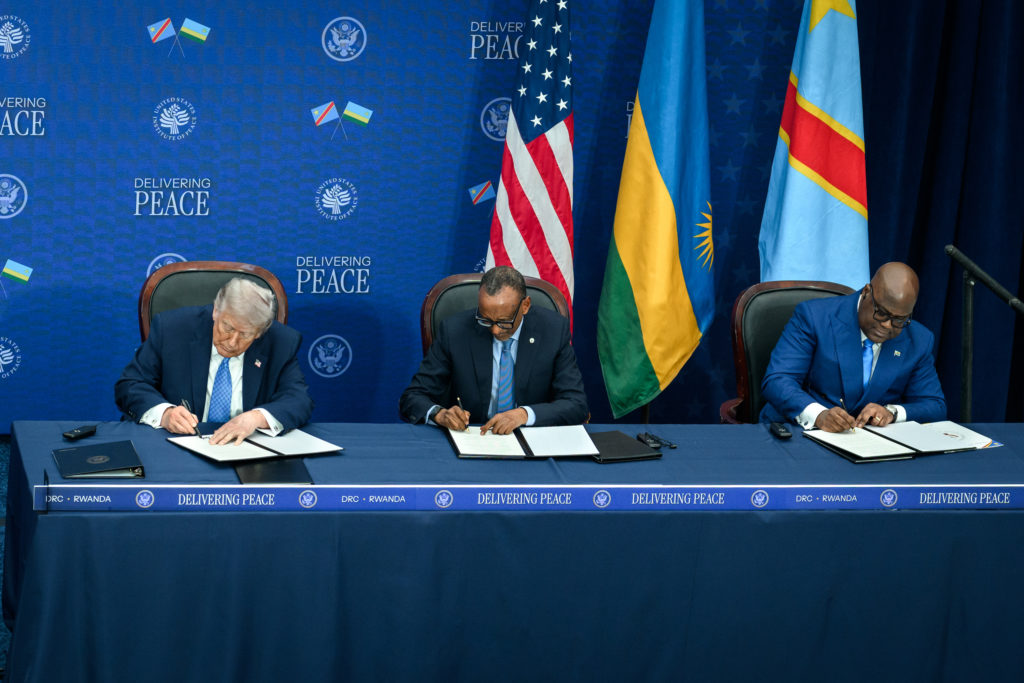
President Trump joins President Kagame of Rwanda and President Tshisekedi of the Democratic Republic of the Congo as they sign the Washington Accords. Credit: The White House | X

The US is in talks to provide more than $1 billion for two critical minerals and railway projects in central Africa as it seeks to secure supplies deemed crucial for national security.

The US International Development Finance Corp. plans to support a new copper and cobalt venture between the Democratic Republic of Congo’s Gecamines SA and Mercuria Energy Trading, as well as a rail project linking Congo and other central and southern African nations to Angola’s coast. 

“These projects will help to secure vital supply chains, expand private sector opportunity, and strengthen America’s global competitiveness, while supporting peace, prosperity, and dignity in central Africa,” DFC chief executive officer Ben Black said in a statement.

President Donald Trump has made securing minerals that are crucial for military and high-tech applications one of his priorities, with several deals with African countries emerging. Chinese companies dominate the mining and processing of many of these metals, and Washington is looking to loosen the Asian powerhouse’s stranglehold over the trade.

The DFC announcement follows the signature on Thursday of a strategic infrastructure and minerals partnership between Congo and the US.

Congo is rich in multiple critical minerals including copper, cobalt, lithium, tantalum and manganese.

Switzerland’s Mercuria and Gecamines announced their copper and cobalt trading tie-up on Friday.

“The partnership would grant US end users a right of first refusal, providing US industries with access to critical minerals essential for economic growth and competitiveness,” Gecamines said about the possible DFC investment in an emailed statement.

Under the US-Congo strategic partnership, Congo has committed to shipping more of its minerals west toward the Atlantic Ocean over Angola’s Lobito railway corridor. Currently most of Congo’s exports move south or east along the road or railway.

The DFC is proposing up to $1 billion in financing to Portugal’s Mota Engil SGPS for “the rehabilitation, operation, and transfer of the Dilolo–Sakania railway line” in Congo, which would connect to the Lobito corridor.

(By Michael J. Kavanagh)


US, Congo eye minerals pact amid peace deal with Rwanda

Congolese soldiers. Stock image.

The Democratic Republic of Congo aims to sign a minerals and infrastructure partnership with the Trump administration on Thursday as part of a series of deals targeted at ending a long-running conflict in the eastern part of the resource-rich African nation.

President Donald Trump is scheduled to meet with the presidents of Congo and Rwanda in Washington on Thursday to oversee the signature of a peace accord between the two countries.

The three-decade-long conflict is one of several that Trump has claimed to end as part of his global dealmaking, despite ongoing fighting between the Congolese army and Rwanda-backed fighters.

The central African nations will also sign an economic agreement, while the US and the Congo are expected to ink their own partnership.

Through the deal with the US, “the DRC will become a continental energy hub, a kind of logistical, strategic hub, but also an indispensable player in the critical mineral supply chains,” Tina Salama, a spokesperson for Congolese President Felix Tshisekedi, told reporters in Washington on Wednesday.

The US has been targeting Congo’s minerals to secure key inputs for technology, energy and defense and as a way of diminishing China’s dominance over the trade.

Congo is the biggest nation by landmass in sub-Saharan Africa and rich in strategic metals including cobalt, copper, tantalum, lithium and gold.

The deal with the US will support local mineral production and job creation, and offer US companies the chance to invest in resource, energy and infrastructure projects, Salama said.

This will include the development of a $1.8 billion connection to Angola’s Lobito railway corridor to the Atlantic Ocean and the Grand Inga dam, which would be the biggest hydropower plant in the world, she said.

But the investments will only move forward if Rwanda stops supporting rebel groups in Congo’s east, Salama said.

Rwanda-backed M23 rebels have occupied the region’s two biggest cities since early this year. In recent days, M23 has clashed with the Congolese army in South Kivu province.

“It’s a proof that Rwanda doesn’t want peace,” Congolese government spokesman Patrick Muyaya said alongside Salama in Washington. “Peace for us means withdrawal of Rwandan troops.”

Rwanda denies supporting the M23 and says its troops have only been taking “defensive measures” to secure its borders, in particular against a rebel group with ties to the perpetrators of the 1994 Rwandan genocide against Tutsis.

Congo has agreed to “neutralize” the group, known as the FDLR, as part of the US-backed peace agreement.

“It’s up to the DRC to show how much and how quickly they want peace,” Rwandan government spokesperson Yolande Makolo told Bloomberg Wednesday.

“Achieving peace is tied to the DRC ending all state support to the FDLR as well as other forces hostile to Rwanda, which will allow us to relax our defensive measures, but this hasn’t happened yet,” she said.

(By Michael J. Kavanagh


US minerals projects seek ‘industrial vision’ from Washington to compete with China

Image: Perpetua Resources

Washington must move even faster to bolster critical minerals projects and offset Beijing’s grip on the world’s supply of the building blocks for electronics, weapons and a range of other goods, three US mining and refining executives said on Thursday.

The push underscores how Washington’s surging support this year for the sector – including taking stakes in mining companies and guaranteeing a price floor for the only US rare earths mine – is falling short of what industry leaders say is needed amid intense Chinese competition.

Executives from Perpetua Resources, American Rare Earths and Westwin Elements told the Reuters NEXT conference in New York that the US government should release a comprehensive minerals plan, pressure Indonesia to trim nickel production, and speed up the time for the US Export-Import Bank and other agencies to approve loan funding, among other steps.

“We need an industrial vision,” said Melissa Sanderson, a director at American Rare Earths, which is working to build a rare earths mine in Wyoming.

“What we need is an integrated plan for building the critical minerals supply chain with all of the myriad inputs, antimony, nickel, copper, rare earths and how that flows through to the battery makers, to the magnet manufacturers, to the various end-users.”

KaLeigh Long, CEO of privately held Westwin, which is building the only US nickel refinery, is asking the Trump administration to pressure Indonesia to limit its nickel output, which has surged in the past two years to roughly 60% of global supply and dragged down nickel prices nearly 50% as a result.

That forced BHP and others to shutter their operations and has posed a challenge for Westwin as it aims to secure financing to refine 34,000 metric tons of nickel per year in Oklahoma by 2030.

“I’m really urging the US government to think simple,” Long said. “In terms of nickel, let’s get a quota on Indonesian production. You do that, and I can almost promise you that overnight you will see a cure in the nickel price.”

Long said a price floor for nickel from Washington would be impractical given the large size of the market for that metal and pushed for limits on Indonesia’s output instead.

“A price floor is kind of a waste of our energy right now,” she said. “I don’t see that being a stable solution or a near-term solution.”

Rare earths, though, are a much smaller market than nickel and price supports are key until there is more transparent pricing, said Sanderson, a former US diplomat and executive at copper miner Freeport-McMoRan.

The London Metal Exchange, for example, trades nickel but not rare earths, a market that China also dominates.

“The LME has shown no interest so far in trying to develop a rare earths market and part of that is because it’s currently a narrow spectrum of an already narrow market,” Sanderson said. “It would be helpful if LME were to develop a pricing mechanism for rare earths, but the question becomes, ‘Would China actually honor it?'”

Speed up financing review

Mckinsey Lyon of Perpetua, which is building an antimony and gold mine in Idaho with support from JPMorgan Chase’s $1.5 trillion investment fund for US national security, said Washington’s recent moves reflect a “frantic scramble” to understand what can be a confusing web of federal agencies and programs, each with priorities that sometimes conflict.

“Companies are getting some solutions, but what’s not happening right now is a comprehensive strategy or road map,” said Lyon.

Both Perpetua and Westwin have applied for funding from the US Export-Import Bank (EXIM), which acts as the US government’s export credit agency.

Long said Washington must move faster to approve those loans, which often have terms more attractive than with private lenders and at higher amounts. Perpetua, for instance, has asked for $1.8 billion in government loans.

“EXIM debt could allow us to execute on our commercial expansion, but the underwriting needs to speed up,” Long said. “They just simply need more processability and more people, basically.”

(By Ernest Scheyder and Shariq Khan; Editing by Franklin Paul and Matthew Lewis)