Friday, February 27, 2026


Environmental reporting varies sharply across French media, study shows


A new study has revealed significant disparities in the way the French media reports on environmental issues, with overall coverage remaining limited, particularly in France’s regional newspapers.


Issued on: 26/02/2026 - RFI

A new report has shown that despite growing visibility, environmental issues remain unevenly covered across the media in France. (Illustration) Journalists crowd around Swedish climate activist Greta Thunberg at a protest in Berlin, 2019. © AFP

Environmental issues remain “under‑reported” in the French print media, although they attract slightly more attention than on television and radio, according to a new study by the Media Observatory on Ecology (Omé), cited by France Inter on Thursday.

In 2025, environmental topics accounted for around six percent of press coverage overall. The figure rises to just over eight percent in the national press – across daily newspapers and magazines – but falls to 4.6 percent in regional dailies. Audiovisual outlets trail slightly, at roughly five percent.

Print media, however, appear to provide more steady coverage. Unlike television and radio, which tend to focus on immediate events such as heatwaves or floods, newspapers are less driven by the news cycle and more likely to follow stories over time.

Training and resources


Coverage varies significantly from one title to another. Among the strongest performers are Le Monde, Libération and La Croix. At Le Monde, for example, environmental issues feature in around nine percent of articles, compared with just 3 percent at the weekly Journal du Dimanche.

A marked divide also remains between national and regional outlets. Claire Morvan of the Omé observatory says some regional newsrooms are only beginning to strengthen their expertise.

“Several editorial teams have told us they are in the process of training their journalists, whereas the national press made its commitments a year or two ago,” she said.

“There are powerful lobbies and well-organised communicators in certain sectors. Covering these topics requires real expertise, which is why training remains such a key challenge,” particularly for regional titles.

In-depth reporting still uneven

The study underlines the importance of more analytical reporting – articles that go beyond events to examine the causes, consequences and possible solutions to climate change.

Here, publications such as L’Humanité and Nouvel Obs stand out, while regional titles including La Dépêche du Midi, Le Télégramme and Corse-Matin fall behind. For Eva Morel of the Quota Climat association, this kind of journalism is essential.

“These articles connect what we observe with the underlying causes and offer concrete solutions,” she said. “That is exactly what has been shown to encourage action.”

Business dailies are among the most active in this area, with Les Echos and La Tribune at 14 and 21 percent respectively, leading the field, reflecting a more cross-cutting approach that integrates environmental questions across different sections.


At the other end of the scale, the weekly news opinion magazine Marianne and Journal du Dimanche devote the least space to environmental topics with both under five percent in their coverage. In the regional press, coverage remains lower overall, although Nice-Matin, Var-Matin and Le Populaire du Centre stand out as relative exceptions.

The report also highlights the continued use of pejorative language in some outlets, citing terms such as “green ayatollah”, “punitive ecology” and “green Khmer”. Journal du Dimanche is identified as the most frequent user, followed by Marianne and Le Point.

The findings are based on real-time monitoring of 55 print titles, including national and regional newspapers, magazines and AFP, with more than 8,000 articles analysed each day, providing a detailed snapshot of how environmental issues are treated across the French press.

(with France Inter/France Info)
THE EPSTEIN CLASS


Epstein files reveal links to Senegal and Cote d'Ivoire circles of power


Jeffrey Epstein cultivated close ties with West African political elites, forging a relationship with Karim Wade, son of former Senegalese president Abdoulaye Wade, and Nina Keita, niece of Ivorian President Alassane Ouattara – according to emails and financial records related to the convicted sex offender released by the United States government last month.


Issued on: 26/02/2026 - RFI


]
Karim Wade as he was being arrested for corruption in Dakar in April 2013. Documents appear to show a close relationship between Jeffrey Epstein, the convicted sex offender, and Wade, before and after his arrest. AFP PHOTO


Epstein had a close relationship with Karim Wade, who he considered a powerful figure in Africa, and contacts with Nina Keita, who helped connect him to her uncle, according to emails, scheduled meetings, investment projects and loans interviewed by the French news agency AFP.

The mention of a person's name in the Epstein files does not imply wrongdoing, and exchanges with Karim Wade show no link to sex trafficking crimes, but they do reveal a close personal connection and that the two men had business ties.


'Important player'

Nicknamed the "Minister of Heaven and Earth" for the multiple portfolios he held including international cooperation, energy, and air transport, Karim Wade was a powerful figure in Senegal until April 2012, when his father's bid for a third term as president sparked deadly riots.

Epstein described Wade as "one of the most important players in Africa".

The two met in 2010 and quickly developed a rapport. After their first meeting in Paris, Epstein wrote to Wade on 15 November, 2010: "Thanks for coming. I think there are many things to consider... I feel confident that we will have fun."

"Have a safe trip back to your paradise Island," Wade replied.

Epstein put Wade in touch with close contacts, such as Ehud Barak, then Israel's defence minister.

He also put him in touch with Chinese businessman Desmond Shum to discuss "offshore banking”, and the two met in Beijing in May 2011, according to the documents – the same month that Wade planned a tour for Epstein through Senegal, Mali and Gabon.

The friendship continued even after Abdoulaye Wade left office. When Senegalese authorities started looking into the family’s assets, Epstein proposed that Karim Wade use his house in Florida, writing: "You and your family are welcome to use my house in Palm Beach. Staff is there, pool etc. You will not suffer."

Numerous files suggest Epstein became financially involved on Karim Wade's behalf after Wade was arrested in 2013, and sentenced to six years in prison for corruption in 2015.

Other files suggest that Epstein covered at least $50,000 in fees for the US lobbying firm Nelson Mullins, which Wade's entourage hired to secure his release.
'Pretty girls'

The documents show that Nina Keita was close to both Epstein and Karim Wade, and that she acted as a regular intermediary while Wade was in prison.

Keita also helped put Epstein in contact with her uncle, the president of Cote d’Ivoire, and his team.

When Epstein traveled to Abidjan and met Ouattara in 2012, Keita booked him what she called the "ministerial suite" of the luxury Hotel Ivoire.

Ahead of the visit, Epstein had said he hoped to see "very pretty girls there, as well as interesting places".

Keita, a former model, replied: "You will!"

Emails show at least one instance when she sent Epstein photos and the phone number of a young woman who he met at the Ritz hotel in Paris in August 2011.

After the meeting he asked for photos of the woman’s sister. “I prefer under 25,” he wrote to Keita.

Now the deputy general director of an Ivorian petroleum stocks company, Keita appears in a February 2019 will in which Epstein requested that debts owed to him by a number of people be cancelled upon his death.

Epstein was found hanged in his New York jail cell in August 2019, while he was awaiting trial on charges of abusing girls at his Palm Beach home and on his private island in the Caribbean.

(with AFP)
Israel Responsible for Two-Thirds of Journalist Deaths in 2025: Press Freedom Group

The number of journalists killed by Israel is remarkably high even when compared to the number of journalists killed in other conflict zones.


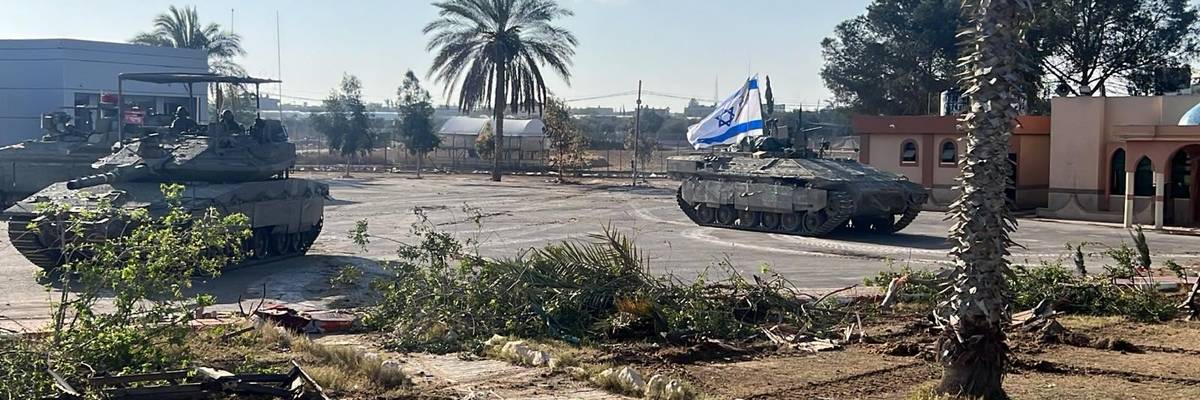
Israeli tanks are seen by the border in Rafah, Gaza on May 6, 2024.
(Photo by IDF - Handout/Anadolu via Getty Images)


Brad Reed
Feb 26, 2026
COMMON DREAMS

A new report from a major press freedom group has found that a record 129 journalists were killed in 2025, and that Israel was responsible for two-thirds of the worldwide total.

The Tuesday report from the Committee to Protect Journalists says that the Israeli military has cumulatively killed more journalists than any other government since CPJ started tracking reporter deaths in 1992, with the vast majority being Palestinian media workers in Gaza.

The report also finds an increase in the use of drones to attack journalists, with Israel accounting for more than 70% of the 39 documented instances of reporters killed by drone strikes.

The number of journalists killed by Israel is remarkably high even when compared to the number of journalists killed in other conflict zones.

Only nine journalists were killed in Sudan, for example, while just four journalists were killed in Ukraine, despite both countries being in the midst of brutal conflicts that have collectively killed hundreds of thousands of people.

A report issued in December by Reporters Without Borders similarly found that Israel was responsible for the most journalists deaths in 2025, the third consecutive year that the country had held that distinction.

The CPJ report also points the finger at governments for not taking their responsibilities to protect journalists seriously.

“The rising number of journalist deaths globally is fueled by a persistent culture of impunity,” the report states. “Very few transparent investigations have been conducted into the 47 cases of targeted killings (classified as ‘murder’ in CPJ’s longstanding methodology) documented by CPJ in 2025—the highest number of journalists deliberately killed for their work in the past decade—and no one has been held accountable in any of the cases.”

CPJ CEO Jodie Ginsberg said that attacks on the media are “a leading indicator of attacks on other freedoms, and much more needs to be done to prevent these killings and punish the perpetrators,” adding that “we are all at risk when journalists are killed for reporting the news.”

Record killing of journalists reveals rising global threat to press freedom

A report published on Thursday has found a sharp rise in journalist deaths worldwide, underscoring the increasing dangers of reporting, particularly from conflict zones, even as the need for reliable information becomes ever more pressing.


Issued on: 27/02/2026 - RFI

The Committee to Protect Journalists, based in New York, has released its annual report. AFP - ED JONES


A record 129 journalists and media workers were killed worldwide in 2025, according to the Committee to Protect Journalists (CPJ), marking the deadliest year since the organisation began tracking such data more than three decades ago.

It is the second consecutive year that a record number of deaths has been reached.

“Journalists are being killed in record numbers at a time when access to information is more important than ever,” CPJ chief executive Jodie Ginsberg said. “We are all at risk when journalists are killed for reporting the news.”

More than three-quarters of the fatalities in 2025 occurred in conflict zones, reflecting the intensity and spread of modern warfare – and the crucial role journalists play in documenting it.


Israel responsible for half of journalist deaths in 2025, RSF report finds


Israel drives surge

The CPJ attributed roughly two-thirds of the total deaths to Israeli military actions, with 86 journalists and media workers killed by Israeli fire during the year.

More than 60 percent of those were Palestinians reporting from Gaza, highlighting the extraordinary risks faced by local reporters covering the conflict from within.

Israel has strongly rejected the findings. A military spokesperson said the CPJ report relied on “general allegations, data of unknown origin and pre-determined conclusions”. The Israeli military maintains it does not deliberately target journalists.

“Throughout the war there have been numerous cases in which terrorists operated under a civilian guise, including posing as journalists to advance terror activities,” the military spokesperson told reporters, adding that any action taken was based solely on alleged involvement in such activities.

They also dismissed claims of intentional harm to civilians, including journalists’ family members, as “completely false”.

Both Ukraine and Sudan also recorded increases in media worker deaths compared with the previous year. In Ukraine, four journalists were killed by Russian military drones – the highest annual figure since 2022, when 15 were killed in the early phase of the war.

In Sudan, paramilitary forces have been blamed for multiple killings.

The CPJ noted the growing use of drones in modern warfare as a significant factor, documenting 39 cases of reporters being killed in drone attacks overall – including 28 in Gaza and five in Sudan, attributed to the Rapid Support Forces.

Global decline in freedom of expression over last decade, watchdog warns


Targeted killings

While conflict zones remain the most dangerous environment for journalists, the CPJ report also highlights persistent risks in countries far from active war zones – often linked to corruption, organised crime and weak legal protections.

A “culture of impunity” continues to endanger reporters, the organisation said, pointing to a lack of transparent investigations and accountability in many cases.

In Mexico, six journalists were killed in 2025 – none of the cases have been solved. The Philippines recorded three fatal shootings of journalists, reinforcing long-standing concerns about press safety.

Elsewhere, journalists were targeted for their reporting on corruption and criminal networks. In Bangladesh, a reporter was hacked to death by suspects allegedly linked to a fraud ring. Similar killings tied to organised crime were recorded in India and Peru.

The report also drew attention to state actions against journalists. In Saudi Arabia, prominent columnist Turki al-Jasser was executed following convictions on charges the CPJ described as “spurious national security and financial crime allegations” – a move it says reflects the use of legal systems to silence dissent.

It was the first documented killing of a journalist in the country since the 2018 murder of Jamal Khashoggi.

(with newswires)
Water Scarcity As A Primary Driver Of Future Conflict – Analysis


February 27, 2026 
By Dr. Majid Rafizadeh

Water scarcity is rapidly emerging as one of the most consequential threats to global security. This is particularly evident in regions already burdened by environmental stress.

The Middle East stands out as uniquely vulnerable due to its arid climate. Historically, conflicts in this region have been mostly explained in media outlets through ideological, sectarian, territorial and geopolitical lenses. However, environmental constraints can intensify tensions due to the fact they create new arenas of competition.

Water scarcity will likely become a primary catalyst of future conflicts, particularly in states such as Iraq, Syria and Yemen, unless governments urgently adopt comprehensive strategies to address this issue.

The consequences of inaction are multidimensional, including large-scale population displacement, internal unrest and a worsening of the economic situation.

The structural roots of water scarcity in the Middle East are complex. Without doubt, climate change has intensified existing environmental constraints, as it has caused higher temperatures and more prolonged droughts and increased evaporation rates. As a result, climatic shifts reduce the replenishment of surface water and groundwater alike.

In countries where agriculture remains a major contributor to national income, declining water availability not only threatens food security but also economic stability.

Desertification is also advancing across large swathes of the region. This is transforming productive land into barren terrain and forcing rural populations to migrate toward urban centers. In other words, the environmental dimension of water scarcity intersects with social, political and economic landscapes.

Another issue to focus on is that some Middle Eastern countries rely heavily on water sources originating beyond their borders. Iraq, for instance, depends overwhelmingly on the Tigris and Euphrates rivers, which originate in Turkiye and flow through Syria before reaching Iraqi territory. This means that, in the absence of binding regional agreements governing water allocation, competition over shared rivers can escalate into diplomatic crises or even military confrontations.

The Middle East has also experienced rapid population growth over the past several decades, with urban populations growing at especially high rates. It follows that expanding cities require vast quantities of water for consumption, sanitation and energy production.

At the same time, if the infrastructure is old and distribution systems are inefficient, this can result in substantial water losses. The problem is that water management policies are fragmented in some countries, with overlapping mandates and little coordination among organizations.

In addition, agricultural policies often prioritize short-term production goals over long-term sustainability.

When it comes to water scarcity, Iraq, Syria and Iran are badly affected. Iraq, in particular, is facing a dramatic decline in water availability due to several factors, including climate change, pollution and domestic mismanagement. Reduced river flow has also devastated agriculture, particularly in southern regions.

This has caused farmers, deprived of their livelihoods, to migrate to urban centers, increasing unemployment and placing additional pressure on public services. Water contamination resulting from industrial discharge and inadequate sanitation infrastructure has also produced severe public health crises.

If the situation continues, the implications for Iraq’s national security are profound. As water scarcity undermines agricultural production, the country becomes increasingly dependent on food imports. In addition, competition among provinces and ethnic groups over access to water resources can run the risk of intensifying internal divisions.

Meanwhile, Syria’s water infrastructure has been severely damaged by years of conflict, leaving many people without reliable access to clean water. Prolonged drought has devastated rural communities, contributing to migration. And Yemen’s water crisis is one of the most severe in the world, with groundwater depletion proceeding at an unsustainable pace.


Water scarcity amplifies existing sources of tension rather than acting as an isolated cause of conflict. In societies already divided along ethnic, sectarian or political lines, unequal access to water can deepen these divisions. In other words, water security has increasingly become inseparable from national security.

If governments fail to act decisively, the consequences could be severe. Firstly, large-scale displacement could overwhelm urban centers and neighboring countries, generating humanitarian crises with regional repercussions.

Secondly, declining agricultural output will lead to food shortages. This can provoke price spikes and social unrest.

Thirdly, interstate disputes over shared rivers could intensify. In the most severe cases, the combination of economic collapse, political instability and humanitarian emergencies could potentially lead to state failure.

Addressing the water crisis requires a multifaceted, multidimensional and cooperative approach. Regional water agreements are essential for managing transboundary rivers. In addition, infrastructure modernization — including the adoption of efficient irrigation technologies and wastewater recycling — can significantly enhance water productivity. This requires agricultural reform.

Technological innovations can also offer solutions, particularly when it comes to renewable energy integration. Expanding energy capacity powered by solar or wind energy could free up reliable water supplies. There should also be education programs and publicity campaigns to raise awareness of this issue, while promoting and encouraging water conservation.

Water scarcity will likely be a primary driver of future conflicts. In several countries in the Middle East, it is critical to recognize the urgency of this issue and address declining water resources.

This article was published at Arab News

Dr. Majid Rafizadeh

Dr. Majid Rafizadeh is a Harvard-educated Iranian-American political scientist. X: @Dr_Rafizadeh


UN urges action to prevent full civil war in S.Sudan


Geneva (AFP) – The UN rights chief voiced alarm Friday at the deteriorating situation in South Sudan, calling for "urgent action" to avert a return to full-scale civil war.


Issued on: 27/02/2026 - RFI

UN peacekeepers are deployed in Jonglei State, South Sudan © Luis TATO / AFP

"We need urgent action to preserve the peace agreement and prevent fragmentation and cycles of retaliation that could herald a return to all-out civil war," Volker Turk said in an address to the United Nations Human Rights Council.

Violence has risen in recent weeks as a power-sharing deal between rival generals, Salva Kiir and Riek Machar, has unravelled.

At least 280,000 people have been displaced since December in the worst-hit state, Jonglei.

Turk warned that the situation had deteriorated further in January, as "human rights violations and abuses surged by 45 percent" compared to a month earlier.

Last month alone, he said his office had documented that 189 civilians had been killed and many more injured.

The UN rights chief said he was "horrified" to learn of the attack last weekend by government forces and allied militia on a village in Ayod County in Jonglei.

"Witnesses told my colleagues that troops ordered residents to gather, and then opened fire on the crowd, killing 21 unarmed civilians including women and children," Turk said.

He warned that "military discipline appears to have collapsed" on both sides of the conflict, with troops demonstrating "a near-total disregard for civilian protection".

His team, he said, had recorded a 40-percent increase compared to 2024 in the number of people killed and injured in the conflict last year, to more than 5,100.

Turk decried rampant sexual violence, and said his team had documented "a disturbing increase to 550 in the number of civilians abducted by opposition forces and their allies in 2025".

He voiced particular concern at hate speech and incitement to violence targeting entire communities and ethnic groups in the country.

"In one audio recording authenticated by the UN mission, a senior military official urged his forces to spare no lives, and to destroy civilian homes, livestock, and property," he told the council.

"Acts of hate speech and incitement to violence may amount to international crimes," Turk said, cautioning that "those responsible for such crimes may be prosecuted under international law."

The rights chief also warned that South Sudan had become "extremely dangerous for humanitarian workers", with 350 attacks on staff and facilities last year -- more than one third more than in 2024.

© 2026 AFP
FinCEN’s Warning—And The Predictable Failure Of Prohibition – OpEd


Removal of liquor during Prohibition in the United States. 
Photo Credit: Author unknown, Wikipedia Commons


February 27, 2026 
By Roger Bate


Over the past few years, quiet but extraordinary warnings have emerged from the US Treasury Department. The Financial Crimes Enforcement Network reports that illicit e-cigarettes are being used as part of trade-based money-laundering schemes linked to fentanyl trafficking. Illegal vaping products are no longer just a regulatory nuisance or a youth-use talking point. They have become a financial instrument in the cartel economy.

The finding matters because it exposes a reality many policymakers have spent years denying—prohibition does not eliminate markets, it reorganizes them. And when demand persists, prohibition reliably hands control to the most ruthless and well-organized suppliers.

We are now watching that process unfold in real time in the US vaping market. And let’s be clear where the blame lies: The CDC’s Office on Smoking and Health and the FDA’s Center for Tobacco Products have deliberately obscured relative risk and forced nicotine markets underground, where criminal supply now thrives beyond any meaningful oversight.

From Regulation to Underground Supply


Vaping emerged as a harm-reduction alternative for smokers. In the UK and New Zealand and other countries that allowed regulated products to compete openly with cigarettes, smoking rates declined rapidly.

In the United States, by contrast, legal vaping has been squeezed by a combination of bans, frozen approvals, and enforcement-first regulation. The result is not a smaller market. It is a market that has largely gone underground.


By the government’s own admissions, only a small fraction of vaping products currently sold in the US are formally authorized. In practical terms, this means that most adults who vape are buying products that exist outside the legal framework, often without realizing it. In many local markets—especially convenience stores that I’ve personally investigated—illegal disposable vapes appear to make up the majority of sales.

This is not a fringe phenomenon. It is a parallel national supply chain.

What enforcement is actually finding

Recent enforcement actions give a sense of scale. Federal agencies have seized hundreds of thousands—and in some cases millions—of illegal vaping devices in single operations. Entire warehouses have been cleared of products that were never approved and were often deliberately mislabeled to evade customs scrutiny.

Authorities have acknowledged that thousands of distinct unauthorized vaping products are circulating in the US market. Most are manufactured overseas and enter the country through misdeclared shipping, freight forwarding, or informal cross-border routes. Once inside, distribution frequently overlaps with existing smuggling corridors linked to Mexico—routes long used for narcotics, weapons, and cash.

In several cases, vape shops raided by law enforcement turned out to be fronts for broader criminal activity, including drug distribution and money laundering. This is what happens when a consumer market is forced into the shadows: it is absorbed into criminal infrastructure that already knows how to move goods and money at scale.

Why Prohibition Fails—Every Time

None of this is surprising. Prohibition has a long and well-documented track record.

When governments criminalize supply while demand persists, they do not create safer markets. They create markets optimized for secrecy, intimidation, and profit maximization. Compliance-oriented firms exit. Criminal organizations enter. Oversight disappears.

This is not a failure of enforcement. It is the economic logic of prohibition.

Alcohol prohibition produced bootleg liquor, poisonings, and organized crime. The war on drugs professionalized trafficking and entrenched violent networks. High-tax cigarette regimes fueled smuggling and counterfeiting. Illicit vaping follows the same pattern, only faster.

The Danger of Illicit Products

One deeply uncomfortable consequence of this policy choice is now becoming harder to ignore: some illicit vaping products may be genuinely dangerous.

Devices of unknown origin may contain contaminants, inconsistent nicotine delivery, or poorly designed heating elements that generate toxic byproducts. Consumers have no reliable way to know what they are inhaling. There are no ingredient disclosures, no enforceable product standards, no recalls, and no liability.

When harms emerge, prohibition advocates predictably blame vaping itself. That conclusion reverses responsibility.

If an illicit vape injures someone, the fault does not lie with legal manufacturers who were barred from selling regulated products. It does not lie with compliant retailers shut out of the market. And it does not lie with consumers responding rationally to demand.

The responsibility lies with the policy decision that forced supply underground.

Regulatory Theater—and Real Victims

The current response—more raids, more seizures, more press conferences—does not address the underlying problem. It merely treats the symptoms.

Consumers know illegal vapes remain easy to find. Retailers face inconsistent and selective enforcement. Criminal networks adapt faster than regulators can respond. Each seizure is followed by replenishment through new channels.

This is not effective governance. It is regulatory theater with a massive human cost.

If unsafe illicit vaping products cause injuries or deaths, responsibility does not end with smugglers or foreign manufacturers. FDA and CDC officials who spent years demonizing harm reduction, blocking lawful products, and insisting on abstinence-only nicotine policy cannot plausibly claim clean hands.

They were warned. They were shown the incentives. They ignored the evidence.

When agencies deliberately eliminate regulated supply and then express shock that unregulated products fill the gap, they are not passive observers. They are participants. And when the foreseeable consequences include criminal enrichment and consumer harm, there is no moral distance to hide behind.

Owning the Consequences

FinCEN’s warnings should have forced a reckoning. Instead, they have been treated as an inconvenience.

But the lesson is unavoidable: prohibition does not protect public health from organized crime. It funds it. It empowers it. And it makes consumers less safe in the name of protecting them.

If illicit vaping products turn out to be dangerous, that fact does not vindicate prohibition. It indicts it. Dangerous underground markets are not evidence that harm reduction failed. They are evidence that regulation was abandoned.

And the harms that follow are not accidents. They are outcomes—ones that the FDA and CDC helped engineer, and for which they should be held accountable.

This article was published by Brownstone Institute

Roger Bate

Roger Bate is a Brownstone Fellow, Senior Fellow at the International Center for Law and Economics (Jan 2023-present), Board member of Africa Fighting Malaria (September 2000-present), and Fellow at the Institute of Economic Affairs (January 2000-present).

Solved: New Analysis Of Apollo Moon Samples Finally Settles Debate About Lunar Magnetic Field


From left to right: Associate Professor Claire Nichols, Dr Simon Stephenson, Associate Professor Jon Wade. Credit: Charlie Rex.


By 

Researchers from the Department of Earth Sciences, University of Oxford, have resolved a long-standing debate about the strength of the Moon’s magnetic field. For decades, scientists have argued whether the Moon had a strong or weak magnetic field during its early history (3.5 – 4 billion years ago). Now a new analysis – published today (26 February) in Nature Geoscience – shows that both sides of the debate are effectively correct.

Using samples from the Apollo missions, the researchers found that at times the Moon had an extremely strong magnetic field- even stronger than Earth’s. But these periods were very short and the exception – for most of the time, the Moon had a weak field.

The reason the debate persisted is because the Apollo missions all landed in the same place, with a high concentration of rocks that happened to capture these rare events of strong magnetism.

Lead author Associate Professor Claire Nichols (Department of Earth Sciences, University of Oxford) said: “Our new study suggests that the Apollo samples are biased to extremely rare events that lasted a few thousand years – but up to now, these have been interpreted as representing 0.5 billion years of lunar history. It now seems that a sampling bias prevented us from realising how short and rare these strong magnetism events were.”

Despite the strong magnetism of the Apollo lunar samples, many scientists believed that the Moon could only have a weak or non-existent magnetic field, arguing that the relatively small size of the Moon’s core (around 1/7th of its radius) prevented it from generating a strong field. However, the new study proposes a mechanism for how a strong field could be temporarily generated and preserved.

The research team analysed the chemical makeup of a type of lunar rock – known as the Mare basalts – and found a new correlation between their titanium content and how strongly magnetised they are. Every lunar sample which had recorded a strong magnetic field also contained large amounts of titanium – and the samples containing less than 6 wt.% titanium were all associated with a weak magnetic field.

This suggests that the formation of high-titanium rocks and the generation of a strong lunar magnetic field are linked. The researchers believe that both were caused by melting of titanium-rich material deep inside the Moon, temporarily generating a very strong magnetic field.

Professor Nichols added: “We now believe that for the vast majority of the Moon’s history, its magnetic field has been weak, which is consistent with our understanding of dynamo theory. But that for very short periods of time – no more than 5,000 years, but possibly as short as a few decades – melting of titanium-rich rocks at the Moon’s core-mantle boundary resulted in the generation of a very strong field.”

Because the Mare basalts were an ideal landing site for the Apollo missions, due to being relatively flat, the astronauts brought back far more of the titanium-rich basalts (containing evidence for a strong magnetic field) than are representative of the lunar surface. As a result, large numbers of these rocks have been analysed by scientists back on Earth, and this was previously interpreted to mean that the lunar magnetic field was strong for long periods of its history.

Models developed as part of this study confirm this bias, and suggest that if a random suite of samples were measured, it would be almost impossible for any of them to have recorded such rare strong magnetic field events.

Co-author Associate Professor Jon Wade (Department of Earth Sciences, University of Oxford) said: “If we were aliens exploring the Earth, and had landed here just six times, we would probably have a similar sampling bias especially if we were selecting a flat surface to land on. It was only by chance that the Apollo missions focussed so much on the Mare region of the Moon – if they landed somewhere else, we would likely have concluded that the Moon only ever had a weak magnetic field and missed this important part of early lunar history entirely.”

Co-author Dr Simon Stephenson (Department of Earth Sciences, University of Oxford) added: “We are now able to predict which types of samples will preserve which magnetic field strengths on the Moon. The upcoming Artemis missions offer us an opportunity to test this hypothesis and delve further into the history of the lunar magnetic field.”

Nanobiochar Emerges As A Next Generation Solution For Cleaner Water, Healthier Soils, And Resilient Ecosystems


 Nanobiochar as a multifunctional amendment for coupled water-soil-biota systems: applications in agricultural production, environmental remediation, and arid ecosystem restoration CREDIT: Haytham Salem


By 

A new scientific review points to nanobiochar, an engineered carbon material derived from biomass, as a promising solution for some of the world’s most pressing environmental challenges. By shrinking conventional biochar to the nanoscale, researchers have created a material with dramatically increased surface area, reactivity, and environmental functionality, opening new possibilities for soil improvement, water treatment, and climate resilience.

Biochar has long been used to improve soil quality and capture carbon, but the new analysis shows that nanoscale versions can perform far more efficiently. The authors report that nanobiochar’s enhanced structure allows it to bind pollutants more effectively, retain nutrients in soil, and support beneficial microbial communities that promote plant growth.

“Nanobiochar represents a new generation of carbon-based environmental technologies,” said the study’s author. “By engineering biochar at the nanoscale, we can significantly expand its ability to improve soil health, reduce contamination, and even help restore degraded landscapes.”

In agricultural systems, nanobiochar shows strong potential to increase crop productivity while reducing fertilizer losses. The material can act as a slow-release nutrient carrier, helping plants access nitrogen and other essential elements over longer periods. This function could reduce nutrient runoff into waterways, a major driver of pollution and eutrophication worldwide.

Beyond agriculture, the review highlights nanobiochar’s effectiveness in environmental remediation. Its high density of reactive surface sites allows it to adsorb heavy metals, pharmaceuticals, pesticides, and other harmful pollutants from water and soil. Researchers also note that modified nanobiochar composites, including magnetic variants, may allow treated materials to be recovered and reused, improving the sustainability of water treatment technologies.

Perhaps most striking is the material’s potential role in ecosystem restoration. In dryland regions, where soil degradation and desertification threaten food security and biodiversity, nanobiochar may help stabilize soil surfaces and support the formation of biological soil crusts. These living soil layers play a key role in preventing erosion, retaining moisture, and capturing carbon. The authors suggest that nanobiochar could act as a protective carrier for beneficial microbes, improving their survival and accelerating ecosystem recovery.

“Drylands cover more than forty percent of the Earth’s land surface, yet restoration remains extremely difficult,” the author explained. “Nanobiochar may offer a new pathway to stabilize soils, support microbial life, and enhance long-term carbon storage in these vulnerable environments.”

Despite its promise, the study also emphasizes the need for responsible development. Producing nanobiochar can be energy intensive, and researchers must carefully evaluate its environmental impacts and long-term behavior in soils and water systems. The authors call for further research into scalable production methods, ecological safety, and field performance.

Overall, the review presents nanobiochar as a versatile platform technology that bridges nanotechnology, environmental engineering, and sustainable agriculture. With continued research and careful implementation, the material could contribute to more resilient food systems, cleaner water resources, and restored ecosystems in a changing climate.

The study underscores the growing importance of innovative carbon-based materials in addressing global sustainability challenges and highlights nanobiochar as a promising candidate for future environmental solutions.

From The Late Bronze Age To Today: Old Irish Goat Carries 3,000 Years Of Irish History


Old Irish Goat CREDIT: Old Irish Goat Society

February 27, 2026 
By Eurasia Review


New research has revealed that the Old Irish Goat shares a 3,000-year genetic link with goats living in Ireland during the Late Bronze Age. The findings suggest the rare indigenous breed represents a continuous Irish lineage stretching back millennia.

Led by University College Dublin, in collaboration with Queen’s University Belfast and international partners, the new biomolecular and archaeological study published in the Journal of Archaeological Science reshapes the understanding of Ireland’s agricultural past and supports conservation of the Old Irish Goat as a living link to ancient farming communities.

Oldest goat remains in Ireland


Researchers analysed goat remains from the hillfort at Haughey’s Fort in Co Armagh, dating to around 1100–900 BCE, and the medieval town of Carrickfergus in Co Antrim. Radiocarbon dating, genetic and protein analyses were used to confirm that the Late Bronze Age animals are the oldest goat remains identified in Ireland to date. Genomic comparisons revealed that these ancient animals share their strongest genetic affinity with the critically endangered Old Irish Goat population that survives today.

“Combining genetics, proteomics, and archaeological science has allowed us a glimpse of our animals hundreds and thousands of years ago – and how their descendants likely still live with us, as part of our biocultural heritage,” said co-lead author Assistant Professor Kevin Daly, School of Agriculture and Food Science.

Deeply rooted in Irish folklore

Known historically as an Gabhar Fiáin; – the wild goat – the Old Irish Goat is deeply rooted in Irish Folklore. Surviving today in small wild-roaming (feral) herds. It has long been viewed as a symbol of resilience, wisdom, and marginal rural life, where their hardiness, capacity to survive on marginal land, and nutrient-dense milk made them invaluable to small farmers.

Unlike cattle which dominate Ireland’s ancient myths, goats appear mainly in local traditions, placenames and seasonal customs. The most famous cultural expression of this connection is Puck Fair in Killorglin, Co Kerry, regarded as one of Ireland’s oldest festivals. Traditionally, each August a goat would be captured from the mountains and crowned "King Puck" where it would preside over three days of celebration. Though its exact origins remain debated, the festival reflects the goat’s long-standing association with Ireland’s landscapes and community life.

“Despite thousands of years, changing farming practices, and recent decline, these goats have retained a remarkable genetic connection to their ancestors, and to the island’s agricultural past,” Dr Jolijn Erven, co-lead author of the study.

“Goats tend to get overlooked compared to sheep in the archaeological record because it is notoriously difficult to distinguish between their bones. There is an assumption that sheep would have been more important than goats in the past but historical sources suggest that herds of goats may have been kept to supply a trade in skins from ports such as Carrickfergus,” said co-lead author Professor Eileen Murphy, Queen’s University Belfast.

Studying ancient DNA

To identify definite goats, the team first had to use protein fingerprinting (ZooMS), a technique that identifies species through microscopic traces of preserved collagen.

Ancient DNA was then extracted and sequenced, allowing researchers to compare the genomes of these Late Bronze Age and medieval animals with hundreds of modern goat breeds worldwide.

The study found that both prehistoric and medieval Irish goats share their highest genetic affinity with the still surviving Old Irish Goat, pointing to a remarkable continuity of goat populations on the island over three millennia.

The research also sheds light on more recent changes in the breed. While medieval goats showed varied genetic profiles, Old Irish Goats today display clear signs of inbreeding linked to a dramatic population collapse over recent decades. This hints that today’s genetic bottleneck is a modern phenomenon rather than a long-term feature of Irish goat populations.

“This research is a huge milestone for the Old Irish Goat, and provides powerful scientific validation of what local communities and conservationists have long believed – that the Old Irish Goat represents a living piece of our ancient heritage. It also underscores the urgency of protecting this critically endangered breed, which carries within it a living genetic record of Ireland’s ancient past,” said Sinead Keane, from The Old Irish Goat Society.

“The advancements in biomolecular and genetic analysis are very exciting, and have now opened up a new opportunity to revisit Ireland’s archaeological and archaeogenetic records, which may in time reveal that Ireland’s early goat history is even richer than currently understood.”

Siberia’s ‘Economically Accessible Resources’ Aren’t That Large – OpEd


By 

Those who talk about “Siberia’s plentiful resources” are engaged in “wishful thinking,” Dmitry Verkhoturov says, because while the geologically located resources there are in fact great, those that are “economically accessible “aren’t that large, already are being intensively exploited and include primarily energy resources like coal, oil and gas.”

Most people who talk about Siberia confuse the two, the economic journalist says; but in fact, they are very different things, with geological resources including many things that no one can access because they are too deep or process because they are too far from any infrastructure that could allow them to reach markets (sibmix.com/?doc=20000).

A clear example of an economic resource, Verkoturov says, is the Borodinsky open pit coal mine. It produces 24.8 million tons a year and has an estimated reserve of 650 million tons. Not only has it been explored in detail but it is connected to the rest of the world by roads and railways.

An equally clear example of a geological resource is the Tunguska coal basin. It is estimated to contain as much a five trillion tons of coal, but this coal lies beneath 2000 meters of lava; there is no road, railway, or even reliable river pathway to reach them meaning that this enormous reserve can’t be used unless all those things are built.

Given that Siberia’s boosters often include the latter with the former, many may be surprised to learn that the region’s “economically viable resources aren’t all that extensive;” and they aren’t likely to become so anytime soon as building the infrastructure to reach them is prohibitively expensive and difficult.

“If we count the 50-kilometer strips on either side of the railroads where transport infrastructure exists or could be built relatively quickly – and there are approximately 13,000 km of railroads in the Siberian Federal District, then the area containing more or less economically reachable resources amounts to only 1.3 million square kilometers.”

That is slightly less than 30 percent of the total area of the Siberian FD,” Verkhoturov says; and “the rest of the district’s resources are purely geological and economically inaccessible.” Everyone involved must recognize that “Siberia’s resource wealth exists only in the geological sense; but it isn’t yet possible to exploit it” – and likely won’t for decades.