Putin's ratings hit post-war low as internet crackdown becomes lightning rod for discontent
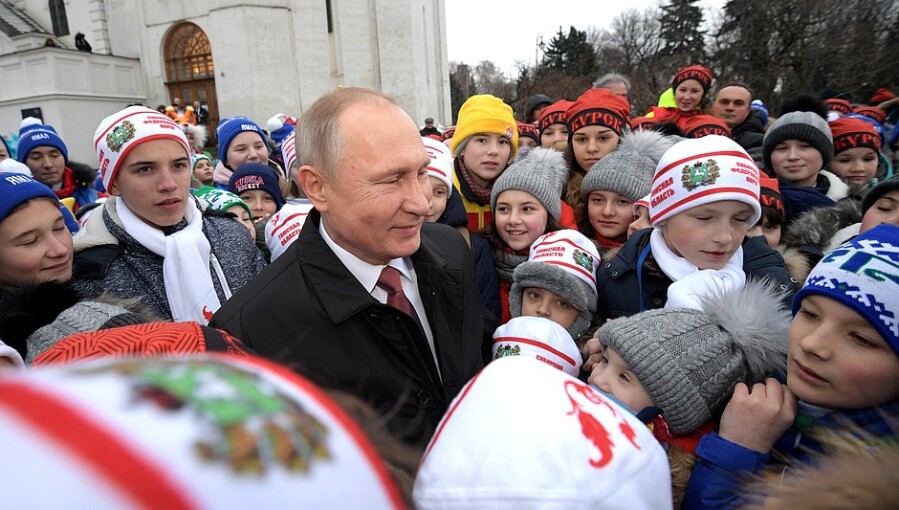
Vladimir Putin's approval rating has fallen for a seventh consecutive week to its lowest level since Russia's full-scale invasion of Ukraine in February 2022, according to data from VTsIOM, the state-owned polling agency whose numbers the Kremlin monitors closely and whose methodology has every incentive to flatter the president.
The latest VTsIOM survey, conducted between April 13 and 19, found that almost a quarter of Russians (24.1%) do not trust Putin, while nearly a third (31.1%) disapprove of the activities of the Russian government. Both figures are up around seven percentage points since February and represent the lowest ratings for Putin and his administration since the start of the war.
The Reuters figure puts Putin's current approval at 65.6%, down from 73.3% in March. According to the state pollster, in the past three months the president's rating has fallen by 7.3 percentage points, while disapproval has increased by 5.7 percentage points. Putin's approval jumped to just below 80% after the invasion of Ukraine and stayed well above 75% for most of the war, dipping only briefly after the mobilisation announcement in 2022.
The ruling party United Russia has also been hit, with its approval rating dropping to 27.3%. Prime Minister Mikhail Mishustin's trust rating fell to 53.8%. Dmitry Medvedev's rose to 36.8%, Communist leader Gennady Zyuganov's to 32.7% and Just Russia's Sergei Mironov's to 29.8% — a pattern that suggests voters are shopping around within the approved political spectrum.
The internet that broke the spell
The proximate cause of the decline is not the war, inflation or the banking sector strains documented elsewhere — it is something more mundane and more viscerally felt by the urban middle class that has historically sustained Putin's support: the internet is broken.
A political consultant working with Russia's Presidential Administration told Meduza that the Kremlin's approval ratings are falling, citing public frustration over the blocking of messaging service Telegram and restrictions on mobile internet access as among the reasons, while stressing other factors were also at play.
"Too much [negative] is happening at once — from rising prices to growing war fatigue. It's hard to say how much of that is down to the restrictions specifically," he said, as cited by the Kyiv Post.
Russians love their tech but a government crackdown on the so-called RuNet has made those services deeply unreliable. Bank apps and ride-hailing applications do not always work. E-government Gosuslugi services are glitchy. In the regions of Russia’s hinterland, residents have no reliable way of receiving real-time information about Ukrainian drone attacks — one of the more pointed ironies of a crackdown justified on national security grounds.
The public backlash is forcing a Kremlin rethink. While the Kremlin cracks down hard on political opposition dissent, when it comes to gripes by the population over more non-political mundane issues it is a lot more cautious and often compromises.
The push by Russia's FSB security service for tougher controls over RuNet has prompted some top officials to warn of political and economic risks from barring access to popular online services, according to people familiar with the discussions, reports The Bell. That is likely to slow the crackdown, allowing Telegram to continue functioning in Russia, those people said.
The Federal Anti-Monopoly Service has already issued a temporary ruling that companies will not face penalties for advertising on Telegram and YouTube until the end of the year — a tacit acknowledgement that forcing an immediate advertising exodus is impractical.
Putin himself acknowledged the problem on April 23, saying that internet outages were “necessary” for security reasons, but that law enforcement officials must show "ingenuity" to find solutions and guarantee the functioning of vital healthcare and government services. The remark was a rare public concession that the security services had overreached.
Zyuganov's 1917 warning
Against this backdrop, the language being used in Russia's public sphere has shifted in ways that would have been unthinkable two years ago. Veteran Communist Party leader Gennady Zyuganov did not mince his words when he addressed the State Duma earlier this week. "By autumn a repeat of what happened in 1917 awaits us," the 81-year-old told parliament. "We don't have the right to repeat that."
It has been years, if not decades, since such language has been heard from the floor of Russia's parliament, Owen Matthew, a veteran Russia reporter, said in a column in The Daily Telegraph. Zyuganov was at pains to add that "we're doing everything we can to support Putin and his strategy and policies, but [the government] are not listening" — framing his warning as counsel from a loyalist, not a challenge from an opponent. But the invocation of 1917 in the Duma, in the year before a parliamentary election, is a signal that cannot be entirely managed away.
Ahead of those Duma elections, due by late September, at least 46 applications to hold protest rallies have been rejected by authorities across Russia, mostly on technicalities. In Tomsk, Kaluga, Moscow, Novosibirsk, Sochi and Murmansk, activists and protest organisers have been detained, fined or threatened. Some smaller protests went ahead regardless.
The influencer rebellion
More striking than any formal opposition is the emergence of public dissent from figures who have never previously challenged the Kremlin — and who frame their criticism in terms carefully calibrated to avoid crossing the line into anti-war sentiment.
Former Russian Big Brother star and high-profile model Victoria Bonya posted a video address to Putin warning that "the people are afraid of you, entertainers are afraid, governors are afraid. There is a big wall between you and the people." She added that "people will stop being afraid and they're being squeezed into a coiled spring and that one day that coiled spring will explode."
Bonya lives in Monaco, but her video was viewed more than 25mn times. Kremlin spokesman Dmitry Peskov took it seriously enough to issue a statement assuring Russians that many of her criticisms were being "actively worked on."
Once-loyalist actor Ivan Okhlobystin has railed against internet shutdowns as "a huge mistake" and blasted the government for wanting to "bring us back to the USSR." Former Duma deputy Nikolai Bondarenko posted a rant against a government that had brought "this incredibly rich country full of oil and gas and all kinds of resources to the edge of bankruptcy."
Pavel Durov, the Russian-born founder of Telegram, has also unusually vocally criticised the Kremlin, at what he described as the Putin regime's “propaganda operations”, revealing that over 90% of votes in a poll supporting his platform were generated by automated accounts.
None of this constitutes a revolutionary threat. All of the celebrity critics have carefully framed their appeals as being addressed to a good tsar surrounded by bad advisers – and aged old refrain in Russia -- and all have avoided any direct criticism of the war in Ukraine — the one line that savage prosecutions, including the murder in custody of opposition figure Alexei Navalny in 2023, have made clear remains uncrossable.
"The concern for the Kremlin is that this crackdown on the internet becomes a lightning rod for wider discontent that's already there below the surface," The Bell said in a commentary.
What has changed is that criticism of the government has become normalised across every stratum of Russian society — from glamorous influencers in Monaco to military Z-bloggers recording their rants from inside their cars.
With an economy straining after more than four years of endless war, a banking sector showing the first signs of systemic stress, and an internet crackdown that has antagonised the very urban class that has historically been most compliant, the edifice of Putin's invincibility is developing unmistakable cracks — visible even in the polling data of his own state pollsters.
Putin Rapidly Expands FSB Powers As His Public Support Declines – Analysis

By Paul Goble
Over the past 25 years, Russian President Vladimir Putin has built and maintained power by serving as the final arbiter of policy, choosing between the Russian Federal Security Service (FSB) and other groups that favor a less repressive approach. He is confident he has enough public support to choose, which reinforces the belief that the Kremlin leader can, at any point, move quickly and decisively from one direction to the other. He has clearly exploited and benefited from this perception (EchoFM, April 16).
In recent months, however, as his popular approval has waned, Putin—himself a product of the Soviet Committee for State Security (KGB)—has deferred ever more frequently to the FSB and given it more power over an increasingly broader range of Russian life (Agenstvo, March 31; see EDM, April 7). While Putin still retains the ability to choose between them, he no longer has as much freedom to act as he did, given that his tilt to the FSB limits his ability to act against it as its powers grow and are institutionalized. This development may make it more likely that his immediate successors will come from FSB ranks. When change does come, it could prove enormously destabilizing, something that both Russian elites and the population fear perhaps even more than repression (Window on Eurasia, April 15).
Putin has increasingly relied on the FSB to control elites and the population since coming to power and even more so as his war against Ukraine drags on. Putin’s popularity has declined among the population. Since the start of 2026, the Agents portal—which tracks the actions of the Russian security services—reports that “the FSB’s powers have been expanded five times,” exceeding the total number of expansions of its powers in either of the two past years (Agenstvo, March 31).
Specifically, the FSB has gained expanded powers to regulate all contacts between scholars, both Russian and foreign; the right to block the Internet; the power to open its own preliminary detention centers; the authority to demand access to and control over all digital networks; and the power to decide which sites Russians will have access to in the future (RBC, June 24, 2025; Kommersant, October 20, 2025, February 2;Vedomosti, November 21, 2025; Meduza, December 9, 2025; RBC, January 1; Telegram/@agentstvonews, February 16; Telegram/@Bell_tech, March 24). These steps have led some Russian experts to declare that, as of now, “the FSB runs the Internet” (EchoFM, April 20).
This growth in the FSB’s powers comes on the heels of slower and significant increases in those powers over the two previous years, the Agents portal says. In 2025, the FSB was given power to compile lists of extremist materials subject to criminal sanction and bans, access to almost all bank transaction information, and power to block entrance into the country of those expelled earlier or thought to be a problem—a power that had been in the hands of the interior ministry (RBC, August 31, October 29, 2025; TASS, September 11, 2025). ️
In 2024, the FSB was given the power to play a role in choosing men to be drafted for Russia’s war against Ukraine, the authority to use data from Russian public records offices without the consent of those whose data were being taken, and the right to block the access of other government agencies to information concerning FSB officers and those connected to them (Russian State Duma; Interfax, May 15, 2024; Vedomosti, June 24, 2024;TASS, July 28, 2024).
There is little doubt that Putin himself has approved all these moves. He will also have approved others that took place earlier, including the construction of enormous new and suspiciously similar FSB headquarters in the centers of an increasing number of Russian cities. These centers are meant to improve data collection on and inform actions against ethnic, regional, and other opposition groups, and to impress all with the powers of the FSB as the immediate face of the Kremlin and the Russian government. FSB offices in these places used to be smaller and less prominent, with most of the action taking place in the Lubyanka in Moscow. Now, they resemble regional Communist Party headquarters in Soviet times (Komi Daily, April 4).
In addition, the Kremlin has given the FSB other powers without as much public notice. These include the ability to protect its agents from charges of having engaged in torture and likely other crimes alongside the expanded use of provocations to go after those the Putin regime deems to be enemies (Novaya Gazeta, April 11; EchoFM, April 13).
In the short term, Putin’s assignment of ever more powers to the FSB not only satisfies his personal proclivity to use force against his opponents to intimidate them and others. It also, at least on balance, likely helps him maintain his power even as his standing in the polls and among elites declines. Giving the FSB so much unchecked power is becoming increasingly obvious, undermining political stability in the Russian Federation and even in the Kremlin. On the one hand, while such open repression may compel Russians to obey, they are certainly contributing to a growing sense in the population that the country is moving in the wrong direction and that change is needed. This is hardly the message Putin wants people to receive (Levada Center, April 16; Novaya Gazeta, April 17).
On the other hand, Putin’s tilt toward the FSB has exacerbated tensions between the service and those in the presidential administration who favor different, less repressive approaches to the country’s problems—a split in the top elite that almost certainly points to problems ahead (Tochka, April 20).
Some Russian analysts are now saying the Putin regime has reached what is for it an “optimal” level of repression and is unlikely to increase it (Agenstvo, April 21). A growing chorus of opposition commentators, however, is warning that the powers the FSB has acquired in recent months open the way to a new era of Stalin-style repression and say that what the FSB has been doing is now a greater threat to Russia than anything the Ukrainian forces have been able to do (EchoFM, April 19 [1],[2], 20).
Even if such writers are overstating this threat, there is another one that may be even greater over the longer term. The growing powers of the FSB, something Putin has promoted to protect himself, make it likely that the leaders most likely to take over after he leaves the scene will be drawn from the FSB itself or its supporters. Repression will, at the very least, continue and probably intensify, creating a situation where, when change does finally come, it will do so in a more violent fashion than almost anyone would like.
- This article was published by The Jamestown Foundation
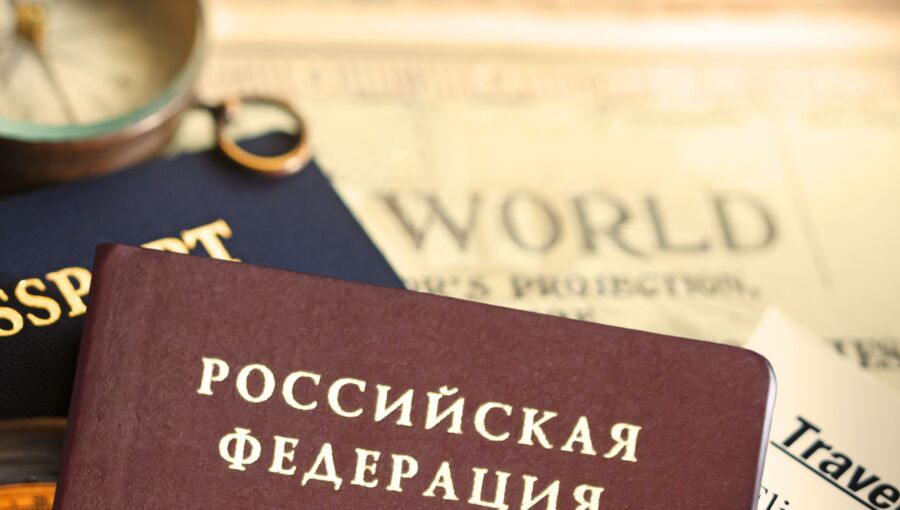
Russia has stripped a 44-year-old woman born in Ukraine's Sumy region of her Russian citizenship over online anti-Russian posts and statements, state news agency RIA Novosti reported on April 24, citing a law enforcement source.
Russian authorities have tightened citizenship rules substantially since the February 2022 full-scale invasion of Ukraine, expanding the grounds on which naturalised citizens can have their Russian passports revoked. Amendments to the citizenship law passed in April 2023 allow revocation for actions considered threatening to national security or for public statements against the Russian armed forces.
The woman had been living in Magadan in Russia's Far East for more than five years after obtaining Russian citizenship through a simplified procedure in 2019.
"The woman was deprived of citizenship for actions that posed a threat to Russia's national security, as well as for repeated anti-Russian statements on the internet and among residents of Kolyma," the source told the agency.
The case is the latest in a series of Russian citizenship revocations targeting Ukrainian-born residents who expressed opposition to Moscow's war on Ukraine.
In March, a similar measure was taken against a Ukrainian-born woman living in Kurgan in the Urals. That woman had moved to Russia in 2013 and obtained citizenship through a simplified procedure. From 2014, she had worked at a defence-industrial complex in Kurgan where she kept records of classified documentation.
Her citizenship was revoked over what the source described as an extremely negative attitude towards Russia's "special military operation" in Ukraine. Federal Security Service (FSB) officers had discovered correspondence with what the agency described as Ukrainian nationalists.
The Sumy region of Ukraine has been one of the areas most affected by cross-border hostilities since 2022, with the region targeted repeatedly by Russian forces. Magadan lies on Russia's Pacific coast, more than 10,000km from Ukraine.
Russia: Anti-War Orthodox Journalist’s 8-Year Jail Term In Absentia – Analysis

By F18News
By Victoria Arnold
On 24 March, Gagarin District Court in the capital Moscow convicted exiled Orthodox journalist Kseniya Luchenko for a Telegram post in which she condemned a Russian missile strike on a Kyiv children’s hospital in July 2024, and contrasted this with the Russian state and Moscow Patriarchate’s promotion of so-called “traditional values”. The judge sentenced her in absentia to 8 years’ imprisonment.
Forum 18 asked Gagarin District Court why the judge had handed down a custodial sentence, and what consequences the court envisaged for Luchenko, given that she remains outside Russia. Forum 18 has received no reply (see below).
Luchenko and her lawyers lodged an appeal on 6 April, but the Moscow court system’s online portal has not yet listed any appeal hearings (see below).
Before her criminal trial, officials had had Luchenko’s name added to the Interior Ministry’s Federal Wanted List, the Federal Financial Monitoring Service (Rosfinmonitoring) “List of Terrorists and Extremists”, and the Justice Ministry’s register of “foreign agents” (see below).
Although Luchenko left Russia in 2022, these measures – and now her criminal conviction – could nevertheless carry consequences. These include the risk of extradition if she travels to any state with a bilateral extradition agreement with Russia, and possible problems with banking in Western countries as a result of being placed on the Rosfinmonitoring List (see below).
The re-trial of a Buddhist leader on charges of disseminating false information about the Russian Armed Forces is due to conclude in a Moscow court by the end of April. Ilya Vasilyev’s initial conviction and 8-year prison sentence was overturned on a technicality in October 2025. He has been appearing before a new judge at Preobrazhensky District Court, but there has been “nothing really new” in the proceedings, his lawyer told Forum 18. Vasilyev remains in detention at the capital’s Matrosskaya Tishina prison, almost two years after his arrest (see forthcoming F18News article).
On 27 March 2026, the Russian Justice Ministry added the Christians Against War project to its register of “foreign agents” for allegedly disseminating “false information about the decisions and policies of Russian government bodies, as well as about the Russian Orthodox Church”. Christians Against War was established shortly after the Russian invasion of Ukraine in 2022 in order to document the persecution of religious believers who oppose the war in Russia, Belarus, Kazakhstan, and Russian-occupied Ukraine (see below).
Criminal, administrative convictions for opposing war on religious grounds
Since February 2022, courts have sentenced five people to imprisonment (including Kseniya Luchenko in absentia) and fined three on criminal charges for opposing Russia’s war against Ukraine in religious terms or on religious grounds. Investigators have also opened three criminal cases against other people who have left Russia and placed them on the Federal Wanted List.
Protestant pastor Nikolay Romanyuk was handed a 4-year prison term in September 2025 under Criminal Code Article 280.4 (“Public calls to implement activities directed against the security of the Russian Federation, or to obstruct the exercise by government bodies and their officials of their powers to ensure the security of the Russian Federation”). He is now serving his sentence in Vladimir Region, his daughter Svetlana Zhukova stated on her Telegram channelon 18 April.
Pastor Romanyuk’s prison address is: 601443, g. Vyazniki, ul. Zheleznodorozhnaya 37, FKU Ispravitelnaya koloniya – 4 UFSIN Rossii po Vladimirskoy oblasti
Individuals also continue to face prosecution under Administrative Code Article 20.3.3 (“Public actions aimed at discrediting the use of the Armed Forces of the Russian Federation”) for opposing the war in Ukraine from a religious perspective.
Most recently, Slavyansk City Court in Krasnodar Region fined independent Orthodox priest Fr Iona Sigida 40,000 Roubles under Administrative Code Article 20.3.3, Part 1 in December 2025. Police had based the case against Fr Iona on an article on his church’s website in which he wrote “Today, on the night of 23-24 February [2022], the newly revealed antichrist, the embodiment of the devil, V. Putin, sent his army to destroy the last unconquered holy Rus’ in the person of Ukraine”.
(Fr Iona remains under investigation for a possibly related offence of “overt disrespect for society about days of military glory” (Criminal Code Article 354.1, Part 4), apparently also for articles he posted on the website of the Holy Intercession Tikhonite Church in Slavyansk-na-Kubani. On 16 April, a judge released him from house arrest, but he is still barred from using the telephone and internet.)
Ever-increasing internet censorship has seen websites and materials blocked for: “extremist” content; opposition to Russia’s war against Ukraine from a religious perspective; material supporting LGBT+ people in religious communities; Ukraine-based religious websites; social media of prosecuted individuals; and news and NGO sites which include coverage of freedom of religion or belief violations.
The Justice Ministry has also added at least 14 religious leaders and activists to its register of “foreign agents”, largely for reasons related to their opposition to Russia’s invasion of Ukraine:
– Erdni-Basan Ombadykov, Buddhist leader – added 27 January 2023; now living outside Russia;
– Pinchas Goldschmidt, former Chief Rabbi of Moscow – added 30 June 2023; now living outside Russia;
– Andrey Vyacheslavovich Kurayev, Orthodox deacon – added 22 December 2023; now living outside Russia;
– Sergey Nikolayevich Stepanov, Baptist preacher and journalist – added 2 February 2024; now living outside Russia;
– Albert Viktorovich Ratkin, Protestant pastor – added 14 June 2024; still living in Russia;
– Grigory Aleksandrovich Mikhnov-Vaytenko, Archbishop of independent Apostolic Orthodox Church – added 19 July 2024; still living in Russia;
– Nina Aleksandrovna Belyayeva, former municipal deputy and Baptist – added 13 September 2024; now living outside Russia;
– Andrey Genriyevich Lvov, former Moscow Patriarchate priest, now serving in the Apostolic Orthodox Church – added 27 December 2024; now living outside Russia;
– Kseniya Valeryevna Luchenko, Orthodox journalist (see below) – added 16 May 2025; now living outside Russia;
– Aleksandr Vladimirovich Khmelyov, Old Catholic priest and LGBT+ activist – added 20 June 2025; now living outside Russia;
– Ioann [Dmitry] Valeryevich Kurmoyarov, former Moscow Patriarchate priest, now serving in a branch of the Russian Orthodox Church Outside Russia [ROCOR] not in communion with the Moscow Patriarchate – added on 15 August 2025;
– Andrey Borisovich Kordochkin, former Moscow Patriarchate priest, now serving in the Ecumenical Patriarchate – added on 22 August 2025;
– Kirill Nikolayevich Govorun, former Moscow Patriarchate Archimandrite – added on 5 September 2025; now living outside Russia;
– Pavel Dmitriyevich Zayakin, pastor of Estonian Evangelical-Lutheran Church – added on 21 November 2025; now living outside Russia.
Moscow: Exiled Orthodox journalist convicted
On 24 March, Orthodox journalist Kseniya Valeryevna Luchenko (born 13 June 1979) became the first person to be convicted in absentia for criticising Russia’s war in Ukraine from a religious perspective. Judge Yekaterina Kuzmina of Moscow’s Gagarin District Court sentenced her to 8 years’ imprisonment, plus a 4-year ban on “activities related to website administration using electronic and information and telecommunication networks, including the Internet”, for condemning a Russian missile strike on a Ukrainian children’s hospital.
As Luchenko lives outside Russia, the verdict cannot be enforced, but – along with being added to Russian Interior Ministry’s international wanted list – it puts her at risk of arrest and extradition if she travels to any country with bilateral extradition agreements with Russia.
Prosecutors had requested a prison sentence of 8 years and 6 months under Criminal Code Article 207.3 (“Public dissemination of knowingly false information about the use of the Armed Forces of the Russian Federation”), Part 2, Paragraph d (“for reasons of political, ideological, racial, national or religious hatred or enmity, or for reasons of hatred or enmity against any social group”).
Both this and the actual sentence imposed lie towards the upper end of the range of possible punishments for this offence, which include a fine of 3 million to 5 million Roubles, up to 5 years’ assigned labour (prinuditelniye raboty) plus “deprivation of the right to hold certain positions or engage in certain activities for up to 5 years”, or 5 to 10 years’ imprisonment followed by the same ban on activities.
Luchenko and her lawyers lodged an appeal on 6 April, but the Moscow court system’s online portal has not yet listed any appeal hearings.
Luchenko has consistently opposed Russia’s war against Ukraine and has written critically about the Moscow Patriarchate’s active support for it, including on her Telegram channel, Orthodoxy and Zombies, which provides independent news and comment on the Russian Orthodox Church and supports priests who have opposed the war.
Investigators opened the criminal case against Luchenko in September 2025, based on a post on Orthodoxy and Zombies from 8 July 2024, and a repost of the same text on the website of independent media outlet Ekho Moskvy on the same day.
The post reads: “The Russian Orthodox state [Rossiyskoye pravoslavnoye gosudarstvo] celebrated ‘The Day of Family, Love, and Fidelity’, by striking a children’s hospital in Kyiv with a missile.
“And in Russia, a ‘Family Parade’ is underway. It began over the weekend, but is taking place today in most cities. With daisies and the flags of the World Congress of the Russian People. And with the active participation of dioceses of the Russian Orthodox Church. They celebrate the festive liturgy, then march in this ersatz procession of the cross [krestniy khod], singing troparia [hymns], and then presenting medals to large families, while bombs are falling on Ukrainian children. These are the ‘values of Holy Rus'”.
On the morning of 8 July 2024, a Russian missile had hit the Okhmatdyt children’s hospital in Kyiv, injuring ten children and destroying or severely damaging several departments.
In 2022, Russian President Vladimir Putin signed a decree designating 8 July “The Day of Family, Love, and Fidelity”, “in order to preserve traditional family values and the spiritual-moral education of children and youth”.
Asked in November 2025 why Luchenko was facing criminal investigation, an official at the office in Moscow responsible for the criminal case told Forum 18: “Come into the office and we can tell you.” Told that Forum 18 is based outside Russia, the official (who did not give his name) put the phone down.
Forum 18 put the same question in writing to the Federal Investigative Committee’s press service in November 2025, and asked whether Luchenko would be tried in absentia. Forum 18 received no response.
Forum 18 wrote to Moscow’s Gagarin District Court on 15 April 2026 to ask why the judge had handed down a custodial sentence, and what consequences the court envisaged for Luchenko, given that she remains outside Russia. Forum 18 had received no reply by the end of the working day in Moscow of 23 April.
“I do not repudiate a single word I said”
On 24 March, the day of her sentencing, Kseniya Luchenko wrote on Orthodoxy and Zombies that she does not plan to close the channel. She posted a statement of her position on the criminal prosecution, which she said the court had refused to add to the case materials, “although I had the right to send it”.
“For my whole life I have worked as a journalist, engaged in media education, taught media literacy and critical thinking to students and schoolchildren,” Luchenko insisted. “The verification of information is my profession. I am convinced of the veracity and quality of the information which I publish on my Telegram channel and in other media.
“As the linguistic expert analysis concluded, I really did characterise the actions of the Armed Forces of the Russian Federation as ‘violent, associated with the deaths of people, including children, and destruction of civilian infrastructure’. And this is the truth, a monstrous reality, which does not turn into a fake just because it is denied by Russian Foreign Ministry representative Mariya Zakharova, whose statements are included in my case.
“I do not plead guilty, I have never disseminated false information, I do not repudiate a single word I said.”
The South-West Administrative District Prosecutor’s Office issued a statement on Luchenko’s case on 24 March 2026.
“It has been established,” the statement read, “that Luchenko, while located outside the Russian Federation, publicly posted – on a website as well as on a channel within a messaging service personally administered by her – materials containing deliberately false information regarding the actions of the Armed Forces of the Russian Federation against the civilian population during the special military operation, presented under the guise of credible information.”
Possible consequences even without return to Russia
On 16 May 2025, the Justice Ministry added Kseniya Luchenko to its register of “foreign agents”.
On 17 October 2025, during the criminal investigation, investigators had Luchenko’s name added to the Federal Financial Monitoring Service (Rosfinmonitoring) “List of Terrorists and Extremists”, whose assets banks are obliged to freeze (although small transactions are permitted).
The Interior Ministry has also placed Luchenko on its Federal Wanted List. She is among at least 47 individuals on Russia’s Federal Wanted List wanted for exercising freedom of religion or belief by Russia, Belarus, Kazakhstan, Tajikistan and Uzbekistan.
Although Luchenko left Russia in April 2022, Cheryomushki District Court in Moscow issued a detention order for her in absentia on 24 November 2025. Moscow City Court upheld this decisionon 23 December 2025. This would have seen her immediately arrested should she have returned to Russia (or travelled to Belarus, Kazakhstan, Tajikistan, Uzbekistan, or Russian-occupied parts of Ukraine), even before her conviction.
Apart from the guarantee of imprisonment should she return to Russia, these state measures may also have other consequences for Luchenko. Because of both her “foreign agent” status and being added to the Rosfinmonitoring List, books and articles Luchenko has published since her inclusion on these lists – many of them on recent developments in the Russian Orthodox Church – are generally unavailable in Russian shops and libraries. Library catalogues and online sales listings mark her as a “foreign agent”.
Inclusion on the Rosfinmonitoring List may also mean problems with banking abroad, as Western banks still use information from Rosfinmonitoring to decide whether or not to block Russian citizens’ accounts, or allow them to open new ones.
Christians Against War named “foreign agent”
On 27 March, the Russian Justice Ministry added the Christians Against War project to its register of “foreign agents” at No. 1173.
The project publishes information on its website and Telegram channel, as well as other social media, about religious believers persecuted by both state and church authorities in Russia, Belarus, and Kazakhstan for their opposition to the war, about the repression of religious believers and communities in Russian-occupied Ukraine, and about the destruction of Ukrainian religious buildings in Russian attacks.
Christians Against War also criticises the actions of the Russian government and of the Moscow Patriarchate and other major religious bodies in Russia in relation to the war.
“The ‘Christians Against War’ project disseminated false information about the decisions and policies of Russian government bodies, as well as about the Russian Orthodox Church”, the Justice Ministry stated in its announcement of additions to the registry on 27 March.
“It opposed the special military operation in Ukraine,” the announcement declared. “It participated in disseminating messages and materials from foreign agents to the general public, as well as messages and materials from organisations included in the list of foreign and international organisations whose activities are deemed undesirable in the Russian Federation.”
Entry No. 1173 on the “foreign agents” register also lists the website and various social media accounts of Christians Against War, and names “participants” Dmitry Koneyenko and Natallia Vasilevich (both Belarusian citizens).
Russia’s Federal Service for Supervision of Communications, Information Technology, and Mass Media (Roskomnadzor) has blocked the Christians Against War website inside Russia since 9 September 2023.
Christians Against War was established shortly after Russia’s full-scale invasion of Ukraine in 2022, by activists of Christian Vision, a Belarusian ecumenical organisation founded in 2020.
On its main website, Christian Vision lists the aims of Christians Against War as “cooperation with Ukrainian Christians and churches, as well as with Russian anti-war Christian activists for promoting a just peace, stopping Russian aggression against Ukraine, formulating a common Christian position about war and anti-war activities, documenting the reactions of churches and church leaders to the war, monitoring persecutions for anti-war and pro-Ukrainian views, [and] assisting the Christians who suffered from such persecution”.


