Monday, April 27, 2026

AU

US Mint gold source tied to criminal networks in Colombia: NYT

Adobe Stock image.

The United States is increasingly being drawn into the opaque supply chains of illicit mining after an investigation by The New York Times tied some of its gold supply to Colombian criminal networks.

Drawing on interviews, trade records and field reporting, the NYT detailed how illegally mined gold in Colombia — often controlled by armed groups and drug cartels — is laundered through intermediaries and exported with seemingly legitimate paperwork before entering global supply chains.

In some cases, that gold made its way into the supply chain of the US Mint, which under federal law must use America-mined gold for its investor-grade coins.

The report highlights a fragmented chain of accountability. When questioned by a Times reporter, the US Mint blamed its suppliers, who then deflected the responsibility to other intermediaries. All parties maintained they had stopped accepting Colombian gold.

The US Department of the Treasury, which oversees the Mint, also denied the accuracy of these findings. A spokesperson also told the publication that buying foreign gold for investor coins does not violate the law.

At the same time, the NYT investigators noted that the Mint had long used a loose definition of “US gold,” allowing foreign material to qualify if offset by domestic purchases — a requirement that has not been enforced for more than 20 years, according to a 2024 federal watchdog report.

That year, roughly $1.5 billion of Colombia’s $4.1 billion gold exports ended up in the US, making it the largest single destination, according to trade data compiled by the United Nations.

Illegal gold in US market

The findings add to a growing body of evidence that illicitly mined gold has been penetrating formal US markets for years.

Previous investigations and enforcement actions have traced gold from Latin America — including Peru and Colombia — into North American refiners and traders, often after being mixed with legitimate supply and exported with falsified documentation.

Those cases have repeatedly exposed how difficult it is for downstream buyers to fully verify origin in a commodity that has such a long history in the global financial system. A World Wide Fund for Nature UK report earlier this year found that over 80% of financial institutions, including those in the US, were at risk of exposure to dealings with illegal mining for gold.

The latest findings also further highlight the persistent challenges in achieving full transparency in gold supply chains, as well as the limitations of existing oversight mechanisms.

Following the latest investigation, the Treasury said it is now reviewing the Mint’s procurement practices and has tightened its sourcing standards, the NYT report said.

The dead asset wakes up as crypto magic makes gold pay interest


Jewellery on display at Pure gold store in Singapore Changi Airport. Stock image.

Jewelers have long used a simple mechanism to protect themselves against volatile gold prices — borrow the precious metal rather than buy it outright.

It’s a trick with origins in antiquity and used from the gold souks of Dubai to the bullion desks of India, allowing artisans to produce and sell their wares before settling the tab to align costs with revenue.

If gold prices rise, the value of the rings and necklaces in the display case climbs with the debt. If they fall, both shrink together. The trade-off is interest on the loan.

Now, a jeweler, an asset manager and a fintech firm are wrapping this age-old wisdom in a crypto token, offering investors gold that actually pays a yield.

It’s an example of how digital technology is disrupting traditional finance. Gold has always been a “dead” asset, a store of value that, unlike stocks and bonds, pays no dividends or interest to its owner.

“For centuries, jewelers didn’t borrow paper money to buy gold, they borrowed the gold itself,” said Ivan Hoo, executive director at Singapore jeweler Mustafa Gold. “We are giving that ancient logic a sleek, synthetic upgrade.”

Mustafa has teamed up with FundBridge Capital which, in collaboration with tokenization platform Libeara, is offering investors digital tokens that track the price of gold.

The money FundBridge gets for selling its “MG999” tokens is lent to Mustafa, who pays 2.5% interest on the loan. Mustafa uses the money to buy physical gold and make jewelry.

Crucially, the loan is denominated in gold rather than cash. If Mustafa borrows $1 million, the debt is expressed as the amount of gold that sum could buy at prevailing market prices.

This means if gold prices rise, Mustafa’s repayment obligation increases — but so too does the value of its jewelry. If prices fall, the debt shrinks along with inventory value. The matching of costs and revenue helps to stabilize margins.

It’s a synthetic version of borrowing physical gold to avoid price risk.

Giving gold a yield

There’s an upside for investors too. They get exposure to gold but with the added bonus of yield derived from the interest Mustafa pays on the loan. After deducting management fees, FundBridge pays a 1% yield to token holders.

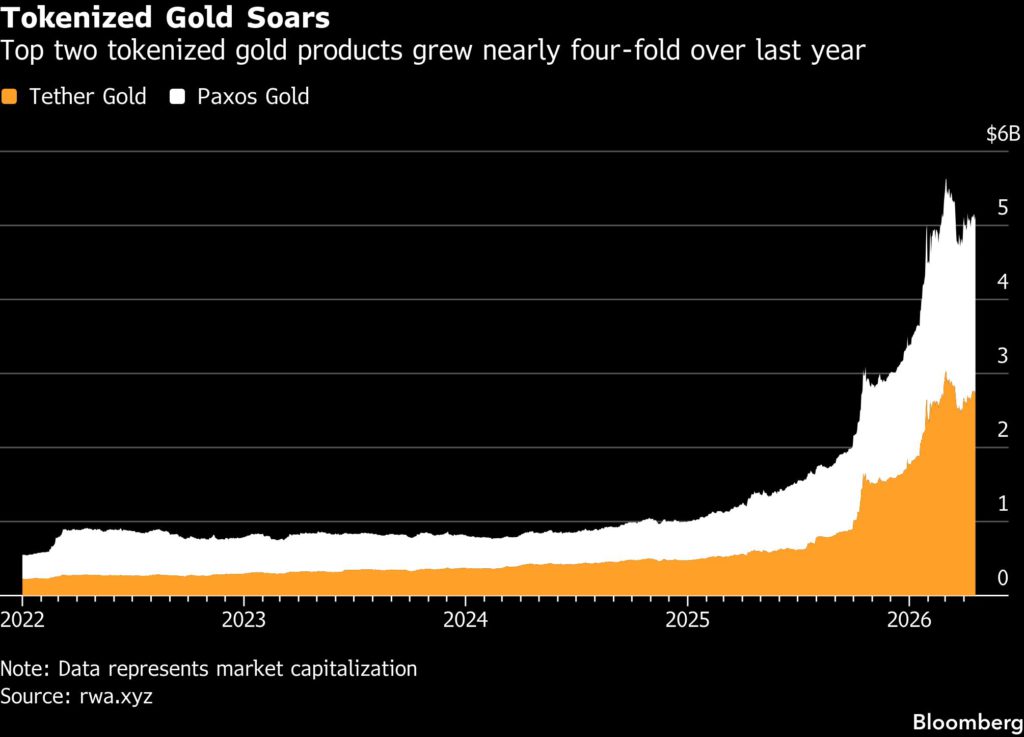
There are numerous ways to gain exposure to gold without holding the metal physically, from exchange-traded funds to futures, options and mutual funds. In the digital world, Tether Holdings SA and Paxos Trust Company offer tokens backed by gold.

But none of these directly offer investors a yield and some, such as ETFs, carry costs in the form of management fees, said John Bao Vu, chief portfolio manager at FundBridge.

“Typically, even though you get gold exposure, you get it in a negative carry sense,” he said. “We thought about doing something one step further to reduce that negative carry. This is how we came up with the idea with Mustafa.”

Gold lending, or leasing, has become more institutional and complex. Jewelers can manage risk with a mix of tools including gold loans, forward contracts and hedging programs, but smaller retailers are more likely to rely on ordinary bank financing.

For Mustafa, FundBridge is offering an alternative source of capital.

“Our biggest source of borrowing is from banks,” said Hoo. “But those loans are in US dollars, not denominated in gold terms. So this diversity of funding is good for us. It unlocks a fresh vault of capital from investors and meaningful diversification to how we fund the business.”

The price of gold has roughly tripled over the last four years as investors have sought safe havens amid heightened geopolitical uncertainty. Crypto firms have responded to that demand with more tokenized gold products.
FundBridge doesn’t need to hold any gold to maintain the value of its token. Instead, it is backed by the contractual claim against Mustafa — the right to receive back cash equal to a specific amount of gold at whatever the market price is at maturity.

To ensure the token is tied to the price of gold, the number on issue must maintain a prescribed ratio with the amount of outstanding loans.

“The price risk gets transferred to the investor in the fund,” said Vu. “They get the return (yield) as an upside while they take the exposure to gold-price risk. And the investors want to get exposure to gold.”

FundBridge has raised $15 million so far and hopes to reach $100 million initially. Working with a retailer like Mustafa, which requires a ton of gold a year, ensures quick deployment of the money.

“We are simply bringing this practice of borrowing on gold terms into the digital age,” said Mustafa’s Hoo. “What’s old is new again.”

(By Suvashree Ghosh and Yihui Xie)


Ghana directs Newmont, AngloGold, Zijin to shift mining ops to local firms by December
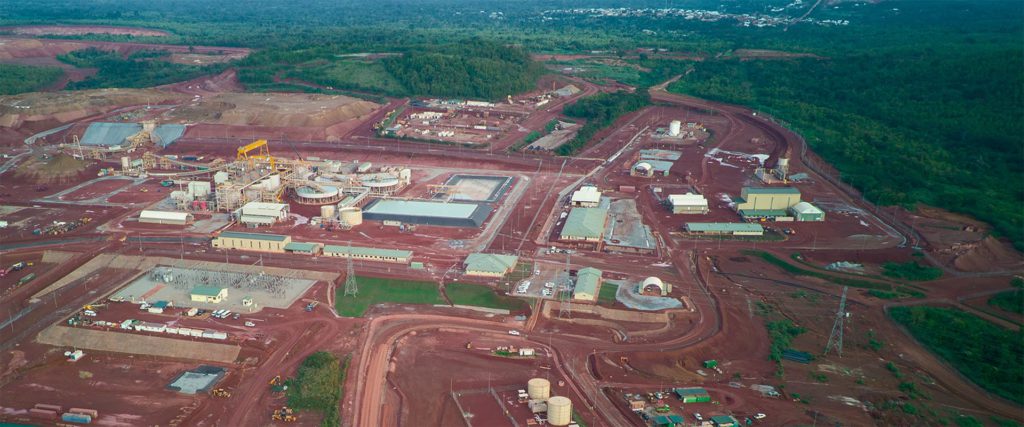

Ahafo North mine in Ghana. Credit: Newmont

Ghana’s mining regulator has given international companies Newmont, ‌AngloGold Ashanti and Chinese-owned Zijin until December 2026 to shift mining operations over to local contractors or face sanctions, according to five sources with direct knowledge of the matter and documents.

The three companies currently operate the mines with their own staff. They are the only ones still doing so after many firms outsourced mining operations ahead of Ghana, Africa’s top gold ​producer, revising local ownership rules in January 2025 and requiring all miners to switch to contract mining.

Under the rules, surface mining must ​be undertaken by fully Ghanaian-owned firms, while underground mining must be carried out by companies with at least ⁠50% Ghanaian ownership.

Apart from Newmont, Zijin and AngloGold Ashanti’s smaller Iduapriem gold mine, almost all large miners in Ghana have already transitioned to ​contract mining, two government officials and three mining executives said.

African governments have been tightening mining rules to extract more revenue against a backdrop of rising prices ​for minerals and metals produced. Mali ended a near two-year standoff with Barrick in November over enforcement of its new mining code.

Ghana’s Minerals Commission asked Newmont, AngloGold and Zijin to fully comply with the contract mining requirements by December 2026, according to separate letters sent to the companies in October and January that were seen ​by Reuters on Wednesday. The three companies had separately requested extensions to allow full compliance.

The regulator warned that miners that failed to meet ​the deadline could face sanctions, the letters showed.

Zijin’s Ghana unit said it has been engaging with the Minerals Commission since November 2025 to comply with the ‌local content ⁠rules, including preparing tenders and technical frameworks for a shift to contract mining, while rolling out new technologies that require initial benchmarking before a full tender process.

Newmont and AngloGold did not immediately respond to requests for comment.

Regulator rejects Newmont’s request

Newmont’s compliance was discussed during meetings this month in Accra between its global CEO, Natascha Viljoen, and the Minerals Commission after the company again sought an extension, the government sources said.

Newmont, which operates the Ahafo North ​and South gold mines, had asked ​to comply fully by 2027, ⁠citing additional regulatory and governance requirements it must satisfy as a listed company, one government official said.

But regulators rejected that request, noting that other listed miners, including Gold Fields, had already complied, the official said.

The ​Ghana Chamber of Mines did not respond to requests for comment but a source in the group ​said it was ⁠engaging with the commission.

“It is a good option, but we think it should be commercially driven,” he said. “If I can be more efficient, why shouldn’t I mine myself?”

The government sources said the new rules are aimed at building capacity among Ghanaian mining service companies and retaining more value in-country, citing the emergence ⁠of Ghanaian ​firms such as Rocksure and Engineers & Planners.

Local companies have the capacity to take on expanded contract ​mining roles and the commission will hold their hands to execute, the first government official said.

Miners that fail to comply face “a huge fine for the first step,” the second official said. “If ​they still don’t comply, we have the right to shut down the mine.”

(By Maxwell Akalaare Adombila; Editing by Veronica Brown and Nia Williams)

Myriad builds Wyoming uranium district as report shows scale

Myriad’s Copper Mountain project in Wyoming. Credit: Myriad Uranium

A merger is set to hand Myriad Uranium (CSE: M) a huge district under its Copper Mountain umbrella in Wyoming while a new report compiles decades of historical drilling that position the project at an advanced exploration stage.

The planned all-share tie-up with Rush Rare Metals (CSE: RSH), announced in February, would give Myriad Rush’s a quarter interest in the project. The deal consolidates a fragmented district for the first time in more than 50 years, mining analyst David Talbot said in Red Cloud Securities’ first note Thursday on the company. Copper Mountain is about 270 km west of state capital Cheyenne.

“No one firm has controlled so much of the district since Union Pacific (NYSE: UNP) in the 1970s,” Talbot said, citing the railroad company’s past activity in the area, worth the equivalent of C$117 million ($85.5 million) in 2024 dollars in exploration spending.

Uranium spring

Wyoming has emerged as the United States’ dominant uranium output jurisdiction, with the state hosting most of the country’s producing uranium mines. The report’s release and looming merger come as the uranium sector has been boosted this year as countries seek cleaner energy sources and technology companies try to procure contracts for power-hungry AI data centres.

Two mines in Saskatchewan’s Athabasca basin uranium hotspot announced production starts over the past two months and Kazakhstan’s Kazatomprom (LSE: KAP), the world’s top producer of uranium, unveiled plans to sell a large amount of nuclear metal output to India. Canadian producer Cameco (TSX: CCO; NYSE: CCJ) also signed a C$2.6 billion supply deal with the Asian country in March.

Uranium activity at Copper Mountain dates back as far as the 1950s, when about 500,000 lb. of uranium oxide (U₃O₈) was mined at the Arrowhead project, Myriad said in the technical report.

Myriad shares gained 3% to C$0.51 apiece on Thursday morning in Toronto for a market capitalization of C$55.1 million ($40.2 million).

Towards initial resource

Following initial drilling in 2024-2025 at the project, Myriad plans a second stage 4,500-metre program to test historical resource estimates and to expand mineralization at Copper Mountain. An initial resource and technical studies in a potential third stage would follow.

The historical estimate comprises 16.5 million to 26.7 million lb. across seven deposits, with the Canning deposit the largest.

Myriad’s drilling would also seek to prove estimates made by the Department of Energy and Bendix Field Engineering from 1976 to 1982. That drilling estimated that the “control and assessment” areas at Copper Mountain host 245 million to 655 million lb. U₃O₈. Myriad holds about 80% of the control area and 62% of the assessment area.

“Critically, Myriad’s own assay data suggest historical grades are understated … pointing to meaningful resource upside as modern drilling methods are applied for the first time,” Talbot said.

‘High conviction’

The company is entering its stage two exploration program with a “high level of conviction,” Myriad CEO Thomas Lamb said in a release this week.

“Our maiden drill program surpassed expectations by a significant margin … validating Copper Mountain as a genuinely world-class exploration address,” he said. “The picture that emerges is one of remarkable district-scale potential.”


US Department of Energy unveils “Nuclear Dominance — 3 by 33” campaign


Adobe Stock photo by pwmotion.

The U.S Department of Energy’s (DOE) Office of Nuclear Energy announced Thursday it is kicking off an ambitious new initiative to secure the nation’s nuclear fuel supply chain.

The country’s need for secure and reliable energy is projected to rise in the coming years, driven in part by growth in industrial manufacturing, as well as the power needs of data centers to support artificial intelligence.

Nuclear energy currently provides the country with nearly 20% of its power. The long-term success of efforts to put more power on the grid through nuclear power plant uprates, restarts and the commercial deployment of advanced reactors will all depend on the availability of nuclear fuel.

Through the Defense Production Act (DPA) Nuclear Fuel Cycle Consortium, the federal government will work with the domestic nuclear industry to ensure that the United States continues to have enough nuclear fuel to power the current nuclear reactor fleet as well as future advanced reactors.

Comprised of representatives from more than 90 companies spanning the nuclear industrial base, the initiative will address all facets of the nuclear fuel supply chain including milling, conversion, enrichment, deconversion, fabrication, recycling, and reprocessing, the DOE said.

At the Ronald Reagan Building and International Trade Center with partners and the public present, the Consortium on Thursday said it will focus its efforts on three goals to support the nuclear energy sector. 

Under the “Nuclear Dominance — 3 by 33” campaign, the Consortium aims to by 2033: catalyze a secure and cost-competitive domestic fuel supply chain; accelerate advanced reactor deployment and close the fuel cycle and explore how the DPA framework can be activated to grow and align workforce, finance, innovation and collaboration in support of nuclear build out.

The initiative will begin a series of 60-day sprints designed to make rapid progress on the Consortium’s goals, the DOE said.

“The Consortium’s work comes at a pivotal time for nuclear energy growth in our country,” Assistant Secretary of Nuclear Energy Ted Garrish said in a news release. “I’m pleased with the dedication of the Committee and am looking forward to rapid progress on near term goals to achieve a robust American-made supply of nuclear fuel.”

In May of 2025, US President Donald Trump released four executive orders to catalyze a nuclear energy resurgence. Within months, DOE announced the creation of the DPA Consortium to seek voluntary agreements with US companies focused on increasing fuel availability, providing more access to reliable power, and ending America’s reliance on foreign sources of enriched uranium and critical materials.


BHP adopts new Chinese iron ore price index in deal to end dispute


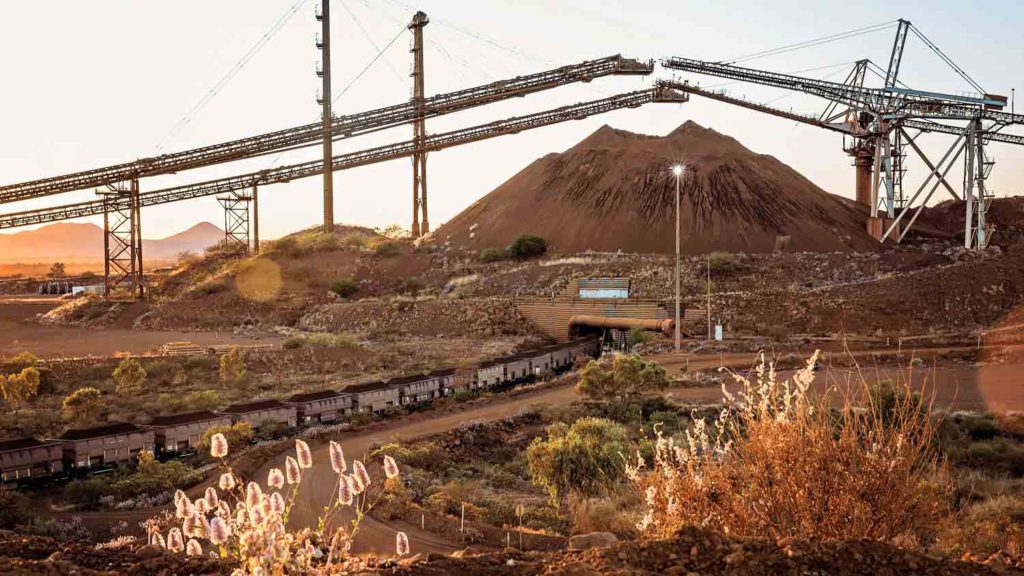
Yandi operations. Credit: BHP.

BHP Group agreed to use an additional Chinese iron ore price index for one of its flagship products as part of a deal with China to end a months-long dispute, three sources with knowledge of the matter said.

BHP, the world’s third-largest iron ore supplier, said on Wednesday that it had concluded negotiations on a new sales contract with China Mineral Resources Group (CMRG), ending the dispute stemming from bans on the procurement of the key steel-making ingredient from BHP.

Neither BHP nor CMRG – the Chinese state iron ore buyer – gave details of the agreement.

The new contract will last until the end of BHP’s 2027 financial year, according to an investor who said they were informed by the mining group’s executives.

Settlement for BHP’s Jimblebar fines, a medium-grade iron ore, will be based on a weighted average of four indices including the equivalent US dollar value of China’s COREX 61% iron ore portside index, which will carry a weight of 26%, two of the three sources said.

All the sources requested anonymity due to the sensitivity of the matter.

BHP declined to comment.

CMRG did not immediately respond to a Reuters request for comment.

Other indices for settling Jimblebar fines include the Argus 61% seaborne index, Mysteel 61% seaborne and the converted dollar value of the Mysteel 61% portside index.

Second miner to adopt index

Previously, BHP settled Jimblebar contracts with Chinese clients using either a fixed price or a combination of Argus and Mysteel seaborne indices.

The Beijing Iron Ore Trading Centre Corp, or COREX, launched its iron ore portside index last September in a push to gain a role in pricing iron ore imports, worth $123 billion in 2025.

BHP is the second Australian miner to adopt the COREX index following Hancock Prospecting, two of the sources said. China lifted a partial ban on iron ore procurement from Hancock last September, Reuters reported. It did not give a reason.

Hancock did not immediately respond to a request for comment.

Global miners and traders have been cautious about using COREX because of its relatively short data history and the fact that it is based on portside transactions rather than the seaborne market used in other indices, industry insiders said.

As part of the deal, BHP will offer a 1.8% rebate per iron ore vessel on term contracts, on top of a freight-linked discount for certain large ships, one of the sources said.

(By Reuters staff and Melanie Burton; Editing by Tony Munroe and Emelia Sithole-Matarise)


Anglo American draws three bidders for coal sale


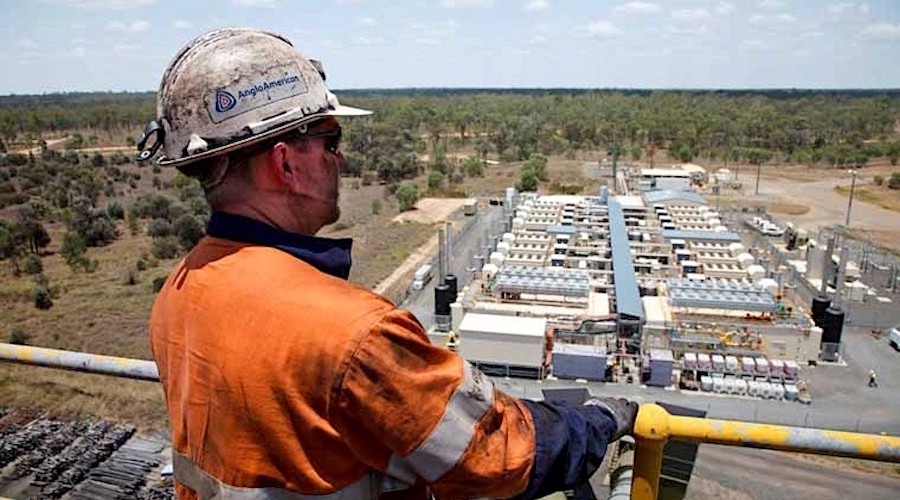
Power station at the Moranbah North metallurgical coal mine. (Image courtesy of Anglo American.)

Anglo American (LON: AAL) is said to have at least three potential buyers for its Australian steelmaking coal business after a $3.8 billion sale to Peabody Energy (NYSE: BTU) collapsed following a mine fire.

Stanmore Resources (ASX: SMR), Mitsubishi Corp., and Indonesia’s BUMA Internasional are among at least three bidders circling the Queensland-based assets, with a deal potentially emerging in the coming months, according to Bloomberg News. Goldman Sachs and Morgan Stanley are running the process, the news outlet’s sources said.

The sale’s collapse last year dealt a setback to Anglo’s broader plan to divest non-core assets after BHP’s (ASX: BHP) failed takeover bid, and a successful deal now would help revive that strategy while potentially reshaping the global steelmaking coal market.

Peabody walked away from the agreement after a fire at the Moranbah North mine, which it said accounted for roughly half the deal’s value. The incident followed another blaze in 2024 at the Grosvenor mine, Anglo’s second-largest metallurgical coal operation, which remains offline even as Moranbah North has resumed production.

Eyes on Asia

For bidders, acquiring the portfolio would either cement or elevate their standing among the world’s top suppliers of steelmaking coal to Asian markets, currently dominated by the BHP Mitsubishi Alliance and Glencore (LON: GLEN). Buma Internasional already has exposure to the assets, having agreed to acquire a 51% stake in the Dawson project from Peabody contingent on the original deal’s completion.

Stanmore, backed by Indonesia’s Widjaja family through Golden Energy and Resources, may face financing pressure if it proceeds, as its market capitalization sits below A$2 billion, potentially less than the transaction value.

Anglo has already spun off its platinum division into Valterra Platinum (JSE: VAL) and continues to seek a buyer for its struggling De Beers, which is part of a sweeping portfolio overhaul as it advances the takeover of Canada’s Teck Resources (TSX: TECK.A TECK.B)(NYSE: TECK).


FRACKING BY ANY OTHER NAME

Quaise moves closer to building world’s first superhot geothermal power plant


Image: Quaise Energy

Quaise Energy, a startup out of MIT, said it is on track to build the world’s first power plant using superhot geothermal energy: that obtained by tapping into rock with temperatures greater than 300°C (572°F).

The first phase of the company’s complex, Project Obsidian, is currently under construction in Oregon.

A study presented at the 2026 Stanford Geothermal Workshop has validated the company’s belief that its first plant could produce at least 50 megawatts (MW) of clean, renewable electricity, Quaise said. That energy, produced from only a handful of wells, would be available 24/7, it added.

Subsequent expansions at the same location are expected to bring even more energy, and the second phase targets 250 MW.

“Our goal is to build out to a gigawatt in the area,” Quaise CEO Carlos Araque said in a news release.

“We believe our breakthrough drilling technology could ultimately make gigawatt-scale geothermal plants viable across the globe, including in regions where geothermal has never been possible before,” Araque said.

Because Project Obsidian is the first of its kind, there are many unknowns, such as the geochemistry of the rock it will tap into. Daniel Dichter, a senior mechanical engineer at Quaise, is first author of a paper exploring these unknowns that he presented at Stanford earlier this year.

“Most of our analysis, which is based on several models, was dedicated to trying to understand some of these uncertainties,” Dichter said.

Quaise also supports research at Oregon State University aimed at doing the same thing by recreating extreme underground conditions in the lab.

“This analysis validates our long-held hypothesis that higher subsurface temperatures entail substantial improvements in power production,” Dichter said. “It shows us that we can get to a capacity of 50 megawatts of power with this system.”

“If these first wells work the way we think they will, they will be on par with exceptionally productive oil and gas wells in terms of equivalent power output,” he said.

The confirmation well is expected to be in operation later this year, and the first phase of the complex is expected to be operational by 2030.


Eramet plans Indonesia mine halt in May as it awaits permit revision


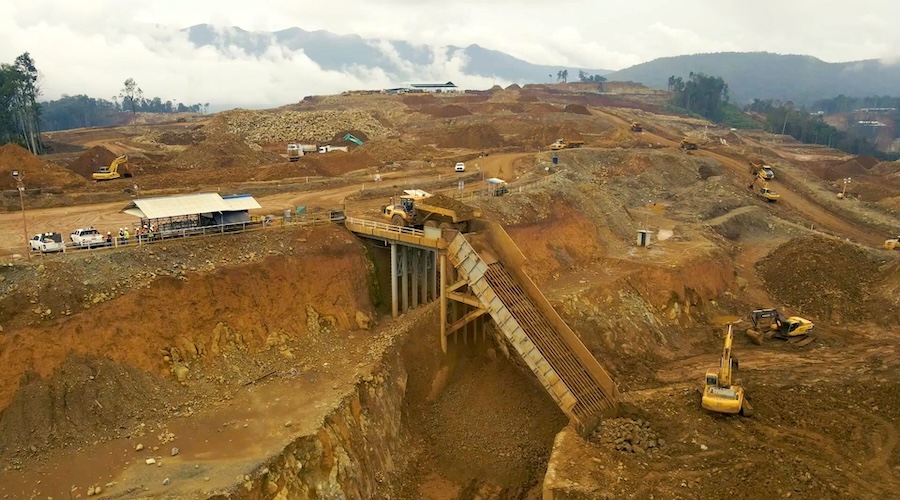
Weda Bay Nickel mine. (Image courtesy of PT Weda Bay Nickel.)

Eramet is planning to halt production at its nickel mine in Indonesia next month while it waits to see if it will obtain an additional volume allowance from the authorities, the French mining group said on Thursday.

Eramet’s nickel mining joint venture in Indonesia received an initial production allowance of 12 million wet metric tons for this year, down from the 32 million it initially received for 2025, as part of steps by Indonesia to regulate more closely mining supply.

In a first-quarter sales statement, Eramet said it will use up its allowance of 12 million wet metric tons of nickel ore by mid-May, with its Weda Bay mine preparing to go on care and maintenance next month.

Its joint venture PT Weda Bay Nickel is submitting a request for an upward permit revision, it said.

Within the initial allowance, the 9 million wet metric tons for external nickel ore sale were used up by mid-April, with the remainder of production dedicated to the joint venture’s adjacent nickel processing plant, it added.

(By Gus Trompiz; Editing by Lincoln Feast)


Vale Indonesia signs $750 million loan deal with global lenders

Credit: Vale Indonesia

Nickel miner PT Vale Indonesia on Thursday signed a loan deal of $750 million with a number of global lenders to help finance its expansion.

Vale signed the loan agreement with a number of banks including Singapore’s United Overseas Bank (UOB), DBS Bank and Japan’s Mizuho Bank, among others, said Bernardus Irmanto, Vale Indonesia CEO.

The loan is “very critical” to help finance development of Vale’s projects in Bahodopi, Pomalaa and Sorowako, Irmanto said.

The financing is structured as sustainability-linked credit, among the first for a mining company in Asia, said UOB Indonesia chief executive Hendra Gunawan. The deal also includes a $250 million green-shoe option, he added.

(By Fransiska Nangoy; Editing by Keith Weir)

Column: Gulf aluminum disruption ripples up to alumina market

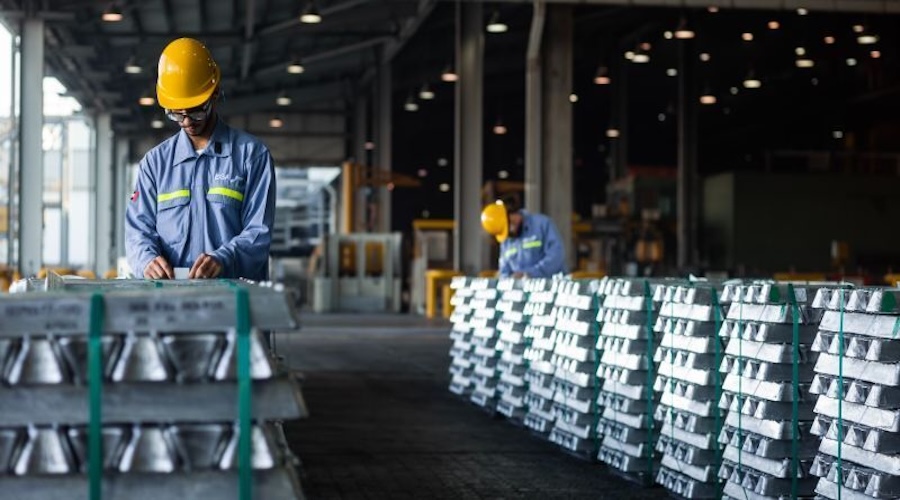
Emirates Global Aluminium is the world’s largest ‘premium aluminum’ producer. Credit: Emirates Global Aluminium | LinkedIn

(The opinions expressed here are those of Andy Home, a columnist for Reuters.)

The Iran war has focused the aluminum market on what is not coming out of the Strait of Hormuz. But there is an equally significant problem: what is not going in.

Gulf aluminum smelters are highly ​dependent on imports of alumina, the intermediate product between bauxite and metal, to maintain operations.

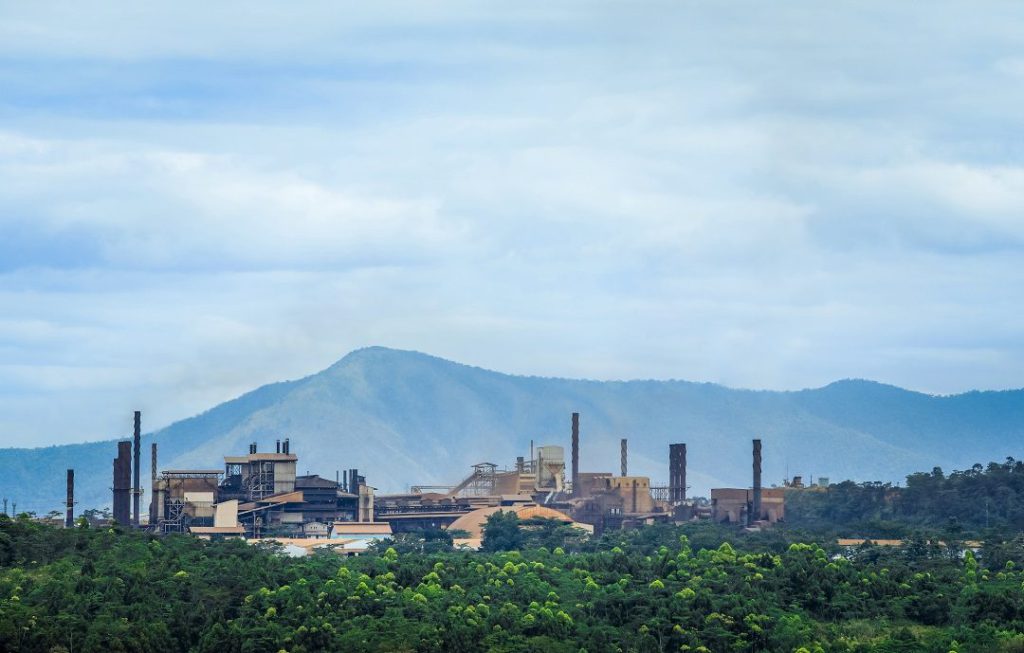
The region has six smelters but only two alumina refineries. One of ‌them, Emirates Global Aluminium’s (EGA) Al Taweelah plant, has been damaged by Iranian missiles. The smelter at the site is out of action for the same reason and other smelters are running at reduced capacity.

The first-round impact of this disruption is further price pressure on an already soggy alumina market as shipments are redirected away from the Gulf.

The second-round effect could be further cuts in Gulf metal production as smelters ​run low on raw-material stocks.

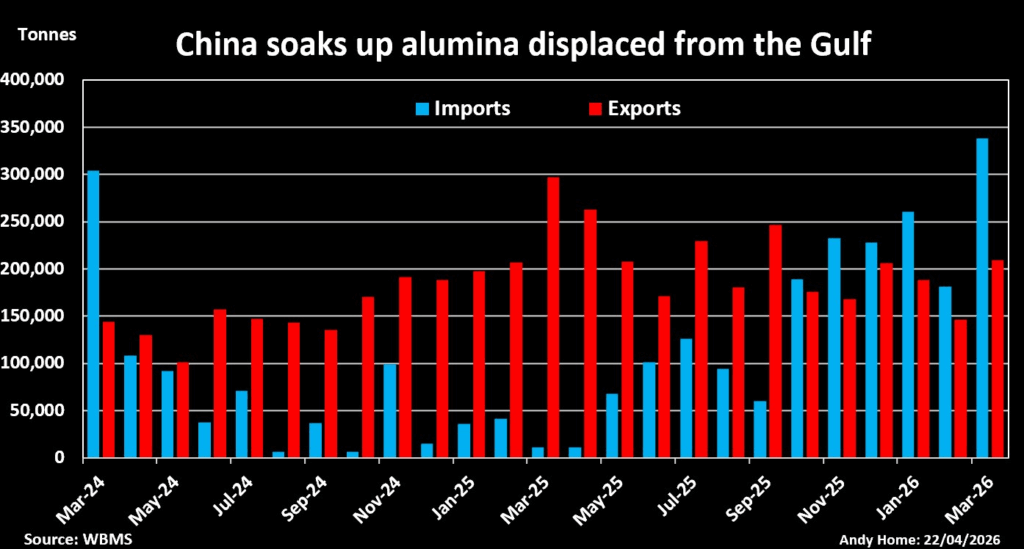
The only winner here is China, which is soaking up the displaced alumina.

Under pressure

The alumina market was under pressure even before ​the outbreak of the Iran war.

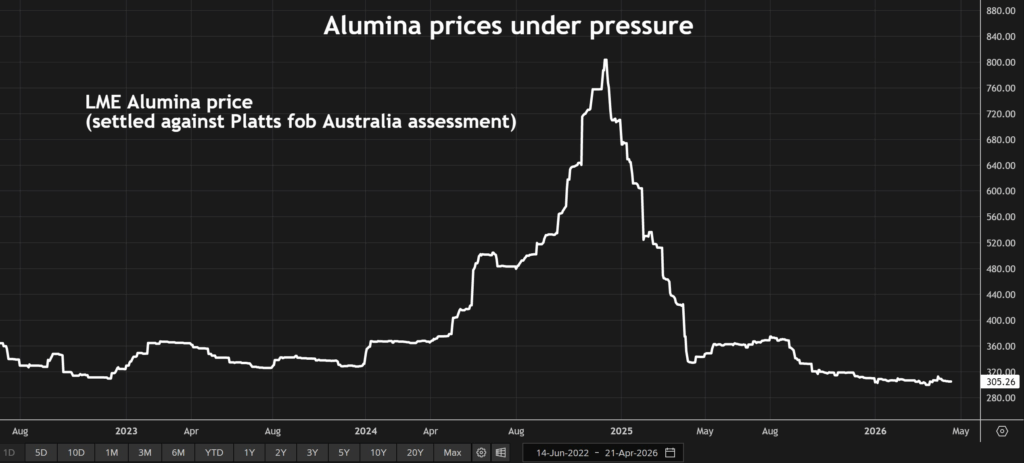
The London Metal Exchange (LME) price , which settles against S&P Global Platts’ assessment of the Australian fob price, ⁠has been hovering around the $300 per metric ton level since the start of the year.

That is a far cry from the frenzied rally of 2024, when prices surged to ​above $800 on a series of supply hits.

The market has since shifted to oversupply, thanks to continued expansion of production capacity in China and Indonesia.

Macquarie Bank assessed the global surplus ​at 2.54 million tons last year and in December was forecasting another surplus of 1.26 million tons in 2026.

The bank has just upped its 2026 oversupply estimate to 2.2 million tons as Gulf-bound shipments are redirected into the seaborne market.

How long the Strait remains closed to shipping will determine everything.

Input risks

The longer it takes the Strait to reopen, the greater the risk of further smelter cuts to those already ​announced by Qatar producer Qatalum, and Aluminium Bahrain.

The only fully integrated Gulf producer is Saudi Arabia’s Ma’aden, which operates its own bauxite mine feeding the Ras Al Khair alumina refinery.

Ma’aden produces more ​alumina than its smelter consumes and has been arranging emergency supplies to others, according to consultancy Wood Mackenzie.

Alumina is not the only headache for Gulf operators.

Coal tar pitch, which is used ‌to manufacture ⁠the carbon anodes used in the smelting process, could be an even bigger logistical problem, according to AZ Global Consulting.

While other carbon inputs such as calcined coke and petroleum coke can be “diverted, stockpiled, re-bagged, trucked, or re-routed with relative flexibility … liquid pitch requires heated storage, heated silos, and heated trucks to keep it molten from loading point to discharge point,” it said.

Such facilities are not widely available and not easily improvised. “Pitch may prove to be the hardest logistics problem in the carbon chain if disruption continues,” ​AZ Global said.

China wins

China is the prime ​beneficiary of the disruption in the ⁠alumina segment of the processing chain.

It imported 338,315 tons of alumina in March, the largest monthly tally since January 2024, according to the World Bureau of Metal Statistics, which collects data from official customs figures.

AZ Global expects imports to remain robust ​in the months ahead on the back of an open import arbitrage between domestic and international prices.

With the Gulf crisis also sending ​aluminum prices to four-year ⁠highs, China’s smelters are enjoying strong margins.

Western production fell by an annualized 312,000 tons in March due to curtailments in the Gulf, while Chinese production rose by 88,000 tons, according to the International Aluminium Institute.

China’s share of global production inched up to a record 60.2% last month, and that ratio is likely to carry on creeping higher as the Iran war takes ⁠a growing ​toll on Gulf smelters.

(Editing by Marguerita Choy)


US aluminum industry showing resilience in face of war’s disruption, association says

Stock image.

The US aluminum industry is facing real challenges due to the war in the Middle East, trade tariffs and high prices, but is showing resilience and ability to adapt, officials from the Aluminum Association said on Thursday.

“We are hearing from our members that their supply chains are adjusting in real time,” Chuck Johnson, president of the association that represents US aluminum production and jobs, said on a call with reporters. The impact on supply chains could be “more profound” as the conflict drags on, he added.

The Gulf accounted for around 22% of US primary and alloyed aluminum imports in 2025, but two of the region’s smelters have been targeted by Iran and others have been unable to ship metal via their usual channels due to the closure of the Strait of Hormuz.

“There is metal coming in from other smelters and other countries,” said Kelly Thomas, the association’s vice chair, without providing specifics. “The good news is that it is a global industry and there is material available. It’s just a matter of getting it to the United States.”

Domestic aluminum recycling capacity that the US has invested in is starting to come online, which will be able to replace some imported metal, said Duncan Pitchford, president of Norsk Hydro’s US unit.

US aluminum demand in 2025 was flat on 2024, according to the association’s preliminary numbers, Johnson said. “We … presume that there may be some demand destruction from direct tariff effects, but also from the uncertainty in the market. But we have not confirmed that to date,” he added.

The Trump administration last year imposed a 50% tariff on imports of aluminum into the US, and this month made some adjustments. “This closed a critical loophole that previously allowed unfairly traded aluminum to enter the US market through the downstream goods,” Johnson said.

(By Tom Daly; Editing by Paul Simao)

Aluminum faces ‘black swan’ supply shock, Mercuria says

Stock image.

The global aluminum market is experiencing a “black swan” event as disruptions due to the Middle East war trigger a supply shock that will lead to major shortages this year, according to the top metals analyst at commodity trader Mercuria.

The region accounts for about 7 million metric tons of annual aluminum smelting capacity, or roughly 9% of the estimated global supply this year. Aluminum is a key material for the transport, construction and packaging industries.

“The scale of the supply shock we’re seeing in the aluminum market is probably the largest single supply shock a base metals market has suffered in the post-2000 era,” Nick Snowdon, head of metals and mining research at Mercuria, said on the sidelines of the Financial Times Commodities Global Summit in Lausanne, Switzerland.

“We are already in a ‘black swan’ event. No one could have foreseen something on this scale,” he told Reuters.

Concerns about supplies due to disruptions stemming from the US-Israeli war with Iran fuelled a rally on the London Metal Exchange, pushing aluminum prices to a four-year high at $3,672 a ton on April 16.

Mercuria estimates the market will face, at a minimum, a deficit of roughly 2 million tons between now and the end of the year. Snowdon said this estimate may prove conservative, as it assumes a near-term improvement in alumina flows via the Strait of Hormuz will enable some smelters to restart production this quarter.

“That shortfall compares with about 1.5 million tons of visible inventory and just over 3 million tons of total global stock, including non-visible units, leaving the market with limited buffers,” Snowdon said.

A larger deficit is possible if the conflict is extended and flows of alumina – a feedstock for aluminum production – to the Gulf are limited, he added.

Middle East aluminum cannot easily be replaced. In China, the world’s top producer, there is an annual output limit of 45 million tons, while the US and Europe have little idled capacity that could return.

Snowdon said the US and Europe were particularly exposed to the supply shock because of low stocks.

Of the 3.4 million tons of primary and alloyed aluminum that the US imported last year, the Middle East accounted for nearly 22%, according to Trade Data Monitor, an information provider.

Europe imported around 1.2 million tons, or 18.5%, of its primary and alloyed aluminum from the Middle East last year, according to TDM.

Premiums paid on top of the LME price for physical metal also have surged, hitting a record $1.14 per lb or $2,521.50 per ton in the US and a nearly four-year high of $599 per ton in Europe early in April.

(By Pratima Desai, Tom Daly and Polina Devitt; Editing by Paul Simao)