Monday, May 25, 2026


Chamber of Shipping of America Honors Crews for Maritime Safety Performance

Crowley
The Chamber of Shipping of America recognized 48 Crowley-owned or -managed vessels with 2026 Jones F. Devlin Safety Awards for operating at least two consecutive years without a lost-time injury.

Published May 24, 2026 5:27 PM by The Maritime Executive


[By: Crowley]

The Chamber of Shipping of America has recognized 48 Crowley-owned or -managed vessels with 2026 Jones F. Devlin Safety Awards for achieving a combined 427 years of service without a lost-time injury.

The Jones F. Devlin Safety Award recognizes merchant vessels that operate for at least two consecutive years without a crew member experiencing a lost-time injury. The awarded Crowley vessels include tugs, barges, commercial container ships and tank vessels operating globally.

The Chamber also honored the crews of El Coquí and Stena Immaculate with Ship Safety Achievement Awards for lifesaving and emergency response actions during separate incidents at sea in 2025.

The crew of El Coquí, Crowley’s U.S.-flagged combination container/roll-on/roll-off ship serving Puerto Rico and the mainland, was recognized for helping rescue four sailors from the SV Mariposa after the sailboat struck a submerged reef and sank near Silver Bank north of the Dominican Republic. After receiving a U.S. Coast Guard distress alert, El Coquí’s crew altered course, navigated challenging conditions and worked with the Coast Guard and a nearby vessel to bring the sailors to safety.

The U.S. crew of Stena Immaculate, a tanker previously managed by Crowley through its joint venture with Stena Bulk USA, was honored for its emergency response after their anchored vessel was struck by another ship in the North Sea. Despite a ruptured cargo tank and fire, the crew acted quickly to protect the safety of all 23 mariners, contain the fire to help mitigate further damage, and evacuate.

“We thank the Chamber of Shipping of America for recognizing Crowley vessels and crews for their commitment to safety,” said Meaghan Atkinson, vice president of safety and environmental assurance at Crowley. “These awards reflect the dedication to safety our mariners demonstrate every day and the skill they bring to every operation, from routine work to emergency response. Congratulations to our mariners and shoreside teams for this well-deserved recognition.”

The annual awards were presented during the Chamber of Shipping of America’s Ship Safety Award Luncheon in May. The event recognizes vessels and crews across the maritime industry for outstanding safety performance.

The products and services herein described in this press release are not endorsed by The Maritime Executive.


Fincantieri's US Shipyards Recognized by Shipbuilders Council of America

Fincantieri Bay Shipbuilding, Fincantieri ACE Marine, and Fincantieri Marine Repair honored for significant safety achievement, accident prevention, and continuous improvement
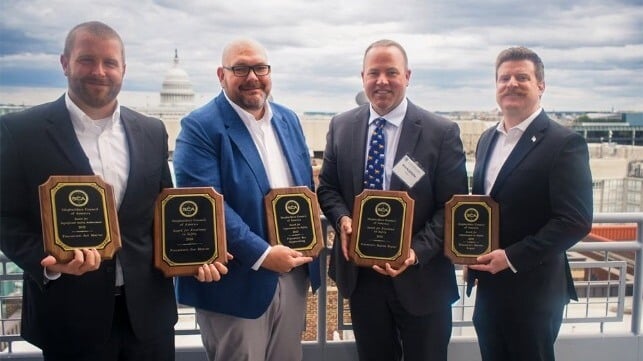
Fincantieri

Published May 24, 2026 7:28 PM by The Maritime Executive


[By Fincantieri]


Fincantieri reaffirmed its leadership position in advanced shipbuilding and maritime innovation, announcing that three of its U.S. shipyards — Fincantieri ACE Marine (Green Bay, Wisconsin), Fincantieri Marine Repair (Jacksonville, Florida), and Fincantieri Bay Shipbuilding (Sturgeon Bay, Wisconsin) — have received national safety awards from the Shipbuilders Council of America (SCA) for 2025.

The awards received reflect a structured and continuous approach to safety, regarded as a core pillar of the Group’s industrial culture and a key enabler of operational excellence across its U.S. operations.

Fincantieri ACE Marine and Fincantieri Marine Repair were awarded the “Excellence in Safety” recognition, granted to shipyards that achieve a Total Recordable Incident Rate (TRIR), one of the industry’s key indicators for measuring workplace safety performance, below the industry average established by the Shipbuilders Council of America. The result confirms the robustness of the Group’s safety management systems and its consistent focus on the highest operational standards.

In parallel, Fincantieri Bay Shipbuilding and Fincantieri Marine Repair received the “Improvement in Safety” award, reserved for shipyards achieving a TRIR reduction of at least 10 percent compared to the previous year. The recognition highlights the effectiveness of the continuous improvement processes implemented and the active role played by teams in reinforcing responsible and shared behaviors on a daily basis. In this context, the award represents a particularly significant milestone for Fincantieri Marine Repair, which receives a national safety recognition for the first time.

Fincantieri ACE Marine was also honored with the “Significant Safety Achievement” award, standing out as one of only three U.S. shipyards to have maintained a TRIR below 1.0 in 2025. This exceptional result attests to the systemic integration of safety within production processes and day?to?day operational management.

Taken together, these recognitions reflect the Group’s strategic focus on fostering an industrial culture in which safety is a foundational value, cutting across all functions and embedded in every phase of shipbuilding and ship repair activities. Within this framework, Fincantieri’s U.S. shipyards contribute to setting reference standards for the industry, underpinned by a shared commitment to responsibility, trust and respect for people. 

The recognitions also reflect Fincantieri’s broader commitment to continuously strengthening its safety culture through innovation, workforce engagement and increasingly proactive prevention models across the Group’s industrial operations. This approach supports the progressive evolution of safety management from a reactive to a more predictive model, leveraging continuous improvement, data analysis and advanced technologies to reinforce prevention across all activities.

The Shipbuilders Council of America is the national trade association representing the U.S. shipbuilding, maintenance and repair industry. Its annual safety awards program is based on rigorous criteria, including TRIR performance, and underscores the importance of workforce protection and operational discipline as pillars of the entire industrial sector.

The products and services herein described in this press release are not endorsed by The Maritime Executive.

 World Nuclear News podcast 


Podcast: Sustainability and the UK's Low Level Waste Repository


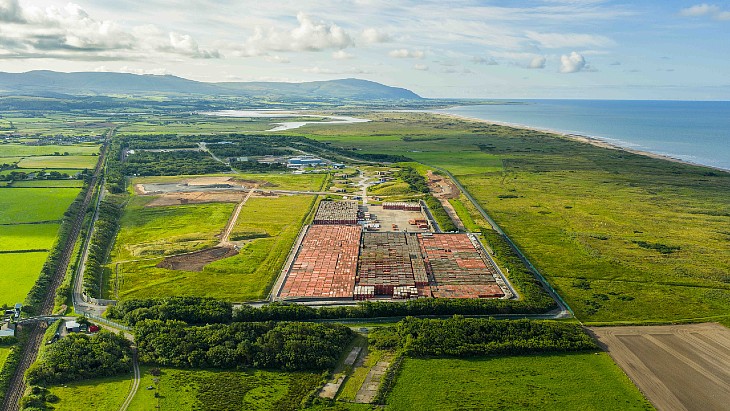
The UK's Low Level Waste Repository is nearing its 70th birthday and is probably the world's oldest operating facility of its kind. During that time things have changed from a "tip and tumble" typical landfill disposal system, to an approach with containerised waste and engineered vaults.
 

Nuclear Waste Services' Director of Sites and Operations, Mike Pigott, and Head of Waste Services Howard Falconer, explain the history of the site, how its operations have changed and its plans for the future - including an update on the prospects for a deep geological disposal facility.


The Low Level Waste Repository's role is to ensure that low-level waste generated in the UK is disposed of in a way that protects people and the environment. The repository site receives low-level solid waste from a range of customers, such as the nuclear industry, the Ministry of Defence, non-nuclear industries, educational, medical and research establishments. Legacy disposal trenches and vaults on the site are now full and ready for permanent closure.

Pigott outlines progress on the capping of the original parts within the 100-hectare site "or about the area of 140 football pitches", which aims to make what began as initially a temporary disposal facility, into a permanent - and environmentally safe - place for the low level waste for thousands of years to come.

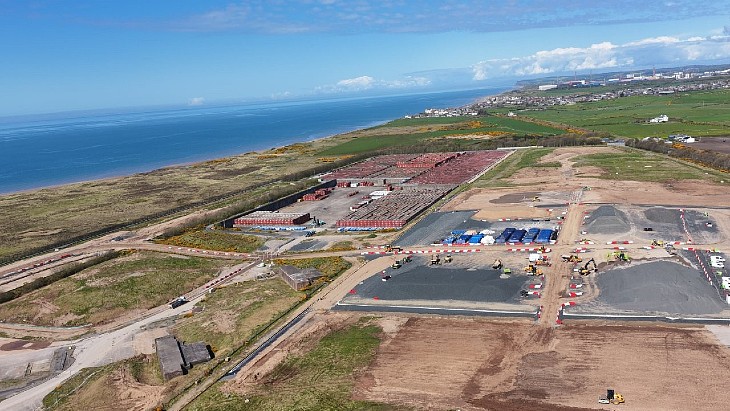
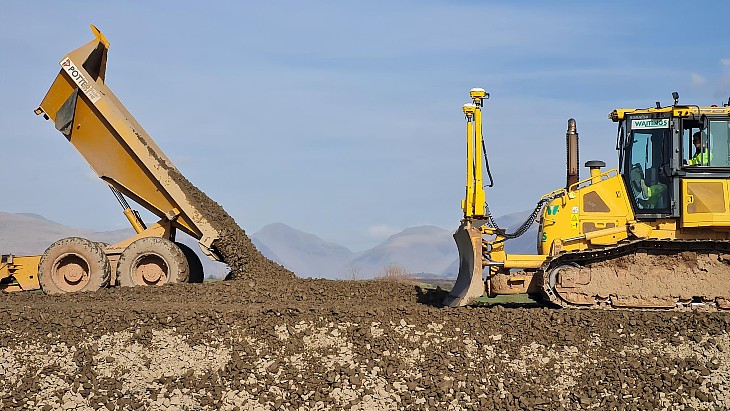
The new cap will be a "passive multi-barrier engineered cap that needs to protect the waste until it's no longer radioactive", and "must ensure there is, ideally, no water infiltration into that waste, and therefore no migration of waste out with any water. And that has to ultimately protect that waste for thousands of years". It is a major construction exercise with about 750,000 cubic metres of aggregates being moved in. To minimise disruption to the local community, this material is being largely brought in by train - Pigott says that eight trainloads a week means avoiding 2,500 HGV movements per month.


(Image: Nuclear Waste Services)

There's been an estimated million cubic metres of material disposed of since 1959, including significant volumes of lightly contaminated building materials, rubble and metals. Although disposal methods have changed over the decades, Pigott praises the foresight of our predecessors with a leachate system underneath the legacy trenches. The environmental and licensing assessments have judged that the capping, which aims to stop any water getting in, can be done on the waste in-situ.

Pigott says the aim with designing the cap is to get a "Goldilocks hill, where it's steep enough that the water runs off and therefore does not percolate into the facility, but also not so steep that it starts to risk erosion as well. Some of it will be 10 metres thick so it'll start to look and feel like another small Lakeland Fell eventually". As well as the aggregates, there is bentonite enriched soil, "a kind of self-repairing clay" - "we can't use any unproven methodologies in the technology that we apply because of the duration that it needs to exist, so we rely upon natural materials".


(Image: Nuclear Waste Services)

The aim is for the initial capping work to be completed by 2034, while more modern parts of the site continue to receive waste. "What we could at a point in time expect to do, but this is going to be decades, probably three or four decades away from where we are now, is potentially be building additional disposal capacity. But right now, because of the success of diversion, we're not expecting to be doing that."

Pigott also gives an update on the UK's search for a site for its proposed deep geological repository, which he describes as operating on all the same principles as the Low Level Waste Repository "but on steroids", with a barrier to protect the environment - "the hazard is somewhat higher and therefore it's deep depth disposal and the barriers that are put in place constitute highly engineered vaults and tunnels to be able to keep that waste safe over hundreds of thousands of years to allow for natural decay of that radioactivity".

Talks have been continuing with two potential host communities and once a preferred option is chosen for a location to take forward exploratory deep borehole drilling to see if it is geologically suitable, that will be passed on to the Energy Secretary to consider and decide upon later this year. 


Mike Pigott, left, and Howard Falconer (Image: NWS)

Falconer outlines the sustainability steps taken to reduce the amount of low-level radioactive waste arriving at the site. For instance, reusing material from decommissioning projects in new-build constructions. The result is that there are still many decades-worth of capacity at the site.

"The waste that we generate in the nuclear industry is often nothing special. The vast majority comes from emptying out and knocking down old buildings. It could be things like pipework, process equipment, it could be protective equipment that operators have been wearing, or it might be demolition rubble. And there's obviously other types of waste as well, such as waste from the fuel cycle, for example, or from defence, from research, from pharmaceuticals, those sorts of things," he says.

"Our goal is to ensure that all categories and all types of radioactive waste are managed safely, securely and sustainably ... planning what customers need to do, characterising their waste, providing packaging and containers, providing transport, but ultimately providing routes either to our own disposal facility or to our partners in the supply chain who can provide different treatments and recycling services for us.

"We'll look to clean and recycle waste, in particular metallic waste lends itself to recycling, and disposal is our last resort."

Falconer notes the large amounts of energy and resources that goes into making steel "so if we can recover and clean some of this metallic waste, we can reintroduce it back into the market and it can be used again".

And the techniques are not always hugely innovative - "it could be as simple as saying 'let's just cut off the bit that's radioactive and the rest of it's clean, let's segregate it'. But if that's not possible, ultra high-pressure washing, or grit blasting, or chemical decontamination, or melting the metal, or it could be a combination of some or all of those techniques".


(Image: Nuclear Waste Services)

There are strict controls to ensure safety but the aim is to remove the contamination, which then reduces the amount of material heading for disposal while allowing clean metal to go for recycling.

A key part of the sustainability agenda is to "design out" the waste in the first place, with Falconer saying the aim is to go circular. "Perhaps in future, not only can we recycle some of that metallic waste, but could we recycle it back into something that we could use in the industry? So could we take that steelwork, which was the fabric of a building, clean it, recycle it, and perhaps turn it into a container for moving radioactive material around?" One example is recycled concrete from the turbine plinths at Sizewell A being used in Sizewell C just down the road "so they reduce costs, reduce carbon emissions and reduce the need for generating new materials".

As with other parts of the nuclear energy sector, there are widespread international links between waste services in different countries, where people can learn from others' experiences.

And as to the public perception of nuclear waste as a drawback to nuclear energy, Pigott says that "being open, sharing what we do, and demystifying some of the work" is important, with permanent disposal initiatives, such as at the site in Cumbria, demonstrating how it is possible to safely remove the liability of this material.

You can listen and subscribe on all major podcast platforms:

World Nuclear News podcast homepage
Apple
Spotify
Amazon Music

Episode credit:  Presenter Alex Hunt. Co-produced and mixed by Pixelkisser Production

World Nuclear News


US enrichment plant begins accelerated review


The US Nuclear Regulatory Commission intends to complete its technical review of Orano Enrichment USA's application for a licence to build and operate the Project IKE uranium enrichment facility within 12 months.
 
A rendering of the Project IKE facility (Image: Orano)

Orano submitted the technical licensing documentation and Environmental Report for the gas centrifuge uranium enrichment facility planned for Oak Ridge, Tennessee, to the Nuclear Regulatory Commission (NRC) earlier this year. The regulator's formal acceptance means that the application moves into full technical review for granting a licence to begin construction and then to operate the facility.

The NRC has set an expedited review schedule for the project, with an estimated completion date of 30 April 2027. This, the NRC says, reflects its broader push to modernise its licensing processes under Executive Order 14300, Ordering Reform of the Nuclear Regulatory Commission, signed last year by President Donald Trump. 

Orano's licence application incorporates experience from years of successful commercial operations with uranium enrichment centrifuges at the company's Georges Besse 2 facility in France: the company said it is also leveraging its construction experience with the ongoing 30% expansion in capacity underway at Georges Besse 2. 

The licensing effort will also leverage the licensing application from the Eagle Rock Enrichment Facility, a centrifuge plant Orano's forerunner company Areva had previously planned to build at Idaho Falls. The NRC issued a licence in 2011 for Eagle Rock, but the licence was terminated - at the request of the company - in 2018. Orano has committed to provide the NRC with a detailed "crosswalk" comparing the Project IKE application to Eagle Rock, which the NRC says is to "leverage the precedent" from the earlier safety evaluation. "While the staff will rely on the similarities between the two facilities to support scheduled efficiencies, the staff will perform a complete regulatory review of the Project Ike application, and the accelerated schedule assumes those similarities can be effectively leveraged," the NRC said in its acceptance of Orano's application.

"NRC is safely enabling America's efforts to reduce US dependency on foreign enrichment," the regulator's Chairman Ho Nieh said. "Credible, predictable and timely safety reviews - this is how NRC supports American leadership in nuclear energy."

Project IKE - which will be located on unused former Manhattan Project land - represents one of the largest capital developments in Tennessee's history. It is expected to create more than 1,000 construction jobs and 300 long-term career positions, plus an extensive supply chain based in the East Tennessee region, as well as playing a key role in strengthening US energy security: according to Orano, the output from the Project IKE facility alone would be able to replace the enriched uranium America is currently importing from Russia.

"For 15 years Orano has used ETC centrifuges in France to reliably enrich and supply uranium for powering American reactors. Now, we are planning to generate that same secure nuclear fuel supply using the same proven technology and processes at our Project IKE facility in Oak Ridge, Tennessee," Jean-Luc Palayer, CEO of Orano USA, said. (ETC - Enrichment Technology Company - is a joint venture of Orano and Urenco which develops, manufactures and installs gas centrifuges for uranium enrichment.)

"With the NRC's 12-month timeline and Orano's expertise, we are on a good path to begin enriching a significant amount of uranium at Project IKE in time to supply America's quickly increasing nuclear energy needs," he added.

Atucha II granted 10-year licence renewal


Argentina's Nuclear Regulatory Authority has renewed the operating licence for Atucha II Nuclear Power Plant until May 2036.
 
The Atucha nuclear power plant site (Nucleoeléctrica Argentina)

The renewal process included the submission of technical documentation, and regulatory evaluations and inspections aimed at verifying the meeting of conditions to guarantee safe and reliable operation of the plant during the 10-year period.

The president of Nucleoeléctrica, Juan Martín Campos, said "the renewal of this licence represents a recognition of the technical and operational capabilities developed by Nucleoeléctrica to guarantee a safe, reliable operation aligned with the highest regulatory standards ... this new licensing period allows us to further consolidate the strategic role of Atucha II within the Argentine energy system and to project the development of the national nuclear sector in a context of growing global energy demand".

Background

Atucha II is a 693 MWe pressurised heavy water reactor and was ordered in 1979. It was a Siemens design, a larger version of the first unit at Atucha, and construction started in 1981 by a joint venture of Argentina's National Atomic Energy Commission and Germany's Siemens-Kraftwerk Union. However, work proceeded slowly due to lack of funds and was suspended in 1994 with the plant 81% complete.

In 1994, Nucleoeléctrica Argentina was set up to take over the nuclear power plants from CNEA and oversee construction of Atucha II. In 2003, plans for completing Atucha II were presented to the government. The government announced a strategic plan in August 2006 for the country's nuclear power sector, including completion of Atucha II. The unit was effectively completed in September 2011. First criticality was achieved early in June 2014, and grid connection was later that month, with full power in February 2015.

In December 2015 the Autoridad Regulatoria Nuclear (ARN) granted a conditional operating licence for Atucha II until May 2016, and issued its initial five year licence on 26 May 2016 following the completion of a programme of testing, training and other actions. The first, two year, extension was granted in May 2021 but the unit was shut down from October 2022 for repairs after the discovery that one of the four internal supports of the reactor had detached and moved from its design location.

That led to ARN issuing a second short-term extension to 26 May 2024, so that Nucleoeléctrica Argentina, could "implement corrective improvement actions". After verifying that Nucleoeléctrica had implemented these actions "in compliance with the established safety requirements" the regulator authorised the unit's entry back into service in August 2023, following a 10 month shutdown. In March 2024 it issued a renewed licence to Nucleoeléctrica Argentina for the operation of the second unit of the Atucha nuclear power plant until 26 May 2026, marking its first 10 years of commercial operation.

Kazakhstan outlines localisation plans


The Kazakh government has approved a resolution aimed at developing a domestic industrial base for the implementation of nuclear power plant construction projects.
 
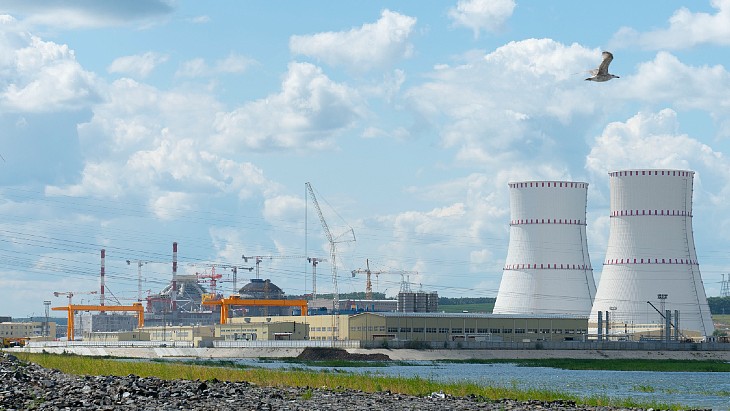
Kazakhstan's first nuclear power plant is to be built at Ulken (Image: Rosatom State Corporation)

The Comprehensive Plan for Developing Localisation in the Nuclear Industry for 2026–2030 was developed by Kazakhstan's Atomic Energy Agency, jointly with Kazakhstan Nuclear Power Plants LLP, interested central government agencies, and the National Chamber of Entrepreneurs of the Republic of Kazakhstan "Atameken", the Atomic Energy Agency said. It was approved by the government on 14 May.

The document provides for the phased preparation of Kazakh enterprises for participation in nuclear projects, taking into account international safety and quality requirements. It covers four key areas: developing a regulatory framework, analysing the needs and potential of the domestic market, modernising and establishing production facilities, and the digitalisation of processes. According to press reports, the goal is to boost "local content" - which can currently meet about 20-22% of the nuclear industry's demands - to around 30% by the time construction of the country's first nuclear power plant begins, representing a market value of around USD4 billion to USD4.5 billion.

Kazakhstan is the world's leading producer of uranium. In June last year, Russia's Rosatom was selected as the leader of an international consortium to build Kazakhstan's first planned nuclear power plant - to be called the Balkhash plant - in the village of Ulken, in Zhambyl district, on the shore of Lake Balkhash. The Atomic Energy Agency's strategy for the Development of the Nuclear Industry in Kazakhstan sees at least three nuclear power plants operating by 2050, with a project for a fourth one possible.

"To ensure the quality, safety, and transparency of NPP project implementation, it is planned to introduce a registry of suppliers of goods, works, and services. Inclusion in the registry will be a mandatory requirement for participation in the project and will enable the pre-selection of qualified and reliable companies, support domestic producers, including small and medium-sized businesses, and minimise corruption risks through transparent procedures and regular monitoring of participants," the Atomic Energy Agency said.

The implementation of the plan is expected to "help create a sustainable production ecosystem for the nuclear industry, attract investment in the industry, develop new products, and ensure the participation of Kazakhstani enterprises in major infrastructure projects across the country", it added.

Kursk II's first VVER-TOI 'has generated 2 billion kWh'


The 1,250 MW capacity VVER-TOI unit at the Kursk II nuclear power plant entered into commercial operation on 1 May, with Rosatom saying it has generated more than 2 billion kWh of electricity since being connected to the grid in December.
 
(Image: Rosatom)

The VVER-TOI is Russia's most powerful nuclear power unit. It was commissioned and officially transferred to operational status and entered the energy and capacity market and began supplying Russia's Unified Energy System at the start of the month.

Kursk Nuclear Power Plant Director Alexander Uvakin said: "Thanks to the VVER-TOI, the Kursk NPP has joined the ranks of Russia's largest nuclear power plants, operating at over 3,000 MW. Every billion kWh contributes to energy independence, industrial development, and the comfort of tens of thousands of families."

Construction is under way on units 2 and 3, which will also be VVER-TOI reactors. The plan is for there to be four units at the plant, providing a total capacity of 5,000 MW.

Rosatom says that more than 90,000 people and about 250 contractors and subcontractors took part in the project for the first new unit.

The start of commercial operation followed a period of pilot industrial operation - and the conducting of more than 1,500 tests of the power unit's systems and equipment - before the go-ahead from regulator Rostekhnadzor was issued 27 April.

Background

Kursk II is being built near the existing Kursk nuclear power plant in western Russia, about 60 kilometres (37.5 miles) from the Ukraine border. It will feature four of the new VVER-TOI reactors, the latest version of Russia's large light-water designs. They have upgraded pressure vessels and a power rating of 1,250 MW.

Construction of the first unit began in 2018, its polar crane was installed in October 2021 and the reactor vessel was put in place in June 2022. Concreting of the outer dome of the first unit was completed in August 2023. With the second and third units also under construction, the target is for all four units to be in operation by 2034.

Rosatom says the service life of the main equipment has doubled, and that the VVER-TOI units feature a mix of passive and active safety systems and include a core meltdown localiser. It can also operate with 100% mixed oxide fuel containing uranium and plutonium (MOX fuel).

The new units at Kursk II will replace the four units at the existing, nearby nuclear power plant, which are scheduled to all have shut by 2031.

The first unit was shut down after 45 years of operation in December 2021 and the second unit followed in January 2024. The original design life for the four RBMK-1000 reactors at the plant was for 30 years but had been extended by 15 years following life extension programmes.

Antares signs long-term HALEU supply deal with Urenco


Urenco will supply high-assay low-enriched uranium for Antares' planned deployment of microreactors in North America and other markets.
 
The Capenhurst site (Image: Urenco)

Magnus Mori, Head of Advanced Fuels for Urenco, said it was "the world’s first multi-year contract for the supply of HALEU (high-assay low-enriched uranium), which marks an important milestone in the maturation of this new market".

The fuel is to be produced at Urenco's HALEU enrichment facility in the UK, which is scheduled to come online in 2031.

Jordan Bramble, CEO of Antares, said: "This partnership ensures that when we scale beyond material allocated by the federal government, we will have commercial supply ready to meet our needs."

Antares, founded in 2023, says it is on track to conduct a reactor demonstration in 2026 and test its first electricity-producing reactor in 2027, with initial production deployments beginning in 2028. The company is in the final phase of the Department of Energy's Reactor Pilot Program to build a reactor that achieves criticality before 4 July this year. BWX Technologies began fabrication of the TRISO fuel for the company's initial reactors last October.

HALEU - uranium enriched to between 5% and 20% uranium-235 - will be used in the advanced nuclear fuel required for most of the next-generation reactor designs currently under development. In 2024, when only Russia and China had the infrastructure to produce HALEU at scale, the UK Government announced funding of GBP196 million (about USD263 million) to Urenco to support the build of a HALEU fuels facility at its Capenhurst enrichment site in the northwest of England.

Licensing milestone for Texas SMR plant


The US regulator has completed its environmental assessment of the proposed Long Mott Generating Station advanced reactor facility at Dow Chemical's manufacturing site in Texas ahead of schedule.
 
(Image: X-energy)

This marks a key milestone in the review process for the proposed project which would see four X-energy Xe-100 high-temperature gas reactor units built at Dow's Seadrift site, the US Nuclear Regulatory Commission (NRC) said. 

Long Mott Energy LLC - a wholly owned subsidiary of Dow - submitted the construction licence application in March 2025, and the NRC began its environmental review in June. The regulator - which is working to streamline the route to deployment of advanced reactor technologies at the direction of executive orders signed by President Donald Trump last year - determined that an environmental assessment (EA), rather than a more extensive environmental impact statement (EIS), better addresses the project's limited environmental footprint at an existing industrial location. This approach allows for a more efficient review while maintaining rigorous environmental standards, the NRC said.

"This milestone demonstrates that we can complete our reviews efficiently, enabling new reactor projects while upholding our responsibility to protect people and the environment," said NRC Executive Director for Operations Mike King. "Using an environmental assessment in this case reflects the project's relatively low potential for environmental impacts and helps provide a more predictable path forward."

The NRC concluded that the potential environmental impacts from the construction of the Long Mott Generating Station "would not be significant" and has determined that a "Finding of No Significant Impact is warranted, and … the preparation of an EIS is not required".

The Finding of No Significant Impact conclusion on the environmental assessment follows an extensive independent analysis by NRC staff, evaluating potential impacts to air quality, water resources, and local species habitats under globally recognised safety and environmental standards. The NRC's environmental review, completed in less than a year, benefitted from X-energy's pre-licensing work on the Xe-100 and the comprehensive construction permit application which included an in-depth environmental report supported year-long field surveys, groundwater monitoring wells with 12 months of water quality measurements, and engagement with multiple state agencies including the Texas Historical Commission, Texas Parks and Wildlife Department, and Texas General Land Office, X-energy said.

"This is a significant milestone for the Long Mott Energy project and we appreciate the comprehensive and efficient manner in which the NRC conducted its assessment," said Edward Stones, business vice president, Energy & Climate, Dow. "We are another step closer to expanding access to safe, clean, reliable, cost-competitive nuclear energy in the US."

The NRC said it expects to complete its safety review of the construction permit application later this year, consistent with the 18-month timeline required by Executive Order 14300. A final agency decision on the permit would follow. The construction permit would authorise building the facility, but the company would need to submit a separate application for licences to operate the plant.

Long Mott Generating Station is tipped to be the first grid-scale advanced nuclear reactor deployed to serve an industrial site in North America. The Xe-100 units are engineered to operate as a single 80MW electric unit, and are optimised as a four-unit plant delivering 320 MWe: the reactor can provide baseload power to an electricity system or support industrial applications with 200 MW thermal output per unit of high-pressure, high-temperature steam. 

Dow is one of several tech giants and other major energy users to have signed the Large Energy End Users Pledge, supporting the goal of at least tripling nuclear energy by 2050. The Long Mott project is expected to reduce emissions from the Seadrift site - which manufactures more than 4,000,000 pounds (1816 tonnes) of materials per year for use in applications such as food packaging, footwear, wire and cable insulation, solar cell membranes and packaging for pharmaceutical products - by about the equivalent of 440,000 tonnes of carbon dioxide per year.


EU Warns Energy Prices Will Stay Elevated Through 2027

Top EU officials said Friday that oil and gas prices are expected to remain elevated through at least the end of 2027, with the fallout from the Iran war likely to keep pressure on inflation and economic growth.

Speaking after a meeting of eurozone finance ministers in Cyprus on Friday, EU Economy Commissioner Valdis Dombrovskis said higher energy costs are now expected to drive inflation to 3.1% this year and 2.4% in 2027—well above the bloc’s earlier forecast of 1.9% for this year.

The concern is no longer just fuel prices themselves. Once energy inflation gets loose, it tends to wander through the rest of the economy and make itself at home.

“We expect that this energy inflation will gradually also trickle down to different sectors of the economy,” Dombrovskis said.

European Central Bank President Christine Lagarde warned that even if the Middle East conflict ended immediately, the economic aftershocks would continue. Supply disruptions can end quickly on paper and still leave pricing distortions that linger for years.

Europe already learned that lesson after Russia’s invasion of Ukraine. Now it is getting a second reminder. The region spent the past two years stabilizing after one energy crisis, only to run headlong into another.

Europe was already grappling with some of the highest electricity prices among major economies. Before the Iran war, EU power prices were running at more than twice U.S. levels and roughly 50% above China, according to the International Energy Agency. The latest disruption widened the gap.

That cost problem increasingly reaches far beyond household utility bills. Europe has already been losing ground in the AI and data center race because power is expensive, grid capacity is tight, and connection wait times can stretch for years. Cheap energy may not solve every problem. Expensive energy, however, has a remarkable ability to create new ones.

By Julianne Geiger for Oilprice.com

More Tankers Make It Through the Strait of Hormuz

Two liquefied natural gas carriers and a supertanker have traversed the Strait of Hormuz over the past couple of days, with the LNG vessels heading for Pakistan and China, and the tanker, loaded with Iraqi crude, is en route to China.

According to a Reuters report, the vessels used the route that Iran has told all ships to use from now on. The LNG carriers are loaded with Qatari gas, the report said, citing data from LSEG and Kpler. At least one of the vessels was loaded in late March. The supertanker carrying Iraqi Basrah crude loaded its cargo in late February and had been stuck in Hormuz since then.

Bloomberg, meanwhile, reported that ADNOC has been using its own fleet of tankers to ship oil and gas through the Strait of Hormuz in so-called dark mode, where vessels switch off their geolocation indicators to remain unnoticed.

Reports about tankers passing through the Strait of Hormuz have multiplied over the past couple of weeks. Two supertankers exited Hormuz last week and headed for their final destination in China, earlier reports said, and another two LNG carriers also made it through the strait and are en route to India, media reported earlier in May.

Some vessels have been passing through the chokepoint in dark mode, switching off their transponders to avoid detection from the Iranian military. Since early March, hundreds of vessels, including tankers carrying energy commodities, have been stranded in the Persian Gulf west of the Strait of Hormuz amid the de facto closure of the chokepoint, but the past couple of weeks have seen some moving out.

According to data from Bloomberg cited by Zerohedge last week, at least 19 tankers carrying crude oil and liquefied petroleum gas from Gulf states other than Iran had traversed the Strait of Hormuz since March 1. Another 100 tankers, however, remain paralyzed in the strait, the data also showed.

By Irina Slav for Oilprice.com


Deal to Reopen Hormuz Gets Closer, But With Little Agreement in Public

The Strait of Hormuz and the Arabian Gulf from space (NASA)

Published May 24, 2026 2:14 PM by The Maritime Executive


The U.S. and Iran have announced an outline of an agreement to extend their ceasefire and reopen the Strait of Hormuz. The deal has not yet been signed, and as in previous talks, officials on both sides have leaked out conflicting accounts of the details.  

The contents of the deal have not been officially released, and it appears to be structured as a ceasefire extension to allow further time for negotiation, with some of the most difficult decisions deferred for further talks. While definitive confirmation is still pending, a general outline has emerged from participants' background statements. A U.S. official told the Wall Street Journal on Sunday the U.S. has agreed to provide Iran's economy with some "breathing room," but has not yet promised to release frozen Iranian funds or lift sanctions. 

In exchange, the official said, Iran has accepted the idea of exporting its stockpile of enriched uranium to another country, in principle and subject to further negotiation on the details. The deal would also include a time-limited moratorium on further Iranian nuclear enrichment, in exchange for sanctions relief. 

Iran denies that any commitments were made about any matter related to its nuclear program, except for its ongoing pledge to never build nuclear weapons. Iran has always maintained a public commitment not to build a nuclear bomb (though it has quietly pursued the knowledge and physical means to do so).  

Al Jazeera senior correspondent Ali Hashem adds further details reflecting purported benefits to the Iranian side. From the perspective of his sources, the proposed deal looks much different: it reportedly includes a complete end to hostilities, including an end to the ongoing Israeli operation in Lebanon; the release of billions of dollars in blocked Iranian funds; the lifting of the U.S. naval blockade in the Strait of Hormuz, allowing Iran to resume oil exports; and the withdrawal of U.S. forces from the area. 

In accounts published by Iranian state media, the agreement would also leave the strait under Iranian control, in cooperation with authorities in Oman - giving Iran more strategic influence over the waterway than it had at the start of the war. 

U.S. officials have not confirmed any of these claims.  

"The ceasefire and broader de-escalation measures appear intended for near-term implementation, while the main sources of contention were pushed into a separate 30-60 day negotiation track," commented Nicole Grajewski, Assistant Professor at CERI Sciences Po. "That structure is important because it pushes some of the hardest questions (sanctions sequencing, mechanics of Hormuz access, conditions on asset releases) into less visible side documents while still allowing both sides to announce a political breakthrough."

After hopeful comments from the administration on Saturday, President Donald Trump said Sunday that his team would be going slowly. 

"I have informed my representatives not to rush into a deal in that time is on our side. The blockade will remain in full force and effect until an agreement is reached, certified, and signed. Both sides must take their time and get it right. There can be no mistakes!" Trump wrote.  


China Coking Coal Prices Surge After Deadly Shanxi Mine Blast

The price of coking coal in China jumped by 8% after a deadly mine accident in Shanxi province that prompted safety checks that will affect production over the near term. The most actively traded coking coal contract on the Dalian Commodity Exchange hit the equivalent of $186.76 per ton following the accident.

Reuters reports that eighty-two people were killed after a gas explosion in a mine in one of China’s largest coal-producing regions, which makes it the most serious mine accident in the country since 2009 at least.

The government immediately launched an investigation into the causes of the accident, which would inevitably affect production, leading to a jump in prices. The accident itself will also affect coking coal production, with CNN citing Chinese media as reporting that the blast caused walls in the mine to collapse and the site of the accident to fill with water.

There is also a risk of secondary disasters at the mine, with the chief of emergency services of the city where the mine is located, Changzhi, saying that “During the rescue work…toxic and harmful gas has exceeded the limit for a long time.”

Coking coal is used in steelmaking and other heavy industries, with China a major consumer of both local and imported coal. The state has imposed limits on the commodity’s prices, and today, those limits were hit because of the mine accident.

Separately, several other coal mines in Shanxi suspended operations for several days as the authorities conduct safety checks, Reuters also reported, citing consultancy Mysteel. The suspensions would reduce coking coal output by 288,000 tons daily, the report noted, adding that iron ore and steel prices also gained following the explosion in Changzhi.

The Chinese government has been conducting safety checks on coal mines all over the country in a bid to reduce the risk of accidents, but also to put a lid on production growth.

By Irina Slav for Oilprice.com


Coal Is Fueling China’s Next Energy Power Play

  • China is rapidly expanding coal-to-chemicals and coal-to-gas production as high oil and gas prices make coal a cheaper and more strategic domestic feedstock.

  • India now wants to replicate China’s model, investing billions to turn coal into fertilizers, plastics, and chemicals to reduce energy import dependence.

  • The trend highlights how energy security and affordability are overtaking emissions concerns, with coal demand surging despite global net-zero ambitions.

Coal is inarguably one of the big winners from the energy flow disruption in the Middle East. Consumption is up strongly as gas becomes hard to come by and expensive to buy. Power supply security has overtaken any emission concerns. Yet it is not only in power generation that coal has regained popularity. Coal is also increasingly being used as feedstock for chemicals, notably fertilizers.

Recently released data from China showed that coal production in the world’s top consumer had dipped in the first four months of the year. Imports were also down, and power generation from coal declined, extending a trend that began in 2025. The figures would suggest China is reducing its use of coal, but in fact, coal consumption is still going strong in the Asian powerhouse—the commodity is simply being used for more than power generation and metals smelting. China is using coal to make everything from gas to petrochemicals—and now India is planning to do the same.

Earlier this week, Reuters reported that PetroChina was developing a project for the extraction of gas from coal rock, eyeing output of 30 billion cu m by 2035. The extraction technology is very similar to that used in shale formations, the report noted, adding that China is the only country where hydraulic fracturing is being used for so-called rock gas extraction.

In separate news, China’s coal-to-chemicals industry got a major boost from the Middle East war. The sector’s stocks jumped by 30% between the end of February and mid-March, Reuters reported at the time, with investors rewarding the energy industry’s ability to use coal for the production of fertilizers and other petrochemicals without actually using petroleum.

With oil prices surging on the closure of the Strait of Hormuz, coal has become a valuable substitute, not least because even with a price rise—and coal prices have risen—it remains cheaper than the liquid alternative. Indeed, Reuters reported in mid-March that Chinese coal prices had in fact fallen since the start of the war. It is little wonder that India wants to replicate China’s success in coal-to-chemicals.

Dependent on imports for over 80% of its oil consumption, India has found itself in a rather vulnerable position amid the biggest energy crisis in history. Yet India has abundant coal reserves it can use for more than power generation—and that is exactly what it is doing, Bloomberg’s Javier Blas reported this week.

Many net-zero campaigners from political circles like to point out that homegrown energy is a guarantee for energy security. In that, they are correct, even though when they say homegrown energy, they mean energy harvested with equipment imported from, among others, China. And China uses coal to make that equipment. The fact remains, however, that using your own resources to produce energy, fertilizers, and other chemicals is certainly a better choice than importing in and depending on a market over which you have no control with regard to either prices or supply.

China’s coal-to-chemicals industry is a unique one, Bloomberg’s Blas noted in his report, and that means it would be challenging for India to replicate China’s success. One reason for this is that Indian coal is different, the energy columnist reported, and will be harder to convert into chemicals.

The other reason is that China has spent some 20 years improving the extraction technology. India plans to invest $4 billion to jumpstart a coal-to-chemicals industry, but that may not be enough, Blas says, as companies engaged in that activity would need more support to make their products competitive once the war in the Middle East ends and natural gas prices retreat to pre-war levels—whenever that may happen.

Still, the Modi government eyes 75 million tons of coal getting turned into fertilizers and other chemicals, as well as plastics, in 2030, to enhance reliance on locally sourced goods and reduce its passive import bill. It will provide funding for processing facilities and guarantee the local supply of the feedstock—and boost the world’s demand for coal even further than the war already has, further eroding net-zero plans.

Bloomberg’s Blas reported that China’s coal-to-chemicals industry consumes 380 million tons of coal annually. If it were a country, he noted, that industry would be the world’s third-largest coal consumer. And now India wants to build its own gargantuan coal-consuming industry.

Last year, China produced 4.2 billion cubic meters of rock gas. This is just the beginning if production growth plans materialize. The coal-to-chemicals industry is growing and, evidently, inspiring other countries to go local as well, with no concern for the implications of such trends for emission reduction. The coal-to-chemicals industry developments in Asia show quite clearly that the top priorities in energy will always remain reliability and affordability, with emissions a distant third in times of tight supply and high prices.

By Irina Slav for Oilprice.com