Sunday, June 21, 2026

'They have already suffered enough': Central African clergy respond to US deportation

(RNS) — Faith leaders say they would welcome migrants deported from the United States but question the decision to send vulnerable people without ties to a nation still healing from years of sectarian violence.


U.S. Immigration and Customs Enforcement officers detain a man during an operation in Escondido, Calif. (AP Photo/Gregory Bull)


Tonny Onyulo
June 17, 2026 
RNS

NAIROBI, Kenya (RNS) — Religious leaders in the Central African Republic say they were stunned by the arrival Friday (June 12) of migrants deported from the United States to their country without cultural or familial ties, questioning why people who fled religious and political persecution were sent to a nation still grappling with its own history of sectarian violence and instability.

The U.S. government flew at least two dozen migrants from countries including Iran, Afghanistan, Turkey, Armenia and Georgia to Bangui, the Central African Republic’s capital, as part of the Trump administration’s third-country deportation agreements with several African and Latin American countries.

Human rights groups and immigration lawyers say several of those deported had established credible fears of persecution in their home countries, including torture, imprisonment and death. Among them were Christian converts at risk and at least one Iranian pro-democracy activist who could face severe punishment if returned to Iran for her political activity and religious beliefs.

“I was surprised to hear that migrants who fled persecution in their own countries had been deported to ours,” Jean Ngaba, an evangelical pastor in southern Central African Republic, told Religion News Service.

Some of the deportees had been granted withholding of removal, a legal protection preventing their deportation to their countries of origin because of the risk of persecution. Rather than being returned home, they were transferred to the Central African Republic under a bilateral agreement between Washington and Bangui. Advocacy groups have expressed concern that the migrants could face onward refoulement, meaning they could eventually be sent back to the countries they originally fled.

In particular, the Iranian American Legal Defense Fund has warned that deporting Iranians to the Central African Republic is potentially fatal, pointing to close ties between the African country and Moscow, a key ally of Iran. 


“The Central African Republic is poor and still trying to heal after years of conflict between Christians and Muslims,” said Ngaba, who works on local grassroots peace and reconciliation initiatives. “It is inhumane for any government to do this to people who have already suffered because of their beliefs or political views.”

So far, no church, mosque or faith-based charity has been formally tasked with receiving the deportees, although religious leaders interviewed by RNS said they would be willing to help if asked.

“As religious leaders, we are ready to assist them if we are called upon or if we meet them,” said Ngaba.

Central African Republic, red, in central Africa. Image courtesy of Creative Commons

According to immigration advocates and officials familiar with the operation, the deportees are being temporarily housed in apartments in Bangui while authorities determine their next steps. Their long-term future remains uncertain, and the Central African government has not publicly clarified whether they will remain in the country or eventually seek asylum elsewhere. The International Organization for Migration is providing post-arrival humanitarian assistance at the request of the Central African government but has stressed that it is not involved in the U.S. deportation process itself.

Cardinal Dieudonné Nzapalainga, the Catholic archbishop of Bangui and an internationally recognized advocate for interfaith peace, said he was aware of the arrivals but was still gathering information about the situation. The cardinal said the Catholic Church would be willing to assist the migrants if called upon, reflecting the church’s commitment to helping people in need.

Muslim leaders have also voiced concern over the deportations.

Cleric Moussa Ibrahim, a Bangui-based Muslim leader who has worked to promote peace and reconciliation, said many of the deportees had escaped religious persecution only to arrive in a country with its own complex history of sectarian tensions.

“Most of these people escaped persecution because of their beliefs,” Ibrahim said. “But here in the Central African Republic, we have a long history of religious violence because of conflict and weak state authority. Muslims have fought Christians and Christians have fought Muslims.”

For more than a decade, the country has experienced repeated cycles of violence involving the predominantly Muslim Séléka coalition and the largely Christian and animist Anti-Balaka militias. Although a ceasefire reached in late 2025 reduced large-scale fighting, insecurity remains a challenge in parts of the country where armed groups continue to operate. According to the Open Doors World Watch List 2026, the Central African Republic remains among countries where Christians face significant persecution, particularly in areas where government control is weak.


Ibrahim questioned how the migrants would rebuild their lives in a country facing enormous economic and social challenges.

“How are they going to survive here?” he asked. “Will they stay temporarily or eventually move somewhere else? These are the questions we are asking as religious leaders because opportunities are limited, and the environment can be difficult for both Christians and Muslims, especially for people who have converted from one faith to another.”

The arrival of the deportees has also raised broader humanitarian questions in the Central African Republic, where many communities continue to struggle with poverty, displacement and the lingering effects of conflict.

While the long-term future of the deportees remains uncertain, Ngaba said people of faith have a responsibility to welcome those who have lost their homes and communities.

“They have already suffered enough,” Ngaba said. “If they come to us, we will welcome them because that is what our faith teaches us. Before they are migrants or deportees, they are human beings, and every human being deserves compassion and dignity.”

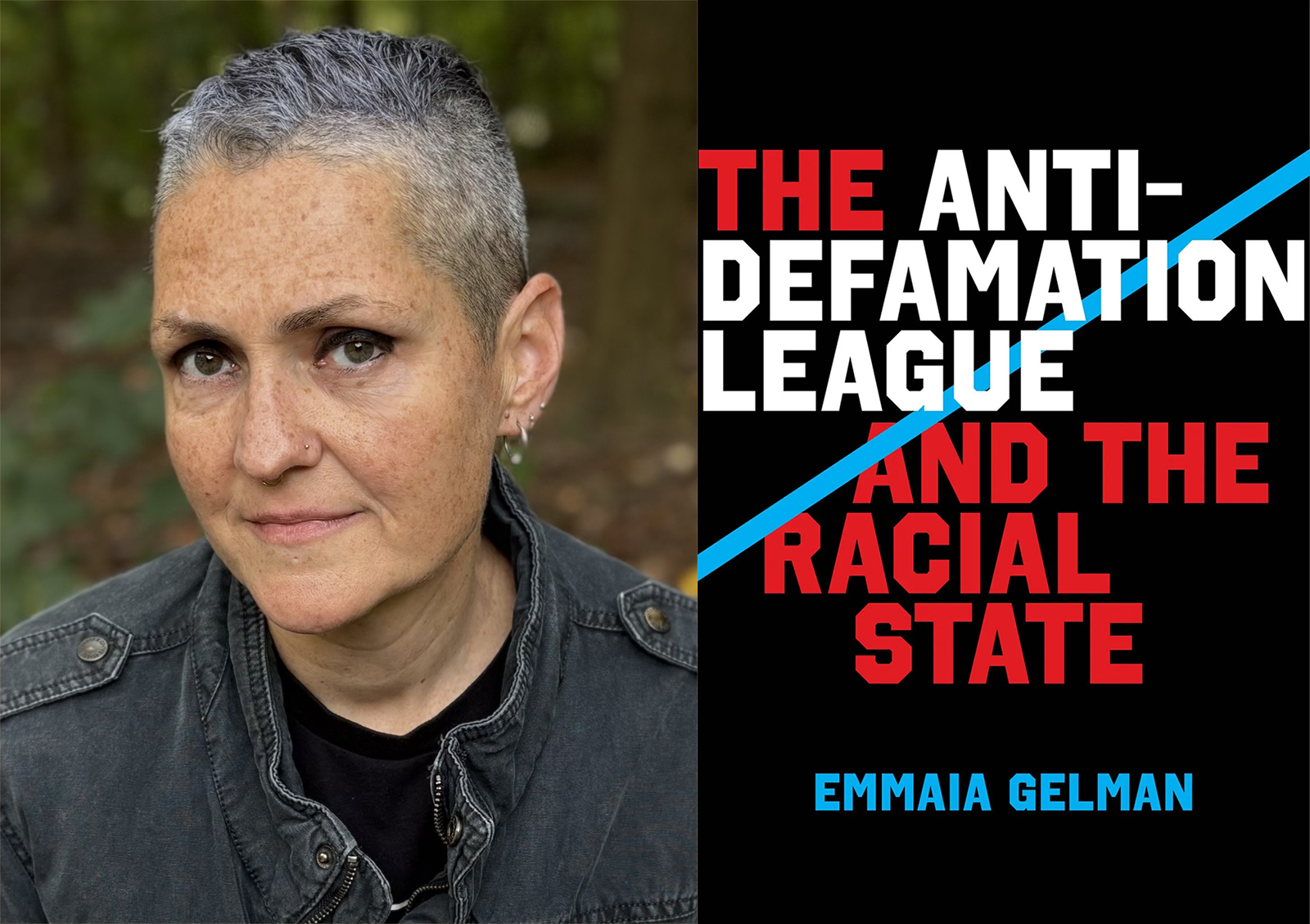
New book paints the ADL as a neoconservative bastion dedicated to US and Israel interests

(RNS) — The Anti-Defamation League may have appropriated the language of civil rights, writes Emmaia Gelman in a new book, but the group’s actions have mostly been in defense of state interests.


“The Anti-Defamation League and the Racial State" and author Emmaia Gelman. (Courtesy images)

Yonat Shimron
June 18, 2026 
RNS

(RNS) — Emmaia Gelman’s new book about the Anti-Defamation League opens with an almost forgotten incident. In 1993, the FBI raided the ADL’s San Francisco offices for “spying on civil rights groups and antiracist organizers.” The New York Times, which covered the incident, noted that the raid “caused confusion for some liberals” who thought the ADL was a paragon of civil rights activism, the book recalls.

As Gelman writes in her critical account, the ADL — a national group founded in 1913 to combat antisemitism and other forms of discrimination — may have appropriated the language of civil rights, but its actions have mostly been in defense of state interests. After the FBI raid, the ADL was accused by San Francisco authorities of spying on civil rights activists and other leftist groups for at least 30 years — allegations the group denied but accepted in a court-ordered settlement. 

Gelman’s book, “The Anti-Defamation League and the Racial State,” published Tuesday (June 16) by the University of California Press, seeks to show that the organization was created to defend white Western authority, principally that of the U.S. and later Israel. Insisting Jews were part of that white Western heritage, it set about to promote their assimilation to American values.

In a statement, the ADL said it was proud of its work. “Written by an avowed anti-Israel activist and Hamas apologist, this book should be understood for what it is: A work of historical revisionism in service of a political agenda,” a spokesman said.

As Gelman’s research shows, far from belonging on the left, it may be more accurate to describe the ADL as a Cold War neoconservative institution. While the ADL has fought against the Ku Klux Klan and later neo-Nazis, it has mostly seen the left – and especially those championing Palestinians, Muslims and diverse Arab communities — as a bigger threat, the scholar notes.

Since the Oct. 7, 2023, Hamas attacks on Israel, the ADL has supported a crackdown on student protesters critical of Israel’s war on Palestinians in Gaza. It has opposed the election of New York’s first Muslim mayor, Zohran Mamdani, over his criticism of Israel and created the “Mamdani Monitor” to “protect Jewish residents” after his win. It has worked to appease the Trump administration and argued that what appeared to be a Nazi salute by Elon Musk was just an “awkward gesture.”

A scholar with a doctorate in American studies from New York University, Gelman wrote about the ADL for her dissertation and later added to it for the book. Gelman, who is Jewish, is also an activist. She is the founding director of the Institute for the Critical Study of Zionism, an independent anti-Zionist, anti-racist research institute.

RNS talked with Gelman about the ADL and what she describes as its conservative mission to protect the U.S. and Israel from any criticism and to label anyone who criticizes those states’ policies as antisemitic. The interview was edited for length and clarity.

You write that the ADL was founded by German Jews who had already established themselves in the U.S. as businesspeople committed to capitalist values, and they wanted to correct the behaviors of poor, pro-labor Eastern European Jews. Is that right?

The Anti-Defamation League was formed with this idea of opposing defamation very literally, but what defamation meant was often the portrayal of Eastern European Jewish formations. It first directed at the press to say, ‘Don’t use images of Jews as either dishonest or self-interested money lenders and don’t use the image of Jews as dirty immigrants, fresh off the boat.’ They did a lot of clarifying that actually Jews were part of the upper classes and the governing classes and contributed to nation building, but very quickly they turned to trying to censor Jewish immigrants’ representations of themselves. Within about 15 to 20 years, the ADL had turned to publishing facts and books that articulated that communism was not Jewish, could never be Jewish and was antithetical to Jewishness. So, yes, they absolutely did try to suppress various expressions of Jewish immigrant life and Jewish politics. They were intended to marginalize Eastern European Jewishness and redefine Jewishness as the German Jewish upper-class, pro-state, law-and-order version.

Why did the ADL turn to spying?

The ADL’s stock in trade was books and reports explaining things. It published reports on subversives. So it, for example, started reporting on white nativists, like Father Coughlin (the antisemitic radio broadcaster) and then on what they viewed as Arab subversives. Much of it was presented in this sort of espionage format: So-and-so received mail that said this, and so-and-so said that at a meeting. By the McCarthy era, they already had files on Jewish leftists that they were offering to (Sen. Joseph) McCarthy (who spearheaded a campaign of persecution against Americans suspected of communism).

You write that the ADL began to see the main threat to Jews in the United States coming from the left rather than the right. When did that start to happen? 

In its early days it singled out white Christian nativists who were racist and antisemitic in the sense of holding old Christian antisemitic tropes. But the ADL was also anti-communist and anti-left because its whole premise was that U.S. capitalism, the colonization of North America, was a moral project that resonated with European morals. They believed themselves to be very much part of European national culture. The left, which had identified with the Soviet Union, was the primary threat there, and so the ADL took up anti-communism as its main gig. At that point, it was so focused on producing citizens who were loyal to the United States, and colorblind and devoted to individualism and individual rights, that it actually considered ending its identification as a Jewish organization and just acknowledging that as its main project. Irwin Suall, who joined in 1967 (and headed the ADL’s undercover investigations) reflected the new turn on the entire left — the anti-war movement, the Black Power movement, the Jewish left, anti-war protests, etc.

The ADL was critical in developing legislation on hate crimes. How did it land on that?

Throughout the early 80s, the ADL and some other legislators had been trying to pass laws that added penalties for acts of religious vandalism that were already crimes. So, for example, if somebody broke the windows of a synagogue, there would be an extra penalty because it’s a synagogue, and it’s targeting a religious property. This was a response to the feeling that many conservatives had in regard to counterculture, that there was a loss of respect for things like religion and tradition.

In the late 70s, early 80s, a separate crisis arose of violence against people of color and immigrants and also anti-queer violence. President Reagan’s Department of Justice was refusing to intervene, saying it didn’t fall under their jurisdiction because it wasn’t a civil rights violation. Local police weren’t intervening, either. While the ADL hadn’t been able to galvanize public support for religious vandalism laws, there was public support for racially coded crimes. And so, the ADL was able to move into that space and combine the two things. So, in its 1981 Audit of Antisemitic Incidents, the ADL appended a piece of model legislation that became hate crimes bills. Other states and other community groups took it up as a legislative action cause.

You write that these hate crime bills were a way to mask deeper structural issues.

Absolutely. The function of hate crimes bills was to try and force the state to do something rather than nothing about the immediate racist violence, but what it did actually was allow political legislatures and political figures to simply address the snipers, and not address the broader racial structures of states that were producing them and authorizing them. Police violence is not considered in hate crimes statistics or policy. So you end up with a law that only looks at what has happened between two individuals — the perpetrator and the target — rather than looking at the very extensive racial state system that has produced the conditions of that violence.

How do you see the ADL today? Has it become MAGA? 

If going MAGA is very defined as having MAGA pastors as headliners in its antisemitism conferences, and exonerating Elon Musk and removing from its website the tracker of white nationalist organizations that (FBI Director) Kash Patel complained about, sure, the ADL has gone MAGA. But what about its long-running support for repressive policing, for surveillance of Muslim organizations, for whipping up fear that people who oppose capitalism or who propose ways of organizing our political system other than capitalism are quote-unquote, Soviet and insurgents? Those things have been part of the ADL political fabric for much longer than Trump has been in office. The push to declare all criticism of Israel to be antisemitic is (from) 2016. Even before that, the ADL was targeting Palestinian and Muslim and Jewish student groups who were opposing Zionism on their campuses. It was already doing those things before MAGA was a thing. In 2019, the ADL began leading the charge against ethnic studies programs on the basis that it was essentially critical race theory. It was doing those things long before, and we didn’t recognize them broadly as right-wing constructions.

Has its power waned?

The FBI broke with the ADL formally, so the ADL is no longer doing FBI training. But it’s not banished from the other spaces where it has worked. It is still treated as an anti-racist organization in schools and it’s brought in when there’s a racist incident or an antisemitic incident.

Its power is an interesting one because the ADL is not a membership organization. Partly its power comes from its ability to rely on megadonors who are deeply conservative and right wing, and who are seeing the way that the ADL is able to move in ostensibly liberal spaces is a unique weapon. It also gets its power from the press who continually publish its statistics and its claims about antisemitism with no scrutiny and no attention to the ADL’s broader political project. The fact that so many of us oppose it has not actually diminished its power in the way that it should have if the ADL were in any way grounded in community.

Opinion

The quiet faithfulness of ordinary fathers in an age of performative masculinity

(RNS) — Conspicuously missing from the manosphere is a vision for fatherhood.


(Photo by Ketut Subiyanto/Pexels/Creative Commons)

Zachary Wagner
June 19, 2026
RNS

(RNS) — This past Sunday (June 14), the White House played host to a mixed martial arts event, which served as the unofficial launch of a weekslong celebration for America 250. The fight was attended by such cultural and political powerhouses as Mark Zuckerberg, Joe Rogan, Kash Patel, Dana White, Pete Hegseth, Ted Cruz and the most powerful man in the world, Donald Trump himself, whose 80th birthday occasioned the event.

“UFC at the White House perfectly fits the America of today,” an ESPN headline declared, before adding “love it or hate it.” Indeed.

Fittingly, the buildings of our nation’s capital hark back to Rome — an empire that also staged violent “games” for the entertainment of rulers and commoners alike. Roman society ran on pure “masculine” power. It was also this very empire that the early Christians denounced, rejected and “turned upside down” with their allegiance to another king (Acts 17:6). Their king exalted the lowly and the powerless, described himself as meek, even suffered humiliation and public execution.

Today, we are seeing the mainstream reassertion of a Roman-style culture — a vision for masculinity built on strength and spectacle. Cage-fight culture (like Trump himself) makes no apologies for its violent, offensive and macho tendencies.

But we also saw the mixing of this hyper-manliness with Christianity, most clearly in the post-fight comments of the victorious fighter Josh Hokit, who laced profanity and crass joking about former first lady Michelle Obama with praise for his “Lord and Savior Jesus Christ.” As if to say to any seared consciences watching, “Don’t worry; Jesus is cool with all this.”

His interview reflects the muscular Christianity adopted by numerous politicians, influencers and pastors today. What often unites these threads of modern American “masculinism” is their emphasis on performance. Whether it’s the performance of reality TV stars, news anchors, podcast hosts or athletes, this vision for manliness urges men to show their physicality and prowess, to be seen as powerful or “high value” by others.


Such performances of masculinity leave little room for the virtues previous generations of Boy Scouts would have understood as indispensable. The manosphere majors on self-actualization and grievance-based content from influencers and pundits, but conspicuously lacking in such spaces is the wisdom of fathers.

Entertainers may offer a vicarious feeling of ascension toward some masculine ideal of bravado, physical fitness or courage. Fathers, in the best expression of their calling, offer something far more transformative: presence. Fathers carry a relational commitment to their sons and daughters. Unlike YouTubers and podcast hosts, they can be a stable and consistent advocate for their children, knowing them deeply, offering them personal insights and providing an example of virtuous living.

A reclaiming of a flourishing life for the men in this country will require, at the very least, a rehabilitation of the institution of fatherhood. For Christians, it will mean a recapturing of a faithful vision for fatherly wisdom — dads who say to their daughters and their sons, “Imitate me as I imitate Christ.”

A truly biblical vision for masculine identity will not be preoccupied with peak performance, but with inner transformation. It is man who looks at the outward appearance; God looks at the heart. Increasingly, however, the world of manosphere entertainment directs men’s hearts toward what Paul called “the works of the flesh” — sexual immorality, discord, selfish ambition, drunkenness, rage.

“Manly”? Maybe. Christlike? Absolutely not.

The New Testament authors instead call Christ followers to virtues of godliness, like gentleness, faithfulness, self-control, joy, kindness and love.

The question for Christian fathers in this moment is this: Which vision for male flourishing will you pursue? The Roman’s emphasis on strength, power and performance? Or the virtues Jesus and the apostles commended to the earliest Christians?

The good news is that this quiet faithfulness is already being lived out by millions of fathers across our society: dads who show up to dance recitals and baseball practices, who accept lower-paying career paths to spend more time with their families, who volunteer evenings in church and community mentorship programs, who pursue wholeness and healing from their own hurts so they don’t hurt those they love.

These men may sport “dad bods” instead of the physically imposing bodies of UFC fighters, but that’s because they’ve chosen the path of ordinary faithfulness over the path of bravado. As we read in 1 Timothy: “Physical training is of some value, but godliness has value for all things, holding promise for both the present life and the life to come.”

The performative masculinity of modern America is no harmless spectacle. It is culture and heart formation, and we should want and demand better for our sons and for ourselves. As Christians, our struggle is not ultimately against flesh and blood; it is against the principalities and powers at work to deceive and enslave humanity, including those seeking the ideological capture of the lost boys of this generation.

In Christianity, godliness is the basis for manliness, not the other way around.

So, if you’re reading this as a tired dad doing his best to follow Jesus and point the boys and men in your life to him — keep going. Keep showing up. Train your children for citizenship in the Kingdom of God. Commend the countercultural meekness of Christ over and against the muscled mania of this world.

I regularly say to my 6-year-old son, Charlie, “Jesus made men to be strong, but he also taught us and showed us how to be gentle. So, as we grow bigger and stronger, we should also be learning to be gentle like Jesus.”

I’m far from a perfect example of this, but I aspire to be a present, faithful and gentle father who raises up a faithful and gentle son. I also want to teach him when and where to direct his fighting spirit, such as it is. And that means being a father who is ready when Charlie approaches and asks — as he did on the morning I’m writing this — “Daddy, do you want to wrestle with me?”

I would have said “yes,” but he had already jumped on my back without waiting for an answer.

(Zachary Wagner holds a doctorate from the University of Oxford and is the author of “Men of Virtue: How the Fruit of the Spirit Forms Male Character in the Modern World.” He is also a New Testament scholar, ordained minister and nonprofit director. You can receive updates from Zach and follow his writing on Substack. The views expressed in this commentary do not necessarily reflect those of Religion News Service.)
Pope Leo is very popular in the US, though partisan polarization is growing, survey finds

(RNS) — More than three-quarters (78%) of US Catholics expressed favorable views of Leo, and about one in 10 (12%) expressed unfavorable views.


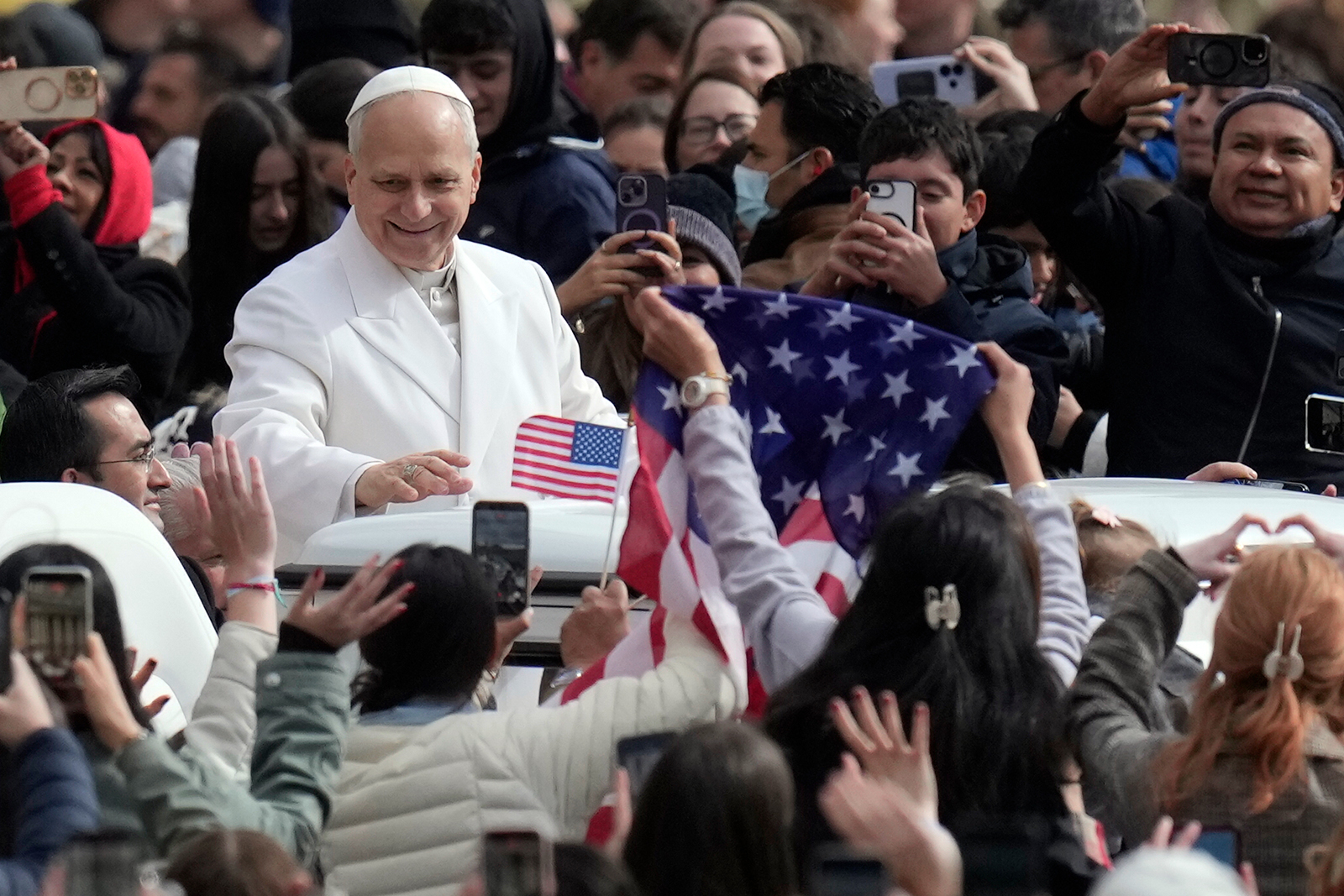
Pope Leo XIV arrives for his weekly general audience in St. Peter’s Square at the Vatican, April 1, 2026. (AP Photo/Gregorio Borgia)
RNS


(RNS) — Though Pope Leo XIV still enjoys high levels of support from U.S. Catholics, partisan polarization is growing, according to a new poll released by Pew Research Center on Thursday (June 18).

About three-quarters (78%) of U.S. Catholics expressed favorable views of Leo, and 12% expressed unfavorable views. Another 9% of U.S. Catholics said they had never heard of Leo — the first pope from the U.S.

Seventy-eight percent is the same favorability rating that Pope Francis received in February of last year, just months before his death in April 2025.


Broken down across party lines, 84% of U.S. Catholics who lean Democratic approved of Leo in Thursday’s poll, as did 72% of Catholics who lean Republican. Right before he died, Francis had been slightly more popular among Democratic-leaning Catholics at 88% approval, and slightly less popular among Republican-leaning Catholics at 69% approval.

In Pew’s first survey about Leo’s favorability last summer after his election last May, the partisan gap was only 5 points. Nearly nine in 10 (89%) of Democratic-leaning Catholics and 84% of Republican-leaning Catholics had favorable views at the beginning of his papacy.

But since last summer, Leo has been more outspoken about U.S. political issues, expressing concern about the “inhuman” treatment of immigrants in the U.S. in October, and later strongly criticizing war in the Middle East, where the U.S. has been a key actor.

In an April social media post, President Donald Trump accused Leo of being “weak” on crime and nuclear weapons and claimed that Leo was only elected pope because Trump occupied the White House. Trump followed that post with another that many interpreted as depicting himself as Jesus. The latter was later deleted while Trump has continued to criticize the pope.

Shortly after Trump’s April post, Leo told reporters on the papal plane, “I’m not afraid of the Trump administration or of speaking out loudly about the message of the Gospel, which is what the Church works for.”

In Pew’s new poll, 70% of Democratic-leaning Catholics said that Trump had been too critical of Leo, while a third (32%) of Republican-leaning Catholics agreed. But four in 10 (39%) of Republican-leaning Catholics said Leo had been too critical of the Trump administration, while only 3% of Democratic-leaning Catholics agreed. (A quarter — 26% — of Democratic-leaning Catholics said that Leo had not been critical enough of the Trump administration.)

Leo’s current favorability is higher than Pope Benedict XVI’s throughout much of his papacy, but lower than any favorability Pew collected for Pope John Paul II. Francis’ favorability fluctuated throughout his papacy.


The current pope is more popular among Catholics who go to Mass more frequently, with 85% of weekly Mass attenders expressing positive views, compared to 79% of monthly or yearly attenders and 73% of Catholics who attend Mass seldom or never, according to Pew.

The survey was conducted from May 26 to June 1 among 1,848 U.S. Catholic adults and has a margin of error of +/- three percentage points.
Opinion

Young Americans are happy about the future. They’re also terrified of it.

(RNS) — We are a nation caught between generations, and we don’t have the language to talk about what comes next.


(Photo by Polina Zimmerman/Pexels/Creative Commons)

Liz Bucar
June 15, 2026 
RNS


(RNS) — This past week, I lived the reality behind a new Pew Research study without leaving my own family. My in-laws were in town for my father-in-law’s sixtieth college reunion, a celebration of a version of America that delivered on its promises. My daughter was graduating from high school, excited and nervous about what comes next. Same week, same family. Different Americas.

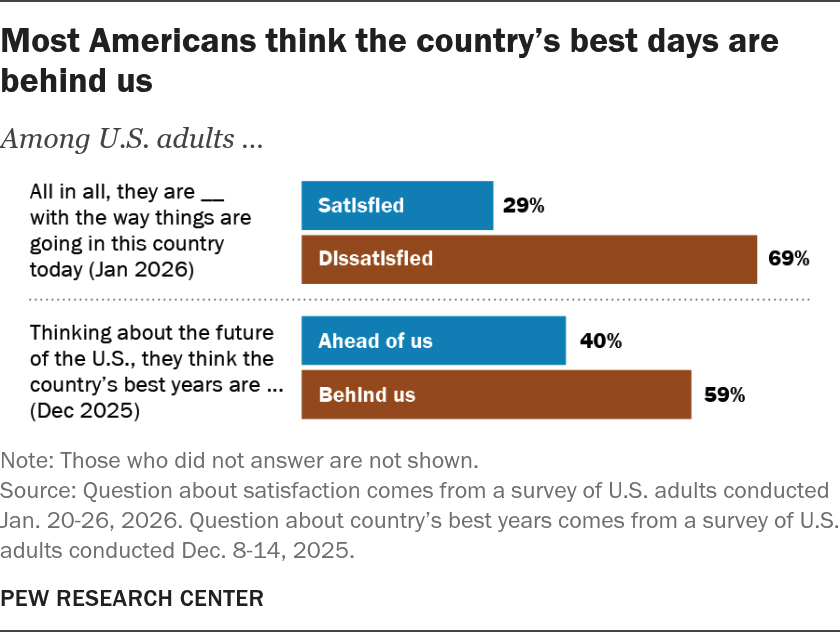
On Friday (June 12), Pew Research Center released its analysis of the national mood timed to the country’s 250th anniversary, and the numbers confirm what I felt all last week: We are a nation caught between generations, and we don’t have the language to talk about what comes next. Most Americans think the country’s best days are behind us. Nearly 7 in 10 say they are dissatisfied with the way things are going.

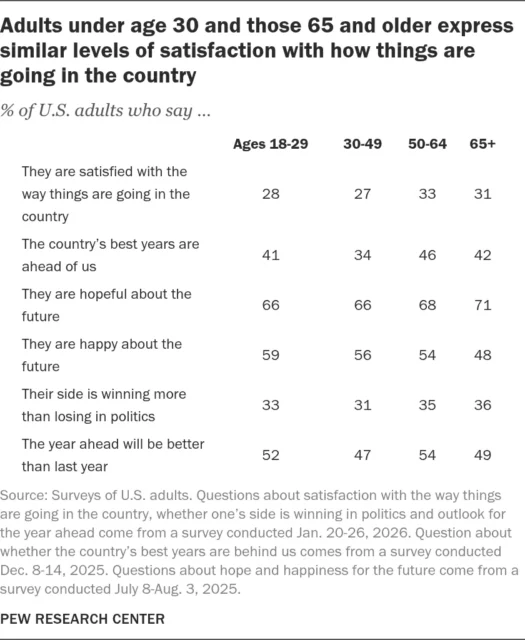
The finding most concerning to me as a parent and educator is that while young adults (ages 18 to 29) report higher levels of happiness about the future than adults 65 and older, Gen Z is more pessimistic about what that future actually holds. Fewer than 4 in 10 believe the economy will be stronger or that the country will be less politically divided by 2050.


My daughter worries about all the unknown effects climate change will bring. She worries that getting into graduate school will be even harder than the brutal college application process she just went through. And she worries about what the job market will look like for her — whether there will even be the kinds of jobs she’s imagining, given how quickly AI is changing what human work means.

Hers is a generation that feels good, but they expect things to get worse. That makes me deeply sad, because it signals my daughter and her peers have been taught to manage their feelings while abandoning their expectations.


“Most Americans think the country’s best days are behind us”
 (Graphic courtesy of Pew Research Center)

Part of the problem is that we have convinced them, and ourselves, to think about happiness in individualized, therapeutic terms. Optimize your morning routine. Manage your anxiety. Cultivate gratitude. Stay present. The promise is that if we tend to our inner life, the chaos outside will feel more bearable.

What that version of happiness can’t do is help us imagine a better future together.

There was a time when Americans located hope not just in personal improvement but in collective projects: the Labor Movement, the Civil Rights Movement, the New Deal. These were endeavors oriented toward something larger than any individual’s mood or even one generation. That orientation has been missing for a while — but it requires a story about why the future matters beyond our own lifetimes.

One place humans have always gone for stories about the future is religion, and this is why I have spent my career studying religious traditions even as someone who is not myself religious. What I have learned is that religious traditions share something the self-optimization industry cannot offer: a vocabulary for collective futures.

Judaism’s concept of ‘tikkun olam’ (repairing the world) assumes the work will never be finished in your lifetime and insists that’s not a reason to stop trying. The Haudenosaunee (Iroquois Confederacy) hold that decisions should be made with seven generations in mind, orienting us toward people who don’t yet exist. Islam understands humans as stewards of the earth on behalf of those who come after. Christianity at its best understands the Kingdom of God not as a postmortem destination but something being built now, collectively, by people who will not see its completion.

You don’t have to be religious to recognize this is something secular culture has never quite figured out how to replace.


“Adults under age 30 and those 65 and older express similar levels of satisfaction with how things are going in the country” (Graphic courtesy of Pew Research Center)

The Pew data shows a country that feels its feelings without any shared framework for what those feelings are pointing toward. This is a failure happening on multiple fronts simultaneously — in politics, in media, in our institutions and, yes, inside religious communities that have sometimes let their vision shrink down to the size of individual spiritual comfort. We have all forgotten the importance of a collective story.

My father-in-law and his fellow Boomers had a version of the American dream that was structurally possible for them: work hard, build a legacy, pass it on. That story included an economic promise, but it was also a narrative about their place in a timeline and how they could impact the timeline after them. That narrative worked for them. But it won’t work in the same way for my daughter.

She will not become a homeowner at 28 the way her grandparents did. Her college diploma will not carry the same guarantee of employment and social status her grandfather’s did. It will be much harder to raise a family on two incomes, let alone one.

What my daughter’s generation needs is a reason to rebuild. This can’t be an overly optimistic spin on the state of the world nor nostalgia for a version of the American dream that was never available to everyone. What we all need to find again is a collective story about what we owe each other and the future we share.

But how do we do this? The first step is recognizing that going it alone is not the answer, that human flourishing has always been a collective project. The second step is finding new ways to come together across generations to share the stories we love, name the futures we want and reject the ones being written for us by people with too much power and too little accountability. We’ve seen glimpses of what this can look like in the energy that surrounded Zohran Mamdani’s campaign — which felt less like everyday politics and more like a collective imagination exercise.

I think religion is probably how we used to do this, and we haven’t figured out what replaces it. Religious communities were places where people of different generations gathered regularly, told stories about the past and the future and held each other accountable to something larger than their own happiness.

We don’t need to rebuild traditional religion. But we need something that does what religion does at its best.

We have the feelings. My daughter deserves the story.

(Liz Bucar is a professor of religion at Northeastern University and the author of “Beyond Wellness: How Restoring the Religious Roots of Spiritual Practices Can Heal Us” (Tarcher/Penguin Random House, 2026). She writes the Substack bestseller newsletter Religion, Reimagined.)