Sunday, June 28, 2026

Canadian Coast Guard Completes Long-Range Rescue in North Pacific

Image courtesy CCG
Image courtesy CCG

Published Jun 25, 2026 11:21 PM by The Maritime Executive

The Canadian Coast Guard has completed a long-distance mission to rescue three people from a disabled trimaran yacht in the middle of the North Pacific.

On June 18, the crew of the sailing trimaran Mizuya made a mayday call to report that they had lost rudder control and were no longer able to maintain heading. The call was fielded by U.S. Coast Guard Arctic District's command center, which reached out to nearby merchant ships in hopes of finding a good Samaritan vessel that could divert and assist. However, according to the Coast Guard, the 15-foot wave height and strong winds on scene made it impractical to arrange a safe rescue by merchant mariners.

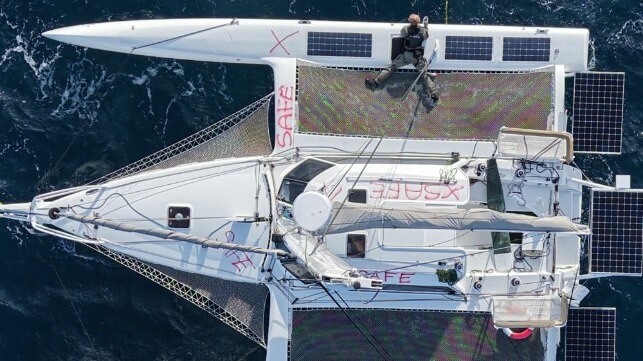
Instead, the Canadian Coast Guard cutter Sir Wilfrid Laurier diverted to the scene, transiting more than 500 nautical miles. The Laurier arrived at Mizuya's position - some 825 nm to the southwest of Adak, in the midst of a vast stretch of remote ocean - on Friday evening. They safely retrieved the crew of the Mizuya, and they marked the vessel's hull with the word "Safe" in red spraypaint to indicate to any passing vessels that the drifting yacht had been fully evacuated. All of the survivors were found in good health. 

"Despite the considerable distances involved, the Canadian Coast Guard crew, along with Fisheries and Oceans Canada Fishery Officers and Royal Canadian Mounted Police officers, performed exceptionally well in carrying out a successful marine rescue approximately 5,000 kilometers from the Laurier’s home port of Victoria, B.C.," said CCG assistant commissioner Derek Moss in a statement. 

Wilfrid Laurier later transferred the survivors to the Japan Coast Guard patrol vessel Kurikoma at sea. The JCG vessel will deliver them safely back to Japan. 

Mizuya is a 40-foot trimaran fitted with a center daggerboard and all-electric propulsion, according to her builder. The yacht's ultimate fate is unknown, but images from the scene suggest that it was abandoned in an intact state. 


Op-Ed: In Ship Recycling, Progress Should Not Be Mistaken for the End State

EEC
Courtesy EEC

Published Jun 26, 2026 5:59 PM by Capt. Soumitro Roy


Dr. Ishtiaque Ahmed’s recent article on ship recycling offers a thoughtful and erudite exposition of the legal relationship between the Basel Convention and the Hong Kong International Convention for the Safe and Environmentally Sound Recycling of Ships (HKC). His central proposition that the debate should focus on implementation rather than on choosing between the two conventions is well made and deserves serious consideration.

At EEC, our practical experience leads us to an additional conclusion: legal compliance and industrial transformation are not synonymous.

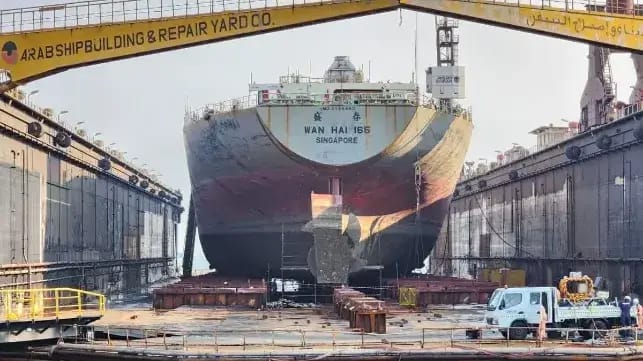
We have demonstrated that vessels of any flag can be acquired, owned and recycled in full compliance with applicable national and international laws through a transparent ownership structure in which a single accountable entity assumes responsibility from acquisition through final recycling. Such an approach mirrors the accountability expected under the Document of Compliance (DOC) and vetting systems in the tanker industry. In our view, genuine compliance requires clear responsibility, transparent ownership, and identifiable decision-makers not opaque structures or fragmented chains of accountability.

There is no denying that South Asia possesses significant ship recycling capacity and that standards have improved substantially in recent years. These advances deserve recognition. However, capacity should not be conflated with progress. A system can process large volumes while remaining fundamentally constrained by legacy infrastructure and methods. 

The HKC itself illustrates this distinction. Negotiated in 2009 and entering into force in 2025 without substantive amendment, it was conceived as a pragmatic compromise intended to improve prevailing practices incrementally. It was never presented as the ultimate benchmark for industrial excellence. Yet there is an increasing tendency to portray HKC compliance as the destination rather than the beginning of the industry's evolution.

Such an approach risks institutionalizing the status quo instead of encouraging continued advancement.

History provides many parallels. Cargo was once moved manually through ships’ holds by large labor forces before mechanized handling and containerization transformed global logistics. Likewise, traditional rickshaw pullers in many cities have been replaced by electric vehicle operators who often enjoy greater productivity and economic opportunity. In both cases, employment did not disappear; rather, work evolved into safer, more skilled, and more productive forms.

The same question should be asked of ship recycling. Are we protecting employment, or are we preserving outdated working conditions?

Manual dismantling in open environments, exposure to hazardous materials, and reliance on operations conducted in inherently challenging conditions should not be regarded as inevitable characteristics of the industry. They are consequences of particular technological and infrastructural choices. Capacity does not emerge spontaneously, but where investment, regulation, and industrial intent converge, new models can and do develop.

HKC-compliant facilities undoubtedly represent progress over historical practices. Nevertheless, many do not yet achieve full containment of pollutants, dock-based dismantling, zero-discharge operations, or integrated circular industrial systems. These concepts are not unrealistic aspirations; they increasingly represent accepted practice across other sectors of heavy industry.

For this reason, frameworks such as the EU Ship Recycling Regulation and emerging higher-standard initiatives in jurisdictions such as the UAE seek to extend accountability beyond the immediate recycling operation to encompass downstream waste management, traceability, and broader environmental stewardship. Treating HKC compliance as a complete solution risks freezing development at the level of a negotiated compromise rather than encouraging continuous improvement.

Lifecycle arguments are frequently advanced in defense of existing recycling methods, particularly where rerolling and material reuse reduce demand for virgin steel production. These environmental benefits are genuine. However, lifecycle assessment should equally encompass transparent management of hazardous waste streams, verified pollutant control, emissions accounting, and auditable downstream treatment. Circularity and accountability should advance together.

Similarly, arguments that recycling should remain concentrated where existing ecosystems have developed deserve scrutiny. Industrial ecosystems evolve continuously. Containerization replaced breakbulk cargo handling despite the existence of mature commercial networks supporting the earlier system. Technological progress has repeatedly reshaped maritime industries without eliminating their economic importance.

The central question is therefore not whether HKC-compliant yards have value - they unquestionably do - but whether they represent the industry's final destination. In our assessment, they do not. They represent an important bridge toward more industrialized, transparent, and fully contained recycling systems.

Commercial realities increasingly reinforce this trajectory. Decisions surrounding end-of-life vessels are no longer determined solely by scrap price. Banks, cargo owners, charterers, insurers, regulators, and investors increasingly demand demonstrable environmental performance and verifiable governance. The relevant commercial question is no longer simply “What is cheapest?” but rather “What can withstand regulatory, financial, and public scrutiny?”

Another principle deserving greater attention is accountability at the source. Ships are engineered assets whose end-of-life management should form part of their lifecycle planning rather than being externalized to downstream actors. A sustainable future is likely to integrate dismantling into mainstream industrial engineering through dry docks, controlled facilities, permanent skilled workforces, and auditable processes that minimize exposure-based labor and environmental risk.

This perspective should not be interpreted as criticism of South Asian recycling industries or of sovereign regulatory choices. India, Bangladesh, and Pakistan have every right to develop regulatory frameworks suited to their own economic and developmental circumstances, and the principle of common but differentiated responsibilities remains an important feature of international environmental governance.

At the same time, objective technical realities remain. Methods relying on intertidal operations present inherent challenges when measured against more stringent frameworks such as the EU Ship Recycling Regulation, which extends obligations beyond many existing national requirements. Practical constraints including primary cutting within intertidal zones, gravity-assisted dismantling, downstream accountability, infrastructure limitations, and the economics of impermeable surfaces, heavy-lift systems and contained operations that make convergence with higher standards difficult without substantial structural transformation.

This observation should not be understood as criticism of sovereign policy choices but rather as recognition that different regulatory frameworks pursue different objectives and impose different expectations.

Ultimately, the future of ship recycling is unlikely to be determined solely by the HKC. Market expectations are already shifting. Numerous stakeholders seek non-beaching solutions and recycling pathways capable of satisfying heightened environmental, governance, and transparency requirements. Capacity for such approaches is beginning to develop accordingly.

The industry therefore faces a choice familiar throughout maritime history: whether to lead technological transformation or adapt only when compelled to do so. Double-hull tankers, ballast water treatment systems, and emissions controls all illustrate that practices once considered commercially impractical eventually became accepted norms.

The HKC should be welcomed as an important milestone in improving global ship recycling standards. It should not, however, be regarded as the final destination. Progress should continue beyond compromise toward systems that combine legal certainty, industrial efficiency, environmental integrity, and full lifecycle accountability.

Capt. Soumitro Roy is Head of Middle East Operations at the ship recycling company EEC.

The opinions expressed herein are the author's and not necessarily those of The Maritime Executive.
Beyond the Paint

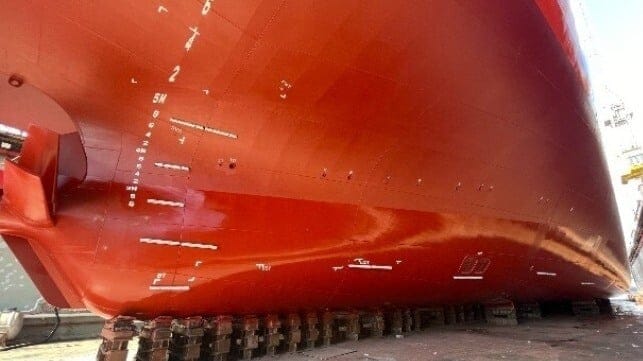
Hull coatings are now part of a wider system for biofouling control that goes beyond the paint – including inspections, cleaning strategy, monitoring and documentation.

GIT Coatings
Image courtesy GIT Coatings

Published Jun 26, 2026 8:16 PM by Sean Hogue

(Article originally published in Mar/Apr 2026 edition.)


Paint technology has come a long way since I was a cadet slapping "red lead" on everything.

While effective, the lead-based primer was both toxic to the environment and hazardous to apply with neurological risks following long-term exposure. This thankfully went largely unnoticed in most seafarers.

Modern coating solutions aim to replicate the effectiveness of red lead while minimizing the environmental impact, increasing ease of application and reducing any exposure-based health concerns. These modern technologies offer full coating systems that achieve these aims while playing a vital role in shipping decarbonization by offering quantifiable improvements in efficiency and fuel burn.

The industry is moving away from reactive cleaning of hull coatings towards proactive management with lower discharge of toxic chemicals and microplastics to the marine environment.

SPCS VS. FRCS

There are two primary coating technologies that must be balanced when considering durability, biofouling resistance and friction through the water.

Self-polishing coatings (SPC) rely on chemistry.

They're formulated with self-polishing copolymers that react with seawater through controlled hydrolysis. This process gradually erodes the coating surface while releasing biocides, typically copper-based, that prevent organisms from settling. As the outer layer wears away, a fresh active layer is exposed. This makes SPC coatings highly effective across a wide range of operating profiles including vessels that spend significant time at low speed or on station.

Fouling-release coatings (FRC) take a physical approach.

Based on silicone or fluoropolymer technology, they create a very smooth, low surface energy finish that reduces the ability of organisms to adhere. Fouling may occur, but it is weakly attached and removed by hydrodynamic forces when the vessel is underway – or active hull cleaning when the vessel reaches port. These coatings contain no biocides and can improve fuel efficiency due to reduced drag. However, their performance depends on regular cleaning, making them less effective for idle or slow operating vessels.

Determining the best coating means understanding your vessel's operations.

QUANTIFIED RESULTS

Ryan Ingham, Lead Performance Advisor at GIT Coatings, presented a one-year operational case study on proactive hull management (PHM) at this year's Hull Performance & Insight Conference (HullPIC).

The study followed an LPG carrier operating with GIT's next-generation, graphene-based hard foul-release coating, XGIT-FORCE™. This biocide-free, hard foul-release coating was combined with onboard robotic proactive cleaning and supported by a ship-specific proactive hull management plan developed through biofouling-risk modelling, port feasibility analysis and continuous in-service advisory. Over 12 months, hull condition and performance were monitored using inspection footage and vessel performance data analysis.

The results:

- ~6% fuel savings out of dock
- <2% added power over the year
- 3–5% fuel savings regained after each cleaning event

Proactive hull management works in real commercial operations when the right coating, technology and advisory support come together to enhance operational efficiency.

With over 600+ applications worldwide, GIT Coatings' products and advisory services division support shipowners and operators in achieving measurable performance and peak operational efficiencies. Its coatings are also environmentally friendly as they offer a zero-leaching solution without shedding toxic chemicals or microplastics into the marine environment.

That's a great foundation for an advanced biofouling program.

GROOMING

Greensea IQ, a pioneer in proactive, in-water hull cleaning technology, is officially approved as a certified hull grooming provider for vessels coated with GIT Coatings' advanced foul-release systems.

Grooming is defined as a proactive measure of periodical removal of microfouling (slime) to prevent the development of macrofouling on ships' hulls. It's an AI-powered robotic solution proven to be incredibly effective.

The approval, granted by Lloyd's Register, confirms that the EverClean program meets the requirements to groom hulls protected by GIT Coatings' sustainable and biocide-free coatings like XGIT-FORCE™.

Delivered as a subscription, the program provides a professionally managed performance plan specific to the vessel that continually evolves to maintain peak performance.

BIG DATA BELOW THE WATERLINE

Another aspect of modern hull-performance solutions involves active monitoring, data collection and analysis and expert advising.

Jotun, whose paint can be found on 25 percent of the global fleet, started its Hull Performance Solutions (HPS) program back in 2011 with a focus on shifting from promised to proven performance. Now in its second iteration, Jotun has launched HPS 2.0 including its HullKeeper program, which is an active condition-monitoring service designed to help identify potential fouling problems before they slow vessels down.

Biofouling begins the moment a freshly painted ship leaves the drydock.

It's a major issue in shipping and quickly leads to significant increases in fuel consumption and greenhouse gas emissions – not to mention the reduction in speed the additional drag causes, which impacts delivery times.

In 2018, the International Maritime Organization set targets to cut the shipping industry's greenhouse gas (GHG) emissions compared to 2008 by 40 percent in 2030 and 50 percent in 2050. In its fourth GHG emissions study, the IMO said shipping emitted around 919 million tons of CO2 in 2018. Of that figure, the IMO suggested nine percent – or 83 million tons – was entirely due to the biofouling loading of ships. Low-hanging fruit for a substantial gain.

In 2025, the company received independent verification by DNV of 11.8 million tons of avoided CO2 emissions across all Jotun-coated vessels. This independent validation strengthens trust and gives owners clear, credible documentation to support both regulatory compliance and sustainability reporting.

Vessel owners are under intense environmental pressure from modern regulations. Navigating them to ensure compliance is a full-time job, best supported by a full-time partner who operates with transparency and brings third party-verified data to the table.

Jotun's focus is on reducing emissions immediately and at scale – part of its Clean Shipping commitment – exactly the kind of commitment you want from a partner you can trust.

PREPPING THE SURFACE

A paint job is only as good as the surface preparation.

Panama-based Marine Metal Coatings has specialized in surface prep, painting and corrosion-control for over 35 years.

Its standard paint-removal techniques include ultra-high-pressure water blasting to 40,000 PSI and grit blasting. The company also has the ability to perform more specialized hydro-jetting coating removal. While not always the fastest, this method provides the most controlled option and avoids damaging the underlying material or over-blasting with abrasives.

MMC also specializes in the removal and disposal of traditional lead-based paints in preparation for a more modern coating application.

INDUSTRY ADVOCACY & PARTNERSHIPS

RightShip is a global maritime risk management organization that uses data, inspections and vetting processes to improve safety, sustainability and operational standards across the shipping industry. As part of the Zero Harm Innovation Partners Program, RightShip supports the evaluation and adoption of technologies and practices that reduce risk and help move the industry toward the goal of zero harm to the marine environment.

Chugoku Marine Paints (CMP Chugoku) has entered into a partnership agreement with RightShip, reinforcing its commitment to sustainability and innovation in the maritime industry.

Through the partnership, CMP Chugoku's high-performance antifouling coatings under the SEAFLO NEO brand, together with its silicone foul-release coatings CMP BIOCLEAN PLUS, are recognized as coating technologies that can deliver energy-efficiency benefits under RightShip's GHG rating methodology.

BEYOND THE PAINT

Through a combination of science, application, hull grooming and advanced analytics, modern hull coatings are designed to support the shipping industry's ongoing efforts to improve operational efficiency and reduce greenhouse gas (GHG) emissions – a crucial and undisputed priority worldwide – with data-backed results.

Performance needs to consider many factors. Ultimately, the best performance is the best for the bottom line and best for the environment.

SEAN HOGUE is Executive Vice President of Baker Marine Solutions.

The opinions expressed herein are the author's and not necessarily those of The Maritime Executive.
 

Charleston Pauses Operations at New Terminal Citing Low Volume, High Costs

Hugh K. Leatherman Port Terminal Charleston South Carolina
Operations are being suspend at Charleston's Hugh K. Leatherman Port Terminal (SC Ports)

Published Jun 25, 2026 4:59 PM by The Maritime Executive

South Carolina Ports, in a surprise announcement, reported it will suspend operations at its new terminal in Charleston, citing low volumes and high costs for the terminal. Celebrated in 2021 as the first new, large terminal opened in the United States in more than a decade, it is the latest blow to the operation, which has struggled to gain a footing.

The state authority reports it will be winding down the operations over the next few weeks, with the temporary pause going into effect on August 1 for the Hugh K. Leatherman Port Terminal. It said operations would be consolidated at Charleston’s Wando Welch and North Charleston terminals while assuring customers that the two facilities have sufficient capacity as well as space to support short-term growth.

Making the announcement, it said, “The industry faces numerous headwinds, an uncertain trade forecast, and tempered volumes. This decision aligns with the port’s continued focus on cost competitiveness to ensure the business is well-positioned for growth.”

The terminal is running at a low percentage of its capacity even before a planned expansion. According to local media reports, Leatherman handled less than 10 percent of its capacity in the first 11 months of the fiscal year. It had a volume of just 75,455 containers versus a volume of more than 1 million containers at the Wando Welch terminal in Charleston. 

The closure will force MSC Mediterranean Shipping Company to relocate its operations, which were the primary tenant at the Leatherman terminal. It has five routes calling at the terminal, although one is also scheduled to be suspended due to low volumes.

Leatherman opened in March 2021 with high expectations for growth at the Port of Charleston but soon encountered challenges. The International Longshoremen’s Association was battling with the port for control of the terminal and the jobs and filed a lawsuit weeks after the operations commenced. The major shipping companies refused to move operations to Leatherman due to the labor dispute. The terminal was effectively closed for 21 months until the union and port authority reached an agreement and operations resumed in September 2024.

A state senator who also heads the State Transportation Committee, Larry Grooms, admitted to the South Carolina Daily Gazette that it is “too costly to operate right now.” The paper reports that the union has said it would be willing to work with the authority.

Plans for the Leatherman terminal called for an initial capacity of 700,000 TEUs of annual throughput. It initially added one 1,400-foot berth and was outfitted with five ship-to-shore cranes, 25 hybrid rubber-tired gantry cranes, and a refrigerated container yard. When fully built, the three-berth terminal was slated to add 2.4 million TEUs of throughput capacity to the Port of Charleston. Year-to-date in FY26, the port has handled just over 2.2 million TEU, which is down five percent from the same period in FY25.

South Carolina Ports had previously announced it was delaying the opening of a planned rail yard adjacent to Leatherman. It is a $690 million project, but it was also suspended. However, construction on the second berth at Leatherman has continued. It was expected to be completed next year.

Analysts have forecast that container volumes at U.S. ports are likely to remain at lower levels. The National Retail Federation is projecting that monthly year-over-year volume declines will continue through the remainder of 2026. Its full-year forecast calls for volumes to be flat compared to 2025, as well as on a plateau starting in 2021.


Container Rates Near a Two-Year High Amidst Renewed Tariff Concerns

Container
iStock

Published Jun 26, 2026 10:16 PM by The Maritime Executive

2026 was widely expected to be a quiet year for container shipping, but events are proving the forecasts wrong. Containerized freight rates are approaching two-year highs, driven upwards by tariff expectations, limited capacity and the impact of the U.S.-Iranian war. 

This week, the Drewry World Container Index neared the $4,200 per FEU level, driven upward 40 percent year-over-year thanks to strong demand from American importers and strong ex-China bookings. The SCFI has more than doubled compared to rates seen last year.

Part of the cause is the expectation of soon-to-come tariff hikes. After the Supreme Court struck down the White House's International Emergency Economic Powers Act (IEEPA) tariff rates earlier this year, the administration used a separate set of legal authorities - Section 122 - to impose blanket import tariffs of 15 percent on all nations. The Section 122 tariffs expire at the end of July, and President Donald Trump is widely expected to announce additional new tariffs to replace them. That prediction is proving accurate: on Friday, he threatened import duties of 100 percent on any nation that collects taxes on the overseas revenues of U.S. tech companies, taking aim at European plans for a digital services tax. 

"The section 122 tariffs will expire on July 24th and it is not yet known which new tariffs, likely from the Section 301 investigations, will supersede them," commented freight market expert Lars Jensen in a LinkedIn post.

For importers, the current 15 percent baseline tariff under Section 122 appears favorable, as it is equal to or less than the IEEPA rates in effect last year - and likely better than what might be available in several months' time, forwarders and BCOs told the Wall Street Journal. To take advantage of current tariff rates, bookings for the annual holiday season imports are getting moved up, and freight rates are increasing accordingly. The benchmark Shanghai-LA box rate is up 12 percent this week alone, according to Drewry, reaching $5,750 per forty-foot container. Southeast Asia-USWC rates have also soared abruptly, a welcome reprieve for ocean carriers.

It may be a short-lived bump, according to Jensen. Container spot rate futures on the NYFI index suggest that investors expect a substantial drop from the current heights within just a month's time, Jensen noted - aligned with the expected imposition of new tariff rates. 


Number of Containers Lost Overboard Rises for a Second Year, Reports WSC

containership sinking
The MSC Elsa 3 casualty accounted for more than 40 percent of the containers reported lost at sea in 2025 (Indian DGS)

Published Jun 25, 2026 5:27 PM by The Maritime Executive

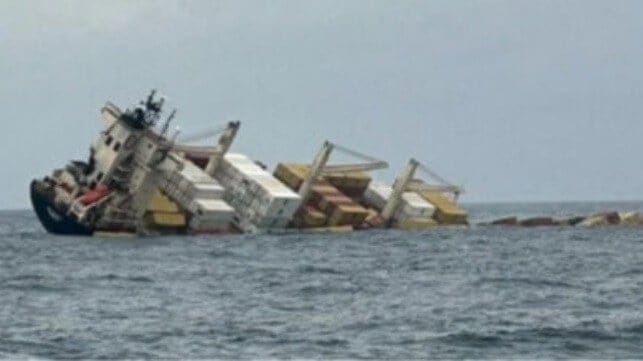
One casualty and a few incidents pushed the number of containers lost at sea up for the second year in a row, reaching possibly the fourth-highest level in the 18 years that the World Shipping Council has been tracking losses. The level of losses, however, appears in line with the long-term average, with the industry trade group further highlighting that it is an infinitesimal portion of the number of containers transported each year.

In its annual Containers Lost at Sea Report, WSC calculates that a total of 1,478 containers were reported lost overboard in 2025 out of a total of approximately 280 million transported globally. It notes that one casualty, the loss of the MSC Elsa 3 off India in May 2025, accounted for 640 containers within the total. That represented 43 percent of the boxes reported lost overboard during the year.

The number, however, is above the three-year average for the industry and is nearly triple that of 2024, when 576 containers were reported lost overboard. The prior year, 2023, had seen the industry’s lowest ever recorded level at just 221 containers reported lost at sea.

The peak years generally consist of one or two major casualties as well as various smaller incidents. The highest recorded losses were in 2013, with 5,578 containers lost, primarily driven by the MOL Comfort, which broke in two in the Indian Ocean. The next highest peaks came in 2020 with a series of casualties, including the ONE Apus, which lost 1,816 boxes in the North Pacific, and in 2021, when several ships were caught in heavy seas, and the X-Press Pearl burnt and sank off Sri Lanka.

WSC highlights that the key challenges remain weather and ocean conditions, although the industry has made significant strides in managing the phenomenon known as "parametric rolling." It also points to fire-related losses. 

As an industry, they continue to work on improving safety factors, with work focusing on the misdeclaration of dangerous goods. It highlights the 2026 introduction of new reporting requirements adopted by the International Maritime Organization and safety rules for the transport of charcoal.

The report also shows that for the first time, 128 containers were recovered in 2025. The WSC says that it is the highest recovery figure since it began gathering data in 2023 on boxes recovered.

It is also continuing its education efforts for the industry on issues such as stowage and lashing plans and the safe execution of voyages. Another focus is on the Code of Practice for Packing Cargo Transport Units. A draft code has been developed and submitted to the IMO for consideration. 

The World Shipping Council concludes by saying the long-term trend continues to show that container losses remain a very small fraction of the total global movements of boxes. It says year-to-year figures fluctuate, often driven by extreme weather and isolated events, while the overall trajectory remains stable and significantly below earlier peak years.


U.S. Opposes Sale of Artifacts Recovered from the Titanic

RMS Titanic
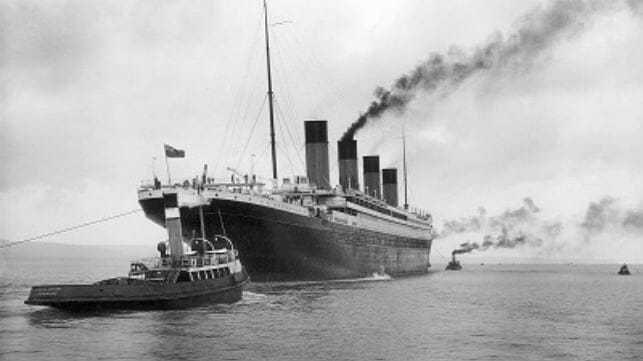
Famed liner Titanic departing ahead of its ill-fated maiden voyage (public domain photo)

Published Jun 27, 2026 5:24 PM by The Maritime Executive

The U.S. District Court in the Eastern District of Virginia, which continues to oversee the management of the wreck of the famed ocean liner Titanic, has given the salvage company and the United States until Monday, June 29, to file any supplemental briefings concerning the proposed auction of artifacts recovered from the wreck site. This comes after RMS Titanic filed in March that it was planning to auction some of the artifacts, and NOAA (National Oceanic and Atmospheric Administration), which represented the United States’ interests, repeated its opposition to the sale of any artifacts.

Salvage operations at the wreck site began in 1987, just a year after the team from Woods Hole Oceanographic Institution found the vessel 2.5 miles down, roughly 400 miles off the coast of Newfoundland in international waters. NOAA, in a court filing that was just unsealed in June, says that approximately 5,500 artifacts have been recovered from the debris field between 1987 and 2004. Some 2,100 of the artifacts were taken to France as its research institute organized the earliest recovery dives at the site.

In its March 2026 update filed with the court, RMS Titanic reported that it was planning the auction of some of the items recovered and previously controlled by the French. Items for which no heir or rightful owner could be established were eventually turned over to RMS Titanic. 

It was from the French portion of the collection that the company reported it intended to sell 100 lots. Among the items, Associated Press reports, would be a bronze cherub from the ship, a necklace of gold nuggets, and a heart-shaped pendant. RMS Titanic said it would conduct a four-city tour to display the items before the auction. The company asserts that the French items are not part of the agreement with the United States and are not subject to the same limitations.

It is not the first time the group has attempted to sell items, reports AP. However, in the past, the U.S., along with preservation groups and victims’ relatives, was successful in getting the court to block any sales.

NOAA contends that the proposed sale would violate the long-standing Covenants and Conditions that have been established for the wreck site and any items recovered from the debris field. Shortly after the discovery of the Titanic’s location and the existence of the debris field, the U.S. Congress directed NOAA to consult with the UK, France, Canada, and others to develop the international guidelines. The guidelines state as a general principle that all the artifacts should be kept together and intact as a collection for display. RMS Titanic has organized or participated in numerous displays of artifacts, including a section of the hull, conducted over the years,

The court issued orders in 2011 about the maintenance of the artifact collection, and NOAA contends any sale would violate that order. It also asserts that the predecessor company made similar commitments to France to maintain the collection.

The filing asks the court to prohibit the sale of any items from the French artifacts. NOAA calls for RMS Titanic to be prohibited from advertising for sale or conducting any sale without the court’s approval. Further, it says the French government should be notified and given the opportunity to set forth its position on the intended sale, if it chooses.

Items related to the Titanic have come up for auction in the past and drawn significant amounts. In November 2025, a pocket watch that was recovered from the body of Isidor Straus (one of the owners of the U.S. department store R.H. Macy and part of Titanic lore, as his wife refused a seat in a lifeboat, saying she wanted to be with her husband). Both went down with the ship, and she was never found, but he was found, and the watch was returned to the family. It sold at auction for a record-breaking £1.78 million ($2.32 million), NBC News reported. A life jacket worn by a survivor sold at auction in April 2026 for £670,000 (nearly $885,000). Other items carried off the ship by survivors, including menus and bits recovered from the ocean in the days after the disaster, have also been sold over the years.

In addition to Monday’s deadline for any supplemental briefing concerning the proposed auction, the court has set July 10 as the deadline for responses. Various groups have joined with NOAA, filing letters of support to oppose the auction.

RMS Titanic is no stranger to controversy, as in the past few years, it initially sought approval in 2000 to remove the Marconi wireless from the wreck, but the expedition was delayed by the pandemic and opposition. In 2024, it withdrew the request, which had also drawn strong opposition, and instead conducted an imaging and research expedition, using unmanned ROVs to further image and research the site and located significant new items in the debris field.


Russian Warships Linger in the English Channel

Russian vessels in the English Channel
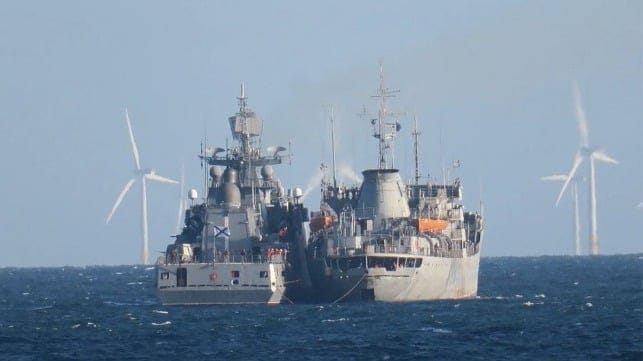
RFS Admiral Grigorovich (F494) ties up alongside PM-82 amidst a North Sea wind farm (Royal Navy)

Published Jun 28, 2026 11:14 AM by The Maritime Executive

The Russian frigate RFS Admiral Grigorovich (F494) has been lurking in the English Channel since the end of April, evidently to escort dark fleet tankers carrying Russian oil transiting through the English Channel. The goal is to protect them from the ship seizures now being carried out by the British as well as the French government.

Since the seizure on June 14 of the sanctioned Cameroon-flagged Aframax Smyrtos (IMO 9389100), this mission has become a critical task for the Russian Navy, given that almost all tankers exporting crude and LNG from the primary Russian terminals at Primorsk and Ust-Luga need to transit through the English Channel if they are otherwise not to have to divert around Ireland – on a route where they are still vulnerable to interception. Given the Ukrainian long-range sanctions program affecting both Primorsk and Ust-Luga, more traffic is now coming out of Murmansk and the Kola Peninsula as well, and these tankers also need to pass through the English Channel, where geography puts them at risk of maritime interdictors.


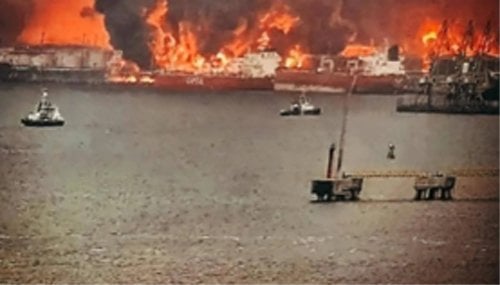
Fires burning in Ust-Luga, post a Ukrainian attack in June captured on social media 


In late June, the Admiral Grigorovich was observed by the Offshore Patrol Vessel HMS Tyne (P281) conducting a fuel transfer with the Project 304 Amur Class floating repair ship (PM-82), not the first occasion where these two ships have been seen alongside each other. The operation was conducted in the area of the Galloper Wind Farm, which lies 15 nautical miles off the Suffolk coast in the North Sea. Amur Class vessels were designed to fulfill the role of dockside base repair workshops, so a ship-to-ship refueling operation at sea is a makeshift procedure outside their normal operating parameters, and with implicit risks.

Also pressed into service by the Royal Navy to keep watch on the Admiral Grigorovich (F494) has been the Type 23 frigate HMS Somerset (F82), OPVs HMS Severn (P282) and HMS Mersey (P283), and the Hunt Class minehunter HMS Ledbury (M30), as well as naval helicopters. The persistent Russian presence in the Channel, which has also seen the Ropucha Class landing ship RFS Aleksander Shabalin (LST110) and the tanker MV Mikhail Britnev (IMO 9081370) passing through recently, is a manifestation of the increased Russian threat that the British defense budget is now being stressed by. Dealing with this is a good test of improvisation skills, but it is imposing a considerable strain on the ingenuity of naval planners, as well as on ships’ crews diverted from planned training, port visits, and leave.

The operation to keep a watchful eye on the Russians lingering in the Channel is also necessary because the Aframax Smyrtos is being detained off Weymouth, with its crew still aboard. The captain is being detained onshore, and the British government is proceeding with plans to seize and sell the cargo on board, potentially to gift the proceeds to the Ukrainian government. It would be embarrassing if the Smyrtos were to be buccaneered.


Resolute Dragon Exercise Upsets the Chinese Navy East of Taiwan

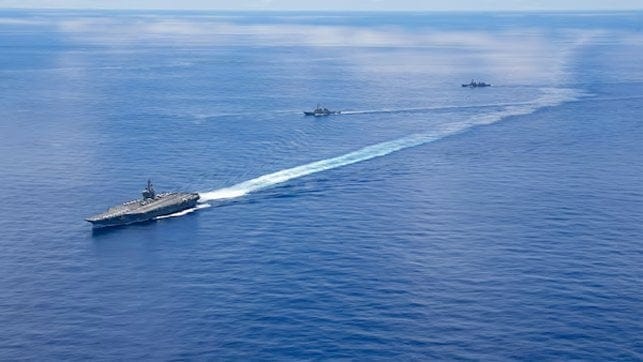
USS George Washington Carrier Strike Group sails in formation with Japan Maritime Self- Defense Force
USS George Washington Carrier Strike Group sails in formation with Japan Maritime Self- Defense Force (US Pacific Fleet)

Published Jun 28, 2026 2:50 PM by The Maritime Executive

Chinese hackles have been raised once again by Japanese and U.S. Marine maritime activity taking place in the seas around Taiwan, where the nearest Japanese island lies just over 60 nautical miles east of the Taiwanese coast.

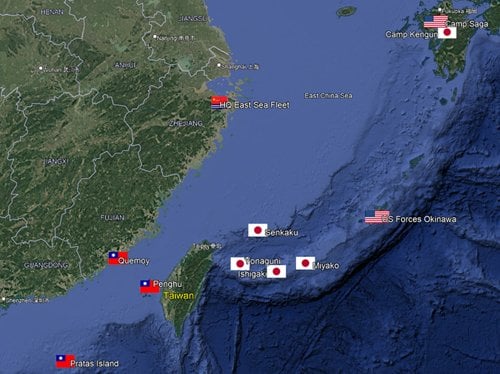
Exercise Resolute Dragon involves both the U.S. Marine Corps and Japan’s Ground Self-Defense Forces (JGSDF) and is taking place over training areas in Kyushu, Okinawa, and the southwestern Japanese Nansei Chain islands of Miyako, Ishigaki, and Yonaguni. No activity is planned to take place on Senaku Island, which is contentious territory that has seen regular intrusions by Chinese PLA Navy vessels challenging Japanese sovereignty.


Japanese Nansei Chain islands, east of Taiwan, where Exercise Resolute Dragon is taking place 
(Google Earth/Copernicus/CJRC)


Of particular concern to the PLAN will be the involvement of the 12th Marine Littoral Regiment from the 3rd Marine Division, which is permanently based at Camp Hansen in Okinawa, and is tasked alongside the JGSDF with defending Japan’s outlying islands. The 12th Marine Littoral Regiment received delivery of two new coastal artillery systems this month, namely the Navy-Marine Expeditionary Ship Interdiction Systems (NMESIS) and Marine Air Defense Integrated Systems (MADIS). These systems both deliver an upgrade to the range of weapons systems that are capable of countering PLAN air and drone intrusions, which, up until now, have been difficult to challenge. A second 3rd Marine Division unit, the 3rd Marine Littoral Regiment based in Hawaii, received the same NMESIS and MADIS equipment somewhat earlier in 2024, and exercised with these systems in the Philippines during Exercise Balikatan 2026, which concluded last month.

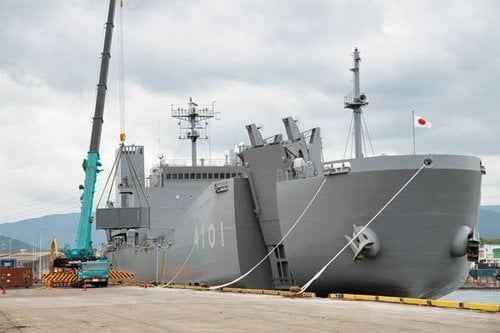
The JGSDF will also benefit for the first time from the deployment of two new amphibious ships designed with beach landing support for the Nansei Chain islands in mind. Both the 80m Nihonbare (L4151) and 120m Yoko (L4101) are the first of a planned 10-strong multi-class fleet of similar vessels, which will be based at the Kure Naval Base near Hiroshima.


Japan's new amphibious ship Yoko loading for the exercise (Japan Ground Self-Defense Force)

The deployment of new and capable US littoral defense systems, and the increasing sophistication of exercises that the United States is carrying out with its allies in the East and South China Sea areas appear to be touching a raw nerve with the editors of the China Military website, which is a good barometer of Chinese Wolf Warrior concerns. While China Military likes to advertise the prowess of PLAN capability, with reports of deployments and exercises, it appears to be equally focused on the tougher defense policy and bigger defense spending of Japan’s new Prime Minister Sanae Takaichi, but also with the tighter and deeper integration of US and Japanese forces operating alongside allied forces in the Southeast Asian region.