Thursday, July 02, 2026


Swimming crab trapped in plastic bottle survived two months on the ocean


Hiroshima University

A large, live swimming crab entrapped inside the HDPE bottle 

image: 

A large, live swimming crab, Portunus sanguinolentus entrapped inside the bottle. (Hajime Sato / Hiroshima University)

view more 

Credit: Hajime Sato / Hiroshima University


How did a large crab end up trapped inside a plastic bottle with an opening smaller than its body? Hiroshima University researchers investigated this unusual marine mystery, revealing a lesser-known impact of marine plastic pollution on crustaceans.

Marine plastic pollution is a major and well-known component of pollution in the oceans. Examples of the impacts of plastic pollution on ocean life serve as some of the most evocative demonstrations of the severe negative impacts of plastic pollution on marine animals. Images of seals and seabirds entangled in fishing nets, and sea turtles eating plastic bags are often used for this purpose.

Researchers at Hiroshima University discovered a crab trapped in a high-density polyethylene (HDPE) Shaoxing wine bottle floating on the surface of sea off Okinawa, Japan. Investigations into how the crab came to be trapped and how it managed to survive highlight that the dangers of plastic pollution extend even to smaller marine animals.

Their findings were published in the journal Ecosphere on April 3, 2026.

“During juvenile fish surveys in offshore waters, we happened to encounter a floating plastic bottle approximately 500 m off Sesoko Island, Okinawa, Japan, with many juvenile fish associated with it,” say study authors Hajime Sato and Yoichi Sakai. Sato, first and corresponding author of the study, was a doctoral student under Sakai at the time of the study (now a postdoctoral research fellow at the Okinawa Institute of Science and Technology (OIST) in Okinawa). Sakai is professor at Hiroshima University’s Graduate School of Integrated Sciences for Life. “[To our surprise], a large live swimming crab, Portunus sanguinolentus, was trapped inside the bottle. The crab was clearly larger than the opening of the bottle!”

The bottle was collected on July 15, 2022. It carried marks identifying it as having been manufactured on November 17, 2021. The bottle was open, allowing seawater to freely enter and leave. The mouth of the bottle was 24 mm in diameter, while the crab inside was 40.31 mm long, 88.23 mm wide, and weighed 42.06 g. Clearly, the crab could not have entered the bottle at its current size, so the researchers investigated how it came to be inside the bottle, and how long it had been trapped there.

The researchers explained that the study attempted to unravel the mysteries surrounding the survival and growth processes of the crab through various biological analyses. DNA analysis of the stomach contents revealed that the crab had consumed juvenile fishes associated with the bottle, including the rough triggerfish Canthidermis maculata, and the sergeant major Abudefduf vaigiensis, as well as algae that had probably grown inside the bottle. The study also estimated the drifting duration of the bottle from the growth rate of the goose barnacle Lepas anserifera attached to its surface. By combining these lines of evidence, the researchers concluded that the crab had entered the bottle as a juvenile, continued to feed on juvenile fishes and algae inside the bottle for about two months, and finally grew too large to escape.

“This crab reminds us of Salamander, a famous short story by Japanese novelist Masuji Ibuse,” the authors said. Salamander depicts the despair of a salamander who, after spending more than two years continuously eating in its burrow, becomes unable to leave because of its growth.

“Plastic bottles discarded by humans can trap crabs and prevent their escape. Similar cases have already been reported from waters around Japan, suggesting that this was not an isolated accident. Through this striking example, we would like readers to recognize that objects that make our lives more convenient can sometimes have unexpected effects on small marine animals, while also appreciating the remarkable vitality of the swimming crab,” the authors conclude.

The late Tetsuo Kuwamura at Chukyo University, Nagoya, co-authored the study.

This study was supported by the Sasakawa Scientific Research Grant from the Japan Science Society; and by the Japan Science and Technology Agency (JST) under the University Fellowships for the Creation of Science and Technology Innovation (JPMJFS2129). 

###

About Hiroshima University
Since its foundation in 1949, Hiroshima University has striven to become one of the most prominent and comprehensive universities in Japan for the promotion and development of scholarship and education. Consisting of 12 schools for undergraduate level and 5 graduate schools, ranging from natural sciences to humanities and social sciences, the university has grown into one of the most distinguished comprehensive research universities in Japan. English website: https://www.hiroshima-u.ac.jp/en


The bottle with associate organisms and the crab 

The bottle with attached algae and goose barnacles, juvenile fish collected along with it, and the swimming crab extracted from the bottle. (Hajime Sato / Hiroshima University)

Credit

Hajime Sato / Hiroshima University


Honeybee queens push pesticides to eggs to protect themselves over their offspring


Study reveals how contamination can increase in colonies


University of California - Davis

Queen bee and worker bees 

image: 

A honeybee queen surrounded by her retinue, which is an ever-changing group of worker bees charged with her care, feeding and protection. The fuchsia spot is applied to queen bees to make her easier to identify.

view more 

Credit: Sascha Nicklisch/UC Davis


Worker bees are the first line of defense when it comes to removing contamination in honeybee colonies, but a queen has her ways, too.

A honeybee queen facing chronic exposure to pesticides will take up that contamination and pass it along to her eggs, a process researchers call maternal offloading. 

The findings, which document for the first time the extent a queen will go to survive, are published in the journal Current Biology. Research was led by the University of California, Davis.

“In order to protect herself, the queen bee offloads these chemicals into her eggs to get rid of them,” said Sascha Nicklisch, the paper’s senior author and an associate professor in the Department of Environmental Toxicology. “No one has shown this in honeybees before.”

The findings offer a glimpse into a way that pesticides may build up in a colony long after exposure, once worker bees can no longer filter out contaminants. The findings are important for beekeepers, growers and integrated-pest-management planners who may want to consider pesticide exposure during foraging or colony expansion times.

Research was conducted in conjunction with Lawrence Livermore National Laboratory, or LLNL, and the U.S. Department of Agriculture’s Agricultural Research Service, or USDA-ARS.

Taking the queen into consideration 

“When pesticides accumulate to the extent that the queen bee has eggs that are so loaded they may no longer develop properly, there could be a tipping point,” Nicklisch said. “There may be a slow creeping effect of chemical accumulation that will contribute to delayed colony collapse.”

Toxicology studies on honeybees have generally focused on worker bees. However, this research looked at where chemicals get deposited in the hive and how that affects the entire colony, including the queen, her ovaries, the eggs and the wax. Inside a colony, worker bees feed and care for queens and developing larvae.

It has long been thought that queens are protected by worker bees that filter out contamination from the food they give to queens, but the scientists are seeing a limit to this protection, said Angela Encerrado-Manriquez, the lead author on the paper and a recent Ph.D. graduate from UC Davis.

“In our study, pesticides began to accumulate in queens over time, suggesting that worker filtration capacity can be overwhelmed,” Encerrado-Manriquez said. “When this happens, queens have their own defense. Maternal offloading allows them to shunt the toxic burden to their eggs.”

Technology and teamwork

Researchers created so-called “nanocolonies,” which represent the inner workings and functions of a hive and colony using conical plastic containers fitted with netted bottoms. Each nanocolony contained one queen and 60 worker bees. 

The bees were given pollen, water and food tainted with the pesticide methyl parathion that was tagged with a low-level radioactive marker to enable tracking. In the first day, worker bees were able to filter out 95% of the pesticide and deposit it into the honeycomb, but that number fell to 86% by day 10. 

The research was possible via a collaboration between the USDA, which provided unique expertise in honeybee biology and study design, and LLNL, which was able to measure radioactive tags down to the atomic level using a biological accelerator spectrometry, or BioAMS.

“With BioAMS, we can trace very low levels of a pesticide,” said Bruce Buchholz, an LLNL scientist and author on the paper. “The pesticide concentrations we used were not lethal and were environmentally relevant to that seen in nature.”

Honeybee queens can lay 1,500 to 2,000 eggs per day to support their hives, which pollinate about one-third of the world’s food crops. Losing colonies diminishes agricultural productivity and food security. 

“The queen is the only member of the hive who can lay eggs that become the next generation of workers,” Nicklisch said. “She keeps the colony alive, so understanding how pesticides can affect queen bees and also her offspring is important.”

How long queens can pass along contamination, the long-term effects on colonies and if it varies by pesticide are other topics for future research. 

Julia Fine and Eliza Litsey with USDA-ARS and David Baliu-Rodriguez, Sean Leonard and Bruce Buchholz at LLNL contributed to the research.

The USDA’s National Institute of Food and Agriculture and Non-Assistance Cooperative Agreement program supported the research, as did the PAm-Costco USA Scholarship program and the University of California National Laboratory Fees Research Program. The work at LLNL is under a U.S. Department of Energy contract.


Investor Outlook: EQ Bank begins PC Financial integration after acquisition


Published:

EQ Bank is beginning the next phase of its growth strategy after completing its acquisition of PC Financial, a deal that significantly expands its customer base and strengthens its position in Canada’s digital banking sector. The lender is now focused on integrating millions of new customers while broadening its product offerings through a long-term partnership with Loblaw.

BNN Bloomberg spoke with Chadwick Westlake, CEO of EQ Bank, about the integration timeline, plans to preserve the customer experience during the transition, the opportunities created by the PC Optimum partnership and how the acquisition supports the bank’s long-term growth ambitions.

Key Takeaways

  • EQ Bank expects the integration of PC Financial to take 12 to 18 months as it transitions customers and products onto a unified digital platform.
  • The acquisition expands the bank’s offerings with credit cards, insurance products and access to the PC Optimum ecosystem, creating new opportunities to deepen customer relationships.
  • Management says retaining PC Financial employees and leadership was a priority to preserve expertise in credit cards, insurance and customer experience.
  • The bank plans to remain digital-first while expanding its physical presence through PC Financial pavilions, ATMs and an omnichannel customer strategy.
  • EQ Bank says its immediate priority is executing a smooth integration before pursuing further growth opportunities in Canada’s banking sector.
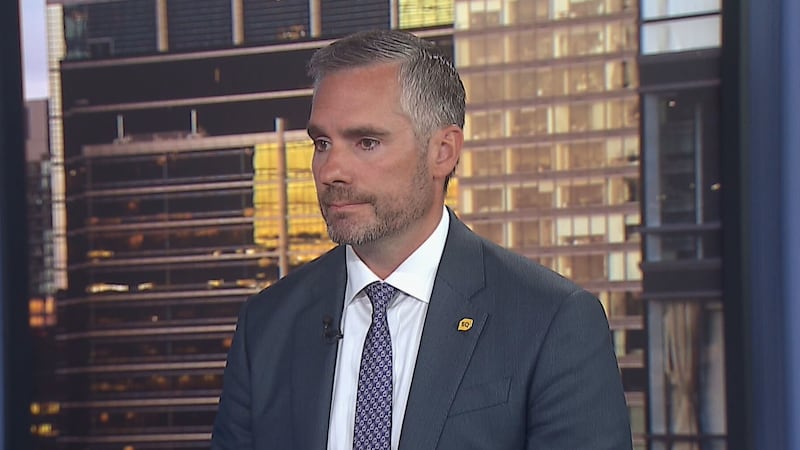
Chadwick Westlake, CEO of EQ Bank

Read the full transcript below:

ROGER: EQ Bank is on a mission to cement itself as Canada’s challenger bank. The company has now completed its acquisition of PC Financial, expanding its reach to serve nearly four million Canadians and the 18 million members of the PC Optimum program. Here to tell us more is Chadwick Westlake, CEO of EQ Bank. Chadwick, thank you very much for joining us today.

CHADWICK: Thanks for having me, Roger.

ROGER: Are you having a chance to breathe now with everything that’s been going on? I imagine you’ve been busy until yesterday. You’re still going to be busy, but busy until yesterday.

CHADWICK: We were, yeah. It was a great Canada Day for us, a great Canada Day, importantly, for Canadians. And so, great to complete the deal.

ROGER: Yeah, you chose Canada Day on purpose, didn’t you?

CHADWICK: This is about Canada. Every dollar we generate, we put back into Canada. This is about Canadian jobs and better value for Canadian consumers.

ROGER: All right, and this whole deal came together quicker than most, didn’t it?

CHADWICK: It would be, I believe, Roger, the fastest in Canadian history, and that says something about the federal government’s focus on more choice and more competition for everyday Canadians.

ROGER: All right, so imagine you popped some champagne yesterday. Today it’s work. What’s the focus today? What are you doing first?

CHADWICK: First is focusing on serving our customers. PC customers, business as usual. We’re here to serve them and then bring them more choice. Same thing with EQ Bank customers. We have a lot more products. We have the loyalty program now. We’re focused, Roger, on remaking banking so every Canadian gets ahead every day. So, we’re going to integrate it really well, take care of everyone really well and bring a lot more choice.

ROGER: And how do you see that integration unfolding?

CHADWICK: It’s going to take some time. This is a very big deal. I think before the deal earlier this week we started with 800,000 customers. We’re going to end the week with just about four million customers and become more of a mainstream name in Canada, truly about bringing more choice for everyday Canadians and creating more jobs for Canadians. So, we’re going to take probably the next 12 to 18 months to make sure we do it well. This is just too big to rush. We’re going to take our time, integrate digitally, bring the products together, offer more products to existing customers and grow this very thoughtfully. So, all eyes on the integration.

ROGER: You’re bringing in $4.4 billion in credit card receivables. That portfolio is a challenge you haven’t had before. What’s it going to be like trying to work with that?

CHADWICK: We have the right team, so we preserved all the people at PC Financial. They all work with us now. This was about Canadian jobs and growing Canadian jobs, so they’re all there. That’s the beauty of it. This combines complementary people and capabilities, so we’ll be comfortable with that. I think the portfolio is very high quality as well. This is not a subprime-quality portfolio. This is a great, high-quality, prime, super-prime portfolio. So, we’re going to intend to grow it. We’re very comfortable with our exposure on it.

ROGER: And how important was keeping the execs from the other side? Because a lot of the time you see companies want to bring in their own people. Why are you doing it differently this time?

CHADWICK: Such a special deal in every way, not only what we’re doing for Canadians through more rewards and better value, but growing jobs. Canadians are struggling, right? Look at the unemployment rate. Look what’s happening in the country. We’re about building this country. It’s very important to me that we preserve those jobs, and it’s also different products, right? We’re not the experts, per se, in credit cards. They are. We also bring in an insurance company, PC Insurance, so they’re the experts in that. So, they all come together as very, very important. And we took great care of them. We welcome a new chief risk officer from there, new heads of customer experience, analytics and cards. So, they all have jobs. This has been pretty exceptional and special that way.

ROGER: Okay, how do things change after a 17 per cent year-over-year drop in Q2 adjusted earnings? Does that change how you’re approaching everything? Is that an added headwind to you?

CHADWICK: For us, well, a lot has changed over the past year. I’m less about looking in the past and more about looking forward. So, I’m very comfortable now that we have actually just about doubled our revenue, more than tripled our non-interest revenue, again. Our customers grew about four times. We added billions of new assets, and importantly, though, we can stop, pause and reflect on what our new customers need the most. So, there’s a great opportunity to do well first for Canadians, for jobs, and then we can reward our shareholders very well. Here, we believe this will be accretive to EPS and ROE, and there’s all kinds of opportunity to offer more products at a great price for these customers.

ROGER: And you have built-in opportunities with Loblaw and the PC Optimum program. How do you see that? How do you see getting those Optimum clients and using that?

CHADWICK: It’s the largest and, I think, most effective loyalty program in Canada, as you said, with more than 18 million Canadians, and this is very important to Loblaw. So, we’re going to be all over the place in Canada. EQ Bank will, over the next 12 to 18 months, become omnipresent in Canada, whether you’re at a Loblaw banner store, Shoppers, at an Esso, wherever there’s PC Optimum. EQ Bank is going to be there, and it’s important that this is a partnership. So, you also saw, Roger, we welcomed Galen Weston and Richard Dufresne on board. This is very important to Loblaw, to us mutually, that this is very successful. So, with that 18 million-member Optimum program, we will have the chance to offer them some products, some great high-interest everyday savings accounts, the cards. There’s a lot more we can do for them and give them choice and, importantly, get more PC Optimum into those people’s hands because they can get more groceries, more gas and more rewards that matter for people. So, it’s a real mutual opportunity.

ROGER: Now, do you see yourself becoming bricks and mortar, then?

CHADWICK: No, I think we’re going to be whatever customers need most. So, we’re going to be where customers are, get closer to the customer. If they are in a store, we will have reimagined pavilions where you can actually stop and talk to an EQ representative. We’ll still be digital first, digital- and AI-first. We’ll have our contact centres. ATMs will be omnipresent, but not bricks and mortar, per se. It’s more of a hybrid, omnichannel setup, which makes us one of the only challenger banks in the world with that type of channel distribution.

ROGER: Okay, and where do you see this going next? What’s next for you?

CHADWICK: First, integrate, do this really well. We have four million people to take care of. That is such a privilege, and it’s such a big growth curve for EQ. So, we’re going to first take care of this, integrate as effectively as possible, make sure it’s a seamless experience, get more great value and more products into these customers’ hands, and then we continue to grow. We think there’s an addressable market significantly above our current customer base, so we want to become a visible choice for those everyday Canadians, to be the number one challenger bank in this country. Roger, I’ve noticed sometimes you have fintechs that want to really change the system, almost destroy banking in a healthy way. Then you have the existing banks that want to preserve the way things are. We want to improve it. We want to give more choice. We want to remake banking so every Canadian gets ahead every day.

ROGER: All right. Thank you, as always, for joining us. We appreciate it, Chadwick.

CHADWICK: Thank you, Roger.

ROGER: Thanks very much. That was Chadwick Westlake, CEO of EQ Bank.

---

This BNN Bloomberg summary and transcript of the July 2, 2026 interview with Chadwick Westlake are published with the assistance of AI. Original research, interview questions and added context was created by BNN Bloomberg journalists. An editor also reviewed this material before it was published to ensure its accuracy and adherence with BNN Bloomberg editorial policies and standards.