Sunday, May 10, 2026

At least 39 killed in fresh Israeli strikes on Lebanon
THE REAL REASON FOR THE WAR ON IRAN
COVER FOR ISRAELS WIDER WAR
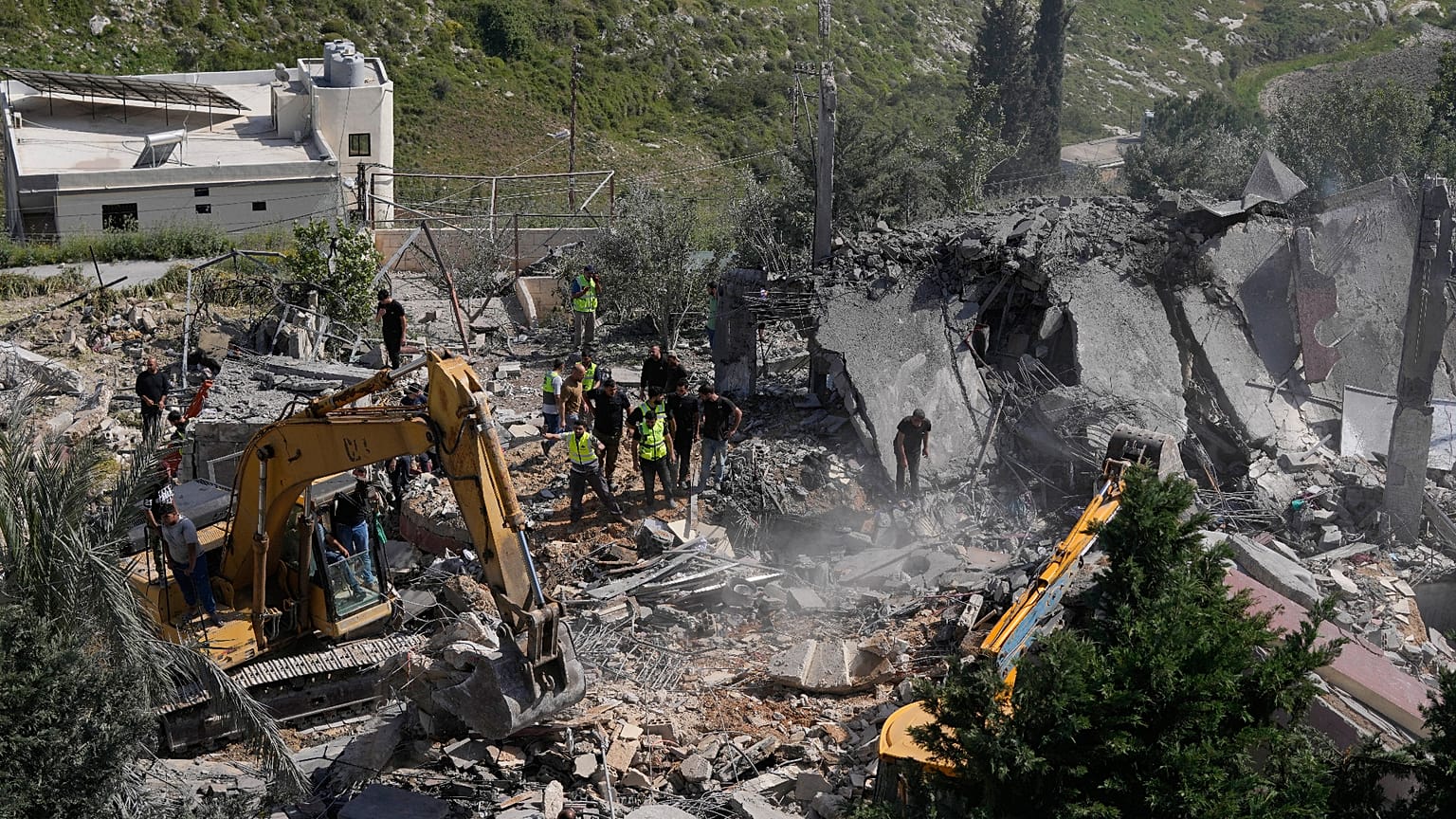
Rescue workers search for survivors using heavy machinery in the rubble of houses damaged by an Israeli airstrike in the village of Saksakieh, south Lebanon, Saturday, May 9,
Copyright Copyright 2026 The Associated Press. All rights reserved

By Rory Elliott Armstrong with AFP
Published on 

Despite a three-week-old ceasefire, Israel struck Lebanon repeatedly on Saturday killing at least thirty-nine people, while Hezbollah retaliated with drone attacks on northern Israel.

Israel carried out strikes across Lebanon on Saturday, killing at least thirty-nine people in the south of the country, according to local authorities.

The fresh attacks were some of the most intense since the start of a three-week-old ceasefire between Israel and Iran-backed Hezbollah that has done little to halt daily exchanges of fire, mostly in southern Lebanon.

Hezbollah said Saturday that it had targeted troops in northern Israel with drones on at least two occasions in response to the continued strikes.

The Israeli military said "several" explosive drones were launched into Israeli territory, with one army reservist severely wounded and two others moderately injured in one of the attacks.

Lebanon's state-run National News Agency (NNA), meanwhile, reported a series of Israeli strikes across the south, including one on the town of Saksakiyeh.

The health ministry said that raid "resulted in an initial toll of seven martyrs, including a girl, and 15 wounded, including three children".

The Israeli military said it struck "Hezbollah terrorists operating from within a structure used for military purposes" in Saksakiyeh.

It added it was "aware of reports regarding harm to uninvolved civilians in the structure in which the terrorists were struck. The details of the incident are under review."

The health ministry reported that another Israeli strike on a motorbike in the city of Nabatieh hit "a Syrian national and his 12-year-old daughter".

"After they managed to move away from the site of the first strike, the drone attacked a second time," killing the father, the ministry said, adding the drone then targeted the girl "directly for a third time".

The girl was undergoing life-saving surgery, it added.

In the southern town of Bedias, the health ministry said one person was killed in an Israeli strike and 13 wounded, including six children and two women.

Israel's military had called on residents of nine villages to evacuate, saying it would act "forcefully" against Hezbollah, though neither of the two locations of the fatal strikes were included in the warnings.

NNA also reported that the "Israeli enemy launched two strikes on the Saadiyat highway", referring to a location around 20 kilometres (12 miles) south of Beirut and outside areas where Hezbollah has traditionally held sway. It later reported a third strike nearby.

A new phase

Under the terms of the ceasefire released by Washington, Israel reserves the right to act against "planned, imminent or ongoing attacks".

Earlier on Saturday, its military said it had struck more than 85 Hezbollah infrastructure sites in the past 24 hours.

Its troops are also operating inside an Israeli-declared "yellow line", running around 10 kilometres (six miles) inside Lebanon along the border, where residents have been warned not to return.

Hezbollah lawmaker Hassan Fadlallah on Saturday warned of "a new phase, in which the resistance (Hezbollah) will not accept a return to pre-March 2".

Hezbollah drew Lebanon into the Middle East conflict on March 2 when it launched rockets at Israel to avenge the killing of Iran's supreme leader in US-Israeli strikes.

Even before then, Israel had carried out regular strikes targeting the group - accusing it of seeking to rearm - in spite of a 2024 ceasefire intended to end the last war between the foes.

Until March, Hezbollah had largely refrained from firing back.
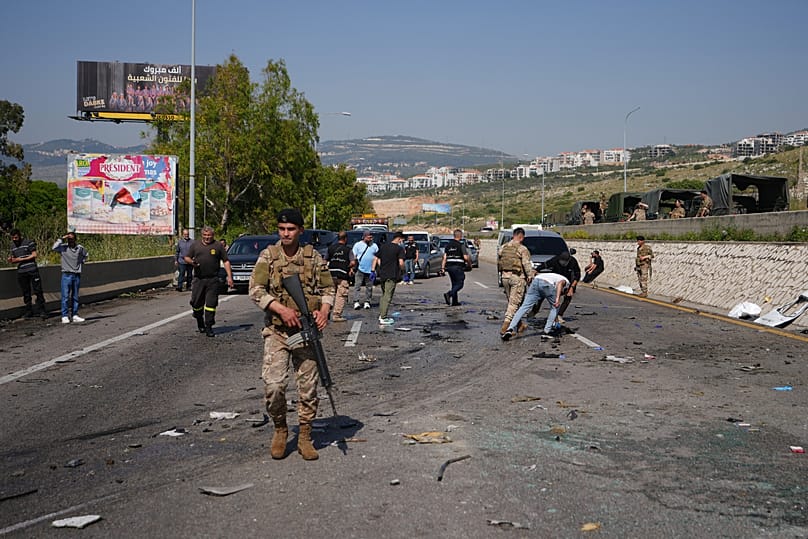
Security forces and residents inspect and clear debris scattered across a road at the scene of an Israeli airstrike that hit a car in the coastal town of Saadiyat.
Security forces and residents inspect and clear debris scattered across a road at the scene of an Israeli airstrike that hit a car in the coastal town of Saadiyat. Copyright 2026 The Associated Press. All rights reserved

"When it attacks our villages and suburbs, the enemy must expect a response, and this is what the resistance is doing," Fadlallah said, alluding to an Israeli attack this week on Beirut's southern suburbs that it said killed a Hezbollah commander.

In addition to its drone attack in northern Israel, Hezbollah on Saturday also claimed several attacks on Israeli military targets inside Lebanon using rockets and drones.

Lebanese and Israeli representatives are set to hold a fresh round of direct talks in Washington next week.

A first meeting was held days before US President Donald Trump announced the ceasefire in Lebanon, and the second round as he announced a three-week extension.

Fadlallah said the meetings amounted to a "path of concessions", reiterating his party's call for the government to withdraw in favour of indirect talks.

Israeli attacks on Lebanon have killed nearly 2,800 people since March 2, including dozens since the truce went into force, according to Lebanese authorities.

 

Trump open to shifting US troops from Germany to Poland

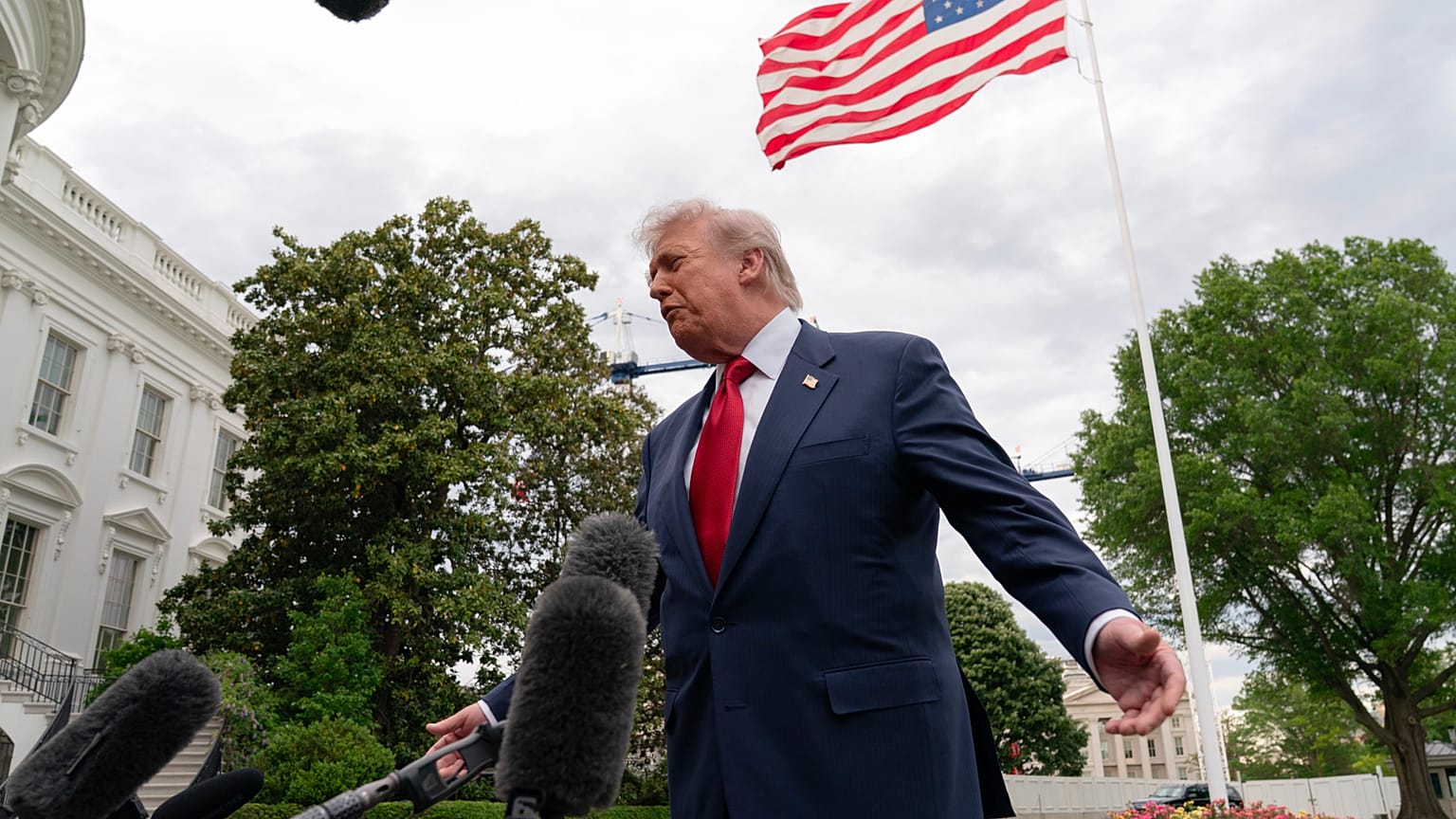
Donald Trump told reporters that relocating American troops from Germany to Poland is possible
Copyright Jose Luis Magana

By Jan Bolanowski
Published on 

Will US troops withdrawn from Germany be moved to Poland? When asked, US President Donald Trump said Warsaw favours the idea, and it is feasible.

US President Donald Trump has admitted he is considering moving some of the American troops being withdrawn from Germany to Poland.

The statement was made during a conversation with journalists at the White House and fits into a broader debate over a new NATO balance of power in Central and Eastern Europe.

When asked about the possibility of relocating some of the forces to Poland, Trump replied that "it's possible," stressing the very good relations with the Polish authorities. In his remarks, he also referred to President Karol Nawrocki, whom he had previously backed publicly.

"Poland would like that. We have excellent relations with Poland. I have excellent relations with President [Nawrocki]. Remember, I endorsed him, and he won – even though he was trailing badly, he still won. He's a great fighter, a terrific guy, I like him a lot, so it's possible... I might do it," Trump said.

Trump announces partial withdrawal

According to media reports, the US administration plans to withdraw around 5,000 troops from Germany over the next six to twelve months. Trump has suggested, however, that the scale of the reduction could be even greater. At present, some 35,000 to 37,000 American service personnel are stationed in Germany.

A few days ago, Nawrocki declared that Poland is ready to host American troops withdrawn from Germany and has the necessary military infrastructure. Warsaw views any increase in US forces as a way to strengthen regional security and NATO's eastern flank.

"We already have the infrastructure in place, and it is in the interests of Poland, Lithuania and the Baltic states for as many American troops as possible to be stationed here," Nawrocki says.

The decisions are set against a backdrop of tensions between the Trump administration and Berlin. As early as his first term, Trump criticised Germany for spending too little on defence and announced a reduction in the US military presence on its territory. In 2020, however, a similar plan for a partial withdrawal of troops ultimately did not go ahead.

Experts point out that what may prove crucial is not only the number of troops, but also where they are deployed.

"The US forces in Germany have their military importance, and an even greater political and historical significance. From our point of view, the American military presence in Germany should remain, that is clear. But once this reduction is underway, we should be making a strong case for those troops to be moved to Poland. That is in our interest. And Poland should send a clear signal on this," Tomasz Szatkowski, a former Polish ambassador to NATO, said recently in an interview with Euronews.


Can US law stop Trump from withdrawing troops from Europe?


By Tamsin Paternoster
Published on 

A 2026 US defence law does not prevent troop withdrawals from Europe, but imposes consultations and justifications for major cuts that make such a move more difficult.

The US is set to withdraw around 5,000 troops from Germany, according to the Pentagon — a move that has raised concerns about a broader reduction of US forces across Europe.

There are around 36,000 US troops currently in Germany alongside several key military hubs, including Ramstein Air Base, command headquarters and a medical centre that treated casualties from wars in Afghanistan and Iraq.

An estimated 80,000 to 100,000 US service members are stationed across Europe, depending on rotations.

Such bases consolidate NATO's presence in Europe, hosting US forces and supporting joint training and operations with allies.

The planned reduction of 5,000 troops amounts to around 14% of the total number of service members stationed in Germany. Those set to withdraw include a brigade combat team and a long-range fires battalion that the Biden administration planned to deploy when it was in power. They will now not be stationed in Europe.

Sean Parnell, spokesperson for the Pentagon, which houses the US Department of Defense, said that the decision follows a "thorough review of the Department's force posture in Europe and is in recognition of theatre requirements and conditions on the ground."

The announcement to withdraw troops — which came after German leader Friedrich Merz issued a rebuke of the Trump administration's actions in Iran — is in line with threats US President Donald Trump has made in the past.

At the end of his first term in 2020, the president announced plans to withdraw around 9,500 US troops from Germany. The idea faced backlash from Congress before it was ultimately halted by the Biden administration, which took power in 2021.

Despite criticism from Republican and Democratic lawmakers of his recent proposal to pull troops, Trump doubled down on Saturday, telling reporters in Florida that his administration would be "cutting a lot further" than the 5,000 already mentioned.

Is Trump able to wind down large numbers of US troops in Europe?

Several analysts and commentators have pointed out that a piece of US defence legislation, which became law this year, places restrictions on the Pentagon from making significant cuts to the number of troops deployed in Europe.

Under Section 1249 of the National Defense Authorisation Act for 2026, administrations are limited in how they can use Pentagon funds to cut troop numbers.

According to the law, the Pentagon cannot use its budget to reduce troop levels in Europe to below 76,000 for more than 45 days unless it meets certain conditions.

These include certifying that the cuts are in the interests of US national security, consulting NATO allies on the move beforehand and submitting a detailed report to Congress.

There is also a waiting period, meaning large reductions in troop numbers cannot take place immediately.

Beyond legal limits, analysts note that withdrawing troops from Europe is complex and expensive.

Analysis by Liana Fix from independent US think tank the Council on Foreign Relations, notes that US forces in Germany are embedded in global command structures, meaning that relocating them is logistically complex, costly and could weaken military readiness.

On the German side, officials have so far downplayed the immediate impact of losing 5,000 troops, with Defence Minister Boris Pistorius describing the move as "foreseeable", and pushing for Europe to take more responsibility for its own safety.

German Foreign Minister Johann Wadephul and Chancellor Friedrich Merz equally projected calm in the wake of the news, with Merz telling a television interview on Sunday: "They are constantly redeploying their troop units worldwide, and we are affected by that too."

Critics and politicians pointed out that the threat of not stationing Tomahawk missiles on German soil poses a bigger risk than troop withdrawal, as it leaves Berlin with a missile gap that it could not replace on its own accord.


Europe's rearmament programme is falling apart from the inside just when Ukraine needs it most

Europe's rearmament programme is falling apart from the inside just when Ukraine needs it most
Only 12 of 27 EU member states are even reporting their arms purchases to Brussels; the PURL weapons pipeline for Ukraine is under severe strain as the Iran war consumes US stockpiles and deliveries are delayed / bne IntelliNewsFacebook
By Ben Aris in Berlin May 10, 2026

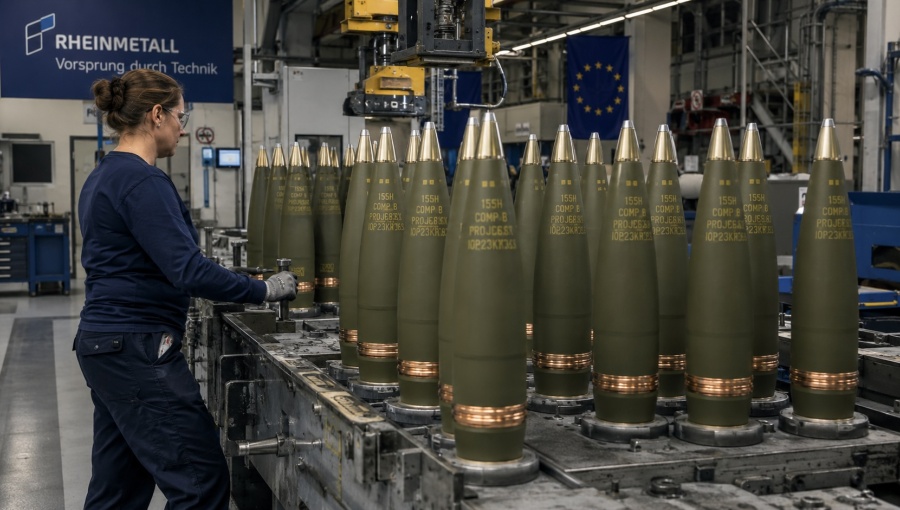
Europe's most ambitious attempt to coordinate its own defence — the €800bn ReArm programme launched with considerable fanfare in early 2025 — is being quietly undermined by the very governments that approved it. Member states are ignoring reporting requirements, protecting national defence industries and blocking collabourative purchasing, even as a convergence of crises makes pan-European coordination more urgent than at any point since the Cold War.

The scale of the coordination failure has been laid bare in a written reply from Defence Commissioner Andrius Kubilius to a European Parliament question. Only 12 of the EU's 27 member states submitted data on joint procurement to the European Defence Agency — the body tasked with fostering security cooperation among member countries, Politico reports. Without the data from the majority of member states, Kubilius warned, it is "impossible" to properly assess how many countries are actually collabourating or whether the EU's broader defence strategy is working at all.

The failure of basic information-sharing exposes a deeper dysfunction that will also undermine the new drive to create a Euro Nato that is no longer dependent on the US for Continental security. The European Defence Industrial Strategy — approved in 2024 as the bloc's first systematic effort to improve defence readiness by 2035 — sets a non-binding goal to buy at least 40% of defence equipment collabouratively by 2030. In 2022, collabourative procurement stood at 18%. In 2007, the EDA set a non-binding 35% benchmark. Nearly two decades later, Europe has moved in the wrong direction. And since the reporting requirements carry no penalties, Brussels has no mechanism to compel compliance beyond public embarrassment.

Beyond the immediate problems with modernising the defence sector, the member states ability to pay for the modernisation is also under pressure thanks to the increasingly dysfunctional European economy. Another 12 out of 27 member states have now breached the EU’s Excessive Deficit threshold of 3% of GDP and need to introduce austerity measures to. Get government spending back under control or face penalties.

As IntelliNews reported, the combination of crises has exposed fiscal fragility around the world, with Europe amongst the countries with the least fiscal space to expand borrowing to meet its mounting defence, competitive and energy transformation bills.

In addition to the €800bn ReArm programme, the EU is now on the hook of helping Ukraine raise €100bn a year to pay for its war, it needs to invest some €600bn into power sector infrastructure to complete the green transformation, and the Draghi report recommended spending €800bn a year over the next four years to close the competitive gap with the US and China that has opened up after decades of underinvestment. As IntelliNews reported, increasingly Europe can’t afford to take over the burden of supporting Ukraine and since taking over responsibly has failed to offset the end of US military aid.

The national interest problem

The European defence market has long been fragmented. Each member state jealously guards its own defence industries and funnels contracts toward them — a practice that creates costly duplication, with countries fielding many different varieties of jets, tanks and other systems that cannot easily interoperate. That fragmentation is precisely what ReArm was designed to address. Instead, it is reproducing the same national-interest dynamics at a larger scale.

For example, a fundamental argument has broken out amongst members, where French President Emmanuel Macron is insisting that the EU buy only European-made weapons, whereas other states want to continue to source US-made weapons.

The tension has erupted most visibly in Poland, where nationalist President Karol Nawrocki vetoed legislation implementing Warsaw's €43.7bn SAFE  (Security Action for Europe) loan out of fear that the funds could benefit German companies. Pro-EU Prime Minister Donald Tusk has insisted that 89% of the cash will remain in Poland — a guarantee that, as Brussels has noted, directly contradicts the common procurement objective the loan was designed to support.

"This distrust is one of the major blocking elements to move towards a genuine and highly necessary European Defence Union," Wouter Beke, a Belgian MEP from the European People's Party who sits on the Parliament's Defence and Security Committee, said, cited by Politico.

One possible response would be to make data sharing a condition of access to EU defence funding — a link that the Commission has so far declined to make, and one that would "almost certainly spark strong national resistance," as Politico  noted.

The legal architecture of the European Defence Industrial Strategy reflects this political reality. It is "just a communication with no legal teeth" — a recognition that defence remains a national competence.

The Commission itself acknowledges that "defence industrial readiness can only be achieved if the Member States' continued increase of defence spending is enabled to actually prioritise collaborative investments." Getting member states to actually do so is another matter.

The weapons pipeline crisis

The internal dysfunction of Europe's rearmament effort would be costly at any time. It is arriving simultaneously with a collapse of the weapons pipeline from the US to Ukraine — making the failure of EU coordination directly consequential for the front line.

Several sources told the Financial Times that the US has informed the UK, Poland, Lithuania and Estonia that there will be long delays to contracted arms deliveries, with two sources also mentioning possible delays to Asia. Five sources familiar with the matter told Reuters  that the delays would affect several European countries, including in the Baltic and Nordic regions, as the war in Iran continues to deplete weapons stockpiles. Some of the weapons in question were purchased by European countries under the Foreign Military Sales programme but have not yet been delivered, although they have already been paid for.

The mechanism designed to address this gap is the Prioritised Ukraine Requirements List — PURL — a programme under which Nato countries purchase American weapons from US stocks for onward transfer to Ukraine, effectively forcing Europeans to finance the supplies at their own expense. The situation has worsened due to the escalation in the Middle East, with the uncertainty surrounding deliveries of missiles for Patriot systems described as particularly critical. Although Washington has provided guarantees for weapons that have already been paid for, the prospects for new packages remain unclear and the order book backlog at most of the US’ top arms makers means delivery delays could run into years.

In early April, Trump threatened to stop weapons supplies to Ukraine under PURL entirely unless European allies joined the operation to reopen the Strait of Hormuz. The Washington Post reported that the Pentagon was considering redirecting military aid intended for Ukraine to the Middle East, as the Iran war is depleting some of the US armed forces' most critical munitions.

The most concerning shortfall for Ukraine will be munitions for HIMARS missile systems — used to hit enemy positions and facilities behind the front line — and NASAMS, used to eliminate aerial threats such as drones and missiles. Ukraine is already running low on air defence as Russia continues to launch wave after wave of attacks on civilians and infrastructure.

According to Foreign Policy, one European diplomat involved in the PURL initiative bluntly stated that the US administration considers Ukraine as a state that will not last even one or two days without external assistance.

The gap nobody is filling

The convergence of these two failures — Europe's inability to coordinate its own arms purchasing and the US's redirection of weapons toward the Middle East — has created a gap that neither Brussels nor Washington is currently in a position to fill.

The EU is backing its coordination push with cash. The €1.5bn European Defence Industry Programme allocates €240mn for joint procurement; the €150bn Security Action for Europe loans-for-weapons scheme also encourages countries to team up. But money alone cannot overcome the structural reluctance of governments to cede procurement decisions to supranational bodies. The Poland example demonstrates that even governments that are formally pro-EU will defend national industrial interests over European ones when the moment of decision arrives.

Europe's defence market fragmentation means the continent collectively produces a bewildering array of incompatible systems, despite the Nato membership production guidelines, struggles to produce ammunition at the volumes required for a sustained high-intensity conflict, and has no single procurement entity capable of placing the kind of orders that would allow manufacturers to invest in expanded capacity. That is the problem ReArm was designed to solve. The data from Brussels suggests it is not solving it.

INVESTIGATION

'Disposable spies': Poland records unprecedented number of Russian espionage cases


Warsaw has recorded an unprecedented number of hybrid attacks on its territory since 2024, Poland’s internal security service (ABW) said in a report published this week. Amateur spies once used by Russian intelligence services have laid the groundwork for more complex operations, according to a researcher following the emergence of these “single-use agents”.


Issued on: 09/05/2026 
FRANCE24
By: Sonya CIESNIK


Police cars are seen close to the railways that were damaged in an explosion on the rail line in Mika, next to Garwolin, central Poland on November 17, 2025, after the line presumably was targeted in a sabotage act. © Wojtek Radwanski, AFP

Last year and the year before saw a rise in espionage activity in Poland, “primarily on the part of Russian and closely allied Belarusian special services as well as China”, the Internal Security Agency (ABW) said in a report published on May 6.

As a result, Poland conducted as many counter-intelligence investigations in 2024 and 2025 as it had in the previous three decades.

European law enforcement and intelligence officials began noticing these efforts back in 2022, The New Yorker reported in February. Job offers began appearing in online chat groups, usually on Telegram, directed at Russian-speaking populations – Russians, but also Belarusians and Ukrainians.

Polish intelligence services came up with a name for these isolated agents recruited by Russian intelligence – jednorazowi agenci – or “single-use agents”.

The ABW report said Russian intelligence services were gradually shifting from single-use agents to more “professional” networks to carry out sabotage and other campaigns across Europe.

“’Disposable spies’ are very useful for generating chaos, radicalising public opinion, strengthening intergroup antagonisms, distracting attention and testing the resilience of the state apparatus,” said Arkadiusz Nyzio, a Polish researcher and author of a report on Russia’s use of middlemen to create chaos in Europe.

They have also laid out the groundwork for more complex operations on the continent, Nyzio stated.

Since the beginning of the war in Ukraine, Russia has been using such middlemen to create both social unrest and physically destroy targets in Europe. “It’s very cheap, offers a veneer of deniability, and the spread can be huge,” said a Polish official interviewed by The New Yorker.

Russian sabotage efforts have targeted not only Polish military facilities and vital infrastructure but also soft targets like shopping malls and other public venues.

In one of the more dramatic incidents, a fire on May 12, 2024, destroyed one of Warsaw’s largest shopping centres, Marywilska 44. Nearly 1,200 boutiques went up in flames, leaving behind a charred landscape although no one was killed. Nearly two years later, the remains of the shopping centre have been razed.

Prime Minister Donald Tusk said in a post on X that Poland knows "for sure" that an arson attack ordered by Russian special services was behind the blaze.
Increasing complexity

From 2024 to 2025, Russia began shifting towards creating complex “sabotage cells” that relied more on “closed structures” like those found in organised crime, the ABW wrote. “Russians prefer individuals with experience in law enforcement,” the report said, citing in particular former soldiers, police officers or mercenaries from paramilitary organisations like the Wagner Group.

But the use of single-use spies will not disappear, Nyzio says. From the start, he says, these campaigns have been about “intelligence operations at different levels: employing various methods and tools to achieve various outcomes”.

“We should think of these as complementary cogs in a machine, not as replacements. Disposable spies have arguably helped map out the situation in Europe. The speed and way they were neutralised, as well as the public’s reaction, provided valuable insights into the resilience of the state and society.”

Different actors and various methods are used for separate tasks. “While disposable spies spread anti-Ukrainian propaganda” – like putting up posters with anti-Ukrainian or anti-NATO messages – “the ‘professionals’ sabotage railway infrastructure and intelligence officers, operating under particularly deep cover, infiltrate state institutions”, Nyzio says.

Last November, an explosion damaged a major Polish railway line in what Prime Minister Tusk called an “unprecedented act of sabotage”. The incident could have caused mass casualties if a train driver hadn’t noticed an issue with the track and warned others in time.

The fear and paranoia such sabotage can spread is the objective.

“If you say every day, ‘Russia is attacking us,’ then they don’t really have to attack us anymore,” a European intelligence official told The New Yorker.

Russia, working with its close ally Belarus, hopes to influence Poland’s upcoming parliamentary elections in Poland, according to Nyzio. “There is a strong possibility that next year’s elections will result in the formation of a far-right government, featuring prominent anti-Ukrainian and anti-European politicians who propagate every conceivable conspiracy theory. The establishment of such a government would signify a geopolitical realignment of Poland, including the abandonment or significant weakening of Poland’s support for the Ukrainian cause. This represents a dream scenario for Russia.”

In the long term, Russia’s objective remains the same as always: to destabilise Poland and create divisions between Western allies, Nyzio says.

“The weaker, more internally conflicted and more at odds with the West Poland is, the better.”

(With AP)

Putin says the war in Ukraine is “coming to an end”

By Ben Aris in Berlin May 10, 2026

Russian President Vladimir Putin said he believed the war in Ukraine was “coming to an end”, signalling what appeared to be one of the Kremlin’s clearest indications yet that Moscow may be seeking a negotiated settlement after more than four years of fighting.

“I think the (war in Ukraine) is coming to an end,” Putin told journalists at a Kremlin press conference following Victory Day commemorations in Moscow on May 9. “I believe that things are moving toward a conclusion, though it remains a serious matter.”

The remarks came as the Kremlin renewed calls for direct talks with Ukrainian President Volodymyr Zelenskiy. Putin said he would be willing to meet Zelenskiy in a third country, departing from his longstanding position that negotiations should take place in Moscow.

“Whoever wishes to meet is welcome to come,” Putin said, according to Meduza on May 9. “A meeting could also take place in a third country, but this would require reaching definitive agreements beforehand.”

The Gulf states and Turkey have offered themselves as possible venues. With the Trump administration withdrawing from the negotiating efforts, distracted by its war in the Gulf, Zelenskiy has reached out to Turkish President Recep Tayyip Erdogan in the last weeks as a possible replacement in the mediation efforts.

Kremlin foreign policy adviser Yuri Ushakov earlier repeated Russia’s standing invitation for Zelenskiy to visit Moscow. Zelenskiy has previously said he is prepared to meet Putin in any city not directly involved in the conflict.

Putin also said a planned exchange of 1,000 prisoners from each side remained possible under a three-day ceasefire announced by Moscow, although he claimed Kyiv had yet to submit formal proposals.

The Russian president argued that western governments had expected Russia’s rapid defeat after launching large-scale military support for Ukraine following Moscow’s 2022 invasion.

“First of all, they were expecting a crushing defeat for Russia — as we know full well — and the collapse of its statehood within a matter of months,” Putin said. “But then they got stuck in this rut, and now they simply cannot find a way out of it.”

He added that the US appeared increasingly interested in ending the conflict. “They clearly have no need for this conflict; they have many other priority tasks,” Putin said.

Simon Saradzhyan, a longtime Russia observer and Time correspondent, said Putin’s comments represented “the strongest signal he has sent so far that he wants to end the war soon”.

Putin is under increasing pressure due to a flagging economy and rising popular dissent to new restrictions on internet freedoms to bring the war to an end.

Separately, a political window to do a deal with the Trump administration is closing. Putin and Trump get on well personally, and as IntelliNews has reported, Trump is motivated as he wants to do business with Russia. Reportedly there is a so called “Dmitriev package” of business deals worth $12 trillion on the table – six times more than the entire value of the Russian economy – that would the US access to everything from oil and gas, through critical minerals and on to Russia very large consumer market that Trump is interested in to counter China’s monopoly over many of the world’s strategically important commodities. However, with the Republicans likely to lose control of both the House and the Senate in the November mid-terms, Putin is motivated to close a deal with Trump soon, while he has complete control of the US political process.

Putin vows victory in Ukraine and targets NATO at Moscow's scaled-back parade

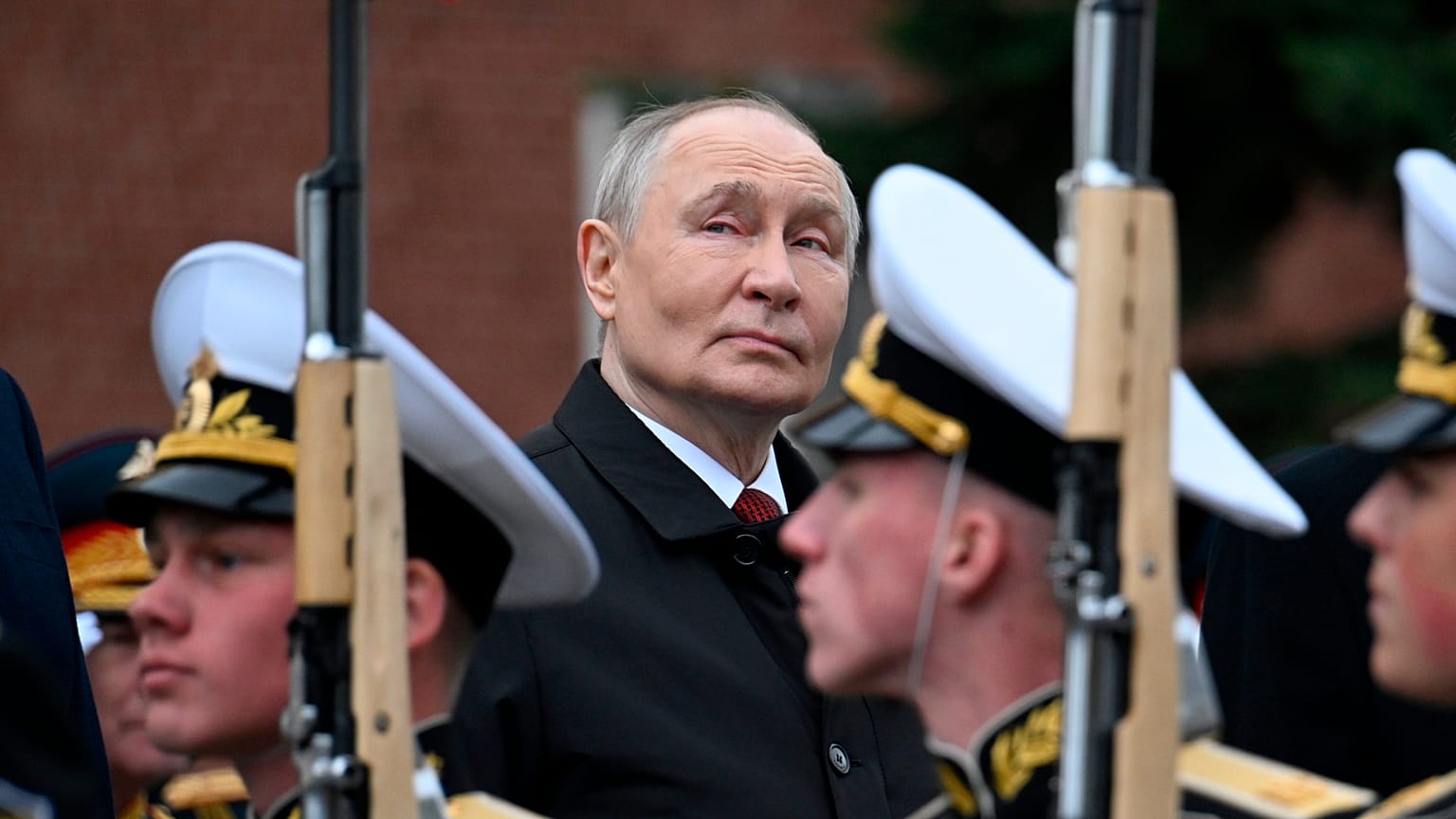
Putin attends a ceremony to lay flowers at the Tomb of the Unknown Soldier
Copyright AP Photo

By Alexei Doval with AP
Published on 
In Moscow, a scaled-down Victory Day parade was held under tight security, without military hardware, amid fears of possible Ukrainian drone attacks. The Russian president denounced NATO in his speech.

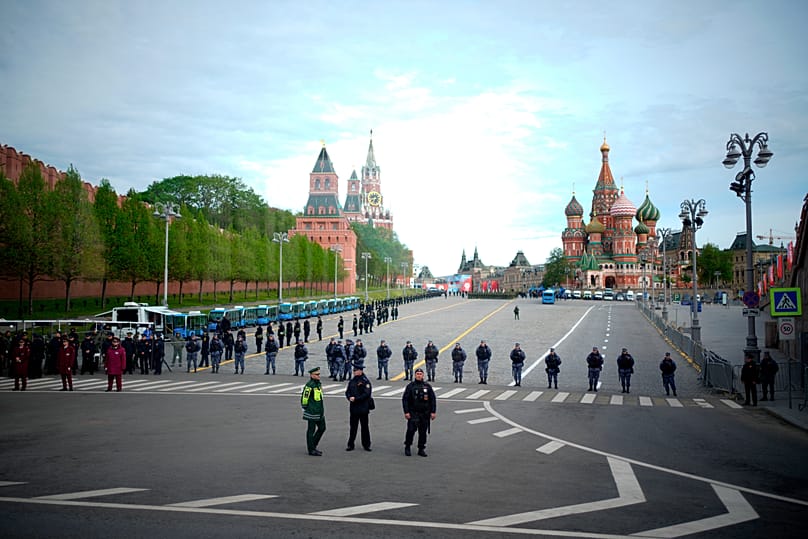
Enhanced security measures have been taken in Moscow ahead of President Vladimir Putin's speech at the Red Square parade marking the victory over Nazi Germany in World War II.

Meanwhile, a three-day ceasefire brokered by the United States the previous day eased fears of possible Ukrainian strikes on the Russian capital during the celebrations.

Speaking in front of hundreds of military personnel and flanked by a few world leaders, the Russian president said he was fighting a "just" war as he identified Ukraine an "aggressive force" that is being "armed and supported by the whole bloc of NATO".

Putin, in power for more than a quarter of a century, uses Victory Day, Russia's most important secular holiday, to showcase the country's military might and rally support for a military invasion of Ukraine starting in 2022. However, this year, for the first time in nearly two decades, the parade is being held without tanks, missiles and other heavy weaponry, except for the traditional flyover of combat aircraft.

Russian officials attributed the sudden change in format to the "current operational situation" and cited the threat of Ukrainian attacks. Kremlin spokesman Dmitry Peskov said "additional security measures" had been taken.

Previous ceasefire agreements have not held up

Russia declared a unilateral ceasefire for Friday and Saturday, while Ukrainian President Volodymyr Zelensky imposed a truce from 6 May, but neither agreement was honoured as sides exchanged mutual accusations of continued attacks.

On Friday, US President Donald Trump announced that Russia and Ukraine had accepted his request for a ceasefire from Saturday to Monday and agreed to exchange prisoners, saying a pause in fighting could be the "beginning of the end" of the war.

Security measures have been increased in Moscow AP Photo/Pavel Bednyakov, Pool

Zelensky, who said earlier this week that Russian authorities "fear drones could fly over Red Square" on 9 May, followed up on Trump's statement by issuing an executive order "allowing" Russia to hold Victory Day celebrations on Saturday, declaring Red Square temporarily closed to Ukrainian strikes.

Peskov, the Kremlin spokesman, called Zelensky's decree a "silly joke" as he told reporters, "We don't need anyone's permission to be proud of Victory Day."

Russian authorities have warned that if Ukraine tries to disrupt Saturday's celebrations, Russia will launch a "massive missile strike on the centre of Kyiv".

Russia's defence ministry urged civilians and staff of foreign diplomatic missions to "immediately leave the city". The EU said its diplomats would not leave the Ukrainian capital despite Russian threats.

Putin is using Victory Day celebrations to bolster national pride and emphasise Russia's position as a world power. The Soviet Union lost 27 million people between 1941 and 1945 in the Second World War.

Addressing the parade participants, the Russian president recalled the huge contribution of the Soviet people to the victory over fascism and said his soldiers are now fighting in Ukraine against an "aggressive force" backed by NATO.

Putin expressed confidence in victory in Ukraine

"Victory has always been and will always be ours," Putin said as columns of troops lined Red Square. "The key to success is our moral strength, courage and valour, our unity and ability to withstand anything and overcome any challenge."

Those present in Red Square were then shown a propaganda video sequence designed to emphasise the power of the Russian army and its "achievements" in the war against Ukraine.

Russian military units paraded through Moscow’s Red Square, accompanied by an official broadcast detailing the armed forces' various accomplishments.

Among those marching were North Korean soldiers who had been sent to help the Russian army in the war against Ukraine. They had, as the announcer's speech claimed, made a great contribution "to the defeat of neo-Nazi invaders in the Kursk region."

The parade was over in 45 minutes

On Saturday, as troops prepared to march through Red Square, authorities imposed restrictions on access to mobile internet and text messaging services in the Russian capital, citing public safety.

The government has been methodically tightening internet censorship and imposing ever-tighter controls on online activity, prompting discontent and rare public displays of discontent.

Malaysia's King Sultan Ibrahim Iskandar, Lao President Thongloun Sisoulith, Kazakh President Kassym-Jomart Tokayev, Uzbek President Shavkat Mirziyoyev. Belarusian President Alexander Lukashenko and Slovak Prime Minister Robert Fitzo travelled to the Russian capital for the celebrations.


Berlin sceptical as Putin proposes


Germany's ex-chancellor Schroeder as


Ukraine mediator


Russian President Vladimir Putin on Saturday said he would "personally" prefer longtime ally and friend, former German chancellor Gerhard Schroeder, as mediator in the Ukraine war – an idea that has been met with scepticism in Berlin. Schroeder, 82, has remained close to the Kremlin leader long after leaving office, standing apart from most Western leaders since Russia invaded Ukraine in 2022.


Issued on: 10/05/2026 -
By: FRANCE 24


Germany's former chancellor Gerhard Schroeder gives a press conference on October 25, 2002. © Gerard Cerles, AFP

Russian President Vladimir Putin has proposed longtime ally and friend, former German chancellor Gerhard Schroeder, as mediator in the Ukraine war – an idea that has been met with scepticism in Berlin.

Asked on Saturday who he would like to help restart talks with Europe, Putin said he would "personally" prefer Schroeder, who led Germany from 1998 to 2005.

Schroeder, 82, has remained close to the Kremlin leader long after leaving office, standing apart from most Western leaders since Russia invaded Ukraine in 2022.

German officials reacted cautiously, saying they had "taken note" of Putin's comments but viewed them as part of "a series of bogus offers" from Russia, government sources told AFP Sunday.

© France 24
01:59


One source said a real test of Moscow's intentions would be to extend the current three-day truce.

Schroeder's stance has made him a controversial figure at home. He has never publicly condemned the invasion of Ukraine, costing him several privileges normally granted to former chancellors.

He previously held key roles in Russian energy projects, including work on the Nord Stream gas pipelines and a seat on the board of Russian oil firm Rosneft, which he gave up in 2022.

Some German politicians from Schroeder's own SPD party – a junior partner in Germany's coalition government – say this makes him unsuitable for any mediator role.

Michael Roth, former SPD lawmaker and chair of the foreign affairs committee, said a mediator "cannot be Putin's buddy", in an interview with Tagesspiegel.

He stressed that any mediator must above all be accepted by Ukraine. "Neither Moscow nor we can decide that on Kyiv's behalf."

Others within the party, however, have been more open to Putin's suggestion.

Quoted by Der Spiegel, the SPD's foreign affairs spokesman in parliament, Adis Ahmetovic, said the proposal needs to be "carefully considered" with European partners.

SPD lawmaker Ralf Stegner argued, in the same magazine, that "if we don't want Putin and (US President Donald) Trump to decide Ukraine's future" alone, Europe should seize every possible chance – however small.

"We should turn to the former chancellor. What do we have to lose?" said Fabio De Masi, leader of the pro-Russia left-wing BSW party, speaking to AFP on Sunday.

Others remain unconvinced, with Marie-Agnes Strack-Zimmermann of the liberal FDP warning there were "serious doubts" that the ex-chancellor was the right choice as a go-between.

(FRANCE 24 with AFP)