Friday, June 12, 2026


Vale opens AI-powered plant in Minas Gerais state, boosts productivity by 25%


Image courtesy of Vale SA

Brazilian miner Vale inaugurated its first high-tech processing plant using artificial intelligence after modernizing a facility in Minas Gerais state, the company said on Wednesday, achieving a 25% productivity gain in less than two years.

The Conceicao 2 unit is now capable of producing up to 11.2 million metric tons of iron ore per year, compared to 9 million tons in 2024, Vale said in a statement.

The modernization integrated advanced automation, monitoring, and data intelligence to optimize more than 400 variables in the iron ore beneficiation process.

The pilot project also increased by 40% the share of direct reduction pellet feed — a product considered strategic for steel decarbonization — and improved mineral recovery.

“The model plant is more than a project: it represents a new way of operating,” said Carlos Medeiros, Vale vice president of operations.

Digitalization has also reduced manual interventions and improved safety, with remote equipment operation and centralized monitoring, Vale said.

The firm intends to use the model as a reference for other units.

(By Marta Nogueira and Fernando Cardoso; Editing by Mark Porter)

Vale’s top shareholder pushes for meeting on chairman’s removal
Credit: Vale SA

Brazil’s Vale, one of the world’s largest iron ore producers, said on Thursday it received a request from its top shareholder, pension fund Previ, for a shareholders’ meeting to vote on the removal of chairman Daniel Andre Stieler.

Previ, which manages pensions for employees of state-run lender Banco do Brasil, proposed appointing Jose Mauricio Coelho to Vale’s board and backing current board member Manuel Oliveira as chairman, the miner said in a filing.

According to Vale, Previ has argued that Oliveira will contribute to “the strengthening of governance practices, the improvement of strategic management and the alignment with the interests of shareholders and stakeholders.”

The mining company did not release the document it received from Previ. The pension fund did not immediately respond to a request for comment, sent outside business hours.

Vale said its board is assessing the steps required to convene the shareholders meeting.

Previ holds about a 7% stake in Vale, according to regulatory documents. The fund swapped its own head last month, naming Marcio Antonio Chiumento as CEO after Joao Luiz Fukunaga resigned.

Chiumento joined Vale’s board earlier this year.

(By Andre Romani; Editing by Kylie Madry and Daina Beth Solomon)


Reliance, Vedanta, Adani join India’s drive to cut China rare earth dependence


Tirupati city, Andhra Pradesh. Stock image.

Indian industrial groups Reliance, Vedanta and Adani have shown interest in developing facilities to process Andhra Pradesh state’s significant reserves of increasingly important rare earth minerals, according to two sources with knowledge of the matter.

With New Delhi seeking to cut India’s dependence on China for rare earths, the three companies are among about 10 who have expressed interest in setting up rare earth facilities in the southern state, one of the sources said.

The sources declined to be identified as they were not authorized to speak to the media.

Andhra Pradesh holds 211 million metric tons of beach sand mineral resources, including rare earths, across 16 identified coastal deposits, according to a draft document. India has 482.6 million tons of rare earth ore resources, according to the Geological Survey of India.

Rare earth ambitions

The interest comes as New Delhi steps up efforts to build domestic rare earth mining, processing and magnet manufacturing capacity, while Andhra Pradesh aims to attract 500 billion rupees ($5.2 billion) in rare earth and titanium investments over the next decade.

The plans were set out in a draft government document.

The Andhra Pradesh government, Reliance Industries Ltd, Vedanta Ltd and Adani Enterprises Ltd did not respond to Reuters emails seeking comment.

Andhra Pradesh was among four states identified in February’s federal budget for the development of rare earth “corridors” covering mining, processing and magnet production.

The initiative followed New Delhi’s approval in November of a 73 billion rupee program to support rare earth magnet manufacturing.

Rare earth elements are essential for permanent magnets used in applications such as electric vehicle motors. While India holds substantial rare earth reserves, it lacks industrial-scale facilities capable of processing the minerals to high purity levels.

Capital incentives and other measures

Andhra Pradesh plans to issue tenders for rare earth facilities after securing cabinet approval for its rare earth corridor policy, which is expected within a month, the sources said.

The state also plans to offer capital-linked incentives and additional benefits for projects with investments of 10 billion rupees or more, the sources said.

Andhra Pradesh has been courting large-scale investments, attracting companies including Google and ArcelorMittal Nippon Steel, and aims to secure $1 trillion in investment commitments by 2029, a state minister told Reuters last November.

(By Neha Arora and Sarita Chaganti Singh; Editing by Mayank Bhardwaj and David Holmes)

Alcoa flags lower Australian alumina shipments after cyclone


Credit: Alcoa

Alcoa Corp expects shipments from its Pinjarra alumina refinery in Australia to fall by around 120,000 metric tons in the second quarter compared to the first quarter due to the impact of Cyclone Narelle, its chief financial officer said.

The cyclone, which hit Australia in March, disrupted LNG supply to the 4.7 million ton per year capacity Pinjarra plant and increased second-quarter production costs by $30 million, Molly Beerman told the Wells Fargo Industrials & Materials Conference in Chicago on Wednesday.

Alcoa is also expecting additional fuel costs of $15 million in the quarter at its Sao Luis alumina refinery in Brazil due to the conflict in the Middle East, Beerman said.

Sao Luis remains profitable, but Alcoa’s alumina business is “very pressured right now” and the refineries in Western Australia are “really challenged” due to low alumina prices and poor-quality bauxite. “So the segment as a whole will be under water,” she said.

Alcoa is helping its aluminum smelter customers in the Middle East redirect some of their contracted alumina cargoes, primarily to China, because of their war-driven production constraints, Beerman said.

Alcoa’s shares plunged 9.5% on Wednesday to $65.55.

(By Tom Daly; Editing by Jan Harvey)


Madagascan miner Ambatovy resumes nickel production after cyclone


Ambatovy nickel-cobalt mine in Madagascar. (Image courtesy of Sherritt International Corp.)

Madagascan miner Ambatovy plans to produce 2,500 metric tons of nickel in June as it is restarting production after a cyclone hit it in February, the company told Reuters on Thursday.

Cobalt production is expected at around 250 tons this month, Ambatovy added.

Ambatovy restarted one acid plant on May 23 and plans to start the second one by the end of June, Ambatovy’s chief executive Trevor Naidoo said in a post on social media.

The miner’s current shareholder, Korea Mine Rehabilitation and Mineral Resources Corporation (KOMIR), and Japanese trading house Sumitomo, which sold its 54% stake to a group of investors in May, provided the funding to Ambatovy for the rebuild after the cyclone, he added.

Ambatovy produces nickel and cobalt briquettes. Its production was at around 29,000 tons of nickel and 2,700 tons of cobalt in 2025.

(By Polina Devitt and Pratima Desai; Editing by Louise Heavens)

Iran censured by nuclear watchdog over missing uranium stockpile

Stock image.

The United Nations nuclear watchdog censured Iran over failing to account for its stockpile of near-bomb-grade uranium, potentially escalating its military confrontation and diplomatic standoff with the Trump administration.

The US-led motion to rebuke the Islamic Republic passed with a 60% majority of the International Atomic Energy Agency’s board of governors on Wednesday in Vienna. China and Russia opposed the motion, which demands Iran immediately allow inspectors to verify the state and location of its uranium inventory.

The last time the IAEA’s board passed a resolution of censure against Iran in June 2025, Israel attacked the country 24-hours later in the opening act of the 12-day war. Iran’s nuclear facilities were targeted during that conflict and the US claims the stockpiles of highly-enriched uranium have been buried under rubble created by their bombardments.

Iran rejected the resolution, which carries mostly political weight, calling it a “hypocritical” stunt amid White House efforts to strike an interim agreement that would allow for follow-on nuclear negotiations.

The current war, which started in late February, was preceded by an IAEA report showing activities near Iranian nuclear sites. Missile and air-strike exchanges between the US and the Islamic Republic since the weekend have cast fresh doubt on the likelihood of a durable ceasefire between Washington and Tehran.

The censure represents an acknowledgment by the US that its bombing campaign on Iranian nuclear sites that are safeguarded by the IAEA created new problems of accounting. Before the June 2025 air assault and this year’s renewed fighting, Iran’s uranium stockpile was subject to weekly IAEA inspection to ensure it wasn’t diverted for weapons. That’s no longer the case.

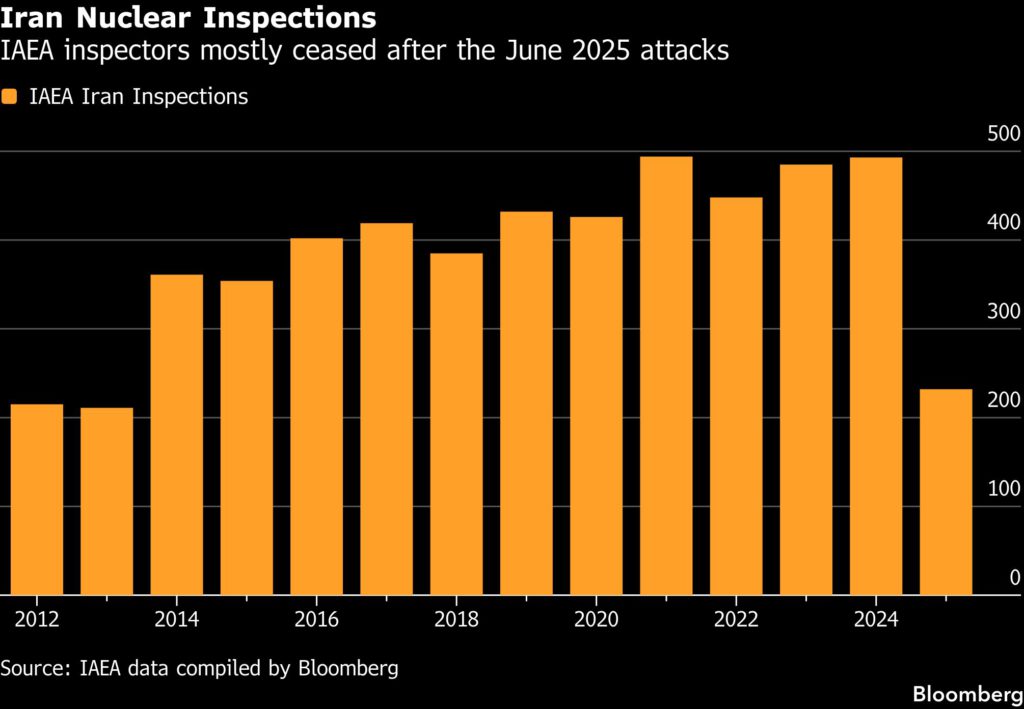
Inspections plummeted by more than half last year after Iran imposed new restrictions following the 12-day war.

Monitors have yet to return to damaged sites in Fordow, Isfahan and Natanz, where Iran’s 440.9 kilograms (972 pounds) and 8,599.6 kilograms of lower enriched material was last seen. The longer the material remains outside of IAEA safeguards, the higher the risks grow that the material could be diverted for non-peaceful uses, they said.

(By Jonathan Tirone)

Conflict coltan from Congo linked to Sony, Microsoft, Nvidia supply chains

Artisanal gold miners in the DRC. (Image by Robert Carruba, Deutsche Gesellschaft für internationale Zusammenarbeit (GIZ) GmbH – The Extractive Industries Transparency Initiative (EITI), Flickr.)

Coltan smuggled from mines controlled by the M23 armed group in the Democratic Republic of Congo has entered supply chains serving major technology and automotive companies, exposing weaknesses in industry efforts to keep conflict minerals out of consumer products, a new report shows.

London-based investigative group Global Witness found that five of Rwanda’s seven largest coltan exporters purchased material originating from the Rubaya mining area in North Kivu, where M23 has controlled operations for the past two years. 

The report said the mineral, which is used in smartphones, computers and other electronics, is likely to have reached supply chains connected to Sony, Microsoft, Amazon, LG Display, Ericsson, Toyota, Nvidia and Vodafone.

The investigation covered the period from 2023 through September 2025 and drew on trade data, field research and interviews with more than 70 sources.

“Behind our everyday tech lies a supply chain tainted by violence, exploitation, and human suffering,” Alex Kopp, senior policy and advocacy advisor at Global Witness, said. “The companies behind our phones, computers and cars haven’t been able or willing to clean up their supply chains.”

The findings raise fresh questions about the effectiveness of mineral traceability and due diligence programs that companies rely on to certify responsible sourcing.

Global Witness alleged that the ITSCI traceability system has been used to launder significant volumes of smuggled coltan and said conflict-linked material may also have entered the Better Mining system.

The group further argued that audits conducted under the Responsible Minerals Initiative (RMI) failed to identify substantial quantities of conflict coltan moving through smelter supply chains.

Pushback

Several companies and organizations disputed or challenged aspects of the findings. Toyota said it aims to procure conflict-free minerals through supplier due diligence, while Sony said it expects suppliers to comply with its sourcing standards.

Ericsson said the smelters identified by Global Witness were compliant with Responsible Minerals Initiative requirements and that it would review the cases cited. Traxys denied sourcing conflict minerals, Better Mining denied tagging conflict-affected coltan, and ITSCI said its system remains active and functional. Nvidia, Amazon, Microsoft, Vodafone and LG Display did not respond to requests for comment, according to Global Witness.

The investigation comes as governments and manufacturers face growing pressure to secure critical mineral supply chains. Rubaya accounts for roughly 15% of global coltan production, making the region strategically important to the electronics industry.

The report concludes that stronger enforcement, corporate accountability and sanctions against those financing or benefiting from the conflict are needed to prevent minerals linked to human rights abuses from reaching international markets.

De Beers finds Gen Z driving diamond demand rebound


Mined diamond sales are increasing across US independent jewellers, says the report. (Image courtesy of De Beers.)

American consumers are showing renewed interest in natural diamonds, offering a potential boost to Africa’s diamond-producing nations after several difficult years for the industry.

Generation Z members — those born between 1997 and 2012 — are leading the resurgence, accounting for 23% of US natural diamond demand by value despite representing only 18% of the population, according to De Beers’ latest US Diamond Acquisition Study.

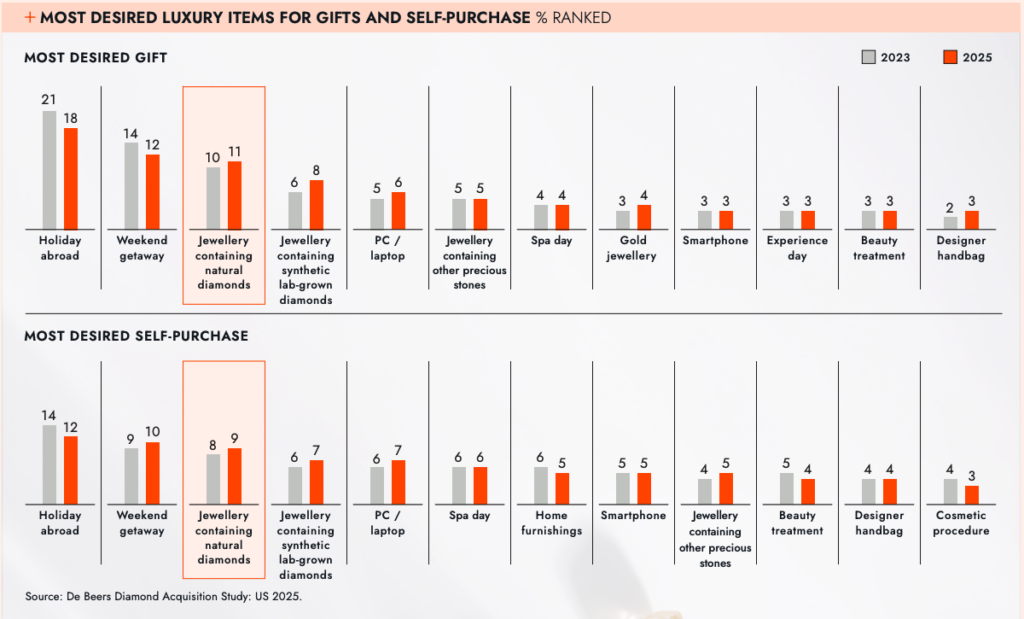
New findings from the survey of 18,500 women in the United States, the world’s largest diamond jewellery market, found Gen Z buyers are spending an average of $4,080 per purchase, far above the $2,250 spent by Baby Boomers. The study also found 11% of respondents ranked natural diamond jewellery as their most desired luxury gift, ahead of lab-grown diamonds at 8%, coloured gemstones at 5% and plain gold jewellery at 4%.

“Natural diamonds continue to hold a unique place in consumers’ minds as meaningful and aspirational purchases,” the report found, as younger buyers increasingly seek jewellery tied to personal milestones and achievements.

The trend carries important implications for African producers. Botswana, Angola, Namibia, South Africa and Lesotho supply a significant share of the world’s natural diamonds and stand to benefit directly from stronger demand in the US market.

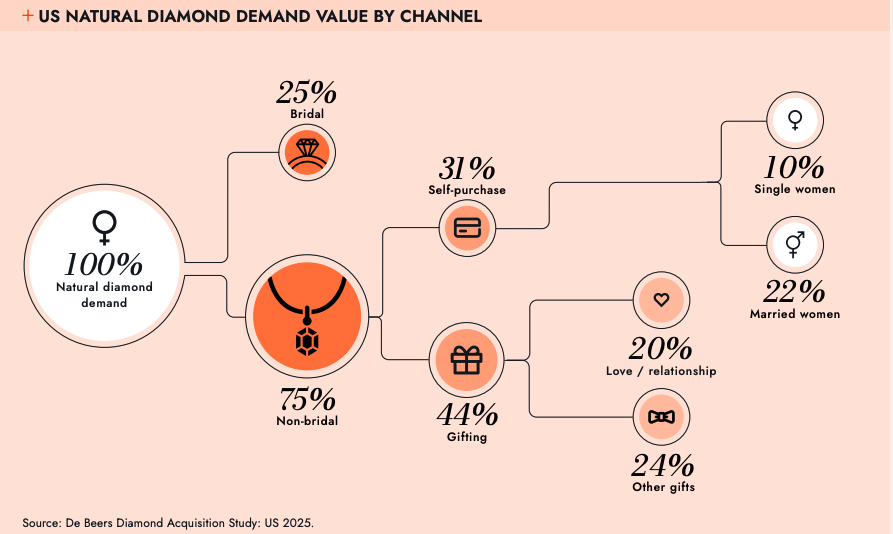
The study found younger consumers are expanding diamond purchases beyond traditional engagements and weddings. While bridal jewellery still accounts for 45% of Gen Z demand, buyers are increasingly purchasing diamonds to mark promotions, career achievements, birthdays and other personal milestones, or simply as self-rewards.

That shift helped lift average natural diamond jewellery prices by 25% to $4,063 from $3,242 in 2023, while average stone sizes increased to 1.86 carats from 1.65 carats.

“Consumers are spending more per piece than ever before, but how and why consumers buy diamonds is evolving,” Diana Mitkov, lead researcher within Diamond Demand Insights & Analytics at De Beers Group, said. “Traditional life milestones such as getting engaged are no longer the only value driver for the industry; consumers are increasingly marking a wide range of occasions with natural diamonds and are looking for distinct pieces that feel personal to them.”

Africa benefits

The findings arrive at a critical time for southern African producers. Botswana, whose economy remains heavily reliant on diamond exports, has faced slowing growth amid a prolonged downturn in global diamond demand. Other producing nations have also felt pressure as lab-grown diamonds gained market share and weakened prices for mined stones.

However, De Beers said natural diamonds continue to dominate the market’s value segment. Data from 950 independent US jewellers showed natural diamonds accounted for 85% of diamond jewellery sales value in 2025, compared with 15% for lab-grown stones.


The results suggest stabilizing demand in key consumer markets could provide relief for producing nations already facing constrained supply growth. Global natural diamond production is expected to decline over time as few major new mines enter operation and existing deposits mature.

For African economies that depend heavily on diamond exports, royalties and mining employment, sustained US demand could provide a valuable tailwind after several years of uncertainty.

Winning youth

The industry is also adapting its marketing strategy to appeal to younger consumers. De Beers and Signet launched the “Worth the Wait” campaign in October 2024, targeting so-called Zillennials with messaging centred on milestones, individuality and the enduring value of natural diamonds.

Meanwhile, producers and industry groups are investing heavily in broader promotional efforts. In June last year, a coalition of diamond-producing countries and De Beers signed the Luanda Accord, committing 1% of rough diamond revenues to a marketing fund managed by the Natural Diamond Council. The council has since launched new educational campaigns and retail training programs aimed at strengthening the case for natural diamonds.

The effort reflects a broader challenge facing the industry. Younger consumers increasingly demand proof that products are ethically sourced and environmentally responsible. Danish jeweller Pandora switched entirely to lab-grown diamonds in 2021, citing sustainability concerns alongside lower prices.

The growing interest from Gen Z suggests natural diamonds retain significant appeal, but future growth may depend less on tradition and rarity than on demonstrating transparency, responsible sourcing and tangible benefits for producing communities.


Pilot–Master Interaction: Where Risk Actually Forms

collision

Published Jun 11, 2026 1:35 PM by Capt. Volodymyr Smirnov

Risk in navigation is often attributed to individuals — the pilot or the Master. This is a convenient simplification. In reality, many marine incidents do not originate from individual failure, but from structural ambiguity in decision-making. They emerge in the space between roles.

Pilotage is built on a dual structure:

- the pilot provides local knowledge and navigational advice

- the Master retains ultimate command responsibility

On paper, this separation is clear. On the bridge, under operational pressure, it is not. During confined-water navigation, decisions are continuous, dynamic and time-critical. In this environment, authority is rarely exercised in isolation — it is interpreted, adjusted and negotiated in real time.

When this process is not made explicit, ambiguity quietly becomes part of the operational system.

Pressure vs Authority

Operational pressure affects decision clarity in subtle ways:

- higher traffic density

- environmental constraints

- schedule awareness

- cultural and procedural differences

- bridge team hierarchy dynamics

Under these conditions, a gradual shift may occur: Authority becomes assumed rather than actively confirmed. The pilot may assume compliance. The Master may assume navigational control is being actively managed. The bridge team may assume that concerns have already been addressed by others.

Yet none of these assumptions are formally verified.

The Silent Disagreement

Most critical bridge-team breakdowns are not marked by open conflict. They are marked by its absence. Instead of direct disagreement, there is:

- hesitation

- delayed correction

- passive acknowledgement

- indirect communication

- observation without intervention

This creates a silent operational gap — a situation where multiple individuals recognize emerging risk, yet no one explicitly redefines the situation or decisively challenges the developing course of action.

In high-risk navigation, safety depends on clear ownership of critical decisions:

- speed management

- abort criteria

- course deviation thresholds

- tug utilization

- situational reassessment

When ownership becomes unclear, decision-making gradually fragments. Actions become delayed not because risk is invisible, but because authority is psychologically distributed across the bridge team. And distributed responsibility often results in reduced intervention at the moment it is needed most.

The Critical Point of Failure

In many navigation incidents, the decisive failure is not an incorrect maneuver itself. It is the gradual normalization of uncertainty before intervention occurs. A stage where:

- concerns remain unspoken

- speed reduction is mentally considered but not ordered

- assumptions are silently accepted

- navigational initiative becomes unclear

- challenge-response interaction weakens

At this point, both pilot and bridge team may still believe the situation remains under control. But operational ownership has already started to fragment.

Conclusion: Risk Emerges in the Gap

Pilot–master interaction is not fundamentally a hierarchy problem - it is a clarity problem. Risk is often created not by individual incompetence, but by unclear operational ownership under pressure.

The most dangerous situations onboard are not always those where nobody sees the risk. They are often the situations where several people see it — yet no one fully assumes authority to decisively act on it.

Volodymyr Smirnov is a Master Mariner with over 25 years of experience on large ocean-going vessels, including more than 18 years in command with senior operational accountability. His professional focus includes operational risk management, bridge team decision-making, and confined-water navigation strategy.

The opinions expressed herein are the author's and not necessarily those of The Maritime Executive.


British Defence Minister Resigns as Defense Budget Increase Evaporates

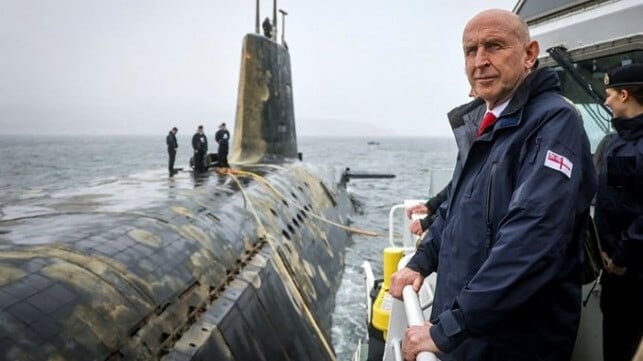
UK Defence Minister John Healey
 John Healey as Defence Minister welcomes home a Vanguard ballistic missile submarine after a 203-day patrol (UK MoD)

Published Jun 11, 2026 12:33 PM by The Maritime Executive

John Healey, the British Defence Minister, has resigned in protest at the UK government’s failure to fund the long-awaited Defence Investment Plan.

Publication of the Defence Investment Plan has been delayed by at least a year, and was supposed to set out funding allocations for defence, in line with similar plans for health and welfare, which already detail plans for expenditure for the next ten years. Critical equipment plans have already been jeopardized by the delay in publishing the plan, and in his resignation letter, John Healey revealed that the still-to-be-published plan was only set to increase defense expenditure by 0.08 percent by 2030. This would take the defense budget to 2.68 percent of GDP, which is well short of the government’s previous commitment to achieve 3 percent of GDP by 2030. This is a target that is also NATO-endorsed.

In his resignation letter, Healey pointed out that a lack of sufficient money in the defense budget directly endangers soldiers and sailors in the front line – who will lack the necessary equipment to fight and defend themselves.

Healey’s resignation follows what has been a long, drawn-out argument within government on how the defense budget increase should be funded. Health and welfare spending has risen dramatically under Sir Kier Starmer’s government, and is set to rise further. Health, welfare, and spending on Net Zero appear to have won the argument within government, to Defence’s detriment. The Opposition had called for the savings necessary to be taken from Net Zero funding and from the welfare budget, focusing in particular on the huge rise in payments for those deemed unfit for work and in support for asylum-seeking immigrants.

The proposed defense funding profile delays the modest increase in allocations until the later years of the investment plan. This, in effect, will mean cuts in the defense budget up to 2030, as the current budget is insufficient to support capabilities already or about to come into service. Moreover, the increased spending of $18 billion includes nearly $5 billion in efficiency savings to be found from within the defense budget – such savings tend to be made by cutting readiness and existing units, rather than by transforming them into new-era capabilities.

A whole series of future equipment programs is now in danger. In the naval area, this includes the number of new AUKUS submarines, Type 26 and 31 frigates, the planned Type 83 destroyer program to replace the Daring Class, and additional F-35Bs to equip the two Elizabeth Class aircraft carriers to design capability.

The Defence Investment Plan was supposed to fund not just existing defense capability, but to transform the services to better handle emerging threats, with new capabilities that are emerging from wars in Ukraine and the Middle East. The only way this can be achieved under the proposed funding plan is to cut equipment and units currently fielded. But with capability in so many areas well below that which is needed to meet existing requirements, even difficult choices are unavailable.

John Healey was a well-respected and long-standing Labour minister, previously considered one of Sir Kier Starmer’s most loyal ministers. It is unlikely that his resignation will end debate over defense investment, and further deep political turmoil – and probably resignations – can be expected, even before NATO defense ministers meet in Ankara in July. 


U.S. Forces Disable Third Tanker This Week Off Oman with Indian Crew

tanker on fire
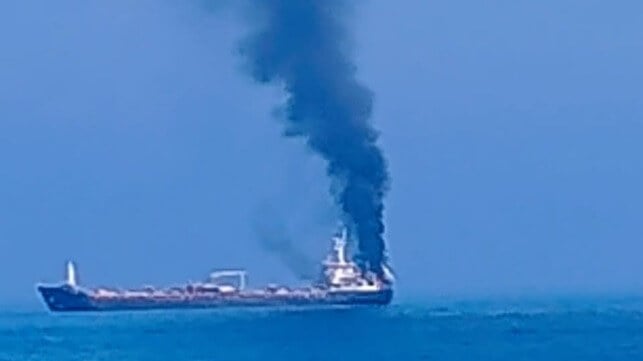
Picture reported to show the Jalveer on fire (FSUI India)

Published Jun 11, 2026 11:23 AM by The Maritime Executive

U.S. forces reported that they have disabled a third tanker off Oman, accused of violating the blockade of Iran. The attack, which drew further condemnation and assertions of misleading information from CENTCOM on the attack, came as Donald Trump has grown frustrated with the Iranians and increased the threats of future actions.

The attack, which CENTCOM said took place Thursday morning, June 11, in the Gulf of Oman, fired two Hellfire missiles into the engine room of the asphalt/bitumen tanker Jalveer (6,395 dwt). Pictures showed smoke rising from the ship with reports of a fire.  Twenty Indian crewmembers were evacuated without serious injuries.

UKMTO places the vessel approximately 21 nautical miles northeast of Sohar, Oman. It is registered in Guinea-Bissau and managed from India.  Centcom is asserting the vessel violated the blockade by attempting to transport Iranian oil and that the crew repeatedly failed to comply with directions from U.S. forces.


India’s government reportedly immediately summoned the U.S. chargé d’affaires in New Delhi and filed a strong protest. The Foreign Ministry said, “These attacks must cease and end,” while calling for increased diplomacy.

At the same time, the Shipping Ministry provided additional details on the attack yesterday on the Settebello. It confirmed that three Indian seafarers initially reported as missing are now confirmed as deceased. Their bodies were located, and they have been identified. The Forward Seaman’s Union of India reported it was the chief engineer, an engine fitter, and a deck cadet who were killed.

The union issues a long statement calling the reports coming from CENTCOM a “pretext of violations.” It said the three attacks this week have “created deep anxiety among Indian seafarers.” The union is demanding “immediate strengthening of naval protection and security arrangements for merchant vessels carrying Indian seafarers in high-risk waters.”

A company called ISO Marine – F.Z.E. issued statements it said were on behalf of the managers of the Settebello, “rejecting claims” that the vessel “ignored warning calls, communications, or instructions.” Some reports assert the vessel was at anchor when it was attacked yesterday. They asserted the tanker “holds no affiliation whatsoever with Iran or Iranian oil” and that it was “engaged in legitimate commercial operations.” 

Past tracking data, as well as reports from the NGO UANI (United Against Nuclear Iran), however, have tracked the vessel transporting Iranian oil in the past.  It was also noted that neither the Settebello nor the Jalveer has been sanctioned.

CENTCOM reported a total of nine non-combatant vessels disabled while saying 135 ships had complied and been redirected. It states the blockade is being enforced “impartially against vessels of all nations entering or departing Iranian ports and coastal areas.” It asserts the Marivex, which was struck on Monday, violated the blockade by attempting to sail to an Iranian port, while Settebello, it says, attempted to transport Iranian oil.

Donald Trump yesterday posted a message about the effectiveness of the blockade, asserting that no ships were getting through. Today, he returned to social media, saying that the United States “will be hitting Iran very hard tonight.” Yesterday, he said the Iranians were not negotiating in good faith and kept changing and delaying their responses. Today, Trump wrote on social media, “At some point in the not too distant future, we will be taking Kharg Island, and other oil infrastructure points, and assume total control of their oil and gas markets,” as his latest economic threat against Iran. 

Iran has responded by launching missiles, which it says were aimed at U.S. bases in the Gulf countries. After Trump wrote that the U.S. had been sneaking tankers out of the Persian Gulf at night, Iran declared the Strait of Hormuz is closed to all vessels.

Later in the day, Donald Trump posted a new message on social media saying he had called off the strikes as a peace deal appeared to be at hand. He wrote that discussions and final points had been, in both concept and great detail, approved by all parties involved, and that further details would be announced shortly.


USCG Selects Kodiak and Seward as Homeports for Arctic Security Cutters

three USCG icebreakers berthed together in Seattle
The U.S.'s three large icebreakers are all currently based in Seattle while a homeport is being developed in Juneau for USCG Storis (USCG)

Published Jun 11, 2026 6:38 PM by The Maritime Executive


The U.S. Coast Guard has selected the Alaskan ports of Kodiak and Seward as the first homeports for its new fleet of Arctic Security Cutters. It said the first three vessels would be assigned to Alaskan ports, increasing the number from an earlier announcement, and in addition to plans for a new homeport at Juneau for the USCG Storis.

Under the plan announced on June 11, the USCG reports it is accelerating preparations to ensure that the ports will be prepared to receive the new vessels, which are expected to begin delivery in 2028. USCG said it is focusing on critical infrastructure and housing required to support the crews who will serve aboard the cutters and the critical shore support services.

The interim city manager for Kodiak, Tim Putney, told The Anchorage Daily News that the Coast Guard has already been working on constructing housing and two new piers at its existing base. Kodiak is already home to the largest USCG base in the Arctic District. Seward, however, the paper reports lost its only homeported curtter which was decommissioned in 2025 and currently only houses a small marine safety unit.

The first two new security cutters will be assigned to the base in Kodiak. A third will be homeported in Seward, while the Coast Guard previously reported USCG Storis would be homeported in Juneau. The commercial icebreaker, which the USCG acquired, is currently working from the base in Seattle alongside the Polar Star and Healey. The Coast Guard is spending $300 million to create the new homeport base in Juneau, which it now projects will be completed in 2029. Storis has a complement of approximately 200 aboard, and the new icebreakers are expected to similarly sized crews. The new cutters will be based at the Alaskan ports “when the infrastructure is ready,” USCG said.

“America’s future in the Arctic demands strength, capability, and resolve,” said Trump’s recently appointed Secretary of Homeland Security Markwayne Mullin. “These cutters will deliver the enduring operational capability our nation needs to defend our sovereignty, deter adversaries, and safeguard vital resources for the American people.”

The Coast Guard says the cutters will anchor a modernized icebreaker fleet built for the most demanding conditions. Interim contracts were announced in 2025, going to Canada’s Davie in partnership with Helsinki Shipyard and the group’s newly acquired operations in Galveston, Texas. A second contract was being negotiated with Rauma Marine Constructions in Finland in partnership with Louisiana’s Bollinger.

The first contract was finalized in April, calling for Davie to deliver a total of five vessels, with the first two built in Helsinki and the three others from the company’s new plant in Texas. The first of the vessels is scheduled for delivery in 2028.

Contracts were also being completed, calling for Rauma to build two vessels in Finland and simultaneously to start work with Bollinger on four additional vessels of the same design. 

The Trump plan calls for a total of 11 icebreakers. They are expected to be delivered between 2028 and 2035. In addition, work is underway at Bollinger on the much-delayed Polar Security Cutter program designed to replace Polar Star. The first heavy icebreaker, Polar Sentinel, is now expected to be delivered years behind schedule in 2030, and two sister ships are planned for 2032 and 2034.