It’s possible that I shall make an ass of myself. But in that case one can always get out of it with a little dialectic. I have, of course, so worded my proposition as to be right either way (K.Marx, Letter to F.Engels on the Indian Mutiny)
Monday, July 06, 2026
EU investigation confirms spy network at Hungarian diplomatic mission in Brussels
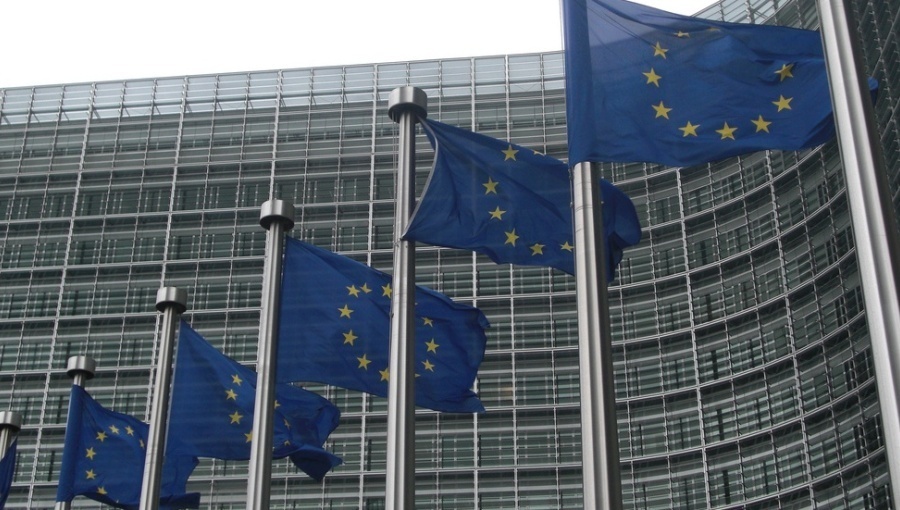
An internal European Commission investigation has confirmed that a Hungarian intelligence network operated at Hungary’s Permanent Representation to the EU in Brussels in the mid-2010s, according to a document seen by Politico.
The April-dated report, prepared under EU anti-fraud commissioner Piotr Serafin, concludes that Hungarian intelligence officers were deployed to the mission between 2013 and 2016, with activity becoming more visible from 2015. It says the network focused on approaching EU officials, primarily Hungarian nationals working in EU institutions, to obtain internal information on policy work relevant to the Hungarian government.
The findings broadly confirm earlier investigative reporting by Direkt36, which alleged that intelligence officers working under diplomatic cover attempted to influence EU decision-making and gather internal Commission information.
Direkt36 in an article in late 2025 reported that the Prime Minister's Office grew increasingly interested in inside information about EU decisions that could affect Hungary's interests as disputes deepened between the government and the European Commission over media freedom, rule of law, and judicial independence.
Hungarian operatives reportedly reviewed the backgrounds of Hungarian nationals working at EU bodies and attempted to recruit some of them through intelligence officers operating under diplomatic cover.
The investigation found that the intelligence activity initially operated discreetly but later became more overt, to the point where its presence became known within Hungarian circles in Brussels, ultimately reducing its effectiveness. According to the report, the operation ended in 2016.
While the report confirms the existence of the network and its targeting of EU officials, it says it was not possible to establish individual responsibility beyond the intelligence officers involved, citing limited investigative tools available to the Commission and stating that no major security breach could be formally identified.
The document also notes that the activities went beyond standard diplomatic functions, including efforts to contact Hungarian EU staff and gather information on issues of particular interest to Budapest.
The Hungarian Permanent Representation did not respond to Politico’s request for comment.
The case has previously triggered political controversy in Brussels, including calls from members of the European Parliament for an investigation into Hungarian Commissioner Oliver Varhelyi, who led the mission during part of the period in question and has denied any knowledge of intelligence activity.
The Commission opened its internal review following media reports last year, which alleged that Hungarian intelligence operated in Brussels under diplomatic cover and attempted to recruit EU officials.
Russia Is Losing Its War Against Ukraine – Analysis
Ukraine’s Strategic Neutralization Working — Ukraine has shifted to a smart, drone-heavy strategy focused on degrading Russian logistics, energy infrastructure, and command systems rather than large territorial offensives. This has allowed Ukraine to strike deep inside Russia and inflict disproportionate damage.
Russia Facing Multiple Crises — Russia is suffering heavy casualties (up to 1,500/day), recruitment desperation (using prisoners, migrants, disabled), collapsing refining capacity, fuel shortages, economic strain (defense spending at 40% of budget), declining public support, and growing elite/military blogger dissent.
Putin’s Regime in Increasing Trouble — Putin is increasingly isolated and detached, cancelling major public events out of fear. His options are limited: escalation risks domestic instability, while continuing the war leads to further degradation. Time is not on Russia’s side, and the convergence of military, economic, and political pressures is pushing toward a potential turning point.
Analysis
Russia is losing its war against Ukraine, and a decisive turning point is approaching. This conclusion draws on Russian military sources, internal documents, polling data, and frontline reporting to build a comprehensive picture of Vladimir Putin’s regime in crisis. The convergence of five mutually reinforcing dynamics—military defeat, economic and financial collapse, public discontent, dissent among Russian nationalists and military bloggers, and elite fears of a coup and assassinations—contribute to Russia losing its war against Ukraine.
Ukraine’s Strategic Plan
Rather than pursuing the kind of large-scale territorial offensive that failed in Summer 2023, Ukraine has adopted what former Defence Minister Andriy Zagorodnyuk calls “strategic neutralization.” The approach does not aim primarily at recapturing territory through direct military confrontation, but at systematically degrading Russia’s capacity and will to fight. Ukraine disrupts Russian logistics, destroys supply lines, and strikes high-value targets deep inside Russian territory. This strategy is underpinned by what Zagorodnyuk terms a “Revolution in Military Affairs”—Ukraine’s rapid and largely private-sector-driven innovation in drone technology, precision strikes, and battlefield coordination.
The results have been remarkable. By May 2026, Ukraine was for the first time launching more drones and missiles into Russia than Russia was firing into Ukraine. In the first half of 2026 alone, Ukraine struck approximately 800,000 Russian targets.
Ukrainian Commander-in-Chief Oleksandr Syrskyy described the strategy as maintaining the initiative by exhausting Russia while building Ukrainian reserves, striking where Russia is weakest, and steadily liberating occupied territory. Ukraine established a Deep Strike Command Center in January 2026 to coordinate attacks, and medium-range drones have effectively replaced the U.S.-supplied HIMARS systems as the primary tool for striking Russian logistics and troop concentrations.
Ukraine will acquire ballistic missiles by autumn 2026—the hardest category of weapon to intercept—just as Russian air defences are approaching near-total degradation. Political, military and security HQs in Moscow and St. Petersburg will be high value targets for Ukrainian ballistic missiles.
Russian Military Degradation
Russia’s battlefield position has deteriorated sharply. Russia seized only 0.4 percent of Ukrainian territory in all of 2024, barely 0.2 percent more by mid-2025, and just 164 square kilometres in the first quarter of 2026—compared to 1,151 square kilometres in the same period the year before. Since Winter 2025–2026, Ukraine has liberated 400 square kilometres of occupied territory.
Meanwhile, Russian casualties are staggering: the Defence Ministry recorded 36,000 Russian casualties in March 2026 alone, with 90 percent caused by Ukrainian drones, exceeding Russia’s monthly volunteer recruitment figures. In April, Russia was losing approximately 1,500 soldiers per day.
Russia is increasingly filling these losses from the margins of Russian society – alcoholics, drug addicts, and men with severe physical disabilities. Video footage of these recruits waiting at deployment centres has circulated widely on Russian social media. Russia’s pre-war prisoner population of 465,000 has fallen to 282,000, with the remainder deterred by news of very high death rates. Migrants from Africa and Central Asia lured with false promises of employment are forcibly conscripted and sent to the front. Students are being pressured to enlist, and businesses are being levied for recruits. Russia’s recruitment plan for 2026—409,000 soldiers—is being fulfilled at only 60–75 percent.
The quality of the army reflects its composition. Russian soldiers are sent on “meat assaults” without body armour, artillery support, or adequate supplies. Officers steal from their soldiers’ bank accounts and demand bribes to avoid suicide missions. Blocking units composed of convicts shoot soldiers who retreat.
A Russian deserter described his officers’ culture as defined by “fear, corruption and indifference.” Desertion doubled in 2024–2025 to 70,000. Internal documents hacked by Ukraine’s foreign intelligence service show that Russia’s General Staff privately acknowledges the army cannot achieve Putin’s stated goal of occupying all of Ukraine. Russian security analyst Vasily Kashin has conceded that the goal of “liquidating the anti-Russian regime” in Ukraine is “fundamentally unattainable” and that Russia “lacks the capacity to sustainably control and manage” additional occupied territories.
Economic Crisis
Russia’s financial position is equally dire. Defence spending has reached 40 percent of the federal budget—a record $146.4 billion—and total defence outlays since 2022 are estimated at $522 billion. Russia’s economic reserves are nearly exhausted, according to the Minister of Economic Development.
In the first quarter of 2026, government revenues were $11.7 trillion against outlays of $17.6 trillion. Business profits fell 33 percent year-on-year. Nearly half of small businesses are operating at a loss. Large numbers of Russians are withdrawing savings at a 30-year record pace, with central bank officials floating the possibility of deposit confiscation.
Ukrainian drone strikes on energy infrastructure have compounded fiscal pressure. In May 2026, strikes rendered inoperable refineries in Kstovo, Ryazan, Taman, Yaroslavl, Perm, Kirishi, Samara, Primorsk, and Tuapse—among Russia’s most critical refining capacity. The Tuapse refinery, which handles 12 million tonnes annually, has been attacked repeatedly; 28 of its 47 storage tanks have been damaged or destroyed.
The resulting fuel shortages have sparked a regional state of emergency in Krasnodar Krai and contributed to a major fuel crisis in Crimea and Russian-occupied southeastern Ukraine. The fuel crisis has also spread to the rest of Russia, including Moscow, undermining public confidence in Putin and the government. Energy rich Russia is importing oil from Kazakhstan.
Oil export revenues have halved relative to the previous year despite higher global oil prices, as Ukrainian strikes and Western sanctions take simultaneous effect. Ukrainian strikes against Russian energy installations have prevented it from higher oil prices brought on by the US-Israeli war against Iran.
Public Discontent and Elite Fractures
Russia’s public mood has shifted. The Levada Centre reported in April 2026 that 64 percent of Russians believe it is time to negotiate an end to the war, with only 24 percent supporting continued military action. Nevertheless, many of these Russians continue to refuse to countenance returning occupied territory to Ukraine.
VTsIOM (Russian Public Opinion Research Center) found only 29.5 percent of Russians named Putin as a politician they trust. Meanwhile nearly two thirds of Russians expressed a negative view of developments in the country. State television—once the primary instrument of Kremlin propaganda and public mobilization—has seen its audience share as a news source fall from 60 percent to 47 percent since 2022.
Among Russian military bloggers and Russian nationalists, criticism is intensifying. Prominent blogger Ilya Remeslo has publicly called Putin “not a legitimate president” who “must resign and be brought to trial as a war criminal.” He predicts a “palace coup” or “revolution” producing “profound changes” in late 2026 or early 2027. These views are becoming increasingly typical for military bloggers and nationalists.
Russian elites are increasingly divided between those who favour ending the war and those who insist on pressing forward, with the hawks now “persuading, defending and fighting back” rather than dominating the debate—a significant reversal.
Putin Detached From Reality
Against this backdrop, Putin is increasingly portrayed—including by Russians—as detached from reality and politically vulnerable. His approval ratings are declining; VTsIOM has ceased publishing weekly figures since late April 2026. Putin is mockingly referred to as “grandpa in the bunker” in Russian discourse because he lives in bunkers and never uses mobile phones or the Internet.
Ukraine’s attacks on Moscow and St. Petersburg—including strikes timed to embarrass Putin at the St. Petersburg International Economic Forum in June 2026—have exposed the hollowness of his strongman image. Putin cancelled a public military parade on 9May 9 “Victory Day” for the first time since 2008, citing the risk of Ukrainian attacks. Parades on Russia Day and Navy Day have also been cancelled.
The structural weaknesses embedded in Russia’s corrupt, hyper-centralized system cannot be resolved by escalation or full mobilization, which would destroy the regime’s unwritten social contract with the Russian population.
Time is decisively not on Putin’s side, and the growing crisis is increasingly becoming a threat to his regime. This is reflected in Putin’s paranoia. Ukraine’s campaign of “strategic neutralization” has made Crimea into an isolated island and is turning Russia’s size, which had been an advantage in the past against foreign invasions, into a disadvantage as it is impossible to provide air defence for every oil and gas installation, each military factor and military and air bases.
Putin’s options are limited. Escalation, through mobilisation, would be highly unpopular and threaten political instability – without bringing benefits on the battlefield. Ukrainian Defence Minister Mykhaylo Fedorov said Ukrainian forces would respond by increasing their monthly kill rate from 35,000 to 50, 000. President Volodymyr Zelenskyy is counting on Putin being forced to deescalate and return to the negotiating table without his hitherto maximalist demands.
Irrespective of what decision Putin makes, different crises are coming together that ae contributing to Russia losing its war against Ukraine.
About Dr. Taras Kuzio
Taras Kuzio is a professor of political science at the National University of Kyiv Mohyla Academy. He is co-author of The Four Roots of Russia’s War Against Ukraine (Cambridge University Press, 2026); co-editor of Russia and Modern Fascism: New Perspectives on the Kremlin’s War Against Ukraine (Columbia University Press, 2025); Crimea: Where Russia’s War Started and Where Ukraine Will Win (Jamestown Foundation, 2024), and Russian Nationalism and the Russian-Ukrainian War (Routledge, 2022). He can be found on X/Twitter @TarasKuzio View all posts by Dr. Taras Kuzio →
Ukraine strikes oil infrastructure sites near Saint Petersburg, Zelenskyy says
It comes after Moscow launched a massive drone and missile barrage at Kyiv earlier this week, killing at least 30 people and hitting more than 20 sites across the city.
Ukrainian forces carried out strikes on oil infrastructure sites near the Russian city of Saint Petersburg on Friday evening, Ukrainian President Volodymyr Zelenskyy announced.
In a post on X, Zelenskyy said Ukraine hit "port oil infrastructure that generates revenue for Russia's war".
"There were also successful strikes on Kronstadt – an important military target. The distance from Ukraine's state border is more than 850 kilometers," he added.
Alexander Drozdenko, the governor of Russia's Leningrad Oblast, had earlier reported that "several dozen" Ukrainian drones had been intercepted over the region, with debris falling on the port of Vysotsk.
Russian forces launched their own attacks on Ukraine's Poltava region on Saturday morning, targeting Naftogaz Group gas production facilities, according to Sergii Koretskyi, the company's CEO.
"A fire broke out at the site and operations at the facility have been suspended," Koretskyi wrote on Facebook. "It is not yet possible to assess the extent of the damage".
Russian strikes also hit the city of Sumy, where three people, including a child, were killed, according to Ukraine's Emergency Service.
Authorities said 27 people were injured, including seven children. Emergency crews rescued five people from damaged buildings.
In the Odesa region, a Russian strike injured two people and set ablaze a warehouse used to store food products, authorities said.
In the Kherson region, Russian attacks struck the grounds of a poultry farm, sparking a large fire in one of the facility's production buildings, officials said.
It comes after Moscow launched a massive drone and missile barrage at Kyiv earlier this week, killing at least 30 people and hitting more than 20 sites across the capital.
Kyiv's mayor described the strike as Moscow's "most massive attack" on the city.
Ukraine's air force said the attack included 570 air attack assets, including four Zircon missiles, 24 Iskander ballistic missiles, and 496 Shahed-type drones.
Kyiv has been repeatedly targeting Russia's energy industry in recent months as it looks to ramp up pressure on President Vladimir Putin and the Russian economy.
The attacks have sparked a fuel crisis across the country as well as in Russian-occupied areas, with limited petrol supply.
Ukraine denies claims of Kostyantynivka capture
Also on Saturday, Kyiv's army spokesman Andriy Kovalyov dismissed Russian claims the eastern stronghold of Kostyantynivka had been seized, saying the situation was "difficult" but that troops were defending the town.
Zelenskyy called the Russian claim a "lie", a day after Russia's President Vladimir Putin appeared in military uniform on television thanking his forces for seizing the town.
"Ukrainian defenders continue to hold their positions along the designated defensive lines. The situation remains difficult but is under the control of the Ukrainian Defense Forces," Kovalyov said.
He acknowledged that Russian troops have tried to seize the town and had infiltrated it in small groups.
"There have been instances of small infantry groups (1–3 personnel) infiltrating deep into the battle formations of Ukrainian forces. Counter-sabotage operations by the Defense Forces are ongoing in the town. Occupying forces are being detected and eliminated," Kovalyov added.
He said Russian carried out "11 assault attempts" on Friday but said they "failed to achieve any success".
"The enemy has resorted to the dissemination of blatant disinformation and fake claims by its highest-ranking officials," he said.
NATO's drone problem: Can European industry close the gap?
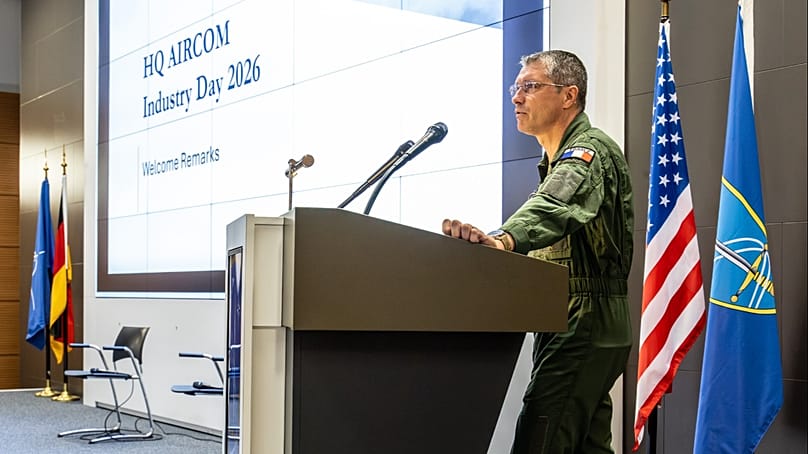
At NATO AIRCOM's Industry Day in Ramstein, Euronews had exclusive access, speaking to military leaders and defence companies about the race to develop cheaper, faster and more effective ways to counter drones.
To find a more cost-effective solution and strengthen collaboration, NATO is turning to industry for ways to counter unmanned systems. Earlier this week, the second AIRCOM Industry Day took place at Germany's Ramstein Air Base, bringing together representatives from European arms manufacturers and the military.
A drone crashing into a house in Romania, another violating Lithuanian airspace, and Munich Airport suspending operations for several hours following a suspected sighting: unmanned systems, and how to counter them, have become an increasingly acute threat for NATO.
If a drone is detected violating NATO airspace, the operation known as "Eastern Sentry" is triggered, which involves the deployment of several fighter jets to either track the drone or, if necessary, neutralise it. This, however, is deemed a costly intervention: drones are relatively cheap, with some being produced for less than €100,000. A single NATO fighter jet scramble against a drone can cost tens of thousands of euros per hour, though, with a typical two-jet interception costing more than €85,000 before any missiles are fired.
In his opening remarks, Lieutenant General Guillaume Thomas, Deputy Commander of the Allied Air Command, emphasised that drone warfare is confronting NATO with "collective challenges," pointing out the masse that Russia is using in its war against Ukraine. For him, the solution is to stay ahead of three key curves: cost, production and innovation. Achieving that requires close cooperation between industry and the armed forces.
Lieutenant General Guillaume Thomas, Deputy Commander, NATO Allied Air Command (AIRCOM) provided by NAT
Working with Ukraine a 'requirement'
According to senior policy fellow at the European Council on Foreign Relations, Dr. Ulrike Franke, one of the event's keynote speakers, drones "have brought mass to the battlefield," which forces the alliance to focus on mass and cost, not using expensive equipment to take down cheap drones and work with Ukrainians. The latter, she called a "requirement" in countering drone threats.
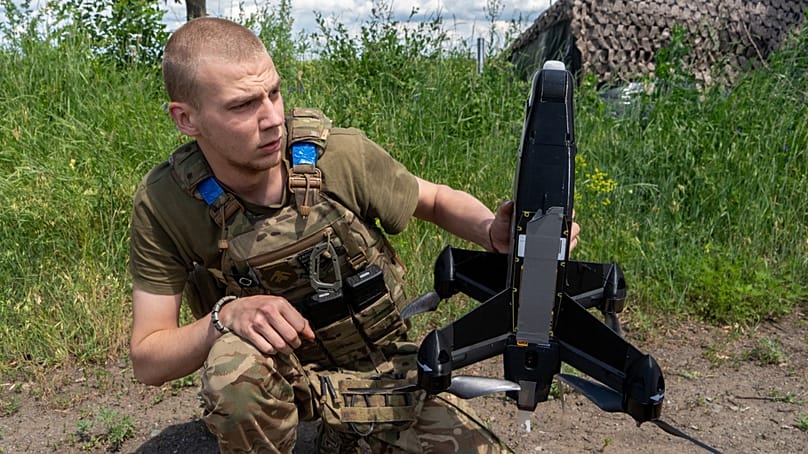
Senior Lieutenant Oleksandr Vorobiov, call sign "Zhan" and deputy chief of air defence of Ukraine's 3rd Army Corps, said Ukraine's biggest shortcoming is reliable radar detection. He explained that intermittent radar tracking has prevented the development of fully autonomous interceptor drones, as existing radar systems often lose track of small drones for several seconds.
"The one thing that really stopped us [in Ukraine] from making it fully autonomous. The radars we mostly use in Ukraine were not designed to detect this type of drone. They're weather radars, jet radars, basically any type of radar except ones designed for these drones. That means the target sometimes disappears from the radar picture. If the drone still can't see the target and the radar loses track of it for ten seconds, then the drone needs to be operated manually for that time. That's the biggest gap: reliable detection of these kinds of targets. Maybe Europe has that capability, maybe the US has it, I don't know," he told Euronews.
A Ukrainian serviceman of Khartia brigade launches an interceptor drone in Kharkiv region, Ukraine, Friday, June 26, 2026. AP Photo/Andrii Marienko
Connecting military needs with industrial innovation
The aim of this year's industry day "is about innovation in technologies overall," Lieutenant Colonel Steffen Bott, the event's project manager told Euronews. He emphasised that during these industry days, the military's role "remains unchanged."
"Neither we as the military nor NATO itself enter into contractual relationships with defence companies. However, one of the main drivers behind the current focus on counter-UAS is that the military has identified specific operational requirements. To carry out these operations effectively, it has become clear that technologies in the counter-UAS field are evolving extremely quickly. Start-ups, alongside established defence companies, are driving much of this innovation. At the same time, military requirements, particularly in light of the war in Ukraine, are evolving rapidly. Those requirements may not change completely, but they adapt much faster than the procurement and acquisition processes designed to meet them," he explained.
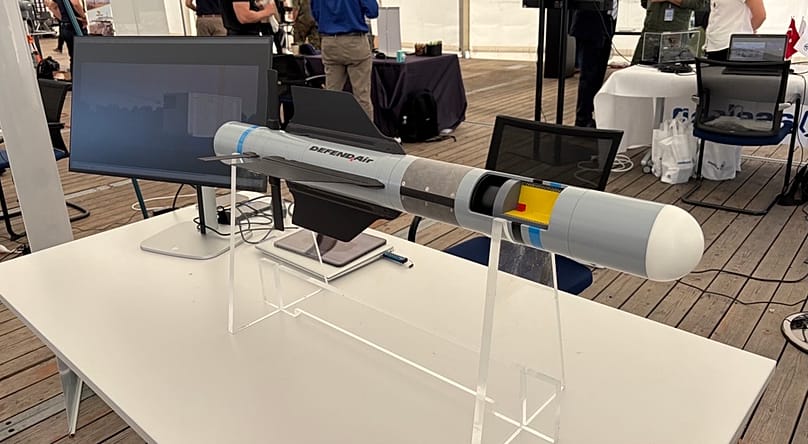
Reflecting that focus on rapidly evolving counter-drone technologies, around 35 companies exhibited their latest systems at the event, including Matra BAe Dynamics Alenia (MBDA), Alta Ares, Hensoldt and Aselsan, to name a few. The systems and counter measures ranged from radars to interceptor drones and missiles, such as MBDA's specialised counter-drone missile. A representative told Euronews that the missile was developed to counter mass drone attacks, "such as those we have seen in Ukraine and the Middle East, typically involving Shahed or Geran drones, in a cost-efficient and effective way."
MBDA-interceptor missile mock up at NATO's Industry Day, 30/06/2026 Johanna Urbancik/ Euronews
The missile is being integrated into Rheinmetall's Skyranger 30 air defence system, the first of which are earmarked for Germany's brigade in Lithuania, with deliveries expected between 2027 and 2028. Each Skyranger 30 carries nine missiles, allowing a six-vehicle battery to field 54 ready-to-fire interceptors. Smaller Class 1 drones, such as quadcopters, are engaged by the system's 30 mm cannon, while the "Defend Air-missile is intended for larger threats, including Shahed-type drones, the company representative said.
Learnings from Russia's full-scale invasion of Ukraine
Walking through the exhibition tent, one thing quickly stood out: the absence of Ukrainian companies. The event was reserved for firms from NATO member countries, Euronews has been told. Still, Ukraine was an ever present topic for both the alliance and the companies, with many of them highlighting the collaboration with Ukraine.
Turkey's defence giant Aselsan told Euronews that the key learning from Russia's war against Ukraine is reliability. "The system has to be reliable. When the target comes towards you, you have just a few seconds to decide and act. The system should use artificial intelligence to shorten the decision-making time," he said.
A representative from the French defence company Alta Ares that develops AI-powered software and systems for intelligence, surveillance and reconnaissance (ISR) and counter-drone (counter-UAS) operations, told Euronews, that they "don't really see Ukraine as a lab". The French company has presented two different types of interceptors on NATO Aircom's industry day: the x-block, designed for short and mid-range interception, so with a maximum range of 15 kilometers and one is for longer range, which can go up to 40 kilometers from launching site.
"Our two co-founders were in Ukraine at the beginning of the war. And they worked closely with Ukrainian units in order to understand the needs, to understand clearly how the battlefield is evolving. They wanted to give them solutions adapted to their needs, so they worked on AI solutions in order to be integrated on the drones," the representative explained.
With more than 30 competitors exhibiting their products, competition is never far away. "If you adpot the Ukrainian way of thinking, we are only partners because we potentially need solutions like this in Europe," he told Euronews. "There's not enough on offer. There will be too much demand," he added, pointing out that Alta Ares has recently signed an Memorandum of Understanding (MOU) with the German drone company Quantum Systems.
Senior Lieutenant Oleksandr Vorobiov agreed saying it's "good they are there," as without, there's a lack of knowledge about the modern battlefield. Vorobiov added that he can't say if these efforts are enough, but the mindset, that European companies go to Ukraine and are present on the battlefield is good, albeit a little late.
Unmanned Arms Race: The Integration Of Drone Warfare In The South Caucasus – Analysis
A FlyEye reconnaissance drone. Photo Credit: VoidWanderer, Wikipedia Commons
Drones Transformed Regional Warfare — The 2020 Nagorno-Karabakh War marked the first major conflict where drones played a decisive role. Azerbaijan’s use of Turkish and Israeli UAVs demonstrated their effectiveness against conventional forces, setting a precedent for modern drone warfare.
Azerbaijan Leads, Armenia Catches Up, Georgia Lags — Azerbaijan is the clear frontrunner with domestic production, dedicated Unmanned Systems Troops, and diversified procurement. Armenia is rapidly modernizing its drone capabilities after its 2020 defeat. Georgia is falling significantly behind despite limited local initiatives.
Ongoing Military Modernization — All three South Caucasus states are investing more in unmanned systems (aerial and ground), reflecting lessons from Ukraine and the 2020 war. Azerbaijan and Armenia have substantially increased defense spending, while Georgia’s efforts remain modest.
Analysis
The military use of unmanned aerial vehicles dates back decades, with early reconnaissance drones already appearing during the Vietnam War and later conflicts. However, drones only began being used widely during the war in Afghanistan, where the United States relied heavily on UAVs for surveillance, reconnaissance, intelligence gathering, and targeted strikes against enemy targets. The conflict demonstrated the value of persistent aerial monitoring and precision remote strikes, gradually normalizing the use of unmanned systems in modern warfare. In Afghanistan, drones were also increasingly used for logistics support, infrastructure monitoring, and broader military coordination, further expanding their battlefield role.
The use of drones leaped even further during the 2020 Nagorno-Karabakh War between Azerbaijan and Armenia, which became the first major interstate conflict where unmanned systems played a central battlefield role. Azerbaijan’s extensive use of Turkish Bayraktar TB-2 drones, Israeli loitering munitions, and reconnaissance UAVs demonstrated how deadly drones can be against armored vehicles, artillery systems, and air defenses. This conflict sealed UAVs as a vital part of the modern battlefield rather than supplementary assets.
In the Ukraine war, both sides increasingly relied on drones for reconnaissance, artillery adjustment, long-range strikes, logistics disruption, and direct attacks against armored vehicles and personnel. The conflict eventually accelerated the rapid evolution of FPV drones, loitering munitions, naval drones, and AI-assisted systems. The scale of drone usage and the unprecedented damage inflicted by relatively cheap unmanned systems fundamentally changed global military discussions about the future of warfare itself. Regional Insecurity and Unmanned Systems in the South Caucasus
The South Caucasus occupies a particularly important place in the evolution of modern drone warfare. The 2020 Nagorno-Karabakh War became the first conflict where unmanned systems were systematically integrated to overwhelm and defeat a capable conventional force.
Although the region has not witnessed large-scale armed conflict since Azerbaijan’s 2023 operation in Nagorno-Karabakh, the South Caucasus still retains a noticeable degree of geopolitical instability. More than 20% of Georgia’s territory remains occupied by Russia following the 2008 war, while relations between the two countries continue to be tense. Armenia’s relations with Russia have also become increasingly strained in recent years as Prime Minister Nikol Pashinyan gradually expanded cooperation with the European Union and the United States. In addition, the Iran war introduced another layer of regional tension, with Azerbaijan briefly becoming involved after an alleged Iranian drone hit an Azerbaijani airport in Nakhchivan. Even though direct military confrontation remains unlikely in the near future, these security concerns continue to encourage South Caucasus states to modernize their armed forces and further explore the military potential of unmanned systems.
Azerbaijan: Drone Pioneer and Expanding Military Hegemon
Azerbaijan remains the most advanced and institutionally developed drone operator in the South Caucasus. The country continues actively expanding its unmanned warfare capabilities through both procurement and domestic development efforts. In recent years, Azerbaijan adopted several new drone systems into service, including domestically produced UAVs such as the “İti Qovan.” Azerbaijan’s leading defense producer “Azersilah” is also actively involved in UAV design and production efforts. Alongside local production initiatives, Azerbaijan continues operating a diverse fleet of Turkish and Israeli unmanned systems, including Bayraktar TB-2 and Akıncı drones, while also showing interest in acquiring additional advanced UAV platforms in the future. The country also established dedicated training and maintenance facilities for Akıncı drones. The military cooperation framework established with Türkiye under the 2021 Shusha Declaration further strengthened cooperation in defense technologies, training, and military-industrial development.
Azerbaijan also increasingly seeks to deepen cooperation with Turkish defense companies beyond simple procurement by exploring possibilities for joint drone production and broader defense-industrial collaboration with Baykar. In recent years, both sides signed cooperation agreements and memorandums regarding technology exchange, industrial cooperation, and potential localized production of Baykar systems in Azerbaijan, signaling Baku’s long-term interest in developing more sustainable domestic unmanned systems production.
One of the most important developments, which received little international attention, was the formal establishment of dedicated Unmanned Systems Troops within the Azerbaijani Armed Forces. The experience of Ukraine demonstrated that such an institutionalization of unmanned forces allows for better coordination and battlefield results. The commander of the newly established forces, Colonel Adam Huseynov, is known to have received high-level military decorations following the 2020 Nagorno-Karabakh War. Although Azerbaijani authorities have not officially clarified the exact location of the Unmanned Systems Troops within the broader military structure, the sequence of units presented during the 2025 military parade suggests that the new forces are likely integrated into the Azerbaijani Air Force structure.
Azerbaijan’s expanding drone capabilities are also supported by steadily increasing military expenditure. The country’s defense budget grew from approximately $2.24 billion in 2020 to a planned $5.1 billion in 2026, reflecting Baku’s continued emphasis on military modernization and technological development.
Armenia: Adapting to the Lessons of Defeat
Armenia’s approach to drone warfare and unmanned systems modernization is heavily shaped by the lessons of its military defeat during the 2020 Nagorno-Karabakh War, where Azerbaijani drones inflicted devastating damage on Armenian units and exposed major weaknesses in Armenia’s armed force structure. Since then, Yerevan has accelerated military modernization efforts with a strong emphasis on unmanned systems. This shift was clearly visible during the 28 May 2026 military parade, where Armenia showcased a wide variety of modern UAVs and unmanned systems ranging from small reconnaissance drones to larger strike-capable platforms. Among the systems displayed were reconnaissance and attack drones such as the UL350 and Storm-320. Armenia also showcased Chinese-made CH-4 strike drones equipped with precision-guided munitions, Iranian AD-08 Majid short-range air defense systems, and domestically produced drones such as the AW5R and Krunk-25.
One of the most interesting developments was Armenia’s demonstration of ground-based robots known as “Gail” (“wolf”). Similar unmanned ground systems have increasingly attracted attention following their use in Ukraine, where they were employed for logistics, reconnaissance, casualty evacuation, and even direct combat support missions. However, effective use of such systems requires strong communications infrastructure, coordination capabilities, maintenance networks, and institutional adaptation — areas where Armenia still faces important challenges. Nevertheless, the decision to integrate UGVs into military modernization efforts demonstrates Armenia’s growing awareness of broader unmanned warfare trends extending beyond aerial drones alone.
Another major post-2020 development was the establishment of the Unmanned Aerial Vehicle Directorate within the Armenian Armed Forces in 2024. The creation of a specialized UAV command structure demonstrates that Armenia increasingly views unmanned warfare as a strategically crucial military sphere. Armenian officials have repeatedly referenced the lessons of Ukraine as highly important for Armenia’s future military development, while simultaneously continuing active drone-related cooperation
with a variety of foreign partners.
Armenia’s military procurement strategy also underwent significant diversification following 2020. While Russia previously dominated Armenian arms imports, Yerevan increasingly expanded defense cooperation with countries such as India, France, China, Iran, and the United States, while still maintaining certain Russian military ties. The purchase of Chinese strike drones and American-made V-BAT reconnaissance UAV’s reflects Armenia’s broader attempt to avoid overdependence on a single supplier.
Armenia’s military modernization is also reflected in rapidly increasing defense expenditure. The country’s military budget increased from approximately $634 million in 2020 to around $1.44 billion in 2026, demonstrating the importance Yerevan places on rebuilding and modernizing its armed forces following the 2020 war.
Georgia: Falling Behind in Drone Warfare
Compared to Azerbaijan and Armenia, Georgia appears significantly less advanced in the integration of unmanned systems within its armed forces and is increasingly falling behind in this field. The country’s arguably only significant drone-related project is the cooperation between the Georgian defense company Delta and the Polish firm WB Technologies under the Delta WB initiative. The partnership focuses on local production of systems such as the FlyEye reconnaissance drone and the Warmate loitering munition. Georgian authorities announced plans for serial production of these systems in summer 2023, and the initiative initially attracted considerable attention as a potential step toward strengthening Georgia’s domestic military-industrial capabilities.
However, despite the ambitious plans, there have been no follow-up announcements regarding successful large-scale production or operational deployment. Unlike Azerbaijan and Armenia, Georgia also has not established dedicated unmanned systems forces or specialized drone branches within its military structure. The relatively modest scale of Georgia’s recent military parade raises further questions regarding the current pace of military modernization. During the 26 May 2026 Independence Day Parade, Georgia showcased very limited military equipment and did not publicly demonstrate drone systems, in contrast to Armenia and Azerbaijan where unmanned systems occupied a visible place in military presentations.
Recently, professor and political analyst Lasha Dzebisashvili sharply criticized the government for insufficient military funding, procurement problems, and the lack of meaningful development of domestic military production capabilities. Georgia’s prolonged political instability and polarization may also partially explain the weak pace of military reform and modernization in recent years. This situation is particularly important given Georgia’s geopolitical environment, where Abkhazia and South Ossetia remain occupied by Russia following the 2008 war, creating a long-term security challenge for the Georgian state.
Georgia’s military spending reflects a similarly cautious trajectory. While the defense budget increased from approximately $288 million in 2020 to around $662 million in 2026, military expenditure as a percentage of GDP declined during the same period. This differs noticeably from Armenia and Azerbaijan, both of which significantly expanded military spending and modernization efforts following the 2020 Nagorno-Karabakh War.
Looking Ahead
The South Caucasus remains one of the regions where the importance of unmanned systems is most visible. The experience of the Nagorno-Karabakh wars, followed by the lessons emerging from Ukraine, demonstrated to regional actors that drones are a crucial weapon in 21st century warfare. As a result, all three South Caucasus states show at least some level of interest in developing unmanned warfare capabilities, although the scale of implementation varies significantly.
Azerbaijan currently stands out as the clear regional leader in drone warfare integration due to its domestic production, diversified procurement, and creation of dedicated unmanned systems structures. Armenia, largely motivated by the lessons of defeat in 2020, is rapidly attempting to modernize and diversify its military capabilities with increased emphasis on drones. Georgia, despite possessing some domestic production initiatives, lags significantly in practical adaptation. Overall, it appears that drone adaptation will remain one of the most important military modernization trends in the South Caucasus in the coming years.
About Geopolitical Monitor Geopoliticalmonitor.com is an open-source intelligence collection and forecasting service, providing research, analysis and up to date coverage on situations and events that have a substantive impact on political, military and economic affairs. View all posts by Geopolitical Monitor →

.jpg)