Showing posts sorted by relevance for query WOLF HUNTING. Sort by date Show all posts

Wednesday, August 20, 2025


Hunting wolves reduces livestock deaths measurably, but minimally, according to new study


University of Michigan
Maps of wolves hunted by county in Northern Rocky states 2005 - 2020 

image: 

These maps show snapshots of wolves hunted per county over time during the study period.

view more 

Credit: From LM Merz et al., Sci. Adv., 2025 (DOI: 10.1126/sciadv.adu8945). This work is licensed under CC BY (https://creativecommons.org/licenses/by/4.0/).


Wolf hunting has prevented livestock loss in a measurable way, but it is by no means a silver bullet, according to an international research team led by the University of Michigan.

"Hunting, on the whole, is not removing negative impacts associated with wolves. It does have some effect on rates of livestock loss, but the effect is not particularly consistent, widespread or strong," said Neil Carter, associate professor at the U-M School for Environment and Sustainability and senior author of the new study published in the journal Science Advances. 

As governmental protections have helped rebuild once-dwindling wolf populations, it's become increasingly likely that the predators encounter domesticated animals to prey on. Hunting is often presented as a remedy, but it's a contentious and polarizing proposal. Advocates on both sides of the issue have active lawsuits across the U.S. aiming to relax or redouble regulations.

But several northwestern states already allow hunting in some capacity, which has given researchers an opportunity to bring new information to the issue. The new study, supported by the U.S. National Science Foundation, showed that, on average, each wolf that was killed by a hunter was associated with a 2% reduction in predation.

The team also analyzed how hunting affected "lethal removals." These are expensive operations led by government agencies, targeting specific wolves, typically after multiple or severe predation events, said lead author Leandra Merz, assistant professor at San Diego State University.

Based on the team's study, hunting led to no reduction in lethal removals.

"We're not necessarily saying that we shouldn't be hunting and I want to be clear about that, because there are other motivations for hunting," said Merz, who worked on the project as postdoctoral scholar at U-M's School for Environment and Sustainability. "But if the goal is to reduce livestock predation and we're using hunting for that, it's not as effective as we would like."

The research team also included collaborators from the University of Idaho, Washington State University, Ohio State University and the GESIS Leibniz Institute for the Social Sciences in Germany. The researchers said this is an important part of a small but growing body of research that brings relevant information to a charged debate about wolf management strategies.

"A lot of uncertainty exists about the utility of public wolf hunting in reducing negative impacts from these animals as their populations recover," Carter said. "In an issue that's divisive and contentious, that uncertainty is something that we should try to minimize, because we could be making decisions that are just not as efficacious as they should be nor in the public’s best interest."

And out come the wolves

The Endangered Species Act, or ESA, has protected gray wolves across the contiguous U.S. for decades and, in the 1990s, the U.S. launched a successful wolf reintroduction campaign in the Northern Rocky Mountains. Within about 20 years, the Northern Rocky wolf population grew to where some states rolled out legalized hunting programs.

Since then, wolf hunting has been characterized by starts and stops driven by litigation brought by parties on both sides. In fact, in 2020, the U.S. Fish and Wildlife Service determined that gray wolf populations had recovered significantly enough to remove federal protections under the ESA before a court order reversed that decision in 2022. And the debate is far from over.

"There are timely things happening related to wolf management, both domestically and internationally," Carter said, pointing to Michigan and Europe as regions where the issue is especially being pressed. "Stakeholders involved in wolf management are bringing up the topic of hunting wolves and it's an imminent conversation we'll be having."

Yet the actual impact of wolf hunting on protecting livestock was unknown, meaning there have been a lot of assumptions involved in the discourse, Carter said. So he, Merz and their colleagues saw an opportunity to shed light on that using information from areas where wolf hunting was legal—Idaho and Montana—and from areas where wolf hunting was not legal, specifically Oregon and Washington.

The research analyzed data available for those areas from 2005 and 2021 using an array of mathematical models to connect hunting to its influence on depredation and lethal removal events. No hunting was permitted prior to 2009, helping researchers establish a control scenario.

Again, hunting showed no impact on the number of lethal removal operations, but predation was more nuanced. The average county in the analysis lost roughly 3 to 4 livestock animals per year to wolves. With the 2% reduction mentioned earlier, that translates to about 0.07 animals protected per wolf hunted, Carter said.

But the team also emphasized there can be huge variations from that average. For instance, Merz knows of an Idaho rancher that lost 65 sheep in one night to wolves. And a loss need not be that severe to have devastating economic consequences and steep psychological tolls.

"The cost can be really high to an individual rancher, even over very short time periods," Merz said. "We don't want to minimize that."

From a policy perspective, though, it's helpful to ask what are the best management methods to spread that cost effectively and equitably, Merz said. Hunting, as the study shows, relieves a minimal burden from ranchers, but at no direct cost to them.

Then there are nonlethal methods that are proving to be effective, Merz said, including fladry, a combination of flags and barriers that can be electrified. Even increasing the presence of humans or human activities helps (drones blasting AC/DC and arguments from the movie "Marriage Story" recently made news). But the cost of implementing and maintaining these measures almost exclusively falls on ranchers.

"There's not going to be an easy solution either way. If there were, we would have figured it out by now and we'd be using it," Merz said. "But the upside is that people are really creative. We just need to be a little bit more creative in how we redistribute some of the costs and benefits. I think outside of managing wildlife, we do that a lot in society."

These maps show snapshots of the geographic distribution of livestock lost to wolves per county over time during the study period.

Credit

From LM Merz et al., Sci. Adv., 2025 (DOI: 10.1126/sciadv.adu8945). This work is licensed under CC BY (https://creativecommons.org/licenses/by/4.0/)

Thursday, December 22, 2005

A Hunting We Will Go


Well I posted my story on the crisis of the Caribou in Alberta, and I tagged it with technocrati.

When I checked for stories about Alberta I found this really offensive blog that appeared this week. It is an anonymous blog promoting Big Game Hunting in Alberta.

Now let's understand something about hunting, if you kill it and eat it, fine. If you use the skin and fur fine. But if all you want is a trophy, well that's where I draw the line.
And yes I have my FAC and I have my Hunter Training certification, and I have my principles.

I also draw the line when it comes to hunting species whose only natural enemy is man, and who are limited in their numbers, whether the government decides they are endangered or not. These are not trophies (which is all Big Game hunting is about) they are sentient species and I oppose the hunting of these animals. Which includes cougars, wolves, black bears, and of course the Grizzly which is endangered.

Unfortunately everything in this blog is perfectly legal in Alberta. The influence of the Fish and Game Association over the governments wilderness regulations is only matched by the oil and logging industry. Wilderness and wildlife are 'fair game' (pardon the pun) in Alberta. Which is why we have a Grizzly hunt here annually.

Cougars, like the Grizzly, are rare and the hunt is regulated, thanks to FGA. Why you would hunt this magnificent cat is beyond me, but of course its all about the manly man macho of coming home with a trophy. And why it is fair game to kill wolves any time in Alberta is right up there with the Grizzly and cougar hunts as the stupidest policy this government has when it comes to Wildlife Management and Sustainable Resources. Now there's an Orwellianism for ya.

I suspect that since this blog is being promoted by an outfitter out to make some bucks off American hunters. This is really disgusting so I thought I would share my disgust with you by posting some of the descriptions from this blog.


Try Cougar Hunting In Alberta

The cougar, also known as mountain lion, puma, or panther, is North America’s largest member of the cat family. This alert, secretive animal is rarely seen which makes cougar hunting a real challenge. Cougar hunting is a rugged adventures and a unique hunting experience.
Growing up to 10 feet long and weighing in at close to 200 pounds gives the hunter an opportunity to harvest a real trophy.

The cougar lives in ragged, forested areas, canyons and dense swamps at altitudes as high as 13,000 feet. In Alberta, a hunter will usually find cougars primarily in southern mountains and foothills, but occasionally they may be seen in other areas.
Cougar hunting is regulated in Alberta. This is an effort to preserve these cats for the future population.

Cougar hunting begins the first of December and continues through the end of February. Cougar seasons are quota seasons that close early for resident hunters if the quota is reached in any given zone. The population has been very well managed which allows for better cougar hunting opportunities.

The best way to cougar hunt is to use hounds. The hounds will follow the cougar track and with alot of hard work and a little luck you will find a treed mountain lion at the end of the trail. The dogs will corner them up trees and hold the cat there. This gives the hunter an opportunity to get a good look at the animal and decide whether or not to let it go. This method gives the hunter an excellent chance of taking home a trophy cougar.

Wolf & Coyote Hunts In Alberta

Wolf Hunting in Alberta
If you are up to a challenge wolf hunting is for you.Many outfitters will add a wolf hunt to their big game hunts and will offer winter wolf hunting trips, when the pelts are at their best, and no other hunting seasons are open. Wolves may be hunted by the holder of a wolf license from the opening of any big game season until the end of the spring bear season.
A great method for wolf hunting is using heated blinds over bait, stalking and calling. Baiting wolves is legal and effective and there is no limit on wolves.

In Alberta, wolves are found in mountain, foothill and boreal regions and cover approximately 60 percent of the provincial land area. Wolves are not considered rare or endangered in the province. Natural Resources Service estimates the provincial population (in Sept.) to be about 4,000 animals. This estimate is based on population counts in selected areas, and trapper and hunter harvest information. Go to Wolves in Alberta for an overview of the biology, history and management of this animal in the province.

Black Bear Hunts In Alberta Are Amazing

Once you’ve been black bear hunting in Alberta you won’t want to hunt anywhere else. Approximately 74% of the province is inhabited by black bear and much of it is largely undisturbed, the color phases range from dark chocolate brown to blond, many bear harvested in Alberta have made the Boone & Crockett and Pope & Young record books. If this isn’t enough to convince you, then the 2 bear limit in most areas should! Where else can you have the opportunity to harvest two black bears in one hunt! Contact the outfitters directly to book your black bear hunting trip in Alberta

Spring and Fall black bear hunting provides the hunter with a variety of opportunities. Your hunt will be productive and you will have a great chance of getting trophy black bears. Many outfitters will add other hunts to your fall black bear hunts including moose, whitetail deer, mule deer and elk.

The average male black bear will weigh anywhere from 250-450 pounds and are between 5 - 5 1/2 feet from nose to tail. Many outfitters have harvested black bear above the average ranging from 6 - 8 feet nose to tail and up to 600 pounds. Alberta is estimated to have over 36,000 black bear!.

Baiting black bear is allowed in most areas as is spot and stalk and either method will be productive. Hunting black bear over bait will give the hunter the opportunity to get close enough to see the quality of the hide, this is perfect for the archery or muzzeloader hunter. Spot and stalk hunting can be very productive as well. It’s almost a certainty you will get a shot at a trophy black bear no matter what method you use.


Tag


Monday, August 05, 2024

A wolf’s killing shocked Canada. Then his image appeared on a hunting site


Leyland Cecco in Toronto
THE GUARDIAN
Sun, 4 August 2024


Takaya, the Canadian sea wolf, left behind a legacy reflecting the complex relationship between humans and wildlife.Photograph: Cheryl Alexander/Wild Awake Images


Ever since he was killed by a hunter in 2020, the Canadian sea wolf Takaya has appeared all over the world.

Paintings, poems, sculptures and statues – including a 150lb (68kg) mixture of driftwood, sea shells and dried kelp – have memorialized a wolf whose legacy reflects the complex relationship between humans and wildlife.

But photographer Cheryl Alexander, a relentless advocate against government-sanctioned wolf culls, was shocked to see her most famous image used to advertise a big game hunting company.

Related: Canada mourns Takaya – the lone sea wolf whose spirit captured the world

“I shocked and a bit horrified. And it really pissed me off that company was using Takaya as an advertisement to come up to Canada and kill a wolf,” she told the Guardian. “It hurt too because Takaya has become, in many ways, an international image for positive coexistence with humans.”

The unlikely story of the wolf’s years of self-imposed isolation captivated residents of Vancouver Island, some of whom would paddle by the rocky outcrops and windswept trees hoping to glimpse the animal. But one day in late March, a hunter’s rifle brought an untimely end to the wolf.

Alexander recently found British Columbia-based Terminus Mountain Outfitters was using her photo to advertise its wolf hunting package. She soon posted to her Instagram page, appealing to her 33,000 followers to share news of the company’s decision to use the photo.

The owner of Terminus said in a statement he didn’t mean to “offend” anyone with the image.

“[A web design company] chose some live wildlife photos to use on the [website]. July 27th I was contacted by a disgruntled person upset about a wolf picture that they recognized as a wolf named Takaya. I had no idea of the story behind this wolf or even which of the three pictures on my website was of Takaya. I asked my web developer … to simply remove all three of the photos. July 29th they were removed. Neither I nor my web developer meant to offend anyone,” he said. “Unfortunately, because of the media attention we are now getting emails that are threatening and quite angry when we had nothing to do with the live pictures chosen. We are a legal family-run business.”

Both the image, and the page on wolf hunting, have since been taken down.

In British Columbia, hundreds of wolves – which are seen as vermin that must be eradicated – are killed for sport each year. Hunters usually only take the pelts, discarding the remains. Channelling growing outrage – and changing perceptions – Alexander and local conservation groups have started a petition calling for a moratorium on wolf hunting in British Columbia that has so far received more than 65,000 signatures. Alexander has also founded the non-profit Takaya’s Legacy which works to support wolf protection initiatives.

While Takaya’s legacy has aligned with the aims of conservation groups, his curiosity – or lack of fear – also raised difficult questions about the relationship locals had fostered with the wolf that led to his demise.

“I was angry about the photo, but there’s a silver lining, because it actually allows word to get out there about what’s happening in Canada regarding trophy hunting – the whole range of wild animals that are hunted in Canada is quite disgusting,” said Alexander. “We’re grappling with loss of biodiversity. That trophy hunters are continuing to hunt them just for fun and for recreation is not acceptable.”


Friday, February 26, 2021

STOP MURDERING PREDATORS
Hunters and trappers blow past Wisconsin's wolf kill target

© Provided by The Canadian Press

MADISON, Wis. — Hunters and trappers blew past Wisconsin's wolf kill target in less than 72 hours, forcing a premature end to a hunt that initially wasn't supposed to happen for another nine months and raising the ire of animal rights activists.

The Department of Natural Resources closed the season Wednesday afternoon after hunters and trappers had killed 178 wolves, which was 59 more than the state's target of 119. Hunters and trappers exceeded their target in all six of the state's management zones.

The agency estimated that about 1,000 wolves roamed the state before the hunt began. The department's population goal is 350.

The season began Monday and had been scheduled to run through Sunday. DNR officials announced Tuesday that the hunt would end Wednesday afternoon because so many animals had been killed in the first two days.

The wolf season has been one of the most contentious outdoors issues that Wisconsin has grappled with in the last 20 years.

Animal rights advocates have argued that wolf populations are too small to support hunting and that the animals are too majestic to kill. Farmers and rural residents, though, say wolves are killing their livestock and pets.

FARMERS GRAZE THEIR ANIMALS ON PUBLIC LANDS FOR NO FEE, BUT BITCH WHEN THE WOLVES ON THOSE LANDS EXERT THEIR NATURAL RIGHTS

Wisconsin law hands wolf hunters and trappers significant advantages during the season. Unlike with deer hunting, wolf hunters and trappers can operate at night and use dogs to corner wolves. Snow cover also aids tracking.

Wayne Pacelle, president of animal rights group Animal Wellness Action, said in a statement Wednesday that killed Wisconsin wolves didn't stand a chance.

“Traps are set like landmines for unsuspecting animals and the hunters are deep into the woods and out of the range of communication, and they can easily claim they didn't get the ‘stop the hunt’ notice before they killed their wolf,” he said.

Collette Adkins, carnivore conservation director for the Center for Biological Diversity, an Arizona-based non-profit that works to protect endangered species, issued a statement calling the Wisconsin hunt “a reckless slaughter.”

Hunters and trappers exceeded the state’s kill target during Wisconsin's 2012, 2013 and 2014 seasons, which were held before the wolf was placed back on the federal endangered species list.


Wisconsin law requires the DNR to give 24-hour notice of wolf hunting zone closures, which means hunters and trappers can keep killing wolves for another day after a closure is announced. If they kill a wolf after the zone is closed, they would face a $330 fine.

The DNR announced on Tuesday that three zones would close at 10 a.m. Wednesday and the remaining three would close at 3 p.m.

The Trump administration removed federal protections for wolves in January, returning management to the states. Wisconsin law requires the DNR to hold an annual hunt between November and February. The department was preparing for a November hunt when Republican lawmakers demanded the season start before the end of February, saying they were worried the Biden administration might re-list wolves before November and deny Wisconsin hunters a season.

The DNR resisted, but hunter advocacy group Hunter Nation won a court order earlier this month that forced the immediate launch of a wolf hunting season.

The DNR still plans to hold a November wolf hunting season.

Keith Warnke, the department's fish, wildlife and parks administrator, told the agency's policy board during a meeting Wednesday that hunters had exceeded the limit.

None of the board members expressed any reaction to the news. The board's chairman, Fred Prehn, said the target was too low given the population goal of 350 wolves and that the November target should be set to get closer to that goal.

Warnke said he didn't know if that would be safe for the overall population, but that the department would use that 350-animal goal to inform its decisions. He said new population estimates are expected in April.

Lawmakers in neighbouring Minnesota have introduced dueling bills that would ban wolf hunting and establish a season.

___

Follow Todd Richmond on Twitter: https://twitter.com/trichmond1

Todd Richmond, The Associated Press

Monday, October 10, 2022

Early data indicates Idaho wolf population is holding steady

By KEITH RIDLER
October 6, 2022

 A wolf is shown in Yellowstone National Park, Wyo., in this file photo provided by the National Park Service, Nov. 7, 2017. Idaho's wolf population appears to be holding steady despite recent changes by lawmakers that allow expanded methods and seasons for killing wolves, the state’s top wildlife official said Thursday, Oct. 6, 2022. (
Jacob W. Frank/National Park Service via AP, File)


BOISE, Idaho (AP) — Idaho’s wolf population appears to be holding steady despite recent changes by lawmakers that allow expanded methods and seasons for killing wolves, the state’s top wildlife official said Thursday.

Idaho Department of Fish and Game Director Ed Schriever told lawmakers on the Natural Resources Interim Committee that preliminary data on human-caused and natural wolf mortality looks similar to three previous years.

He also said the agency is using changes in wolf hunting laws that could lead to killing more wolves in areas with livestock conflicts or where elk herds are below population goals, potentially through a wolf-killing reimbursement program for skilled trappers and hunters.

“I think the best way to describe Idaho’s population right now is that it’s fairly stable, and it’s fluctuating around 1,250,” he told lawmakers. “Part of the year it’s below that; part of the year it’s above that. But the population is fluctuating around 1,250.”

Schriever, in a graph presented to lawmakers, showed the state’s wolf population from 2019 to 2021 fluctuating with a high of more than 1,600 in May when wolf pups are born down to a low of about 800 in April as wolves die through natural mortality, hunting or trapping.

Schriever said that the same pattern with potentially similar numbers could be repeated this year. But the agency won’t have a solid estimate for the 2022 wolf population until January when it analyzes additional information and millions of photos taken by remote cameras.

The agency in previous years picked August as the date to set the wolf population, putting it at about 1,500. The 1,250 estimate is a snapshot of the wolf population in November, at about the midpoint of the annual population fluctuation.

Idaho lawmakers in 2021 approved a law backed by ranchers that greatly expanded wolf killing in what some lawmakers stated could reduce the wolf population by 90%. Backers said it would reduce the wolf population and attacks on livestock while also boosting deer and elk herds.

Idaho wildlife officials also last year announced the state would make available $200,000 to be divided into payments to hunters and trappers who kill wolves in the state.

However, there has been concern the new rules could overshoot the mark because if the state’s wolf population were to fall below 150, the U.S. Fish and Wildlife Service could take over management of wolves from the state.

“If you go below that (150), that’s bad news,” Schriever told lawmakers.

Schriever cited a 2009 Fish and Wildlife Service rule delisting northern Rocky Mountain gray wolves. The rule was blocked by a federal court but took effect when approved by Congress in 2011. Schriever noted the rule has a wolf population for Idaho fluctuating around 500, with a potential high of about 650 and a low of about 350.

“I think there are a whole bunch of us that would be happy if we could get to what’s described in the federal delisting rule as a population fluctuating around 500,” Schriever said.

Getting there could be challenging because wolves, Schriever noted, get wary when hunted.

He gave a breakdown of 389 wolves killed last year by some 50,000 hunters and trappers, noting only 72 hunters and trappers killed more than one wolf, accounting for 236 wolves in all that year.

“Those people are very important in the concept of managing the wolf population,” Schriever said, suggesting the reimbursement program could be a key component to target wolves in specific areas of the state.

“The reimbursement program may, in fact, be very important in keeping some of these highly skilled people engaged in this for a longer period of time,” he said.

Besides setting up the reimbursement program, the law passed in 2021 also expanded wolf killing methods to include trapping and snaring wolves on a single hunting tag, no restriction on hunting hours, using night-vision equipment with a permit, using bait and dogs and allowing hunting from motor vehicles. It also authorized year-round wolf trapping on private property.

Montana lawmakers also changed their laws to expand wolf killing. That prompted the U.S. Fish and Wildlife Service late last year, at the request of environmental groups, to announce a yearlong review to see if wolves in the western U.S. should be relisted and again receive federal protection under the Endangered Species Act. Such a move would take away Idaho’s management of the species.

On another front, a U.S. District Court judge in August rejected a request by conservation groups to temporarily block Idaho’s expanded wolf trapping and snaring rules. Environmental groups said Idaho’s expanded wolf-killing regulations violate the Endangered Species Act because they will lead to the illegal killing of federally protected grizzly bears and Canada lynx. Schriever said Thursday that no grizzlies have so far been caught in a wolf trap.

It’s not clear when the court will make a ruling on the merits in that case.

Thursday, September 23, 2021

Wolf hunting ban pits farmers against conservationists in Spain

Issued on: 23/09/2021 - 
Hunting wolves is now illegal in northern Spain PIERRE-PHILIPPE MARCOU AFP
4 min
Listen to the article
ADVERTISING


Puebla de Sanabria (Spain) (AFP)

A 4x4 pulls up on a dirt road in northwest Spain and livestock farmer Ana Vega climbs out, walking over to a ditch where a few days ago a wolf killed a calf.

"They haven't left anything... devoured everything," she said, pointing at the ground. There is nothing left of the carcass, not even the smallest bone.

Wolves have long roamed the valley Ungilde, a paradise for the Iberian wolf near the Portuguese border, four hours' drive from Madrid.

Controlled hunting has helped to keep their numbers down in the area -- and protect livestock -- but on Wednesday a ban on killing the animals came into effect, inflaming farmers but delighting conservationists.

The hot-button ban brings northern Spain in line with the rest of the country, where hunting wolves has long been prohibited.

Many herders and farmers like Vega are dismayed over the new rule, fearing that a proliferation of wolves will put the animals at risk.

But conservationists have long pushed for the ban, saying the species should be protected.

"In this tragic wolf tale, there are three main actors: the herders, the conservationists and the hunters. And each one has his own solution," said forest ranger Carlos Zamora.

- 'Wolves' paradise' -

There are eight packs of wolves in the Sierra de la Culebra, which spans 70,000 hectares in the northwestern tip of the Castilla y Leon region.

Each pack is made up of 10 wolves, and there are several more lone individuals, Zamora explained. The number has remained steady for the past two decades, he added.

Livestock farmer Ana Vega remembers a time when locals took matters into their own hands if a wolf killed a sheep
 PIERRE-PHILIPPE MARCOU AFP

The area is famed for the Iberian wolf -- or canis lupus signatus, a sub-species of grey wolf which lives mainly in northwestern Spain.

Its image is everywhere -- on billboards and t-shirts and plastered all over souvenir shops.

"It's always been a wolves' paradise here," said Zamora from behind his binoculars, scanning the horizon under the morning sun.

Until now, controlled hunting has been allowed north of the Duero river, which flows across northern Spain, to keep numbers down.

In the Cantabria region, they planned to cull 34 wolves this year -- 20 percent of the local population.

But Spain's Socialist government decided to unify the rules, banning wolf hunting throughout the peninsula, following similar moves in France and Italy.

"When you're talking about a unique species like the Iberian wolf, responsibility for its conservation lies with all regions, it can't be just in one area," junior environment minister Hugo Moran told AFP.

The Cantabria region had planned to cull 34 wolves this year, or 20 percent of the local population
 PIERRE-PHILIPPE MARCOU AFP

"It's a shared responsibility."

But the news has angered the regions of Cantabria, Castilla y Leon, Asturias and Galicia, where the vast majority of wolves roam, with officials vowing to appeal.

While ecologists have hailed the ban as "an important step" towards species conservation, farmers are up in arms.

"It is unbelievable that communities that don't have wolves can impose their radical environmental agenda on us," raged Castilla y Leon's UCCL farmer's union.

- Unfair competition -


Vega remembers a time when locals took matters into their own hands if a wolf killed a sheep.

"They would go out and catch it or kill it," she said, her phone full of gruesome images of carcasses and half-eaten animals.

"I'm not saying we should kill them all, but that we all have to exist together," she added.

The government has banned wolf hunting throughout the peninsula 
PIERRE-PHILIPPE MARCOU AFP

Extensive farming where animals graze on local resources involves a big investment to protect them against predators.

Vega has a pack of 15 mastiffs -- dogs as big as ponies which are not cheap to keep, what with vets bills and the huge piles of food they gobble up.

She has also paid for tractors to uproot vegetation where wolves like to hide on the land.

Farmer Jose Castedo has shelled out too, installing electric fencing to safeguard his 450 sheep.

"There are very few farms like this here," said the 62-year-old of his fortified enclosure.

He worries about "unfair competition" from properties where flocks are kept behind one-metre-high fences and monitored for just a few hours a day.

Forest ranger Carlos Zamora scans the horizon for wolves
 PIERRE-PHILIPPE MARCOU AFP

The ecology ministry has pledged to invest and help, with Moran from the environment ministry promising "financial help" to those who live in areas that are home to "large carnivores".

© 2021 AFP

Friday, January 07, 2022

Hunters kill 20 Yellowstone wolves that roamed out of park

By MATTHEW BROWN

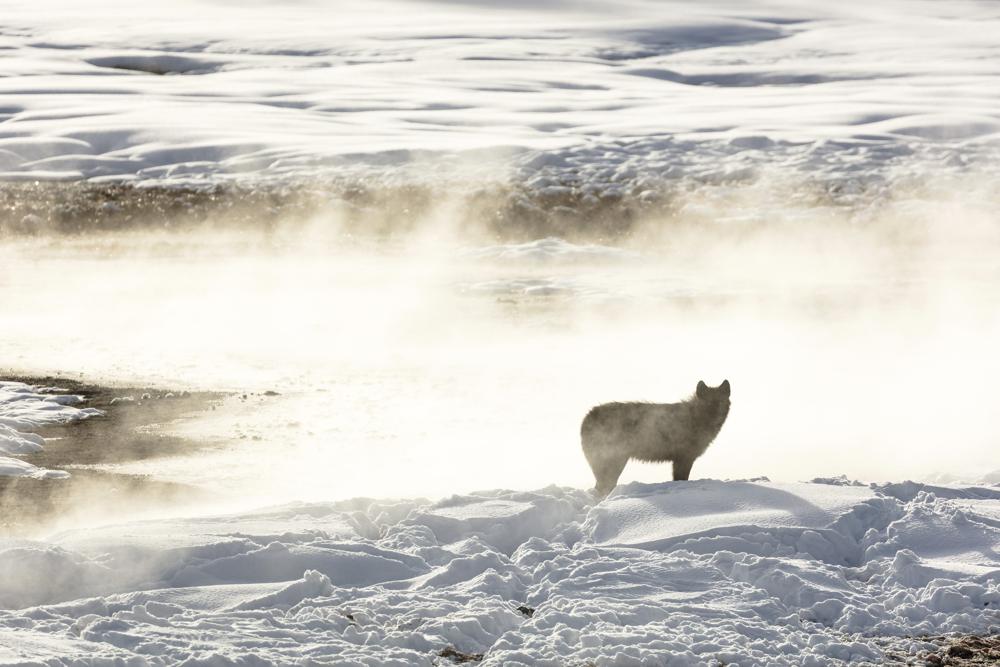
This Jan. 24, 2018, photo released by the National Park Service shows a wolf from the Wapiti Lake pack silhouetted by a nearby hot spring in Yellowstone National Park, Wyo. Park officials say hunters in neighboring states have killed 20 of the park's renown gray wolves in recent months, most of them in Montana after the state lifted hunting restrictions near the park. 
(Jacob W. Frank/National Park Service via AP, File)

BILLINGS, Mont. (AP) — Twenty of Yellowstone National Park’s renowned gray wolves roamed from the park and were shot by hunters in recent months — the most killed by hunting in a single season since the predators were reintroduced to the region more than 25 years ago, according to park officials.

Fifteen wolves were shot after roaming across the park’s northern border into Montana, according to figures released to The Associated Press. Five more died in Idaho and Wyoming.

Park officials said in a statement to AP that the deaths mark “a significant setback for the species’ long-term viability and for wolf research.”

One pack — the Phantom Lake Pack — is now considered “eliminated” after most or all of its members were killed over a two-month span beginning in October, according to the park.

An estimated 94 wolves remain in Yellowstone. But with months to go in Montana’s hunting season —- and wolf trapping season just getting underway — park officials said they expect more wolves to die after roaming from Yellowstone, where hunting is prohibited.

Park Superintendent Cam Sholly first raised concerns last September about wolves dying near the park border. He recently urged Republican Montana Gov. Greg Gianforte to shut down hunting and trapping in the area for the remainder of the season.

Sholly cited “the extraordinary number of Yellowstone wolves already killed this hunting season,” in a Dec. 16 letter to Gianforte released to AP under a freedom of information request.

Gianforte, an avid hunter and trapper, did not directly address the request to halt hunting in a Wednesday letter responding to Sholly.

“Once a wolf exits the park and enters lands in the State of Montana it may be harvested pursuant to regulations established by the (state wildlife) Commission under Montana law,” Gianforte wrote.

Gianforte last year received a warning from a Montana game warden after trapping and shooting a radio-collared wolf about 10 miles (16 kilometers) north of the park without taking a state-mandated trapper education course.

In his response to Sholly, the governor said Montana protects against overhunting through rules adopted by the wildlife commission, which can review hunting seasons if harvest levels top a certain threshold.

For southwestern Montana, including areas bordering the park, that threshold is 82 wolves. Sixty-four have been killed in that region to date this season, out of 150 wolves killed statewide, according to Montana Fish, Wildlife and Parks.

The most recent wolf killing along the Montana-Yellowstone border happened on New Year’s Day.


Wolf trapping in the area opened Dec. 21. Under new rules, Montana hunters can use bait such as meat to lure in wolves for killing and trappers can now use snares in addition to leghold traps.

“Allowances for trapping and especially baiting are a major concern, especially if these tactics lure wolves out of the park,” Yellowstone spokesperson Morgan Warthin said.

Urged by Republican lawmakers, Montana wildlife officials last year loosened hunting and trapping rules for wolves statewide. They also eliminated longstanding wolf quota limits in areas bordering the park. The quotas, which Sholly asked Gianforte to reinstate, allowed only a few wolves to be killed along the border annually.

The original quotas were meant to protect packs that draw tourists to Yellowstone from around the world for the chance to see a wolf in the wild.

Montana’s efforts to make it easier to kill wolves mirror recent actions by Republicans and conservatives in other states such as Idaho and Wisconsin. The changes came after hunters and ranchers successfully lobbied to reduce wolf populations that prey on big game herds and occasionally on livestock.

But the states’ increased aggression toward the predators has raised concerns among federal wildlife officials. In September, the U.S. Fish and Wildlife Service said it would examine if federal endangered species protections should be restored for more than 2,000 wolves in northern U.S. Rockies states including Montana, Idaho and Wyoming.

Protections for the region’s wolves were lifted a decade ago, based in part on assurances the states would maintain viable wolf populations.

A representative of the hunting industry said outfitters and guides support the preservation of wolves inside Yellowstone. But once the animals cross the boundary, sustainable hunting and trapping should be allowed, said Montana Outfitters and Guides Association Executive Director Mac Minard.

Minard questioned whether the 20 wolves killed so far this year after leaving Yellowstone should even be considered “park wolves.”

“That just doesn’t make sense,” he said. “Why aren’t they ‘Montana wolves’ that happened to go into the park?”

Marc Cooke with the advocacy group Wolves of the Rockies predicted a backlash against Gianforte and the state for not doing more to shield wolves leaving Yellowstone.

“People love these animals and they bring in tons of money for the park,” Cooke said. “This boils down to the commercialization of wildlife for a small minority of special interest groups.”

___

Follow Matthew Brown on Twitter: @MatthewBrownAP

Monday, January 29, 2024

A wolf killed the EU president’s precious pony - then the fight to catch the predator began


Patrick Barkham
Sat, 27 January 2024 

Photograph: Getty Images


LONG READ

It was a mild, windless night, sometime before dawn on 1 September 2022, when a large grey wolf trotted out of the woods beside Beinhorn, a hamlet of old barns and graceful wooden houses in the German state of Lower Saxony. The keen nose of the male wolf almost certainly scented that Dolly, a pretty chestnut pony with a white patch on her face, was vulnerable. The 30-year-old pony, kept in a paddock close to stables and a farmhouse, was not protected by high-voltage electric fencing designed to deter wolves. It was an easy kill. In the morning, Dolly’s body was found in the long grass; her owners spoke of their “horrible distress”.

Unluckily for the wolf, and perhaps for the entire wolf population of western Europe, Dolly was a cherished family pet belonging to the president of the European Commission, Ursula von der Leyen, one of the most powerful people in the EU. Last September, a year after Dolly’s death, von der Leyen announced plans that to some wolf-defenders looked like revenge: the commission wants to reduce the wolf’s legal protection.

Action had already been taken against Dolly’s killer. DNA evidence harvested from the pony’s carcass revealed that the wolf was an individual known as GW950m. This mature male wolf, which heads a pack (a wolf family usually numbering eight to 10) living around the von der Leyen residence, appears to have developed a taste for livestock. DNA tests on other carcasses implicates him in the deaths of about 70 sheep, horses, cattle and goats. Experts believe younger pack members might have copied his hunting methods. Because GW950m was now classified as a “problem wolf”, a permit was issued to allow hunters to shoot him legally (wolves can only be killed under exceptional circumstances, according to EU law). It was the seventh such licence to be issued in Lower Saxony, a state the size of Denmark with a thriving population of at least 500 wolves – more than are found across the whole of Scandinavia.


Against the odds, more than a year after the licence to kill was first issued, GW950m remains at large, living quietly on a diet of mostly deer in forests east of Hanover. If the survival of this one wolf appears improbable, so is the species’ revival in north-west Europe. Wolves were mostly wiped out in Germany in the 19th century. But since one first trotted back from Poland in 2000, they have reconquered the country, which is now home to more than 180 packs – about 1,500 wolves. Their offspring have recolonised Belgium, the Netherlands and Denmark. Wolves are expanding their territory from the Alps too, with the population growing from zero in France in 1992 to 140 packs. In Spain, wolves have bounced back from near extinction in the 1970s to more than 2,000 today.

Wolves have adapted swiftly and surely to human-dominated landscapes. But people are struggling to adjust to the wolves. The concentration of packs, von der Leyen declared when announcing the commission’s review of wolf protection laws, “has become a real danger for livestock and potentially also for humans”. In December, the commission proposed to reduce the wolf’s status under the Bern Convention from “strictly protected” to “protected” in order to introduce “further flexibility” – potentially enabling wolves to be hunted and populations reduced across the EU. Many populist politicians across Europe hope that talking up the threat of the wolf – alongside tough measures to tackle it – will win support ahead of next summer’s elections to the European parliament. It’s a low-cost way of showing rural voters you’re on their side. “Wolves are a subject that might change elections,” says one German conservationist.

* * *

People have woven myths, stories and fears around wolves since human culture began. For wolf-lovers, the animal’s recovery after it was hunted to extinction in much of Europe is a vital sign of hope – that nature can be restored; that humans can peacefully coexist with fellow predators; that the environmental benefits of returning an apex predator will cascade through the landscape. The impact of wolves returning to Yellowstone national park in the US – reducing grazing herbivores and allowing diverse vegetation to flourish – has caught the popular imagination (a YouTube video, How Wolves Change Rivers, has been watched 44m times), although scientists point out that wolf impacts have been overstated. On the other side, wolf-haters claim that this ruthless carnivore’s return has been naively championed by the tofu-munching wokerati who know nothing of the countryside, elevate the welfare of animals above people, and inflict misery upon farmers, hunters and country folk.

The wolf’s revival in western Europe is actually an interesting accumulation of accidents. Before its return, EU member states including Germany pushed to ensure that this disappearing species was given the highest protection under the EU’s habitats directive in 1992. When the cold war ended, many eastern European farms were abandoned, meaning that Russian populations found it easier to pad westwards. When the wolf reached Germany, it found hiding places on disused military bases – and, initially, sympathy.

“If wolves had returned 50 years ago, they wouldn’t have stood a chance, because our view of nature was very different to today,” says Kenny Kenner, a wolf expert who collects sightings and DNA data on wolves for the Lower Saxony government, and leads walks to educate people about this fascinating, complicated animal. “We see ourselves as part of nature and, much more importantly, as dependent on nature. This led to the possibility that a species as difficult for us as the wolf could come back.”

I join one of Kenny and Barbara Kenner’s weekly walks in search of wolves in Göhrde forest, 75 miles north of where Dolly was killed. For all the wolf’s wild symbolism, it is thriving in human-dominated landscapes: the intensively farmed countryside and even suburban areas of eastern Germany with human population densities higher than the city of Newcastle. Wolf packs also live close to cities such as Turin in northern Italy and BraÈ™ov in Romania. This 75 sq km forest is much more sparsely populated, however, and the heart of the local wolf pack’s territory of around 300 sq km. Each pack usually numbers around 10: a mother and father alongside their yearlings (young wolves from the previous year’s litter) and their pups.

Kenner knows this pack intimately because he tracks their paw prints and droppings, and has placed camera traps all over. The female, GW432f, is tawny and, unusually, larger than her partner, GW1559m, a pioneering male. Kenner calls him Alpino, because he is one of the first wolves from the Alpine sub-population to trek more than 600 miles to join the burgeoning German subpopulation. Alpino settled here because someone illegally shot the resident male. So when Alpino moved in, he didn’t just mate with GW432f but also with her daughter, producing 15 pups in 2022 rather than a standard single litter. For Kenner, this is a powerful example of why shooting wolves won’t control their population: disrupt a pack, and you may end up with more wolves.


The wolf is a predator, he needs to take care, but he has to take risks, too – that’s why he won’t learn from being shot

Twenty minutes from the nearest road, wild boar have been rootling on the forest track and Kenner picks up prints in the sandy earth. Ruler in hand, he measures the pad: 9cm. Big enough to be a wolf, and it is fresh. Wolves are great wanderers and take the easiest routes, explains Kenner, using human-made tracks and roads when they are quiet. He positions camera traps at ride junctions, where wolves scent-mark (urinating like a dog) to declare territory.

When Kenner first began these walks, “there was this excitement about how horrible the wolf was”. People were scared to stroll in the forest with their dogs. But that’s changed over time, he says. “We shouldn’t feel threatened, but we should feel awed. Seeing them is an honour. But I wouldn’t want to cuddle them.”

The tracks are probably from the wolves stalking wild boar at dawn. “They can smell time and space – and health,” says Kenner. “What’s important to know is that we are not prey. If we were prey, we would have a gun to protect us.”

The Kenners are dismayed by what they see as populist and right-wing politicians creating a culture war over the wolf. To conservationists, von der Leyen’s comments about risks to people are inflammatory. During the wolf’s 23-year recolonisation of Germany, there are no documented cases of one even growling at a person; boar pose a much more frequent threat. There are no incidents of wolves killing people in the west of Russia in modern times; historic fatalities are from a bygone era when lone children shepherded animals in the forests. “In our society, the danger to children is nearly zero,” says Kenner. In countries such as Finland, wolves sometimes attack trained hunting dogs in the forests, but pets are rarely victims. And wolves are wary of people. Kenner shows me clips from his camera traps. One detects him walking in front of the trap. A few hours later, a wolf arrives, sniffs his tracks and moves swiftly in the opposite direction. “The wolf is not shy,” says Kenner. “He’s careful. He’s a predator, he needs to take care, but he has to take risks, too – that’s why he won’t learn from being shot.”

Von der Leyen, argues Kenner, is using her position “to start a campaign in favour of shooting wolves because of her personal ideas and experiences”. “This is a misuse of power. But it’s not just Ursula von der Leyen. In Lower Saxony, there are a lot of other politicians saying, ‘This is a catastrophe,’ and a lot of fact-free inducement to change policy.”

* * *

Two hours south, on one of the wealthiest streets in Hanover, is the headquarters of Landesjägerschaft Niedersachsen, Lower Saxony’s hunting association. It is in charge of wolf monitoring: its 58,000 sharp-eyed members are a useful, free resource for spotting wolves. According to Raoul Reding, the association’s biologist who oversees the meticulous recording of populations, we are witnessing an unprecedented experiment: “It’s never happened before, anywhere in the world, that such large carnivores would settle such densely inhabited human areas as we have here in Germany.”

The wolf has thrived, explains Reding, because of plentiful deer, but also because it is adaptable. Its pups have a high survival rate and young wolves can disperse to find new territories up to 1,250 miles from where they are born. Other European carnivores, such as lynx, stick more rigidly to forest and won’t travel such distances. Despite Germany’s 180 wolf packs, there is still a vast swathe of southern Germany to recolonise; studies suggest the country could support 700-1,400 packs.

Humans have been rather slower to adapt – and this is particularly true of livestock farmers. Across the city from Reding’s office is Land Volk Haus, HQ of the Lower Saxony farmers’ union. Vice-president Jörn Ehlers hands me two stickers: one depicts a vicious-looking wolf with a sheep in its mouth barred with a red line; the other reads: IF YOU DON’T LIKE FARMING, STOP EATING. PROBLEM SOLVED!

“We don’t want to be so noisy and make a big thing out of this,” says Ehlers. “The problem for us is that we are running out of time. The problem is getting bigger and bigger. The wolf is much faster than politicians.” Wolves first bred in Lower Saxony in 2011; last year, their packs killed about 1,000 farm animals. “We have to accept some damage from the wolf, but what we’ve got at the moment is really too much,” says Ehlers. He wants Germany to adopt the “Swedish solution”. Despite supposedly having to adhere to the EU law protecting wolves, Sweden controversially keeps its wolf population far lower than that of Germany. “In Sweden, about 300 adults are accepted in the whole country,” says Ehlers. “If it gets much over 300, they shoot them.”

Sweden and Finland also have “wolf-free zones” in vast swathes of the north: any wolves that enter areas of traditional reindeer herding are shot. Ehlers argues that Germany should have a wolf-free zone on the pastures beside its North Sea coast, where cattle and sheep graze on unfenced dykes. Here, Ehlers points out, the livestock play an important role in flood protection, because the dykes need to be grazed to keep them clear of trees. And if society wants high-welfare farm animals who enjoy life outside, he says, it will need to tackle the wolf.

* * *

Like many German conservationists, Kenny and Barbara Kenner hope livestock protection fences will solve wolf conflicts and calm rising populist fury. “Protection of livestock will take the hysteria out of the subject,” says Kenny. “If you went to the mayor and said, ‘The fox killed my hens,’ he would reply, ‘You haven’t taken care of them,’” adds Barbara. “You don’t just say, ‘Well, my dear wolf, I hope you won’t eat my sheep.’”

The Kenners recently visited farmers in northern Italy, where wolves have never been driven to extinction, and there is more acceptance of the predator. In mountainous areas that can’t be fenced, actual shepherding has to return, or protection dogs are stationed to stop wolves predating livestock. “They are really astonished that the Germans feed their wolves on sheep,” says Barbara.

In Germany, not every farmer is fighting against the wolf. Thomas Rebre and his shepherding partner keep 300 sheep and 30 goats in the forests of north-east Saxony. “Here in Germany, it’s like every day is Halloween. For the wolves, it’s just meat for their puppies. Our work is to say ‘no’ to the wolf, ‘This is not your meat.’ All these emotions, all this crying – the wolf is not good or evil, it’s just what the wolf does,” he says.

Since wolves arrived, Rebre has invested in electric net fencing which is high voltage – 7,000 volts – but not very tall, 1.05-1.2 metres. Wolves don’t like jumping into an enclosure, says Rebre, but they will dig under fencing, so there are posts every 2 metres, ensuring the fence is tight to the ground. Rebre moves his sheep, and fences, every day, receiving payments for “conservation grazing”. He got financial support from the Lower Saxony government for his fencing, but thinks there should be more funding for wolf-affected farmers. Erecting the fencing takes up to two hours’ additional work each day.

This autumn, Rebre took his sheep into the heart of Göhrde forest to undertake conservation grazing. Kenny Kenner was worried. He feared the wolf would not be deterred by the shepherd’s electric fence, so he fixed 20 camera traps around it. One night, a camera showed the male wolf slink over to the fence to size up the sheep. “It came close, watched them for two minutes, and left,” says Kenner. Rebre’s sheep were unharmed.

“Wolves really, really fear electricity,” says Rebre. In 15 years, he has lost just one animal, a goat, to the wolf. Nevertheless, the farmers’ union insists that fences are not the whole solution. They estimate that it would cost too much – €2.2bn in total – to fence all livestock in Lower Saxony against wolves (conservationists argue it is only essential to fence sheep, calves and foals; wolves are unlikely to kill many adult cows and horses). “We need fences, yes, and that’s our responsibility as farmers,” says Ehlers. “But we also expect to be able to kill problem wolves and keep the population stable, and not see it grow every year and increase the problem.”

* * *

The hunt for von der Leyen’s nemesis, GW950m, has not gone well so far. In Lower Saxony, if DNA evidence proves the same wolf has attacked livestock more than once, a licence can be obtained to allow hunters to kill that “problem” wolf. (This term is disliked by the Kenners: “A wolf who eats sheep may be a problem for us, but it’s just wolf life,” says Kenny. “What’s he supposed to eat? Asparagus?” adds Barbara.) The process is slow, and allows for legal challenges. “This bureaucracy is just not adapted to practical wolf management,” says Raoul Reding of the hunters’ association.

Ironically, a request for a licence to kill GW950m was issued the day before it killed Dolly, the pony, because of other attacks on livestock. Since the licence to kill was approved in October 2022, it has been revoked and reinstated several times after being challenged in court by pro-wolf groups. A fresh permit was issued in October 2023, which was later again blocked by the courts.

Last autumn, hunters thought they’d got their quarry when they shot a mature wolf not far from Beinhorn. It turned out to be his mate, the female. Since wolves returned, licences have been issued to kill seven “problem” animals in Lower Saxony, but killing the “right” wolf is easier said than done. “Under a normal hunting situation, at a distance of more than 100 metres, with bad light, and with the wolf’s dense winter fur, it’s really difficult to identify the age and sex of the animal,” says Reding. “To date, we have shot seven wolves because of huge amounts of livestock depredation, and the ‘right’ wolf has never been killed – the one that has been shown to be responsible.”

For all its 58,000 members, Reding says that many of his association’s hunters can’t be bothered with the hassle of hunting wolves. Wolves are elusive, live at low densities, and most hunters prefer their traditional deer hunt; a wolf kill under licence is usually just “bycatch”. Hunters are also discouraged by the actions of pro-wolf campaigners. Reding says they have sabotaged wolf hunts, putting nails on forest tracks to puncture hunters’ tyres, and even sawing the wooden legs of the “high seats” hunters put in forests. In turn, the head of an illegally killed wolf was dumped on the road outside nature protection charity Nabu’s office in Lower Saxony; wolf conservationists say their vehicle tyres have been slashed too.

And yet, surprisingly perhaps, Nabu agrees that Germany should streamline the process to kill problem wolves, a change that is now even supported by Steffi Lemke, Germany’s federal environment minister (and Green party co-founder). “I think it is possible to make it easier to tackle wolves who make problems,” says Marie Neuwald of Nabu. “It should not take months of bureaucratic processes to get a decision if this wolf should be shot or not.” What Neuwald wants, however, is more transparency to prove a “problem” wolf really is a threat to livestock.

Many hunters and farmers want to go further. Reding thinks “a pragmatic solution” to the difficulties of killing just one wolf could be to shoot the entire pack. But Kenny Kenner insists that shooting wolves to protect livestock “is definitely not going to work. Wolves won’t learn not to eat sheep by being shot.” A study of wolf populations over 25 years in three US states found that livestock losses actually increased after wolf culls because packs were broken up, new pairs formed and the animals appeared to respond by breeding more. In France, where 19% of the population is now shot each year, sheep kills have still risen, from 10,000 to 15,000 each year.

* * *

Wolf debates are dominated by problems, but what of their benefits? A German study found that deer became 1.5kg heavier after wolves returned. “The hunters should be happy. They have 1.5kg more meat per shot,” says Kenner. “The prey is much healthier than before; they are stronger. Diseases that might even spread to humans are prevented because wolves eat the sick.” Forests are healthier and more biodiverse too, he believes, because there are fewer plant-eating deer.

And yet Marie Neuwald at Nabu is careful not to overstate the benefits of wolves. “It is not honest to say wolves will save our ecosystems here, or our forests,” she says. As apex predators in a wild landscape, wolves regulate prey populations. “But in Germany we have a cultural landscape – we don’t have this natural system where wolves are one of the most important puzzle pieces.” Wolves are unlikely to significantly reduce deer numbers because there’s still so much food for the deer.

The Kenners say American friends laugh at “the German angst” over the wolf when North Americans live alongside five big mammalian carnivores (wolf, mountain lion, grizzly bear, black bear, coyote). “The problem in Germany is we have a very emotional outlook on the subject,” says Kenner. For all the usual extremes on social media, I’m struck by the moderation on both sides of the debate in Germany. Frank Fass, a former aeronautical engineer who opened the Wolf Center to educate Germans about wolves in 2010, believes Germany’s wolf population will grow and eventually be considered stable enough to allow an annual cull. “A farmer will say for hundreds of years we had no wolves in Germany and we don’t need them,” says Fass. “I can see their point of view. We don’t need them really, but it is a creature from the universe – as is a bird, a cow, a horse. Coexistence is possible and to live in coexistence with the wolf, it is not a straight road.”

* * *

I head to Burgdorf, a neat little town surrounded by pasture and woods where GW950m is still living free. “I take walks regularly in the forest around Burgdorf,” says local resident Lorenz Reinhard. “The papers are full of wolves, but I haven’t seen any yet.” Can people and wolves get along? “The hunters can’t really kill them all,” he says. “There are two sides to everything – to the wolf as well.”

Will GW950m evade capture? At the scene of Dolly’s killing, horses continue to graze in Ursula von der Leyen’s paddocks, apparently unprotected by anything more intimidating than a couple of strands of electric fence. There is no trace of GW950m in the woods. The scariest thing by far that I encounter in this landscape is the armed police officer striding along the quiet lane, tasked with protecting the European Commission president’s country home.

Saturday, April 08, 2023

Wisconsin DNR releases 3,500 public comments on wolf plan

By TODD RICHMOND
yesterday

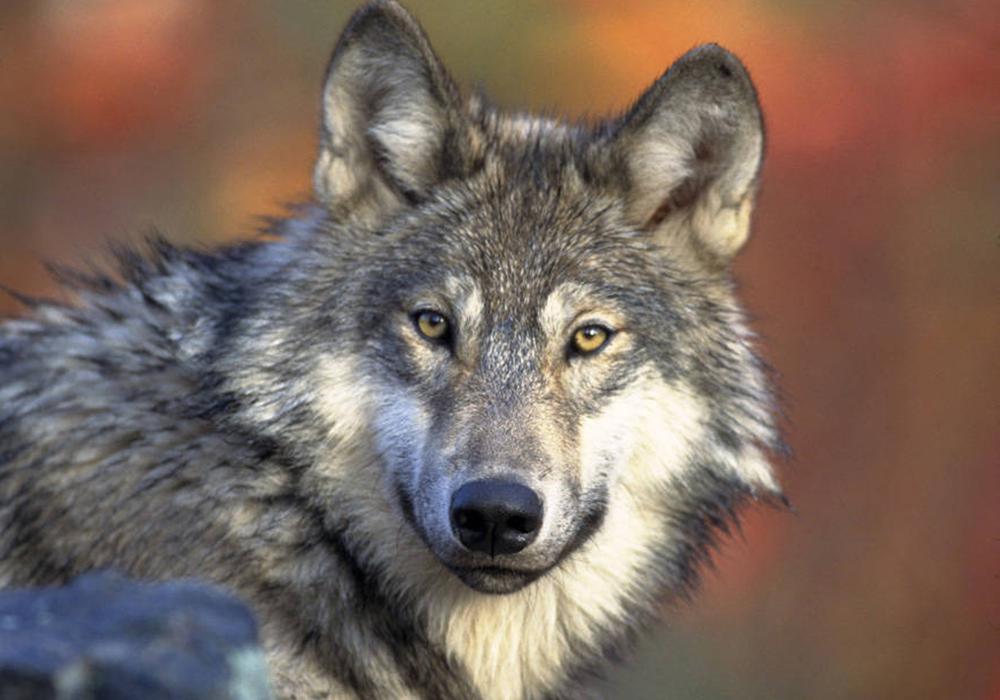
 This photo provided by the U.S. Fish and Wildlife shows a gray wolf, April 18, 2008. Wisconsin wildlife officials on Friday, April 7, 2023, released thousands of public comments on a new wolf management plan, that run the gamut from restoring a statewide population limit to banning hunting the animals. (Gary Kramer/U.S. Fish and Wildlife Service via AP, File)


MADISON, Wis. (AP) — Wisconsin wildlife officials on Friday released thousands of public comments on a new wolf management plan, some calling for the restoration of a statewide population limit and others urging a total hunting ban.

Department of Natural Resources in November released a draft of its first new wolf management plan in almost 25 years. It would eliminate the existing 350-animal population goal and recommends instead that the DNR work with local advisory committees on whether to reduce local wolf populations, keep them stable, or allow them to grow.

The window for submitting comments on the draft plan ended Feb. 28. The DNR posted about 3,500 redacted comments on its website Friday afternoon.

The comments broadly reflected all sides of the long-running debate over how to best handle the growing number of wolves in Wisconsin. DNR estimates released in September put the statewide population at about 1,000 animals.

Northern Wisconsin farmers have long complained about wolves preying on livestock. Hunters have pointed to the 350-animal number as justification for setting generous quotas during the state’s fall wolf season. Animal advocates counter that the population still isn’t strong enough to support hunting.

Several government entities in rural Wisconsin, including the Douglas, Marathon and Jackson county boards, submitted boilerplate resolutions to the DNR calling for the agency to restore the 350-animal goal, arguing that nothing has changed to warrant its elimination.

Hunting groups, including the Wisconsin Bear Hunters Association and Safari Club International, also called for the agency to restore the 350-wolf goal.

“Without setting a definitive guideline on which to base discretionary management decisions, any effort to stabilize or even reduce the wolf population will be questioned and likely challenged,” Safari Club International President Sven Lindquist said in a letter to the DNR. “Establishing a population objective would provide DNR with a specific goal to point to as it makes decisions like setting annual harvest quotas and methods of harvest.”

Republican legislators introduced a bill that would mandate the DNR establish a new population goal in the final version of the plan but doesn’t say at what level. The proposal hasn’t received a hearing yet.

Conservation groups, meanwhile, applauded the lack of a numeric goal in the draft plan.

“Removing an arbitrary wolf population goal is important to make sure the numbers of wolves are adaptable,” Elizabeth Ward, director of the Sierra Club’s Wisconsin chapter, said in a letter. “As written in the plan, the goal should be for the state to have a self-sustaining, self-regulating, and genetically diverse wolf population that maintains connectivity with wolf populations in neighboring states and fulfills their ecological roles.”

The Chippewa tribes, which regard the wolf as a sacred brother, submitted comments saying they cannot support hunting wolves and imploring the DNR to include them in discussions on plan revisions.

It’s unclear when DNR officials would submit a final draft to the agency’s policy board. Agency officials said in a statement only that they’re reviewing the comments and will use them to consider revisions. They did not offer a timeline.

DNR spokesperson Katie Grant has not responded to an email from The Associated Press.

Wisconsin law mandates a wolf season but last year a federal judge restored endangered species protections for gray wolves across most of the country, including Wisconsin. The move prohibits hunting the animals. If wolves were ever to lose those protections, the states would be responsible for managing the creatures and Wisconsin hunts would resume.