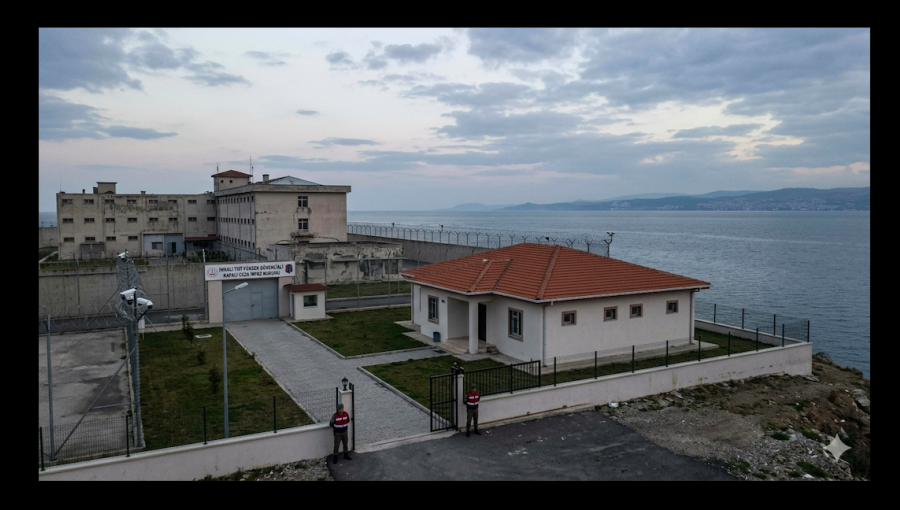
The Turkish government has built a house for Abdullah Ocalan, the leader of the militant-politico Kurdistan Workers’ Party (PKK), imprisoned for life after he was abducted by intelligence agents in Nairobi, Kenya 27 years ago.
The dwelling was constructed on Imrali prison island, in the Sea of Marmara, south of Istanbul, where Ocalan was incarcerated, Tuncer Bakirhan, co-chair of Turkey’s pro-Kurdish DEM Party, said on March 28.
Prior to the confirmation of the residence provided by Bakirhan during a televised interview on Medya Haber TV, a Belgium-based broadcaster operated by the PKK, there were rumours of the development in Turkish media.
Spit it out
“A place, a building or a house has been built for Ocalan on Imrali. Actually, there's a complex there, but what is its name, what is its status?” Bakirhan said, struggling to spit it out.
“The issue of what we will say when we go there, how we will describe it, needs to be clarified. I think there may be developments on this matter soon,” he added.
“Imrali delegation”
On March 27, three members of the DEM Party’s “Imrali delegation”, namely Pervin Buldan, Mithat Sancar and Faik Ozgur Erol met with Ocalan.
“There was a meeting lasting longer than five hours, attended by our delegation, the state delegation and Mr Ocalan,” Bakirhan also said.
“We know that this meeting focused on addressing the setbacks and discussing the steps that need to be taken for the progress of this [peace] process [with the Turkish government], which we call the second phase,” he also said.
PKK? No. “The PKK”
DEM, with substantial representation in the Turkish parliament, is the legal political wing of the political movement of Turkey’s Kurds, with the latter loosely referred to in general as “the PKK”.
The PKK, founded in 1978, waged low-intensity warfare against Turkey from 1984. It was actually abolished in 2002 after the CIA handed over Ocalan to Turkey’s intelligence agency, MIT, in Kenya in 1999.
Main arms of the KCK
The current umbrella organisation of the political movement of Turkey’s Kurds is in fact called the KCK.
There are dozens of combinations of three letters that operate under the KCK. The KCK has militia in the Qandil mountains, located on the border of Iraq and Iran, that occasionally target Turkey (in attacks commonly ascribed to “the PKK”) and Iran (attacks are described as mounted by “PJAK”). The KCK also runs a state-like enterprise covering territory in northern Syria and a network in Europe.
The contesting of elections in Turkey by the Kurdish political movement’s legal political form (the current party is called DEM) results in a significant number of victories. DEM thus wins control of certain municipalities – but the Turkish government often seizes municipalities won by the Kurds and installs state “trustees” to run them.
New cycle, new peace concept
Since the 1980s, governments in Turkey and the political movement of the country’s Kurds have entered into cycles where, in coordination, war and peace concepts are addressed.
Currently, a ceasefire prevails. It was initiated in October 2024.
This affair has a complex structure and long history. It is coupled with heavy manipulation from multiple sides (foreign players in addition to different power groups within the various parties involved in the conflict) as well as the courage of ignorance that dominates media coverage. In fact, relying on media reports for the sake of understanding developments is not advisable.
In July, bne IntelliNews wrote: “Make no mistake. What we have here is an Erdogan, PKK coalition.” Why so? You can read about it here.
The coalition process that holds sway in Turkey is conducted by the powers that be. Erdogan pulls the strings. When the time comes to sell a sharp U-turn in bilateral rhetoric, the masses are always, step by step, subject to thorough preparation.

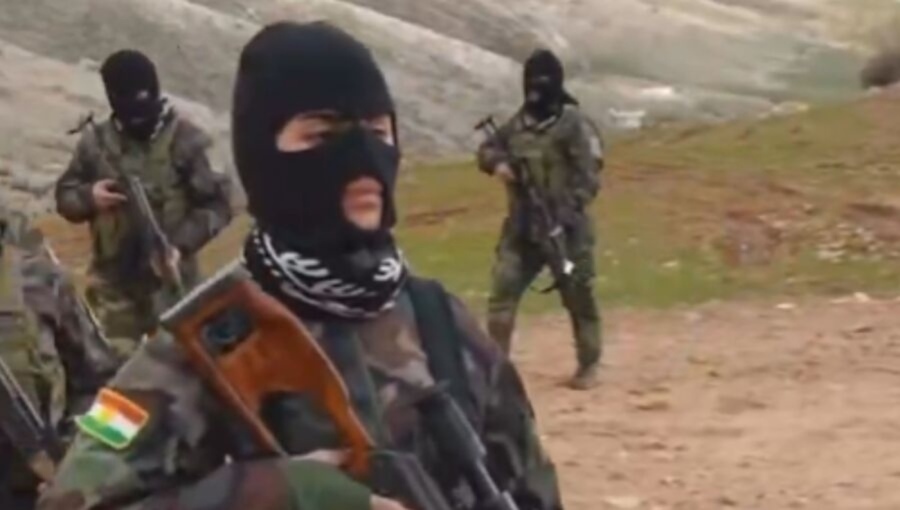
A joint plan by the US and Israel to support a Kurdish ground incursion into Iran has collapsed following leaks and regional opposition, according to The Times of India, which reported on March 28 that the proposal had been under development for several years.
The plan envisaged tens of thousands of Kurdish fighters entering Iran from neighbouring Iraq, backed by US and Israeli air support, with the objective of stretching Iranian military forces and potentially triggering internal unrest. The proposal was presented “at the highest levels”, the report said, as part of a broader effort to destabilise the Iranian regime.
As IntelliNews reported, in the first week of the war Kurdish fighters, backed by the CIA, massed on the border with the intent to stretch Iran's security forces thin. The Kurdistan Freedom Party (PAK) said some of its forces had moved to areas near the Iranian border in Sulaymaniyah province and were on standby. However, the operation failed.
According to the report, the operation was abandoned after details were disclosed in the media before execution, allowing Iran to reposition forces and coordinate with Iraqi authorities to block potential entry routes. The exposure of the plan is said to have significantly reduced the feasibility of any rapid incursion.
Regional dynamics also contributed to the breakdown. Turkey opposed the initiative, reflecting its longstanding concerns over Kurdish military movements, while Gulf states expressed reservations about the potential for wider instability. Kurdish groups themselves reportedly hesitated amid doubts over the level of sustained ground support and lingering mistrust of US commitments.
Two separate launch windows were ultimately cancelled, the report said, with the plan now considered off the table. The collapse has also introduced friction between Washington and Jerusalem, according to the same account, although no official statements have been issued by either government.
The reported episode highlights the complexity of coordinating multinational operations involving non-state actors in a region marked by competing strategic interests and sensitivities over sovereignty.
The plan had aimed to “push toward Tehran, stretch regime forces, and ignite internal uprising”, according to The Times of India.

No comments:
Post a Comment