It’s possible that I shall make an ass of myself. But in that case one can always get out of it with a little dialectic. I have, of course, so worded my proposition as to be right either way (K.Marx, Letter to F.Engels on the Indian Mutiny)
Saturday, March 28, 2026
SPACE/COSMOS
Space creature or humble potato? What NASA astronaut Don Pettit’s latest photo actually shows
As technologies to grow food in space see increasing popularity, NASA astronaut Don Pettit sheds more light on his space farming hobby.
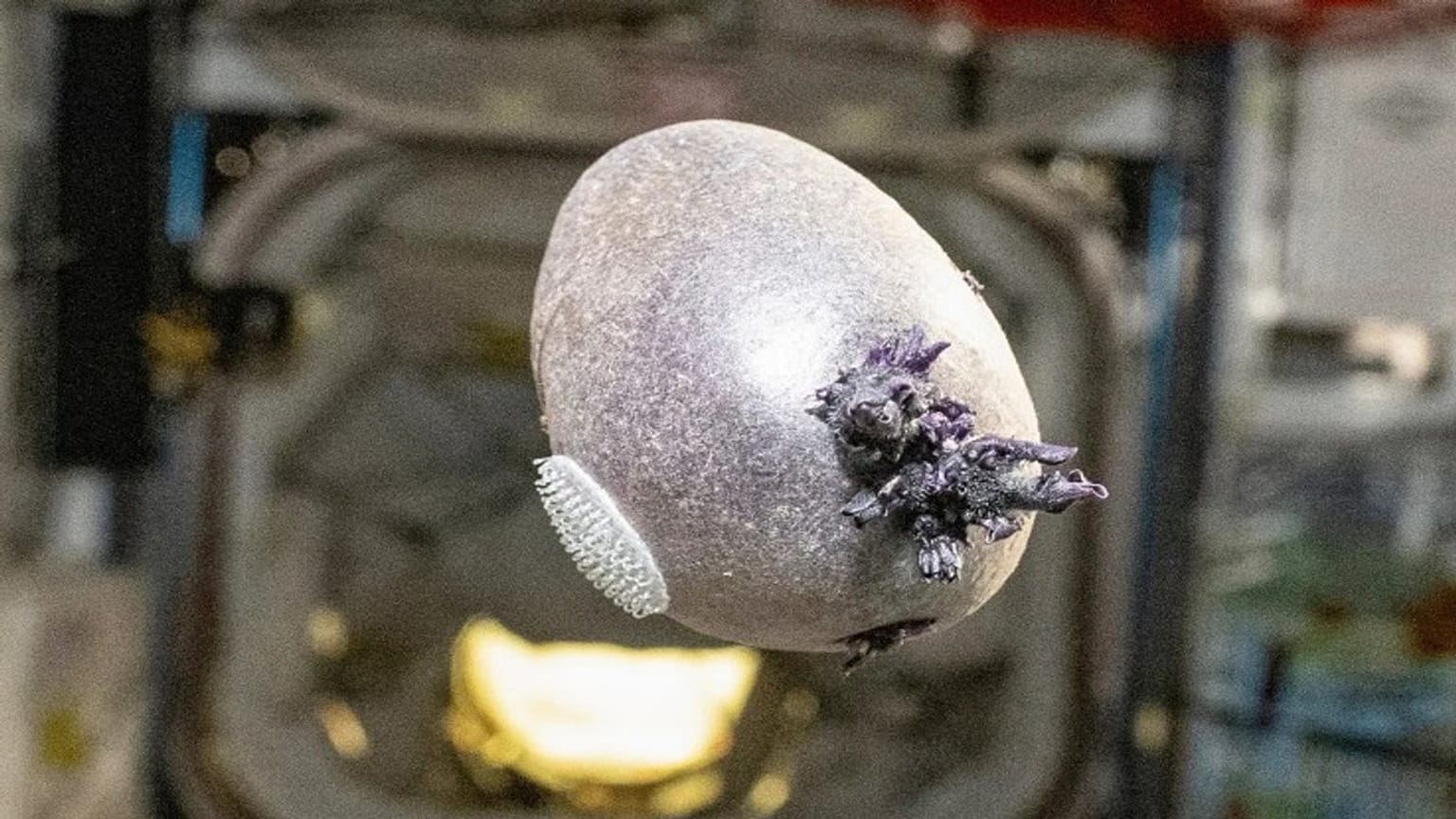
NASA astronaut Don Pettit, recently shared a picture of an odd, purple, egg-shaped object with “tentacles” from the International Space Station (ISS) on the social media platform X.
While you could be forgiven for thinking that this was some kind of alien creature, it is in fact only a potato that Pettit grew in space.
Although the colour is not commonly seen, potatoes can be purple , mainly due to high levels of anthocyanins.
In a post on X, Pettit shared more about his space food-growing hobby.
“Spudnik-1, an orbiting potato on the International Space Station. I flew potatoes on Expedition 72 for my space garden, an activity I did in my off-duty time. This is an early purple potato, complete with a spot of hook Velcro to anchor it in my improvised grow light terrarium,” Pettit said.
“Potatoes are one of the most efficient plants based on edible nutrition to total plant mass (including roots). Recognised by Andy Weir in his book/movie "The Martian," potatoes will have a place in future exploration of space. So I thought it good to get started now," he added.
Pettit has captured several photos from his four space journeys since the first one in 2002, with a total of 590 days spent in orbit.
Some of his photos include comets like C/2023 A3 and C/2024 G3, along with aurora displays from space, such as the October 2024 one.
The rise of food-growing in space
Developing technology to grow food in space, especially on Mars and the Moon, has become a significant focus for a number of space agencies in the last few years.
These include NASA, the European Space Agency (ESA), the German Aerospace Centre (DLR) and Japan Aerospace Exploration Agency (JAXA), among others.
This is mainly to enable long-duration missions to Mars and the Moon, as well as permanent settlements, where sending all the food required from Earth would be practically impossible.
NASA has already successfully grown lettuce and other leafy greens, as well as peppers, with their space agricultural technology Veggie and Advanced Plant Habitat (APH) programmes.
On the other hand, the ESA focuses more on bioregenerative systems, which involve growing food from microorganisms and stem cells, along with lab-grown food.
The DLR is also focusing on automated greenhouse techniques, which it uses to further its space farming efforts, as well as Antarctica studies.
Some key technologies include hydroponics, which involves growing plants with nutrient-rich water instead of soil, along with bioreactors to turn yeast or bacterial fermentation into protein.
Scientists solve decades-long mystery about why Saturn appears to change its spin
shows the asymmetric temperature structure revealed in the paper, as it was observed from JWST. These are offset from where the currents flow into and out of the planet, but ultimately, the winds generated by this temperature offset are what drive those currents
Researchers at Northumbria University have used the most powerful space telescope ever built to answer one of the longest-standing puzzles in planetary science – why does Saturn appear to spin at a different speed depending on how you measure it?
The findings, published in the Journal of Geophysical Research: Space Physics,reveal for the first time the complex patterns of heat and electrically charged particles in Saturn's aurora, and show that the entire system is driven by a self-sustaining feedback loop powered by the planet's own northern lights.
Saturn has puzzled scientists for many years. Measurements taken by NASA's Cassini spacecraft in 2004 suggested the planet's rotation rate was slowly changing over time – yet this should not have been possible, as a planet cannot simply speed up or slow down its spin.
In 2021, a study led by Tom Stallard, Professor of Planetary Astronomy at Northumbria University, showed that the mystery did not actually involve Saturn's rotation at all. Instead, the apparent changes were being driven by winds in the planet's upper atmosphere, which were producing electrical currents that created the misleading auroral signal.
However, the findings raised a further question for the research team – if atmospheric winds were responsible for the effect, what was causing those winds?
New research by Professor Stallard and colleagues across the UK and US has now provided the first direct evidence of the answer.
Using the James Webb Space Telescope (JWST), the team observed Saturn's northern auroral region – the equivalent of Earth's northern lights – continuously for a full Saturnian day, capturing detailed measurements that were simply not possible with any previous instrument.
By analysing the infrared glow from a molecule called trihydrogen cation, which forms in Saturn's upper atmosphere and acts as a natural thermometer, the researchers were able to produce the first high-resolution maps of both temperature and particle density across Saturn's auroral region.
The level of detail was extraordinary. Previous measurements had errors of around 50 degrees Celsius, roughly on a par with the differences the scientists were trying to detect, and were produced by combining broad regions of the hot polar aurora. The new JWST data was ten times more accurate than previous measurements, allowing the team to map fine details of heating and cooling across Saturn's auroral region for the very first time.
What the team found was that these temperature and density patterns match remarkably well with predictions made by computer models more than a decade ago, but only if the source of heat is placed exactly where the main auroral emissions enter the atmosphere.
This means Saturn's aurora is not just a visual display – it is actively heating the atmosphere in a specific location. That localised heating drives winds, which in turn generate the electrical currents responsible for the aurora. The aurora then heats the atmosphere again, sustaining the whole cycle.
Lead researcher Professor Tom Stallard, said: “What we are seeing is essentially a planetary heat pump. Saturn's aurora heats its atmosphere, the atmosphere drives winds, the winds produce currents that power the aurora, and so it goes on. The system feeds itself.
“For decades, we knew something strange was happening with Saturn's apparent rotation rate, but we could not explain it. We then showed it was being driven by atmospheric winds, but we still did not know why those winds existed. These new observations, made possible by JWST, finally give us the evidence we needed to close that loop.”
The findings also have broader implications. The research suggests that what happens in Saturn's atmosphere directly influences conditions in its surrounding magnetosphere – the vast region of space shaped by the planet's magnetic field – which in turn feeds energy back into the system. This two-way relationship between atmosphere and magnetosphere may help explain why the effect is so stable and long-lasting.
Professor Stallard added: “This result changes how we think about planetary atmospheres more generally. If a planet's atmospheric conditions can drive currents out into the surrounding space environment, then understanding what is happening in the stratospheres of other worlds may reveal interactions we have not yet even imagined.”
The James Webb Space Telescope is the world's premier space science observatory. Webb is solving mysteries in our solar system, looking beyond to distant worlds around other stars, and probing the mysterious structures and origins of our universe and our place in it. Webb is an international program led by NASA with its partners, ESA (European Space Agency) and CSA (Canadian Space Agency).
The study was carried out by researchers from Northumbria University, alongside collaborators from Boston University, the University of Leicester, Aberystwyth University, the University of Reading, Imperial College London, Lancaster University, and Johns Hopkins University Applied Physics Laboratory. The research was supported by the Science and Technology Facilities Council (STFC).
Here, we show the asymmetric temperatures, density and intensity of the auroral ionosphere revealed in this recent research, as it was seen from JWST.
We have combined spectral imagery taken on the same day, 29 November 2024, by the JWST NIRSPEC and JWST NIRCAM instruments.
The NIRSPEC data was taken under programme GO-5308, PI: Moore, co-PI: Stallard, Melin, and were processed into these final data products by T. Stallard.
The three-color NIRCAM image of Saturn were taken under programme DD-9219, PI: Garcia Marin, and were processed into the final three-color image by Melina Thévenot (https://bsky.app/profile/melina-iras07572.bsky.social).
context_saturns_temperatures_movie.mov shows the asymmetric temperature structure revealed in the paper, as it was observed from JWST. These are offset from where the currents flow into and out of the planet, but ultimately, the winds generated by this temperature offset are what drive those currents
context_saturns_h3p_density_movie.mov shows the asymmetric density structure, revealing where the auroral current was preferentially flowing into (as darker) and out of (as brighter) the planet. These are offset from the temperature peaks, but ultimately drive that temperature asymmetry
context_saturns_h3p_emission_movie.mov shows the auroral brightening, as has previously been observed from both Earth and in orbit around Saturn
The following images are three frames taken from the same movies at the same time, showing how these three asymmetric features are related:
context_saturn_asymmetric_densities.png
context_saturn_asymmetric_temperatures.png
context_saturn_asymmetric_intensity.png
Data movies:
Here, we show the asymmetric temperatures, density and intensity of the auroral ionosphere as viewed from above the auroral region, rotating to highlight how interconnected these different parameters are:
data_parameters.mov shows these three parameters (top row) and the different from the median values at each latitude (bottom row) - here, red is higher and blue lower, revealing that not only the brighter regions but also weaker regions follow very similar patterns, driven by and driving the planetary-period currents flowing into and out of the planet.
JWST/NIRSpec Reveals the Atmospheric Driver of Saturn's Variable Magnetospheric Rotation Rate
Article Publication Date
12-Mar-2026
shows the auroral brightening, as has previously been observed from both Earth and in orbit around Satur
shows the asymmetric density structure, revealing where the auroral current was preferentially flowing into (as darker) and out of (as brighter) the planet. These are offset from the temperature peaks, but ultimately drive that temperature asymmetry
shows the asymmetric temperature structure revealed in the paper, as it was observed from JWST. These are offset from where the currents flow into and out of the planet, but ultimately, the winds generated by this temperature offset are what drive those currents
Here, we show the asymmetric temperatures, density and intensity of the auroral ionosphere as viewed from above the auroral region, rotating to highlight how interconnected these different parameters are. Video shows these three parameters (top row) and the different from the median values at each latitude (bottom row) - here, red is higher and blue lower, revealing that not only the brighter regions but also weaker regions follow very similar patterns, driven by and driving the planetary-period currents flowing into and out of the planet.
shows the asymmetric density structure, revealing where the auroral current was preferentially flowing into (as darker) and out of (as brighter) the planet. These are offset from the temperature peaks, but ultimately drive that temperature asymmetry
Integrated system for filtering, enriching, and detecting trace gases paves the way for high-precision isotopic measurements and resource extraction from the planet's corrosive atmosphere
Venus, often regarded as Earth’s sister planet due to its comparable size and bulk composition, presents an extreme environment and distinctive atmospheric chemistry that not only make it a valuable natural laboratory for planetary science, but also pose unprecedented challenges and opportunities for in situ resource utilization. In a pioneering study published in Planet (Volume, 2 Issue 1), a team led by Researcher Nailiang Cao from the Anhui Institute of Optics and Fine Mechanics, Chinese Academy of Sciences, together with Professors Xiaoping Zhang and Yi Xu from the State Key Laboratory of Lunar and Planetary Sciences at Macau University of Science and Technology, proposed an integrated detection strategy combining gas filtration, enrichment, and spectroscopic analysis, thereby offering a promising technical framework for high-precision atmospheric characterization and future resource utilization in Venus exploration missions
At present, our understanding of the Venusian atmosphere relies primarily on decades of remote-sensing observations and a limited number of in situ measurements. Although it is well established that the atmosphere is dominated by carbon dioxide and contains trace amounts of water vapor and sulfur dioxide, while the presence of phosphine and ammonia remains highly debated, decisive evidence is still lacking to resolve key scientific questions concerning Venusian geological activity, the planet’s history of water loss, and even the possible existence of biosignature. At the same time, the near-surface environment of Venus, characterized by pressures of about 90 bar, temperatures exceeding 460°C, and planet-encircling sulfuric acid clouds, poses an extraordinary challenge to any exploratory instrument. Even in currently planned missions such as NASA’s DAVINCI, the onboard tunable laser spectrometer and associated atmospheric instruments are designed to measure key gases and trace compounds during descent, yet high-sensitivity detection of multiple critical trace species and their isotopic signatures remain intrinsically constrained by measurement sensitivity and observational coverage. Although conventional remote-sensing techniques offer the advantage of large-scale global atmospheric coverage, their spectral resolution is often insufficient for high-precision retrieval of isotopic ratios involving C, H, O, N, and S.
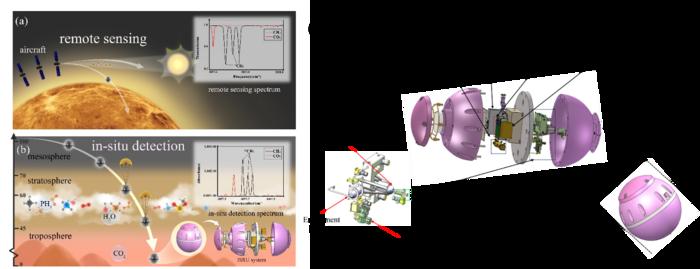
To address these challenges, the research team proposed an integrated detection system that combines gas filtration, enrichment, and spectroscopic analysis. The first requirement is to mitigate the effects of the highly corrosive constituents in the Venusian atmosphere, whose cloud layer is dominated by sulfuric-acid aerosols and haze particles. To this end, the team designed a three-stage gradient filtration module incorporating two porous ceramic layers followed by a microporous polytetrafluoroethylene membrane. Working in concert, these multistage filters are intended to remove sulfuric-acid aerosols and solid particulates with diameters as small as 0.1 μm at efficiencies exceeding 99.99%. The module also integrates a thermal self-cleaning unit capable of continuously evaporating residual droplets and periodically removing sulfide deposits through high-temperature bakeout, thereby helping to ensure stable instrument performance during long-duration missions.
The filtered gas is then delivered to an enrichment module, a key component for the high-sensitivity detection of trace gases. Because species such as PH₃, NH₃, and H₂S are present at extremely low concentrations in the Venusian atmosphere, direct detection is often constrained by poor signal-to-noise ratio. The module therefore adopts a two-stage molecular-sieve adsorption scheme: first, a CO₂-selective sieve removes the dominant background gas to achieve preliminary enrichment of the target species; next, a high-selectivity sorbent captures and further concentrates the trace gases. This process effectively increases both target-gas abundance and spectroscopic signal strength, thereby facilitating subsequent high-precision analysis.
Finally, the spectroscopic detection module functions as the “intelligent eye” of the system. By integrating two laser spectroscopic techniques, it provides coordinated coverage from orbital remote sensing to in situ exploration. In remote-sensing mode, the system uses laser heterodyne spectroscopy, in which the target signal is mixed with solar radiation to produce a radio-frequency beat signal; subsequent narrowband filtering and Fourier transformation enable ultra-high-resolution spectral detection. The received signal is then demodulated through lock-in amplification to retrieve the absorption features of trace gases in the Venusian atmosphere, while also supporting target-region selection for lander or probe entry. or in situ exploration at 40–70 km altitude, the system employs OA-ICOS. The pretreated gas sample enters a high-reflectivity optical cavity, where multiple reflections produce a kilometer-scale effective path length and markedly strengthen the absorption signal. By scanning the characteristic absorption lines of isotopes such as H, N, and S, the system can retrieve gas abundances and isotopic ratios, including D/H, ¹⁵N/¹⁴N, and ³⁴S/³²S. Spectral simulations indicate that an operating pressure of about 20 mbar effectively suppresses pressure-broadening interference, achieving an optimal balance between detection sensitivity and fitting accuracy.
The importance of this work resides not only in its highly integrated technological framework, but also in its effective coupling of scientific exploration with in situ resource utilization. Because the Venusian atmosphere is dominated by CO₂ and also contains sulfur-bearing species and trace water, it represents a potentially valuable resource system. Extracted water could be electrolyzed to yield oxygen and hydrogen for life support and fuel production; CO₂ could be converted electrochemically into CO and O₂ for power generation or propellant synthesis; and sulfur species such as SO₂ and H₂S could serve as chemically energetic components of a redox system. In this sense, the key gases targeted by the proposed system are simultaneously scientific tracers and potential resources for future long-duration Venus exploration. The proposed modular design, featuring active and passive thermal control using phase-change materials to withstand the planet’s extreme temperatures, ensures compatibility with various mission architectures, including orbiters, descent probes, and potentially long-duration aerial platforms. This integrated framework promises to deliver multi-scale observations and cross-validated datasets, significantly improving the reliability of our atmospheric models. As the authors note, the rigorous laboratory validation of this system, focusing on heat-resistant materials, ultra-stable laser sources, and enhanced cavity technologies, will not only pave the way for a return to Venus but also establish a robust blueprint for resource-based exploration of other challenging worlds like Mars, Europa, and Titan, fundamentally changing how we approach the sustainable exploration of the solar system.
(a) A terrain-aware multi-site high-efficiency laser power beaming network on the lunar surface. (b) Distribution of received power for lunar mobile explorers before and after terrain-aware optimisation.
Harbin Institute of Technology researchers propose a new terrain-aware framework for jointly optimising coverage, connectivity, and cost, enabling the first system-level design of laser power-beaming networks for extreme exploration tasks in the Moon’s permanently shadowed regions
The Moon’s polar regions present one of the most alluring yet forbidding frontiers in human space exploration. Within the deep craters of the lunar south pole lie permanently shadowed regions (PSRs)—areas that have not seen sunlight for billions of years and which harbour valuable water ice deposits that could support future lunar bases. However, these same regions exist in perpetual darkness, with temperatures plunging below -230°C, making them inaccessible to traditional solar-powered equipment. While space agencies and commercial entities have proposed solutions ranging from fission reactors to orbital power stations, a fundamental question has remained unanswered: how can we design a practical, cost-effective energy delivery system that reliably powers exploration activities in these sun-forbidden zones?
A study published in Planet (Volume 2, Issue 1) by Professor Lifang Li and Pengzhen Guo’s team at the Harbin Institute of Technology offers a systematic research approach to this challenge. Their paper, titled “Optimal laser power beaming network for powering Lunar permanently shadowed regions: a coverage–connectivity–cost trade-off,” introduces a sophisticated terrain-aware network optimisation framework that advances laser power beaming from traditional single-link analysis to multi-station, system-level optimisation, offering a new perspective for future lunar energy infrastructure deployment. The work arrives at a critical juncture when multiple spacefaring nations are racing to establish a sustainable presence on the Moon, with NASA’s Artemis programme, China’s international lunar research station, and various commercial ventures all targeting the south pole for permanent outposts.
The fundamental challenge of lunar polar exploration lies in its paradoxical energy geography. The crater rims receive nearly continuous sunlight, making them ideal locations for solar energy harvesting and power deployment, yet the scientifically valuable crater floors—where water ice accumulates—remain in permanent darkness. Previous technical efforts have largely been limited to terrain-constrained point-to-point transmission links. Researchers have demonstrated laser power transmission over terrestrial distances, developed efficient photovoltaic converters for laser light, and proposed orbital power relay constellations. What has been lacking is a systems-level understanding of how multiple power transmission nodes can work together as a coordinated network under the triple constraints of improving effective target-area coverage, enhancing regional connectivity, and controlling infrastructure costs.
The team has tackled this optimisation problem head-on, developing a mathematical framework that treats lunar power delivery as a network design challenge rather than a simple point-to-point transmission problem. Their approach begins with realistic geography, using high-resolution topographic data from NASA’s Lunar Orbiter Laser Altimeter (LOLA) and focusing on the region near Shackleton crater. The model incorporates terrain obstruction, local illumination conditions, beam diffraction divergence, pointing errors, and lunar dust attenuation, thereby establishing a comprehensive framework for lunar laser transmission and network deployment. It is important to note that the power supply nodes in this study are not simply fixed “laser stations”; instead, the system adopts a split architecture in which fixed support platforms are responsible for power acquisition and supply, while the laser emission units can be adjusted and repositioned locally to achieve more favourable transmission conditions. Based on this framework, the team simulated how multiple emission units could transmit laser energy to receivers mounted on rovers, hoppers, or in-situ resource utilisation equipment operating in permanently shadowed areas.
The core innovation of the study lies in the first simultaneous optimisation of three key performance dimensions. Coverage ensures that more scientifically valuable PSRs can receive energy support when needed, whether for short rover traverses or long-term operation of fixed equipment. Connectivity is not simply about adding more isolated power-supply points, but about reducing fragmentation of the powered areas and creating a more continuous spatial structure, thereby lowering the risk that a mobile explorer will unintentionally leave the powered region during cross-regional movement and supporting sustained exploration tasks. Cost constraints recognise that every transmission unit, every square metre of receiver array, and every tonne of equipment delivered to the lunar surface carries a substantial price tag. By treating these three factors as interdependent variables rather than separate considerations, the team derived a terrain-aware optimised laser power-beaming network configuration that balances infrastructure scale and operational capability.
The study’s findings offer practical decision support for lunar base planning. The research shows that terrain-aware optimised deployment can significantly improve power coverage and regional connectivity in the south polar PSRs: the effective coverage ratio increases from 10.76% to 27.55%, while regional connectivity rises from 39.93% to 98.92%. Compared with the baseline scheme, which selects sites solely on the basis of local high-illumination conditions, the optimised configuration significantly improves overall network performance while keeping infrastructure requirements under control. More importantly, the team not only optimised the station selection, but also refined the local positioning of the laser emission units, enabling previously fragmented powered areas to be connected more effectively and providing more reliable sustained energy support for mobile exploration tasks on the lunar surface.
From a technical standpoint, the research advances laser power beaming beyond the laboratory demonstrations that have characterised the field to date. Recent experiments have shown that high-efficiency semiconductor lasers can maintain stable operation across the temperature extremes expected in lunar environments, while photovoltaic receivers have demonstrated conversion efficiencies that make laser power transmission economically viable. The HIT team’s contribution synthesises these technological building blocks into an architectural framework that provides lunar base mission planners with guidance on how emission units can be deployed, how different nodes can work together, and how overall system performance can be balanced across coverage, connectivity, and cost under complex lunar terrain conditions.
The broader significance of this work extends beyond the lunar context. As space exploration moves toward permanent human presence beyond Earth, the ability to deliver power wirelessly across challenging terrain will become increasingly essential. The same optimisation principles that the team has applied to lunar craters may also be transferable to Martian canyons, asteroid mining operations, or even terrestrial applications where conventional power infrastructure is impractical. The study establishes a methodological foundation for thinking about space power networks as integrated systems rather than isolated links—a perspective that will prove invaluable as humanity’s reach into the solar system expands.
The timing of this publication aligns with a surge of interest in lunar power solutions from multiple sectors. NASA has recently accelerated its Fission Surface Power programme, while commercial entities are proposing orbital power satellite networks and tower-based laser transmission systems. Each approach has its advocates, but all share a common need for the kind of systems-level thinking that the HIT team has now provided. By establishing rigorous optimisation criteria, this research enables apples-to-apples comparisons between different power delivery architectures and provides objective guidance for the difficult investment decisions that lie ahead.
Perhaps most encouragingly, the study demonstrates that laser power beaming networks exhibit clear engineering potential, while the relevant enabling technologies continue to mature. The required laser efficiencies have been demonstrated in laboratory settings; pointing and tracking systems have achieved the necessary precision for Earth-orbital applications; and photovoltaic receivers have been tested under simulated lunar conditions. What has been missing until now is the confidence that these components can be assembled into a system that reliably meets mission requirements at acceptable cost. The team has provided that confidence through rigorous analysis and optimisation.
As spacefaring nations prepare for the next decade of lunar exploration, the question is no longer whether we can deliver power to the Moon’s darkest places, but how to do so most effectively. This study by the Harbin Institute of Technology provides a systematic design approach, advancing laser power beaming from a single-link concept to a networked solution for mission planning. For the rovers, drilling systems, and life-support systems that may one day operate in the eternal twilight of lunar craters, reliable power supply will be an essential foundation for the continued advance of deep-space exploration.
The crystal structure and chemical composition of tetrataenite (a-h), and schematic diagram of the formation process of tetrataenite at the CE-6 landing site (i).
Confirmation of tetrataenite in lunar soil returned from the South Pole–Aitken Basin sheds light on how space weathering shapes strong magnetic minerals on the Moon, offering fresh insights into the farside magnetic anomalies.
For decades, scientists have puzzled over the patchwork of magnetic anomalies scattered across the Moon’s surface, particularly on its elusive farside. Unlike Earth, the Moon today lacks a global magnetic field, yet orbital surveys have consistently detected localized regions of magnetized crust whose origins remain hotly debated. Recently, a team of researchers led by Professor Yang Li from the Institute of Geochemistry, Chinese Academy of Sciences, has uncovered compelling evidence hidden within the first-ever soil samples returned from the lunar farside. As detailed in their paper "Newly discovered tetrataenite in Chang’E-6 lunar soil: a space weathering-induced magnetic carrier," published in the international journal Planet (Volume2, Issue 1, 2026), the discovery of tetrataenite—a hard magnetic mineral with exceptional remanence carrying capacity— providing a new perspective on the formation and evolution of magnetic anomalies on the lunar surface.
The Chang’E-6 mission made history in 2024 by retrieving 1,935.3 grams of regolith from the Apollo basin, located within the vast South Pole-Aitken (SPA) basin, which is one of the largest and oldest impact basins in the solar system, characterized by strong magnetic anomalies. However, direct sample evidence of the mineral carriers responsible for these “magnetic memories” has been lacking. Employing focused ion beam sample preparation and high-resolution transmission electron microscopy, the team conducted detailed mineralogical and magnetic structural analyses on these precious samples.
Among tens of thousands of lunar soil particles, a particular troilite grain caught the researchers' attention. Hemispherical in shape with a porous texture and accompanied by curved metallic iron whiskers, the grain’s morphological features suggest it experienced intense thermal events—likely from multiple impact events. Crucially, within this grain, the team identified a metallic particle approximately 500 nanometers in diameter, exhibiting a gradient in nickel distribution. High-resolution imaging and electron diffraction analysis revealed that the region with roughly 50% nickel content displayed an ordered crystal structure, perfectly matching the tetrataenite phase. Tetrataenite is an ordered iron-nickel alloy previously found primarily in meteorites but never confirmed in lunar samples. Unlike soft magnetic pure iron, which is easily magnetized but also readily demagnetized, tetrataenite is a hard magnetic mineral capable of stably retaining remanent magnetism over billions of years. Using Lorentz transmission electron microscopy, the team directly observed that both the tetrataenite and the surrounding pure iron particles exhibited characteristic vortex magnetic structures—direct evidence of magnetic stability.
Regarding the formation mechanism of tetrataenite, the study suggests that the precursor material likely originated from nickel-rich chondritic meteorites that remained on the lunar surface following an impact event. Subsequent impacts heated and melted the troilite surrounding the iron-nickel metal, forming molten droplets that were ejected from the parent material and eventually deposited in the Apollo Basin. During cooling, when nickel content reached approximately 50%, the face-centered cubic taenite underwent an ordering reaction at temperatures below 350°C, with atoms rearranging into a body-centered tetragonal tetrataenite structure while simultaneously exsolving submicron-scale pure iron particles. The study also found that certain trace elements may play a key catalytic role in this process. The team observed that regions enriched in phosphorus were often associated with localized nickel enrichment, suggesting that phosphorus may facilitate the diffusion of iron and nickel atoms, thereby accelerating tetrataenite formation. While this hypothesis requires further verification, it opens new research avenues into the chemical controls on the evolution of magnetic minerals on airless body surfaces.
This discovery has profound implications for understanding how space weathering modifies and shapes magnetic signatures on the lunar surface. Impact-generated thermal events can effectively “manufacture” minerals with strong magnetic memory on the Moon. The coexistence of tetrataenite, nanophase pure iron particles, and iron whiskers suggests a complex assemblage of magnetic minerals on the lunar surface, whose collective behavior may be a significant source of the magnetic anomalies mapped by orbital instruments. As new lunar exploration campaigns—including Artemis and the Chang’E program—move forward, understanding the magnetic properties of lunar materials has become more than an academic pursuit. Magnetic anomalies can influence local space environments, potentially affecting future lunar surface operations and in-situ resource utilization. The identification of tetrataenite in the Chang’E-6 samples provides crucial mineralogical grounding for future far-side magnetic field measurements.
The Chang’E-5 and Chang’E-6 samples used in this study were provided by the China National Space Administration. The research was supported by the National Natural Science Foundation of China, the Frontier Science Key Research Program of the Chinese Academy of Sciences, and the Guizhou Provincial Basic Research Program, among others. The study represents a collaborative effort involving the Institute of Geochemistry, Chinese Academy of Sciences, Yunnan University, Anhui University, and the Deep Space Exploration Laboratory.
New research from Harbin Institute of Technology demonstrates that lunar soil can be efficiently melted using only microwave energy, eliminating the need for additional heating aids transported from Earth and paving the way for more cost-effective lunar construction.
The realization of permanent human outposts on the Moon hinges on a critical capability: the ability to use local materials for construction, a practice known as In Situ Resource Utilization (ISRU). Transporting building materials from Earth is prohibitively expensive, making the processing of lunar regolith—the layer of loose rock and dust covering the Moon's surface—a top priority for space agencies and international partnerships like the International Lunar Research Station (ILRS) program. Among various heating techniques, microwave heating has long been considered promising due to its potential for volumetric heating, which bypasses the poor thermal conductivity of lunar soil. However, a persistent challenge has plagued the technology: at low temperatures, lunar regolith is largely transparent to microwaves, making it difficult to initiate heating without the aid of auxiliary materials known as susceptors, typically silicon carbide (SiC). Transporting such susceptors to the lunar surface adds significant cost and complexity, undermining the very principle of using local resources.
Addressing this fundamental bottleneck, a team of researchers led by Junyue Tang and Shengyuan Jiang at the Harbin Institute of Technology has developed and validated a suite of methods for achieving efficient microwave self-heating of lunar regolith, as published in Planet (2026, Vol. 1). The research, titled "Efficient microwave self-heating of lunar regolith for In Situ Resource Utilization (ISRU): methods and system validation," is grounded in the dielectric properties of the regolith itself—specifically, its transition from a low-loss to a high-loss material as temperature increases. Based on this principle, the team proposed three complementary strategies for enhancing heating efficiency. The first involves increasing the electric field strength to which the material is exposed. The second is a temperature-range delimitation approach, suggesting the use of microwave heating only in the high-temperature range where the regolith's loss tangent (tan δ) exceeds 0.1, relying on alternative methods like solar or induction heating for the initial warm-up phase. The third strategy focuses on enriching high-loss minerals, such as ilmenite, which couple more effectively with microwaves, thereby boosting overall thermal conversion.
To experimentally validate the first and most novel of these methods—enhancing electric field strength—the researchers designed a high-efficiency microwave heating system centered on a compressed waveguide. Unlike a conventional resonant cavity, which distributes the electric field in multiple regions, the compressed waveguide focuses microwave energy into a concentrated field. Simulations conducted by the team demonstrated that this design increases the maximum electric field intensity by approximately 53% compared to a standard cavity under identical power and frequency conditions. Using this system, they conducted self-heating experiments on CLRS-2, a national standard high-titanium lunar regolith simulant provided by the Institute of Geochemistry, Chinese Academy of Sciences. Crucially, the experiments were performed without SiC susceptor, relying solely on the material's own microwave absorption capacity. At a microwave power of 800 W at 2.45 GHz, the system induced thermal runaway—a positive feedback loop where increasing temperature improves microwave absorption, which in turn generates more heat—in just 420 seconds, with the cavity temperature soaring to 1259°C, sufficient to melt the simulant. The results showed a clear correlation between power and performance: increasing input power from 500 W to 800 W not only accelerated the onset of thermal runaway from 1043 seconds to 420 seconds but also raised the peak temperature from 909.7°C to 1259°C. Comparative analysis further highlighted the system's efficiency, showing that the compressed waveguide setup at 800 W outperformed commercial systems like the CPI Autowave at 3000 W, achieving thermal runaway approximately 30 minutes faster and at a 200°C higher temperature.
This research carries significant implications for the future of lunar exploration and development. By demonstrating a viable path to susceptor-free microwave heating, the team has effectively removed a major logistical and economic barrier to ISRU. The proposed compressed waveguide offers a relatively simple, low-cost structural modification that can be readily engineered for deployment. While the authors note that their temperature measurements were taken from the cavity gas and thus underrepresent the actual sample temperature, and that further controlled-variable studies are needed for quantitative benchmarking, the qualitative leap in performance is undeniable. The study not only validates a practical, energy-efficient solution for melting and sintering lunar regolith but also provides a strategic framework—through its three high-efficiency methods—for integrating microwave technology into the phased development of lunar resource utilization. As space-faring nations set their sights on sustained lunar presence, this work from Harbin Institute of Technology offers a compelling blueprint for turning the very dust beneath future astronauts' feet into the foundations of their new home.

No comments:
Post a Comment