The Ever-Expanding Legal Battle Over Enbridge's Line 5 Pipeline
- Michigan and Wisconsin lawsuits are challenging Line 5 on environmental and legal grounds, with overlapping state and federal court battles.
- The pipeline’s aging infrastructure and spill risk in the Great Lakes region remain central to opposition efforts.
- Ongoing litigation is delaying key projects and raising broader questions about state authority, tribal rights, and cross-border energy ties.
Active lawsuits in Michigan and Wisconsin are targeting sections of Enbridge’s Line 5 pipeline over environmental concerns in a complex and ever-expanding legal fight. Michigan has an active state-court lawsuit against Enbridge, while in Wisconsin, the Bad River Band of Lake Superior Chippewa and environmental groups are challenging the pipeline in federal and state court.
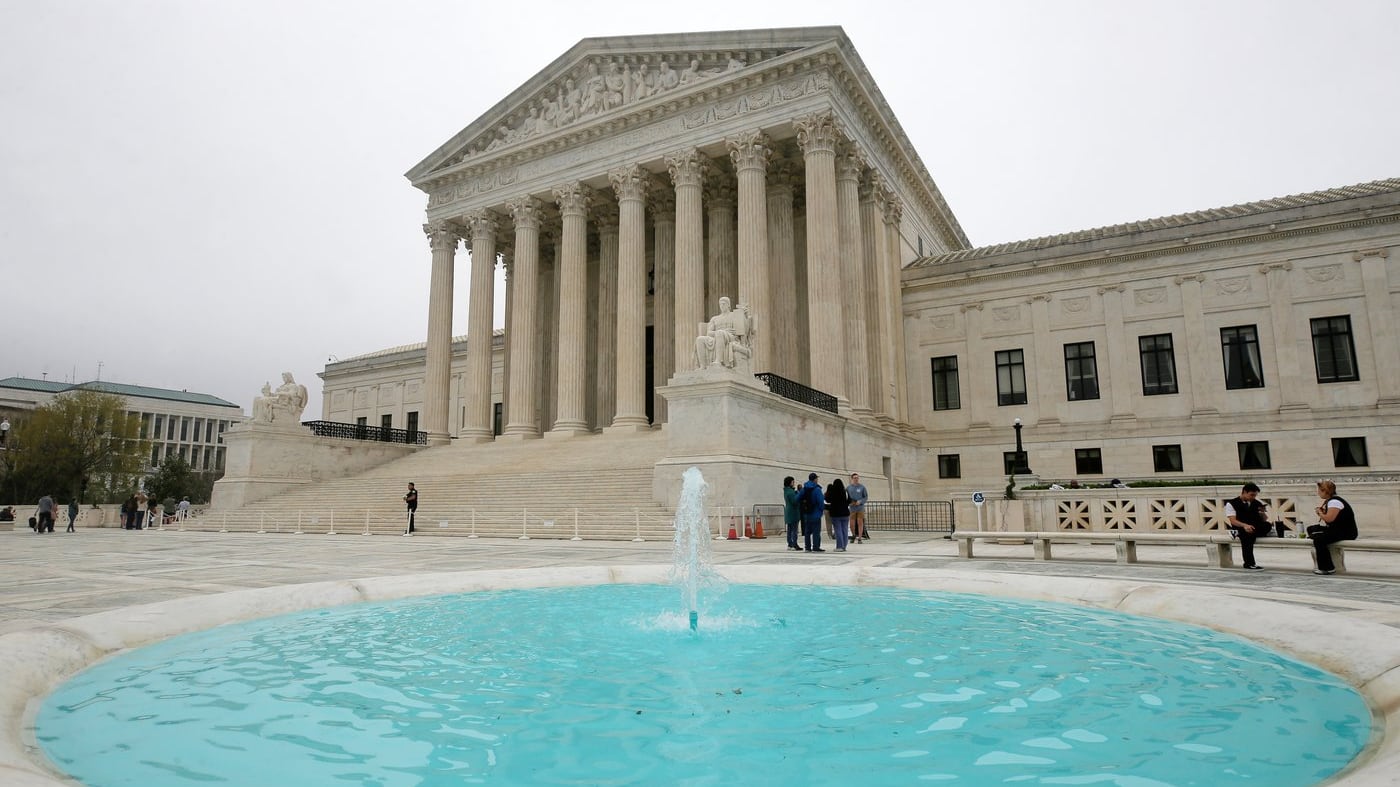
In April, the United States Supreme Court sided with Michigan that a ruling over a section of an ageing pipeline beneath a Great Lakes channel must stay in state court. Justice Sonia Sotomayor wrote on behalf of a unanimous court that while the Calgary-based energy firm Enbridge was permitted 30 days to attempt to move the case to federal court, the company instead waited 887 days to do so, and only after it had seen developments in related litigation over the Line 5 pipeline.
In June 2019, Michigan’s attorney general, Dana Nessel, sued in state court to void the easement that permits Enbridge to operate a 4.5-mile section of pipeline under the Straits of Mackinac, which link Lake Michigan and Lake Huron. The pipeline has been transporting crude and natural gas since 1953 and currently transports 540,000 bpd of crude and refined products from Superior, Wisconsin, to Sarnia, Ontario.
Enbridge moved to take the lawsuit to federal court in 2021 on the grounds that the case affects U.S. and Canadian trade. In a statement, Nessel said the ruling “makes emphatically clear that our lawsuit against Enbridge belongs before the state court, where we've argued since 2019 that Line 5 does not have a legal right to the Straits bottomlands.”
The justification for the pipeline case, referred to as Line 5, is the potential for the section beneath the straits to rupture, which could cause a catastrophic spill. Experts first raised the concern in 2017, after Enbridge engineers admitted that they had been aware of the gaps in the section’s protective coating since 2014. A boat anchor further damaged the section in 2018, increasing concerns around a potential spill.
Nessel has called the section of pipeline “a ticking time bomb in the heart of the Great Lakes.” State officials have also argued that Enbridge has violated state laws, including the Michigan Environmental Protection Act. Nessel has previously won a restraining order in June 2020, resulting in Enbridge shutting down the pipeline from Ingham County. However, Enbridge has since improved safety operations and been permitted to recommence operations.
The Michigan Department of Natural Resources, led by Governor Gretchen Whitmer, revoked the easement for Line 5 in 2020, after which Enbridge filed a separate federal lawsuit to challenge the move. A federal judge ruled in favour of Enbridge, holding that the federal Pipeline Safety Act preempts Michigan’s attempt to shut down the pipeline on safety grounds. Whitmer then appealed to the Sixth U.S. Circuit Court of Appeals. In March 2026, the Supreme Court denied Whitmer’s petition for certiorari on sovereign immunity, allowing Enbridge’s federal lawsuit against her to proceed.
In 2023, the Michigan Public Service Commission granted Enbridge the necessary permits to encase the section of pipeline in a protective tunnel to ensure safety and prevent a shutdown. However, work has not gone ahead on the project as a coalition of environmental groups and Michigan tribes has filed a lawsuit to cancel the state permits. This issue will be considered during the state court case. To move forward with the project, Enbridge must also seek approval from the U.S. Army Corps of Engineers and the Michigan Department of the Environment, Great Lakes and Energy.
Separately, a lawsuit was filed in Wisconsin over the pipeline. In June 2023, a federal judge ordered that Enbridge must shut down part of Line 5 that runs across the Bad River Band of Lake Superior’s reservation within three years. Enbridge appealed the order, and in February of this year, it commenced work to reroute the line around the reservation. The Bad River Band and environmental groups have since filed a lawsuit to halt work on the project over environmental concerns.
The ongoing legal battle has raised broader questions over how much power states hold in exerting control over the fossil fuel industry. The dispute has also put pressure on United States-Canada energy relations. In addition, the battle over the pipeline has scrambled traditional political alliances due to the large number of jobs connected with pipeline operations, as well as the industry it brings to the region.
After battling the issue for several years, neither Enbridge nor state lawmakers are backing down in the pipeline case, suggesting that it could take more time to resolve. In the meantime, Enbridge has been unable to progress on its project to encase the section of pipeline in Michigan, while the pipeline continues to pose a potential threat to the environment.
By Felicity Bradstock for Oilprice.com
U.S. Supreme Court rules for Michigan in its fight to shut down an aging energy pipeline
Published:

No comments:
Post a Comment