IMO Braces for a Tough Week as MEPC84 Resumes Net-Zero Debate
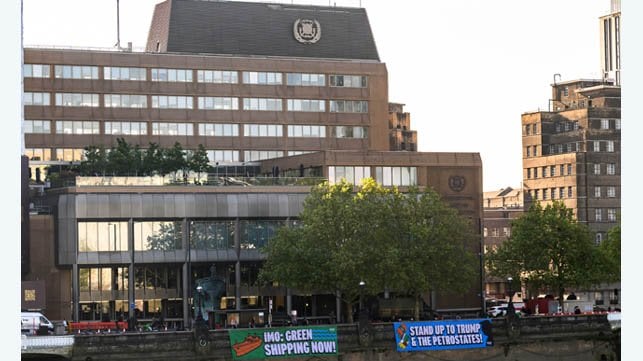
The battle lines are being drawn, and the protestors are on the doorstep of the International Maritime Organization as it resumes the debate on its Net-Zero Framework. After a last-minute decision to table the debate for six months to save the proposal, the IMO is now expected to face more heated debate and obstructionist tactics despite the call of the Secretary-General, who said this week’s important task was to find convergence to make meaningful progress.
Everyone expects a “real fight,” writes The Financial Times, as the United States and the Trump administration lead the fight with the vow to derail efforts at carbon pricing. The Trump administration emerged solidly against the framework, saying the IMO was too focused on non-realistic alternative fuels and arguing against restrictions on traditional fuels. It says it favors a “more pragmatic approach, flexible, and incentive-based,” while calling carbon pricing a tax on American consumers and the industry.
Secretary-General Arsenio Dominguez tried to sound a more positive tone in his opening remarks on Monday, telling member states that progress had been made in the past six months. He said some member states had used the past six months “wisely and productively.” He said the efforts demonstrated a “genuine commitment to address the concerns” raised at the last sessions and to move forward. Furthermore, he said the goal was to make progress towards consensus on mid-term greenhouse gas reduction measures.
He said the work of the subcommittees was providing a solid basis for further progress on the globally harmonized report. He, however, admitted large gaps on the economic elements, encouraging member states to work toward a shared understanding.
Critics have questioned the authority to run a global fund with the money from the carbon tax. In addition to the United States, there’s strong opposition from Saudi Arabia, and critics raise concern that powerful nations, such as Greece and Cyprus, that represent large blocks of shipowners and operators, are backing away from earlier agreements on the Net-Zero Framework. The position of Liberia and Panama as the largest flag states will also be critical.
“My request to you is that we engage in constructive and pragmatic exchanges,” said Secretary-General Dominguez in a not-so-veiled rebuke after last October’s tumultuous session. “Listen to one another, there is no need to argue. We are adult enough to agree to disagree. There is no reason to repeat what happened last October. There is no need for it.”
Despite the support of China and the Europeans, and the advocacy of small island nation states, it is unclear whether the effort can be revived and come to a consensus. Supporters argue that 60 nations are behind the program and will vote in favor. Many, however, have low expectations for the IMO this week.
Out front of the headquarters and along the River Thames, Lambeth Bridge, and the approaches to the IMO, protestors made their views known. They hung banners saying “Stand up to Trump” and “Deliver green shipping now.”
"The IMO Net-Zero Framework is not just a climate measure – it's a test of whether international cooperation can survive in an era of increasing geopolitical pressure,” said Em Fenton, Senior Director of Climate Diplomacy, at Opportunity Green. “A majority of the world's nations want this to succeed. Opposition may be loud, but that doesn’t mean it will drown out the voices for ambition and justice, many of whom come from communities most greatly affected by climate impacts.”
The IMO session is scheduled to run through Friday, May 1. The Net-Zero Framework is the primary element of business, although there are also sections for ballast water management, biofouling, and marine plastic litter management on the agenda.
Everllence Warns of 50GW Gap in Meeting IMO’s GHG Strategy Goals
[By: Everllence]
Everllence has expressed concern over the current viability of the IMO’s 2023 GHG Strategy that aims for net?zero emissions from international shipping by or around 2050. Essentially, it believes that the NZF (Net-Zero Framework) is only achievable through combining ZNZ-fuelled newbuilds with large?scale engine conversions.
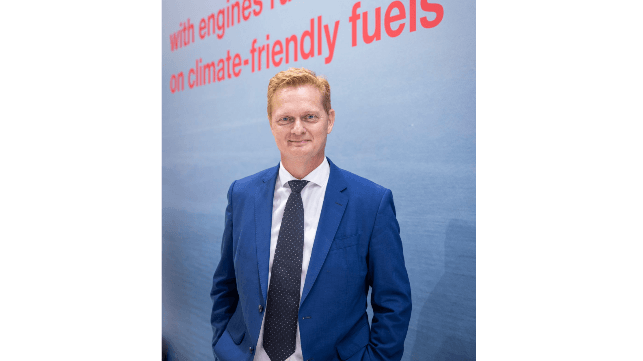
Klaus Rasmussen – Project Sales Director, PrimeServ Denmark – Everllence, said: “The retrofit market is currently in the doldrums with shipowners backing off investment until clarity arrives regarding IMO rules. This leaves a huge gap in the attainability of the NZF. Without these retrofits, it will be close to impossible to meet GHG targets in time. Action is critical. We have to scale the conversion pathway and unlock the vessel volume required to meet the IMO’s strategy.”
Everllence’s own figures calculate that even with full ZNZ adoption by newbuilds by 2030 – meaning all newbuildings could operate on ZNZ fuels – 50 GW of existing two-stroke power would still need to be converted by 2050 to achieve the NZF.
This 50 GW corresponds to approximately 2,000 vessels of the largest containerships, bulkers and tankers capable of conversion to ZNZ-fuel operation. Today, the entire fleet of vessels over 5,000 GT encompasses 30,000 two-stroke engines. Of these, 5,300 are potentially convertible to ZNZ-fuel operation.
Rasmussen added: “Uncertainty around the rules has frozen commitment, pushing owners toward interim efficiency upgrades rather than full-fuel conversions and this hesitation risks creating costly capacity bottlenecks once NZF regulation finally kicks in. We urgently need action on retrofits.”
The products and services herein described in this press release are not endorsed by The Maritime Executive
Why Freight Decarbonization Must Become Network-Based
[By Mikael Lind, Sandra Haraldson, Wolfgang Lehmacher, Thomas Bjørdal, Valdemar Ehlers, Cecilia Gabrielii, Ida Kallmyr Lerheim, Kenneth Lind, Per Löfbom, Teemu Manderbacka, Lasse Pohjala, Marianne Ribes, Jon Bjorn Skulason, and Johan Östling]
Green corridors have been and are being enabled as the first phase towards clean transportation. The next frontier of freight decarbonization is not building more green corridors, but turning them into scalable, network-wide solutions that work for everyday logistics decisions. Across the global transport sector, green corridors have emerged as one of the most visible mechanisms for accelerating freight decarbonization. Governments, ports, shipping companies, and cargo owners have aligned around specific routes where low- and zero-emission solutions can be deployed through coordinated action. Since the launch of initiatives such as the Clydebank Declaration, corridor concepts have helped mobilize partnerships, concentrate investments, and demonstrate early pathways toward reducing emissions in maritime transport.
These efforts have been essential. They have provided a practical starting point for testing new fuels, building confidence across actors, and establishing early examples of what a decarbonized transport system might look like in practice.
As these initiatives mature, the question is no longer whether corridors can demonstrate change. It is whether they can enable scale. Corridors trigger transition; networks enable scale. Freight decarbonization will not scale through corridors alone; it will scale when low-emission transport becomes a competitive, repeatable, shipper-driven choice across interconnected networks.
Freight systems operate as networks - and scale through transport legs
Freight does not move through isolated routes. It moves through shared, interdependent networks of infrastructure, services, and decisions. To understand why, it is necessary to step back and look at how freight systems operate. Particularly in highly interconnected regions such as the Nordics, transport unfolds across networks of ports, rail segments, ferry services, terminals, and road distribution systems that simultaneously serve multiple industries and supply chains.
A ferry connection between two ports, for example, is rarely tied to a single predefined corridor. It carries a mix of cargo flows, supports different logistics configurations, and connects to multiple onward transport options. It is, in essence, a shared infrastructure component within a broader system.
This observation leads to a fundamental shift in perspective. Rather than viewing corridors as the primary unit of analysis, scalable freight systems need to be understood through two complementary perspectives.
On the supply side, the transport leg represents the key unit of analysis - a recurring connection between two logistics nodes, such as a ferry route, rail segment, or port or terminal connection. Transport legs are reusable and can support multiple supply chains and routing configurations.
On the demand side, the shipment becomes the relevant unit of analysis, reflecting how transport solutions are evaluated and selected in practice by transport buyers based on cost, time, and emissions.
From this perspective, scalable freight systems do not emerge from isolated corridors but from the ability to combine high-performing transport legs into repeatable, competitive network configurations. The same leg can support different routes, different industries, and different operational setups, depending on how it is integrated into the wider system.
What makes transport solutions scale in practice
However, not all transport legs can function as scalable components. The conditions that enable scaling are operational rather than conceptual, and they determine whether a leg can move beyond a pilot role and become part of a functioning system.
For a transport leg to move from pilot relevance to system relevance, three operating conditions matter most:
- Volume - sufficient demand to justify stable operations and long-term investments in infrastructure and services
- Frequency - service availability that allows integration into logistics planning and provides flexibility for transport buyers
- Reliability - predictable and consistent performance across operations, enabling trust and reducing risk in supply chains
When these conditions are not met, even well-designed infrastructure remains underutilized. A corridor may exist on paper, and even in practice, but if its underlying transport legs do not meet these criteria, it will struggle to attract sustained use.
Infrastructure can make decarbonization possible, but only shippers make it real through procurement and routing decisions. Freight decisions are ultimately made by transport buyers - manufacturers, retailers, and logistics providers - who continuously evaluate transport alternatives based on performance.
In practice, this evaluation revolves around three interdependent dimensions:
- Cost - the total logistics cost, including transport, handling, inventory implications, and potential disruption-related costs
- Time - lead time, delivery performance, and predictability within supply chains, often tied to production schedules and customer expectations
- Emissions - the environmental footprint associated with the transport solution, increasingly important due to regulatory pressure and corporate sustainability commitments
In practice, shippers choose the option that best balances cost, time, and emissions within the constraints of their business model. This is why decarbonization becomes scalable only when sustainable transport performs not just environmentally, but operationally and commercially.
In simple terms, there is a difference between what can scale and what will scale. The first depends on infrastructure performance and transport service design, while the second depends on whether transport services meet shippers' expectations and constraints. Bridging this gap is essential for achieving system-wide transformation, as illustrated in Figure 1 through the alignment of infrastructure readiness and shipment adoption.
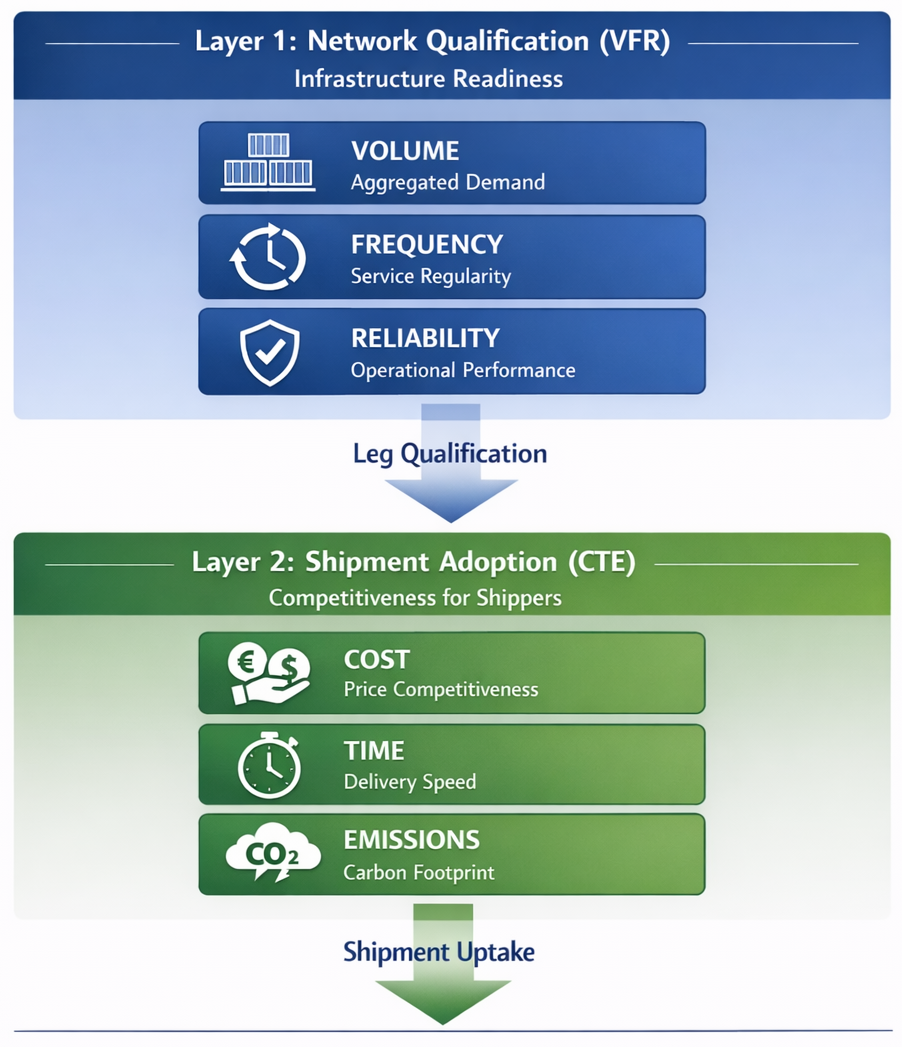
Figure 1: Dual-layer scaling framework for sustainable freight systems
This systems perspective is reflected in the newly released Nordic Innovation report From Green Corridor Pilots to Scalable Nordic Sustainable Transport Networks. The report does more than document corridor experimentation; it helps show why scaling depends on reusable network components, shared digital infrastructure, and solutions that work for transport buyers in practice.
Scaling requires coordination - and digital collaboration
If scaling is shipper-driven, coordination becomes the decisive capability. Freight systems are fragmented by design, with ports, carriers, rail operators, terminal operators, and logistics providers each optimizing different parts of the chain.
In a more multimodal, low-emission freight system, isolated optimization is no longer enough. Performance increasingly depends on whether actors can align decisions across assets, modes, and time horizons.
Digital collaboration is therefore not a support layer. It is part of the operating model of scalable sustainable freight.
Approaches such as end-to-end collaborative decision making enable actors to coordinate operations across transport legs and nodes, improving predictability, reducing inefficiencies, and enhancing resilience. By aligning planning and execution across multiple parties, such approaches help ensure that individual optimizations do not undermine system-wide performance.
One example is the Virtual Watch Tower concept, which explores how shared digital infrastructure can provide common situational awareness across logistics chains. By enabling actors to align their decisions, manage disruptions collectively, and access consistent emissions information, these capabilities directly improve reliability and transparency. In practice, this supports coordinated action around disruptions, delivery performance, and emissions transparency. That matters because visibility alone does not create resilience; coordinated action does.
Importantly, this type of infrastructure is not tied to individual corridors. It functions as a shared coordination layer across networks, supporting interoperability while allowing actors to retain control over their own operations.
From corridor pilots to network configurations
Practical experimentation reinforces the network-based perspective: the value of sustainable freight infrastructure is not fixed by corridor definition, but by how transport legs are combined across a network. In the “Green Node in a Green Corridor” initiative, researchers and industry partners have examined how alternative transport configurations perform using real shipment data and scenario-based analysis.
By comparing different combinations of transport legs across cost, delivery time, and emissions, the work demonstrates how the same underlying infrastructure can support multiple logistics solutions with varying performance outcomes.
A single ferry connection, for example, can enable a low-emission solution in one configuration and a time-efficient solution in another, depending on how it is combined with rail, road, or terminal operations. This illustrates that the value of a corridor is not fixed but emerges from how transport legs are combined and used within a network.
This insight has important implications. It suggests that the focus should shift from defining static routes to enabling flexible configurations that allow transport buyers to select solutions that meet their specific needs. In this sense, corridors become part of a broader system, rather than standalone solutions.
Connecting transport and energy systems
Sustainable freight is not only a transport challenge. It is also an energy system challenge and, increasingly, a value chain alignment challenge, as explored in the Nordic context.
Low- and zero-emission freight depends on the coordinated evolution of at least three interdependent systems: the energy value chain, the vehicle and vessel technology base, and the operational logistics chain. Hydrogen, ammonia, methanol, and electrification each require distinct production, storage, bunkering, charging, and asset-deployment models.
In the Nordic region, transport nodes - particularly ports - are increasingly becoming points where logistics systems and energy systems intersect. This creates both opportunities and dependencies. On the one hand, it enables coordinated development of infrastructure and services. On the other hand, it requires alignment between actors with different objectives, timelines, and investment cycles.
Scaling sustainable transport, therefore, requires a system-level perspective, where transport and energy system developments are coordinated rather than treated as separate domains.
The Nordic opportunity - and what comes next
The Nordic region offers more than a regional case. It functions as a living laboratory for the next phase of freight decarbonization. Highly interconnected cross-border freight systems, institutional trust, and ambitious sustainability goals make the Nordics unusually well suited to test how network-based scaling works in practice.
This matters beyond the region. The Nordic experience can help inform a broader global transition from corridor pilots to interoperable, shipper-relevant, digitally coordinated freight networks.
The Nordic perspective helps clarify what this transition requires:
- a shift from corridors to networks
- a focus on reusable transport legs
- a recognition that scaling is shipper-driven
- an emphasis on coordination across actors and systems
Freight decarbonization will not be achieved one corridor at a time. It will be reached when low-emission transport becomes part of a coordinated, commercially viable network that shippers can use repeatedly across supply chains.
The era of corridor pilots is giving way to one of network orchestration. The task now is not only to launch more green routes, but to align infrastructure, energy, data, and transport demand so that sustainable freight becomes the default logic of the system. The Nordic work offers an early blueprint for this shift.
Mikael Lind is the world’s first (adjunct) Professor of Maritime Informatics at Chalmers University of Technology and Research Institutes of Sweden (RISE). He is a widely published expert in international trade press, co-editor of the first two books on Maritime Informatics and Maritime Decarbonization. His work has directly shaped community-based digital collaboration initiatives, including the Virtual Watch Tower (VWT).
Sandra Haraldson is Senior Researcher at Research Institutes of Sweden (RISE) and has driven several initiatives on digital collaboration, multi-business innovation, and sustainable transport hubs, such as the concept of Collaborative Decision Making (e.g. e2eCDM (being the conceptual foundation for VWT), PortCDM, RailwayCDM, RRTCDM) enabling parties in transport ecosystems to become coordinated and synchronized by digital data sharing.
Wolfgang Lehmacher is a global supply chain logistics expert. The former director at the World Economic Forum and CEO Emeritus of GeoPost Intercontinental is an advisory board member of The Logistics and Supply Chain Management Society, an ambassador for F&L, and an advisor to Global:SF and RISE. He has also co-initiated the VWT initiative. He contributes to the knowledge base of Maritime Informatics and co-editor of the book Maritime Decarbonization.
Thomas Bjørdal is Cluster Manager of RENERGY, Renewable Energy Cluster, where he leads the overall strategic development of the cluster and its project portfolio. He has a background in business development and innovation within the energy and industrial sectors, and extensive experience with cluster development and public–private collaboration. Bjørdal works to connect industry, research and public stakeholders to develop and scale initiatives that support the green transition.
Valdemar Ehlers is Technical Director at Danish Maritime, with a background as Naval Architect and Master Mariner. He has extensive experience in maritime operations, regulation, and industry collaboration, serves on several boards advancing sustainable shipping, has acted as a visiting lecturer, and holds an advisory role in naval architecture education at the Technical University of Denmark.
Cecilia Gabrielii is a Senior Researcher at SINTEF Energy Research, Norway. She has driven several research projects related to decarbonisation of maritime transport and energy systems in port, and is part of SINTEFs strategic group working towards zero-emission transport systems.
Ida Kallmyr Lerheim is a project manager and EU-focused business developer at RENERGY, with a background in innovation, project development, and stakeholder collaboration. She leads large-scale energy initiatives such as NORHyWAY, working at the intersection of industry, policy, and innovation to accelerate green energy systems and sustainable value creation.
Kenneth Lind is a Research Leader at Research Institutes of Sweden (RISE) and has driven several research projects focusing on system architecture and software engineering challenges in the automotive and transport sector. He is the project leader of the VWT initiative. He holds a PhD in software engineering from Chalmers University of Technology and has 20 years of industrial experience as technical leader.
Per Löfbom is an experienced and certified IT architect with a strong background in IoT, e?navigation, integrations, and platform strategy. He has extensive experiences as an architect, project manager, and IT manager across industry, logistics, maritime and public sector. Additionally skilled in standardization, system design, system development and complex integration environments.
Teemu Manderbacka leads VTT’s Marine Research Team and serves as Professor of Practice at Aalto University. Specializing in ship design, hydrodynamics, and maritime technology, he drives innovations for safe, energy-efficient shipping, collaborating closely with industry manufacturers, ship owners, and operators.
Lasse Pohjala works at the Vaasa Region Development Company on energy technology and maritime projects, with a strong focus on Nordic cooperation and networking. His background in the steel and heat treatment industries supports his role advising SMEs on business development and internationalization across the Vaasa region and global markets.
Marianne Ribes is Project Manager at Icelandic New Energy. She has experience in Project Management, EU-funded projects, and environmental initiatives, with a background spanning energy, consultancy, and NGO management, promoting sustainable solutions through collaboration and outreach.
Jón Björn Skúlason is General Manager of Icelandic New Energy, leading hydrogen and clean energy projects in Iceland and internationally. With over 25 years of experience, he drives the development of zero-emission solutions across transport sectors, connecting energy systems, industry, and innovation to support large-scale transition.
Johan Östling is a Senior Project Manager at RISE with extensive experience leading complex international programs across telecom, industrial, and defense-related sectors. As a former officer in the Swedish Armed Forces (Air Defense) and Major in the Army Reserves, he brings expertise in operations, security-sensitive environments, and large-scale system implementation.
The opinions expressed herein are the author's and not necessarily those of The Maritime Executive.

No comments:
Post a Comment