Nuclear News
China Added 34 GW of Nuclear in a Decade
- China added 34 GW of nuclear capacity over the past decade versus a single new plant in the U.S., and is on track to overtake both the U.S. and France as the world's top nuclear producer within ten years.
- Beijing's 15th Five-Year Plan prioritizes advanced reactor development, domestic nuclear fuel independence, and expanding China's nuclear footprint across emerging markets via the Belt and Road Initiative.
- Both countries are racing toward next-gen nuclear tech -- SMRs and commercial fusion -- but China's state-backed spending and regulatory agility give it a structural edge Washington can't easily close.
China and the United States are facing off for nuclear energy dominance on the world stage. The United States has the world’s largest nuclear energy production capacity, but China has the fastest-growing nuclear fleet. China’s 15th Five-Year Plan (15FYP), released back in March, sets out a bold nuclear power strategy for Beijing, aiming to continue to build the nation’s own nuclear fleet while also intensifying China’s presence in international nuclear energy markets, particularly in emerging economies.
Meanwhile, in the United States, the Trump administration is also rushing to loosen regulations on nuclear power development in order to revive the nation’s aging and slowing nuclear power sector. While the United States has added just one nuclear plant in the last decade, China added a staggering 34 gigawatts of capacity over the same time period. As a result, China is set to overtake the United States (and France) to become the world’s single biggest producer of nuclear energy within the next ten years based on current projections.
Beijing’s latest five year plan shows that China has no intentions of slowing down. “With innovation and security as its leading themes, the latest FYP illuminates how nuclear energy underpins multiple strategic priorities for China in the context of not only energy security but also technological innovation and global engagement,” the Center for Strategic and International Studies (CSIS), a nonprofit policy research organization and bipartisan think tank recently reported.
The CSIS summarizes China’s recently unveiled nuclear power strategy for the years 2026 through 2030 and compares the rhetoric around nuclear power to previous five year plans. Based on this analysis, the report highlights seven key takeaways:
- China is investing heavily into nuclear energy as a part of an ultra-diverse energy portfolio in order to shore up domestic energy security and resilience.
- The Chinese government is propping up the nation’s nuclear sector in a big way, funding manufacturing as well as research and development of next-gen nuclear energy models like small modular reactors.
- While China is intent on expanding its nuclear energy influence on a global scale, its exports of nuclear reactors are struggling – the country has seemingly abandoned plans for exporting large-scale reactors, and is apparently delaying the rollout of modular models.
- While China’s desire to build up nuclear energy supply chains in other countries is central to its own interests in terms of energy security and (geo)political influence, Beijing is spinning this strategy as a contribution to energy security in poor countries in Global South under the banner of China’s Belt and Road Initiative, a decadeslong development/soft-power-building infrastructural program.
- China is focused on developing advanced nuclear reactors as a key priority of the domestic nuclear program, with particular attention to new reactor models that use less water and rely on alternative fuels, thereby reducing the sector’s resource needs as well as its dependence on nuclear fuel imports.
- Speaking of those nuclear fuel imports, Beijing’s reliance on them means that China’s trade relationship with Russia remains critical to the country’s energy strategy – a dynamic that Beijing is eager to shift.
- Finally, we can expect a major research and development push toward unlocking commercial nuclear fusion, the ‘holy grail of clean energy’, building upon the long list of fusion breakthroughs that Chinese labs have already been stacking up.
The United States’ nuclear energy ambitions are extremely similar to those laid out by China in March. The Trump administration is eager to “produce lasting American dominance in the global nuclear energy market” and is taking a Chinese approach to this goal, by issuing executive orders to reshape the national nuclear energy regulatory framework. The Trump administration is likewise bullish on developing next-gen nuclear reactors and nuclear fusion technology on its own home turf in order to stay at the technological vanguard of the nascent sector. Finally, the United States is also fighting to free itself from international nuclear fuel supply chains by building up domestic uranium extraction and enrichment capacities.
However, despite similar goals and leadership styles, China is a clear frontrunner in the nuclear energy race over the next few decades. Beijing has simply been outspending Washington for decades, and has the authoritarian ability to continue to prop up the sector without the pesky inertia of checks and balances. But the result of the nuclear energy race between the world’s two biggest economies could end up being a boon for the entire planet, nuclear expansion represents a key tenant of global decarbonization pathways.
By Haley Zaremba for Oilprice.com
Financial Strains and Mining Disputes Cloud Russia-Kazakhstan Nuclear Ties
- Kazatomprom alleges that Rosatom-linked SGCC failed to meet uranium production targets and contribute adequately to an environmental remediation fund.
- Despite the dispute, the Budenovskoye uranium joint venture remains profitable and expects stable operations in 2026.
- Financing uncertainty surrounding Kazakhstan’s first nuclear power plant reflects broader economic pressure on Russia following Western sanctions.
Kazakh officials are haggling with a Rosatom subsidiary, asserting that the Russian entity has failed to fulfill contractual obligations under a uranium mining agreement.
Kazatomprom, Kazakhstan’s nuclear energy entity, filed a complaint in early 2026, asserting that the Rosatom-associated company, identified as Stepnogorsk Mining and Chemical Combine (SGCC), violated an agreement covering the Budenovskoye joint venture, which is engaged in uranium mining in Kazakhstan’s Turkestan Region.
SGCC was accused of various financial shortcomings, including failure to contribute to a “liquidation fund” established to remediate potential environmental damage caused by mining operations. The complaint also states that SGCC failed to meet its uranium extraction quota in 2024.
SGCC has disputed the Kazakh complaint, according to an annual report for 2025, which was published last February by the joint venture and quoted by the Kazakh news outlet, InBusiness.kz. “The issue is under consideration, the final decision of the competent authority has not been made,” the financial report states.
Despite the dispute, the annual report indicates that Budenovskoye JV is profitable and has manageable debt, although liabilities currently outweigh assets by almost 60 million tenge (about $127,000). Kazatomprom owns a 51 percent stake in the JV.
“The company expects positive flows from operating activities in 2026. In addition, the management received appropriate assurances from the company’s participants that they would provide financial and other support, if necessary,” the report states. “Accordingly, the management of the group does not expect that the company will have risks associated with the repayment of financial obligations and the execution of the company’s investment plans for 2026.”
The liquidation fund at the end of 2025 stood at 1.4 billion Kazakh tenge (almost $3 million), up from 666 million tenge (about $1.4 million) in 2024, according to the report.
Rosatom was long a financial rainmaker for the Russian government. But Western sanctions imposed because of the Kremlin’s unprovoked attack on Ukraine in 2022 have caused Rosatom’s financial muscle to atrophy.
Kazakhstan awarded Rosatom the contract in 2025 to build the country’s first nuclear power plant on the shores of Lake Balkhash, but financing woes have clouded the construction timetable. In April, Kazakh officials announced that the Russian government had pledged to provide 85 percent of the financing for the project, but an agreement has not been finalized. The overall cost of the nuclear project is estimated at $15 billion.
Russia’s economy is starting to show signs of severe strain, due to fiscal demands of the Ukraine war.
By Eurasianet
Italy prepares for return of nuclear power

Responding to a question on the establishment of a control board to address the country's strategic priorities, she told the Senate: "I believe your question raises a common ground, which is clearly the current situation we find ourselves in: the particularly complex international economic environment and the ongoing geopolitical tensions we are experiencing will impact, as they are already impacting, growth, energy costs, business competitiveness, and household purchasing power. And that, in these challenging times, there should be less room for controversy and more room for concrete discussion on the major strategic issues affecting Italy.
"Clearly, among these major issues, there's energy. You know that the government - whether you agree or not - has been working on this from the beginning, from the gas release to the nuclear measures. I'd also like to take this opportunity to point out that the enabling law will be approved by the summer, and the implementing decrees will be adopted to create the legal framework necessary for the resumption of nuclear power in Italy."
In October last year, Italy's Council of Ministers, at a meeting chaired by Meloni, approved for final consideration a bill delegating responsibility for the reintroduction of nuclear energy in the country to the government. The bill empowers the government to comprehensively regulate the introduction of 'sustainable' nuclear power, within the framework of European decarbonisation policies by 2050 and energy security objectives. The mandate includes, among other things, the development of a National Programme for Sustainable Nuclear Power, the establishment of an independent Nuclear Safety Authority, the strengthening of scientific and industrial research, the development of new skills, and the implementation of information and awareness campaigns.
The implementing legislative decrees must be adopted within 12 months of the law's entry into force.
Italy operated a total of four nuclear power plants starting in the early 1960s but decided to phase out nuclear power in a referendum that followed the 1986 Chernobyl accident. It closed its last two operating plants, Caorso and Trino Vercellese, in 1990.
In late March 2011, following the Fukushima Daiichi accident, the Italian government approved a moratorium of at least one year on construction of nuclear power plants in the country, which had been looking to restart its long-abandoned nuclear programme. In a poll held in June of that year, 94% of voters rejected the construction of any new nuclear reactors in Italy. However, a poll conducted in June 2021 showed that one-third of Italians were in favour of reconsidering the use of nuclear energy in the country, with more than half of respondents saying they would not exclude the future use of new advanced nuclear technologies.
In May 2023, the Italian Parliament approved a motion to urge the government to consider incorporating nuclear power into the country's energy mix. In the September of that year, the first meeting was held of the National Platform for Sustainable Nuclear Power, set up by the government to define a time frame for the possible resumption of nuclear energy in Italy and identify opportunities for the country's industrial chain already operating in the sector.
US federal funds awarded to spur SMR deployment
In October 2024, the US Department of Energy (DOE) - under the Joe Biden administration - opened applications for funding to support the initial domestic deployment of Generation III+ small modular reactor (SMR) technologies, with up to USD800 million to go to two "first-mover" teams, with an additional USD100 million to address so-called gaps that have hindered plant deployments. According to the solicitation documentation, a Gen III+ SMR is defined as a nuclear fission reactor that uses light water as a coolant and low-enriched uranium fuel, with a single-unit net electrical power output of 50-350 MWe, that maximises factory fabrication approaches, and the same or improved safety, security, and environmental benefits compared with current large nuclear power plant designs.
The solicitation was re-issued by the DOE in March 2025 to better align with President Donald Trump's agenda on unleashing American energy and AI dominance.
In December last year, the DOE selected Tennessee Valley Authority (TVA) and Holtec Government Services to each receive USD400 million in federal cost-shared funding to support early deployments of advanced light-water small modular reactors in the USA. TVA's application was selected for funding to accelerate the deployment of a GE Vernova Hitachi BWRX-300 at its Clinch River site in East Tennessee. Holtec plans to deploy two SMR-300 reactors - named Pioneer 1 and 2 - at the Palisades Nuclear Generating Station site in Michigan.
The DOE has now chosen eight further companies to receive funding from the Generation III+ Small Modular Reactor Pathway to Deployment Program.
"Projects will bolster the supply chain needed to deliver new nuclear generation in the 2030s, strengthen the development of Gen III+ SMR orderbooks, and advance President Trump's Executive Orders to usher in a nuclear renaissance and expand America's Energy Dominance agenda," the department said.
Roughly half of the funding has been allocated to projects related to SMR site selection and preparation. Constellation SMR Development LLC will receive USD17.3 million to pursue a US Nuclear Regulatory Commission (NRC) approved Early Site Permit (ESP) for a location in New York to support the future deployment of Gen III+ SMRs, while Nebraska Public Power District will receive USD27.9 million to obtain an NRC approved ESP for a location in Nebraska to support the future deployment of Gen III+ SMRs.
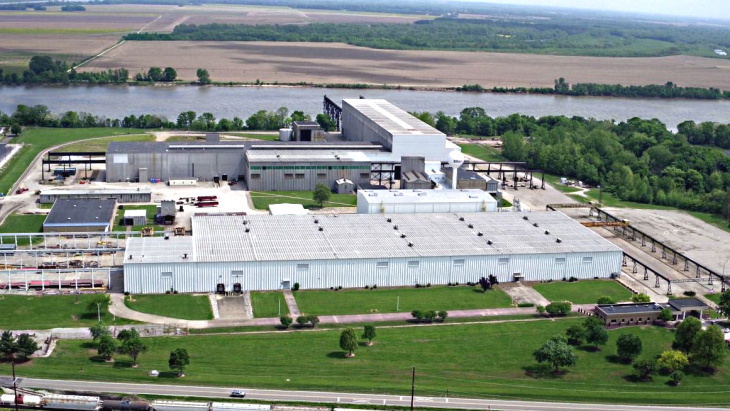
In order to develop the US SMR supply chain, BWXT Nuclear Energy Inc has been allocated USD21.4 million to procure equipment for an existing facility in Mount Vernon, Indiana, that is required for final assembly of reactor pressure vessels and the manufacture of other large nuclear reactor components.
Container Technologies Industries LLC will receive USD547,900 to expand the company's nuclear quality assurance certifications for their facility in Helenwood, Tennessee, to enable it to produce steel for Gen III+ SMR deployments.
Meanwhile, Framatome US Government Solutions LLC has been awarded USD8.8 million to expand a fuel fabrication facility in Richland, Washington, by increasing the number of ceramic pellet production lines, adding about 200 tonnes of uranium of annual capacity.
Global Nuclear Fuel Americas LLC will receive USD3 million to establish a second production line for fuel rod fabrication for boiling water reactors, acquire capital equipment to automate the pellet inspection process, and implement automated storage and handling for pellets, for its facility in Wilmington, North Carolina.
American Forgemasters Company has been awarded USD2.9 million to procure a new furnace for its facility in New Castle, Pennsylvania, to facilitate the domestic production of large component forgings for Gen III+ SMRs, while Scot Forge Company will receive USD12.3 million to procure and install a large vertical turning lathe and gantry style milling machine for a facility in Spring Grove, Illinois, to facilitate the domestic production and manufacturing of large components for Gen III+ SMRs.
"President Trump has made clear that America is going to build more energy, not less, and nuclear is central to that mission," said US Secretary of Energy Chris Wright. "Advanced light-water SMRs will give our nation the reliable, round-the-clock power we need to fuel the President's manufacturing boom, support data centres and AI growth, and reinforce a stronger, more secure electric grid. These awards ensure we can deploy these reactors as soon as possible."
FANCO and AtkinsRéalis form strategic alliance for SMR deployment
The two companies will work together to establish a scalable framework for deploying First American Nuclear Co's (FANCO) EAGL-1 small modular reactor and associated fuel facilities, with AtkinsRéalis providing engineering services.
_53208.jpg)
The partnership will combine the companies' technical, commercial, and organisational capabilities to develop, test, and license EAGL-1. AtkinsRéalis will serve as the exclusive engineering, procurement, and construction management (EPCM) provider for EAGL-1 projects in North America, including the integrated EAGL-1 reactor, fuel fabrication, and recycling facilities. It will also support testing and licensing validation to enable EAGL-1 to begin delivering power at scale by 2033, FANCO said.
EAGL-1 is a lead-bismuth cooled fast-spectrum small modular reactor (SMR) which can operate in a closed-fuel cycle in which used fuel is continuously reprocessed and reused. FANCO submitted a regulatory engagement plan for the 240 MWe SMR to the US Nuclear Regulatory Commission in April, marking the start of its pre-application engagement with the regulator.
"SMR technology is an important part of the energy mix needed to create stable, affordable, and reliable power grids that meet the energy needs of economies and communities worldwide," AtkinsRéalis President and CEO Ian Edwards said. "This partnership with FANCO marks an important step in delivering innovative and scalable nuclear technology precisely when the United States is embracing a new era of energy leadership."
The alliance agreement spans 20 years and contemplates services worth up to USD250 million over the first 5 years. Work has already begun on task orders, AtkinsRéalis said. Under the first task orders, it will prepare procedures and policies required to do design work, such as a quality programme and engineering procedures. It will also undertake the conceptual design for the balance of plant and review the design of the nuclear steam supply system.
FANCO says its system will focus on mixed-oxide fuel and other transuranic fuels sourced from existing US Department of Energy stockpiles, although the EAGL-1 system is also capable of operating on high-assay low-enriched uranium. This "fuel-agnostic" approach means it can avoid major supply chain bottlenecks while helping reduce the nation's stockpile of long-term nuclear waste, the company says. Its BridgePower solution offers customers the ability to generate immediate power using off-the-shelf package boilers that feed steam turbines, and later seamlessly transitions to nuclear energy by replacing the boilers with the EAGL-1 reactor, using the same turbine infrastructure, with minimal equipment and modification costs.
"AtkinsRéalis and First American Nuclear create the energy dream team the country needs right now," FANCO CEO Mike Reinboth said. "Together, we combine highly specialised expertise in advanced nuclear reactors and fuels with expansive operational scale and world-class engineering resources to bring affordable, reliable nuclear energy to the US as expeditiously as possible."
AtkinsRéalis has served as the architect-engineer on the Darlington New Nuclear Project team, which is working to deploy a BWRX-300 SMR in Ontario, since 2023 and has supported the Rolls Royce SMR program in the UK with design and engineering expertise since 2018, as well as acting as the Owner's Engineer for Energy Northwest's SMR project in Washington state since 2024.
Contest launched to name UK's first SMR plant
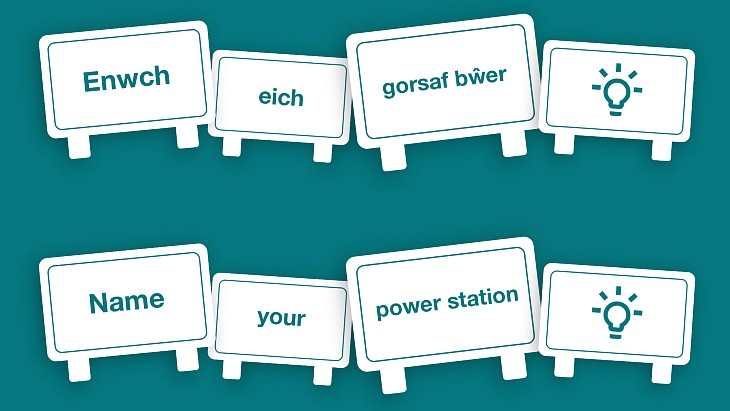
Great British Energy - Nuclear says the other qualities they are looking for in the name are it being "inspired by Anglesey, its heritage, landscape or language" and "respectful, inclusive and community-minded" while also being "unique and not already widely used for similar energy projects".
In their bilingual invitation to take part in the contest, the UK government's arms-length delivery agency for new nuclear capacity, said: "This project will be part of Anglesey's story for generations to come, and we believe that the name should come from the people who know the Island best. Children and young people are welcome to take part, including through schools. Your suggestions will be reviewed by a panel of local young people from Anglesey, alongside community and industry leaders."
_287507ff.jpg)
An inspiring overhead view of the Wylfa site (Image: Arup)
CEO of Great British Energy - Nuclear, Simon Roddy, said: "Wylfa is a first‑of‑a‑kind project for the UK, with long‑term benefits both locally and nationally ... we are serious about delivering it safely, responsibly and with the community at its heart."
Rolls-Royce SMR was selected as the UK government's preferred technology for the country's first small modular reactor (SMR) project in June last year, and GBP2.6 billion was allocated in the 2025 Spending Review towards the project.
In November, the government announced that Wylfa on Anglesey would host an initial three Rolls-Royce small modular reactors. It said the site - where a Magnox plant is being decommissioned - could potentially host up to eight SMRs.
The Rolls-Royce SMR is a 470 MWe design based on a small pressurised water reactor. It will provide consistent baseload generation for at least 60 years. Ninety percent of the SMR - measuring about 16 metres by 4 metres - will be built in factory conditions, limiting activity on-site primarily to assembly of pre-fabricated, pre-tested, modules which significantly reduces project risk and has the potential to drastically shorten build schedules.
The orginal Wylfa nuclear power plant's two 490 MW units operated from 1971 to 2012 and 2015 respectively. In 2012, Hitachi bought the Wylfa site and proposed constructing a new power station, featuring UK Advanced Boiling Water Reactors, to be called ‘Wylfa Newydd’, on adjacent land. However Hitachi dropped these plans in 2020.
Nuclear power plants commonly adopt the name of the place they are located or the name of a nearby place. For instance, the Hinkley Point site is based in the Hinkley Point area of Somerset.
Anglesey residents have until 17:00 on 8 June to submit their suggested names.

No comments:
Post a Comment