China blacklists MP Materials, USA Rare Earth in critical minerals war
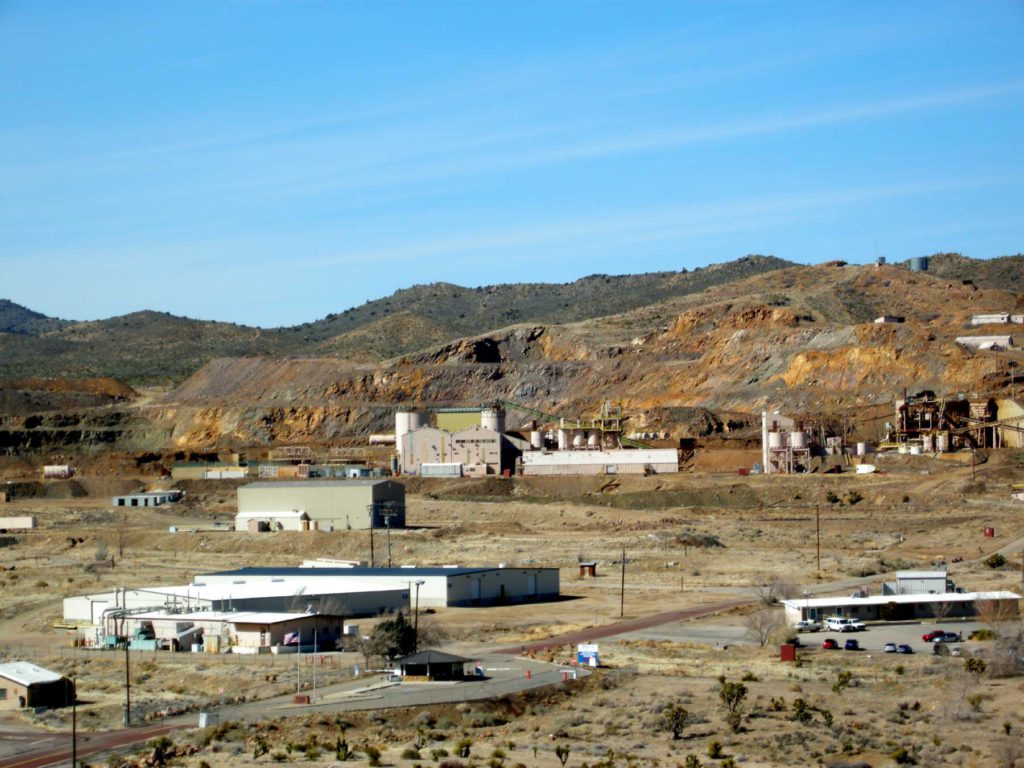
China has imposed export controls on two US rare earth companies central to the US efforts to build alternative supply chains for critical minerals used in advanced manufacturing and defence.

MP Materials (NYSE: MP) and USA Rare Earth (NASDAQ: USAR) were added to China’s export control list on Monday, restricting access to Chinese dual-use goods and technologies that could have commercial or military applications.
The designation bars Chinese exporters from supplying such items to the companies and prohibits organizations or individuals in any country from transferring Chinese-origin dual-use products to them. Beijing also added eight other US companies, including drone, robotics and aerospace firms, to the same list.
Trade tensions
The decision signals that tensions between Washington and Beijing remain elevated despite recent efforts by US President Donald Trump and Chinese President Xi Jinping to stabilize relations. It also highlights China’s continued leverage over rare earth supply chains, even as Western governments invest heavily in alternative production.
MP Materials, which operates the Mountain Pass rare earth mine in California and counts the Pentagon as a shareholder, has expanded processing capacity over the past year.
USA Rare Earth is also advancing domestic production as the US seeks to reduce dependence on Chinese supplies. Both companies accelerated development plans after China imposed export controls on key rare earth elements and magnets in April 2025.
Supply chains
The latest restrictions come days after Group of Seven countries agreed to cap imports of rare earths from any single country outside the bloc and its partners at less than 60% by 2030. The measure is designed to reduce reliance on China, which dominates global production and processing of many critical minerals.
The practical impact on the two companies remains unclear. Both have worked to localize supply chains and reduce exposure to Chinese inputs, though many downstream industries still rely heavily on materials and technologies sourced from China.
The move follows a series of escalating trade and security measures. Earlier this month, the Pentagon added several Chinese companies to a blacklist over alleged military ties.
China responded on Monday by also placing 10 US defence firms on its own control list, barring exports of Chinese-made products with potential military applications.
China’s foreign minister calls on BRICS to strengthen strategic minerals cooperation
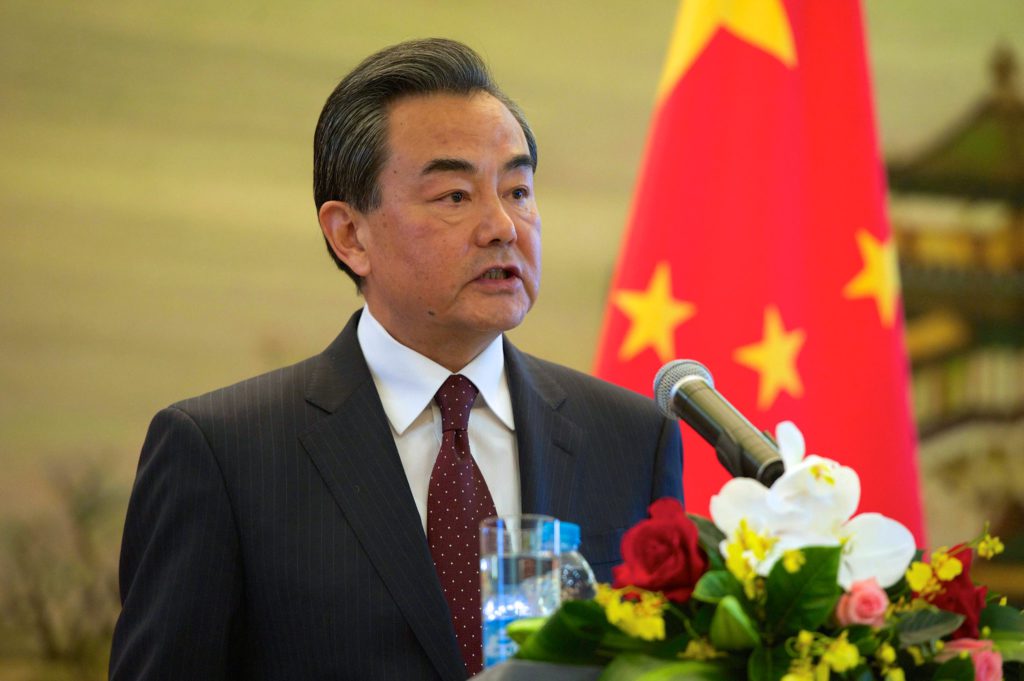
China’s Foreign Minister Wang Yi called on BRICS countries on Tuesday to jointly respond to global challenges from Ebola to AI, and to strengthen cooperation on strategic mineral resources, according to a statement from his ministry.
Wang told a meeting in India that BRICS countries should respond to global energy and food security challenges and unite to respond to the Ebola epidemic in Africa.
The countries should resolutely combat all forms of terrorism and oppose the weaponization of outer space, Wang added, while also calling for close oversight of AI risks.
Speaking at a security meeting in New Delhi, China’s top diplomat said the group should “hold high the banner of multilateralism” and firmly oppose unilateralism and protectionism.
“BRICS members need to take the lead in speaking up for justice and delivering fair outcomes, and elevate their standing and role in international affairs,” Wang said.
He also urged the BRICS to back dialogue and political solutions to resolve disputes and hotspot issues.
Touching on the US-Iran conflict, Wang said it underscored the importance of upholding international rules, respecting sovereignty and adapting to evolving forms of warfare such as cyber and information warfare.
“Traditional and non-traditional security threats are increasingly intertwined, making it timely for BRICS to strengthen dialogue and cooperation on security affairs,” Wang told the meeting, according to a separate report from state agency Xinhua.
(By Shi Bu and Liz Lee; Editing by Gareth Jones)
China’s rare earths curbs extend pressure on supply to Japan
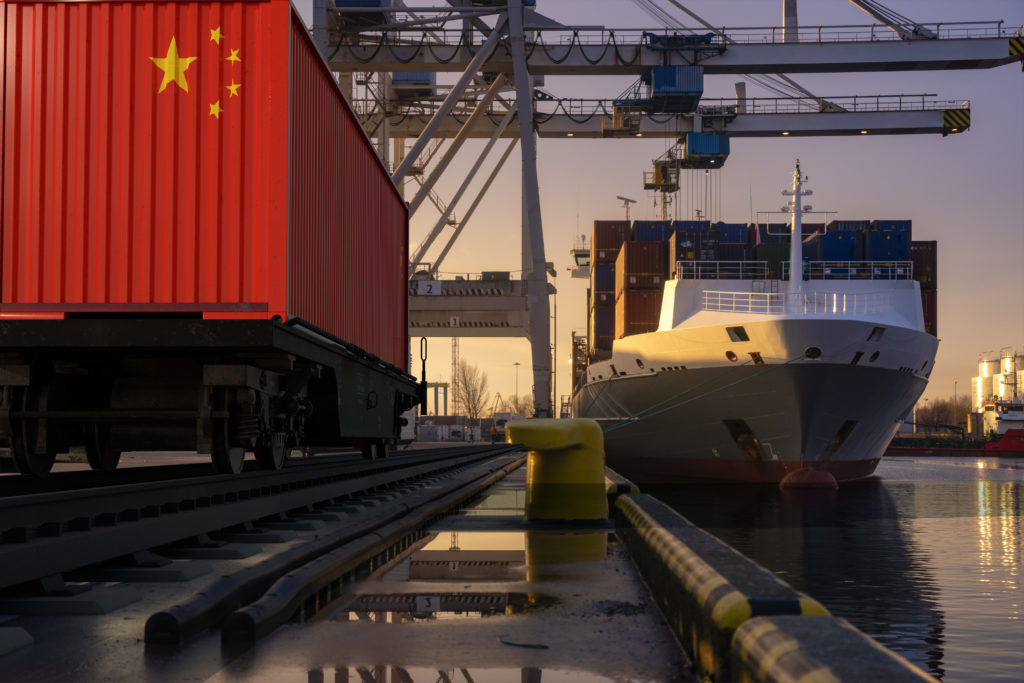
China’s exports to Japan of several rare earths used for powerful magnets were negligible in May, data showed on Saturday, extending a months-long supply squeeze caused by a diplomatic dispute with Beijing over Taiwan.
Japan’s rare earth magnet makers are the world’s biggest outside China but like those elsewhere are overwhelmingly reliant on Chinese imports of key so-called heavy rare earths.
Export controls on rare earths like dysprosium, terbium, and yttrium — used in specialty alloys and coatings– and several niche minor metals have become one of China’s most effective diplomatic levers.
There have been no shipments to Japan of terbium or dysprosium oxide since November and only tiny shipments of yttrium oxide since December, Chinese customs data for May released on Saturday showed.
Beijing introduced export controls on types of heavy rare earths and the magnets that contain them in April 2025. It publicly tightened controls on exports to Japan in January, and twice again the following month, targeting major conglomerates.
Comments on Taiwan by Japanese Prime Minister Sanae Takaichi in November prompted a diplomatic breakdown between Beijing and Tokyo.
The export curbs have disrupted the availability of some magnets and led to a rush of Japanese investment into new supply of heavy rare earths.
Most recently, rare earth magnet manufacturer Shin-Etsu Chemical said it was planning to build its first new rare earth refining facility since 2008.
Japan is also the world’s largest consumer of chip metal gallium outside of China. It received some respite in May, with the first big shipment sent from China since December.
China’s exports of rare earth magnets were close to their historic levels in previous months, but were down 35% month on month in May, to their lowest volume since the same month a year earlier.
(By Solomon Cefai)
Iluka secures $1.2B loan from Australia for rare earths refinery
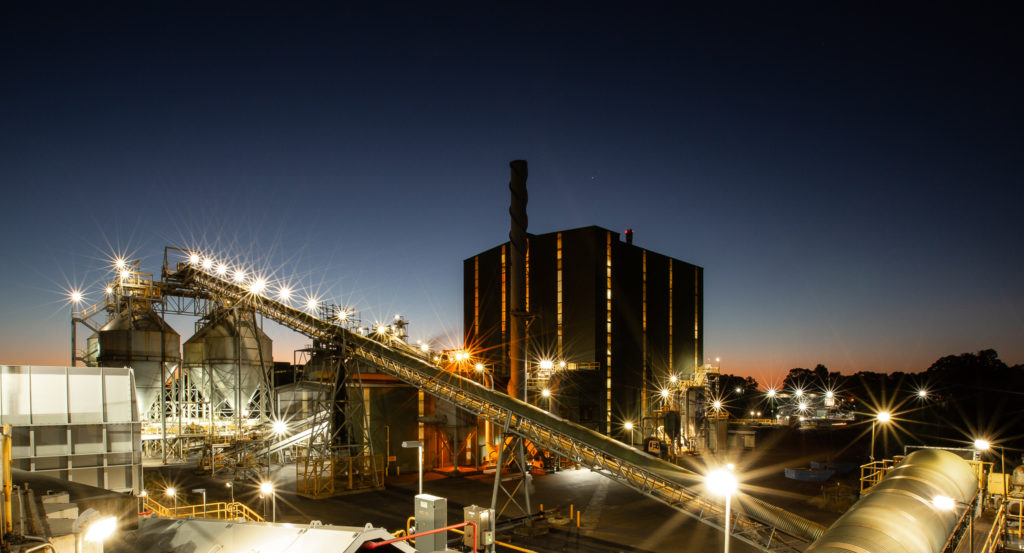
Iluka Resources said on Tuesday that the Australian government has provided a A$1.65 billion ($1.15 billion) non-recourse loan to build the Eneabba rare earths refinery in Western Australia.
Iluka said the loan access was confirmed by Export Finance Australia, the country’s export credit agency.
The funding comes as Western countries look to reduce their dependence on rare earths from China, the largest producer, for the materials that are vital for electric vehicles and other technologies.
Iluka expects the first tranche of the funding, comprising A$1.25 billion, to be fully drawn by 2026-end, when Eneabba is expected to be 75% complete. The refinery is currently over 50% complete, the company said.
Eneabba will be Australia’s first fully integrated rare earths refinery, according to the company.
The miner said Civmec has been awarded a contract for structural, mechanical, piping, electrical and instrumentation (SMPEI) works at the refinery.
Separately, Iluka said it had concluded a binding agreement for the supply of magnet rare earth oxides to an unnamed global automotive company.
The agreement has an initial term of four years, and represents about 10% of Iluka’s planned production over that period.
Iluka expects revenue over the contract period to be $155 million minimum and $172 million assuming prices forecast by the industry.
($1 = 1.4290 Australian dollars)
(By Nichiket Sunil; Editing by Sahal Muhammed)
UK to invest $66 million in critical minerals to reduce import reliance
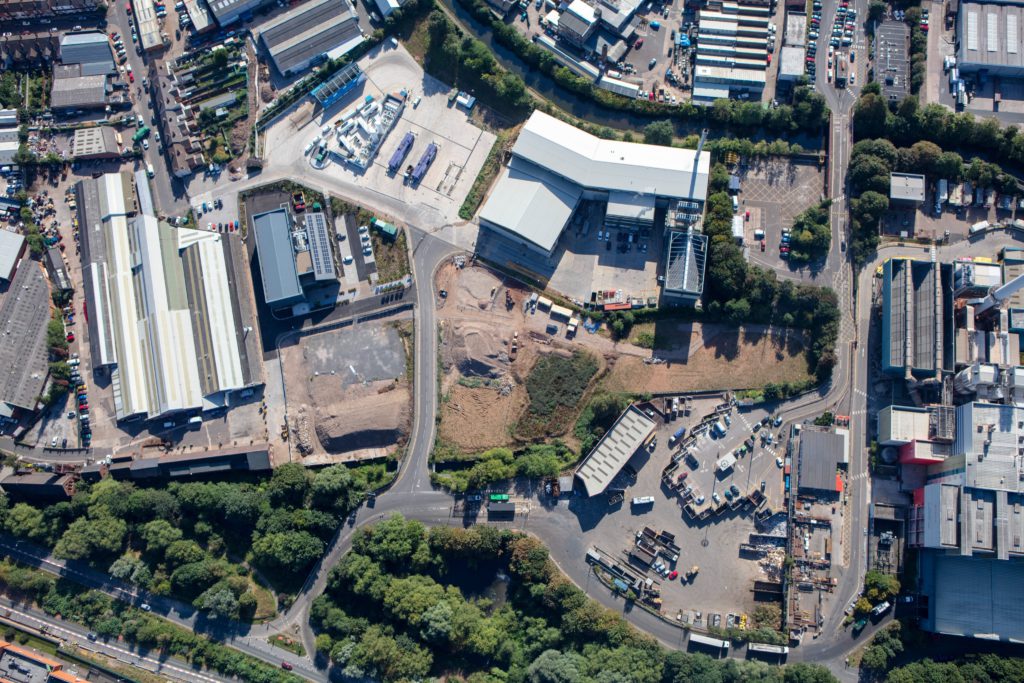
Britain will invest £50 million ($66 million) to boost domestic production of critical minerals, the government said on Monday, as it seeks to reduce reliance on concentrated global supply chains and strengthen economic resilience.
The funding will support projects across extraction, processing and recycling, aimed at securing materials used in products ranging from smartphones and fridges to electric vehicle batteries.
The move builds on more than £200 million already committed to the sector.
Industry minister Chris McDonald was set to launch the program during a visit to a hub for industrial research in northeast England, where companies are developing technologies for metal recovery and processing.
Britain is stepping up efforts to secure supplies of critical minerals as demand rises and China retains a dominant position, accounting for about 70% of rare earth mining and 90% of refining.
“Critical minerals are vital for our national security,” McDonald said.
Recent progress includes the opening of Britain’s first commercial rare earth magnet plant in 25 years, operated by Mkango Resources’ HyProMag unit in Birmingham, which uses recycled materials to produce magnets for electric motors and other technologies.
Britain has also sought to diversify access through partnerships with allies including the United States and South Korea, focusing on collaboration in supply chains, processing capacity and investment flows.
The new funding will be split across three pillars, including £20 million for a rare earth magnet hub, £25 million for an accelerator program to help scale projects, and up to £5 million for a platform to aggregate industry demand and unlock private investment.
($1 = 0.7564 pounds)
(By Sam Tabahriti; Editing by William James)
Energy Fuels to buy Germany’s VAC as rare earths magnet race heats up
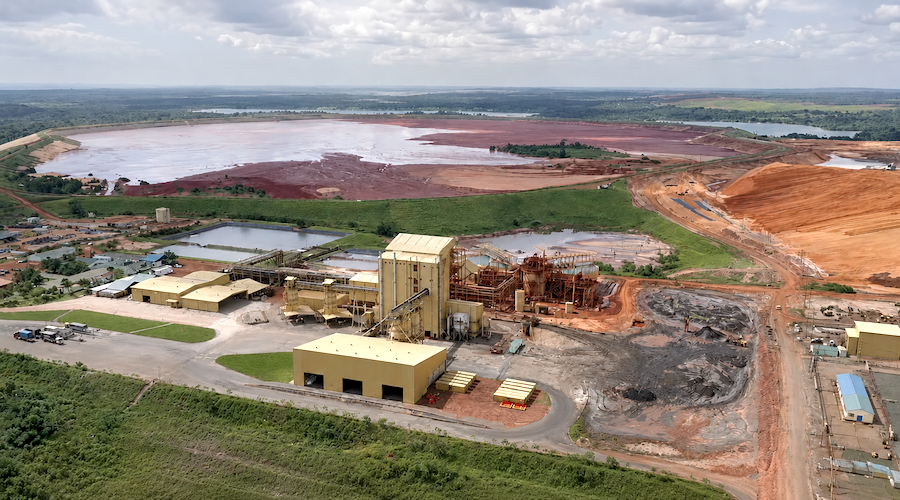
Rare earths producer Energy Fuels (NYSEAMERICAN: UUUU) will buy Germany’s Vacuumschmelze in a $1.9 billion cash-and-stock deal to become one of the world’s largest non-Chinese producers of magnets used in the aerospace, defence and renewable energy sectors.
US-based Energy Fuels is joining the race to capitalise on efforts by Washington and allies to wean themselves off market leader China, which has curtailed exports of critical minerals as trade tensions with the West have intensified.
G7 leaders said last week that they aim to reduce dependence on any one supplier for rare earths and permanent magnets to less than 60% by 2030, with an ultimate goal of 50%.
Energy Fuels, a producer of uranium for the nuclear power industry, said it will pay private equity firm Ara Partners $718 million in cash plus 65.853 million newly issued Energy Fuels common shares for Vacuumschmelze ONEQPV.UL, also known as VAC.
Shares in Energy Fuels fell as much as 6.2% in premarket trading and were last down 2.3%.
CENTURY-OLD MAGNET PRODUCER
VAC is more than 100 years old and supplies magnets to more than 1,000 customers, including General Motors GM.N, from facilities in Germany, the U.S., Malaysia and other countries.
While the likes of MP Materials MP.N and USA Rare Earth USAR.O have built their own magnets businesses, Energy Fuels preferred to buy an existing producer, CEO Ross Bhappu told Reuters.
“This is not an easy business to get into. It’s not an easy one to understand,” said Bhappu, who took the helm in April.
“It also takes a long time to get customer acceptance of those magnet products. VAC has that customer acceptance.”
Ara Partners will become one of the largest Energy Fuels shareholders with a roughly 20% stake and a seat on the board when the deal closes early next year.
Bhappu said that Energy Fuels intends to integrate VAC and its 3,600 workers, including CEO Erik Eschen, but keep the Vacuumschmelze brand name.
Existing VAC plants, including one in China, will stay open, with expansions planned for a facility that opened late last year in South Carolina, Bhappu added.
(Reporting by Pooja Menon in Bengaluru and Ernest Scheyder in Houston; Editing by Tasim Zahid and David Goodman)
EU courts Brazil as strategic partner in global race for critical minerals
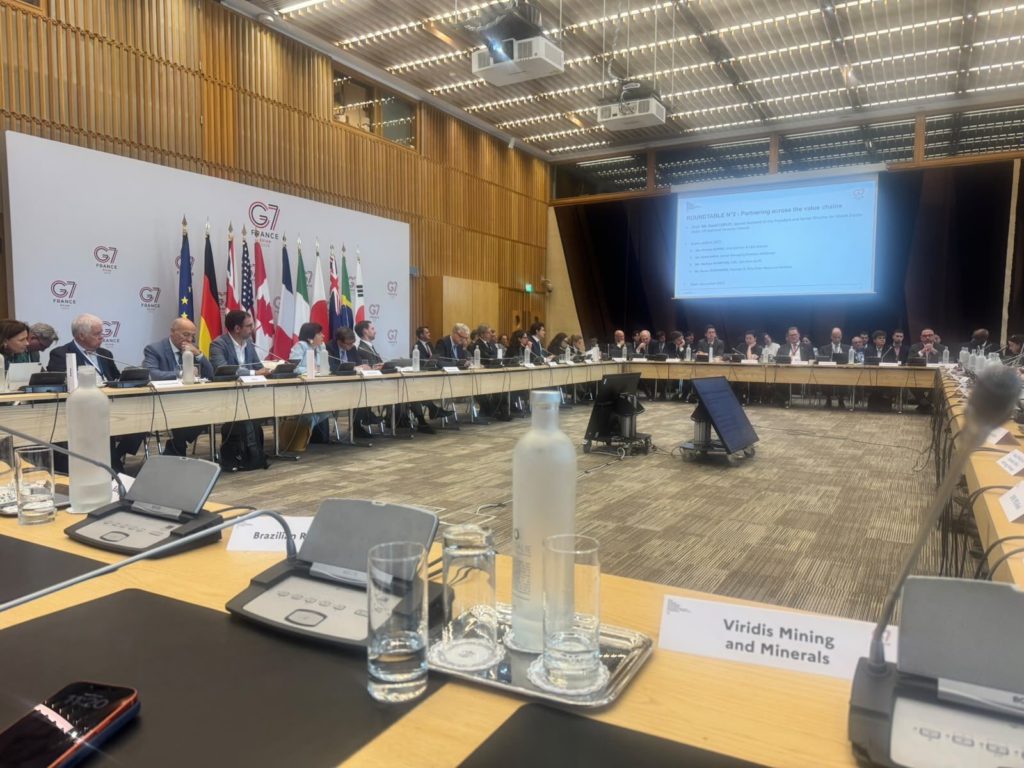
The European Union is turning to Brazil as a strategic partner in its push to diversify its critical mineral supplies, offering a deal that it says will be beneficial to Brazil’s development goals, EU Commissioner for International Partnerships Jozef Sikela told Reuters on Saturday.
The commissioner visited the rare earth research and processing center of Australian mining company Viridis Mining and Minerals, in Poços de Caldas, in the southeastern state of Minas Gerais, one of four priority projects selected to accelerate collaboration between the EU and Brazil.
Sikela said the European approach emphasizes sustainable business and local rare earth processing, aligning with Brazil’s push to export higher-value processed minerals instead of raw materials from a sector in which it holds the world’s second-largest critical mineral reserves.
“What is extremely important is that also Brazil moves from the like a low-margin business so basically that the value is created here in the country,” the commissioner said in an interview during his visit to the Viridis facility, highlighting that Brazil is currently the EU’s most strategic partner in Latin America and a growing economy.
Sikela said the partnership would allow the EU to secure supplies through purchase agreements while helping Brazil build refining capacity, access new technologies and move up the supply chain into higher-margin production.
Viridis’ pilot mining project in Minas Gerais, inaugurated in May, can process 100 kilograms of ore per hour and produce up to 2.92 kg of mixed rare earth carbonate (MREC) annually.
Viridis plans to invest $360 million in a commercial plant capable of producing 15,000 tons of MREC per year from 2028, spanning 228.62 km² of licenses in Minas Gerais.
“And that is why I like this particular project (Viridis) so much, because it basically delivers on objectives: it creates jobs, creates new partnerships, brings new technologies, education and knowledge transfer, all based on the most advanced environmental, social and technical standards,” Sikela said.
Deal in sight
Sikela also noted a non-binding letter of intent signed this month between Viridis and Belgian chemicals company Solvay for the supply of MREC, which could evolve into a broader partnership that would include technological processing support.
Viridis CEO Rafael Moreno told Reuters that talks with the EU are at an advanced stage, with a Solvay deal potentially finalized by the end of July.
Viridis’ progress in Brazil comes amid a global race for rare earths and critical minerals, as Europe and the US seek to reduce their dependence on China — the largest producer — for materials vital to electric vehicles and defense systems.
When asked about the landscape, Sikela said the European strategy aims to reduce “dependencies” across global supply chains, following shocks such as the pandemic and the war in Ukraine, stressing the issue extends beyond China alone.
He added that the EU considers projects involving other critical minerals in Brazil, such as nickel and lithium, as priorities, and indicated plans to advance a memorandum of understanding with the Brazilian government, though details remain under negotiation.
Asked whether the EU was late to the competition for assets in Brazil, Sikela argued that “our value proposition is more beneficial than what these others want,” citing sustainability, job creation and education as key differentiators.
Moreno said the company is aligned with European guidelines on diversifying the rare earth supply chain, favoring an approach open to partners across multiple regions.
At the end of last month, he told Reuters that Viridis was in advanced negotiations with potential buyers in Europe and the US.
(By Marta Nogueira; Editing by Aurora Ellis)
Energy Fuels to buy Germany’s VAC as rare earths magnet race heats up
Published:

No comments:
Post a Comment