It’s possible that I shall make an ass of myself. But in that case one can always get out of it with a little dialectic. I have, of course, so worded my proposition as to be right either way (K.Marx, Letter to F.Engels on the Indian Mutiny)
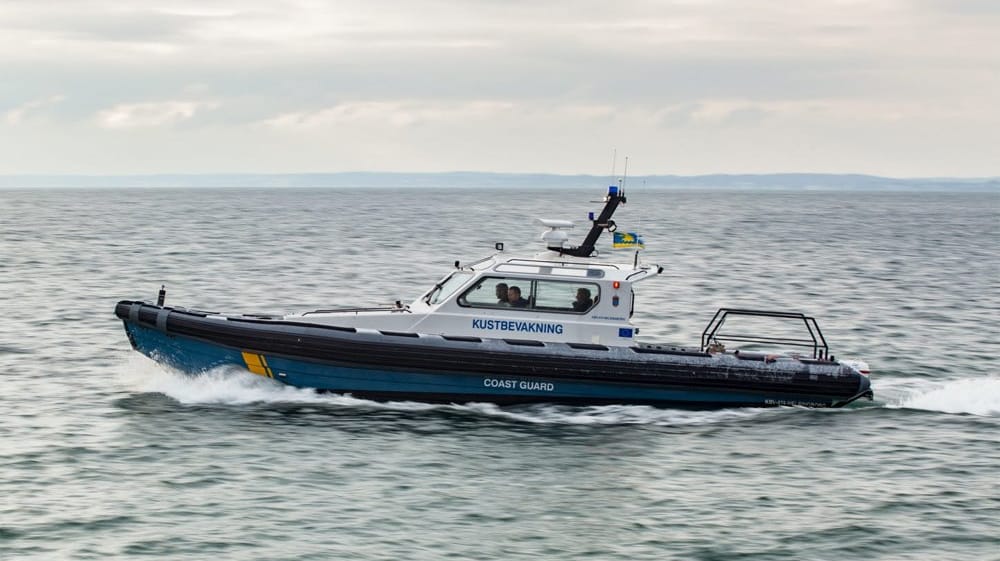
The Swedish government announced on Friday, August 28, that it is sending Ukraine 10 boats to aid in expanding its maritime capabilities. It came a day after Sweden announced more than $28 million in additional financial assistance aimed at further supporting Ukraine.
The Swedish Coast Guard was tasked with transferring a total of 10 boats to Ukraine. The announcement said they would consist of workboats and speedboats, handed over in their current condition. They said identifying details and equipment specific to Swedish government agencies, however, would be removed.
“Sweden is supporting Ukraine on a number of fronts and is now providing additional reinforcement to the country’s maritime capabilities,” said Minister for Civil Defence Carl-Oskar Bohlin. “Towing, demining, and transportation are all key capabilities that can now be further bolstered.”
Ukraine earlier this year accused Russia of attacking rescue boats, and others used to provide aid to commercial shipping.
The State Emergency Service of Ukraine will receive all the boats, which will be used for waterborne specialist response services, including demining riverbeds. The Swedish Civil Defence and Resilience Agency will be responsible for transporting them for the handover to Ukraine.
The financial aid will be distributed to funds and initiatives that provide aid to Ukraine, and the aim primarily is to support the air defenses. They also said the package includes advanced air defense systems and ammunition, both of which are crucial to Ukraine’s ability to defend itself.
The total package is approximately $28 million, with an additional approximately $14 million to a fund administered by NATO. It is used to make American defense material available to Ukraine.
Sweden reports it is the fifth time it has contributed to the NATO-administered fund. In total, Sweden reports contributing a total of $552 million.
Wednesday, August 19, 2026
Shakira and Warren Buffett's son announce rebuilding of schools in Chocó
The Colombian singer will not donate the announced one million dollars directly; it will be channelled via Global Citizen and promoter Live Nation, in which she is involved.
Shakira announced on Monday that she will mobilise funding to rebuild the Technological University of Chocó, damaged by the earthquake that struck Colombia on 10 August, as well as around ten non-university educational centres in one of the five departments worst affected by the quake.
The Barranquilla-born artist's donation will not be made directly. The philanthropic organisation Global Citizen will contribute 500,000 dollars (€432,250) and the concert promoter Live Nation, which organised her latest tour, 'Las Mujeres Ya No Lloran', and is also her commercial partner, will provide a further 500,000 at her instigation.
In October 2025 Shakira joined the advisory board of the education fund that FIFA runs with Global Citizen, alongside Serena Williams, The Weeknd and FIFA's own president, the embattled Gianni Infantino. This came several months before her participation as a performer at the recent 2026 World Cup was announced. The Barranquilla-born singer says she has allocated 100% of the royalties generated by the tournament's official song, 'Dai Dai', to that fund.
Shakira will work with Colombian-American philanthropist Howard Graham Buffett, son of tycoon Warren Buffett, one of the world's richest men thanks to multi-billion-dollar stakes in companies such as Apple, Coca-Cola and American Express.
The middle son of the billionaire obtained Colombian citizenship in 2021, under the government of Iván Duque, after investing more than 160 million dollars in projects in the Catatumbo region, including the rebuilding of roads, the replacement of illicit crops and demining work.
"Howard is going to help us, through [the Pies Descalzos Foundation], to build ten new schools in Chocó; that's why it was so important to bring him, that's why it was so important to come today," Shakira told reporters during a visit with Buffett to Quibdó, the capital of Chocó. Buffett's son has overseen Pies Descalzos for two decades; a foundation that has already taken part in the construction of several educational institutions in Colombia.
The visit comes a week after the earthquake, whose epicentre was in San José del Palmar but which affected departments such as Valle del Cauca and Risaralda. The quake has so far left 287 dead, 4,147 injured and 194 missing, according to the latest figures from the National Unit for Disaster Risk Management (UNGRD).
Tuesday, July 21, 2026
UK Prime Minister Andy Burnham unveils new government, replacing Starmer era
Britain's new Prime Minister Andy Burnham took office on Monday, reshuffling the cabinet to remove allies of predecessor Keir Starmer and appointing John Healey as finance minister, Ed Miliband as foreign minister and Wes Streeting as defence minister. Burnham pledged a 10-year plan to tackle cost-of-living pressures and signalled a leftward shift.
New UK Prime Minister Andy Burnham took power Monday, purging the cabinet of his predecessor's loyalists as he promised a 10-year plan to ease cost-of-living pressures and signalled a tilt to the left.
He immediately got to work after replacing Keir Starmer in Downing Street, holding separate calls with US President Donald Trump and Ukrainian leader Volodymyr Zelensky before appointing his ministerial team.
Burnham, 56, pledged to re-industrialise Britain and decentralise power as well as end sleeping rough on the streets after he met King Charles III at Buckingham Palace to become the head of government following Starmer's departure.
The monarch's fourth prime minister since he acceded to the throne in 2022, and Britain's seventh in just over a decade, Burnham said the country needed to show the world it could "regain stability".
Accompanied by his wife Marie-France van Heel, Burnham was greeted in Downing Street by resounding applause from supporters, including his mother.
Standing outside his new official residence at Number 10, he vowed to create "a new political model" and "build a new economy".
In his first call with Trump, Burnham underlined his "commitment to defence and security", a UK government spokesperson said.
Trump said he had a "very good conversation" with Burnham and that the two leaders would meet "in the not too distant future".
Burnham "has got a big job ahead of him, but he will be able to do it and, of course, the U.S.A. will be there to help!" Trump posted on Truth Social, noting they discussed trade, military cooperation and demining the Strait of Hormuz.
To Zelensky, Burnham reaffirmed Britain's "resolute commitment" to Ukraine in its defence of Russia's invasion, according to Downing Street.
He also moved swiftly to stamp his authority on the new government by sacking several Starmer loyalists from his cabinet, including Rachel Reeves and David Lammy, while moving some ministers to other jobs and promoting allies.
Ex-defence secretary John Healey replaced Reeves as finance minister, Ed Miliband became foreign minister and left-wing figurehead Angela Rayner returned to government.
Wes Streeting, who abandoned plans to run against Burnham for the Labour leadership, is now defence minister.
Shabana Mahmood was reappointed interior minister to see through her hardline reforms of Britain's asylum system.
In his brief speech, Burnham said he would "bring forward a new plan for Britain, a 10-year plan", without giving specifics.
Starmer had similarly talked of his intention to lead a "decade of national renewal" before Labour MPs ditched him last month in favour of Burnham, who only returned to parliament four weeks ago.
Burnham promised to "give people some breathing space now, some help with the cost of living", which he said he would start to announce Tuesday.
He also said his first instruction would be a pledge to "end rough sleeping", a measure he attempted to implement as a regional mayor in northern England, although it was not fully successful.
Other announcements included a vague promise to re-industrialise Britain through public procurement and to build more public housing.
He repeated his belief that "in the 1980s Britain took some wrong turns", as he pledged to decentralise power away from Westminster and "put life's essentials back under stronger public control to make them affordable".
Starmer departed Downing Street with his wife earlier, insisting his two years in office had made Britain "stronger and fairer".
Cover image: Andy Burnham: Who is the new UK prime minister?
He leaves multiple challenges for Burnham, including a tepid economy, high government borrowing costs, a ballooning welfare bill and irregular migrants arriving in small boats that have fuelled support for the hard-right Reform UK party.
Unpredictable energy prices due to the US-Iran war and volatile relations with Washington under Trump also threaten to buffet his premiership.
Burnham, an MP between 2001 and 2017, has little room to manoeuvre amid high public debt and strict financial rules requiring him to balance government spending against tax revenue.
Starmer led Labour to a landslide election victory in July 2024 after 14 years of Conservative rule, but his premiership became characterised by scandals, missteps and policy U-turns.
Burnham, the ex-mayor of Greater Manchester nicknamed the "King of the North", was parachuted in by Labour after Starmer resigned, with MPs viewing him as the party's best chance of reining in Reform, led by Nigel Farage.
But his swift "coronation" without a contest as Labour leader and now prime minister, by virtue of Labour's huge parliamentary majority, has raised questions about how he will achieve his aims.
Opposition politicians have questioned his mandate and called for a snap election.
French President Emmanuel Macron sent congratulations, urging Burnham to "give new momentum to the partnership" with the European Union.
(FRANCE 24 with AFP)
UK's new PM Andy Burnham cuts household electricity tax
The UK's new leader moved to remove VAT from electricity bills from October 1. The move comes before Burnham chairs his first cabinet meeting later today.
In a statement issued by Downing Street, the measure was described as an effort to "give millions of households breathing space this winter."
"We’re taking immediate action to cut taxes on energy bills, put more money in people’s pockets and bring back hope," Burnham said.
According to the government statement, cutting VAT on electricity bills was expected to shave off £45 (€52.97, $60,48) off the yearly price cap.
The statement went on to say that the measure was being funded through the cancellation of the Digital ID program that was going to cost £1.8 billion over the next three years.
Burnham to convene first cabinet meeting
Burnham is expected to set out his first policies as new British prime minister as he convenes his first cabinet meeting on Tuesday.
He said he was aware that the UK is facing a cost of living crisis and promised to put forward a few proposals to ease the situation.
The Labour leader said his very first concern was to "end rough sleeping in this country" and alleviate the housing crisis, before promising to "bring back hope" to all UK residents.
Burnham has made some key changes to his administration. Ex-defence secretary John Healey replaces Rachel Reeves as finance minister, Ed Miliband becomes foreign secretary and left-wing figurehead Angela Rayner returns to her old post as housing secretary.
Rayner had resigned from her position as deputy prime minister and housing minister in September 2025, amid a property tax controversy. Edited by: Rana Taha
Saturday, June 20, 2026
TODAY IS WORLD REFUGEE DAY
Foreign aid cuts and climate change pushing up migrant flows, IOM chief warns
Several rich Western countries, particularly the United States but also many European nations, have cut their development aid budgets in recent years.
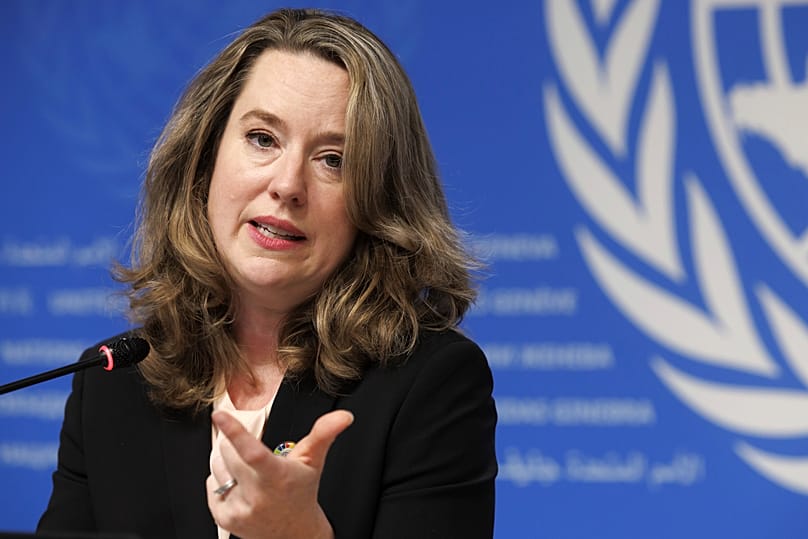
Cuts in development aid by wealthy countries tend to drive up displacement away from the world's poorest regions, the head of the UN's International Organisation for Migration warned in an interview with the AFP news agency on the sidelines of the Berlin Climate Mobility Forum on Thursday.
"When we see cuts in development assistance, we're actually just making the likelihood that people will have to leave in search of safety, in search of stability, so much higher," Amy Pope said.
"We've seen it in places like Sudan, which is the world's largest displacement crisis as a result of the war there."
"With decreasing support for humanitarian assistance, we then see more Sudanese look for safety, look for opportunity further afield," she added.
Several rich Western countries, particularly the United States but also many European nations, have cut their development aid budgets in recent years, while also tightening migration policies and strengthening border controls.
"In order to respond to domestic political pressures" many countries are making "short-term decisions...that may not ultimately serve (them) in the long term," she said.
"The more we can connect assistance to the movement of people in ways that are humane and dignified, ways that give people agency and opportunity, the less likely we're going to see large patterns of movement."
Shortly after entering the White House for a second time, US President Donald Trump cut 83% of the programmes run by USAID. Before the cuts, the US development agency managed some 42% of global government humanitarian aid.
Germany has slashed its development budget under successive governments to just over €10 billion this year from nearly €14 billion in 2022.
Director General of the IOM Amy Pope speaks during a press conference in Geneva, 2 October, 2023 AP Photo
Climate change fuels migration
Climate change is having an "enormous impact on migration around the world," Pope said.
Small Pacific island states such as Tuvalu are threatened by rising sea levels, while some 10 million people are estimated to have been displaced because of storms in the Philippines, the IOM chief said.
Several regions of Africa have been affected by prolonged drought.
Pope called on policymakers in the wealthiest countries, which bear the greatest responsibility for climate change, to offer more help for people forced to leave their homes.
Migrants queue outside Barcelona City Hall, 29 April, 2026 AP Photo
"What are they willing to invest now to ensure more stability, more options, less likely occurrence of unplanned migration in the future?" she said.
"Let's not wait for the emergency...Let's make the investments now."
Contrary to the narratives being pushed by some political leaders about migration, most displacement happens within countries rather than across borders, Pope said.
By mid-2024 there were an estimated 304 million international migrants, according to the IOM, and more than 700 million internal migrants worldwide.
"In the first instance, people will stay in their country. They will go somewhere in their country if they can find resources or safety. Then they move in the neighbouring countries," Pope said.
Relate
Providing support within the countries most affected "actually is a lot less expensive...and will have a more stabilising effect," she added.
"Really, as policymakers, we should be looking at the issue in terms of where can we provide the most support in a way that saves the most lives."
On World Refugee Day, Support Refugees,
Don’t Deport Them
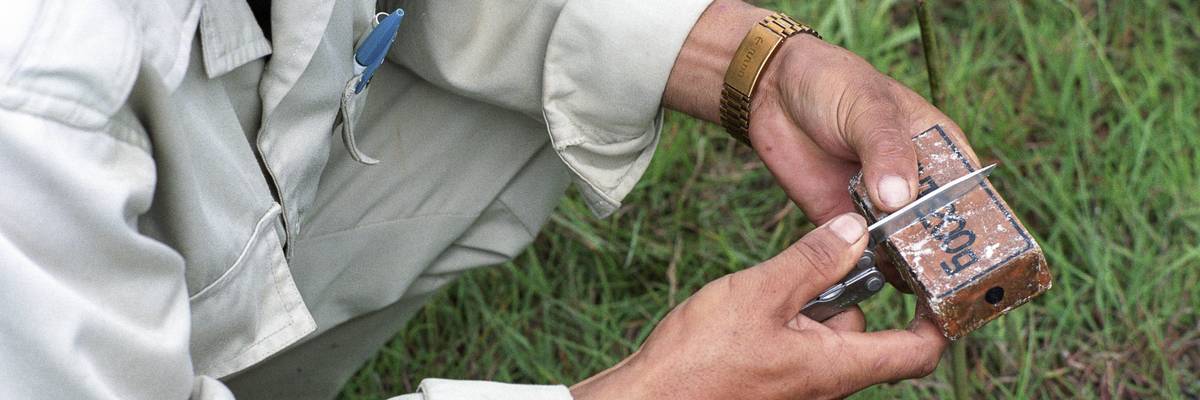
The US dropped the bombs that forced Southeast Asian families to flee and is now deporting them back to the very land that is still littered with American bombs. Unexploded ordnance are cleared by humanitarian deminers in Phonsavan, Lao People’s Democratic Republic, August, 2003. (Photo by Thierry Tronnel/Corbis via Getty Images)
I was only an infant when my family slipped into a weathered wooden boat under the cover of darkness in 1978. Our journey across the mighty Mekong River was wrapped in an eerie, suffocating stillness as my parents, older brother, and I fled Laos. Whenever my mother recounts that night, she always ends with the same whispered awe: “It is a miracle you and Alex didn’t make a sound. I was terrified we wouldn’t make it.”
It would be decades before I fully grasped the terror of that treacherous crossing, the complex geopolitical forces at play, and the shared history between the US and my birth country that forced us out into the night.
I think of that river escape every year on World Refugee Day. It is a day to honor the immense courage of those forced to flee everything they know. For me, it is also a day that demands a deeply honest look at how we treat people once they arrive on our shores.
Following the violence that consumed Laos, Cambodia, and Vietnam in 1975, millions fled, culminating in the largest refugee resettlement in American history. We arrived first through sponsorship programs, and later through the Refugee Act of 1980, laying new roots across the US. Today, our Southeast Asian American community has grown to over 3 million, with vibrant enclaves from California to Minnesota, and my home here in Ohio.
Instead of tearing families apart here at home, the United States must commit to fully funding the removal of unexploded ordnance in Laos until the job is done.
My family is one of the lucky ones. After years of hardship, Columbus welcomed us and helped us plant our roots. Today, I am full of gratitude for my parents’ sacrifice, and we are proud to give back through family businesses we built and by serving on nonprofit boards like the annual Columbus Asian Festival and Legacies of War.
Not every story mirrors ours.
Many Southeast Asian refugees were resettled in severely under-resourced, over-policed neighborhoods without the support necessary to heal from the invisible, lingering wounds of war. Forced to navigate poverty and systemic barriers, some young refugees became entangled in the criminal justice system. Decades later—long after they have served their time, rehabilitated, and built families—they are being subjected to a cruel double punishment.
Since 1998, over 17,000 Southeast Asians have received deportation orders. Many have lived here for decades; the United States is their chosen home, and often the only home they have ever known. Once someone is deported, there is almost no way back, severing families permanently. These policies do not make America safer. They merely manufacture new trauma, uprooting lives all over again.
The tragic irony of these deportations is impossible to ignore. We are sending refugees back to a country still littered with the very weapons that drove their families into the dark to begin with.
Laos remains the most heavily bombed country per capita in history. From 1964 to 1973, in a covert effort to destroy traffic along the Ho Chi Minh Trail, the US dropped at least 2.5 million tons of ordnance across 580,000 bombing missions. That is the equivalent of a planeload of bombs falling every eight minutes, 24 hours a day, for nine years. Even today, unexploded ordnance continues to claim civilian lives, with children making up over 60% of those harmed.
True accountability requires a different path. It requires cleaning up the remnants of war that America left behind in Laos and honoring the humanity of those who survived it. For decades, US programs have addressed these lasting legacies. These efforts not only save lives and support vulnerable communities, but they also bolster years of diplomatic progress in a region of immense strategic importance. Foreign aid is not charity—it is a strategic investment for our country. US assistance in Southeast Asia consistently garners bipartisan support precisely because it yields clear, tangible benefits: enhanced safety, economic stability, and strengthened bilateral cooperation.
Instead of tearing families apart here at home, the United States must commit to fully funding the removal of unexploded ordnance in Laos until the job is done. I urge members of Congress to join the UXO and Demining Caucus and support legislation like the Southeast Asian Deportation Relief Act. We must end this cycle of displacement and keep our communities whole.
The United States was forged by those seeking a better life. This enduring legacy is embodied by the Statue of Liberty, our “Mother of Exiles,” who stands as a beacon of hope for people escaping persecution and war.
World Refugee Day was first celebrated 25 years ago. This year’s theme, “solidarity with refugees,” calls on us to recognize that true compassion does not end at the border. It means standing by refugees as they build their lives, acknowledging the full weight of our shared past, and ensuring that no one who seeks refuge from danger is ever forced back into harm’s way.
Our work is licensed under Creative Commons (CC BY-NC-ND 3.0). Feel free to republish and share widely.
Chris Phommasathit Chris Phommasathit is a board member at Legacies of War and a refugee from Laos.
Iran has been widely condemned for demanding up to $2 million for vessels to ship through the Strait of Hormuz. DW explores the reasons why Egypt can charge for the Suez Canal and Panama for its waterway, but Iran can't.
Egypt's man-made Suez Canal is allowed to charge for transit due to the cost of construction
Image: Ahmed Gomaa/Xinhua/picture alliance
The Iranian regime has been accused of extortion and threats to global energy security after reports emerged that Tehran has begun charging up to $2 million (€1.7 million) per vessel for "safe passage" through the Strait of Hormuz.
Iran's government has justified the fees as war reparations for damage suffered caused during US-Israeli attacks on the country, as well as payment for "navigational services," environmental protection and enhanced security.
The government announced that it was drafting a joint protocol with Oman to require ships to obtain permits before transiting the strait.
While some Asian shipping firms and smaller operators have quietly coughed up, major global players are refusing to pay, while the Institute for the Study of War (ISW) think tank labeled the tolls a maritime "protection racket."
The United States and China agreed on their joint opposition to the levy, Reuters news agency reported earlier this month, citing a US State Department official. Gulf countries have also rejected the move.
Maritime experts insist there are good reasons why Iran cannot charge fees in Hormuz when other vital chokepoints — like the Suez Canal and Panama Canal — levy similar tolls for passage through their waterways.
Under international maritime law, natural straits used by shipping are governed by a special set of rules designed to protect global trade and freedom of navigation.
The United Nations Convention on the Law of the Sea (UNCLOS) gives vessels — and aircraft — from all nations the right of so-called transit passage through international straits that connect two parts of the high seas.
To qualify for transit passage, a vessel must move through the strait without delay and without anchoring except in emergencies.
Those transits must be allowed to happen without interference from the coastal state, the UNCLOS rules state.
Coastal states can charge only limited service charges, including pilotage and towing.
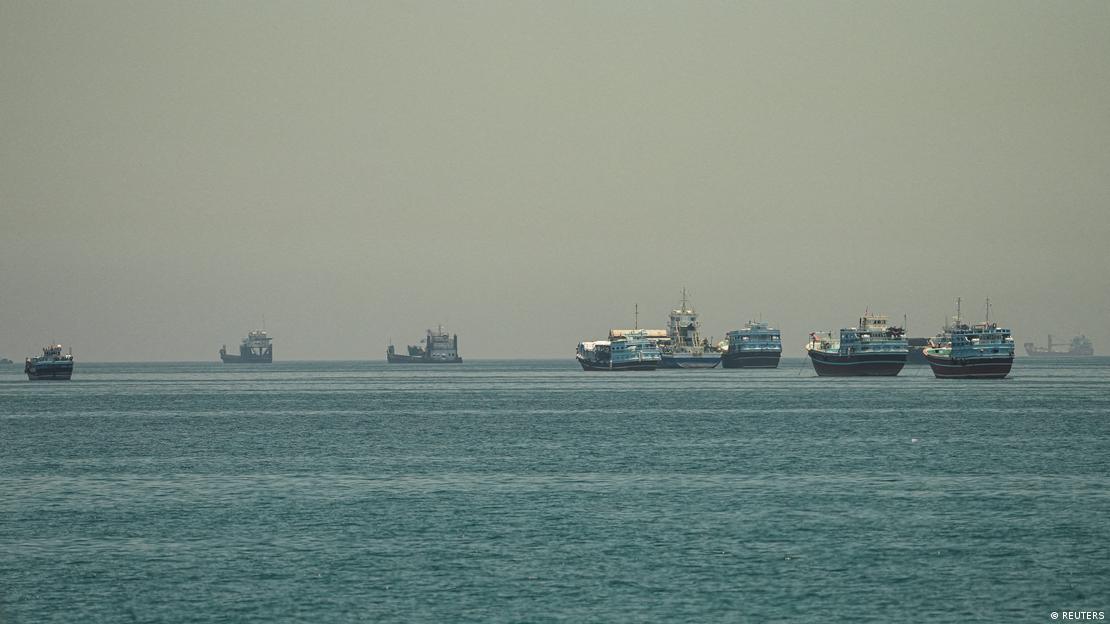
Shipping in the Strait of Hormuz has been restricted for more than 90 days
Image: REUTERS
Why can canal operators charge fees?
Canals like Suez and Panama are man-made waterways built, owned and maintained by sovereign states at enormous cost.
Egypt generates annual revenues of around $4 billion in fees for ships transiting the 193-kilometer (120-mile) Suez shortcut.
The 1888 Constantinople Convention, signed by major powers at the time, explicitly allows the Egyptian government to levy tolls to cover maintenance, operations and upgrades.
Meanwhile, the Panama Canal Authority, which runs the US-built canal on behalf of Panama, is also permitted to charge fees under separate treaties.
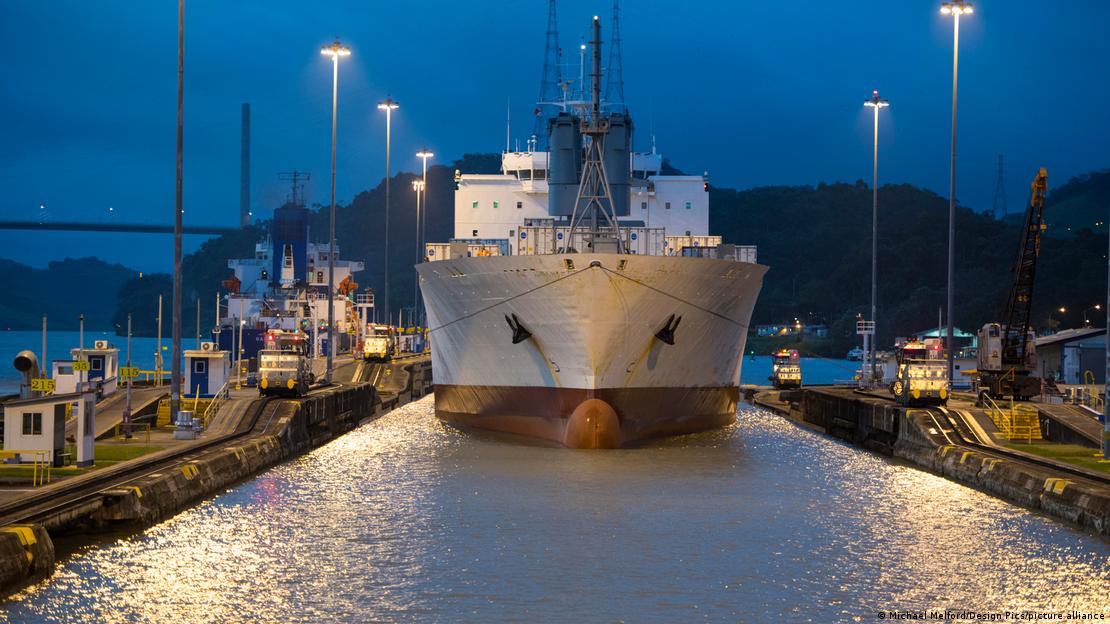
Completed in 1914 to link the Pacific and Atlantic Oceans, the Panama Canal requires huge ongoing maintenance, including constant dredging to combat sedimentation and landslides.
Both canal operators typically charge less than half the fees that Iran is reportedly charging.
Are there any exceptions?
Grey areas do exist where fees can be charged for passage along straits and even oceans.
Russia, for example, charges icebreaker escort fees, pilotage and service tariffs on the Northern Sea Route (NRS) along the country's northern coast.
The NSR offers a much shorter route between Europe and Asia than the Suez Canal. It runs through the Arctic Ocean, linking the Atlantic to the Pacific via the Barents Sea and Bering Strait.
The route is mainly used in summer when the ice melts and is frequently transited by ships from Russia, China and South Korea.
Moscow treats large sections as internal waters or ice-covered areas under UNCLOS Article 234.
Canada has similar sovereignty claims over the Northwest Passage, a sea route through the Canadian Arctic Archipelago linking the Atlantic and Pacific Oceans. From time to time, the Ottawa government mulls charging fees, only to face US opposition.
Another long-standing example is the Turkish Straits. The Bosporus and Dardanelles, which connect the Black Sea to the Mediterranean through Turkey, are governed by the 1936 Montreux Convention.
Under this treaty, Turkey must allow freedom of passage for merchant ships and can only charge limited service fees for navigation aids and lighthouses, not full transit tolls.
The US built the Panama Canal after a French construction effort went bankruptImage: Michael Melford/Design Pics/picture alliance
How is this dispute likely to play out?
The Hormuz charging row remains a major obstacle in the ongoing peace talks between the US and Iran aimed at reopening Hormuz.
Washington insists the strait must fully reopen as international waters, allowing ships from all nations to pass without Iranian control, fees, or special permission.
"The Strait is going to be open to everybody; it's international waters," US President Donald Trump told reporters during a White House cabinet meeting on Wednesday. "We'll watch over it, but nobody's going to control it."
He also took aim at Oman's apparent involvement in Tehran's plans, saying: "Oman will behave just like everybody else, or we'll have to blow them up."
Washington continues to urge shipping companies not to pay the tolls and has warned that firms that do could face secondary US sanctions for doing business with Iran.
While the broader US naval blockade of Iranian shipping remains in effect during negotiations, the US and the United Nations are working on a plan to protect shipping once the war is over.
This includes the use of multinational naval patrols, increased monitoring and demining operations in the strait.
Edited by: Rob Mudge
Nik Martin is one of DW's team of business reporters.
Tuesday, April 28, 2026
White House Weighs Iran's Proposal to Reopen Strait and Defer Nuclear Talks
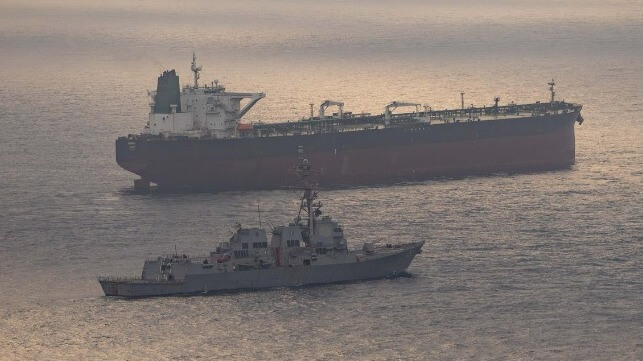
Guided-missile destroyer USS Rafael Peralta (DDG 115) intercepts an Iranian tanker, April 24 (USN)
Iran's negotiating delegation has presented the White House with an offer to end the war and reopen the Strait of Hormuz, but with a price: the offer would be conditional upon pushing back the talks on Iran's nuclear program to an unspecified future date. If the Trump administration accepted, it would perpetuate many of the activities that the White House hoped to eliminate, notably including the continuation of Iran's uranium enrichment. The president does not like the proposal, multiple officials told the New York Times late Monday.
Under the plan, both Iran and the United States would relax their dueling blockades in the strait. That would allow commerce to flow freely to and from the Gulf states, restoring the world's access to Arabian oil - subject to the timelines needed for demining the waterway and rebooting shut-in oil wells. It would also allow Iran to fully resume oil sales to China, a vital source of foreign exchange revenue which underwrites its military, its ballistic missile program and its nuclear enrichment activities.
Iran's foreign minister, Abbas Araghchi, went on a tour of regional capitals over the weekend to sell the plan. He flew to St. Petersburg to meet with Russian President Vladimir Putin, then to Islamabad, then on to Muscat, where (according to Al Jazeera) representatives from multiple foreign intelligence agencies were on hand to meet.
The White House has not confirmed the details of Iran's proposal, and a spokesperson told media that the administration will not negotiate through the press. The other option under consideration is to continue the U.S. blockade of Iranian shipping, hoping that the lack of tanker export capacity will force Iran to begin shutting in wells - potentially damaging its long-term production. The looming prospect of shut-ins will apply pressure to Iranian leadership to make a deal, this line of thinking goes; but it comes at a cost, as Iran will also continue its blockade of the Gulf's tanker traffic, limiting the world's supply of oil and keeping energy prices high. And opinions differ - inside and outside the administration - on whether the economic pressure will bring Iran's leadership to accept U.S. demands.
"The [U.S.] blockade was offered as a kind of silver bullet, but there is no such thing as a cost-free, purely economic solution to a fundamentally political and strategic problem the administration facing with Iran today," said Danny Citrinowicz, a former head of Israeli Defense Intelligence's Iran desk. "All the talk about numbers, export levels, reserves, enrichment capacity, ultimately means very little if it does not translate into a change in Iranian positions in the negotiations. And at this stage, there is little indication that Iran is moving in that direction."
Monday, April 27, 2026
Has the Strait of Hormuz Emerged as Iran’s Most Powerful Form of Deterrence?
Image by Pascal/Wikimediacommons, in public domain
One of the US and Israel’s justifications for launching the war on Iran was to ensure the regime in Tehran could never possess nuclear weapons, the ultimate deterrent against external attack. But the main lesson that has been taken from the war, according to some commentators, is that Iran’s own geography already provides it with all the deterrent it needs.
The US-Israeli strikes have inflicted massive damage on Iran’s leadership and have destroyed billions of US dollars worth of military and civilian infrastructure. However, this display of force has proved unable to stop Iran from controlling who enters the Strait of Hormuz, a maritime chokepoint through which around 20% of the world’s oil supply flows.
This has led to the suggestion that Iran could emerge from the conflict with a new blueprint for shielding itself against future threats, regardless of whether it agrees to US demands to dismantle or severely limit its nuclear programme.
Geography is arguably Iran’s greatest strategic asset. The Strait of Hormuz is shallow and narrow, with just two-mile-wide navigable shipping channels. There are also a huge number of coves and inlets along Iran’s southern coastline, providing cover for launching small boats to attack shipping or lay mines, as well as anti-ship missiles and drones.
And there is a vast belt of rugged mountains running from Iran’s north-western border with Turkey all the way down to the Strait of Hormuz. Iran can store, conceal, produce and launch more drones and missiles here than it would ever need to threaten Gulf shipping.
However, Iran’s capacity to close the strait is not new. For decades, Iran has repeatedly threatened to respond to any external attack by closing the strait. It has also, albeit in a more measured way, demonstrated the capability to make the strait commercially unusable.
In response to Donald Trump’s “maximum pressure” policy across both his first and second terms as US president, Iran has harassed shipping with fast boats, rehearsed loading mines on to vessels, test-fired anti-ship ballistic missiles and even seized a British tanker. These are all classic forms of deterrence signalling.
Multiple analysts had warned of the catastrophic economic consequences of full-scale war with Iran precisely because of Iran’s ability to close the Strait of Hormuz. The only person who seems not to have understood this is Trump.
When pressed in March on whether Trump had been briefed before the war that Iran would seek to block Hormuz, his director of national intelligence, Tulsi Gabbard, would not be drawn. But she acknowledged that it “has long been an assessment of the intelligence community that Iran would likely hold the Strait of Hormuz hostage”.
Another challenge to the claim that geography may replace nuclear weapons as Iran’s primary source of deterrence is that its nuclear programme was never a core part of its deterrence. A 2019 report by Chatham House determined that Iran saw its asymmetric capabilities – particularly ballistic missiles and its ability to mobilise its proxy groups in the region – as essential to its national security. Iran’s ability to exercise control of the Strait of Hormuz is another pillar of this strategy.
There is ample reason to believe Iran was engaged in nuclear “hedging” – preserving the option to build a weapon at some point without crossing the line in a verifiable way. But if nuclear deterrence was the core aim, it is unlikely that Iran would have committed to a 2015 nuclear deal that most of the international community argued blocked its path to a bomb.
Regional implications
If a country is attacked, by definition its deterrence has failed. But the perception of restored deterrence can help create conditions for deescalation by justifying an end to the fighting and convincing an adversary that costs can still be imposed. In this sense, Iran’s control of Hormuz may help bring the current war to an end.
Iran’s confidence in having proven its ability to blockade Hormuz may also provide cover for dialling down its nuclear ambiguity posture. And it could compensate for the degradation of its network of proxies that has enabled Iran to project influence across Lebanon, Syria, Iraq, Yemen and Gaza.
The weakening of this so-called “Axis of Resistance” in recent years has reduced (though far from eliminated) Tehran’s ability to raise the regional cost of any direct attack on Iran. And Hezbollah, which is widely considered the strongest group in this proxy network, has paid a high price for defending Iran since the start of the war.
Iran is highly unlikely to abandon its proxies completely. However, it may now conclude that using them as a form of forward deterrence to avoid being directly attacked has manifestly failed and roll back on the strategy. This would be an extremely positive move for regional stability.
Iran’s demonstrated capacity to close the strait is likely to shape the regional order for some time. But Iran is unlikely to be willing to rely on this single pillar of deterrence.
Its sustained missile strikes on neighbouring Gulf states, and damage to critical infrastructure, had already created an appetite for a negotiated end to the conflict among the US’s Arab allies. Trump himself admitted he did not anticipate this reaction.
This makes forcing Iran to suspend its ballistic missile capability extremely difficult in upcoming negotiations, which will leave its neighbours nervous and anxious about their own lack of any deterrence capacities.
This article was originally published by The Conversation; please consider supporting the original publication, and read the original version at the link above.
Hormuz Traffic Ticks Up With More Vessels Outbound
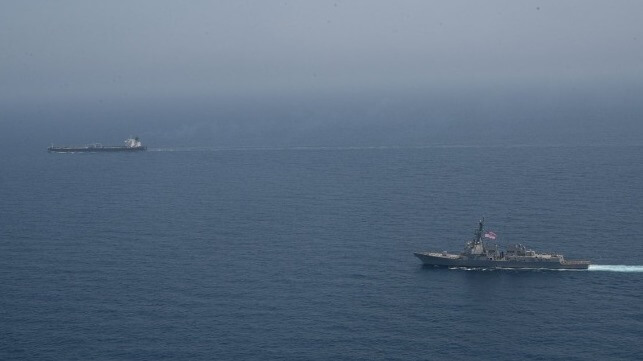
A U.S. Navy destroyer intercepts an Iranian tanker near the Strait of Hormuz (Central Command)
Traffic is picking up again in the Strait of Hormuz, despite dueling blockades by U.S. and Iranian forces, according to maritime security consultancy Windward. 19 vessels made the transit throught the waterway on April 25, most outbound and all of them broadcasting AIS - a possible sign of recovery, at least for one day. The number would have been higher if Iranian shipping interests had been unimpeded, but the U.S. Navy is working on making its naval cordon more efficient, with some success.
The most noteworthy crossing was the megayacht Nord, linked to Russia's wealthiest businessman, the sanctioned steel and mining magnate Alexey Mordashov. Iran has a friendly relationship with Moscow, based on defense ties, and has an incentive to allow Russian traffic to use the strait. Nord is immediately recognizable: she is an iconic Lurssen yacht, ranking among the largest in the world, and has a distinctive and imposing appearance designed to "cause strong emotions in every observer." The 460-foot yacht passed through the Iranian side of the waterway at about 0900 local time Saturday, and she is now in port at Muscat, Oman.
Other noteworthy transits included the sanctioned tankers Oceanjet and Lumina Ocean, both linked to Iran's petroleum industry. Other Iranian or Iranian-chartered vessels were not so lucky: 37 vessels have been intercepted and redirected since the start of the blockade, and three more have been seized. TankerTrackers.com assesses that $380 million worth of crude is in U.S. custody and under way for the United States, and another $1 billion in oil is back in Iran aboard tankers that were turned around by the blockade. The U.S. Treasury has assisted the campaign, placing sanctions on at least one vessel - the LPG carrier LPG Sevan - the day before it was interdicted and sent back to Iran under escort.
Full restoration of normal traffic levels will require a durable conclusion to the conflict, followed by a mine countermeasures effort to remove the naval mines that Iran has deposited near the strait's designated sea lanes. In a press conference Friday, Defense Secretary Pete Hegseth said that "we are confident in our ability" to clear mines from the waterway. He said that U.S. forces are already working on that task - but he acknowledged that the mines are a danger, and that the risks of transiting the strait are higher now than would be desired.
While waiting for the risk to abate, about 20,000 seafarers are trapped aboard the vessels that were caught inside the Gulf when the conflict began. The ordeal has been challenging for these crewmembers, who have had to endure uncertainty, food rationing, communications blackouts and the risk of attack. In a video message released Friday, IMO Secretary General Arsenio Dominguez said that his agency will redouble its efforts to make sure that seafarers are put first.
Report: Removing Mines From Strait of Hormuz Could Take Six Months
An IRGC minelaying boat. Iran possessed thousands of mines before the war, some deployable from civilian small craft (IRGC)
Reopening the Strait of Hormuz is a top-of-mind objective for the White House, but it may take more than a deal with Iran to get the situation back to normal in the waterway, according to the Washington Post. The Pentagon's internal assessment is that it could take six months to complete minesweeping operations in the strait after hostilities have ceased, the Post's Dan Lamothe reports - even with the advanced minesweeping and minehunting equipment embarked on three Independence-class littoral combat ships deployed in the region. The timeline would extend the lingering energy-price effects of the conflict out until the midterm elections, an undesirable outcome for the administration.
Based on accounts from three officials, the House Armed Services Committee was briefed on the status of the Strait of Hormuz shutdown on Tuesday. At the briefing, a senior official from the Pentagon told lawmakers that it could be half a year before all the mines are removed - far longer than any other official estimate. The administration has not issued a direct denial, according to the Post.
The six month time estimate is based on the total number of mines that are believe to be currently in the strait, estimated at 20 individual devices; but the number needing clearance depends on the evolution of the conflict. Iran retains access to military and civilian small craft, and has the ability to emplace more mines if desired. The size of its surviving stockpile is not publicly known, but it numbered in the thousands before the war - suggesting that the difficulty of the problem could rise if Iran chooses.
The location of the mines is not definitively known, but Iran has published a "danger zone" chart warning shipping to stay out of the area of the traffic separation scheme (TSS) in the center of the strait. Many ships have transited through Omani waters at the southern edge of this designated "danger zone" without encountering mines, including a convoy of MSC boxships on Monday night. On the north side of the waterway, dozens of ships have passed without incident through Iran's territorial waters near the islands of Larak, Qeshm and Hormuz. Iran's own tankers periodically evade the American blockade using this territorial-seas route, albeit in small numbers, according to the FT and TankerTrackers.com. No mine strikes have yet been reported on any of these routes.
The timeline for demining will be of concern to many other stakeholders, since the waterway ordinarily handles about 20 percent of all global crude oil trade. Asia's energy economy, geared to rely on Arabian crude oil grades, has been particularly affected. On Monday, Chinese leader Xi Jinping called for the strait to be reopened, an implicit criticism of China-aligned Iran and the first such statement he has released. “The Strait of Hormuz should remain open to normal navigation, which is in the common interest of regional countries and the international community,” Xi said in comments carried by state media.



 C
C