It’s possible that I shall make an ass of myself. But in that case one can always get out of it with a little dialectic. I have, of course, so worded my proposition as to be right either way (K.Marx, Letter to F.Engels on the Indian Mutiny)
A Jewish scholar of Jesus makes history as president of the Catholic Biblical Association
(RNS) — The New Testament scholar has had a lifelong fascination with all things Catholic and has devoted her life's work to understanding Jesus as a first-century Jew.
The Catholic Biblical Association of America logo and Amy-Jill Levine. (Courtesy photo)
(RNS) — When she was six years old and watching the funeral of Pope John XXIII on TV, Amy-Jill Levine learned from her mother that the pope was “a friend to the Jews.”
Levine told her mother she wanted to be pope. That wasn’t to be. But last month, she received a unique honor, and perhaps the next best thing: Levine was named president of the Catholic Biblical Association of America, the first Jewish scholar to hold the title.
The 90-year-old association, which promotes the scholarly study of the Bible and provides exchanges between scholars, allows non-Catholics as members. Levine, a distinguished New Testament scholar, joined as a member soon after she earned her Ph.D. from Duke University 42 years ago. Over the years, she has served on the editorial board of the association’s quarterly journal, as a consulter to its executive committee and as an editor of the journal’s New Testament book reviews.
In announcing her election to the one-year post, the association’s statement said Levine was “recognized and deeply appreciated for her work in Jewish-Christian relations.”
It also mentioned that she was the first Jewish scholar to teach New Testament at the Pontifical Biblical Institute in Rome in 2019, and that she had three audiences with Pope Francis.
Levine is a professor of New Testament and Jewish studies at Hartford International University for Religion and Peace in Hartford, Connecticut. She spent the better part of her career at Vanderbilt Divinity School in Nashville. This fall she will teach a course at the Institute for Jewish-Christian Research at the University of Lucerne, Switzerland.
Her scholarship has focused on understanding Jesus as a first-century Galilean Jew and on how his first followers, all Jews, would have understood him.
“Much of what I do is in reciprocation for the Church’s willingness to change its teaching,” Levine wrote in an email to RNS.
Levine was referring to the landmark 1965 church declaration known as Nostra Aetate that Jews should not be held responsible at all times and places for the death of Jesus, and that the church “decries hatred, persecutions, displays of anti-Semitism, directed against Jews at any time and by anyone.”
Levine, 70, grew up in North Dartmouth, Massachusetts, in a mostly Catholic neighborhood. As a child, she said, “I was fascinated by nuns in habits, including the singing nun and the flying nun, Christmas trees and Easter bunnies, stained glass windows.”
She watched the funeral of Pope (now Saint) John XXIII on TV alongside her mother and learned from her mother that the pope was from Italy. To her meant “spaghetti,” “a great hat” and “cheering crowds,” she said.
Levine is the author of 20 books, including “The Misunderstood Jew: The Church and the Scandal of the Jewish Jesus.” She co-authored “The Bible With and Without Jesus: How Jews and Christians Read the Same Stories Differently” with Marc Zvi Brettler and co-edited “The Jewish Annotated New Testament” with him as well.
In her email, Levine wrote that she sees herself as a “guest in the CBA household” and hopes to be a good representative for its work. She said she would like to provide guidelines to the United States Conference of Catholic Bishops on biblical interpretation in parochial school textbooks and catechesis and, if possible, offer recommendations on a revised lectionary.
She mentioned she would love to meet Pope Leo XIV but acknowledged, “My loyalty to the Red Sox does conflict with his preferences.” (The pope is a White Sox fan.)
Sunday, August 23, 2026
Violence, Profit, and the Economy Sustaining Eastern Congo’s Endless War
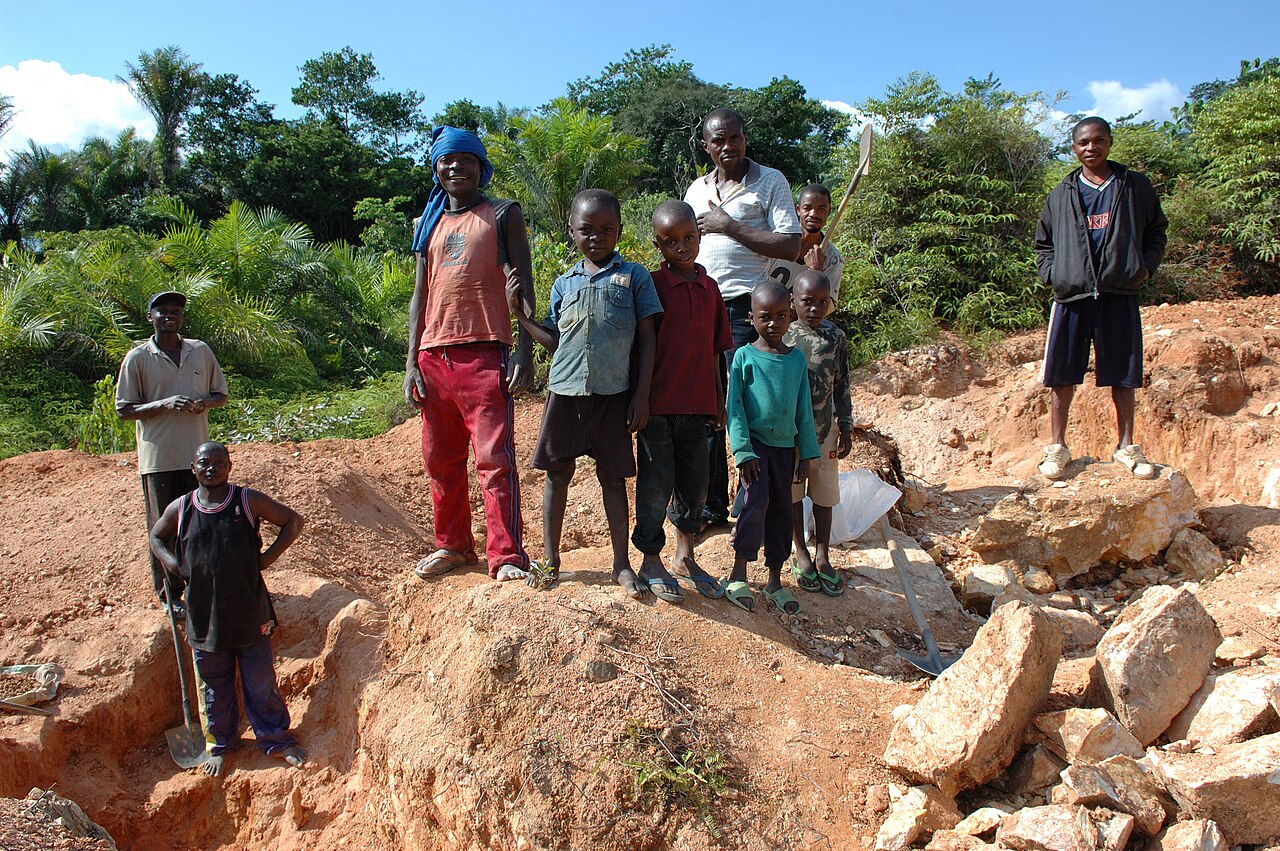
Julien Harneis, CC BY-SA 2.0 , via Wikimedia Commons
At a checkpoint between Miba and the Kachanga hill in Fizi territory, soldiers of the Congolese army wave through bicycles loaded with mineral ore, one at a time, charging fifty cents a crossing. At least four thousand bicycles pass daily, delivering at least two thousand dollars a day into the hands of men in uniform who are nominally fighting the war surrounding that checkpoint. Nothing about that transaction looks like a battle. It looks like a toll booth, and that is the point new wars theory makes about a conflict now in its fourth decade.
This framework, which originated in Mary Kaldor’s New and Old Wars and was extended by Herfried Münkler’s The New Wars, offers a useful lens on why this crisis persists. Both theorists argue that in this kind of conflict, force is directed mainly against civilians, with population displacement and political control of territory becoming the actual goal of fighting, not the decisive battle against an opposing army. The economies that fund these wars are decentraliaed and depend on external resources. Fighting units sustain themselves through plunder, illegal taxation, and the black market, not state financing, and because none of these revenue streams survive peace, the war itself becomes something the belligerents have an interest in prolonging. Münkler adds that when armed force becomes cheap and no single actor can fund it legitimately, paramilitaries end up feeding themselves through extortion and plunder as a simple condition of their own survival. A 2024 study of taxation and armed groups in eastern Congo’s hinterland gives this theoretical claim empirical support. When the state cut off the rebels’ income by force, they did not surrender. They began stealing directly from civilians to survive, which caused even more harm. Negotiating with rebels instead avoided that plunder, but it weakened the state’s legitimacy and encouraged new armed groups to form, so neither option was truly cost-free.
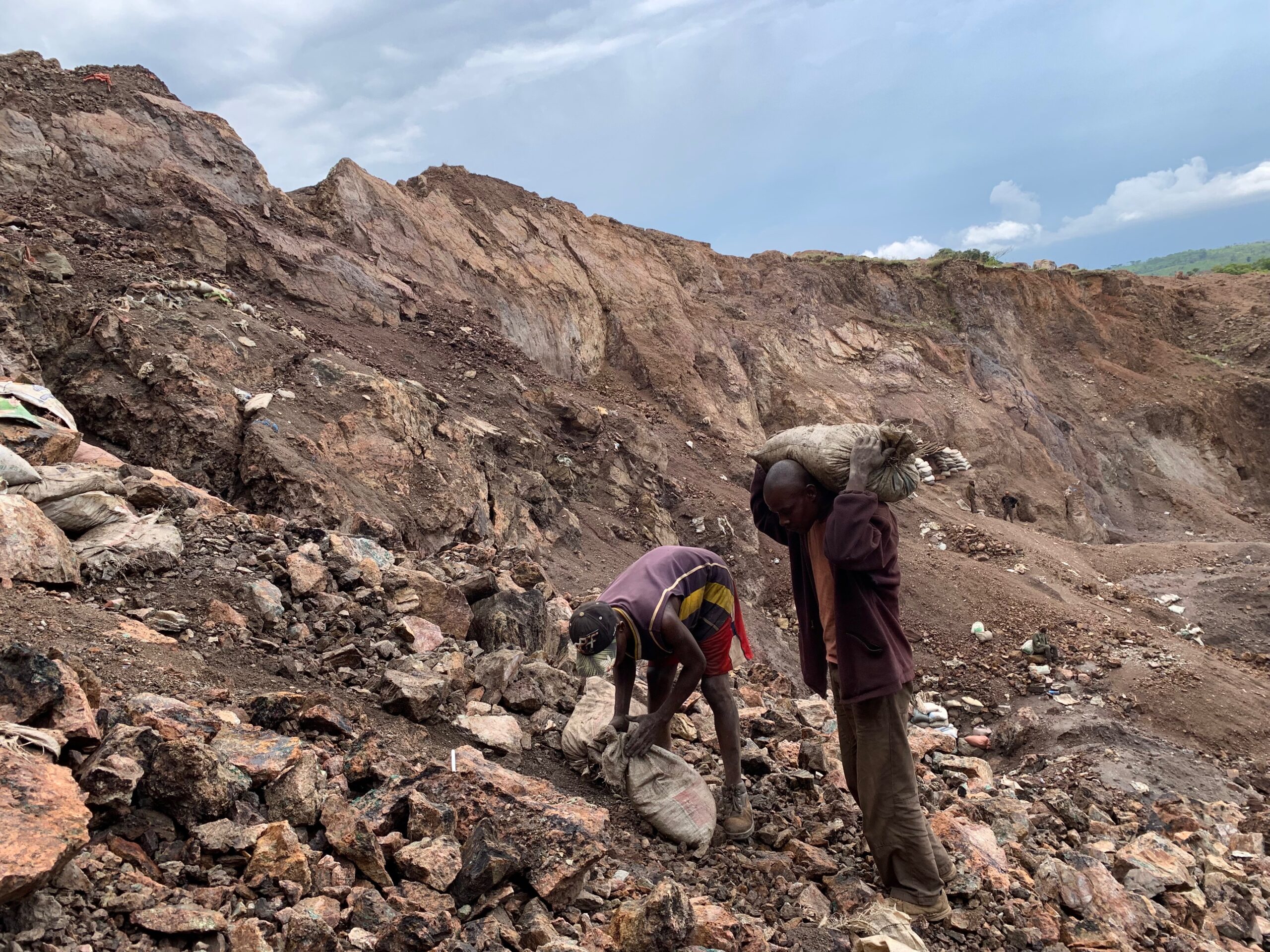
Artisanal cobalt miners in easter Congo.
These dynamics are rooted in the region’s history. It traces to the 1994 Rwandan genocide, when an estimated one million people, most of them Tutsi, were killed in a hundred days. The killers then fled into eastern Congo alongside nearly two million Hutu civilians, eventually forming the Democratic Forces for the Liberation of Rwanda, a militia the Rwandan government has cited ever since as its pretext for military intervention. That is now a conflict of over thirty years that has never seen a settlement addressing the war economy underlying it. Between 1998 and 2004 alone, International Rescue Committee mortality surveys estimated that 3.9 million people had died in the broader conflict. Fewer than 10 percent of those deaths came directly from violence, with the vast majority from preventable diseases such as malaria, diarrhea, pneumonia, and malnutrition made fatal by collapsed basic services. That pattern, mass death from the destruction of hospitals, water systems, and food supply, not violence itself, is the humanitarian signature of a conflict sustained by continued fighting, not one resolved by it.
The current war economy is where this pattern is most visible. The UN Group of Experts found that M23’s capture of the mining town of Rubaya in April 2024 was aimed explicitly at monopolising the coltan trade, and once the group cut the last legal export routes, it simply began collecting illegal taxes on the smuggling that continued anyway. M23 collects at least $800,000 a month from taxing coltan and manganese in Rubaya and ensures that roughly 120 tonnes of coltan alone reaches Rwanda every four weeks, and over that same stretch, Rwanda’s own coltan exports rose 50 percent between 2022 and 2023. M23 also controls illegal logging in Virunga National Park worth $40,000 to $50,000 a week at wholesale prices in Goma, money that lets armed groups keep fielding fighters long after any military objective has been won or lost. That is why interdicting one commodity rarely ends the fighting. The economy simply routes around it.
Gold shows that adaptability at its clearest, because it is the hardest of these commodities to trace. Primera Gold, the formaliaed exporter operating under due diligence rules, saw its monthly exports collapse from a range of roughly 550 to 625 kilograms between May and October 2023 to just 164 kilograms by March 2024, as traders diverted supply to smugglers offering better prices in Rwanda, Uganda, and Burundi. On the Rwandan side, the Gasabo Gold Refinery in Kigali, the country’s only such facility, had no established procedure for tracing the origin of gold delivered to it. President Paul Kagame effectively confirmed that gap when he told a ministerial swearing-in ceremony in November 2022 that minerals from Congo mostly pass through Rwanda before reaching Dubai, Brussels, and Tel Aviv. Roughly 98 percent of gold mined in eastern DRC is smuggled, not formally exported, and this is not a coincidence of geography but a measurable regulatory effect. An accounting study of Dodd-Frank’s supply chain transparency rule found that conflicts fell in tin, tantalum, and tungsten territories while rising in gold territories after the law took effect, the one mineral it could not trace effectively. That substitution is the clearest evidence that predatory war economies do not collapse when a single revenue stream is cut. They migrate to whatever mineral is hardest to trace.
This economy is not confined to armed groups outside the state. FARDC personnel stationed in Misisi ran that fifty-cent bicycle checkpoint described above, and a state army profiting from the same predatory taxation it is nominally fighting to end shows how thin the line between state and non-state predation has become. Research on taxation and authority in eastern Congo argues this blurring is built into how these armed actors govern. Armed actors, state and non-state alike, extract revenue by invoking the same long-standing customary and national registers of legitimate rule. The sixth meeting of the Joint Security Coordination Mechanism (JSCM) between the DRC and Rwanda in August 2026 addressed troop disengagement and FDLR neutralisation, matching every JSCM statement since 2025, none of which mentions mineral taxation, checkpoints, or the extraction economy. This traces back to the Peace Agreement itself, which created the JSCM for security matters while handling minerals separately through a Regional Economic Integration Framework focused on formal supply chains. The informal extraction economy funding the region’s armed factions falls outside both, which is why a peace agreement between governments leaves the underlying war economy untouched.
The human cost of this economy is specific. Controlling territory means controlling the population on it, and the UN Group of Experts documented executions, torture, and the burning of entire villages in the Rutshuru chiefdoms of Bwito and Bwisha, where Hutu communities were targeted over perceived ties to FDLR and Nyatura militias, conduct the Group concluded may constitute war crimes. That targeting ran in both directions, as more than 170 Tutsi individuals were detained in prisons in Kinshasa and Goma on suspicion of collaborating with M23 and Rwandan forces, and the Group also documented public harassment, assassination, and mob violence against FARDC officers of Tutsi or Banyamulenge origin. Ethnicity itself has become grounds for suspicion on every side of the conflict. Children are particularly exposed, with the Group calling for investigations into the cross-border trafficking of minors taken from refugee camps for M23’s benefit, a practice sitting alongside child recruitment by nearly every armed actor in the conflict, on a scale the UN itself has described as unprecedented. Sexual violence is deployed just as widely across multiple factions, as much a weapon of war as any checkpoint or mine.
The displacement numbers that result are difficult to grasp at scale. By the end of March 2024, nearly 1.7 million people had been forced from their homes in North Kivu alone, a surge of over 830 percent since M23’s territorial expansion began in October 2022. When M23 and Rwandan forces captured Goma in January 2025, a city that had already absorbed hundreds of thousands of the displaced, the offensive alone killed between 900 and 2,000 people.
A ceasefire ends fighting between armies, but it does nothing to a coltan tax, a gold-smuggling route through Kampala, or a bicycle toll in Fizi. All of these survive any pause in combat because they never depended on combat succeeding, only on territorial control persisting. Coltan, gold, timber, and checkpoint tolls fund the fighters, and the fighters need territory and population control to keep collecting. Civilians pay for that control through displacement, ethnic targeting, sexual violence, and preventable diseases that a collapsed health system can no longer treat. The new wars lens does not explain every actor in this conflict, but it explains why the profit motive and the human toll are inseparable, and why peace processes built around military and political settlements keep failing to reach the economy underneath them. Armed groups still issue passes to move between Zone and Miba, and men are still fighting over that ground.
This article was originally published by African Arguments; please consider supporting the original publication, and read the original version at the link above.
Chhai Bunsonareach is a Research Associate at the Centre for Advanced Research and Legal Studies (CARLS), Asian Vision Institute (AVI), where he focuses on geopolitics, international affairs, and security studies. He was previously a Dongfang Scholar at Peking University.
Saturday, August 22, 2026
Economists Blame $40 Trillion Debt Milestone on Two Things: GOP Ineptitude and Tax Cuts for the Rich
“There is one point that should be very clear: It has been run up almost entirely due to Republican tax cuts and their inept management of the economy.”
US President Donald Trump, joined by Republican lawmakers, signs the One Big Beautiful Bill Act into law on July 4, 2025 in Washington, DC. (Photo by Eric Lee/Getty Images)
But economists and policy analysts say Republican policy decisions—from massive tax cuts for the rich to disastrous wars of choice in the Middle East—are primarily responsible for the explosion of the national debt over the past quarter-century. President Donald Trump, who has repeatedly promised to eliminate the national debt, has so far overseen an $11.6 trillion debt surge across his two White House terms.
“I have never been a deficit hawk, and I’m not about to change my religious affiliation now,” Dean Baker, senior economist at the Center for Economic and Policy Research, wrote Thursday. “But whatever we think of debt and deficits, there is one point that should be very clear: It has been run up almost entirely due to Republican tax cuts and their inept management of the economy.”
Economist Paul Krugman similarly wrote that while the $40 trillion figure “has no special significance,” it underscores “the incredible irresponsibility of the Trump administration, with its unfunded tax cuts that overwhelmingly benefit the wealthy, billions in wasteful military spending—redesigning aircraft carriers because Trump doesn’t like the way they look!—and more.”
“As Jared Bernstein and Bobby Kogan have shown, our deficit would be far more manageable if first [George W.] Bush, then Trump, hadn’t rammed through tax cuts that hugely favored high-income Americans,” Krugman added.
Kogan, senior director of federal budget policy at the Center for American Progress, estimated in 2023 that tax cuts enacted during the Bush administration and Trump’s first term were “responsible for 57% of the increase in the debt ratio since 2001, and more than 90% of the increase in the debt ratio if the one-time costs of bills responding to Covid-19 and the Great Recession are excluded.”
“From now on, whenever you hear someone fret about how huge, horrible, and out-of-control the national debt is, explain to them that it’s largely because of tax cuts to the wealthy—who are also the major recipients of interest on that debt,” former US Labor Secretary Robert Reichwrote on Thursday.
The US national debt reached $40 trillion months earlier than forecasters expected, partially due to lost federal revenue from Trump’s court-invalidated tariffs.
“Before his second term is even over, Donald Trump is responsible for more than $10 trillion of this,” Rep. Chris Deluzio (D-Pa.) wrote on Thursday. “Just INTEREST on this debt is now sucking up more of our public money than even the military and Medicare. DC Republicans are leaving our kids a colossal mess to clean up.”
Warning signs flash as 'eye-popping' economic figures spell doom for GOP voters: analyst
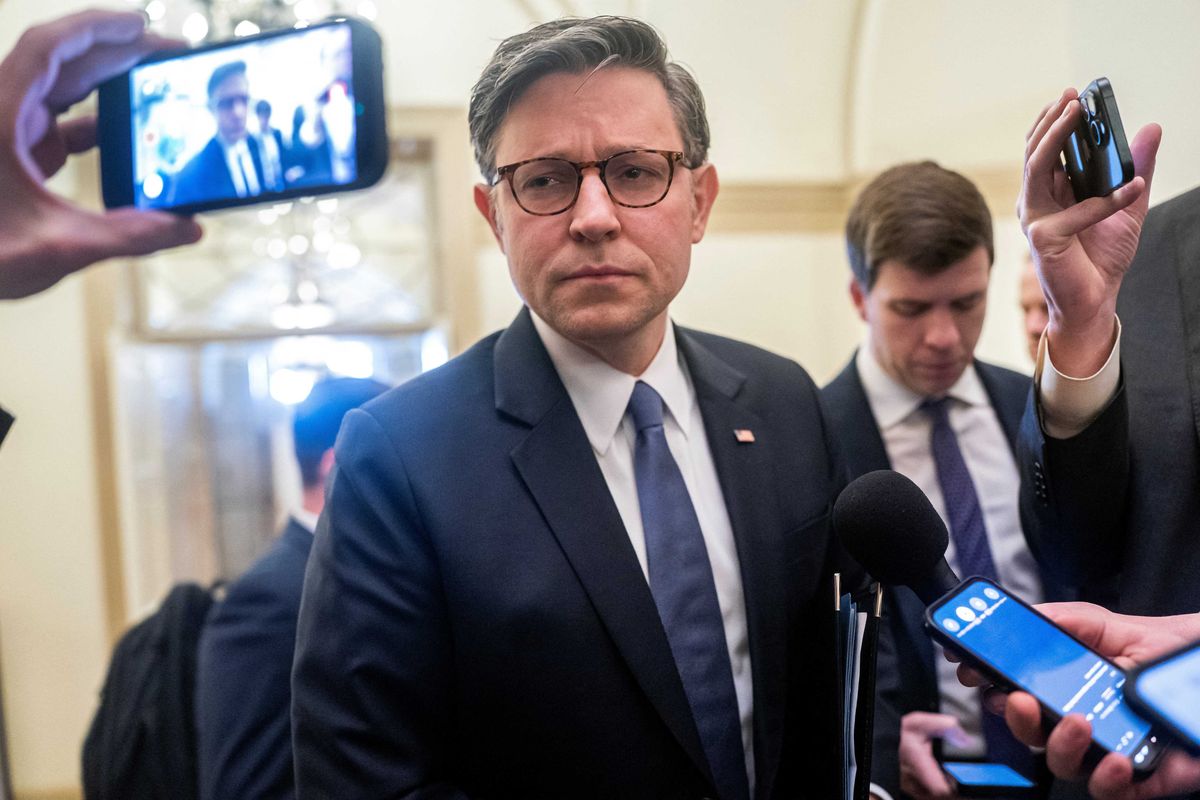
House Speaker Mike Johnson (R-LA) speaks with members of the media while arriving at the U.S. Capitol ahead of a two-week Easter recess starting at the end of this week, in Washington, D.C., U.S., March 26, 2026. REUTERS/Nathan Howard
More than a decade ago, President Donald Trump promised he could eliminate the national debt, and instead introduced a series of tax cuts that accelerated its growth.
"These are certainly eye-popping numbers for voters to see, and come as voters continue to have concerns about the Trump administration's handling of the economy," said CNN's Arlette Saenz in a sidebar.
She added that "the climbing debt isn't just a GOP issue," as debt has been rising steadily since the early 2000s among presidents from both parties — although the debt as a percent of GDP has been a bit more variable.
Meanwhile, Mark McKinnon, a longtime Republican strategist, told anchor Kasie Hunt that the implications for the GOP this election cycle are grim.
"I'll tell you this, as a campaign guy: the last thing that I want to be talking about 70 days out from a midterm election is the fact that we're busting out $40 trillion in [debt], and the stock market has taken a 700-point dive," said McKinnon, saying that the whole situation is "a really bad stew for the president."
Trump, he noted, "had largely campaigned on a macro message of sort of ... listen, just elect me and I'll go break stuff," he added. "And people said, yeah, go break stuff. And then they get turned around, and they say, wait a minute, not everything."
Saturday, August 15, 2026
‘Menace to the World’: With Iran Talks Stalled, Trump Vows to Declare Strait of Hormuz a US Territory
“He absolutely needs to be impeached, removed, and locked up,” said one progressive critic, calling the president “a completely unhinged lunatic.”
President Donald Trump delivers remarks at the General Motors Proving Ground in Milford, Michigan, on July 27, 2026. (Photo by Daniel Torok/White House/flickr)
In yet another remark that triggered alarm around the world, President Donald Trump said Friday that he planned to declare the Strait of Hormuz—which Iran has blockaded for much of the past five months over his and Israel’s illegal war—a US territory.
Just two days after the latest inflation figures demonstrated, in the words of one expert, “Trump’s catastrophic mismanagement of our economy,” the president ignored the economic fallout from his war, which led Iran to restrict ship traffic through the strait, driving up fuel prices worldwide.
“We’re bringing the prices way down,” he told a Long Island crowd. Trump also said that “after we finish defeating Iran, which is being very badly defeated, pretty soon, I’ll be declaring the Hormuz Strait a territory of the United States.”
Some critics responded to clips of the comments on X by mocking Trump—an infamous liar. Congressman Ted Lieu (D-Calif.) quipped, “Awesome! And the Easter Bunny is real.”
Ryan Costello, policy director at the National Iranian American Council, said that “this jingoism rings a bit hollow when most of the US bases near the strait have been essentially abandoned due to danger from Iranian missiles and drones.”
Progressive political commentator Kyle Kulinski declared that “he absolutely needs to be impeached, removed, and locked up. He’s a completely unhinged lunatic, and he’s a sadistic violent menace to the world.”
After high initial claims about lower prices, Trump admitted that gasoline has soared due to his war, but said: “For you to pay a tiny little bit more for your gasoline, just remember, you’re doing it so that a very evil country cannot have a—a country, really it’s the No. 1 state sponsor of terror in the world—we don’t want to have them have a nuclear weapon. So, remember that when you have to pay a little bit more, you’re at $4, it’s OK. I’ll never apologize. I did the right thing.”
Trump’s threat over the strait between the Persian Gulf and the Gulf of Oman came just before a monthlong ceasefire between the US and Iran is set to expire on Monday. A senior White House official told Politico that the situation is “static.”
“It doesn’t matter how close or how far we are,” said the official, who has heard no mention of a potential extension of the ceasefire. “What matters is if Iran wants to come to the table and agree to a deal. Right now, they haven’t done that.”
The Associated Press reported Friday that “the Trump administration appears to be reaching out to a broader swath of countries that might be able to help pressure Tehran,” and Ali Vaez, Iran project director at the International Crisis Group, told the outlet that “everyone is just urging both sides to stop this reckless game of chicken.”
In addition to launching an illegal war on Iran in February, and invading Venezuela in January to abduct its president, Trump has made threats against various other nations during his second term, including Canada, Cuba, Colombia, Greenland, and Mexico. He’s also threatened to seize the Panama Canal and killed hundreds of people by blowing up boats allegedly smuggling drugs.
Adding iron to the ocean can remove CO2 – but at what cost to nature?
Adding iron to the ocean can cause plankton to absorb more CO2 from the atmosphere. However, the effect depends on where in the world the method is used, and it can have far-reaching consequences for marine ecosystems and food chains
Adam Martiny (standing) and postdoc Pedro Flombaum (in the back) on M/V Nerissa take water samples near California to understand the impact of human-released nutrients on plankton growth. Photo: Adam Martiny.
Phytoplankton, microscopic plant-like organisms that drift through the ocean, play a central role in the ocean’s uptake of CO2. Through photosynthesis, plankton absorb carbon dioxide from the atmosphere, and some of this carbon dioxide is transported to the deep sea when the organisms die or are eaten.
In large parts of the world’s oceans, however, growth is limited by a lack of iron, which is an essential nutrient. For this reason, researchers have for decades been investigating whether the ocean’s CO2 uptake can be increased by adding dissolved iron to iron-deficient areas.
But how effective is this method, and what are its consequences for marine ecosystems? Professor Adam Martiny, DTU Aqua, has investigated this in a new study, which has been published in the prestigious scientific journal Nature.
Using an advanced ocean model, the researchers have simulated 60 years of iron addition in ten different ocean regions to investigate both the climate impact and the effects on marine ecosystems.
“There is a big difference depending on where you add iron to the sea. In some places, the iron has very severe consequences for the ecosystems, whilst in others the impacts are relatively limited. What is new about our study is that, for the first time, we can demonstrate the trade-off between CO2 uptake and ecological consequences across different ocean regions,” says Adam Martiny.
He adds that once iron has been added to the ocean, it does not always remain in a single area but can move with the ocean currents, thereby affecting the chemistry and biology elsewhere in the world’s oceans.
The Southern Ocean offers the best balance
The researchers find that the Southern Ocean around Antarctica offers the most favourable combination of CO2 removal and limited ecological consequences. Here, ocean currents transport both iron and nutrients to other areas, where they can continue to support biological production and carbon storage.
At the same time, the simulations show that the Southern Ocean is more resilient than the other areas studied. When the iron supply stops, the ecosystem returns relatively quickly to its original state, and the ecological impacts are less long-lasting than in, for example, the equatorial Pacific.
The equatorial Pacific Ocean also removes large quantities of CO2, but here the consequences are significantly greater. When plankton blooms following iron addition, it consumes large quantities of other nutrients. Ocean currents then transport this nutrient-poor water to other areas, which can reduce plankton production and affect food chains far away from where the iron was added.
Consequences can be felt far away
The study shows that even relatively local interventions can have global consequences.
In the simulations, iron addition in the equatorial Pacific led to reduced biomass of larger zooplankton, which constitute an important food source for fish. At the same time, areas of low oxygen content in the ocean expanded. The effects extended across areas many times larger than the area where the iron was added.
“There will almost always be an ecological cost to manipulating marine ecosystems. That is why it is a matter of identifying the locations where the climate impact is greatest and the consequences for nature are least,” says Adam Martiny.
The advanced model is based on many years of work describing the ocean’s cycles of carbon, nutrients and oxygen, as well as the interactions between different types of plankton.
The research team has also compared the model’s results with previous field experiments, in which researchers physically added iron to the ocean and observed the effects on plankton and carbon uptake.
“There have been a handful of experiments where researchers have gone out in a boat, poured iron into the water and observed over the course of a month what happens: how much CO2 is absorbed and sinks, and what happens to biodiversity. Our model shows the same results as those experiments,” says Adam Martiny.
CO2 is removed—but not permanently
Even in the most extensive scenarios, the climate impact is limited.
The researchers estimate that 60 years of iron addition could remove between 0.14 and 0.70 billion tonnes of CO₂ per year from the atmosphere, depending on where in the ocean the method is applied. By way of comparison, the world currently emits around 40 billion tonnes of CO2 per year. The method will therefore only be able to serve as a supplement to emissions reductions – not as a replacement for them.
“No one believes that iron fertilization alone can solve the climate crisis. But if, at some point, we need to remove large quantities of CO2 from the atmosphere as a supplement to emissions reductions, it could be one of the tools worth looking into,” says Adam Martiny.
The study also shows that a large proportion of the effect is not permanent. More than half of the CO2 removed during iron fertilization returns to the atmosphere within the following decades if the initiative is halted.
Difficult to quantify the effect
According to the researchers, one of the biggest challenges is that it is difficult to quantify precisely how much CO2 is actually removed from the atmosphere.
The study shows that the most significant effects occur across vast ocean areas and often far from the location where the iron is added. This makes both monitoring and any potential CO2 credits difficult to manage.
At the same time, the method raises questions about international regulation, as one country’s activities could potentially affect marine biodiversity far from the area where the iron is added.
Whilst European climate policy has primarily focused on reducing greenhouse gas emissions, the US is increasingly investing in technologies designed to actively remove CO2 from the atmosphere. Ocean-based solutions such as iron fertilization are increasingly part of discussions about future climate technologies in the United States.
According to Adam Martiny, it is important that Europe follows developments closely and participates actively in both research and regulation in this field.
“Having travelled around Europe, my impression is that there is relatively little discussion about iron addition in the ocean. My aim is to call on politicians to recognise that this is something we should take far more seriously. There are other countries, including the US, that are already moving in this direction, and once they get major projects off the ground, this could have consequences that are also felt in European waters. That is why it is important that we monitor developments closely and do not fall behind,” says Adam Martiny.
Climate benefit and ecological cost trade-offs for ocean iron fertilization
The research vessel Ronald Brown is anchored off Easter Island. Aboard the ship, Adam Martiny and his colleagues collected data used in the study. Photo: Alyse Larkin.
Adam Martiny monitors measurements and sampling at various ocean depths during a research expedition. Photo: Celine Mouginot.