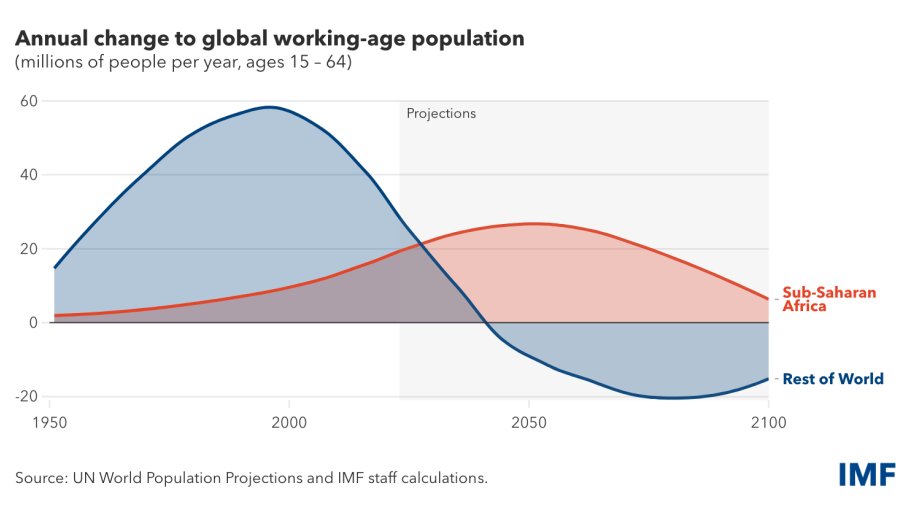
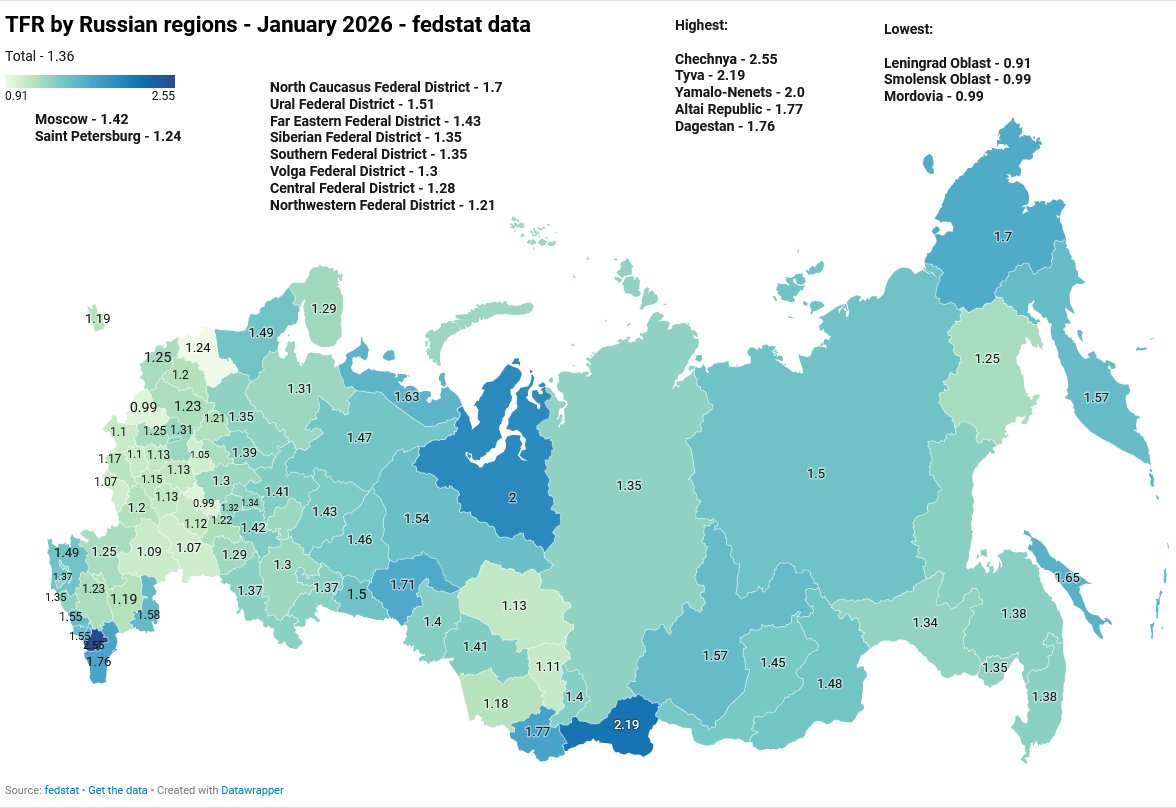
Just a decade ago, the dominant demographic narrative was of "dying Russia" — a population hollowed out by the chaos that followed the Soviet collapse, shrinking through a combination of low birth rates, high mortality and mass emigration. The meme was convenient and, for a while, accurate. It is now obsolete. Russia's problem has become everybody's problem.
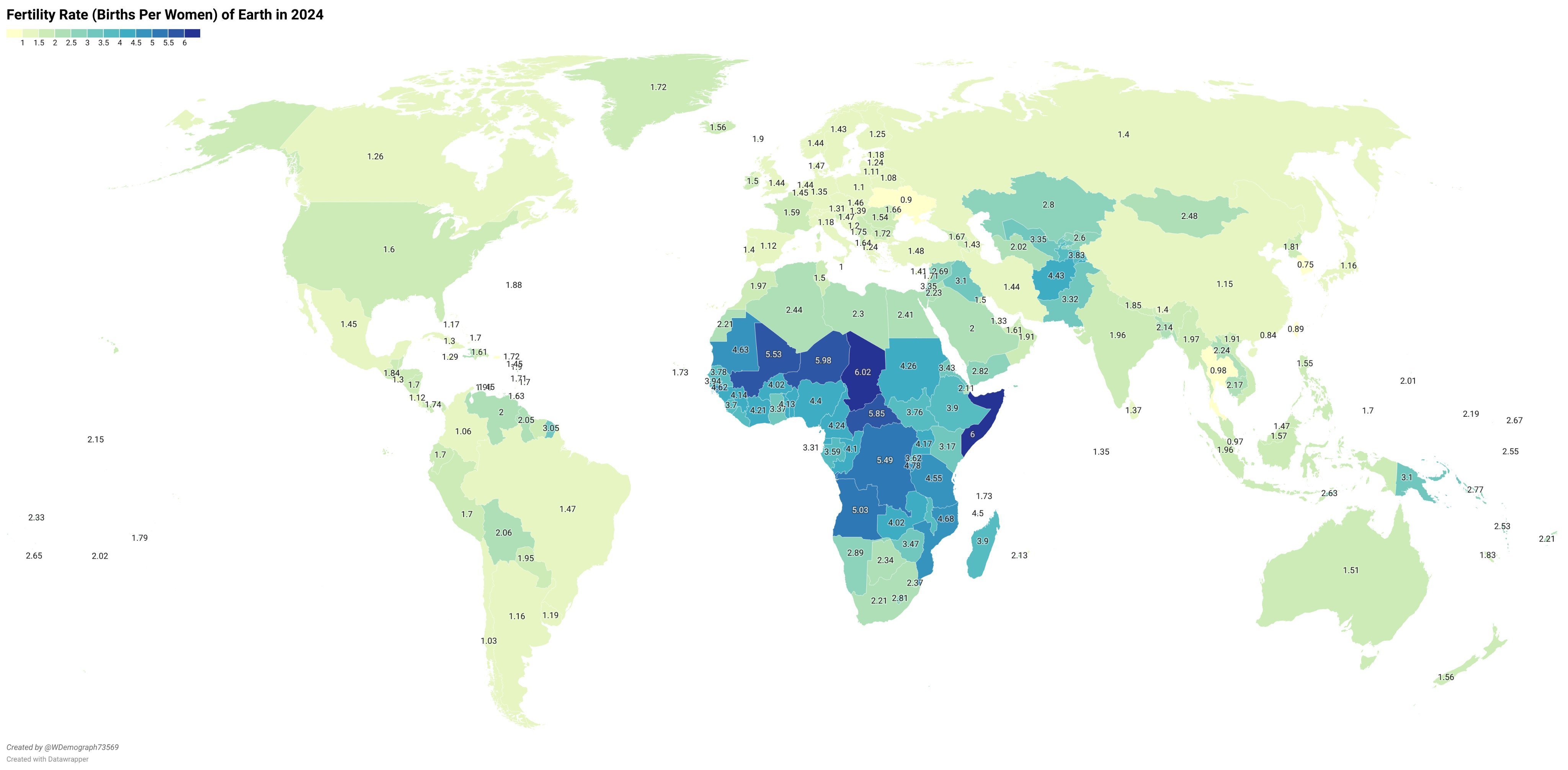
Thanks to what might be called "Putin’s babies" — an aggressive pro-natalist programme launched by the Kremlin at the very start of his rule, combining generous maternity payments, housing support and social pressure — Russia's demographic profile looks considerably healthier than most of the rest of Europe, even if its population is still shrinking along with everyone else's. The uncomfortable truth is that there is now nowhere in Europe where the fertility rate exceeds the replacement level of 2.1 births per woman — except Kosovo, which just scrapes above at 2.01. Every other European country sits below the line.
The crisis extends far beyond Europe. In more than two-thirds of the world's 195 countries, the average number of children born to each woman has fallen below replacement rate. In some countries the situation has become catastrophic.
Europe
Ukraine has by far the worst demographic in the world. Its mortality rate is three times its birth rate, and the population is in rapid collapse — a crisis dramatically worsened by a war that has carved a deep gouge out of the 25-to-35-year-old cohort and sent millions of women abroad. Ukraine's total fertility rate stands at 0.90, the lowest in the world. Lithuania follows at 1.04 and Poland at 1.08, with the Baltic states and Central Europe close behind. Eastern Europe as a whole has become the epicentre of depopulation.
Even Hungary, with its elaborate suite of ultra-natalist policies — tax exemptions for mothers of four or more children, interest-free loans, subsidised housing — manages only 1.31 children per woman. Bulgaria leads the EU at a still-inadequate 1.62. France records 1.56, a figure somewhat inflated by its overseas territories. Germany sits at 1.3, with a rapidly ageing population of pensioners that it will struggle to sustain financially. In March German Chancellor Friedrich Merz crunched the numbers and concluded: "We can no longer afford our social system." In Italy, some regions have seen the fertility rate fall below 1.0, as young couples simply cannot afford a second child.
Oxford Economics' assessment is blunt. "With the influx of Ukrainian refugees abating, it would take several hundred thousand more migrants than we project to prevent a persistent fall in the eurozone's working-age population," said senior economist Riccardo Marcelli Fabiani. "Our baseline forecast is for net migration to alleviate some, but not all, of the decline." The eurozone's working-age population is expected to begin shrinking next year.
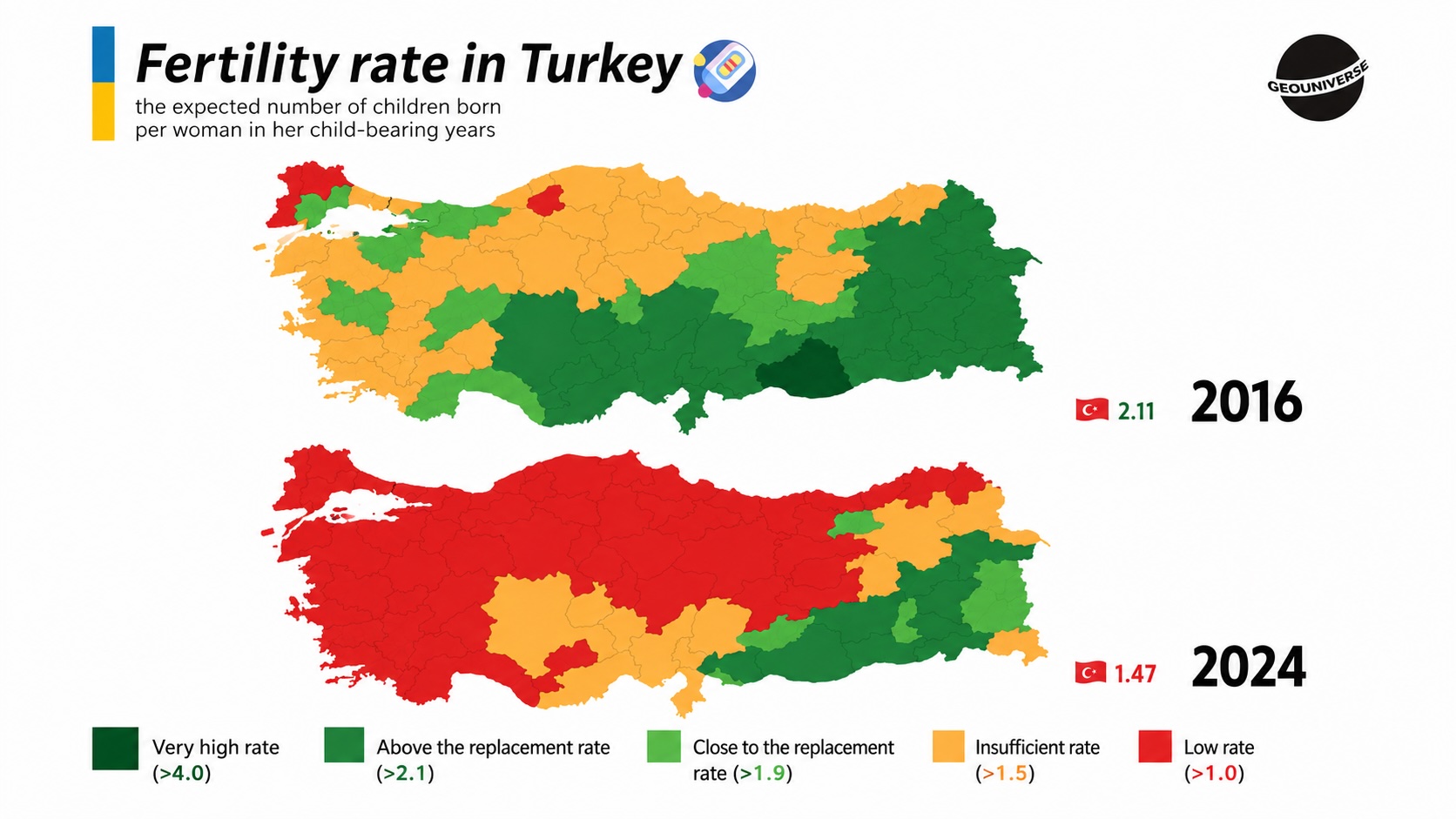
In November, residents of Turkey were reflecting on some disturbing news: fully one half of all families have no children. Turkey, despite being perceived as a relatively young country, is also experiencing a demographic crisis, with a birth rate of just 1.39 — lower than large parts of Europe.

Asia
The problem is equally acute in the markets that have typically seen populations grow alongside rising incomes. South Korea leads the world in demographic dysfunction at 0.80 children per woman — the lowest fertility rate ever recorded for a major economy. Taiwan sits at 0.72, Singapore at 0.88, Thailand at 0.87, and China at 0.93. Japan, whose ageing crisis has been extensively documented for decades, records 1.13. Even Malaysia, at 1.41, and the Philippines, at 1.7, are well below replacement.
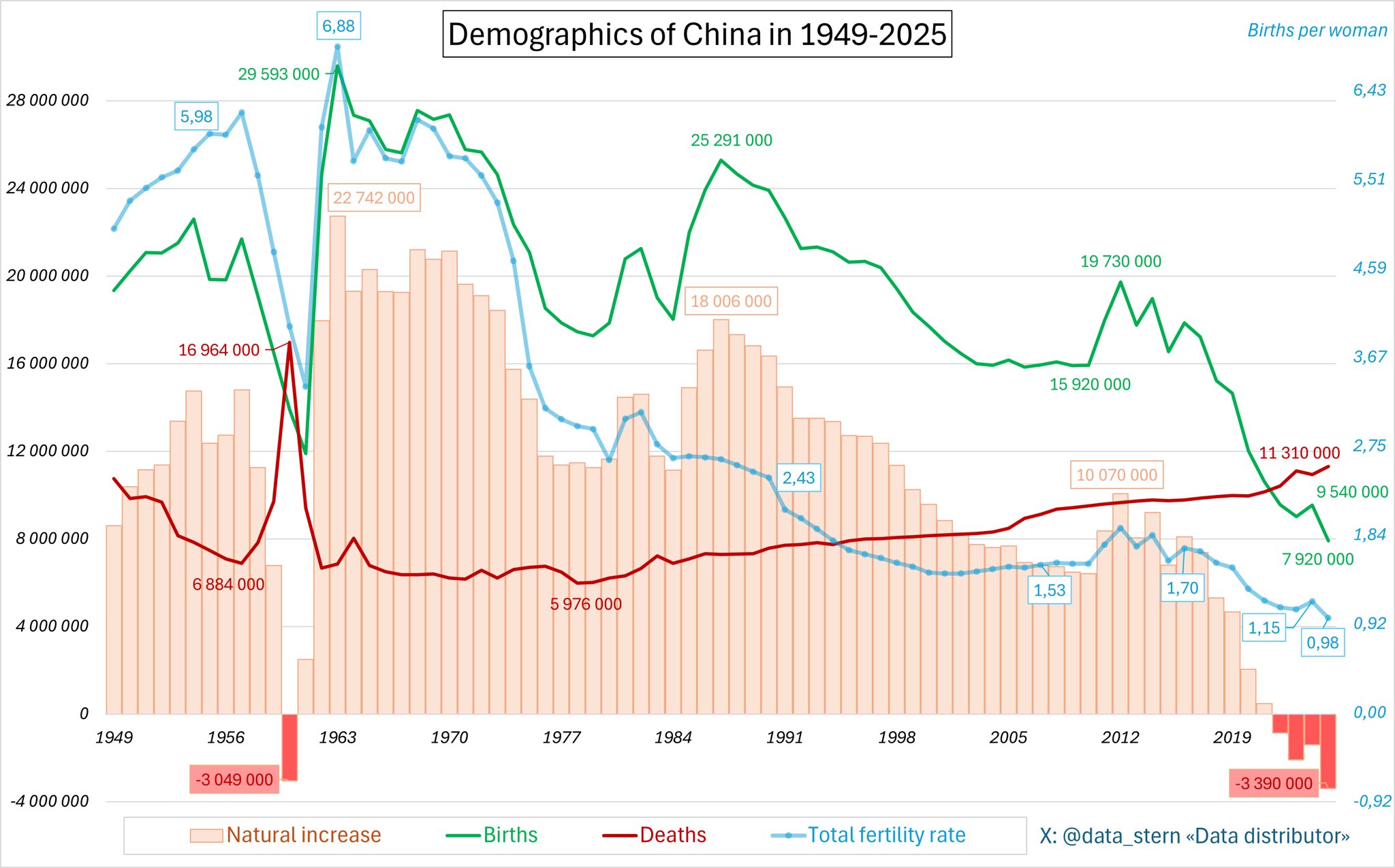
China's situation stands out. It has long vied with India as home to the most humans on the planet and both were the only countries with over a billion people, but China has not only already lost its lead to India, it is going to lose half its population full stop, according to the IMF.
The legacy of the one-child policy has produced an age pyramid that looks more like a tower. With a working-age population of around 800mn now beginning to contract, the speed of demographic ageing is without precedent in economic history. Oxford Economics estimates that shrinking workforce dynamics will subtract approximately one percentage point from China's potential output growth by the 2050s — a compounding drag that will fundamentally reshape the country's economic trajectory. China's population, currently around 1.4bn, is projected to roughly halve over the coming decades without a dramatic reversal in fertility that shows no sign of materialising.
India remains in a lot better shape, in that its population pyramid still looks like a pyramid. With a fertility rate hovering around 2.0, it will be one of the few Asian countries to see mild population growth over the same period — though even here the middle-class effect is beginning to suppress birth rates in urban and educated cohorts.
The Middle Income Effect
Where has fertility fallen most sharply in the past decade? Not in the richest countries, but in middle-income ones. Turkey, Iran, Argentina, Thailand and Mexico all now have fertility rates well below that of the United States. The explanation lies in economics: as incomes rise to the point where a middle class emerges, birth rates fall. The incentive structure shifts. In poor families, more children mean more hands to work the land and more people to support parents in old age. Once life becomes comfortable and parents become professionals, children come to be seen as expensive choices rather than economic necessities and caregivers have less time to spend on looking after toddlers.
This middle-class effect is already visible at the bottom of India's demographic curve, where urban, educated families are shrinking in size. Latin America presents a similarly stark picture: Brazil at 1.5, Argentina at 1.13, Chile at 1.14, Uruguay at 1.15, Colombia at 1.28, Mexico at 1.38 and Costa Rica at 1.10. The highest fertility rate in the region belongs to French Guiana at 2.76 — an outlier explained by its specific demographic composition.
In the Middle East, Iran records 1.49, while the Gulf states are all well below replacement: Qatar at 1.33, Kuwait at 1.5, the UAE at 1.6, and Saudi Arabia at 2.0. Israel, at 2.87, stands as a striking outlier — one of the highest rates in the developed world and well above its neighbours.
The Exceptions: Africa and Central Asia
Two regions remain genuine exceptions to the global trend, though for different reasons and with different trajectories.
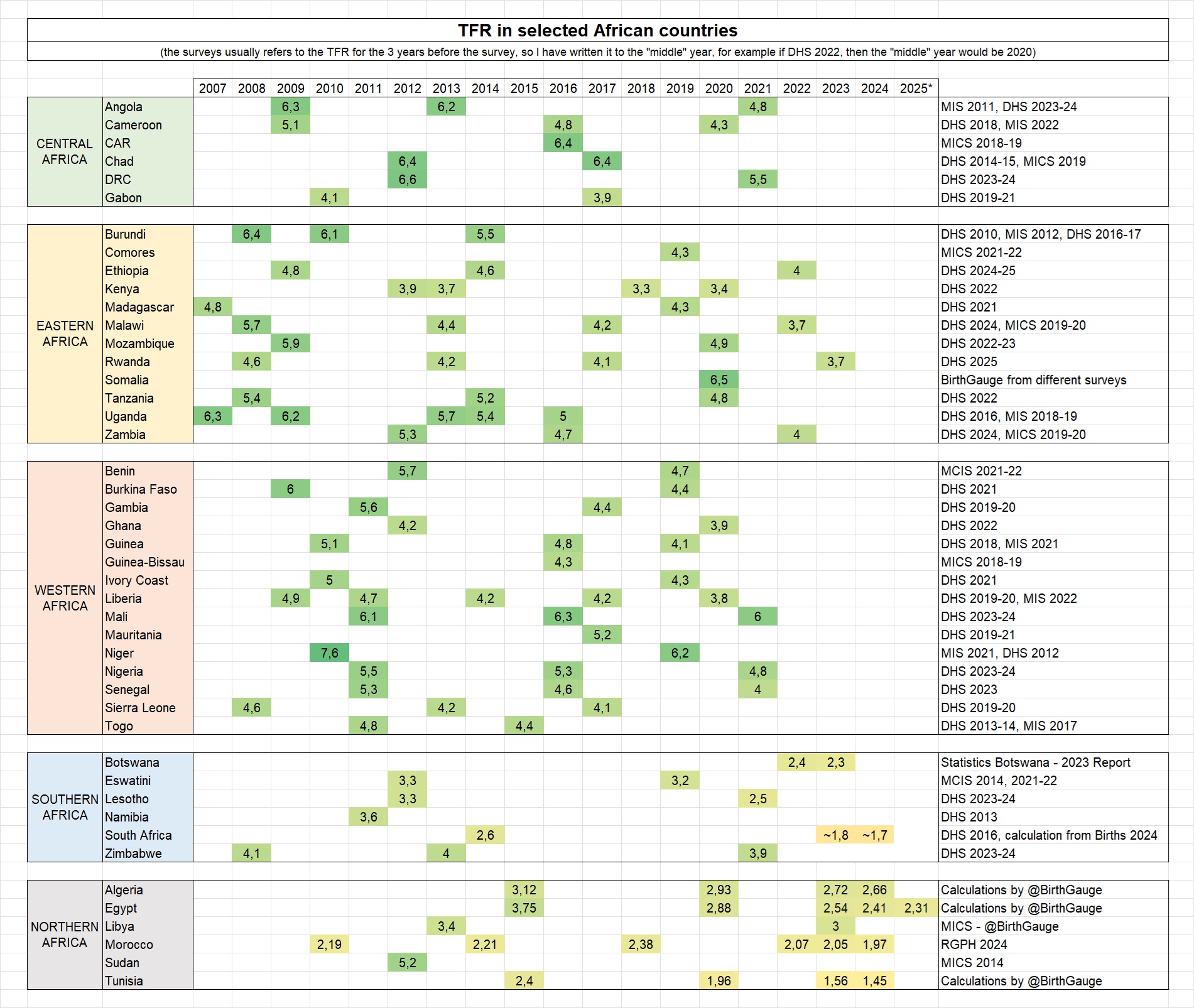
Africa remains the world's primary source of population growth. Only three African countries currently sit below replacement rate: Morocco at 1.97, South Africa at 1.7 and Tunisia at 1.45. Most African countries still record fertility rates of three or more. But the direction of travel is clear and accelerating — rates that stood at six to ten births per woman just fifteen years ago have fallen dramatically. Egypt, Africa's third most populous state, is projected to be the first to fall below two children per woman replacement before 2030 – largely to the middle class growth effect.
Central Asia, and Uzbekistan in particular, represents the other growth hotspot. With an average age below 35 and a rapidly expanding young population, Uzbekistan is bucking the global trend. One of the central challenges facing President Shavkat Mirziyoyev is creating enough well-paid jobs for an increasingly youthful electorate. Kazakhstan, by contrast, saw a 10% decrease in births last year.
What Is Driving the Collapse
The scale of the collapse has surprised even demographers. Just five years ago the United Nations predicted roughly twice as many births as have actually occurred. The demographic deterioration in high and middle-income countries has accelerated sharply in the past decade alone.
Several factors are in play. The Financial Times has reported a link between the spread of smartphones and falling fertility rates — the hypothesis being that social media suppresses the romantic interactions that lead to partnership formation. Staring at your phone all day is not very sexy. The evidence is suggestive but not conclusive, and the decline in many countries began in the 1990s, well before smartphones became ubiquitous.
More concretely, the past half-century has seen a fundamental shift in how economic growth is distributed. Since the 1970s, the gains from productivity growth have increasingly accrued to capital rather than labour — to shareholders rather than workers. Real wages in the United States, for example, have stagnated for decades even as corporate profits, dividend payments and the overall size of the economy have soared.
The cost-of-living crisis accelerating across much of the developed world is another problem: housing costs have risen far faster than incomes, particularly in major cities. Berlin's combination of restrictive planning permissions and rent control — designed to keep accommodation affordable — has produced a split market in which tenants wont leave their rent-controlled accommodation sending up prices in the unregulated new-build apartments. The upshot is a chronic shortage of affordable accommodation that is yet another a powerful disincentive to family formation.
The Economic Reckoning
What impact all this will have on the global and local economies is hard to say. But investors are already taking notice. In Oxford Economics' fourth-quarter 2025 Global Risk Survey, concern about demographic change rose sharply, with 40% of respondents identifying it as a top risk — up from 25% just two quarters earlier. The drivers are straightforward: falling fertility rates combined with accelerating ageing are fundamentally altering the structure of labour supply across most of the world's economies and putting already cash-strapped government budgets under even more pressure.
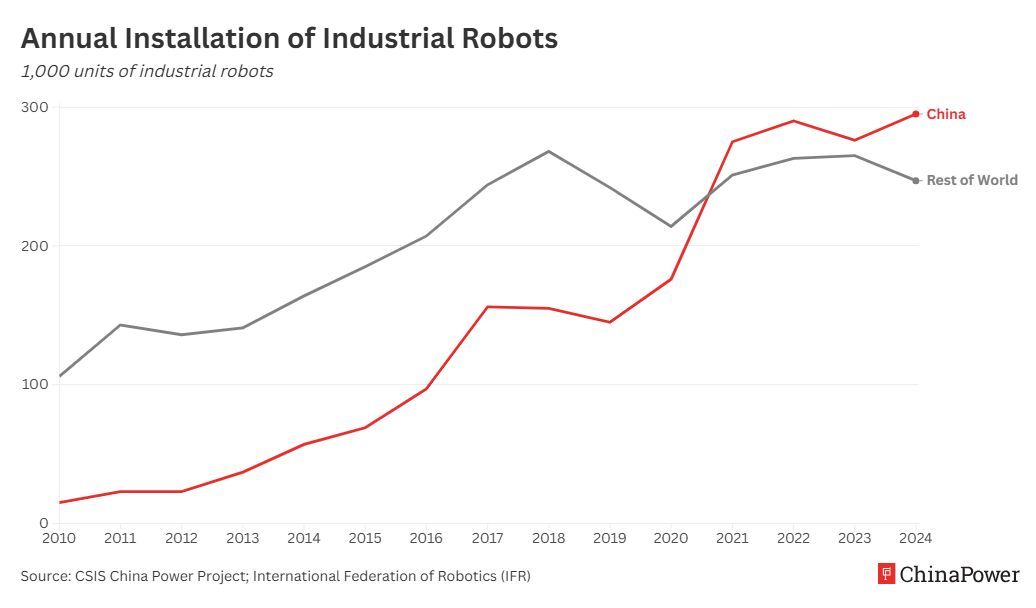
One solution already being studied by governments, investors and corporations alike is to look to artificial intelligence and robotics to fill the gap. McKinsey Global Institute estimates that existing technology could, in theory, automate around 57% of current US work hours. Work in the future will likely be a partnership between humans, AI agents and robots. But the transition raises as many questions as it answers — about which skills remain valuable, which jobs disappear, and how the gains from automation are distributed in societies already struggling with inequality.
The demographic crisis crept up on the world slowly, then arrived very fast. The babies that were not born in the 1990s, the 2000s and the 2010s are the workers, consumers and taxpayers who will not exist in the 2030s, the 2040s and the 2050s. Reversing that arithmetic, where it can be reversed at all, will take generations.

No comments:
Post a Comment