It’s possible that I shall make an ass of myself. But in that case one can always get out of it with a little dialectic. I have, of course, so worded my proposition as to be right either way (K.Marx, Letter to F.Engels on the Indian Mutiny)
Indonesia’s national energy company Pertamina is considering upstream investments in Guyana and Suriname to diversify Indonesia's oil and gas supply and boost energy security, the Indonesian government has said.
“Pertamina has already initiated exploratory discussions on cooperation in exploration and investment in the upstream oil and gas sectors of Guyana and Suriname,” Grata Endah Werdaningtyas, Director General for American and European Affairs at Indonesia’s Foreign Ministry, said at a news conference.
The potential acquisition of minority equity stakes in upstream projects in Guyana and Suriname, which are poised to become South America’s oil growth drivers, would reduce reliance on imports from the Middle East, according to the Indonesian government.
“Investment implies that we hold an ownership stake in the source, thereby making supplies from that region more secure for us,” the foreign ministry official said, as quoted by the Indonesian news agency Antara.
Indonesia is an oil and gas producer, but its domestic output is insufficient to meet growing oil and gas demand.
The country currently produces about 600,000 barrels of crude oil per day (bpd), but its consumption is far above that, at around 1.6 million bpd.
A lot of Indonesia’s imports of crude oil have typically come from the Middle East. But the Iran war and the Strait of Hormuz disruption forced the biggest economy in Southeast Asia to look for alternative supply, including from Russia.
This summer, Indonesia welcomed the first cargo of Russian crude oil under a deal Southeast Asia’s biggest economy struck with Moscow in April.
In South America, Guyana’s oil production has been booming in recent years with an Exxon-led consortium already producing 900,000 bpd of crude oil from the offshore Stabroek block.
Suriname, which shares offshore geological properties with its neighbor to the west, Guyana, aims to become the new big oil and gas producer in South America by the end of the decade.
Several offshore blocks are being explored and developed by consortia led by international firms with Staatsolie’s participation, including Block 58, where TotalEnergies is developing a $10.5-billion oil project, GranMorgu, with first oil expected in 2028.
By Charles Kennedy for Oilprice.com
Monday, August 03, 2026
Big Oil Companies Report Record Profits Amid High Oil Prices
We are still in the early innings of the earnings season, with roughly a third of S&P 500 companies having returned their second quarter scorecards. And, it’s shaping up to be yet another bumper earnings season: according to FactSet data, 86% of those companies have exceeded Wall Street’s earnings projections while 80% have beaten revenue expectations.
The Energy sector is reporting the highest earnings growth clip of all 11 market sectors at 128.2% Y/Y, well above the S&P 500 average at 37.9%, thanks in large part to higher oil prices amid the Middle East conflict. Brent crude averaged $92.55 per barrel in the second quarter, 45% above Q1 2026 average at $63.68/bbl. At the sub-industry level, 4 of the 5 sub-industries in the energy sector are reporting double-digit earnings growth: Oil & Gas Refining & Marketing (249%), Integrated Oil & Gas (166%), Oil & Gas Exploration & Production (104%), and Oil & Gas Storage & Transportation (11%). Only the Oil & Gas Equipment & Services sub-industry is reporting an earnings decline at -16% Y/Y.Two of the world’s largest oil and gas companies reported second quarter earnings on Friday.
Chevron Corp. (NYSE:CVX) reported the highest quarterly profits in six years, easily beating Wall Street’s expectations. Chevron reported Q2 2026 earnings of $6.06 per share, comfortably beating the FactSet consensus estimate of $5.55 while revenue jumped to $70.06 billion (+56.2% Y/Y), beating Wall Street's $62.72 billion projection. Upstream earnings came in at $8.2 billion, good for a tripling year-over-year, while downstream earnings surged to $4.9 billion, up from $737 million the previous year. Total production reached 4.07 million barrels of oil equivalent (boe) per day, with U.S. output hitting an all-time high of 2.08 boe. Production rose 20% Y/Y, driven by legacy Hess assets, the Permian Basin, and the Gulf of America. The company also achieved $1.5 billion in deal synergies from its Hess acquisition, six months ahead of schedule. Chevron maintained its steady capital return plan during the quarter. The company repurchased $3 billion in shares, paid out $3.5 billion in dividends, and paid down debt by a record $.4 billion during the quarter. Chief Financial Officer Eimear Bonner confirmed that full-year share repurchase targets will remain locked between $10 billion and $20 billion.
Exxon Mobil (NYSE:XOM) reported mixed results with Q2 Non-GAAP EPS of $3.52 missing by $0.11 mainly due to heavy refinery maintenance limiting fuel margin capture and price volatility, while revenue came in at $116.02 billion, up from $81.51 billion for last year’s corresponding quarter. Second quarter net profit was $14.5 billion, climbing to a four-year high driven by high oil prices and tight global supply, while free cash flow came in at $17.2 billion, exceeding expectations.
ExxonMobil reported its highest upstream production in over 20 years (excluding Middle East's disruptions), powered by record output in the Permian Basin where output surpassed 1.8 million boepd, matching a planned 9% compound annual growth rate through 2030. ExxonMobil returned $9.4 billion to shareholders in the second quarter, consisting of $4.3 billion in dividends and $5.1 billion in share repurchases. The company announced it has realized $16.3 billion in cumulative structural cost savings relative to 2019 levels, driven by workforce reductions, digital tools and facility upgrades.
The supermajor also highlighted several major milestones for its Guyana operations. The company’s 5th Floating Production, Storage, and Offloading (FPSO) vessel (Uaru project) has officially set sail, with production startup firmly on track for fourth-quarter 2026, which will add 250,000 barrels per day (Kbd) of production capacity.
ExxonMobil noted that current operations across the first four FPSOs are consistently producing approximately 100,000 barrels per day above their investment basis, achieving a 98% year-to-date reliability performance. According to ExxonMobil's chief financial officer, the company has fully recovered its initial $55 billion investment in Guyana since 2014, two years ahead of projections. Exxon will now book ~100,000 fewer barrels per day for cost recovery starting in Q3 2026, pivoting the contract into a 50/50 profit-oil split that will increase direct revenue for both the consortium and Guyana.
Meanwhile, progress for the Longtail project in Guyana remains on schedule, which will mark Guyana’s first offshore development specifically targeting non-associated natural gas rather than oil. The layout targets up to 1.2 billion cubic feet of gas per day alongside 250,000 barrels of condensate, with a 2030 first-production window.
Attention will now shift to the next wave of supermajor earnings, with BP scheduled to report on August 4, followed by ConocoPhillips on August 6. Investors will be looking beyond another likely jump in profits to gauge how management teams expect the current oil rally to hold up through the second half of the year. Capital spending, shareholder returns, production guidance, trading performance and any changes to long-term investment plans will be closely scrutinized after Chevron and ExxonMobil demonstrated just how quickly higher crude prices have translated into stronger cash flow and record capital returns.
By Alex Kimani for Oilprice.com
Big Oil Warns Global Fuel Stocks Are Running Dangerously Low
Big Oil warns the real shortage is refined fuels, not crude, with Exxon, Shell and Chevron saying diesel and gasoline markets remain extremely tight despite softer oil prices.
Refining capacity has been hit by wars and export restrictions, with disruptions in the Middle East and Ukraine, China's fuel export caps, and Russia's diesel export ban squeezing global fuel supplies.
Diesel shortages could worsen as refinery maintenance begins, with refineries already operating near maximum capacity.
The world is running short on fuels—the warning was first issued by some analysts who were watching the physical market rather than futures charts. Now, Big Oil is joining the chorus of warnings, with Shell, Exxon and Chevron all saying that prices at the pump are set to stay higher, regardless of where crude oil prices go.
“The constraint pain point in the energy system is refining," Exxon’s chief financial officer Neil Hansen told Bloomberg in an interview last week. This, according to him, is “something that perhaps the market isn't fully focused on.”
Indeed, most oil market observers have focused exclusively on futures prices even when the gap between those and physical oil prices has been quite substantial as a result of the export flow disruption in the Middle East that has now spread from the Strait of Hormuz to the Red Sea as well. Futures prices are currently down from last week’s peak on President Donald Trump’s latest declaration of peace talks—but physical markets are in a very different place, and that is especially true of refined products.
Bloomberg reported last week that the wars in the Middle East and Ukraine, plus China’s caps on fuel exports—and Russia’s ban on diesel exports—have effectively slashed global refining capacity by as much as 10%. This may not sound like much at first glance, but it is a significant enough number to have some observers worried.
As early as April, Energy Aspects and Rystad Energy warned that global fuel inventories were getting squeezed by the Middle East war since the region, besides being a leading crude oil exporter, is also a major exporter of refined products. Now, more analysts are sounding the alarm as the U.S. and Israeli war against Iran enters its sixth month.
“We’re in a diesel supply crunch right now because none of the Persian Gulf refineries can get product out,” Rabobank senior energy strategist Joe DeLaura said, as quoted by the Wall Street Journal last week. “Crude oil is just the input, but diesel is the everything the industrial economy runs on,” he also said. “Everything in agriculture, everything in construction, everything in mining. Also everything on the supply and distribution side runs on diesel.”
Exxon’s chief executive gave the fuel squeeze story a dramatic twist last month, saying on a call with analysts that “I've never seen the available capacity relative to demand as low as it is today,” and adding, as quoted by Bloomberg, that “It's going to take a while for the industry to climb its way out of that hole.”
Shell’s Wael Sawan, meanwhile, told CNBC that “Today, what you're seeing is all the price signals that we are short on diesel and gasoline. Which means we need to be able to now reoptimize at the refining side,” the top executive also said.
In further comments on the state of fuel inventories globally, Chevron’s chief financial officer, Eimear Bonner, told Bloomberg that “The geopolitical uncertainty has tightened markets and is reinforcing the importance of reliable supply. The shock absorbers that have mitigated the volatility up until now, those continue to be drawn down.”
This is why crack spreads are running at record highs, U.S. refineries are also running at record highs—and this is a problem because maintenance season typically begins in September and lasts through October; and maintenance season means a dial-down in processing rates. In the past, refiners have postponed maintenance season to capture a period of stronger demand, but this time, this may be unwise.
According to Bloomberg, Exxon’s refineries along the Gulf Coast have been running at a utilization rate of 95%, and Chevron’s refineries have been running at 97%. Shell’s refineries, meanwhile, have actually topped 100% utilization rates, clocking in at 102% over the second quarter. This utilization rate cannot be maintained over an extended period of time without the risk for adverse consequences rising, which means there will be maintenance—and lower fuel production.
“Fall is particularly difficult, kind of like a perfect storm right now,” the owner of a freight brokerage told the Wall Street Journal. “When we have the harvest and we have the early heating demand, and we also have the war, the tight squeeze on diesel is going to directly affect basically the entire economy,” Hannah Hurckes from Boss Lady Logistics told the publication.
Early in the war, some analysts predicted crude oil prices of up to $200 per barrel. This never happened because of President Trump’s regular announcements about escalation or de-escalation, regardless of how events develop on the ground. Meanwhile, in physical markets, the squeeze on supply out of the Middle East has left its impact on fuel production—while demand has remained strong because of the fundamental nature of fuels for any economy.
By Irina Slav for Oilprice.com
Trump Orders Oil Companies to Cut Gas Prices, Targets Chevron CEO
President Donald Trump demanded that U.S. oil companies immediately lower gasoline prices on Monday after crude futures plunged following his decision to suspend another planned military strike on Iran. In a Truth Social post, Trump instructed producers to “get your consumer (retail!) Oil Prices DOWN, NOW!”
Trump singled out Chevron CEO Mike Wirth after the executive appeared on television discussing the company’s business. Trump said Wirth failed to acknowledge the administration’s role in restoring Chevron’s position in Venezuela. “They threw Mike and Chevron out of Venezuela, but now they’re back, far bigger and stronger than ever before, expecting to make a fortune,” Trump wrote.
Chevron resumed operations in Venezuela after the Trump administration reopened access to the country’s oil sector and placed exports under U.S. control. American refiners have since become some of the largest buyers of Venezuelan crude, restoring a market that had largely disappeared under previous sanctions.
Back in the U.S., amid a backlash over prices at the pump, the national average price of regular gasoline stood at about $4.09 per gallon on Monday, according to AAA, down only modestly from last week’s highs despite crude prices falling more than 6% in a single session. Retail fuel prices typically lag changes in oil markets because stations continue selling inventory purchased at earlier wholesale prices.
Monday’s demand follows two earlier interventions by Trump. In June, he called on the Justice Department to investigate gasoline prices after crude retreated from earlier highs. Days later he urged fuel retailers to lower pump prices toward $2.50 per gallon, warning companies that failed to respond would face “big problems.”
West Texas Intermediate crude fell more than 6% on Monday, and Brent crude lost more than 5% after Trump announced a new round of negotiations with Iran and canceled what he described as a planned “massive” military strike. Retail gasoline prices typically adjust more slowly because refiners, wholesalers and retailers continue selling fuel purchased at earlier crude prices.
Chevron, Exxon Mobil, Valero Energy and Marathon Petroleum all reported sharply higher second-quarter profits last week as the Iran conflict lifted crude prices and refining margins. Trump’s latest demand places those earnings alongside falling oil prices as his administration pushes the industry to pass lower crude costs through to consumers.
By Charles Kennedy for Oilprice.com
Saturday, July 25, 2026
Insurers Flock to Oil Projects Outside the Middle East
Global insurers are slashing premiums by up to 50% for upstream oil and gas projects outside the Middle East as companies shift investment away from war-exposed regions.
Big Oil is accelerating exploration and development in lower-risk basins including Guyana, Namibia, Brazil, Nigeria, Venezuela, Turkey, and Cyprus to reduce geopolitical exposure.
Strong oil prices and the search for secure supply are driving a new wave of global upstream investment, with insurers competing aggressively for business outside the Gulf.
Global insurers had just shaken off the ESG push from earlier this decade when the Middle East conflict upended oil and gas upstream project coverage.
The world’s lowest-cost oil and gas producing region became a war zone at the end of February, with war-risk premiums and oil and gas drilling and construction projects facing either delays or significant cost inflation.
Five months of uncertainties about new oil and gas projects in the Middle East have prompted insurance giants to turn to underwriting drilling and project construction ventures outside the prolific but highly volatile region.
And the race is on for attracting insurance business in oil and gas basins less exposed to geopolitical flare-ups. Insurers are slashing premiums on upstream energy insurance for projects not depending on the on-and-off closed Strait of Hormuz and other chokepoints in the Middle East.
Insurers Compete for Underwriting Projects Outside Middle East
Premiums for upstream energy insurance outside the Middle East have tumbled by about 25% year to date, insurance brokers told the Financial Times.
In some cases, some insurers have slashed the premiums by as much as 50%, even at a short-term loss, according to industry insiders who spoke to FT.
The reason is clear—as oil and gas companies boost exposure to basins and projects outside the Middle East, insurers are competing for a market share of the now-shrunk global pool of upstream developments that are not in an active war zone.
“Upstream [energy] has been a very profitable sector for the market for a number of years,” Rupert Mackenzie, a natural resources insurance broker at WTW, told FT.
“The view from insurers is, this is a sector which they would like to have ongoing exposure,” the broker added.
Mackenzie’s colleagues at WTW said in an April report, Energy Market Review 2026, that “ratings are ‘through the floor’”.
This year, “15–20% reductions are available for core upstream risks with clean loss histories and substantial premium on the slip, with 40%+ reductions still observed in exceptional cases,” WTW said in its annual report published a month and a half after the Iran war began
“The overarching pricing trend is unmistakable: even after a decade of softening, the market is still finding new downward territory,” according to WTW.
The Iran war and the Middle East becoming an active war zone have pushed the world’s biggest international oil and gas firms to pursue upstream projects away from the region, Mackenzie told FT.
Big Oil Firms Double Down on Exploration Far From Middle East
Amid the Middle East conflict, Big Oil firms are trying to minimize losses on curtailed production and barrels not lifted because of the Strait of Hormuz crisis.
And they are betting on high-impact exploration and upstream projects in hotspots such as Guyana, Suriname, Namibia, Brazil, Turkey, and Cyprus, to name a few.
Exxon and Chevron are doubling down on the billions of barrels of crude oil discovered offshore Guyana. Separately, Chevron is boosting its business in Venezuela, where the Trump Administration hopes U.S. firms would increase production and oil exports to the United States.
Exxon, for its part, expects to invest billions of U.S. dollars in Nigeria’s deepwater oil and gas fields. Exxon is progressing the $7-$8 billion billion-barrel Owowo deepwater project offshore Nigeria, “looking into an FID as early as next year,” Hunter Farris, Senior Vice President – Deepwater for ExxonMobil Upstream Company, said in April.
That’s only one of Exxon’s new projects in Africa’s top oil producer, which has raised its crude oil sales in Asia in recent months as refiners reel from the shock supply loss from the Middle East.
ExxonMobil’s subsidiary in Nigeria and its partners earlier this month committed $1 billion to the on-block activities for the Usan Infill Project in OML 138. The project will unlock 40,000 additional barrels of crude oil in 18 months. It also “signifies renewed interest and hope in Nigeria being Esso’s first major deep water project in the country since 2016,” the Nigerian Upstream Petroleum Regulatory Commission (NUPRC) said in early July.
Elsewhere, BP in April bought into three offshore exploration blocks in Namibia, one of the hottest exploration destinations, where Shell, TotalEnergies, and Galp have already made large oil discoveries.
TotalEnergies in April signed a Memorandum of Understanding with Türkiye Petrolleri Anonim Ortakl??? (TPAO) to evaluate exploration opportunities in the Black Sea region and internationally.
Companies are also increasingly looking at shale opportunities outside the U.S., with Argentina, China, Turkey, and Australia drawing interest for potential development of onshore resources far away from the Middle East.
Oil and gas exploration has created a lot of value for the industry in recent years.
The industry created $54 billion of value after deducting $97 billion of spend on exploration from 2021 to 2025, under a long-term Brent price of $65 per barrel, an analysis by energy consultancy Wood Mackenzie showed in April.
At $85 per barrel Brent, value creation more than doubles to $120 billion, according to WoodMac.
By Tsvetana Paraskova for Oilprice.com
Tuesday, July 07, 2026
Super El Niño Could Push Colombia Into an Energy Crisis
Colombia is becoming increasingly dependent on costly LNG imports as domestic natural gas production and reserves continue to decline.
A potential Super El Niño could reduce hydroelectric generation, increasing demand for gas-fired power and pushing energy prices even higher.
Rising gas costs, inflation, fiscal pressures, and weakening domestic production are creating significant economic and energy security risks.
Scientists predict 2026 will bring a devastating Super El Niño weather event, with rising temperatures and economically damaging droughts expected. There are fears the climate pattern will hit Colombia especially hard, triggering severe droughts that lower water levels and sharply reduce hydroelectric power generation. This will significantly pressure Colombia’s thermal power plants, already constrained by a natural gas shortage, while straining the electricity grid. As a result, costly natural gas imports will rise, adding pressure to Colombia’s fragile, fiscally strained economy.
Colombia first began importing natural gas in December 2016. Since then, the volume of liquified natural gas (LNG) shipments soared higher, despite rising prices. For 2025, it is estimated that around 18% of all natural gas consumed in Colombia that year was imported. Already for 2026, that number is ballooning out at a worrying rate. While earlier calculations predicted that around a quarter of Colombia’s natural gas would come from overseas, that amount has blown out to over 32% and is expected to climb further.
As a result, natural gas prices across Colombia are soaring, with LNG imports significantly more expensive than domestically produced dry gas. Between 2022 and 2024, prices surged by 36%, and despite attempts to mitigate the risks associated with rising natural gas imports, they continue to rise. Industry analysts estimate that natural gas prices in Colombia will rise by as much as 25% during 2026, further impacting businesses and households, with a spiraling cost-of-living crisis emerging.
This, in turn, will fuel further jumps in the inflation rate, which is already at a multiyear high. These developments are weighing heavily on an already fragile economy, which is fiscally vulnerable with the budget deficit at near historic highs of 6.4% of gross domestic product (GDP) at the end of 2025. It is anticipated it will blow out to 6.6% during 2026, which will make Colombia’s fiscal deficit the world’s third-largest.
Costly liquefied natural gas (LNG) imports are driving inflation higher, pushing up business and household costs because it is an essential commercial and domestic fuel. According to the government statistics agency DANE, Colombia’s monthly inflation rate hit 0.47% for May 2026, which translates to 5.84% on an annual basis. That marks the highest rate since 2024, when inflation was still easing after reaching a record 12.36% in 2023, driven by excess pandemic stimulus and a global price surge linked to COVID-19 lockdowns.
Colombia’s growing dependence on natural gas imports arose because of a marked decline in domestic production along with dwindling reserves of the essential fossil fuel. During April 2026, Colombia pumped 694 million cubic feet of natural gas per day, which was nearly 1% lower month over month and a worrying 15% less than a year earlier. That number is 36% lower than a decade earlier, underscoring the steep production decline of this economically vital fossil fuel from a period when Colombia was self-sufficient.
The decline is largely due to a lack of new discoveries and a substantial drop in output from Colombia’s Chuchupa and Ballena fields in the offshore La Guajira Basin. Production from the Chuchupa peaked in 2010, with over 90% of all recoverable hydrocarbons now extracted. The field will reach its economic limit in 2027, now accounting for a mere 1% of Colombia’s total natural gas output. Ballena’s output peaked in 2014, with production expected to continue until 2039, when analysts forecast that economically recoverable natural gas will be depleted.
These factors are responsible for declining production and a widening supply gap that will worsen if El Niño arrives in Colombia during the second half of 2026. Recent news that Colombia’s proven reserves of the essential fossil fuel have fallen again heightens the risks to its natural gas-dependent economy. According to Colombia’s petroleum regulator, the National Hydrocarbon Agency (ANH), proven natural gas reserves at the end of 2025 fell 17% year over year to 1.717 trillion cubic feet.
Source: National Hydrocarbon Agency (ANH).
This represents an 18-year low, with growing fears that Colombia’s proven natural gas reserves will continue to decline.
President Gustavo Petro’s short-sighted energy policies, which focus on significantly reducing Colombia’s dependence on fossil fuels, are a disaster for the country’s oil patch. Petro is Colombia’s first-ever left-wing president who, upon taking office on August 7, 2026, implemented a series of policies aimed at maximizing the benefits delivered by oil extraction while reducing dependence on fossil fuels. This included banning new exploration and production contracts, weighing heavily on drilling activity and foreign energy investment.
That is a key reason for the lack of new oil discoveries in Colombia, where there has not been a world-class discovery since the 1990s. This continues to weigh on the country’s hydrocarbon reserves. Petro’s decision to frequently hike taxes for energy companies and attempt to ban hydraulic fracturing, known as fracking, further contributed to the growing malaise in Colombia’s oil patch. Those policies, particularly regular tax hikes, saw many drillers operating in Colombia sharply slash spending in the country.
Some energy companies, like Exxon, chose to exit the country, seeing greater opportunity, security, and returns from any investment in other nearby countries, such as Guyana. Those developments are heavily impacting Colombia’s hydrocarbon production and reserves. The sharp impact of Petro’s regulatory and tax reforms on Colombia’s oil industry is magnified by rising lawlessness and violence in remote regions where many energy operations are located.
Since Petro took office, illegal armed groups have expanded their ranks, using his “total peace” policy as an opportunity to extend their territory, number of recruits and operations. Colombia’s security agencies estimate there are 22,000 members of various illegal armed structures across the country have 22,000 members. This is significantly greater than the 15,000 members reported for 2022 when Petro assumed office. This, along with rising coca cultivation and cocaine production, is responsible for a sharp uptick in violence in many rural regions.
Colombia’s growing dependence on ever-larger volumes of costly imported natural gas presents a considerable risk to a fragile economy, already buffeted by structural issues and serious headwinds. This will not only drive inflation higher, forcing Colombia’s central bank to keep interest rates higher for longer, but it will also negatively affect industry and agriculture, where natural gas is an important low-cost source of energy. There is also the very real risk of a sharp drop in electricity supply, further impacting the economy.
By Matthew Smith for Oilprice.com
Wednesday, June 17, 2026
Op-Ed: U.S.-Iran Ceasefire Deal is a Costly Return to Prewar Conditions
The deal does not address the nuclear issue, and further negotiations on Iran's uranium enrichment will be as fraught as ever
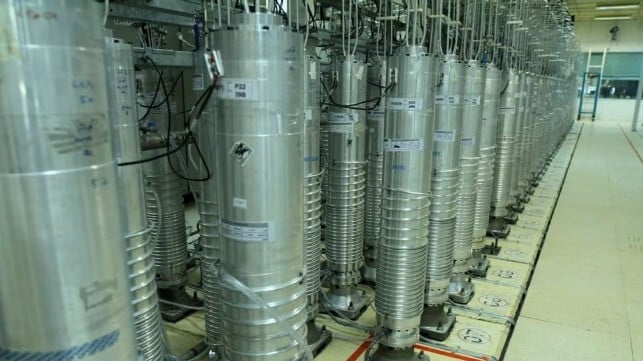
Centrifuges used in uranium enrichment at an Iranian nuclear facility (file image courtesy AEOI)
Shehbaz Sharif, the prime minister of Pakistan, which served as the key negotiator between the U.S. and Iran, announced on June 14, 2026, that the two sides had agreed on a deal to end the war. It will be officially signed on June 19 in Switzerland.
President Donald Trump announced it on Truth Social as a triumph, claiming that the Strait of Hormuz is open for everyone, the U.S. blockade has been lifted, and the oil is flowing again. What Trump did not mention was Iran’s nuclear program and what happens to its enriched uranium stockpile, one of the main reasons cited for starting the war. The nuclear issue – along with core issues such as ballistic missiles and Iran’s proxies – has been deferred for 60 days.
This raises two important questions: What was the war actually for? And what did the U.S. achieve? As an international and nuclear security expert, I believe the answer is nothing – and in the process the U.S. lost credibility as a negotiating partner.
Why the nuclear question is the hardest
The “rationalist theory of war,” as developed by political scientist James Fearon in 1995, identifies three problems that drive states to war when they would prefer to reach a deal: incomplete information about each other’s resolve; the inability to credibly promise a deal or commitment; and what international relations scholars call the indivisibility problem – when the thing in dispute cannot be split or shared, because it leaves no middle ground to settle on.
The war clarified the first reason. Each side saw what the other would actually do – how much force the U.S. was willing to use and what Iran could absorb while still staying in the fight. What the war could not solve was the nuclear commitment problem. And this goes far back between the U.S. and Iran.
Iran adhered to the 2015 Joint Comprehensive Plan of Action [JCPOA], the landmark nuclear deal that restricted Tehran’s nuclear program. The International Atomic Energy Agency verified that Tehran kept uranium enrichment to 3.67% and its stockpile under 300 kilograms – a concentration used to fuel a power reactor but far too low for a weapons program.
But the U.S. walked away in 2018, and Trump later called it “the worst deal ever” over its sunset clauses and on its silence on Iran’s ballistic missiles. Iran returned to negotiations in 2025, and the U.S. and Israel bombed Iran while those talks were still taking place. Similarly, in February 2026 the negotiations were ongoing and a deal was within reach when Israel and the U.S. struck Iran – killing Supreme Leader Ali Khamenei and lead negotiator Ali Larijani.
The U.S. has demonstrated a record of reneging on its deals and breaking the negotiating process. Which is why Iran now insists on guarantees and demands sanctions relief before signing a deal, and not just good faith.
A state that previously kept its commitments and was still bombed has little reason to accept promises of relief in the future. For this reason, I believe the 60-day deferral is a window for Tehran to watch whether the U.S. and Israel will hold the ceasefire on all fronts, including Lebanon.
The third problem of indivisibility – when the thing or issue in dispute can’t be split or shared – is why the nuclear question is the hardest. Most disputes can be split. Sanctions, for example, can be lifted by degrees. Even a nuclear program can be split, which the world saw in the Joint Comprehensive Plan of Action deal, with centrifuges counted, enrichment capped and a stockpile metered.
What cannot be split is the U.S. demand for zero uranium enrichment and Tehran calling uranium enrichment a sovereign right.
A deal, a war and a ceasefire
The 2015 nuclear deal also limited Iran’s centrifuges – the machines that do the enriching – and placed Iran’s nuclear program under the most intrusive inspections, all in exchange for sanctions relief. The nuclear question was not part of the 2015 deal – it was the actual deal.
During the June 2025 negotiations with Iran, and again in February 2026, the U.S. position was about the nuclear program, but in the opposite direction from the Joint Comprehensive Plan of Action. It was not about limits but the total elimination of Iran’s nuclear program.
In both rounds of talks in 2025 and 2026, Washington’s envoy, Steve Witkoff, demanded zero enrichment and the dismantling of Natanz, Fordow and Isfahan – Iran’s three most important nuclear sites. Iran called enrichment a sovereign right and refused.
Both rounds of negotiations ended in bombings.
The current deal to be signed on June 19 does not put a cap on Iran’s enrichment, nor does it discuss the elimination of its nuclear program. It ends the fighting, reopens the Strait of Hormuz and consigns enrichment, the stockpile, missiles and Iran’s regional proxies to 60-day negotiations.
In a recent New York Times interview, Trump said he was in no rush to remove the near-bomb-grade fuel still buried under the bombed sites. He claimed Iran would suspend enrichment for 15 or 20 years and enrich only for nonmilitary purposes.
In the Joint Comprehensive Plan of Action deal under President Barack Obama, the nuclear question was addressed where 97% of Iran’s stockpile was shipped out of the country and the cap was a verified fact.
Because it doesn’t address any of these issues, the Trump deal is a ceasefire agreement, not a nuclear agreement.
A costly return to the status quo
Going back to the bargaining theory, we know the war settled the information problem – it revealed what each side would endure.
The commitment problem remains. Neither side can yet make a promise the other believes, least of all an Iran whose negotiators were killed.
And I believe the indivisibility problem is now worse. The question of zero enrichment versus a sovereign right cannot be split. The current 60-day deferral is not a resolution. It is the same unsolved problem with a clock attached.
The one thing that could change is American restraint. If Washington holds Israel from striking Iran and Lebanon, it can slowly rebuild its credibility that was destroyed by the two wars. And that is a real challenge for the Trump administration.
Even as the deal was being finalized, Israel struck Beirut, the kind of action that can derail any talks.
In my view, the 60-day window should be read not as the path to a settlement but as the interval or pause before the next one fails. I argued in April that this conflict would not end in a clean settlement but in a series of contested pauses. The deal to be signed on June 19 is the first of them.
Iran emerges with its enrichment knowledge intact, its stockpile buried and fresh reason to believe that only a nuclear weapon would have deterred the U.S.-Israel attack.
But Iran also knows that it stood its ground and was able to strike U.S. bases and allies in the region. It has discovered leverage it did not previously know it held. The Strait of Hormuz has proved a better deterrent than the nuclear bomb.
The strait is open, the oil is flowing, and the question the war was fought over sits exactly where it began. Thousands of lives were lost to arrive back to square one. Nobody has won, though both sides will say they did.
Farah N. Jan is a political scientist and Senior Lecturer teaching in the International Relations Program at the University of Pennsylvania.
This article appears courtesy of The Conversation and may be found in its original form here.
The opinions expressed herein are the author's and not necessarily those of The Maritime Executive.
It is clear now that even if an agreement is signed between the United States and Iran imminently, it will only establish an agenda to be negotiated over the next few months. Israel is not party to the potential agreement and has the capacity to act independently should negotiations proceed in a way that jeopardizes Israeli national security. There are also a series of contentious issues that could cause any extended ceasefire to break down should the negotiations reach an impasse. During the negotiations, both the United States and Iran, for different reasons, will want to maintain progress — but Iran faces far greater economic, fiscal and, ultimately, political peril if the negotiations were to collapse, because it is in imminent danger of losing the oil revenues that have so far kept its government machine running.
After the US Navy imposed its blockade on Iranian ships and ports on April 13, Iran was able to continue selling oil — not only from the stockpile it had built up for just such a contingency, but also from laden ships that were still on their way to import terminals in China. These ships have mostly discharged, and Chinese importers are now drawing heavily on the Iranian reserves held afloat in Asia.
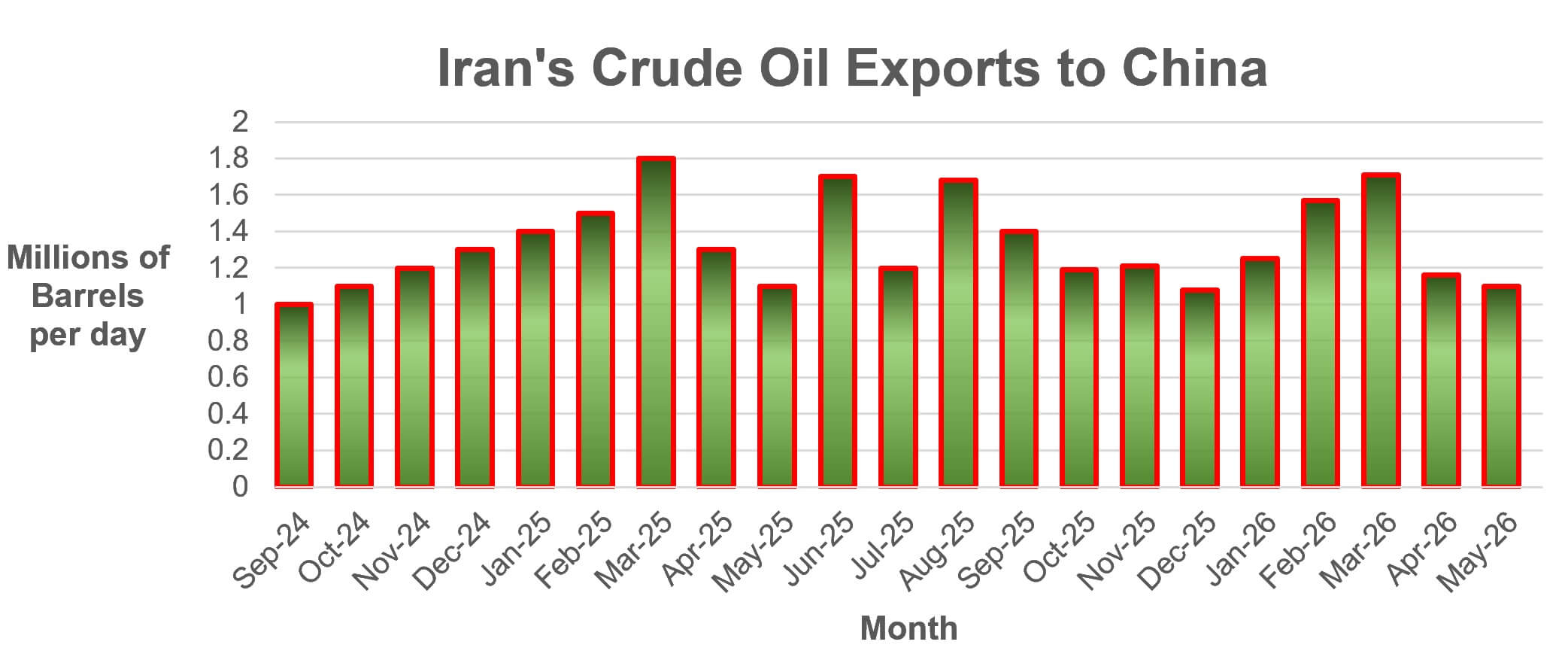
China has for many years bought about 90% of Iranian oil exports. Chinese purchases over the last month have fallen considerably, and what China has bought has come almost entirely from the stock built up before the war and held afloat off China and Malaysia. (CJRC/Kpler data)
According to Kpler statistics, Iranian oil stocks held afloat appear to have declined from 192 million barrels in mid-April to about 140 million barrels at the end of May, of which about half is trapped inside the US naval blockade. The roughly 50-million-barrel drawdown over the last month appears to have come almost wholly from the stock held afloat off Malaysia and China.
If this trend continues through June, and another 50 million barrels are taken from the stock off Malaysia and China, then that reserve will be nearing empty. The Iranians are in trouble whatever transpires, as even if oil afloat within the US blockade is released, it will still take time to ship it to Asia. Any delay in reopening the Strait and lifting the blockade will merely prolong the damage to Iranian revenues and make matters even worse.
Whether the blockade is lifted or not, Iran is therefore likely to start suffering significant financial pressures by the end of June, unless it can persuade its friends to extend it credit. A shortage of revenue affects the ability of the Iranian government to soften the impact of the war on Iranian consumers by offering increased subsidies and handouts, which are important factors in maintaining social stability. In resolving the situation, the Iranians can no longer depend on the guile of their dark fleet operators and sanctions evaders; the US Operation Economic Fury is making it a much more perilous undertaking to evade US sanctions, and in the offing are further seizures of Iranian oil held afloat in sanctioned tankers or blockade runners.
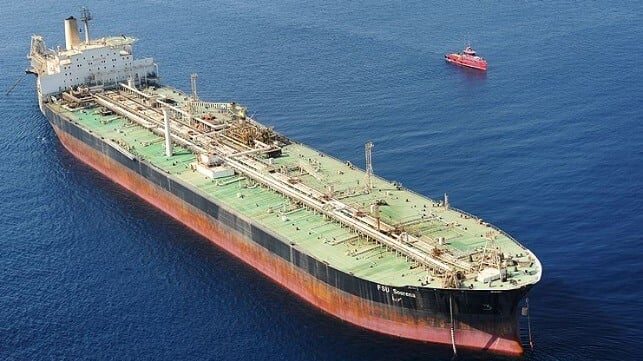
Reinforcing this picture, there have been no substantial loadings at Kharg Island for several weeks now. At the Kooh Mubarak Single Point Mooring, no tanker has been seen loading since June 1, reflecting only sporadic use of the facility and probable restrictions on the flow of crude reaching the terminal from the collection point at Goreh in Bushehr Province.
Others will be affected, but not to the degree that Iran will. Oil consumers, suffering from the loss of 14 million barrels per day of oil that used to come through the Strait of Hormuz, appear to have adjusted to the shortfall, which has been compensated for by US reserve drawdowns and by the rise in price, which has curbed demand. China does not appear to have used much of its strategic reserve and has enough to keep going without major economic upset for several more months; in any case, China generates about 85% of its energy needs from its own internal resources, including nuclear, coal and wind power. Supply of LNG, where demand is more inelastic, presents more of a problem if the Strait stays closed for longer, but traders in London think current prices have not yet risen high enough to bring about significant demand destruction — in other words, the market can still absorb more difficulties ahead.
Within Iran itself, these difficulties are not being aired publicly. Instead, Paydari and IRGC hardliners have been ramping up their bombast and defiance in a coordinated propaganda campaign, to disguise the danger and to bolster the Iranian negotiating position. This should not be interpreted as confidence, but rather as an awareness of what peril lies ahead unless a settlement can be achieved quickly with the United States, whose negotiating position is much stronger than is generally assumed.
Column: Is the Iran war just an energy shock – or a turning point?
(The views expressed here are those of the author, Clyde Russell, a columnist for Reuters.)
The Iran war’s disruption to global crude oil and LNG markets is already being measured in lost barrels and higher prices. Now, with a US-Iran peace deal expected to reopen the Strait of Hormuz, the reckoning begins: was this a watershed moment, or merely another blip?
Consider two precedents.
The Volkswagen “Dieselgate” scandal over rigged emissions tests in 2015 seemed innocuous at first, but signalled the demise of diesel passenger cars and the rise of electric vehicles (EVs).
By contrast, Russia’s 2022 invasion of Ukraine caused a dramatic surge in energy prices, yet the market’s ability to reroute flows and absorb the shock meant the impact proved short-lived.
Certainly, the market has so far worked its magic in dealing with the effective closure of the Strait of Hormuz since the US-Israeli attacks on Iran began on February 28.
At least 1 billion barrels of crude oil and refined products have been lost from Middle East producers such as Iraq, Kuwait, the United Arab Emirates and Iran itself.
As much as 20% of global liquefied natural gas supply is also trapped in the narrow waterway between Iran and Oman.
A combination of strategic and commercial inventory releases and a dramatic reduction in imports by China, the world’s biggest crude importer, has helped keep benchmark Brent crude futures under $100 a barrel for much of the current crisis.
It could also be argued that optimism about a deal to reopen the Strait has played its part, with traders seemingly willing to believe President Donald Trump’s numerous social media posts that an agreement was imminent.
That long-awaited deal began to materialize on Sunday when the US and Iran announced they had agreed on a framework that could allow vessels to resume transit. By Monday, Trump said oil tankers were starting to move out of the Strait.
While full details of the agreement have yet to be publicly revealed, the prospect of tankers soon entering and exiting the waterway without hindrance raises the question of what happens next.
The first effect would be a short-term sugar hit of relief for energy markets as tankers trapped in the Gulf exit and deliver cargoes.
This would be followed by efforts to restore flows and supply chains to pre-war levels, and by the longer process of rebuilding depleted inventories.
This could mean crude oil and LNG prices stay higher for longer as the lost barrels are replaced, but much will depend on how rapidly Middle East producers are able to ramp up output and exports, and whether the OPEC+ group is actually able to pump the higher volumes it has agreed to produce.
Behaviour changes?
But the bigger question is what the long-term impact will be.
Much will depend on the view taken by both consumers and governments, especially in energy-hungry Asia, the fastest-growing region.
Consumers who have the ability to change are likely to consider switching to electric or hybrid vehicles to insulate themselves from future diesel and gasoline price shocks.
An early snapshot of how this may look is provided by Australia, the world’s biggest importer of diesel and a country reliant on overseas refineries for over 80% of its fuel requirements.
Australian EV sales hit a record high in May, with a market share of 20%, and when combined with hybrid vehicles, the share climbed to 46%.
This is approaching levels in China, the leading EV manufacturer, where EVs and hybrids accounted for more than 50% of sales in 2025, and rose to 60% in May this year.
Government policies are also likely to shift in favour of boosting renewables and electrification over fossil fuels.
Dieselgate saw the motor fuel fall out of favour, especially in Europe, where its share of passenger car sales dropped from around 52% in 2015 to under 10% by 2025.
Asian countries such as Vietnam are already putting in place policies to encourage EVs and electric scooters, and that momentum is likely to grow across the region.
LNG is also at risk in Asia as countries weigh the security risks of an imported fossil fuel against buying solar panels, wind turbines and battery storage from China, or developing domestic industries with Chinese backing.
One fossil fuel that may emerge as a long-term winner from the current crisis is coal.
Countries with vast domestic reserves, such as China, India and Indonesia, will be tempted to keep using the fuel given its cost advantage and supply security, even if it makes reducing carbon emissions more challenging.
Importing countries may also deem coal a safer bet, given that the major exporters – Indonesia, Australia and South Africa – have traditionally been reliable suppliers and that shipments aren’t at risk from chokepoints like the Strait of Hormuz.
However, a long-term shift away from crude oil and LNG isn’t assured, as producers and exporters of these fuels are unlikely to take their demise lying down.
Getting people to forget the last crisis may be as simple as ensuring prices drop rapidly and stay low for an extended period. The early market reaction – with Brent tumbling 4% to $83 on the deal announcement – suggests that process may already be underway.
If diesel and gasoline vehicles are cheap to refuel and LNG can compete with coal and renewables, it’s possible that governments and consumers will forgive and forget the disruption and costs of the Iran war, much as they did after previous conflict-induced price spikes.
Search for Safety
War in the Middle East has offshore companies looking elsewhere.
(Article originally published in Mar/Apr 2026 edition.)
The world needs secure and reliable energy, now more than ever, and offshore E&P is one of the best ways to find it in the near term.
Energy companies have multiple options to shift future investments out of the shallow-water Arabian Gulf and into deepwater frontier regions where security risks are more manageable. Offshore oil and gas reserves are abundant along the continental margins of South America, West Africa and the Gulf of America – areas with the stability and political will to underpin development.
Now, with energy-consuming nations looking for long-term options to diversify oil and gas imports, offshore is well-placed to deliver – and profit.
KNOCKOUT PUNCH?
The ongoing conflict in the Gulf has had a substantial impact on oil production but may have longer-lasting effects on liquified natural gas.
Seaborne gas exports have to be loaded out at LNG liquefaction terminals, and the largest LNG complex in the world – Ras Laffan, the plant for Qatar's vast North Field offshore gas reservoir – was damaged by an Iranian missile strike. In one night, the attack on Ras Laffan reduced worldwide LNG export capacity by 13 million tons per annum, roughly three percent of the global total.
Repairs will take up to five years.
Luckily, the rest of the offshore industry is well-positioned to step up and add more capacity over the same period. Major gas projects make up a large and promising share of the future offshore E&P portfolio overseas, even in areas better known for oil, like the eastern continental margin of South America.
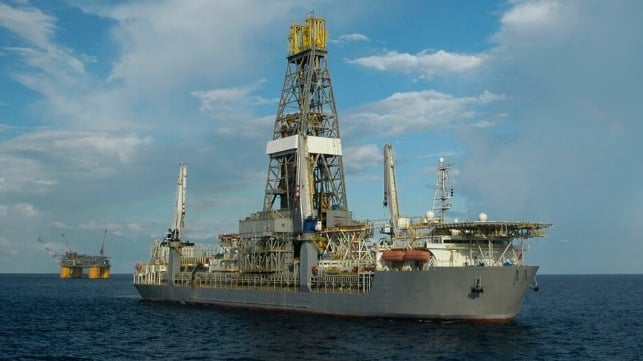
ExxonMobil's Longtail FPSO is a case in point. Located in the prolific Stabroek Block lease area off Guyana, it will be able to process 1.2 billion cubic feet of gas per day, more than any FPSO ever built. Next door, in the thriving Brazilian offshore market, Equinor is investing $9 billion to develop the massive Raia gas find in the Campos Basin. It's the Norwegian oil major's largest overseas project ever and upon completion will supply about 15 percent of Brazil's domestic natural gas needs.
FLNGs TO THE RESCUE
Shipyard-constructed FLNGs (floating liquefied natural gas facility) will go further towards filling demand for transportable, tradeable natural gas. FLNGs are massive offshore vessels designed to extract, liquefy, store and offload natural gas directly over a gas field at sea.
Rystad Energy forecasts that FLNG capacity will quadruple in ten years from 14 mtpa in 2024 to 55 mtpa in 2035. That extra boost alone will zero out the loss of two trains at Ras Laffan.
FLNGs are smaller than onshore plants and have their own technical challenges, but they've matured as a practical solution to onshore challenges. A fully offshore liquefaction-plant footprint requires no export pipeline, no mobilization for onshore construction and less physical exposure to the local security environment on land – ideal for remote projects in the developing world.
FLNGs' security advantage has proven itself in the Rovuma Basin frontier gas region, some 40 nautical miles off Mozambique. Eni was first to market in the region by a wide margin with one FLNG in production and another nearing completion.
By contrast, TotalEnergies chose to build a mega-sized LNG plant on shore in order to export its planned production from the Rovuma Basin. The plant site is exposed to the security situation in northern Mozambique, and development has been set back by five years due to an Islamist insurgency. First LNG at the TotalEnergies plant will not arrive until 2029, ten years after its launch.
Due in part to the same security-related delays, Exxon is still short of a final investment decision for a neighboring Mozambican project after years of planning.
CLOSER TO HOME
Offshore gas has a major role to play in Europe's energy security, and future supplies could come from close to home, thanks to frontier developments in the Mediterranean.
Exxon and Chevron are making big moves to explore for gas off the coast of Greece and on an expedited timeline. New offshore gas supplies can't come too soon, according to Greek Energy Minister Stavros Papastavrou. "Europe thought that dependence meant stability and that Russian gas was cheap. But one can't call something cheap if it's not safe. And Europeans learned this the hard way," Papastavrou told a panel at this year's CERAWeek conference in Houston.
As the operator of Israel's Leviathan gas field and a partner in two others nearby, Chevron is already a leader in the Mediterranean. It's also the chosen E&P partner (with Qatari backing) for offshore gas exploration off Syria – a first for the country's energy industry and a sign of the American oil major's willingness to go first in politically-challenging environments.
The area could hold trillions of cubic meters of undiscovered gas deposits, just like the rest of the Levant Basin where exploration has turned up multiple supergiant fields. Syria is in dire need of revenue for rebuilding the local economy and is motivated to bring its first offshore gas project online by the end of the decade.
"Before the summer, God willing, we will start mobilization and drilling," Syrian Petroleum Company chief Youssef Kabalawi told AP in February.
FUTURE OPPORTUNITIES
Frontier offshore regions like these could become even more attractive to oil majors in the wake of the Gulf conflict.
Brent oil futures rose by nearly 60 percent in March and settled comfortably above $100 by the end of the month. If sustained, "higher-for-longer" prices would help make the business case for offshore projects in calmer parts of the world.
But for now, the offshore drilling industry is taking it slow, says ABS' Senior Vice President of Global Offshore, Miguel Hernandez: "Clients are controlling expenses and generating revenue with existing assets right now. We see forward progress, but companies are moving cautiously. Regionally, South America and West Africa remain the big focus areas. These are important regional hubs and the future of deepwater production."
For shipowners in the business of supporting offshore drilling and production – operators of subsea, offshore supply and offshore construction vessels – the current market sentiment is favorable, says Jake Scott, founder and managing partner at shipping investment firm Easterly Clear Ocean. Large numbers of offshore vessels are bottled up in the Arabian Gulf, with positive commercial effects for owners outside the region.
"The subsea guys and a lot of these offshore folks move equipment around as they need it to meet multiyear commitments," Scott explains. "All of a sudden that equipment is no longer available. When are you going to get it? So you're seeing greater optimism in the space. You're seeing more contracting outside the Gulf as a result."
ROBOTS AT WORK
Offshore projects depend heavily on economics and cost control, and improved technology is one of the fastest ways to get there.
From planning drill paths to maintaining platforms, the offshore energy industry is at the cutting edge of adopting industrial AI and automation. E&P firms recognize the value of digital automation for speed, standardization and labor-saving, including in the "red zone" of the drill floor.
Transocean's two "eighth generation" drillships are at the forefront of the trend.
The drill rigs aboard Deepwater Atlas and Titan are highly automated, and humans rarely need to enter the working area. "We now have robots working offshore on an ultra-deepwater drillship running a riser in 10,000 feet of water without a single person being involved on the rig floor apart from the driller," said Keelan Adamson, Chief Operating Officer at Transocean, in an interview during the first ship's debut.
It's not just about safer, more cost-effective offshore drilling. Automation is also driving efficiencies on production platforms by improving predictive maintenance and speeding up troubleshooting.
VROC, an industrial AI company with experience offshore, says that an AI maintenance management system's value is in providing decision support to engineers. By analyzing data from a panoply of equipment sensors all at once – vibration, pressure, temperature, electrical loads and more – the software can provide a platform's engineering team with a set of probable options for the root cause of a problem along with a detailed explanation of which sensor values are abnormal.
This speeds up the process of identifying the right fix, cutting downtime and potentially saving tens of thousands of dollars per day in lost production. BP is an early adopter of AI-driven maintenance prediction and troubleshooting in the U.S. Gulf and claims strong early results.
CLASS APPROVAL
The top class societies are fully on board with AI offshore and are lending their expertise.
"As the world embraces more digitalization, remote operations and AI," says ABS' Hernandez, "ABS is evolving our tools and services as well. This supports our clients by giving them better predictability and knowledge of their assets, which can add days of up time and greater value."
Getting the implementation right is the key, says DNV, which recently carried out a comprehensive AI safety review for Norway's offshore regulator.
Training an AI model to succeed in offshore asset management requires a high-quality maintenance dataset, carefully managed to ensure completeness and relevance. With buy-in and support from engineers, the model should be kept up to date in order to counteract drift between its original training and the state of current operations, DNV advises.
The opinions expressed herein are the author's and not necessarily those of The Maritime Executive.