It’s possible that I shall make an ass of myself. But in that case one can always get out of it with a little dialectic. I have, of course, so worded my proposition as to be right either way (K.Marx, Letter to F.Engels on the Indian Mutiny)
Why are we so angry? The easy, lazy and entirely wrong explanation is that our technologies are to blame: the Internet, smartphones, social media, artificial intelligence, and so on.
So why are we so anxious, and angry? Take the average 20-year-old in Australia: born into the aftermath of the 2008 Great Financial Crisis, they have seen companies reap record profits while for ordinary Australians the prospect of affordable housing has slipped ever further from their grasp.
They grew up in the shadows of the unresolved conflicts in Iraq and Afghanistan and today encounter a daily dose of death and destruction in the reporting from Ukraine, Gaza, Iran and other conflict hotspots. They spent their most formative teenage years in COVID lockdowns and Zoom schooling, while conspiracy theorists tried to convince their parentsthat the pandemic was a hoax perpetuated by some global cabal.
They’ve experienced more than a decade of the hottest years in human memory during their lifetime, most likely lived through one or more natural disasters in their area and yet have seen utter political inaction on the climate crisis. And those of us who are older have simply experienced all that for longer.
So how could they, and we, not be anxious and angry – regardless of whether we use smartphones and social media, or not? As David Weinberger wrote as early as 2004, in his fabulous take-down of the ‘echo chamber’ fallacy, “the problem with an extraterrestrial-conspiracy mailing list isn’t that it’s an echo chamber”, facilitated by the digital platforms of the day: rather, the problem is “that it thinks there’s a conspiracy by extraterrestrials”.
The same goes for climate crisis denialists, anti-vaccination activists, sovereign citizens, far-right extremists, and other anti-social, anti-societal, and anti-democratic groups: it’s their angry, extreme, exclusionary and uncompromising views that are the problem, rather than the technologies they use to express and spread them; if they didn’t have X as a platform that actively endorses their views, they’d find another.
Wherever that anxiety and anger comes from, whether ‘the Internet’ (whatever that means these days) or the other threatening scenarios: together they have highlighted the complex world we live in.
Conspiracy as comfort
Let’s take one example: the observation that pandemics like COVID-19 simply happen from time to time and that there’s little more we can do than simply to prepare for the next one, is entirely correct, of course, but also deeply unsatisfying. It’s a great deal more convenient to comfort ourselves with fairytales of bioweapon factories, lab leaks, depopulation agendas, or interference by the Illuminati, aliens, or the Antichrist: they provide a concrete target for our anxiety, anger and action.
Where our modern communication technologies do come in is in the fact that they’ve made all that information – ‘real’ as much as ‘fake’ – so much easier to access and circulate, globally and instantly.
This substantially contributes to an information overload: we can readily access WHO reports about the pandemic and its causes, the more or less careful and insightful coverage of those reports by the world’s media, but also the ‘explainer’ writings and videos of conspiracy theorists and influencers that cherry-pick and misrepresent those facts in order to perpetuate their ‘alternative’ worldviews.
We’re overloaded by this infoglut: we, all of us, have neither the time nor the subject matter expertise to be able to reliably distinguish verified facts from made-up stories, or well-supported conclusions from far-fetched conjecture.
Ironically, the problem we are facing – the reason we are so angry – is the very opposite of the claims made by those still peddling the ‘echo chamber’ and ‘filter bubble’ fallacies that see us all in self-insulating bubbles: rather, the hyperconnectivity enabled by our current media environments produces an information overload which we are ill-equipped to process or reduce.
We may not consciously articulate this all the time, but deep down we recognise this, and that makes us anxious, and even angry; for many, the coping mechanism is to reach for easy explanations and ready-made scapegoats (elites, migrants, secret societies, other countries – or generally, others who simply are not like us).
But that story isn’t new; in fact, it is perhaps as old as humanity itself, even if it now plays out across a different media landscape.
It can’t be solved by banning smartphones, or social media, or AI; indeed, conspiracy theories and other disinformation usually only reach a broader audience when they’re also amplified by politicians, celebrities, and mainstream media.
Anxiety fuels scapegoating
Uncertainty produces rumours, which generate anxiety, which results in the scapegoating and exclusion of others; the commercial imperatives of mainstream media as well as social media encourage this further, as both seek sustained audience engagement.
Any attempts to deal with these destructive dynamics must focus first and foremost on the underlying causes of our anxiety and anger, of course; to return to where we started, as governments in Australia and elsewhere are beginning to find out, you don’t make young people less anxious by preventing them from communicating about their anxieties, but by paying serious attention to their actual concerns.
At the same time, we must confront the challenges of hyperconnectivity and information overload more directly, and central to this is to improve literacy in all its forms. This includes, of course, news and digital media literacy, to enable citizens better to distinguish quality, reliable information and sources from those that seek to mislead and enrage them; societal and civic literacy, to improve public understanding of the mechanisms of government and governance in Australia and elsewhere.
We must also ensure that citizens understand their individual rights and (just as importantly) obligations towards others within society, and enhance scientific literacy (across both social and natural sciences) to prevent them from falling prey to scientistic cherry-picking, whether on climate change or the effects of social media use.
Together those initiatives aim to save Australia from a trajectory that promotes deeply polarised, winner-takes-all politics as we see it played out in US politics. Instead, they redirect citizens towards an understanding of political debate that is oriented towards workable compromise between legitimate diverging opinions, even if consensus remains unattainable.
Indeed, education at all levels, from primary to tertiary and beyond to lifelong learning, is central to this, and a substantial boost in investment will be required even just to avoid a further decline in media literacy levels across the population in the short term. All the more important that we confront this urgently, then: if we don’t, we’ll only grow more anxious and ever more angry.
About the author: Axel Bruns is an Australian Laureate Fellow and Professor in the Digital Media Research Centre at the Queensland University of Technology, Brisbane.
About 360info 360info provides an independent public information service that helps better explain the world, its challenges, and suggests practical solutions. Their content is sourced entirely from the international university and research community and then edited and curated by professional editors to ensure maximum readability. Editors are responsible for ensuring authors have a current affiliation with a university and are writing in their area of expertise. View all posts by 360info →
Sunday, September 20, 2026
Carney is right on EU associate membership — the name is irrelevant, the politics aren’t
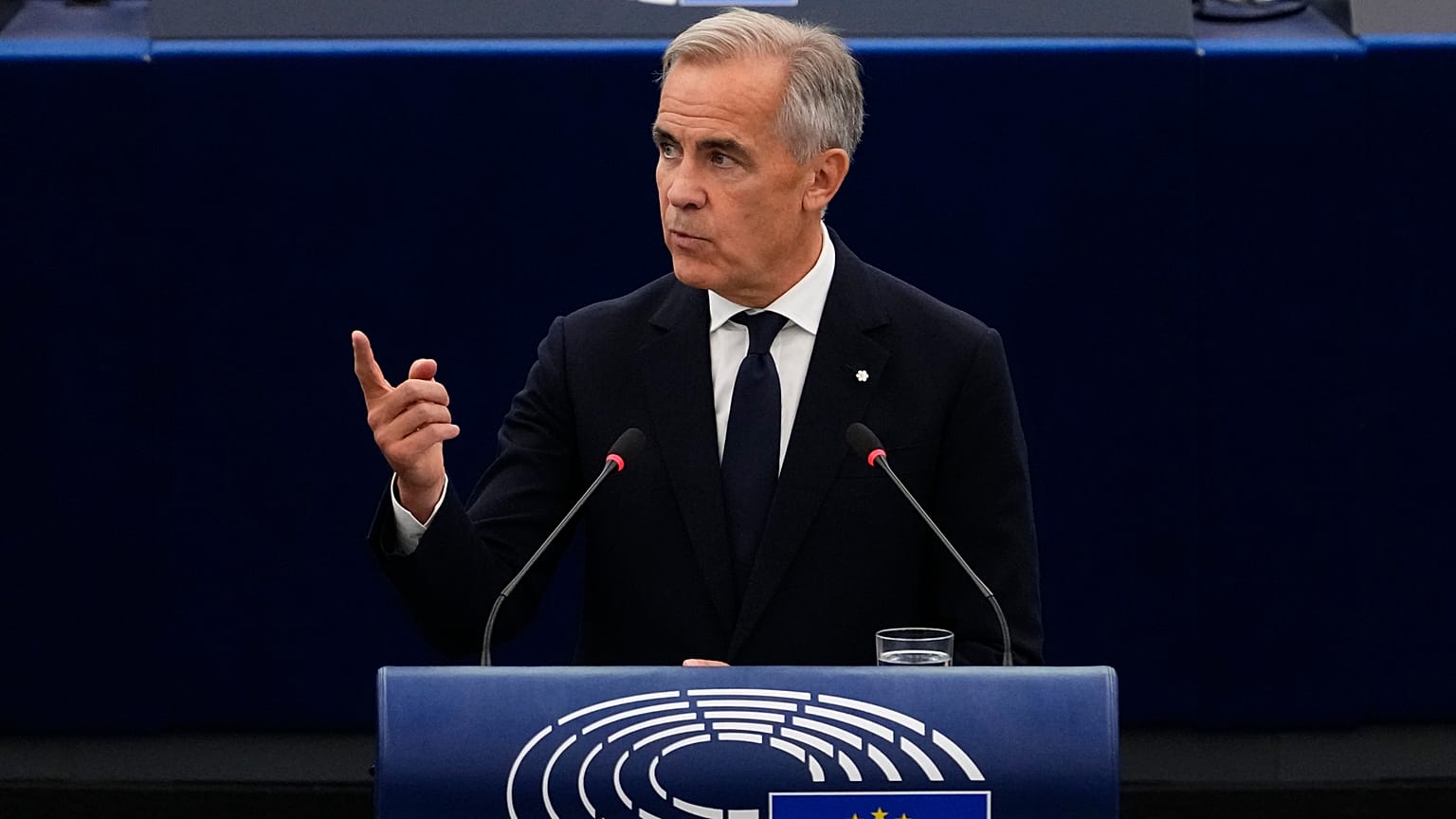
Copyright Canadian Prime Minister Mark Carney addresses the European Parliament in Strasbourg, France
Each week, Euronews’ chief Europe editor Maria Tadeo debriefs the ins and outs of continental politics. This week, reporting from Strasbourg, she examines the EU’s pitch for associate membership for Canada.
Welcome back to this newsletter, written en route from Strasbourg to Brussels, after a week of parliamentary coverage. In case you missed it, Mark Carney stole the show and Canada is our new associate BFF, whatever that means.
It's easy to be cynical about the Canadian Prime Minister, but anyone who makes an intellectual effort citing Goethe on a Thursday morning gets my attention amid the sea of poor orators that populate the annual State of the Union (the EU's, to be clear).
Carney chose his references deliberately, reaching for Faust right off the bat. One can only hope the MEPs — including the gentleman who shouted "USA! USA!" as he took the stand — appreciated the reference. Goethe argued that freedom is neither a condition nor a possession: it must be conquered. Nor can it be taken for granted, as freedom is as fragile as it is precious.
Carney evoked that spirit from the get-go of his six-page address, taking the hemicycle on a journey through the forest of Ettersberg. Nur der verdient sich Freiheit wie das Leben, der täglich sie erobern muß (Only those who strive for freedom every day are deserving of it). Canada and the EU share that spirit, he told the European Parliament — and both are being tested on their ability to forge their own paths.
His pitch? A new alliance between two sovereign blocs that looks beyond zero-sum geopolitics and builds on their complementary strengths and dependencies. A single tree, he said, can fall in a storm; a forest will not. For Europe, as for Canada, the storm has three names: Trump, Xi, Putin.
Still, lumping them together would be intellectually lazy. The US doesn't threaten Europe's security architecture the way Russia does — NATO is still largely bankrolled by American taxpayers. Nor is China's economic predation on the European industry the result of Trump's economic agenda.
But together, they have upended the status quo on both sides of the Atlantic and left Europeans feeling defeated, orphaned from a political offer that stands up to bullies. Carney is now their patron saint and newfound maple hero.
You could say this is simply a rerun of speeches we've heard before.
Carney himself said as much in Davos at the start of the year, calling for an alliance of middle powers to stabilise a world increasingly governed by brute force. In 2023, cameras caught China's Xi telling Putin that the world was witnessing changes not seen in a century. He was right. The question is whether nations can still decide their own paths, seal their own alliances, and resist the pull of the tide.
Carney is playing politics — that's true. He owes his political success to Donald Trump: going elbows-up on the US, walking away from lopsided trade talks, and putting sovereignty above all else has resonated with Canadians — a country whose sole raison d'être is not being America.
Carney, a product of the establishment and elite education, would never have been elected had it not been for Trump's provocations, and yet he is now the most popular Canadian PM; every dust-up adds points.
His political calculus is very different to that of the EU, which desperately sought to cool down tensions and had the head of the European Commission, Ursula von der Leyen, inking a deal on American terms. And that stings. Large swathes of the European electorate are hungry for political courage — courage von der Leyen lacks, and would struggle to project even if she had it, since doing politics has never been her strength. In Carney, Europeans see an alternative.
Von der Leyen has amassed enormous power. She could have been a transformative Commission President; instead, she plays it safe. Let's be honest: Carney saved her State of the Union address — without him, she would have had little new to say. Too afraid to raise the question of joint debt and European financing, her "independence" moment comes without financial muscle.
Mario Draghi put a number on the cost of an independent Europe: €800 billion a year. You cannot implement the Draghi report without addressing the elephant in the room — but she won't touch it. You can argue her institutional neutrality doesn't allow for it, but her peer Christine Lagarde has no problem sayingEurope should at least debate joint borrowing.
Plenty can be said about the tribulations and hurdles ahead for a transatlantic partnership meant to deepen trade, cultural, political and educational ties.
CETA is proof enough: the Canada-EU trade deal, still unratified in countries like France, was painful to negotiate and remains unpopular in sectors like agriculture (and farmers are untouchable in Europe).
Most MEPs we spoke to on the floor told us they didn't quite understand what an associate member would look like, but welcomed the move. The head of the European Parliament, Roberta Metsola, went a step further, telling Euronews in an exclusive interview that Canada could pave the way for other countries "with so much in common," like New Zealand and Australia. My colleague Vincenzo Genovese overheard a group of Renew MEPs debating the interview over lunch — that's zeitgeist for you.
It’s tempting to write this pairing off as bluff — I mean, they can’t even agree on a name: an alliance for the future, or associate membership? But dismiss it at your peril, because Carney is right: at this point, the nomenclature is irrelevant.
What matters is the political signal, and it's not a futile one — just ask the US president, who has already threatened tariffs if the two turn hostile to American interests. As you know, in MAGA world, you either align or you get punished. And yes, the US already has a deal in place with the EU which cut tariffs on American products.
Before I go, I want to thank our team of reporters, correspondents, producers and cameramen for two marathon days in which Euronews brought you 16 interviews, an exclusive sit-down with the Parliament's President, the Commissioners that mattered on the day, and non-stop coverage. It's long hours and it's not easy. I had cold chicken nuggets for dinner each night, and believe me, you don't want that.
But we take pride in what we do, and Euronews is Europe's newsroom — time to consider an antenna in Ottawa.
Macron, Carney hail new chapter in France-Canada ties at symbolic archipelago meeting French President Emmanuel Macron and Canadian Prime Minister Mark Carney on Sunday called for stronger bilateral ties in the face of new global threats at a meeting on Saint Pierre and Miquelon, a French territory off Canada's Newfoundland. The first-ever visit by a Canadian leader to the North Atlantic archipelago came as both countries have increasingly awkward relations with the US.
French President Emmanuel Macron said France and Canada were "two great independent nations who want to stay that way" in a joint news conference with Canadian leader Mark Carney Sunday.
Carney, visiting France's tiny North Atlantic territory of Saint Pierre and Miquelon just off the Canadian coast, said the moment had come to tighten links with France and the European Union.
The leaders' meeting, in the tiny overseas French territory off the coast of Canada's Newfoundland came as both countries have increasingly awkward relations with the US under President Donald Trump.
The meeting came days after Carney embraced the prospect of Canada becoming the European Union’s first associate member, saying closer ties with the continent would ensure no country could control Canada’s markets or undermine its sovereignty.
Trump’s tariffs, demands for economic concessions and repeated talk of making Canada the 51st state have pushed Ottawa to reduce its dependence on its neighbour and pursue deeper economic, security and political relationships with Europe.
At a joint press conference in Saint Pierre and Miquelon on Sunday, Macron said the two countries would work together for closer ties on fishing, security and energy.
"We both believe in democracy, the rule of law, respect for international law, respect for free and fair trade, science as the basis for our decisions, and the strategic autonomy that we defend," he said.
Carney called for joint action to counter new challenges. "Our societies are being shaken by new storms: the upheavals, caused by climate change, the erosion of democratic norms, and new threats to our sovereignty," he said. "The time has come to strengthen our ties." Fuel, critical minerals and rare earths
Earlier Sunday, Macron posted a video on X of him welcoming Carney at the airport.
"In a world in crisis, our friendship is a strength," said Macron. "Together, we affirm our sovereignty, our freedom to decide and our willingness to build a future of peace and prosperity," he added.
Macron also said that Sunday’s talks are part of broader efforts to help France secure oil and gas supplies as the Iran war disrupts global energy markets and raises fears of higher prices for fuel and other essentials.
“Canada is a country with significant resources of critical minerals and rare earths. It is also a major oil and natural gas producer,” Macron said. “What we want to do is conclude agreements to secure more liquefied natural gas that can be shipped to Europe’s Atlantic coast.”
The visit came weeks after Trump posted an image that showed the US flag draped over Canada, Greenland, Iceland, Mexico, Central America and the Caribbean and was labelled "United States of America".
It included Saint Pierre and Miquelon and French Caribbean territories.
Sunday’s meeting followed Trump’s announcement of a deal on Greenland that would expand the US military presence there while keeping the island under Danish control. The agreement followed months of threats by Trump to seize the semiautonomous territory of a NATO ally.
Macron welcomed the agreement Saturday.
“Danish sovereignty is being respected, international law is being respected,” he said. “Anything that helps ease tensions is a good thing.” Visit of symbolic weight
Diplomats said the visit by Macron, who was en route to the annual UN General Assembly of world leaders, had a symbolic weight following Trump's social media post.
France did not respond publicly to the post at the time.
For France, Saint Pierre and Miquelon is strategically important due to its location on the doorstep of the US and the Arctic, a French presidency official told reporters in a briefing ahead of the visit.
St. Pierre and Miquelon: History of French fishermen settlements
The territory also occupies a key place in France's cooperation with Canada, including over energy, one of the issues in focus for the meeting on Sunday between Macron and Carney.
Macron, whose government is facing increased pressure at home over rising fuel prices, said he would like Canada to broaden its exports of liquefied natural gas (LNG) to Europe rather than primarily Asia.
(FRANCE 24 with AFP, AP and Reuters)
Macron touts relationship with Canada in visit to Saint Pierre and Miquelon
Macron said he saw the planned meeting with Mark Carney as "a very strong gesture of friendship" and pointed to the Canadian leader's blossoming relationship with Brussels.
French President Emmanuel Macron hailed France's relationship with Canada during a trip to Saint Pierre and Miquelon this weekend.
Macron is visiting the French overseas collectivity from 19 to 21 September and is due to meet with Canadian Prime Minister Mark Carney there on Sunday.
Speaking to reporters from the archipelago, which sits just off the Canadian province of Newfoundland and Labrador, Macron said the goal of the visit was to help the territory "turn a new page" and gently pushed back on suggestions that the trip was intended to make a statement.
"We shouldn't be so obsessed with sending messages," he said, adding that France had "close friends" including Canada in the region.
On the planned meeting with Carney, Macron said he saw it as "a very strong gesture of friendship" and pointed to the Canadian leader's blossoming relationship with Brussels.
He also noted Canada's substantial reserves of critical raw materials and rare earth elements, as well as its liquefied natural gas production. He said France and the EU would be seeking contracts and arrangements to secure supplies of strategic minerals and LNG for Europe.
It comes after US President Donald Trump hit out at Ottawa and the EU following European Commission President Ursula von der Leyen's announcement that Canada could become the bloc's first "associate member."
Trump called the idea "laughable" but warned that if the move went ahead and he considered it "at all a hostile act," then he would put "very serious tariffs or stop trading with Europe on many things."
Earlier this month, Trump also posted an image on his Truth Social account showing a map of North America, including Saint Pierre and Miquelon and Greenland, marked with the US flag.
The US and Denmark announced on Friday that they had reached an agreement over Greenland, with Trump saying the deal would give Washington "permanent control" of the island's security.
Carney
Carney is due to arrive in Saint Pierre and Miquelon at around 12:30 pm local time, according to his office.
He will then attend a "working lunch" with Macron before the pair take part in a wreath-laying ceremony. They will later deliver a joint statement before Carney heads to Ottawa.
Macron is due to travel on to New York for the UN General Assembly next week - where Trump's Greenland security deal is also expected to be signed.
In a post on X on Saturday, Macron said he was "very proud and happy" to be in Saint Pierre and Miquelon.
"The ocean separates us, but what truly unites us are our values, a shared destiny, and the Republic," he wrote.
Macron welcomes Canada's Carney to French Atlantic territory
Saint-Pierre (AFP) – French President Emmanuel Macron on Sunday welcomed Canada's Prime Minister Mark Carney to France's tiny North Atlantic territory of Saint Pierre and Miquelon, just off the Canadian coast.
Issued on: 20/09/2026 - FRANCE24
The leaders' meeting was being held at a time when both their countries were experiencing strained relations with the United States.
Macron was waiting for Carney as he stepped off his airplane and the two leaders greeted each other with a warm handshake and a long embrace in the bright sunshine.
They were expected to confirm Canada's close relations with both France and the European Union in a joint statement following a working lunch.
"In a world in crisis, our friendship is a strength," Macron posted on X, above a video of him welcoming Carney at the airport.#photo1
"Together, we affirm our sovereignty, our freedom to decide and our willingness to build a future of peace and prosperity," he added.
Carney is the first Canadian prime minister to visit the territory.
Macron's three-day visit to the French territory, a three-island archipelago of fewer than 6,000 people just 25 kilometres (15 miles) off Newfoundland, is the first by a French president in more than a decade.
Tensions with US
The trip carries significant symbolic resonance.
The archipelago is France's only remaining possession in North America, a vestige of the vast territories Paris once controlled in what is now Canada and the United States.
Macron argues that US President Donald Trump's second mandate has reinforced the case he has promoted that Europe needs to become more sovereign, especially on security.#photo2
Carney, caught up in an intensifying dispute with US President Donald Trump -- who has even threatened to annex Canada -- has welcomed a proposal for his country to become the European Union's first "associate member".
He has described his nation as "the most European of non-European countries".
Trump's repeated remarks about making Canada the 51st US state have been strongly rejected by Ottawa.
On Monday, Trump posted an image to social media with a map of North America in which Canada, Greenland and Mexico, much of central America and the Caribbean, as well as Iceland, were coloured in with the US flag.
The image also encompassed several French overseas territories, such as Guadeloupe, Martinique -- and Saint Pierre and Miquelon.
But the territory is French, Macron reaffirmed on his arrival in the territory late Saturday: "It's obvious," he added, dismissing "strange ideas" on the subject.
'Common values'
The joint visit will underscore that Canada and France share "the same values of freedom, democracy, the rule of law and respect for the sovereignty of nations", the French president's office said ahead of the meeting.
"In a world marked by the return of power politics, geopolitical tensions and new forms of dependency, France and Canada share a common ambition: to work together, and with all countries that share these values, to strengthen their capacity to make decisions and act independently," the Elysee Palace added.
Carney's office quoted him as saying that "Canada and France share more than a border.
"We share a history, common values, and a resolute commitment to building a more secure and prosperous world. In an uncertain world, President Macron and I understand the importance of this relationship."
The archipelago is one of several strategically located French overseas territories that span the globe, and has economic and social problems familiar to many such remote territories.
In what French officials describe as France's first climate-driven community relocation, the village of Miquelon has started moving inland to escape the growing threat of sea level rise, with a second phase due to begin.
The population is falling, deaths outnumber births and young people leave to study in mainland France or Canada and often do not come back.
Tiny French outpost off Canada the unlikely stage for new transatlantic courtship
A tiny piece of France just off Canada’s Atlantic coast will become the setting for a much bigger geopolitical story on Sunday, when President Emmanuel Macron welcomes Canadian Prime Minister Mark Carney to Saint-Pierre and Miquelon. The meeting brings Canada’s push for closer ties with Europe to a territory that has long sat at the crossroads of French, Canadian and US interests in the North Atlantic.
Home to around 6,000 people and lying about 20 kilometres off Newfoundland, the archipelago is the last surviving territorial remnant of France’s former North American empire – French soil beside Canada but more than 4,000 kilometres from Paris.
Carney’s trip on Sunday will be the first official visit to the islands by a Canadian prime minister. It comes as Canada looks increasingly towards Europe and both sides explore a much closer relationship.
Just days before the meeting, European Commission President Ursula von der Leyen proposed an unprecedented new relationship with Canada, potentially giving it a new form of association with the European Union.
Canada is not seeking full EU membership, but Carney on Thursday welcomed the ambition behind the proposal and called for a much stronger alliance with Europe.
The two sides are looking at deeper cooperation in defence, energy, critical minerals, artificial intelligence, space and digital trade, although exactly what “associate membership” would mean has yet to be defined.
That makes Saint-Pierre and Miquelon an unusual and symbolic place for Macron and Carney to meet.
Although Saint-Pierre and Miquelon is French territory, it is not part of the European Union, but has a special relationship with the bloc. The unusual status adds another twist to the choice of the archipelago for talks about closer ties between Canada and Europe.
France has warmly welcomed the prospect of strengthening ties with Canada.
“We are committed to forging ever closer ties with Canada,” Foreign Minister Jean-Noël Barrot said on Thursday, pointing ahead to Macron’s meeting with Carney in Saint-Pierre and Miquelon.
Closer relations with Canada were “a very good idea”, Europe Minister Benjamin Haddad said, while cautioning that the precise institutional form still had to be worked out.
The French reaction came after US President Donald Trump threatened further tariffs if Washington judged the EU initiative hostile, calling the proposed relationship with Canada “laughable”.
It was not for the United States to determine Europe’s geopolitical choices, Haddad responded, while Barrot said sovereignty was “non-negotiable”. A history of sovereignty disputes
The choice of Saint-Pierre and Miquelon also carries its own history of disputes over sovereignty.
France and Britain fought over the islands for generations before they became definitively French in 1816. More than a century later, they became the focus of a wartime dispute involving Charles de Gaulle and US president Franklin Roosevelt.
In December 1941, Free French forces seized control of the islands from authorities loyal to the Vichy government, despite strong objections from Washington, which wanted to preserve the status quo.
A Christmas Day vote overwhelmingly backed the islands’ rallying to Free France, adding to tensions between de Gaulle and Roosevelt.
Eighty-five years later, the circumstances are different. But a territory once caught in an argument between France and the United States over sovereignty is again being used to underline the freedom of countries to choose their own partnerships.
France and Canada have also clashed over the waters surrounding the islands.
For much of the modern era, their importance was determined by fishing. Disputes over access to rich North Atlantic stocks and maritime boundaries culminated in international arbitration in 1992.
The ruling granted France a 12,400-square-kilometre exclusive economic zone around the archipelago, including an unusual corridor stretching 200 nautical miles south but only 10.5 nautical miles wide – a strip sometimes nicknamed the “French baguette”.
The ruling coincided with Canada’s moratorium on cod fishing, bringing Saint-Pierre and Miquelon’s industrial fishing industry virtually to a halt and dealing a severe blow to the islands’ economy.
Relations subsequently became more cooperative, with a 1994 bilateral agreement establishing a framework for managing shared fish stocks.
From cod to quantum technology
The agenda for Sunday’s meeting shows how much the relationship has changed.
Macron and Carney are due to discuss aerospace, energy, critical minerals and advanced technologies including quantum computing, satellites and supercomputing – sectors far removed from the fishing disputes that long shaped relations between the islands and their Canadian neighbour.
The discussions also closely mirror the wider agenda now taking shape between Canada and Europe.
Von der Leyen has proposed moving beyond the existing CETA trade agreement towards what she called an “Alliance for the Future”, covering defence industries, energy, batteries, critical minerals, AI, quantum technology, cyber security and economic security.
“We share one ocean, one set of values, one way of seeing the world,” she told Carney in Strasbourg on Wednesday.
Carney went further in an address to the European Parliament on Thursday, calling for a broad strategic alliance spanning critical minerals, defence, AI, computing, energy, space and payments.
But the shape of that relationship remains unresolved. There is currently no formal EU status of “associate member” and the proposal would need the backing of EU member states.
Conservative leader Pierre Poilievre has backed closer trade and defence cooperation with Europe while warning against any arrangement that could see Canadians subject to European taxation, regulation or border policies.
Canada also remains deeply integrated economically and militarily with the US. But Carney has pledged to expand trade beyond the US as his government seeks to diversify Canada’s international partnerships.
Away from Sunday’s geopolitical discussions, Saint-Pierre and Miquelon is confronting challenges much closer to home.
On Miquelon, a village of several hundred people is preparing to move to higher ground because of coastal erosion, flooding and rising sea levels, with climate change expected to make the present settlement increasingly vulnerable.
The visit will also bring rare international attention to a territory that has often complained of being overlooked by Paris.
Canada and EU 'stronger together' says Carney, brushing aside US threats
Canadian Prime Minister Mark Carney on Thursday welcomed a proposal for his country to become the European Union's first "associate member", shrugging off threats from United States President Donald Trump.
Canada and the 27-nation European Union are seeking to take ties to a new level in the face of aggression from Trump – who reinforced their concerns by menacing tariffs.
Speaking in the European Parliament in Strasbourg, Carney said Canada "welcomes" the ambition expressed by EU chief Ursula von der Leyen to make the country an associate member.
"We are not fair-weather allies. We do not pursue zero-sum deals. We hold common values for which we have always fought, and in whose defence we must always remain vigilant," Carney said to applause from European lawmakers.
"Canada and Europe are each strong. Europe and Canada are stronger together."
Both the EU and Canada have been buffeted by tariffs and territorial threats from the US, as well as competition from China.
Trump called von der Leyen's unprecedented offer "laughable" on Wednesday, telling reporters he could impose "very serious tariffs" or "stop trading with Europe" should the plan go ahead.
Carney rejected these threats, saying: "Nobody is going to tell us what language we speak, no one is going to dictate our culture, or with whom we can strike agreements internationally."
He insisted that an EU-Canada alliance aimed to be a "beacon for democracies".
Pursuit of resilience
"I am not proposing a third bloc in order to become a great-power rival, only with better manners," he continued.
"We do not seek power to dominate others. On the contrary, we are pursuing resilience so that no one can control our open markets, impair our sovereignty, threaten our territorial integrity, or undermine our freedoms, our democracies, our rule of law."
Carney, who was elected in April 2025, listed a raft of areas where he wanted to ramp up cooperation.
"Canada and Europe should secure our strategic autonomy through deep cooperation in the full range of strategic capabilities, including critical minerals, defence industrial capacity, AI and computing, energy security, space and payments."
He also said the EU and Canada should move towards "seamless digital trade" and allow young people to work and study on either side of the Atlantic.
This year, Canada became the first non-EU country to join a flagship defence loan programme. Von der Leyen has also proposed that Canada join the future European Security Council, which would bring together the EU and partners including the United Kingdom, Norway and Ukraine.
Under EU rules, member states have to approve any form of partnership with a third country, and it was unclear how much support von der Leyen's proposal would receive from capitals.
French Foreign Minister Jean-Noël Barrot said that Paris was in favour of "creating ever-closer ties with Canada", but that the plan would be "debated, scrutinised and analysed" before France took a definitive position.
The Canada-EU partnership 'a classic win-win situation', economist says
Speaking with FRANCE 24's Monte Francis, Fabian Zuleeg, Chief Economist at the European Policy Center, says that the partnership between Canada and the EU "is a classic win-win situation – Canada has many resources, has many of the economic strengths that the European Union lacks, the EU has a very large market, it is an important trading partner".
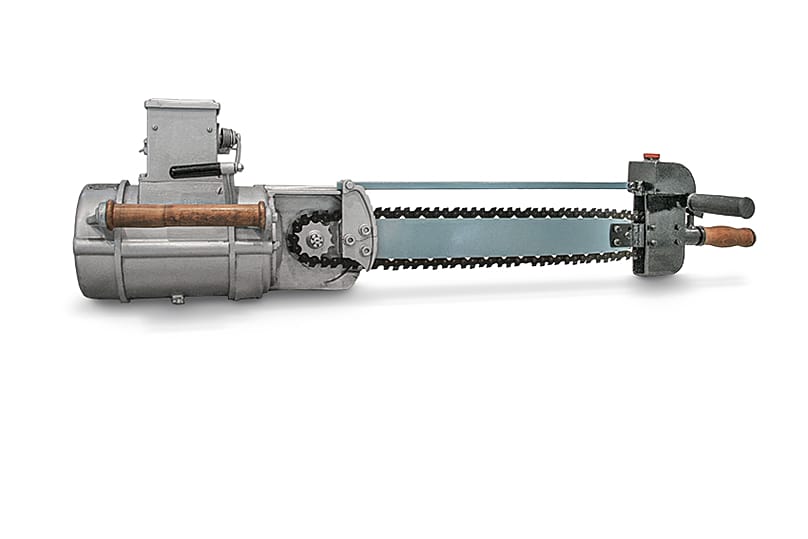
In an opinion piece for Euronews, Dr Nikolas Stihl, chairman of world-leading chainsaw maker STIHL, calls for reforms including a 40-hour working week without extra pay to safeguard Germany's prosperity and welfare state.
The family entrepreneur from Waiblingen in southern Germany does not mince his words: "The German economy has been stuck in crisis mode for years. The prerequisite for overcoming the persistent weakness in growth is better framework conditions," Stihl said.
STIHL: €5.48bn in revenue and more than 20,000 employees
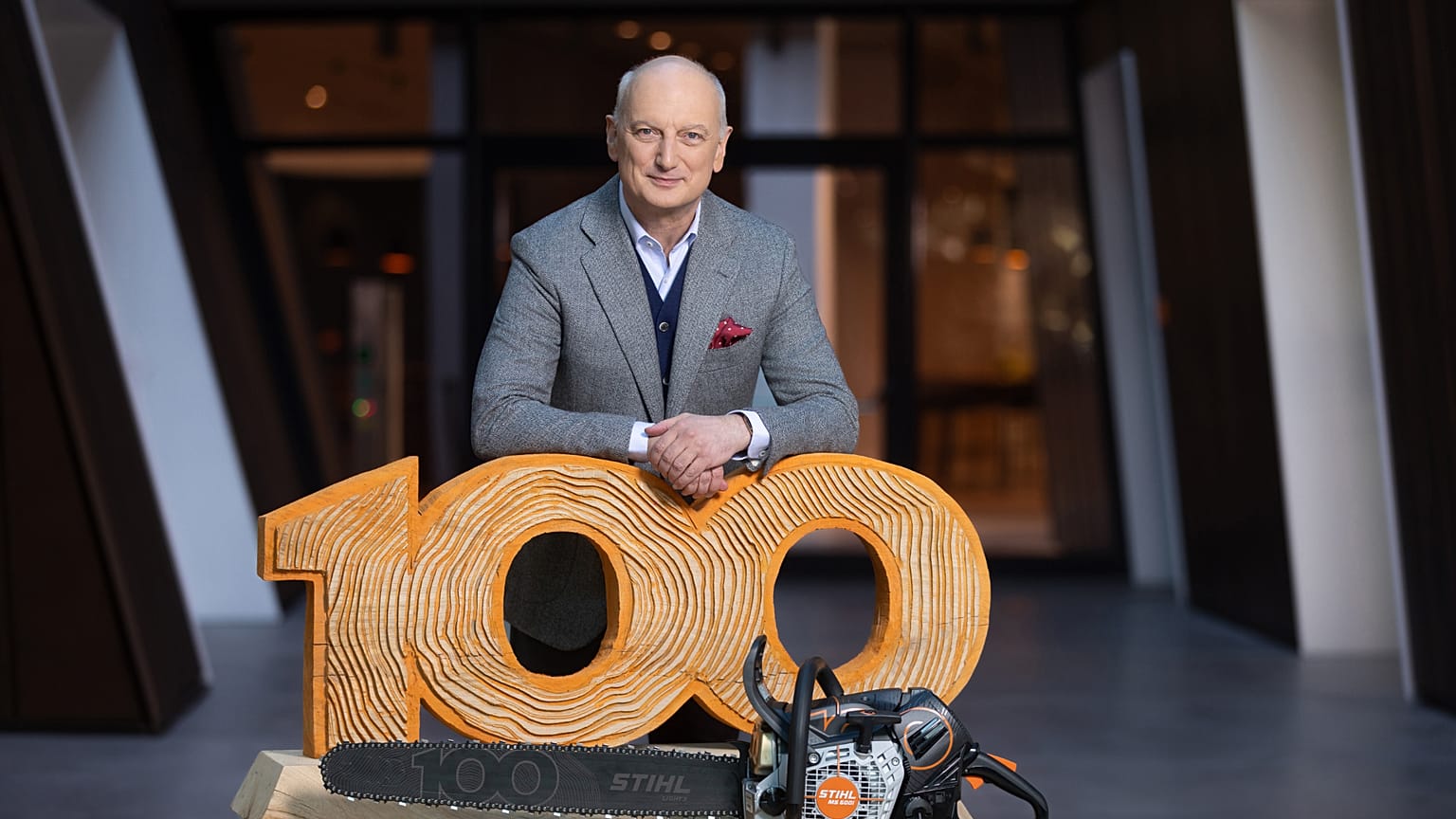
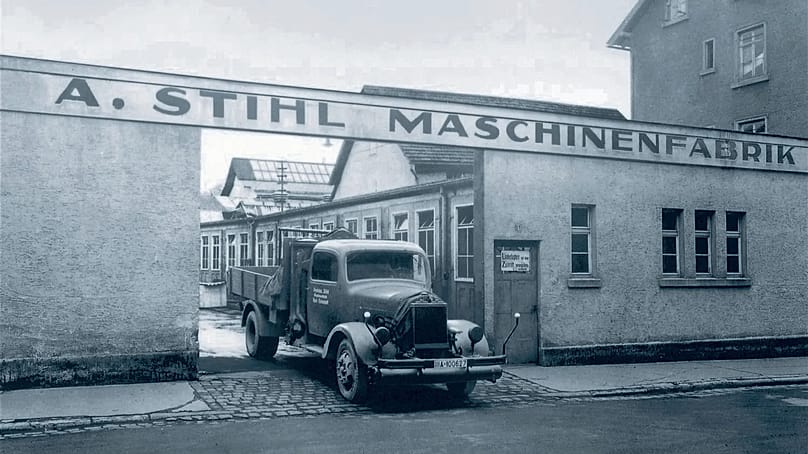
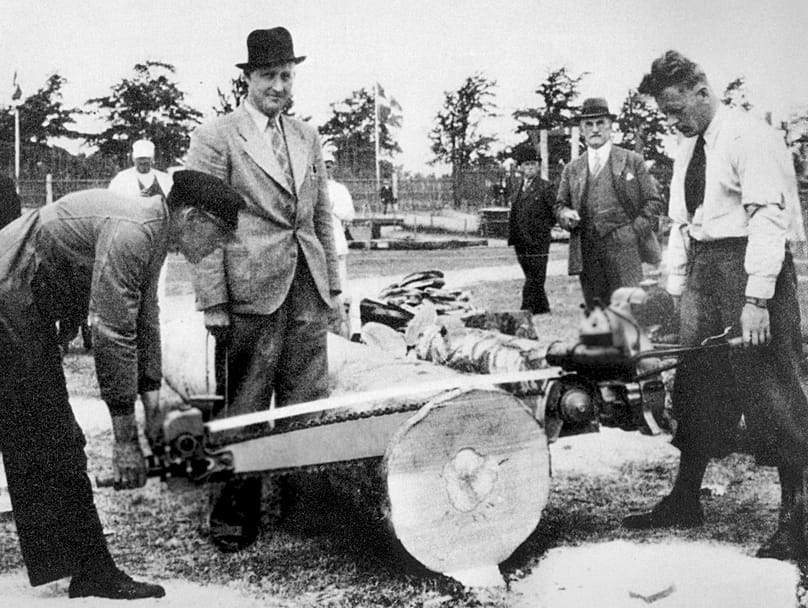
In 2025, STIHL generated €5.48 billion in revenue and employed 20,246 people worldwide. Founded by Andreas Stihl in 1926, the company is celebrating its 100th anniversary. Nikolas Stihl is the founder's grandson.
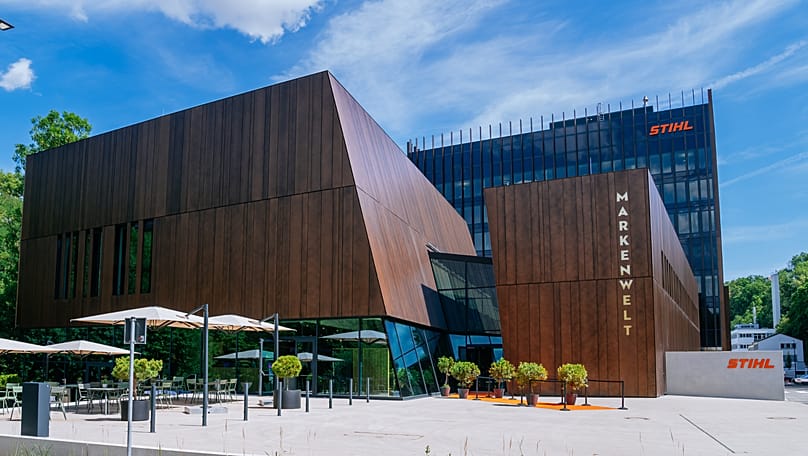
Head office in Waiblingen ANDREAS STIHL AG & Co. KG, Waiblingen
Family businessman Stihl takes a long-term view, and for him one thing is clear: "The situation of the German economy is serious, very serious. In the past eight years we have lost around 15 percent of our industrial output. Month after month Germany is losing around 15,000 industrial jobs."
The industrial base, he warns, is at risk of eroding – and with it prosperity and the welfare state. According to the company, STIHL has been the world's best-selling chainsaw brand since 1971. Nikolas Stihl acknowledges that "the US tariffs, China's aggressive industrial policy and geopolitical tensions" are also weighing on companies like his. But he argues that it is mainly home-grown problems holding firms back: "an overregulated economy, high energy costs, high labour costs, high taxes and a declining level of education and qualifications."
The Government's planned reforms fall short
The federal government’s planned reforms – covering statutory health insurance, pensions, taxes and the labour market – are good compromises, but they do not go far enough to pull Germany out of its structural crisis. If these compromises were now to be "unpicked", it would have devastating consequences for business confidence in politics, the entrepreneur warns.
Stihl says: "Now we need to muster all our strength for further reforms that will then generate tangible investment and growth impulses. For that, the governing coalition and the social partners must overcome their own reservations in order to live up to their responsibility towards Germany."
The next steps, he argues, should include cutting red tape, increasing the overall volume of work in the economy, reducing labour costs and creating additional incentives for research and development.
Germans need to work more to preserve prosperity
Stihl is calling for "high-quality public administration" with clear rules, streamlined and swift procedures, reasonable reporting requirements, and processes that are digital and supported by AI. "Accordingly, statutory reporting requirements should generally be abolished and retained only where their necessity is explicitly justified. If public authorities act much more as service providers for citizens and companies, that increases trust in Germany as a business location and in politics."
For Stihl, the key issue is increasing the volume of work – in other words, Germans need to work more again: "If we want to maintain our prosperity and keep social benefits at a high level, the total volume of work in the economy has to increase. A higher volume of work boosts economic output. In that sense, the debate about more work is a debate about preserving our prosperity, and by no means a debate about employees being lazy."
40-hour week without pay rises
Germany must use every available option to increase the volume of work: by incentivising overtime, extending working lives with fair exceptions for physically demanding jobs, making better use of the existing labour pool – including unemployed and part-time workers – and attracting skilled workers from abroad.
Stihl also calls for sick pay to be paid only from the second day of sickness and for phone-in sick notes to be abolished. Productivity gains from digitalisation and the growing use of AI will not offset the negative effects of demographic change.
Relate
From October 206, collective bargaining talks in the metalworking and electrical industries are due to begin between trade unions and employers. Stihl warns: "We no longer have the productivity advantage over key competitors that used to justify our high labour costs. That is why I advocate increasing weekly working hours to 40, without any pay compensation.
Promoting AI, robotics, biotech, space and quantum technology
He acknowledges that he is asking a great deal of employees, but says he does not want to take anything away from anyone.
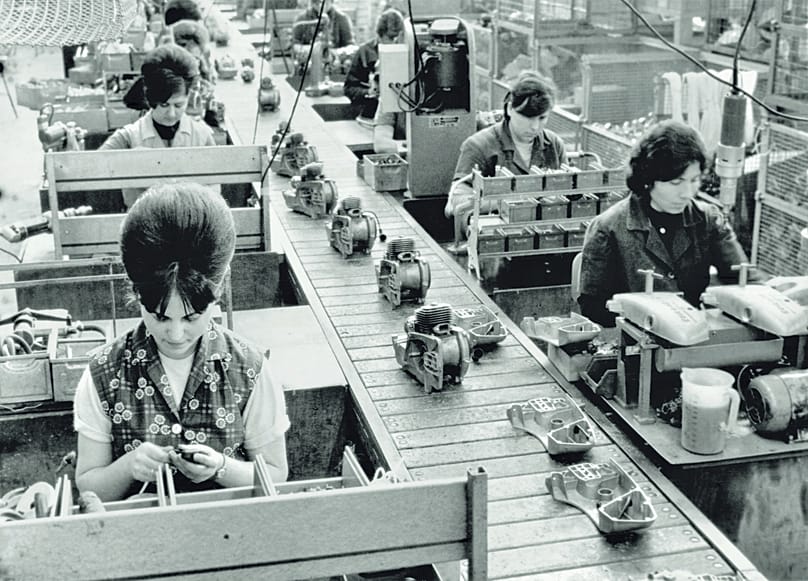
The aim, he insists, is to remain competitive, keep production in Germany and safeguard jobs. STIHL has production companies in eight countries, as well as 40 of its own sales and marketing subsidiaries and more than 50,000 specialist dealers worldwide.
When it comes to non-wage labour costs – including contributions to pension, health, long-term care and unemployment insurance – he says a ceiling of 40% of gross wages is the maximum that can be accepted.
Stihl is also calling for more attractive conditions for innovative companies, including regulatory breathing space, greater tax incentives and wider access to venture capital. "Overall, innovation and the granting of approvals must be given an even higher priority than at present and must not be held back by bureaucracy."
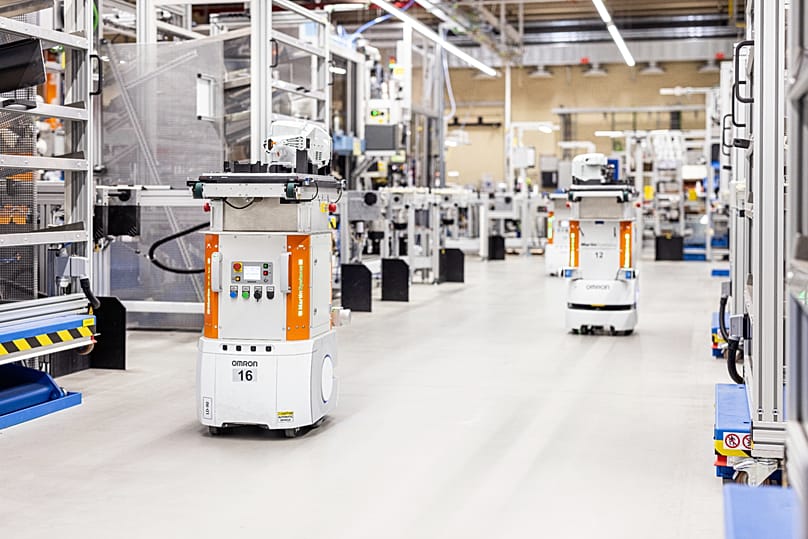
Future-focused fields such as the industrial use of artificial intelligence, robotics, biotechnology, medical technology, space travel and quantum technologies should receive more targeted support.
'Germany has proved many times that it can reinvent itself'
The conclusion reached by the head of the world's leading chainsaw brand and a global technology company is clear: "We must not waste any more time, because only a high-performance and competitive business location can secure prosperity and a strong welfare state. Germany has proved many times that it can reinvent itself."
For the public to embrace the challenges ahead, "a ruthless stocktake of the current situation" is needed, followed by an overall plan setting out the changes people can expect. "The time has come to act with determination," says Nikolas Stihl.
Euroviews. Boss of STIHL: Time for reforms – this is how we will safe prosperity and welfare state
Copyright (c) Stihl
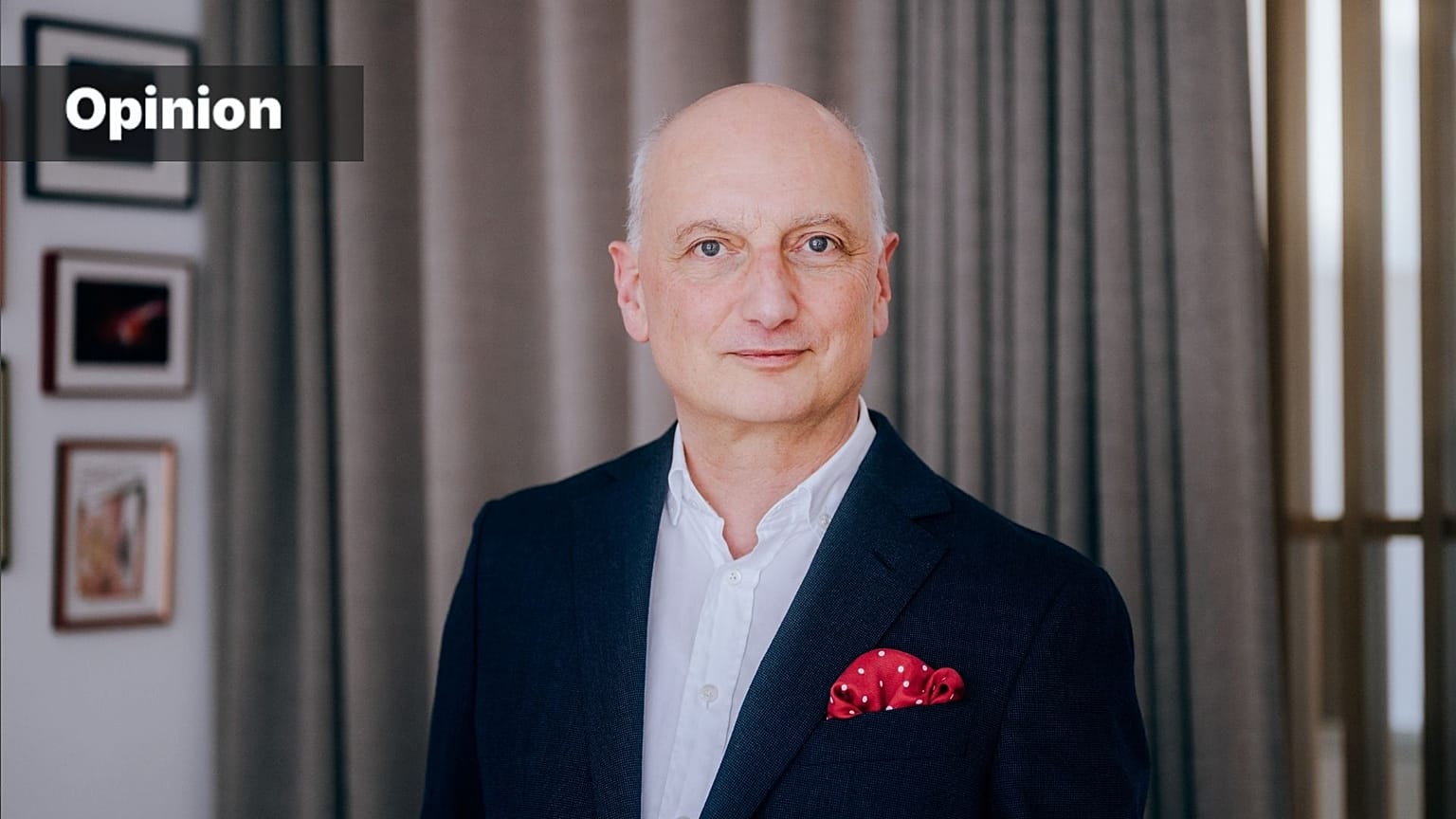
By Dr. Nikolas Stihl, Chairman of the STIHL Advisory Board and Supervisory Board
Published on
The opinions expressed in this article are those of the author and do not represent in any way the editorial position of Euronews.
The German economy has been in crisis for years. Writes Nikolas Stihl in an OpEd für Euronews. Better business conditions are the key to breaking out of this stagnation. What’s at stake is nothing less than securing prosperity and welfare state. STIHL is the world’s best-selling chainsaw brand.
The state of the German economy is serious, very serious. Over the past eight years, we’ve lost approximately 15 percent of our industrial production. Month after month, Germany loses around 15,000 industrial jobs. And the industrial base that underpins our prosperity is starting to erode. Private net investment has fallen to almost zero. On balance, companies are doing nothing more than replacing what wears out. High costs are paralyzing companies’ willingness to invest. Even the special depreciation package (the “Investitionsbooster”) that the German government introduced in mid-2025 has done nothing to change that
And the industrial base that underpins our prosperity is starting to erode.
Dr. Nikolas Stihl, Chairman of the STIHL Advisory Board and Supervisory Board
Of course, US tariffs, China’s aggressive industrial policy, and geopolitical tensions weigh on investment too. But the real problems are of our own making: an overregulated economy, high energy costs, high labor costs, high taxes, and falling levels of education and skills.
Planned reforms are not enough to reverse the economic trend
At the beginning of the year, many entrepreneurs had almost lost faith in Germany’s ability to reform. In July, the German government surprised everyone with a reform of statutory health insurance, along with reform plans for pensions, taxes, and the labor market. This package isn’t enough to pull Germany out of its structural crisis. But the current coalition showed it can compromise to help move the country forward. If those compromises were now unpicked and watered down, the damage to business confidence in politics would be devastating. The planned reforms are still not the breakthrough we were hoping for, the one that would actually turn the economy around.
XXXX(c) Stihl
Right now, we need to put everything into the next round of reforms, the ones that deliver real momentum for investment and growth. And that means the governing coalition, employers, and unions all stepping outside their comfort zones to live up to their responsibility for Germany. The special funds for defense and infrastructure will hardly lead to a self-sustaining upswing in the economy unless conditions for doing business here improve noticeably. The next reform steps have to keep cutting bureaucracy, raise the total hours worked, bring labor costs down, and give companies real reasons to invest in research and development.
The next reform steps have to keep cutting bureaucracy, raise the total hours worked, bring labor costs down, and give companies real reasons to invest in research and development.
Dr. Nikolas Stihl, Chairman of the STIHL Advisory Board and Supervisory Board
Public authorities should enable, not obstruct
What we should expect from public authorities is nothing less than high-quality administration: rules people can understand, procedures that are lean and fast, reporting requirements that are reasonable. Digital, and supported by artificial intelligence. Clear rules and fast, straightforward decisions should make investment possible, not hold it back.
The draft law presented by the new Baden-Württemberg state government on reducing reporting and documentation requirements could send an important signal. The principle is simple: statutory reporting obligations should be dropped across the board and only retained where their necessity is explicitly justified. If public authorities acted far more as service providers for people and businesses, it would strengthen confidence in Germany as a place to do business – and in politics too.
Increase hours worked
People working in industry are hugely dedicated, responsible, and highly professional. Without that commitment, German companies would not be succeeding the way they do around the world. STIHL is just one example among countless others.
XXX(c) Stihl
But demographics are slowing the whole economy down and putting massive pressure on the welfare state. To protect our prosperity and to ensure high levels of social benefits, the total number of hours worked has to rise. More hours worked means more economic output. So the debate about working more is really a debate about holding on to what we have – and it is in no way a debate about employees being lazy.
XXX(c) Stihl
Germany has to use every lever it has to get those hours up.
Dr. Nikolas Stihl, Chairman of the STIHL Advisory Board and Supervisory Board
Germany has to use every lever it has to get those hours up. Incentives to work more hours. A longer working life, with fair exceptions for physically demanding jobs. Better use of the labor we already have, meaning people out of work and people in part-time roles. Skilled immigration. No sick pay for the first day of illness. An end to doctor’s notes issued over the phone. Productivity gains from digitalization and AI won’t offset what demographics are doing to us.
Reduce labor costs
The collective bargaining round in the metal and electrical industry, which will begin in fall 2026, will be a key factor in determining whether Germany remains an industrial nation or falls further behind. The reason is simple: we no longer have the productivity edge over our main competitors that justifies those high labor costs. That’s why I’m calling for a 40-hour workweek – with no increase in pay. I know I’m asking a great deal of unions and employees. But I’m not trying to take anything away from anyone. Quite the opposite. I want industrial companies to be able to compete, production to stay in Germany, and jobs to be safe.
That’s why I’m calling for a 40-hour workweek – with no increase in pay.
Dr. Nikolas Stihl, Chairman of the STIHL Advisory Board and Supervisory Board
And the current debate pays far too little attention to non-wage labor costs. Contributions to pension, health, long-term care, and unemployment insurance should not go above 40 percent of gross wages. That is the economic limit. Getting there means overhauling the social security system from the ground up. The German government’s latest reform measures do at least address the stabilization of contribution rates for pension and statutory health insurance. However, the 40 percent limit has already been far exceeded.
Priority for research
The close links between world-class research institutions, universities, innovation clusters, and innovative companies rank among Germany’s greatest strengths as a business location. Give innovative companies better conditions and you speed up the whole chain: knowledge moves faster, and so does the production and marketing of what comes out of it, new business models included. Regulatory leeway would do that. So would higher tax incentives and more venture capital. Overall, innovations and the approvals they need must be given far greater priority than before, and they must not be held back by bureaucracy.
XXX(c) Stihl
Future-oriented fields deserve far more targeted support: the industrial use of AI, robotics, biotechnology, medical technology, space technology, and quantum technologies.
Dr. Nikolas Stihl, Chairman of the STIHL Advisory Board and Supervisory Board
XXX(c) Stihl
Future-oriented fields deserve far more targeted support: the industrial use of AI, robotics, biotechnology, medical technology, space technology, and quantum technologies. The Germany Fund, launched at the end of 2025, is only a start, measured against other countries with strong research bases.
Act decisively
We have no more time to lose. Because only a strong, competitive place to do business can secure prosperity and a strong welfare state.
Germany has shown many times that it can reinvent itself.
Dr. Nikolas Stihl, Chairman of the STIHL Advisory Board and Supervisory Board
Germany has shown many times that it can reinvent itself. But if people are going to understand what’s coming, we have to start with an unflinching look at where we actually stand. And then set out a plan they can follow, one that spells out what will change for them. With a plan like that, the government can give direction, bring people with it, and win back trust. It’s time to act.
Dr Nikolas Stihl is the grandson of the company’s founder, Andreas Stihl, and represents the third generation at the helm of the world’s leading chainsaw brand and a global technology company. Under his leadership, STIHL has further expanded its international presence and, in 2025, achieved a turnover of 5.48 billion euros with 20,246 employees worldwide. STIHL has been the world’s best-selling chainsaw brand since 1971.