Tuesday, January 04, 2022

Are Black Holes and Dark Matter the Same? Astrophysicists Upend Textbook Explanations
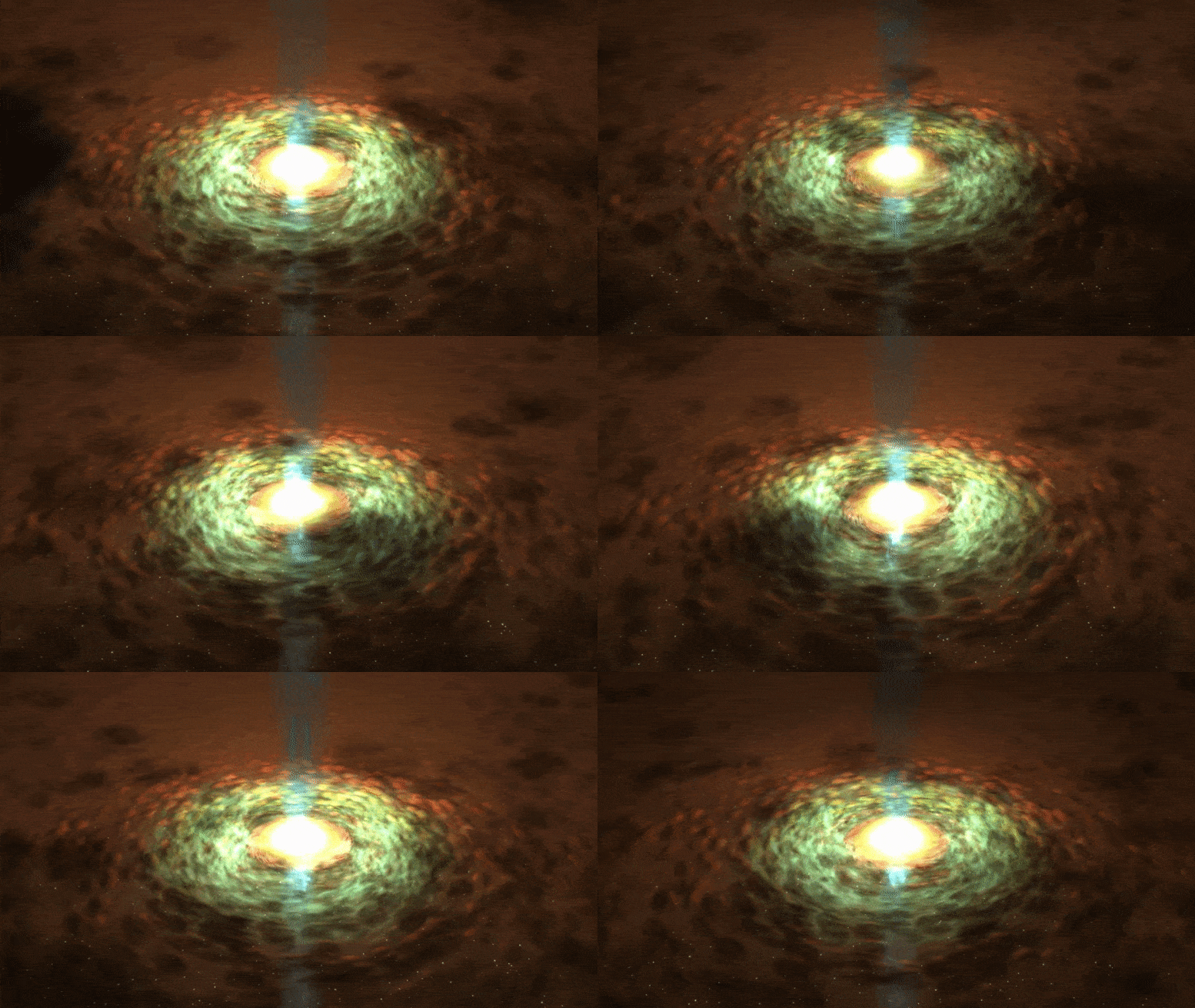
Supermassive Black Hole Artist's Rendition

This animation shows an artist’s rendition of the cloudy structure revealed by a study of data from NASA’s Rossi X-Ray Timing Explorer satellite. Credit: Wolfgang Steffen, UNAM

Upending textbook explanations, astrophysicists from the University of Miami, Yale University, and the European Space Agency suggest that primordial black holes account for all dark matter in the universe.

Proposing an alternative model for how the universe came to be, a team of astrophysicists suggests that all black holes—from those as tiny as a pinhead to those covering billions of miles—were created instantly after the Big Bang and account for all dark matter.

That’s the implication of a study by astrophysicists at the University of Miami, Yale University, and the European Space Agency that suggests that black holes have existed since the beginning of the universe ­­and that these primordial black holes could be as-of-yet unexplained dark matter. If proven true with data collected from this month’s launch of the James Webb Space Telescope, the discovery may transform scientific understanding of the origins and nature of two cosmic mysteries: dark matter and black holes.

“Our study predicts how the early universe would look if, instead of unknown particles, dark matter was made by black holes formed during the Big Bang—as Stephen Hawking suggested in the 1970s,” said Nico Cappelluti, an assistant professor of physics at the University of Miami and first author of the study slated for publication in The Astrophysical Journal.

“This would have several important implications,” continued Cappelluti, who this year expanded the research he began at Yale as the Yale Center for Astronomy and Astrophysics Prize Postdoctoral Fellow. “First, we would not need ‘new physics’ to explain dark matter. Moreover, this would help us to answer one of the most compelling questions of modern astrophysics: How could supermassive black holes in the early universe have grown so big so fast? Given the mechanisms we observe today in the modern universe, they would not have had enough time to form. This would also solve the long-standing mystery of why the mass of a galaxy is always proportional to the mass of the supermassive black hole in its center.”

Dark matter, which has never been directly observed, is thought to be most of the matter in the universe and act as the scaffolding upon which galaxies form and develop. On the other hand, black holes, which can be found at the centers of most galaxies, have been observed. A point in space where matter is so tightly compacted, they create intense gravity.

Co-authored by Priyamvada Natarajan, professor of astronomy and physics at Yale, and Günther Hasinger, director of science at the European Space Agency (ESA), the new study suggests that so-called primordial black holes of all sizes account for all black matter in the universe.
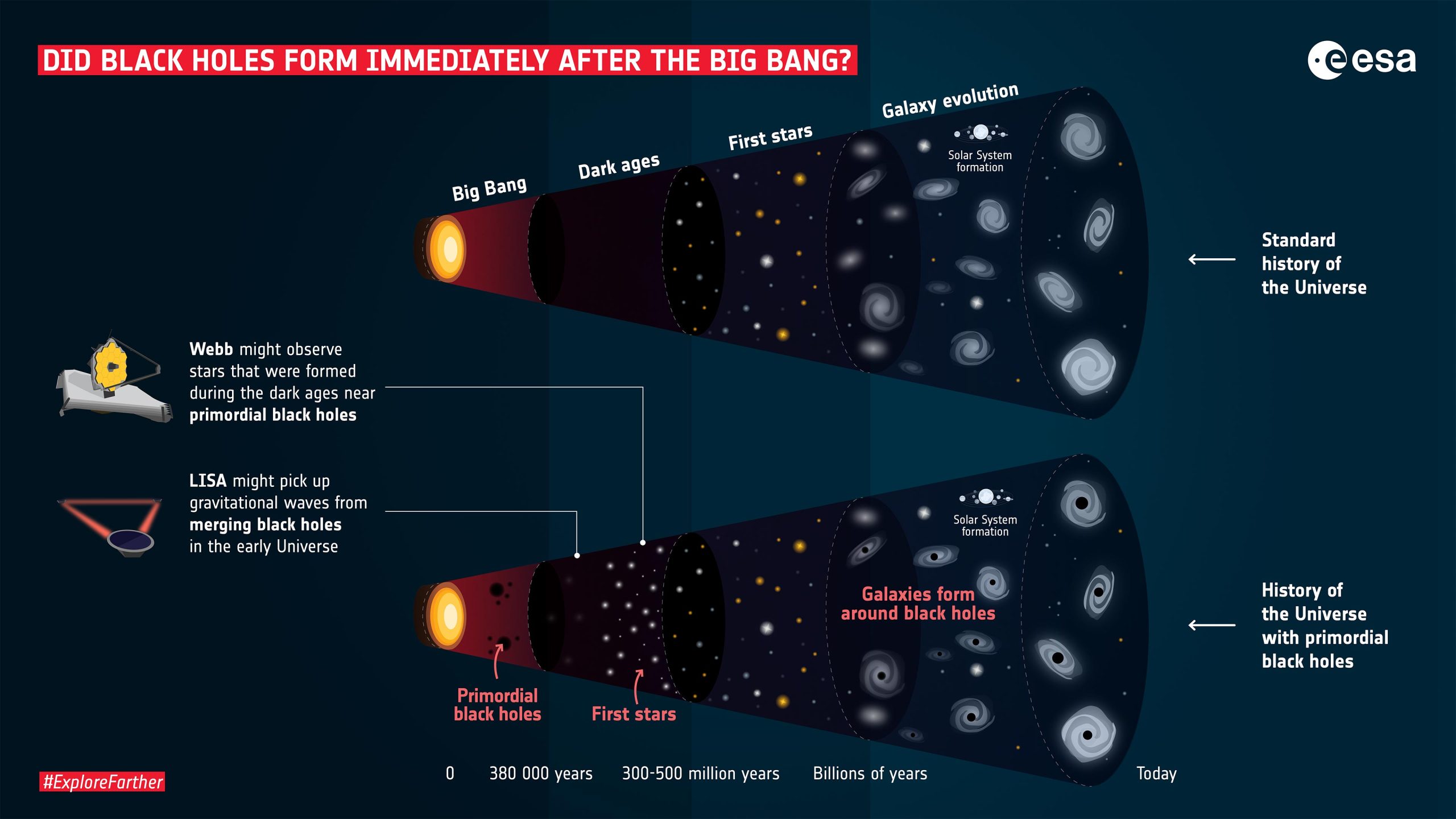
Did Black Holes Form Immediately After the Big Bang?

How did supermassive black holes form? What is dark matter? In an alternative model for how the Universe came to be, as compared to the ‘textbook’ history of the Universe, a team of astronomers propose that both of these cosmic mysteries could be explained by so-called ‘primordial black holes’. In the graphic, the focus is on comparing the timing of the appearance of the first black holes and stars, and is not meant to imply there are no black holes considered in the standard model. Credit: ESA

“Black holes of different sizes are still a mystery,” Hasinger explained. “We don’t understand how supermassive black holes could have grown so huge in the relatively short time available since the universe existed.”

Their model tweaks the theory first proposed by Hawking and fellow physicist Bernard Carr, who argued that in the first fraction of a second after the Big Bang, tiny fluctuations in the density of the universe may have created an undulating landscape with “lumpy” regions that had extra mass. These lumpy areas would collapse into black holes.

That theory did not gain scientific traction, but Cappelluti, Natarajan, and Hasinger suggest it could be valid with some slight modifications. Their model shows that the first stars and galaxies would have formed around black holes in the early universe. They also propose that primordial black holes would have had the ability to grow into supermassive black holes by feasting on gas and stars in their vicinity, or by merging with other black holes.

“Primordial black holes, if they do exist, could well be the seeds from which all the supermassive black holes form, including the one at the center of the Milky Way,” Natarajan said. “What I find personally super exciting about this idea is how it elegantly unifies the two really challenging problems that I work on—that of probing the nature of dark matter and the formation and growth of black holes—and resolves them in one fell swoop.”

Primordial black holes also may resolve another cosmological puzzle: the excess of infrared radiation, synced with X-ray radiation, that has been detected from distant, dim sources scattered around the universe. The study authors said growing primordial black holes would present “exactly” the same radiation signature.

And, best of all, the existence of primordial black holes may be proven—or disproven—in the near future, courtesy of the Webb telescope scheduled to launch from French Guiana before the end of the year and the ESA-led Laser Interferometer Space Antenna (LISA) mission planned for the 2030s.

Developed by NASA, ESA, and the Canadian Space Agency to succeed the Hubble Space Telescope, the Webb can look back more than 13 billion years. If dark matter is comprised of primordial black holes, more stars and galaxies would have formed around them in the early universe, which is precisely what the cosmic time machine will be able to see.

“If the first stars and galaxies already formed in the so-called ‘dark ages,’ Webb should be able to see evidence of them,” Hasinger said.

LISA, meanwhile, will be able to pick up gravitational wave signals from early mergers of primordial black holes.

For more on this research, see Black Holes Could Be Dark Matter – And May Have Existed Since the Beginning of the Universe.

Reference: “Exploring the high-redshift PBH-ΛCDM Universe: early black hole seeding, the first stars and cosmic radiation backgrounds” by N. Cappelluti, G. Hasinger and P. Natarajan, Accepted, The Astrophysical Journal.
arXiv:2109.08701

Astronomers detect magnetic star flashing in an instant with the energy produced by the sun in 100,000 years

Astronomers have called it a "cosmic monster".
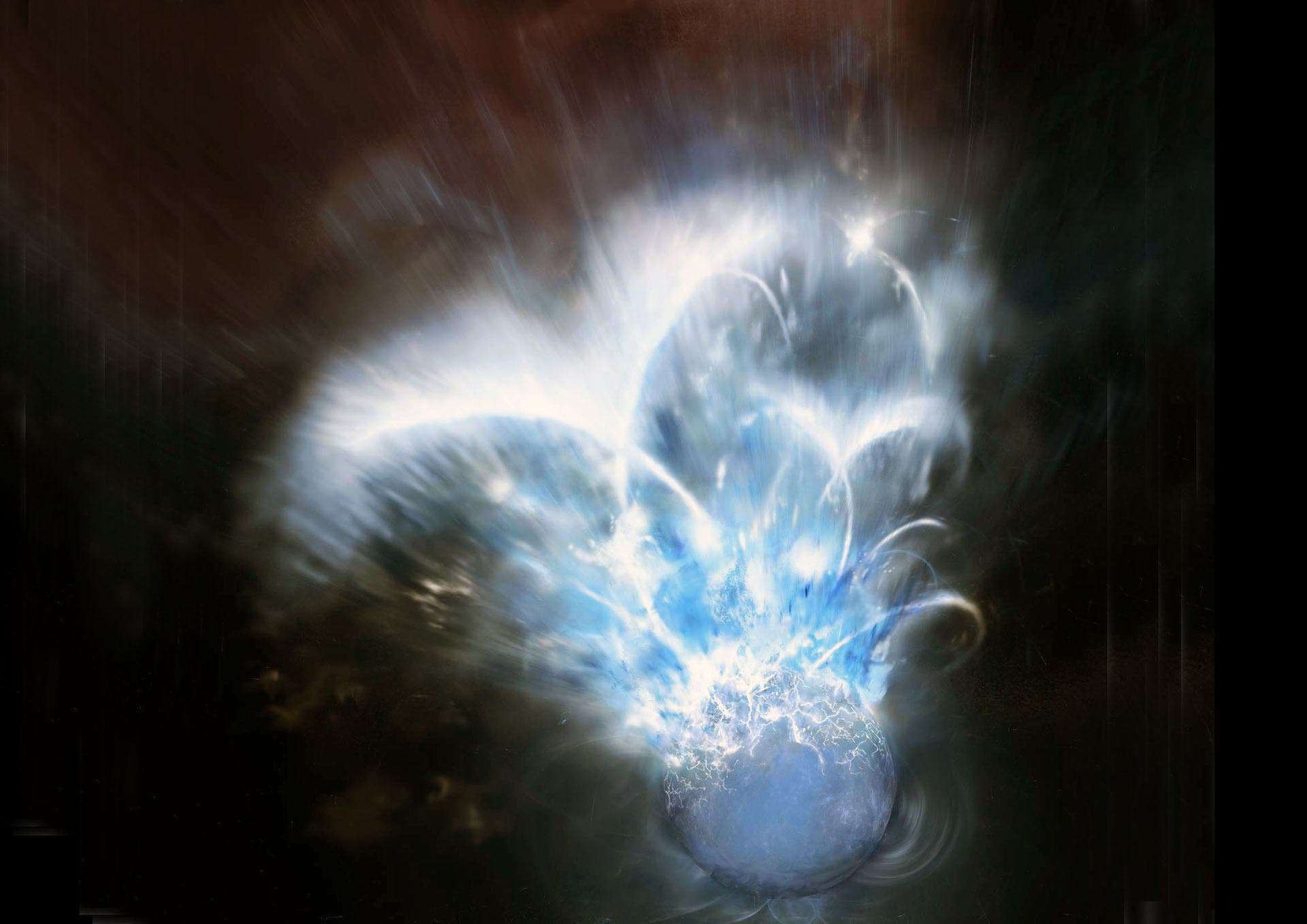
Artist impression of the GRB 2001415 magnetar.
 Credit: Universitat de València.

Sure we might have enormous gas giants and menacing asteroids, but compared to other corners of the universe, our solar system is pretty vanilla. There are black holes whose mass exceeds billions of solar masses, generating a gravitational pull so intense that they shape the formation and evolution of entire galaxies. Then there are magnetars, much less famous than black holes but incredibly powerful in their own right. Case in point, astronomers in Spain have witnessed such an object erupt with as much energy as the sun produces in 100,000 years, concentrating it in just 0.1 seconds.

When truly massive stars die, they do so with a bang, triggering a supernova explosion. In the aftermath, some collapse under their own weight, forming into black holes. Those that don’t make the cut, often become neutron stars, second only to black holes in their stupendous density. A teaspoon of neutron star material would weigh around a billion tons, for instance.

There are multiple types of neutron stars, including magnetars. These objects have extremely powerful magnetic fields, a thousand trillion times stronger than the Earth’s, and between 100 and 1,000 times stronger than that of a radio pulsar. They’re essentially the most powerful magnets in the universe.

Magnetars are quite rare, with only a couple dozen such objects having been identified so far. One of them, located in the Sculptor Galaxy about 13 million light-years away, was under observation by astronomers using the Atmosphere-Space Interactions Monitor (ASIM) aboard the International Space Station when a giant flare was detected.

The flare, known as the GRB 2001415 event, released roughly the energy the sun radiates in about 100,000 years in just two short quasi-periodic pulsations that lasted approximately 160 milliseconds.

“Even in an inactive state, magnetars can be one hundred thousand times more luminous than our Sun, but in the case of GRB 2001415, the energy that was released is equivalent to that which our Sun radiates in 100,000 years,” said Dr. Alberto Castro-Tirado, an astrophysicist with the Instituto de Astrofísica de Andalucía del Consejo Superior de Investigaciones Científicas (IAA-CSIC) and the Universidad de Málaga. “It’s a true cosmic monster,” added Professor Víctor Reglero, an astrophysicist at the Universitat de València and co-author of the new study.

The magnetar explosion was detected on April 15, 2020 thanks to an artificial intelligence system integrated with ASIM. If this kind of system wasn’t in place, the astronomers would have been oblivious to the event, whose signal decayed into background noise within a fraction of a second.

No one’s really sure what triggered the eruption, but the researchers believe it could have been due to instabilities in the magnetosphere or ‘earthquakes’ produced in their crust. Further research could help scientists reveal the mechanisms that trigger these frightening but, at the same time, fascinating cosmic burps.

“Although these eruptions had already been detected in two of the thirty known magnetars in our Galaxy and in some other nearby galaxies, GRB 2001415 would be the most distant magnetar eruption captured to date, being in the Sculptor group of galaxies about 11 million light-years,” said Professor Reglero.

“Seen in perspective, it has been as if the magnetar wanted to indicate its existence to us from its cosmic solitude, singing in the kHz with the force of a Pavarotti of a billion suns.”

The findings appeared in the journal Nature.


Tibi Puiu is a science journalist and co-founder of ZME Science. He writes mainly about emerging tech, physics, climate, and space. In his spare time, Tibi likes to make weird music on his computer and groom felines.

MIT Scientists Are Building Flying Saucers To Study The Moon More Closely


Bharat SharmaUpdated on Jan 02, 2022, 07:10 IST

Highlights

Scientists at the Massachusetts Institute of Technology (MIT) are working on a new concept for flight

In theory, the flying saucer could eventually hover above the moon one day and help out in exploration

Scientists are aiming to use the flying saucer mainly on the moon by using its natural charge to facilitate levitation. Asteroids, too, could be studied safely if no landing is required

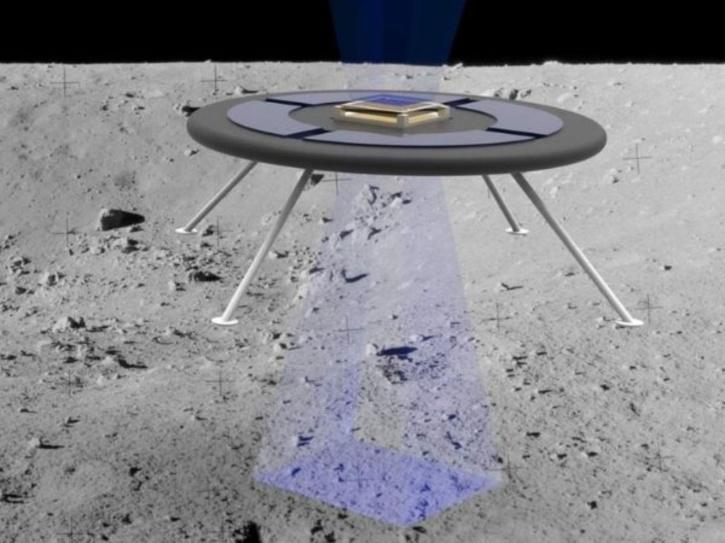
Who isn't fascinated by flying saucers? Turns out, scientists at the Massachusetts Institute of Technology (MIT) are working on a new concept for flight.

In theory, the flying saucer could eventually hover above the moon one day and help out in exploration. Scientists are aiming to use the flying saucer mainly on the moon by using its natural charge to facilitate levitation. Asteroids, too, could be studied safely if no landing is required.

MIT / Slashgear


Why flying saucers have potential


In terms of moon and other airless bodies, MIT's flying saucer would benefit greatly from lack of atmosphere. In the absence of protective atmosphere, moon as well as asteroids that are exposed directly to the sun build up an electric field. This field would essentially keep the flying saucer hovering.

On the moon, surface charge is powerful enough to keep dust levitating 1 metre above the ground. It could open a treasure trove of information regarding different airless planets and objects in our solar system and hopefully beyond.

Also read: NASA Shares Stunning Moon Pic Clicked By Galileo Spacecraft On Its Way To Jupiter

NASA has also toyed with this concept of a hovering flying saucer in the past. The approach was slightly different from MIT scientists.


The US space agency wanted to use a "levitating glider with Mylar wings", SlashGear reported. The only problem with this design was that it would have worked only on small asteroids. The Mylar glider would have been useless on large planets that have a stronger gravitational pull.

iStock

With MIT's flying saucer, a 2 pound vehicle could levitate on the moon and large asteroids. In addition, MIT's "ionic-liquid ion sources" would help the vehicle gain more levitation on airless surfaces.

The research team included MIT engineers Oliver Jia-Richards, Paulo Lozano, and Sebastian Hampl who simulated the concept in a lab-setting.

NASA

What do you think about flying saucers that could reveal more about the universe to us? Share with us in the comments below. For more in the world of technology and science, keep reading Indiatimes.com.

References

White, M. (2021, December 31). This “flying saucer” could give future Moon missions a birds-eye view. SlashGear.
Toxic gas released by ancient microbes may have worsened Earth's largest mass extinction


By Doris Elin Urrutia 
published 1 day ago

Hydrogen sulfide is both stinky and incredibly dangerous.


Dominik Hülse, an Earth system modeler based at University of California Riverside, worked on a November 2021 study that explored how ancient microbes may have prolonged the Permian extinction by producing a toxic gas. Here, Hülse poses with a finger to his nose to highlight the toxic "rotten egg" scent of hydrogen sulfide. 
(Image credit: Dominik Hülse/UCR)

Algal blooms in coastal waters and toxic chemical exposures at oil facilities are modern problems. Their root causes, however, have a lot in common with the largest mass extinction in Earth's history 250 million years ago.

298.9 million years ago the Permian period, the last period of the Paleozoic era, began. This period of time had plenty of aquatic animals and archaic land creatures like dimetrodons. Scientists think that towards the end of the Permian period, volcanoes in Siberia went into overdrive and dramatically warmed the planet, triggering the Permian extinction, the most devastating decimation of life on Earth when about 95% of all marine species, as well as about 70% of terrestrial species, disappeared.

But scientists are still puzzled about how exactly the volcanic eruptions caused this mass extinction, often referred to as "the Great Dying." Researchers at the University of California Riverside tried to get to the bottom of this mystery in a new study, published in the November 2021 issue of the journal Nature Geoscience.


A toxic cyanobacterial bloom in Lake Taihu, China.  
(Image credit: Hans W. Paerl, University of North Carolina at Chapel Hill)

The problem with hydrogen sulfide

According to this study, during this period of time, the warming planet raised ocean temperatures which led to certain aquatic microbes revving up their metabolisms, causing the microscopic critters to release a toxic gas called hydrogen sulfide that subsequently killed off so many of Earth's animals.

Oxygen levels in the oceans heavily decreased at the end of the Permian period. This pushed microbes to start ingesting sulfate, a substance that can be found in today's drinking water but which at high doses can lead to adverse medical symptoms like diarrhea )or worse), according to the U.S. Environmental Protection Agency.

By ingesting this sulfate, t ancient microbes then "produced hydrogen sulfide, a gas that smells like rotten eggs and is poisonous to animals," Dominik Hülse, UC Riverside Earth system modeler, said in a statement about this study.

Hydrogen sulfide is both stinky and incredibly dangerous. In 2019, two people died at an oil facility in Odessa, Texas, due to poor protocol that exposed them to toxic gas. The hydrogen sulfide was pumped up from the ground along with oil; both came from a Permian layer of rock.

During the Permian extinction, the world's oceans began experiencing what is known as euxinia, a phenomenon caused by a combination of high hydrogen sulfide levels and low oxygen levels.

"Our research shows the entire ocean wasn’t euxinic. These conditions began in the deeper parts of the water column," Hülse said. "As temperatures increased, the euxinic zones got larger, more toxic, and moved up the water column into the shelf environment where most marine animals lived, poisoning them."


In October 2009, dead fish washed onto a beach at Padre Island, Texas, following a harmful algal bloom. (Image credit: Terry Ross/Flickr)


The past and the present day

This research may help scientists to find answers to an ancient mystery, but it is also a timely reminder about the ocean's sensitivity to climate change.

Currently, climate change is causing sea levels to rise, one of many consequences that progressively threaten life on Earth. But climate change can also disrupt the oceans in another dangerous way.

Earth's carbon cycle is heavily tied up with its oceans, beginning with little creatures called phytoplankton. These microscopic beings breathe in carbon dioxide, release oxygen and munch on organic material. They are the foundation of the aquatic food chain and are responsible for most of the transfer of carbon dioxide from Earth's atmosphere to the ocean.

When they die, these photosynthesizers fall to the depths of the ocean as "marine snow," becoming food for microbes. It is there that the microbes transform that material into inorganic matter in a process called remineralization. The depths at which this occurs in the oceans play a huge role in how life is supported throughout the planet, especially marine life.

The microbial disaster that may have triggered the largest extinction in Earth's history also echoes in modern algal bloom events. This is a major issue for coastal waters around the world as run-off from modern human activity enriches the water near land and causes certain microbes to flourish. If they promote euxinia, animals die from lack of oxygen or toxic hydrogen sulfide. Close exposure by land is dangerous, too.

According to the statement describing the new study, euxinic waters can be found in places like Los Angeles County’s 16-mile-long Dominguez Channel. Just a few months ago, a warehouse fire released ethanol, which then killed vegetation in the channel. When microbes consumed this decay, they produced hydrogen sulfide at toxic levels and caused thousands of people to experience symptoms such as vomiting, diarrhea, dizziness, insomnia and headaches.

Follow Doris Elin Urrutia on Twitter @salazar_elin. Follow us on Twitter @Spacedotcom and on Facebook.

The Isle of Wight’s dinosaur hunter: we’re going to need a bigger museum


Jeremy Lockwood spent lockdown identifying two specimens – and is a ‘bit obsessed’ in his search for more


Jeremy Lockwood has made two big dinosaur discoveries on the Isle of Wight this year. Photograph: University of Portsmouth/PA


Hannah Devlin
THE GUARDIAN
Mon 3 Jan 2022 

Some of us binged on box sets, others grappled with the challenges of home school and zoned out of Zoom meetings: for many, life under lockdown felt glum. But for Jeremy Lockwood, a retired GP turned palaeontologist, 2021 was a standout year featuring two big dinosaur discoveries and laying plans to make the Isle of Wight famous for its prehistoric inhabitants once more. “It was an absolutely thrilling time for me,” Lockwood said.

Lockwood, 64, who retired as a family doctor in the Midlands seven years ago, was behind the widely publicised discovery of a new species of iguanadontian dinosaur with a distinctively large nose and a second species, nicknamed “the horned crocodile-faced Hell Heron”.

At the start of the pandemic, Lockwood re-registered with the General Medical Council and volunteered to work. However, his daughter, also a doctor, pointed out that before vaccines were available, hospitals would not want people in their 60s walking around wards.

So for the past two years, Lockwood has immersed himself in fossil hunting on the beach and sifting through boxes of bones from museum archives.

In palaeontology, like astronomy, amateurs often work alongside academics and their scientific contributions are frequently recognised. On retirement, Lockwood decided to put his lifelong interest in dinosaurs on a formal footing and persuaded his wife to move to the Isle of Wight, where a steady stream of dinosaur fossils emerge from the cliffs as they are eroded. He contacted Prof David Martill, of the University of Portsmouth, about doing a PhD and was quickly accepted.

“I felt I had to do something to keep me active,” he said. “I don’t think I could’ve just played golf or grown roses.”

Lockwood is revisiting a golden era for dinosaur discovery with a focus on iguanodons, the first specimen of which was unearthed by Gideon Mantell, also a doctor turned palaeontologist, in Sussex in 1825. Some have assumed that the long timeline of discovery means that the understanding of British dinosaurs is essentially “done and dusted”.

On the contrary, Lockwood said, certain dogmas have remained unchallenged. And modern methods, such as using software to cluster specimens into a most likely family tree, have not always been applied to earlier finds.

Most dinosaurs found on the Isle of Wight had been traditionally assigned to just one of two species: the plant-eating Iguanodon bernissartensis and Mantellisaurus atherfieldensis. After sifting through many hundreds of bones that had been sitting in boxes in the Natural History Museum and the Dinosaur Isle museum, Lockwood identified a clear outlier with an enormous bulbous nose. The finding suggests there were far more iguanadontian dinosaurs in the Early Cretaceous of the UK than previously thought and raises the prospect of tracing the evolution of different traits through time.

“You can almost liken this huge collection of iguanadontian bones to several jigsaw puzzles that are all mixed up,” said Lockwood. “I’m trying to put together something that is meaningful.”

Officially, Lockwood is doing his doctorate part-time, but acknowledges that he has become “a bit obsessed”. “Sometimes I’ll work for 16 hours a day for a few weeks,” he said. “You struggle to find time to cut the lawn and decorate your house, and friends and family have to put up with you talking about dinosaurs all the time.”

Alongside his work on archive specimens, Lockwood also makes daily surveys of the beach to spot any dinosaur bones emerging from the cliffs. Winter is peak collecting season. “Certainly with winter storms eroding things, that’s when the big finds come in,” said Lockwood.

He is also coordinating a bid to redevelop the Dinosaur Isle museum, by a charitable group that Lockwood chairs together with a German company, Dinosaurier-Park International, after the local council launched a tender process.

“I’m trying to take over the museum,” Lockwood said. “The Isle of Wight undersells its dinosaurs. Most people are unaware that we’re Europe’s hotspot for dinosaurs and early mammals. We need a much bigger museum.”

Lockwood said he has “great sympathy” for former medical colleagues still working on the frontline during the pandemic and is particularly annoyed by the “lazy GP stereotype” sometimes aired in media coverage. “Nothing could be further from the truth,” he said. “You can see burnout happening all over the place.”

Several doctors have got in touch to congratulate him on his recent successes. “Some of the nice tweets were from other doctors approaching retirement,” he said. “It’s really good to see that there’s a life after medicine.”

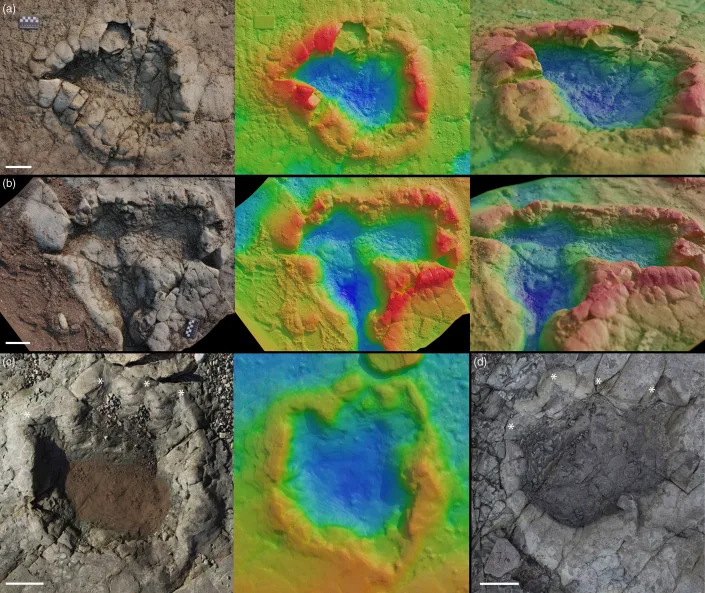
200-million-year-old dinosaur footprints discovered on beach

Scientists say that 1.6-foot-long impressions discovered on a beach in Wales may actually be footprints of dinosaurs. The "rare" tracks, they said, are 200 million years old, indicating that dinosaurs from the late Triassic period once roamed the area.

The footprints were found by a member of the public near the shoreline on a beach at Penarth in 2020 and reported to London's Natural History Museum. Paul Barrett, a palaeobiology researcher at the museum, helped lead a study of the tracks, which was published in Geological Magazine on December 29.

Individual tracks of course were much nicer models. Also, all the photos and models are freely available as supplemental info! And the Paper and data are #openaccess pic.twitter.com/JH8Y0FyDH9

— Peter Falkingham (@peterfalkingham) December 30, 2021

The tracks discovered are within a roughly 164-foot long area, with each measuring up to roughly 1.6 feet long, scientists said. The impressions, though "poorly preserved," have marked displacement rims and are regularly spaced apart, indicating that they are footprints rather than rock structures.

The number of prints also indicates it might have been a "trample ground" for dinosaurs, researchers said in their study.

"There are hints of trackways being made by individual animals, but because there are so many prints of slightly different sizes, we believe there is more than one trackmaker involved," Barrett said in a museum press release. "These types of tracks are not particularly common worldwide, so we believe this is an interesting addition to our knowledge of Triassic life in the UK. Our record of Triassic dinosaurs in this country is fairly small, so anything we can find from the period adds to our picture of what was going on at that time."

A series of tracks on a public beach point to the presence of large, long-necked dinosaurs in Wales over 200 million years ago. The Penarth footprints are believed to have been left by sauropodomorphs, a group which includes the iconic Diplodocus 🦕 https://t.co/i4ef9WM8jk

— Natural History Museum (@NHM_London) December 31, 2021

The researchers said they can't say with certainty what kind of dinosaur created the tracks, but that they believe it may have been a kind of a biped sauropodomorph, a long-necked herbivorous dinosaur known to be among the largest that roamed the Earth.

The museum said the specific dinosaur could have been similar to the Camelotia, whose fossils have been discovered in Southwest England from rocks dating back to a similar period.

Detail images of individual tracks believed to belong to dinosaurs. / Credit: Cambridge University Press

Photos of the tracks appear to show digit impressions, but the tracks are "highly weathered," researchers said, making it "difficult, or even impossible, to determine if they were all made by the same taxon, or by several species."

What they did find, however, is that the tracks were formed in the late Triassic period between 237 and 201 million years ago.

"We think the tracks are an example of Eosauropus, which is not the name of a particular dinosaur species but for shape of a type of track thought to have been made by a very early sauropod or a prosauropod," Barrett said. 'We know these kinds of dinosaur were living in Britain at the time, as bones of the sauropod Camelotia have been found in Somerset in rocks dated to the same age."

The tracks analyzed have been exposed several times over the past decade, the researchers said, and have been noted by multiple members of the public. Some of the researchers started to formally document the tracks in 2009, creating models and mapping the site, but their work went unpublished and was not further disseminated until now.

Dinosaur footprints found on beach in Wales may be 200 million years old, researchers say

 NEWS

Indians investigate Apple’s business practices

by on03 JANUARY 2022
Indians investigate Apple’s business practices


Going down a black hole of despair

The Tame Apple press is doing its best to spin a story about India’s antitrust watchdog ordering an investigation into Apple’s business practices.

Apparently, Job’s Mob’s ordering iPhone app developers to use a proprietary payments system is an abuse of practice – who would have thunk it?  Well, other than every other government in the world which is also taking on the outfit for the same reason.

But the Tame Apple Press has called a foul and is repeating Apple’s view that it cannot be a monopoly in India because only two per cent of the Indian smartphone market comprises of Apple fanboys. In other words, India is too intelligent and poor for Apple to succeed as a monopoly. 

The Competition Commission of India, which ordered the Director General to conduct the probe within 60 days, said it is of the prima facie view that the mandatory use of Apple’s in-app payments system for paid apps and in-app purchases “restrict[s] the choice available to the app developers to select a payment processing system of their choice especially considering when it charges a commission of up to 30% for app purchases and in-app purchases.”

The watchdog began reviewing the case after a complaint filed by Together We Fight Society, a non-profit based in India’s western state of Rajasthan. The organisation said Apple’s move, which prevents app developers from using a third-party or their own payments system, makes a significant dent in the revenues they generate.

The Indians are also gunning for Google, having opened an inquiry into that company’s antics last year. Earlier this year, South Korea approved a measure that makes it illegal for Apple and Google to make a commission by forcing developers to use their proprietary payments systems.

A bipartisan bill introduced this year in the US Senate seeks to restrict how the Apple and Google app stores operate and what rules can be imposed on app developers.

The European Union last year proposed the Digital Markets Act, which is meant to prevent technology platforms from abusing their gatekeeper position.

“At this stage, it appears that the lack of competitive constraint in the distribution of mobile apps is likely to affect the terms on which Apple provide[s] access to its App Store to the app developers, including the commission rates and terms that thwart certain app developers from using other in-app payment systems,” the CCI wrote Friday in a 20-page order.

The CCI said it is also worth probing whether Apple uses data it collects from the users of its competitors to “improve its own services.”

China has glorious five year robotics plan

by on31 DECEMBER 2021

China has glorious five year robotics plan


Pushed forward due to US hate

China will work to become a leading global player in robotics by 2025 under a glorious five-year plan to build a high-tech manufacturing sector resilient to American sanctions.

The plan seeks to help Chinese technology companies compete on the world stage. It was compiled by the Ministry of Industry and Information Technology and other agencies.

The plan targets revenue growth of more than 20 per cent annually for the Chinese robotics industry.

The industry reached $15.7 billion mark in 2020 but lags in foundational technologies and manufacturing advanced robots.

The government wants to improve the industry's ability to innovate. China will support restructuring efforts and mergers, particularly among large corporations, to create more competitive players. It will also provide financial assistance and strengthen cooperation between industry, academia, and government to develop more advanced materials and core components.

The plan promotes the diversification of supply chains, which has emerged as a top priority for economic security with the US being so nasty.


Public Health Agency of Canada spied on citizens

by on04 JANUARY 2022     

Public Health Agency of Canada spied on citizens


Claimed it was to save them from Covid

The Public Health Agency of Canada (or PHAC) accessed location data from 33 million mobile devices to monitor people's movement during lockdown.

Canada's National Post newspaper PHAC collected and used mobility data, such as mobile phone-tower location data, throughout the COVID-19 response.

The idea was apparently to spy on citizens to make sure they did not leave their homes during the lock down. While it did not send Mounties around if the mobiles were seen to be in the “wrong place” they used the location data to evaluate the effectiveness of public lockdown measures and allow the Agency to "understand possible links between movement of populations within Canada and spread of COVID-19," the spokesperson said.

In March, the Agency awarded a contract to the Telus Data For Good programme to provide "de-identified and aggregated data" of movement trends in Canada.

The contract expired in October, and PHAC no longer has access to the location data, the spokesperson said. The Agency is planning to track population movement for the next five years, including to address other public health issues, such as "other infectious diseases, chronic disease prevention and mental health, the spokesperson added.

For some reason privacy advocates are a little concerned about the programme’s long-term implications of the programme.

David Lyon, author of Pandemic Surveillance and former director of the Surveillance Studies Centre at Queen's University "I think that the Canadian public will find out about many other such unauthorized surveillance initiatives before the pandemic is over — and afterwards. Increased use of surveillance technology during the COVID-19 pandemic has created a new normal in the name of security, Lyon said.

"The pandemic has created opportunities for a massive surveillance surge on many levels — not only for public health, but also for monitoring those working, shopping, and learning from home."
"Evidence is coming in from many sources, from countries around the world, that what was seen as a huge surveillance surge — post 9/11 — is now completely upstaged by pandemic surveillance," he added.

China and Russia team up to establish joint moon base

Planned Sino-Russian joint moon base aims to overtake the US in reaping lunar strategic benefits

By GABRIEL HONRADA
JANUARY 3, 2022

An artist's depiction of China and Russia's future lunar research station. 
Photo: Roscosmos / CNSA


China and Russia plan to set up a joint moon base by 2027, eight years earlier than originally planned. The joint moon base, called the International Lunar Research Station (ILRS), will be a complex of experimental research facilities designed for multiple scientific activities, such as moon exploration, moon-based observation, research experiments and technology verification.

China is planning to launch the Chang’e 8 lunar exploration mission as the first step in establishing the ILRS. The mission is expected to test technology for using local resources and manufacturing with 3D printing.

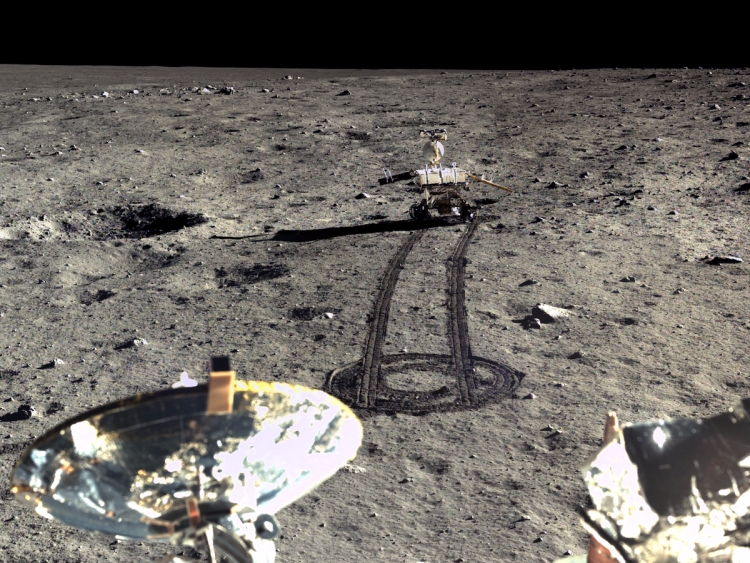
Presently, China’s lunar presence includes the Chang’e 4 lander and the Yutu 2 rover, whose arrival in 2019 marked humanity’s first landings on the dark side of the moon. Both lunar craft are performing scientific experiments, with Chang’e 4 conducting a lunar biosphere experiment to see how silkworms, potatoes and Arabidopsis (a small flowering plant) seeds grow in lunar gravity, while the Yutu 2 rover is exploring the Von Kármán crater.

China and Russia’s joint moon base plans can be seen as a response to their exclusion from the US Artemis Accords, which aims to establish principles, guidelines and best practices for space exploration for the US and its partners. Its goal is to advance the Artemis Program, the name for US efforts to place itself as the first nation to establish a long-term lunar presence.

China is barred from participating in joint projects with the US in space by the Wolf Amendment, a 2011 measure prohibiting NASA from cooperating with China without special approval from Congress.

As a result, China is forced to be self-reliant in its space program. Illustrating this is the fact that China is barred from joining the International Space Station (ISS), but it is in the process of building its own Tiangong space station, which it plans to finish by the end of 2022.

China plans to use the Tiangong space station to host experiments with partner countries and to keep it continuously inhabited by three astronauts for at least a decade.

Russia has refused to sign the Artemis Accords, stating that it is too US-centric in its current form. Despite Russia’s refusal to sign the Artemis Accords, Russia-US space cooperation remains one of the few areas of constructive engagement between the two countries.

One of Russia’s significant contributions to the ISS is the Zvezda service module, which provides station living quarters, life support systems, electrical power distribution, data processing systems, flight control systems and propulsion systems.

It also provides a docking port for Russian Soyuz and Progress spacecraft. Despite this cooperation, Russia has threatened to pull out of the ISS in 2025 unless the US lifts sanctions on Russia’s space sector.

However, Sino-Russian space cooperation has its own set of challenges. In terms of political will, it is possible that either China or Russia can miss timelines or suspend cooperation, due to competing political priorities, limited resources or leadership changes.

Russia may also be loath to play the role of junior partner to China, given its proud history of space exploration. Also, other governments may be skeptical about the viability of Sino-Russian space cooperation, and view cooperation with the US as the more desirable option.

The race to establish a long-term lunar presence is driven by political, economic and military factors. Political and ideological rivalry between China, Russia and the US may be fuelling the race to establish a long-term lunar base to showcase each other’s technological superiority.

When it comes to economic benefits, the moon is believed to have significant reserves of silicon, rare earth metals, titanium, aluminum, water, precious metals and Helium-3. Also, the technologies developed for a long-term lunar presence may eventually find regular commercial use.

In addition, the moon can potentially be militarized by states protecting their lunar commercial interests, deploying anti-satellite or anti-spacecraft weapons, or using the moon as a gravitational point to deploy military satellites or spacecraft in a manner that would be undetectable with conventional space tracking.


China’s moon plans making the NASA look a bit silly

by on03 JANUARY 2022
China’s moon plans making the NASA look a bit silly


Space travel is really for socialism

"China has formally approved three missions targeting the south pole of the moon, with the first to launch around 2024. each with different goals and an array of spacecraft.

"The trio make up the so-called fourth phase for the Chinese lunar exploration programme, which most recently landed on the moon last December with a sample-return mission dubbed Chang'e 5.

Wu Yanhua, deputy head of the China National Space Administration (CNSA), told China Central Television (CCTV) in a recent interview that the three missions had been approved.

Chang'e 7 will be the first to launch; Wu did not provide a timeline, but previous reporting indicates a hoped-for launch around 2024, with the mission to include an orbiter, a relay satellite, a lander, a rover and a "mini flying craft" designed to seek out evidence of ice at the lunar south pole.

The various component spacecraft will carry a range of science instruments including cameras, a radar instrument, an infrared spectrum mineral imager, a thermometer, a seismograph and a water-molecule analyser; the mission will tackle goals including remote sensing, identifying resources and conducting a comprehensive study of the lunar environment.

Chang'e 8 will launch later this decade and will be a step toward establishing a joint International Lunar Research Station (ILRS) with Russia and potentially other partners.

The mission is expected to test technology for using local resources and manufacturing with 3D printing, according to earlier Chinese press statements.

The ILRS plan includes development of a robotic base which can be later expanded to allow astronauts to make long-term stays on the lunar surface in the 2030s.

China had previously scheduled their lunar research station for the year 2035, reports the South China Morning Post. The newspaper cites concerns from Zhang Chongfeng, deputy chief designer of China's manned space programme, that America's space programme might ultimately seize common land on the moon.

The US government and Nasa have proposed the Artemis Accords to set rules for future lunar activities. Already signed by more than a dozen US allies, the accords allow governments or private companies to protect their facilities or "heritage sites" by setting up safety zones that forbid the entry of others.

China and Russia are opposed to the accords because this challenges the existing international protocols including the UN's Moon Agreement, which states that the moon belongs to the entire human race, not a certain country, according to Zhang.

But to effectively counter the US on the moon, China would have to "take some forward-looking measures and deploy them ahead of schedule", he said in a paper published in domestic peer-reviewed journal Aerospace Shanghai in June.

Instead of building an orbiting "gateway", China would directly put a nuclear-powered research station on the moon. The unmanned facility would allow visiting Chinese astronauts to stay on the moon for as long as their American peers but only at a fraction of the cost.

To counter the US territorial claims, China would also deploy a mobile station. This moon base on wheels would be able to roam freely on the lunar surface for over 1,000km, and the use of artificial intelligence technology would mean astronauts need not be present for its operation.

China would pay a great deal of attention to the exploration of caves, which could provide a natural shelter for the construction of permanent settlements.